



A good fringe can completely transform how straight hair frames your face—think of it as built-in face-contouring that works with your hair’s natural texture rather than fighting against it. The challenge with straight hair is that you’re working with a texture that doesn’t naturally curl or wave to soften the lines of a fringe, which means the cut itself becomes everything. Get it right, and you’ve got a style that looks polished and intentional. Get it wrong, and you’re stuck with a blunt line that grows out awkwardly over the next six weeks.
The good news is that straight hair actually takes a fringe beautifully—there’s no frizz to battle, no wavy texture fighting your intention, and no weird cowlicks sabotaging your morning styling. Straight hair shows off the precision of a good fringe cut in a way that curly or textured hair sometimes can’t. The trade-off is that every imperfection in the cut is visible, and you’ll need to be intentional about maintenance as it grows out. If you’re considering bangs but aren’t sure which style would work with your straight hair, this breakdown covers the range of options from dramatic to subtle, the specific situations where each works best, and the honest maintenance requirements you’re signing up for.
The fringe you choose should complement your face shape, your daily styling effort threshold, and how much commitment you want to make. Some of these styles work better with longer hair, while others pair perfectly with a blunt bob. All of them look their absolute best on straight hair when you understand how they’ll actually look when they’re freshly cut versus three months into the grow-out phase.
1. Blunt Bangs (Straight Across)
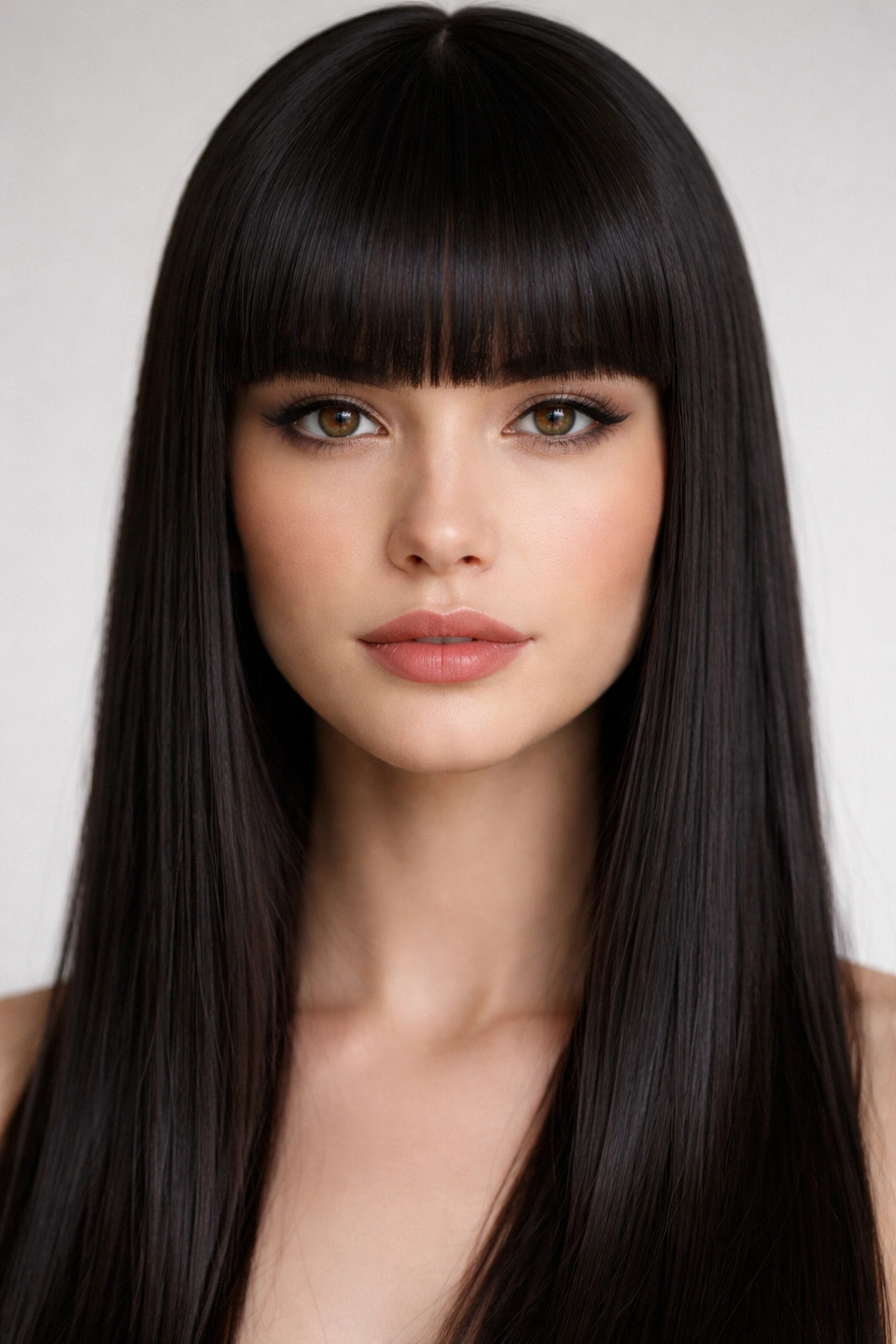
Blunt bangs sit right at your eyebrows or just above, creating a clean horizontal line that feels bold and intentional. They’re the most dramatic fringe option and photograph beautifully because of their architectural precision. This is the style that makes a real statement—it’s not subtle, and it’s not for people who want to blend in.
Why It Suits Straight Hair
Straight hair is the ideal texture for blunt bangs because the cut line remains sharp and clean. Curved or textured hair tends to soften the edges and blur that precise horizontal line, but straight hair keeps the geometry exactly as intended. The sleekness of straight hair lets the geometry of the cut do all the visual work, which is what makes blunt bangs feel so polished. You get that graphic, almost architectural look that works for classic or modern aesthetics.
How to Style and Maintain It
- Trim every 3-4 weeks because blunt bangs show grow-out quickly and the line gets uneven fast
- Blow-dry them straight down with a round brush to maintain the horizontal shape, or let them air-dry if your hair naturally dries straight
- Use a light hairspray to set them in place and prevent them from shifting throughout the day
- Consider getting them cut slightly longer than you think you want—they’ll feel shorter once you start styling them regularly
- Avoid washing right before an important event; freshly washed hair tends to be bouncier and less cooperative
Pro tip: If you’re nervous about the commitment, ask your stylist to cut them just slightly longer than traditional blunt bangs. You’ll still get the blunt effect, but the small amount of extra length gives you some wiggle room if they end up feeling too severe once you see them every day for a week.
2. Side-Swept Bangs
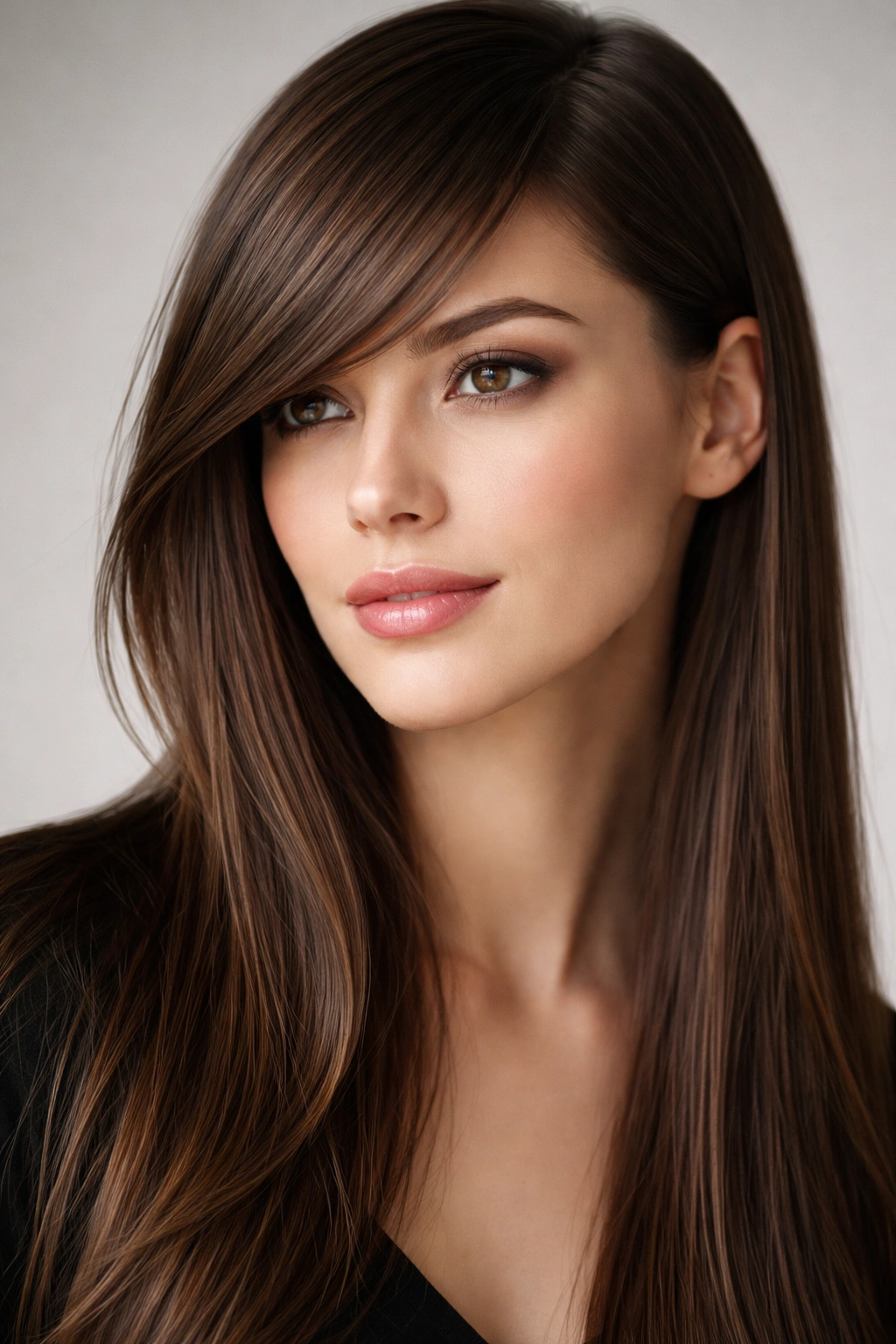
Side-swept bangs angle across your forehead from one side to the other, creating an asymmetrical frame that feels softer than blunt bangs while still being distinctly a fringe. They work beautifully with straight hair because the diagonal line is intentional and visible, and straight texture showcases the cut without any frizz or waviness to mess up the geometry.
Why It Suits Straight Hair
Straight hair maintains the clean diagonal line of side-swept bangs without any curl or wave softening or obscuring the shape you wanted. The sleekness of straight hair makes the asymmetrical cut feel deliberate rather than accidental, which is crucial for this style. Side-swept bangs also work well with straight hair because you have flexibility in how much you sweep them—you can angle them more dramatically or keep them closer to center, and straight hair will hold whatever line you choose.
How to Style and Maintain It
- Style them by blow-drying in the direction you want them to sweep, using a round brush to direct the flow
- Apply a light styling cream or texturizing spray before blow-drying to add grip and prevent them from falling flat
- Trim every 4-6 weeks, focusing on maintaining the angle rather than the length
- Use a side part that works with your fringe direction—if your bangs sweep left, part your hair on the right side
- Keep them longer in the short end so they blend better with the rest of your hair as they grow
Pro tip: This style is more forgiving than blunt bangs during the grow-out phase because the longer side gradually blends into your hair rather than creating an obvious blunt line.
3. Wispy Bangs
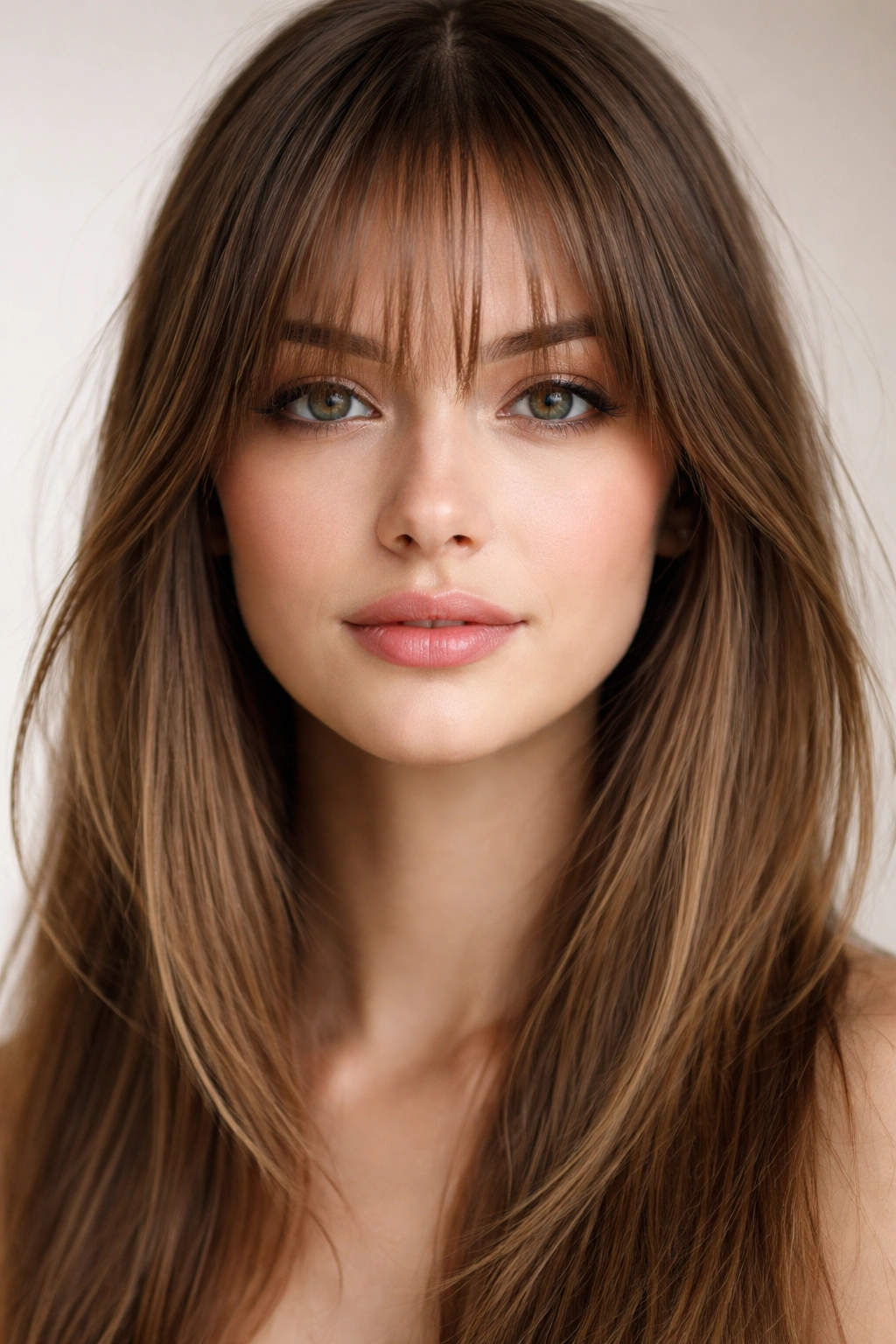
Wispy bangs are feathered and light, with shorter pieces at the center that gradually get longer toward the sides, creating a soft, slightly textured look. Even though they have movement and texture to the cut, straight hair actually wears them beautifully because the straightness keeps each individual feathered section visible and defined.
Why It Suits Straight Hair
The key advantage of wispy bangs on straight hair is that you can actually see the feathering and texture work of the cut. On curly or wavy hair, all those choppy layers tend to blend together into a general texture, but straight hair displays each feathered section distinctly. This means the stylist’s work actually shows, and the style looks intentional and precise rather than undefinable. Straight hair also holds the movement and separation better than curly hair, so the wispy effect lasts longer between cuts.
How to Style and Maintain It
- Blow-dry with a round brush, directing different sections in slightly different directions to enhance the wispy texture
- Apply a light volumizing mousse before blow-drying to add separation and prevent the pieces from clumping together
- Use a texturizing spray or sea salt spray to enhance the piece-y quality and prevent them from looking too perfect or flat
- Trim every 4-6 weeks to maintain the feathered shape and prevent them from growing into a heavy line
- Let them air-dry occasionally to see how they fall naturally—sometimes the accidental texture looks better than perfectly styled
Pro tip: Wispy bangs work especially well if your straight hair has a slight natural wave or movement; they’ll enhance that texture rather than fighting against it.
4. Micro Bangs
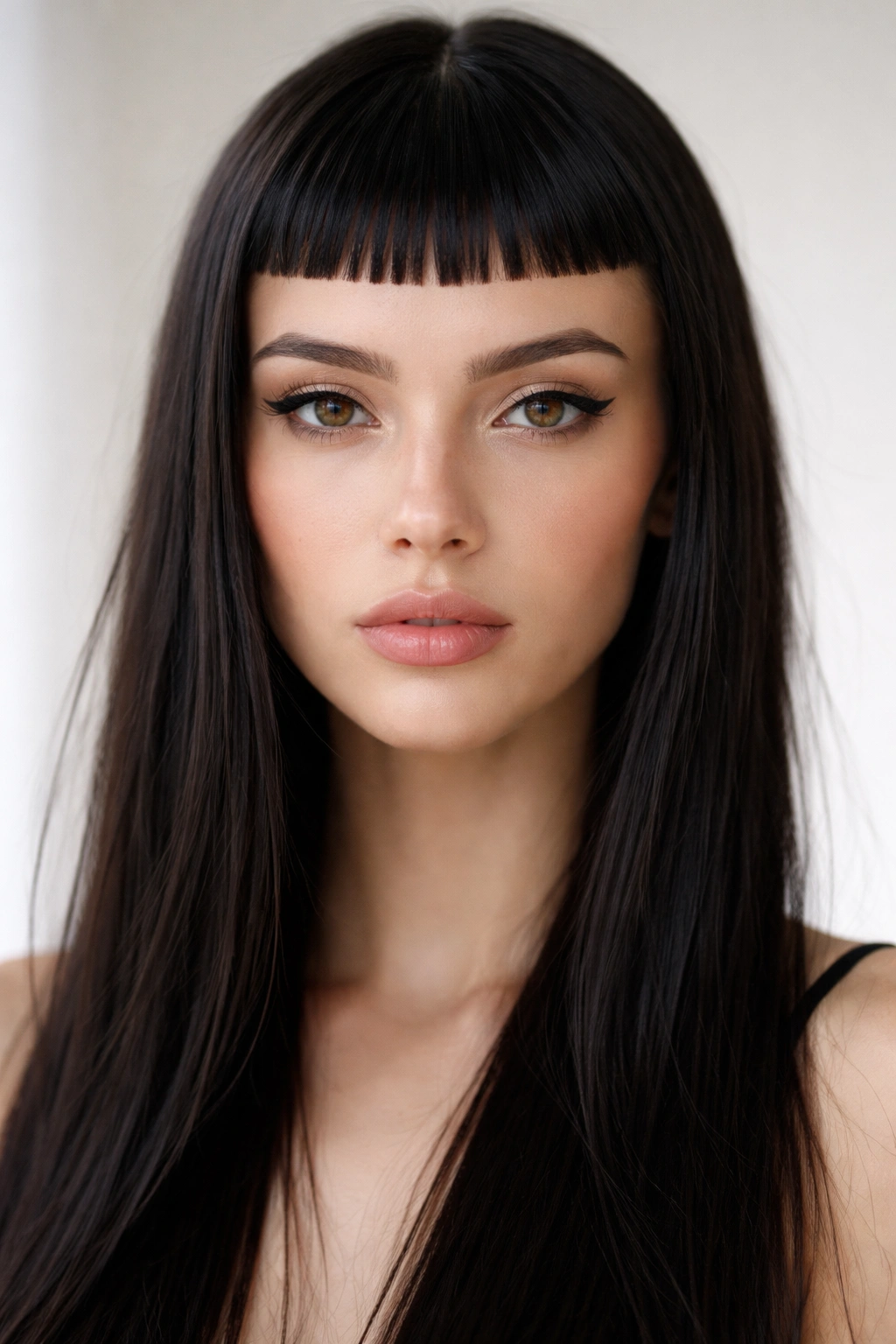
Micro bangs sit very short—typically just a couple inches below the natural hairline—creating an ultra-dramatic, high-fashion look. This is a commitment cut that definitely makes a statement and requires serious confidence to pull off, but on straight hair, they look striking because there’s no texture to hide the boldness of the choice.
Why It Suits Straight Hair
Straight hair makes micro bangs look intentional and fashion-forward rather than accidental or like you got an unfortunate mistake with scissors. The sleekness and simplicity of straight hair actually enhances the high-fashion vibe of micro bangs rather than undermining it. Short bangs could look sparse or wispy on curly hair, but on straight hair, they look graphic and deliberate. This style requires absolute confidence in the cut, and straight hair’s clarity shows whether the cut was executed well.
How to Style and Maintain It
- Trim every 2-3 weeks because they grow out noticeably fast and quickly lose their impact
- Blow-dry straight down or let them air-dry, depending on your hair’s natural direction
- Consider pairing them with a sleek straight hairstyle or a blunt bob to balance their boldness
- Use a volumizing spray at the roots if you want them to feel fuller, or keep them sleek and flat if you prefer a more minimalist look
- Be prepared for them to feel awkward for the first 1-2 weeks while you adjust to seeing your forehead
Pro tip: Micro bangs pair especially well with very straight, sleek styling and minimal makeup that lets your facial features and bone structure take center stage.
5. Curtain Bangs
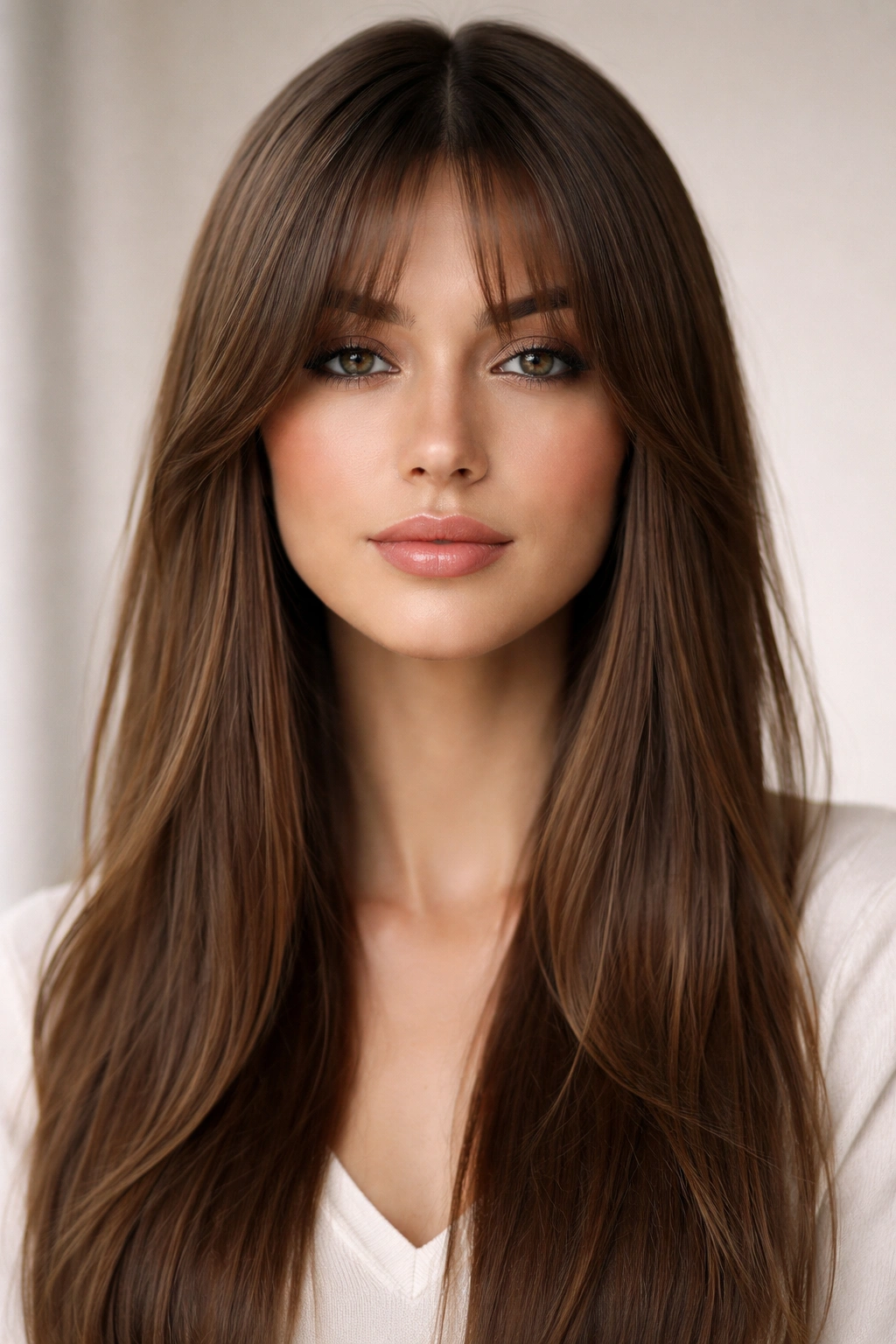
Curtain bangs part down the middle and fall on either side of your face, creating a frame that opens up your features rather than covering your forehead. They’re a softer, more romantic alternative to heavier fringe styles and have become increasingly popular because they offer fringe benefits without the full-coverage commitment.
Why It Suits Straight Hair
Straight hair wears curtain bangs beautifully because the pieces fall in clean, defined lines on either side of your face. The straightness ensures that the two sides are symmetrical and balanced, creating a perfectly framed effect. Curly or wavy hair tends to obscure the individual pieces and the shape of the curtain, but straight hair shows off the precise geometry. Curtain bangs also work well on straight hair because they don’t require much styling—you can let them air-dry and they’ll fall exactly where they’re supposed to go.
How to Style and Maintain It
- Style them by blow-drying them away from the center part, using a round brush to create a slight curve that frames the face
- Use a round brush or a straightening iron to create a subtle bend at the ends if you want them to curve away from your face
- Trim every 6-8 weeks, focusing on keeping the layers and the shape rather than the overall length
- Part your hair down the middle or slightly off-center to let the curtain pieces fall naturally
- Apply a light smoothing serum to the ends to keep them glossy and separated
Pro tip: Curtain bangs work well as a gateway into bangs if you’re nervous about commitment—they’re easier to style, they grow out gracefully, and you can always let them grow out completely if you change your mind. Plus, they flatter most face shapes.
6. Choppy Layered Bangs
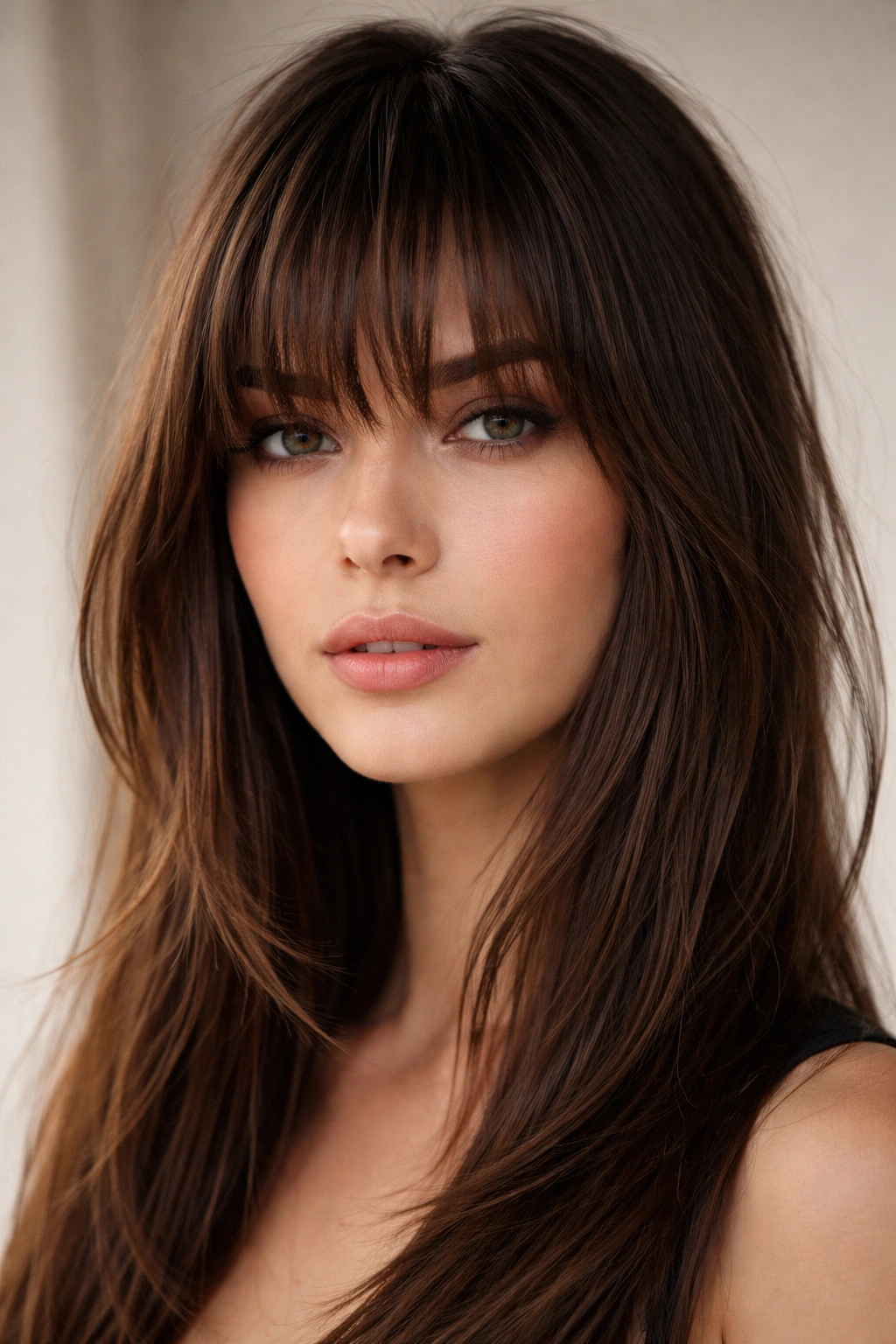
Choppy layered bangs have multiple lengths mixed throughout, creating textured movement and a deliberately piece-y look. Unlike wispy bangs, which are feathered smoothly, choppy bangs have more obvious variation in length, which reads as edgier and more modern.
Why It Suits Straight Hair
Straight hair shows off the intentional choppiness of this cut without any texture blurring the lines. Each choppy piece is visible and defined, which makes the style feel deliberate and fashion-forward. If you have very sleek, glossy straight hair, choppy bangs add visual interest and movement through the cut rather than the texture. The contrast between the smoothness of your hair and the choppiness of the cut creates visual impact.
How to Style and Maintain It
- Blow-dry with a round brush, directing different sections in different directions to enhance the choppy texture
- Apply a texturizing spray or dry shampoo before blow-drying to add grip and separation between pieces
- Use a diffuser attachment or scrunch the bangs as they dry if you want more natural texture and movement
- Trim every 4-6 weeks to maintain the choppy shape and prevent them from growing into a blunt line
- Consider using a light styling cream to piece out the different lengths and make the choppiness more obvious
Pro tip: Choppy bangs pair really well with longer, layered hair because the choppiness repeats throughout your style and creates visual continuity.
7. Face-Framing Bangs
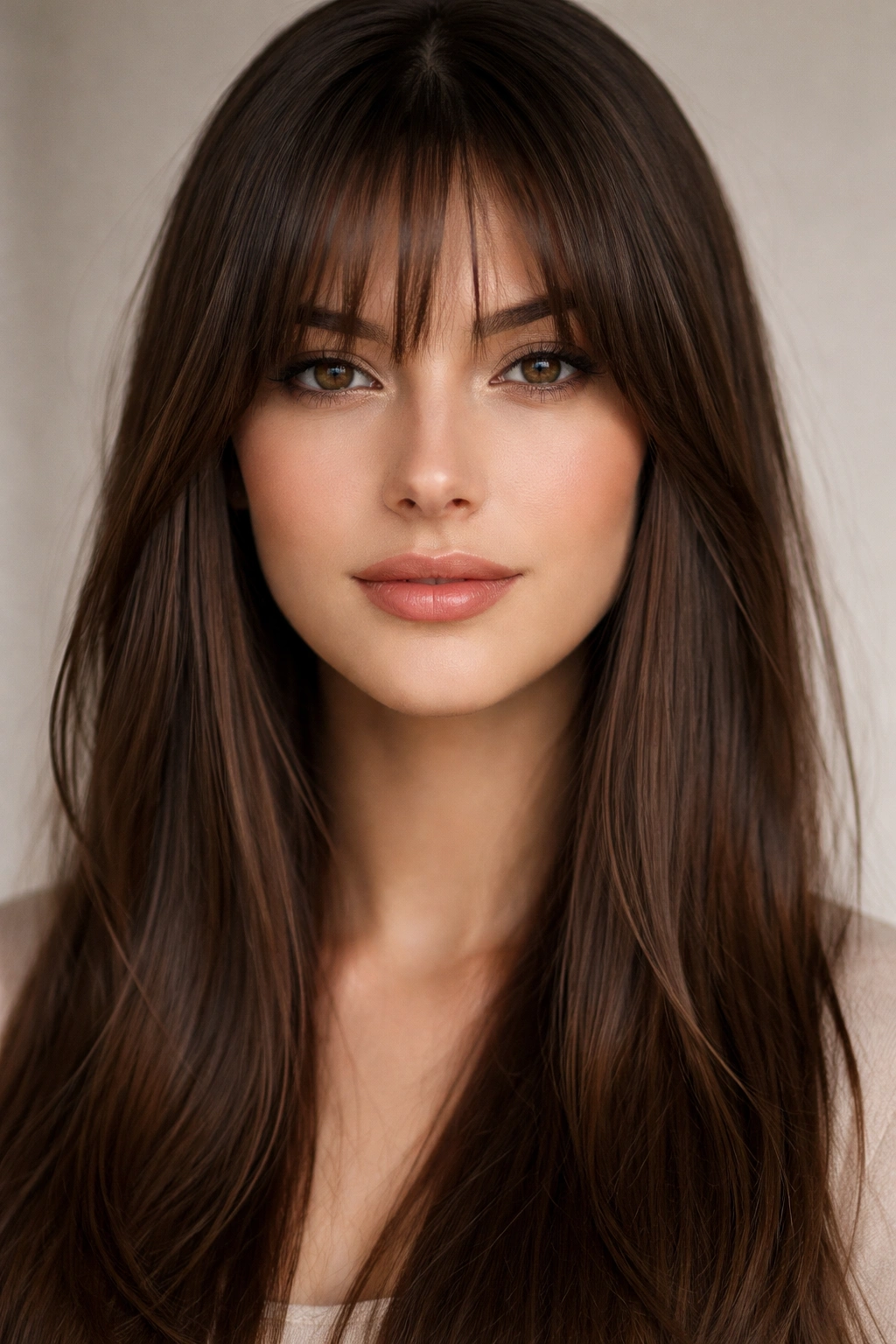
Face-framing bangs aren’t a true fringe across the forehead—instead, they’re longer pieces that start at the temples and frame either side of your face, blending into the rest of your hair. They offer fringe benefits without the intensity of a full bang coverage.
Why It Suits Straight Hair
These bangs complement straight hair because the longer pieces have clear definition and don’t blend ambiguously into the rest of your hair the way they might on curly hair. On straight hair, you can see exactly where the face-framing layer starts and stops, which creates a deliberate, sculpted look. Straight hair also maintains the smooth flow from the face-framing layer into the rest of your hair without any texture interrupting that line.
How to Style and Maintain It
- Blow-dry them straight or with a slight curve using a round brush to enhance the face-framing effect
- Apply a smoothing serum to the face-framing pieces to keep them sleek and separated from the rest of your hair
- Trim every 6-8 weeks to maintain the layers, focusing on keeping them slightly shorter than the rest of your hair
- Tuck them behind your ears if you want them out of the way, or let them fall in front of your ears for a softer look
- Use a side part to enhance the framing effect, or a center part if you want them to frame both sides equally
Pro tip: Face-framing bangs are the most forgiving style on this list during the grow-out phase because they blend seamlessly into your longer hair rather than creating an obvious blunt line.
8. Long Shaggy Bangs
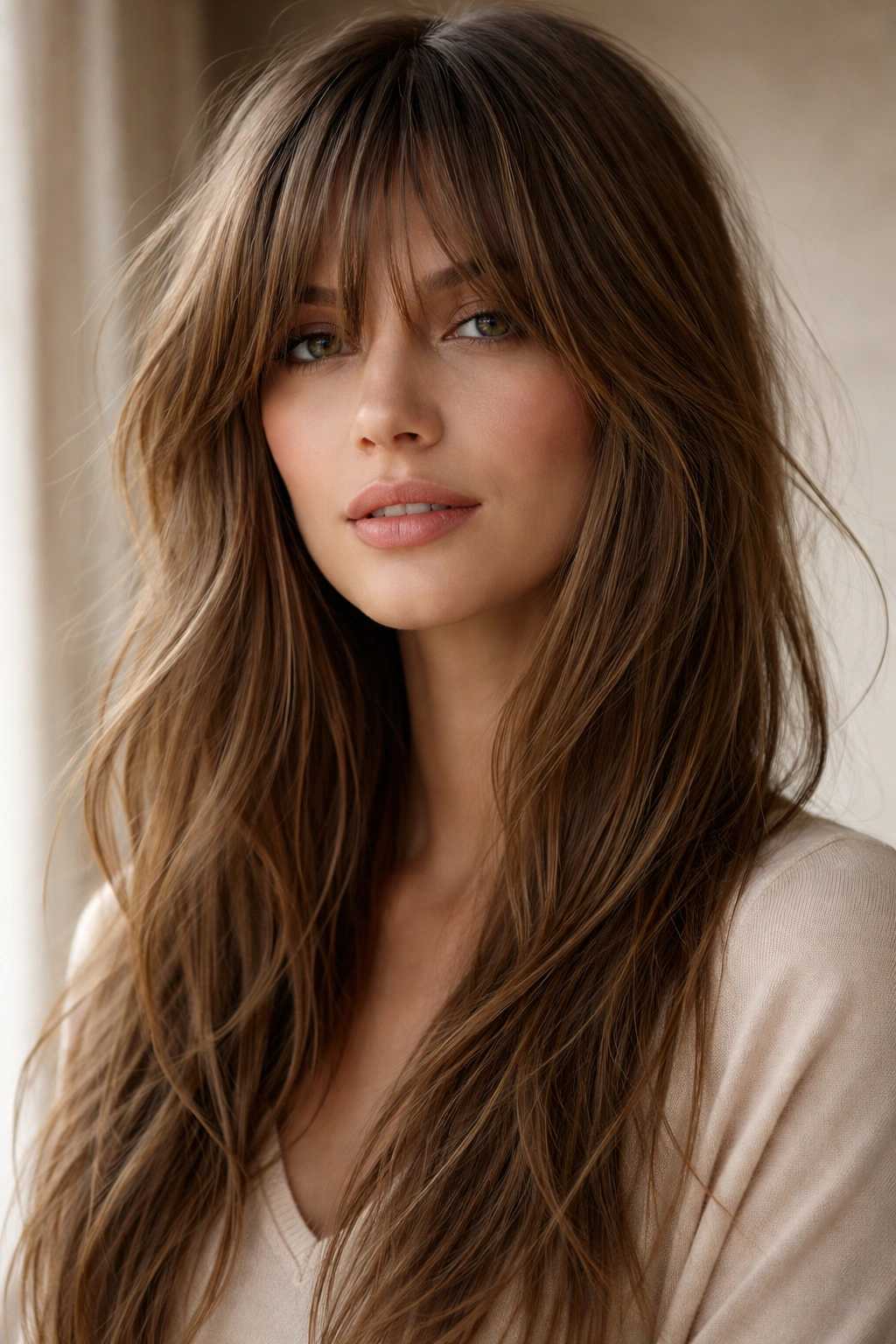
Long shaggy bangs fall closer to your cheekbones or even your chin and have a tousled, deliberately undone quality. They’re inspired by 1970s rock-and-roll aesthetics and have texture and movement despite being longer than traditional fringe styles.
Why It Suits Straight Hair
Straight hair can wear long shaggy bangs beautifully because the straightness prevents them from looking unkempt or actually messy—they look intentionally shaggy rather than accidental. Curly or wavy hair tends to turn shaggy bangs into actual texture, but straight hair keeps them looking deliberately styled. The length also means they don’t require as much precision in the cut, which can actually be forgiving on straight hair.
How to Style and Maintain It
- Blow-dry them tousled and piece-y using a texturizing spray or sea salt spray before drying
- Use a round brush to create movement and separation, curling them slightly away from your face
- Embrace the slightly undone quality—trying to make them perfectly smooth defeats the point
- Trim every 6-8 weeks to maintain the shaggy layers and prevent them from growing into a heavy line
- Apply a light volumizing mousse before blow-drying to enhance the tousled texture
Pro tip: These bangs pair beautifully with medium to long straight hair that has lots of layers throughout, creating a cohesive shaggy aesthetic.
9. Textured Bangs
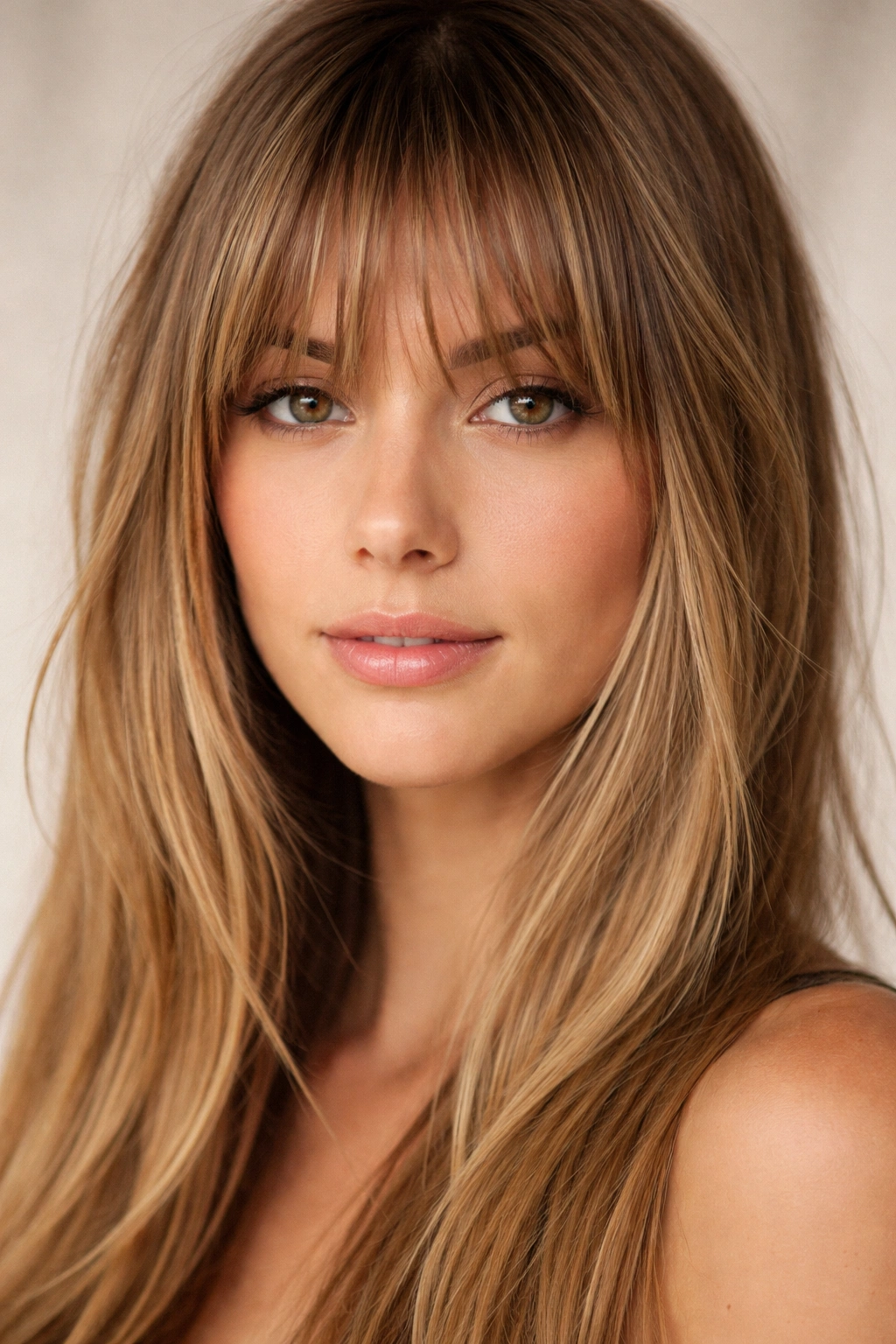
Textured bangs are cut with texture and movement throughout using point-cutting or razor techniques, creating an intentionally piece-y, lived-in appearance. They’re different from choppy bangs in that the texture is more subtle and diffused throughout rather than obvious layering.
Why It Suits Straight Hair
The straightness of your hair actually enhances textured bangs because each piece-y element is visible and clearly intentional rather than being absorbed into natural curl or wave. You get the benefits of texture and movement through the cut without the hair naturally creating it, which means the style looks deliberately designed. Straight hair also holds whatever styling direction you give textured bangs, so they’ll maintain their piece-y appearance throughout the day.
How to Style and Maintain It
- Blow-dry with a texturizing spray applied beforehand, directing the pieces slightly in different directions
- Use a sea salt spray or texturizing product to enhance the piece-y quality and prevent them from looking flat
- Apply a light styling cream to separate the individual textured pieces and make them more obvious
- Trim every 4-6 weeks to maintain the textured feel and refresh the piece-y quality
- Avoid heavy conditioning products that can weigh down the texture and make them look flat
Pro tip: Textured bangs work exceptionally well if you love the idea of bangs but don’t want them to look formal or require heavy styling every single day.
10. Asymmetrical Bangs
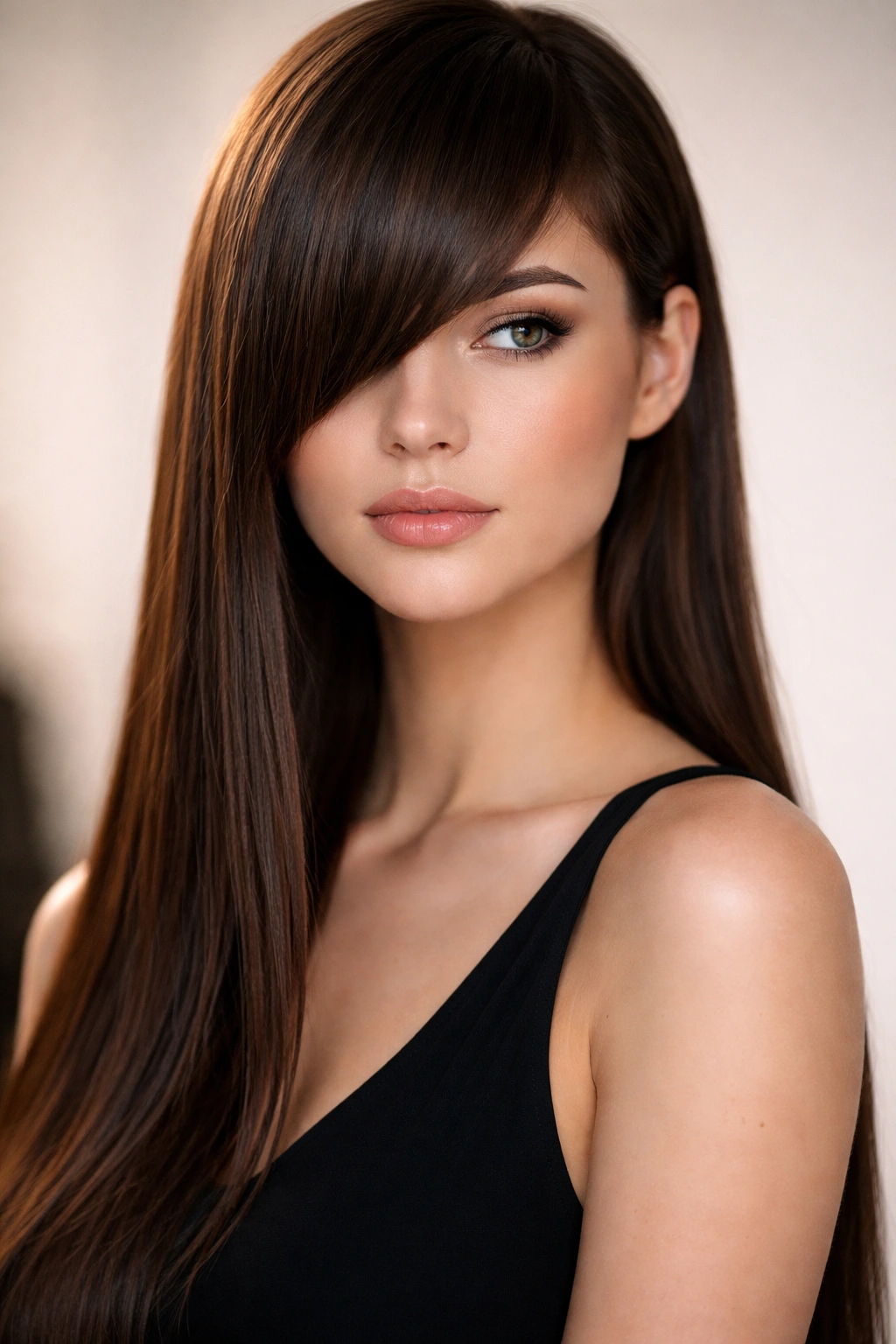
Asymmetrical bangs are intentionally uneven, with one side noticeably longer than the other, creating a bold, fashion-forward look that reads as art-directed rather than accidental. This is a statement cut that requires confidence and works best on people who enjoy edgy, modern styling.
Why It Suits Straight Hair
Straight hair makes asymmetrical bangs look intentional and well-executed rather than awkward or like a mistake. The clarity of straight hair shows that the uneven length is absolutely deliberate, which is crucial for pulling off this bold style. Curly or textured hair can make asymmetrical bangs look accidental or muddy, but straight hair emphasizes the graphic quality of the cut. The sleekness also prevents the longer side from blending awkwardly into your hair.
How to Style and Maintain It
- Blow-dry following the direction of the cut, with the longer side sweeping in that direction and the shorter side standing up slightly
- Apply a texturizing spray or lightweight styling product to add separation between the two sides
- Consider styling the shorter side with slightly more volume and the longer side sleeker for extra contrast
- Trim every 4-6 weeks, being careful to maintain the asymmetrical length difference rather than evening them out
- Wear your hair parted in a way that showcases the asymmetry—usually a side part works best
Pro tip: This style requires commitment and confidence, but it’s absolutely worth it if you love having a statement fringe. The grow-out phase is less awkward than some other styles because the uneven length is part of the design.
Final Thoughts
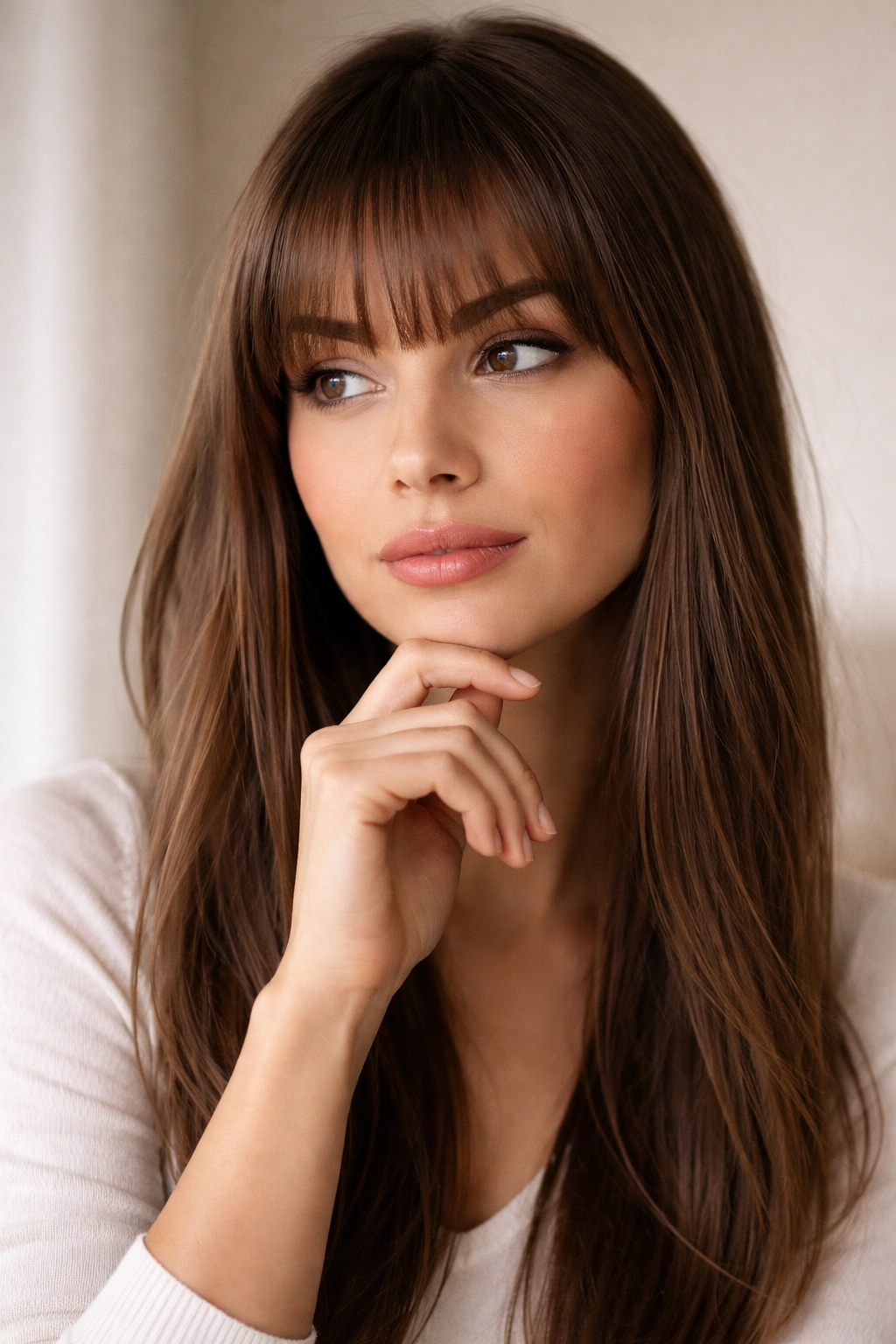
The right fringe can completely change how your straight hair frames your face and how you feel about your overall look. The key to choosing the right style is being honest about your styling time commitment, your daily routine, and how bold you’re willing to go. Blunt and micro bangs are high-maintenance but make the biggest visual impact, while curtain and face-framing styles are more forgiving and easier to maintain. The reality is that you’ll likely need to trim every 4-8 weeks regardless of which style you choose, because straight hair shows every bit of grow-out very clearly.
Consider your face shape, your lifestyle, and your comfort with styling when making your choice. Some people wake up and want to spend fifteen minutes blow-drying their bangs into the exact shape they want, while others prefer a style that looks good with minimal effort. Both approaches are completely valid—it’s just about knowing which category you fall into and choosing accordingly.
The beautiful thing about straight hair is that it works with virtually every fringe style when the cut is done well. So pick the one that excites you, find a stylist who specializes in bang cuts, and commit to the maintenance. A great fringe is worth the effort.
