



A skunk stripe—that bold, deliberate streak of contrasting color running through your hair—has become one of the most striking ways to add personality and edge to a straight-hair look. Unlike curly or textured hair that can soften and blend color contrasts through their natural movement, straight hair gives skunk stripes a clean, graphic quality that demands attention in the best possible way. The geometric precision of a straight strand means your color choice becomes a statement piece, framing your face or creating visual interest along the length of your hair with undeniable impact.
Whether you’re drawn to the understated sophistication of a hidden stripe or the full-confidence drama of a front-and-center placement, a skunk stripe works beautifully with straight hair because the style itself depends on clarity of line. Your naturally sleek texture becomes an asset—it showcases the color without distortion, lets light play across the contrast, and makes the stripe feel intentional rather than accidental. The right stripe can elongate your face, add dimension without requiring complicated layers, and give you the flexibility to express boldness in a way that feels polished rather than chaotic.
The beauty of this trend is that skunk stripes work for virtually any starting color and any aesthetic. From classic black-and-white statements that echo punk rock tradition to soft pastel moments that feel almost romantic, the options are genuinely endless. Your face shape, skin tone, lifestyle, and how much commitment you want to give to maintenance all factor into finding the perfect stripe for you. Let’s explore ten compelling skunk stripe ideas that all look exceptionally good on straight hair.
1. Classic Black and White Contrast
The original skunk stripe—jet black paired with crisp white or platinum blonde—remains one of the most powerful looks because it plays on pure contrast. This is the stripe that made the aesthetic famous, worn by everyone from punk icons to fashion-forward celebrities, and it absolutely sings on straight hair. The geometric sharpness of straight strands transforms this high-contrast pair into something almost architectural in its impact.
Why This Works Best for Straight Hair
Straight hair’s natural light-reflection properties mean the black and white stripe creates a stunning three-dimensional effect that curly or wavy hair would soften. The stripe reads as bold and intentional rather than blended, which is exactly what makes this pairing so striking. On straight hair, you get true color payoff—no muddy middle tones created by texture, just pure contrast that photographs beautifully and catches light from every angle. This combination also tends to suit a wider range of skin tones than you might expect, as the contrast itself becomes the focal point rather than relying on color harmony alone.
Styling and Maintenance Tips
- Keep both colors regularly toned to maintain the sharpness of contrast—yellowing blonde or fading black makes the stripe look tired rather than intentional
- Straight hair shows every split end, so trim every 6-8 weeks to keep the stripe definition crisp
- Use a purple-toning shampoo on the white stripe to prevent brassy tones that would muddy the contrast
- Styling this stripe straight gives maximum impact; even a slight wave softens the effect, so embrace your natural straight texture or use a flat iron to enhance the geometric quality
Pro tip: This pairing is actually easier to maintain than it looks. Since you’re working with two very different colors, a slight regrowth of your natural shade between touch-ups often reads as “intentional dimensional styling” rather than poor maintenance.
2. Blonde and Deep Brown Contrast
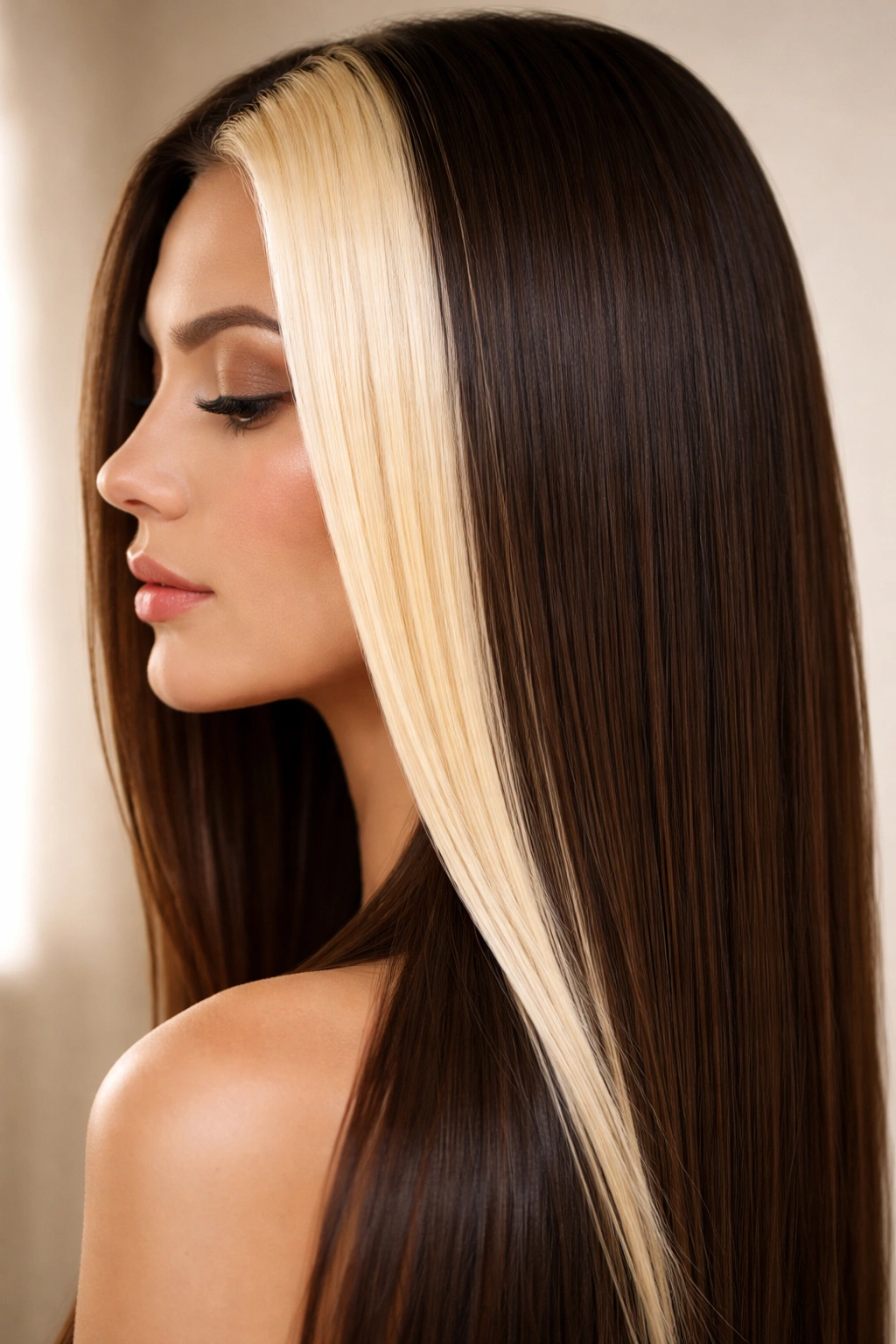
Swap the white for a warm, buttery blonde and pair it with a rich, espresso-dark brown, and you get a skunk stripe that feels more wearable for everyday life while maintaining serious visual impact. This combination sits in a sweet spot between bold and blendable—the contrast is definitely there, but the colors themselves feel more naturally occurring, which means this look translates beautifully across different settings, from professional to playful.
Why This Pairing Suits Straight Hair
The brown-to-blonde gradient happens continuously in nature—think of how sun-lightened hair develops dimension—so while your skunk stripe is clearly intentional, it doesn’t read as purely costume-y. Straight hair benefits because the sharp line between brown and blonde makes it clear that this is a style choice, not damage or poor color application. The lighter blonde bounce light in a way that adds shine to straight hair, while the deep brown provides grounding and contrast without being as stark as pure black.
How to Make It Work
- This pairing suits cool-toned skin beautifully, especially if you lean toward ash or champagne blonde rather than golden tones
- Consider placement: a face-framing stripe with brown on one side and blonde on the other creates incredible dimension for straight hair
- The brown won’t show regrowth as dramatically as black, giving you more flexibility between touch-ups
- Straight hair can sometimes look flat with too-similar colors, so this contrast actually adds visual volume without needing layers
Insider note: This combination is particularly striking if your natural hair color is medium brown—you only need to lighten one section, making the commitment feel smaller while the visual impact stays huge.
3. Silver and Charcoal Blend
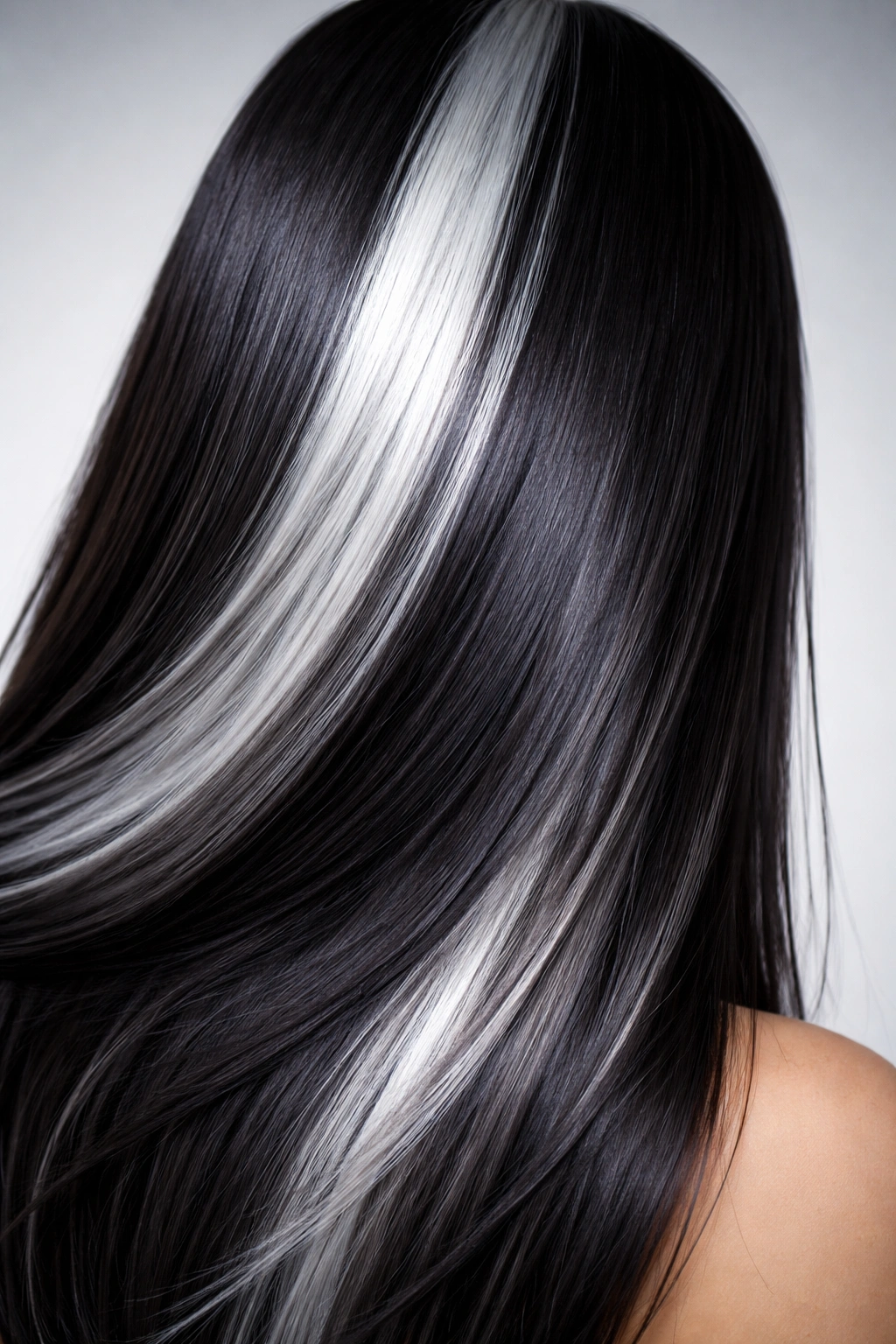
For those who want modern, editorial-looking color without going full black-and-white, a silver-and-charcoal pairing delivers sophisticated contrast with a cooler, more contemporary edge. Silver is having a major moment precisely because it reads as intentional and fashion-forward, while charcoal (a softer, cooler alternative to pure black) keeps the look grounded and wearable.
Why Straight Hair Showcases This Combination
Silver and charcoal rely on light reflection and clarity to create their visual magic—straight hair is the ideal canvas. The way light plays across silvery tones creates an almost iridescent effect on straight strands that gets lost in texture, while the charcoal provides just enough darkness to create contrast without the harshness of pure black. This pairing feels sophisticated rather than edgy, which makes it perfect for straight hair that’s sleek enough to carry off high-fashion color choices.
Maintenance Considerations
- Silver requires strategic toning because it can turn brassy or purple if your toner isn’t matched correctly; work with a colorist experienced in silver specifically
- Both colors have relatively short vibrancy windows (silver especially), so be prepared for maintenance every 4-6 weeks
- Straight hair shows tonal shifts clearly, so investing in purple or blue shampoo becomes non-negotiable with this pairing
- The charcoal will fade to a lighter gray over time, which can actually be beautiful—or you can touch up if you want to maintain contrast
Worth knowing: If you’re worried about commitment, this is an excellent stripe choice because growing it out doesn’t look terrible. As the roots come in and colors fade, you get a gradient effect that many people deliberately recreate.
4. Subtle Caramel Peek-a-Boo
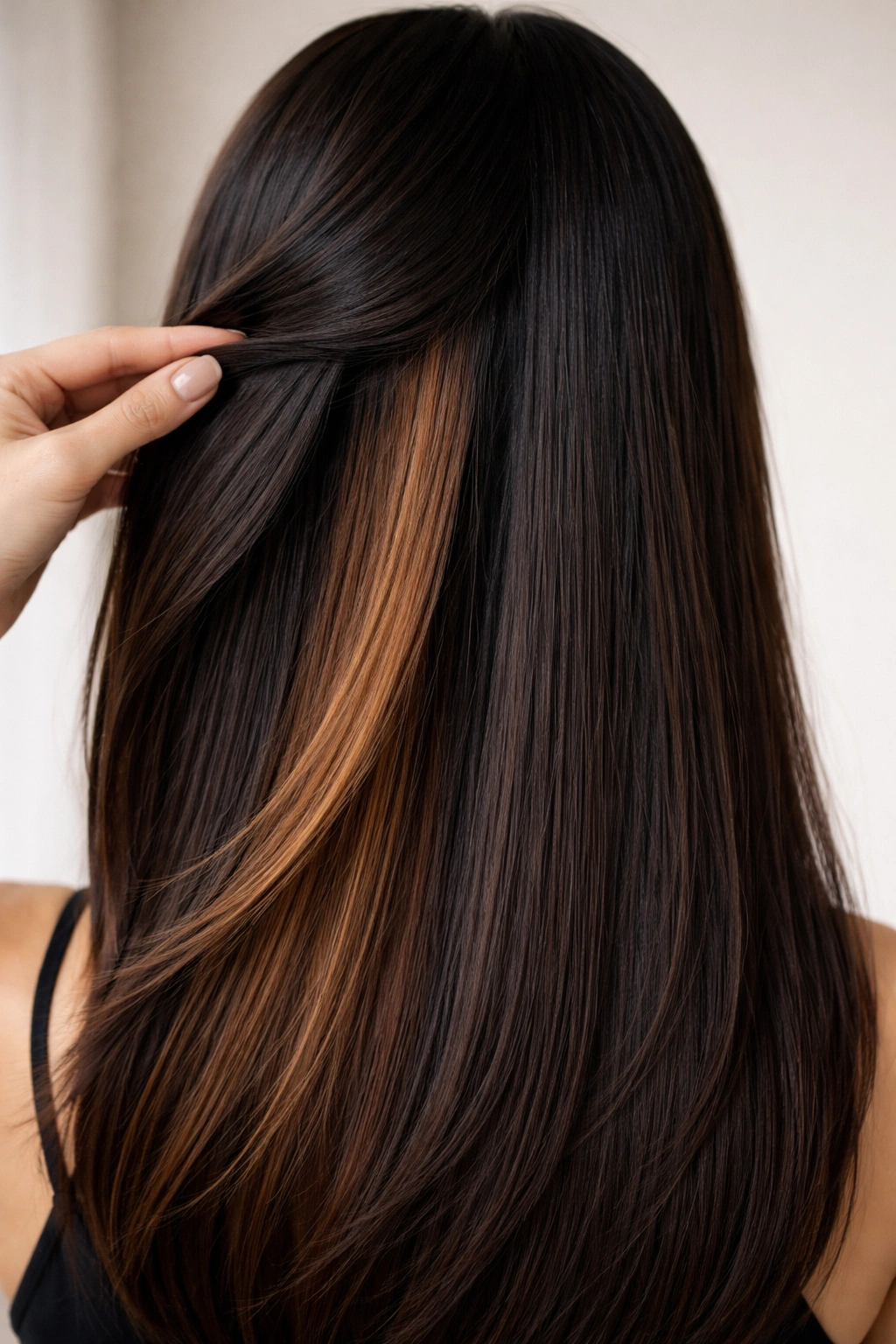
For those who love the skunk-stripe concept but want something that feels less aggressive in day-to-day life, a subtle caramel stripe hidden within your hair or peeking out only in certain lighting offers all the fun with built-in discretion. This works especially well on straight hair because you control exactly when the stripe is visible—pull your hair back, and it’s subtle; wear it down and let it flow forward, and the warmth catches light beautifully.
Why This Works on Straight Hair
Straight hair allows you to place a stripe in the underlayers, along a back section, or even as a single-piece placement that essentially hides when your hair is down. The crisp lines of straight hair mean this peek-a-boo stripe shows up clearly the moment you position it right, without any blending that would make it look accidental. This style is perfect if you want color creativity without it dominating your entire look.
Placement and Styling Ideas
- Underlayer stripe: lightened to caramel or honey tones and placed underneath means you see it only when your hair is up or when you move
- Single-piece placement: one substantial section at your temple or side that peeks out when you part your hair
- Back-section stripe: for those who want the joy of color without the daily visibility—perfect if you wear your hair up regularly
- The key with straight hair is that the placement becomes the statement, not the color intensity
Pro tip: This approach lets you test the skunk-stripe waters before committing to a front-facing design. If you love how it feels after a few months, moving the stripe to a more visible location is a natural next step.
5. Bold Red and Jet Black
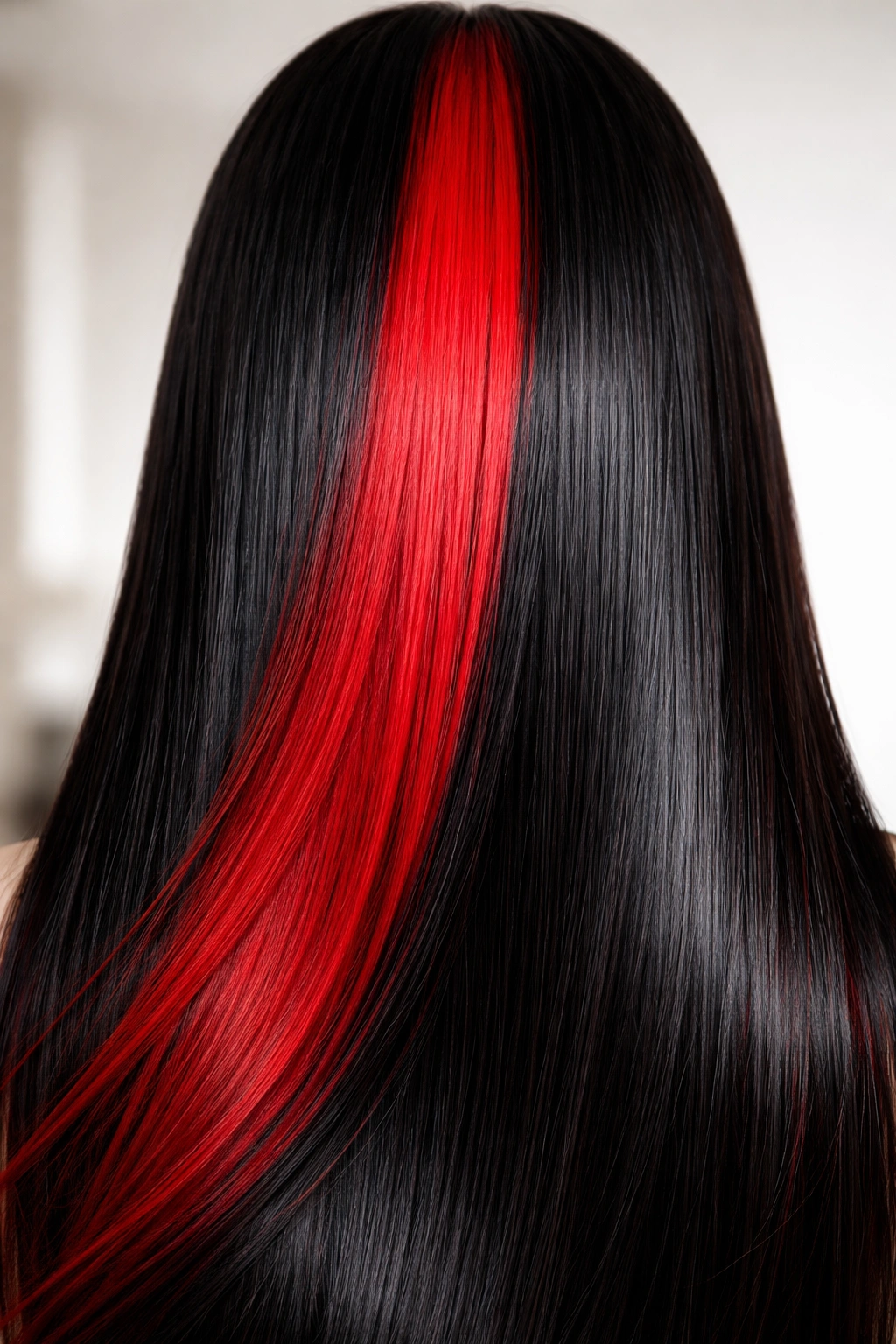
A ruby-red or burgundy stripe paired with deep black creates drama that reads as confident and intentional—not costume-y, but definitely not boring. On straight hair, this pairing has serious visual impact because the warmth of red and the coolness of black create a dynamic tension that’s genuinely eye-catching.
Why Straight Hair Makes This Pop
Red is notoriously difficult to maintain, but on straight hair, you see the true color without the softening effects of texture. That means a well-maintained red stripe on straight hair looks absolutely radiant, catching light and drawing eyes directly toward it. The black stripe provides grounding and makes the red feel more sophisticated rather than purely punk-rock. Together on straight hair, they create a look that’s bold without feeling costume-y.
Color Care and Commitment
- Red fades faster than almost any other color, especially vibrant reds—expect to refresh every 3-4 weeks to maintain intensity
- Straight hair shows any fading immediately, so the tonal shift between glossy red and faded brick-red is noticeable
- Using color-safe shampoo and avoiding heat styling as much as possible extends the life of red significantly
- The black acts as an anchor and typically fades far more slowly, so the stripe may become red-and-dark-brown as time passes
Real talk: This pairing requires genuine commitment to color maintenance, but if you’re willing to refresh regularly, it’s one of the most striking combinations possible. The visual payoff on straight hair is genuinely worth it.
6. Gradient Rainbow Stripe
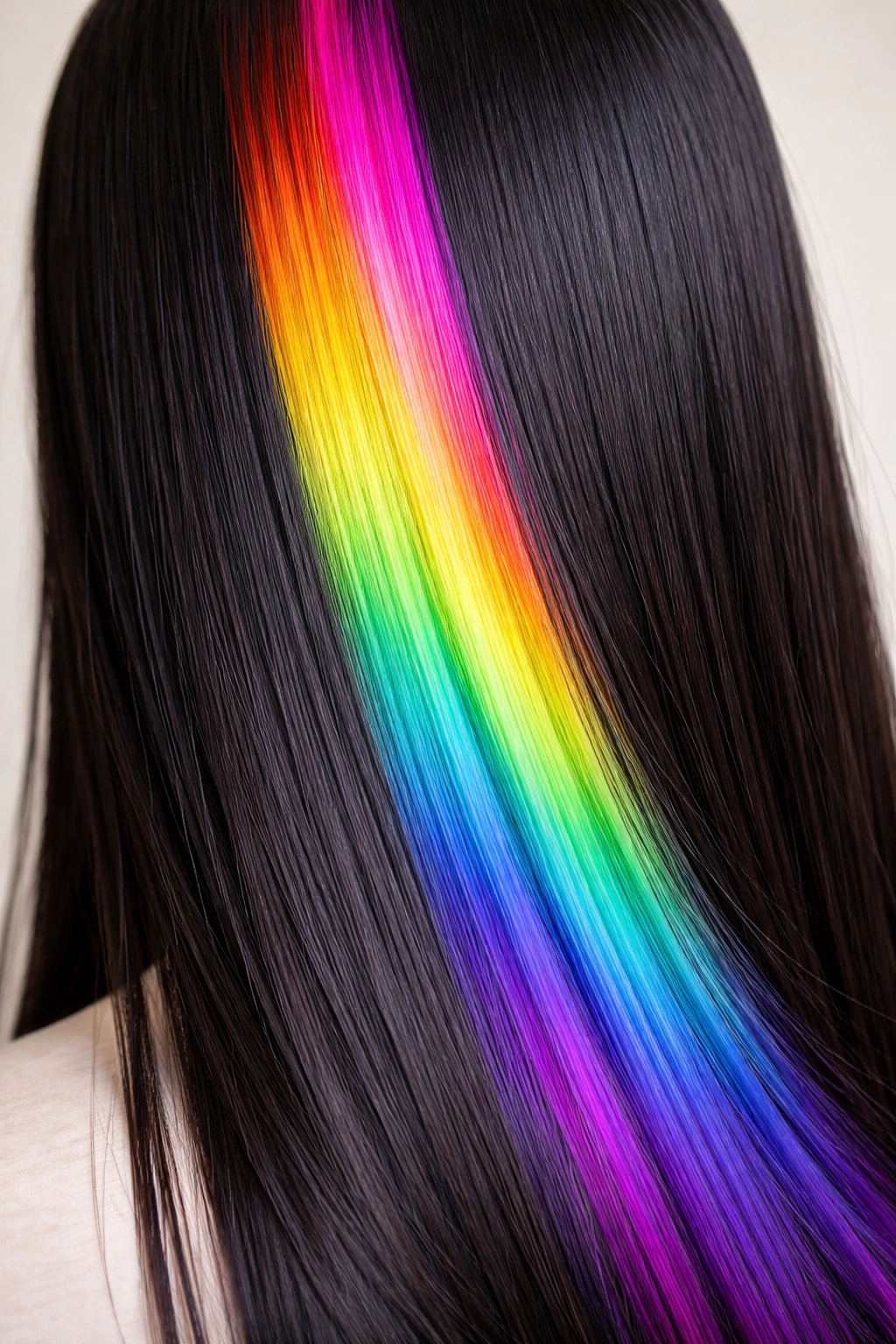
For those who want maximum self-expression and aren’t afraid of color, a gradient stripe that flows through multiple colors—starting with warm tones and moving to cool tones, or working through an actual rainbow progression—creates a stripe that’s essentially a personal art project.
How Straight Hair Advantages This Look
Straight hair is genuinely the best texture for a gradient stripe because each color occupies a distinct section, and straight strands don’t blend or blur the transitions. The gradient reads clearly, with each color distinct enough to see the progression. This creates visual interest without requiring the stripe to rely on any single color to carry the entire look.
Planning and Color Placement
- A typical gradient stripe might start with warm blonde or peachy tones, move through coral, then into pink, and finish with soft purple or blue
- You can also work with the classic rainbow: red, orange, yellow, green, blue, purple—each occupying a segment of the stripe
- Straight hair means you can arrange these colors horizontally (side by side) or vertically (progressing along the length of your hair)
- This is ideal as an underlayer stripe because full rainbow on top can read as overwhelmingly colorful in professional settings
Worth considering: A gradient rainbow stripe requires touch-ups on multiple colors, which is genuinely a commitment in both time and money. But visually, it’s one of the most conversation-starting designs possible.
7. Pastel Pink and Platinum Blonde
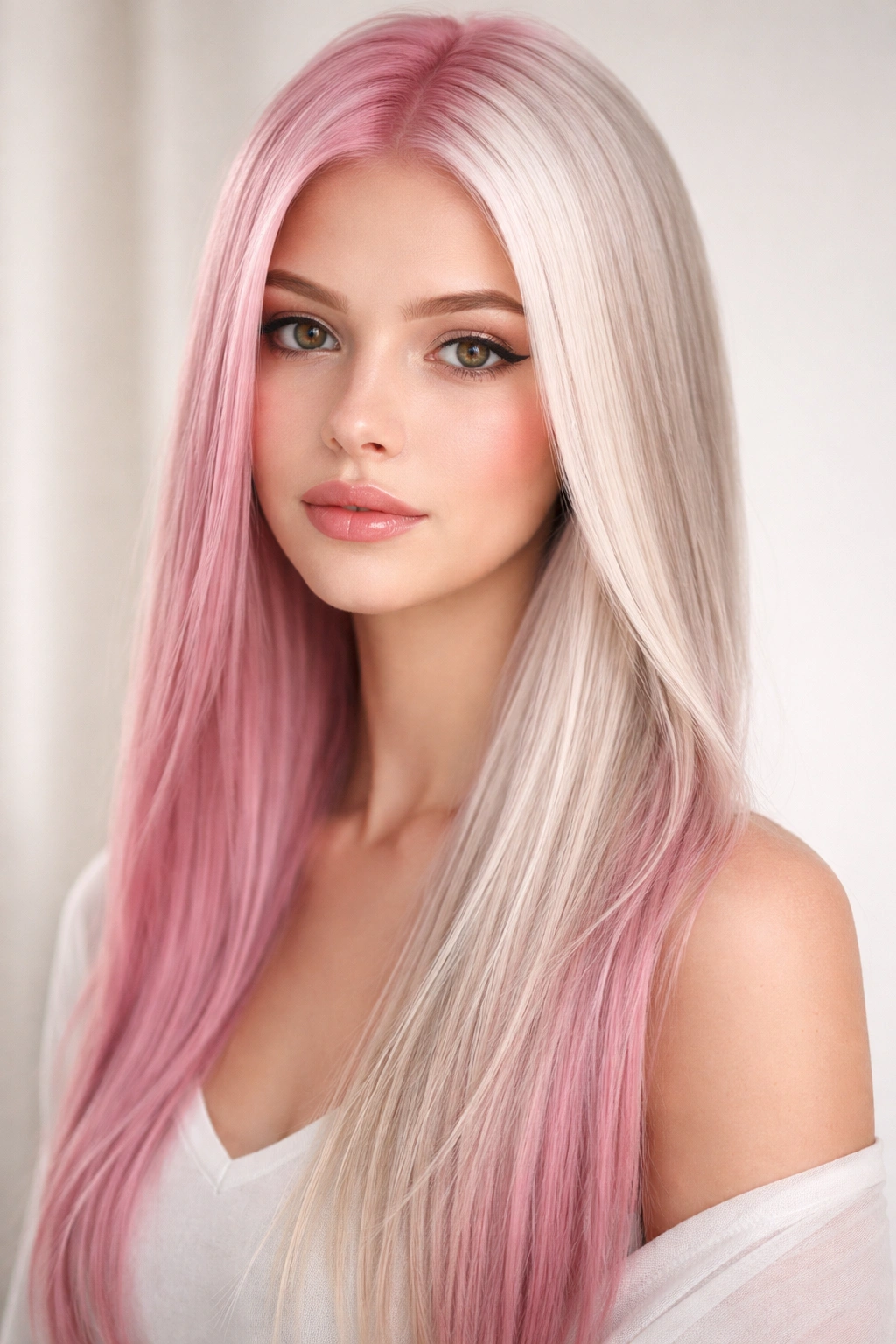
For a softer, more romantic approach to the skunk stripe, pair a dusty pastel pink with icy platinum blonde. This combination feels almost ethereal compared to bold black-and-white options, but on straight hair, it still creates clear visual distinction while feeling more whimsical than edgy.
Why This Works on Straight Hair
Pastel colors can sometimes look washed out on textured hair, but straight hair’s light-reflective properties mean pastels glow rather than fade into invisibility. The platinum blonde provides brightness that makes the pink feel intentional, while the pink adds a unique personal touch that separates this look from simply having platinum blonde hair. Together on straight hair, they create something that’s distinctly styled rather than just two separate colors.
Making Pastels Last
- Pastel colors fade quickly because they start with less pigment density—expect visible fading within 2-3 weeks
- Straight hair shows every bit of color fading, so be prepared for the pink to shift toward mauve or gray and the platinum to warm up toward yellow
- Using color-safe or sulfate-free shampoo specifically and avoiding hot water helps extend pastel vibrancy significantly
- Some people love the faded pastel aesthetic and intentionally let colors shift for a more dimensional look
Styling note: This stripe looks absolutely stunning when straight hair is sleek and polished—a flat iron pass makes the colors glow, while texture makes them feel less vibrant. Lean into the straight aesthetic for maximum impact.
8. Copper and Deep Espresso
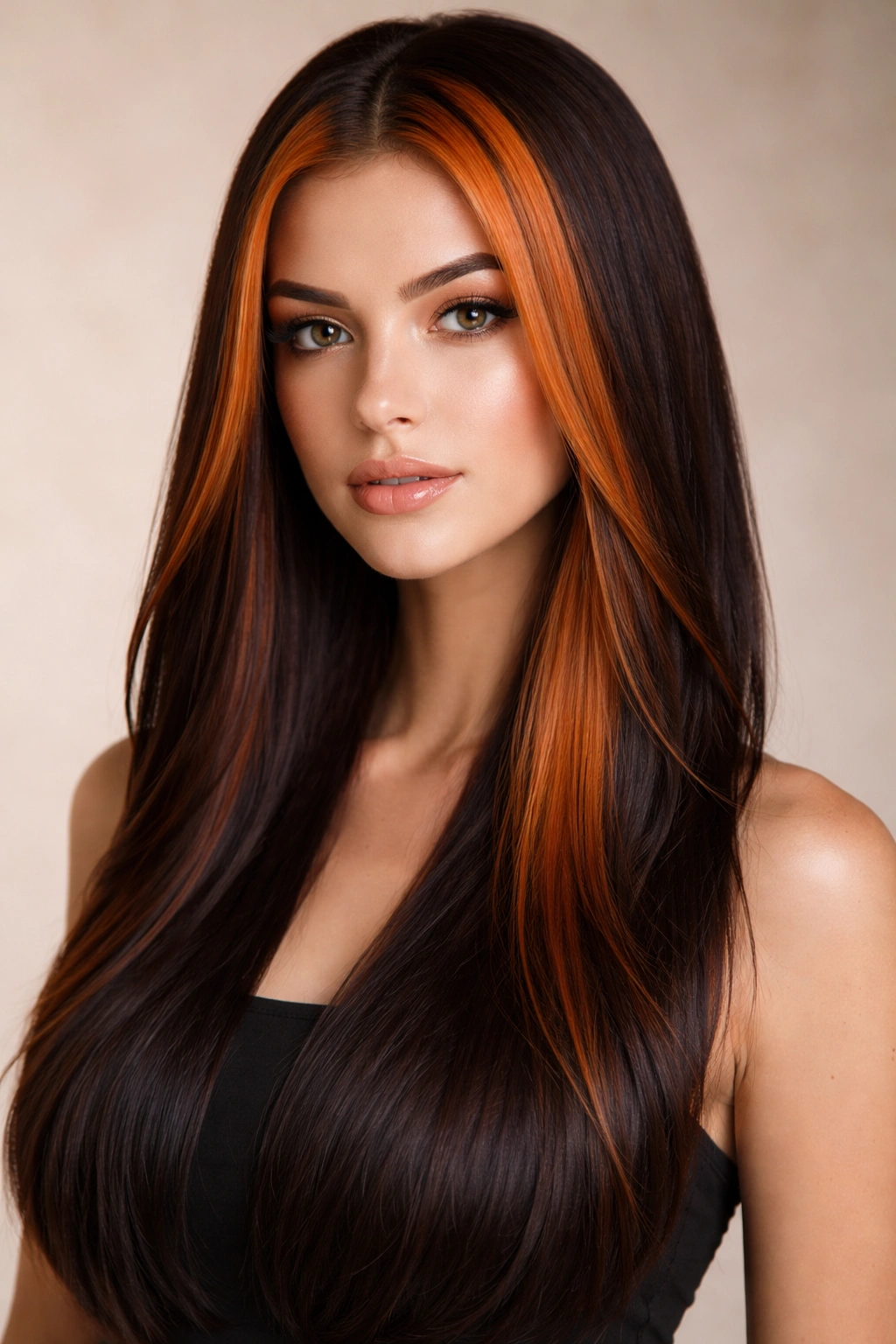
For a warm-toned, rich alternative to the standard black-and-blonde pairing, a glowing copper stripe paired with deep espresso brown creates dimension that feels sophisticated and works beautifully with warm skin tones. This combination is less trendy-looking than some other pairings, which means it photographs beautifully and tends to feel timeless.
Why Warm Tones Suit Straight Hair
Copper and espresso create a color story that reads naturally—like the kind of dimensional hair that happens from sun exposure and skillful balayage. On straight hair, this pairing creates visual interest that doesn’t feel like a costume choice. The copper catches light beautifully on straight strands, while the espresso provides grounding and contrast without being as harsh as pure black.
Maintenance Specific to This Pairing
- Copper requires regular toning because it shifts toward orange as it fades; a purple or ash-toned gloss helps maintain the coppery warmth
- Espresso brown is relatively low-maintenance compared to most striping options—it actually looks better with a slight fade because it creates dimension
- Straight hair is an advantage here because the tonal shift from fresh copper to slightly faded copper reads as intentional dimension, not poor maintenance
- This pairing suits those who prefer warmer tones and want color that feels sophisticated rather than statement-making
Pro tip: If you’re naturally a warm-toned brunette, you can save money and maintenance by keeping your natural hair color as the espresso and adding copper only to the stripe section.
9. Frost-Tipped Underlayer Design
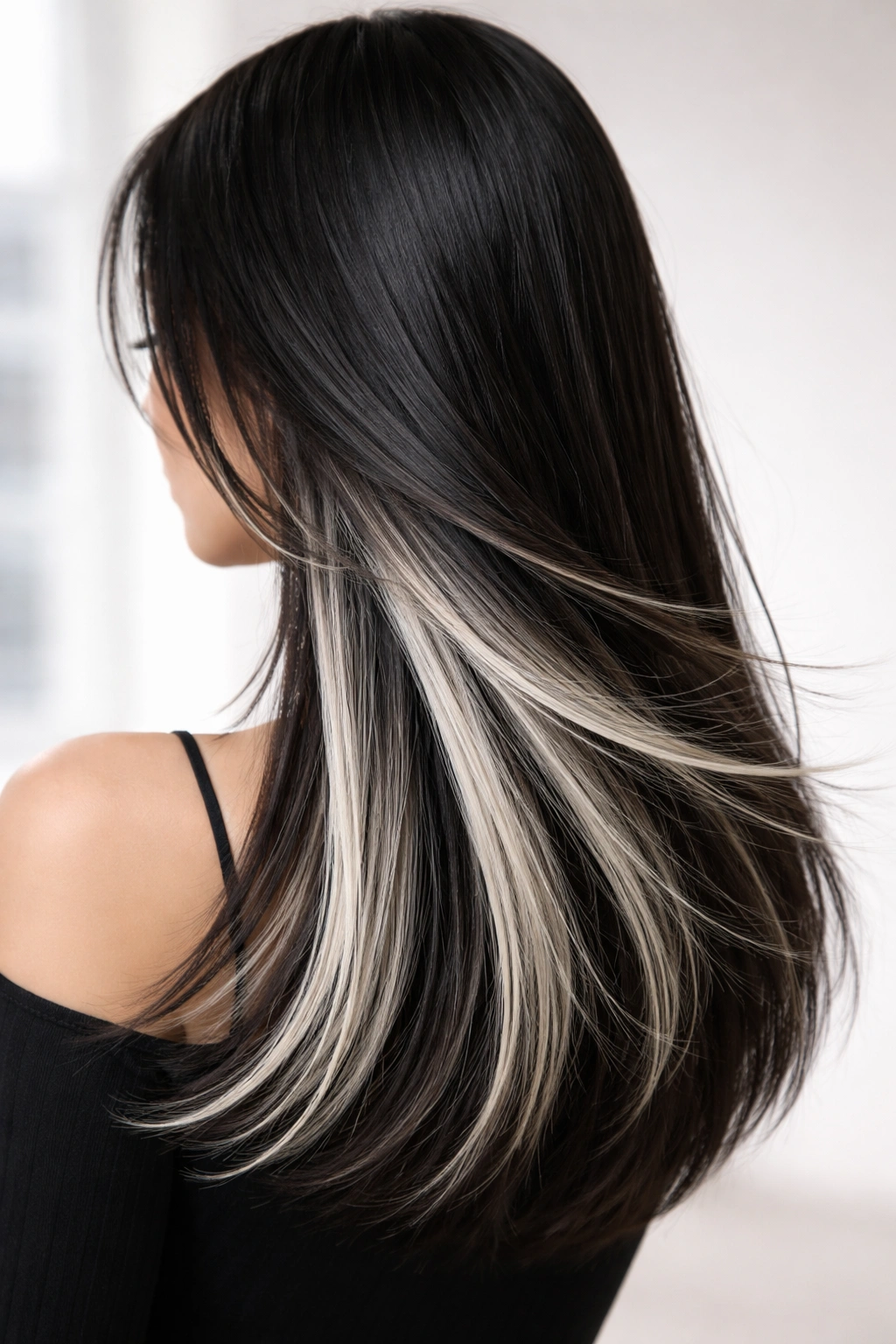
Rather than a single continuous stripe, a frost-tipped underlayer design places lighter tones throughout the bottom section of your hair, creating a striped effect that’s visible primarily when you move or style your hair up. On straight hair, this creates a sophisticated, subtle version of the skunk-stripe concept.
Why This Works Beautifully on Straight Hair
Straight hair makes the placement and visibility of underlayer stripes incredibly controllable and clear. When you move, the lighter tips catch light in a way that feels like intentional styling without the daily presence of a bold front-facing stripe. The geometric precision of straight hair means the frost-tipped section reads as a deliberate design choice rather than accidental lighter hair underneath.
Creating and Maintaining Frost Tips
- This works best when applied to a substantial section—multiple pieces of lighter color rather than scattered highlights
- Straight hair makes it easy to see exactly which pieces are lightened and which aren’t, so the frost-tipped effect reads very clearly
- This requires less frequent touch-ups than a traditional stripe because regrowth is less noticeable in the underlayer
- Perfect if you want the visual interest of the skunk-stripe concept but the versatility of a style you can hide when needed
Styling advantage: This works especially well if you frequently wear your hair up. You get the joy of color without the commitment of a permanent front-facing stripe.
10. Dual-Sided Asymmetrical Design
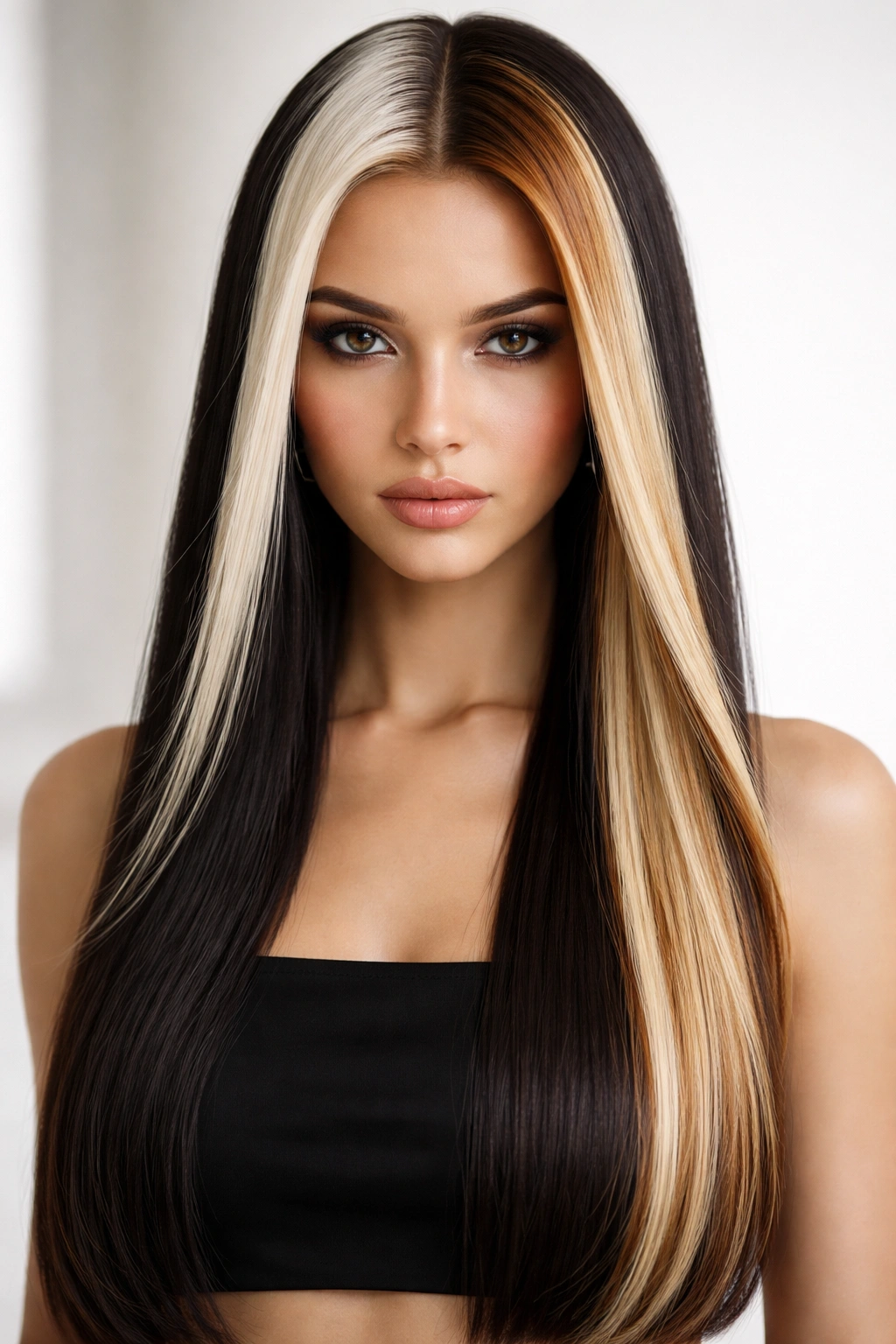
For maximum style impact and architectural precision, create an asymmetrical design where one side features one stripe combination and the other side features something completely different. On straight hair, this is possible to execute clearly because straight strands don’t blur or soften the boundary between sides.
Why Asymmetrical Stripes Suit Straight Hair
Asymmetrical designs require the crispness and clarity that straight hair naturally provides. If one side has a black-and-white stripe and the other has a burgundy-and-silver stripe, the contrast between sides is as important as the contrast within each stripe. Straight hair makes these boundaries clear and intentional, creating a genuinely editorial look that reads as high-fashion rather than chaotic.
Planning an Asymmetrical Design
- You might choose complementary color pairs: black-and-white on one side, burgundy-and-bronze on the other
- Or mirror the same stripe colors but place them differently: one side with a face-framing stripe, the other with an underlayer stripe
- Straight hair’s precision makes this work; on textured hair, asymmetrical designs can read as unintentional or unbalanced
- This requires commitment because you’re essentially maintaining two different stripe designs simultaneously
Worth knowing: This is genuinely the statement-making option—it says “I am thoughtful about style and not afraid of bold choices.” On straight hair, it reads beautifully. This is perfect for those who are truly ready to commit to a distinctive personal aesthetic.
Final Thoughts
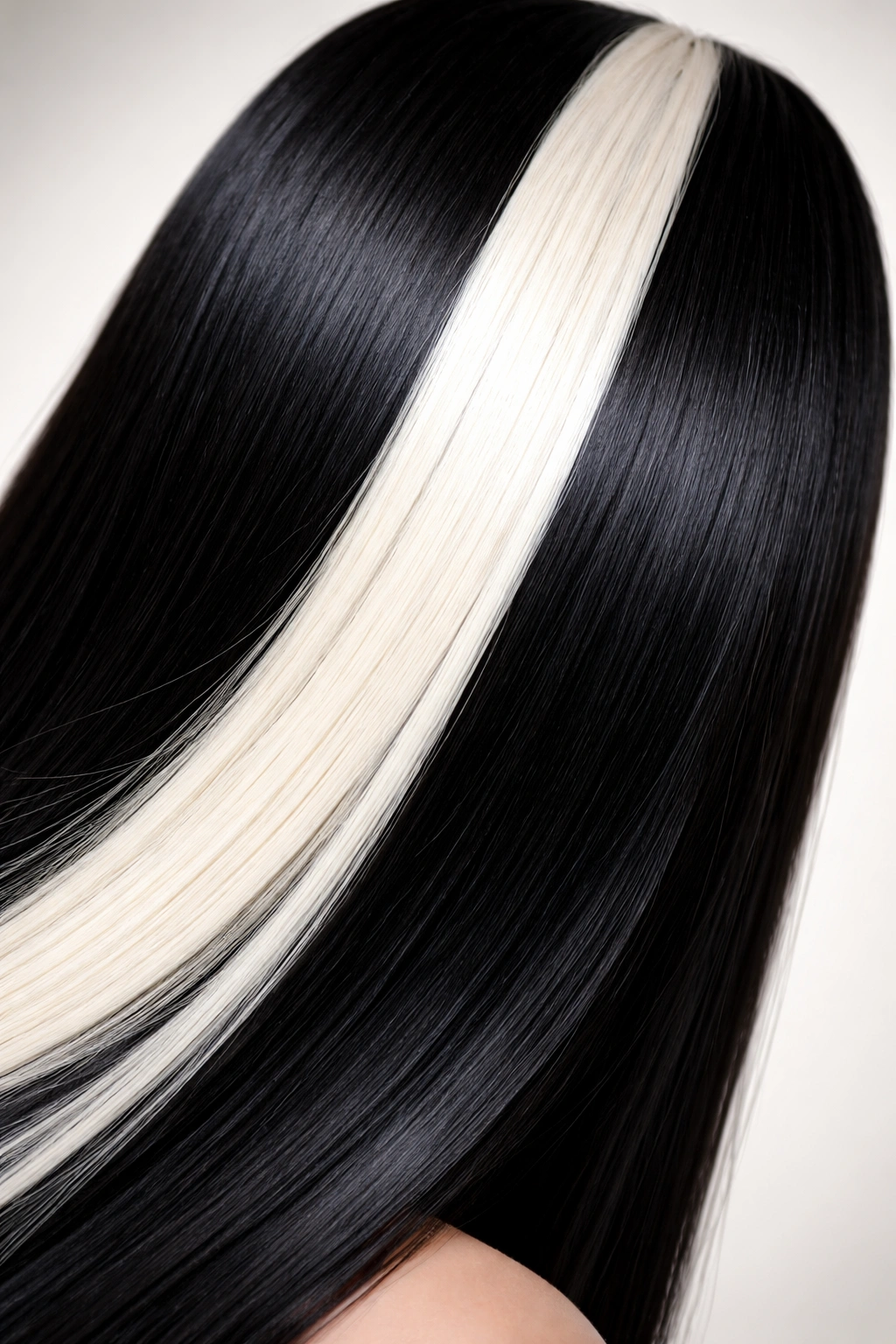
A skunk stripe on straight hair is an opportunity to express something about yourself without needing to change your cut, your texture, or your entire approach to styling. The color does the talking, and straight hair gives that color the clarity and light-reflection properties to truly shine. Whether you choose a subtle caramel peek-a-boo that feels like a private joy or a bold dual-sided asymmetrical design that stops traffic, the best stripe is the one that makes you feel genuinely confident and like yourself.
The maintenance is real—there’s no getting around touch-ups and color care—but the visual payoff justifies the commitment if you’re someone who values self-expression through style. Start with your skin tone, consider your lifestyle and how visible you want your stripe to be, then trust your instinct about which color combination actually makes your heart happy. That’s the one worth maintaining, because you’ll love how it looks in every reflection for months to come.
