



Straight hair is a stylist’s canvas for precision cuts that actually show off the line, movement, and texture a haircut is supposed to deliver. When your hair naturally falls flat and sleek, the architecture of a cut becomes everything—and that’s exactly what makes short hairstyles for straight hair so dramatically transformative. The right cut can add dimension without needing to blow-dry or style aggressively, and it can make a genuine statement in a way that only works when the hair cooperates with sharp, clean lines.
The challenge with straight hair has nothing to do with the hair itself and everything to do with finding a cut that works with your hair’s natural behavior rather than against it. Straight strands don’t naturally create volume or texture the way wavy or curly hair does, but they offer something those textures struggle with: the ability to hold a precise shape. A well-designed short cut on straight hair looks intentional, sharp, and polished with minimal effort. The key is choosing a style that respects how straight hair actually moves and settles, then pairing it with a stylist who understands that cutting straight hair is as much about geometry and proportion as it is about technique.
Whether you’re considering your first short haircut or you’re a veteran of the pixie-to-bob rotation, the cuts ahead all work beautifully on straight hair textures. They’re organized here from the shortest and boldest to the slightly longer styles that still count as “short,” with practical guidance on what makes each one special and what you genuinely need to know before you commit to the cut.
1. The Pixie Cut
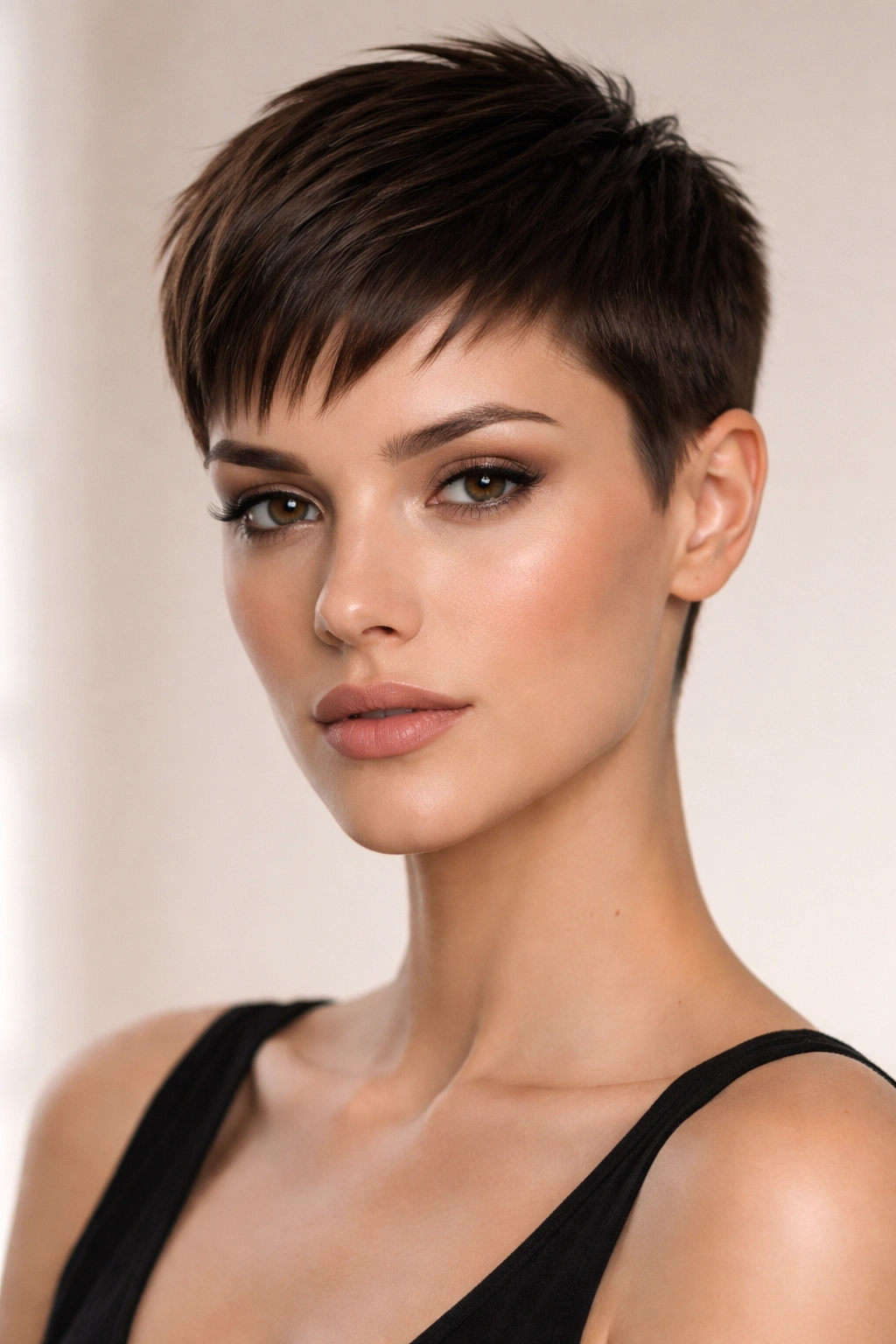
A pixie cut is the ultimate short style—it’s essentially a very short, tapered cut that sits close to the scalp and can be worn sleek, tousled, or tucked behind your ears depending on your mood. On straight hair, a pixie becomes even more graphic and intentional because the hair won’t curl or wave to soften the edges. This is exactly why straight hair makes the strongest pixie statements.
Why It Works So Well for Straight Hair
Straight hair’s natural weight means a pixie cut will actually hold its shape throughout the day without needing frequent styling. The hair won’t fluff up or lose definition, so the cut stays as clean and architectural as your stylist intended. You get all the texture and movement a pixie promises without the fight that sometimes comes with wrestling natural texture into a short cut. A stylist can create multiple lengths on top—longer in front, shorter on the sides—and those length variations will read clearly because straight hair doesn’t blur lines the way curly hair does.
Key Things to Know Before Booking
- Length variation matters: Ask your stylist for longer pieces on top (at least 2-3 inches) and shorter sides. This prevents the all-over flatness that can sometimes happen on straight hair.
- Undercuts work beautifully: A tapered or undercut fade on the sides looks extremely sharp on straight hair and gives you styling options.
- Styling is genuinely minimal: Most mornings, a pixie on straight hair needs just a quick comb-through. Some people add texture with a tiny bit of pomade or clay, but it’s optional.
- It suits straight hair more than other textures: This is one of the few cuts where straight hair has a genuine advantage—most stylists will tell you straight hair is actually easier to style as a pixie than curly or wavy hair.
Pro tip: If you’re nervous about going that short, ask your stylist for a “long pixie” instead—keep the top closer to 3 inches rather than 1.5, which gives you transition options and looks less severe while you adjust to short hair.
2. The Blunt Bob
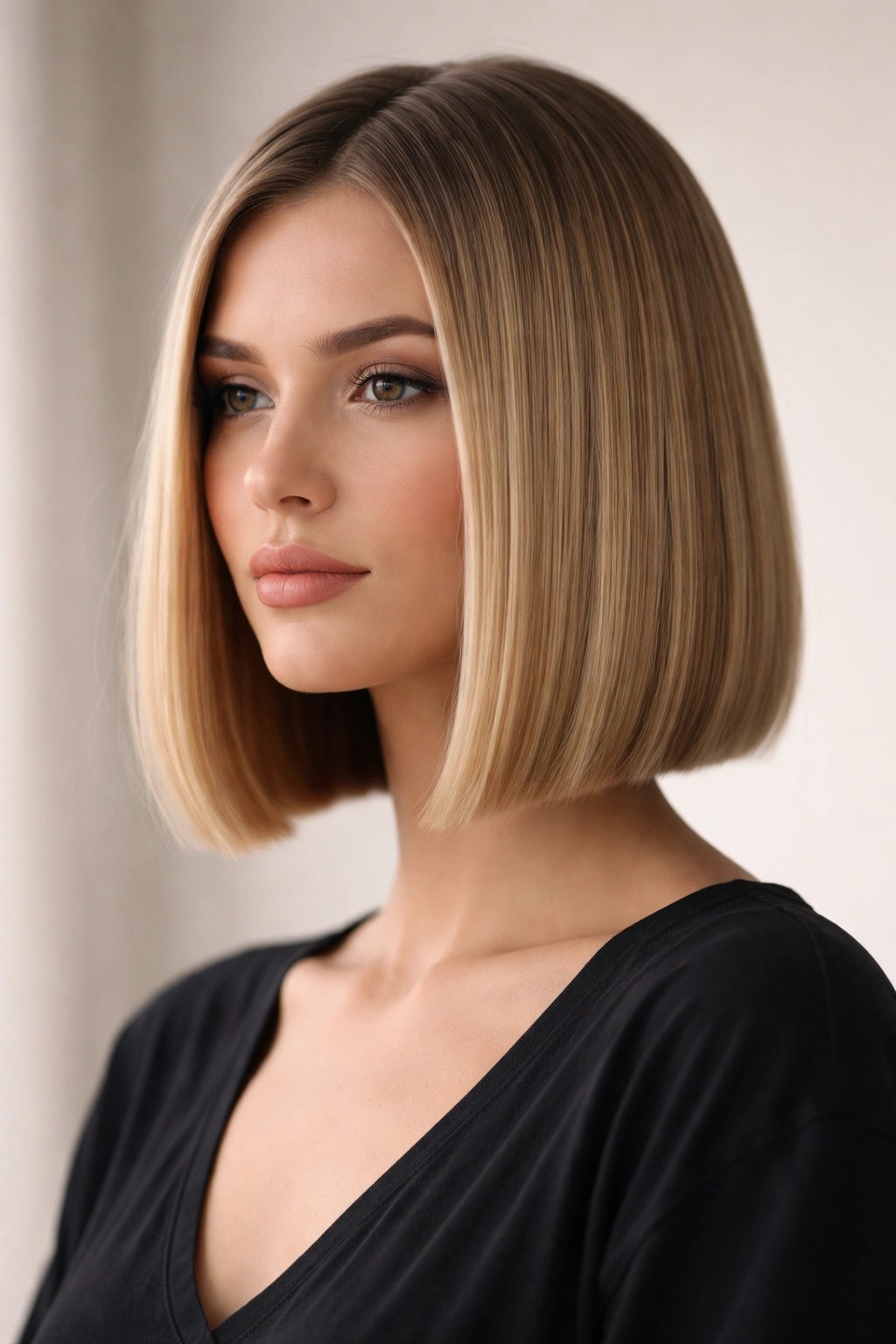
A blunt bob is a shoulder-grazing or chin-length cut with a sharp, straight line all the way around. On straight hair, this is where the cut becomes pure geometry—no fading, no layers, just one clean perimeter line that follows your jaw or hits your shoulders. It’s been a classic for decades because it genuinely flatters and it works.
How It Flatters Straight Hair Specifically
The blunt line reads as intentional and modern because straight hair holds it perfectly. There’s no natural bend or wave to soften or interrupt the line, which means your face shape and proportions become the focal point. A blunt bob actually enhances the straight texture rather than fighting it. The weight of the hair creates a gentle frame around your face without needing layers or feathering to achieve that effect.
Style Variations Worth Considering
- Chin-length blunt: Falls right at your jaw and creates a dramatic frame around your face. This length is bold and requires the most styling consistency to keep it looking intentional.
- Shoulder-length blunt: A bit more forgiving in length and easier to tuck behind your ears when you want it out of your face. Still clean and sharp but slightly less high-maintenance.
- Center-parted vs. side-parted: A center part makes a blunt bob feel more modern and graphic. A side part softens it and creates more asymmetry.
Worth knowing: A blunt bob requires maintenance. You’ll need a trim every 4-6 weeks to keep the bottom edge crisp and prevent it from looking grown-out and ragged. Straight hair shows every millimeter of length, so precision matters.
3. The Textured Crop
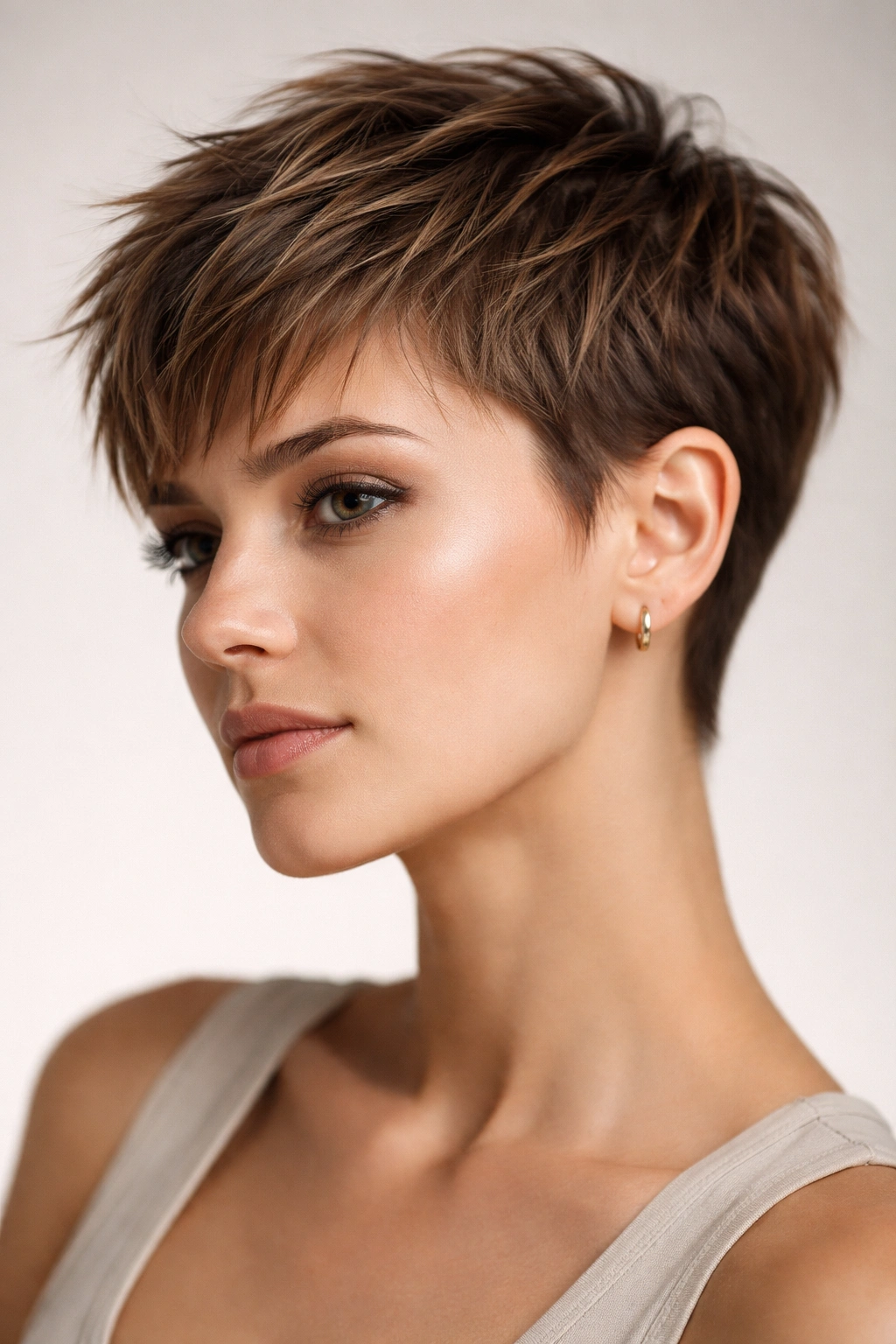
A textured crop is a short cut (typically 1.5 to 2 inches on top) with choppy, uneven layers that create movement and visual texture even though your hair is naturally straight. Instead of smooth and sleek like a pixie, this cut is deliberately piecy and slightly tousled.
Why Texture Layers Transform Straight Hair
Adding choppy layers to a straight crop creates the illusion of movement and prevents the flat, helmet-like appearance that can happen when you cut straight hair super short and keep it uniform. The layers give you something to work with—you can tousle them, spike them, or part them differently depending on your mood. On straight hair, these textured cuts actually look more textured than they would on wavy hair because the contrast between the longer and shorter pieces becomes more obvious.
Styling and Maintenance Tips
- Texture is the point: Use a texture spray, dry shampoo, or a light pomade to emphasize the choppy pieces rather than smoothing them down. This is what makes the cut come alive.
- You can wear it sleek too: Some mornings you might want to comb it straight and smooth. A textured crop works both ways.
- Grows out quickly: Since different pieces are different lengths, this cut can start looking shaggy faster than a uniform pixie. Plan for trims every 4-5 weeks.
Quick fact: Textured crops work especially well for people who have straight hair but want the feeling of movement and don’t want to commit to permanent waves or spirals. You get visual texture without texture that needs to be maintained.
4. The Lob (Long Bob)
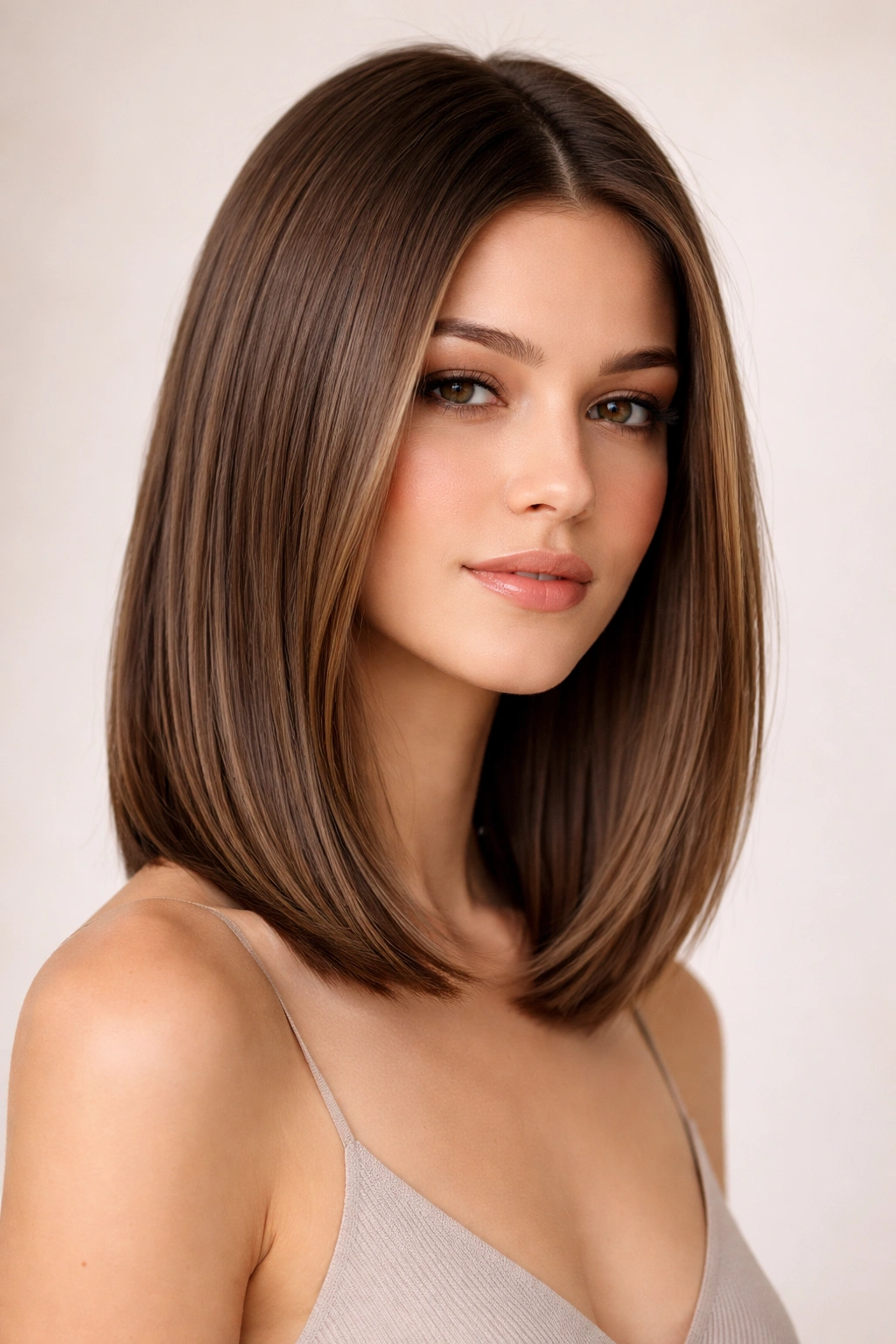
A lob is that in-between length—typically 12-16 inches—that’s longer than a traditional bob but still firmly in short-hair territory. On straight hair, a lob is incredibly wearable because the length gives you options: you can wear it down, twist it up, tuck it behind your ears, or pin it back.
What Makes a Lob Perfect for Straight Hair
Straight hair makes a lob look sophisticated and sleek because the longer length actually shows the hair’s natural shine and flow. There’s no bulk or heaviness the way there might be on thicker textures at the same length. A lob on straight hair reads as intentional and styled without actually needing much styling. The weight of the longer hair creates a subtle frame around your face.
Cut Details That Matter
- Subtle layers or blunt line: You can go completely blunt (one-line perimeter) or ask for very subtle internal layers that create movement without obvious choppy texture.
- Where it hits matters: A lob that hits at your collarbone is easier to tuck and style. One that hits mid-shoulder can be pinned back more easily.
- Bangs or no bangs: A lob looks stunning with a long side-swept bang or even a full fringe. The longer length gives you freedom with how you frame your face.
Real talk: A lob is the comfortable middle ground if you want to cut your hair shorter but aren’t ready to fully commit to short. You get the benefits of a short cut (lower maintenance, easier styling) with enough length that you feel like you still have hair.
5. The Side-Swept Bangs Short Cut
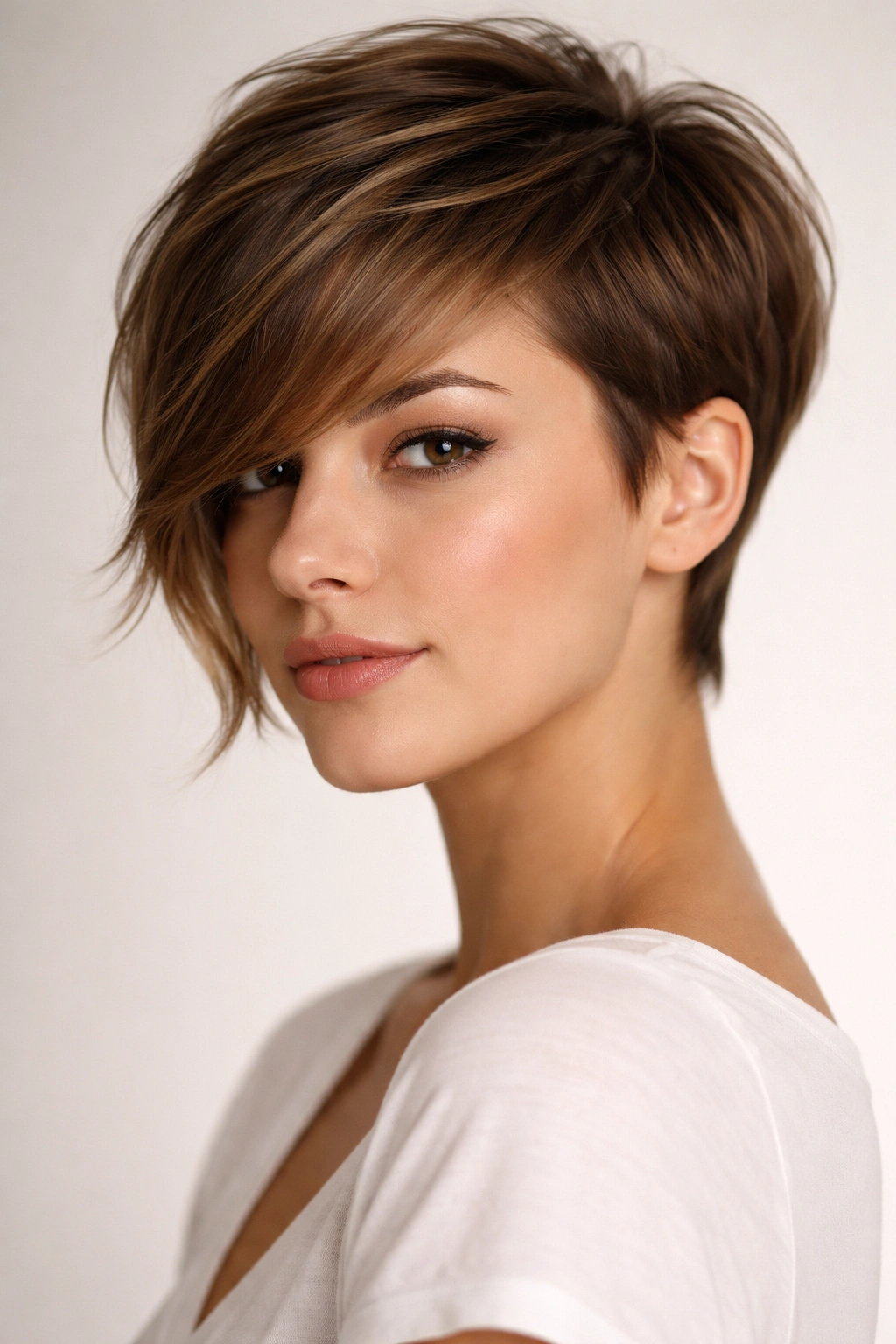
This is a short, textured cut on top with longer pieces framing the face and a prominent side-swept bang that hits around your cheekbone or chin. The bang is the statement here—it’s the part that gives the cut its personality and style.
Why Side-Swept Bangs Work on Straight Hair
On straight hair, a side-swept bang reads beautifully because it doesn’t flip out or curl in unexpected directions. The bang falls exactly where you want it, which makes this cut look polished and controlled. The contrast between the short textured top and the longer frame-pieces creates visual interest and dimension without needing to rely on curl or wave.
Styling Expectations and Maintenance
- The bang needs styling: Unlike some styles where straight hair is low-maintenance, a side-swept bang often needs to be blow-dried or smoothed to look intentional. This is the trade-off for how good it looks.
- Adjustable length: If you find the bang too long, it’s an easy quick-trim between full haircuts. Many stylists will adjust it for free or very cheaply.
- It suits oval and heart-shaped faces especially well: The bang softens the forehead and the longer frame-pieces soften wider cheekbones.
Pro tip: If you love the look but worry about daily styling, ask for a slightly shorter bang (one that hits at your eyebrow rather than below it) so it’s less noticeable if you skip styling and still reads as intentional.
6. The Shaggy Layers
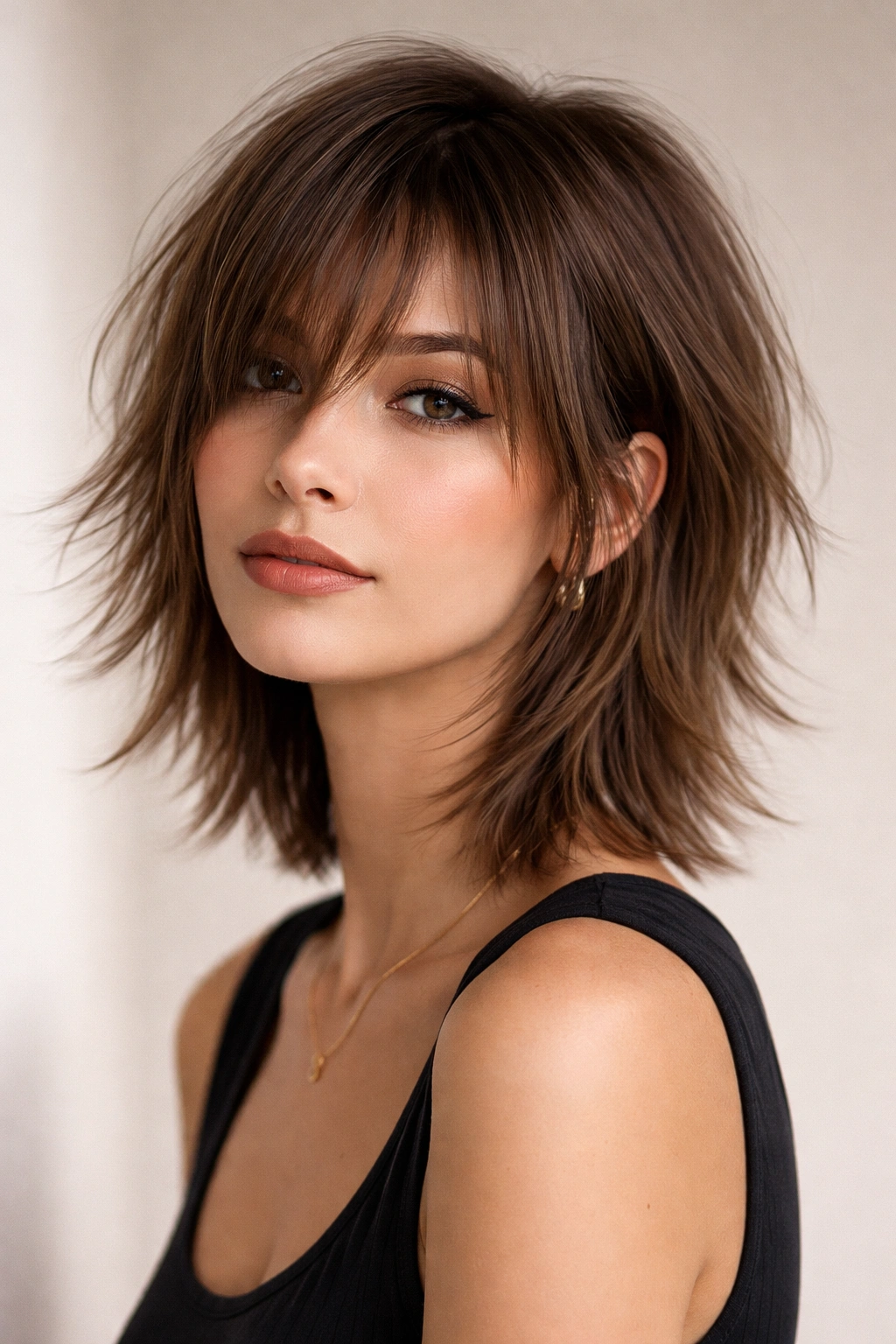
A shaggy layered cut is medium-short with multiple uneven layers throughout that create a deliberately piece-y, slightly undone texture. Think of it as the textured crop’s longer cousin. On straight hair, shaggy layers give you movement and shape without relying on your hair’s natural texture to do the work.
How Layers Create Dimension on Straight Hair
Shaggy layers work on straight hair because the varied lengths catch light differently and create visual movement. The shortest layers (usually at the crown) give the impression of volume and texture, while the longer pieces frame your face and neck. On straight hair, these layers read very cleanly—you can see exactly where each layer starts and stops, which makes the cut look deliberate and cool.
Styling and the Shag’s Low-Maintenance Promise
- It’s more low-maintenance than you’d think: Straight hair with shaggy layers often looks good without styling, just combed through. The layers naturally create shape.
- Texture spray is your friend: On days when you want more obvious movement, a light texture spray enhances the piece-y quality.
- Layers need trims often: Individual layers grow out faster than blunt lines, so plan for trims every 5-6 weeks to keep the cut looking intentional rather than just grown-out.
Worth knowing: Shaggy layers aren’t as universally flattering as blunt cuts. They work best on people with lower face fullness and people who like a slightly undone, casual aesthetic. If you prefer a very polished or geometric look, this might not be your style.
7. The Sleek Undercut
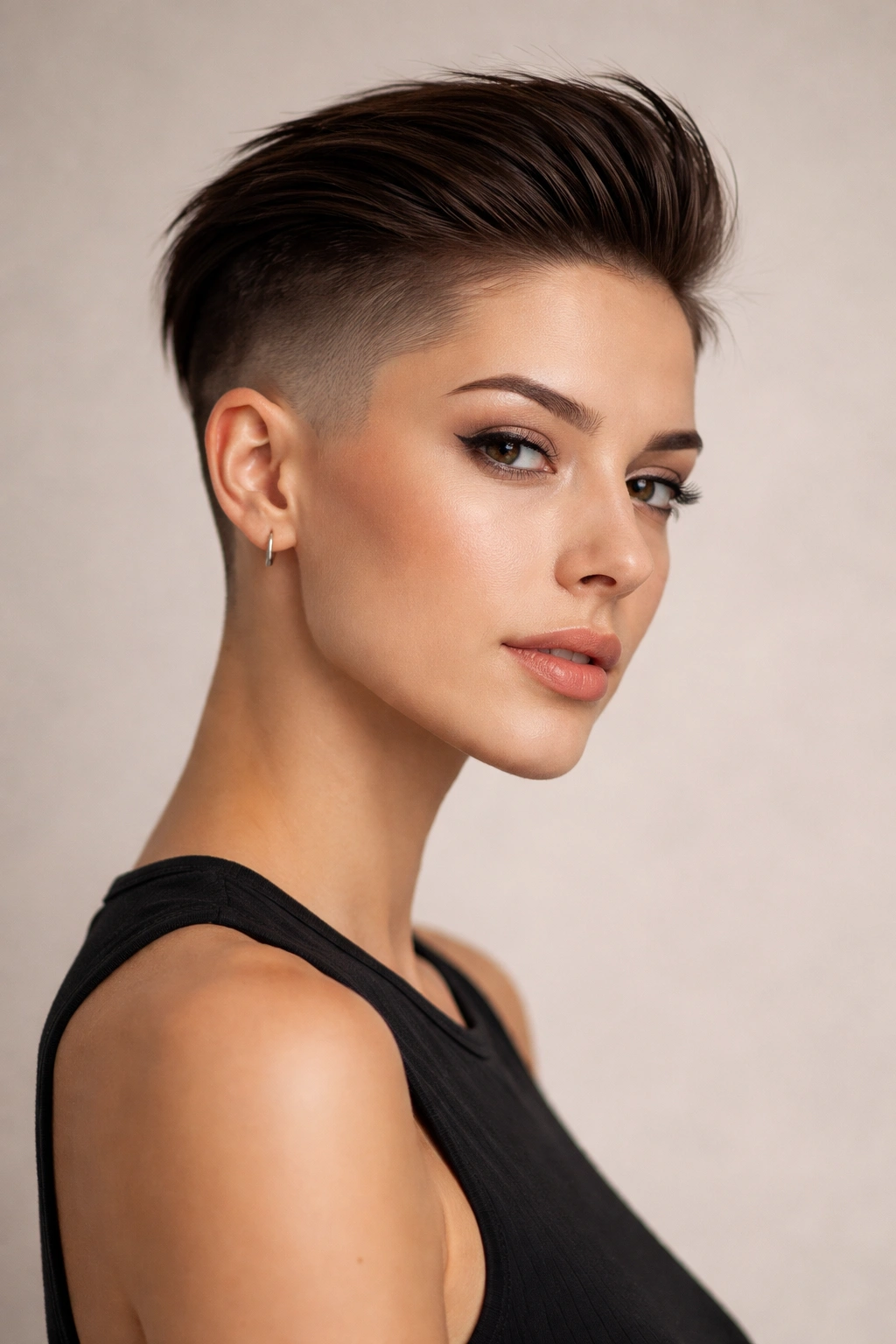
An undercut is a short cut where the sides and back are very short (often with a fade) and the top is noticeably longer, creating sharp contrast between the two lengths. On straight hair, this contrast is extremely graphic—the sides are practically shaved while the top might be 3-4 inches.
Why Undercuts Are Bold on Straight Hair
Straight hair makes undercuts even more striking because there’s no texture or curl to blur the line between the short sides and long top. The contrast reads as intentional and edgy. An undercut is a fashion statement—it says something about the wearer’s willingness to take risks with their appearance.
Styling and Real-World Practicality
- Styling the top is essential: The longer top usually needs some product and intentional styling. Combed straight down, it can look a bit odd. You’ll want to style it back, up, or to the side.
- The fade matters: A good fade (where the side length gradually shortens toward the skin) looks much cleaner than a blunt edge. Your stylist’s skill here is everything.
- It requires regular maintenance: The short sides grow out fast, especially on straight hair where every millimeter shows. Plan for trims every 3-4 weeks.
Quick fact: Undercuts work better on people with straight or wavy hair than on curly hair. Curly hair can make an undercut look chaotic and hard to manage, while straight hair makes it look intentional and controlled.
8. The Asymmetrical Cut
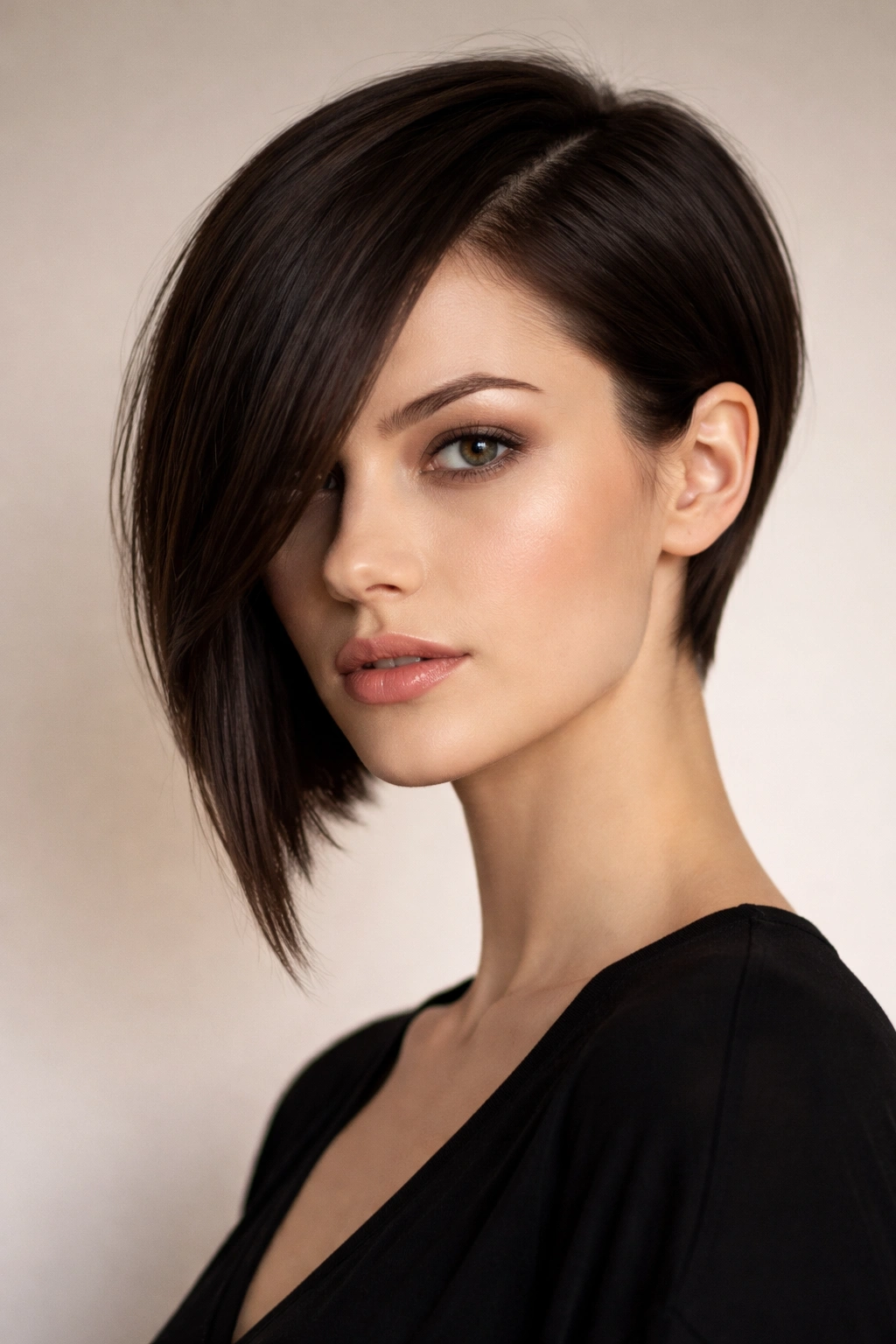
An asymmetrical cut has different lengths on different sides—one side might be shorter and more tapered while the other is longer, creating an off-balance but intentional silhouette. On straight hair, this cut is very visual and modern-looking.
The Visual Impact of Asymmetry on Straight Hair
Because straight hair doesn’t curl or bend, an asymmetrical cut reads as a deliberate design choice rather than an accident. The cut becomes a statement about your aesthetic and personality. The contrast between the two sides creates visual interest and can actually be very flattering—the longer side frames your face while the shorter side keeps it from being too heavy.
Making an Asymmetrical Cut Work for You
- It suits certain face shapes especially well: Asymmetrical cuts are fantastic for round or square faces because they disrupt the symmetry and create visual narrowing or lengthening.
- Styling varies by side: You might blow-dry the longer side smooth and style the shorter side up or back, which actually makes daily styling interesting rather than monotonous.
- The longer side still needs regular trims: Even though one side is shorter, both sides need maintenance to keep the intentional asymmetry from looking sloppy.
Real talk: An asymmetrical cut works best if you actually like unconventional styling and don’t mind being noticed. It’s not a cut for people who want to blend in or play it safe with their appearance.
9. The French Bob
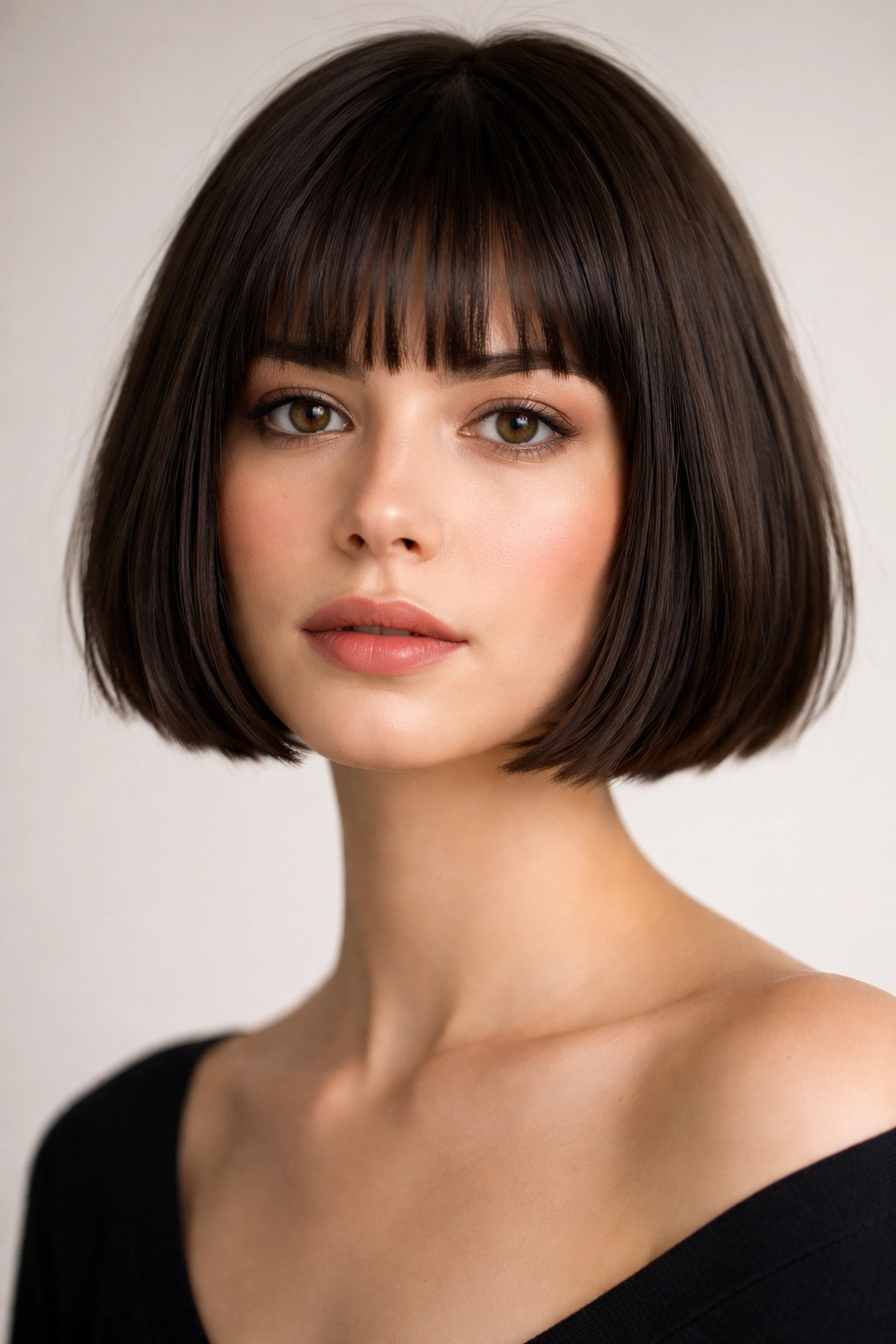
A French bob is a chin-length blunt cut with a very specific quality: it hits right at your jawline, often with subtle layers inside (not visible from the outside), and frequently features bangs that are short, blunt, and sit just above the eyebrows. It’s become iconic because it’s simultaneously classic and effortlessly cool.
Why the French Bob Suits Straight Hair Perfectly
The French bob is actually easier to execute beautifully on straight hair than on curly or wavy hair. Straight hair holds the blunt line and the precise proportions that make a French bob look Parisian and chic. There’s no frizz, no unpredictability—the cut looks exactly as your stylist intended. The straight texture actually enhances the sophistication this cut promises.
Key Elements of an Authentic French Bob
- The blunt chin-length line: This is non-negotiable. The cut hits right at your jawline, creating a frame for your face.
- The blunt bangs: They’re not wispy or feathery. They’re blunt, they’re short, and they sit right above your eyebrows. This is what gives the French bob its distinctive look.
- Subtle internal layers: You might have slight layers inside the cut that you can’t see from the outside, which gives it a tiny bit of movement and prevents it from feeling helmet-like.
Pro tip: If you’re nervous about the blunt bangs, ask your stylist for slightly longer bangs that sit at your eyebrow rather than above it. This is a gentler introduction to the French bob while you decide if you love it.
10. The Chin-Length Bob
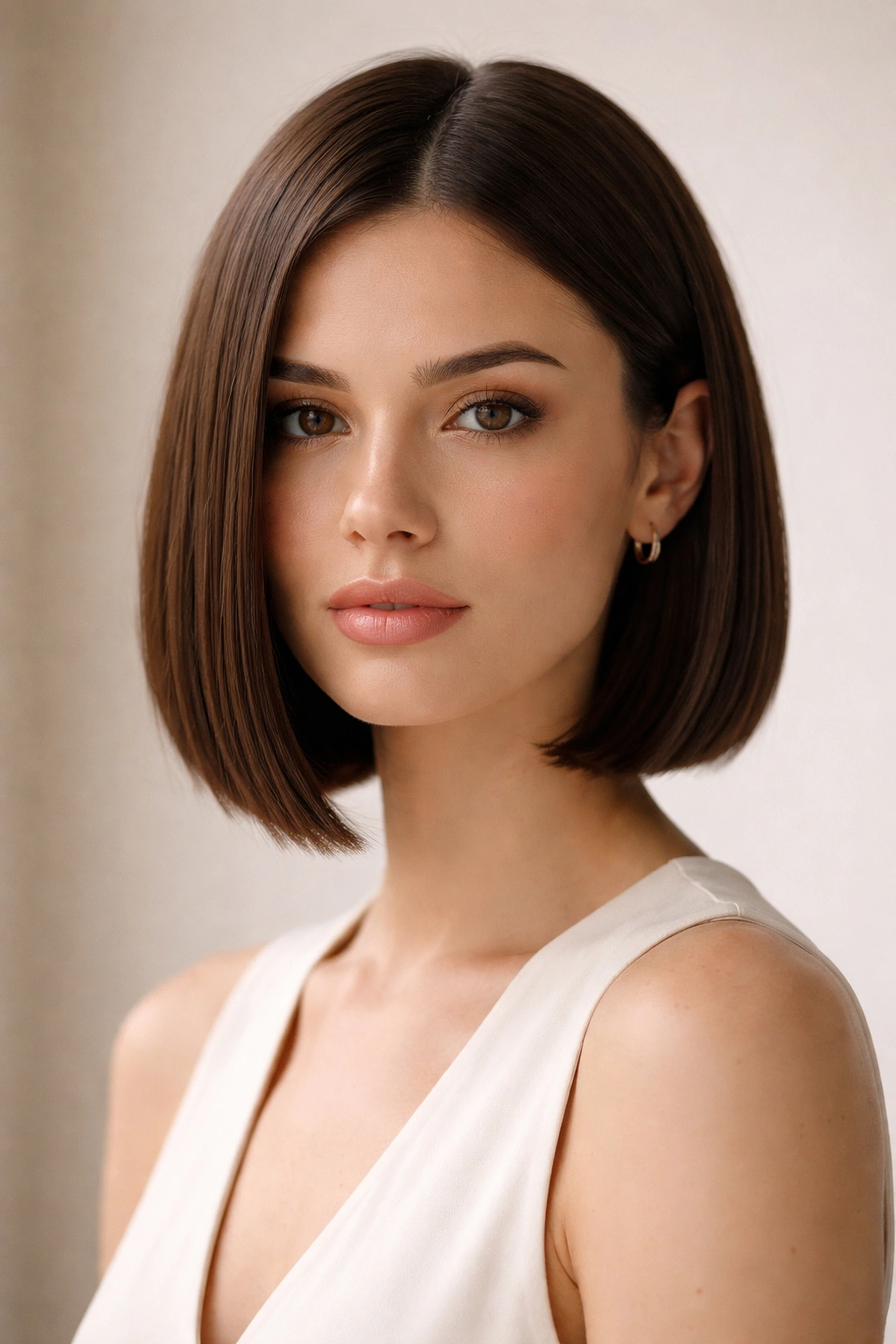
A simple chin-length bob is exactly what it sounds like—the hair hits right at your chin, usually with minimal layers or a blunt line all the way around. It’s a classic shape that’s been flattering for decades and works beautifully on straight hair because the line reads so clearly.
What Makes This Classic So Effective
A chin-length bob is like the little black dress of haircuts—it works on almost everyone and it never really goes out of style. On straight hair, it’s especially clean and intentional-looking. The length is long enough that you can tuck the hair behind your ears when you want it off your face, but short enough that it requires minimal styling to look polished.
Styling and Versatility
- Multiple styling options: You can wear it with a center part (more modern), a side part (more traditional), or tucked behind your ears (more casual).
- It works with or without bangs: A blunt, full fringe completely transforms the look. So do long, side-swept bangs. Without bangs is equally valid.
- Straight hair shows off the shape: Because your hair doesn’t curl or bend, the actual shape of the cut becomes the style. This is an advantage—you get a sophisticated look without needing to blow-dry or style heavily.
Worth knowing: A chin-length bob is incredibly forgiving if you’re new to short hair. It’s long enough that mistakes in cutting aren’t as dramatic, and it’s short enough that it genuinely feels like a fresh change. It’s the perfect entry point into shorter styles.
11. The Geometric Cut
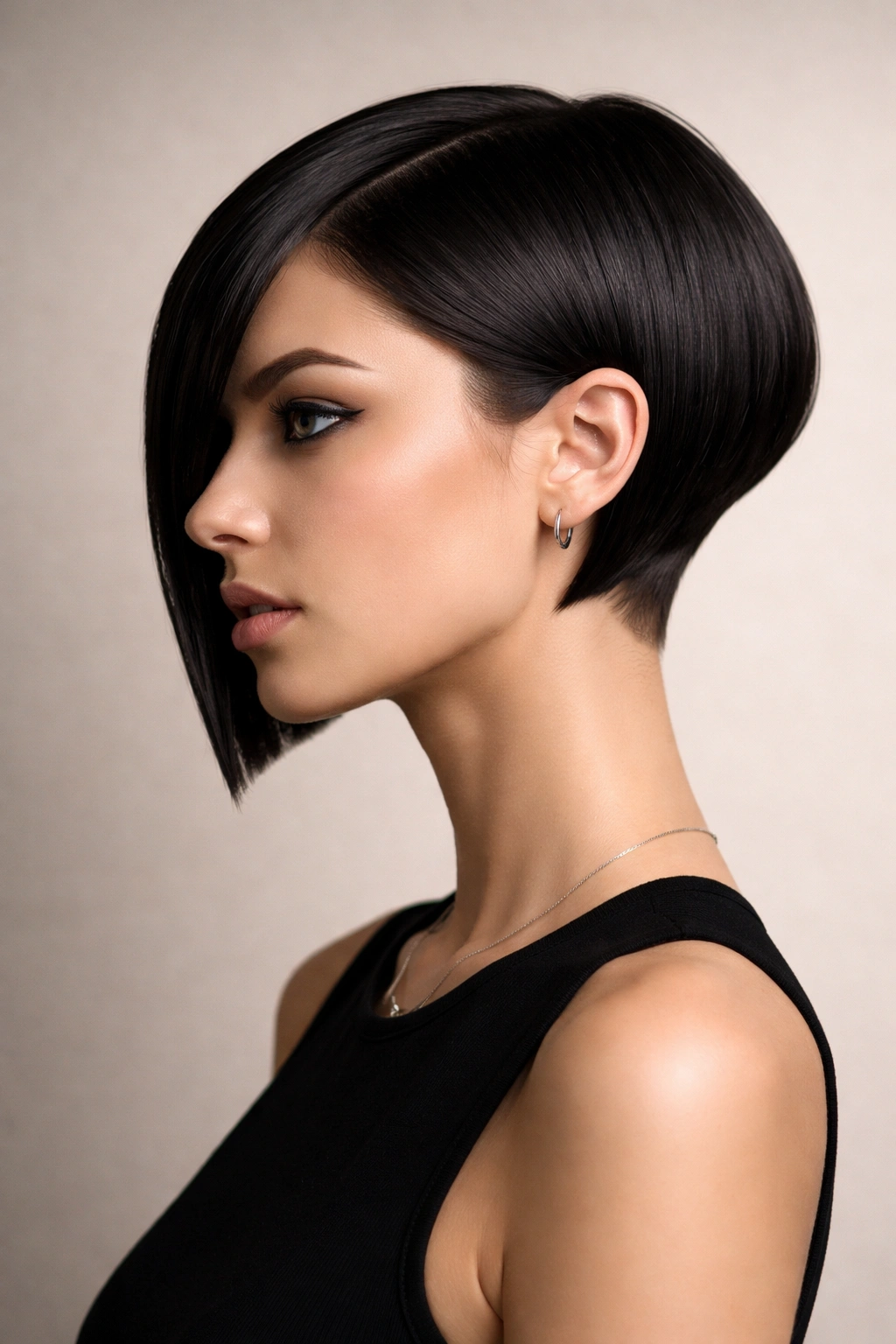
A geometric cut is a precisely shaped short cut with clean, intentional lines—think sharp angles, defined edges, and a real sense of architecture. These cuts are inspired by fashion and geometry rather than natural hair shape, and they make a bold statement on straight hair.
Why Geometry Is Actually Easier on Straight Hair
Geometric cuts rely on precision and clean lines—exactly what straight hair naturally provides. Your stylist can create sharp angles, clean intersections, and defined shapes without worrying about curl or wave interfering with the design. A geometric cut on straight hair looks like a sculpture. It’s fashion-forward and commands attention.
Different Geometric Cut Styles
- Angular pixies: Short on the sides with a longer front, creating a pointed or angular shape.
- Sharp bobs: Blunt bobs with geometric precision, sometimes with one side slightly longer or shorter than the other.
- Architectural layers: Layered cuts where the layers are cut at precise angles to create visual movement and shape.
Real talk: Geometric cuts require both a skilled stylist and a wearer who’s comfortable being seen. These aren’t subtle. They’re fashion statements that say something about the person wearing them. If you love unconventional style and modern aesthetics, a geometric cut is thrilling. If you prefer to blend in, it’s not for you.
12. The Textured Fringe
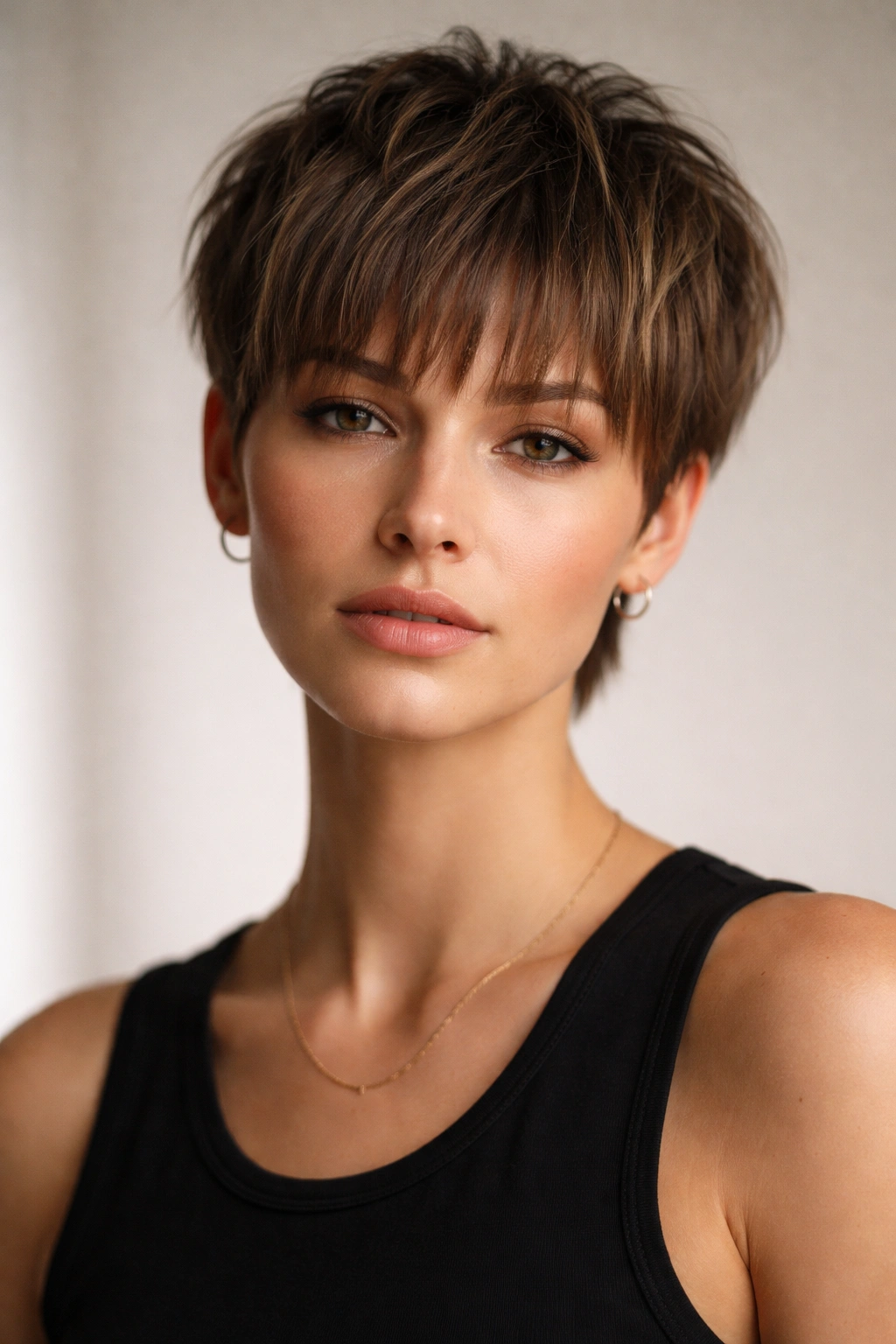
A textured fringe is a short haircut with shorter, choppier bangs in front (creating that textured, piece-y quality) and slightly longer, textured hair on top and around the sides. The fringe is the focal point, and it reads as very current and fashion-forward.
How a Textured Fringe Adds Movement to Straight Hair
Textured fringes work beautifully on straight hair because the choppy layers create visual movement that straight hair wouldn’t naturally have. The piece-y quality catches light and creates dimension. Combined with textured shorter sides and back, the overall effect is youthful, modern, and intentionally tousled.
Styling and Maintenance Requirements
- Daily styling needed: A textured fringe usually needs some attention—a texture spray, a light pomade, or a quick tousle with your fingers. It’s not a wash-and-go style.
- The fringe grows quickly: Because it’s shorter than the rest of your hair, it needs trims more frequently. You might find yourself getting a quick fringe trim between full haircuts.
- It reads very young: This is a youthful, energetic style. If you’re looking for something more mature or polished, this might not be the right direction.
Pro tip: If you love the textured fringe concept but worry about daily styling, ask your stylist to make the fringe slightly longer so it blends better with the rest of your cut when you don’t style it. This gives you the option to dress it up or down depending on your day.
13. The Sharp-Lined Fade
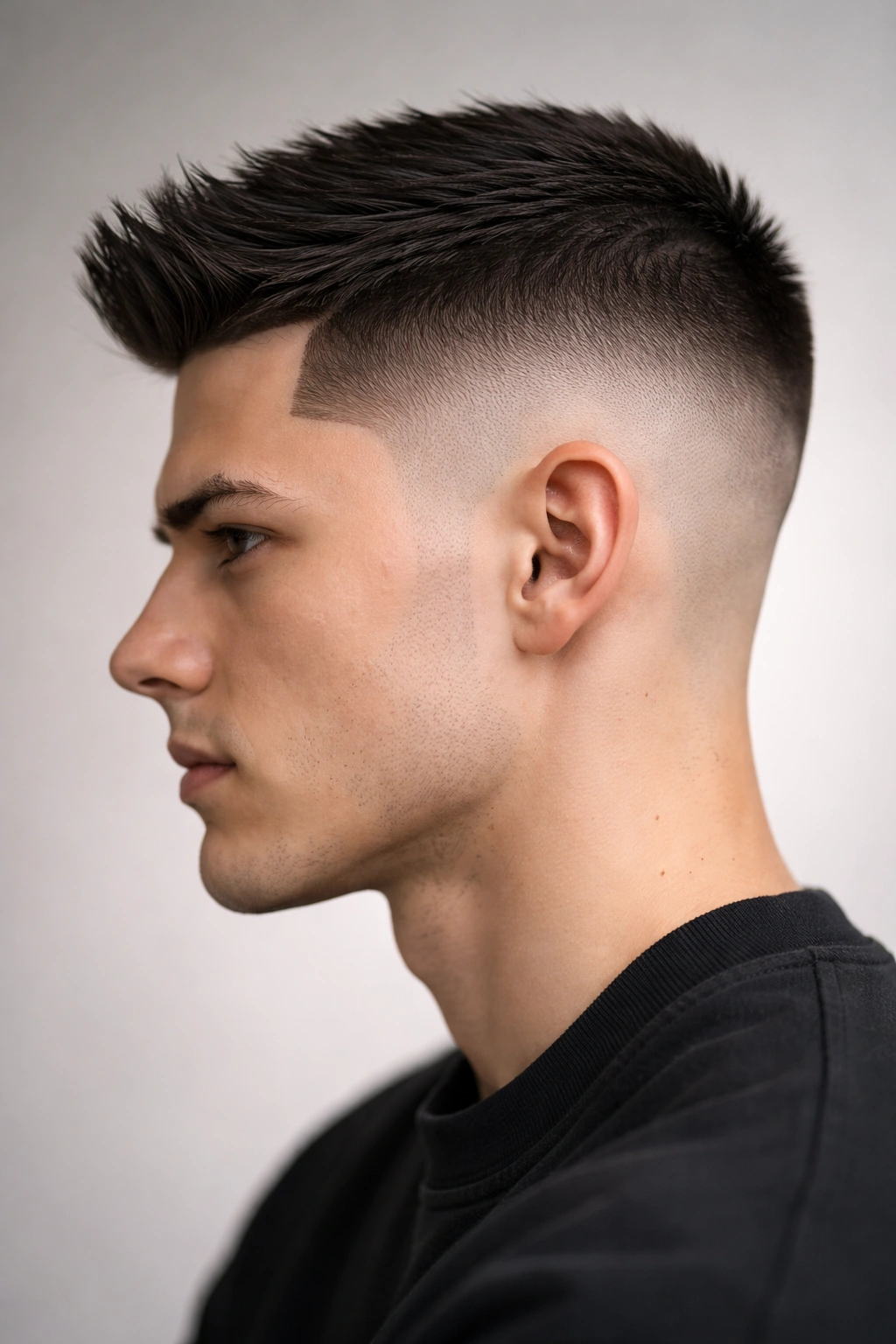
A fade (often called an undercut fade or a high-and-tight fade depending on where the fading stops) is a short cut where the sides and back gradually shorten toward the skin in precise, controlled increments. On straight hair, a fade looks extremely sharp and intentional—there’s no texture to soften the transition, just clean, geometric lines.
The Technical Precision That Straight Hair Reveals
A fade is all about the barber or stylist’s technical skill. On straight hair, every millimeter of difference between one guard size and the next is completely visible. You can’t hide sloppy work on straight hair with this cut—which means if you find a good stylist who does clean fades, you’ve found someone valuable. A well-executed fade is essentially geometric precision in haircut form.
Fade Variations and Styling
- High fade: Fading starts about 2 inches above the ear, creating maximum contrast between short sides and longer top.
- Mid fade: Fades start around the temple area, giving a bit more coverage on the sides.
- Low fade: The fade extends lower, giving more length to the sides before the gradient begins.
- Top styling: The longer top can be styled back, up, or swept to the side—the fade creates the canvas for multiple styling options.
Worth knowing: Fades require frequent maintenance. Every 2-3 weeks, the short sides and back need re-fading to maintain the sharp lines. If you love the look and don’t mind the commitment, it’s absolutely worth it.
14. The Modern Short Stack
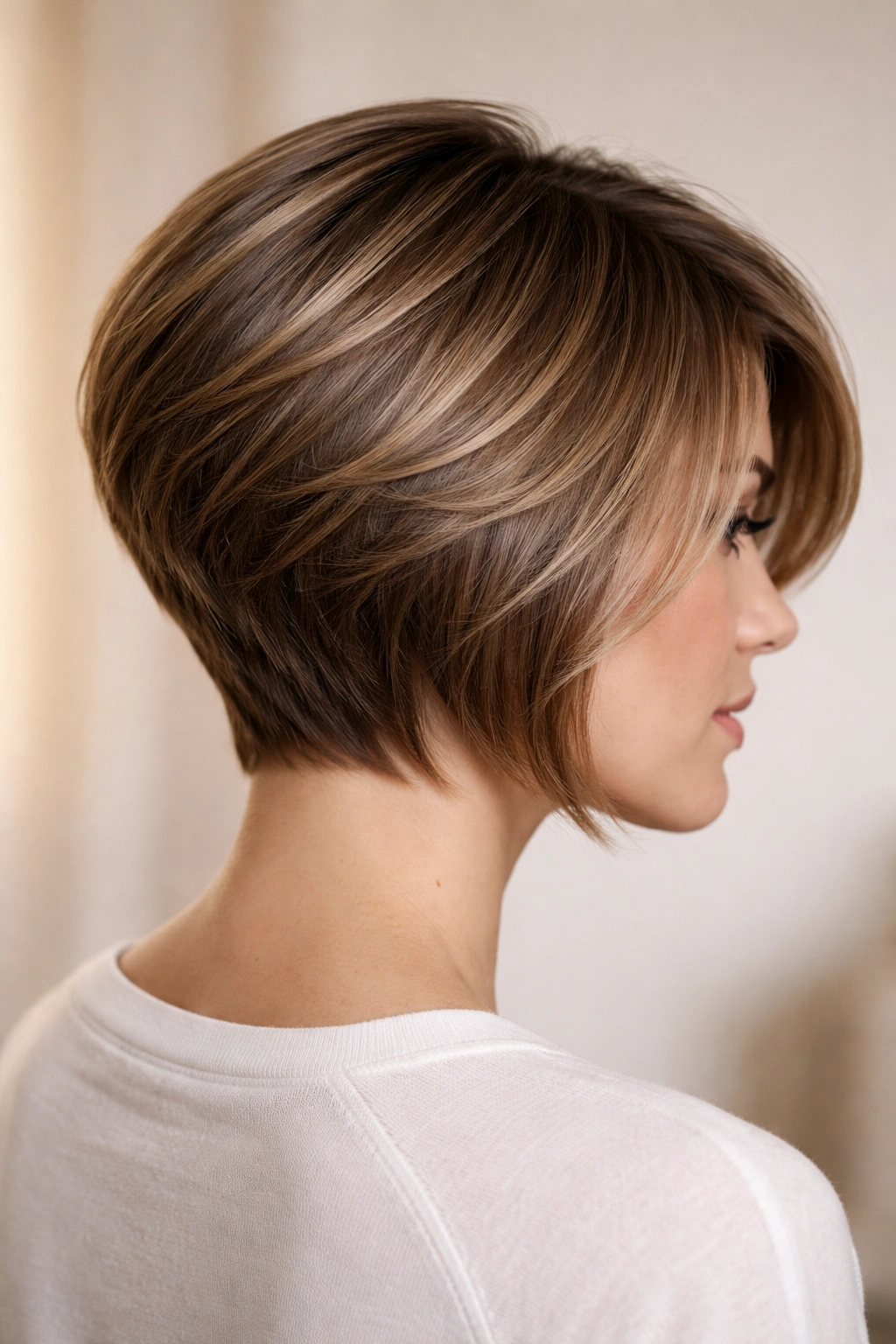
A short stack is a cut where the back of the head has multiple layers that create height and texture, while the front is left longer to frame the face. It’s not quite a bob and not quite a pixie—it’s a modern hybrid that’s very flattering on straight hair.
Why a Stack Creates the Illusion of Volume
Stacked layers in the back actually create the visual appearance of fullness and volume, which is genuinely helpful on straight hair that might otherwise look flat. The shorter layers at the back of your head catch light and create movement. Combined with the longer front pieces, you get shape and dimension without relying on natural texture or permanent waves.
Styling Flexibility and Real-World Practicality
- Easier than you’d think: Most people can wear a short stack without much daily styling. It’s more low-maintenance than a pixie but shorter than a lob.
- Works with your natural hair: Unlike some styles that fight against straight hair, a short stack works with how straight hair naturally falls. The layers actually benefit from the straightness.
- Very flattering proportions: The shorter back and longer front is universally flattering. It elongates your face and softens your features without being too long.
Quick fact: A short stack is one of the few short cuts that genuinely works well for people with fine or thin straight hair. The layers create the visual appearance of texture and fullness without requiring your actual hair to be thick.
15. The Straight Bangs Bob
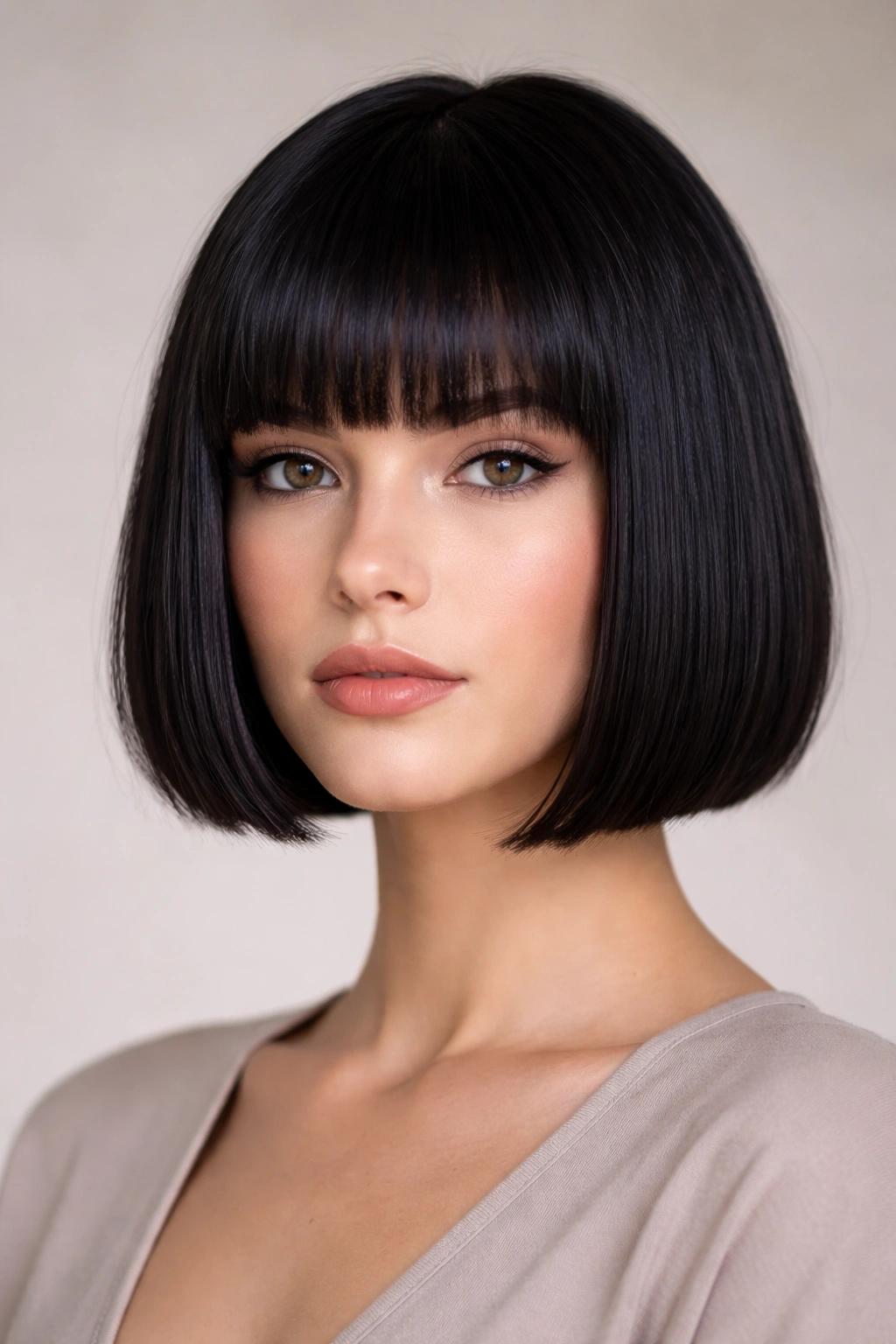
This is a blunt, chin-length or slightly longer bob with full, straight-across bangs that hit right at your eyebrows. The combination of the blunt bob shape and the prominent straight bangs creates a very specific look—it’s playful, fashion-forward, and surprisingly sophisticated.
The Impact of Straight Bangs on a Bob
Straight bangs completely change the energy of a bob. Where a bob without bangs can read as classic and timeless, a bob with full, blunt straight bangs reads as intentional and current. Straight hair is actually ideal for this cut because the bangs will sit perfectly straight and won’t bend or curl in unexpected ways. You get all the impact this cut promises without the styling fight.
Making Straight Bangs Work for Your Lifestyle
- Styling commitment: Straight bangs usually need to be blow-dried or smoothed to look intentional. If you’re okay with that, great. If you want completely wash-and-go hair, this might be frustrating.
- Visibility matters: Full bangs sit on your face. Some people love being framed this way. Others find it claustrophobic. This is worth considering before you commit.
- Bangs can be adjusted: If you get the bangs and decide they’re too short or too long, they’re relatively easy to adjust at your next trim. This gives you time to decide if you love them.
Real talk: A straight bangs bob is a complete look. You’re committing not just to the bob shape but to a specific aesthetic and daily styling routine. If you love that aesthetic and you’re willing to do the styling, this cut is utterly charming and very fashion-forward.
Final Thoughts
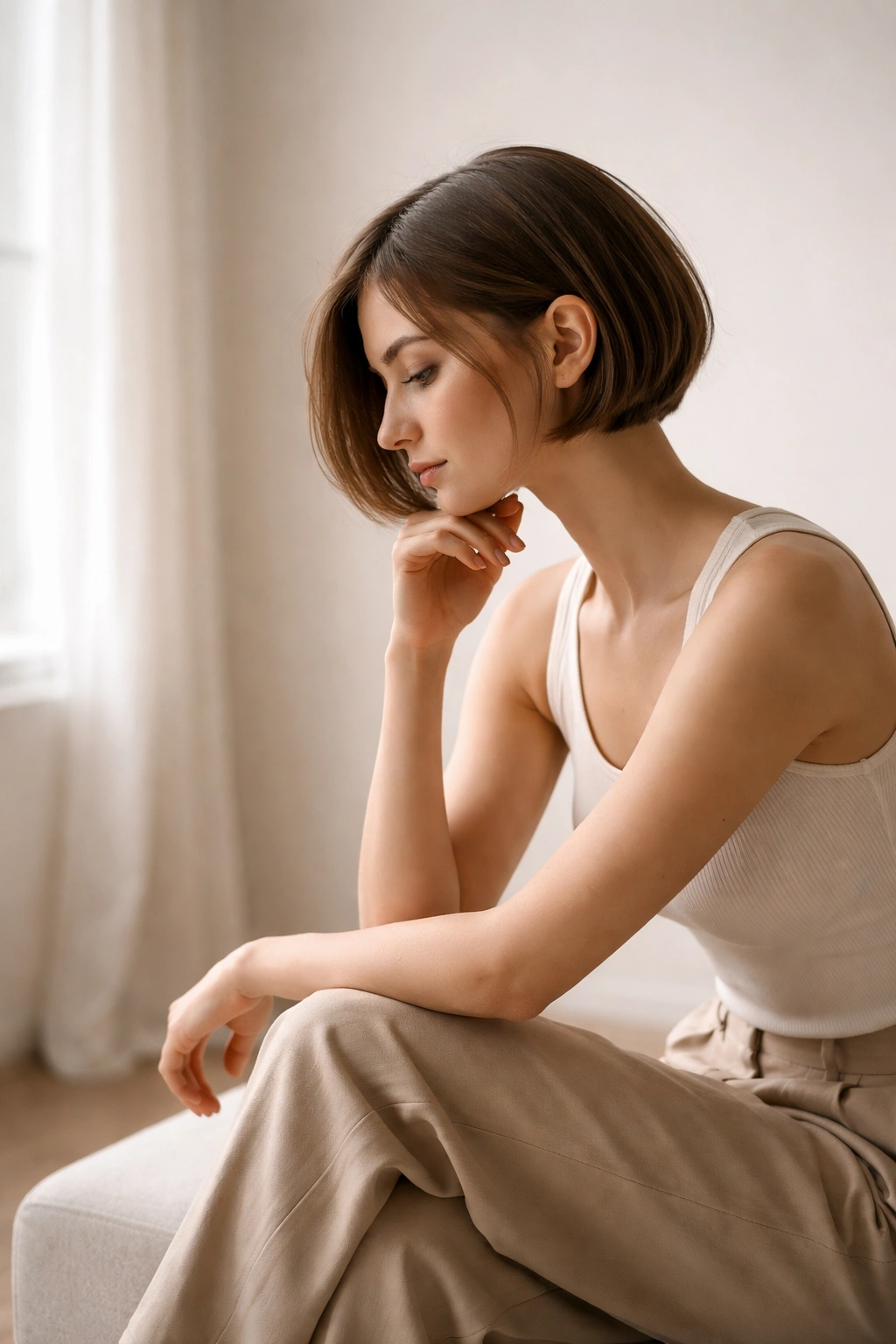
The best short haircut for your straight hair is the one that aligns with how you actually want to look and live, not the one that looks good on Instagram. If you’re someone who loves daily styling and enjoys experimenting with how your hair looks, then a textured fringe or a side-swept bang cut gives you room to play. If you prefer low-maintenance ease, a simple blunt bob or a short stack delivers that without sacrifice.
Straight hair is genuinely easier to style into short cuts than many other hair textures, but that ease comes with an expectation: precision matters. The lines of your cut will be completely visible, which means finding a skilled stylist is essential. When you do find someone who understands how to cut straight hair and gets your aesthetic, hold onto them.
The transformation a short cut creates can be genuinely surprising. You’re not just cutting off length—you’re changing how your face reads, how much time you spend styling, and how you move through the world. Take your time choosing the right cut, bring reference photos, and ask your stylist which of these cuts would be most flattering for your face shape and lifestyle. That combination of smart selection and skilled execution is exactly what turns a good haircut into a great one.
