



The V part has become one of the most flattering ways to style your hair, and when you combine it with a half up ponytail, you get an effortless look that works for everything from casual weekdays to more polished occasions. The beauty of a half up V part ponytail is that it gives you the best of both worlds—the sophistication of a pulled-back style with the ease and movement of wearing your hair down. The V-shaped part creates natural dimension and frames your face in a way that feels intentional without looking overdone, while the half-up construction means you’re not committing to a full ponytail if you want that softer, more relaxed vibe.
What makes this style so popular is how genuinely natural it looks when done right. Unlike some intricate updos that scream “I spent an hour getting ready,” a well-executed half up V part ponytail looks like you just threw it together—even when you’ve actually put real thought into the technique and product placement. It works across nearly every hair type, from bone-straight to naturally curly, and it can be dressed up or down depending on where you’re going and how you want to feel that day.
The real magic happens when you understand the variations. A V part half up isn’t a one-size-fits-all style. The way you section, the texture you add, the face-framing pieces you leave out, and even the size of your part opening changes the entire vibe. Some versions feel undone and beachy, while others read polished and intentional. Let’s walk through twelve different approaches to the V part half up ponytail, each with its own personality and best-use scenario.
1. Sleek V Part with Braided Crown
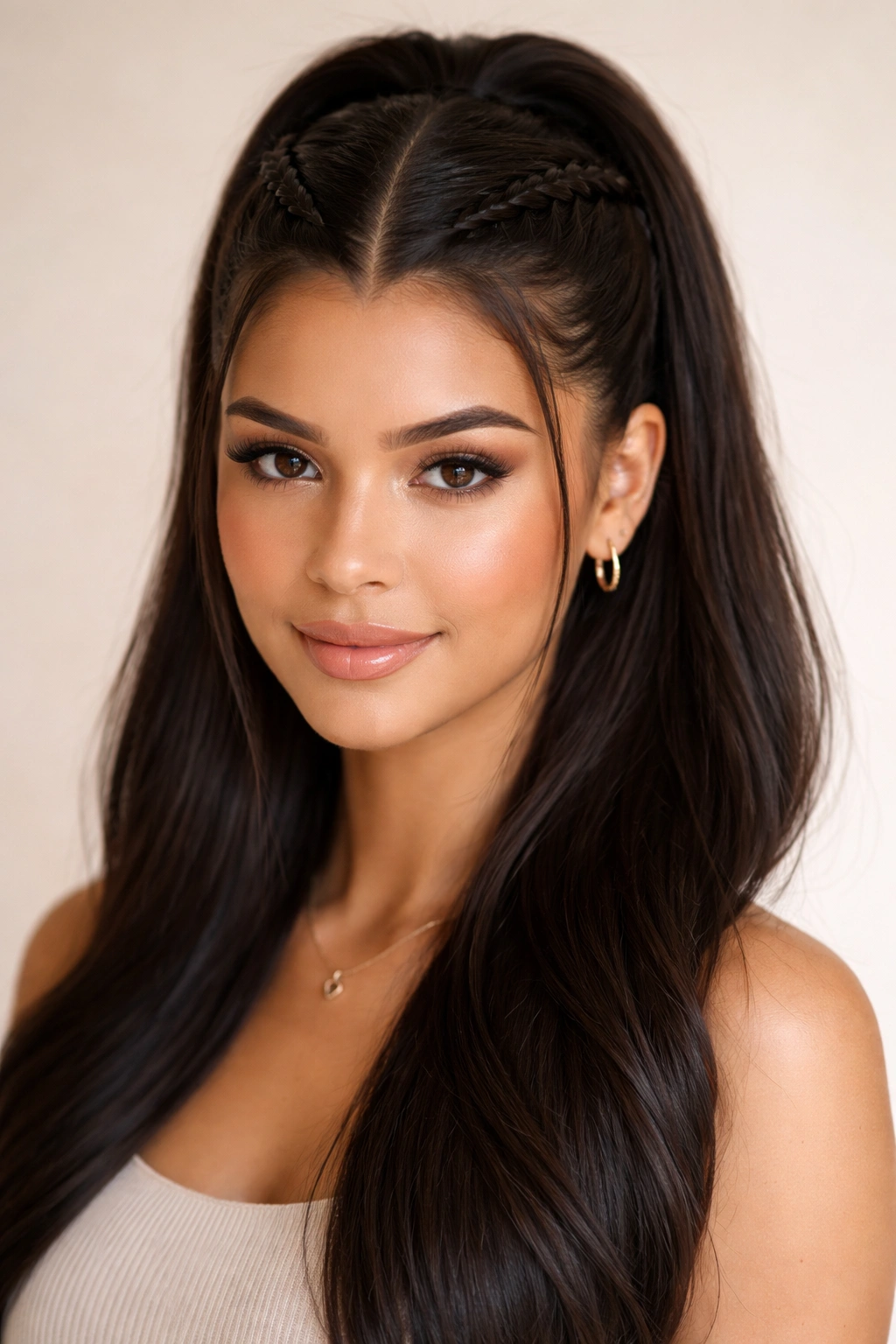
This version takes the half up V part and adds a braided crown element that sits right where the ponytail begins, creating visual interest and a more elevated appearance without complicated styling. The braids don’t have to be intricate—simple three-strand braids on each side of the V part that meet at the center back look polished and intentional. The sleekness of the rest of your hair makes the braids pop as a design element, and the low contrast between the braids and the loose bottom section keeps it from feeling too costume-like.
Why This Version Looks Natural
The braids sit within the naturally-pulled-back section of hair, so they don’t feel tacked on or overdone. When you braid sections that were already going to be pinned up, it just looks like you took an extra thirty seconds to make the updo part slightly more interesting. The braids frame your scalp in a flattering way without requiring you to braid your entire head, which is key to that natural appearance.
How to Style It Best
- Start with dry or lightly textured hair for the braids to grip
- Create your V part first, then braid each side starting about an inch back from the part opening
- Braid loosely so the braids don’t look rigid or tight
- Bring both braids to the center back and secure them with the rest of the half-up section using a clear elastic
- Leave your bottom section completely loose and unstyled for contrast
Pro tip: If your braids feel too polished, gently pull at the outer edges of each braid to loosen and textureize them slightly—this single move transforms them from “I tried hard” to “this just happened.”
2. Textured V Part with Soft Waves
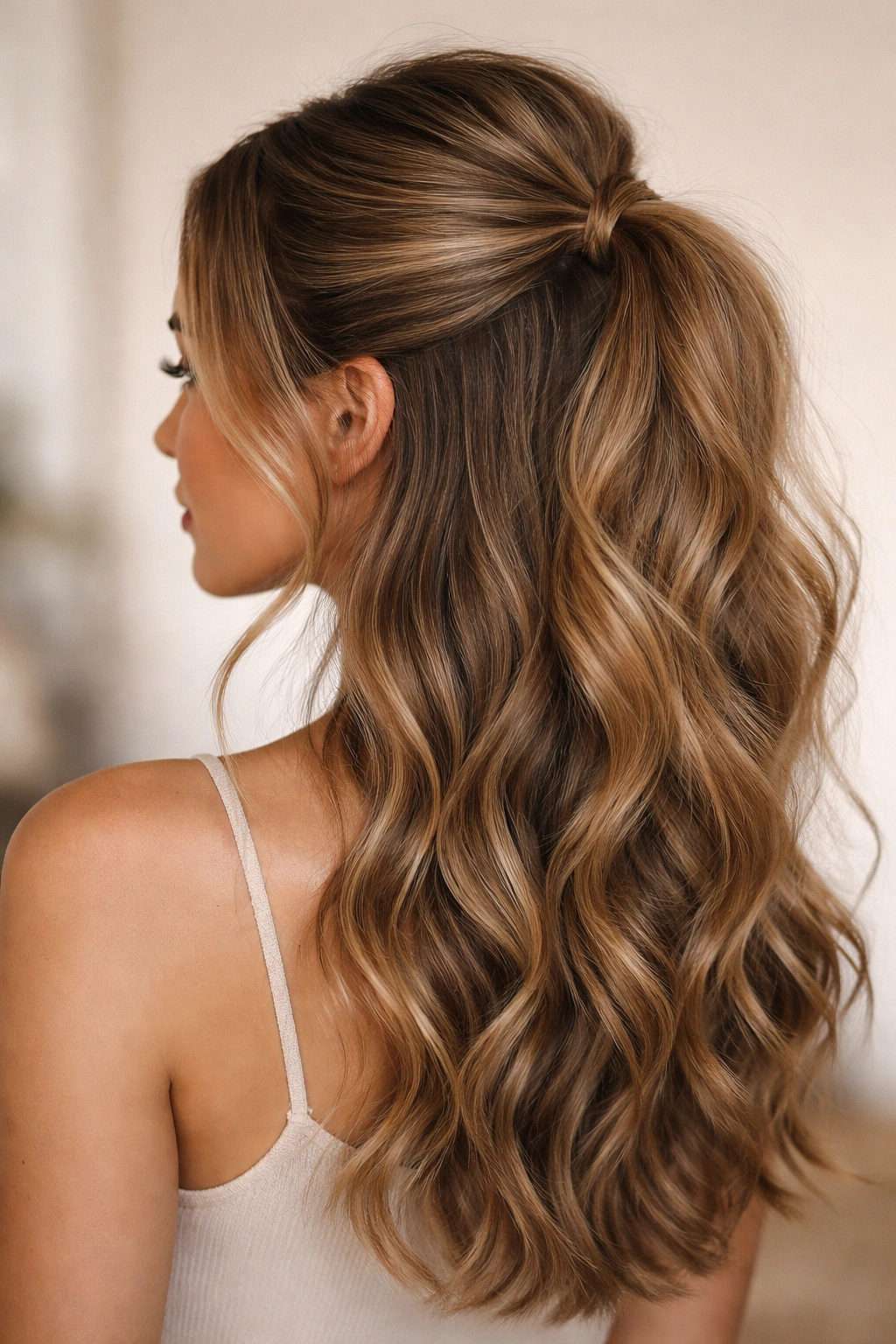
Soft waves throughout your entire head combined with a V part and half up ponytail create one of the most effortlessly beautiful variations. The texture is the star here; it gives your hair natural dimension and makes even a simple half up ponytail look undone and intentional. The waves catch light differently depending on how you move, and the V part creates a clean frame for your face while the waves add that lived-in quality that reads as naturally beautiful rather than styled.
Why This Version Looks Natural
Waves are inherently forgiving. They don’t look like you spent time on them (even if you did), and they break up the line of your hair in a way that feels organic. The V part adds structure to balance the softness of the waves, and the half-up ponytail pulls just enough hair back to prevent your face from disappearing into texture.
How to Style It Best
- Curl your entire head using a 1.25-inch curling iron or wand, working in vertical sections
- Let the curls cool completely before running your fingers through them
- Create your V part and section your half-up area
- Pin the ponytail low, around where your crown meets your neck
- Don’t smooth or overbrush—let the waves remain slightly separated and textured
Insider note: The half-up ponytail will look three times better if you wait at least thirty minutes after curling before putting it in. The curls need time to set, and trying to pin while they’re still warm can flatten them.
3. Layered V Part with Wispy Face-Framing
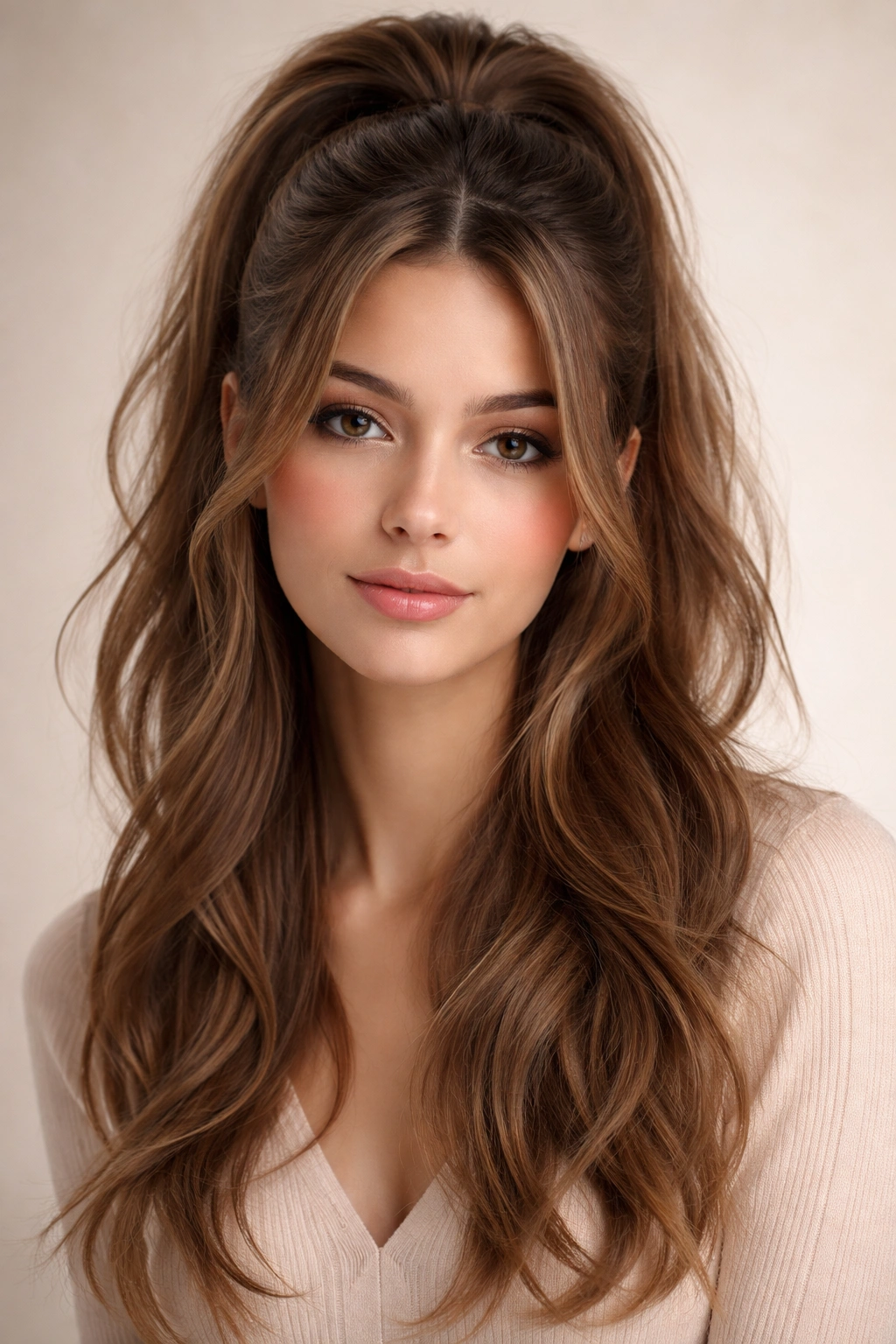
This variation leaves intentionally wispy, shorter pieces out around your face while the rest goes into the half-up V part. It’s more face-framing than a standard half up, and it works beautifully if you have layers in your cut already or if you want to create the illusion of face-framing pieces even with blunt ends. The wisps soften the geometry of the V part and create a more romantic, less severe overall look.
Why This Version Looks Natural
Face-framing pieces are the universal shortcut to looking fresh and intentional. They draw attention to your features rather than emphasizing the structure of the style, which makes the whole look feel softer and less “done.” The V part is still visible but feels less prominent because your eye is drawn to the face-framing wisps first.
How to Style It Best
- Section small pieces of hair at your temples and along your face before putting the rest back
- These pieces should be roughly 0.5 to 1 inch thick and should fall at approximately cheekbone length
- Take the remaining hair and create your V part as usual, pinning the half-up section
- Curl or wave just the face-framing pieces lightly for a soft, romantic touch
- Let them fall naturally; don’t tuck them or keep them perfectly placed
Worth knowing: The longer your face-framing pieces, the softer the overall look will be. Shorter wisps (chin-length or shorter) read more polished, while longer pieces (past your collarbone) feel more relaxed and beachy.
4. Sleek V Part with Face-Framing Pieces and a Metallic Clip
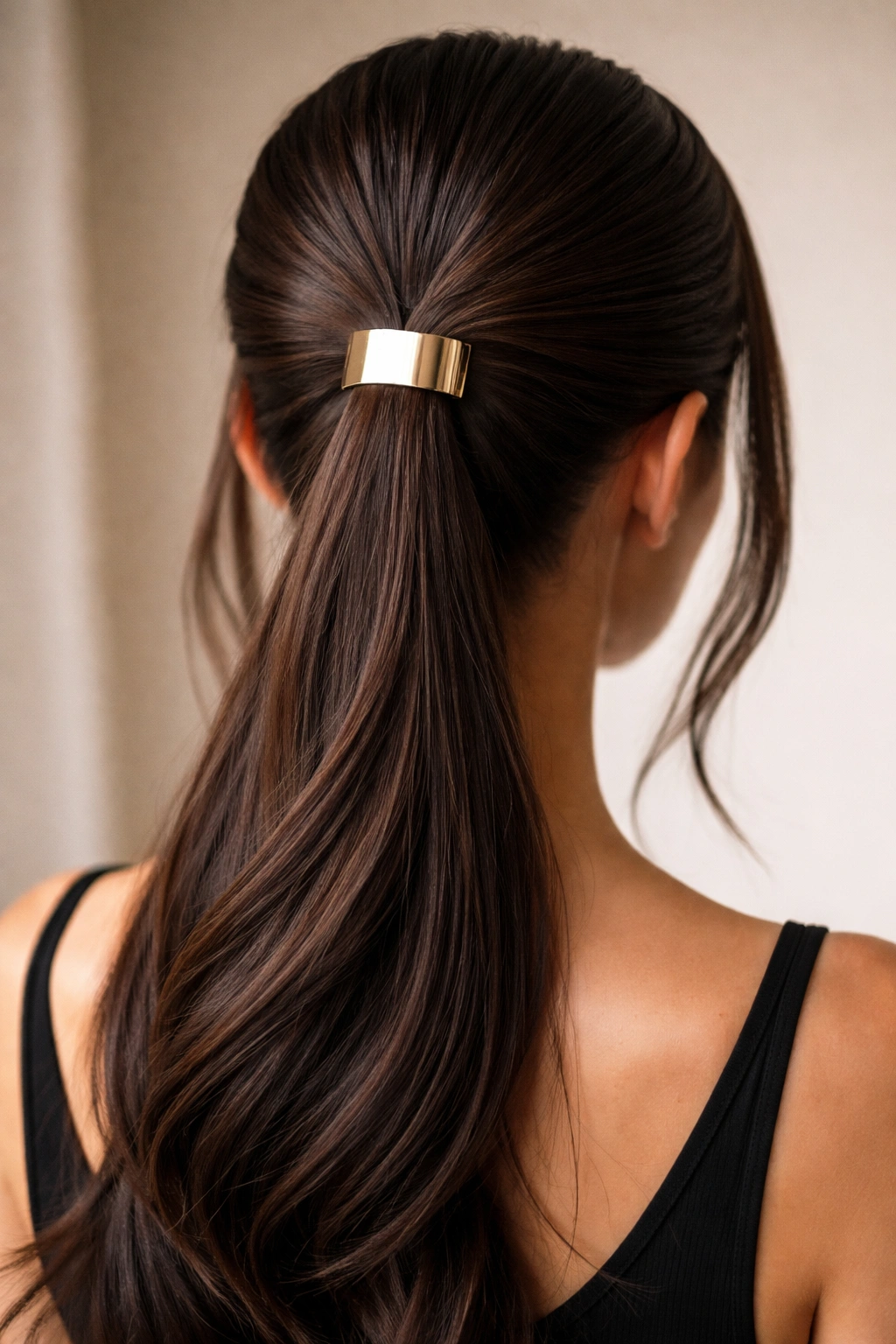
Taking the sleek approach but adding one standout accessory transforms the entire vibe. A metallic hair clip positioned where the half-up ponytail gathers creates a focal point that makes the style feel intentional without looking overdone. The clip catches light and draws the eye directly to the back of your head, which balances the V part opening at your crown. This version feels polished enough for an event but casual enough for everyday wear depending on which clip you choose.
Why This Version Looks Natural
The clip isn’t hiding anything—it’s deliberately visible and becomes part of the design. Because of that, it actually makes the style feel more intentional and less like you’re trying to hide something. The sleek hair makes the clip shine, and the whole look reads as “I put in the right amount of effort” rather than “I tried really hard.”
How to Style It Best
- Use a fine-tooth comb to create a perfectly clean V part
- Smooth your hair back with a light gel or mousse for a polished finish
- Create your half-up section and gather it into a low ponytail
- Before securing with an elastic, place a metallic clip over the elastic band so it covers the hair-tie
- Make sure the clip is visible from behind and at a slight angle for visual interest
Pro tip: Gold clips tend to work better with warmer skin tones, while silver flatters cooler undertones—but honestly, if you love a look, that matters more than undertone rules.
5. Curly V Part Half Up Ponytail
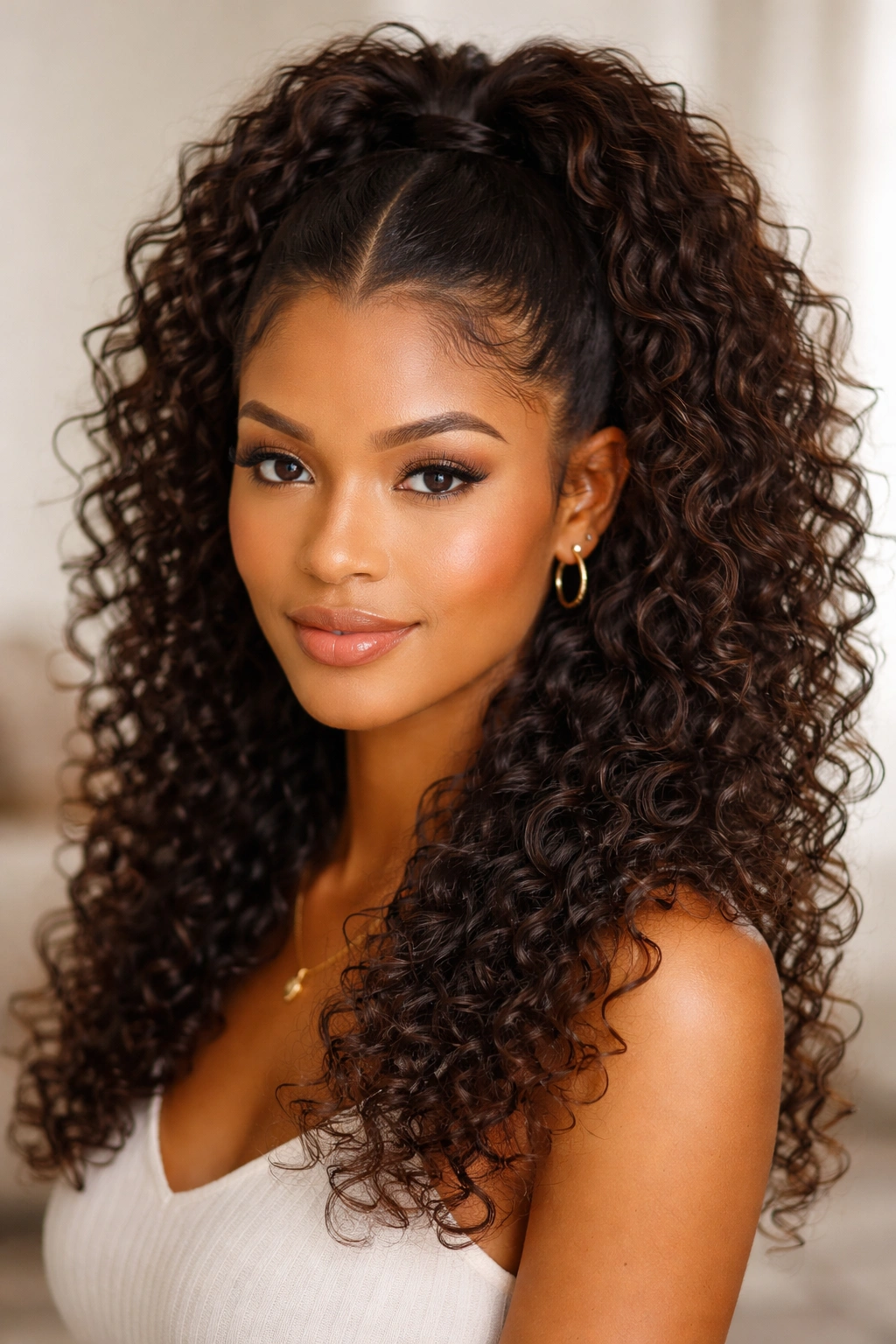
If you have natural curls, a V part half up ponytail is your friend because it controls volume without flattening your texture. The curls in the half-up section stack beautifully when pinned, creating an intentional, polished look while your bottom curls remain completely free. The V part opening shows off the natural texture of your scalp, which adds visual interest, and the half-up construction prevents your curls from getting weighed down by the entire mass of your hair.
Why This Version Looks Natural
This is actually your hair’s most natural state—you’re not fighting your texture or trying to make it look like something it isn’t. You’re simply managing volume while celebrating the curl pattern you already have. The V part looks especially crisp and intentional on textured hair because of the contrast between your curls and the open part line.
How to Style It Best
- Apply your curl products to soaking-wet hair (leave-in conditioner, curl cream, and gel in your preferred order)
- Let your curls air dry or use a diffuser attachment
- Once completely dry, gently separate and fluff any clumped sections
- Create your V part using the end of a comb for clean edges
- Section and pin your half-up area; the curls will hold their shape without needing an elastic to be super tight
Worth knowing: Curly hair pins best with a claw clip rather than a standard elastic, because the clip grips multiple curls without compressing them all into one point.
6. Gel-Set V Part with Slicked Edges
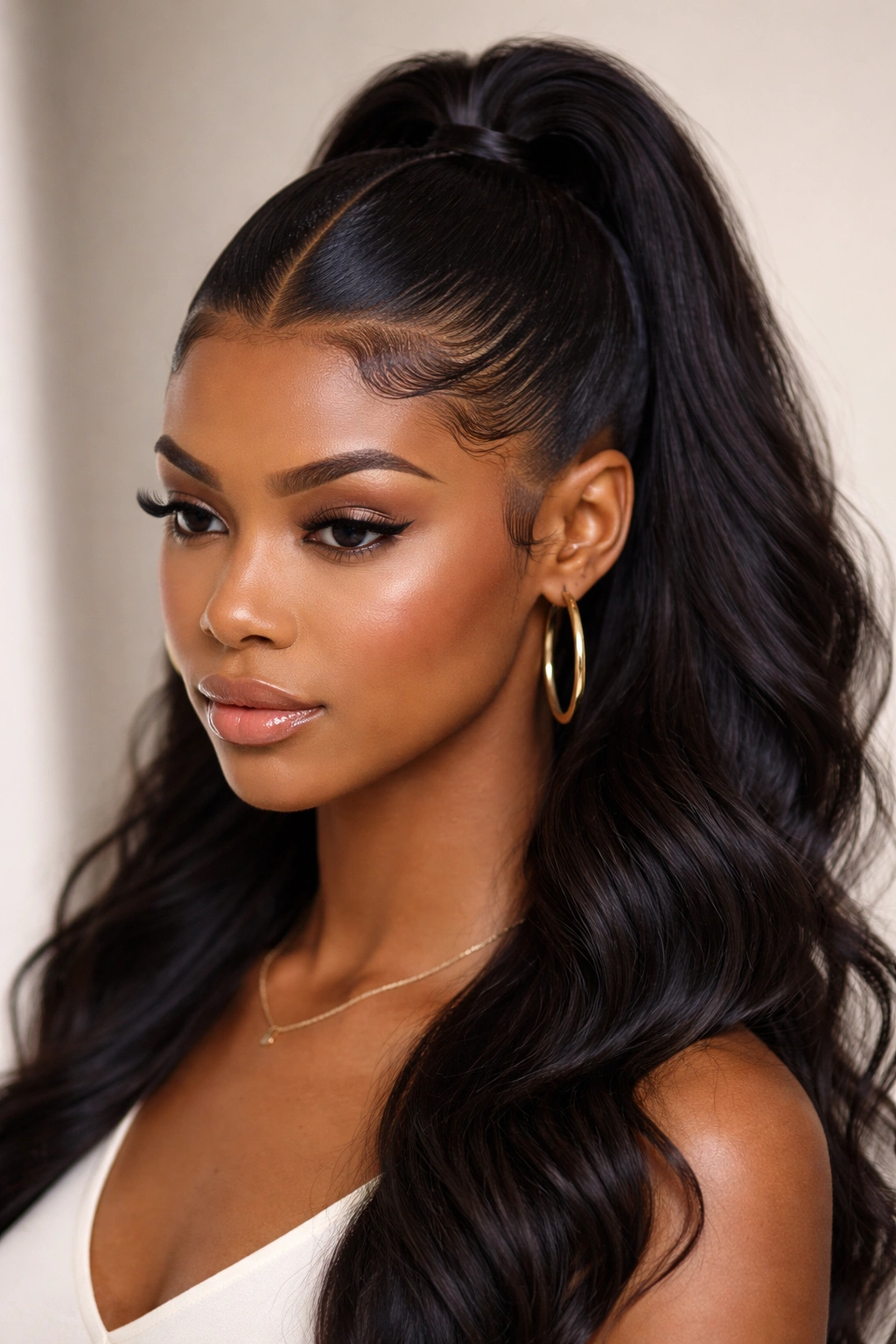
This version takes the concept of a half up V part and adds intentionality through product finish. A styling gel smoothed around your edges and hairline creates a polished, sharp frame for the V part, making the opening look deliberate and crafted. Your actual hair texture can be anything—straight, wavy, curly—but the gel edges give the style a finished quality that reads as more put-together than effortless.
Why This Version Looks Natural
“Natural” in this context means “intentional without looking like you’re trying too hard.” The gel edges are a styling choice you can see, but they’re not fake or costume-like because smoothed edges are genuinely how many people style their hair. It’s a touch of polish that feels modern and purposeful.
How to Style It Best
- After creating your V part, apply a lightweight styling gel or edge control around your hairline and temples
- Use a firm toothbrush or edge brush to smooth the gel back and around your face
- The edges don’t need to be severe; a soft, smoothed look is more wearable than glass-smooth
- Create and pin your half-up section as usual
- The contrast between the sleek edges and either textured or loose bottom hair creates visual interest
Insider note: Water-based gels work better for a natural finish than heavy pomades, which can look plastic-like if you use too much.
7. V Part Half Up with Hidden Underside Braid
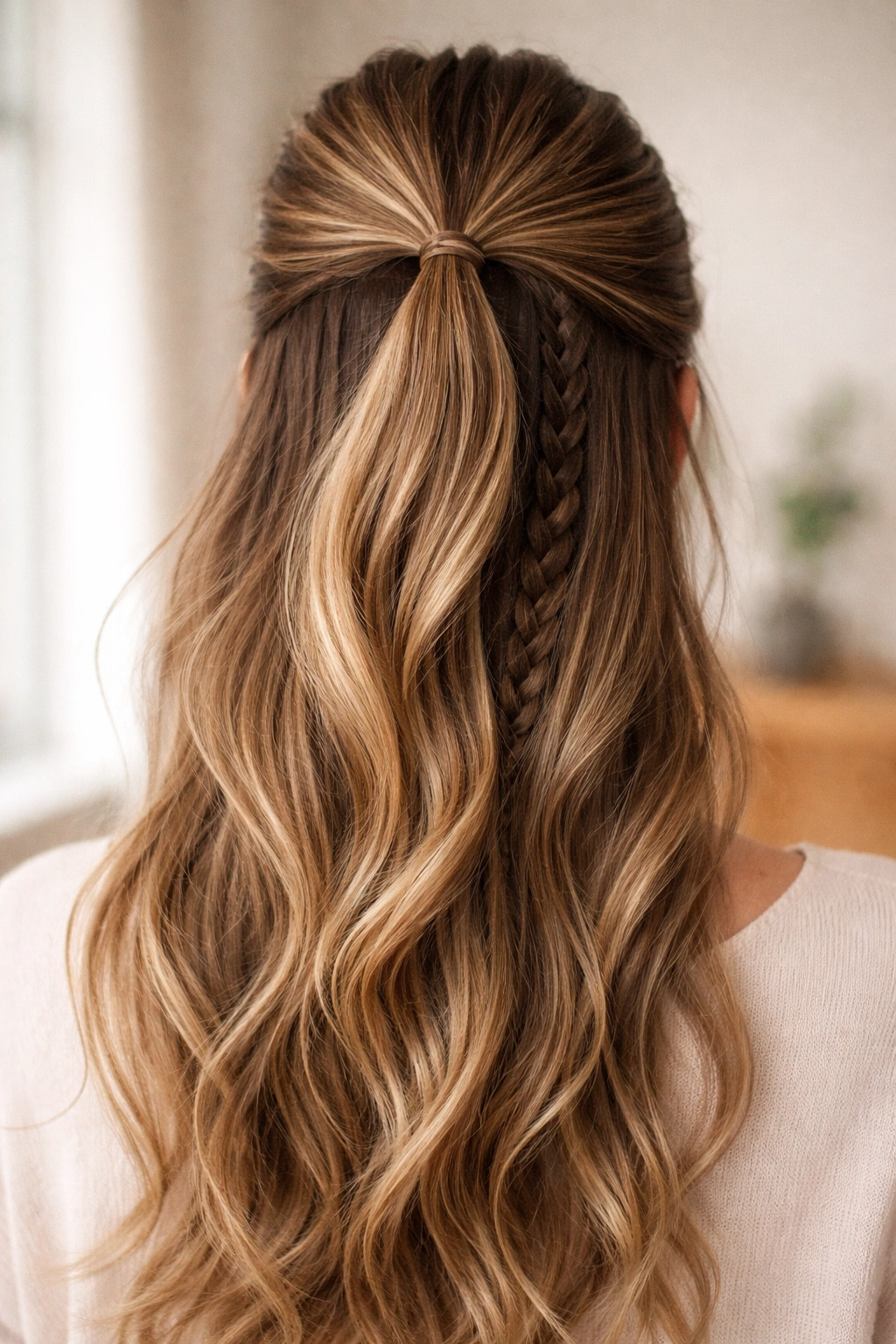
This variation hides a braid completely on the underside of your ponytail, so it’s only visible if someone looks directly at the back of your head. It adds textural interest and prevents the half-up section from looking too flat or basic, but it’s subtle enough that it reads as an effortless detail rather than an intentional design element. It’s perfect if you want the half-up ponytail to look naturally beautiful without a clear “I styled this” signal.
Why This Version Looks Natural
Because the braid is hidden, it feels like a secret detail rather than a design choice. The front and sides of your head look completely natural and effortless, while the back reveals a touch of texture that makes the style more interesting without broadcasting that you put effort in.
How to Style It Best
- Create your V part and section your half-up area
- Before gathering everything into the ponytail, divide the half-up section into two parts
- Braid one or both sections loosely
- Combine the braided and unbraided sections and pin them all together into a low ponytail
- The braid will be visible only from behind or at an angle; from the front, it looks like a simple half up
Pro tip: This works especially well if your hair is long enough to create a voluminous ponytail, because the braid adds structure inside the bulk of the hair.
8. Textured Messy V Part Ponytail
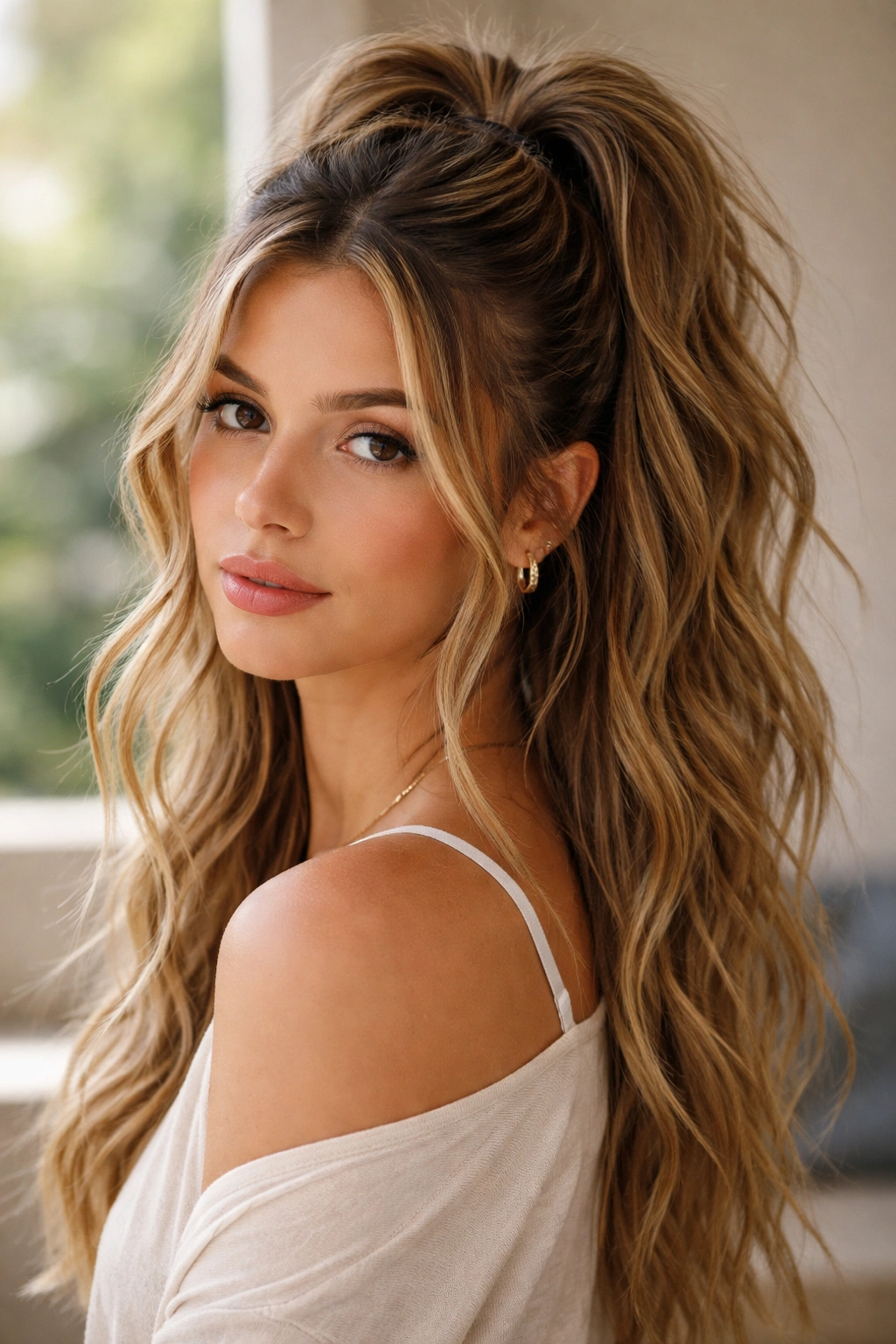
Intentional messiness is a vibe, and this version leans into it. The hair in your half-up section is gently crimped or heavily textured throughout, then loosely pinned so strands fall out and frame your face naturally. The V part is still visible but feels less geometric because the texture breaks up the lines. This version reads as completely effortless and works beautifully for weekend styling or low-key everyday wear.
Why This Version Looks Natural
Messy hair is actually natural hair—it’s what happens when you’ve been living your day and gravity works on your hair. By intentionally creating that textured, slightly undone look, you’re celebrating that natural imperfection rather than fighting it. It’s the opposite of overthinking your style.
How to Style It Best
- Use a crimping tool on your half-up section to add texture, or backcomb small sections for volume
- Create your V part first for a clean opening
- Loosely gather your half-up section and secure it with a thin elastic
- Gently pull and separate strands so pieces fall naturally around your face
- You want it to look like it could fall out at any moment, not like you’re fighting to hold it in
Worth knowing: The messier this looks, the longer it stays looking good, because you’re not fighting against gravity or trying to maintain a precise shape.
9. V Part with Volume at the Crown
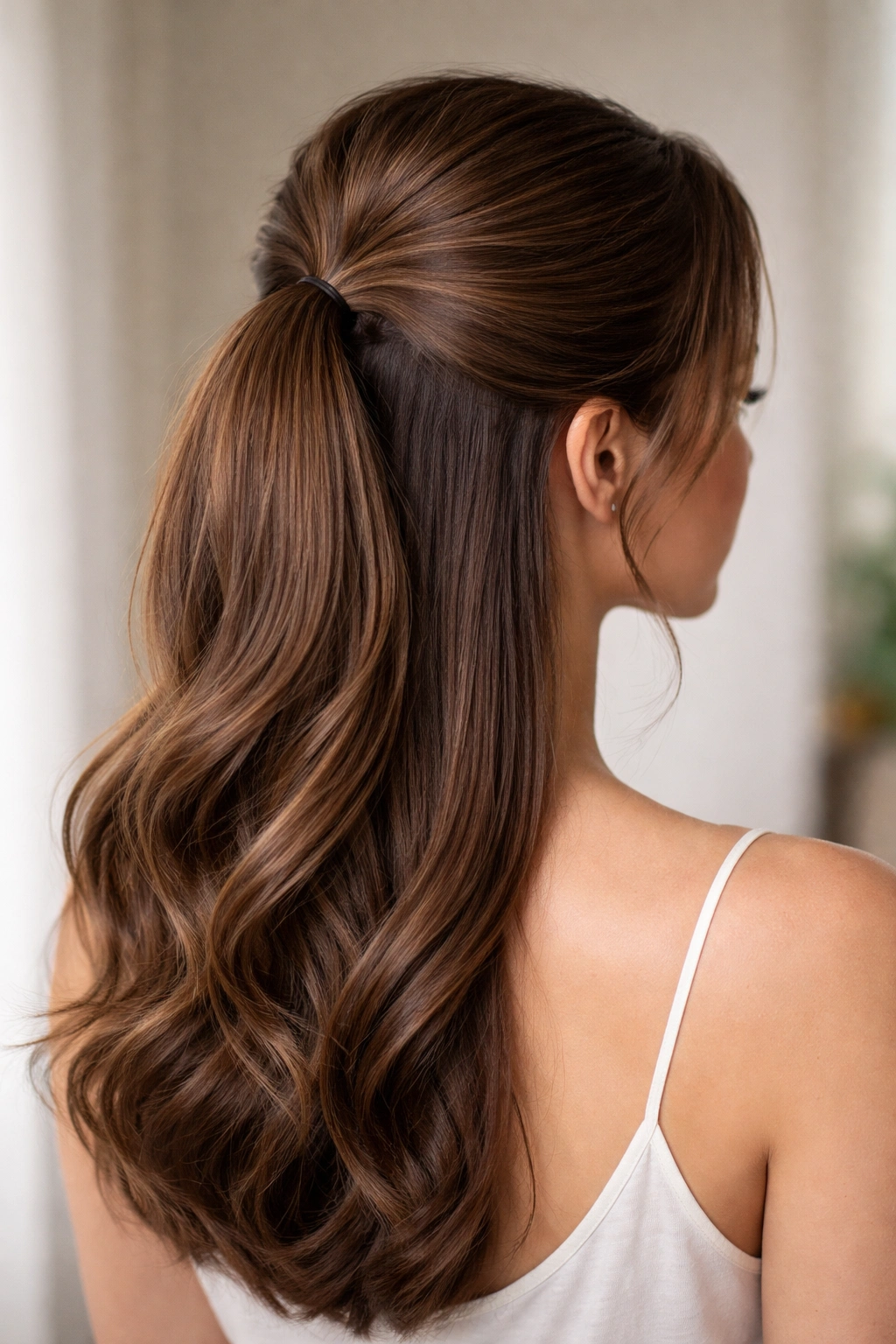
This variation focuses on creating intentional volume exactly where your ponytail begins—right at the crown. You tease or backcomb the hair in your half-up section to create a lifted, voluminous base, then smooth the outer layer so it looks polished while maintaining the height underneath. The V part opens up higher on your head, and the volume prevents your overall look from appearing flat or limp.
Why This Version Looks Natural
Volume at the crown is inherently flattering and reads as a sign of healthy hair. This version doesn’t look overdone because you’re not creating a separate poof of hair—you’re just adding substance to the hair that’s already being pulled back. The height looks natural because it’s distributed throughout your half-up section.
How to Style It Best
- Create your V part first
- Section your half-up area and backcomb or tease the roots of each section at the crown
- Smooth the outer layer of hair with a fine-tooth comb so you can’t see the backcombing from the front
- Pin everything together at your crown level (higher than a typical half-up)
- The volume supports the ponytail and keeps it from drooping as the day goes on
Pro tip: Teasing works best on dry or second-day hair; freshly shampooed hair is too slippery to hold texture.
10. Straight V Part with Side-Swept Accent
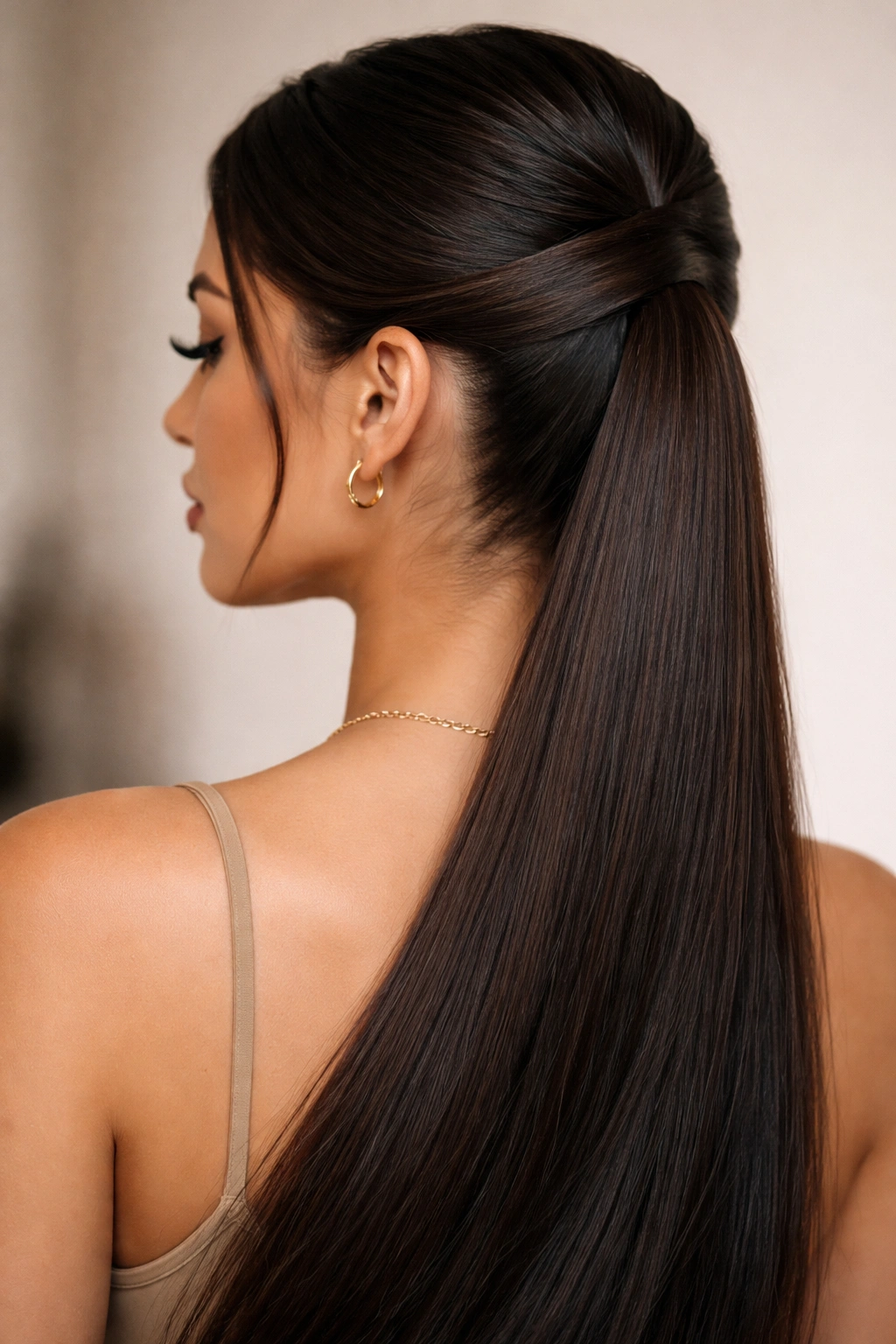
This version keeps everything straight and sleek but sweeps a small section of your half-up ponytail to one side, creating visual asymmetry that makes the style feel less geometric and more dynamic. It’s a small adjustment that completely changes the energy of the look—straight hair reads as polished and intentional, but the side sweep adds a touch of movement and interest that prevents it from looking severe.
Why This Version Looks Natural
Asymmetry reads as more interesting and less “done” than perfect symmetry. By introducing that one swept element to an otherwise sleek style, you’re creating the impression of effortless elegance rather than controlled precision.
How to Style It Best
- Blow-dry or straighten your entire head for a sleek base
- Create your V part and section your half-up area
- Gather everything into a low ponytail and pin it in place
- Take a 1-inch section from one side of the ponytail and sweep it diagonally across the base
- Secure the swept section with a bobby pin, concealing it under the main ponytail
- The effect is subtle but completely changes the visual flow
Insider note: The swept section should be from the same side you’re sweeping toward—so if you’re sweeping to the left, take a piece from the left side of your ponytail.
11. V Part Half Up with Pearl or Metallic Pins
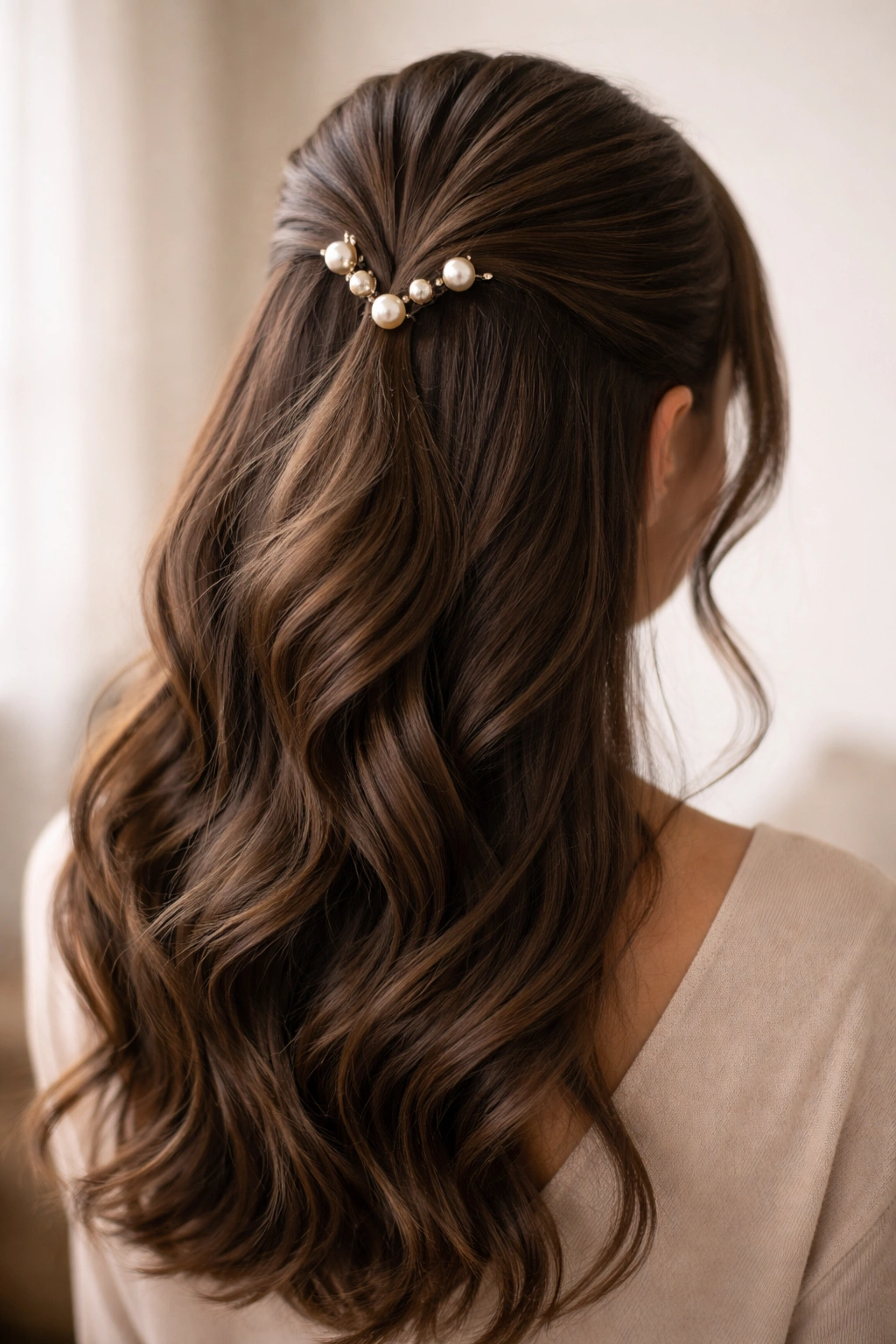
Instead of hiding your bobby pins, this version makes them visible as a design detail. Three to five pins clustered where your half-up section gathers create a deliberate accessory moment. Pearl pins read elegant and slightly retro, while metallic gold or silver feels more contemporary. The pins catch light and become part of the overall aesthetic, making the style feel intentional without needing any additional accessories like clips or hair sticks.
Why This Version Looks Natural
Visible pins were actually the original way people secured their hair—there’s nothing artificial about it. By leaning into that aesthetic rather than hiding it, you’re creating a look that feels intentional and design-forward rather than like you’re trying to conceal something.
How to Style It Best
- Create your V part and gather your half-up section as usual
- Use pins that match your hair color or that are intentionally metallic/pearl
- Position three to five pins horizontally or diagonally across where the ponytail begins
- Make sure they’re actually gripping hair and not just sitting on top for decoration
- The overlapping pattern of the pins is more visually interesting than a straight line
Worth knowing: Pearl and metallic pins show up best on darker hair; if you have very light hair, you might want to use colored pins that complement your natural shade.
12. V Part with Twisted Front Sections
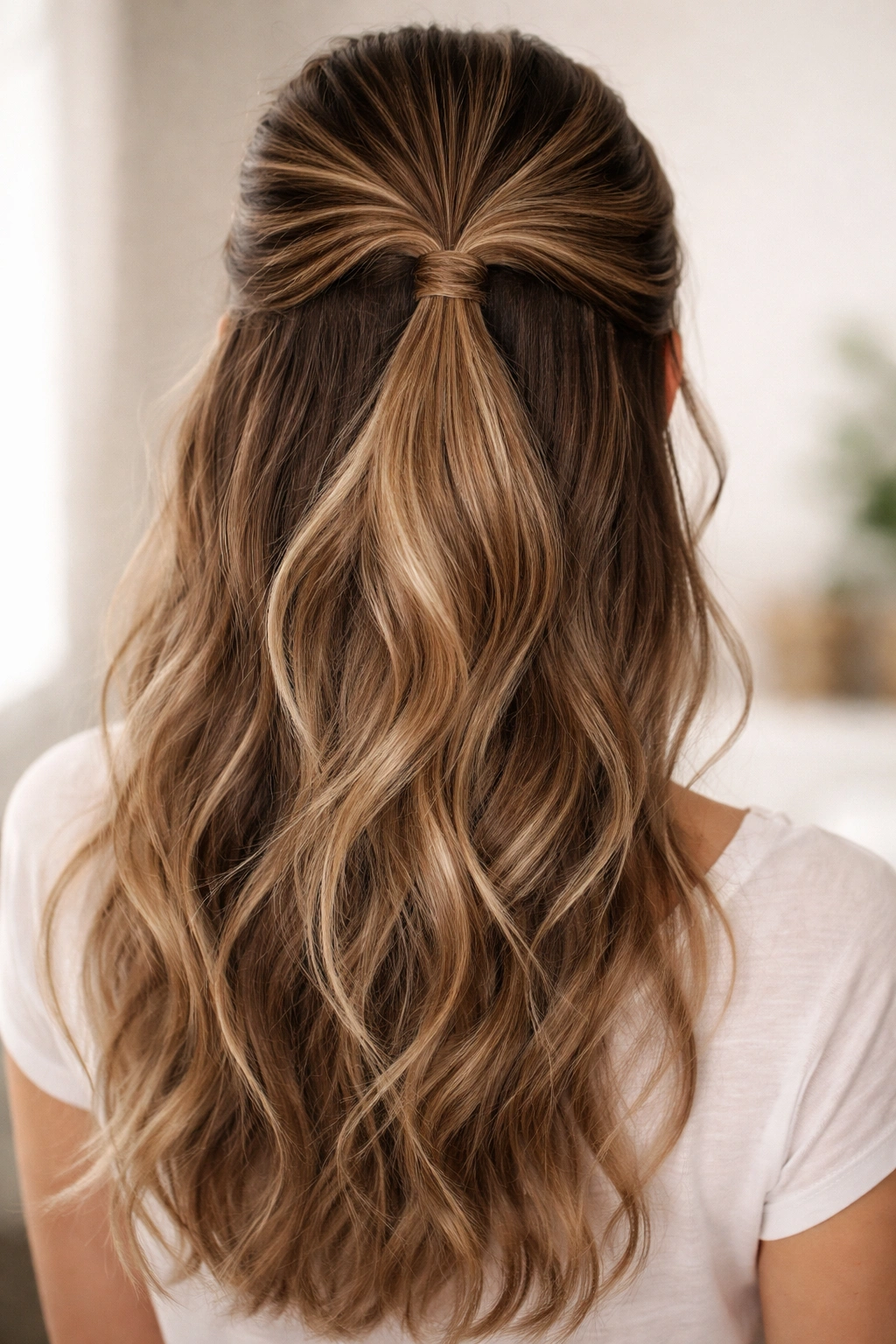
This final variation takes small sections of hair from either side of your V part opening and gently twists them backward before pinning them into your half-up section. The twists aren’t tight or intricate—they’re soft and loose enough to look almost accidental. The effect frames your face while adding subtle texture, and the twists catch light in a way that makes the style feel more dynamic than a plain V part half up.
Why This Version Looks Natural
Twisted sections feel delicate and intentional without looking constructed or complicated. Because the twists are soft and sit within the hair that’s being pulled back anyway, they don’t feel like an added styling element—they feel like an organic part of how you’ve arranged your hair.
How to Style It Best
- Create your V part and lightly section small pieces on either side of the opening
- Gently twist each section backward loosely, without pulling tight
- Pin each twisted section into your half-up area using bobby pins
- Your twisted sections should blend seamlessly with the rest of your half-up section
- The twists add texture but shouldn’t look sculptural or deliberate
Pro tip: Twisted sections hold better if you lightly mist them with a texture spray before twisting—the product gives your hair something to grip without making it sticky.
Final Thoughts
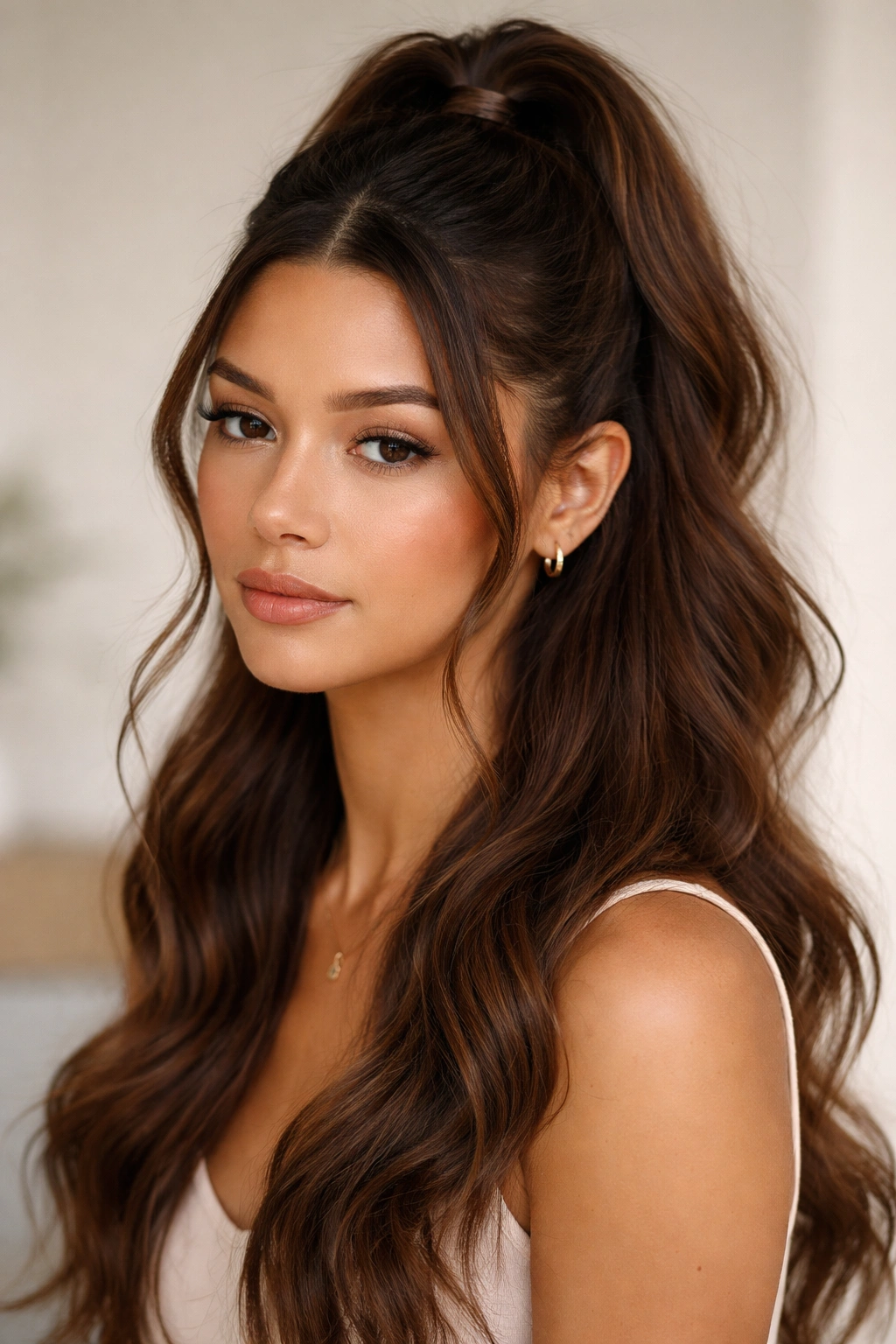
The half up V part ponytail works because it gives you control without sacrifice. You get the pulled-back feeling that keeps hair out of your face and prevents your look from feeling chaotic, but you keep the length, movement, and softness of wearing your hair down. The V part itself is the real magic—that clean opening at the crown creates a focal point and shows off your face and hairline in a way that feels intentional and flattering.
The variations matter because they let you shift the vibe of the same basic style depending on your mood, where you’re going, or how much time you want to invest. Some days you want sleek and polished; other days you want textured and effortless. Sometimes you want an accessory moment; sometimes you want the hair to be the star. The beauty of learning multiple versions is that you can choose the right approach for whatever you’re doing that day, and all of them read as naturally beautiful rather than overdone. That’s the real skill—understanding that “natural” doesn’t mean “no effort,” it means effort that’s invisible to the outside world.
