



Double cornrows paired with a ponytail create one of the sleekest, most polished looks available to anyone with textured hair. There’s something undeniably powerful about the combination — the braids frame your face and add texture while the ponytail keeps everything neat, controlled, and intentional. Whether you’re heading to work, an important event, or just want to feel put-together on a regular Tuesday, this hairstyle delivers both style and substance.
What makes double cornrow ponytails so versatile is how endlessly customizable they are. You can wear them high and sleek, low and romantic, add extensions for length and volume, incorporate patterns and designs, or keep them simple and minimal. The braids themselves become a design element rather than just a practical way to manage hair — they’re part of the aesthetic. And that’s the real appeal: you get a hairstyle that looks intentional, requires minimal daily maintenance once it’s done, and genuinely works for almost any occasion.
The beauty of this particular style is that it works across different hair types and textures, though it’s especially popular and flattering on tightly coiled, coily, and curly hair. The cornrows create defined lines and patterns, the tension keeps everything in place all day, and the ponytail at the end gives you a finished, polished silhouette. Once you understand the basic technique and see the different ways to style it, you’ll realize how many different looks you can create with just slight variations.
1. Classic High Cornrow Ponytail
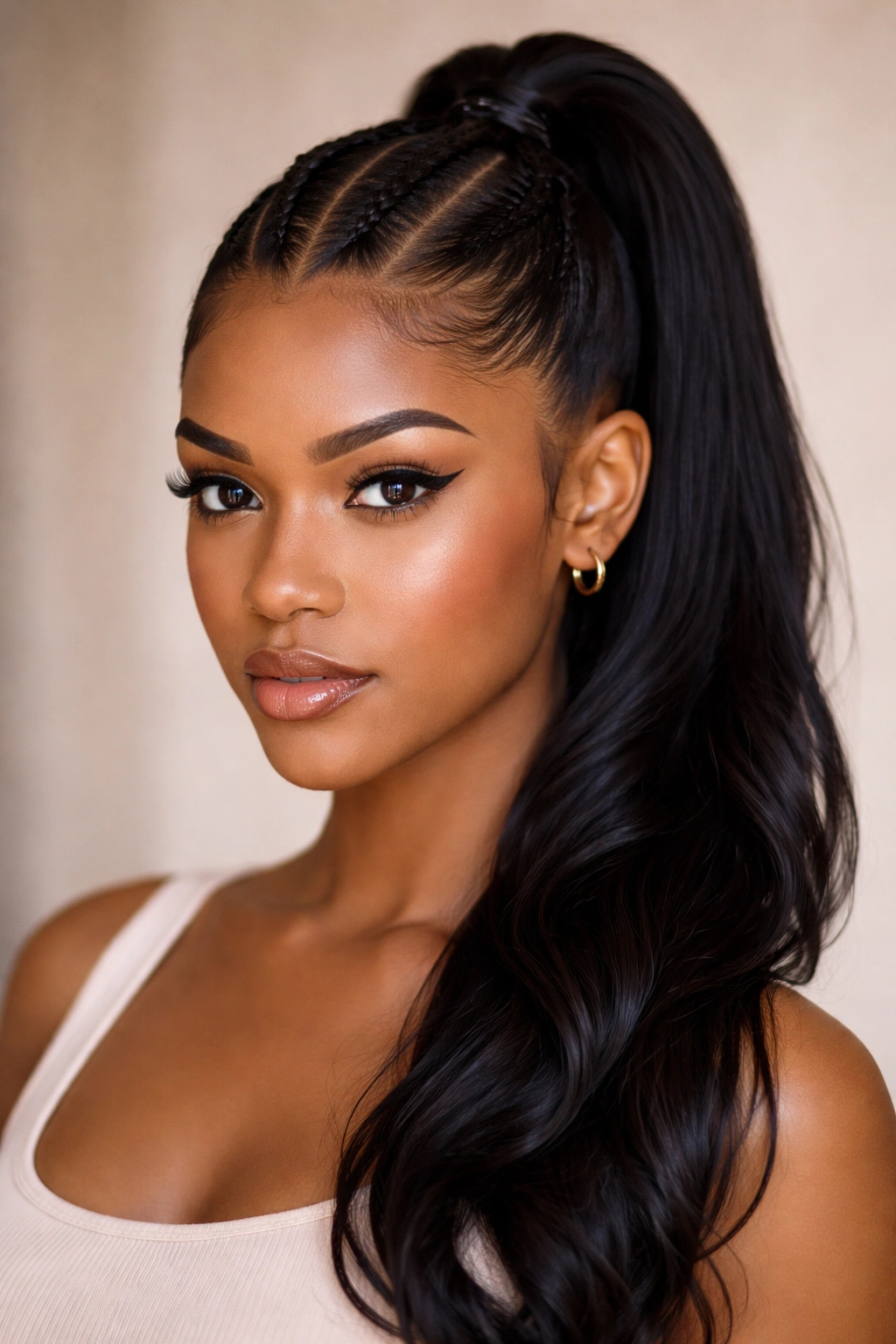
This is the foundational style that started it all — clean, simple, and undeniably sleek. Two braids run from your hairline straight back to the crown, where they feed directly into a high, centered ponytail. The effect is streamlined and powerful, with your face fully framed and your forehead completely exposed. This style works beautifully when you want zero distraction and maximum polish.
Why This Works
The high placement feels modern and intentional, and the straight-back braids create a perfectly symmetrical look. There’s something satisfying about the geometric precision of it — the braids are like visual lines pointing straight toward a focal point at the back of your head. This arrangement keeps hair completely off your face and neck, making it ideal for anyone who wants their features to take center stage.
Tips for Getting It Right
- Start your braids at the exact center of your hairline and keep them evenly spaced on either side of your head — use a rattail comb to create a precise center part
- Keep consistent tension throughout the braid so the cornrows stay flat and don’t develop bumps or loose sections
- The ponytail should be placed high on the crown, roughly where a high ponytail would naturally sit without the braids
- Use a sturdy elastic that matches your hair color to minimize visibility
- For extra hold and a polished finish, smooth down any flyaways with a fine-toothed comb and a light edge control product
Best For
This style shines when you have somewhere important to be — job interviews, presentations, formal events, or any time you want to feel powerfully put-together. It’s equally perfect for active days when you need hair completely secured and off your face.
2. Low Side Cornrow Ponytail
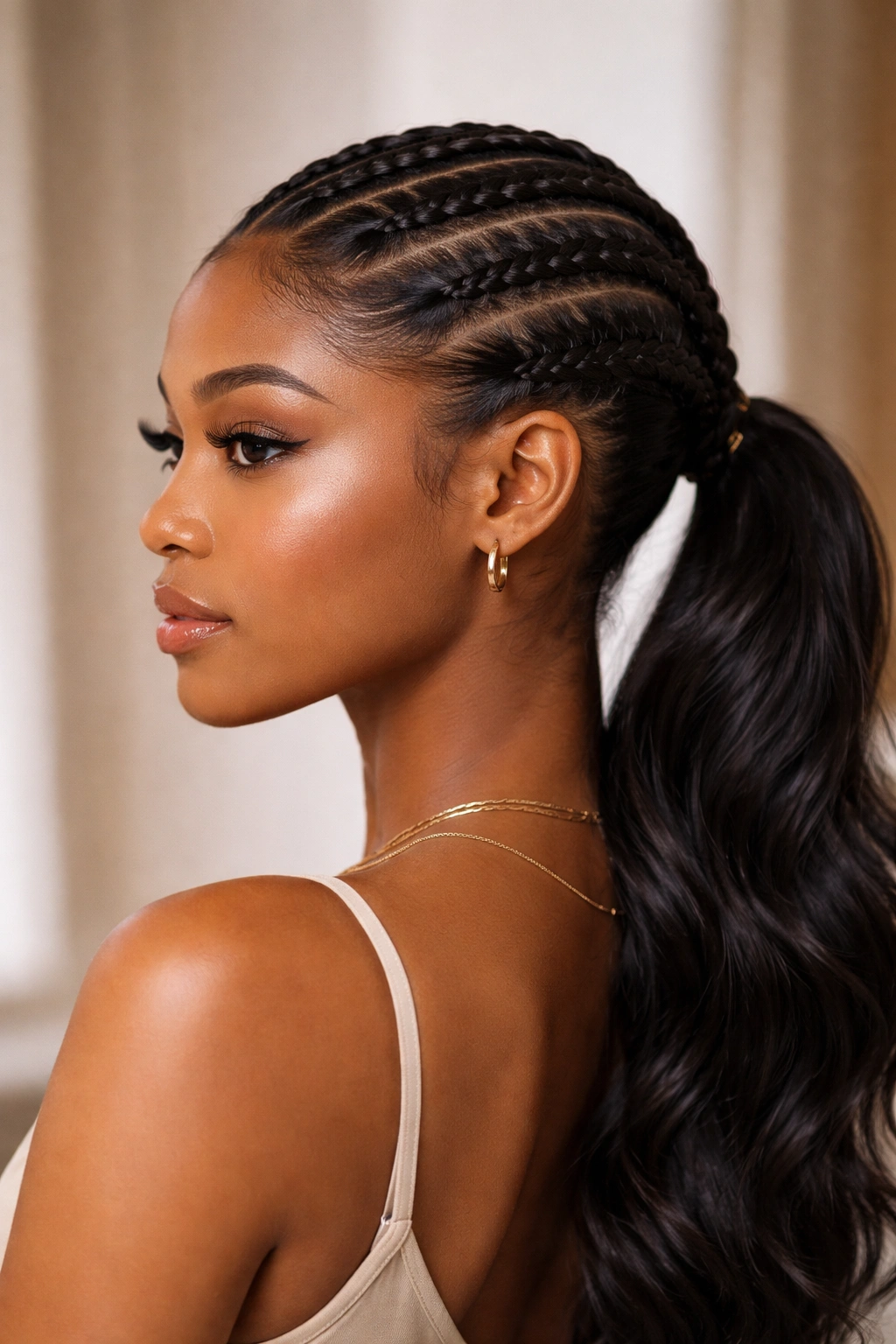
Instead of running straight back to the crown, these cornrows travel diagonally from your center hairline toward the back lower sections of your head, creating braids that angle sideways as they progress. The ponytail feeds from the lower back, near your nape, and sits at the base of your neck rather than at the crown. This creates a softer, more romantic aesthetic than the high version.
The Styling Strategy
The diagonal path of the braids means they become more visually prominent — they’re part of the design rather than simply functional. You’re essentially using the direction of the braids to create visual movement and flow. The lower ponytail placement makes the overall look feel less severe and more wearable for everyday situations where you still want polish without intensity.
Creating That Angle
- Part your hair down the center as usual, but position your braids to angle slightly backward and toward the sides as they move down the head
- The braids should meet at the nape area or just below, where you’ll secure them into a low ponytail
- This works beautifully with a slightly curved or slightly off-center ponytail placement — it doesn’t have to be perfectly centered
- Low ponytails often feel best with some texture, so consider slightly loosening the braids after styling for dimension
When to Wear It
This version is perfect for days when you want sophistication without severity. It works beautifully for work environments, casual dates, or anytime you want your look to feel intentional but approachable. The lower placement also tends to work better if you have a longer neck or prefer not to expose as much of your forehead.
3. Zigzag Pattern Cornrow Ponytail
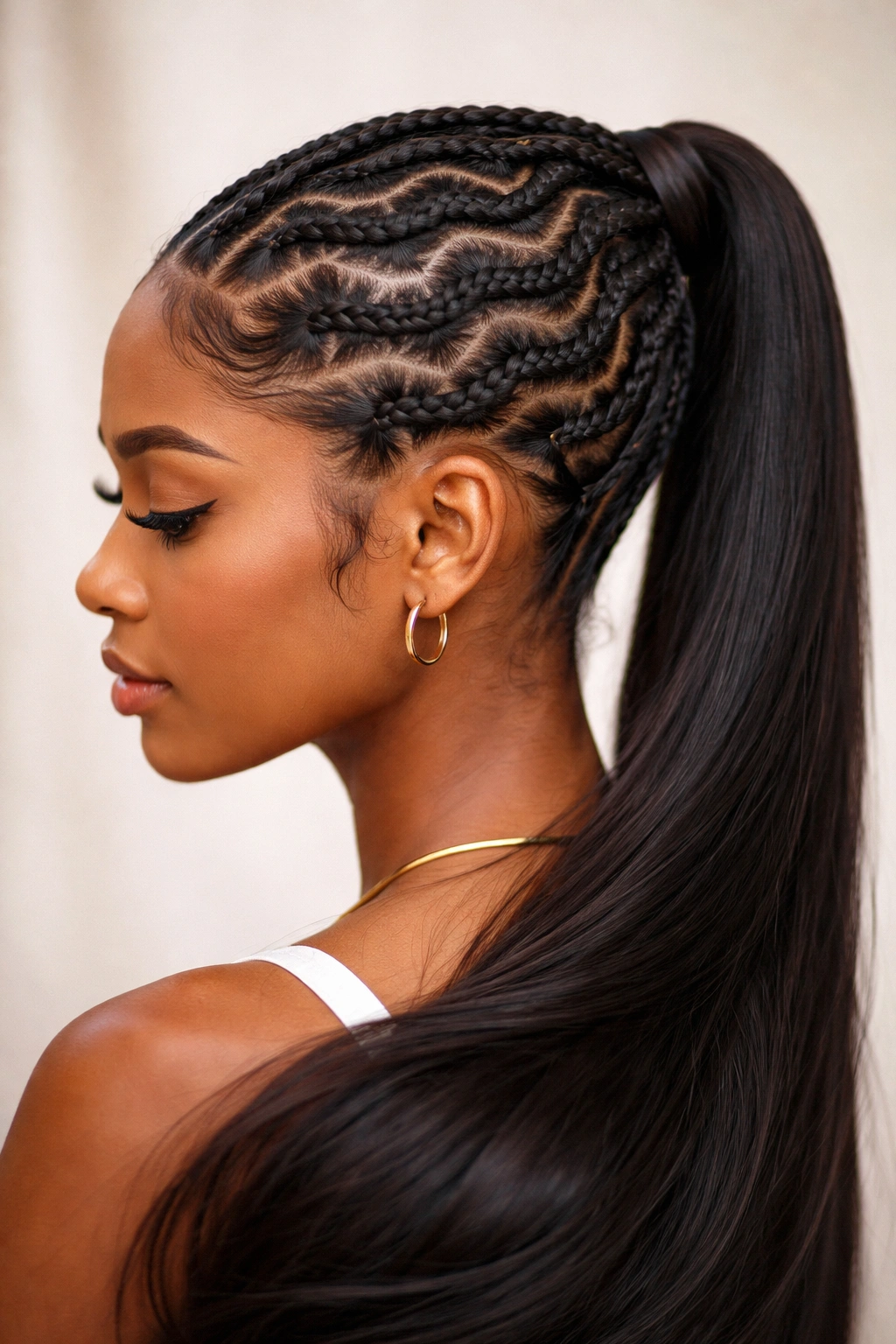
Instead of parallel braids running straight back, these cornrows zigzag across the scalp in an alternating pattern — left braid goes left, right braid goes right, creating actual visual movement and texture across the back of the head. The braids can zigzag tightly or loosely depending on the effect you want, and they eventually converge at the ponytail point.
Design Execution
The zigzag pattern is more visually complex than standard straight-back braids, so this is definitely a statement style. It’s playful without being cartoonish, and it works especially well if you have the time and patience to do a more intricate design. The pattern catches light differently and creates shadows and depth that you simply don’t get with straight braids.
Making It Work
- Map out your zigzag pattern mentally or even lightly mark it with a comb before you start braiding — having a plan prevents you from ending up with crooked or unevenly spaced braids
- The braids don’t have to be massive — tighter zigzags look more refined than loose, chunky ones
- This pattern works best when the braids feed into a ponytail that’s visible and prominent, since the braids themselves are doing visual work
- Consider a sleek, high ponytail to balance the complexity of the braided pattern
Best Occasions
This is a weekend or special occasion style — somewhere you have time to do it right and somewhere you want people to notice your hair. It works wonderfully for parties, events, creative professional settings, or any time you want your style to feel deliberately artistic.
4. Thin Braids Sleek Ponytail
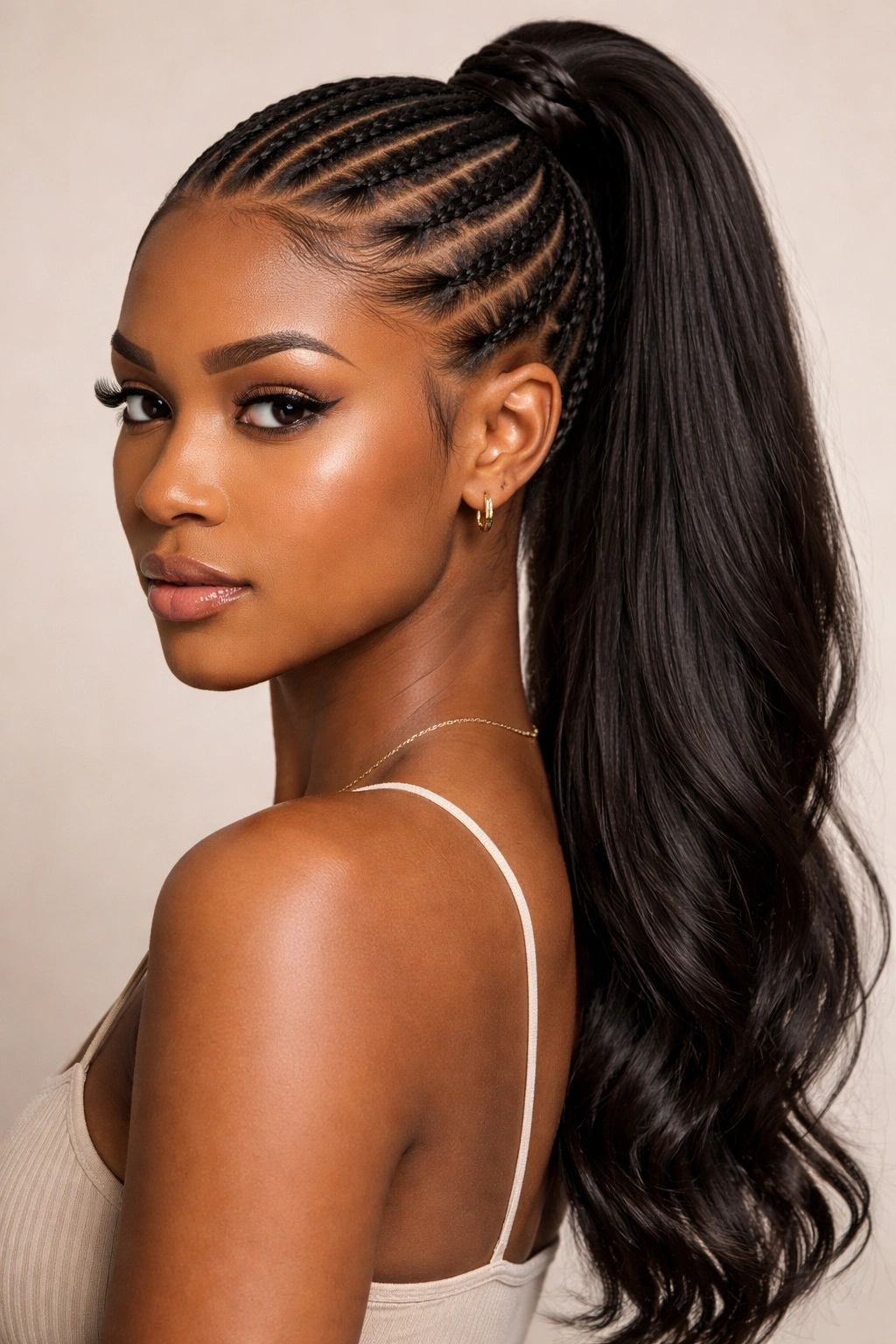
Create four, six, or even eight very thin, tight cornrows instead of the traditional two. Thin braids create an entirely different visual effect — they feel more intricate and detailed, and they allow you to incorporate more of your hair into the braided sections. All the thin braids feed into a single, full, voluminous ponytail.
Why Go Thin
Thin braids create a more polished, almost architectural look. They require more precision and technical skill, but the payoff is a hairstyle that feels distinctly elevated. The thinness also means the braids sit flatter against the head, creating smooth, clean lines. And because you’re using thinner sections throughout, you can incorporate more hair into the braided portions while still maintaining definition.
Technical Approach
- Divide your hair into even sections from hairline to crown — if you want eight braids, mentally divide your scalp into eight equal parts
- Each braid should be relatively thin and tight for the cleanest effect
- Keep tension consistent across all braids so they look unified even though there are more of them
- The ponytail at the end should be full and voluminous to balance the detailed, intricate braiding
- You can experiment with different ponytail styles — sleek, textured, curled, twisted — since the braids are already doing visual work
Who Should Try This
Thin braids require more technical skill and patience, so this is best if you’re either very comfortable braiding your own hair or have a stylist you see regularly. It’s a style that rewards precision and shows real craftsmanship.
5. Side-Swept Cornrow Ponytail
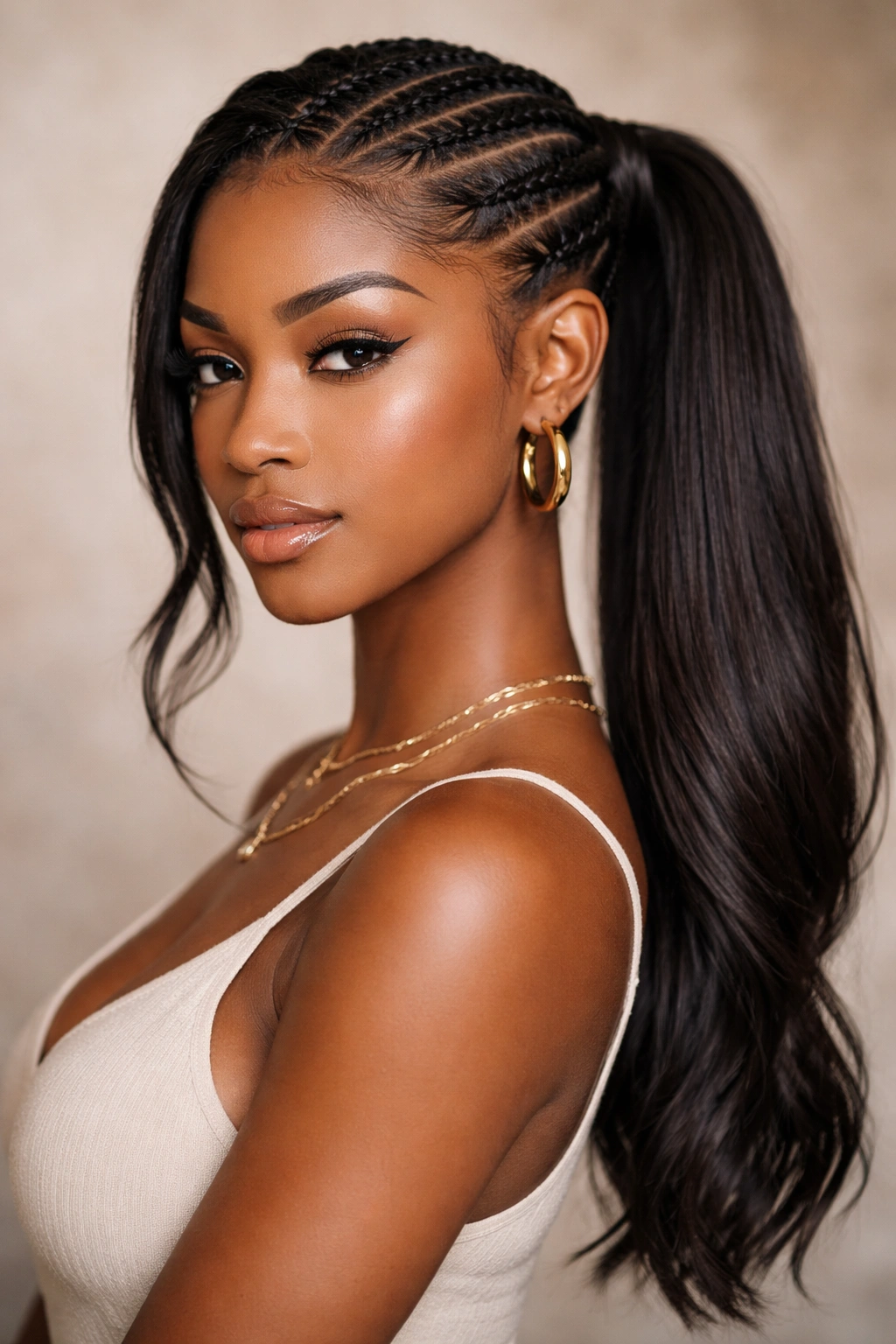
Both cornrows begin at the center hairline but travel diagonally toward one side of the head, sweeping everything to the right (or left, depending on your preference). The ponytail sits off to one side rather than at center back. This creates a dramatic, asymmetrical look that’s fashion-forward and interesting.
The Visual Impact
Side-swept styles inherently feel more editorial and intentional than centered styles. You’re making a clear directional choice, and that choice becomes part of your overall aesthetic. This works beautifully if you have facial features you want to highlight on one side, or if you simply prefer the asymmetrical silhouette.
Getting the Technique Right
- Both braids should follow the same diagonal path — imagine drawing a line from center front toward one side of the head, and that’s where your braids should travel
- The braids don’t have to be perfectly symmetrical or identical; asymmetry is actually part of the appeal
- The ponytail sits to one side, which creates more visual interest than a centered placement would
- You can sweep it to whichever side flatters your face — there’s no rule here
- This works beautifully with some loose, textured hair around the ponytail, which softens the effect
Perfect For
Anyone who loves asymmetrical style and wants their hairstyle to feel intentional and curated. This also works well if you have bangs or prefer to show off one side of your face more than the other.
6. Feed-In Cornrow Ponytail With Extensions
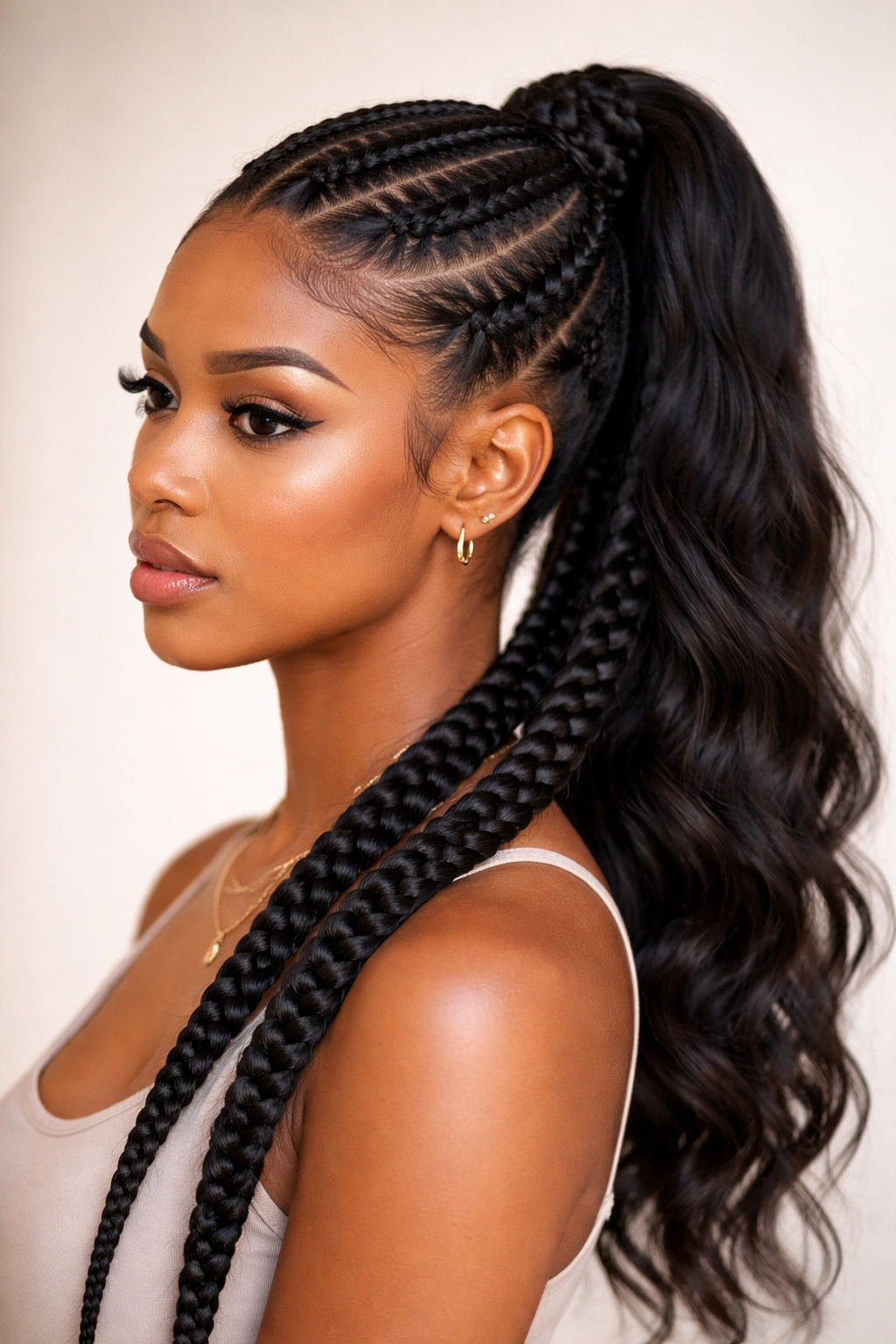
Instead of cornrows that use only your natural hair, feed-in braids incorporate hair extensions strand by strand as you braid, creating thicker, fuller, longer cornrows than you could achieve with your natural hair alone. The extensions get fed into the braid gradually, so they look seamless and intentional rather than obviously added.
Why Add Extensions
Extensions allow you to create longer braids, a fuller ponytail, or incorporate colors and textures that your natural hair doesn’t have on its own. Feed-in braids specifically look more refined than traditional box braids with extensions — the extension hair is woven in gradually rather than just attached at the base. This creates a smoother, more polished final appearance.
Application Details
- Feed-in braids require more time and technical skill than basic cornrows, so budget accordingly
- Choose extension hair that matches your natural hair texture as closely as possible, or intentionally choose a contrasting texture if that’s your goal
- The extensions can match your natural hair color exactly, or you can introduce highlights, ombre, or contrasting tones
- Feed-in cornrows stay longer than regular cornrows because the extension hair lasts longer
- The ponytail will be significantly fuller and longer than it would be with your natural hair alone
Styling Possibilities
With feed-in extensions, you suddenly have options for longer ponytails, fuller styles, and more dramatic effects. You can create a statement look with length and volume that wouldn’t be possible otherwise. The braids themselves also become more prominent since they’re thicker and more visible.
7. Braided Wrap-Around Ponytail
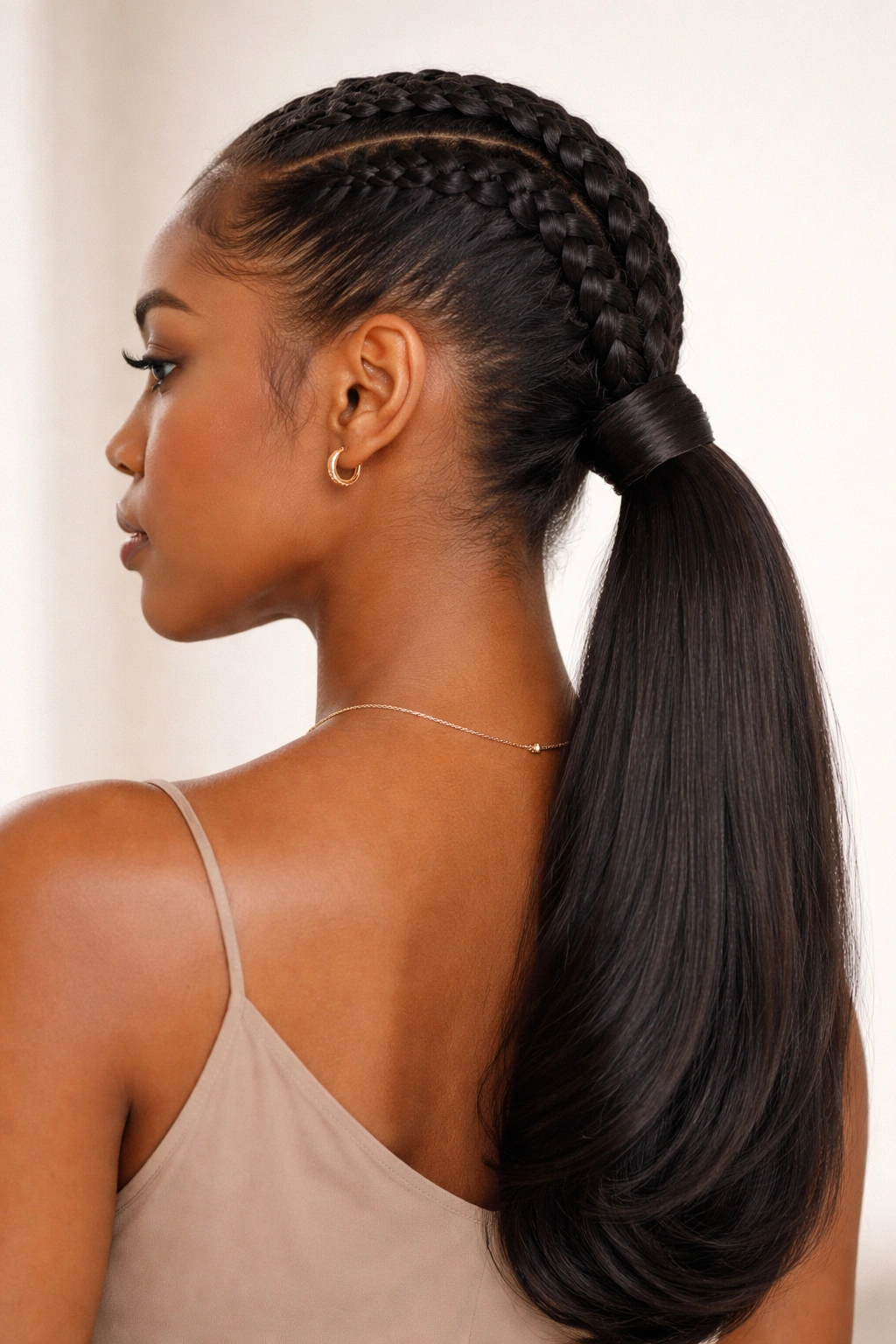
Create two standard cornrows that run down the back of your head toward the nape, but instead of all the hair gathering into one ponytail, you secure the braid ends themselves into the ponytail. Then, take additional hair sections and wrap them around the ponytail base multiple times, creating a sophisticated, wrapped effect that hides the elastic.
The Finishing Detail
What makes this style special is the wrap detail at the base of the ponytail. It’s a small finishing touch, but it completely elevates the entire look. Instead of a visible elastic, you have these wrapped strands creating a decorative band around the ponytail base. It’s the kind of detail that makes a hairstyle feel intentional and polished.
How to Execute It
- Create your two cornrows as you normally would, running toward the nape
- Secure the braids and any additional hair into a low ponytail at the nape
- Take a small section of hair (either from the ponytail itself or from the loose hair at the base) and wrap it around the elastic multiple times
- Secure the wrapped section with bobby pins tucked underneath so they’re invisible
- The wrapping hides the elastic and creates a clean, finished appearance
Best Hair Types
This works beautifully with textured hair that has natural volume and movement. The wrap detail shows up best against fuller hair, making the detail more visible and impactful.
8. Double Braids Into Dutch Braids Ponytail
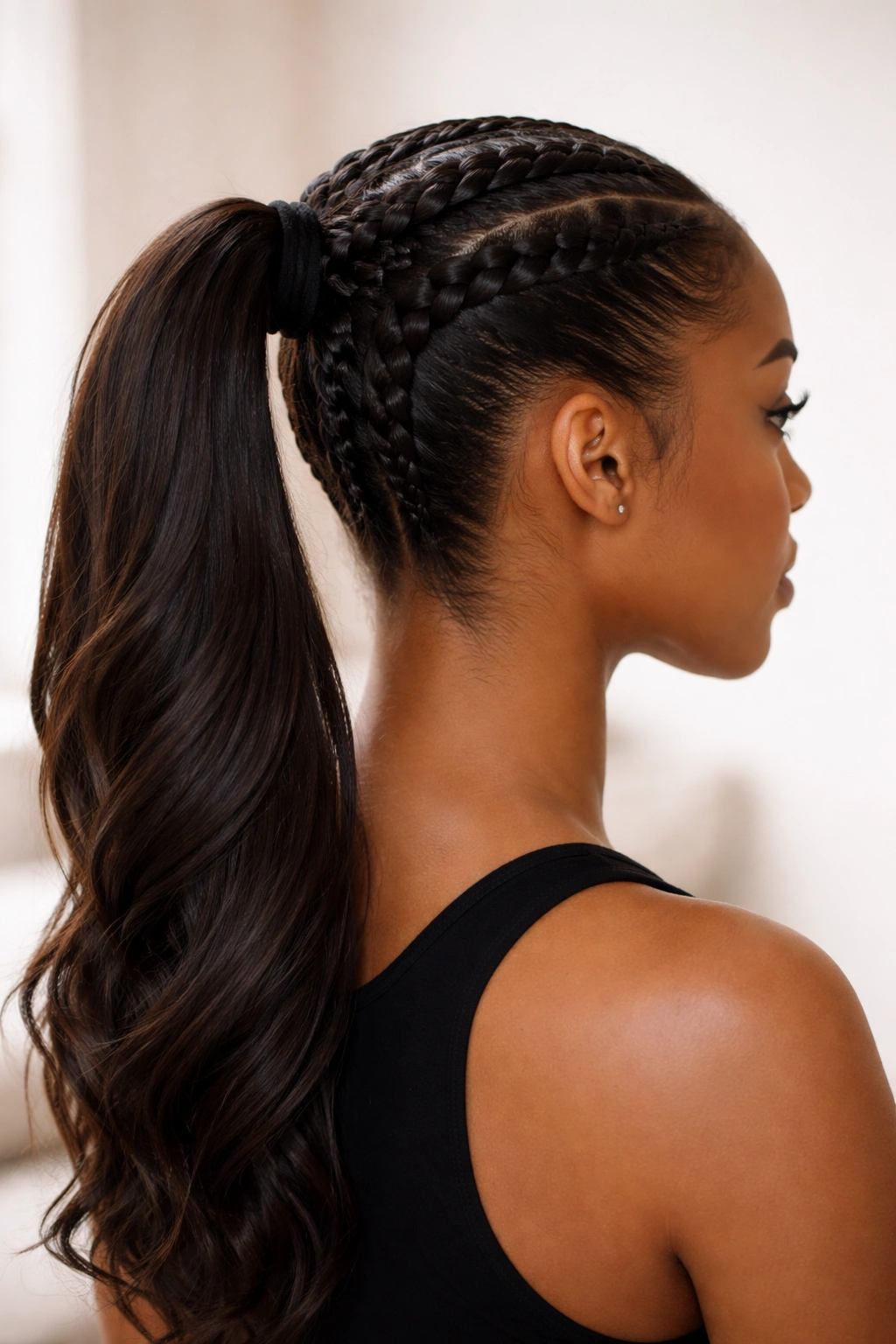
Start with two basic cornrows from your hairline, but instead of regular braiding, use the Dutch braid technique where the braiding strands go under instead of over, creating braids that appear to sit on top of the scalp. The visual effect is raised, dimensional braids that catch light beautifully. These feed into a ponytail at the crown or nape.
Understanding Dutch Braiding
Dutch braids (also called reverse French braids) create a raised, almost 3D appearance compared to regular braids. They look bolder and more dimensional, making them perfect if you want your cornrows to be a major visual element rather than subtle. The technique is essentially the opposite of a regular braid — it takes some practice to develop the muscle memory, but the results are worth it.
The Right Technique
- Dutch braiding requires keeping tension on the sides while the braiding strands cross under each other
- Start at your hairline just like a regular cornrow, but use the Dutch technique
- Keep consistent tension throughout so the braids look even and intentional
- Dutch braids tend to look best when they’re kept relatively tight — loose Dutch braids look sloppy rather than interesting
- The ponytail at the end should be full enough to balance the bold braids
When to Wear This
This is definitely a statement style that shows you’ve put intentional thought into your hair. It works beautifully for events, creative professional settings, or any time you want your braids to be a focal point.
9. Braided Crown With Side Ponytail
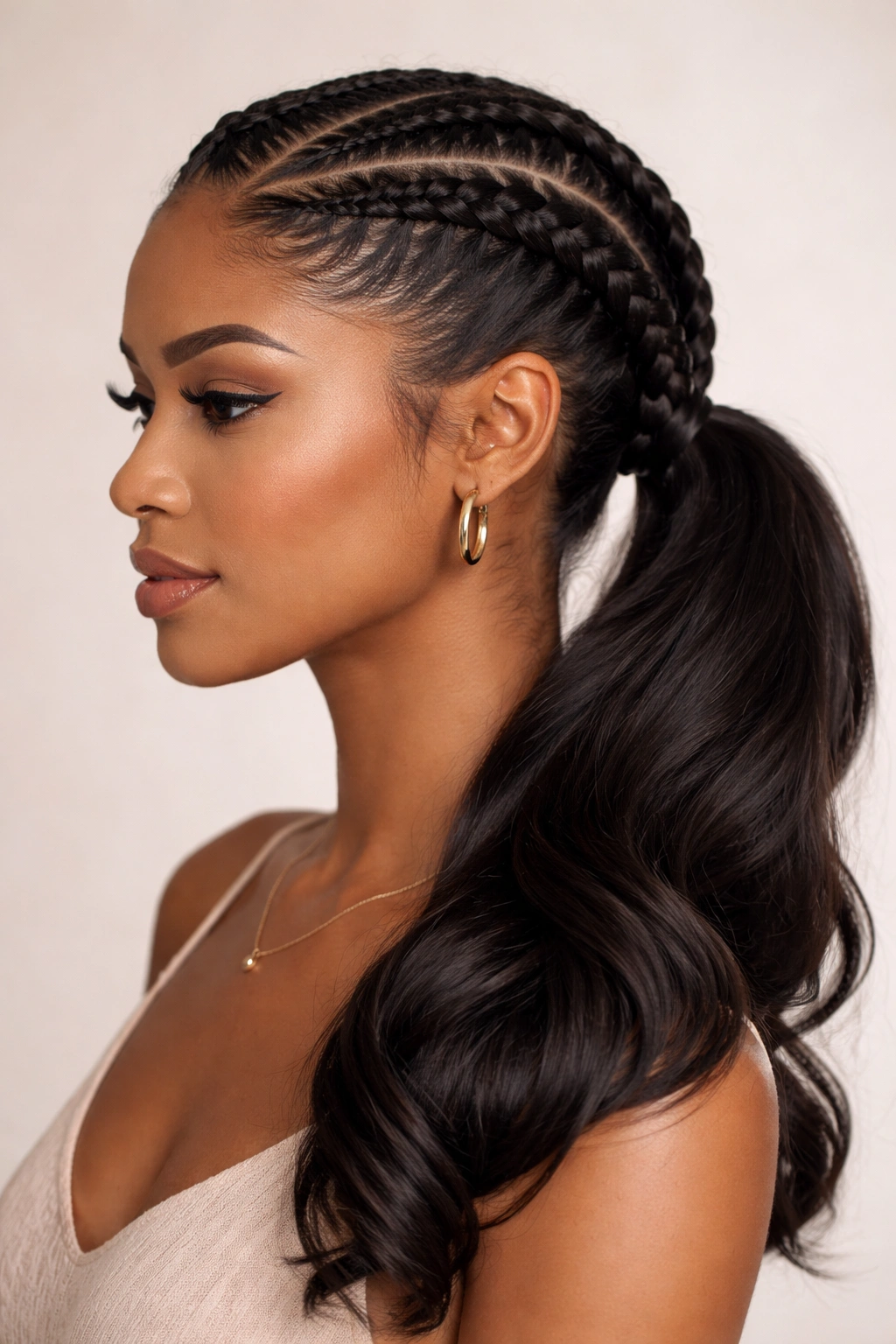
The cornrows don’t travel straight back — instead, they curve around the sides of your head like a crown, framing your face from hairline to ear. They meet at a low ponytail positioned toward the back side of your head. This creates a softer, more romantic, almost bohemian effect compared to traditional straight-back cornrows.
The Crown Effect
By curving the braids around your face rather than running them straight back, you’re creating movement and dimension. The braids become facial framers rather than just a way to secure hair. This approach works beautifully if you want to highlight your face shape or create a softer aesthetic overall.
Execution Tips
- Start your braids as usual at the center part, but angle them to curve along the sides of your head rather than traveling straight back
- The curve should feel natural — imagine the braids following the contour of your head and face shape
- Let the braids curve all the way around to one or both sides where they meet the ponytail
- The ponytail can sit low or even partially to one side, depending on where the braids naturally end
- Loose, slightly textured hair around the ponytail softens this style beautifully
Perfect For
Anyone who loves romantic, face-framing styles but needs the security and polish of cornrows. This works wonderfully for dates, casual events, or any time you want to feel both elegant and relaxed.
10. Geometric Pattern Cornrow Ponytail
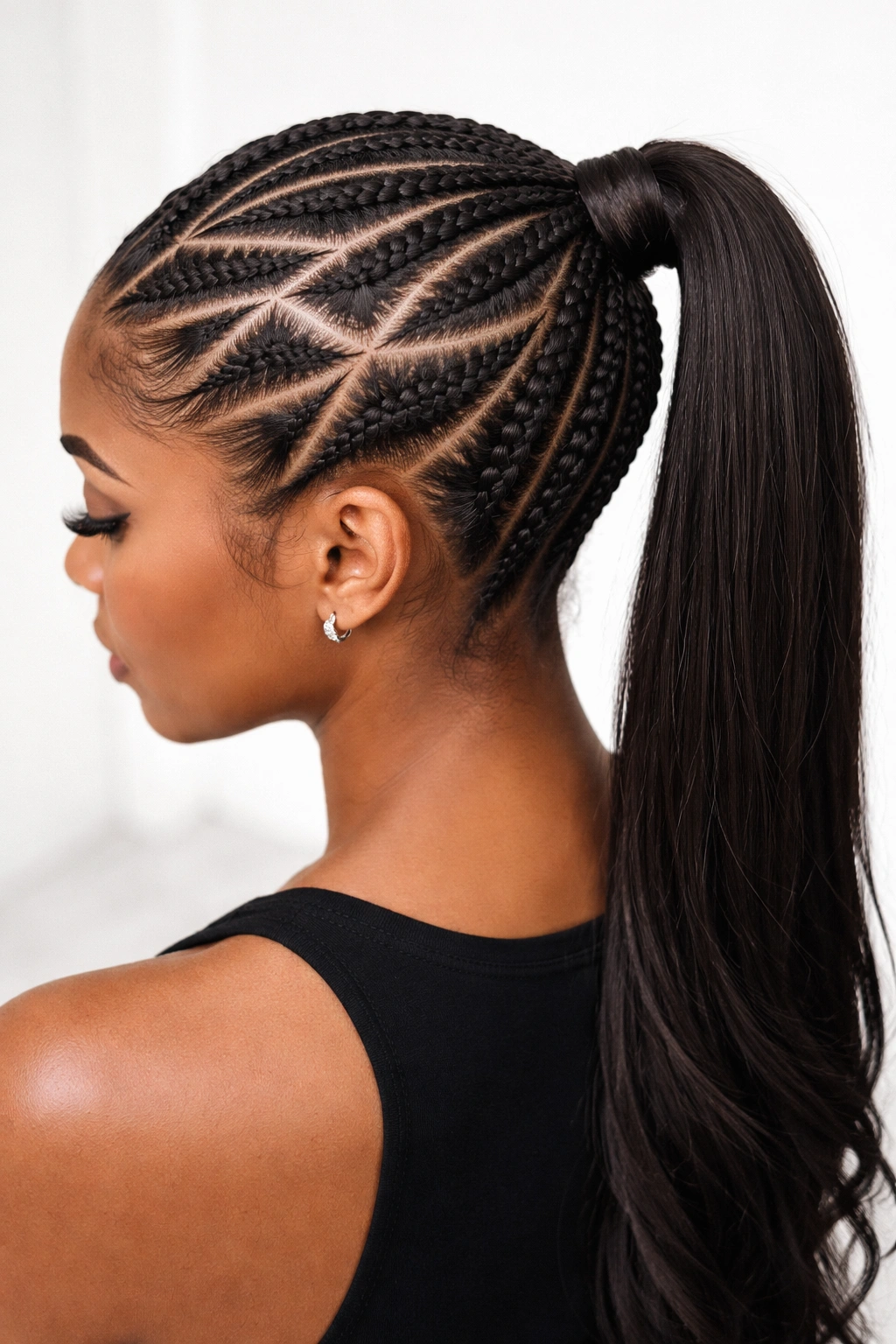
Rather than simple straight-back or diagonal braids, create a geometric pattern — perhaps braids that form triangles, diamonds, or other shapes across the scalp before feeding into the ponytail. This requires careful planning and technical skill, but the result is genuinely artistic. Some stylists even incorporate small shaved or undercut sections into the pattern for additional visual interest.
Designing Your Pattern
This is not a DIY style for most people — it really requires the skill and creative vision of a professional stylist who understands spatial design and can execute precise patterns. But if you have access to someone with this skill level, the payoff is a hairstyle that’s genuinely unique artwork. The pattern becomes conversation-starting and feels intentional in the best way.
Visual Considerations
- Geometric patterns work best on longer hair where you have adequate scalp space to create the design
- The patterns show up best from behind or in a side view, so consider how you’ll be wearing it
- The ponytail can be sleek or textured depending on the complexity of the pattern
- Some people incorporate color into their braids (either through extensions or temporary color) to make the pattern more prominent
Who Should Try This
This is for people who love fashion-forward, artistic styles and have access to a skilled stylist. It’s definitely a special occasion style or something you wear if you want your hair to be a statement piece.
11. Invisible Cornrow Ponytail
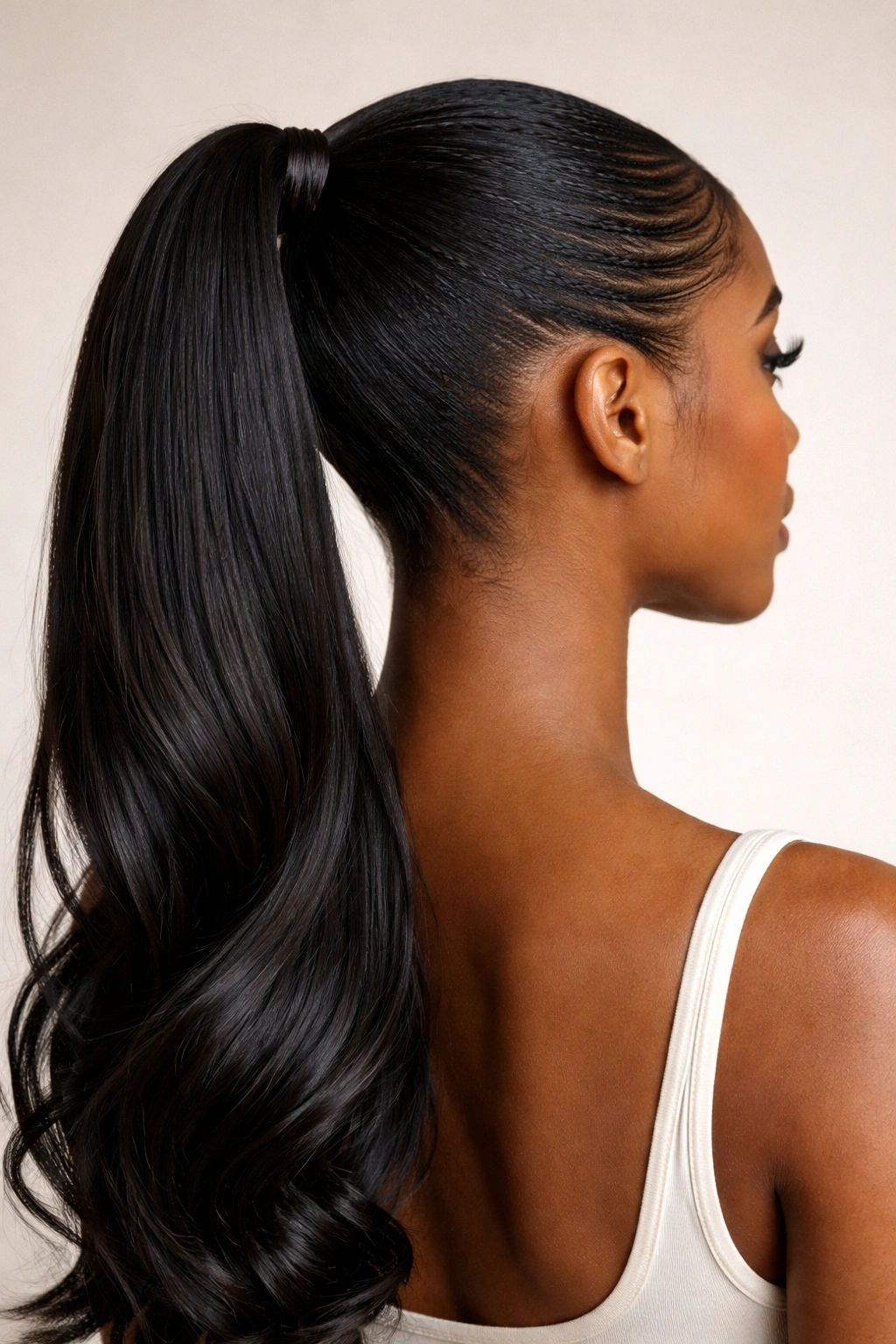
These cornrows are braided so smoothly and tightly that they almost disappear into your hair, creating an effect where the ponytail appears to emerge from unbraided hair. The braids are there technically, but they’re so well executed and so tightly incorporated that they blend rather than stand out. The focus is entirely on the smooth, voluminous, polished ponytail.
The Technique
Creating invisible braids requires exceptional technical skill and tremendous precision. The braids have to be kept extremely tight, the parts have to be exact, and the overall execution has to be flawless. It’s one of those styles that looks effortless and simple but actually requires immense skill to execute properly.
Why This Works
Sometimes less is more. This style is perfect if you want the benefits of cornrows — security, polish, the braided texture — but you don’t want them to be a visual focal point. Instead, the ponytail itself gets all the attention. It’s an elegant, sophisticated approach that works beautifully in professional settings where you want intentional style without being too bold.
The Real Benefit
With invisible braids, you get complete security and polish with a look that feels natural and understated. Your ponytail can be sleek, voluminous, textured, or adorned with accessories — all the attention goes there rather than to the braiding.
12. Color-Blocked Braids Into Ponytail
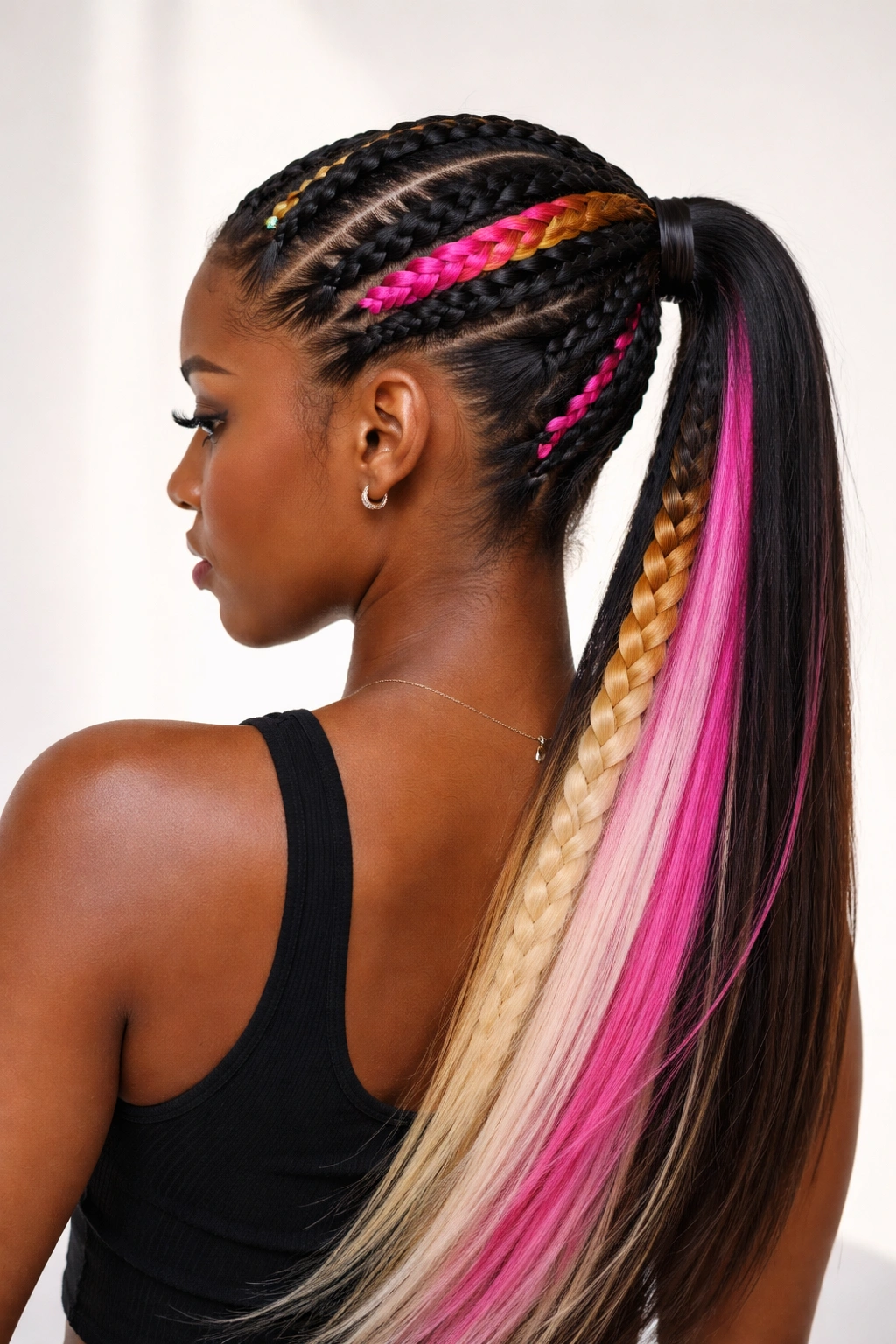
Incorporate a contrasting color through feed-in extensions or by braiding in colorful sections, creating color blocks or stripes within your cornrows. You could do one braid in your natural color and one in a bold contrasting shade, or create color blocking throughout both braids. The braids feed into a ponytail that might match one of the colors or be its own color entirely.
Playing With Color
Color instantly transforms the visual impact of cornrows. Even if the braids are otherwise identical to other styles, the addition of color makes them significantly more eye-catching and intentional. You can be subtle with close-matching tones or go bold with contrasting shades. Temporary color, colored extensions, or even colored threads can all work depending on your comfort level and how permanent you want the effect to be.
Color Combination Ideas
- Your natural color braided in one braid, a contrasting bold color in the other
- Gradient or ombre effects where the color transitions from one shade to another
- Matching the braided color to your ponytail for a coordinated look
- Contrasting the braid color with the ponytail color for visual interest
- Subtle color accents that match your outfit or mood
Best For
Anyone who loves color and fashion and wants their hairstyle to be a statement piece. This works beautifully for people who change their style frequently and aren’t afraid to take risks with their look.
Final Thoughts
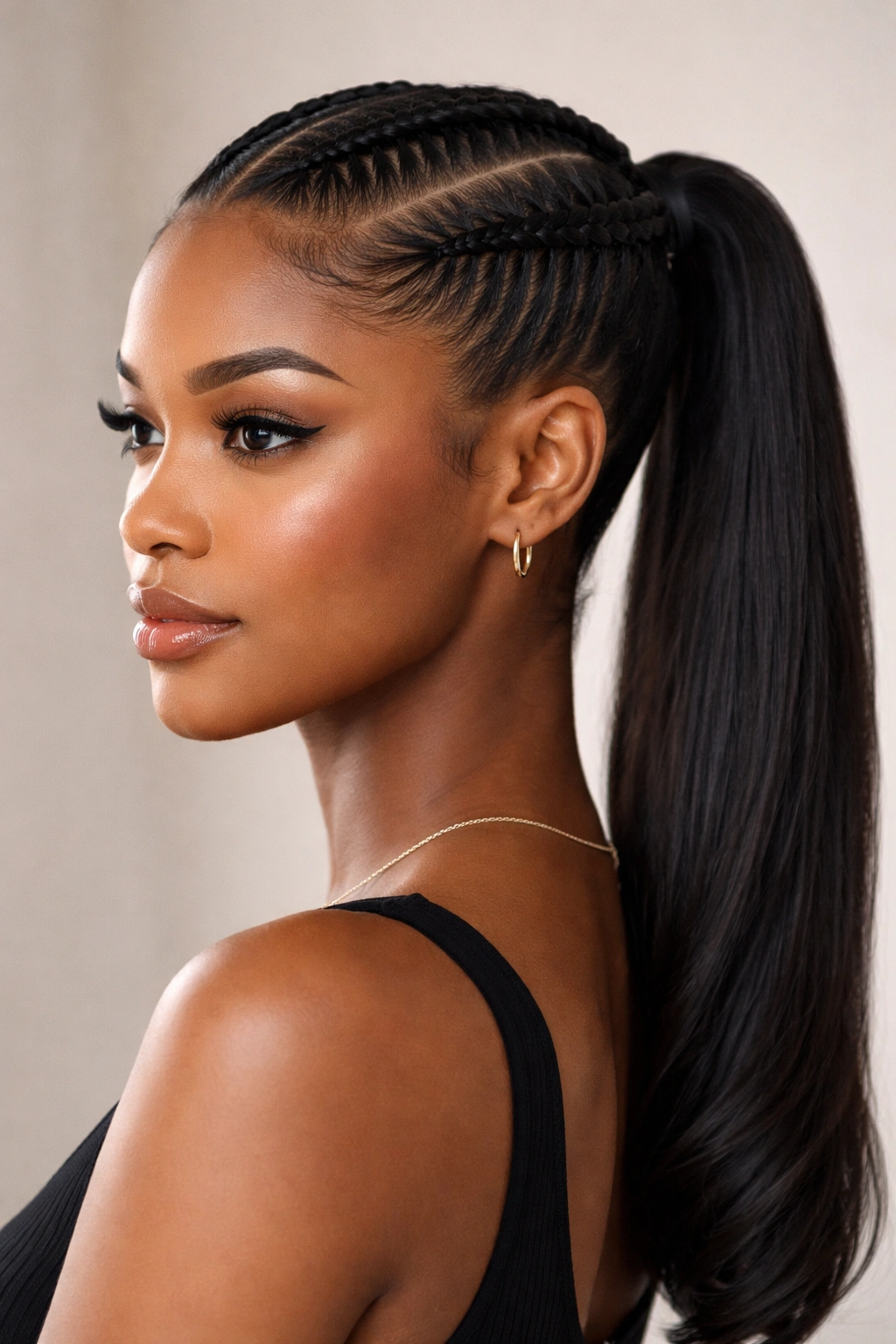
Double cornrow ponytails represent a beautiful intersection of practicality and artistry. You’re not just securing your hair — you’re creating a deliberate aesthetic that demands attention and respect. Whether you choose the simplicity of classic straight-back braids, the romance of crown-framed cornrows, or the boldness of geometric patterns and color blocking, you’re making a statement about who you are and how intentional you are about your appearance.
The real power of this style is its incredible versatility. The same fundamental technique — two cornrows feeding into a ponytail — becomes dozens of entirely different looks depending on placement, pattern, finish, and embellishment. You can wear a version of this style to work Monday and dress up a completely different version for an event Saturday night.
Start with whichever style calls to you most, whether that’s the timeless classic or something more adventurous. If you’re doing your own braiding, practice makes a genuine difference — your first attempt might not be flawless, but by the third or fourth time you create the same style, the technique becomes second nature. If you’re working with a stylist, bring reference photos and be specific about placement and finish details so you both envision the same final result.
The most important thing is that you feel confident and comfortable in whichever style you choose. A great hairstyle isn’t just about how it looks; it’s about how it makes you feel when you catch your reflection. That confidence and intentionality is what truly makes any cornrow ponytail sleek.
