



Feed-in braids have become one of the most versatile and stunning protective styling options available, and they pair beautifully with ponytails for a polished, intentional look. Unlike traditional box braids or standard three-strand braids that start thick from the root, feed-in braids create a sleek, customizable appearance by gradually incorporating sections of hair as you braid downward. This technique gives you incredible control over texture, tension, and visual impact—making it absolutely ideal for medium-length hair, which has enough length to showcase the braided detail but not so much that styling becomes unwieldy.
What makes feed-in braid ponytails especially appealing is their incredible range. You can go sleek and minimalist with two thin feed-in braids framing your face and pooling into a high ponytail, or you can create a bold statement with thick, chunky braids that create dramatic dimension. The beauty of this style for medium hair is that the length sits at that perfect sweet spot where braids have presence without becoming heavy or cumbersome, and the ponytail endpoint feels proportional and elegant rather than sparse.
Whether you’re looking for an everyday style that keeps hair off your face while maintaining softness, a protective style that lets your natural texture breathe, or something Instagram-worthy for a special occasion, feed-in braid ponytails deliver. The versatility comes not just from the number and thickness of braids you choose, but from where you position them, how tightly you feed them in, what you do with the ponytail itself, and how you style the remaining loose hair. Let me walk you through twelve stunning variations that will work beautifully with medium-length hair.
1. Classic Two-Braid High Ponytail
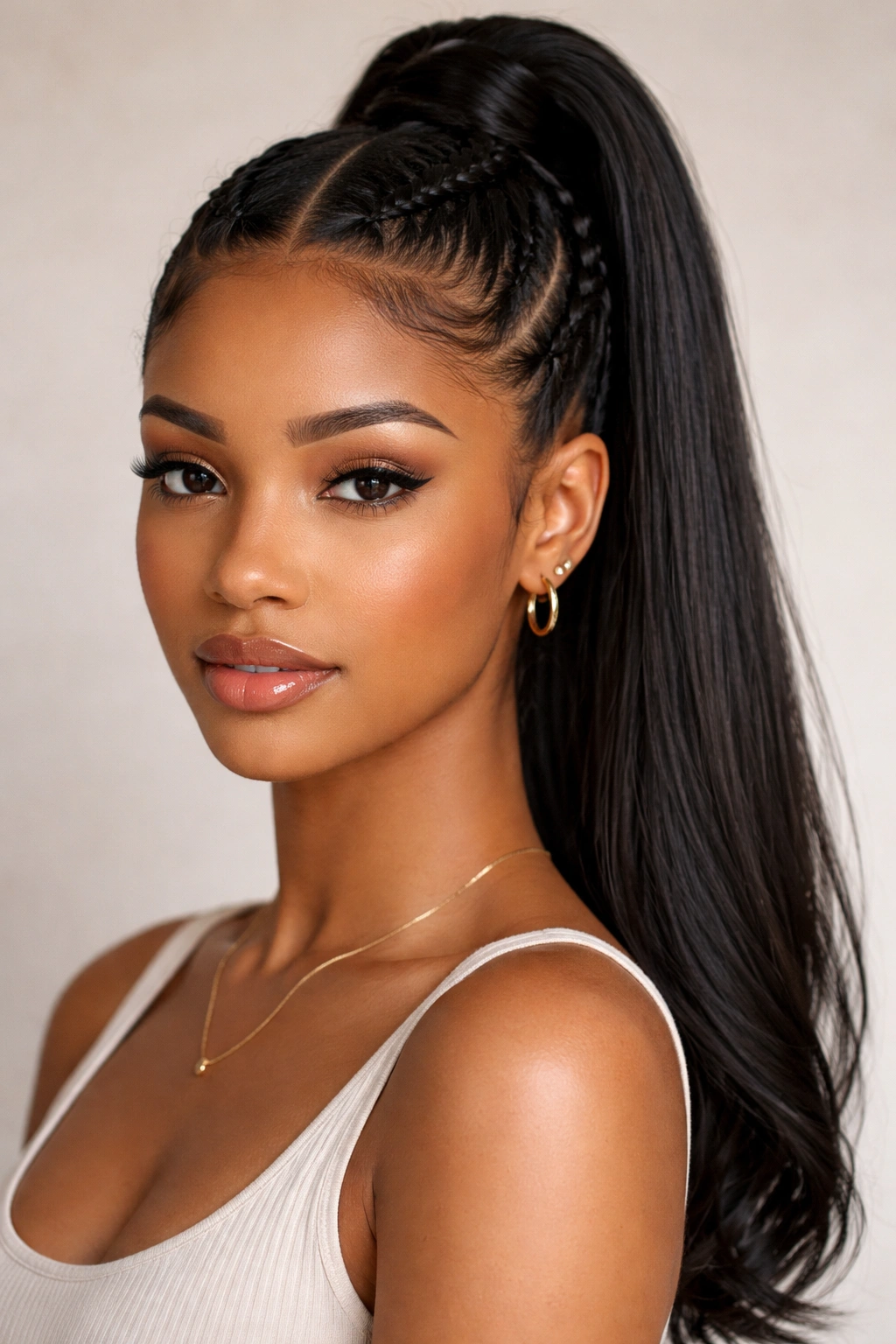
This is the foundation style that launched a thousand variations. Two sleek feed-in braids start at your temples and travel straight back to merge into a high, tight ponytail at the crown. The braids frame your face beautifully while keeping all hair off your forehead and cheekbones, which is why this style has remained a favorite for both casual wear and polished professional settings.
Why This Style Works for Medium Hair
Medium hair has just enough density to create noticeable, dimensional braids without the braids looking wispy or thin. The high ponytail placement on medium hair creates beautiful proportions—your face doesn’t look overwhelmed by too much hair weight, and the braids themselves have enough length to show off detail and texture. This style also works across all hair types, from straight to coily to wavy.
How to Create It
Start by parting your hair down the center or slightly off-center, dividing it into two equal sections. Take a small subsection of hair from one side at your temple and begin a feed-in braid, gradually incorporating more hair as you move backward toward your crown. The key is keeping tension even and consistent—too loose and the braid looks sloppy, too tight and you risk breakage and discomfort. Once both braids reach the back of your head, gather all remaining loose hair into a high ponytail and secure with a smooth elastic. Wrap a small section of the ponytail around the elastic to conceal it for a finished look.
Styling Variations
Smooth the loose ponytail into a sleek cylinder, or flip your head and use texturizing spray to create wave or curl in the ponytail for contrast. You can also wrap the ponytail into a bun, create a low pony instead of high, or even flip the entire style upside down for an edgy, playful vibe.
2. Side-Swept Feed-In Braid with Low Pony
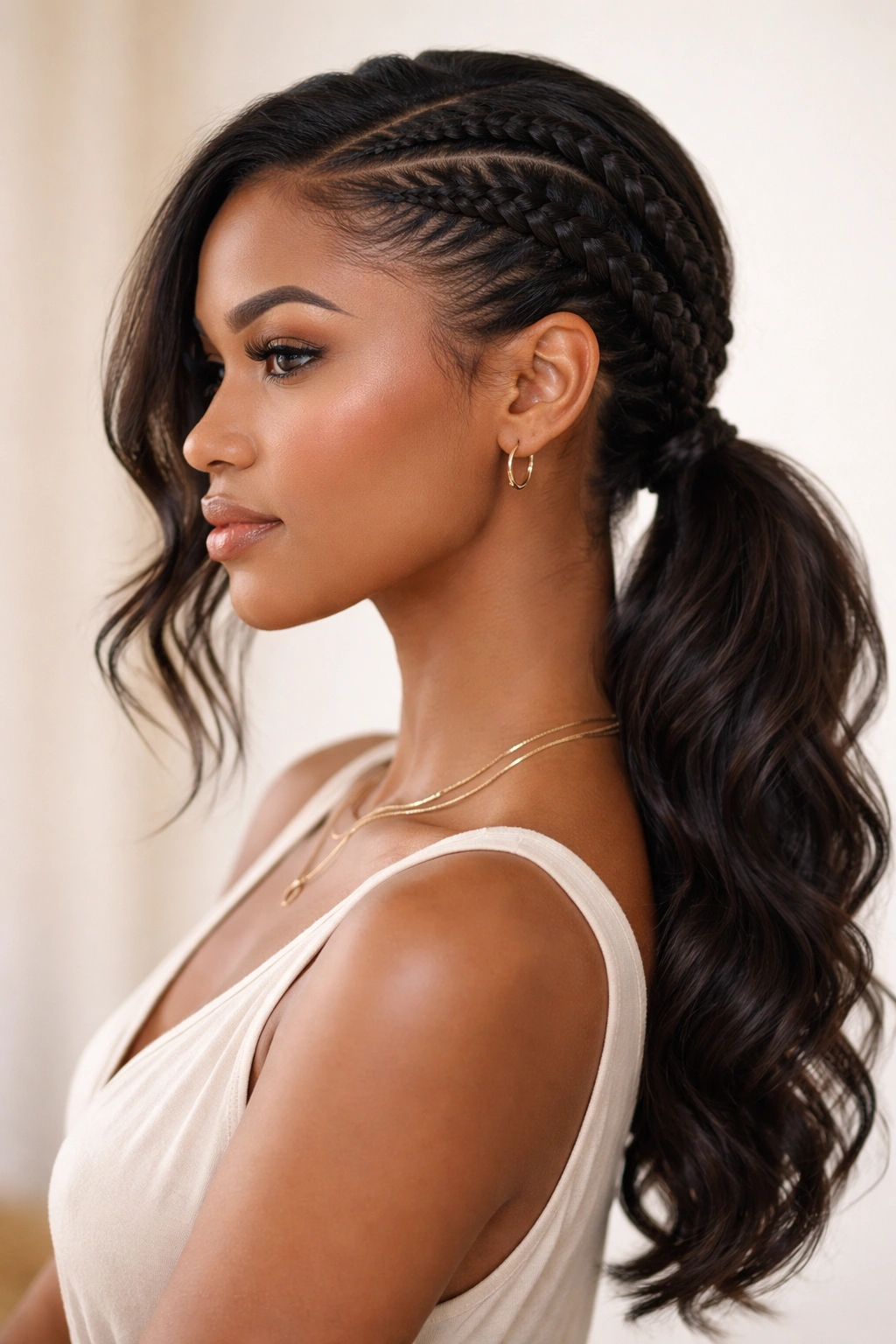
Instead of centering your braids, this variation brings them from both sides of your head in a gentle sweep toward one side, pooling into a romantic low ponytail. This style has a softer, more approachable feel than the centered version—it’s less architectural and more fluid, which makes it perfect for dates, casual outings, or when you want your braids to feel more like a styling choice than a protective statement.
The Visual Difference
Where the two-center-braid style creates geometric symmetry, the side-swept variation is naturally asymmetrical and diagonal. This draws the eye along the line of the braids rather than up to the crown, which actually makes it a flattering choice if you’re looking to draw attention to your jawline or neck rather than your forehead and upper face.
How to Position It
Begin one braid at your left temple and one at your right, but instead of bringing them straight back to your crown, angle them slightly toward the left side of your head (or right—the choice is yours). As you braid, gradually shift the path so both braids converge behind your left ear rather than at the center back. This creates that swept, windswept impression even though the braids are technically controlled and secured.
Best For
This style is gorgeous on heart-shaped and oval faces, and the soft, one-sided composition feels effortlessly elegant rather than aggressively polished. It works especially well for events where you want to look put-together but not “done up.”
3. Four Thin Feed-In Braids Into a High Pony
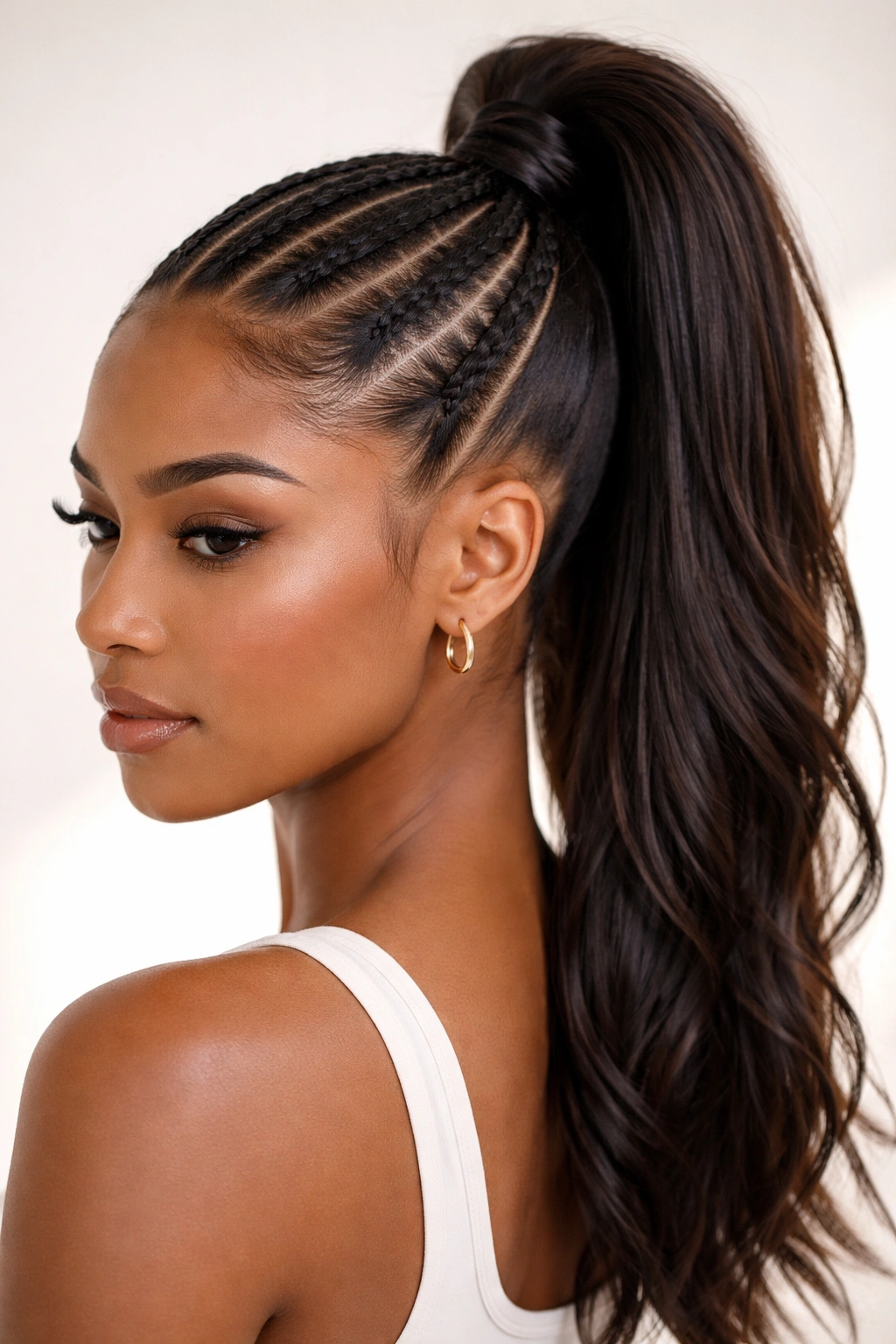
Moving from two braids to four creates an entirely different visual energy. Four thin feed-in braids, evenly spaced across your head from your hairline back to your crown, converge into a single high ponytail that becomes much fuller and more textured. This style is statement-making without being overwhelming—the multiple braids create intricate visual interest while still reading as refined rather than overly fussy.
The Impact of Multiple Braids
Four thin braids catch more light than two thick ones, creating a luminous quality that photographs beautifully. Each braid shows off individual twist and texture, so the overall effect is more dynamic. For medium hair, four braids are the sweet spot—enough to create real visual complexity, but not so many that they look scattered or your scalp becomes overstressed from tension.
Spacing and Symmetry
Divide your hair into four quadrants using two partings—one down the center and one ear-to-ear across the crown. Begin each braid at your hairline in each quadrant and gradually feed in hair as you work backward. The symmetry feels intentional and controlled, while the multiple lines create visual interest.
Styling the Ponytail
Because you’re bringing four braids together, the ponytail base becomes quite thick and textured. Play with this by either keeping it smooth and sleek or encouraging the texture to puff out slightly for a more bohemian feel. You can also tease the ponytail gently to increase volume without adding weight.
4. Two Thick Braids with Bubble Ponytail
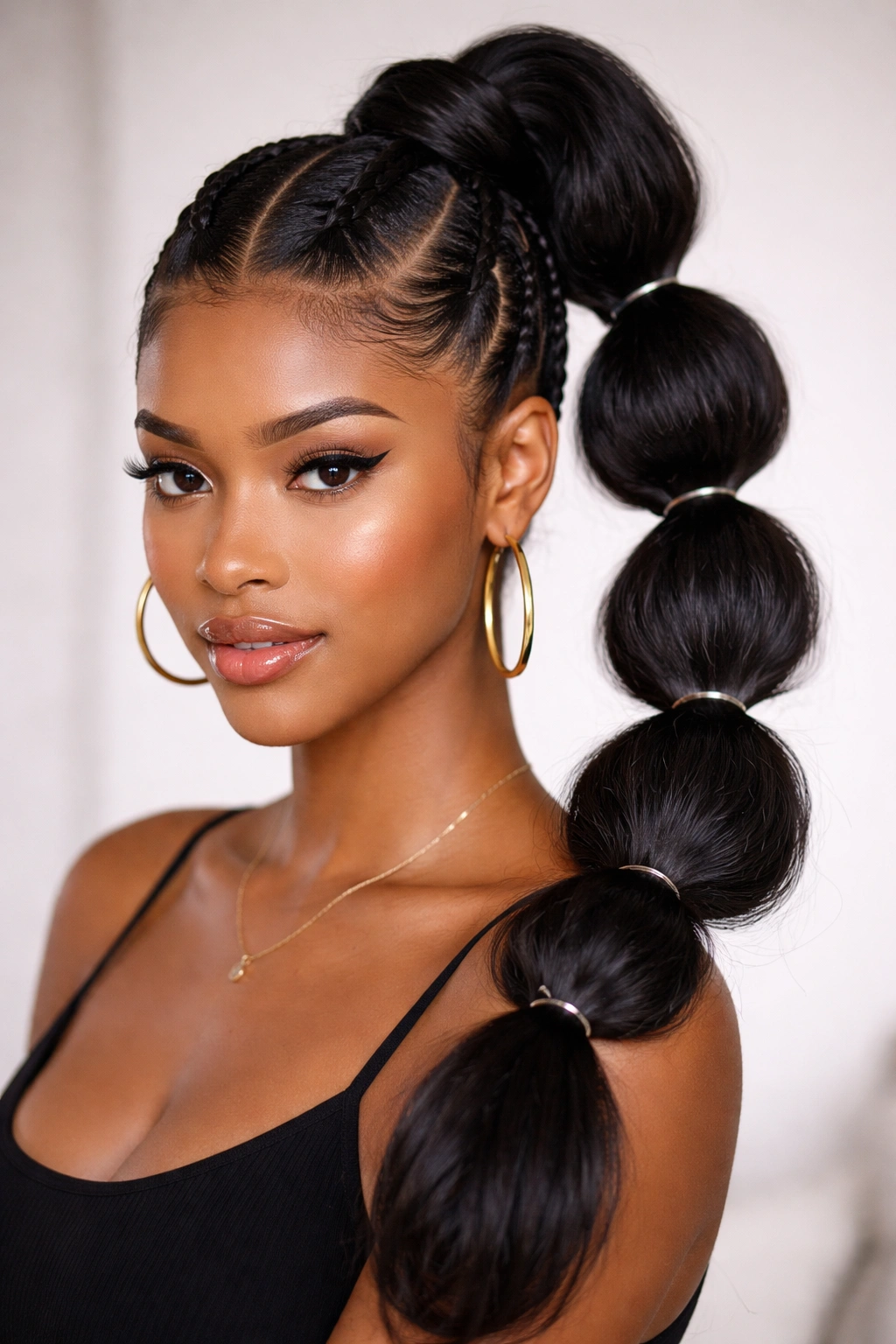
Take two substantial feed-in braids and anchor them into a high ponytail, but instead of leaving the ponytail as a single cylinder, section it with small elastics to create a “bubble” or “stack” effect. Each bubble puffs out slightly between the elastics, creating a playful, youthful aesthetic that’s equal parts polished and fun. This style became especially popular on social media because it’s highly visible—the bubbles create texture and movement even when you’re standing still.
Creating the Bubble Effect
Once your two braids are secured into a ponytail, take small elastics and wrap them around the ponytail approximately 2-3 inches apart, working from the base outward. After each elastic is in place, gently puff out the hair between the elastics to create a bubble shape. The amount you puff determines how voluminous and playful the style appears—subtle puffs read as elegant, while bigger puffs feel youthful and fun.
Texture and Movement
Bubble ponytails work best when there’s some texture already in the hair. If you have straight hair, consider using a texturizing spray or light sea salt spray before styling to make the bubbles hold their shape more easily and look more dimensional. Wavy or curly hair naturally creates beautiful, defined bubbles.
When to Wear It
This style absolutely shines at concerts, festivals, parties, or any situation where you want something eye-catching and fun. It’s also surprisingly practical—the sectioning breaks up the weight of the ponytail and reduces tension on your scalp since no section of hair is pulling constantly in one direction.
5. Feed-In Braids with Messy High Bun
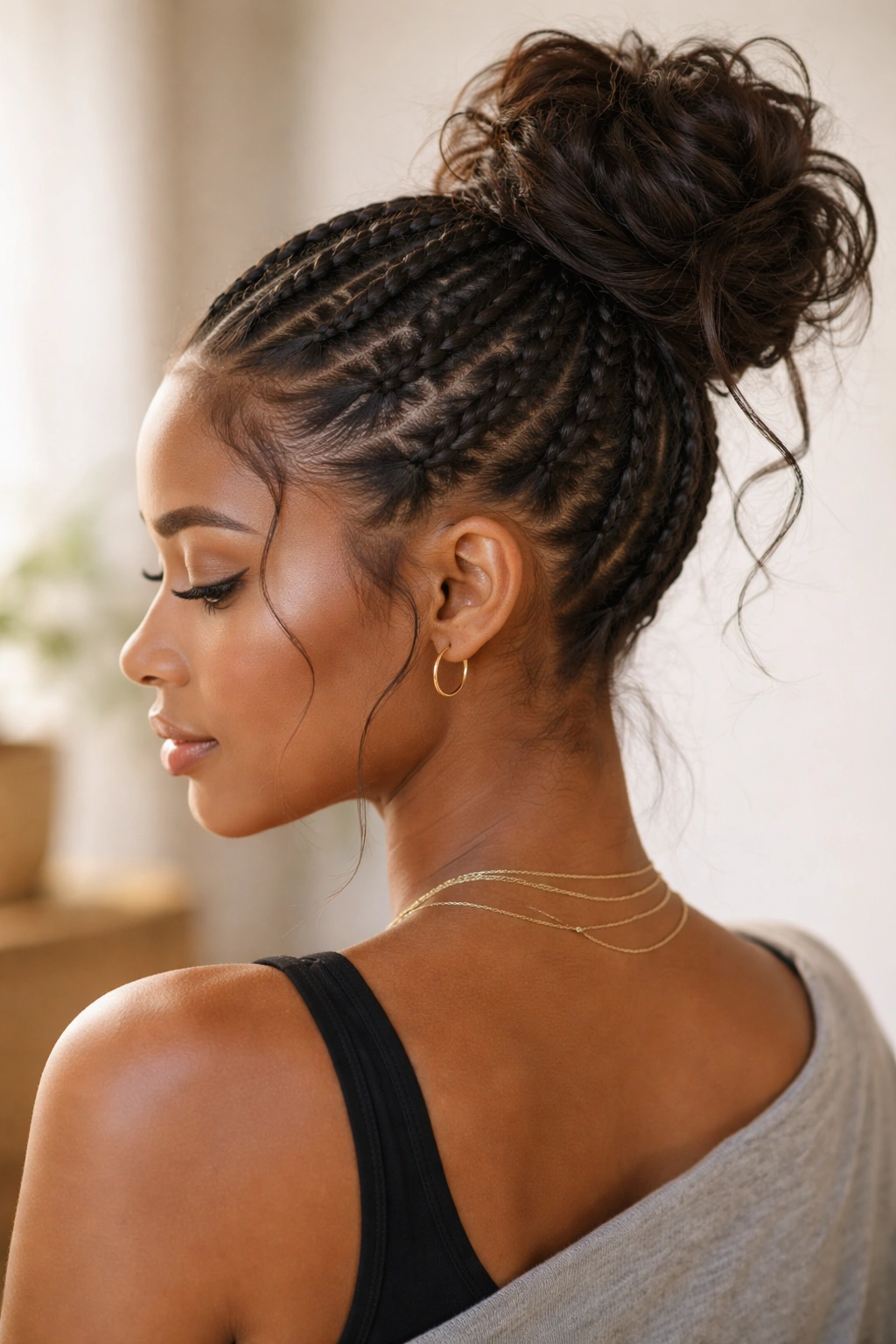
Bring your feed-in braids (two or three) to the back of your head, and instead of creating a tight, smooth ponytail, gather the remaining hair into a deliberately undone, textured bun. This hybrid style gives you the sophisticated, intentional feel of braids with the relaxed, lived-in appeal of a messy bun. It reads as effortlessly cool rather than strictly styled, which makes it ideal for days when you want something that looks polished but feels low-key.
The Messy Bun Formula
Don’t twist or wrap your hair too tightly. Instead, gather it loosely at the base where the braids meet, secure it with a textured or matte elastic (shiny elastics read as too finished for this style), and let it bunch and fold naturally. Pull out a few face-framing pieces and slightly loosen the bun’s edges by tugging gently at the sides. The goal is sophisticated texture, not intentional dishevelment.
Best Hair Types
This style works beautifully on wavy and textured hair, which naturally creates visual interest in the bun. Straight hair can also work, but you may want to add some texture first with a texturizing spray or by gently crimping sections. Curly hair tends to create the most naturally beautiful messy buns with minimal effort.
Why It Works
The braids provide structure and definition, while the messy bun prevents the overall look from feeling too severe. This balance makes the style appropriate for both casual settings and slightly dressier occasions—just adjust your accessories and makeup accordingly.
6. Three Braids from One Side, Swept Into a Low Pony
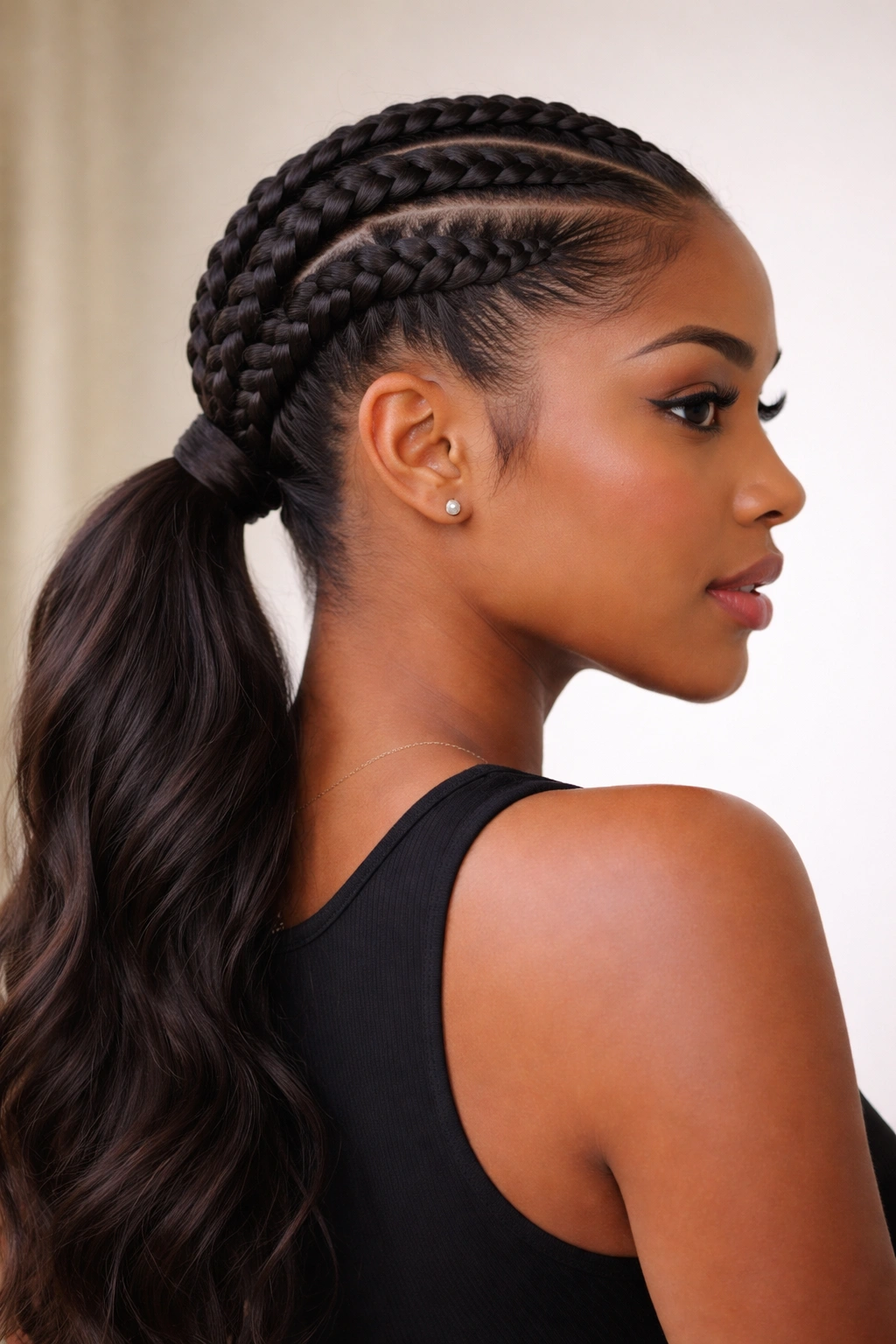
This variation starts all three feed-in braids on one side of your head (say, your left) and sweeps them across to anchor into a low ponytail on the opposite side (the right). The effect is visually dramatic—a thick band of braids traveling across your head creates almost a crown-like quality that photographs gorgeously and makes even medium-length hair feel longer and fuller.
The Visual Path
Starting all three braids on one side and traveling them across the back of your head creates a diagonal or curved line that’s dynamic and eye-catching. This is a bold style—it’s not subtle, so commit to it fully and style the rest of your hair and makeup to match the statement nature of the braids.
Creating the Sweep
Begin each braid at different points along your left hairline and temple area. As you feed in and braid, gradually shift the angle of each braid so they all converge behind your right ear. The braids should feel like they’re traveling across your head rather than just being placed on it. Once they meet, secure everything into a low ponytail and smooth or texture the remaining loose hair.
For Special Occasions
This style is stunning at weddings, proms, or any event where you want something that reads as intentional and elevated. The sweep creates a romantic, almost medieval quality that photographs beautifully in natural light.
7. Two Face-Framing Braids with Sleek Low Pony
Instead of starting your feed-in braids at your hairline and working straight back, begin them closer to your face—at your cheekbone or temple area—and let them frame your face as they travel back. This creates a softer, less severe look than traditional face-framing braids that start at your hairline, and it’s particularly flattering if you have a longer face shape or prefer to keep some width around your temples.
Braid Placement
The magic of this variation is where you begin the braid. By starting slightly closer to your face than the very edge of your hairline, you create a more integrated, less structured appearance. The braids emerge from your hair rather than starting sharply at the edge of your face. This makes the overall style feel more natural and less like you got your hair done.
Why Low Works Here
A low ponytail balances the softness of the face-framing placement. If you anchored to a high pony, the style might feel a bit too casual or undone. A low pony adds polish and creates a graceful line from the braids down through the length of your hair.
Best For
This is an excellent choice for work environments where you want something that looks professional and intentional without being too bold or architectural. It’s also beautiful for anyone who likes their braids to complement their face rather than frame it dramatically.
8. Feed-In Braids with Fishtail Ponytail Variation
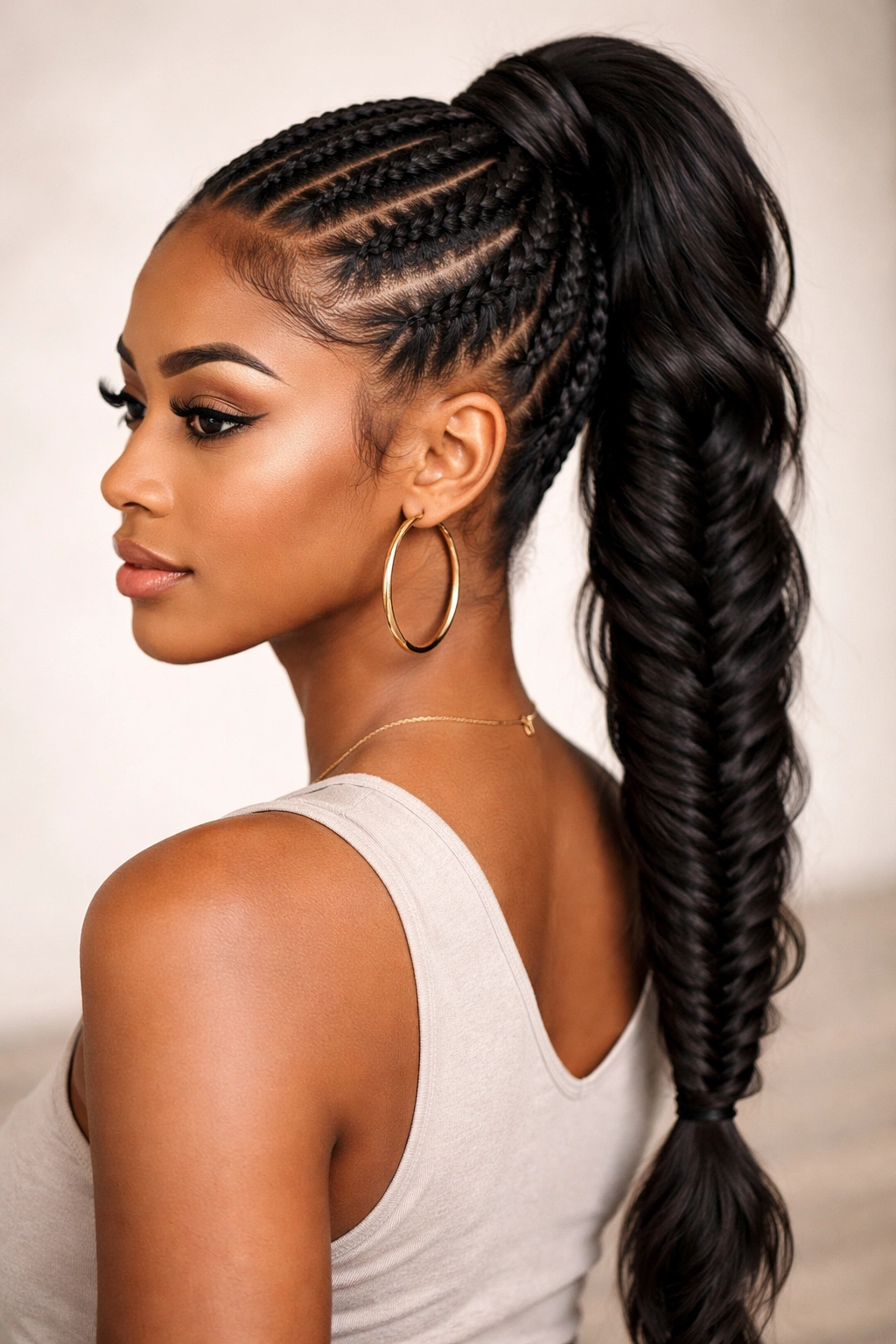
This hybrid combines traditional feed-in braids with a fishtail braid formation in the ponytail itself. Anchor your feed-in braids into a high or mid-height ponytail, then instead of leaving the ponytail as a single strand, divide it in half and create a fishtail braid with it. The texture of the fishtail—which uses smaller sections of hair creating a more intricate, woven pattern than a standard three-strand braid—adds sophistication and visual interest while keeping your hair completely off your neck and shoulders.
Fishtail Technique
A fishtail braid is created by taking tiny sections from the outside of one side of a two-section divide and crossing them to the other side. It’s smaller and more delicate-looking than a standard three-strand braid, which makes it feel more feminine and elegant. For medium hair, a fishtail ponytail feels completely proportional—not too small to notice, not so large that it overwhelms your length.
Mixing Braid Styles
You’re essentially creating two different braid styles in one: the feed-in braids are structured and geometric, while the fishtail is organic and flowing. This contrast is what makes the style interesting. The feed-in braids create definition and shape, while the fishtail adds softness and movement.
Why It Stands Out
Most people don’t mix braid styles, so this automatically reads as more sophisticated and intentional than a straight feed-in-to-ponytail look. It shows braiding skill and confidence, which elevates the entire aesthetic.
9. Asymmetrical Three-Braid Ponytail with Side Part
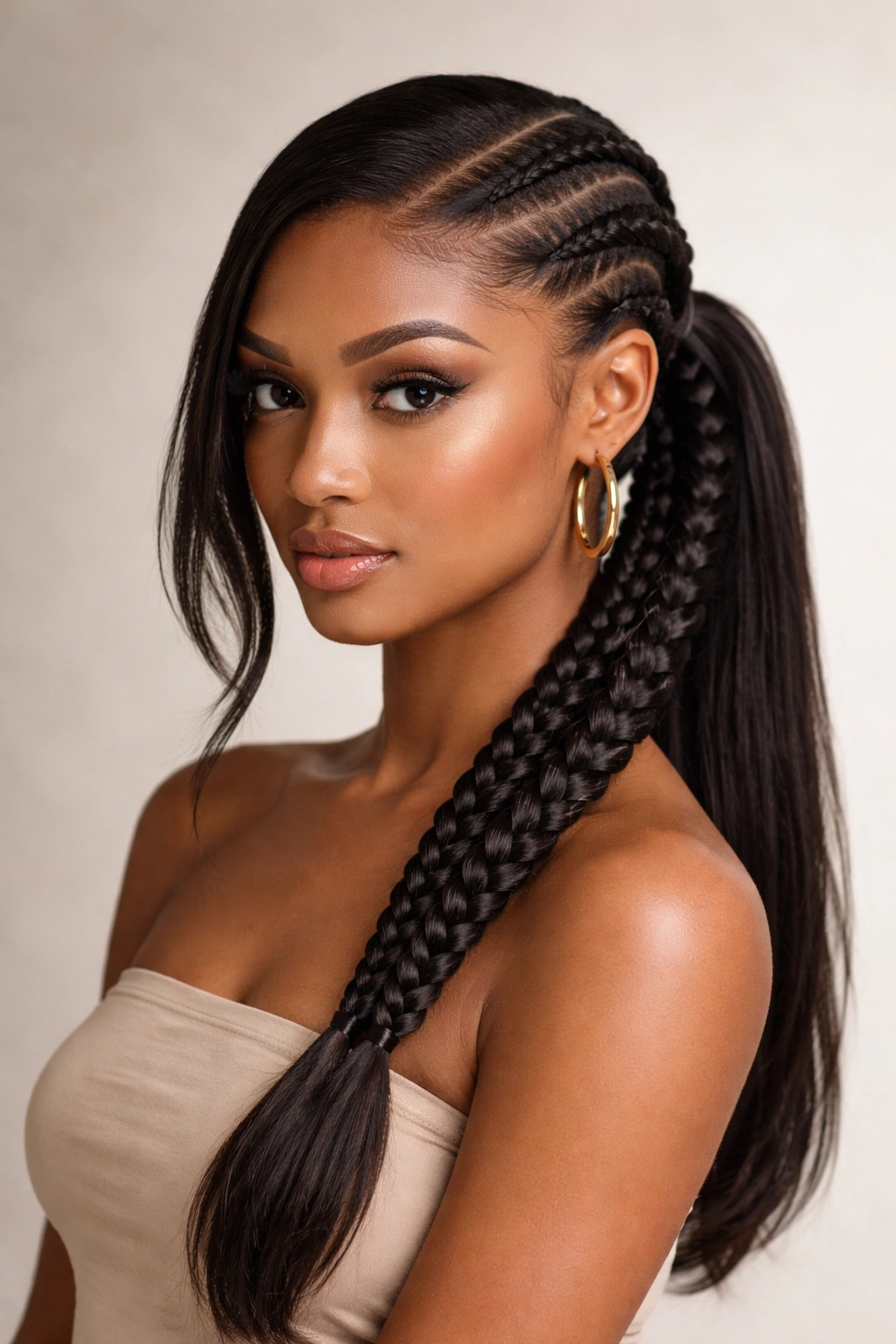
Create an intentionally lopsided style with three feed-in braids positioned unevenly across your head, anchored into an off-center ponytail that sits more toward one shoulder than the other. Pair this with a deep side part to emphasize the asymmetry. This style is modern and edgy—it rejects traditional balance in favor of visual interest and movement, making it perfect for anyone with an artistic or fashion-forward sensibility.
Strategic Placement
Place one braid close to your center part, one near your temple on your dominant side, and one near your ear. Instead of creating symmetry, position them deliberately off-balance. This creates visual tension that feels intentional rather than accidental—there’s a big difference between a lopsided hairstyle that looks like you didn’t pay attention and one that clearly required planning.
The Off-Center Ponytail
Gather your hair slightly to one side rather than at the center back of your head. This completes the asymmetrical feel and draws attention toward one side of your face, which can be flattering if you have a preferred profile or want to emphasize one side of your face.
Who Should Rock This
This style suits confident, fashion-forward people who aren’t afraid of a little visual asymmetry. It works beautifully with edgy makeup, bold colors, or alternative styling. On medium hair, the asymmetry feels modern and intentional rather than careless.
10. Double Ponytail with Stacked Feed-In Braids
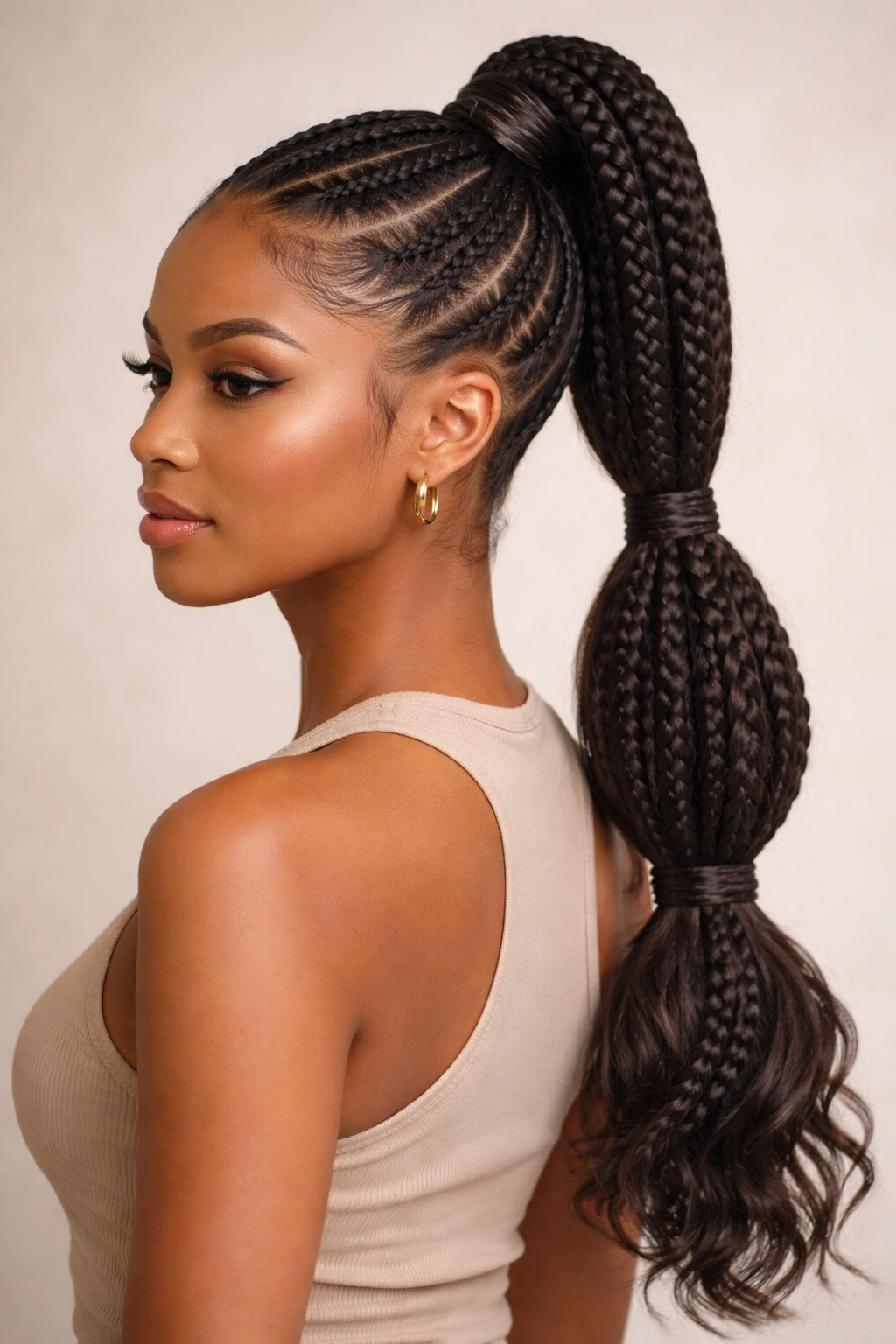
This creative variation creates a high ponytail, and then creates a second ponytail below it using additional hair. The feed-in braids travel from your scalp down to feed into the first ponytail, and then you create additional feed-in braids that feed into the second ponytail. The result is a stacked, tiered effect that’s part protective style and part statement accessory. It requires enough hair to execute properly, which is why medium length is actually ideal—long hair makes it feel heavy, short hair makes it difficult to section.
The Stacking Technique
Divide your hair into two horizontal zones. Create your feed-in braids in the upper zone and anchor them into a high ponytail. Then use the hair below that line to create feed-in braids that anchor into a lower second ponytail. The two ponytails are distinctly separate, creating that stacked effect.
Visual Impact
Stacked ponytails create the illusion of even more hair and length than you actually have, which is why they’re so popular on social media. On medium hair, they create a full, bold look that feels contemporary and fashion-forward. The double structure also breaks up the weight of having all your hair in one elastic, making the style more comfortable for longer wear.
Practical Consideration
This style does require some tension on your scalp, so don’t wear it for extended periods if you have a sensitive scalp. It’s better for a few hours of styling impact than for all-day wear.
11. Thick Feed-In Braid with Wrapped Ponytail Accent
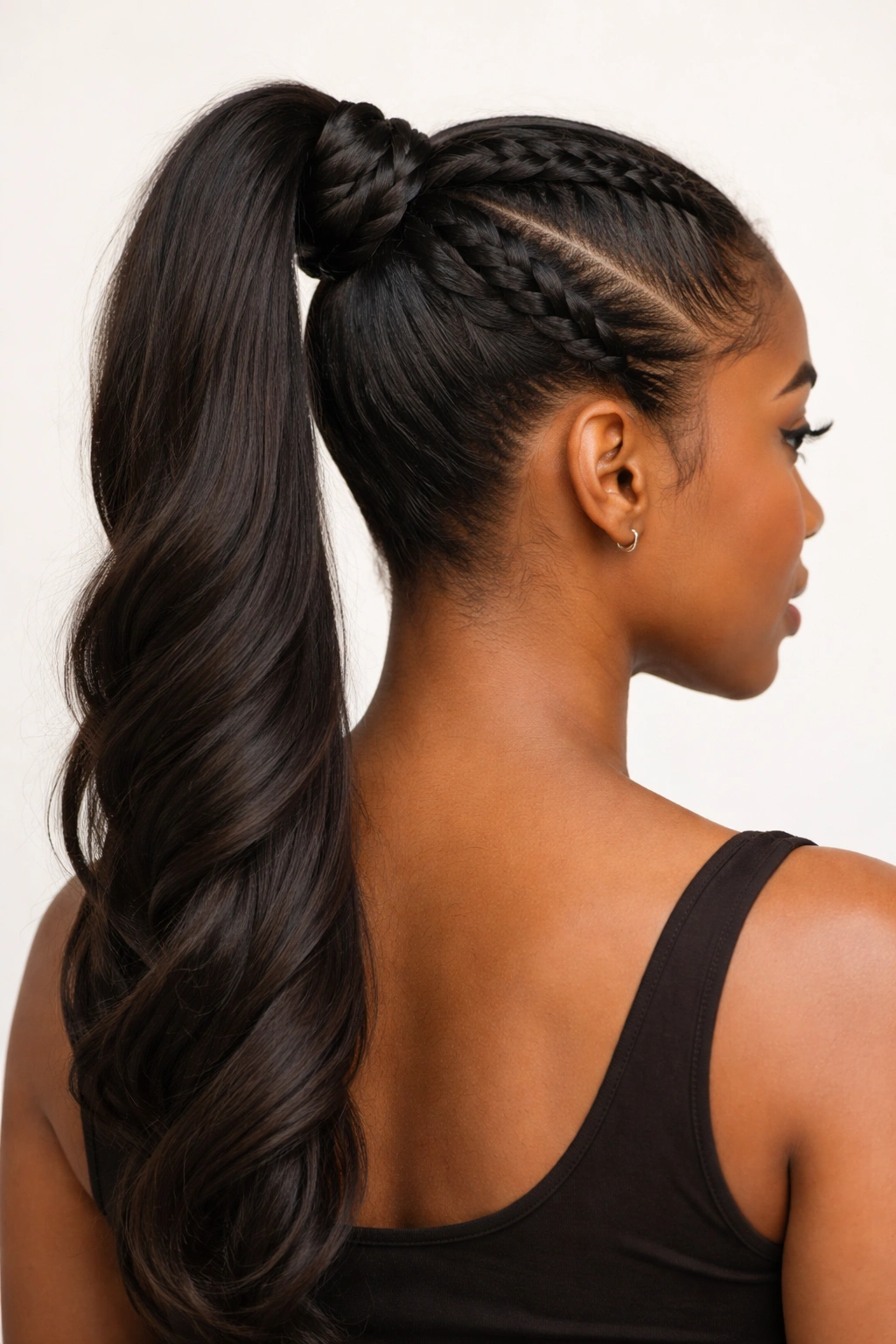
Use one substantial, prominent feed-in braid that starts at your crown and travels down to meet a high ponytail of remaining loose hair. Once the braid and ponytail are anchored together, wrap the braid around the base of the ponytail to create a decorative band effect. The braid becomes both structural and aesthetic—it’s doing the work of securing your hair while also creating a beautiful visual detail. This style feels more polished and intricate than a simple two-braid ponytail while requiring less braiding work overall.
Single Braid Focus
Because you’re only creating one braid, you can make it thick and impactful. A single substantial braid reads as more intentional and striking than thin braids that might get lost visually. For medium hair, one thick braid creates enough visual weight to be interesting without feeling overdone.
The Wrapping Technique
Once your braid reaches your ponytail anchor point, don’t just let it end there. Take the tail of the braid and wrap it around the elastic securing the ponytail, weaving it in and out or simply spiraling it around the base. Secure the braid tail with bobby pins so it doesn’t unwrap. This creates a three-dimensional detail that catches light and draws the eye.
Styling Flexibility
Keep your ponytail smooth and sleek for a more finished look, or texture it with spray or a curling iron for something softer. The wrapped braid detail works with both approaches, adapting to your desired aesthetic.
12. Three Cornrows with Curled Ponytail
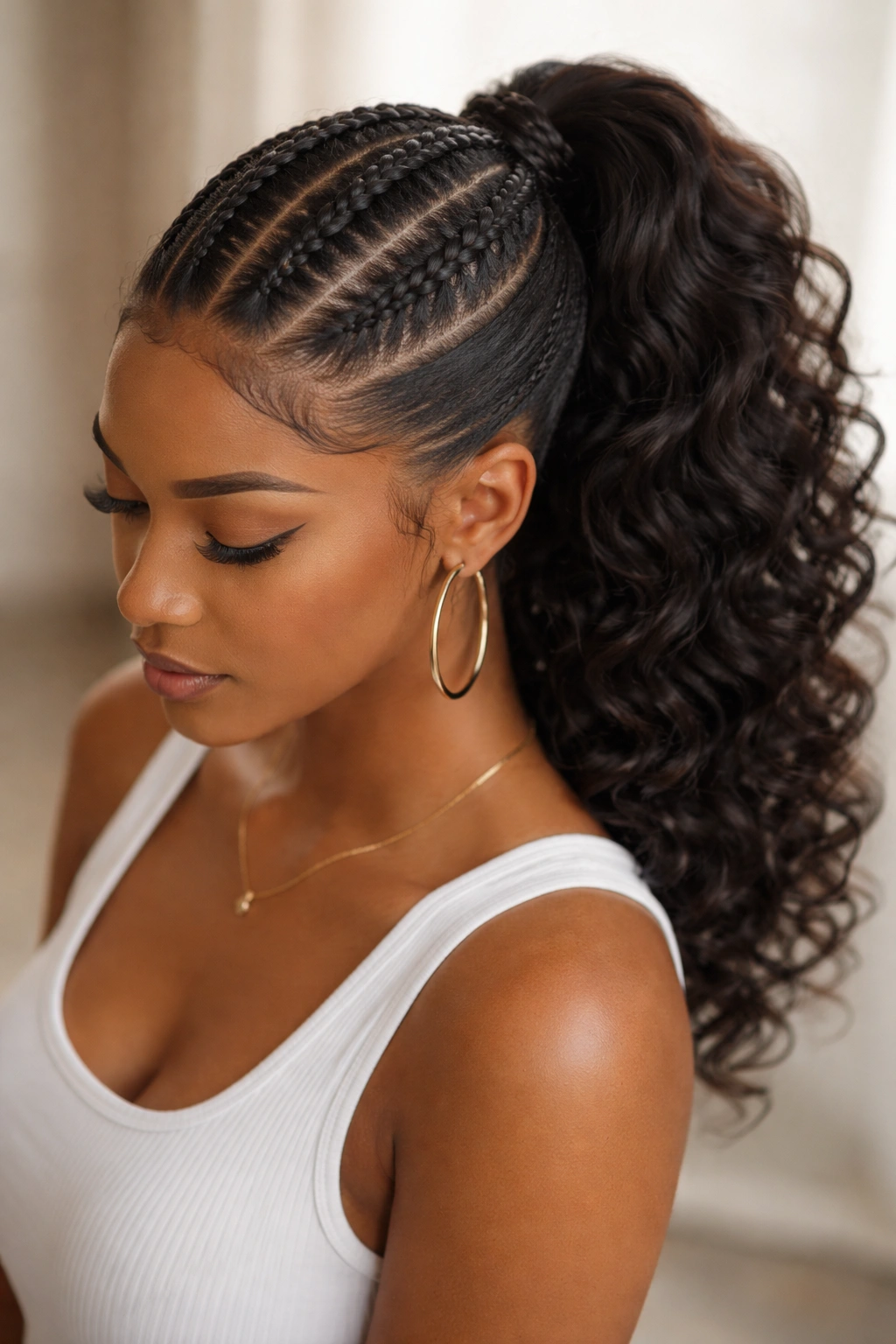
For a completely different aesthetic, create three feed-in cornrows (which are like feed-in braids but lie flat against your scalp in parallel lines) running straight from your hairline to your crown, then anchor them into a ponytail of loose hair. Curl the ponytail with a curling iron or allow it to air-dry into waves after you’ve set the style. The contrast between the structured, geometric cornrows and the soft, flowing curls of the ponytail creates beautiful visual complexity. This style celebrates both sleekness and texture, making it versatile enough to work with most hair types and aesthetics.
Cornrows vs. Feed-In Braids
Cornrows are braided tightly against your scalp from the start, creating a clean, sleek appearance at the roots that shows off your actual scalp. Feed-in braids (which are what most of the previous styles use) gradually incorporate hair as they work backward, creating more dimension in the braid itself. For this particular style, cornrows’ flat, linear quality creates beautiful geometry.
Texture at the Ends
The curled ponytail is key to this style’s success. Straight hair at the ends would feel incomplete—the curls finish the look by creating movement and softness that contrasts with the structured cornrows. Using a 1-inch barrel curling iron creates loose waves; a ¾-inch barrel creates tighter curls. The choice depends on your hair texture and desired vibe.
Who It Suits
This style works across all hair types and is especially popular in communities where cornrows have cultural significance. It’s professional enough for work, cute enough for casual wear, and striking enough for events. The combination of structure and softness appeals to people who want visual interest without sacrificing polish.
Final Thoughts
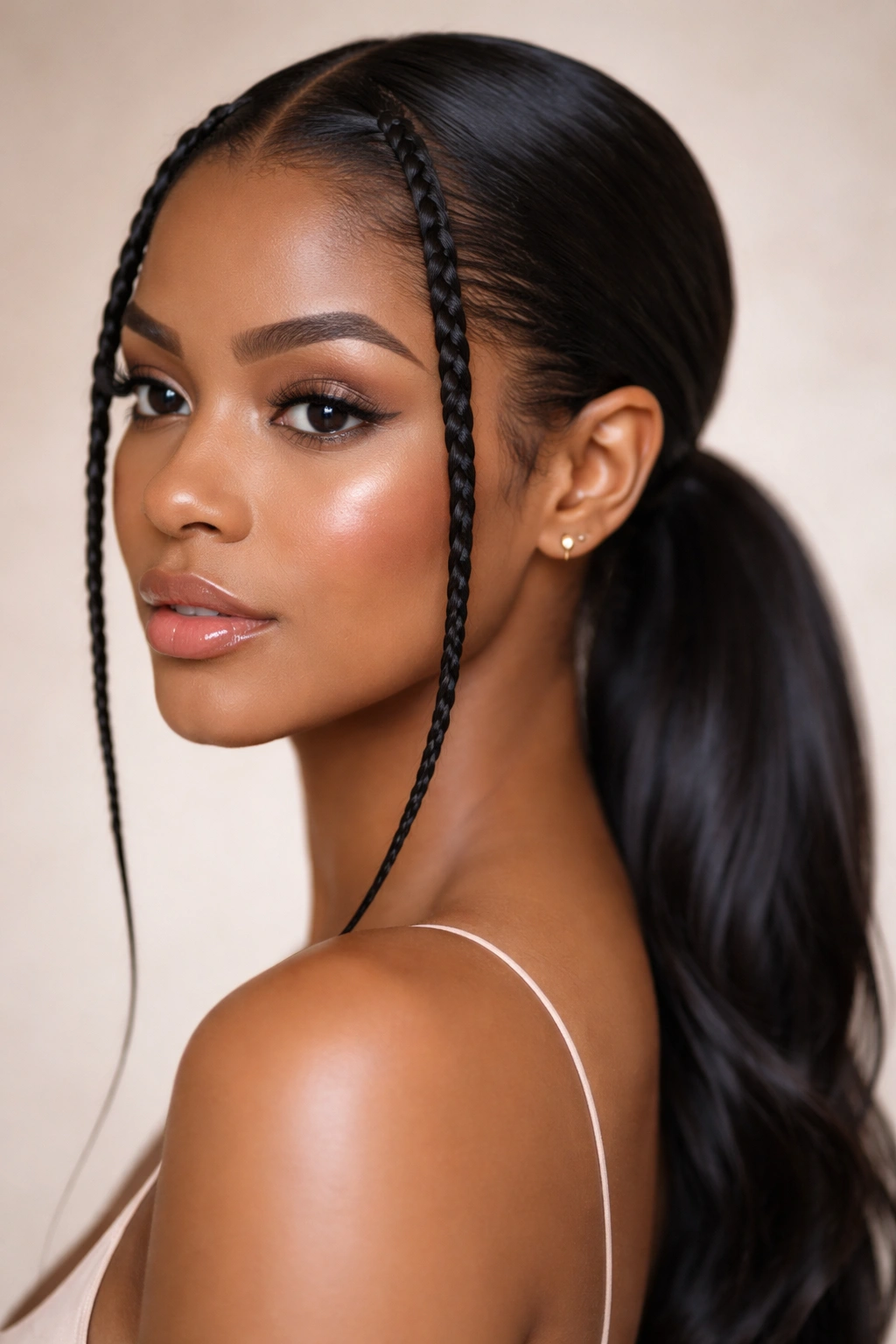
Feed-in braid ponytails have remarkable staying power in the hair world because they’re endlessly customizable and genuinely flattering across different face shapes, hair types, and personal styles. With medium-length hair, you have the perfect canvas—enough length to showcase the braids’ detail and texture, but not so much that the style becomes overwhelming or difficult to manage. Whether you prefer the minimalist elegance of two center-back braids, the visual drama of multiple thin braids, or the creative mixed styles that combine braids with other techniques, there’s a version that fits your aesthetic and lifestyle.
The key to making any feed-in braid ponytail work is consistency in tension (keep it even without being uncomfortably tight), quality in execution (take time when braiding rather than rushing), and confidence in your choice. A slightly imperfect braid created with intention reads as beautiful; a perfectly executed braid created with hesitation reads as uncertain. These styles are bold—own that boldness and they’ll absolutely shine. Start with whichever variation speaks to you most, practice the technique a few times to build muscle memory, and don’t be afraid to adapt and personalize. Your feed-in braid ponytail should feel like your style, not a replicated image from the internet.
