



A ponytail paired with a veil is one of those hairstyle combinations that works beautifully across countless settings—from formal weddings and religious ceremonies to garden parties and sophisticated events. The veil adds an ethereal, romantic quality to the hair, while the ponytail keeps everything neat, structured, and intentional. What makes this pairing so appealing is that it’s incredibly versatile: you can go with sleek and modern, soft and romantic, dramatic and glamorous, or elegant and understated, depending on the veil style, hair texture, and the formality of your event.
The interplay between a veil and a ponytail is about finding the right balance. The veil becomes a design element itself—it can soften the severity of a slicked-back ponytail, add drama to a simple style, or enhance the romantic feeling of a more relaxed arrangement. Whether you’re wearing a short birdcage veil perched on top of a high ponytail, a cascading chapel-length veil attached below a low knot, or a delicate mantilla draped over a braided ponytail, there’s a version of this combination for every aesthetic and every occasion.
The styles below show the real range of what’s possible when you combine ponytails and veils. Each one works for different hair types, different veil styles, and different moments in your life—so you’ll find something that resonates with how you want to look and feel.
1. Classic High Ponytail With a Birdcage Veil
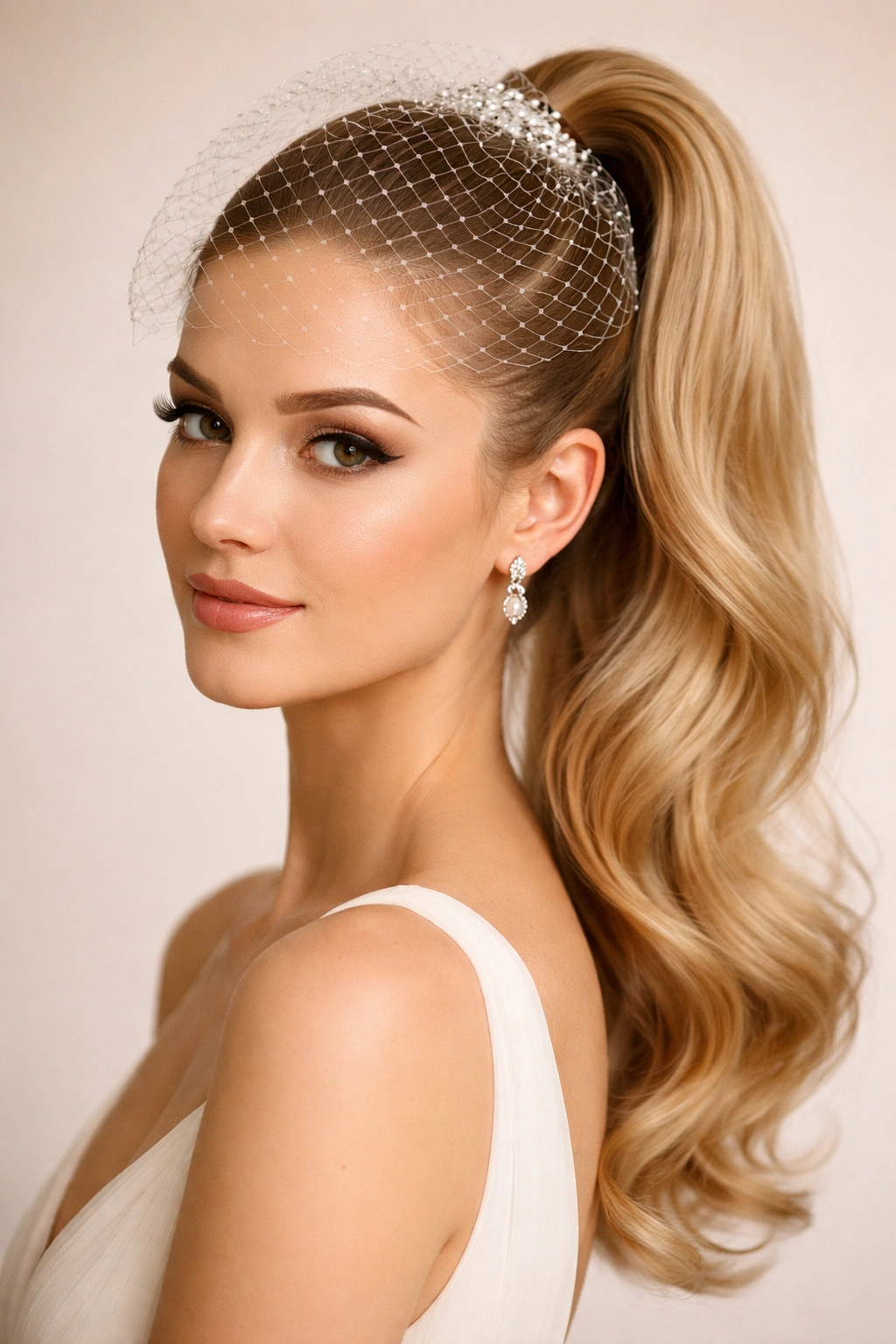
The traditional high ponytail paired with a petite birdcage veil is a timeless choice that works especially well for formal daytime events, elegant receptions, or sophisticated garden parties. This style places the veil just at the crown of the head, where it sits slightly forward, creating a defined focal point above a sleek, polished ponytail.
Why This Works So Well
This combination is effortlessly elegant because the birdcage veil is architectural and modern enough to feel current, while the high ponytail is clean and purposeful. The veil doesn’t compete with your ponytail—instead, it frames your face and adds an element of intrigue without overwhelming the overall look. Your hair stays completely off your face and neck, which means you can showcase jewelry, makeup, and facial features without distraction.
How to Achieve It
- Create a smooth, high ponytail using a boar-bristle brush to eliminate flyaways
- Secure with a thin elastic matched to your hair color
- Smooth the base with edge control cream or hairspray
- Attach the birdcage veil at the crown using bobby pins or a small comb (if the veil has one built in)
- Use hairspray to set any loose strands and keep the veil stable throughout the event
Pro tip: Wrap a small section of hair around the elastic to hide it completely—this polished touch makes the entire style look more expensive and intentional.
2. Low Sleek Ponytail With a Long Tulle Veil
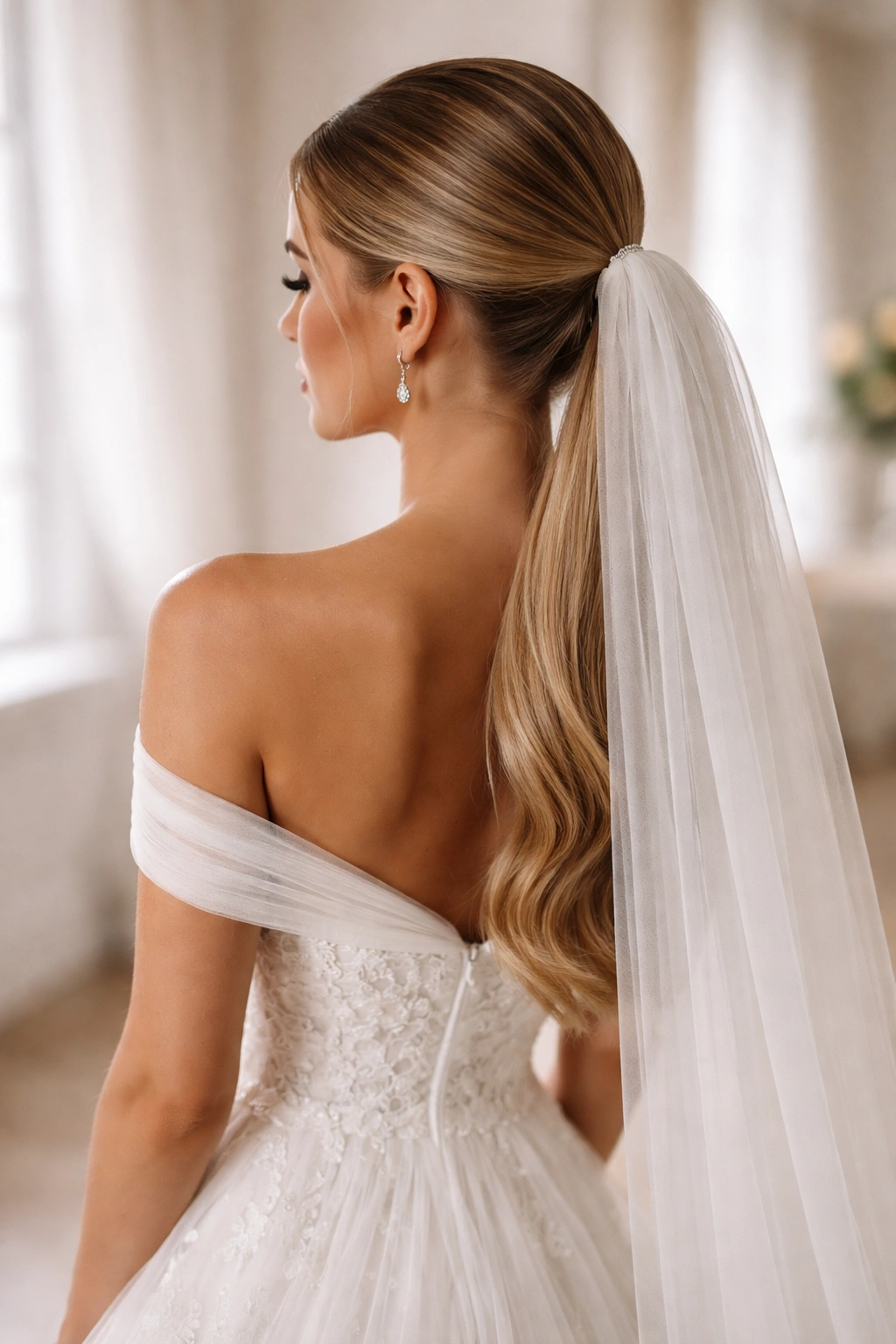
A sleek, low ponytail positioned at the nape of the neck pairs beautifully with a longer, fuller tulle veil that cascades down the back. This is perhaps the most traditional bridal look, offering romance and formality in equal measure. The veil can be attached directly to the base of the ponytail or just above it, allowing the tulle to flow alongside and below the gathered hair.
The Elegance of Simplicity
This style works because of its restraint. There’s nothing busy or fussy about it—just the clean line of gathered hair and the gentle movement of tulle. The low position feels intimate and refined, and it works beautifully with both traditional and modern wedding dresses. The veil adds drama without requiring any elaborate braiding or texture work on the ponytail itself.
Installation and Styling Tips
- Blow-dry hair straight or with a subtle wave for a polished base
- Create a low, tight ponytail at the nape using a fine elastic
- Wrap a small section of hair around the elastic to conceal it
- Attach the veil comb directly to the elastic or just above it, securing with bobby pins
- Use light hairspray to keep the ponytail smooth without making it look stiff
- Let the veil flow naturally—resist the urge to overstyle it
Worth knowing: The lower the ponytail sits, the more dramatic and classical the overall effect. If your veil is very long or very full, a lower placement prevents the hair and veil from feeling visually crowded.
3. Braided Ponytail With a Mantilla Veil
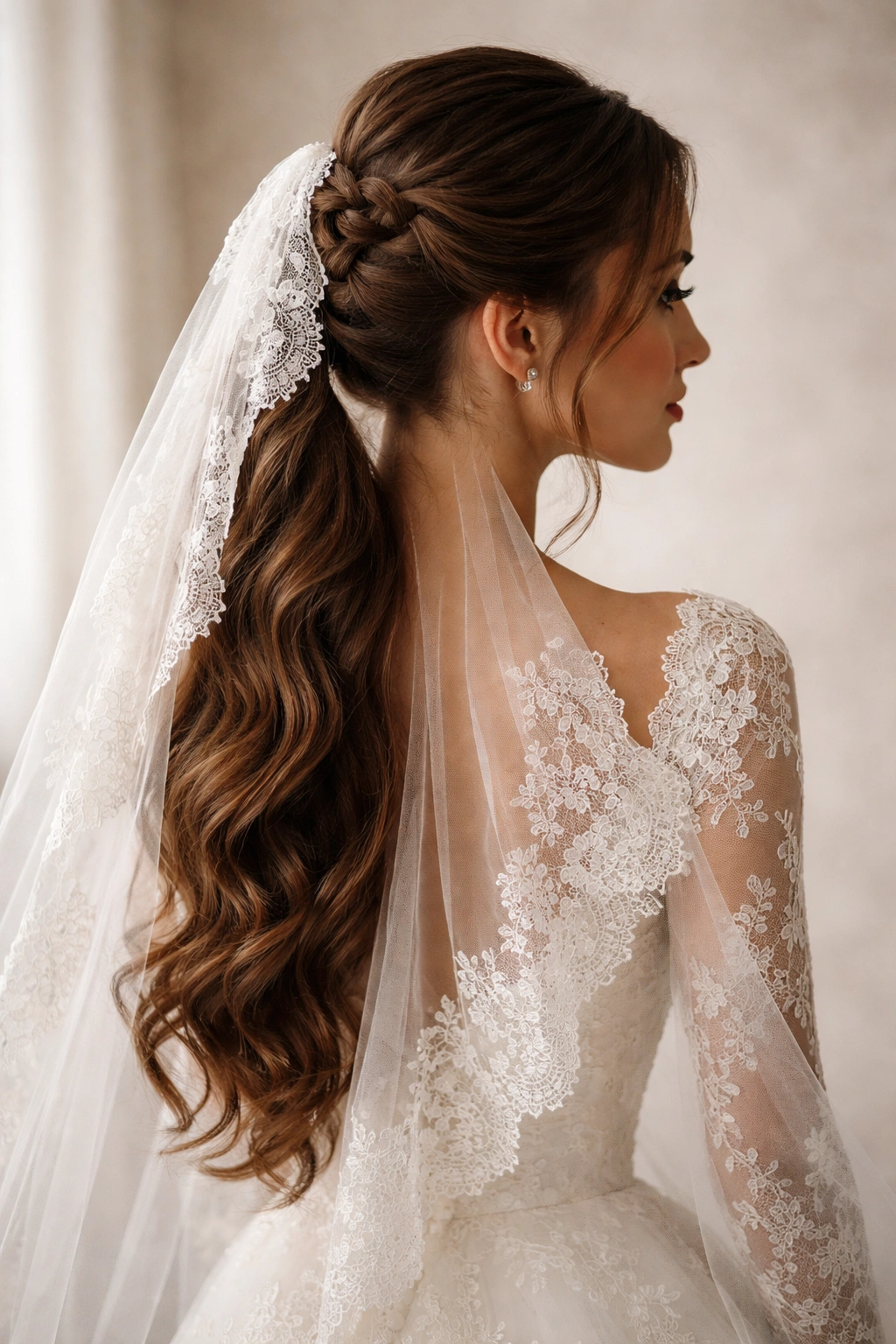
A mantilla veil—the open, lace-trimmed veil that drapes over the shoulders and back—pairs beautifully with a braided ponytail. The braid adds texture and visual interest to the hair while the mantilla’s delicate lace and feminine drape create a romantic, Spanish-inspired aesthetic. The braid can be a simple three-strand, a fishtail, a Dutch braid, or even a crown braid that sits at the base of the ponytail.
Why Texture Matters
When you’re wearing a detailed veil like a mantilla, adding texture to your ponytail prevents the overall look from feeling flat. The braid catches light differently than straight hair, and the interplay between the structured braid and the flowing, delicate veil creates visual depth. This combination is particularly stunning in photographs because the detail reads well from a distance.
Creating the Look
- Brush hair smooth and create a deep side part
- French braid or Dutch braid one side, gathering it into a low ponytail at the back
- Secure the ponytail with an elastic, then wrap a section of hair around it
- Attach the mantilla veil at the crown or slightly back from center, securing with bobby pins and a small comb if available
- Gently tease the braid slightly to add dimension and ensure the veil sits visibly against the textured hair
- Use hairspray to keep everything in place without making the braid look stiff
Insider note: A mantilla veil works best when your hair color contrasts slightly with the veil—this helps both elements stand out rather than blending together.
4. Voluminous High Ponytail With a Petite Fascinator Veil
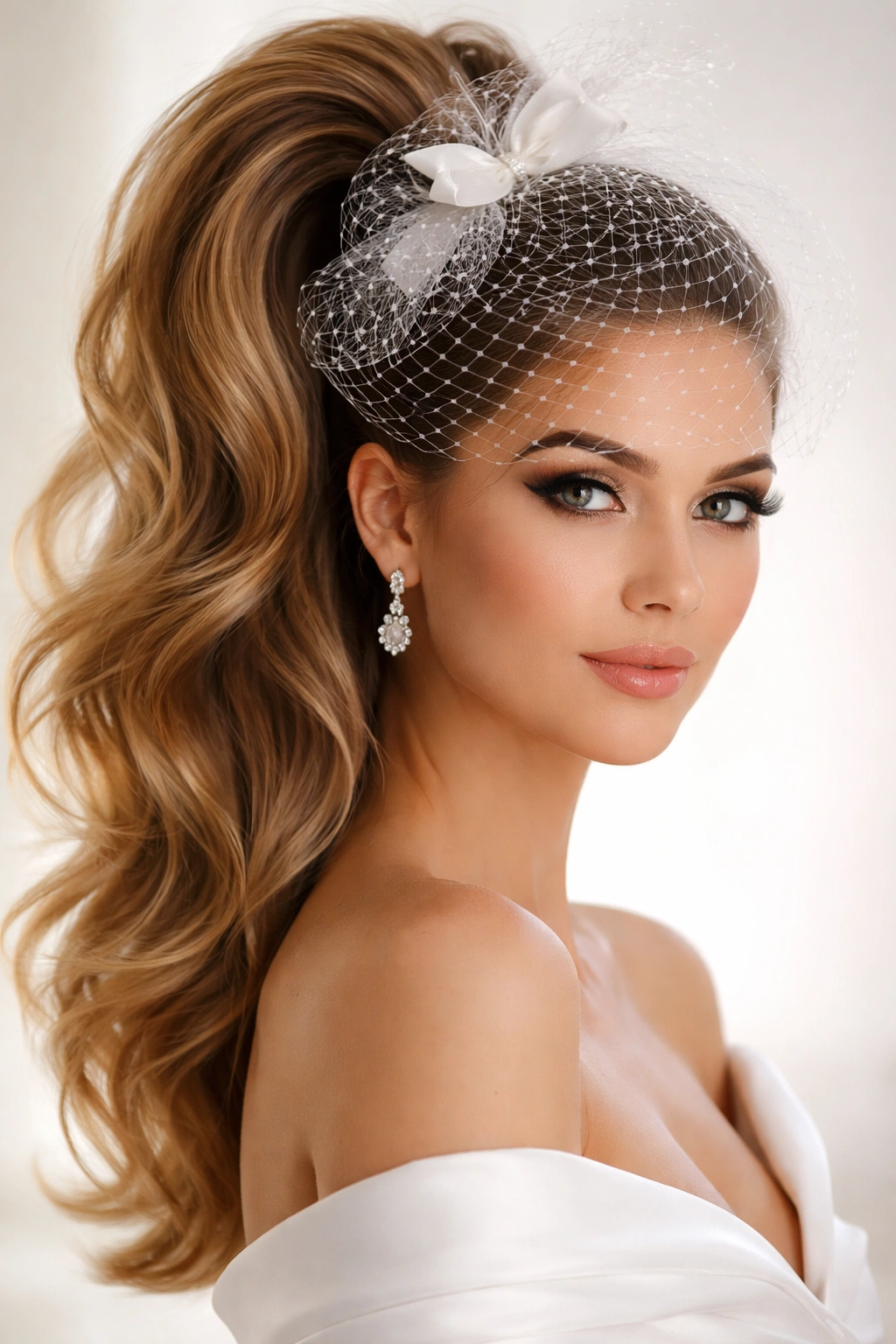
For a modern, fashion-forward take on the ponytail-and-veil combination, try a voluminous, textured high ponytail paired with a small, sculptural fascinator veil. This style has energy and personality—it’s not trying to look traditional or bridal, but rather contemporary and confident. The fascinator can be embellished with beads, feathers, or delicate metalwork, making it a statement piece in itself.
Contemporary Edge With Romantic Elements
This combination works beautifully for cocktail events, upscale daytime occasions, or anyone who wants to wear a veil without looking bridal. The volume in the ponytail—achieved through teasing, extensions, or textured styling—keeps the whole look feeling modern and playful. The fascinator adds sophistication without requiring the full drama of a traditional wedding veil.
Achieving the Volume and Balance
- Start with clean, dry hair and apply volumizing mousse to the roots
- Blow-dry your hair upside down to build base volume
- Create a high ponytail and gently tease it to add texture and fullness
- Use a round brush to smooth the outer layer while maintaining internal volume
- Secure with a strong-hold elastic, then wrap a fine strand of hair around it
- Position the fascinator veil at an angle on top of the ponytail—slightly off-center looks more interesting than dead center
- Secure with bobby pins and a tiny clear comb if the fascinator has one
Pro tip: If your hair is fine, use a velvet elastic instead of a traditional one—it grips better without requiring a tight pull, which prevents breakage and keeps the ponytail looking fuller.
5. Low Textured Ponytail With a Cathedral-Length Veil
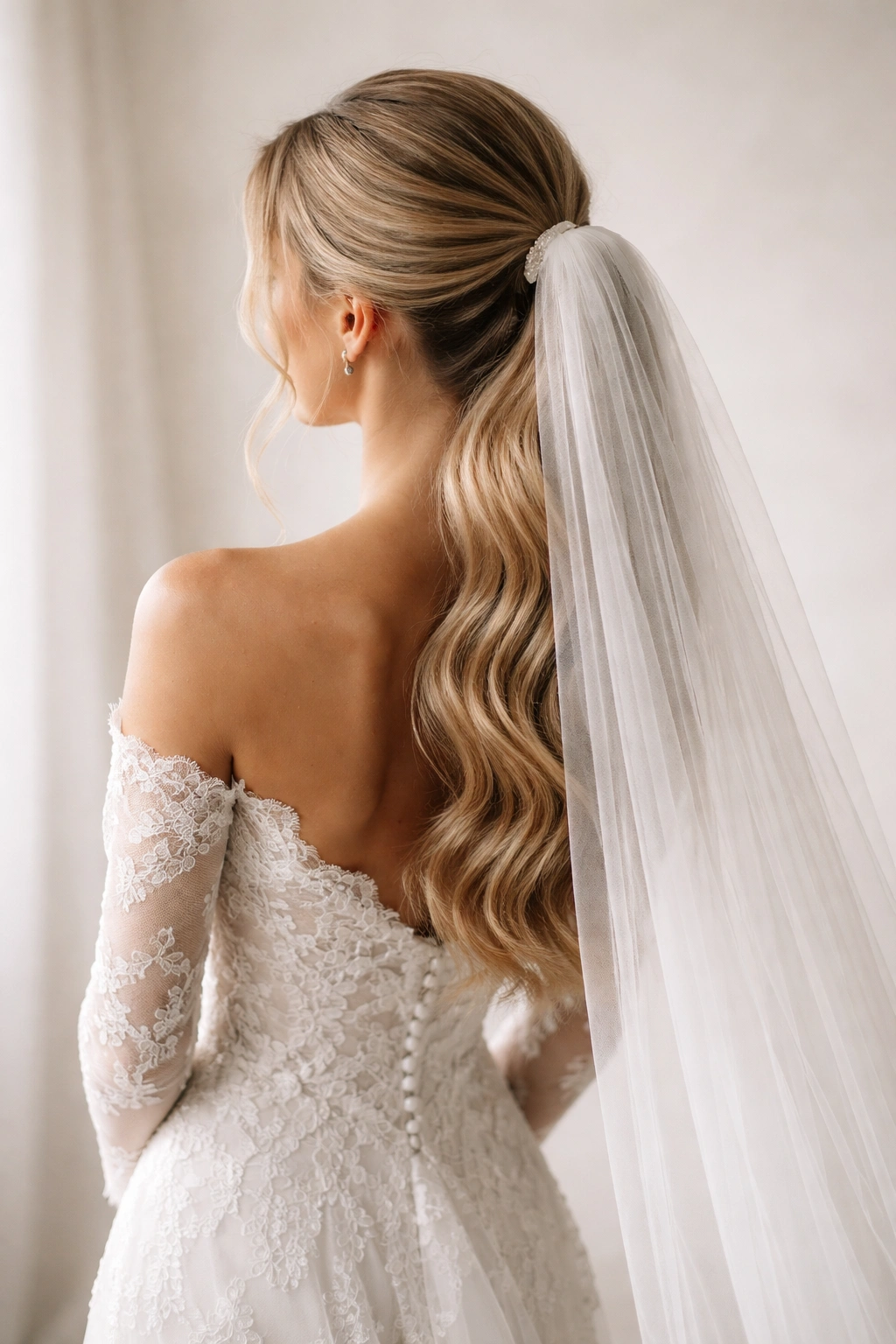
A textured, slightly undone ponytail at the very base of the neck pairs gorgeously with a long cathedral-length veil for a romantic, modern bridal look. This style combines softness and length, creating an impression of movement and flow. The texture in the ponytail—achieved through waves, curls, or braiding—prevents the overall look from feeling severe, while the long veil adds formality and grandeur.
Romance Through Texture and Movement
Cathedral veils are dramatic by nature, so you don’t want your ponytail fighting for attention. Instead, the slight texture and relaxed placement of the ponytail create a softer frame for the veil’s length and movement. This combination looks especially beautiful in outdoor settings or venues with high ceilings where the veil can flow naturally.
How to Build This Look
- Curl or wave your hair using a barrel iron or braiding method
- Gently brush through the waves to soften and blend them
- Create a low, loose ponytail at the nape, positioning it slightly to one side for visual interest
- Secure with an elastic, then wrap a small section of hair around it
- Attach the cathedral veil at the crown using a comb and bobby pins
- Let some face-framing strands fall loose around your face for softness
- Use flexible-hold hairspray that allows movement rather than locking everything rigid
Worth knowing: The longer your veil, the more important it is to secure it at the crown rather than at the ponytail itself. This distributes the weight better and prevents the veil from pulling your hair or sliding throughout the event.
6. Side-Swept Ponytail With a Side-Attached Veil
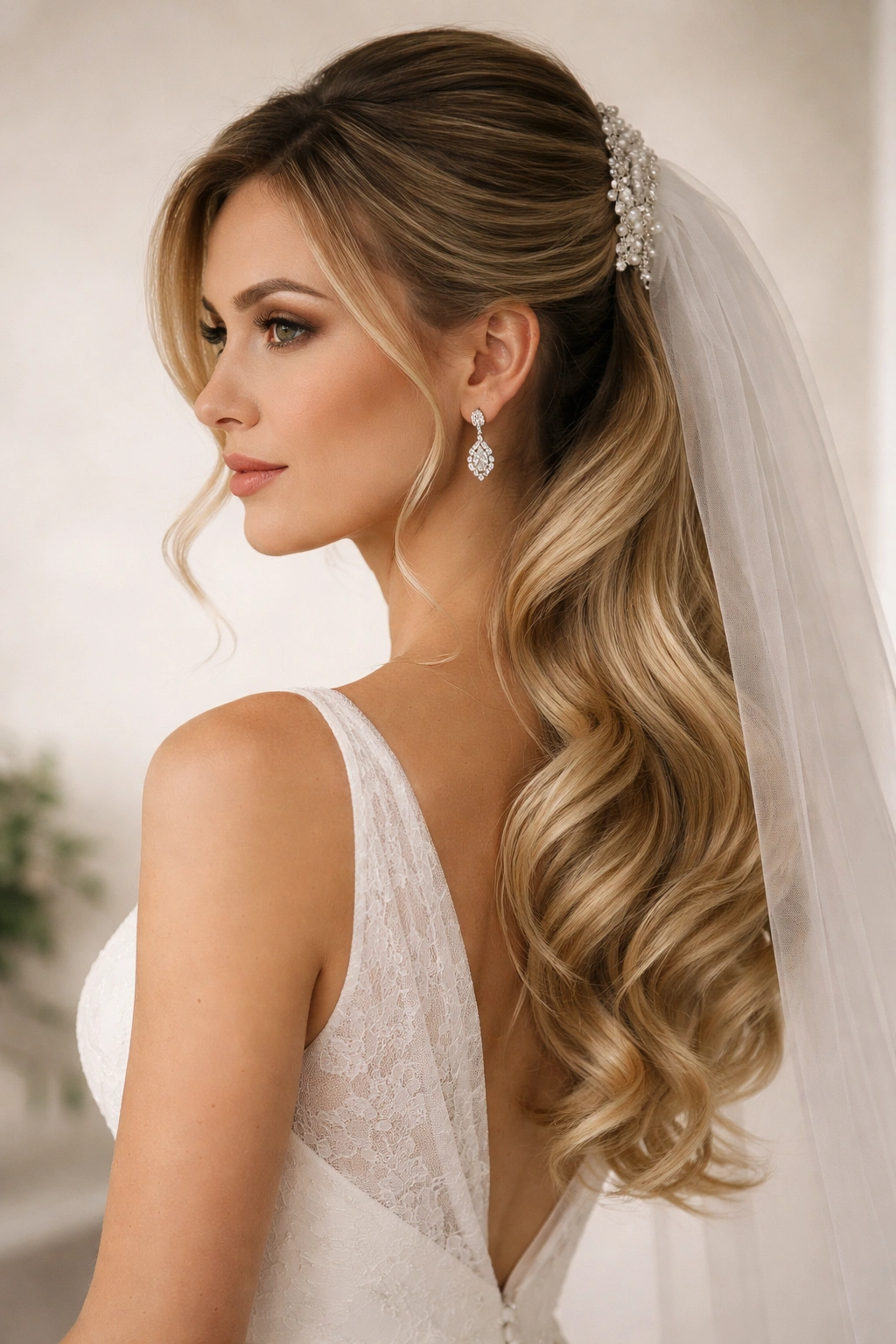
A side-swept ponytail—where the hair is gathered to one side of the head rather than centered—pairs beautifully with a veil that’s also attached to the side. This creates an asymmetrical, elegant look with real visual interest. The side placement feels both playful and sophisticated, working well for anyone who wants to add movement and dimension to a traditional style.
The Appeal of Asymmetry
Side-swept styles feel more modern and less formal than centered arrangements, making them perfect for second weddings, rehearsal dinners, or any occasion where you want to wear a veil but feel like yourself. The asymmetry also works beautifully with off-shoulder or one-sided necklines, creating a cohesive, intentional look from head to toe.
Creating the Side-Sweep Effect
- Create a deep side part, sweeping your hair toward one side
- Gather the hair into a low side ponytail—it should sit just below your ear on one side of the head
- Secure with an elastic, then wrap a concealing section of hair around it
- Attach the veil to the side as well, using bobby pins to secure it at the part
- If desired, pull a few soft strands down near your face to soften the overall look
- Smooth the hair on the opposite side of your head and tuck it behind your ear
Pro tip: This style works especially well if you have one side of your hair that photographs better or frames your face more flattering—you can make that your featured side.
7. Sleek Gel Ponytail With a Modern Minimalist Veil
For a sharp, contemporary look, pair an ultra-sleek gel ponytail with a minimal veil—perhaps a tiny birdcage, a simple headpiece veil, or even a delicate wire-and-tulle construction that’s more sculptural than traditional. This style appeals to anyone who loves clean lines, modern aesthetics, and minimal ornamentation. The gel creates a shine and polish that complements architectural veil designs.
Modern Minimalism at Its Best
This combination is perfect for modern architecture venues, contemporary art galleries, minimalist weddings, or anyone whose personal style leans more toward clean, uncluttered design. The sleekness of the ponytail means it can handle a more sculptural veil design—you’re not competing, you’re complementing.
Achieving the Look
- Start with damp hair and apply a strong-hold gel throughout, combing through evenly
- Blow-dry hair completely straight for maximum shine
- Create a high or mid-height ponytail, depending on which feels more balanced with your chosen veil
- Secure tightly, then wrap a hair section around the elastic
- Use the gel to smooth down any flyaways around the face and hairline
- Attach your minimalist veil at the crown or on top of the ponytail
- Apply a light mist of flexible-hold hairspray to keep everything in place
Insider note: The sleeker your ponytail, the shinier the finish should be—don’t skip the light hairspray, as it adds polish without making hair look stiff or product-heavy.
8. Textured Half-Up Ponytail With a Delicate Veil
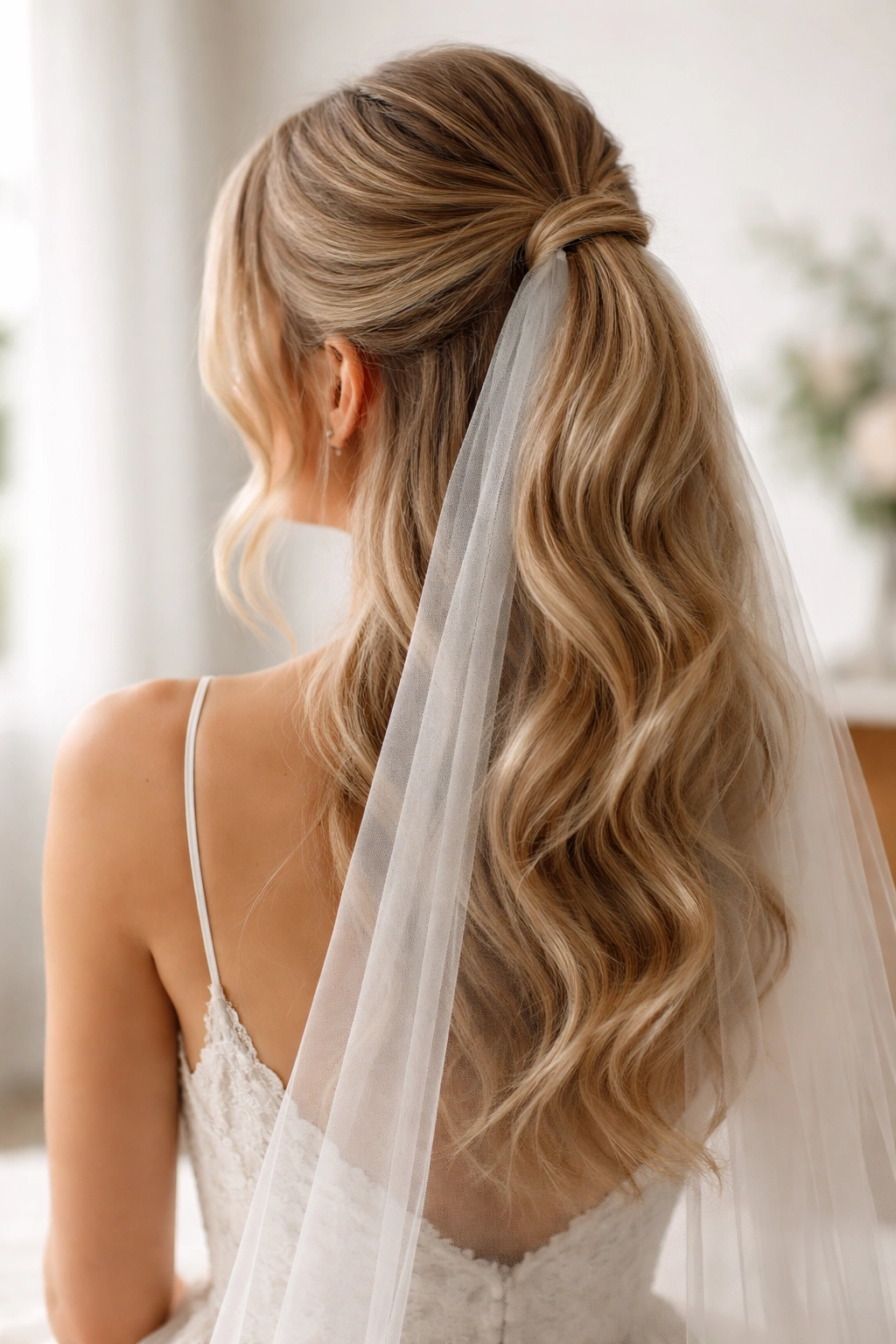
A half-up, half-down style—where the top portion of hair is gathered into a ponytail while the bottom half flows loose—offers a romantic middle ground between fully up and fully down. Paired with a delicate veil, this style feels effortlessly beautiful and soft. The texture throughout (waves, curls, or gentle texture from braiding) adds dimension, while the veil sits perfectly at the crown without overwhelming the look.
Romantic Without Being Formal
Half-up styles feel more approachable and less bridal than fully pulled-back styles, making them perfect for anyone who wants a veil without formal ceremony vibes. The loose hair below softens the entire look, and when you add a delicate veil, you get the best of both worlds: the romantic, intentional quality of a veil with the softness of loose hair.
Building the Half-Up Effect
- Curl or wave your entire head of hair, starting with damp hair and using a barrel iron
- Gently brush through to blend and soften the waves
- Gather the top section (from temple to temple, just above the ears) into a ponytail at the crown
- Secure with a fine elastic, then wrap a concealing strand of hair around it
- Fluff the gathered section slightly to add volume and dimension
- Attach your delicate veil just above or integrated into the ponytail base
- Leave the bottom half of your hair in loose waves, tucking slightly behind your ears on each side
- Use light hairspray to set everything without making it feel heavy
Worth knowing: This style requires less veil attachment precision because the loose hair below provides balance and context. Even if the veil shifts slightly, the overall effect remains intentional and lovely.
9. Sleek Low Ponytail With a Blusher Veil and Fascinator
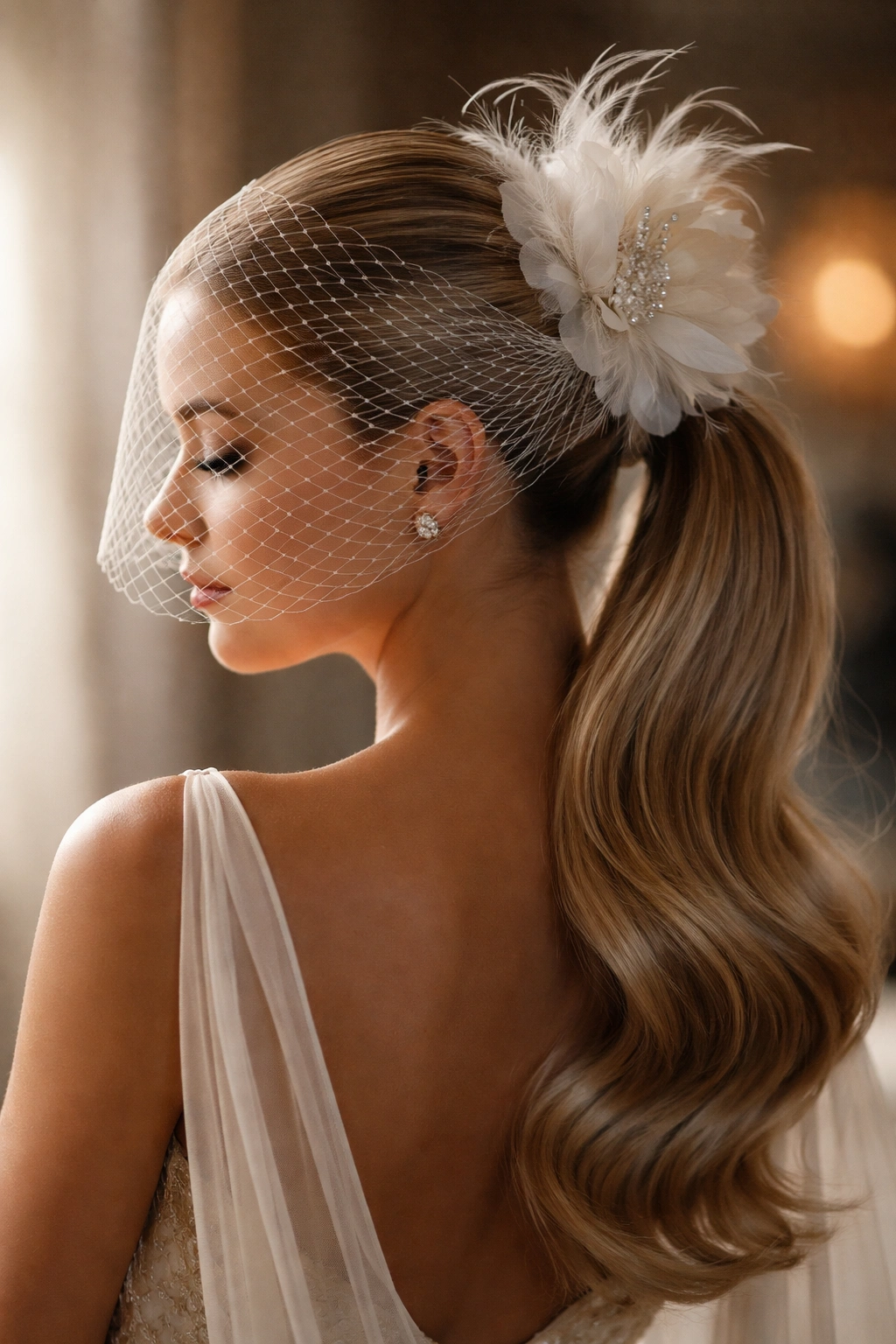
Combining a blusher veil (the short veil that covers the face) with a fascinator and a sleek low ponytail creates a look with real presence and formality. The blusher adds an element of surprise and romance—it can be pulled back for the ceremony or kept in place throughout for photographs. The fascinator adds architectural interest at the back of the head.
Layers of Detail and Drama
This combination works beautifully for anyone who loves the formal drama of traditional bridal style but wants something with more contemporary edge. The blusher is functional and romantic, while the fascinator (with its potential for embellishment, dimension, or sculptural design) elevates the entire look beyond simple and classic.
How to Assemble This Look
- Create a smooth, sleek low ponytail using a fine-toothed comb and edge control
- Wrap a section of hair around the elastic to hide it completely
- Attach the fascinator at the back of the ponytail using bobby pins and (if applicable) its comb attachment
- Attach the blusher veil to the fascinator or independently at the crown, securing with bobby pins
- Ensure the blusher sits evenly—it should frame your face symmetrically
- Use minimal hairspray on the ponytail itself; all your hold comes from the elastic and bobby pins
- Create a small test with the blusher up and down before your event to see which position you prefer
Pro tip: If wearing a blusher veil, practice flipping it back before your event so you know exactly how to do it smoothly and confidently in the moment.
10. Braided Low Ponytail With a Flowing Tulle Veil
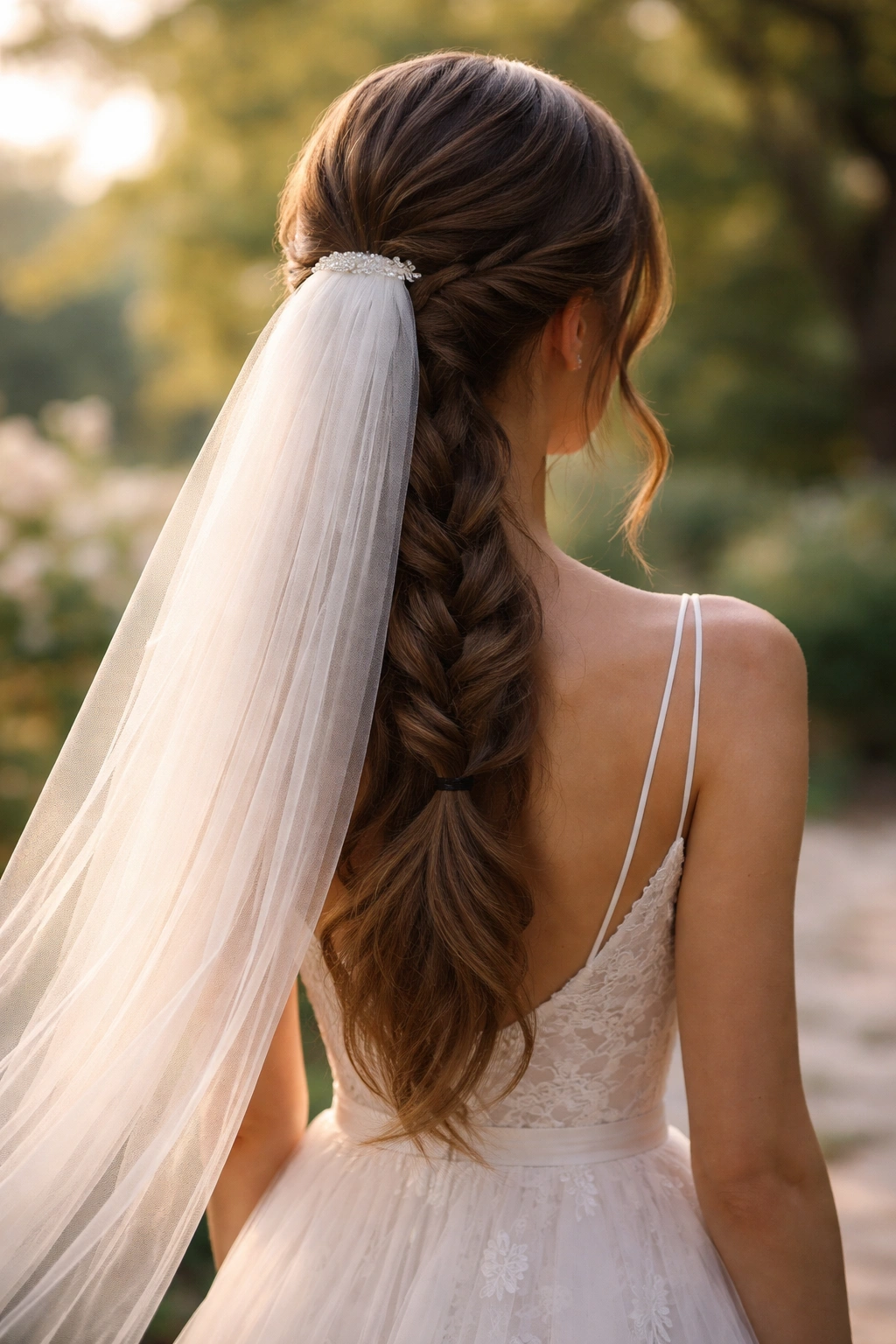
A braided low ponytail—whether it’s a single French braid ending in a ponytail, two side braids joined at the nape, or a more intricate multi-strand braid—pairs beautifully with a flowing, voluminous tulle veil. The braid adds texture and visual interest while the veil adds drama and movement. This combination feels romantic and intentional without looking costume-y.
Texture Meeting Movement
The interplay between a structured braid and flowing tulle is visually compelling. The braid anchors the hair with texture and detail, while the veil floats freely, creating movement and dimension. This style photographs beautifully from every angle because there’s visual interest both at the base of the hair and throughout the length of the veil.
Creating the Braided Look
- Start with damp, brushed hair to make braiding easier
- Create one French braid down the back of your head, ending at the nape, and secure with a small elastic
- Wrap a thin section of hair around the elastic to conceal it
- Gently tease the braid all over to add dimension and prevent it from looking too neat or tight
- Attach the veil comb at the crown, securing with bobby pins
- Allow the tulle to flow naturally behind the braid
- Use a flexible-hold hairspray that allows movement throughout the event
Insider note: French braids look more interesting and dimensional when they’re slightly loosened and teased after braiding—this takes just a few seconds and completely changes how the style photographs.
11. Slicked-Back High Ponytail With a Statement Fascinator Veil
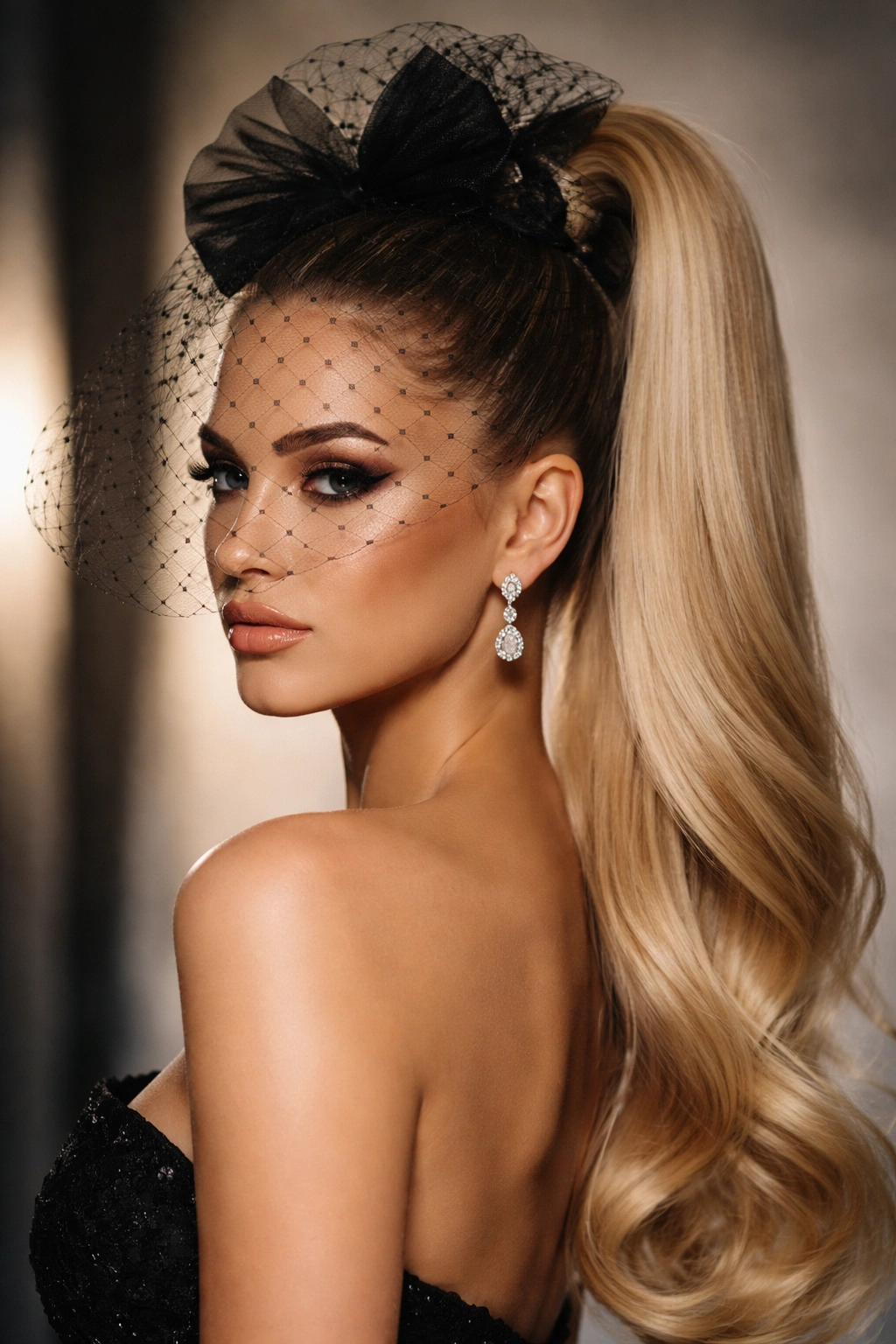
For maximum drama and architectural interest, pair a slicked-back, super-sleek high ponytail with a bold, statement fascinator veil. This style is unapologetically modern and confident—it’s for anyone who loves the drama of a fashion moment. The slicked-back ponytail is sharp and clean, while the fascinator can be sculptural, embellished, or dramatically textured with feathers, mesh, or beading.
Fashion-Forward and Confident
This combination works beautifully for anyone with a contemporary style sensibility, or for events like cocktail receptions, fashion-forward ceremonies, or anywhere you want to make a statement. The slicked-back hair ensures nothing competes with the fascinator’s design—it becomes the focal point.
Building This High-Impact Look
- Apply gel or pomade to damp hair, combing through thoroughly for even application
- Blow-dry completely, using a brush to smooth the hair back tightly
- Create a very high, very tight ponytail at the crown
- Secure with a strong elastic, then wrap and pin a concealing section of hair
- Apply additional gel or pomade to smooth down any flyaways around the hairline and sides
- Attach your statement fascinator at the crown, positioning it at a slight angle for visual interest
- Secure with bobby pins and (if available) the fascinator’s comb
- Use a light mist of flexible-hold hairspray for polish
Pro tip: This style requires strong-hold product but not stiff, frozen hair. Use a pomade or strong-hold gel specifically formulated to have some movement—your hair should look polished, not plastered.
12. Romantic Curled Ponytail With a Soft Tulle and Lace Veil
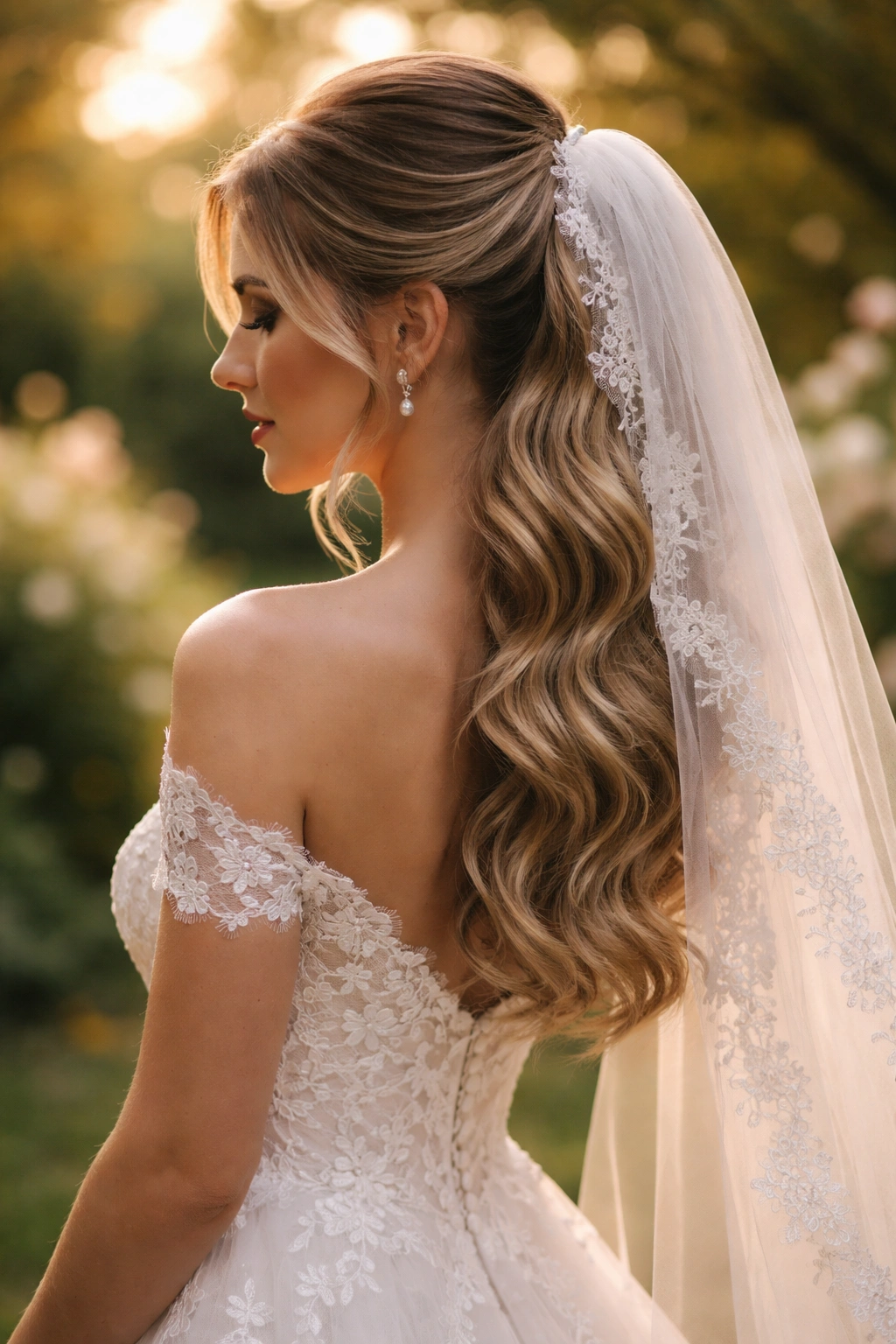
A loose, romantic ponytail made from pre-curled or pre-waved hair, paired with a veil that combines tulle and lace elements, creates an inherently soft, feminine look. This style suits anyone who loves the aesthetic of romance—it’s not severe or structured, but rather dreamy and intentional. The curls or waves prevent the ponytail from looking formal, while the veil adds the romantic, ceremonial element.
Softness as a Design Choice
Romantic styles are about embracing softness in every element. The curls or waves in the ponytail, the way it’s gathered loosely rather than tightly, the flowing veil, the delicate lace overlay—these all work together to create a cohesive, soft aesthetic. This is perfect for garden weddings, outdoor ceremonies, or anyone whose personal style leans toward romance and femininity.
Creating the Soft, Romantic Effect
- Start with clean, damp hair and apply a curl-enhancing product
- Blow-dry with a diffuser attachment to enhance natural texture, or use a barrel iron to create loose waves
- Gather hair into a low ponytail, leaving some face-framing pieces loose
- Secure with a fine elastic, being gentle to maintain the softness of the curls
- Wrap a thin section of hair around the elastic and secure with bobby pins
- Attach your tulle and lace veil at the crown, also securing with bobby pins
- Pull a few more soft strands down near your face and neck for added romanticism
- Use a flexible-hold hairspray that won’t crisp up the curls
Worth knowing: The less you manipulate curly or wavy hair after styling it, the softer and more romantic it appears. Resist the urge to brush it out or reposition it—embrace the slight imperfection.
13. Space Bun Ponytail With a Contemporary Mesh Veil
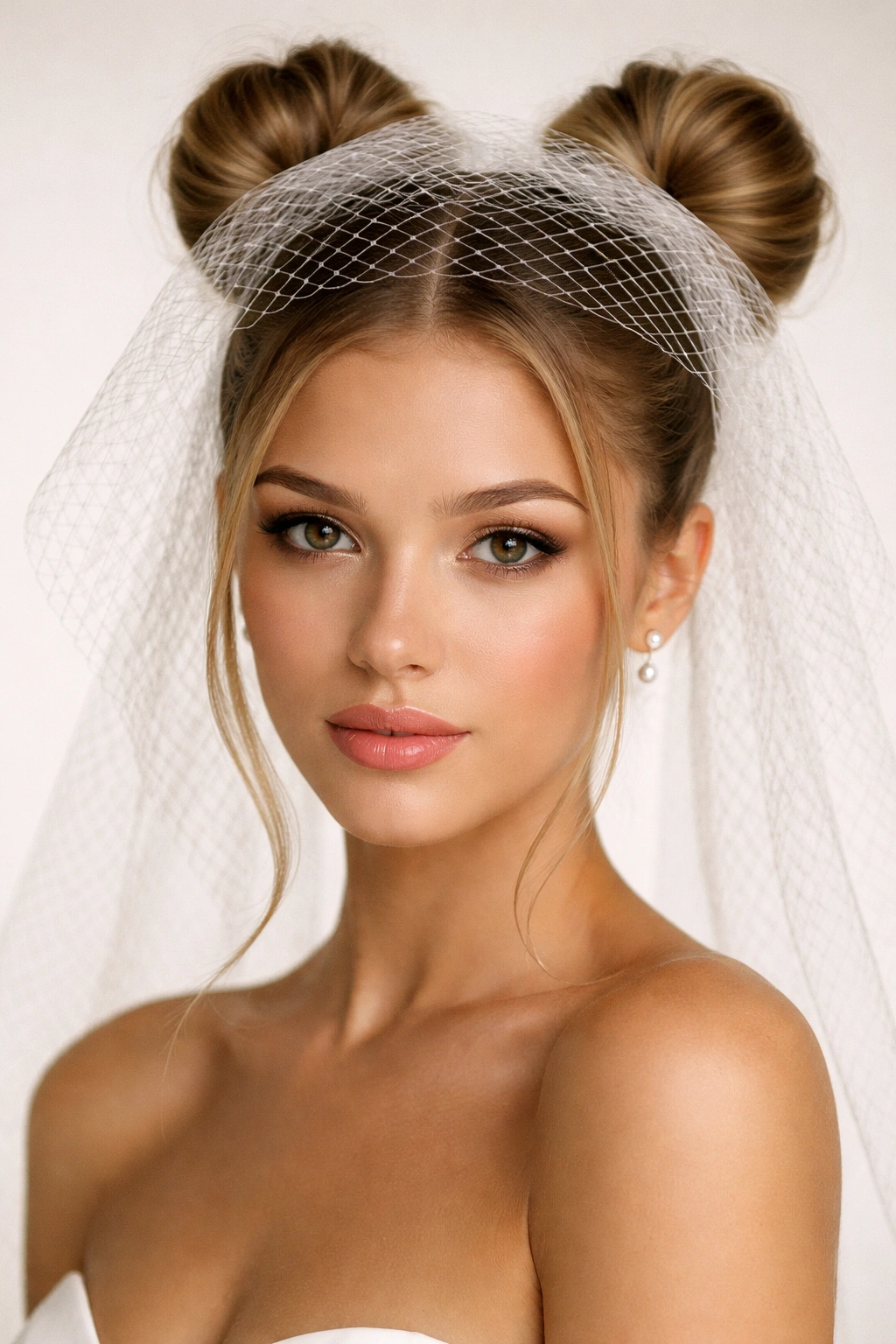
For a modern, playful take on the ponytail-and-veil combination, consider a space bun ponytail (two buns positioned symmetrically on top of the head) paired with a contemporary mesh or geometric veil. This style is fun, fashion-forward, and perfect for anyone who wants to wear a veil but break the traditional mold entirely. It works especially well for modern ceremonies, rehearsal dinners, or anyone with an unconventional aesthetic.
Breaking Traditional Rules With Style
Space buns are inherently playful and modern, so pairing them with a veil that’s equally contemporary—perhaps mesh, geometric, or minimalist in design—creates a cohesive, intentional look that feels fresh and unexpected. This combination is perfect for anyone who wants everyone to know they’re doing things their own way.
Creating the Double-Bun Look
- Start with smooth, blow-dried hair, optionally with some texture or waves
- Create two ponytails positioned symmetrically on top of your head (roughly where Mickey Mouse ears would be)
- Secure each ponytail with a fine elastic
- Wrap each ponytail around its base to create a bun, securing the ends with bobby pins tucked underneath
- Gently tease each bun to add dimension and prevent a flat, slicked appearance
- Attach your contemporary veil at the center top of your head, securing with bobby pins
- Keep face-framing loose strands minimal to maintain clean lines
- Use a flexible-hold hairspray to keep the buns intact without stiffening the overall look
Insider note: This style works best with hair that has some natural texture or wave—completely straight hair in space buns can look a bit thin unless your hair is quite thick.
14. Twisted Side Ponytail With a Delicate Headpiece Veil
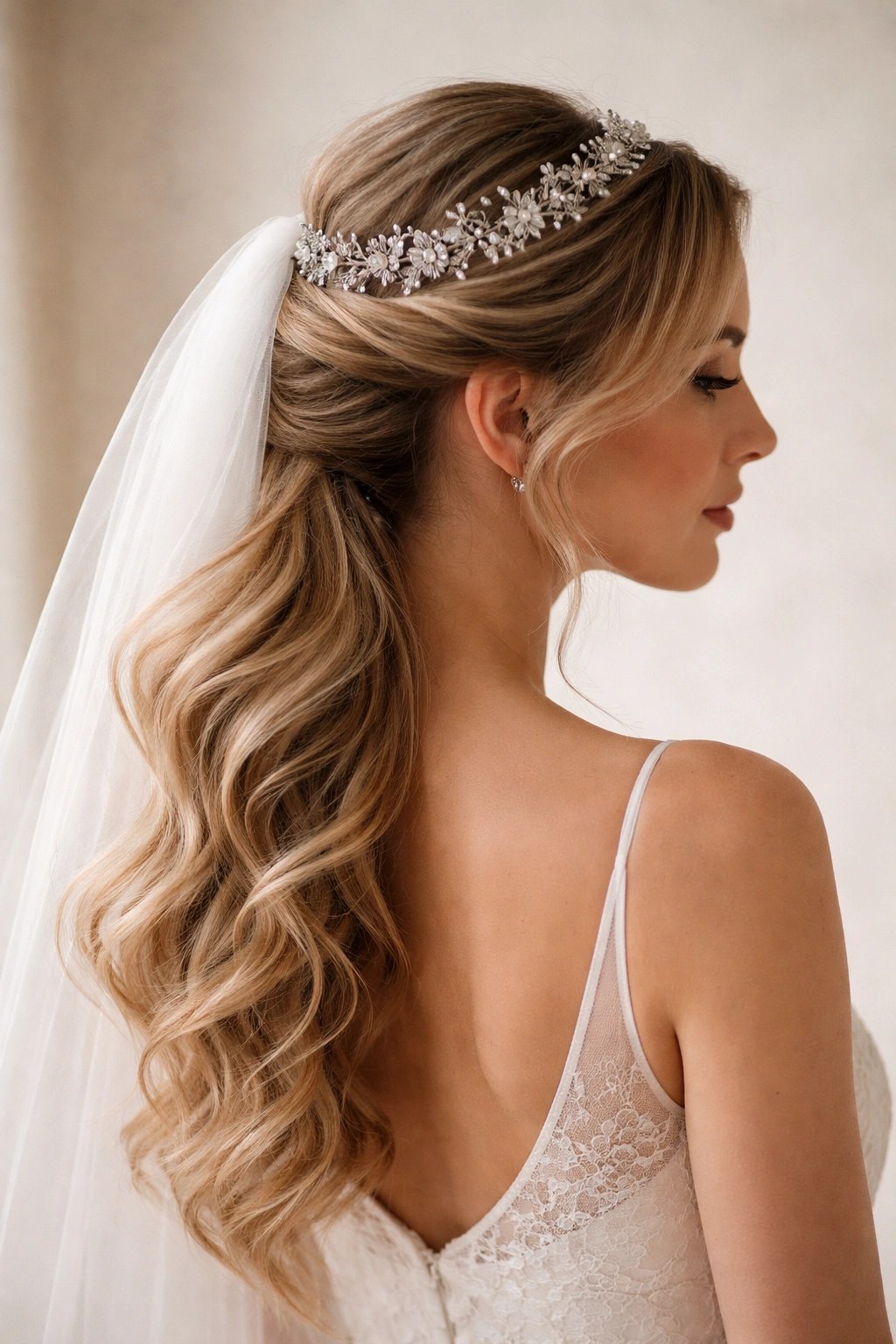
A side ponytail created by twisting sections of hair from one side across the back of the head and gathering them into a ponytail at the opposite side, paired with a delicate headpiece-style veil that sits across the crown, creates sophisticated elegance. The twists add dimension and visual interest, while the side placement and side-gathered ponytail feel modern and balanced. The veil, rather than being attached to the ponytail itself, sits as a separate decorative element.
Balance Through Asymmetry
This style achieves balance not through symmetry but through intentional asymmetry. The twist pulls your eye from one side to the other, while the veil and headpiece anchor the overall composition. It’s elegant without being formal, interesting without being fussy.
Building the Twisted Look
- Start with smooth, blow-dried hair
- On one side of your head, begin twisting a section of hair from your temple back toward the opposite side of your head
- As you twist, add small sections of hair (similar to a French braid but twisting rather than braiding)
- Twist all the way to the opposite side, then gather the twisted section along with remaining hair into a low side ponytail
- Secure with an elastic, then wrap a concealing section of hair around it
- Gently loosen the twisted section slightly to add dimension and prevent a tight appearance
- Attach your headpiece veil at the crown using bobby pins, positioning it to balance the side ponytail
- Allow a few soft strands to fall near your face
- Use flexible-hold hairspray to maintain the twist without rigidity
Pro tip: Practice this style once before your event—the twisting motion becomes intuitive with one run-through, and you’ll feel more confident executing it when it counts.
15. Sleek Curved Ponytail With a Sculptural Modern Veil
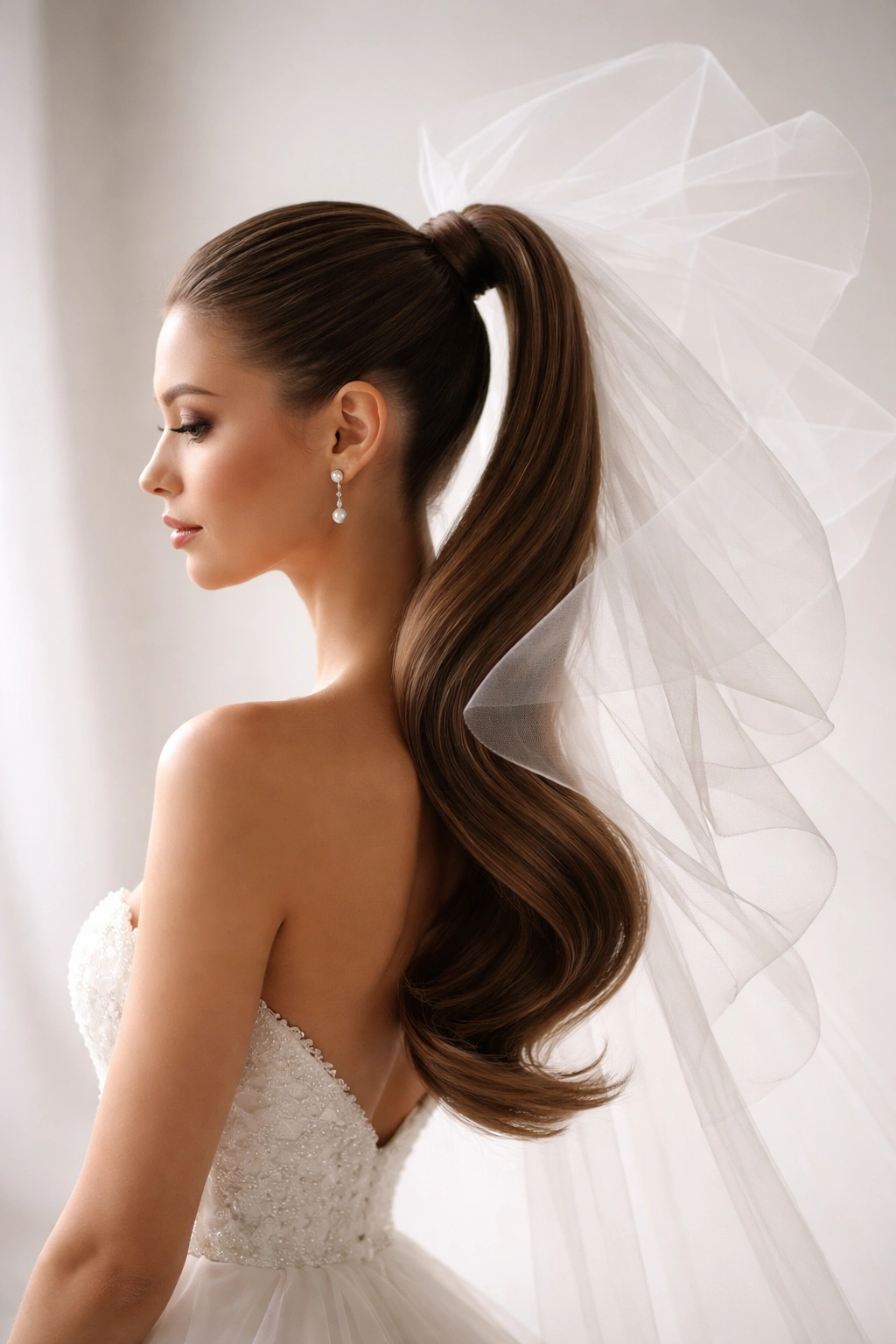
For a final ultra-contemporary option, create a ponytail that curves slightly (using your brush and blow-dryer to create a subtle curve rather than a straight pull) and pair it with a veil that’s architecturally interesting—perhaps one with geometric lines, negative space, or sculptural tulle construction. This style is for anyone who loves modern design and wants their hair to be a design element itself, not just a functional arrangement.
Design as Intention
This style is less about romance or tradition and more about intentional, modern design. The curved ponytail is visually interesting because curves feel more organic than straight lines, while the sculptural veil elevates the entire look into wearable art territory. It’s perfect for contemporary ceremonies, fashion-conscious individuals, or anyone who wants their wedding day look to reflect their actual aesthetic.
Creating the Curved Ponytail
- Start with damp, blow-dried hair (some natural wave or texture helps, but isn’t required)
- Create a high or mid-height ponytail, depending on your preference
- Rather than tightening it straight back, gently curve the placement—gather slightly to one side or position it with a subtle angle
- Secure with an elastic, then wrap a thin concealing section around it
- Use a round brush to create a soft curve or bend in the ponytail itself—blow-dry gently while brushing to set the curve
- Attach your sculptural veil at the crown, positioning it at an angle that complements the curve of the ponytail
- Secure with bobby pins and any comb attachment your veil has
- Use minimal product—you want the hair to look smooth and shiny, not product-heavy
- A light mist of flexible-hold hairspray finishes without disrupting the design
Worth knowing: Modern veils are often lighter and more delicate than traditional tulle, so they won’t weigh down your ponytail—you can feel confident that your curved style will hold throughout the event.
Final Thoughts
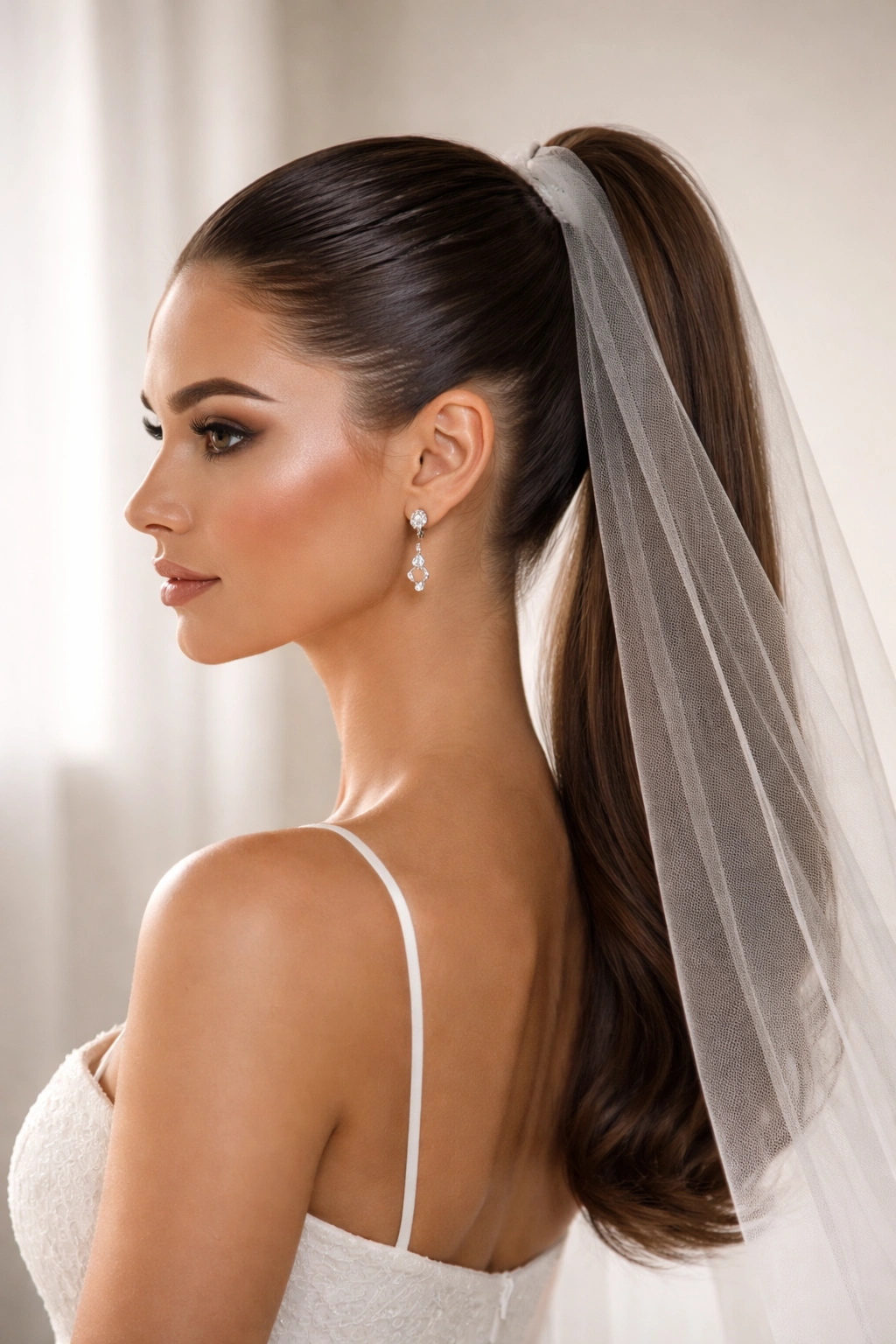
The combination of a ponytail and a veil works across so many different styles, occasions, and personal aesthetics. Whether you’re drawn to timeless tradition, romantic softness, contemporary minimalism, or playful fashion, there’s a ponytail-and-veil combination that matches your vision and makes you feel like yourself.
The real key to making any of these styles work is starting with a solid foundation—healthy hair, the right product, and clear understanding of where your ponytail will sit and how your veil will attach. Once those basics are handled, you can focus on the styling details that make each look unique. A half-hour of practice before your event takes away any nervousness and lets you focus on enjoying the day itself.
Don’t feel locked into tradition, either. If you love the idea of a veil but hate the formality of a traditional bridal arrangement, go for the space buns or the side-swept style. If you want maximum drama, lean into the sculptural fascinator. The beauty of a ponytail-and-veil combination is that it’s infinitely adaptable to who you actually are.
