



Fulani braids represent one of the most striking and culturally significant hairstyling traditions, originating from West African Fulani people who’ve worn these distinctive plaits for generations. What makes Fulani braids instantly recognizable is their signature thin, delicate structure adorned with golden rings, beads, cowrie shells, or metallic cuffs that slide along the braids themselves. When you style these braids into a ponytail, you create something that’s equal parts statement-making and elegantly versatile—a style that works for everything from casual everyday wear to formal events or cultural celebrations.
The real beauty of Fulani braid ponytails lies in their flexibility and the way they transform long hair into intricate, manageable styles that can last for weeks. If you’ve got long hair and you’re looking to switch things up without resorting to heat damage or constant daily styling, Fulani braids offer a protective styling option that showcases your length while giving you creative freedom in how you wear them. The braiding technique itself creates a canvas for endless variations—you can wear them sleek and minimal, or go bold with metallic accents, beaded sections, and layered arrangements.
The styles you’re about to explore range from classic high ponytails that show off every braid detail to more modern interpretations where the braids curve and wrap around a central pony in ways that feel fresh and unexpected. Each variation here is designed specifically for long hair, taking advantage of the length to create depth, drama, and visual interest. Whether you’re drawn to minimalist elegance or want to lean into the full cultural richness of Fulani styling, there’s a version here that’ll speak to you.
1. Classic Fulani Braids with High Ponytail
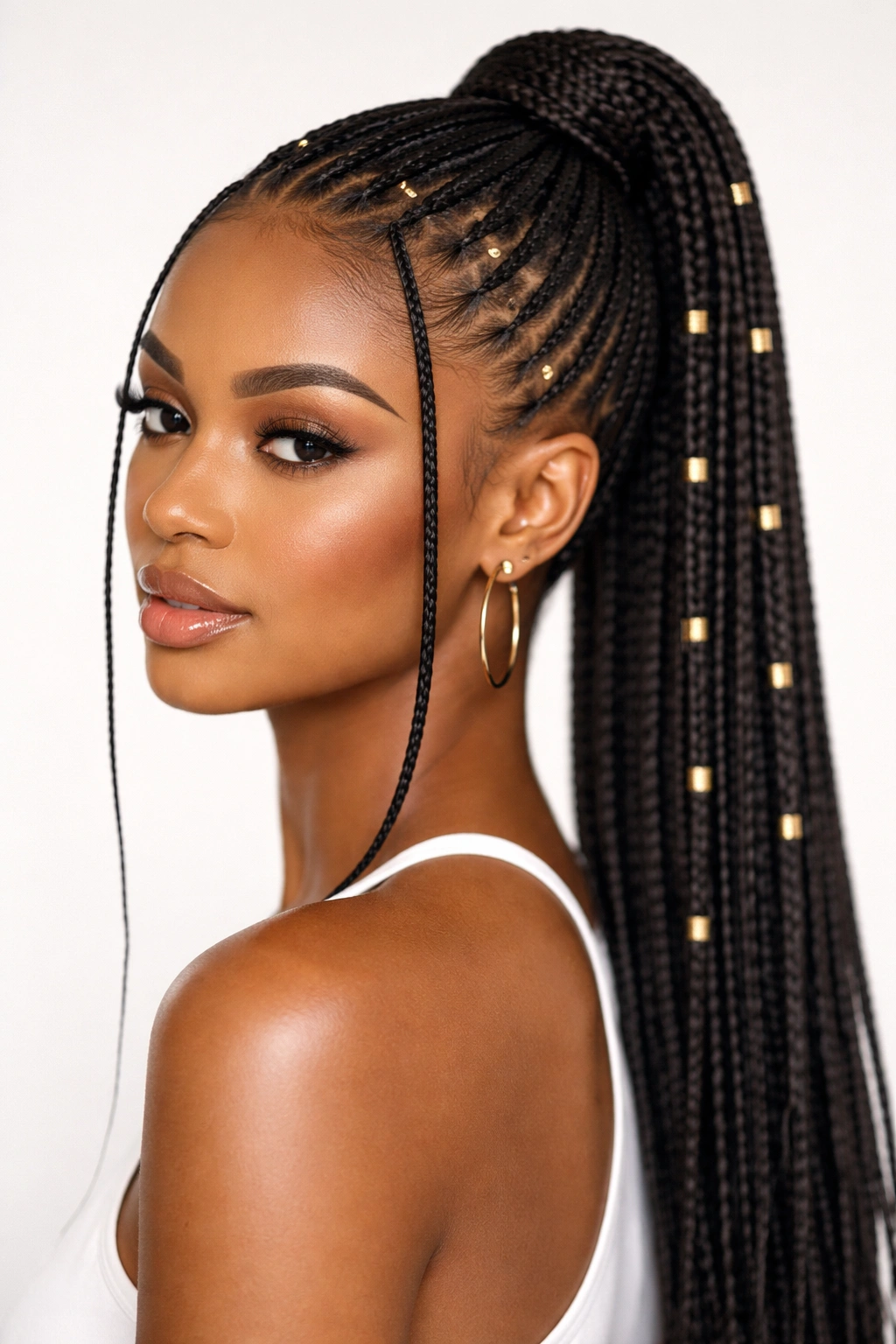
This is the purest expression of the Fulani braid aesthetic—thin, uniform braids that frame the face and pull back into a clean, elevated high ponytail that commands attention. The magic here is in the simplicity: your braider creates braids of consistent width across your entire head, typically incorporating golden or silver cuffs spaced evenly along each braid’s length. Once the braiding is complete, all the braids gather at the crown into one sleek, gathered ponytail that sits high on the head.
Why This Works So Well
This style leverages the natural length of long hair to create incredible volume and presence in the ponytail itself. The high placement elongates your neck and face, creating a naturally flattering silhouette that works across different face shapes and styling occasions. The gathered braids also create a interesting textural effect at the base of the ponytail where all the braids meet, and the individual braids extending from that point catch light beautifully, especially when adorned with metal cuffs.
Styling Tips and Maintenance
- Space your golden cuffs about 2-3 inches apart along each braid for even visual distribution
- Use a silk or satin hair tie to secure the ponytail base; this prevents breakage and keeps your hairline protected
- This style typically lasts 4-6 weeks depending on your hair growth and how well you maintain the braids at night
- Sleep on a silk pillowcase or bonnet to preserve the braids and minimize frizz at the edges
- A touch-up at the roots every 3-4 weeks keeps the scalp looking neat as new growth emerges
Pro tip: If your ponytail feels too tight and is causing tension on your hairline, loosen it slightly once the style settles—comfort matters more than perfection, and you won’t sacrifice the aesthetic.
2. Side-Swept Fulani Ponytail with Gold Cuffs
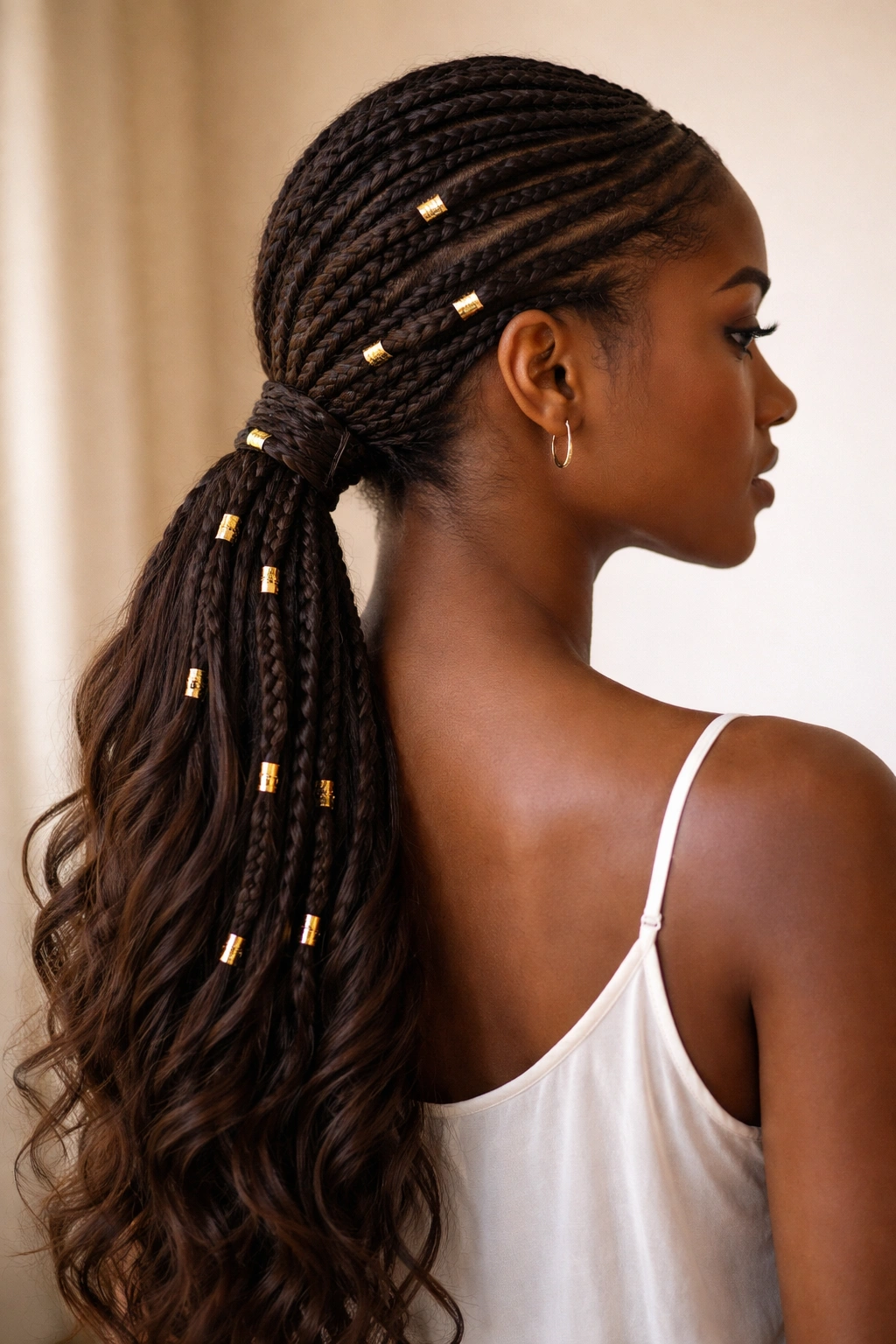
This variation creates drama through asymmetry, with the braids flowing from one side of your head to the other before gathering into a low-to-mid-level ponytail positioned behind the opposite ear. Picture the braids creating a gentle diagonal line across the back of your head—it’s romantic, modern, and immediately eye-catching. The side-sweep positioning means the ponytail itself becomes a sculptural element rather than a traditional gathered knot.
The Visual Impact
What makes this style distinctive is how it plays with movement and perspective. The braids literally draw the eye along a diagonal path, which creates the illusion of more dimension and can subtly reshape how your face reads from different angles. For long hair, this side-sweep positioning actually makes the length feel longer because it’s not compressed into a tight centerline—instead, it flows asymmetrically, which creates the impression of more volume and flow.
Styling Tricks for Long Hair
- Start your braids slightly off-center on one side of your head and systematically move them toward the opposite side as you braid back
- Secure the ponytail with a cuff or ornamental band that sits visible—don’t hide it under an elastic, as that defeats the purpose of the asymmetrical design
- Add larger statement cuffs or beaded sections specifically in the ponytail portion so they catch light and emphasize that swept placement
- Keep the braids slightly looser than a classic style to enhance the flowing, asymmetrical feeling
Worth knowing: This style can feel slightly tighter on one side of your scalp since that’s where the braids are concentrated, so communicate with your stylist if tension is a concern, and don’t hesitate to ask them to loosen that side specifically.
3. Double Fulani Braids into a Braided Bun Ponytail
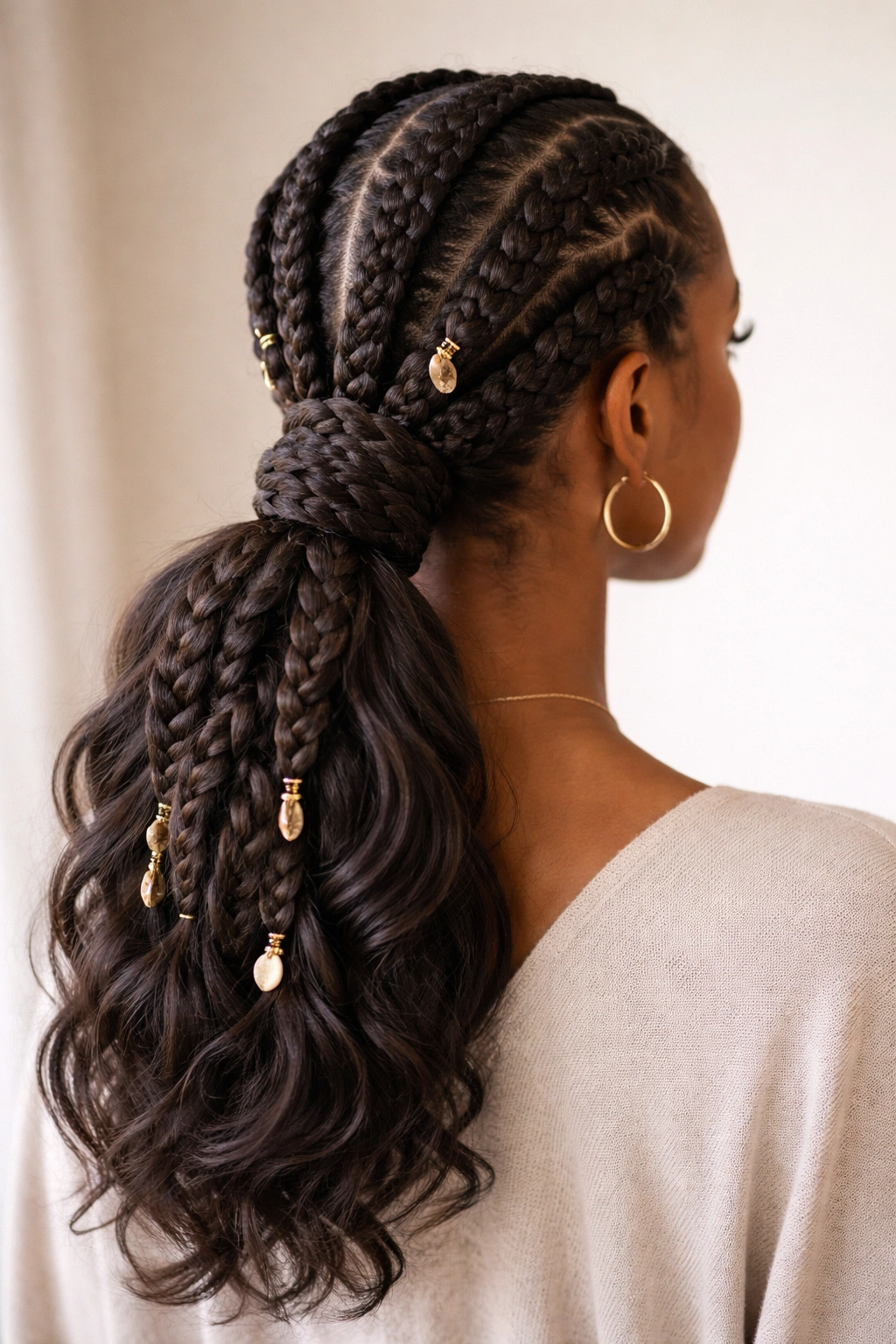
For maximum dramatic impact with long hair, consider doubling up: create two substantial Fulani braids (rather than multiple thin ones) on either side of your head, then intertwine and braid those two braids together as they approach the back of your head, finally wrapping the combined braided section into a bun or twisted knot. This creates a gorgeous sculptural look with incredible dimension and texture.
Why Two Braids Create Such Impact
Two thicker braids read differently than many thin ones—they feel more architectural and modern, almost like living sculpture. The moment you start braiding the two braids together, you’ve created a secondary braid structure that has depth and complexity. For long hair, this technique uses your length to create volume without requiring 15-20 individual braids, making the style feel less heavy while looking equally impressive.
Creating the Braided Bun Effect
- Have your braider work two Fulani braids that are slightly thicker than standard (perhaps 1/2 inch wide instead of 1/4 inch)
- At the nape of your neck, instead of simply gathering the braids, have them cross over each other and braid together for 4-6 inches
- Wrap that secondary braid into a knot or bun, using bobby pins to secure it close to the scalp
- This creates a bun that literally sits on top of braided hair, giving it multiple layers of texture and visual interest
Pro tip: Add your metallic cuffs primarily along the initial two braids, then leave the secondary braid-within-a-braid portion as is for a transition effect where the metal accents fade toward the bun.
4. Fulani Braids with Wrapped Hair Rings and Clustered Ponytail
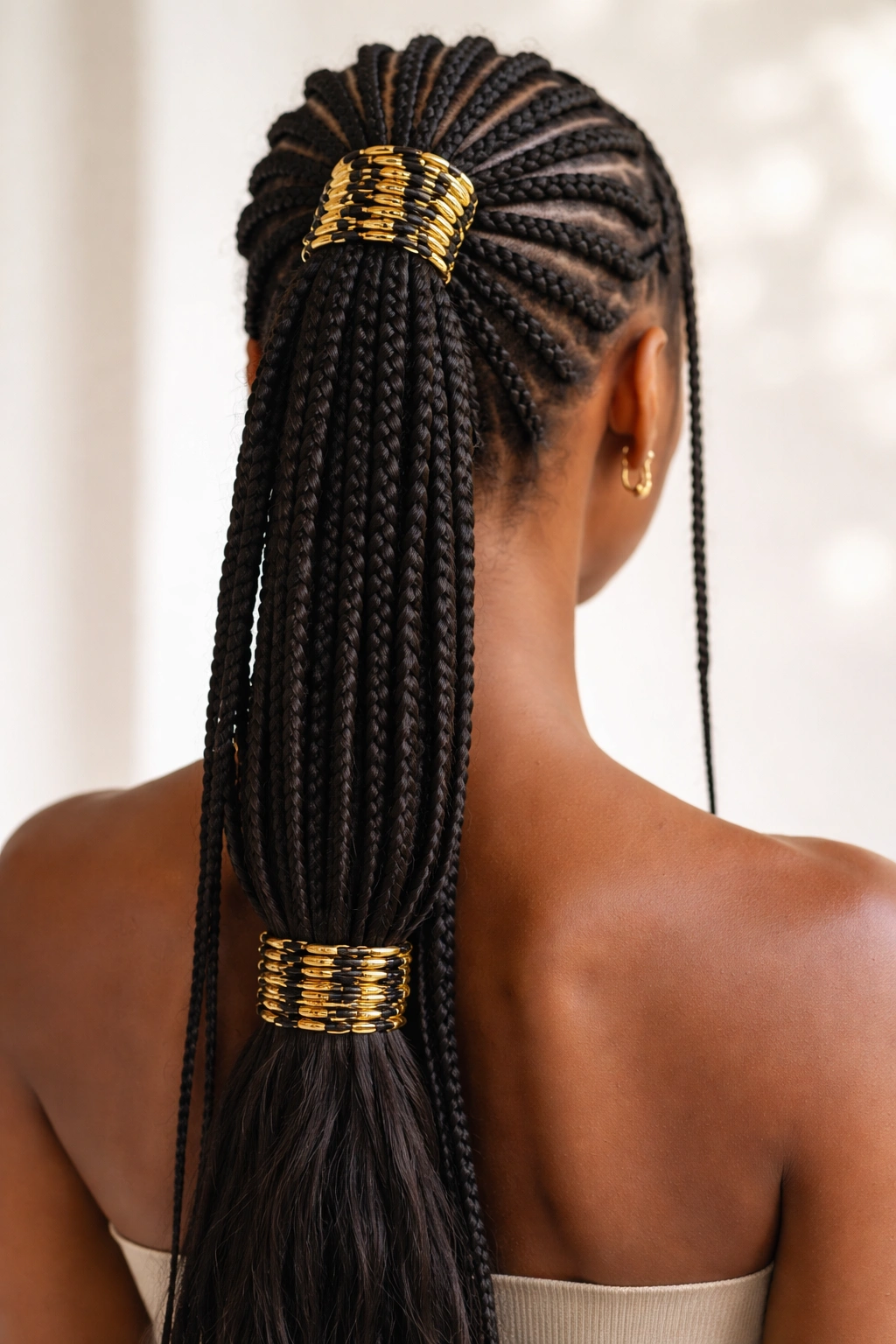
This variation focuses on dramatic jewelry placement rather than style structure—the braids are created traditionally, but instead of evenly spaced cuffs, you create “clusters” where multiple cuffs sit close together in one area, then have a bare stretch, then another cluster. This creates visual rhythm and draws the eye toward specific sections. The ponytail itself is a traditional gathering, but it’s the ring placement that makes this version distinctive.
The Jewelry-Forward Approach
The wrapped hair rings (available in gold, silver, rose gold, or jeweled finishes) become sculptural elements on your head. By clustering them rather than spacing them evenly, you’re creating focal points—areas where light catches and draws attention. This strategy works beautifully with long hair because the braids have enough length to accommodate multiple visual “chapters” before reaching the ponytail. You might cluster rings at the crown, leave the mid-section clear, then cluster again at the base of the ponytail.
Applying Rings and Cuffs Strategically
- Gather rings in groups of 2-4, creating clusters that are 1-2 inches wide, then leave a 3-4 inch gap before the next cluster
- The clusters draw focus upward toward your face and crown, then let the lower braids breathe and move freely
- Use at least 3-4 clusters across your braided head for visual interest, but not so many that they feel chaotic
- In the ponytail itself, you can either continue the clustered effect or create a cuff “ombré” where rings are densest at the top of the ponytail and gradually space out further down
Worth knowing: Metal rings can catch on pillowcases at night and slightly shift or snag your braids, so sleeping in a bonnet is especially important with this heavily adorned version.
5. Twisted Crown Fulani Braids with Low Ponytail
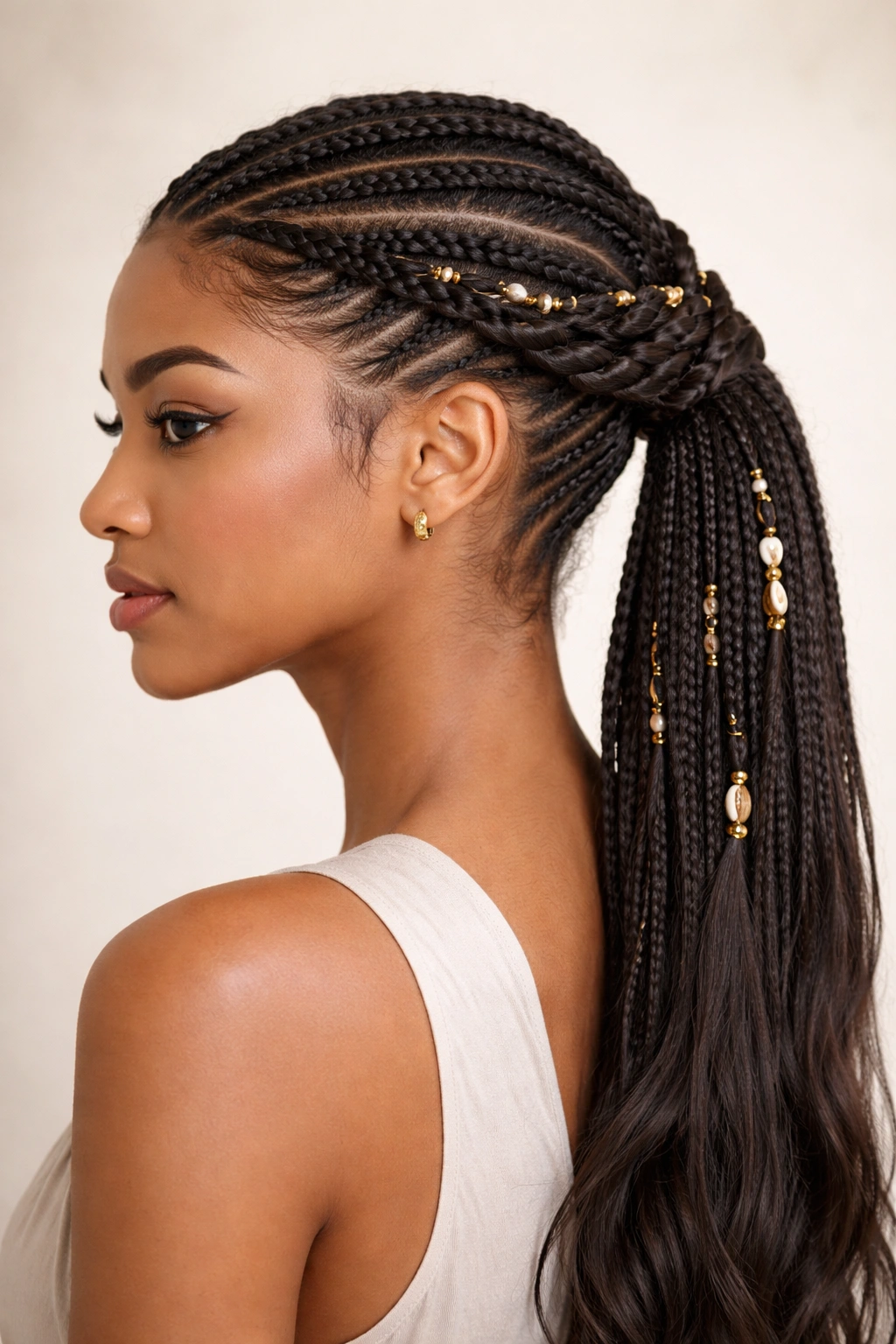
This style creates a crown effect by beginning the braids at one temple, twisting them horizontally across the back of the head just below the crown, then allowing them to drop down toward a low ponytail at the nape. It’s less about traditional braiding and more about creating a continuous line that frames the head like a crown before gathering into a ponytail base. The twisted portion feels more delicate and sculptural than standard straight-back braids.
Creating the Crown Formation
Instead of braiding straight back from your part, your braider works the braids in a horizontal twist that follows the natural contour of your head—imagine drawing an invisible line just above your ears that curves around the back of your skull. The braids follow that curved path, creating a twisted or braided crown effect. Once they reach the opposite side where they started, they drop down into a low, gathered ponytail at the nape of your neck. For long hair, this means the majority of your length hangs freely below a decorative crown structure.
Maintenance and Daily Wear
- This style works particularly well for people who want braids in some areas but don’t want their entire head braided—the crown covers about 40% of your head, leaving the lower portion free
- Sleep with your low ponytail slightly loosened so you’re not putting pressure on your nape while lying down
- The twisted crown portion can last 5-7 weeks; the low ponytail will eventually need re-tightening or redoing as hair grows
- This style photographs beautifully from the back and works well for updos or occasions where you want a blend of protective styling and let-down length
Pro tip: Add your decorative cuffs primarily to the crown twisted portion—this highlights the architectural feature and keeps the lower ponytail relatively simple and functional.
6. Feed-In Fulani Braids Cascading Ponytail
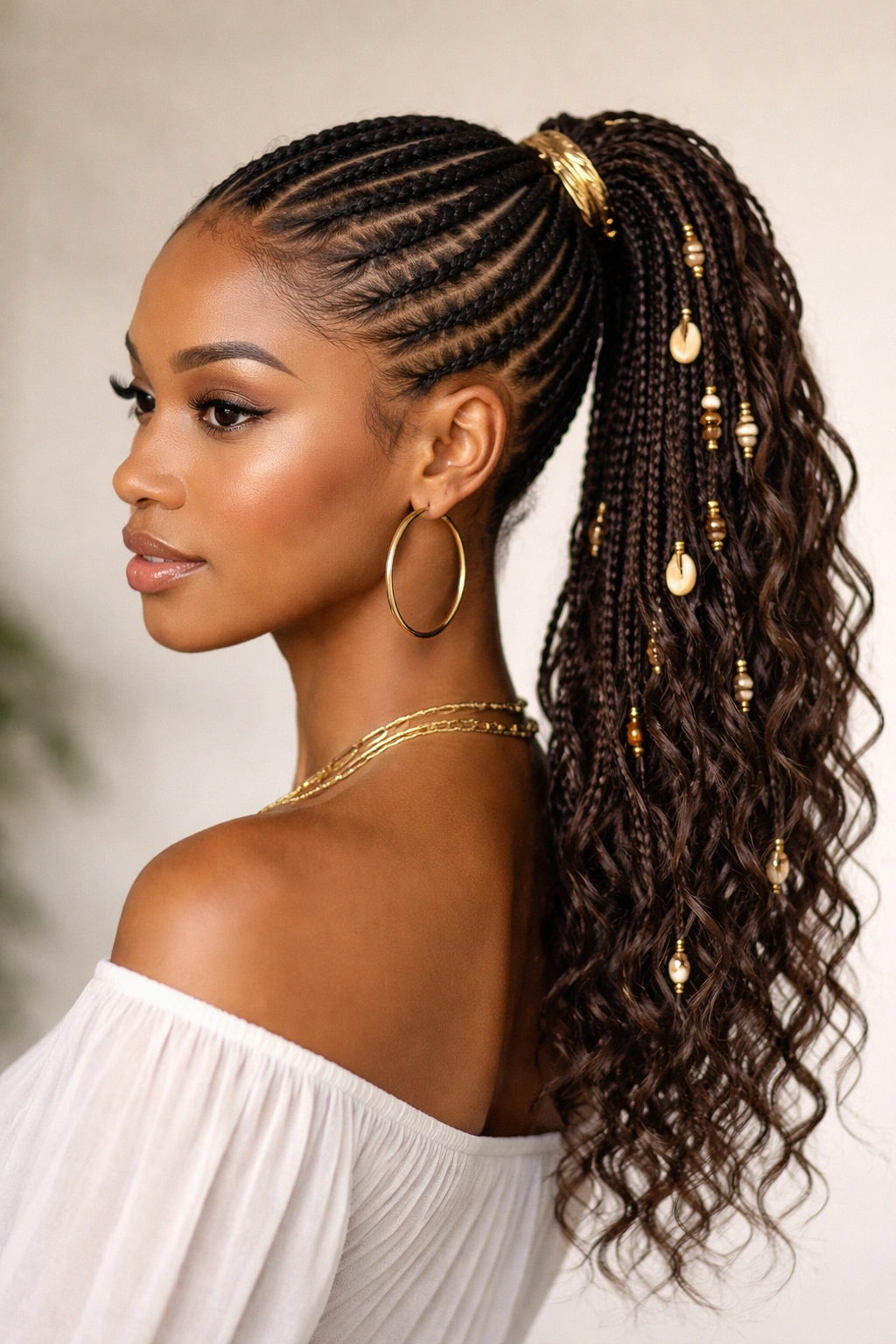
Feed-in braids are created by adding new hair as you braid, starting with a smaller braid at the hairline that gradually becomes thicker as you incorporate more hair with each pass. For Fulani-inspired ponytails, feed-in braids create an elegant tapered effect that’s less harsh on the hairline and feels more refined. When you gather feed-in braids into a ponytail, that tapered structure creates a cascading effect where the ponytail itself feels lighter and more flowing.
The Tapered Advantage for Long Hair
The genius of feed-in braids is that they start thin and get progressively thicker, which means the weight is distributed more gradually along your scalp and hair. For long hair, this means less tension overall while still achieving the full Fulani braid look. The cascading effect happens naturally because the braids themselves are tapered—they’re smaller at the scalp and fuller at the ends, so when you gather them into a ponytail, that graduated thickness creates movement and visual lightness.
How Feed-In Braids Differ in Care
- Feed-in braids require slightly more precision during the initial installation but are gentler on your hairline long-term
- They last the same duration as traditional Fulani braids (4-6 weeks) but feel lighter and less restrictive throughout that time
- The tapered nature means your ponytail will have slightly more movement and bounce than with traditional even-width braids
- These braids work especially well if you have fine or thin hair, as the graduated structure means less overall tension on individual strands
Worth knowing: Feed-in braids may cost slightly more because they require more skill and time, but many people find the comfort and longevity worth the investment.
7. Fulani Braids with Beaded Extensions in a High Pony
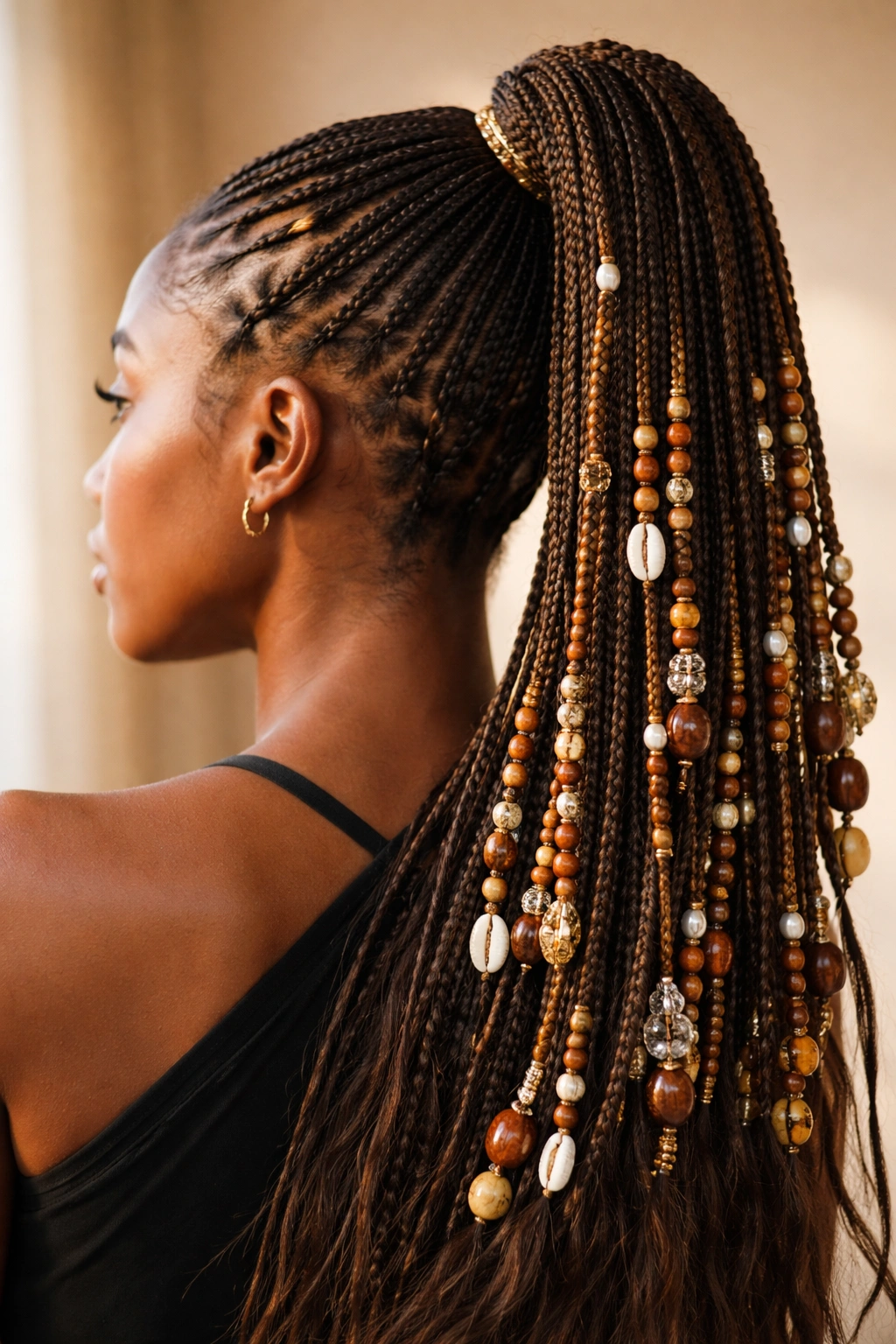
This variation incorporates beaded extensions directly into some or all of your Fulani braids, creating pops of color, texture, and cultural authenticity. The beads might be wooden, metallic, or glass, and they can be integrated throughout the braids or concentrated in specific sections. When everything gathers into a high ponytail, the beads catch light and movement, creating visual sparkle and depth that plain braids alone can’t achieve.
Choosing and Placing Beads
Wooden beads feel warm and natural, working especially well with gold cuffs and creating an earthy aesthetic. Metallic beads coordinate with silver or gold jewelry and feel more modern. Glass or crystal beads create maximum sparkle and work beautifully for occasions or events. In terms of placement, you can bead every braid for maximum impact, bead alternating braids for rhythm, or concentrate beads in one area (like the front braids) and leave the back plain. The high ponytail positioning means beads are visible from multiple angles, making them a smart design choice.
Practical Considerations with Beaded Braids
- Beads add weight to the braids, so make sure your stylist isn’t braiding too tightly to compensate—this defeats the purpose of protective styling
- When sleeping, place the ponytail on top of your pillow rather than underneath it, as bead weight against a pillow can stress your hair
- Beaded braids catch on things slightly more than plain braids, so be mindful around jewelry, hoodies, or scarves
- The weight of beads can make a high ponytail feel heavy after a full day—many people switch to a lower ponytail in the evenings on day 2 or 3
Pro tip: Ask your braider to secure beads using thread wrapping rather than glue whenever possible—this makes them easier to remove cleanly when you’re ready to take down the style.
8. Asymmetrical Fulani Braids into Side Ponytail
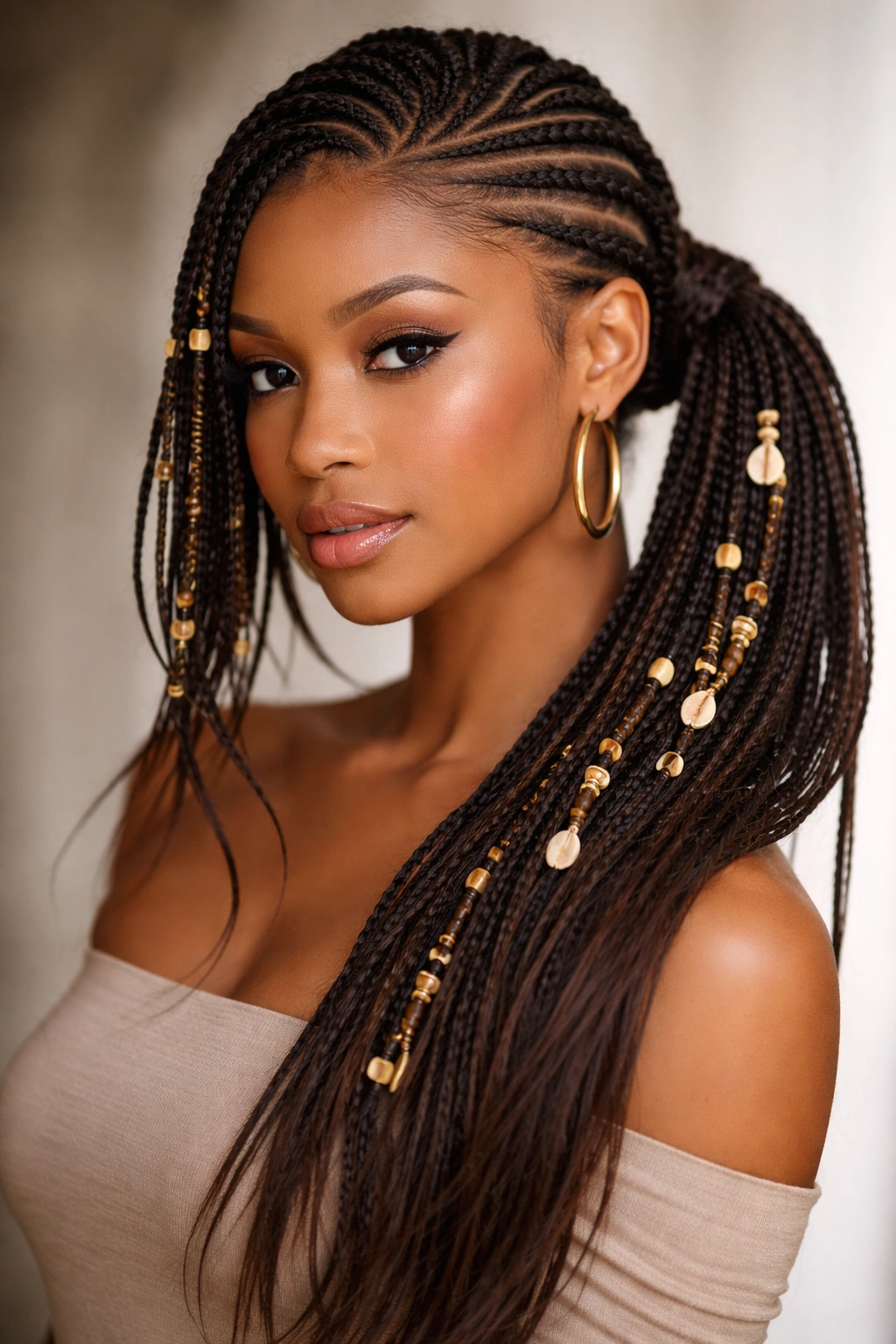
This style creates braids that flow unevenly across your head—perhaps denser on one side and sparser on the other—before gathering into a side ponytail that sits over one shoulder. It’s a bolder interpretation of traditional Fulani styling that feels very modern and fashion-forward while still honoring the cultural aesthetic. The asymmetry makes a strong statement and works beautifully for people who love a touch of artistic direction in their styling.
Playing with Visual Balance
Asymmetrical styling creates movement and prevents a static, uniform appearance. You might have eight braids on one side and four on the other, or perhaps all the braids flow from left to right with none on the right side, creating a completely one-sided effect. The side ponytail positioning enhances this asymmetry—positioned over one shoulder, it feels intentional and sculptural rather than accidental or lazy. For long hair, this creates the illusion of shifting proportions and keeps the eye moving around the style rather than settling into a centered focal point.
Making Asymmetry Work
- Discuss the exact asymmetrical placement with your stylist beforehand—show pictures if possible to ensure you’re both visualizing the same end result
- The denser side should generally be positioned toward your face or your strong side (wherever feels more flattering to you)
- Add metallic cuffs primarily to the side with more braids, which naturally draws focus there and enhances the asymmetrical design
- This style works beautifully with undercuts or shaved designs on the less-braided side, if you’re feeling truly adventurous
Worth knowing: Asymmetrical styles can take longer to install because the braider has to count sections and plan placement more carefully—budget extra time and don’t rush the process.
9. Fulani Braids with Tribal Hair Cuffs and Center-Part Ponytail
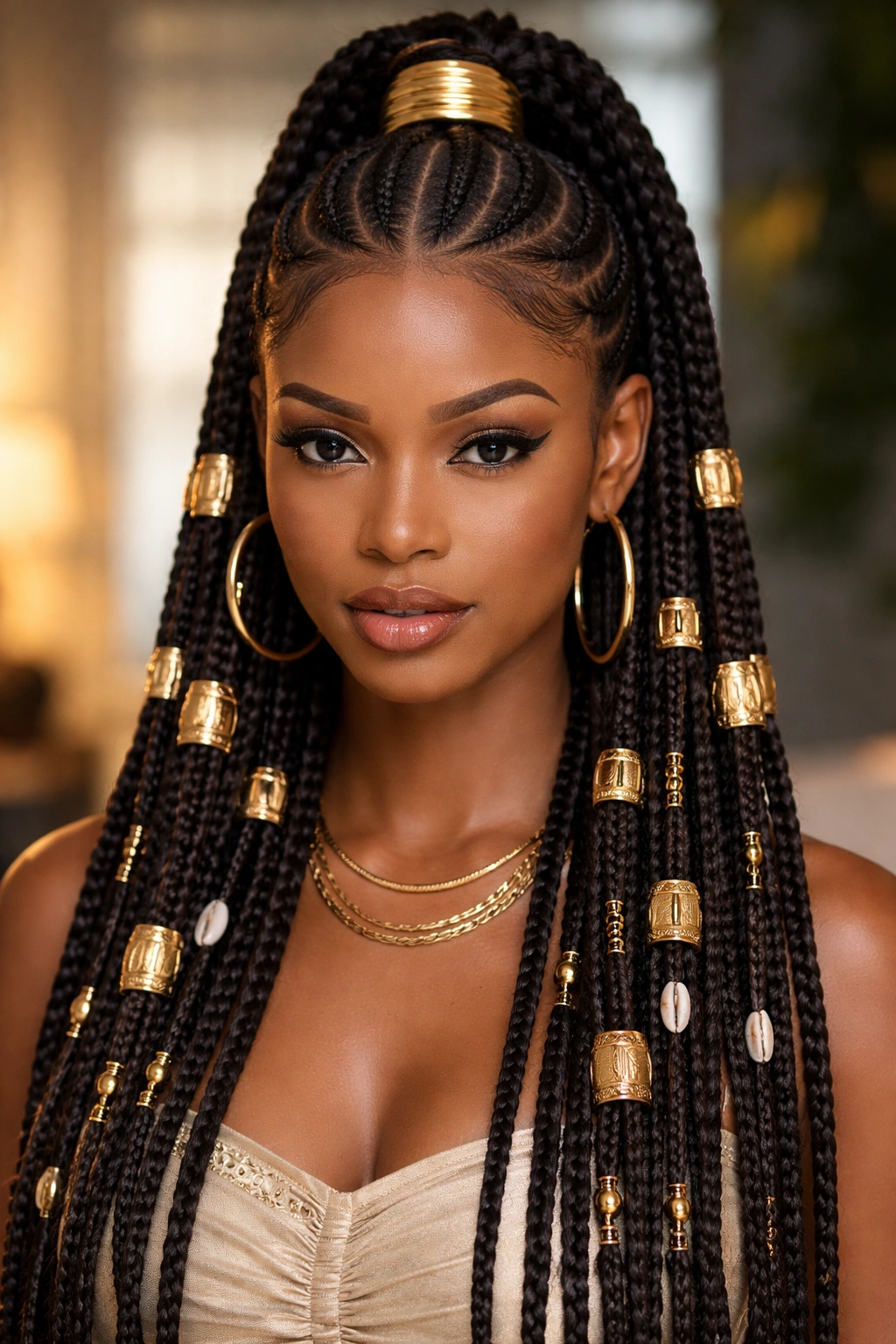
This variation emphasizes statement jewelry by using larger, wider tribal-inspired cuffs (sometimes with cutout patterns, geometric designs, or intricate detailing) spaced along traditional Fulani braids gathered into a center-parted ponytail. The center part creates perfect symmetry, and the cuffs become sculptural focal points rather than subtle accents. This style feels culturally rich and intentional, celebrating the full artistry of Fulani aesthetic.
The Impact of Statement Cuffs
Tribal cuffs are wider and more ornate than simple rings—they might feature filigree patterns, gemstone insets, or bold geometric shapes. These cuffs are visible from further away than delicate rings, making them powerful design elements. When your braids are center-parted and symmetrical, statement cuffs on each braid create visual rhythm and repetition that feels balanced and intentional. The center-parted ponytail emphasizes this symmetry, creating a formally styled, almost regal aesthetic.
Styling with Statement Jewelry
- Space larger tribal cuffs further apart than you would delicate rings—typically 4-6 inches between cuffs rather than 2-3 inches
- Use consistent spacing on both sides of the center part to maintain visual balance and symmetry
- The ponytail base can feature multiple cuffs stacked close together, creating a densely adorned moment where all the braids meet
- This style benefits from a slightly tighter, more polished ponytail base—the formality of the cuffs calls for equally polished gathering
Pro tip: If you’re investing in statement cuffs, consider having your braider create slightly thicker braids (perhaps 3/8 inch wide instead of 1/4 inch) so the cuffs sit properly against the braid volume without looking oversized or loose.
10. Layered Fulani Braids with Stacked Ponytail
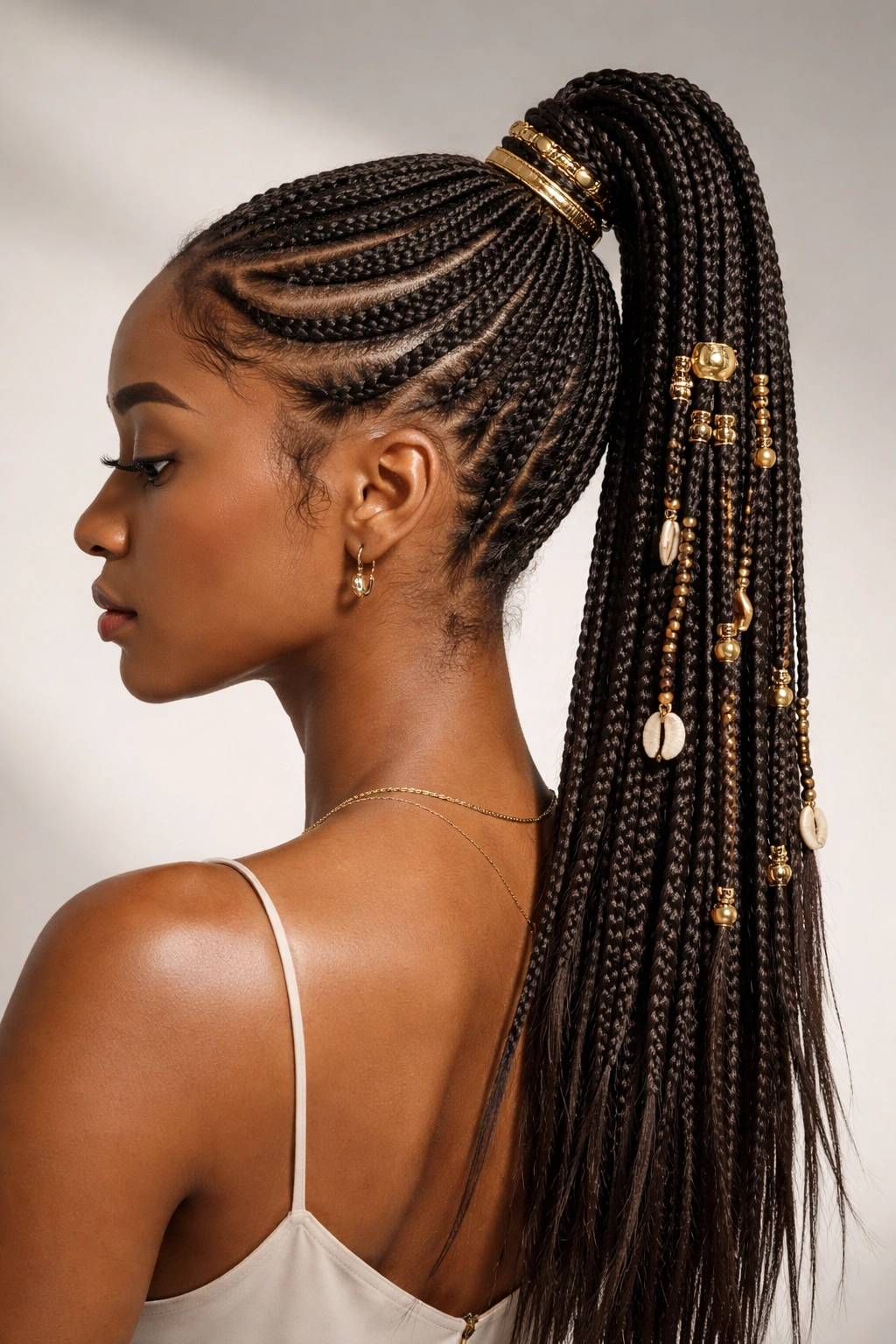
This is the most modern, complex interpretation on this list—the braids are created in layers, with some starting at the hairline and others beginning higher on the head, so they naturally stack on top of each other as they make their way back. All the braids gather at one point, but the stacking creates a 3D, architectural effect that’s utterly contemporary. When you secure this ponytail with multiple bands or cuffs at different heights, the stacked effect becomes even more pronounced and sculptural.
Creating Dimension Through Layering
Layered braids start at different points on your head and converge toward a single ponytail base. Some braids might start at your temple, others at your crown, and others slightly below the crown. This means the gathered ponytail becomes a focal point where multiple “strands” of braids meet at different angles, creating incredible texture and dimension. Your braider is essentially working in multiple planes rather than a single flat plane, which creates movement and visual interest that catches light and photographs beautifully from any angle.
Securing and Styling Stacked Ponytails
- Use multiple hair bands or cuffs positioned at slightly different heights to emphasize the stacking effect—perhaps a cuff at the very top where the first layer gathers, another 1-2 inches below where the second layer joins, and so on
- Stacked ponytails require precision in placement, so work with an experienced braider who understands 3D sculpting and layered techniques
- This style often works best with a slightly tighter base than traditional ponytails—the multiple gathering points create structural integrity
- The stacked effect can be enhanced with beads or metallic accents placed specifically at each gathering point
Worth knowing: Stacked layered braids require the most skill to install and will likely take 5-7 hours or longer. The longevity and visual payoff are worth the time investment, but come prepared for a full day or possibly a two-day installation process.
Final Thoughts
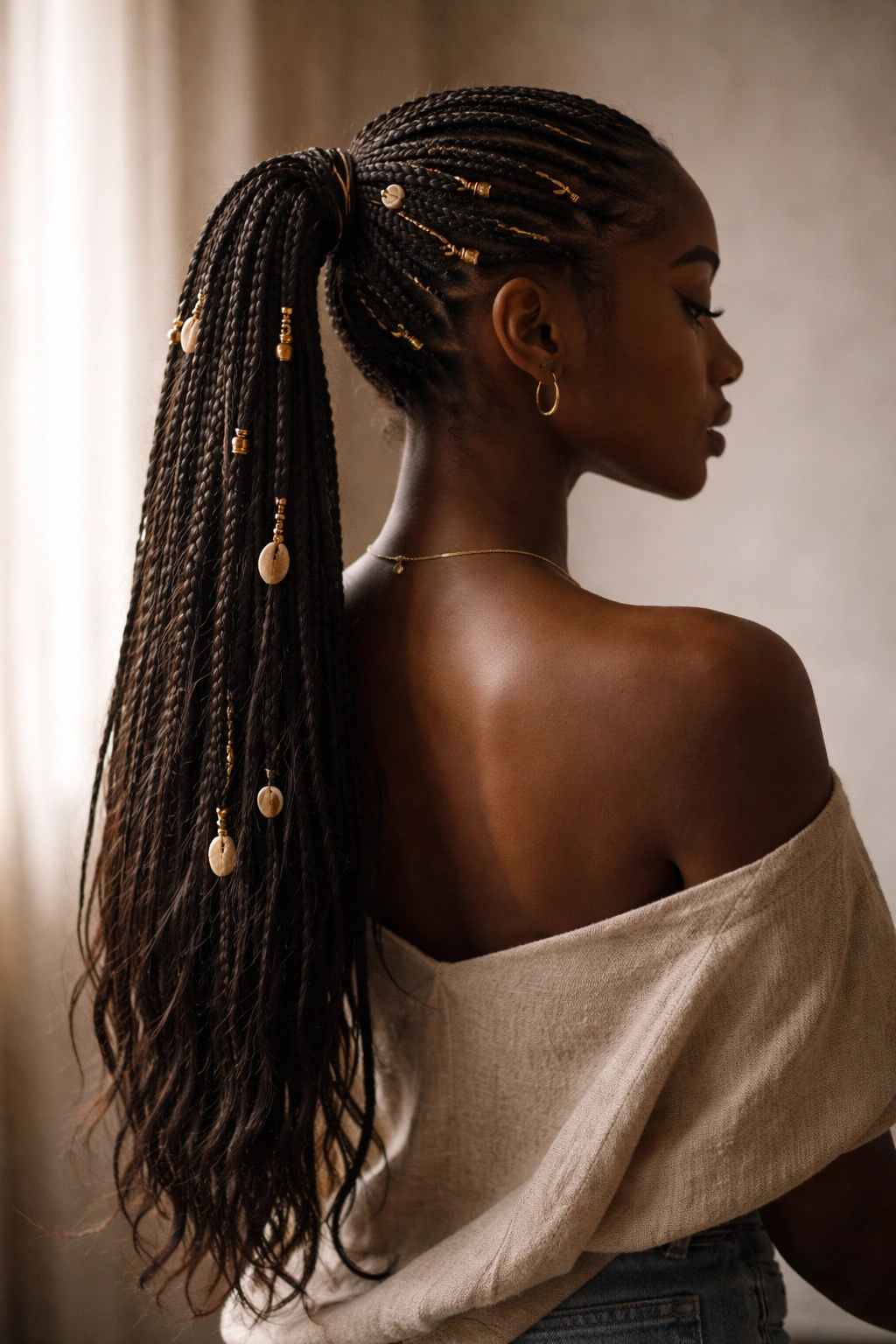
Fulani braid ponytails offer something rare in hairstyling: the ability to be both protective and transformative, traditional and contemporary, simple and complex. Whether you’re drawn to the classic elegance of evenly-spaced golden rings on straightforward braids, or you want to push toward more artistic territory with asymmetrical placement, beaded sections, and layered stacking, there’s a version of this style that matches exactly how you want to express yourself.
The beauty of going with long hair is that you’ve already got the raw material to make any of these styles work beautifully. Your length becomes an asset rather than a liability—it gives your braider more canvas to work with, creates more dramatic movement when the style is complete, and allows you to wear the style confidently for weeks without worrying about it looking thin or skimpy as it grows out. A well-executed Fulani braid ponytail will look fresh and intentional from day one through week six.
Take time choosing your braider, looking at portfolios and ensuring they understand exactly what you’re envisioning. Bring photos, communicate about comfort and tension, and don’t hesitate to advocate for your own hairline and scalp health. Once the style is installed, commit to the nighttime routine—sleep bonnet or silk pillowcase, consistent moisturizing, and mindful daily handling—and your braids will reward you with weeks of stunning styling potential and genuinely protective benefits for your hair beneath.
