



A high ponytail is one of those rare hairstyles that manages to be both effortlessly chic and surprisingly versatile. Whether you’re heading to the gym, stepping into a boardroom, or getting ready for a night out, a well-executed high ponytail can deliver the exact vibe you’re going for. For those with long hair, the possibilities multiply exponentially—you’ve got the length, the volume potential, and the styling flexibility that shorter-haired friends can only dream about.
What makes high ponytails so compelling is their honest elegance. They expose your face and neck, they require real hair health to look their best, and they communicate clarity and confidence. No hiding behind strands here—just you and a hairstyle that either works or doesn’t. The good news? Long hair gives you serious advantages. You can play with texture, create dramatic volume at the crown, add intricate details without worrying about running out of hair length, and shift the entire mood of a ponytail just by adjusting where you position it or how you finish the base.
The styles below aren’t just variations on a theme—each one has its own character, suits different occasions, and demands slightly different techniques. Some prioritize sleekness and polish. Others lean into texture and movement. A few blur the line between a traditional ponytail and something more architectural. Master these dozen approaches, and you’ll have a high ponytail solution for every scenario your week throws at you.
1. Classic High Ponytail
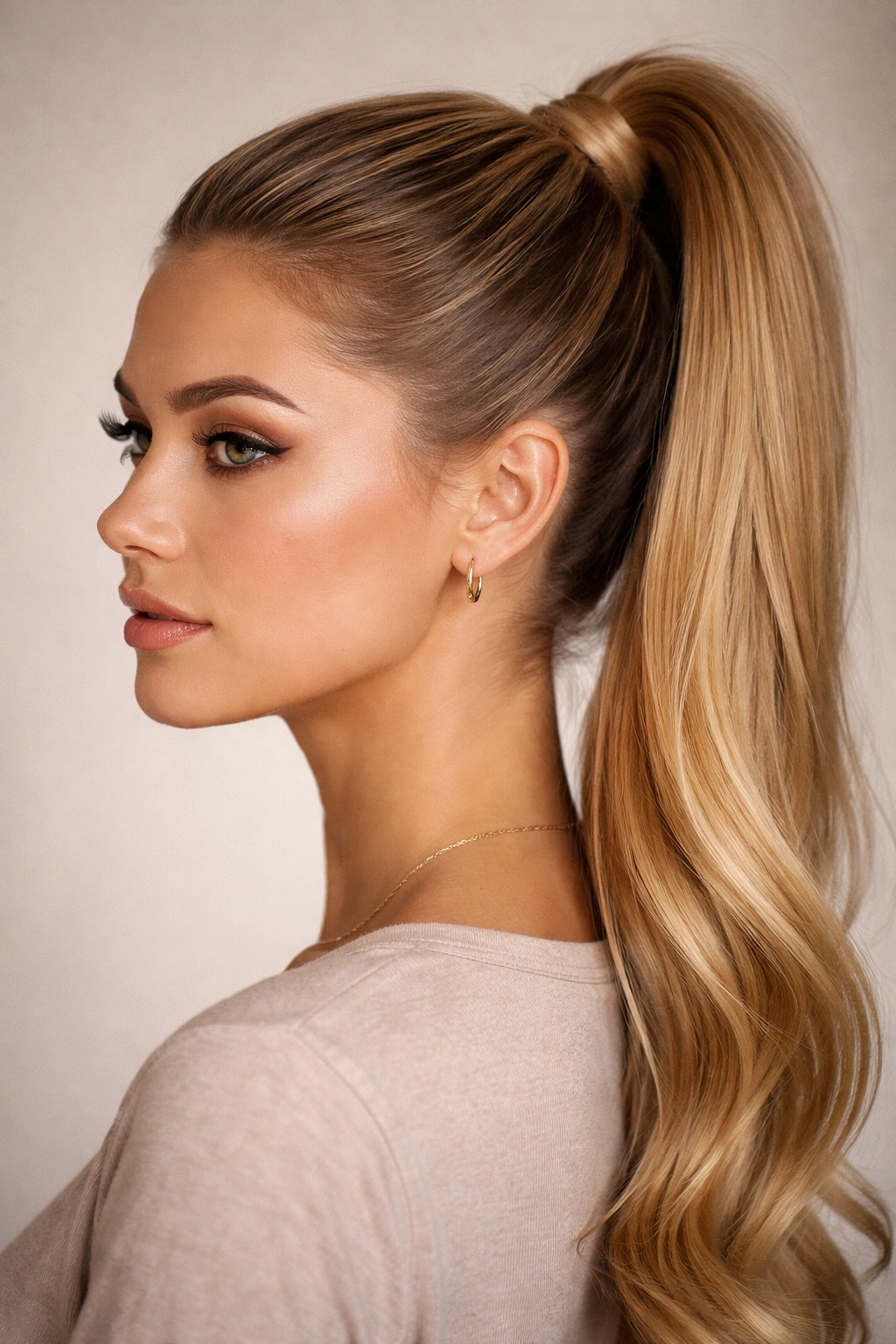
This is the foundation from which all other high ponytails spring. A true classic high ponytail sits at the crown of your head, pulled tight enough to look intentional but not so tight that you feel like your hairline is being yanked backward for the next eight hours. The key to making this genuinely elegant rather than just “pulled back” lies in creating a smooth, polished base while allowing the ends to fall with natural movement and weight.
How to Create It
Brush your hair straight back toward the crown, smoothing any flyaways as you gather the hair into your hands. Position your elastic about two inches down from the very top of your head—this placement is what makes it “high” rather than standard. Secure the ponytail with an elastic, then take a small section from the base and wrap it around the elastic to conceal it, pinning the wrapped section underneath the ponytail base. Finish by running a smoothing serum or light hairspray through the ponytail itself for shine and definition.
Why It Works
The classic high ponytail flatters almost every face shape because it elongates the neck, brings focus to the eyes, and communicates polish without effort. Long hair in a high ponytail reads as put-together, whether you spent five minutes or thirty minutes on your styling. The height creates an instant lift that brightens your entire appearance, making it ideal for mornings when you haven’t slept well or days when your skin needs help looking fresh.
Best For
Workplaces with professional dress codes, athletic activities where you need hair completely secured, casual Fridays when you want to look intentional, date nights when you want classic elegance, and literally any situation where you need a no-fuss hairstyle that still feels groomed.
Pro tip: A light texturizing spray applied before gathering your ponytail adds grip and makes the hairstyle last longer throughout the day, even without a tight elastic.
2. Sleek High Ponytail
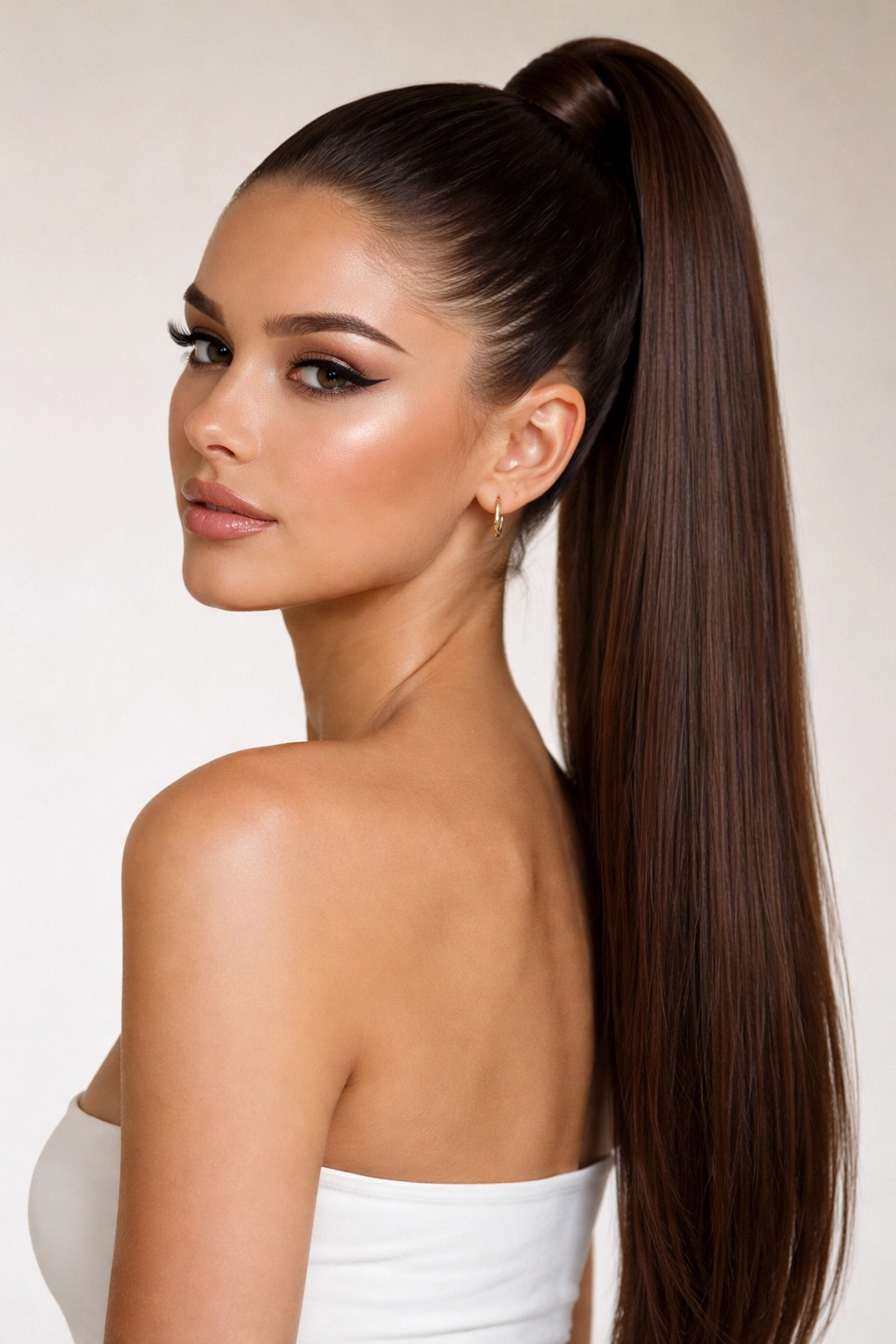
The sleek high ponytail is the sophisticated older sibling of the classic version. Everything about it communicates intentionality and refinement—there are no flyaways, no bumps, no texture. Just pure, glossy smoothness from the crown down to the very ends. This style demands precision, good hair products, and honest hair health, but the payoff is a look that feels expensive and polished.
How to Create It
Start with completely dry hair (wet hair will dry with frizz unless you blow-dry it straight first). Apply a lightweight smoothing serum to damp hair before blow-drying, blow-drying in the direction you want the ponytail to go. Once dry, brush your hair back with a boar-bristle brush, smoothing every section as you gather it. Use a fine-toothed comb to smooth the hairline and any stray hairs around the perimeter. Secure with a seamless elastic or a hair stick, then use a smoothing balm or edge control on any flyaways.
The Sleek Finish
The difference between a regular high ponytail and a genuinely sleek one is often just ten extra minutes spent smoothing and refining. After securing the ponytail, run a small amount of silicone-based smoothing product through your hands and gently press it over the surface of the ponytail itself, working from the elastic down to about the midpoint. This seals the outer layer and reflects light, creating that coveted glossy appearance.
Perfect For
Formal events where you want zero distractions, professional settings where polish is currency, going out outfits where you want your face and makeup to be the focal point, and any time you’ve invested in your skin and want nothing to compete for attention.
Worth knowing: This style shows every texture issue in your hair, so it’s best reserved for hair that’s either naturally very straight or has been blow-dried smooth. If you have texture or waves, the sleek ponytail can look like you’re fighting your hair rather than working with it.
3. Voluminous High Ponytail
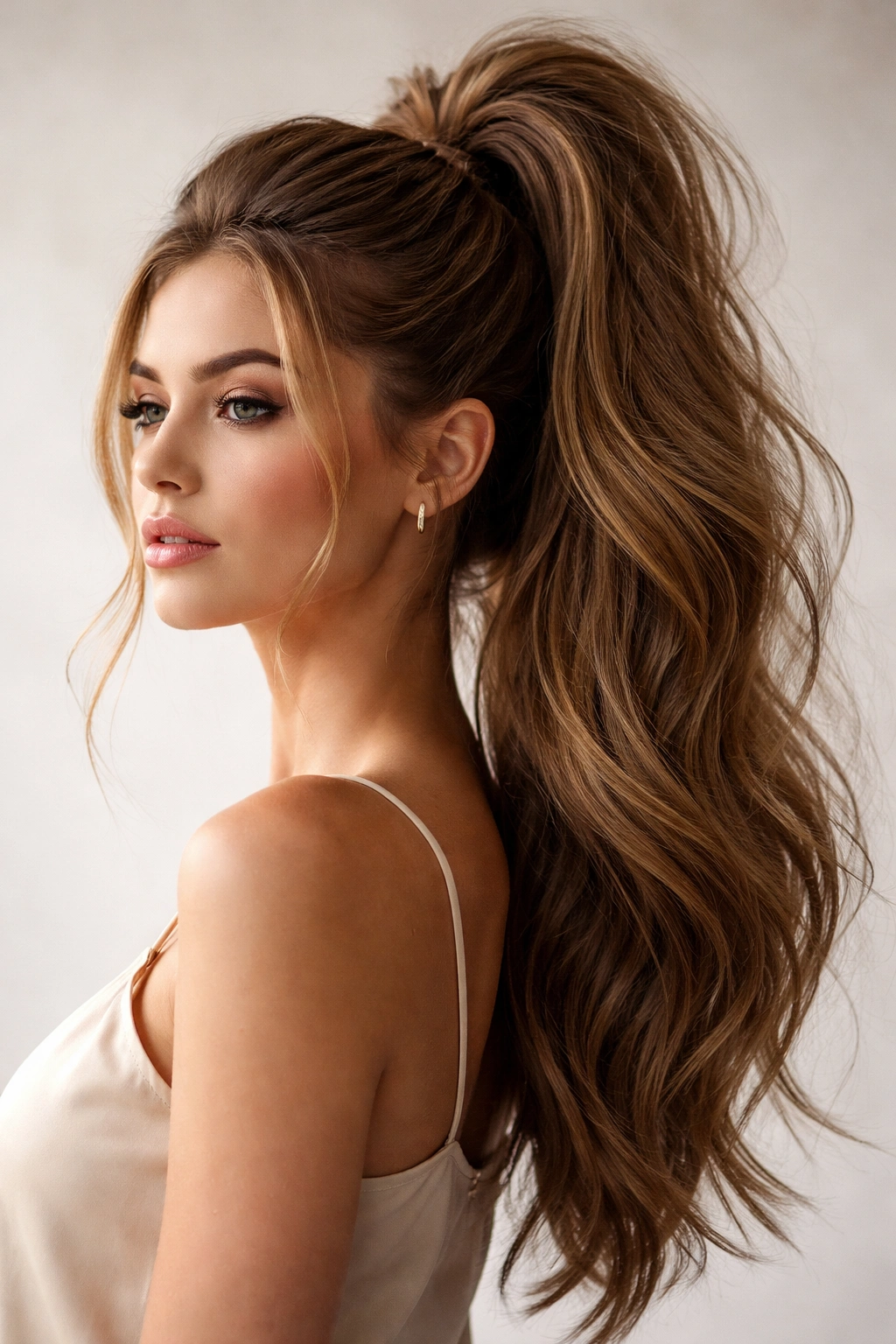
The voluminous high ponytail prioritizes impact and drama. Instead of pulling all the hair tight against the scalp, you’re intentionally creating height and fullness at the crown, then letting the ponytail itself expand with texture and movement. This style looks effortlessly glamorous and works beautifully for long hair because the length amplifies the volume.
Building Volume at the Root
The secret to a genuinely voluminous high ponytail starts at the scalp. Use a blow dryer with a concentrator nozzle to blow-dry the crown area against the direction of hair growth, then tease gently with a fine-toothed comb to create cushion and texture. You’re not creating a poof that looks overdone—just enough texture that when you pull the hair back, there’s actual substance and height rather than a flat, tight pull. Smooth the top layer slightly with your brush to neaten the appearance while keeping the volume underneath.
Texturizing the Ponytail
Once your ponytail is secured, apply a texturizing spray or dry shampoo from about two inches below the elastic all the way to the ends. Scrunch the ponytail in your hands to activate the product and create a tousled, lived-in texture. Run your fingers through to break up any clumps, then let the spray dry for a minute. The result is a ponytail with real substance and movement, not limp or flat.
When to Choose This
Any casual or social occasion where you want to look effortlessly beautiful, events where you want to project confidence and presence, bad hair days where texture actually works in your favor, and anytime you’re wearing statement earrings and want your hairstyle to have presence rather than disappear.
Real talk: Volume requires some hair density to look genuinely full rather than just fluffy. If your hair is fine or thin, focus the volume building at the crown rather than throughout the entire ponytail, or you’ll risk looking sparse.
4. High Ponytail with Face-Framing Layers
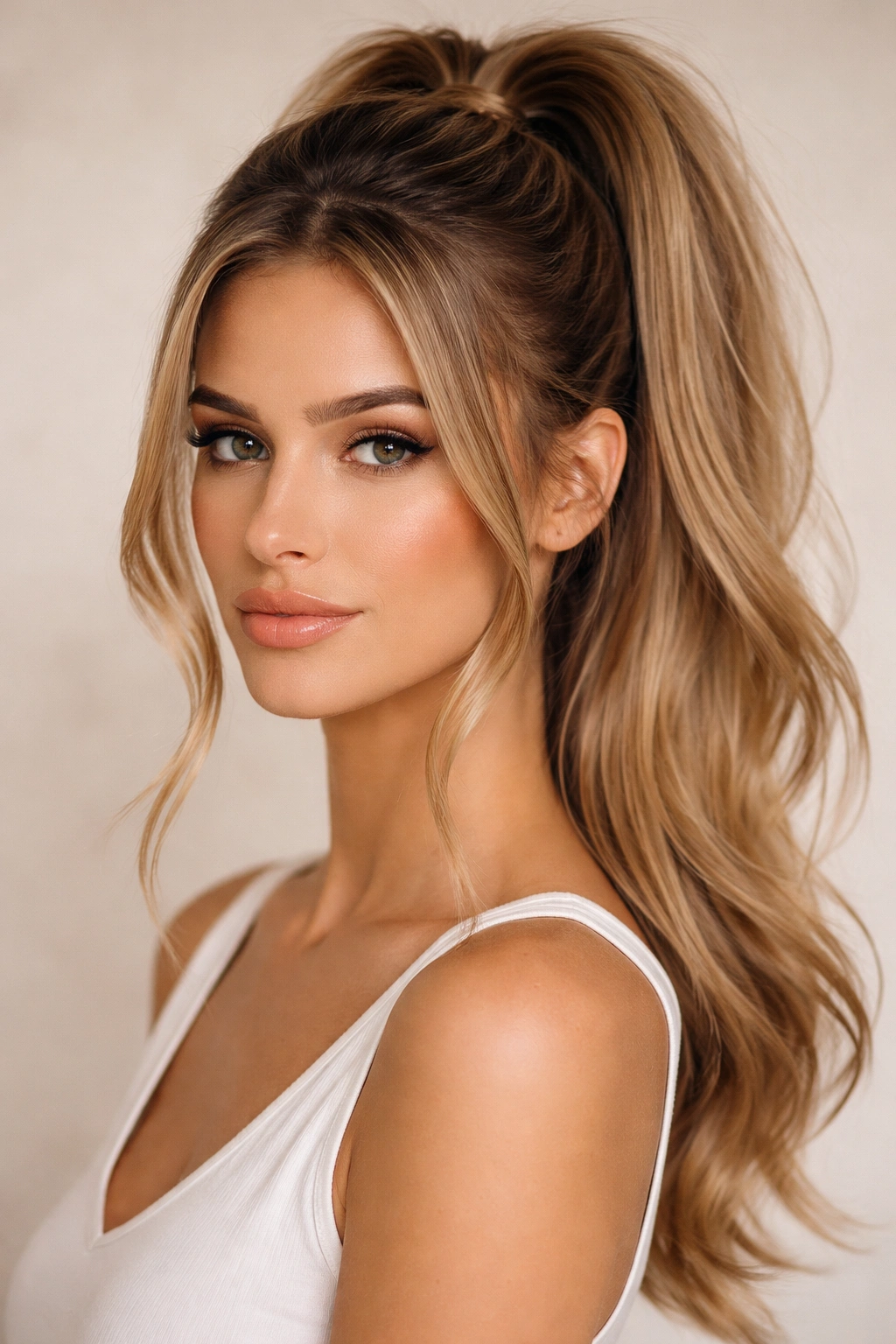
This style breaks the rules of the traditional high ponytail by intentionally leaving sections of hair down around the face. Two or three face-framing pieces are pulled back and incorporated into the ponytail base, while delicate strands frame the cheekbones and temples. The effect is sophisticated and softer than a fully pulled-back style, flattering for most face shapes, and genuinely beautiful.
Selecting and Positioning the Face-Framers
Before gathering your ponytail, identify the sections you want to leave down—typically one or two pieces on each side, roughly the width of your face from your ear, and ideally hair that sits at cheekbone length or longer. Pull everything else back into your high ponytail, securing as usual. The face-framers stay completely down, brushed and styled separately. You can leave them straight, curl them gently with a straightener or curling iron, or add texture with a texturizing spray.
Styling the Face-Framers
Curl the face-framing pieces away from your face for a softening effect, or leave them straight and tousled for a more modern, relaxed vibe. A light smoothing serum on the face-framers prevents frizz and makes them blend seamlessly with the ponytail while looking intentionally separated. The key is making the face-framers look like a designed choice rather than hair that escaped from the ponytail.
Ideal Occasions
Professional settings where you want polish with approachability, dates where you want to look beautiful but not overdone, casual outings where you want your face to be the focus, and any time you want the elegance of a high ponytail without the severe, pulled-back feeling.
Expert Tweak
If your face-framers tend to escape or look too loose, use a tiny bobby pin inserted horizontally along the side part where the face-framer begins, securing it to the hair underneath. It’s invisible but keeps everything in place throughout the day.
5. Twisted High Ponytail
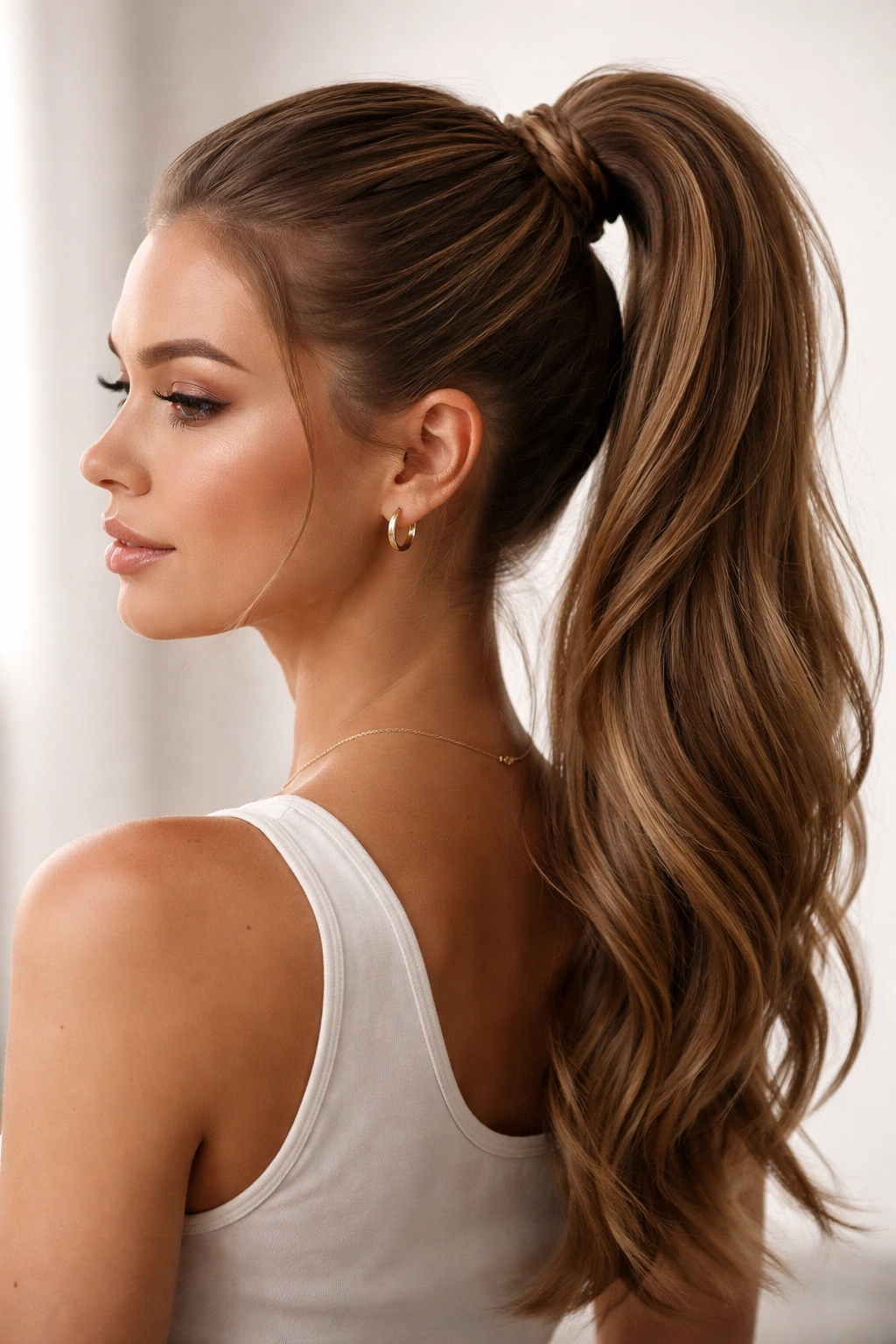
The twisted high ponytail adds a subtle element of visual interest and texture while maintaining the clean, pulled-back line of a traditional high ponytail. Two or three twisted sections spiral around the base of the ponytail, creating a sophisticated detail that looks more intentional and effort-forward than it actually is. It’s the perfect style for anyone who wants something slightly dressier than a basic ponytail but doesn’t have time for elaborate braiding.
Creating the Twists
Gather your hair into a high ponytail and secure it loosely with a clip rather than an elastic. Take a quarter-inch section from one side of your hairline, twist it tightly as you move toward the back of your head, and incorporate it into the ponytail base, securing it with a bobby pin. Repeat with a section from the other side, and optionally add a third twist from the center back if you want more detail. Now secure the entire ponytail with an elastic, then wrap a small section around the base to conceal it.
Perfecting the Visual
The twists should look polished but not stiff. After twisting each section, gently loosen it slightly with your fingertips—this relaxes the twist just enough to look deliberate and beautiful rather than overly constructed. A light smoothing product on the twists helps them catch light and look intentional rather than accidental.
Wearing Situations
This style reads as effortlessly polished, making it perfect for professional settings, casual dates, social events where you want to look put-together without appearing like you spent hours styling, and any occasion where you want a classic high ponytail but with subtle personality.
Pro tip: Twisted sections tend to slip if your hair is very slippery or fine. Use a light texturizing spray on the hair before twisting to increase grip and help everything stay in place.
6. Braided High Ponytail
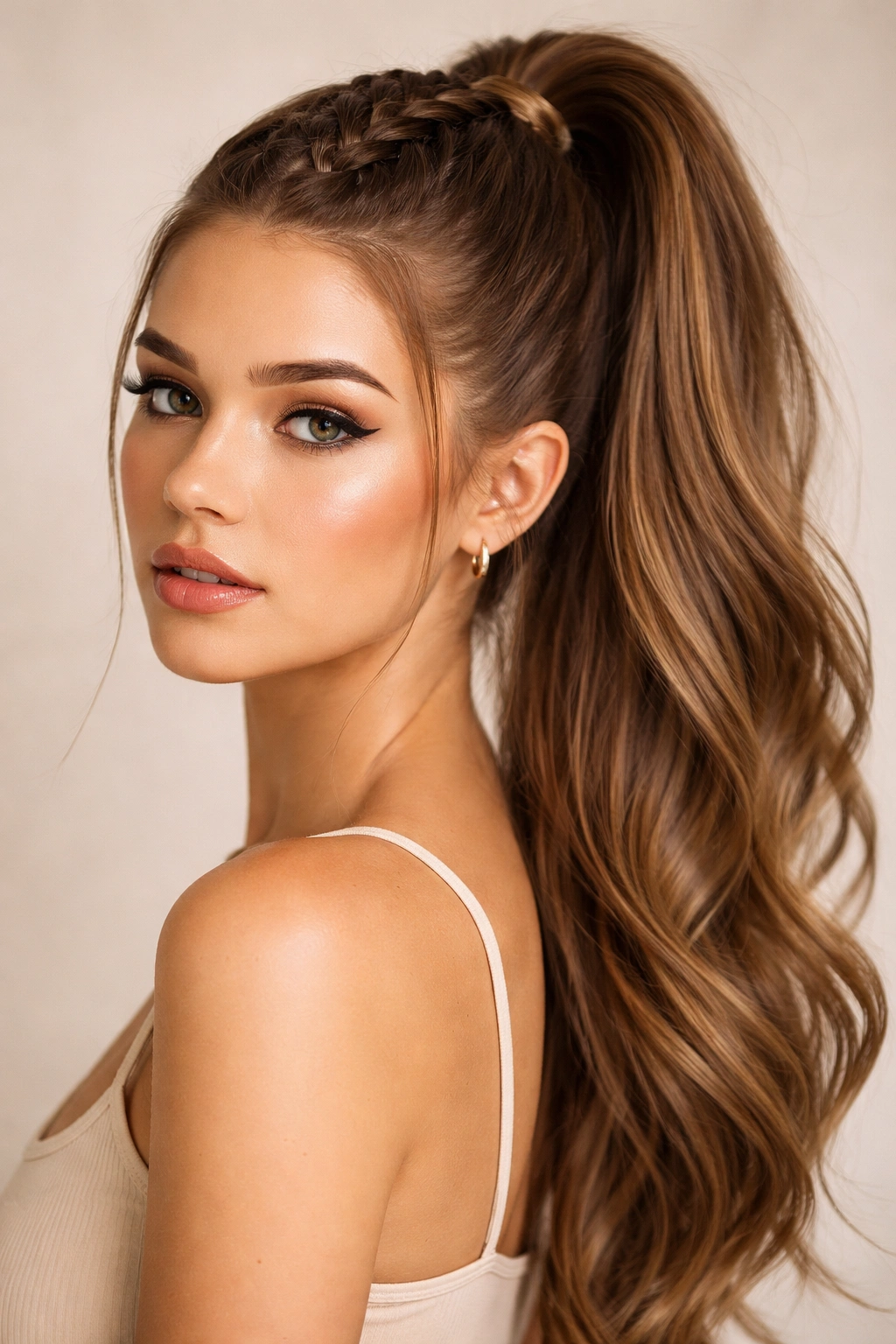
The braided high ponytail combines the elegance of a braid with the modern simplicity of a high ponytail. A three-strand braid runs from the crown down into the ponytail base, then the entire length of hair flows free below. The braid adds texture, visual interest, and a sense of effort that makes the style feel special without requiring extreme technical skill.
The Two-Approach Method
You can create this style two ways: braid first, then ponytail, or ponytail first, then braid the base. The braid-first approach means creating a loose three-strand braid starting at your crown and running down to about mid-back, then gathering the braid and the remaining loose hair into a high ponytail and securing. The ponytail-first approach means creating a high ponytail, then incorporating a braid around the base where the elastic sits.
Which Approach to Choose
If you have very thick hair, the braid-first approach creates a smoother ponytail base. If you’re working with medium density or fine hair, the ponytail-first approach where you braid just around the base looks more polished and less bulky. Experiment with both to see which works better with your specific hair texture and volume.
Occasions for Braided Ponytails
Casual summer events, outdoor activities where you want something beautiful but secure, any occasion where you want to look intentional and creative, and dates where you want to show effort without appearing overdone. This style works beautifully at weddings, garden parties, festivals, and casual celebrations.
Insider note: Braids loosen throughout the day as you move and sleep. If you’re wearing this style for more than a few hours, secure the braid with bobby pins tucked invisibly throughout, or use a light hairspray to set the braid before incorporating it into your ponytail.
7. High Ponytail with Undercut Detail
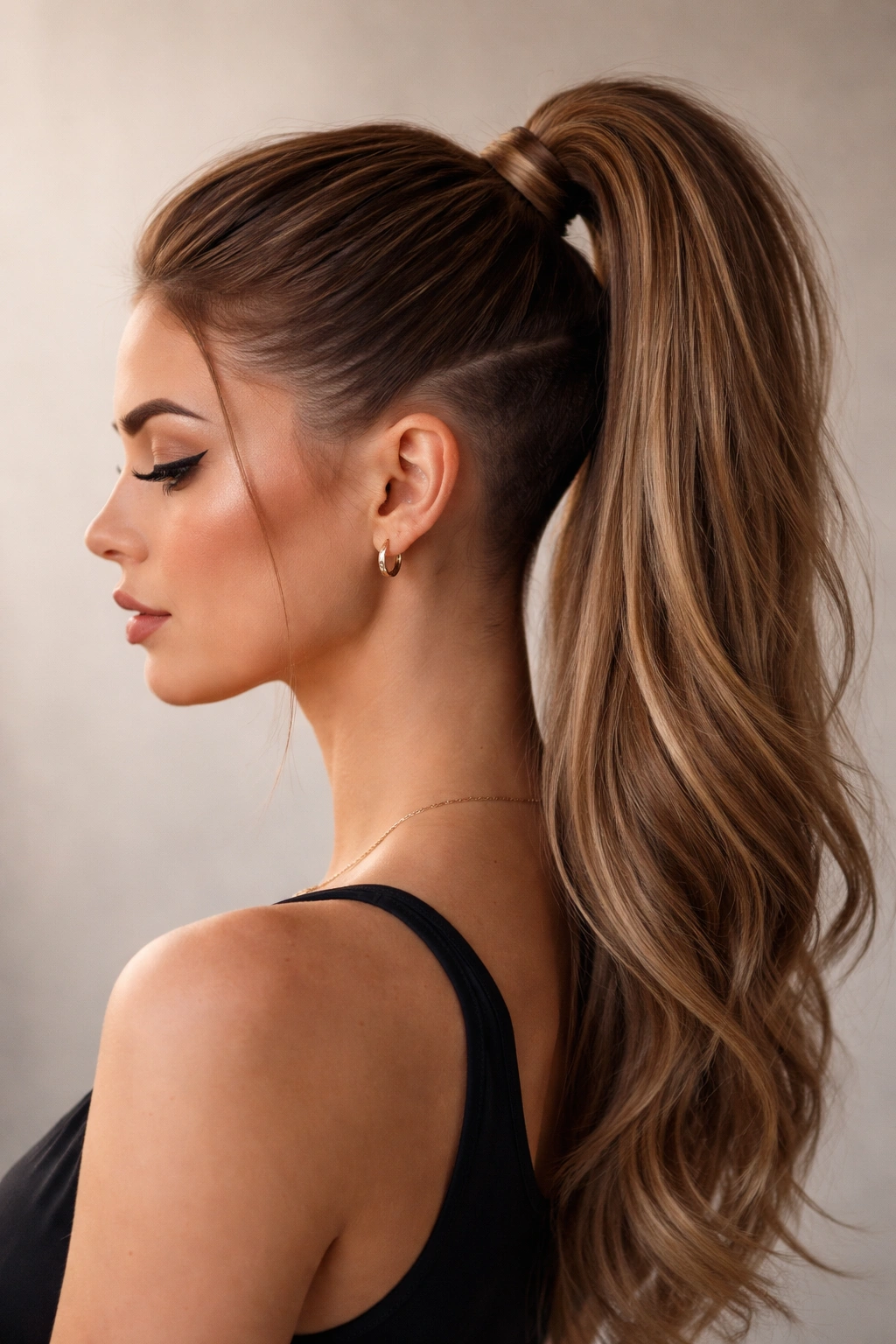
An undercut detail in a high ponytail is a small, architectural accent that elevates the entire style. The undercut—a clean section of hair tucked underneath the ponytail base rather than wrapped on top—creates visual dimension and an almost sculptural quality. It’s an advanced styling technique that looks far more complicated than it actually is.
Creating the Undercut Detail
Create your high ponytail as usual, but before securing, take a small section (about an inch wide) from the lower part of the gathered hair and fold it underneath the rest of the ponytail. Secure the entire ponytail with an elastic, making sure the undercut section stays neatly folded beneath. Now take your usual concealing section from the top of the ponytail and wrap it around the elastic, pinning it in place. The undercut piece stays visible underneath, creating a clean architectural line.
Why This Works Visually
The undercut creates shadow and dimension at the base of the ponytail, making it look three-dimensional rather than flat. It’s a subtle detail, but it completely changes the visual weight and sophistication of the style. The eye reads it as intentional and modern, even though most people won’t consciously register what’s creating that impression.
When to Wear It
Any situation where you want to look contemporary and thoughtfully styled, professional settings where you want polish with personality, creative fields where you can take more styling risks, and any time you’re going out and want a hairstyle that shows you took real effort to look good.
Worth knowing: The undercut works best with hair that has enough density to create visible dimension. If your hair is very fine, the undercut might not be visible enough to justify the extra styling steps.
8. Textured High Ponytail
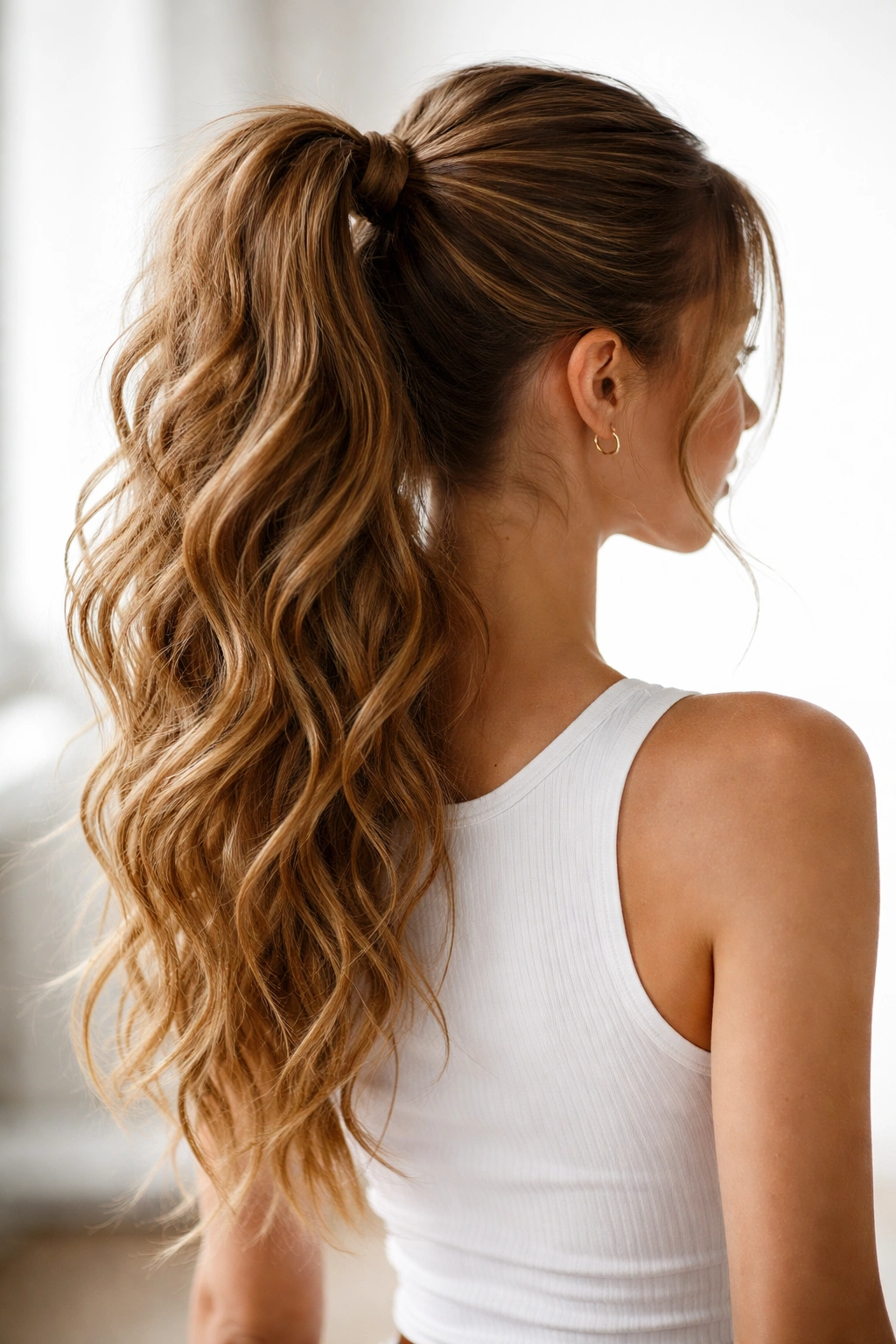
The textured high ponytail is all about movement, dimension, and a deliberately undone quality. Rather than sleek or polished, this style embraces waves, curls, and a tousled appearance that reads as effortlessly glamorous. For long hair, texture creates real visual impact and movement, making the style feel alive and dynamic.
Creating Texture Before Ponytailing
Start by creating texture throughout your hair—curl with a wand, braid your damp hair overnight, or use a texturizing spray on dry hair. The texture doesn’t need to be perfect waves; slightly irregular texture actually looks better. Once your hair has texture, gather it into a high ponytail, securing loosely enough that the texture doesn’t completely collapse and flatten. Use an elastic that won’t create a visible crease, or wrap a hair tie made of the same fabric as your hair.
Enhancing and Maintaining the Texture
After securing, apply a texturizing spray or dry shampoo to the entire ponytail to enhance the texture and add grip. Scrunch gently with your fingers to activate the product and separate the waves. Run your fingers through the ponytail from root to tip to break up clumps and encourage movement. The result should feel like your hair has been tousled by the wind, not styled in a controlled way.
Perfect Scenarios
Weekend plans, casual dates, brunch with friends, any social event with a relaxed vibe, festivals, outdoor events, and any time you want to look beautiful without appearing like you spent hours styling. This style pairs beautifully with minimal makeup and casual clothing.
Real talk: Textured ponytails show frizz and flyaways more readily than sleek styles. If you’re in a humid environment or will be moving around a lot, use a light hairspray before and after styling to help the texture hold and minimize frizz.
9. High Ponytail with Wrap Detail
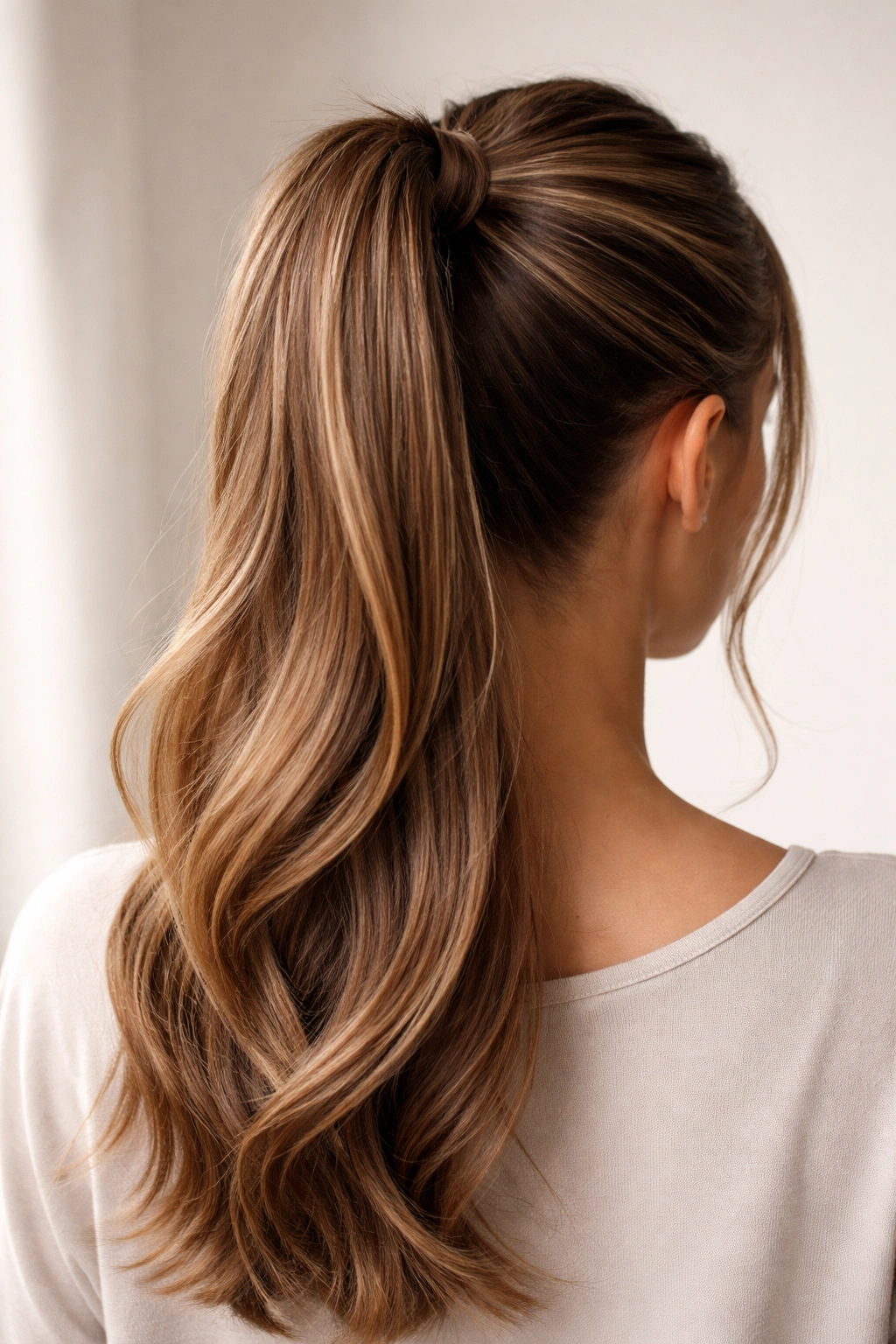
A wrapped-base ponytail takes a simple high ponytail and adds a deliberate, decorative element at the elasticized base. Rather than using a simple strand of hair to conceal the elastic, you’re wrapping a thicker section that becomes a visible design feature. This can be hair in a contrasting color, a ribbon, yarn, or leather cord, creating instant visual impact and personality.
The Hair-Wrap Technique
After creating your high ponytail and securing it with an elastic, take a section of hair about one inch wide from the top of the ponytail. Wrap it around the elastic tightly, going around at least twice, and secure with a bobby pin inserted horizontally underneath so it’s completely hidden. The wrapped section should look neat and intentional, with smooth edges and even tension.
Beyond Hair Wraps
You can also use a ribbon, thin leather cord, or decorative string instead of hair. Thread the ribbon through the base of the ponytail horizontally, then wrap it around, tying a small knot or bow underneath. This adds color and personality that transforms the entire style. A metallic ribbon creates a night-out vibe; a leather cord creates an edgier aesthetic; a silk ribbon adds romance and femininity.
When to Feature This Detail
Any occasion where you want a signature style element, creative professional environments, fashion-forward events, dates where you want to show personality through styling choices, and any time you’re working with a specific color palette and want your hair to complement it.
Styling Variation
For a more elaborate wrap, use a thicker section and braid it before wrapping around the base. This creates a braided collar effect that reads as more sophisticated and constructed.
10. Slicked-Back High Ponytail
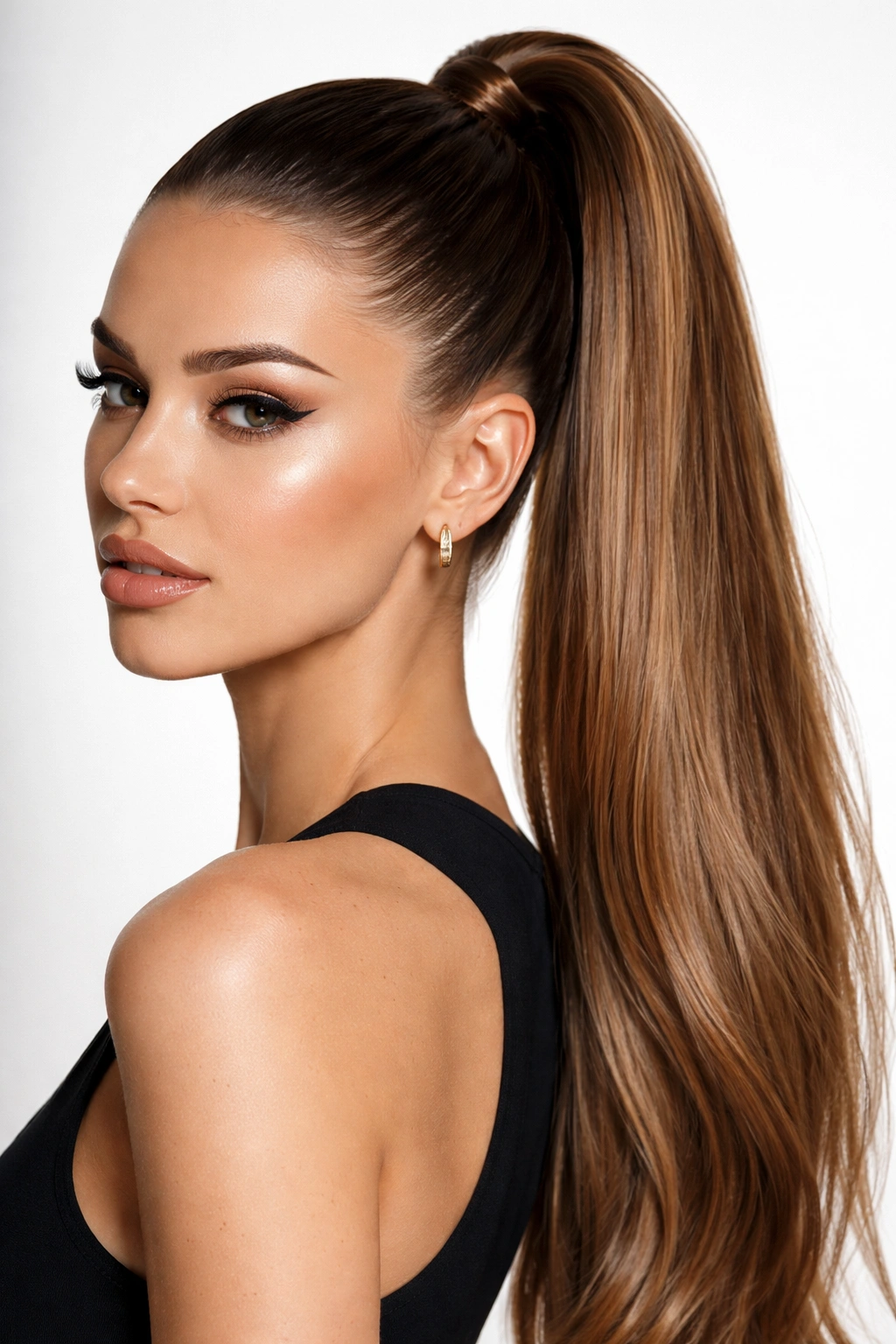
The slicked-back high ponytail is the most severe and dramatic interpretation of the style. Every hair is secured firmly in place, with no softening elements or texture. The hairline is completely exposed, the scalp is smooth, and the ponytail itself is sleek and defined. It’s a bold look that requires confidence and excellent hair health, but the payoff is undeniably striking.
Achieving Genuine Slickness
Start with dry hair and apply a heavy-hold gel or smoothing product to your hairline and the entire area you’re pulling back. Use a fine-toothed comb to smooth every section, working methodically from your forehead backward. Gather the hair into your hands and secure with a sturdy elastic. Use additional gel on the hairline to tame any flyaways, applying it with a small brush for precision. The result should look almost wet, with every hair lying flat and the scalp clearly visible.
The Psychological Impact
A slicked-back high ponytail reads as confident, modern, and sometimes confrontational. It requires you to own your face, your bone structure, and your presence. If you have a strong jawline, prominent cheekbones, or features you love, this style puts them front and center. If you’re self-conscious about your face shape, this isn’t the style for you—it asks you to be seen completely.
When This Works Best
Creative fields and fashion industries where you can express a strong personal style, contemporary art scenes, any setting where boldness is appreciated, personal styling choices when you want to feel powerful and present, and occasions where you want a truly memorable look.
Important note: Slicked-back styles create tension on your hairline if worn too frequently or too tightly. Reserve this style for occasions rather than daily wear, and never secure so tightly that you feel pulling or tension at your hairline.
11. Messy High Ponytail
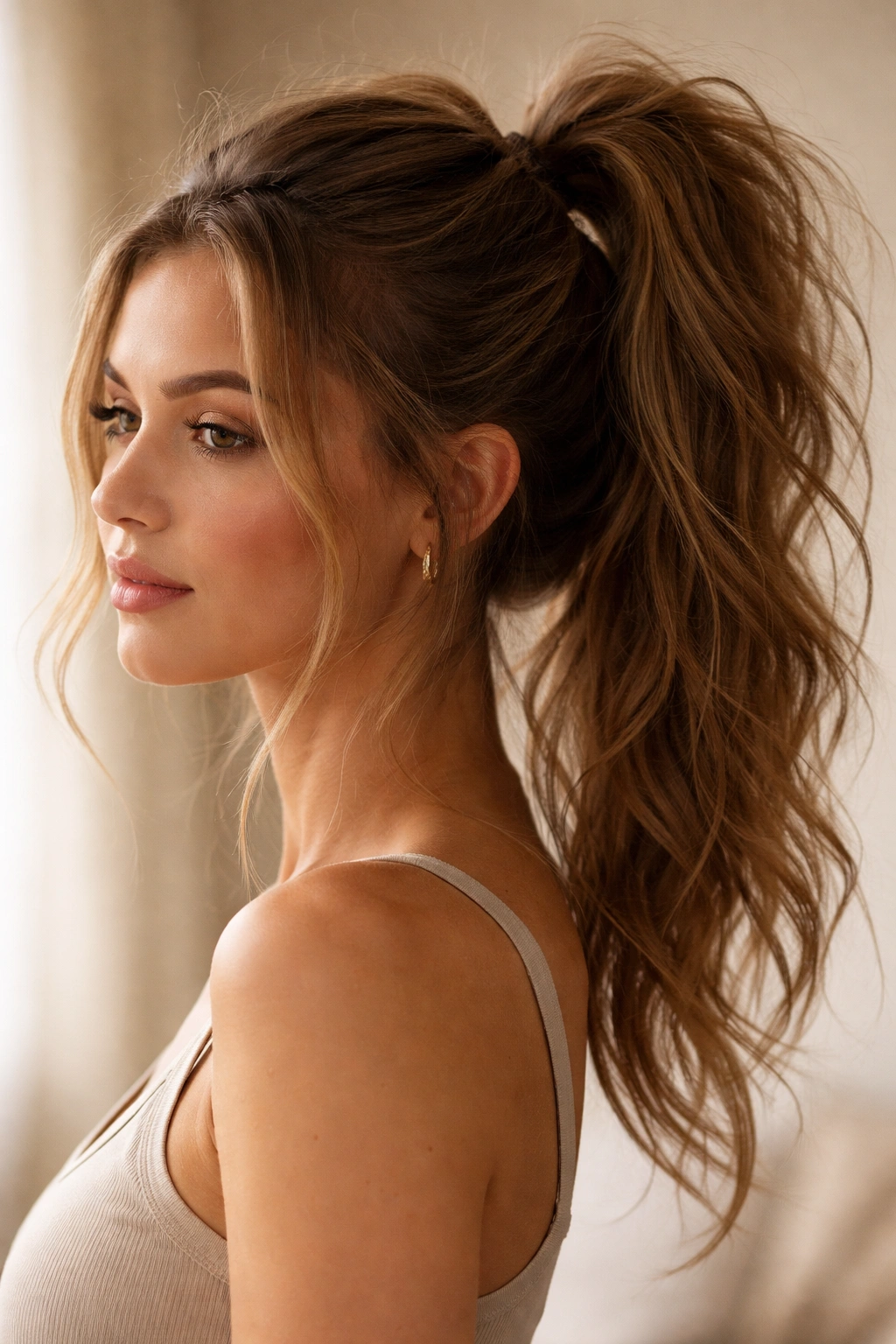
The messy high ponytail is the anti-slicked-back style. Intentionally undone, with pieces escaping, texture irregular, and the overall aesthetic deliberately casual. Despite appearing effortless, a genuinely good messy high ponytail actually requires more styling skill than a sleek one, because you’re creating the appearance of accidental beauty through deliberate technique.
Building the Mess Strategically
Start by teasing the crown area to create volume, then gather your hair into a high ponytail, but not pulled completely taut—allow slight looseness so the ponytail has movement. After securing, pull small sections out from around the ponytail base to create a slightly disheveled appearance. These shouldn’t look like hair escaping; they should look intentionally placed. Create texture throughout the ponytail with a texturizing spray, then scrunch to enhance the waves.
The Flyaway Question
With a messy ponytail, a few strategic flyaways actually enhance the aesthetic rather than detract from it. However, you still want to control them somewhat. Use a light hold hairspray rather than a heavy one, applying it from about six inches away rather than directly to create a diffused, natural setting rather than a shellacked appearance.
Ideal Wearing Situations
Low-key date scenarios, weekend casual outings, running errands when you want to look effortlessly cute, creative work environments with relaxed dress codes, social events with a laid-back vibe, and any time you want to signal that you’re not trying too hard while still obviously putting in effort.
Pro tip: This style looks most intentional when you’re wearing relaxed, casual clothing. Pair it with fitted or structured clothes and it reads as messy in the wrong way; pair it with relaxed, organic pieces and it reads as beautiful and unbothered.
12. Half-Up High Ponytail Hybrid
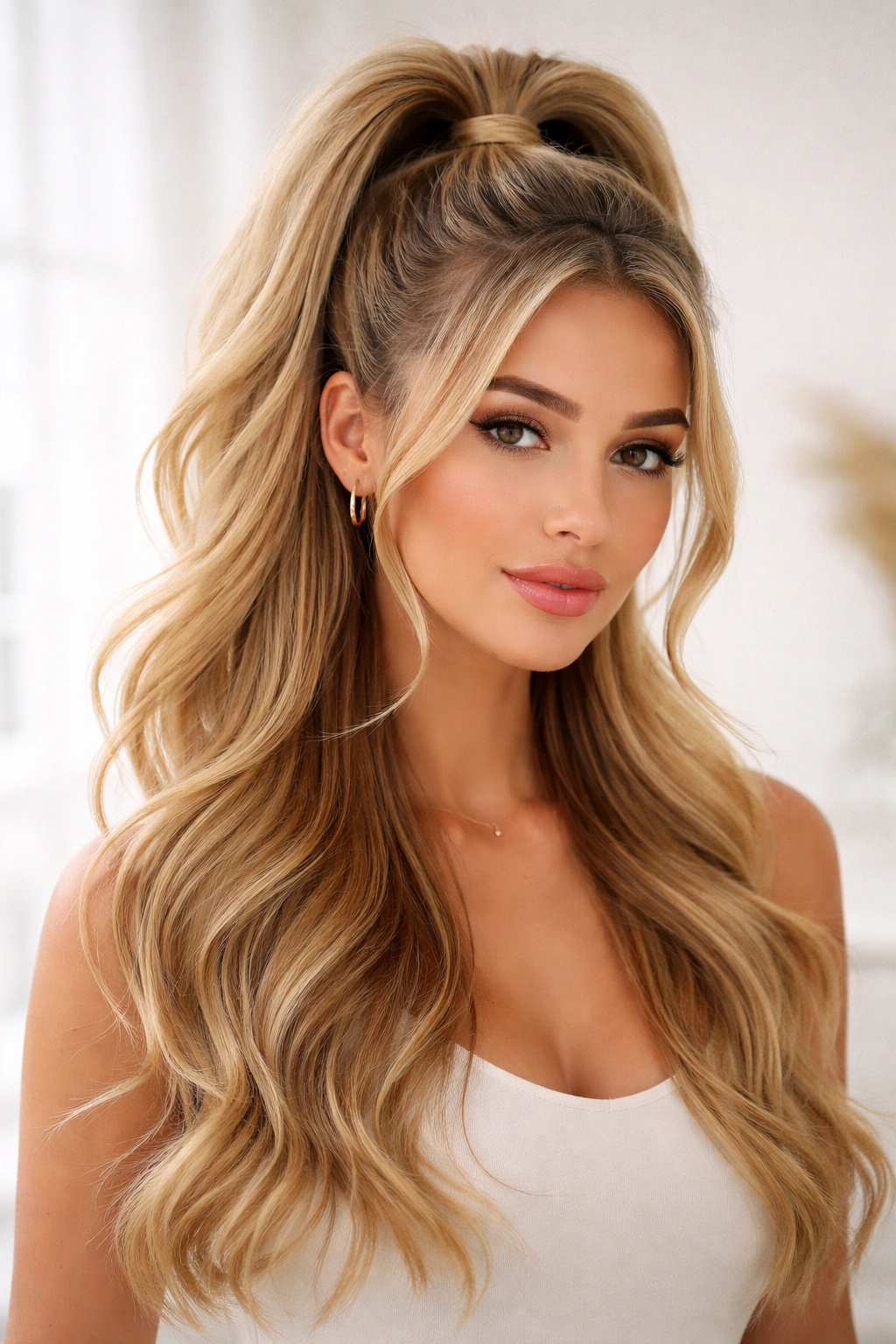
The half-up high ponytail hybrid bridges the gap between a fully pulled-back high ponytail and hair worn down. The top half of your hair is gathered into a high ponytail, while the bottom half flows free, creating a style that’s elevated and polished while still maintaining softness and movement. It’s arguably the most universally flattering of all the variations.
Creating the Division
Identify the point where you want the division to occur—typically around ear level or slightly higher for a half-up that reads as clearly half-up rather than a full ponytail with loose underpinnings. Take all the hair above this line and create a high ponytail as usual, securing it with an elastic and wrapping the base to conceal the elastic. The bottom half stays completely down, worn straight, textured, or however you prefer.
The Visual Magic
The half-up hybrid gives you the best of both worlds: the polished, put-together appearance of a high ponytail with the softening, romantic quality of loose hair. It flatters face shapes by framing the face with loose pieces while pulling the crown back to elongate, and it works with almost any face shape or hair texture. The style reads as effortfully beautiful without looking constructed.
When to Wear It
Professional settings where you want polish but not severity, casual dates where you want to look beautiful and approachable, work events where you need your hair secured but want a softer aesthetic, any occasion where you’re unsure whether fully pulled back is right, and literally any time you want a gorgeous, universally flattering high ponytail variation.
Styling the Loose Sections
You can wear the loose bottom section completely straight, add waves or curls for dimension, braid it for a romantic twist, or leave it tousled and textured. The loose section is your opportunity to add personality and adapt the style to your specific aesthetic.
Worth noting: This style requires medium to thick hair to look balanced. If your hair is fine, a half-up ponytail can appear sparse and unbalanced rather than romantic and full.
Final Thoughts
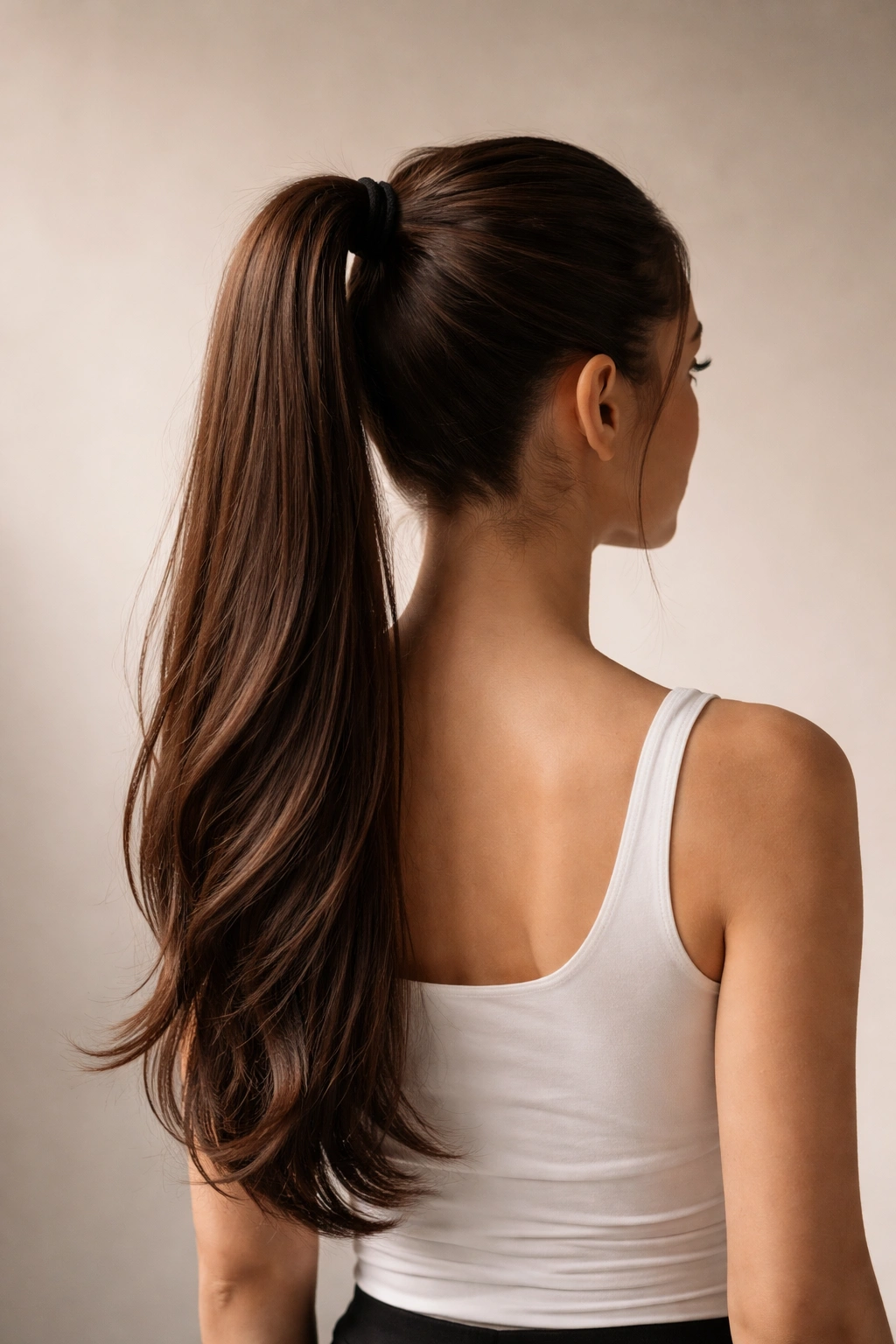
A high ponytail isn’t a one-size-fits-all situation, and that’s exactly what makes the style so valuable. Whether you’re navigating a professional day and need something sleek and polished, heading into a casual weekend and want something textured and effortless, or standing in front of your mirror wondering how to turn your hair into a styling statement—there’s a high ponytail variation on this list that’s made for exactly that situation.
The foundation skill is the same across every version: knowing how to gather your hair, secure it properly without creating tension, and conceal your elastic cleanly. From there, it’s all about intentional additions—texture, twists, braids, face-framers, or undercut details that transform a basic ponytail into something with personality and presence.
Long hair is genuinely a superpower when it comes to ponytail versatility. You’ve got the length to experiment, the volume potential to create drama, and enough surface area to add intricate details without worrying about running out of hair. Spend time experimenting with these twelve approaches, and you’ll develop an intuitive sense for which high ponytail version suits your mood, your outfit, and your day. That’s when styling stops being a daily decision and becomes genuine creative expression.
