



Double ponytails are the perfect hairstyle for natural hair, offering versatility, styling options, and a way to keep curls, coils, and textured strands beautifully contained while still showing off your volume and character. Whether you’re looking for something sleek and polished, playful and fun, or protective and practical, double ponytails deliver exactly what you need. The beauty of wearing two separate ponytails is that they work with every curl pattern—from loose waves to tight coils—and you can customize the height, thickness, and positioning to match your mood, your outfit, or what your hair is actually doing on any given day.
What makes double ponytails especially valuable for natural hair care is their balance. They’re less damaging than some protective styles because the ponytails themselves don’t require constant tension or weeks of commitment, yet they still give you that polished, intentional look that makes you feel put-together. You can refresh them daily without having to restyle your entire head, adjust them if one feels loose, and take them down whenever you want without any real consequences. They also work brilliantly for transitioning styles—when your hair is somewhere between wash day volume and needing a refresh, double ponytails keep everything neat and coordinated.
The best part? Double ponytails work equally well whether you’re heading to the gym, the office, a casual hangout, or somewhere you want to make a real style statement. You get to control the narrative—make them sporty and minimal, dress them up with accessories, create dimension with braiding or twisting, or keep them simple and classic. From high-energy space buns to sophisticated low ponytails with defined edges, the styling options across this one simple concept are genuinely endless.
1. High Double Ponytails with Voluminous Curls
High double ponytails sit at the crown, emphasizing length and creating instant height that flatters your face and makes a bold statement. Place one ponytail directly at the top-center of your head and divide the space evenly to create two symmetrical sections, fastening each with a covered elastic band (avoid metal clips which can snag curls). The key to making high ponytails work beautifully with natural hair is starting with properly moisturized, defined curls that have some structure—freshly washed hair with leave-in conditioner applied while damp works perfectly.
Why This Works for Natural Hair
High ponytails show off the length and movement of your curls while keeping them completely out of your face and off your neck. This positioning works especially well for people with dense, voluminous curls that tend to expand outward throughout the day—the ponytails channel that volume upward and backward instead, creating a lifted, intentional shape. The style also distributes tension evenly across your scalp since you’re splitting the weight between two ponytails rather than concentrating everything into one.
How to Style for Maximum Impact
- Moisturize your natural hair thoroughly with a curl-defining cream or mousse before styling
- Use a wide-tooth comb or fingers to gently gather hair into two clean sections without disturbing curl pattern
- Secure with elastic bands positioned slightly apart for visual balance
- Fluff and separate curls at the base of each ponytail for dimension and to minimize that gathered appearance
- Pin down flyaways with a light hold gel to create sharper edges while keeping curls soft
Pro tip: If your curls feel a bit loose or undefined on styling day, gently scrunch a bit of curl gel into each ponytail section before fastening—this redefines the curl pattern and adds hold without creating crunchiness.
2. Low Double Ponytails with Twisted Details
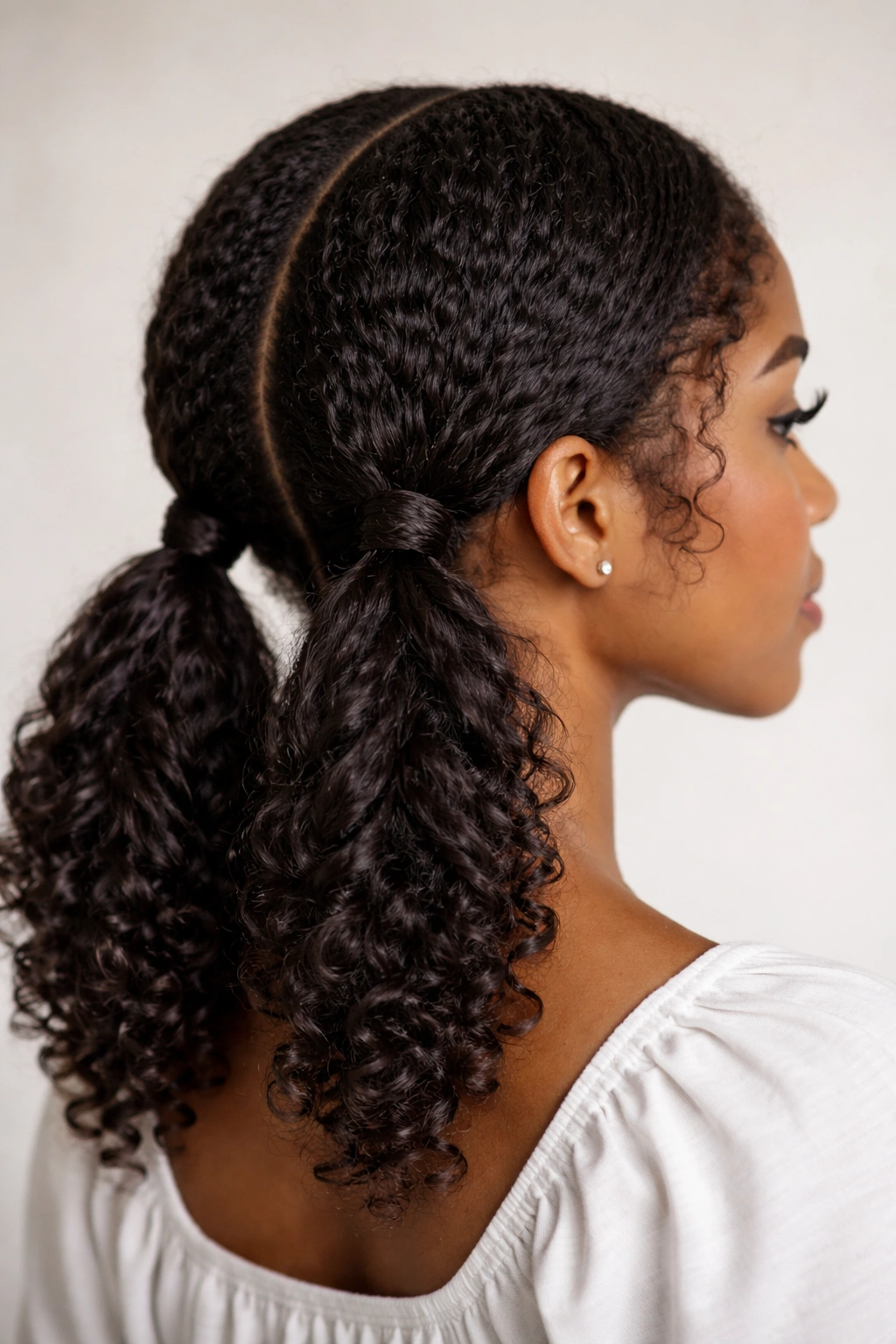
Low double ponytails sit at the nape of your neck, creating an elegant, understated aesthetic that reads polished for professional settings while still being completely wearable for everyday life. Start by parting your hair down the middle from your hairline to the nape of your neck, then twist each section gently as you work downward, creating a subtle spiral texture before securing into a low ponytail on each side. This twisting technique adds visual interest and helps contain natural texture without requiring braiding skills.
Why Twisted Details Elevate the Style
Twisting each section before securing creates a more refined silhouette than a basic straight ponytail, and it’s genuinely easier than braiding once you get the hand-feel down. The twist catches and controls frizz naturally, helps define curls, and creates a polished edge that photographs beautifully. For natural hair specifically, this technique also helps prevent that “gathered” look because the twist distributes the hair visually along the length instead of creating a dense cluster at the base.
Step-by-Step Styling Guide
- Divide hair evenly down the center with a rattail comb, creating two clean sections
- Starting at the roots of the first section, twist the hair gently moving downward toward the nape
- Add small sections as you twist if needed to create a fuller, more defined twist
- Secure the twisted section into a low ponytail with a smooth elastic band
- Repeat on the opposite side, making sure both twists mirror each other for balanced appearance
- Release a few face-framing pieces if desired for softness
Styling insight: Slightly damp hair twists more smoothly than completely dry hair—if you’re styling a few hours after wash day, lightly mist your hair with a hydrating spray before twisting to make the process easier.
3. Space Buns with Defined Coils
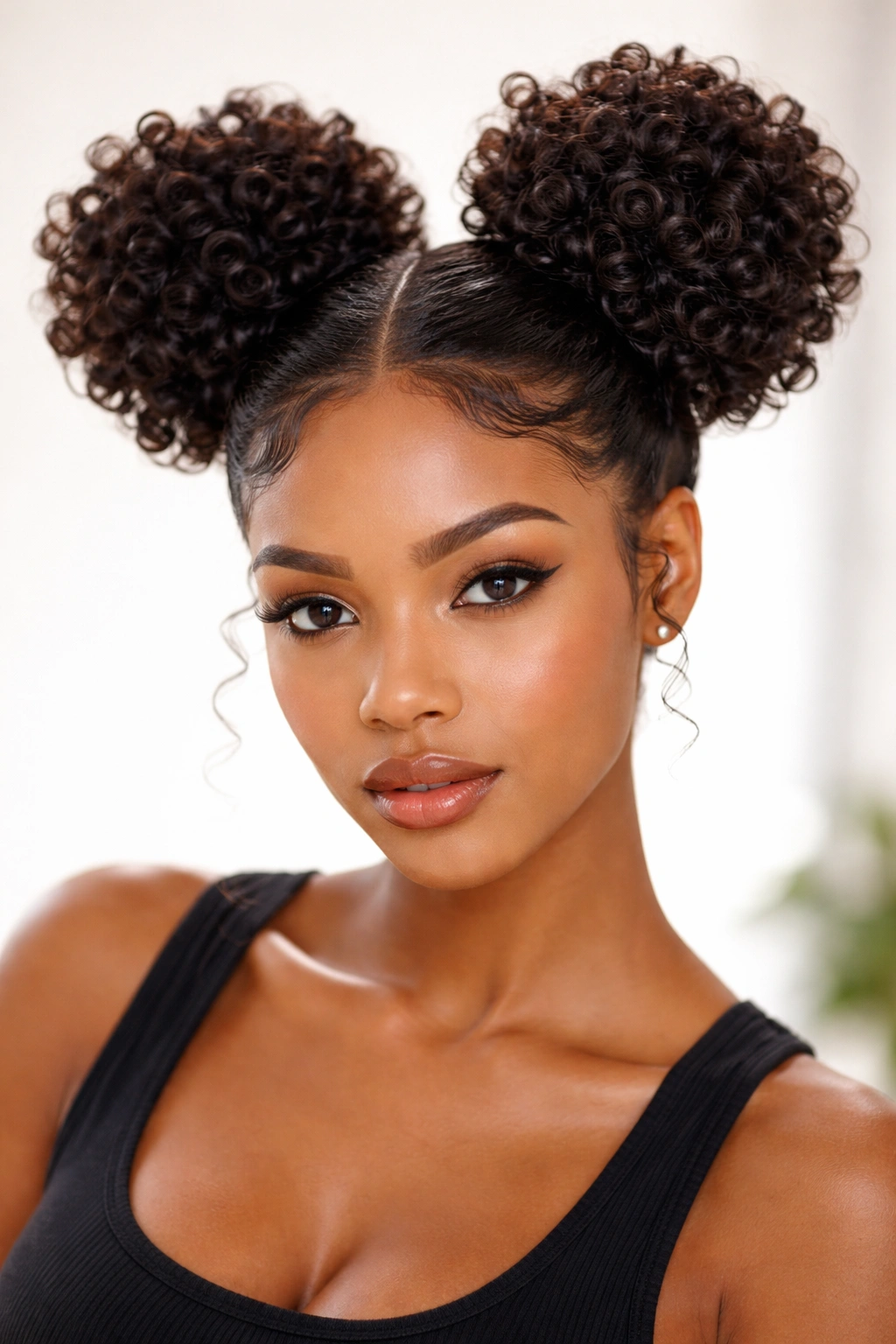
Space buns are the playful, unapologetically bold version of double ponytails—two buns positioned high on your head with space between them, perfect for showcasing thick, defined coils. This style is pure fun and works beautifully with tightly coiled natural hair that has real structure and shape. Gather each half into a high ponytail, then wrap the ponytail around the base of the elastic band to create a bun, securing with bobby pins that match your hair color for invisibility.
What Makes Space Buns Work for Textured Hair
Space buns actually complement thick, coily natural hair beautifully because the buns have enough visual weight and dimension to look intentional and structured rather than thin or sparse. The exposed scalp between the buns creates a striking visual contrast that draws attention to your hair’s texture and thickness. Since the style positions curls up and away from your shoulders, it’s also great for heat and moisture relief on warmer days, and it distributes the weight away from the back of your neck.
Creating Fuller, More Intentional-Looking Buns
- Apply a light defining gel or edge control to smooth away flyaways without stiffening curls
- Divide hair into two even sections and secure each into a high ponytail
- Take the ponytail and begin wrapping it around the elastic band’s base in a clockwise direction
- Keep wrapping until the entire ponytail is coiled, creating a bun shape
- Secure with bobby pins inserted into the base and body of the bun, not just the edges
- Gently tug and separate curls slightly to create a fuller, fluffier appearance
Key consideration: Don’t pull too tightly when wrapping the ponytail into a bun—natural hair is more delicate than straight hair, and excessive tension can cause breakage at the hairline and crown.
4. Mid-Height Double Ponytails with Side Parts
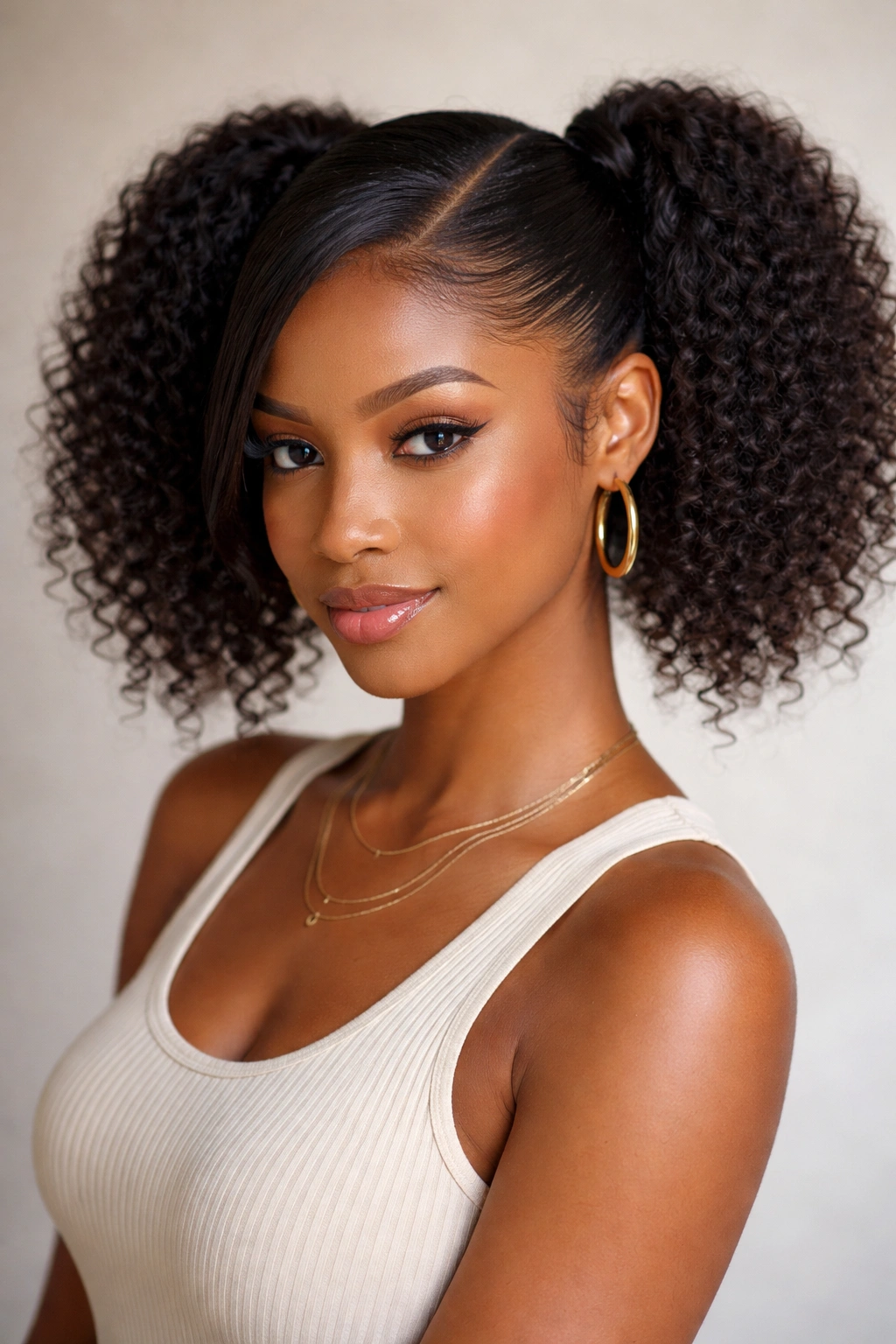
Mid-height ponytails positioned with a deep side part create an asymmetrical sophistication that works for nearly every occasion. Start with a pronounced side part, gathering more hair on one side than the other, then create two ponytails at roughly mid-scalp height. This positioning sits between casual and polished, and the side part adds dimension and movement that pure center-part styles sometimes miss. The result feels effortlessly styled rather than rigidly structured.
Why Side-Parted Double Ponytails Offer Maximum Versatility
The side part immediately makes a hairstyle feel more intentional and flattering—it works with almost every face shape and adds visual interest without requiring extra styling time. The mid-height positioning is the sweet spot for most situations: high enough to feel energetic and youthful, but low enough to feel wearable for work settings or more formal occasions. This height also works well for natural hair of all densities because you get good volume from your curls without them becoming overwhelming.
Creating a Balanced Side-Parted Look
- Start with a deep side part, angling from the crown toward the temple
- Gather the larger section into a ponytail at mid-scalp height, securing firmly
- Take the smaller section and create a matching ponytail, positioning it close to the first one for visual cohesion
- Use a rattail comb to smooth the part and define the line clearly
- Apply a light edge control along the part line for a crisp, polished appearance
- Gently fluff curls at the base of each ponytail to create fullness and soften the gathered appearance
Styling flexibility: This style works beautifully with slightly textured, second-day hair that has some wave or slight definition already present—you don’t need freshly washed, perfectly defined curls for this to look intentional.
5. Protective Low Ponytails with Braided Wraps
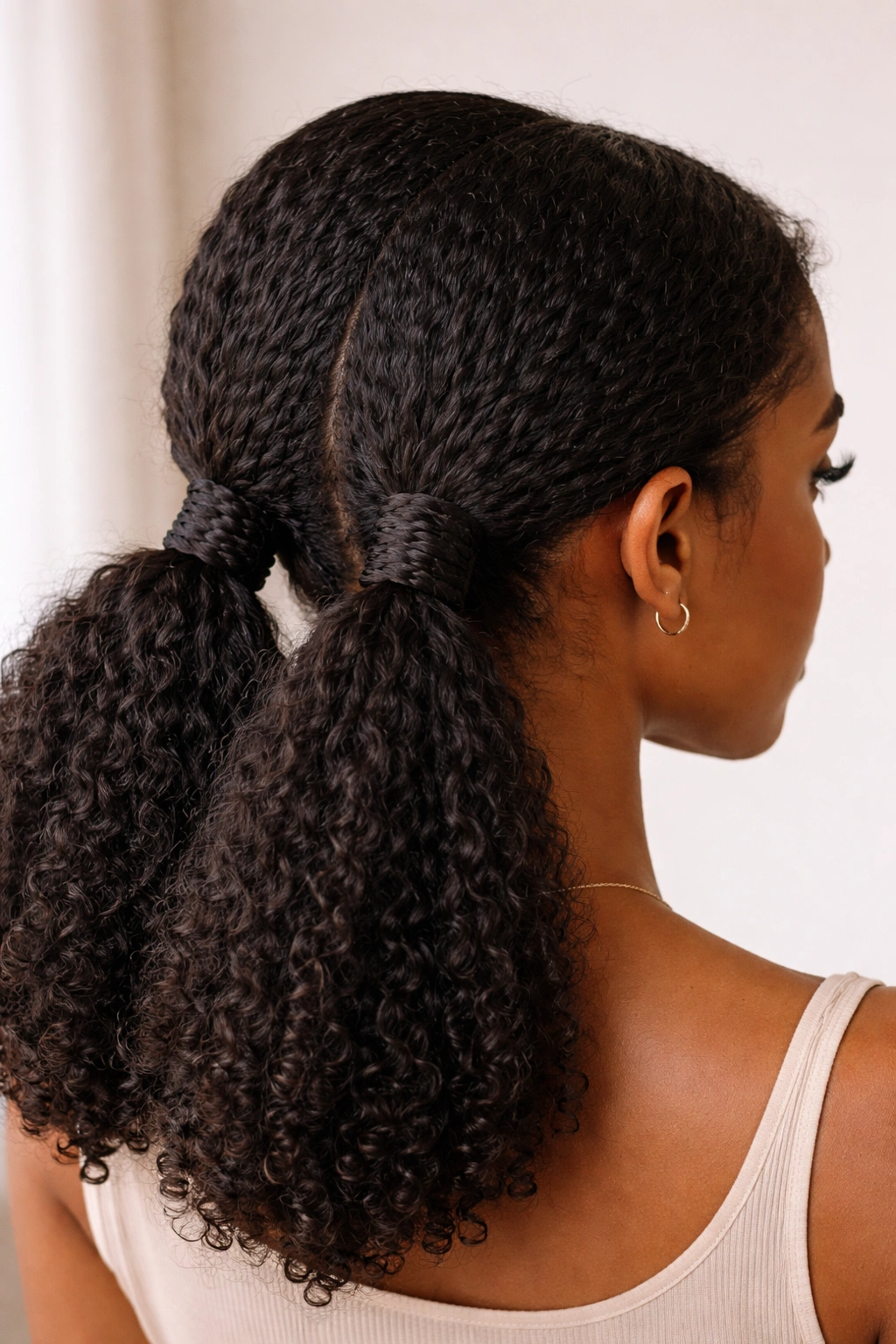
Braided wrap double ponytails combine protective styling with visual detail, creating a hairstyle that’s both functional and genuinely beautiful. Create two low ponytails, then take a small section from one ponytail and braid it, wrapping that braid around the base of the ponytail to cover the elastic band and create a polished finish. This technique works on both ponytails for symmetry or just one for an asymmetrical look, depending on your preference.
Why Braided Wraps Add Real Value to Double Ponytails
The braided wrap serves multiple purposes: it hides the elastic band completely, creating a seamless, polished look; it adds visual texture and interest through the braiding detail; and it helps keep the ponytail secure by anchoring it with the wrapped braid. For natural hair specifically, the braided wrap allows you to tuck the tail ends of the braid neatly, preventing loose strands from unraveling or becoming frizzy throughout the day. This simple addition transforms a basic ponytail into a genuinely styled look.
Detailed Technique for Braided Wraps
- Gather your hair into two low ponytails, securing with elastic bands
- Take a small, thin section from the outer edge of one ponytail (about the thickness of a marker)
- Braid this section loosely, working downward about 2-3 inches depending on ponytail thickness
- Wrap the braid around the base of the ponytail, completely covering the elastic band
- Secure the braided wrap with bobby pins inserted into both the wrap and the ponytail base
- Repeat on the second ponytail for symmetry, or leave it simple if you prefer asymmetry
Pro detail: Choose an elastic band in a color that matches your hair for the first securing step—then the braided wrap will be the visible element, making the whole style feel intentional rather than necessary.
6. Side-by-Side Double Ponytails with Accessories
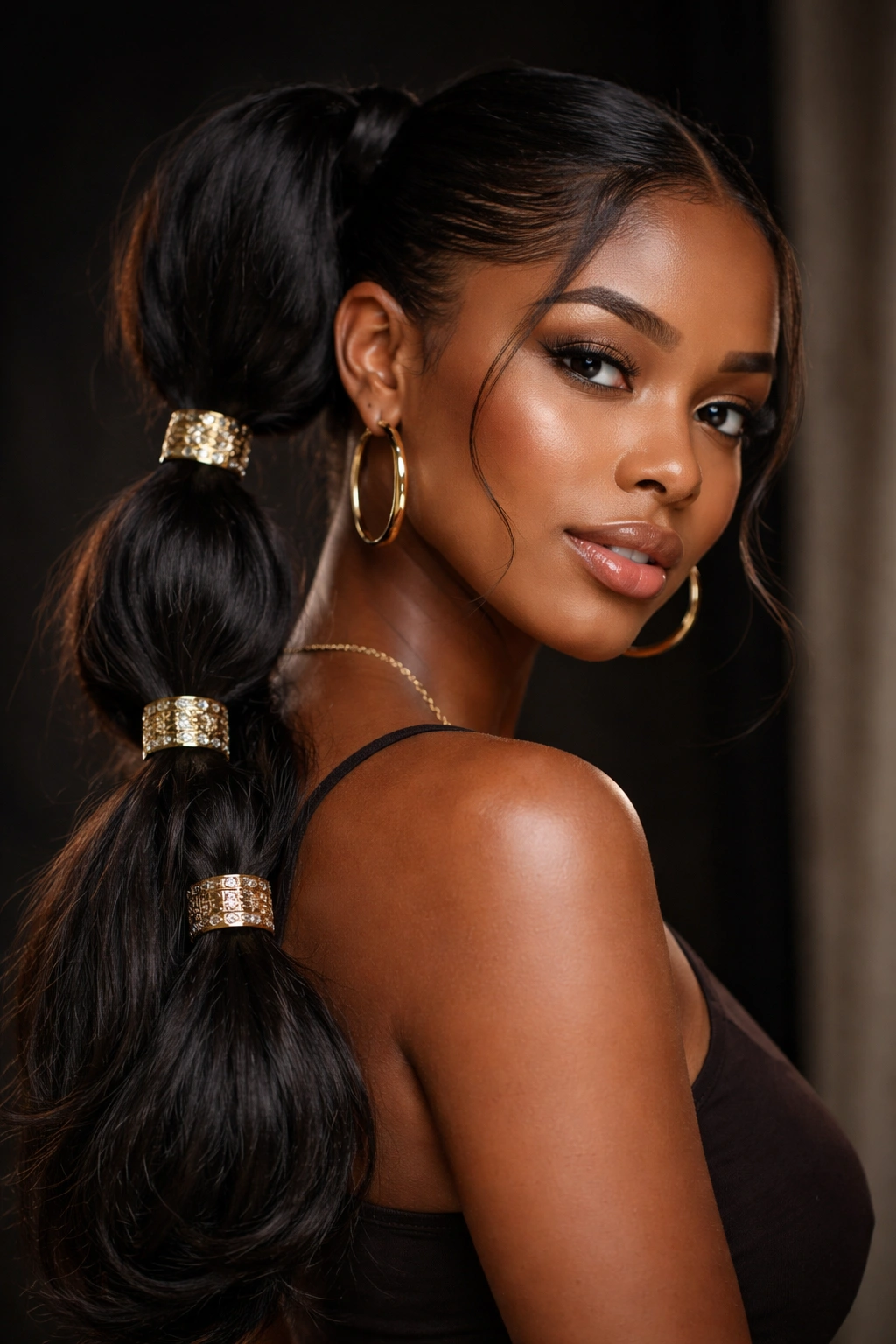
Side-by-side double ponytails positioned low and close together create an elegant, elongated line that works especially well for natural hair with length and movement. Rather than positioning them symmetrically on the left and right sides of your head, gather both sections toward one side, creating two ponytails that sit next to each other. Secure with cuffs, rings, or other hair jewelry for added visual impact that transforms a simple style into something genuinely statement-making.
How Accessories Elevate Double Ponytails
Hair jewelry, cuffs, and rings add shine, color, and intentionality to an otherwise simple style. Because you’re placing two ponytails close together, you have real visual real estate for accessories—you can use matching pieces on each ponytail for cohesion or mix metals and styles for an eclectic, modern look. The accessories also draw attention to the texture and shine of your curls, framing them beautifully. This approach takes approximately thirty seconds of extra styling but completely changes how polished and intentional the overall look feels.
Creating the Side-by-Side Effect
- Divide hair in half down the middle as you normally would
- Gather both sections toward one side of your head (typically the side the part falls toward)
- Create two ponytails positioned very close together, almost touching, on that side
- Secure each with elastic bands, then add hair cuffs, rings, or beaded cords for visual interest
- Gently separate and fluff curls to create fullness and dimension in each ponytail
- If using cuffs or jewelry, position them just below the elastic band where they’ll be most visible
Styling suggestion: This side-gathered approach works beautifully with slightly asymmetrical curl patterns or hair that naturally wants to lean toward one side—embrace it rather than fighting it.
7. Sleek High Ponytails with Sharp Edges
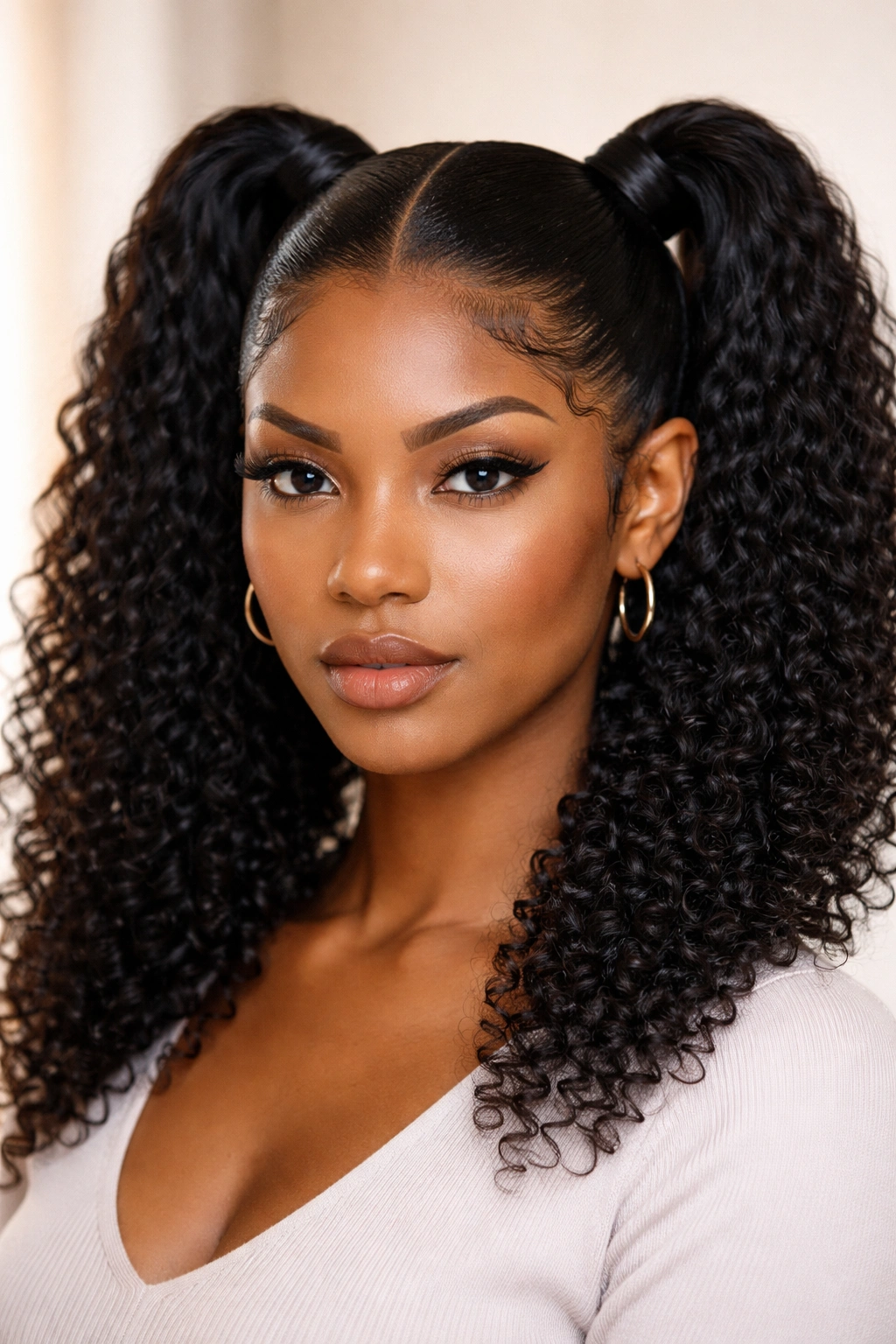
Sleek, high double ponytails with clean, polished edges read professional and intentional, perfect for work settings or anywhere you want to look completely put-together. This style requires slightly more preparation than casual ponytails, but the result is genuinely striking. Start with moisturized curls, apply edge control or a light gel to create smooth, defined edges, then gather each section high and secure tightly. The key difference from basic high ponytails is the attention to edges and the way you finish them.
Creating Polished, Sleek Edges on Curly Hair
Sleek edges can actually complement natural hair beautifully when done with the right products and techniques. The contrast between the smooth, controlled edges and the full, voluminous curls in the ponytails creates a sophisticated visual balance. Many people mistakenly think they have to compromise their natural texture to achieve sleek edges, but using curl-friendly products and techniques lets you keep your curls intact while creating sharp, professional lines.
Step-by-Step for Sleek High Ponytails
- Apply a smoothing or edge control product specifically formulated for curly hair (avoid heavy silicone-based products that leave buildup)
- Using a soft-bristled brush or toothbrush, smooth your hairline and part line in the direction you want them to lay
- Gather each section into a high ponytail, using your brush to smooth flyaways as you go
- Secure with a covered elastic band, then smooth any remaining flyaways around the band
- Apply a light, flexible-hold product to keep edges smooth without creating stiffness
- Use bobby pins to tuck any stubborn shorter pieces under the elastic band for complete smoothness
Product recommendation: Look for edge control products specifically designed for curly and textured hair—they provide hold without the heaviness or buildup that some traditional edge controls create.
8. Double Ponytails with Loose, Flowing Curls
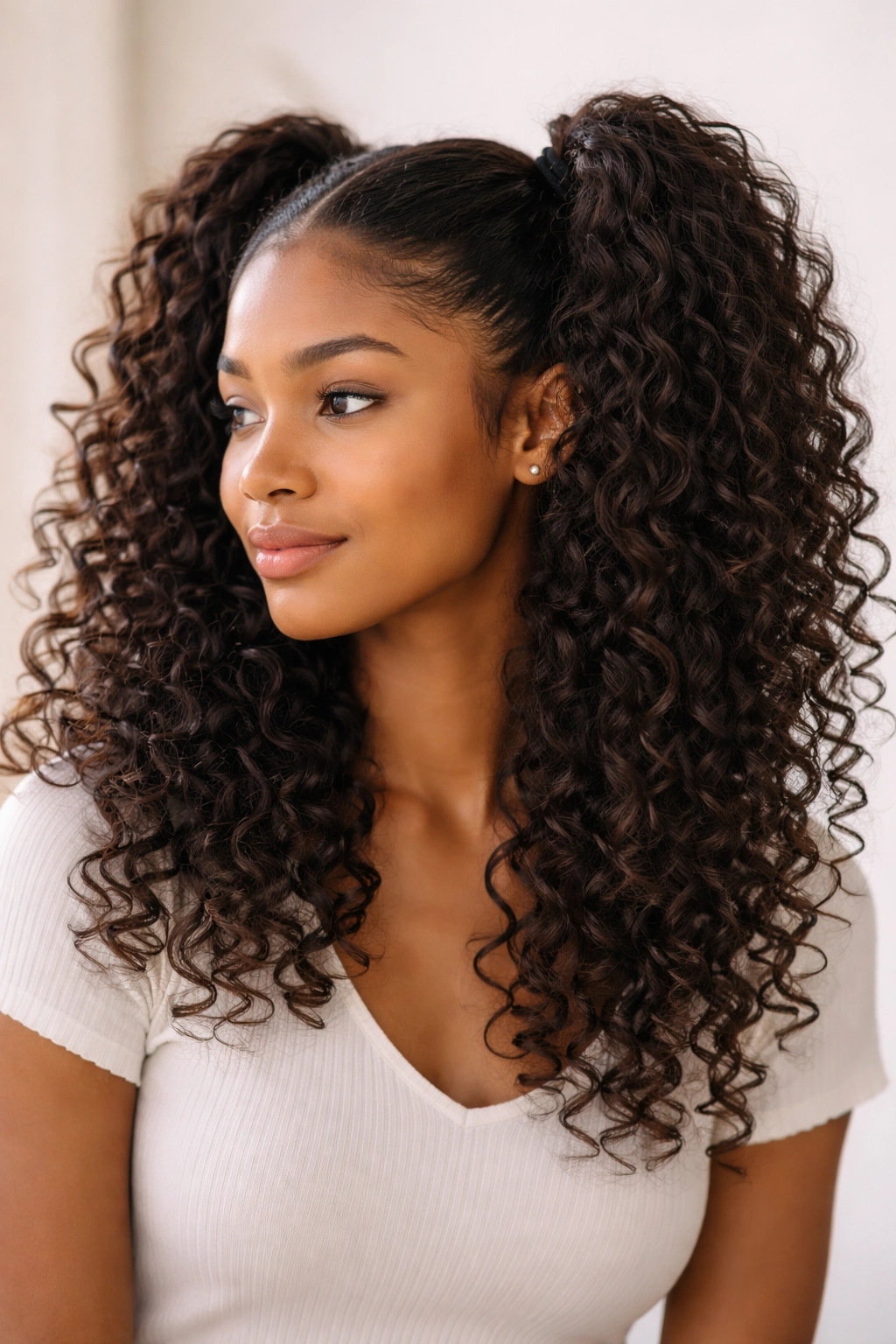
Sometimes the best styling approach is to keep things simple: two ponytails that let your natural curls shine completely, with minimal manipulation and maximum movement. Gather your hair into two basic ponytails at your preferred height, then release them almost immediately—the point is the visual boundary created by the elastic band without actually constraining your curls. This anti-style approach works beautifully for wash-day hair or when you want to show off the full, uninterrupted movement of your natural curl pattern.
Why This “Barely Styled” Approach Actually Works
There’s legitimate sophistication in keeping things minimal and letting your hair’s natural beauty do the talking. This approach celebrates your texture rather than controlling it, and it reads as effortlessly confident rather than trying too hard. The elastic bands create visual structure and definition without requiring you to subject your curls to the tension of traditional ponytails. This also works beautifully for second or third-day hair when you want to refresh your style without getting your hair wet.
Making Loose Curls Look Intentional
- Gather hair into two sections at your chosen height
- Secure with elastic bands, then immediately loosen the band slightly and gently pull curls down and away from the band
- The elastic should be snug enough to hold but loose enough that curls flow freely below it
- Separate and fluff curls throughout to create maximum dimension and movement
- Use your fingers rather than brushes to maintain curl definition
- If flyaways bother you, use a tiny amount of frizz serum on individual strands rather than applying product globally
Key insight: This style often looks best on the second or third day after washing, when your curls have had time to settle into their natural pattern and have some natural oils for shine.
9. Twisted Double Ponytails with Undercuts or Shaved Sides
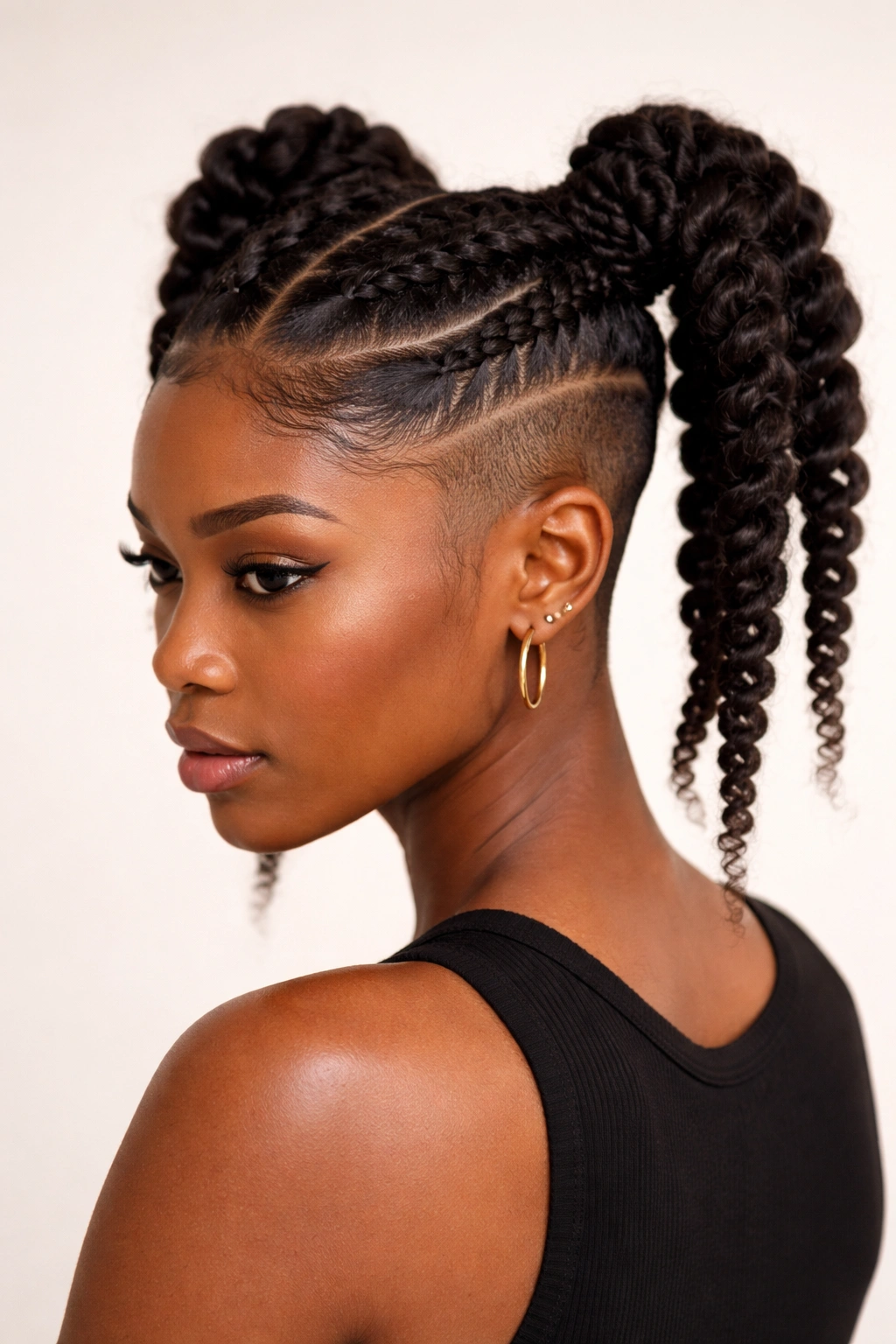
For those with undercuts or shaved sides, double ponytails create a striking style that shows off your full aesthetic—the contrast between the textured ponytails and the clean lines of your shaved or undercut sections is genuinely stunning. Position your ponytails so the shaved sections remain fully visible, gathering hair only from the thicker, textured portions on top. This approach turns what some people try to hide into a genuine style statement.
Styling Strategy for Textured Hair with Undercuts
Double ponytails actually complement undercuts or shaved sections beautifully because they create visual height and volume in the ponytail area while emphasizing the clean lines of the undercut. This contrast is visually striking and reads as intentionally styled rather than accidental. The undercut also serves a practical function—less hair to manage overall makes ponytails even easier to create and maintain throughout the day.
Creating Balance with Undercuts
- Determine which sections of your hair have grown longer and which areas are still short from the undercut
- Create your ponytails using only the longer sections, positioning them to frame your head
- Ensure the shaved or undercut sections remain completely visible and uncover
- Style your ponytails with the same care and attention you would to any double-ponytail style
- Consider using bold hair jewelry or cuffs to draw attention to your ponytails and emphasize the contrast
- If your undercut has grown in slightly, you can smooth these shorter strands back or leave them textured for added dimension
Styling consideration: This style works beautifully with high ponytails that emphasize the contrast, but it’s equally stunning with low ponytails when positioned precisely.
10. Double Ponytails with Accessory Chains or Pearls
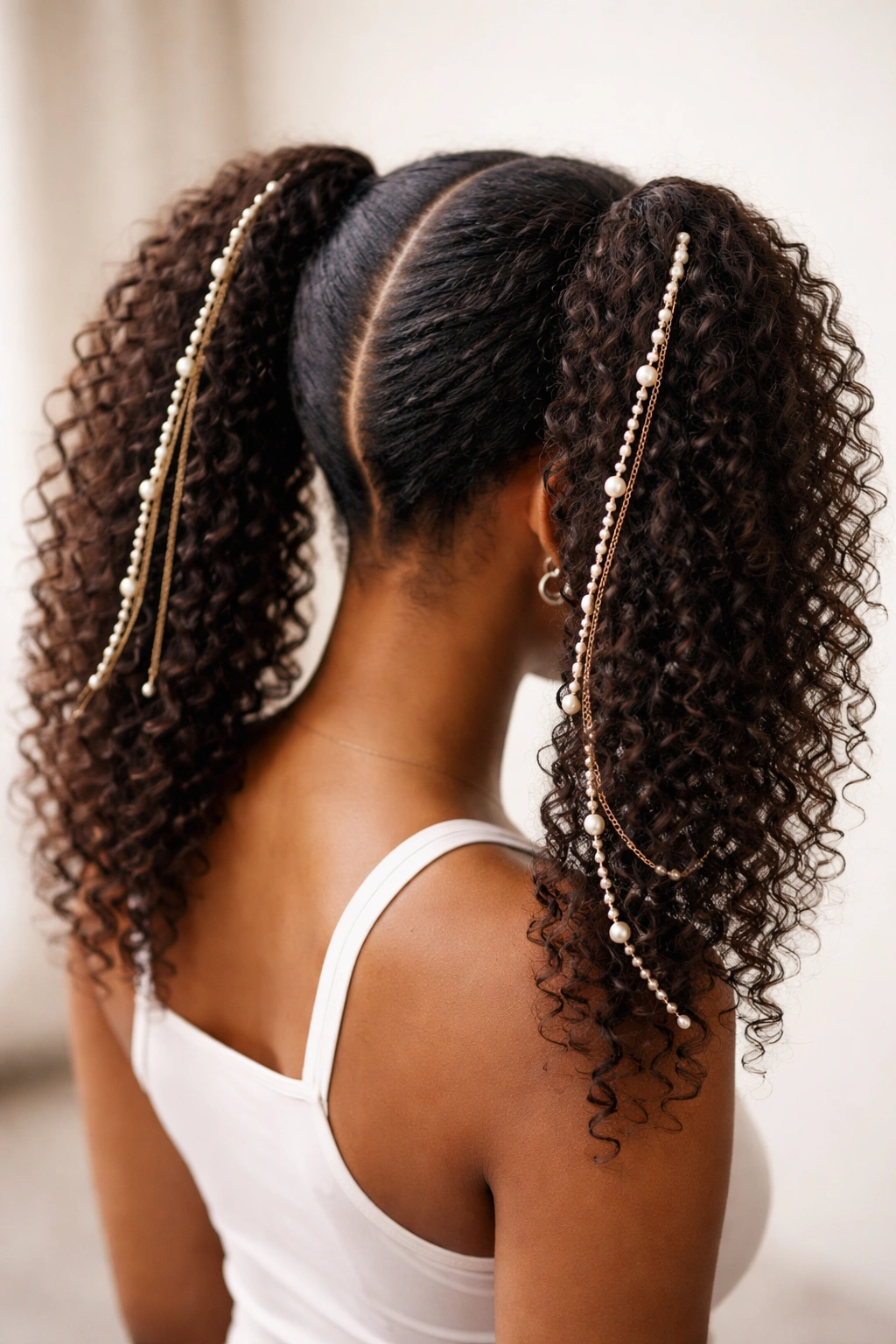
Strung pearls, delicate chains, or beaded cords woven through double ponytails create visual movement and luxury that completely transforms the style. Thread your chosen accessory through each ponytail as you’re securing it, allowing the chain or beads to catch light and create dimension. This simple addition works for both casual and dressier occasions depending on the type of accessory you choose—delicate pearls feel elegant and refined, while colorful beads or gold chains feel more playful and fashion-forward.
Making Chains and Beads Look Polished
The key to making chains and pearl accessories work with natural hair is ensuring they’re actually threaded through the ponytail rather than just resting on top of it. This keeps them secure throughout the day and ensures they stay visible and beautiful. The contrast between the texture of your natural curls and the smooth shine of chains or pearls creates a genuinely sophisticated aesthetic that feels intentionally designed.
How to Thread Accessories Securely
- Gather your hair into a ponytail as you normally would
- Take your accessory chain or pearl strand and position it around the ponytail
- Thread the ends through the elastic band, crossing them over and securing them
- Tighten the elastic to hold both the hair and the accessory in place
- Adjust the accessory so it’s centered and visible throughout the ponytail
- Gently arrange ponytail curls around and slightly below the accessory for visual interest
- Check throughout the day that the accessory hasn’t slipped—you can use a small bobby pin to secure it if needed
Design tip: Choose accessory colors that either complement or intentionally contrast with your natural hair color—both approaches can look stunning depending on your vision.
11. Bubble Double Ponytails with Elastic Sections
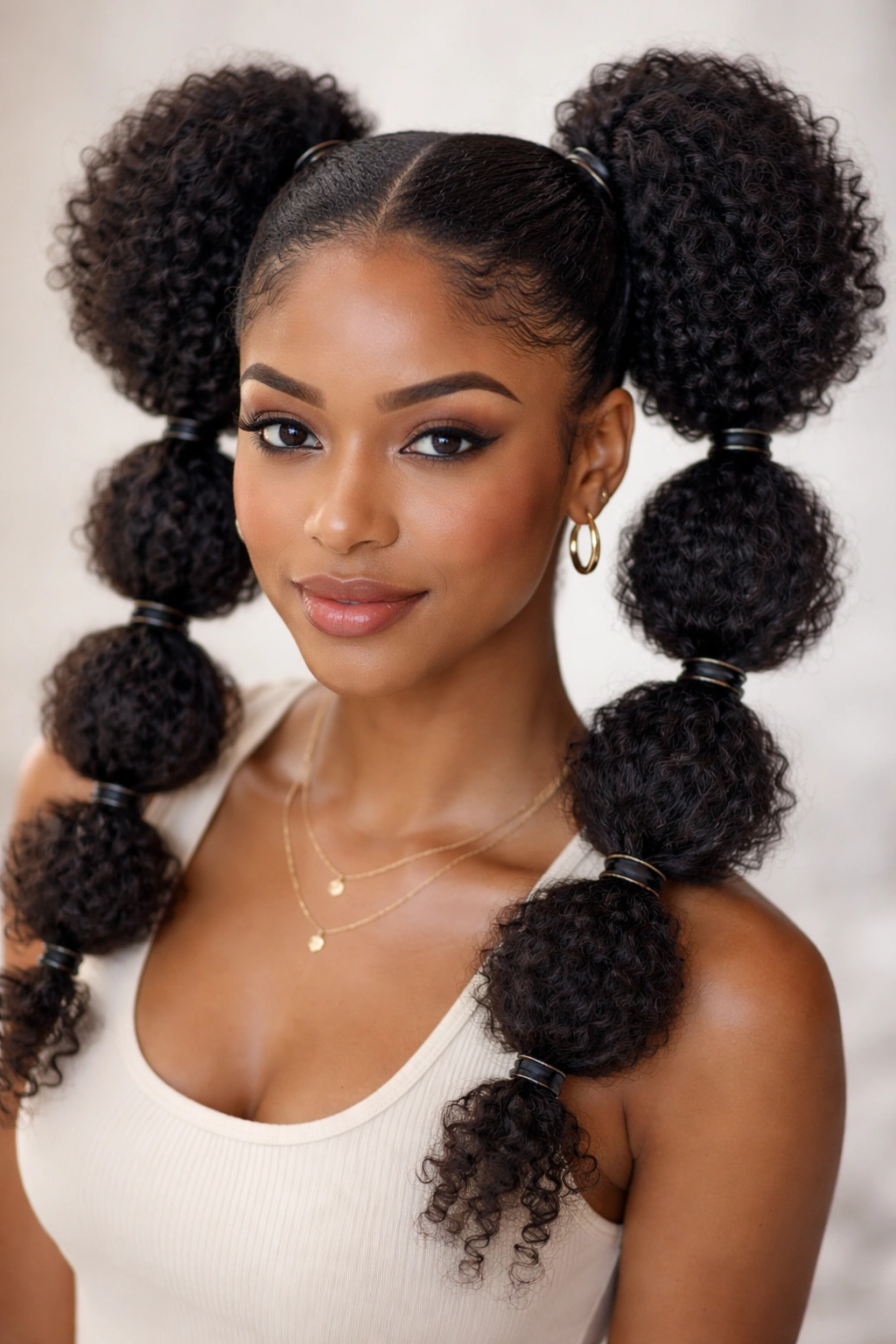
Bubble ponytails—created by securing multiple elastic bands down the length of the ponytail to create distinct rounded sections—work beautifully as double ponytails and add tremendous visual interest with minimal extra effort. Create two basic ponytails, then place elastic bands at intervals down each one (typically every 2-3 inches), gently fluffing the hair between each band to create bubble shapes. This style is particularly gorgeous on natural hair because the texture and volume actually enhance the bubble effect.
Why Bubble Ponytails Suit Natural Hair Perfectly
Natural hair’s inherent texture and volume create fuller, more visually interesting bubbles than straight hair, making this style genuinely showcase your hair’s best qualities. The multiple elastic bands also distribute tension across a larger area rather than concentrating it all at the base, which is gentler on your scalp and edges. Bubble ponytails also work beautifully on second or third-day hair when your curl pattern is fully developed—there’s no need to reset your curls with product.
Creating Picture-Perfect Bubbles
- Create your two basic double ponytails and secure firmly
- Place the first elastic band about 2-3 inches down from the base of the ponytail
- Gently fluff the hair between the main elastic and the first new band, creating a bubble shape
- Continue placing elastic bands at consistent intervals down the length of each ponytail
- Fluff between each band to maximize the bubble effect
- Ensure each bubble section is full and rounded by gently separating curls
- Consider using elastic bands in matching or contrasting colors for visual impact
Practical note: Colored elastic bands actually make bubble ponytails look more intentional and styled—they frame each bubble beautifully.
12. Low Double Ponytails with Geometric Parting
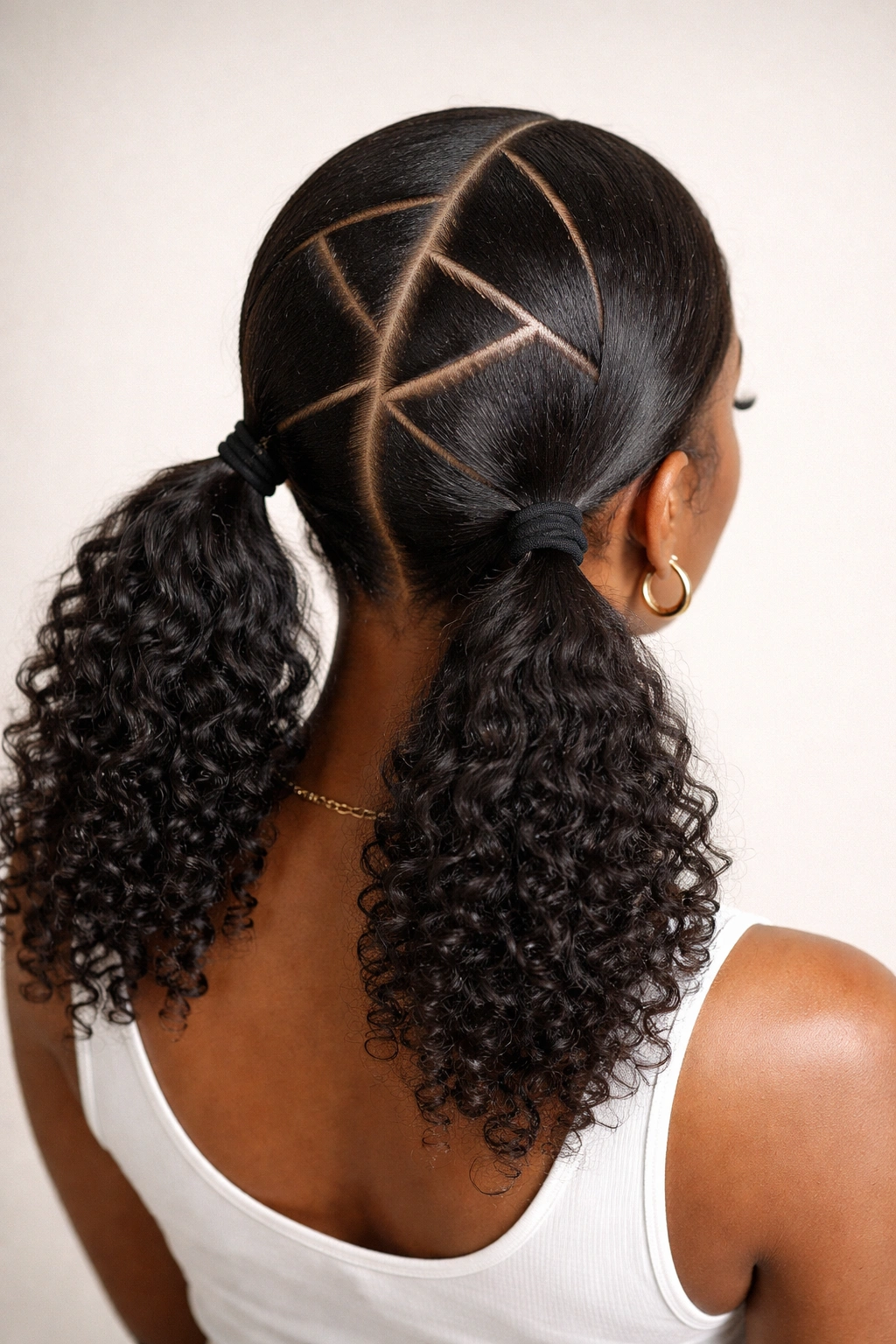
Geometric parting—creating clean, sharp lines through your hair rather than a simple center or side part—transforms basic double ponytails into art. Create a zigzag part, diagonal lines, or even triangular sections before gathering into ponytails. This technique requires a rattail comb and a light edge control product, but the result is genuinely striking and reads as serious styling creativity.
Why Geometric Parting Elevates Double Ponytails
A geometric part immediately makes a style feel intentional and editorial—like you’ve put real thought and care into how you’re presenting yourself. Even though geometric parting is technically just an organizational choice, it creates an entirely different visual aesthetic than symmetrical parting. This approach works beautifully on natural hair because your curl pattern actually supports and emphasizes the lines you create.
Executing Clean Geometric Parting
- Use a rattail comb to section your hair according to your chosen pattern (zigzag, diagonal, triangular, etc.)
- Work with damp or moisturized hair so it holds the parting without requiring excessive products
- Apply a light edge control or styling gel along each parting line to keep it clean and defined
- Create your ponytails using the sections you’ve established with your geometric pattern
- Secure firmly, then smooth any flyaways along the parting lines
- Use a flexible-hold product rather than hard-hold gel so your curls can still move and show their texture
- Take time to really define those parting lines—they’re the star of this style
Creative inspiration: Research natural hair styling accounts and magazines for geometric parting inspiration—there are countless variations beyond basic zigzags that you can adapt to your own style.
Key Takeaways
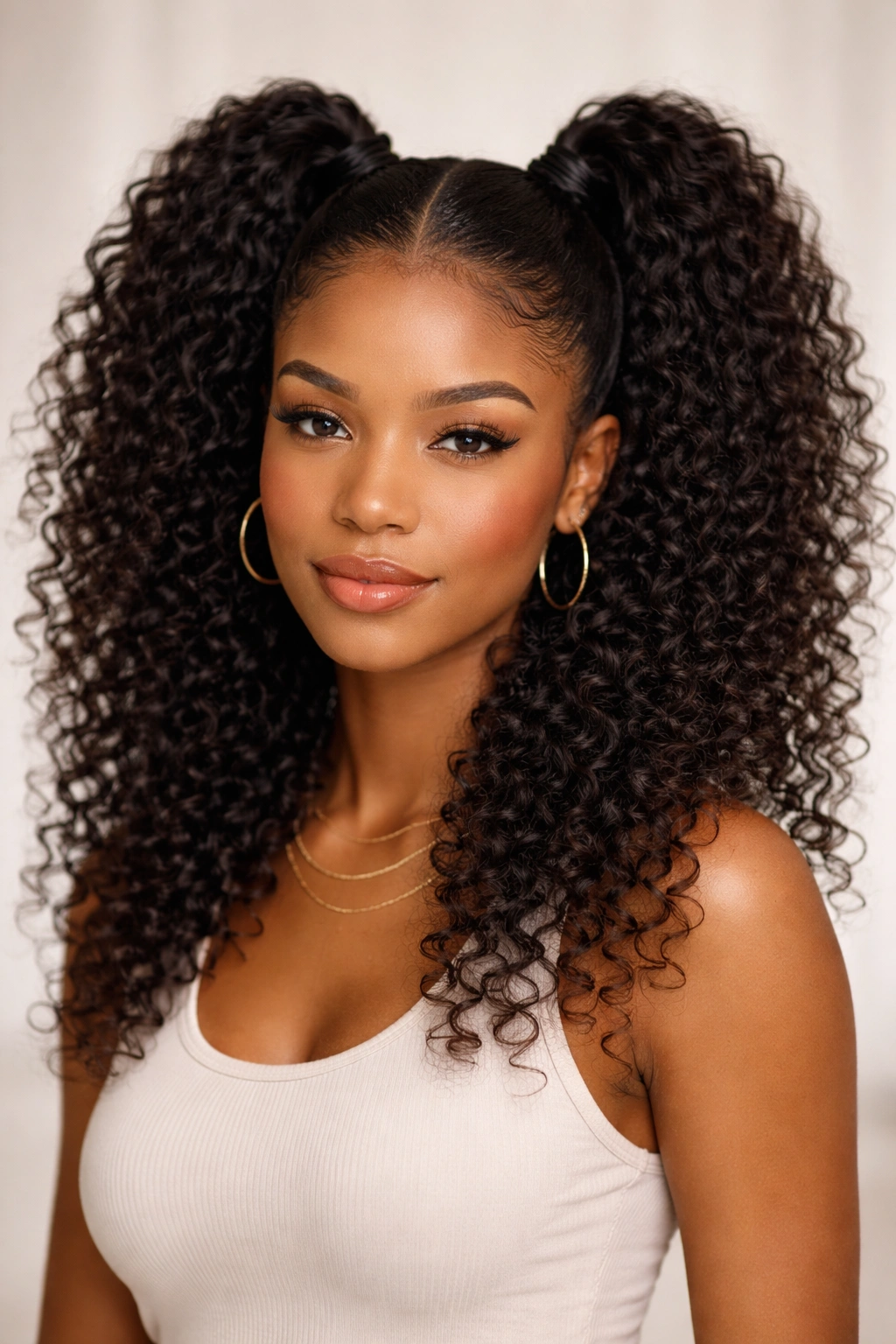
Double ponytails offer genuine versatility for natural hair, working beautifully across professional settings, casual occasions, and everything in between. The variations available—from sleek and polished to playful and adorned—mean you can match your style to your mood, your outfit, and what your hair is actually doing on any given day. Each approach works with your natural texture rather than against it, celebrating your curls while keeping them organized and intentional.
The real power of double ponytails is their simplicity balanced with their potential for creativity. You don’t need hours of styling time or elaborate techniques to create a genuinely beautiful double-ponytail style. Whether you’re choosing loose, flowing curls; sharp, polished edges; playful accessories; or geometric parting details, you’re working with a base style that’s inherently wearable and flattering. Experiment with different heights, gathering positions, and finishing touches until you find the combinations that feel most like you.
Remember that the best style is one you’ll actually wear and enjoy—don’t stress about creating something perfectly executed if a simpler, more relaxed version makes you feel more like yourself. Your natural hair is genuinely beautiful, and double ponytails are simply a tool for showcasing that beauty while keeping everything practical, intentional, and exactly how you want it.
