



Gray and silver hair is one of the most striking hair colors you can wear—and the right ponytail style can make it absolutely luminous. Whether you’re rocking natural silver, going full gray, or choosing to dye your hair this stunning shade, the way you style it matters just as much as the color itself. A sleek high ponytail hits differently when your hair is silvery. A loose, textured style gains an entirely new dimension when it showcases gray strands mixed with darker tones. The point is: gray hair deserves styling approaches that honor its unique reflective quality and inherent sophistication.
The challenge is that not every ponytail style flatters gray hair equally. Some styles that work beautifully on darker hair can wash out gray or make the styling look too severe. Others might emphasize thinning or texture issues that show more prominently on lighter hair. But when you nail the right style for your gray hair—the one that complements your skin tone, works with your hair’s natural texture, and suits your lifestyle—the result is genuinely unforgettable. You’re not just wearing a hairstyle; you’re wearing a statement.
This guide walks you through ten ponytail styles that are specifically designed to look their absolute best on gray and silver hair. Each one works with different face shapes, hair textures, and personal style preferences. Some are polished and professional. Others are relaxed and undone. Some add volume where gray hair sometimes seems to lack it. Others play up the sophisticated, refined quality that gray hair naturally carries. Whether you’re looking for an everyday option you can do in five minutes or a showstopping style for a special occasion, you’ll find something here that makes you feel genuinely confident.
1. The Classic High Ponytail with Volume at the Crown
There’s a reason the high ponytail endures—it’s one of the most flattering styles for gray hair when you get the proportions right. The key to making this work with silver or gray hair isn’t about pulling everything taut and severe. Instead, it’s about creating intentional volume and softness at the crown while keeping the ponytail itself sleek and defined.
Start by prepping your hair with a texturizing spray or dry shampoo at the roots. This gives you something to grip and makes the styling process infinitely easier, especially if your gray hair tends toward finer texture. Take a section of hair from your temples back to the crown—this is your volume section. Gently backcomb this area for grip and texture, but don’t go overboard; you want a subtle boost, not helmet hair. Smooth the top layer gently with your brush to polish it, then gather your entire ponytail at the crown, slightly higher than you think you want it.
The magic happens in how you finish the base. Instead of pulling the hair tight, leave a tiny bit of softness and dimension. Secure with an elastic, then gently pull a few face-framing pieces loose—just one or two wisps on each side. This softens the style and prevents that harsh, pulled-back look that can sometimes emphasize fine lines or make gray hair feel austere rather than elegant. Wrap a small section of hair around the elastic to hide it completely, pinning the end underneath where it won’t show.
Why This Works for Gray Hair
The high placement naturally draws attention upward to your face and eyes, which is exactly what you want when you’re wearing gray. The volume at the crown creates a flattering frame that actually adds movement and dimension to the style, making it feel more dynamic than a flat ponytail would. The soft wisps around the face prevent the gray from appearing too austere or severe, which can happen when every single strand is pulled back tightly.
Styling Tips for Success
- Use the right brush. A paddle brush or wide-tooth comb is your friend—they’re gentler on gray hair and create better separation than fine-tooth brushes.
- Don’t skip the dry shampoo. It’s not just about oil control; it creates texture that gives you grip and prevents slipping throughout the day.
- Placement matters more than tightness. A slightly lower, voluminous ponytail looks more current and flattering than a pulled-tight high pony.
- Polish the front. Smooth flyaways at your face with a fine-mist hairspray and a small, soft brush to keep the front looking deliberately soft, not messy.
The classic high ponytail works equally well for everyday wear and special occasions. For casual days, leave it a bit more textured and relaxed. For dressier events, smooth it completely and add a delicate hair cuff or ribbon wrapped around the base for polish.
2. The Sleek Low Ponytail with Defined Edges
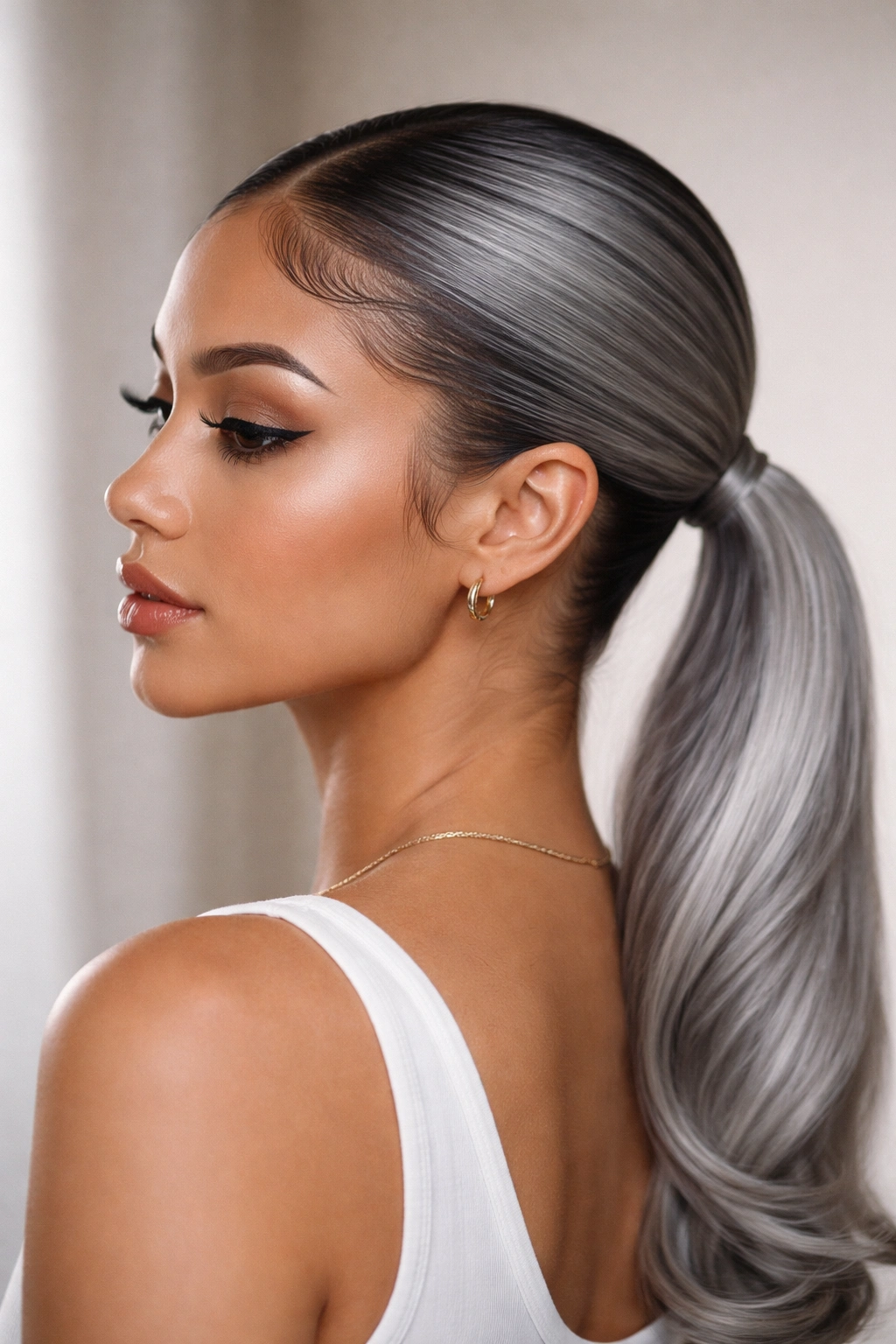
If the high ponytail feels too youthful or you simply prefer a more understated approach, the low ponytail is your answer. Placed at the nape of the neck, this style is sophisticated, modern, and genuinely flattering on gray hair. The key difference between a dowdy low ponytail and a chic one comes down to sleekness and the precision of your edges.
Start with hair that’s either freshly washed and blown dry straight, or use a straightening tool on sections that aren’t cooperating. Smooth a lightweight smoothing cream or serum through the ponytail section—this controls frizz and creates shine, which is absolutely essential when you’re going for a sleek style with gray hair. The reflective quality of gray actually amplifies shine, so use that to your advantage.
Brush your hair straight back and gather it at the nape of your neck, roughly centered. Don’t pull too tight—you’re aiming for polished, not painful. Secure with a smooth elastic. Now comes the detail work that separates a refined low ponytail from a basic one: smooth the sides and back of your head completely, using a fine-mist hairspray and a small brush to eliminate every flyaway. Take a small section from the ponytail, wrap it around the elastic to hide it, and pin it underneath.
For the true polish finish, use a fine-tooth comb and a tiny bit of edge control cream to smooth your hairline and define your part. This creates that intentional, high-effort look that signals care and attention, which reads as sophisticated rather than overdone when you’re wearing gray hair.
Why This Works for Gray Hair
The low ponytail is inherently sophisticated—it’s a style worn by everyone from CEOs to fashion icons for good reason. On gray hair specifically, the sleekness showcases the uniformity and shine of your color without adding visual weight at the crown. This is the style to choose if you want to emphasize that your gray is a deliberate, beautiful choice, not a compromise. The nape placement also doesn’t pull your face up as much as a high ponytail, making it a great option if you prefer a more neutral face-framing.
Styling Tips for Success
- Invest in the right products. Smoothing serums, edge control creams, and lightweight hairsprays are non-negotiable for this style. Drugstore options work perfectly fine.
- Use a brush, not your fingers. A soft paddle brush or fine-tooth comb will give you much cleaner results than finger-smoothing.
- Don’t obsess over perfection. A completely hair-sprayed, immovable low ponytail looks severe. You want polish with a tiny bit of movement—not a sculpture.
- Match your elastic to your hair. A dark elastic on gray hair is visible and draws the eye to the base of the ponytail. Invest in a gray, silver, or clear elastic instead.
The sleek low ponytail is ideal for work settings, formal events, and any situation where you want to project quiet confidence. It also photographs beautifully and tends to age very well throughout the day.
3. The Textured Tousled Ponytail with Undone Waves
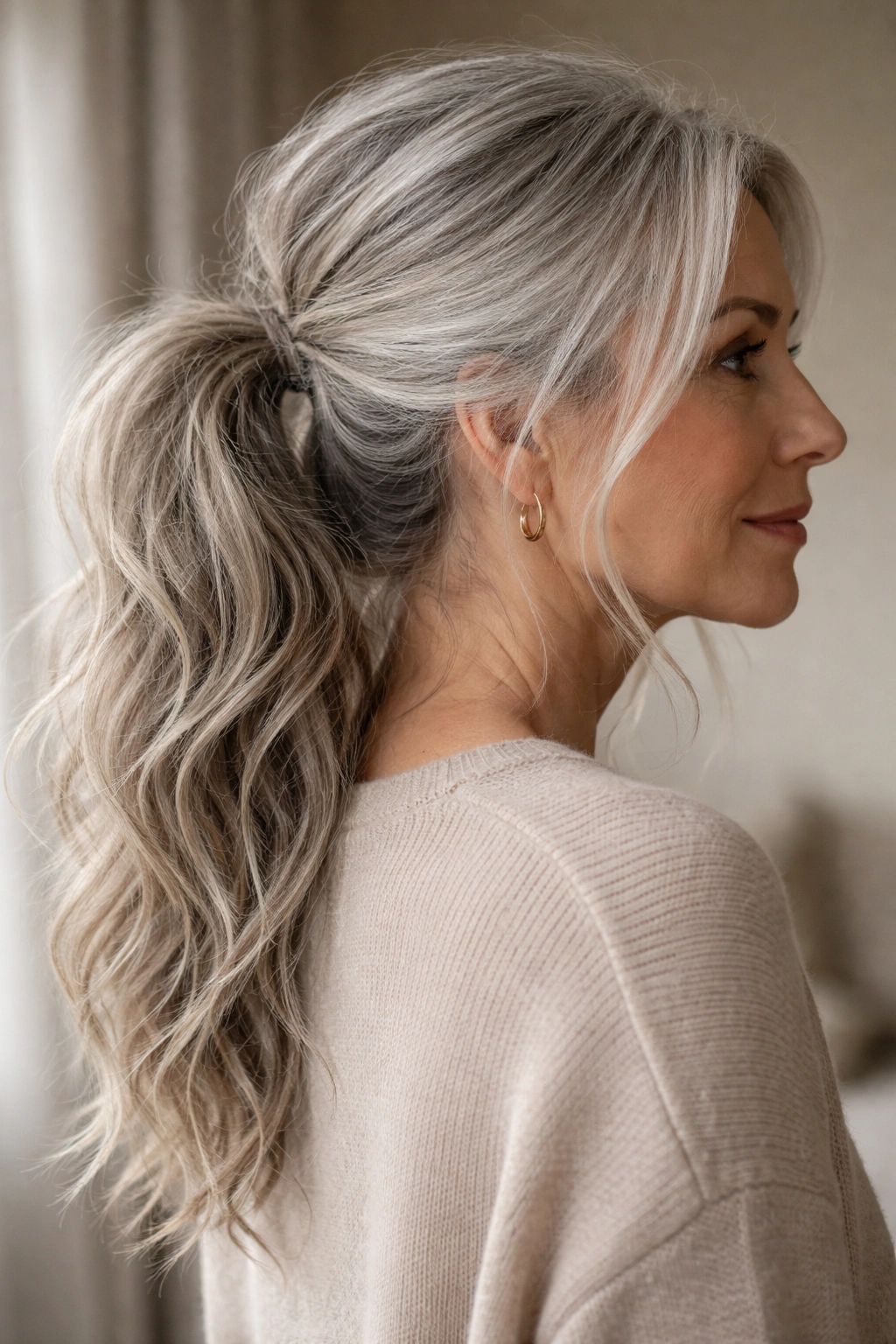
This is the style for anyone who loves the idea of a ponytail but doesn’t want it to feel too formal or restrictive. A textured, tousled ponytail has all the convenience of an updo with the relaxed, lived-in quality that feels modern and approachable. It’s especially forgiving on gray hair because the texture and movement work with natural graying patterns and texture variations rather than against them.
The foundation for this style is texture. If your hair is naturally straight or smooth, you’ll need to create it. A sea salt spray applied to damp hair and blow-dried with a diffuser attachment is one route. So is a loose-curl wand or straightening iron used to wave the lengths. If your hair has natural wave or curl, you’re already halfway there—just work with what you have instead of fighting it.
Once your texture is established, gather your hair into a ponytail at whatever height feels right (middle-back ponytail tends to work best for this undone vibe). Don’t aim for perfect gathering—let a few pieces miss the elastic intentionally. Secure loosely so there’s still movement. Now, the finishing touch: gently pull small sections of the ponytail out from the elastic to create volume and dimension at the base. Take a few strands from the sides and around the face and leave them out entirely, framing your face loosely.
The beauty of this approach is that it doesn’t require precision. The looser, messier energy is the whole point. The texture and undone quality actually showcase gray hair’s natural variations beautifully, making this a particularly forgiving style if your gray isn’t perfectly uniform or you have a mix of gray and darker tones.
Why This Works for Gray Hair
Texture and movement hide imperfections and create visual interest, which is especially valuable if your gray hair is finer than your natural color was, or if you have an uneven gray pattern. The undone quality feels modern and cool—it reads as a deliberate style choice rather than a default updo. The pulled-out pieces and face-framing strands prevent the style from looking severe or over-controlled, which keeps gray hair from appearing austere. Additionally, this style works with your hair’s natural tendencies rather than against them, so it’s remarkably low-maintenance once you’ve got it set.
Styling Tips for Success
- Apply texture-building products to damp hair. Sea salt sprays, texturizing sprays, and volumizing mousses work best on damp hair rather than dry. Let it dry completely before gathering into the ponytail.
- Use a softer elastic. A fabric-wrapped elastic or a silk scrunchie is more forgiving and creates a smoother base for this relaxed style than a thin elastic.
- Don’t overthink the pieces around your face. If a section looks messy, it’s probably perfect. This style is about ease, not precision.
- Finish with a light hairspray. You want to set the style without making it look stiff or over-sprayed. A flexible hold product is essential.
This style works beautifully for casual everyday wear, weekend outings, and any situation where you want to feel put-together without looking like you spent an hour styling. It also photographs beautifully and holds up well throughout the day.
4. The Side-Swept Ponytail with Soft Layers
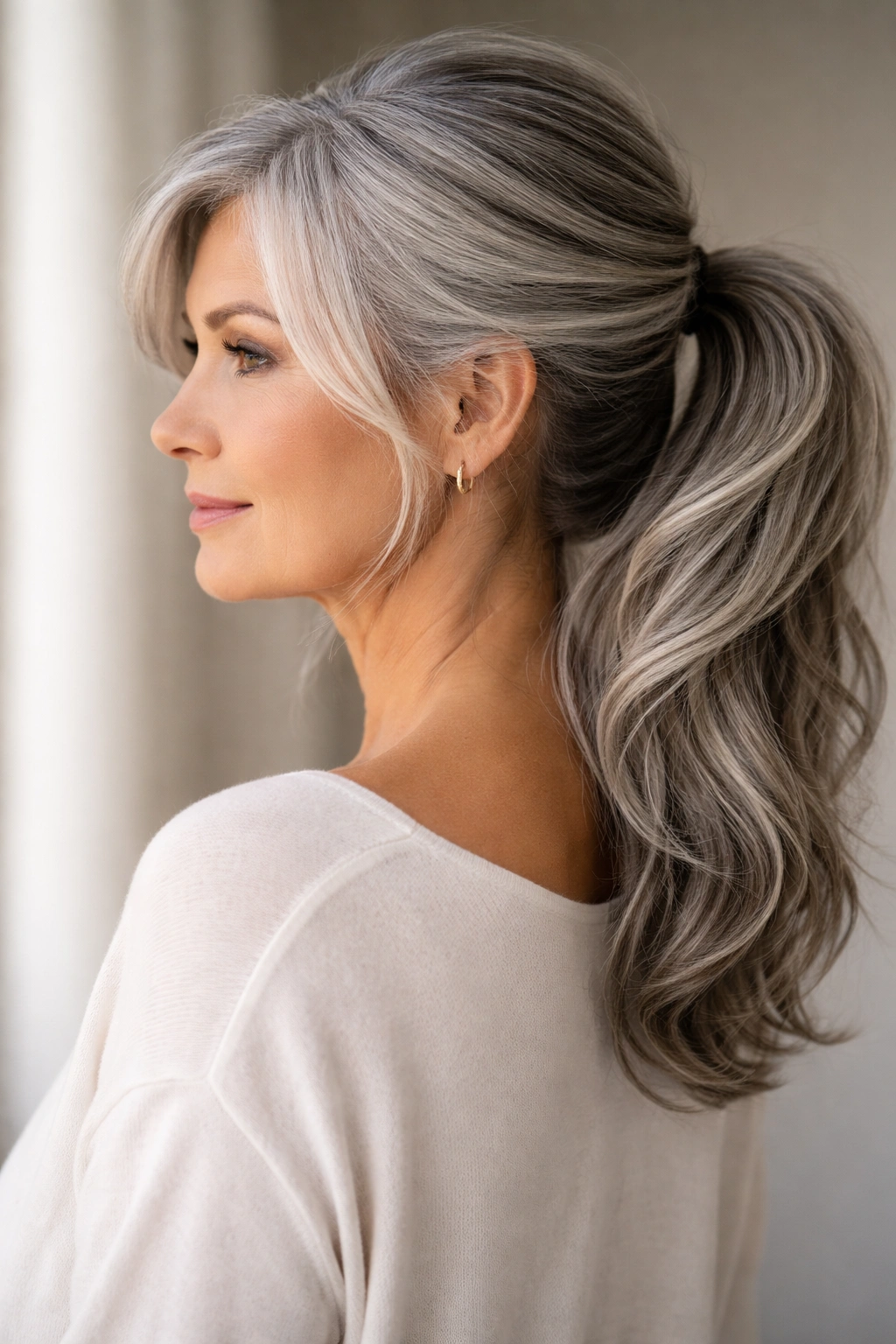
A side-swept ponytail offers the best of both worlds: it keeps hair off your neck and shoulders while still showing off the length and layers in your cut. This style is particularly flattering on gray hair because the sweep creates movement and dimension, and the partial face-framing is incredibly softening. It’s a style that reads as both effortless and intentional, which is a hard balance to strike.
Start by deciding whether your ponytail will sit on the right or left side. Typically, sweeping toward your non-dominant side feels more natural—if you’re right-handed, left-sweep often works better. Gather your hair off-center, creating a low to mid-height ponytail on that side. The lower and further to the side you go, the more dramatic and fashion-forward the style. A higher, less-swept version is more traditional and conservative.
Here’s what makes this different from a regular one-sided ponytail: leave the front sections deliberately loose. Take pieces from the opposite side of your part and let them sweep across your face and neck, creating a soft frame that softens your features. This partial-out, partial-up approach is what elevates this style from utilitarian to intentional.
Secure your ponytail with an elastic, then gently tease the gathered ponytail at the base to create volume and prevent it from looking too sleek or severe. The tousled quality keeps this style from feeling overly formal. Wrap a small section from the ponytail around the elastic to hide it, then smooth any flyaways with a light hairspray.
Why This Works for Gray Hair
The asymmetry of a side-swept ponytail is inherently youthful and modern—it signals that you’re not defaulting to a standard style but making a deliberate choice. The soft layers and swept pieces frame the face beautifully, which prevents gray from appearing too austere or unflattering. The movement and dimension work particularly well on gray hair with natural texture or an uneven gray pattern, as it showcases rather than hides those characteristics. This style also tends to look fresher and less “perfect” than a centered ponytail, which feels current and sophisticated rather than dated.
Styling Tips for Success
- Tease gently at the base. You’re aiming for soft texture that suggests volume, not a tight teased section that looks dated.
- Keep the loose pieces soft. If the front-facing pieces are too straight and blunt, they can look stringy. Curl them slightly with a wand or straightener for a softer finish.
- Balance is key. If the ponytail side is too far back, you’ll lose the sophistication. Aim for somewhere between your ear and the back center of your head.
- Use a lightweight elastic. A thin or fabric-wrapped elastic blends better with gray hair and won’t create an obvious horizontal line where the ponytail gathers.
This style works wonderfully for both casual and dressy occasions. The side-sweep naturally conveys polish and intention, so it reads appropriately fancy for events while still feeling approachable and not overdone.
5. The Braided Wrap Ponytail with Woven Detail
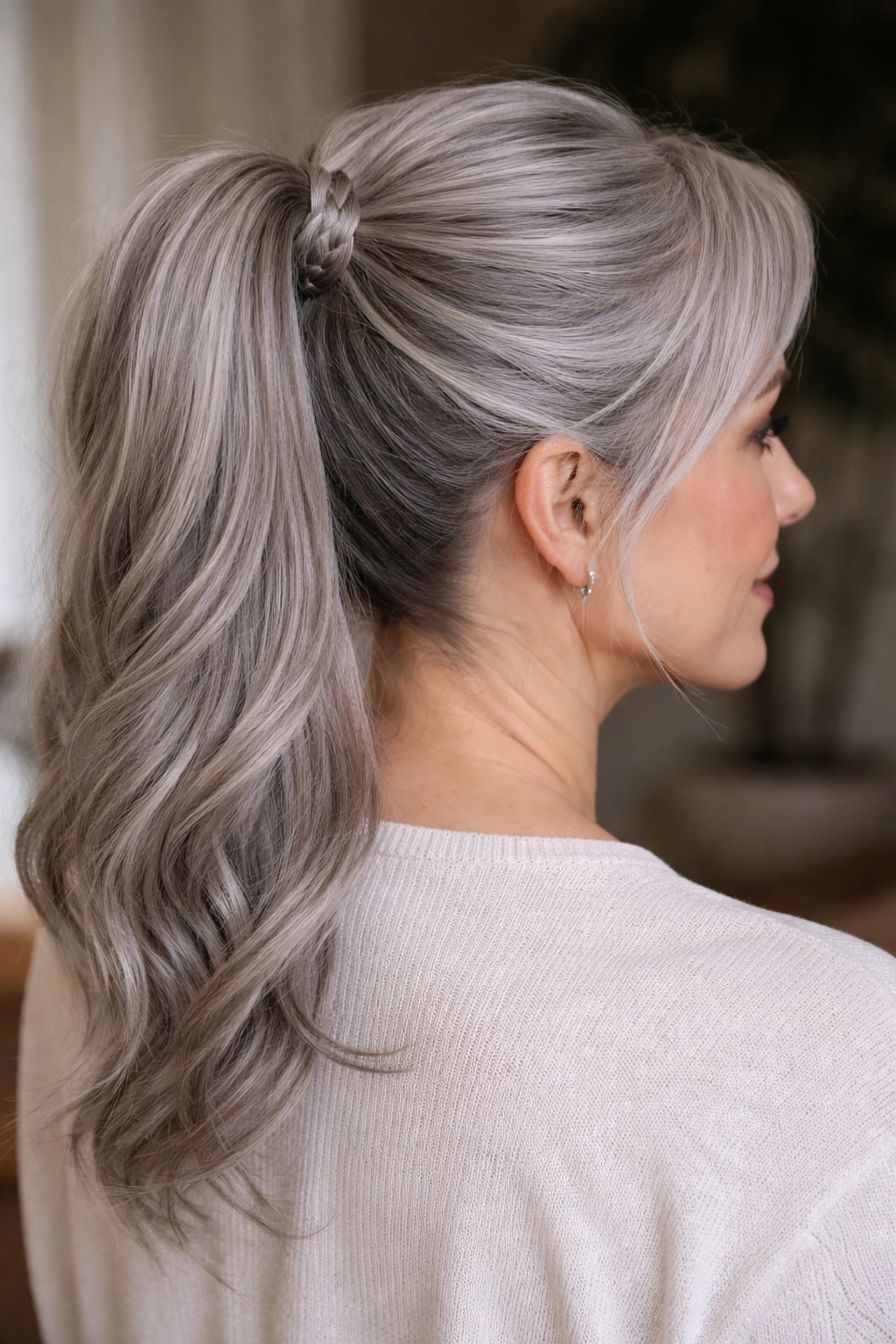
A braided wrap adds an element of artistry to a basic ponytail while remaining completely manageable and not requiring advanced braiding skills. This style is especially flattering on gray hair because the woven detail adds visual interest and texture, making the overall look feel more intentional and sophisticated than a simple elastic would.
Start with a basic high or mid-height ponytail, gathered and secured with an elastic. Now, here’s where the detail comes in: take a thin section from the ponytail itself—roughly the thickness of a pencil. Create a three-strand braid with this section, keeping it relatively loose and relaxed. Once your braid is about two to three inches long, wrap it around the base of the ponytail, covering the elastic completely. Pin the end of the braid underneath where it won’t be visible.
The beauty of this technique is that it requires zero special skills. You don’t need to braid all your hair or create an intricate pattern. This single braid wrapped around the base transforms an ordinary ponytail into something that looks styled and thoughtful. The woven texture catches light beautifully on gray hair and creates depth that makes your color look richer and more intentional.
For a more dramatic version, create two thinner braids instead of one and wrap them both around the base, slightly offset from each other. Or, if you want to add dimension, use a slightly different technique: take a section of hair from the ponytail, braid it, and instead of wrapping it around the entire base, weave it through the ponytail itself, creating an internal braid detail that’s visible when you move.
Why This Works for Gray Hair
Braided details add immediate polish and intention to a style without requiring a completely different technique. The woven texture creates depth and catches light in ways that make gray hair appear shinier and more dimensional. This style also reads as more deliberate and fashion-forward than a basic ponytail, which positions gray as a stylish choice rather than a neutral default. The detail work signals that you’ve put thought into your appearance, which conveys confidence and intentionality.
Styling Tips for Success
- Keep the braid loose and relaxed. A tight, perfect braid can look too formal or dated. A slightly undone braid feels current.
- Texture in your ponytail helps. If your ponytail is slightly wavy or textured rather than stick-straight, the braid detail will blend in and look more organic.
- Use bobby pins in a matching color. Invisible pins that match your gray hair are less noticeable than traditional brown or black pins.
- Experiment with placement. Wrapping the braid around the entire base is the standard approach, but you can also braid just the front section and wrap it halfway around, or create an off-center wrap for asymmetry.
This style is perfect for work, dinner dates, and any situation where you want to look polished and put-together without appearing stiff or overly formal. It photographs beautifully and holds up well throughout the day.
6. The Half-Up Half-Down Style with Dimensional Movement
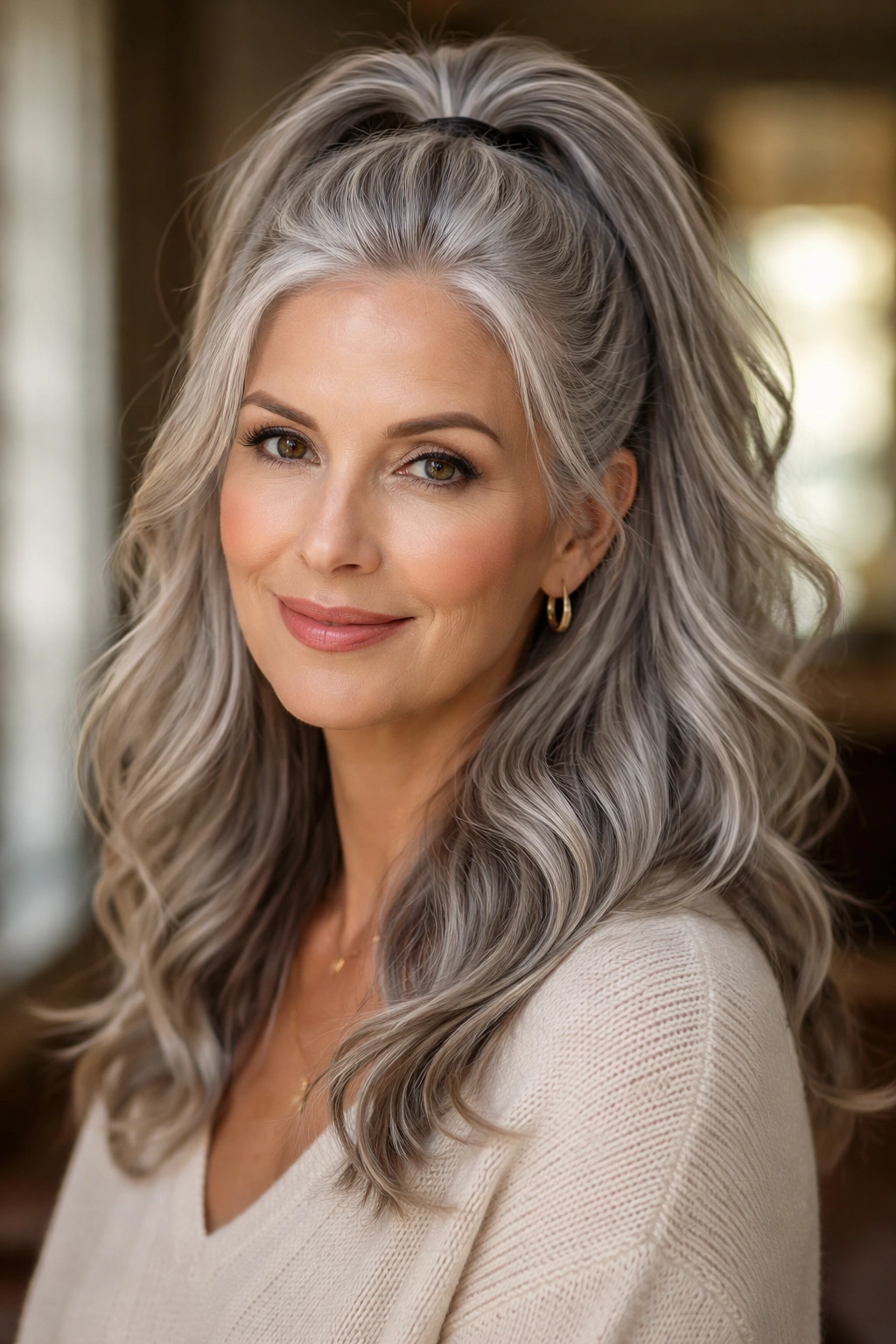
The half-up half-down style splits the difference between wearing your hair down and pulling it back entirely, which makes it ideal if you love the feel of hair around your shoulders but want some off your face. On gray hair, this style is particularly striking because it showcases the full length and color while still providing the face-framing and neckline clarity that comes with partial styling.
This style works best when your hair has some texture and movement. If your hair is completely straight, take the time to add waves or texture before beginning—a quick wave with a straightening iron or sea salt spray applied to damp hair is all you need. Straight hair can look flat in this style, but textured hair creates dimension and visual interest.
Gather the hair from both temples, along with a section from the crown, and secure it in a ponytail or bun at the back center of your head. You’re not pulling everything back, just the top portion—roughly a third to half of your total hair volume, depending on your preference. For a more relaxed feel, use a softer elastic or silk scrunchie and don’t pull it too tight. For something more polished, secure the gathered section with bobby pins and cover with a small decorative clip or hair cuff.
Leave the bottom half of your hair down, and here’s the crucial detail: leave a few face-framing pieces loose around your face from the front section. These soft pieces prevent the style from looking too neat and create a gentle frame that’s flattering on virtually every face shape.
Why This Works for Gray Hair
The half-up half-down style offers the visual benefits of an updo without committing fully to one. On gray hair specifically, this is valuable because you get both the sophisticated, polished quality of a pulled-back style and the youthful, flowing quality of wearing hair down. The movement and dimension of the down portion showcase your color beautifully, while the gathered top creates definition and prevents gray from appearing thin or flat at the crown. The face-framing pieces are particularly flattering because they soften the overall look and prevent gray from appearing too severe or austere.
Styling Tips for Success
- Create texture throughout. Whether it’s waves, layers, or intentional texture from a sea salt spray, movement makes this style shine.
- Don’t pull too tight. The gathered section should feel secure but not uncomfortable. Pulling too tight flattens the crown and can make the style feel restrictive.
- Use the right scrunchie. A fabric-wrapped scrunchie or silk hair tie blends better with gray and is gentler on your hair than a traditional elastic.
- Play with placement. The gathered section can sit at the crown for a more romantic feel, or higher for something sportier and more casual.
- Add a subtle accessory. A delicate clip, hair cuff, or ribbon-wrapped tie elevates the style without overwhelming it.
This style works beautifully for casual outings, casual dates, and any situation where you want to feel put-together but not overly styled. It photographs well and transitions easily from day to night with the right accessory change.
7. The Twisted Ponytail with Elegant Wrapping
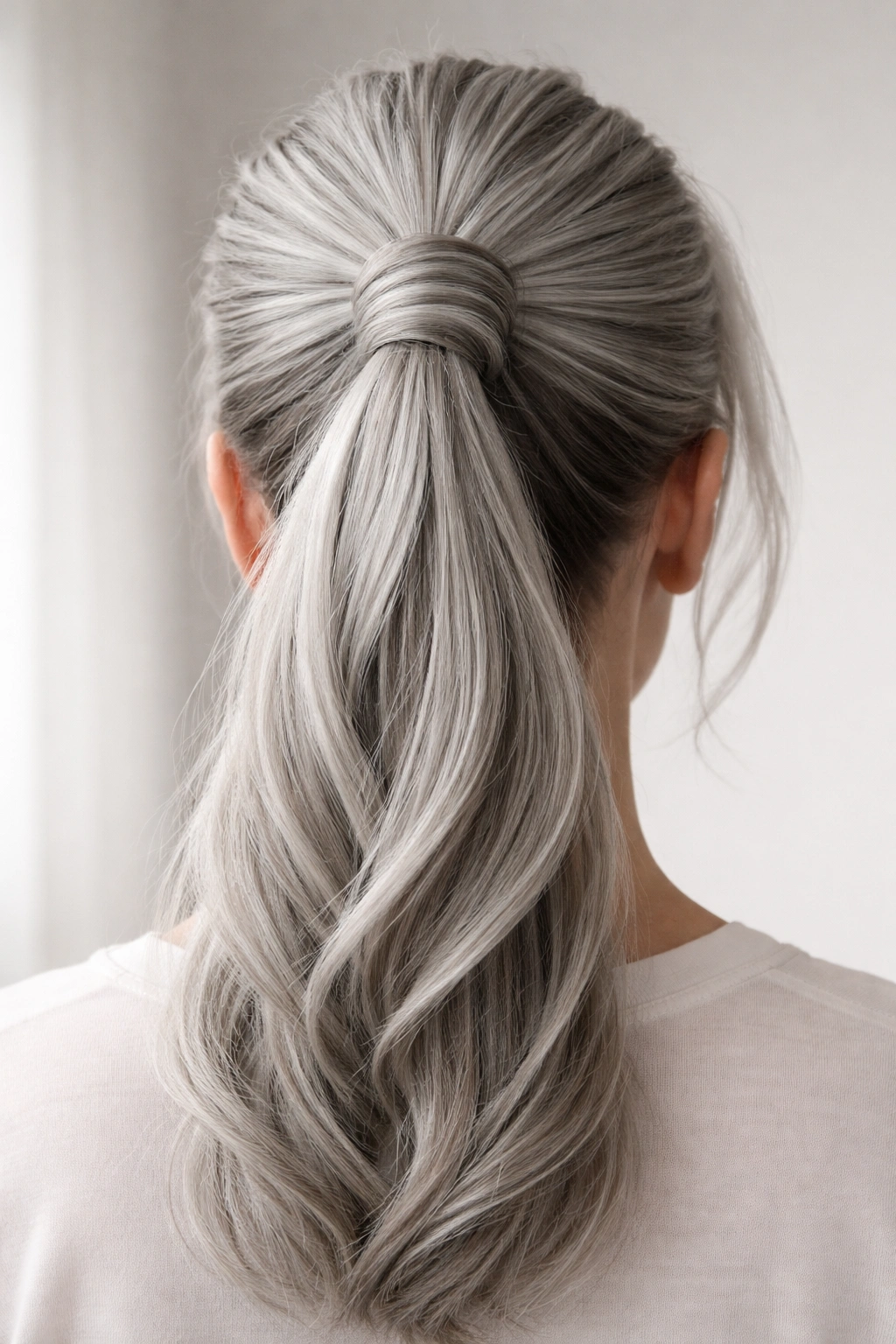
A twisted ponytail offers the polish of a braided style without requiring actual braiding skills. This technique works beautifully on gray hair because the twisted sections add visual texture and depth while remaining relatively simple to execute. It’s a style that looks effortful without requiring advanced technique, which is always a win.
Start by creating a basic high or mid-height ponytail and securing it with an elastic. Now, divide your ponytail into two equal sections. Take one section and twist it tightly, then wrap that twisted section around the base of the ponytail, pinning it in place with bobby pins underneath. Take the second twisted section and wrap it in the opposite direction, creating a crisscross pattern that completely covers the elastic.
The double-twist wrapping creates dimension and visual interest that elevates a basic ponytail into something that looks deliberately styled. The twisted strands catch light beautifully on gray hair, making your color appear shinier and more reflective. The technique also works well on finer gray hair because the twisting creates the illusion of volume and texture without requiring you to tease or backcomb.
For a more relaxed version, don’t twist tightly—instead, create a loose, gentle twist that has some softness and movement. This reads as more current and approachable than a tight twist, which can look a bit formal or dated. The looseness also tends to work better on finer or thinner hair, as tight twisting can emphasize sparseness.
Why This Works for Gray Hair
Twisted details are inherently elegant and sophisticated without reading as overly formal or high-maintenance. The technique creates texture and movement that makes gray hair appear shinier and more dimensional. Because the twisting technique is non-invasive—you’re just wrapping sections around the base rather than creating structural changes to your ponytail—it works beautifully on fine or delicate gray hair. This style also reads as intentional and fashion-forward, which positions your gray as a deliberate style choice rather than a neutral default.
Styling Tips for Success
- Twist loosely for a modern feel. A tight twist can look dated; a loose, slightly undone twist reads as current.
- Use bobby pins in a matching color. Silver or gray bobby pins are nearly invisible in gray hair and won’t create obvious anchor points.
- Smooth the twists slightly. After twisting and wrapping, gently smooth the twisted sections with a small brush and a touch of hairspray to polish the look.
- Experiment with direction. Twisting both sections in the same direction creates a different look than crisscrossing them. Try both and see which you prefer.
This style works wonderfully for office settings, casual dates, and any situation where you want to look polished and intentional without appearing overly formal or stiff. It photographs beautifully in side and three-quarter views.
8. The Voluminous Layered Ponytail with Stacked Texture
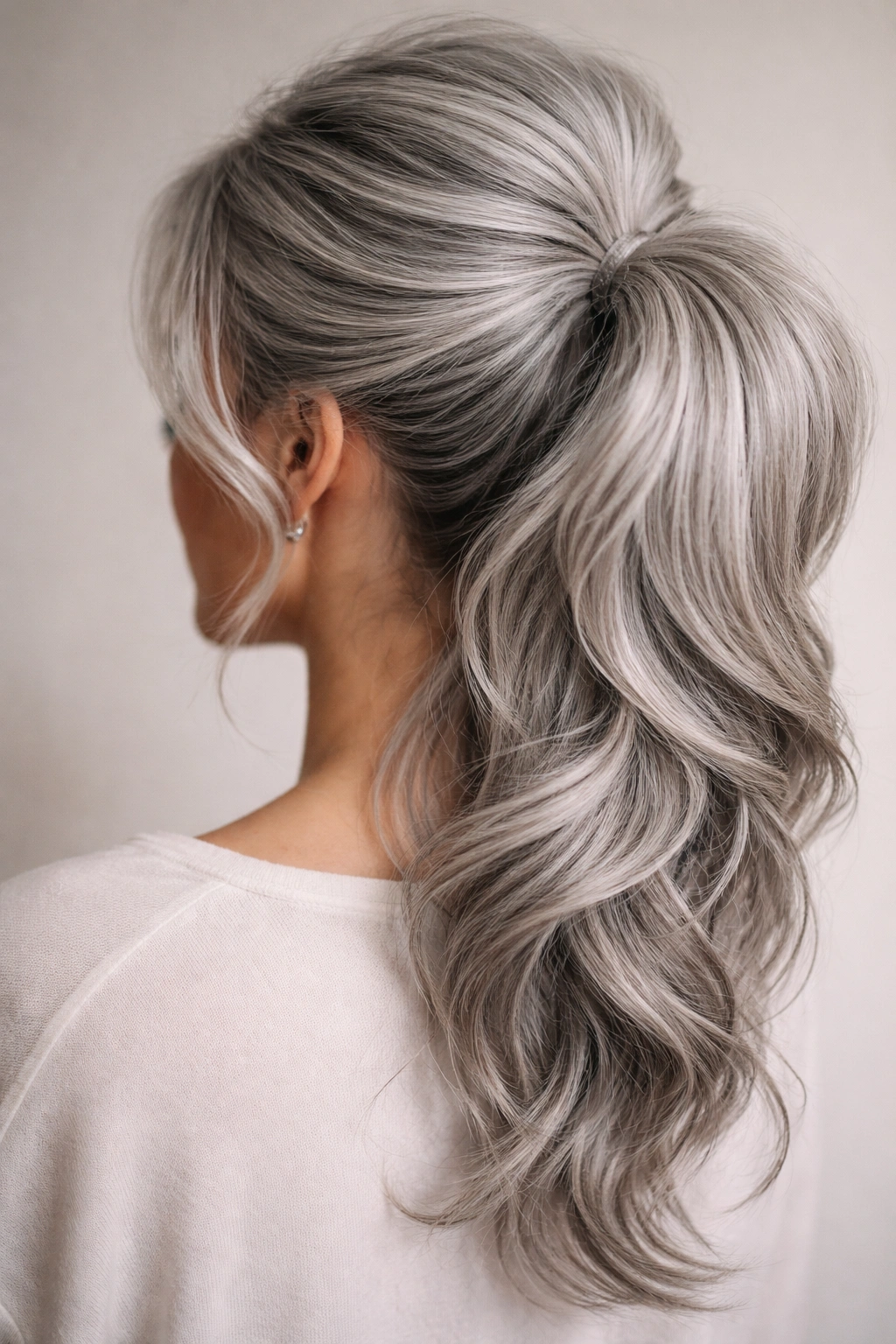
If fine hair or thinning is a concern with your gray, a voluminous layered ponytail is your answer. This technique creates the illusion of density and fullness by gathering hair in sections at different heights and stacking them, which catches light beautifully on gray and creates genuine visual impact. It’s more involved than a basic ponytail but absolutely worth the extra minute or two it takes.
Start by creating a very light tease or backcomb at your crown—just enough to give you grip and create some lift, not so much that it looks clumpy or dated. Gather the top section of hair (from your crown to your ears) and secure it with an elastic about an inch lower than where you’d normally place a ponytail.
Now, gather the remaining lower section of hair and secure it with a second elastic positioned just below the first one, overlapping slightly so the second ponytail’s base sits right against the first elastic. This creates a stacked effect. Gently pull small sections from both ponytails outward to create volume and fluffiness at each tier.
The result is a ponytail that appears full and dimensional rather than thin or flat. The stacking technique is particularly effective on gray hair because it creates layers of visual depth and catches light at multiple levels, making your hair appear shinier and more textured than it might actually be. The overlapping sections also create movement and prevent the style from looking static.
For an even more dramatic effect, you can create three tiers instead of two, though two is usually sufficient and maintains a more wearable, everyday aesthetic.
Why This Works for Gray Hair
The stacking technique creates genuine visual fullness without adding weight or creating heat damage (which is valuable if your gray hair is more delicate than your natural hair was). The multiple tiers catch light at different angles, making gray hair appear shinier and more dimensional. For anyone with fine or thinning gray hair, this technique is genuinely transformative—it creates the appearance of density and fullness that reads as healthier and more youthful. The technique also feels modern and fashion-forward, which positions gray as an intentional style choice.
Styling Tips for Success
- Don’t backcomb too heavily. You’re aiming for light texture and grip, not a clumpy, damaged-looking tease. A light hand with a fine-tooth comb is better than aggressive backcombing.
- Use elastics in a matching color. Visible elastics between the tiers can break up the visual line. Using gray or silver elastics makes the connection less obvious.
- Pull sections out gently. You’re creating the illusion of volume, not creating an actual mess. Gentle pulls that create soft dimension work better than yanking sections out harshly.
- Secure with bobby pins if needed. If your tiers want to slip or separate throughout the day, use a couple of bobby pins at the connection points to keep them stable.
This style works beautifully for anyone wanting to create fullness and dimension. It’s perfect for special occasions, professional settings, and any situation where you want your gray to look its absolute most vibrant and healthy.
9. The Sleek Low Bun Ponytail Hybrid
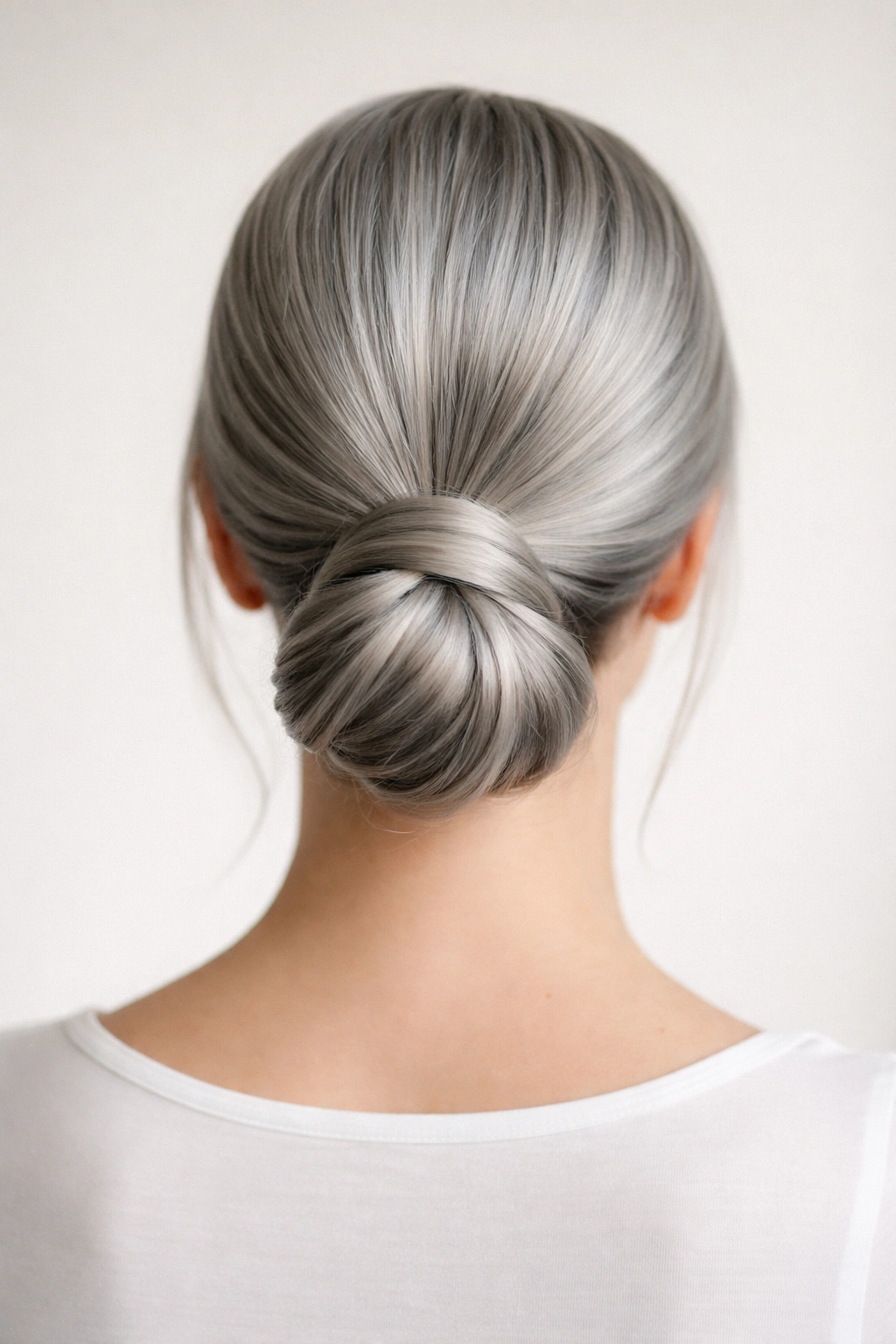
This style is technically a ponytail that transforms into a bun—it’s the best of both worlds if you love the idea of a ponytail but want something slightly more formal or compact. On gray hair, this style is stunning because the smooth, polished quality emphasizes the uniformity and shine of your color, while the bun structure is infinitely flattering and works on virtually every face shape.
Create a sleek, smooth ponytail at the nape of your neck (using the techniques described in the sleek low ponytail section). Once your ponytail is secured, divide it into two or three sections and twist each section loosely. Wrap the twisted sections around the ponytail’s base in concentric circles, pinning as you go, until you’ve created a compact bun. The bun should be relatively loose and relaxed, not a tight, pulled-back structure.
The hybrid nature of this style—part ponytail, part bun—creates dimension and visual interest that a traditional bun might not have. The twisting technique prevents the bun from looking too severe, which is particularly valuable on gray hair where overly tight styling can emphasize fine lines or create an austere appearance.
Smooth any flyaways with a fine-tooth comb and lightweight hairspray. This style shines when it’s polished and smooth, so take the extra moment to ensure your hairline is clean and your flyaways are controlled.
Why This Works for Gray Hair
The sleek finish emphasizes shine and color, making gray hair appear luminous and healthy. The bun structure is inherently flattering on gray hair because it frames the face beautifully and prevents any visual weight at the crown. The hybrid ponytail-bun approach adds dimension that keeps the style from appearing too severe or austere. This style reads as both modern and timeless—it works equally well in professional settings, formal events, and casual occasions where you want to look particularly polished.
Styling Tips for Success
- Start with a low ponytail. A high, tight ponytail that transforms into a bun can look severe on gray hair. A low, slightly relaxed base is more flattering.
- Don’t twist too tightly. Loose twists that maintain some softness look more current and less severe than tight, structured twists.
- Invest in good bobby pins. Quality pins that don’t slide will hold your bun securely without requiring excessive tightness.
- Polish the hairline. The smooth front is what makes this style sophisticated. Spend the extra moment on your edges and any flyaways.
- Consider a hair cuff or decorative pins. A subtle accessory can add visual interest without overwhelming the clean lines of the style.
This style works beautifully for professional settings, formal events, and any situation where you want to look polished, intentional, and elevated. It photographs exceptionally well and holds up beautifully throughout long days.
10. The Windswept Romantic Ponytail with Loose Tendrils
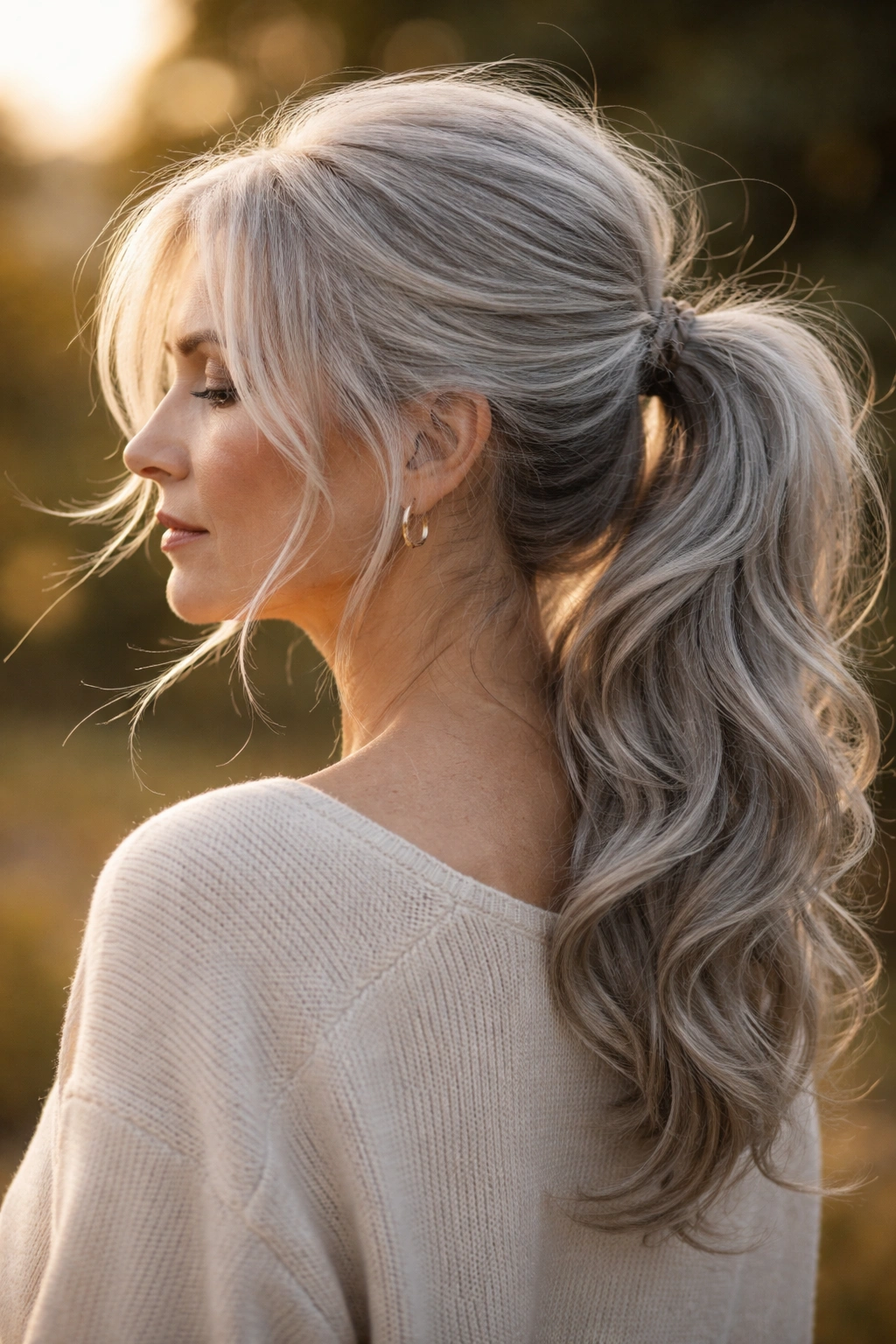
For anyone who loves the idea of a ponytail but wants something with genuine softness and romance, the windswept romantic ponytail is pure magic. This style embraces looseness and softness rather than fighting against it, which makes it particularly forgiving on gray hair and creates a look that’s simultaneously relaxed and intentional.
This style begins with movement and texture. Curl your hair loosely with a wand, apply sea salt spray, or use layers and natural waves to create texture throughout. The texture is what makes this style work—straight hair in this style just looks undone rather than romantic. Once your texture is established, create a low ponytail slightly off-center, gathered loosely at the nape of your neck.
The magic happens in the finishing details. Pull small sections from around your face and leave them out entirely, framing your face with loose tendrils. These pieces should have some wave or curl to them, creating a soft, romantic quality. Pull a few additional small sections from the ponytail itself, creating dimension and movement within the gathered section itself. The overall effect should be that you rolled out of bed with this perfect, effortless style—even though you’ve actually put thought and intention into every element.
Finish with a flexible-hold hairspray so the style maintains its shape without becoming stiff or immobile. The key is looking intentionally undone rather than actually undone.
Why This Works for Gray Hair
The looseness and softness of this style prevent gray from appearing austere or severe—instead, it reads as romantic and sophisticated. The framing pieces are incredibly flattering and soft, which is valuable on gray hair where tight, pulled-back styles can sometimes emphasize features you’d rather downplay. The texture and movement catch light beautifully on gray hair, making your color appear more dimensional and reflective. This style also feels modern and current rather than dated, which positions gray as a deliberate, fashionable choice rather than a neutral default.
Styling Tips for Success
- Create texture first. The entire success of this style depends on having natural-looking texture throughout. Invest the time in curling or texturizing before gathering your ponytail.
- Leave more pieces out than you think feels right. If it looks slightly messy, you’re probably nailing the romantic, undone vibe. If it looks too neat and controlled, pull out a few more pieces.
- Use a soft, flexible hairspray. You want the style to move and feel soft, not stiff. A heavy-hold product will ruin the romantic quality.
- Curl the face-framing pieces. Straight pieces around the face look stringy and undone in the wrong way. Loose waves or curls in those pieces create the soft, romantic quality you’re aiming for.
- Consider a delicate accessory. A thin headband, delicate clip, or ribbon-wrapped tie can add polish without overwhelming the soft, romantic aesthetic.
This style is perfect for dates, casual events, and any situation where you want to feel beautiful and effortless. It photographs gorgeously and creates a genuinely romantic, soft quality that complements gray hair’s natural sophistication.
Final Thoughts
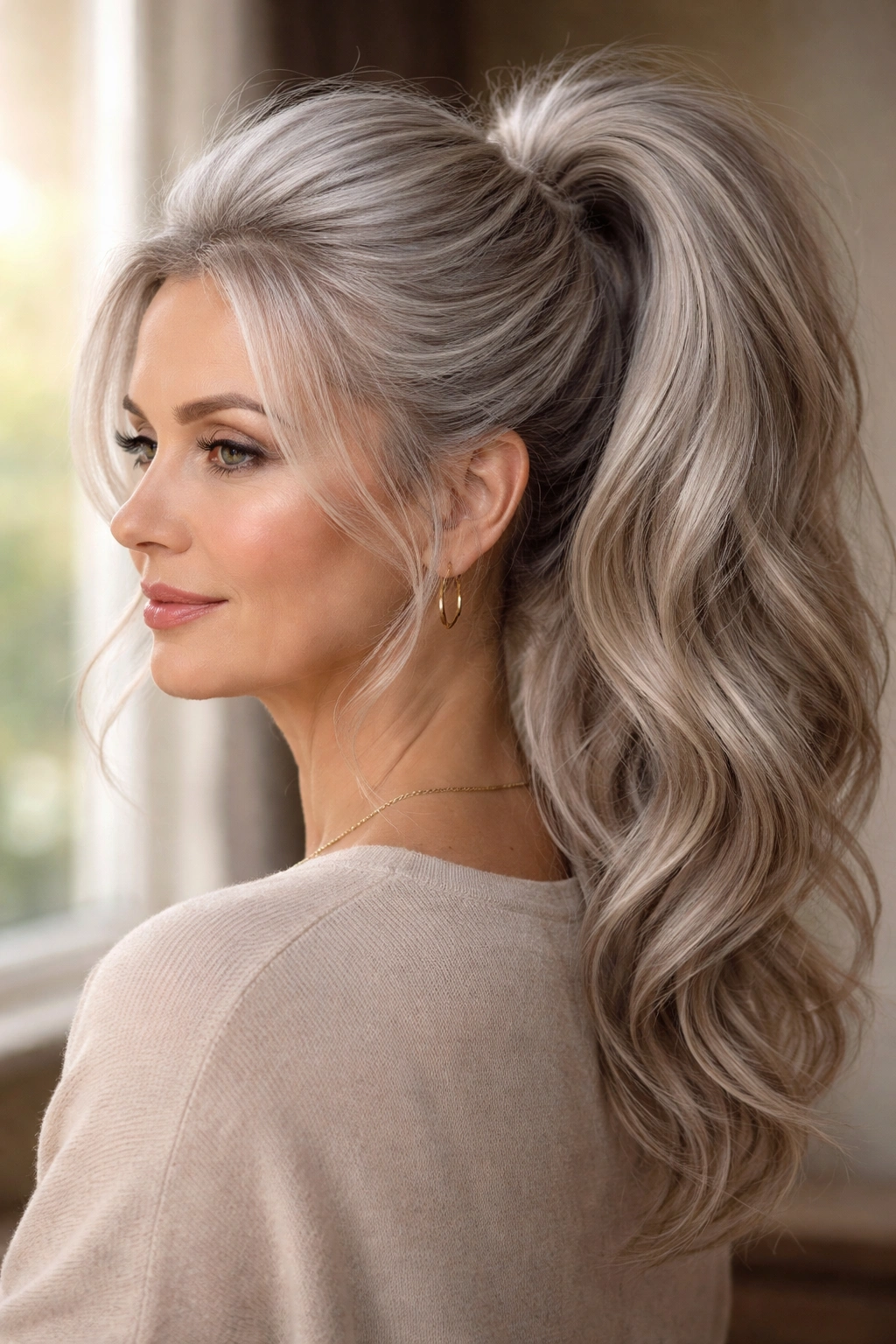
Gray and silver hair deserves styling approaches that honor its unique beauty rather than trying to minimize or hide it. Each of these ten ponytail styles works with gray hair’s reflective qualities, natural texture variations, and inherent sophistication to create looks that are genuinely stunning. Whether you gravitate toward the polished perfection of a sleek low ponytail, the romantic softness of windswept tendrils, or the dimensional interest of a voluminous layered style, the key is finding what makes you feel confident and beautiful.
The most important thing to remember is that gray hair is a strength in styling, not a limitation. The techniques that work best on gray—creating texture, embracing softness, playing with dimension and movement—are the same techniques that create the most interesting, dynamic hairstyles regardless of hair color. Your gray hair isn’t a compromise; it’s an opportunity to wear styles with intention and to showcase a color that’s genuinely rare and striking.
Start with the style that most appeals to you, practice it a few times until you’ve got your personal technique dialed in, and then branch out. You’ll likely find that several of these styles become your go-to rotation, each one serving a different situation or matching a different mood. The fact that you have multiple polished options at your fingertips is one of the quiet superpowers of wearing gray hair with intention.
