



Crochet ponytails have become one of the fastest-growing protective styling trends because they deliver impact without the commitment of traditional braids or twists. If you’re looking for a hairstyle that transforms your look in under an hour, offers significant volume, and gives your natural hair a genuine break from styling stress, crochet ponytails deserve a spot in your rotation. The appeal is straightforward: you’re working with pre-curled or pre-textured hair extensions that you simply crochet into cornrows or braids at your scalp, then secure into a ponytail shape. The versatility here is genuinely impressive — from sleek high ponytails to textured locs, from bounce-and-go curls to elegant braided styles, the options span a much wider range than many people realize.
What makes crochet ponytails particularly attractive is the speed factor. Compared to hand-braiding extensions from root to tip, a solid crochet ponytail installation can be complete in 45 minutes to 90 minutes depending on the density and style you’re after. You’re not braiding all the way down; you’re creating a secure base at the roots and anchoring the ponytail, which cuts installation time significantly. Beyond the quickness, crochet ponytails let you experiment with colors, textures, and lengths without committing to months of styling. You can swap styles weekly if you want to. That flexibility, combined with the protective nature of keeping your natural hair tucked away while these extensions do the heavy lifting, explains why so many people are making crochet ponytails their go-to protective style.
The variety available extends well beyond what most people expect when they first hear the term. Each crochet ponytail style has its own visual signature, maintenance rhythm, and best-use scenarios. Some work beautifully for everyday wear, others shine at special events, and a few bridge that gap perfectly. Understanding the specific qualities of each style — installation complexity, longevity, styling flexibility, and who it suits best — helps you pick exactly what you need without guessing.
1. The Straight Crochet Ponytail with Sleek Roots
The straight crochet ponytail is the minimalist choice for anyone seeking clean, polished simplicity. You’re working with straight hair extensions that get crocheted into cornrows leading to a high, mid, or low ponytail base. The result feels intentional and refined — think chic, modern sophistication rather than voluminous drama. This style works because the straightness creates a visual continuity that elongates your silhouette and plays well with both casual everyday wear and dressier occasions.
Installation and Styling Approach
This is one of the most straightforward crochet ponytail styles to install. Start with tightly woven cornrows (typically 4-8 rows depending on desired ponytail density) leading from your crown or the sides of your head toward where you want the ponytail base positioned. Once you’ve crocheted the straight hair extensions into place along these cornrows, you’ll secure everything at the base with a crochet hook through pre-made loops or with elastic bands and decorative hair cuffs. The straightness of the hair means minimal frizz management once it’s installed, which extends the style’s lifespan. You can wear it sleek and shiny with a light smoothing serum, or you can add a middle or side part for a different look without changing the actual installation. The versatility here comes from styling options, not texture variation.
Maintenance and Longevity
Straight crochet ponytails typically last 3-4 weeks before loosening becomes noticeable, sometimes longer if your cornrow work is exceptionally tight. The straight texture doesn’t require daily styling the way curly or textured options do. You can literally wake up and go — the hair maintains its shape. Sleeping with a silk bonnet or scarf helps prevent frizz and keeps the ponytail looking fresh. Product-wise, lightweight serums or oils along the length keep the straight hair glossy without weighing it down. Avoid heavy creams that will coat the straight texture and make it look dull.
2. Curly Crochet Ponytail with Soft Waves
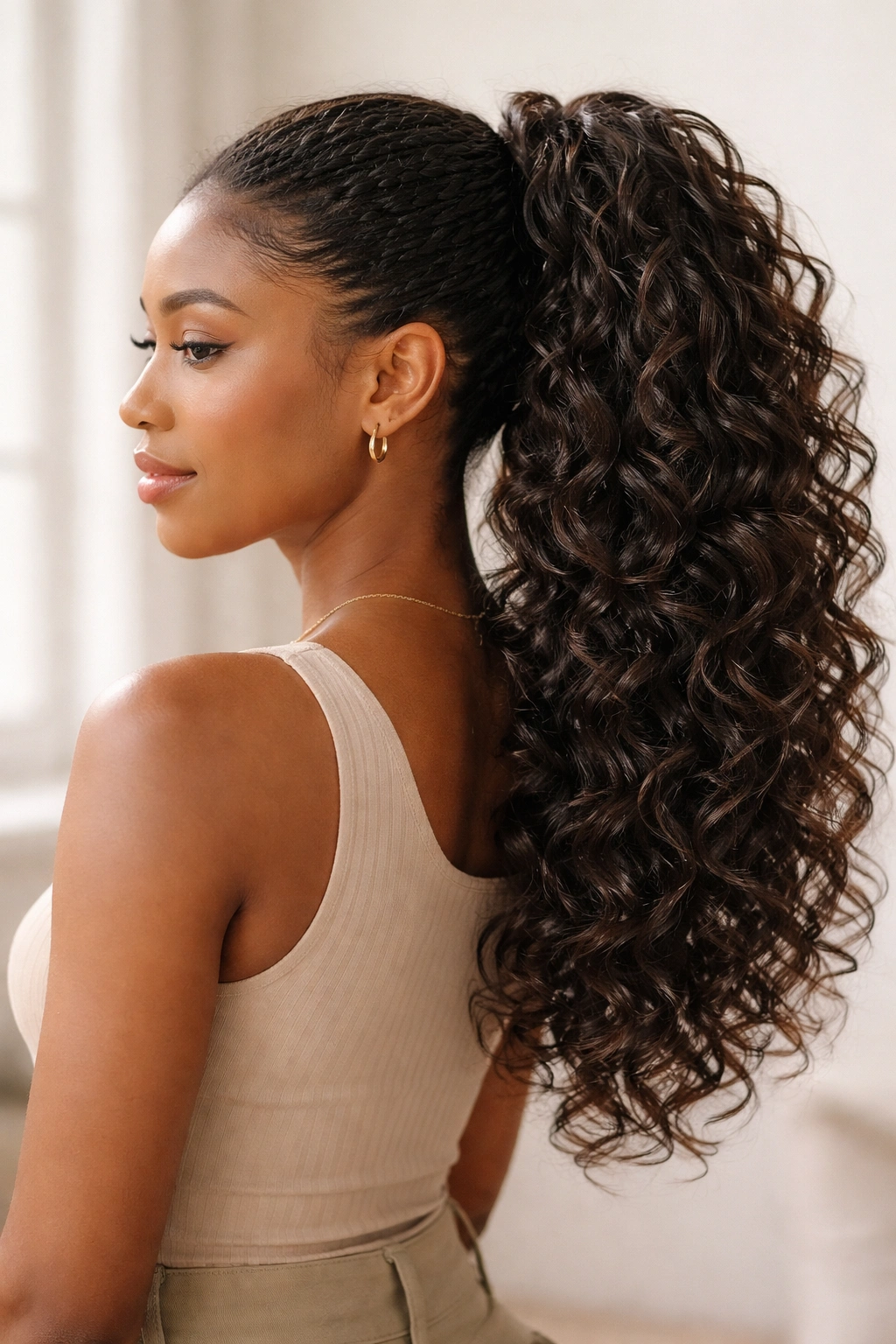
If you want volume, bounce, and that effortless “I woke up like this” texture without the daily styling commitment of maintaining actual curls, soft-wave crochet ponytails deliver exactly that. The pre-curled extensions sit somewhere between loose waves and defined curls — they have texture and dimension without being tightly coiled. This style reads younger and more playful than straight ponytails while still feeling polished enough for professional settings. The curl pattern catches light beautifully and creates the illusion of significantly thicker hair than you might actually have.
Why This Works for Texture and Movement
The wave pattern in these extensions means you get movement with minimal effort. You don’t have to recreate curls daily or use heat styling to maintain the look. The waves hold their shape as long as you avoid crushing them under tight bands. What many people love about this style is how quickly you can refresh it — a quick spritz of water and maybe a leave-in conditioner, then you’re done. The waves also hide minor looseness in the crochet foundation better than straight hair does, which can extend the style’s wearable lifespan. That said, you’ll notice that the waves near the roots where your natural hair is typically less textured can create a slight visual transition — something to consider if you prefer ultra-seamless blending.
Best Environments for Curly Crochet Ponytails
This texture absolutely shines in warm, humid climates where the moisture in the air enhances the wave pattern without causing frizz (because you’re working with pre-set curls rather than hair you’re curl-training). It’s ideal if you do water activities regularly because the curls don’t go flat the way straight hair does when wet — they actually maintain their shape. The style works beautifully for casual settings, gym wear, and dates, though you can absolutely dress it up with jewelry and proper styling for evening occasions.
3. Kinky Twist Crochet Ponytail
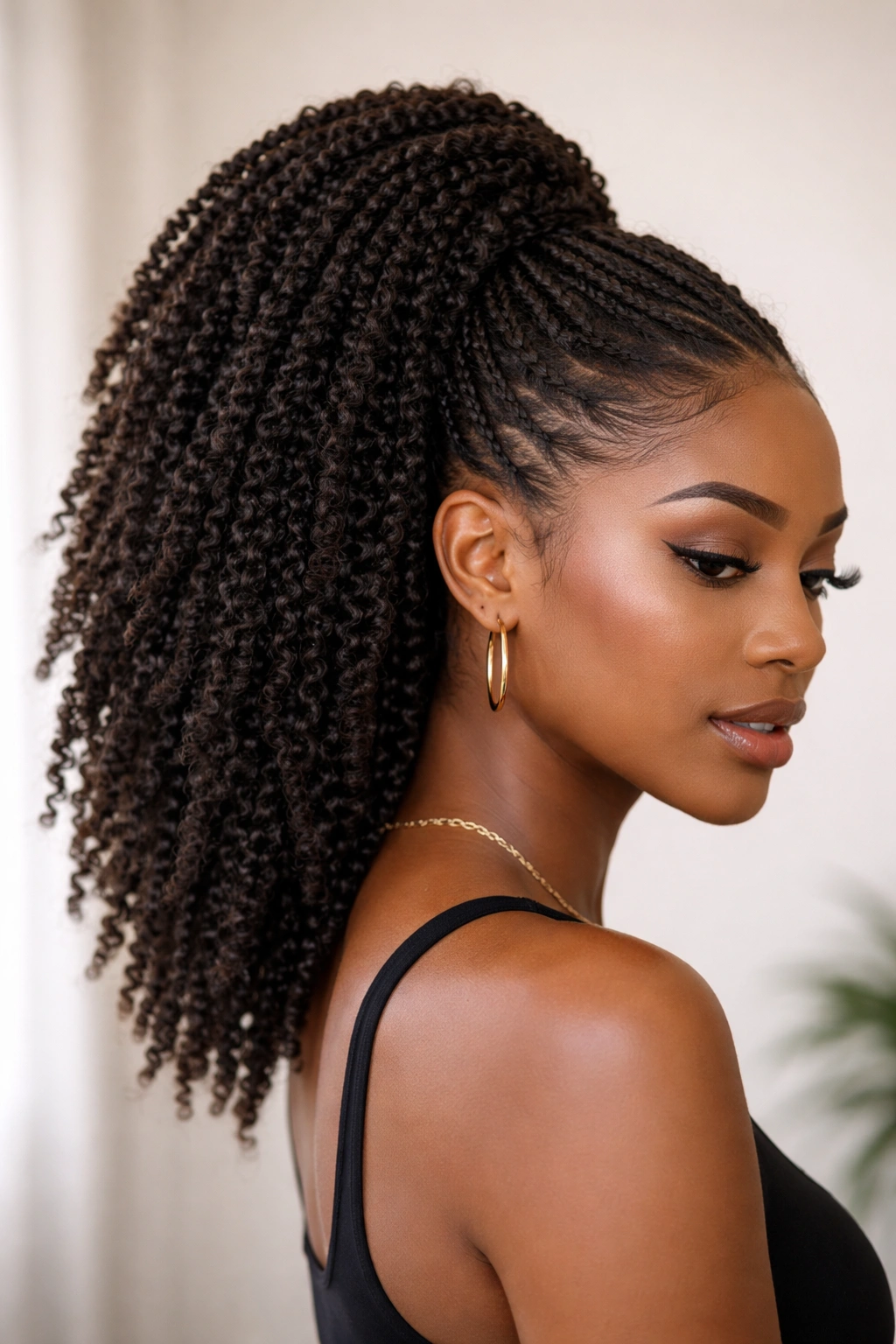
Kinky twist crochet ponytails embrace a tighter, more textured aesthetic that celebrates natural-looking hair texture while delivering the speed and protective benefits of crochet installation. The kinky texture (sometimes called marley or kinky coily) looks authentic and earthy while requiring almost no daily maintenance. This style has become increasingly popular because it works beautifully across a wider range of skin tones and face shapes, and it offers a protective styling option that doesn’t sacrifice authenticity for convenience.
Installation Details and Visual Impact
The kinky twist texture is denser and more compact than loose waves, which means the ponytail looks full and substantial even with fewer rows of cornrows supporting it. Installation follows the same foundation principle — you crochet the kinky-textured hair into cornrows — but you might need slightly fewer rows because the texture itself creates more volume. The kinky texture also tends to hide any imperfections in the crochet work better than straight hair, making this a forgiving style for installation. Visually, kinky twist ponytails read as intentional and sophisticated, not as a lazy style or a placeholder protective style.
Maintenance and Styling Flexibility
Once installed, kinky twist ponytails need refreshing less frequently than curly ponytails. You can go 5-7 days between washes without the style looking significantly different because the textured nature of the hair means it holds its shape regardless of slight matting or settling. When you do wash, use a gentle low-poo or cowash that respects the texture without stripping it. Deep conditioning keeps the kinky hair from drying out, which is crucial for maintaining the texture’s appearance. If you want to refresh the style between washes, you can gently retwist sections of the ponytail for a refreshed look, though this isn’t necessary for the style to look current.
4. Locs Crochet Ponytail
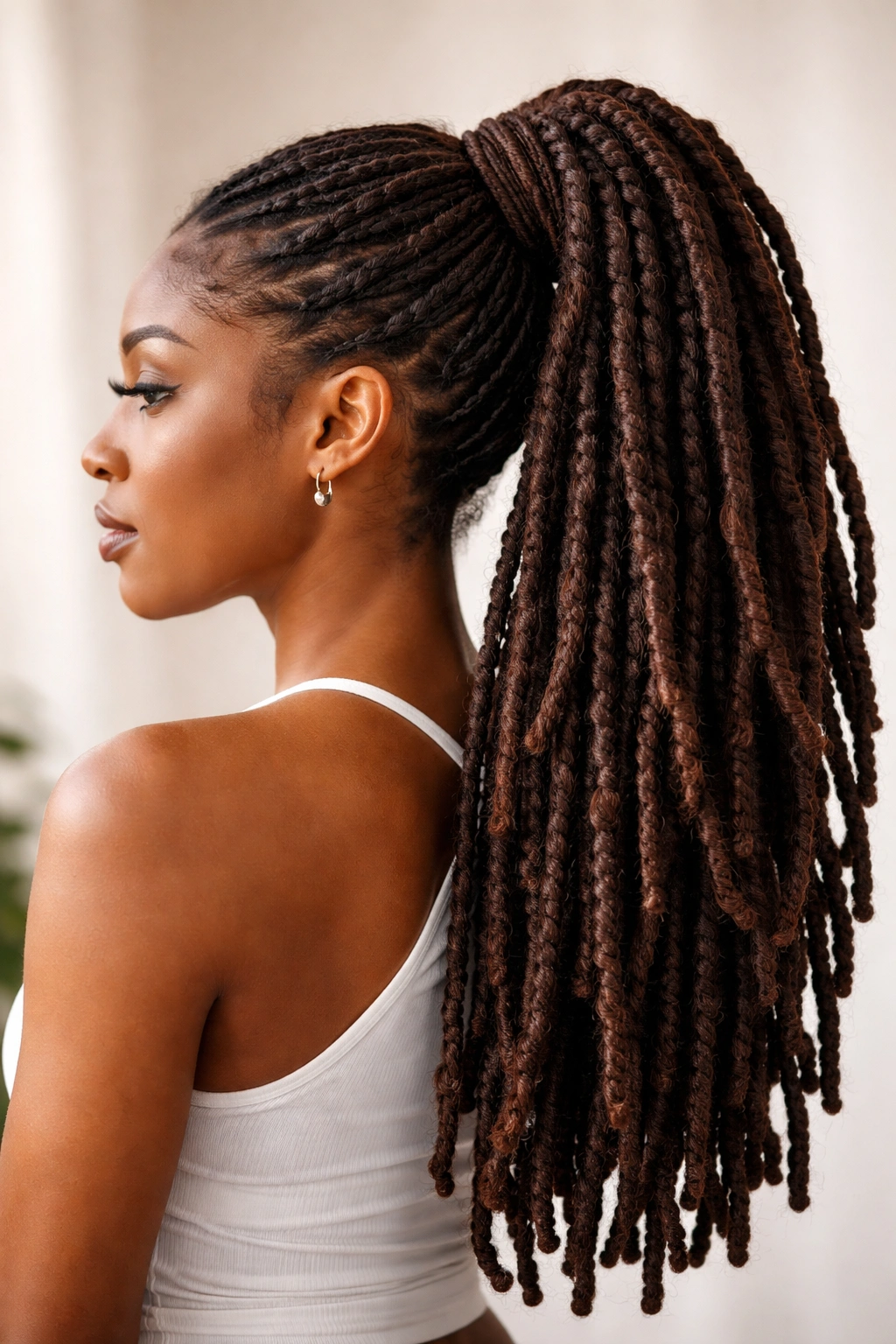
Crochet locs offer the visual impact and wearable longevity of actual locs without the multi-month commitment and the permanent alteration to your natural hair. These are pre-made locs (either faux locs or genuine permanent locs) that you crochet into cornrows at the roots, creating a lightweight ponytail that feels substantial and looks absolutely striking. This style has serious staying power — both literally (these installations last 6-8 weeks) and aesthetically (locs make a statement and demand attention in the best way).
Why Locs Create Different Installation Needs
Because locs are thicker and heavier than curly or straight extensions, the cornrow foundation supporting them needs to be tighter and more secure. You’ll typically need fewer rows of cornrows (maybe 3-5 instead of 6-8) because each loc contributes more visual weight and dimension. The installation itself might take slightly longer because creating secure anchor points for thicker locs requires careful attention to tension and security. Once installed properly, though, locs are extremely low-maintenance. They hold their shape indefinitely and don’t require daily styling or refreshing. The weight of genuine locs does pull on your hairline slightly, so positioning the ponytail toward the middle or lower on your head rather than ultra-high helps minimize tension on your edges.
Longevity and The Appeal of Locs
Crochet locs can stay in place for 6-10 weeks, significantly longer than other crochet ponytail options. This extended wearability makes the installation effort more worthwhile if you know you can commit to the style for a solid 8 weeks. The locs also allow for beautiful styling variations once installed — you can accessorize them with beads, cuffs, and wraps, or leave them clean and simple. Many people rotate through different locs styles using the same anchor cornrows, changing out the locs themselves while keeping the foundation in place and just refreshing the crochet points.
5. Goddess Locs Crochet Ponytail
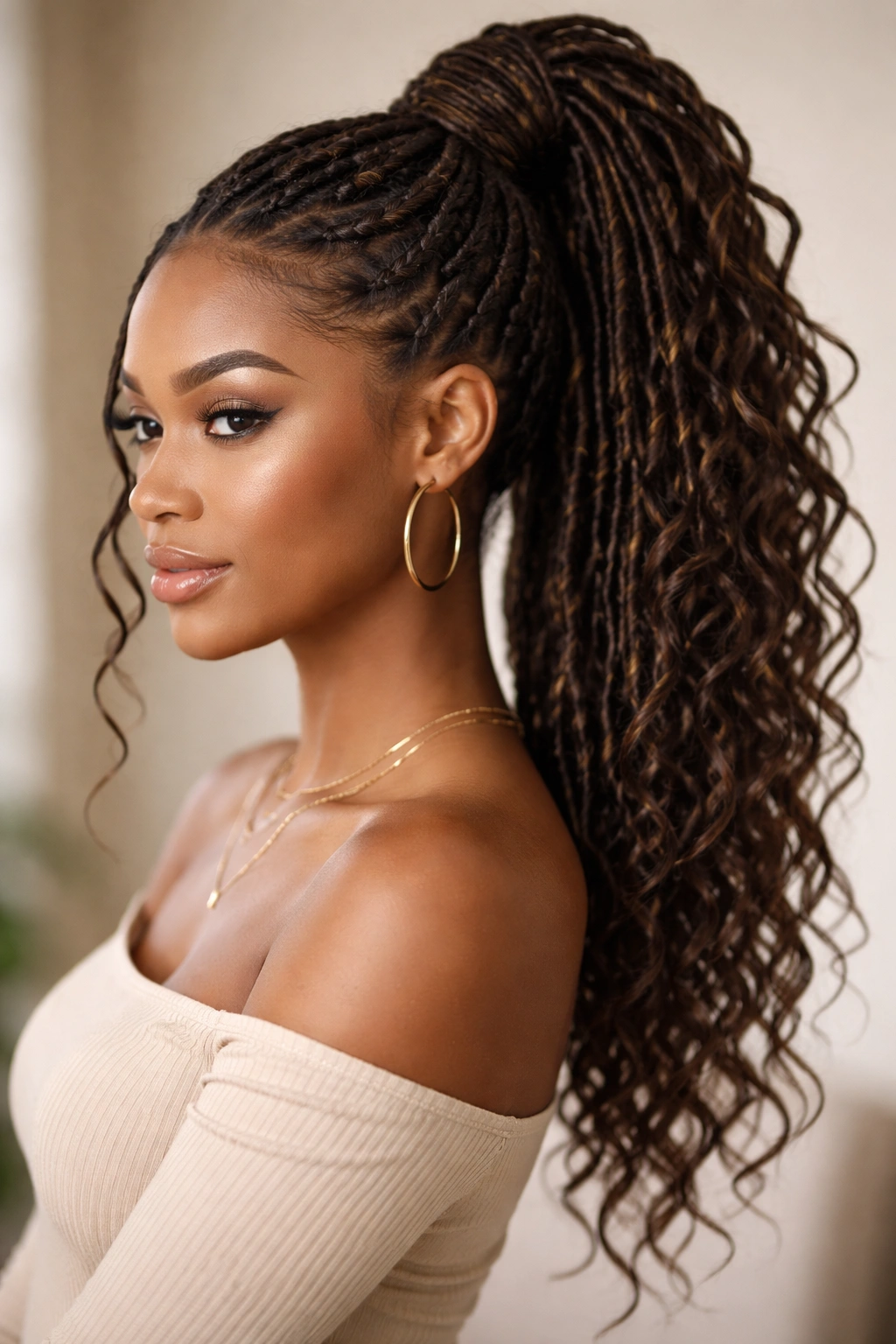
Goddess locs offer a middle ground between straight extensions and traditional locs — they’re pre-wrapped textured locs with a softer, more elegant aesthetic than standard faux locs. The wrapping creates visual interest and a refined look that photographs beautifully and reads as intentional and sophisticated. Goddess locs have become a favorite for people seeking the permanence of locs without the ultra-thick visual weight, or who want the longevity of a locs style with slightly more versatility in how you can dress them up or down.
The Wrapped Aesthetic and Installation
Goddess locs are typically created with a wrapped yarn or thread around a base hair texture, creating a dimensional, wrapped look that catches light and creates visual depth. Installation is similar to regular locs in that you’re crocheting into cornrows, but goddess locs are slightly lighter and more flexible than traditional locs, which can actually make installation slightly easier for people managing tension issues. The wrapping means these locs are less likely to unravel than some faux loc options, and the wrapped texture is more durable than you might expect from the delicate appearance.
Styling and Versatility
Goddess locs allow more styling flexibility than regular locs. You can style them into multiple ponytail configurations, half-up styles, or side parts without concern about the style falling apart. The lighter weight compared to regular locs means there’s less tension on your hairline and edges. Many people find they can wear goddess locs more comfortably for longer durations because the weight feels more distributed. The wrapped aesthetic also means you can change the color of the wrapping thread or yarn, allowing you to refresh the look without changing the locs themselves. This is a perfect option if you want the ease of locs but the flexibility to switch up your style every few weeks by changing the wrap color.
6. Boho Braided Crochet Ponytail
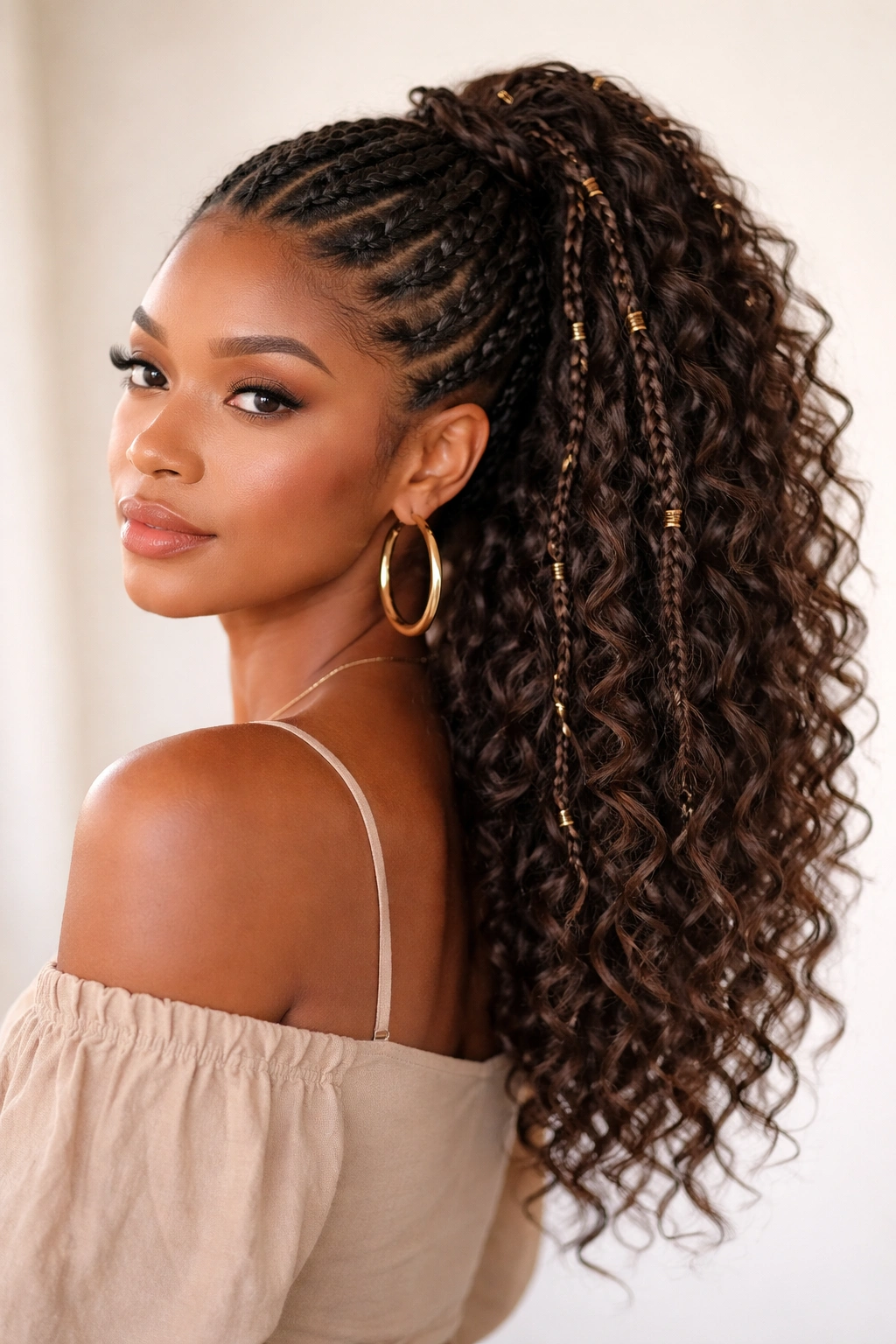
The boho braided crochet ponytail combines delicate braided sections within the ponytail itself, creating a textured, artistic look that feels effortlessly chic. This style works by crocheting extensions into cornrows at the base, then braiding portions of the ponytail hair, creating a mixed-texture effect. The braided sections can be chunky and loose for an ethereal look, or tighter for more definition. What makes this style distinctive is the intentional mixing of textures — you’re not aiming for uniformity; you’re celebrating the contrast.
Creating the Braided Elements
You’ll typically use softer, longer extensions that can be braided easily without creating too much bulk at the crown. Some installations feature one or two thick braids running through the center of the ponytail with loose curly hair on the sides. Others incorporate multiple thinner braids throughout. The braiding happens after you’ve installed the ponytail base — you’re basically styling the ponytail hair itself into braids, rather than braiding during the initial installation. This means you can experiment with different braiding patterns and adjust the look without completely reinstalling the foundation. If you want to refresh the style or try a different braiding pattern, you can take out the braids and restyle the ponytail without touching the crochet work.
Best For and Maintenance
Boho braided ponytails work beautifully for people who love playing with their hair and want a style that looks different depending on how you style the ponytail that day. The mixed texture means the style hides imperfections well and looks intentional even if things aren’t perfectly neat. Maintenance is moderate — you’ll want to refresh the braids weekly or every few days depending on how loosely you’ve braided them. The style reads beautifully for vacation, festival settings, or anywhere you want to project a relaxed, creative vibe while keeping your hair protected.
7. Passion Twist Crochet Ponytail
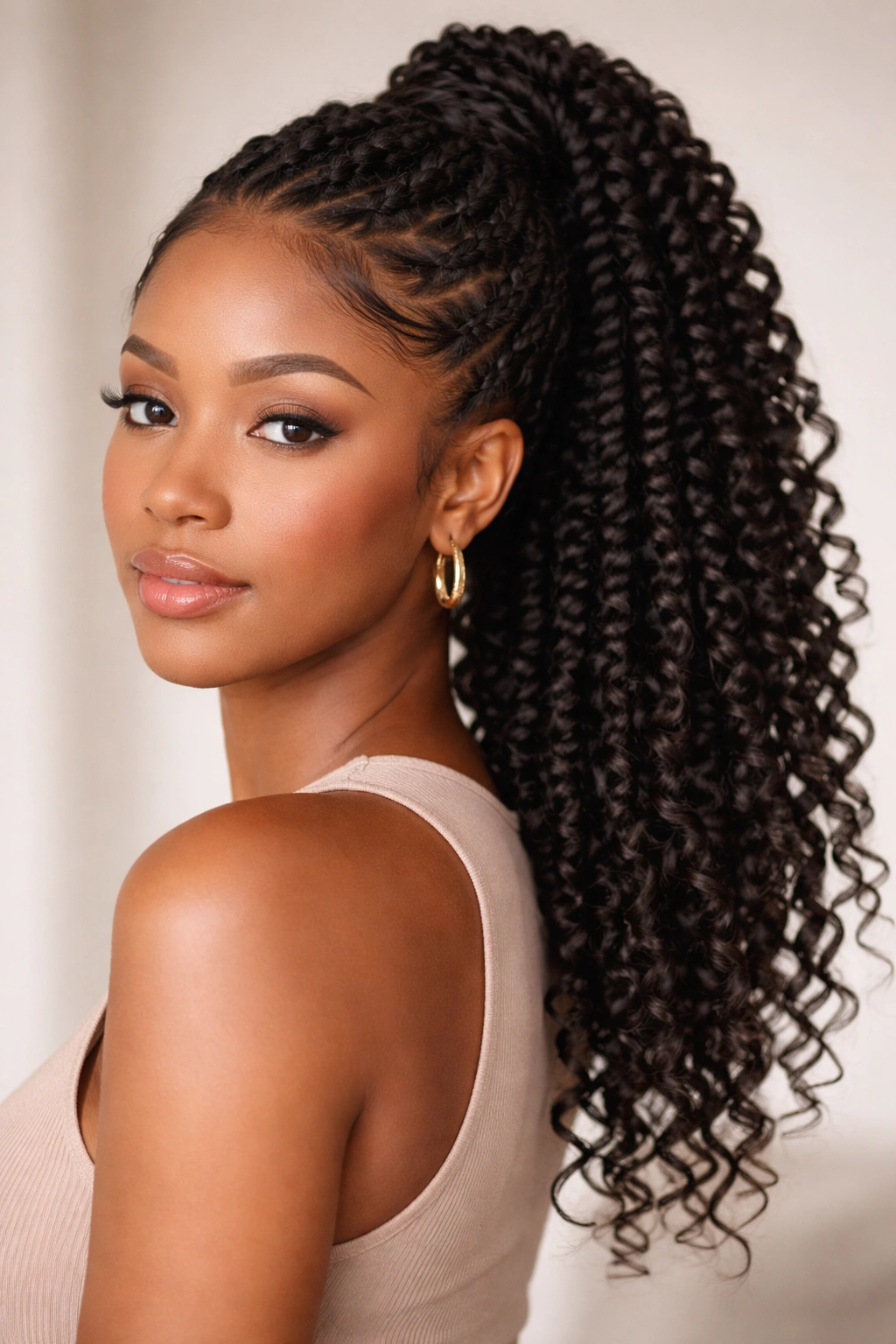
Passion twists are a legitimate alternative to traditional crochet ponytails, created by twisting the extension hair around your natural hair instead of crocheting it in. The result is a textured, twisted look that’s lightweight and has gorgeous visual definition. Passion twist crochet ponytails create one of the most elegant protective styles available, especially if you use extensions with longer lengths that create flowing, bouncy twists. The twists have a soft, romantic quality that reads beautifully in any setting.
The Twist Installation Process
Passion twists involve wrapping the extension hair around sections of your natural hair in a spiraling motion, working from the roots down. For a ponytail style, you’ll create passion twists along cornrow-like pathways leading to the ponytail base, then secure everything at the base. The installation takes slightly longer than standard crochet work (usually 2-3 hours), but the result is exceptionally beautiful and detailed. Because you’re not using a crochet hook, the installation requires slightly different hand techniques and practice, but many stylists find they can work faster once they develop rhythm with the twisting motion.
The Lightweight Quality and Longevity
Passion twist ponytails are noticeably lighter than crochet ponytails using the same extension hair, which is a genuine advantage for people with sensitive edges or anyone concerned about tension alopecia. The twists also tend to last slightly longer than crocheted versions — 5-6 weeks is typical — because the twisted structure holds incredibly well once set. The twists also unravel less readily if a section loosens, which means you get more longevity before the style becomes noticeably compromised. The lightweight quality makes this an excellent choice if you’ll be wearing the style for 5+ weeks and want minimal stress on your hairline.
8. Water Wave Crochet Ponytail
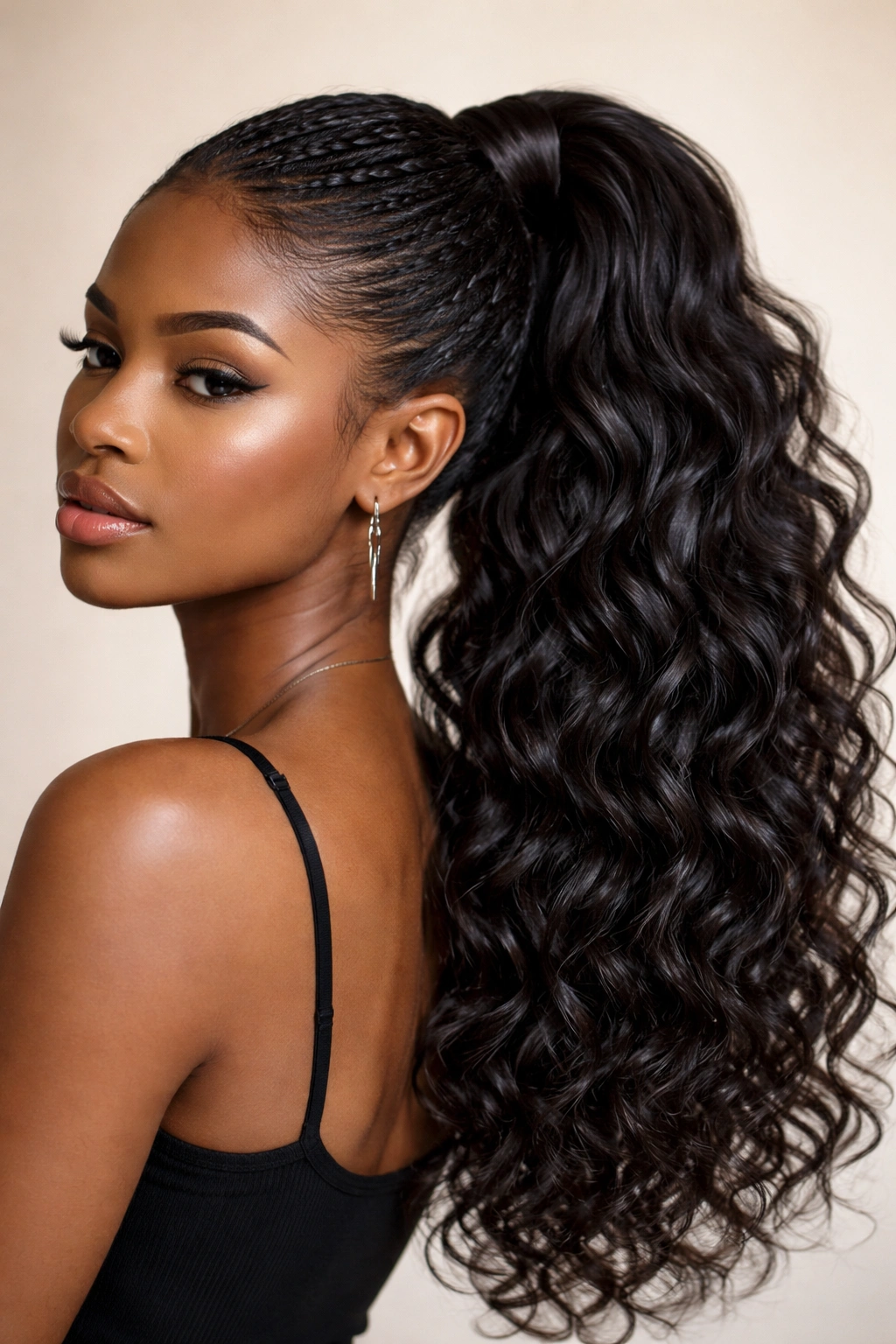
Water wave extensions are pre-formed with a distinctive wave pattern that creates an ocean-like ripple texture — subtle, sophisticated, and incredibly versatile. Water wave crochet ponytails deliver the glamour of waves without the frizz management of styling natural or curly hair. This texture has gained serious popularity because it photographs beautifully, moves like a dream, and looks polished whether you’re dressing up or down. The wave pattern is tighter and more defined than loose curls but softer than kinky twists.
Why Water Waves Offer Unique Styling Flexibility
The water wave pattern sits at an ideal intersection of texture and manageability. You get dimension and movement without the daily refreshing that loose curls require. The waves also work beautifully when you smooth them down with a light serum for a sleeker look, or you can enhance the waves by scrunching them gently with water and conditioner. This means one ponytail installation can give you multiple styling options depending on your mood and occasion. Water waves also blend relatively seamlessly with most natural hair textures, minimizing the obvious transition between your roots and the extensions.
Real-World Wearability
Water wave ponytails are genuinely one of the most low-maintenance textured crochet options. Once installed, you can literally go weeks without doing anything to the hair except maybe a light touch-up with a smoothing product. The wave pattern holds its shape through sleeping, exercising, swimming, and general daily life. If you’re someone who values minimal styling but wants textured dimension, water waves hit that sweet spot. The style also works across virtually all occasions — from gym sessions to formal events — because the sophistication of the wave pattern reads as intentional and polished.
9. Jumbo Braid Crochet Ponytail
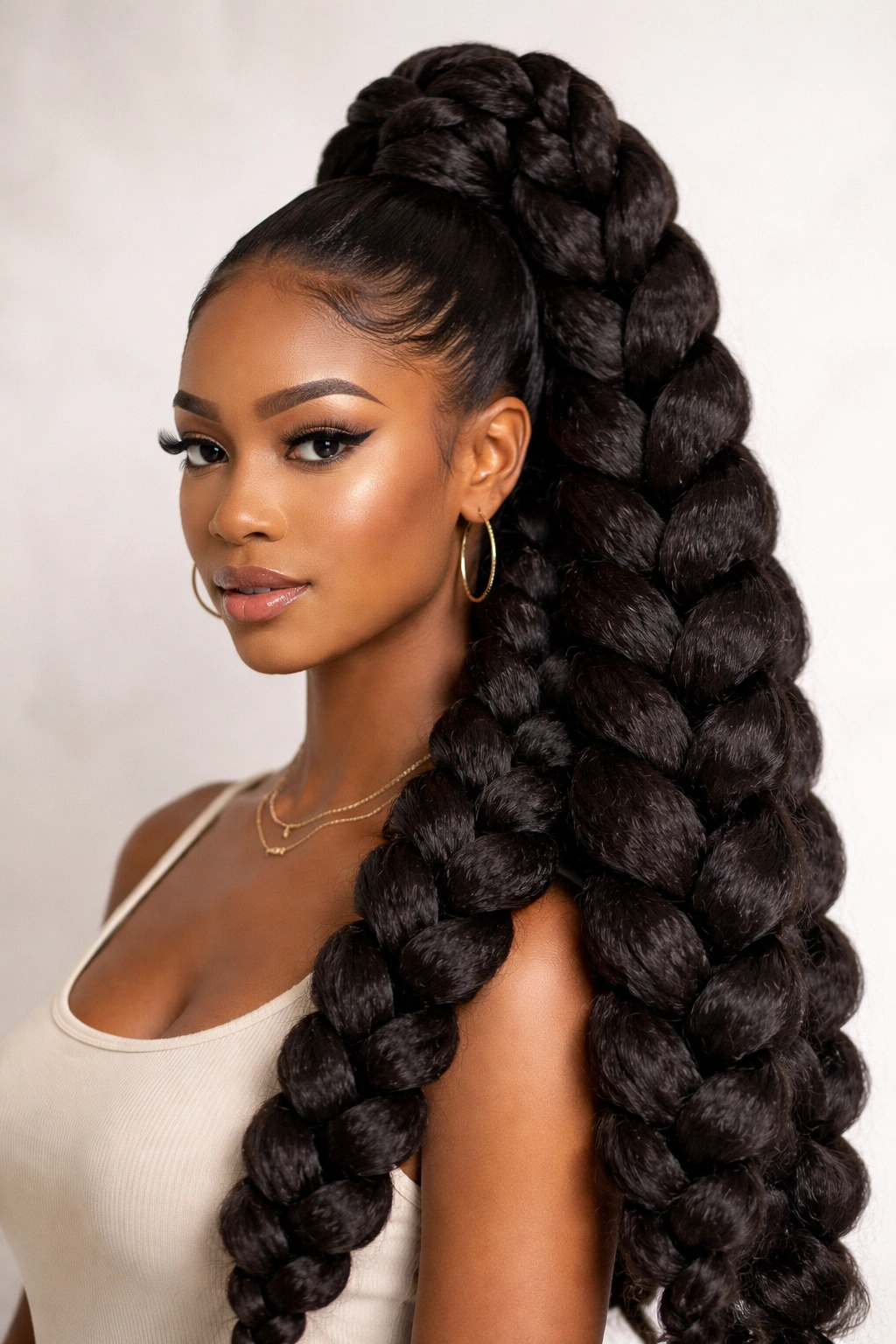
Jumbo braids are exactly what they sound like — large, chunky braids created with thicker sections of extension hair. When styled as a crochet ponytail, jumbo braids create a bold, statement-making look that demands attention. The braid pattern is clearly visible from a distance, and the substantial braids create dramatic visual impact with relatively minimal volume of hair. This style is perfect for anyone who wants an artistic, intentional look and isn’t concerned about blending seamlessly.
Creating the Jumbo Braid Effect
Jumbo braids are created by crocheting thick, pre-braided extensions into your cornrow foundation. The braids are typically quite wide (think 1-2 inches across), which means you need fewer of them to achieve full coverage. Some installations feature two or three massive braids, while others incorporate more narrow braids mixed with thick statement braids. The braiding pattern is beautiful and textured, creating visual interest without requiring complex installation techniques. Because the braids are substantial, they hold their shape beautifully and require minimal maintenance beyond the occasional refreshing or tightening at the base.
Who This Style Suits
Jumbo braided crochet ponytails work beautifully for people with strong personal style who want a look that makes a clear statement. The style reads as bold and creative rather than subtle or professional, so it works better for casual settings, creative industries, or anywhere you want to project confidence and individuality. The substantial braids also work well for people with longer face shapes or anyone seeking a style that creates visual balance and drama.
10. Faux Locs with Curly Ends Crochet Ponytail
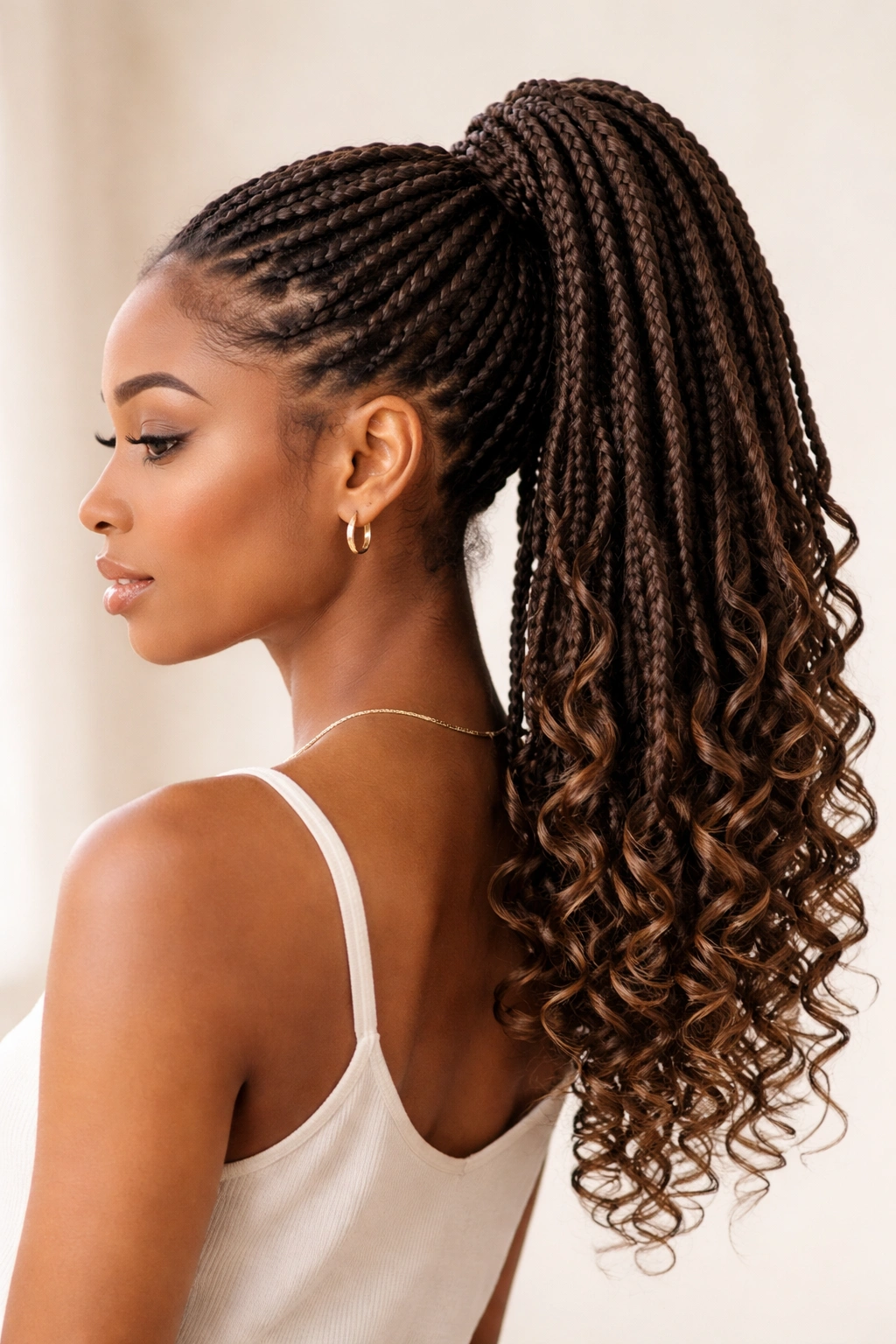
This style combines the clean, sophisticated look of faux locs with loose, curly ends for a hybrid that offers both refinement and softness. The locs create the structured look of a protective style while the curly ends add movement and a youthful quality. This combination appeals to people who love the aesthetic of locs but want to soften the look slightly or add an element of playfulness. The curly ends also make the style feel less permanent, which appeals to people hesitant about fully committing to locs.
The Hybrid Installation Approach
You’ll be working with faux locs (either pre-made or created during installation) that have a softer, curlier section at the ends rather than tapering to a point like traditional locs. Installation follows standard crochet locs procedures — creating cornrow foundation and crocheting the locs into place — but the curly ends add a dimensional finishing touch. The curly ends create visual interest and a less geometric appearance than straight locs, which many people find more appealing aesthetically.
Versatility and Styling Options
The curly ends on these locs can be styled in multiple ways — worn loose and flowing for a softer look, braided together into a thick braid, or even gathered and tied with hair jewelry for a more intentional style. This versatility is a genuine advantage over straight locs, which look essentially the same regardless of how you arrange them. The curly ends also photograph beautifully and catch light in interesting ways. The style maintains the longevity of regular locs (6-8+ weeks) while offering slightly more styling flexibility.
11. Braided Bun Crochet Ponytail
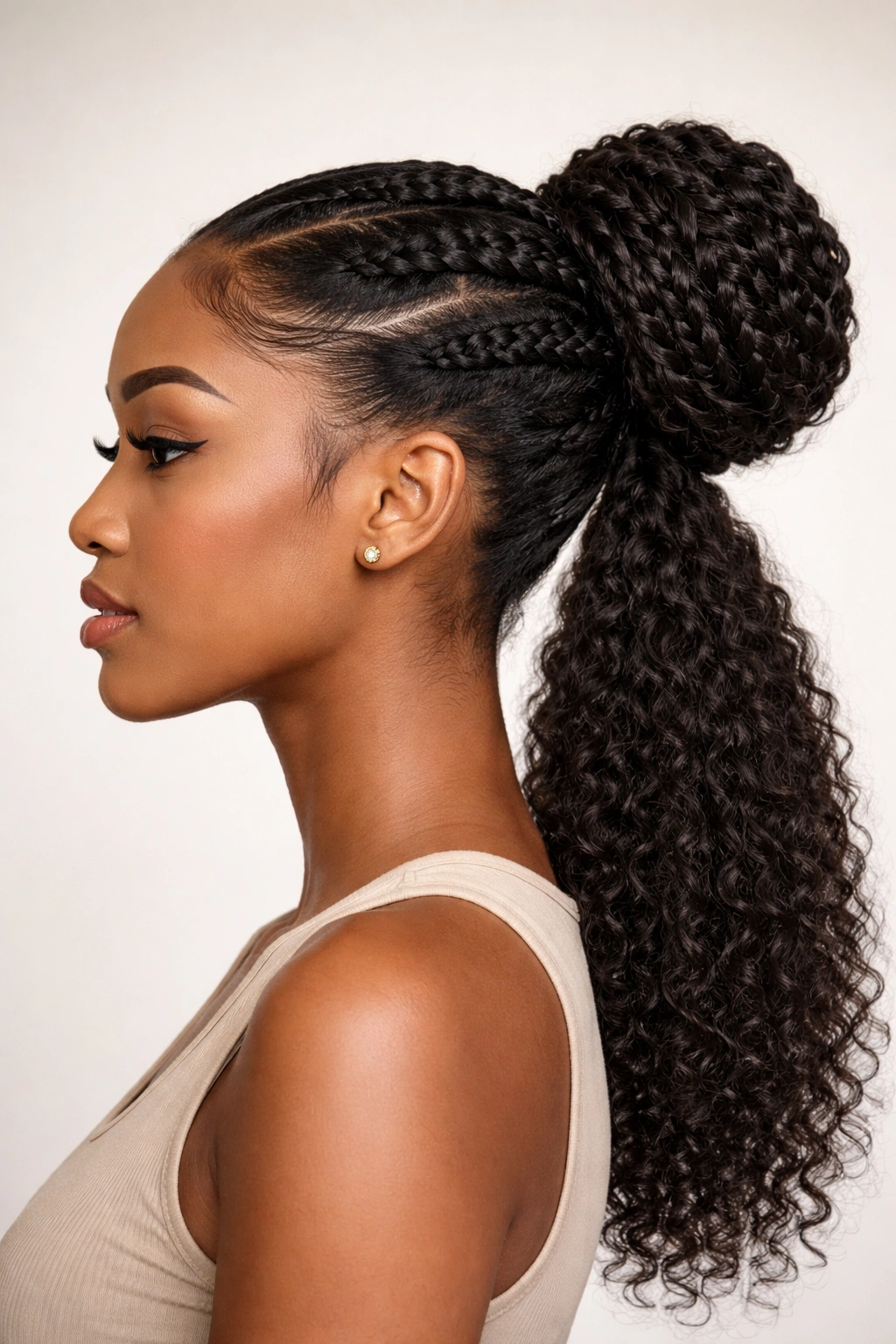
Rather than leaving the ponytail long and flowing, a braided bun crochet ponytail incorporates the extension hair into a bun at the base of the ponytail. You can create a simple, tight bun for a polished look, or a loose, textured bun for something softer. This style is practical, elegant, and works beautifully for anyone seeking a style that keeps hair fully off the neck and face while maintaining visual interest through the bun texture.
Bun Configuration and Installation
Installation starts with cornrows leading to the ponytail base, just like other crochet ponytails. However, instead of securing the ponytail at the base and letting it flow, you’ll braid or gather the extension hair and coil it into a bun shape at the base. You can secure the bun with bobby pins, hair ties, or by weaving the hair back into itself. The bun can be tight and neat for a professional look, or loose and voluminous for something more romantic. The beauty of this approach is that you can change the bun style without touching the crochet foundation — restyle the bun daily if you want variety.
Perfect For Professional and Formal Settings
This style is genuinely one of the most versatile for professional environments because the bun reads as intentional and pulled-together rather than casual. The bun also keeps hair completely away from your face and shoulders, which many people prefer for work settings or physical activity. The style is excellent for formal events because you can create an elegant bun with refined placement and decoration. It’s also practical for people with active lifestyles who need their hair fully secured.
12. Curly Mohawk Crochet Ponytail
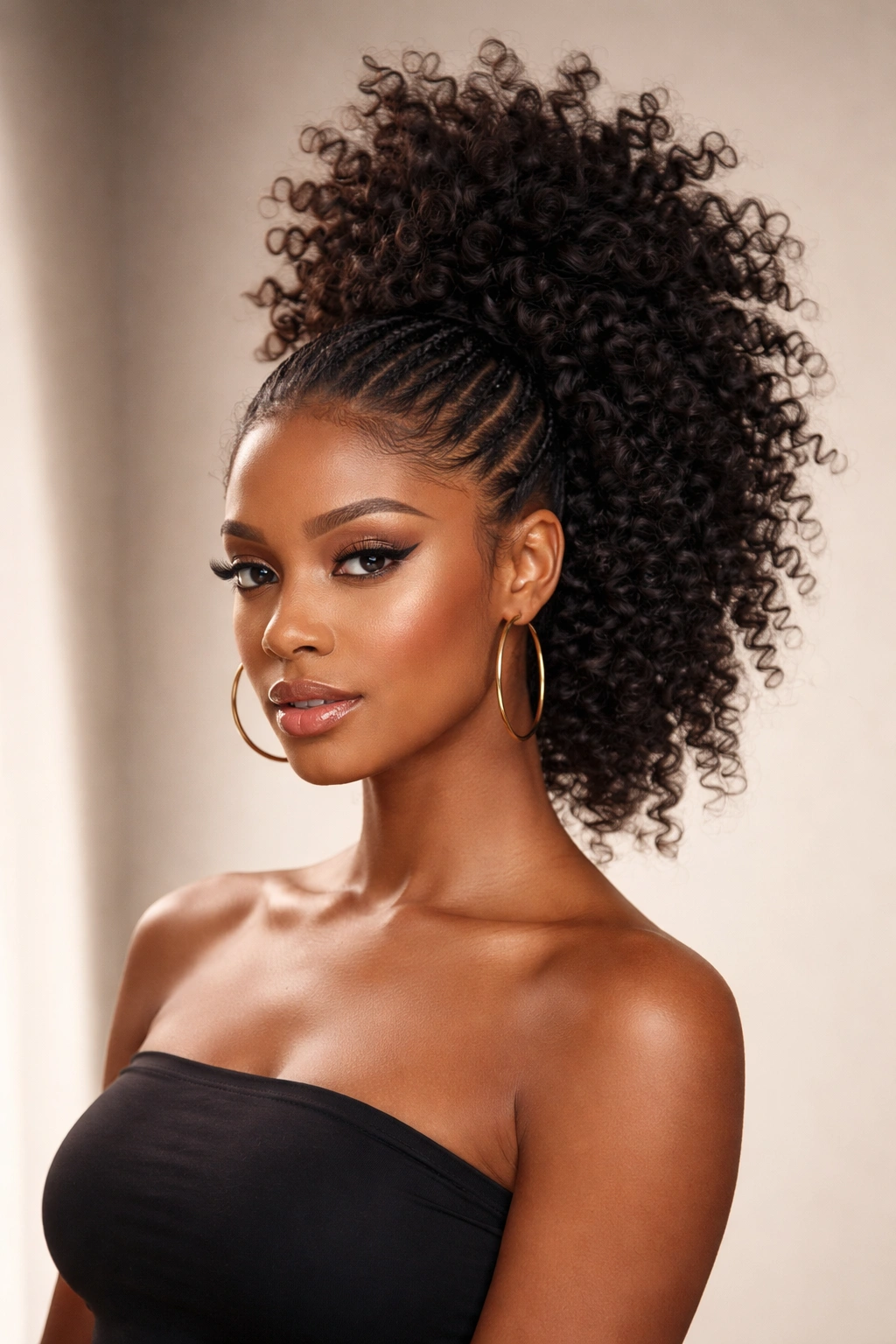
A curly mohawk crochet ponytail creates a bold, edgy look by styling the ponytail into a high, spiky arrangement with curly hair standing up from the crown. This is not a subtle style — it’s designed to make a statement and express personal creativity. The curls catch light beautifully when positioned upright, and the overall effect is youthful, confident, and undeniably eye-catching. This works beautifully for people who love fashion, music, or creative expression and want a hairstyle that matches that energy.
Creating the Mohawk Effect
You’ll start with a standard crochet ponytail base, but instead of securing the ponytail downward in the traditional way, you’ll gather the hair upward and secure it so the curly extensions stand up from your head. This might involve using multiple hair ties, clips, or a combination of securing methods to hold the upright position. The curls have a natural tendency to fall, so the securing method is important — you want something that holds without crushing the curls. Some people use clear elastic bands and clip underneath to prevent them from showing.
Styling and Daily Maintenance
The mohawk needs refreshing more frequently than downward-facing ponytails because gravity constantly works against the upright position. You might need to re-secure and adjust the style every 2-3 days. However, the dramatic impact is worth it for people who want a truly statement-making look. The style photographs absolutely beautifully and is perfect for creative events, performances, or anywhere you want to project absolute confidence and individuality.
13. Two-Tone Crochet Ponytail
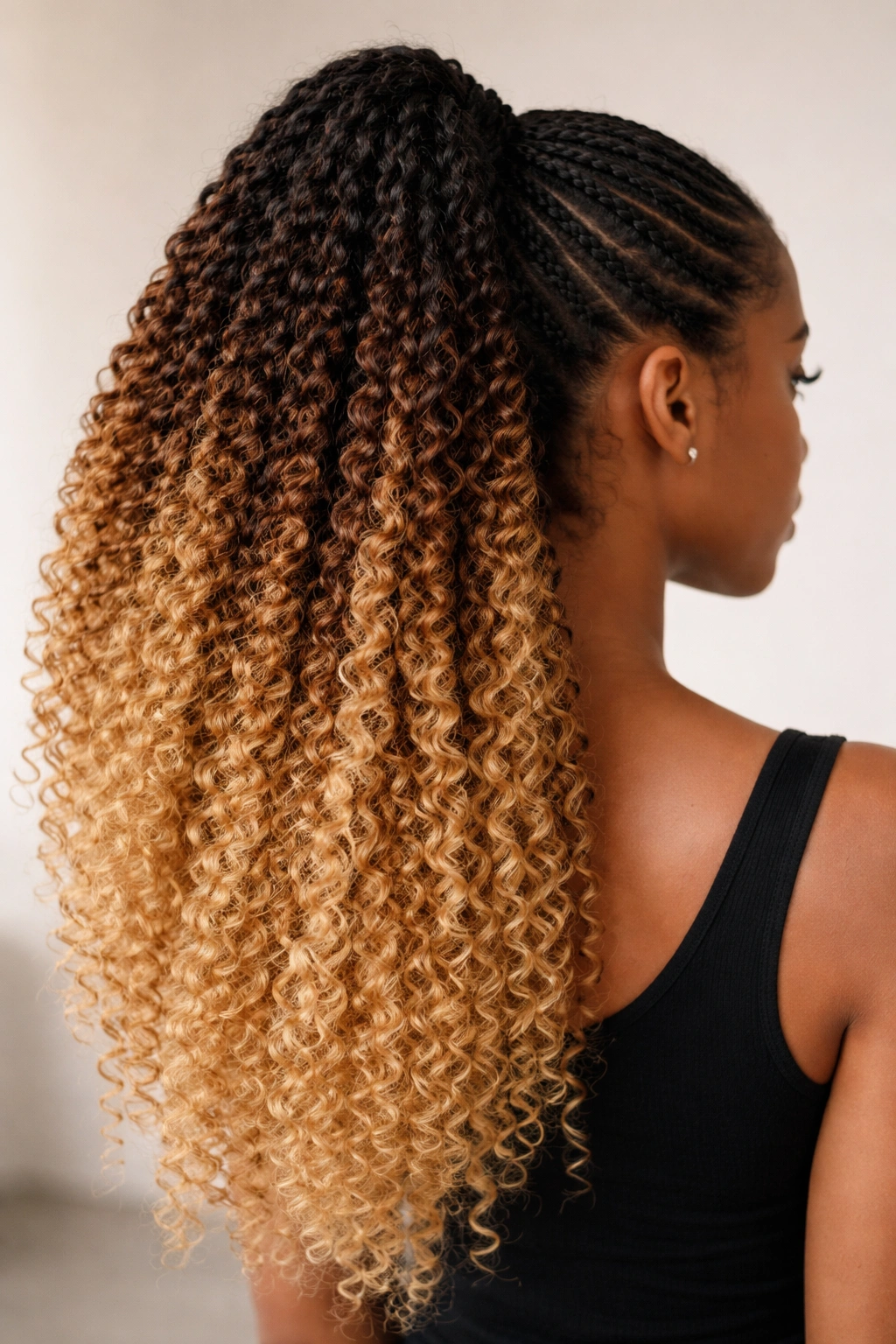
A two-tone crochet ponytail incorporates two distinct colors of extension hair — either blended throughout or sectioned so the color change is visible. This style creates visual drama and works beautifully whether you use complementary colors (blonde and brown, black and burgundy) or more contrasting combinations (blonde and black, purple and pink). The color contrast creates depth and makes the ponytail look fuller than a single-color style with the same amount of hair.
Color Combination Strategies
The most successful two-tone ponytails use colors that sit well together and complement your skin tone. Popular combinations include darker root-like colors transitioning to lighter or brighter ends, which creates an ombré effect, or distinct color sections that create visual interest. You can create the two-tone effect by using two different types of extensions (say, curly hair in one color and straight in another), or simply by positioning different-colored extensions differently throughout the ponytail. The style allows for genuine creativity and personal expression while staying within the bounds of a practical protective style.
Styling and Color Care
Two-tone ponytails photograph beautifully because the color contrast creates visual interest and dimension that single-color styles don’t naturally achieve. If you’re using dyed or colored extensions, avoid excessive heat or heavy oils that can fade the color over time. The style works for virtually any setting, though it definitely reads as more creative or fashion-forward than neutral-colored ponytails.
14. Sleek High Ponytail with Decorative Wrap
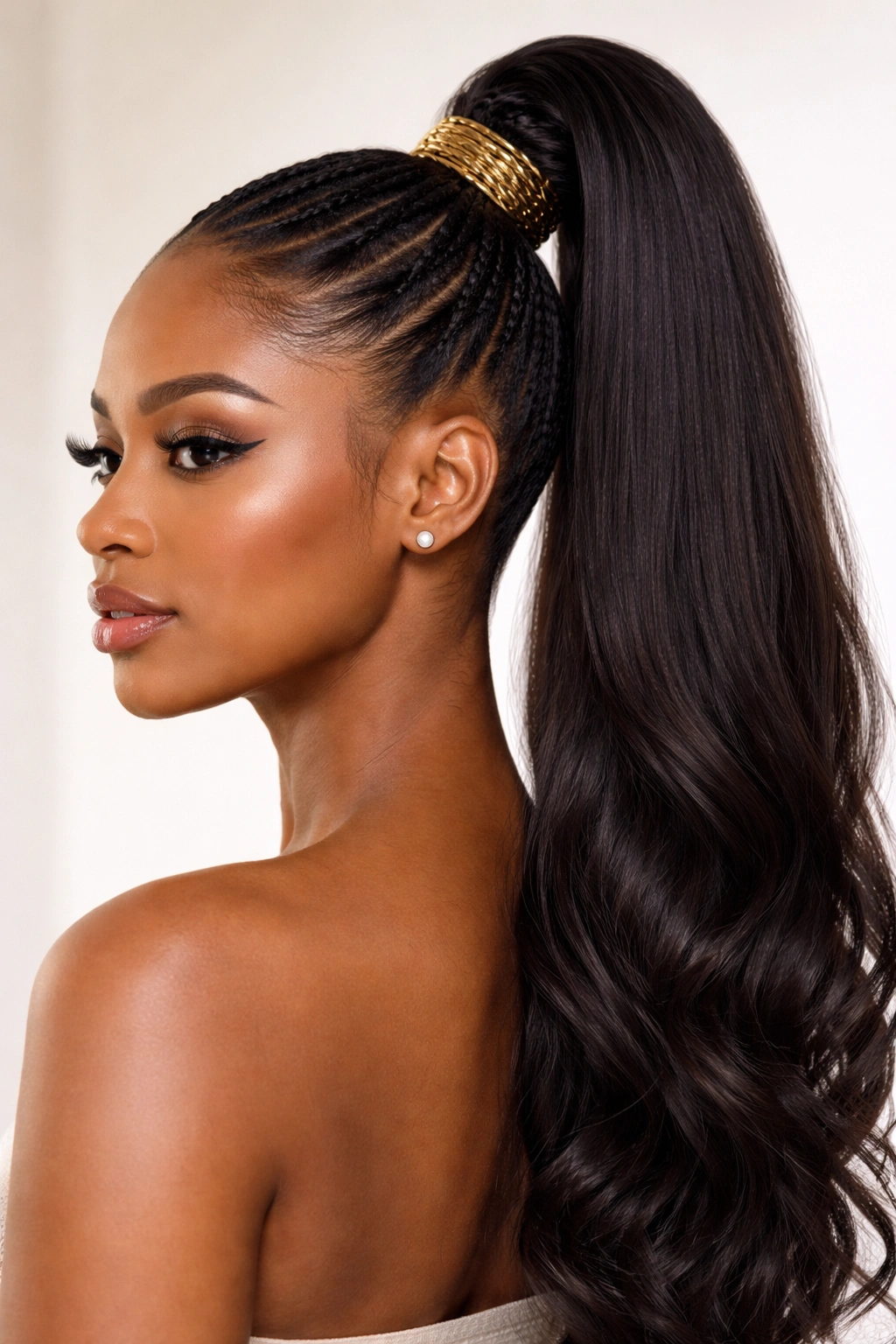
This style is where elegance meets practicality — a smooth, sleek high ponytail secured with a decorative wrap or cuff that doubles as both functional and beautiful. The sleek foundation requires tightly woven cornrows that create a smooth, polished appearance, while the decorative wrap adds glamour and visual interest at the base. This is one of the most versatile crochet ponytail styles because it works beautifully for virtually any occasion while maintaining a refined, intentional appearance.
The Sleek Base and Decorative Elements
Creating a genuinely sleek crochet ponytail requires very tight, uniform cornrows with minimal frizz. You’ll use straight extensions (or extremely smooth curly extensions) and secure them at the high ponytail point. The decorative wrap comes next — this might be a metal hair cuff, a wrapped scarf, decorative cord, or a combination of elements. The wrap should be secure but not too tight, and it should complement your overall aesthetic. Gold, silver, or bronze cuffs work with virtually any skin tone; fabric wraps allow for color coordination.
Versatility Across Settings
This style is genuinely one of the most versatile for moving between casual and formal settings. You can accessorize it differently depending on where you’re going — keep the wrap simple for everyday wear, or add jewelry and additional embellishments for special events. The sleek appearance means it works beautifully for professional environments, while the ponytail’s length and fullness give it visual interest that keeps it from reading as too corporate or stiff.
15. Textured Ombré Crochet Ponytail
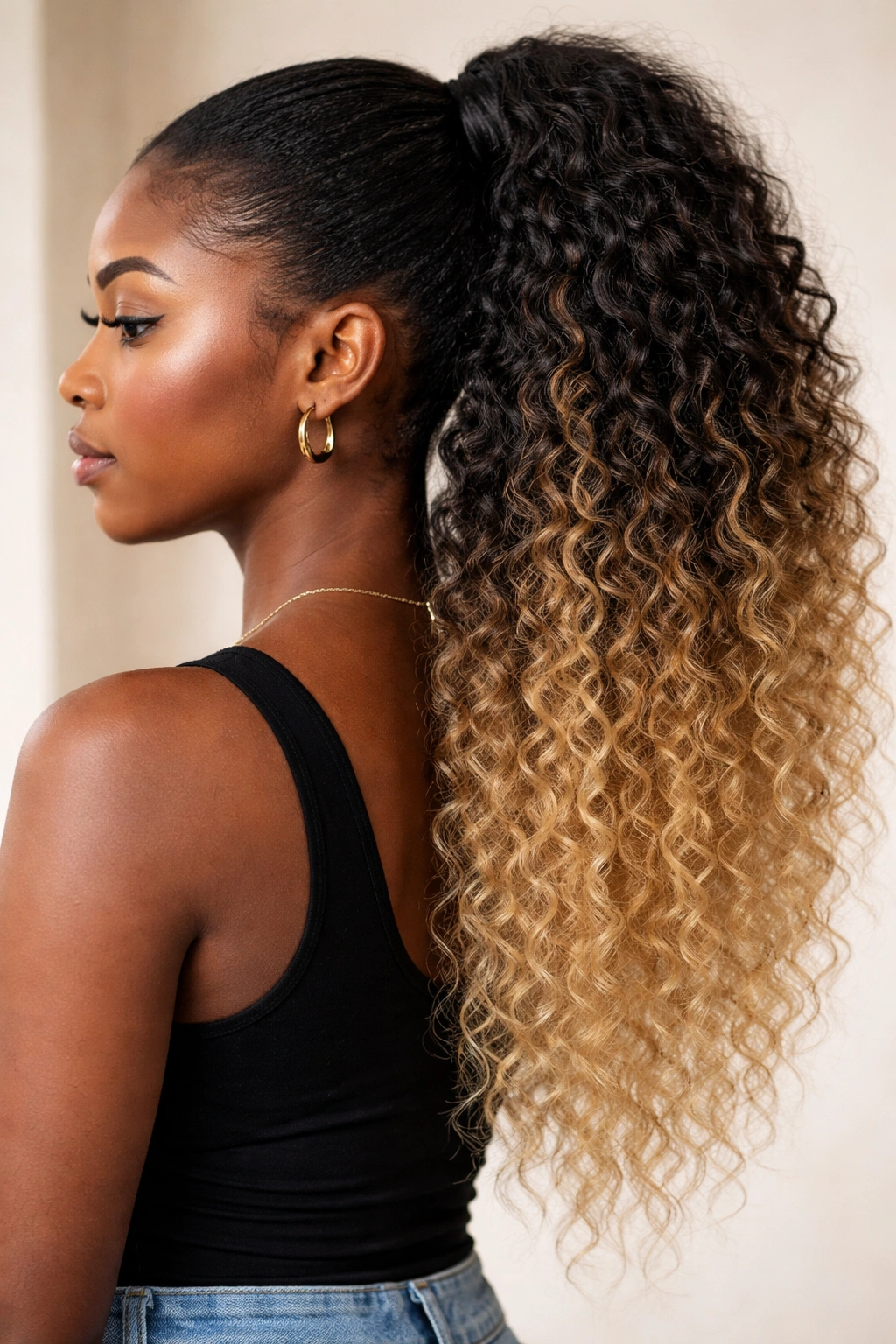
A textured ombré crochet ponytail combines gradient coloring with textured hair extensions — typically starting darker at the roots and transitioning to lighter tones toward the ends. The ombré effect creates depth and visual interest, while the texture (whether that’s loose curls, waves, or kinky texture) prevents the style from feeling flat or one-dimensional. This style is genuinely beautiful, photographs exceptionally well, and offers the protective benefits of crochet installation while delivering sophisticated color play and textural dimension.
Achieving Successful Ombré Effect
The most successful ombré ponytails use extensions that have been pre-colored to create a smooth gradient, or you can purchase different shades and position them strategically throughout the ponytail to create the gradient effect. The transition from dark to light should feel intentional but not harsh — a three- or four-shade gradient typically looks more sophisticated than an abrupt two-color change. The textured nature of the extensions means the color change isn’t as obvious as it would be with straight hair, which creates a softer, more blended appearance that many people find more elegant.
Styling and Longevity
Textured ombré ponytails maintain their beauty throughout the wear period without requiring excessive refreshing because the texture naturally hides minor loosening or matting. The ombré coloring doesn’t fade as visibly on textured hair as it does on smooth hair, so the style looks current and fresh for the entire 4-6 week wear period. The gradient coloring and texture create a look that reads as high-effort and intentional even though the installation and maintenance are relatively straightforward.
Final Thoughts
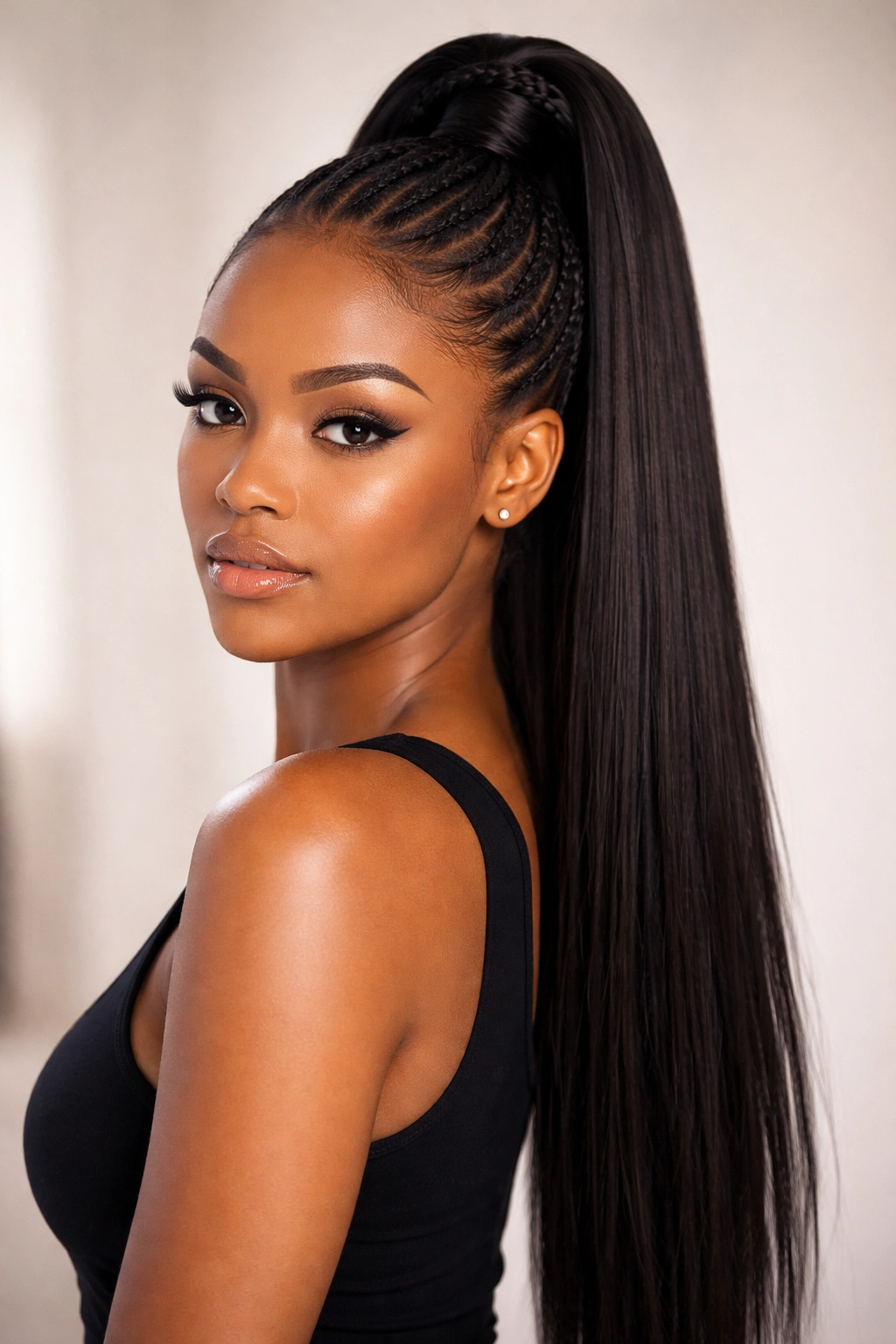
Choosing the right crochet ponytail style comes down to understanding what you’re actually looking for — are you prioritizing speed of installation, longevity of the style, visual drama, or low maintenance? Are you seeking a style that blends naturally with your hair or one that makes a clear artistic statement? The 15 styles covered here represent genuinely different approaches to the crochet ponytail, from sleek and refined to bold and textured, from quick everyday styles to statement-making looks.
The real power of crochet ponytails is the flexibility they offer. You’re not locked into one long-term style commitment. You can install a kinky twist ponytail, wear it for 5-6 weeks, take it down, and try water waves the next month. You can experiment with colors, textures, and aesthetics without permanent alteration to your natural hair. That experimentation freedom, combined with the speed of installation and the genuine protective benefits, is why so many people are making crochet ponytails a regular part of their styling rotation.
Pay attention to your hairline and scalp tension — the style itself matters less than ensuring it’s installed with appropriate tension that doesn’t compromise your edges. Your natural hair’s health comes first; the protective style is meant to support that health, not undermine it. Choose an experienced stylist if you’re new to crochet styles, keep your natural hair moisturized even while wearing the ponytail, and don’t hesitate to take the style down if something feels uncomfortable or too tight.
