



Short weave ponytails are a game-changer for curly hair, offering a polished look that works for everything from professional settings to casual outings. Unlike traditional ponytails that can sometimes flatten or stress natural curls, weave ponytails use a blended technique that incorporates the texture of your natural hair with added weave for volume and staying power. The beauty of short weave ponytails is that they’re incredibly versatile — you can rock them sleek and smooth, textured and bouncy, or adorned with braids and twists that celebrate your curl pattern.
If you’ve been wondering how to get those Instagram-worthy ponytails you’ve seen on curly-haired creators without damaging your strands, you’re in the right place. Short weave ponytails hit a sweet spot: they’re sophisticated enough for work, protective enough for regular wear, and they showcase curls in a way that fuller, longer ponytails sometimes can’t. The key to making them work is understanding which style suits your specific curl type, face shape, and the amount of weave integration you’re comfortable with.
The challenge most people face is that not all ponytail techniques translate well to curly hair. What works beautifully on straight or wavy hair can look flat or unrefined on coils and coils. That’s where these ten styles come in — each one is designed specifically with curly hair in mind, taking into account how your natural texture interacts with added hair, how to maintain curl definition throughout the day, and how to create styles that actually complement your face shape.
1. High and Tight Weave Ponytail
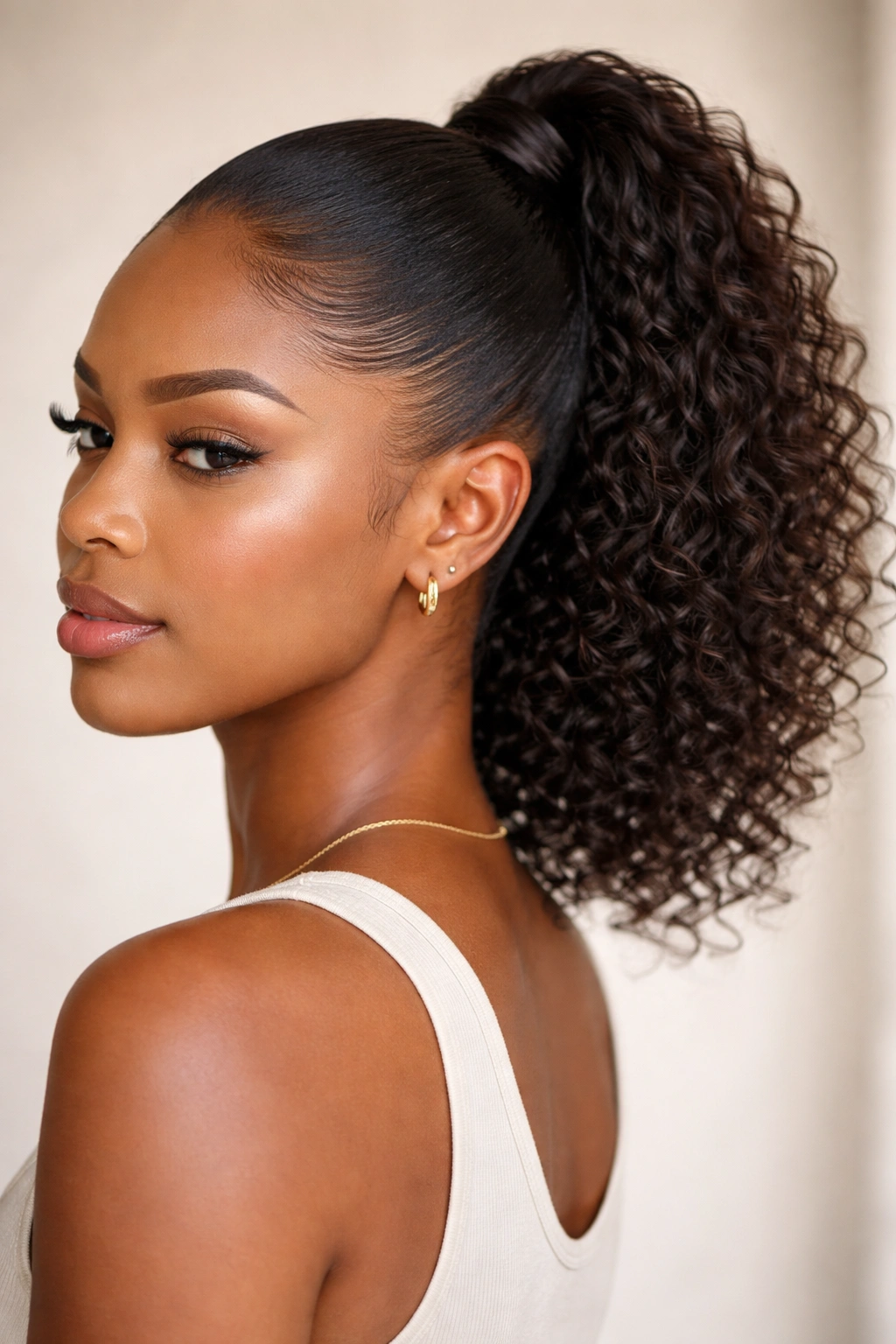
This is the most polished, professional version of a short weave ponytail, perfect when you need to look sharp without sacrificing texture. The style starts at your natural hairline and pulls upward with precision, creating clean edges while keeping all your curl definition intact at the base. You’re working with your natural curls as the foundation, then blending in weave hair just in the ponytail section itself for added volume and length.
Why It Works for Curly Hair
A high and tight weave ponytail actually enhances curls rather than flattening them. The tension pulls your edges clean and smooth, while the body of the ponytail showcases the natural spring of your coils. Because the weave is concentrated only in the ponytail section, your natural curls do most of the work, meaning less manipulation of your hair overall and less risk of breakage. The blended approach means you get volume without that obvious “fake hair” look that some weaves create.
Key Styling Details
- Preparation: Start with your curls stretched slightly — not bone-straight, but heat-stretched or blow-dried for smoother texture that blends better with the weave
- Edge control: Use a firm-hold edge gel to create crisp, defined edges around your hairline and parting
- Weave placement: Begin blending weave hair about 1.5 to 2 inches below your natural hairline so your edges stay completely natural
- Ponytail height: Position the base of the ponytail at the crown or slightly higher; this creates visual balance and prevents the look from aging you
- Curling the weave: Once installed, run your curling iron through the weave hair to create curl patterns that match your natural texture
Pro tip: Use a weave pattern that matches your curl type as closely as possible — if you have tight coils, get coily weave rather than wavy. This makes blending infinitely easier and more seamless.
2. Sleek Low Weave Ponytail with Texture
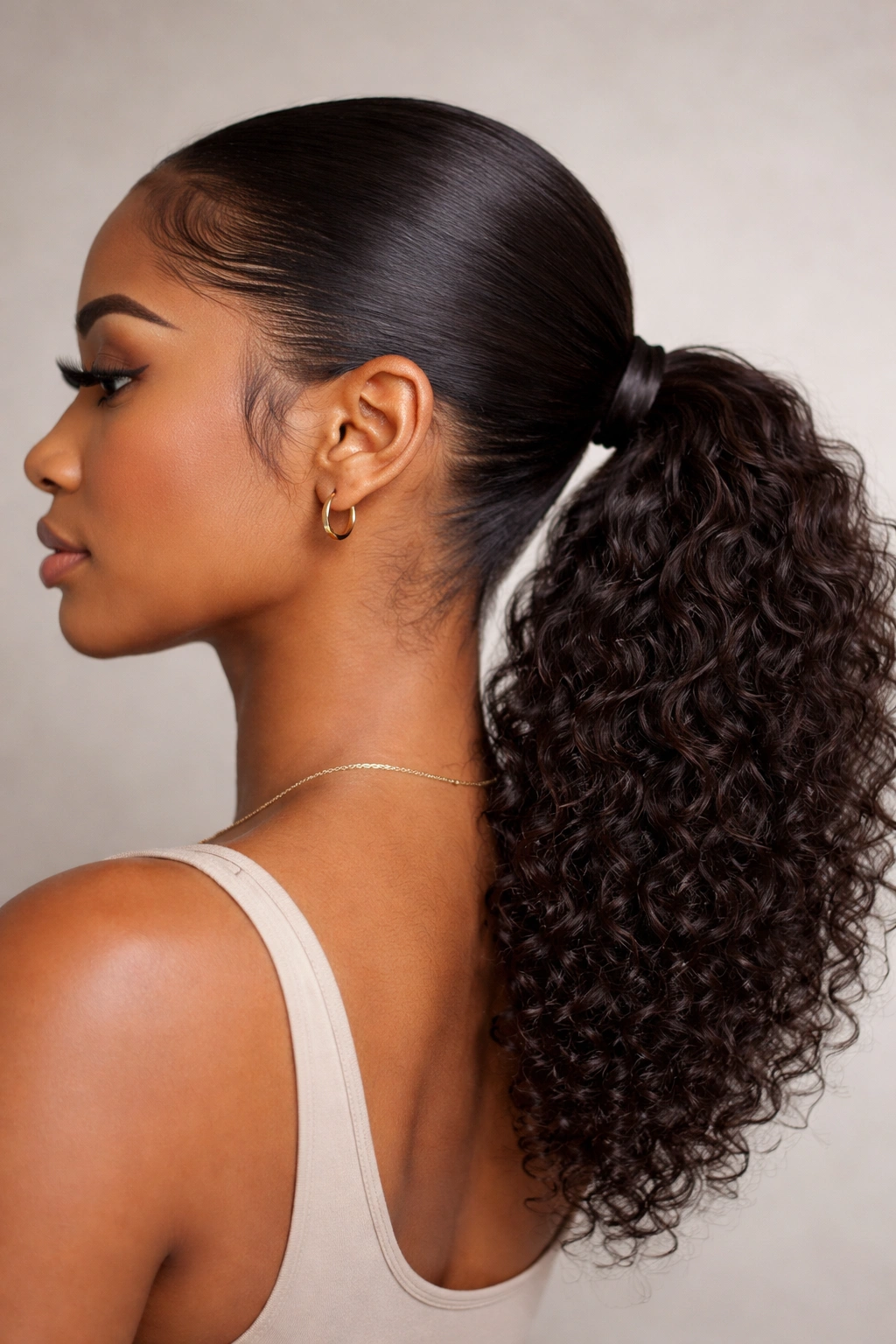
This style is all about contrast: smooth, controlled edges with texture and bounce concentrated in the ponytail itself. It’s sophisticated enough for corporate environments but still celebrates your natural curl pattern. A low placement (at the nape of your neck or just below) creates an elongated, refined silhouette while keeping the focus on the textured volume you’ve built with the weave.
What Sets This Style Apart
The magic of this ponytail is that it plays with different textures intentionally. Your laid-down edges and smooth scalp create sophistication and polish, while the textured ponytail itself provides movement and personality. Because it’s positioned lower, this style works especially well if you have a smaller or more delicate face shape — the low ponytail balances facial proportions beautifully. It also requires less daily maintenance than higher ponytails because there’s less pull on your hairline.
How to Build and Maintain It
- Foundation work: Smooth your natural curls down using a smoothing cream or lightweight gel, applying pressure in the direction you want the edges to lay
- Parting: Create a clean, precise part where your ponytail will begin — this clean line is essential to the sleek effect
- Weave installation: Install the weave starting where your ponytail begins, focusing on creating height and volume at the crown while keeping the sides smooth
- Texture creation: Twist sections of the installed weave or use a curling rod to create defined curl patterns that read naturally
- Flyaway control: Once styled, use a smoothing serum on your edges to prevent frizz throughout the day
This style lasts beautifully for 3 to 4 weeks, and the low placement means you can adjust it slightly day-to-day without reworking the entire installation.
3. Voluminous Side Weave Ponytail
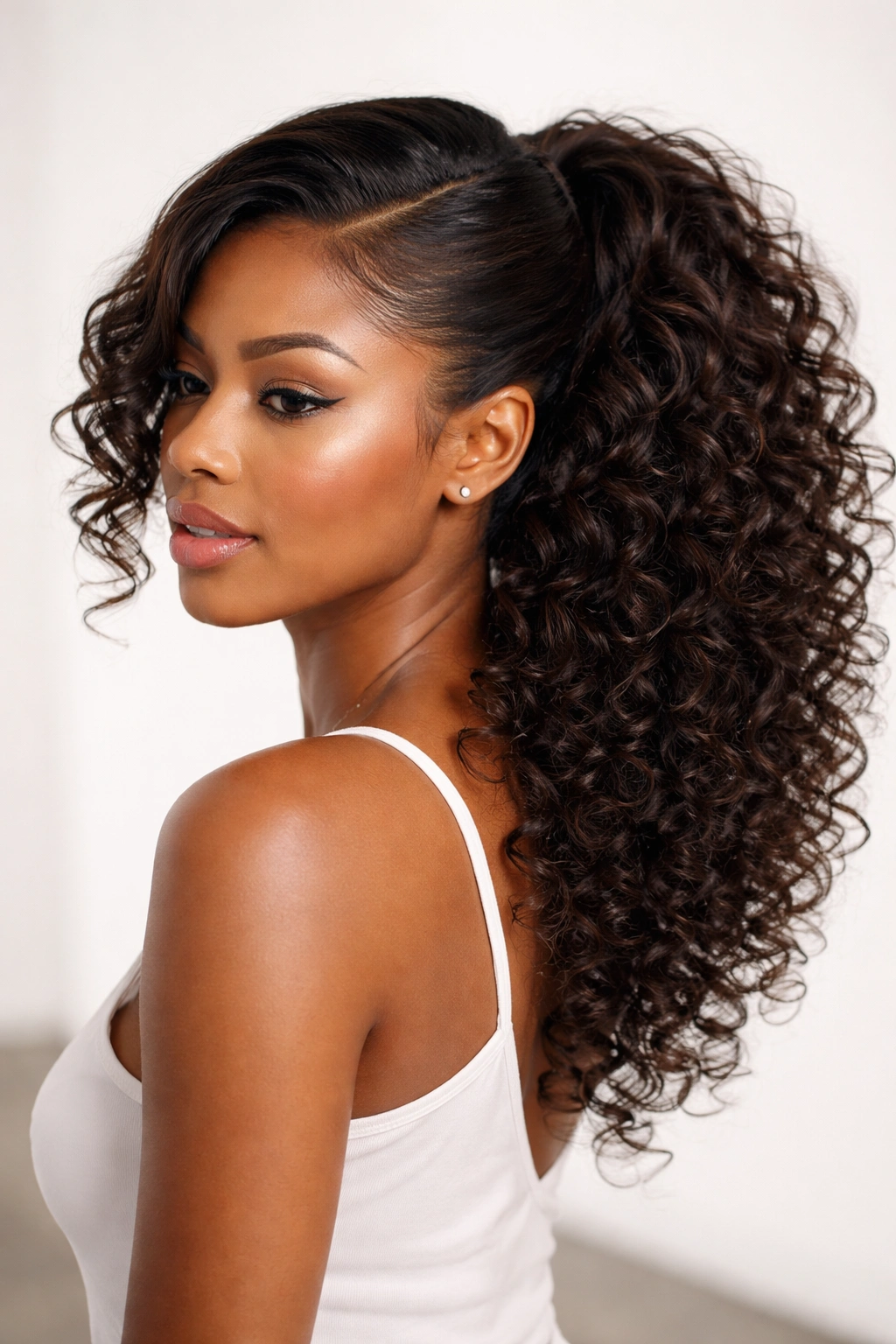
A side weave ponytail is your answer when you want maximum volume and movement without committing to a center part. The ponytail sits off to one side (usually your preferred side), creating an asymmetrical, fashion-forward look that’s instantly more interesting than a centered style. For curly hair, the side placement is genius because it shows off your curls’ natural bounce and movement without needing them to be perfectly symmetrical.
Why This Shape Works
The side ponytail automatically creates visual interest and drama just through its placement. Because you’re not trying to balance symmetry down the middle, you have more freedom with how you style your natural hair on each side. One side can be smooth and controlled, while the other showcases more texture — or both sides can be different textures if that’s your vibe. Curly hair in a side ponytail reads as intentional and polished rather than accidental.
Building the Volume
- Volume boost at crown: Use a round brush and heat to create lift at the crown before installing any weave; this base lift dramatically affects the final silhouette
- Weave weight distribution: Install more weave on the side where the ponytail will sit, concentrating density at the crown to support the off-center weight
- Curl placement: Direct your curls and the weave hair to fall slightly forward and toward the face; this frames your features and prevents the ponytail from looking too severe
- Securing: Use bobby pins and a strong-hold gel to lock everything in place; the off-center weight requires more security than a centered ponytail
This style genuinely shines on days when you feel like making a statement. It’s playful, wearable, and absolutely flattering.
4. Bubble Weave Ponytail
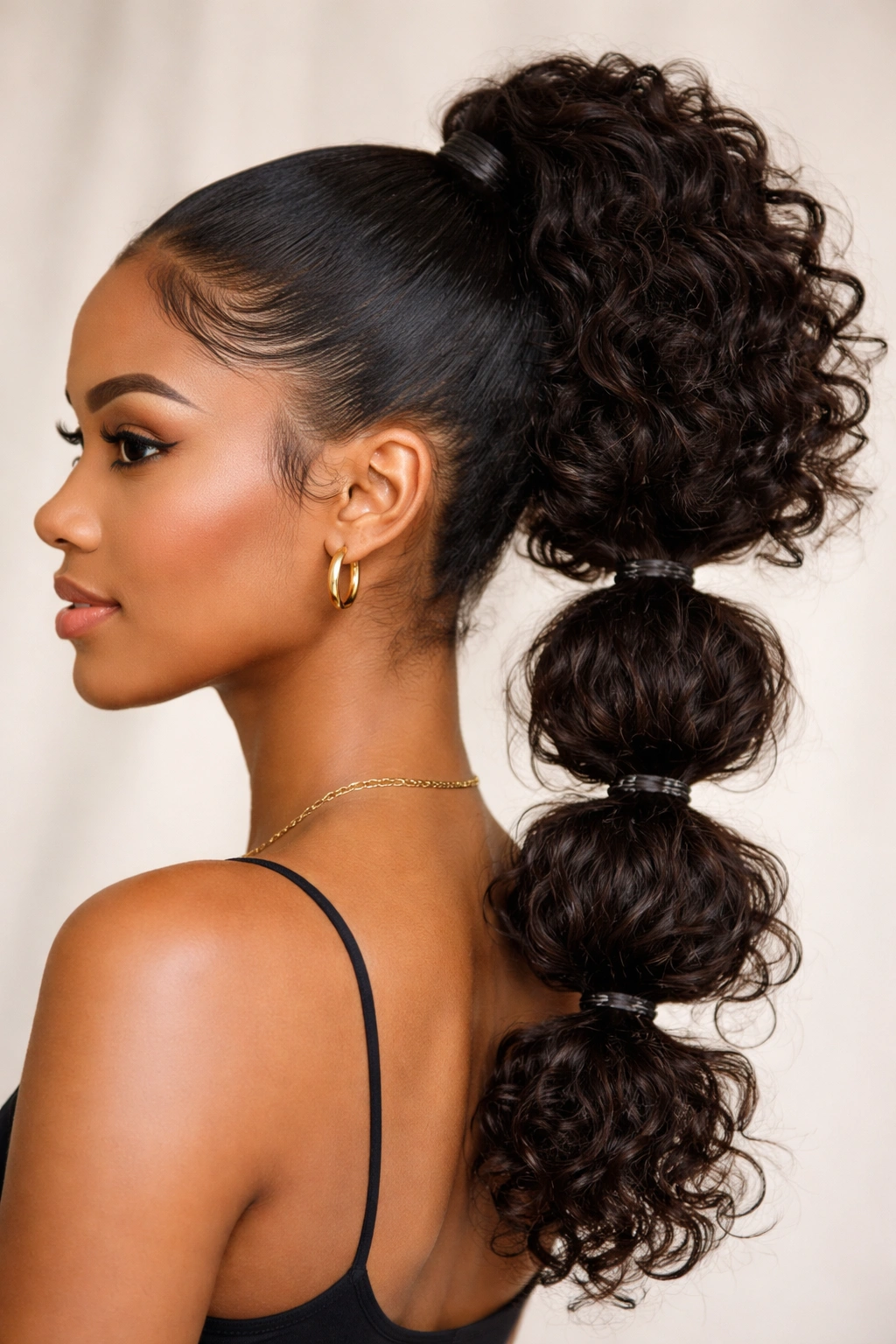
Bubble ponytails are having a major moment, and they’re absolutely stunning on curly hair. This style uses small, defined sections tied with elastics spaced about an inch apart along the length of the ponytail, creating a segmented, dimensional effect. Each bubble is packed with texture and curls, so you get visual pop and movement throughout the entire style.
What Makes Bubbles Perfect for Curls
Bubbles naturally showcase curly texture because each section is separate and distinct. Rather than trying to hide curl definition or blend everything into one cohesive line, bubbles celebrate the fact that your hair has texture and dimension. The style also requires less tension overall — you’re not pulling all your hair into one tight base, which means less stress on your edges and scalp. Each bubble section can be fluffed and shaped independently for a customizable, personalized look.
Step-by-Step Bubble Creation
- Base ponytail: Start with a medium-tension ponytail at your preferred height; this should be textured, not sleek
- Sectioning: Divide your ponytail into 3 to 5 sections (depending on ponytail length), spacing them evenly
- Elastic placement: Use small elastics in matching or contrasting colors to mark each bubble section
- Fluffing: Gently pull outward on each bubble section to create fullness and showcase curl definition; don’t just leave them as tight bands
- Curl definition: You can finger-curl or use a curling rod on each bubble section to enhance the texture and make curls pop
Each bubble should look like a distinct puff of texture rather than a flat disc. The dimension created by the bubbles makes even shoulder-length curly hair look thicker and more voluminous than it actually is.
5. Twisted Weave Ponytail
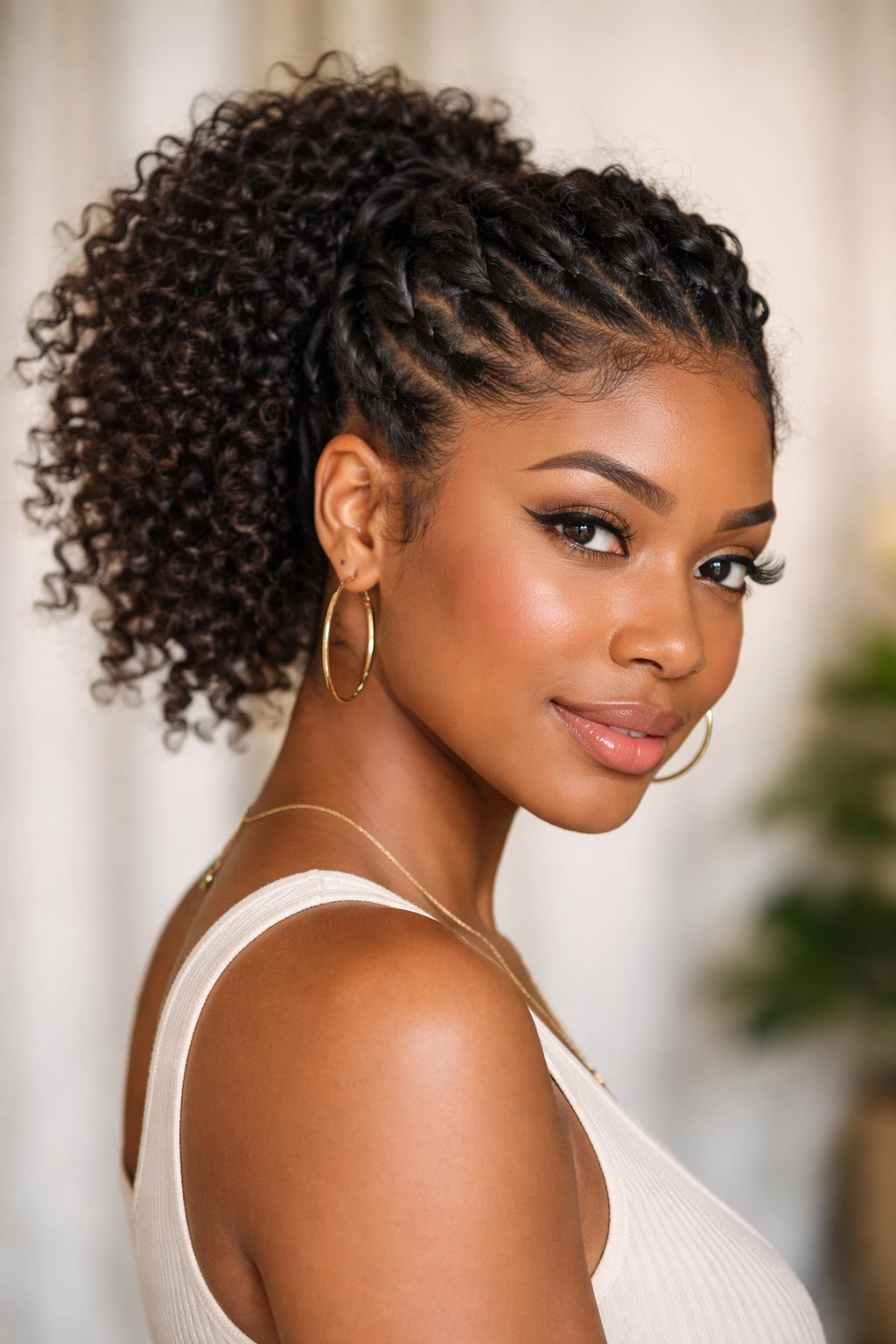
This style uses twisted sections woven throughout the ponytail structure, creating texture, visual interest, and dimension without requiring braids. Twists are perfect for curly hair because they work with your natural texture rather than fighting against it. The twisted sections can be large and chunky or smaller and intricate — you get to decide based on the vibe you’re going for.
Why Twists Work So Well
Twists actually prevent your curls from tangling and matting while creating a sophisticated, intentional-looking style. Unlike a basic ponytail where strands can get jumbled, the twisted sections keep everything organized and defined. For curly hair, twists are low-stress because you’re not applying heat or using tension — you’re literally just gently twisted sections of hair around each other. The rotation of the twist creates natural dimension and movement, so your style looks alive and textured all day.
Installing a Twisted Ponytail
- Foundation curls: Start with stretched curls, not bone-straight; the curl will show through the twists beautifully
- Weave blend point: Begin installing weave about 1 to 1.5 inches from your hairline so your edges stay completely natural
- Twist creation: Take sections of your installed ponytail and create twists by dividing each section into two parts and rotating them around each other
- Twist placement: You can create twists throughout the entire ponytail, or use them as accent details interspersed with sections of curly texture
- Setting: Spray each twisted section gently with a light-hold spray to lock the twists in place without making them rigid
The beauty of this style is that twists look polished and intentional while still celebrating your curl texture. You can retwist individual sections throughout the day if any come loose — they’re easy to refresh without redoing the entire style.
6. Braided Crown Weave Ponytail
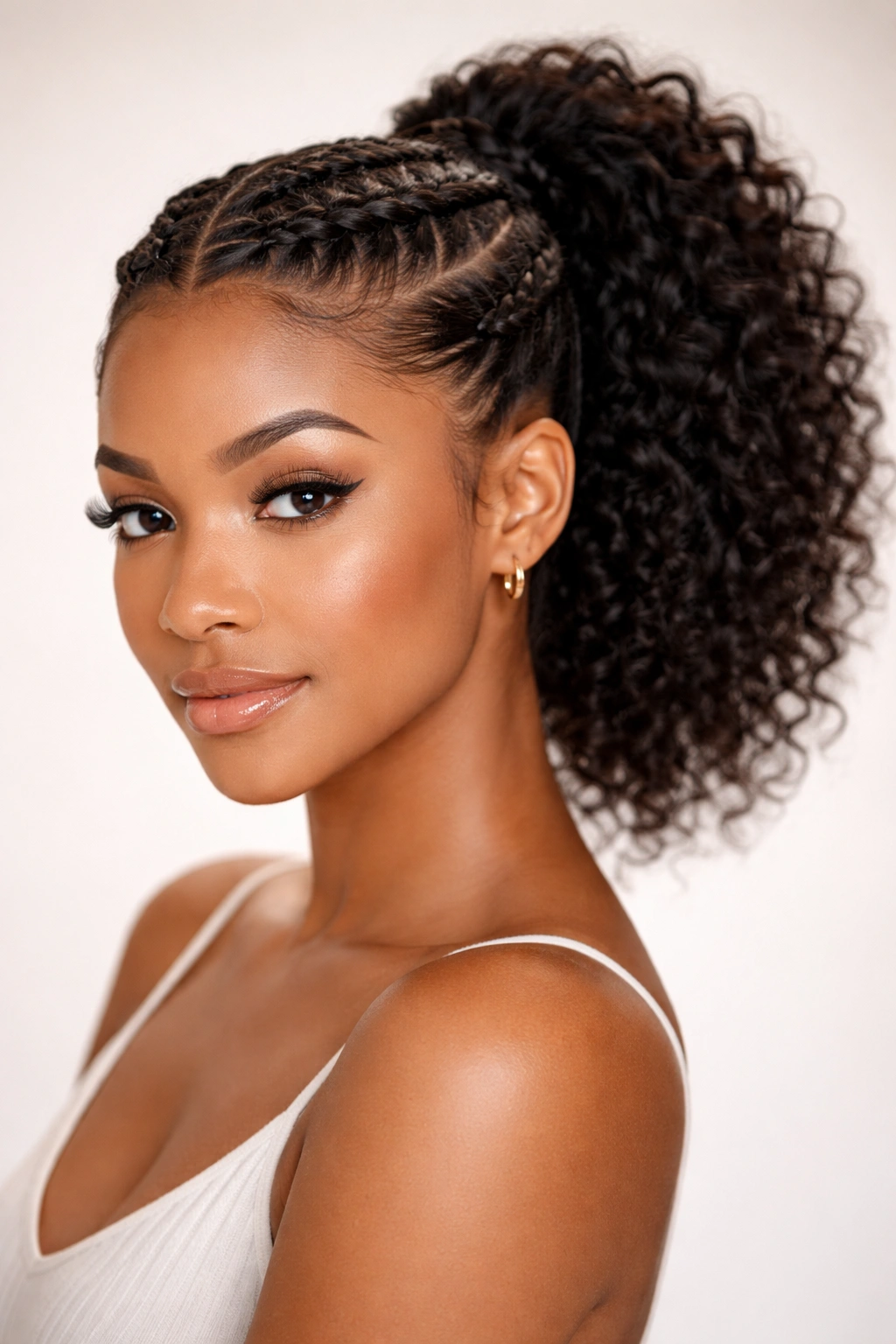
This style combines a braided crown element with a weaved ponytail, creating visual interest and sophistication that feels both playful and professional. A braided crown element (usually cornrows or Dutch braids) runs from your hairline back to where your ponytail begins, then transitions into a textured, curly ponytail. It’s a beautiful way to incorporate your natural hair into a weave style while adding intricate detail.
The Crown Braid Advantage
Braided crowns are genuinely flattering because they draw attention upward to your face and create a frame that’s visually balanced and refined. For curly hair, the braids showcase your natural curl texture within the braid structure — you can see the definition and dimension of your coils intertwined. The braided element also serves a practical purpose: it helps secure the base of your ponytail more effectively and creates a smoother transition between your scalp and the weave installation point.
Creating the Braid-to-Weave Transition
- Braid pattern: Start your braids at your hairline (or slightly off-center) and braid back toward your crown; cornrows or Dutch braids both work beautifully
- Braid integration: Use sections of your natural hair plus weave hair to create the braids; this makes the transition seamless and adds volume to the braided section
- Ponytail base: Where the braids end, transition smoothly into your weave ponytail installation point; the braids should feed naturally into the ponytail
- Texture contrast: Keep the ponytail portion textured and curly so there’s visual contrast between the defined braid structure and the looser, curlier ponytail
- Edge smoothing: Lay your edges smooth alongside the braids to create a polished, intentional look
This style is particularly stunning if you have medium to thick density hair — the braids create beautiful dimension and prevent the weave from looking too heavy.
7. Layered Weave Ponytail
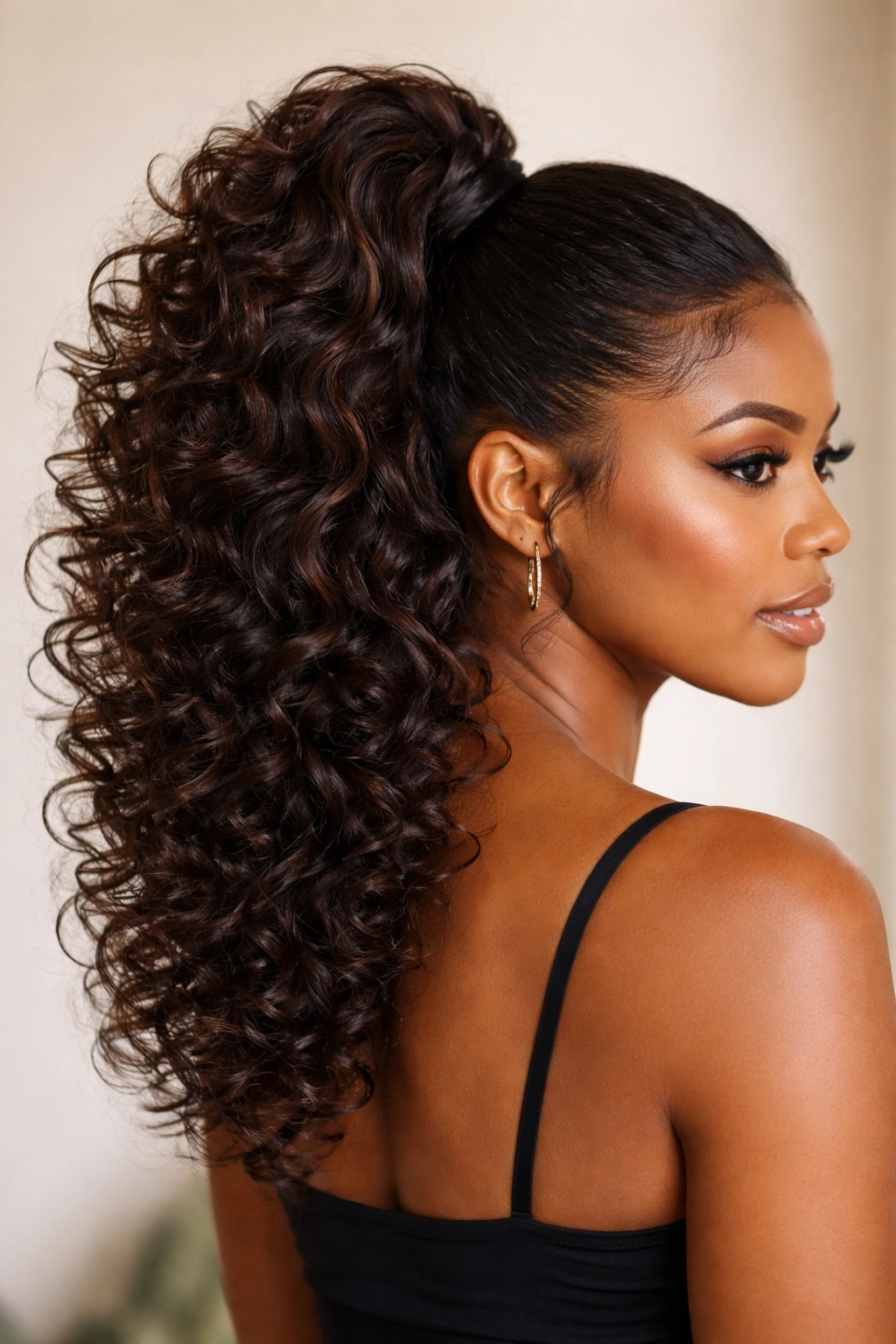
Layered ponytails create dimension and movement that reads as intentional and sophisticated. Instead of one single, uniform ponytail, you’re creating multiple lengths within the ponytail structure — some curls and weave hair sit higher, others fall lower, creating a cascading effect. This style works especially well for curly hair because the layers allow curls at different heights to catch light and show off definition.
Building Dimension Through Layering
Layers prevent your ponytail from looking blunt and heavy, which is especially important for curly hair that can read as bulky if not strategically shaped. Layered ponytails also create the illusion of more texture and movement because not all your hair is sitting at the same level. The staggered lengths mean curls have room to bounce and move independently rather than being crushed together into one dense mass.
How to Construct Layers
- Base sections: Install your weave using multiple attachment points at slightly different heights along your crown — this automatically creates your layer foundation
- Length variation: When installing weave, use slightly shorter lengths for the upper layers and longer lengths for the lower layers; this creates the cascading effect
- Texture differentiation: You can make upper layers slightly tighter or smoother while keeping lower layers more textured and curly
- Curl direction: Style your curls so they fall in slightly different directions at different levels; this adds to the dimensional effect
- Volume placement: Focus volume at the crown with more restrained texture as you move down; this creates an elegant shape that reads as refined
Layered ponytails photograph beautifully and look incredibly polished in professional or formal settings.
8. Curved Weave Ponytail
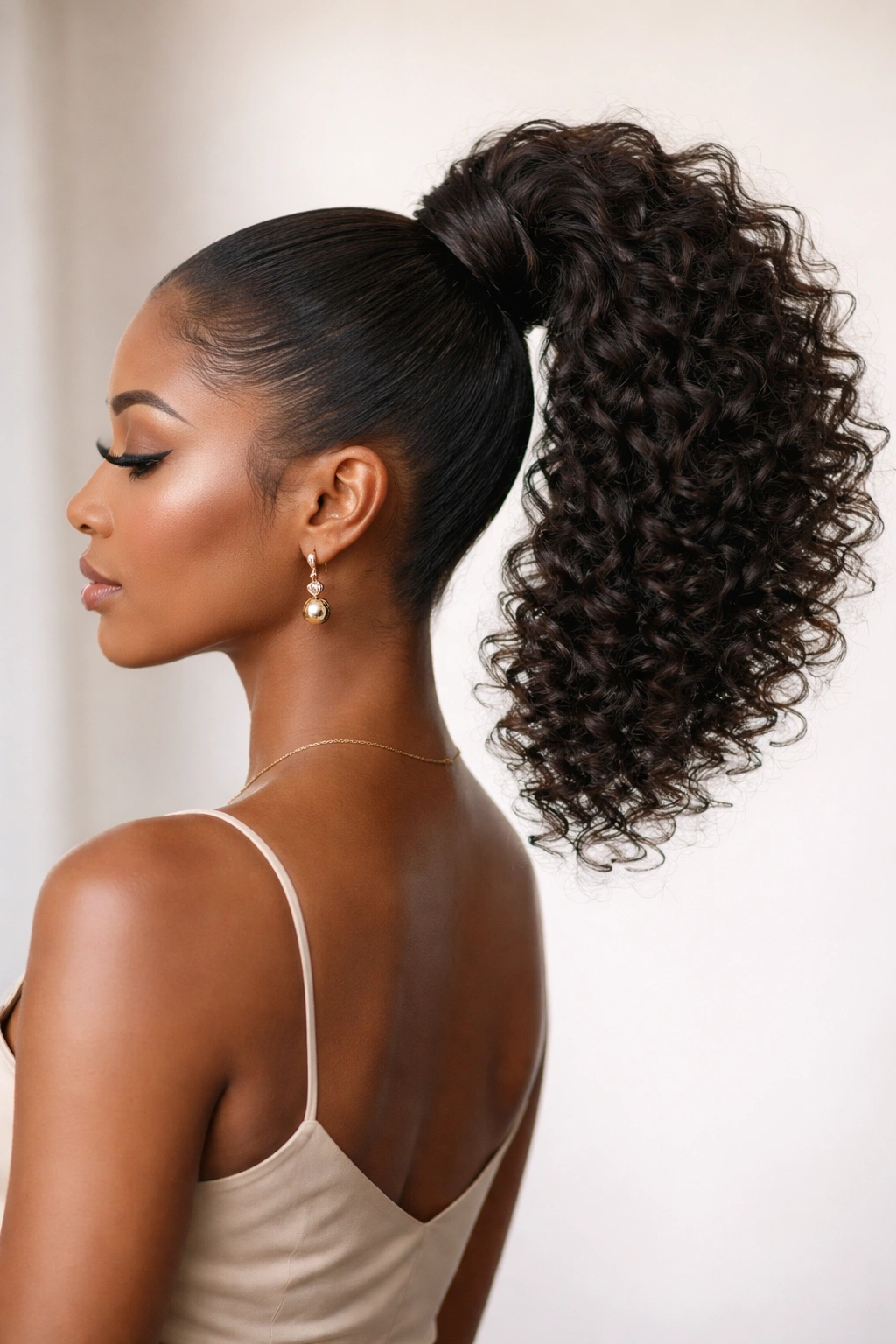
A curved ponytail bends away from the head rather than falling straight down, creating a sophisticated, almost sculptural look. The curve is achieved through the way the ponytail is installed and then styled — you’re literally shaping the weave to follow a curved line rather than a straight one. This style is stunning on curly hair because the curve creates movement and prevents the look from reading as too heavy or severe.
The Visual Magic of Curves
Curved ponytails are incredibly flattering because they soften facial features and create an elegant, deliberate silhouette. Rather than pulling straight back from your face (which can emphasize certain facial features), the curve moves away from the head at a beautiful angle. For curly hair, the curve works with your natural texture — curls are already curved and coiled, so positioning them in an intentionally curved ponytail feels natural and harmonious.
Creating the Curve
- Installation angle: When installing your weave, angle it slightly away from your head rather than straight back; this establishes your curve foundation
- Styling tools: Use a large-barrel curling iron to create curved sections throughout the ponytail that follow the established curve line
- Securing: Use bobby pins strategically underneath the curve to support the shape and keep it curved throughout the day; pins shouldn’t be visible from the front
- Texture placement: Create more defined curls on the outer edge of the curve (the side furthest from your head) to emphasize the curve shape
- Style touch-ups: Check your curve throughout the day and adjust pins or reshape sections as needed to maintain the elegant curve
This style is particularly striking in photos and creates a memorable, polished impression.
9. Half-Up Weave Ponytail
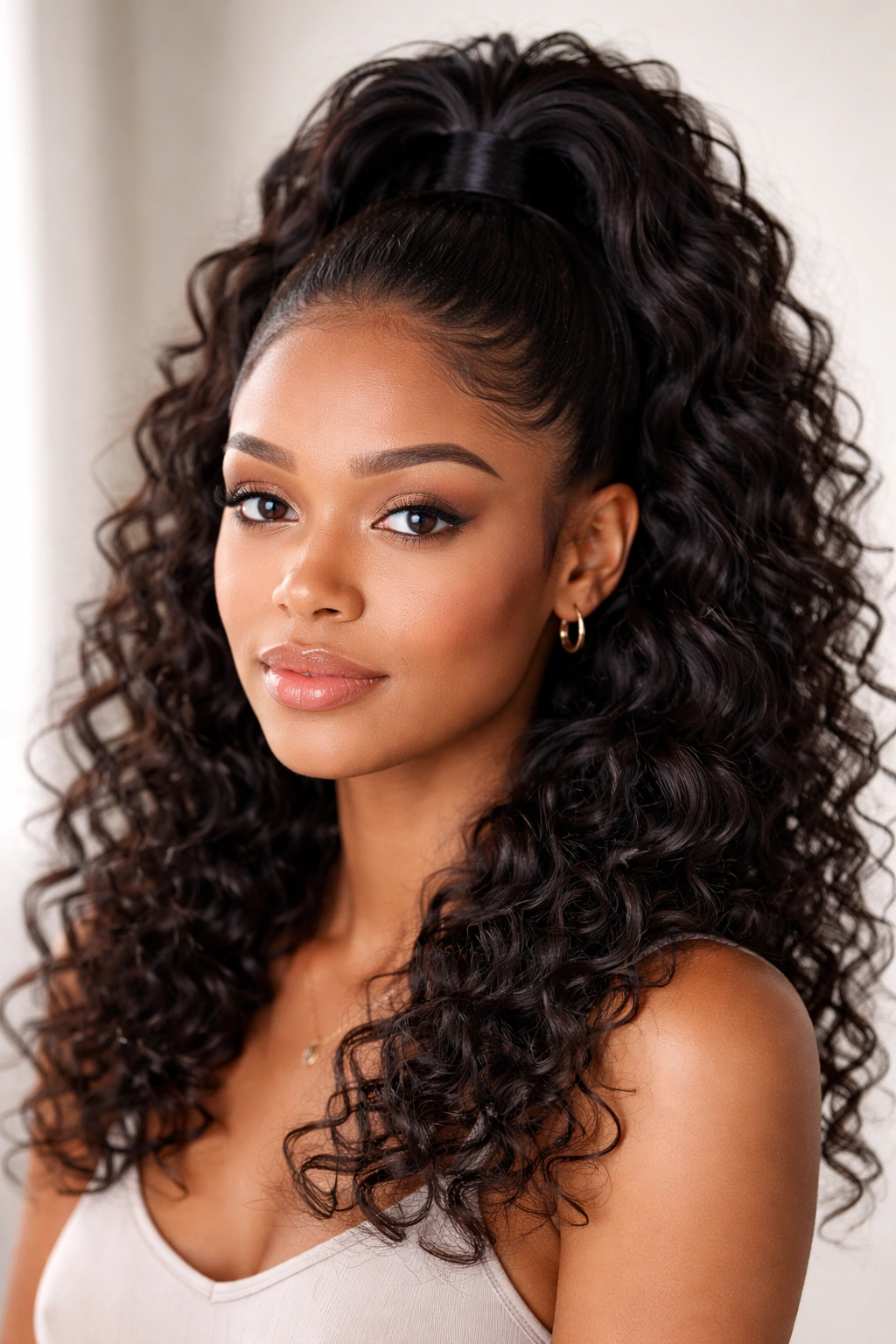
Half-up, half-down styling is perfect when you want some of your curls down while incorporating a weave ponytail. The top half of your hair is pulled up into a small weave ponytail (usually at the crown or slightly off-center), while the bottom half flows loose and curly. This style is lower-commitment than a full ponytail, and it works beautifully for curly hair because you get to showcase curls both in the ponytail and flowing freely below.
Why Half-Up Works for Curly Hair
Half-up ponytails are genius for protecting some of your hair while still showing off curl texture and length. The ponytail section keeps hair off your face and neck (practical and cool), while the loose curls below create movement and visually enlarge your hair. For curly hair, having only half your hair up in a weave means less total stress — you’re not putting all your hair through an installation, just the top section.
Styling a Half-Up Weave Ponytail
- Section separation: Separate your hair into top and bottom sections; the top section should be roughly from ear to ear across the crown
- Weave installation: Install weave only in the top section, blending it seamlessly with your natural curls
- Bottom curls: Keep your bottom curls loose and free; you can stretch them slightly with heat for a softer curl pattern, or leave them as-is for tighter coils
- Edge work: Smooth your baby hairs and edges along the part line where top and bottom sections meet
- Coordination: You can match the weave texture to your natural curls, or intentionally use a different texture in the ponytail for contrast
Half-up styles stay fresher longer than full ponytails because there’s less overall tension, making them great for styles you want to wear multiple days.
10. Textured Top Weave Ponytail
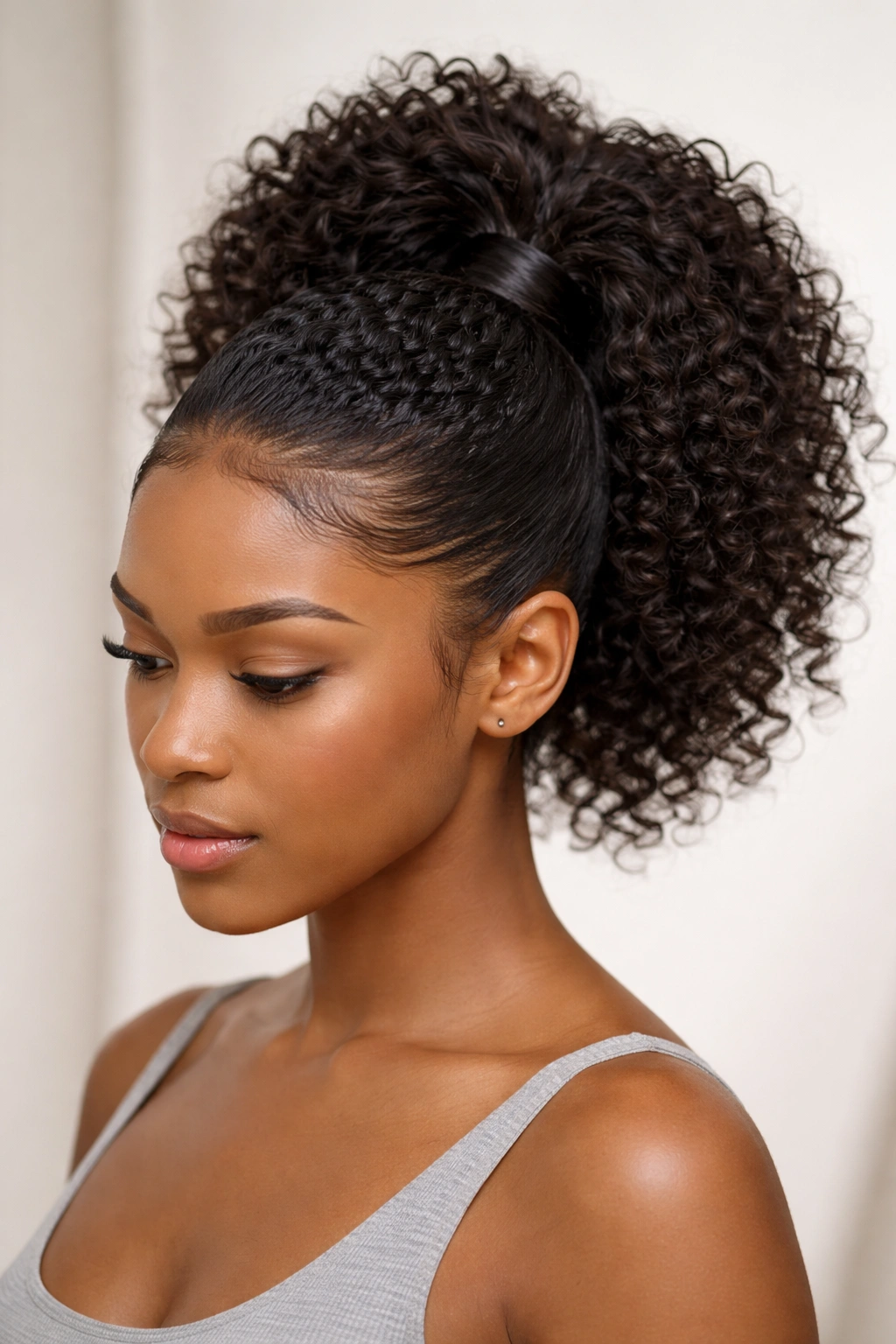
This style focuses on creating maximum texture and curl definition at the crown and top of your ponytail while maintaining sleek, controlled edges. Unlike styles that blend weave subtly, a textured top ponytail makes the curly, textured portion a visual focal point. The contrast between smooth edges and textured curls at the crown creates a striking, modern look that’s perfect for curly hair.
Making Texture a Feature, Not an Accident
The textured top ponytail celebrates curl definition and dimension rather than trying to hide or minimize it. This style says “I have curls and they’re intentional and beautiful” — there’s no apology in the aesthetic. Because the texture is concentrated at the top and crown, it creates visual balance and prevents your ponytail from looking too sleek or severe. For curly hair, this style is genuinely empowering because you’re not fighting your texture; you’re showcasing it.
Building the Textured Crown Effect
- Edge control: Apply a firm-hold edge control to create completely smooth, defined edges and hairline; this creates the contrast that makes texture pop
- Weave selection: Choose weave hair with actual texture and curl definition rather than straight hair; this is critical for making this style work
- Installation density: Install weave more densely at the crown and slightly less densely as you move down the ponytail; this concentrates visual texture where it has the most impact
- Curl enhancement: Use a curling rod or finger-coil technique on your weave to enhance curl definition and create bouncy, defined coils
- Texture boosting: Once complete, gently separate sections of the curled weave to emphasize individual curl strands and create dimension
- Product finishing: Use a light curl cream or defining pudding on the textured sections to enhance definition without creating crunchiness
This style is absolutely stunning for special events or when you want a show-stopping everyday look.
Final Thoughts
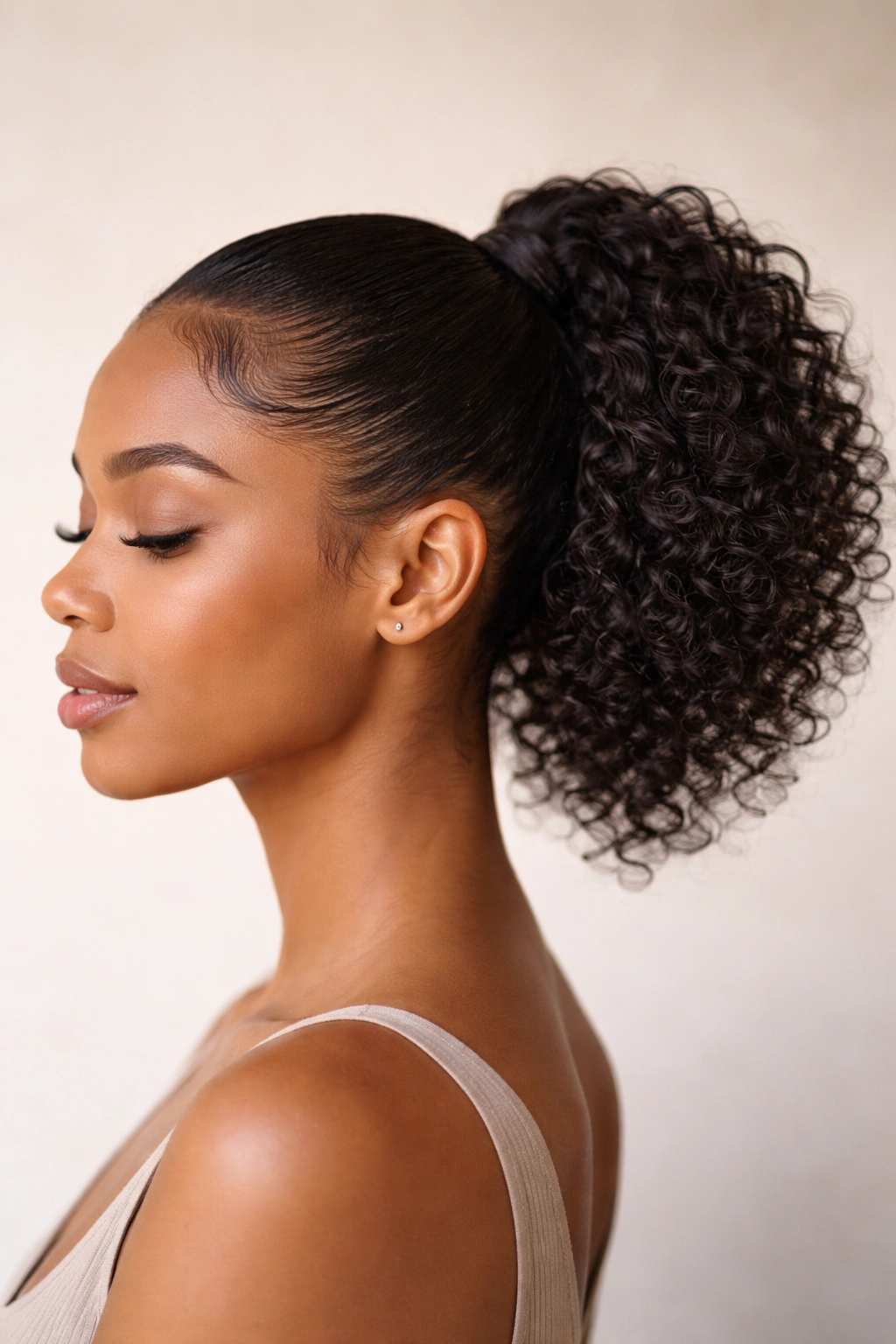
Short weave ponytails are genuinely one of the best-kept secrets for styling curly hair with protection, versatility, and undeniable style. Whether you choose a sleek, professional look or a textured, statement-making style, the key is finding what feels authentic to you and works with your specific curl pattern and lifestyle. Each of these ten styles offers something different — from the polish of a high and tight ponytail to the playfulness of bubbles or the sophistication of a braided crown.
The most important thing to remember is that a weave ponytail is only as good as the care you invest in it afterward. Moisturizing your edges, sleeping on a silk pillowcase, and taking time to refresh your style throughout the week will extend the life and appearance of whichever style you choose. Your natural curls are doing the foundational work here — the weave is just enhancing and adding dimension to what you already have.
Experiment with these styles, pay attention to which ones make you feel most confident, and don’t be afraid to ask your stylist for adjustments or combinations of these techniques. Your curly hair deserves a style that celebrates it, protects it, and makes you feel genuinely beautiful.
