



Blonde frontal ponytails with clip-in extensions have become the go-to style for anyone wanting an effortless, polished look without committing to permanent color or length changes. The beauty of this trend lies in how strategic placement of high-quality blonde pieces creates that coveted seamless blend—where the extensions disappear into your natural hair, and all anyone sees is a gorgeous, full ponytail with flattering face-framing layers. Whether you’re working with a natural darker base, already-blonde hair, or something in between, the right combination of extension placement, color matching, and styling technique makes all the difference between a look that screams “obvious extensions” and one that stops people mid-conversation asking where you got your hair done.
The key to achieving that seamless appearance isn’t just about throwing blonde pieces on top of whatever ponytail base you create. It’s about understanding how light reflects differently on blonde hair, how texture needs to blend with your own strands, and which placement strategies actually create that blurred, natural transition that makes extensions invisible. You’re looking for ponytails where the blonde frontal pieces feel like a natural extension of your own hairline, where layers sit at exactly the right angle to frame your face, and where the overall effect reads as “this is just how my hair looks” rather than “I have extensions in today.”
Real talk: not every blonde ponytail is created equal, and the difference between a seamless-looking style and one that screams “clip-ins” often comes down to small technical choices that most people won’t consciously notice—they’ll just know something looks polished and intentional. The styles below represent the most flattering, most believable blonde frontal ponytail approaches that consistently deliver that seamless, high-end aesthetic.
1. Slicked-Back Blonde Ponytail With Dimensional Face-Framing
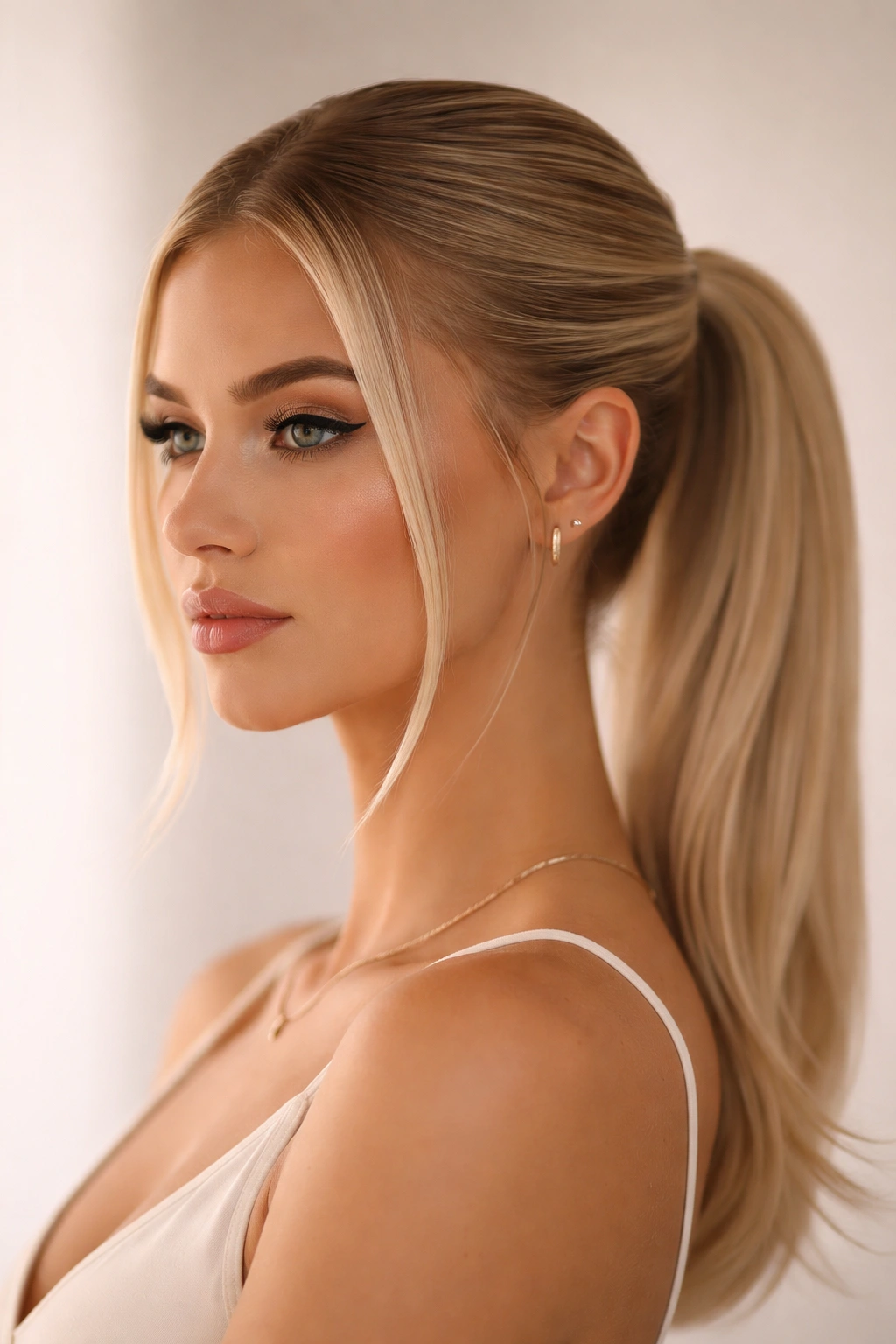
This is the minimalist approach to blonde frontal ponytails, and it’s deceptively sophisticated. You’re working with a very sleek, polished base—hair brushed straight back and secured low at the nape—where the magic happens with two strategically placed blonde pieces at the temples that frame the face and soften the overall look. What makes this particular style seamless is that those front sections don’t look added; they look like natural regrowth that’s been left intentionally loose while the rest is pulled back.
Why This Creates the Seamless Illusion
The slicked aesthetic actually works in your favor here because it removes any distraction from the overall silhouette. When everything’s smooth and controlled, the blonde pieces read as intentional styling rather than obvious extensions. The pieces sit flush against your head because they’re woven into your hairline, not sitting on top of it, which immediately signals “real hair” to the eye.
How to Get This Look Right
- Use two lightweight blonde clip-in pieces, approximately 6-8 inches long, positioned at the temples where your natural hairline sits
- Match the blonde to a shade that’s 1-2 levels lighter than your natural hair color for the most natural contrast
- Secure with a very smooth, tight elastic at the crown, then brush everything back with a paddle brush and pomade for that glass-smooth effect
- Keep the ponytail itself fairly low—around ear level or slightly lower—so the face-framing pieces have breathing room
- Finish with a light hairspray rather than heavy hold, which maintains that effortless, non-stiff appearance
Pro tip: This style works especially well if your natural hair is darker than the blonde pieces; the contrast reads as intentional color placement rather than extension seams.
2. Textured Blonde Ponytail With Wispy Money Pieces
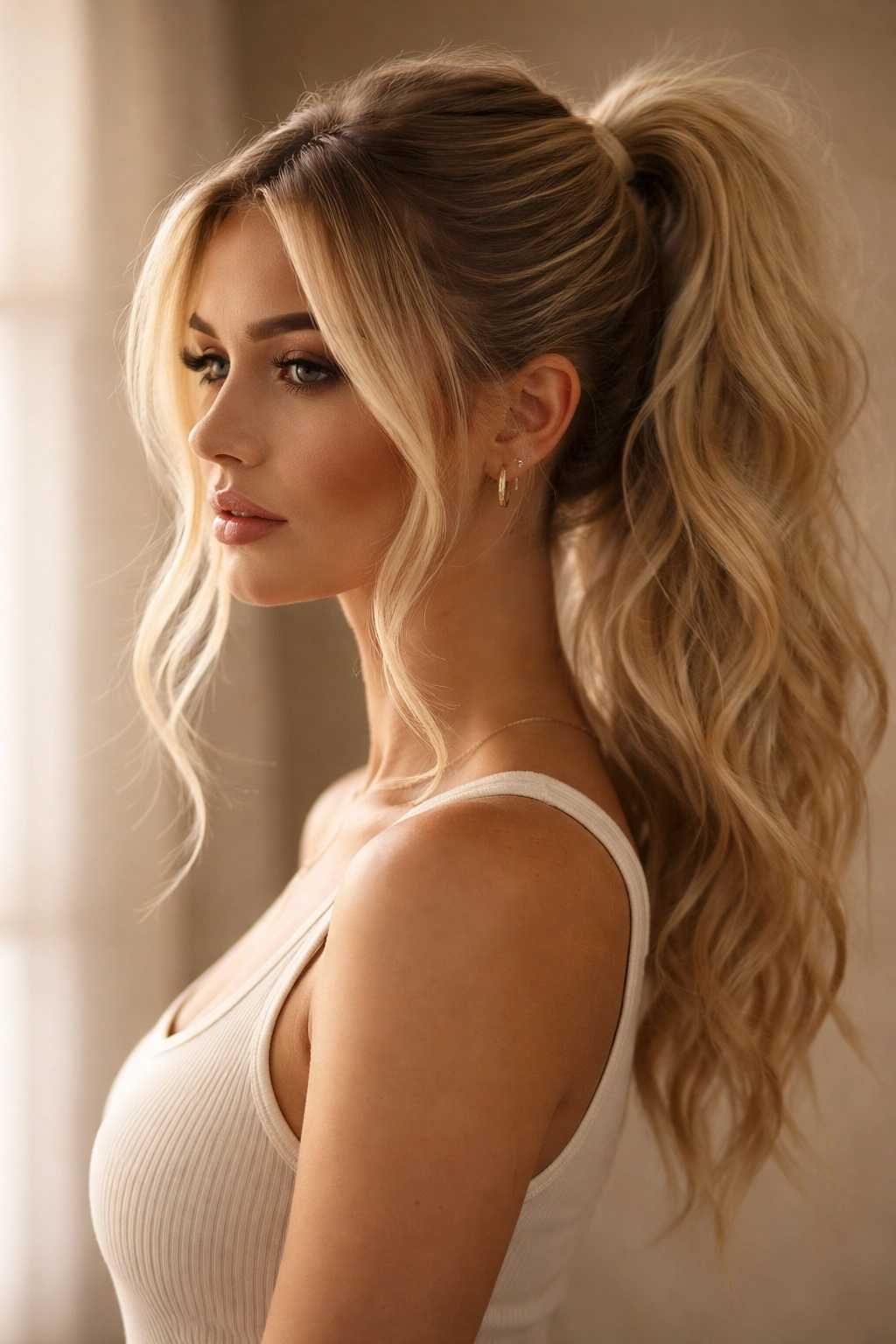
Move away from the slicked-back severity and into texture territory, and you get one of the most flattering interpretations of the blonde frontal ponytail. This version features a deliberately undone, lived-in ponytail base with looser waves or texture throughout, paired with those signature blonde “money pieces”—the longer, strategically placed sections that frame your face with intentional movement. The texture is what sells the seamless look; because there’s movement everywhere, the extensions blend naturally into the overall aesthetic.
The Art of the Money Piece Placement
Money pieces work because they’re designed to catch light and draw attention to your face, but they only read as seamless when they match the texture and movement of everything around them. If you’ve got a textured ponytail, your blonde pieces need that same wave or curl. If you’re using straight blonde extensions with textured hair, the contrast immediately becomes obvious.
Building the Textured Foundation
- Create loose waves throughout your entire head using a curling iron or heat styling, going in the same direction for consistency
- Clip in your blonde money pieces—two longer sections, 8-10 inches, positioned at the temples where they’ll naturally fall forward
- Gather everything into a low ponytail at the nape, leaving out approximately 2-3 inches of hair on each side of the face
- Take those left-out sections and the blonde pieces together, twist them loosely, and wrap them around the base of the ponytail
- Tease gently at the crown and around the face-framing sections to enhance the undone texture
- Use texturizing spray or dry shampoo to boost grip and movement throughout
Worth knowing: This style actually improves over a day or two as the texture loosens and the blonde pieces settle more naturally into your hair.
3. Blonde High Ponytail With Sheer Face-Framing Pieces
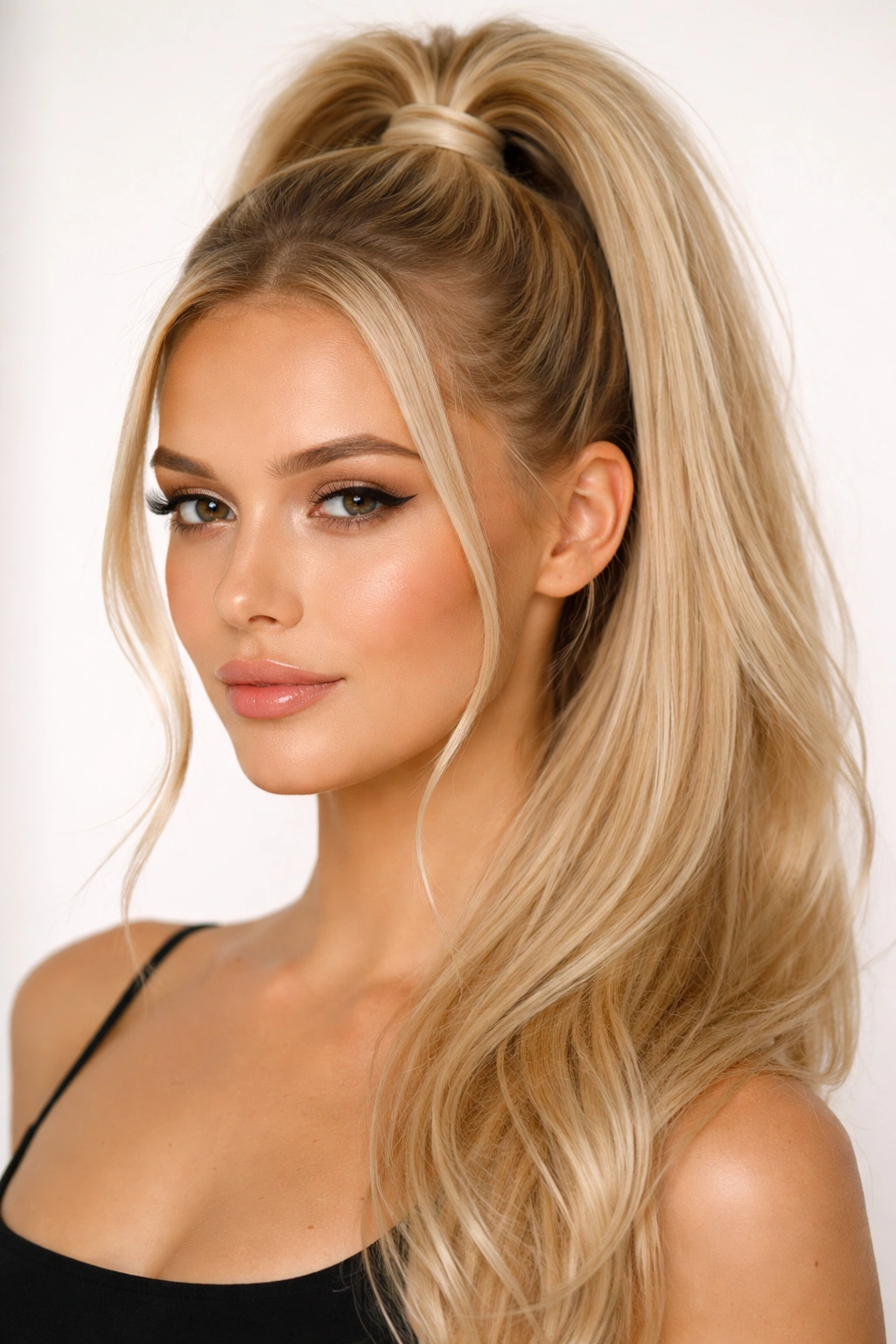
For those who want the lifted, energetic effect of a higher ponytail but still want the softening benefit of face-framing blonde pieces, this style delivers. The ponytail sits at the crown—that classic high placement that elongates the neck and reads as polished and intentional—while two subtler blonde pieces frame the face with a more delicate, sheer appearance. The seamless factor here comes from the pieces being finer and more wispy rather than thick or obvious.
The Role of Thickness in Blending
Thicker extensions always look more obviously added, especially at the hairline. Sheer, finer pieces that contain less volume blend exponentially better. They read as delicate face-framing rather than “extensions have been applied.” This is why a 1.5-inch clip-in section reads differently than a 2-inch section at the front.
Styling This Polished High Ponytail
- Blow-dry your hair smooth with volume at the root, using a volumizing mousse or spray for grip
- Clip in two lighter, finer blonde pieces at the temples—choose extensions that match your hair’s natural texture (straight, wavy, or curly)
- Gather your hair into a high ponytail at the crown, making sure the base sits tightly against your head
- Smooth the sides with a fine-tooth comb and hairspray to create that polished look
- The blonde pieces should sit forward and frame; if they’re being pulled back into the ponytail, reposition them lower on the temple
- Wrap a small section of hair or a discrete hair tie cover around the elastic to hide the base
Key detail: The high placement works especially well on longer faces or if you want to emphasize cheekbones; it draws the eye upward and creates a lifted effect.
4. Honey Blonde Ponytail With Rooted Ombre Face-Framing
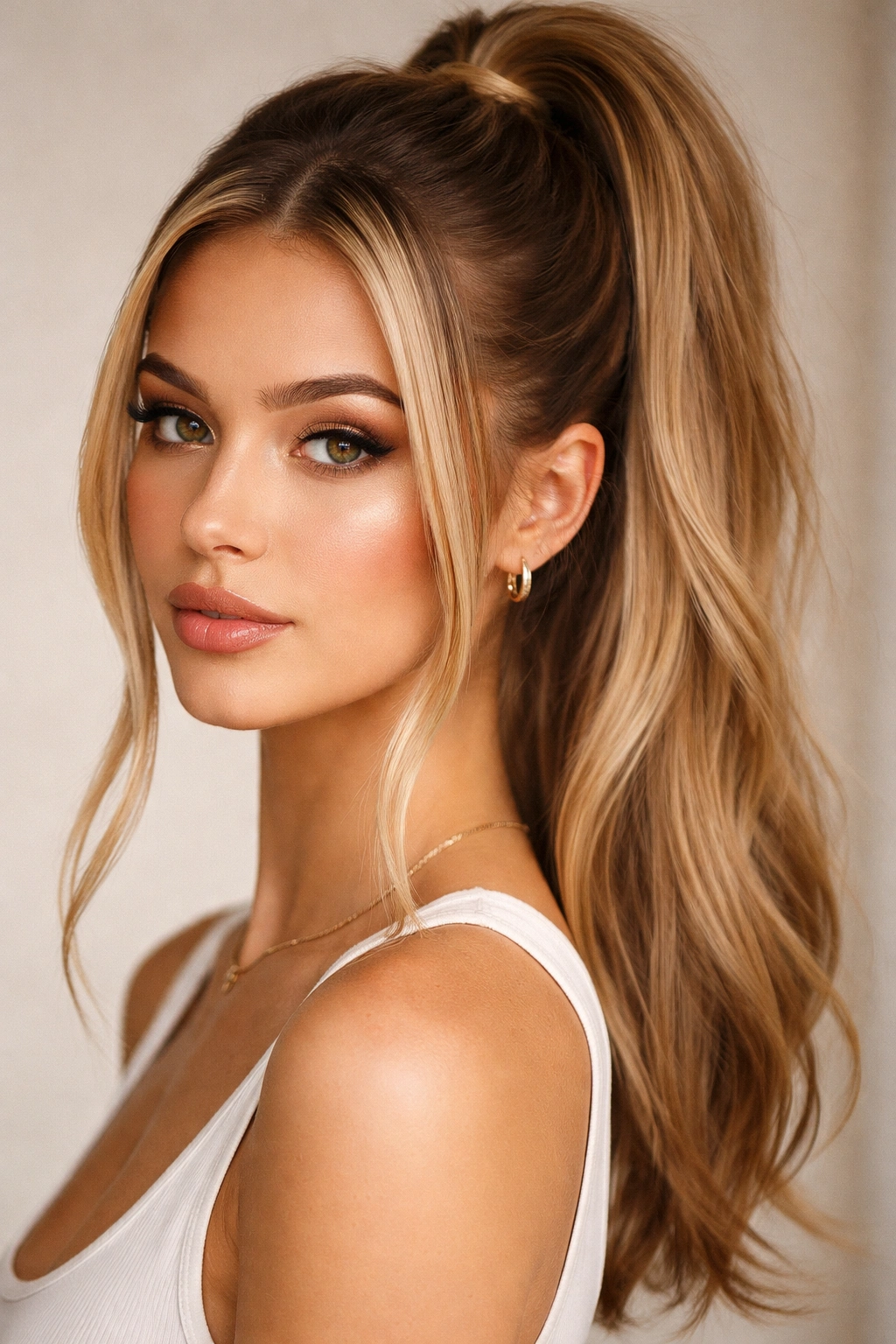
This version plays with color depth strategically—the ponytail base itself uses darker blonde or honey-toned pieces that blend with darker hair, while the face-framing sections are lighter blonde. It creates this dimensional, rooted effect where it looks like your natural hair grows darker and gradually lightens toward the face, which is a naturally occurring pattern that immediately reads as “this is real.” The seamlessness comes from mimicking how real hair ages and how natural color progression works.
Why Dimension Creates Believability
Our brains expect hair to have dimension, especially if you’re transitioning from natural dark hair into blonde. A uniform blonde all over, especially on a darker base, reads as obviously added. But gradual depth shifts? That’s how real hair behaves. It’s one of the most sophisticated approaches to making extensions genuinely invisible.
Creating the Rooted-Ombre Effect
- Use two medium-length blonde clip-in pieces (8-10 inches) in a darker honey or champagne blonde shade at the temples
- Use two lighter blonde face-framing pieces (10-12 inches) positioned slightly lower and forward; these should be 3-4 shades lighter than the pieces above
- Create loose waves or texture throughout your entire head using a large-barrel curling iron
- Gather into a low to mid-height ponytail, leaving out the lighter blonde pieces to frame forward
- The darker honey pieces should sit closer to your head, while the lighter pieces fall more freely in front
- Gently tease the ponytail base for volume and secure with a texturizing spray for grip
Real advantage: This approach works brilliantly on medium to dark brown hair because the color progression feels so natural; no one questions whether it’s real.
5. Sleek Low Blonde Ponytail With Seamless Weft Integration
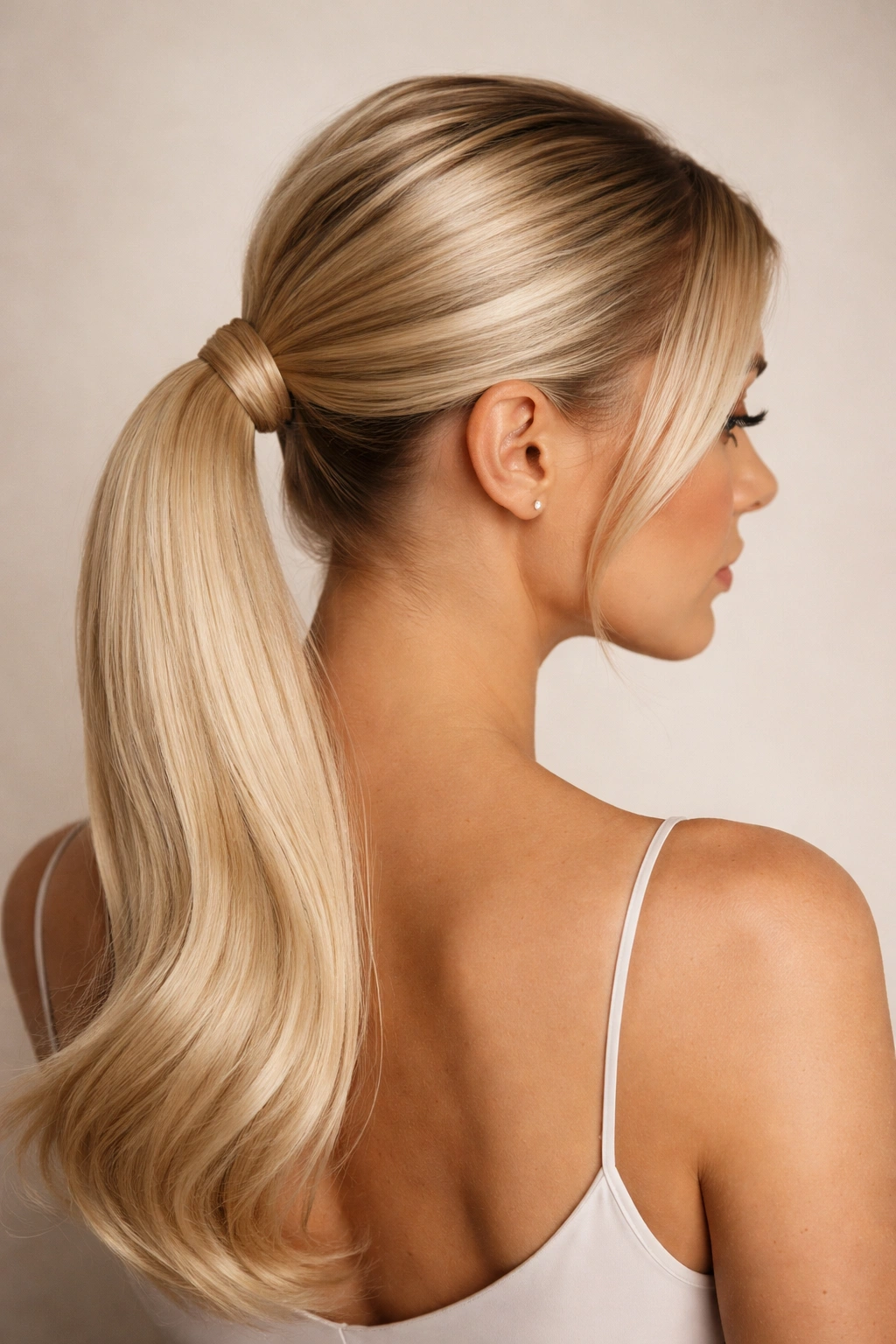
This is the minimalist maximalist approach—a very smooth, polished low ponytail where the blonde pieces aren’t positioned as obvious face-framers but rather integrated directly into the ponytail base itself. The seamlessness here is about the wefts of your clip-in extensions actually blending into the elastic and base of the ponytail, creating what looks like an incredibly full, naturally blonde ponytail rather than blonde pieces “on top of” a darker base.
The Technical Integration That Matters
Most people think about extensions as pieces that sit on top of the hairline. But true seamlessness means the wefts sit underneath or alongside your natural hair ties, creating a unified whole. When you can’t see where the extension weft ends and your natural hair begins, that’s when you’ve achieved genuine blending.
Building the Integrated Effect
- Apply heavier-coverage blonde clip-in pieces (full head or half-head coverage) so there’s genuinely more blonde hair than dark
- Gather your entire head of hair into a very low ponytail at the nape of the neck
- The blonde extensions should already be integrated into the hair you’re gathering, not added after
- Use a smooth elastic that matches the blonde shade to secure the ponytail
- Brush the entire length with a paddle brush to blend the layers of hair—natural and added—into one cohesive piece
- Apply a smoothing serum or polish to the surface to enhance that sleek, unified appearance
- Curl or wave the ponytail tail itself (the length below the elastic) for contrast and movement
Worth noting: This requires more planning in terms of when you clip in your extensions—you’re working with them in from the beginning, not as a final styling step.
6. Textured Blonde Ponytail With Hidden Face-Framing Clips
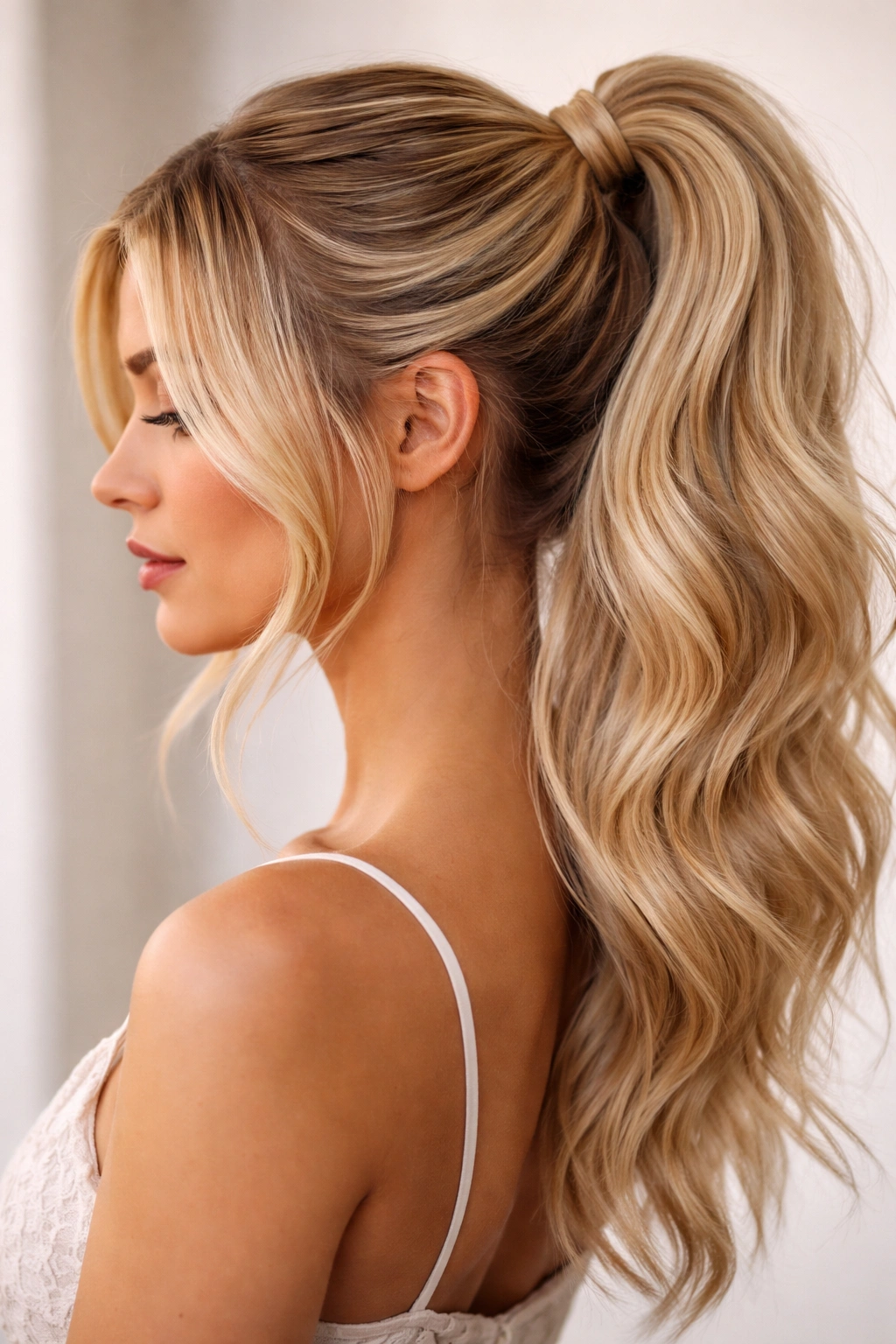
Here’s where strategic placement creates genuine seamlessness: this style uses slightly shorter, more subtle blonde pieces that are clipped in just below your natural hairline rather than on top of it. The effect is that you have blonde hair growing directly from your head, not an obvious clip-in piece sitting on your forehead or temple. The ponytail itself is textured and undone, so there’s enough movement that the “added” nature of the pieces gets completely lost.
The Power of Below-the-Hairline Placement
When clip-ins sit directly at the hairline, they’re immediately visible from certain angles. Placing them slightly below—at the point where they can clip into existing hair rather than just onto clips—makes them functionally and visually disappear. Combined with texture, this is one of the most believable approaches.
Achieving This Hidden-Clip Effect
- Create textured waves throughout your hair first, using a curling iron or braid waves
- Identify a small section of hair just below your natural hairline at each temple, about 1.5 inches wide
- Clip your blonde pieces into these subsections, ensuring they sit in the wave pattern you’ve created
- Gather your textured hair into a low to mid-height ponytail, making sure the clipped-in blonde pieces sit slightly forward and visible when looking at your face
- The blonde pieces should look like they’re part of the wave pattern, not separate additions
- Leave 2-3 inches of the front section out on each side to create that face-framing effect
- Tease gently throughout the ponytail for volume and use a dry texture spray to maintain movement
Styling secret: The more texture you have, the less visible the placement of your clips becomes because everything blends into the undone aesthetic.
7. Blonde Sleek Pony With Slicked Gel Detail at the Hairline
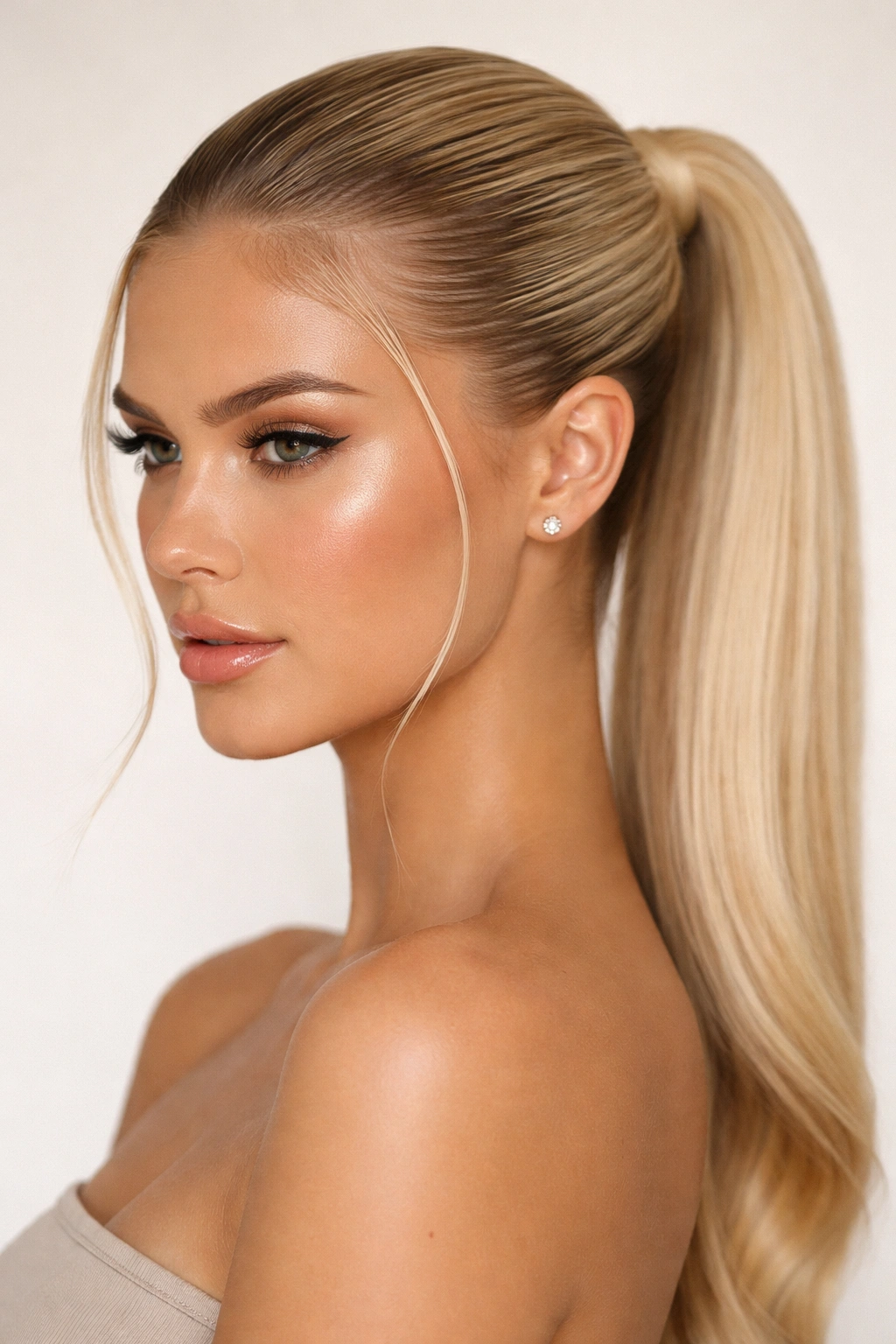
This approach uses minimal extension pieces—just enough to create face-framing dimension—paired with a very polished, gel-slicked hairline that creates a high-fashion, editorial aesthetic. The seamlessness comes from the precision of the styling; everything looks intentional and controlled, so any extensions read as deliberate styling choice rather than an attempt to hide added hair.
The Intentionality Factor in Seamlessness
Sometimes seamlessness isn’t about making extensions invisible; it’s about making them look so intentional and well-placed that calling them “extensions” feels reductive. When you’ve got a sleek gel hairline with perfectly placed blonde pieces, you’re not trying to hide anything—you’re executing a specific, polished look.
Executing the Precise Gel Detail
- Blow-dry hair smooth and sleek, with a deep side part
- Apply a clear or tinted gel to your hairline, creating a very smooth, controlled edge
- Clip in two lighter blonde pieces at the temples, positioned so they sit just at the edge of your gelled hairline
- Gather your hair into a low ponytail at the nape, keeping the sides extremely smooth and polished
- The blonde pieces should sit forward, creating a soft contrast against the controlled, gelled sides
- You can add a small hair accessory (like a gold cuff or ribbon) to define the ponytail base and add polish
- Keep the texture of the actual ponytail itself loose—the contrast between the sleek top and the softer bottom is what makes this look intentional
Editorial note: This style reads very fashion-forward and less “everyday,” but the intentionality is what sells it as seamless rather than trying-too-hard.
8. Dimensional Blonde Ponytail With Graduated Tone Face-Framing
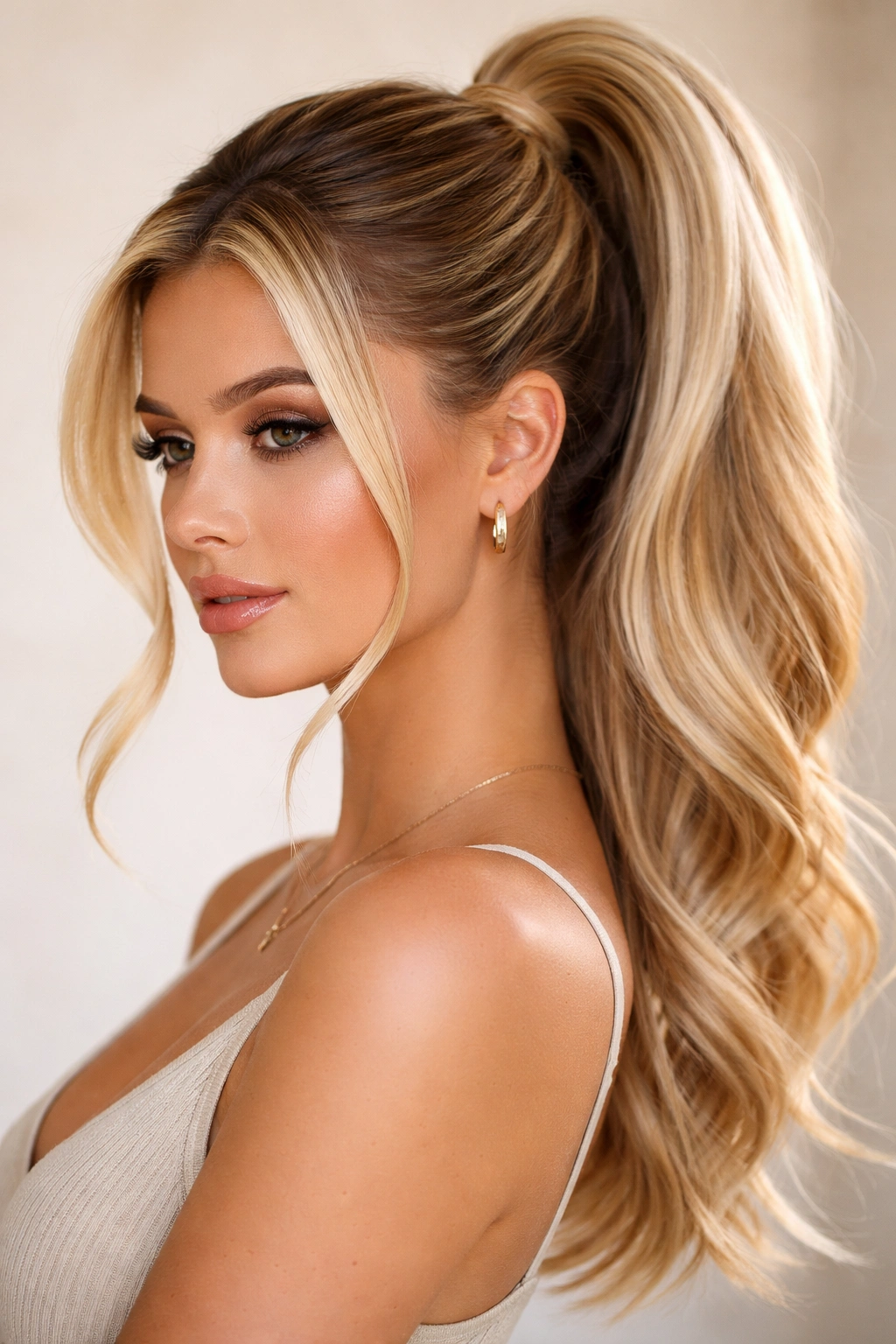
This is the next-level approach to the rooted ombre style: you’re using not just two different shades but three or more, creating a genuinely graduated transition from your natural darker hair at the roots and sides, through a medium honey blonde in the middle sections, and into a light platinum or champagne blonde at the face-framing pieces. The effect is dimensional, believable, and so seamlessly blended that it reads as a professional dimensional haircut and color rather than clip-in extensions.
How Graduated Tones Create Depth and Dimension
Multiple tones give your hair visual complexity, which automatically makes extensions read as intentional styling or part of a multi-tonal color technique rather than “obviously added pieces.” The eye reads the progression as intention, not as obvious differentiation between natural and added hair.
Building the Graduated Effect
- Use 3-4 different shades of blonde extensions: dark honey at the nape, medium honey at the mid-sections, light champagne at the temples, and the lightest platinum blonde for the face-framing pieces
- Create loose waves throughout using a large-barrel curling iron, curling all pieces in the same direction
- The darker honey pieces should blend directly with your natural hair color or sit slightly lighter; they’re the transition shade
- The champagne and platinum pieces go at the front, creating that face-framing effect
- Gather into a low, slightly undone ponytail with gentle teasing at the crown
- Leave out the lighter face-framing pieces so they sit forward and create movement
- Finish with a texture or dry shampoo spray to enhance dimension and separate the waves
The benefit: This approach is essentially foolproof because the dimension is what people notice, not the seams between natural and added hair.
9. Blonde High Pony With Twisted Face-Framing Wrap
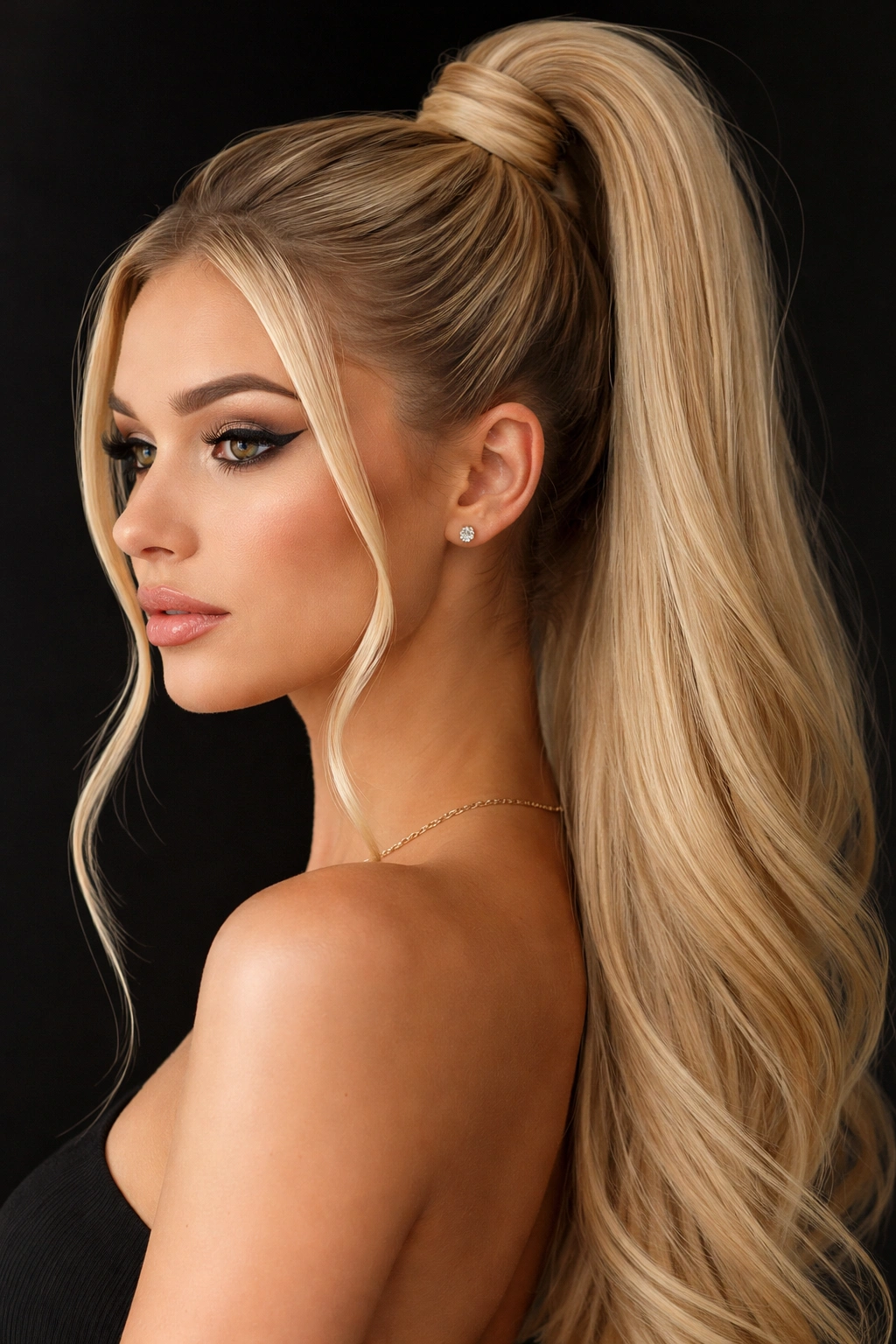
This style builds dimension through placement and technique rather than just color: you’re using blonde pieces at the front, but instead of leaving them loose, you’re twisting them and wrapping them around the base of the ponytail in a way that looks completely intentional and technically skilled. The wrapping technique essentially camouflages where the extensions clip in and creates this almost rope-like effect that reads as a deliberate styling move.
How Technique Sells the Seamless Look
When you take those blonde pieces and actively weave them into the overall ponytail construction through twisting or wrapping, you’re no longer creating a situation where they sit on top of your hair. You’re making them structural elements of the overall style, which immediately changes how the eye perceives them.
Creating the Wrapped Effect
- Blow-dry with volume at the crown, using a texturizing product for grip
- Clip in two medium-length blonde pieces (8-10 inches) at the temples, ensuring they’re positioned slightly back from the hairline
- Create soft waves or texture throughout using a curling iron
- Gather your hair into a high ponytail at the crown, positioning it tight against the head
- Take the blonde pieces on each side and twist them loosely, incorporating your natural hair as you twist
- Wrap these twisted sections around the base of the ponytail, securing with bobby pins that match your hair color
- Any remaining length of the blonde pieces can fall as part of the ponytail itself, or you can tuck them back into the wrap
- Tease slightly at the crown and around the base for volume and secure with a flexible hairspray
Technical detail: The wrapping conceals your clips entirely and creates this cohesive, architectural look that reads as high-level styling.
10. Blonde Low Pony With Piece-Clipped Face-Framing Details
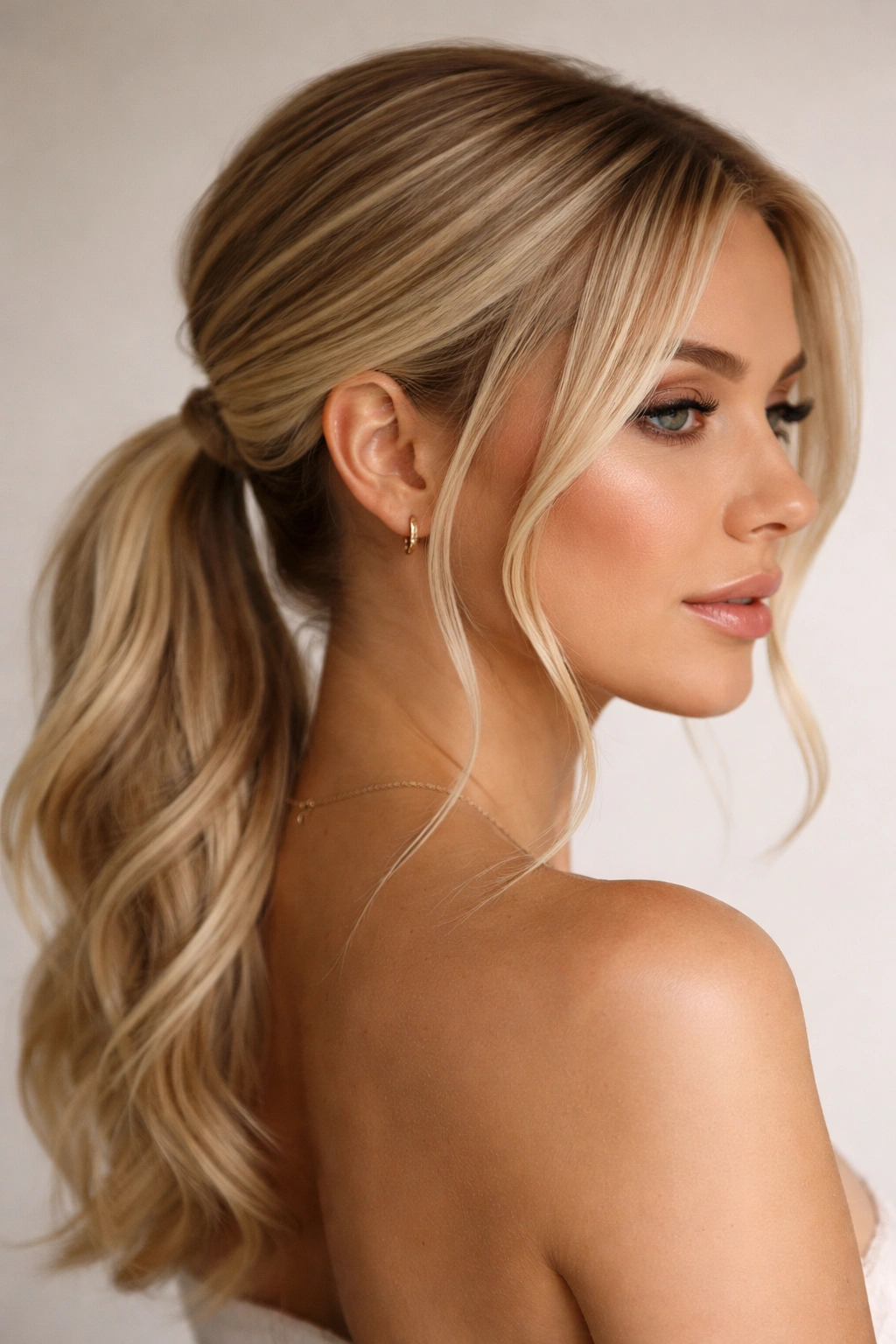
This variation uses individual smaller blonde pieces strategically positioned around the entire face—not just at the temples, but near the cheekbones, along the hairline, and framing the ears. Rather than two obvious face-framing sections, you’ve got 4-6 smaller, lighter pieces distributed around the face perimeter. The seamlessness comes from the fact that with this many pieces distributed this way, it reads as genuine dimension and styling rather than “extended pieces.”
The Distribution Strategy for Invisibility
When you break up your extensions into smaller pieces and position them throughout rather than in one obvious spot, no single piece looks obviously added. The eye sees the overall effect of dimension and fullness rather than obvious clip-ins.
Building the Distributed-Piece Look
- Use 4-6 lighter blonde clip-in pieces, each between 4-6 inches and containing less bulk than traditional fuller pieces
- Identify placement points: one at each temple, one near each cheekbone, one framing each ear, and optionally one at the center of your forehead area
- Your hair should have loose waves or gentle texture created with a curling iron
- Clip each piece in at its placement point, ensuring it sits within existing hair rather than just on top of your head
- Gather your entire head of hair into a low to mid-height ponytail at the nape
- The lighter pieces positioned forward should frame your face naturally, with a few left out on each side for movement
- The pieces near the ears and cheekbones should stay closer to your head as part of the overall ponytail volume
- Tease gently throughout and finish with a flexible-hold hairspray that maintains movement
Why this works: Distributed placement means there’s no single “extension moment” that gives the whole thing away; instead, there’s overall fullness and dimension.
11. Honey Blonde Slicked Pony With Gel-Defined Edge Detail
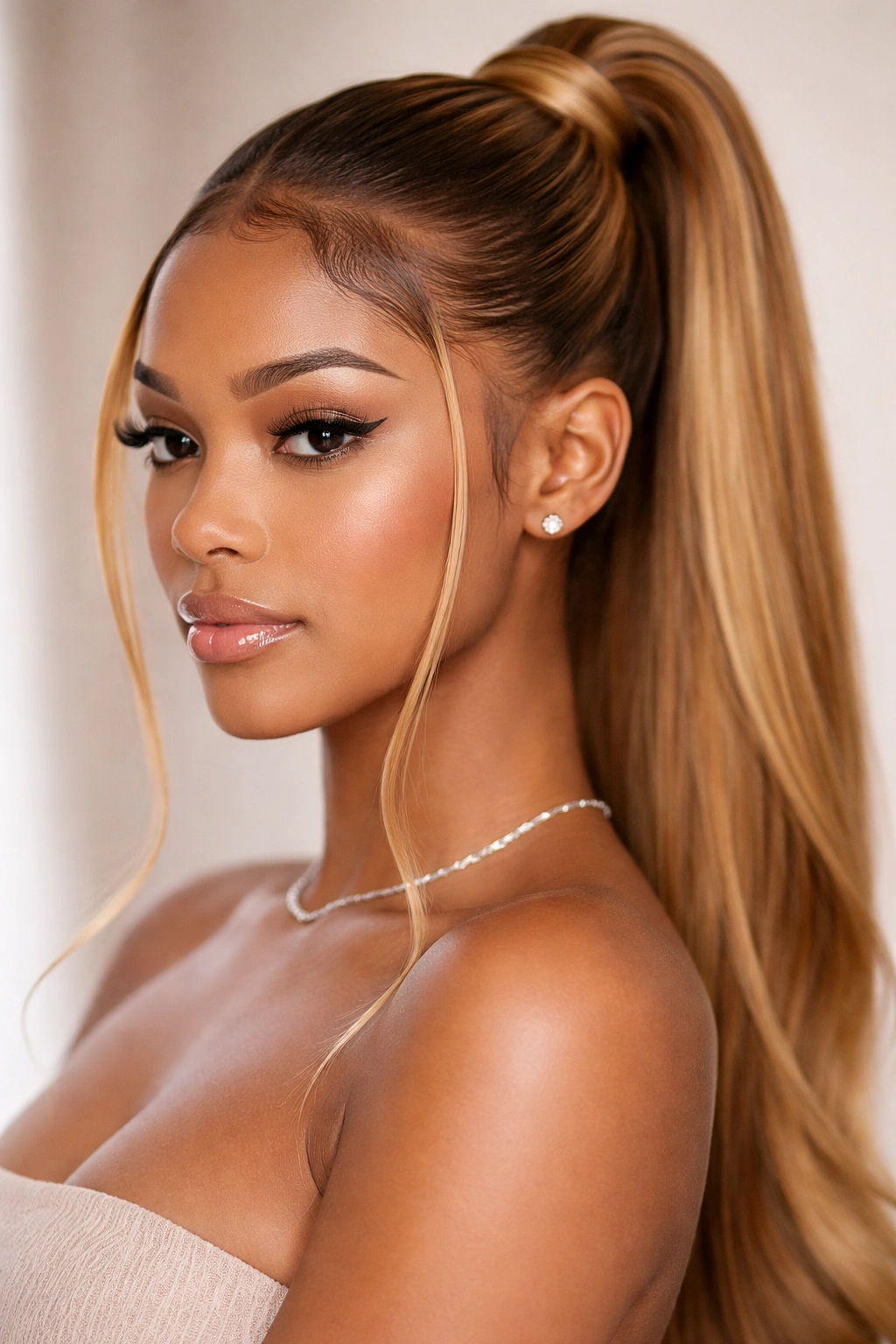
Building on the sleek gel approach but with a focus on honey-toned blonde pieces rather than platinum, this style uses the precision of a gel-defined hairline to make face-framing blonde sections read as intentional styling. The honey blonde is slightly more forgiving than platinum—it blends more seamlessly with a range of natural hair colors—while maintaining that high-fashion, editorial quality that makes extensions feel like design choice.
Why Honey Blonde Creates More Believable Seamlessness
Honey blonde is a shade that appears frequently in naturally sun-lightened or naturally bronde hair. Using honey tones in your face-framing pieces means they’ll blend with more hair types and colors, which automatically increases the believability factor. It reads less as “obvious added blonde” and more as “natural dimension.”
Styling the Honey-Blonde Edge Detail
- Blow-dry with a side part and a smooth, polished finish using a paddle brush and light hairspray
- Apply a clear or gold-tinted edge control gel to your hairline, creating a very precise, controlled edge
- Clip in two honey or champagne blonde pieces at the temples, positioned where they sit just forward of your gel line
- These pieces should be medium-length (8-10 inches) with a subtle wave or slight texture to them
- Gather your hair into a low ponytail at the nape, keeping everything smooth and tight against the head
- The blonde pieces should sit forward, creating a soft face-framing effect without any texture at the top
- You can add a metallic hair cuff or decorative tie to the ponytail base to enhance the polished aesthetic
- Keep the lengths of the ponytail slightly wavy or textured for contrast
Styling advantage: The precision of the gel detail draws the eye upward and outward, making the front pieces look intentionally placed rather than added.
12. Blonde Textured Pony With Messy-Wrap Face-Framing Technique
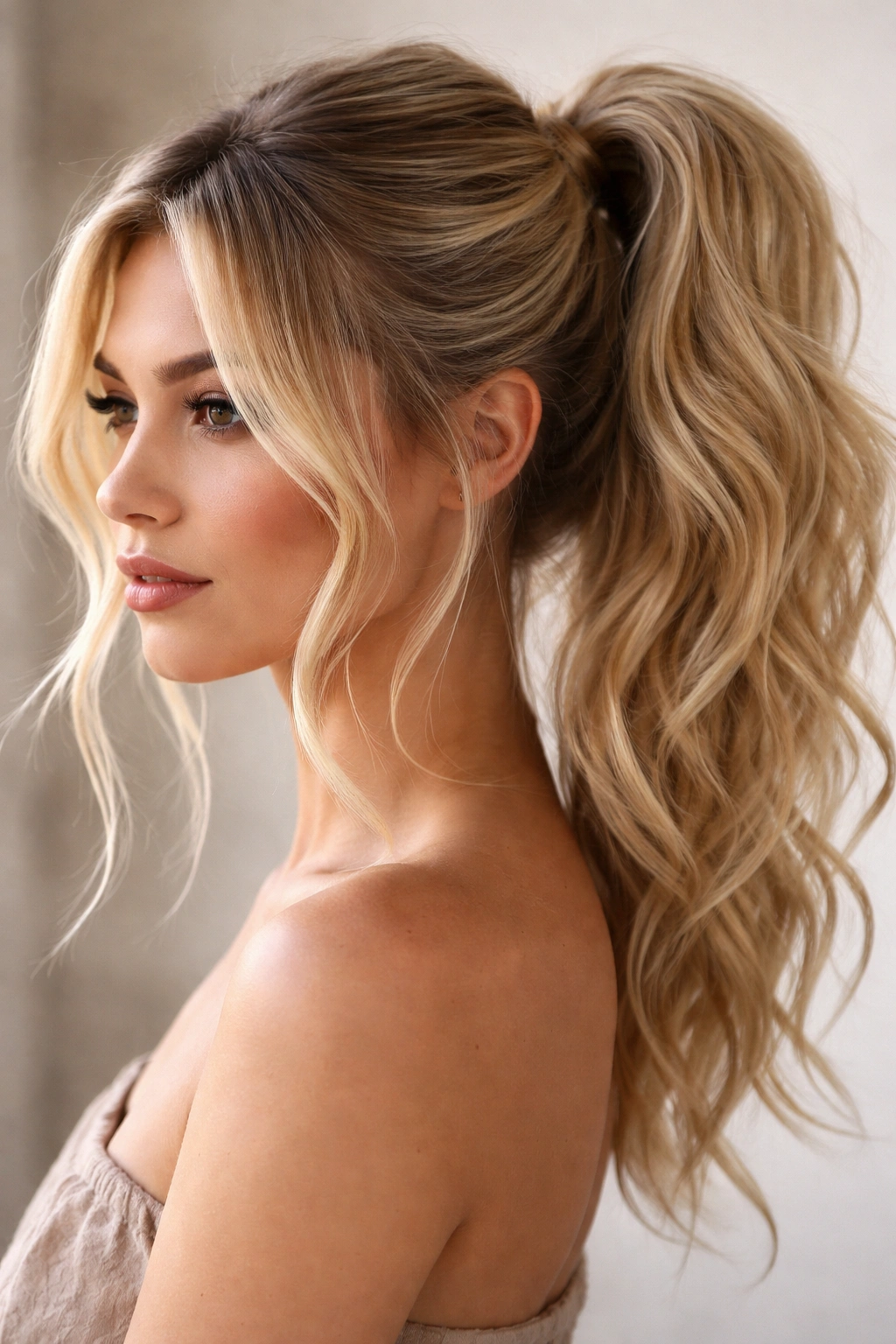
For the final approach, here’s a textured, undone interpretation where blonde pieces are clipped in and then loosely wrapped and pinned around the base of the ponytail in a deliberately imperfect way. It’s got an artfully disheveled quality—the kind of look that says “I woke up like this” even though significant technique is involved. The seamlessness comes from the undone, lived-in aesthetic; anything that’s not perfectly controlled reads as intentional and real-looking rather than manufactured.
How Imperfection Creates Believability
Perfectly controlled extensions can sometimes read as too perfect. But when you’ve got a textured, undone ponytail with blonde pieces loosely woven in, the overall effect reads as authentic and effortless rather than obviously styled. That’s where true seamlessness lives—in the appearance of naturalness.
Building the Artfully Undone Look
- Create loose, piece-like waves throughout your hair using a 1.25-inch curling iron, curling away from the face and leaving some sections uncurled for dimension
- Clip in two blonde pieces (8-12 inches) at the temples, choosing a shade that’s 2-3 shades lighter than your natural base
- Gather your hair into a low ponytail at the nape, but intentionally leave it slightly loose and slightly off-center
- Take the blonde pieces and loosely twist or loosely braid them, leaving some pieces to fall out of the twist
- Wrap these twisted blonde sections around the base of the ponytail, securing with 2-3 bobby pins and leaving some texture visible
- You want the wrap to look intentional but undone—not perfect and not messy, but somewhere in between
- Gently tease around the crown and sides of the ponytail for volume
- Use a texture spray or dry shampoo rather than hairspray; the goal is to keep everything soft and movement-based
- Smooth any flyaways down with a light smoothing serum, but leave some texture visible at the hairline and around the face
The secret: The undone aesthetic is actually what makes these extensions read as seamless because people’s brains interpret undone hair as “real” and unmanufactured.
Final Thoughts
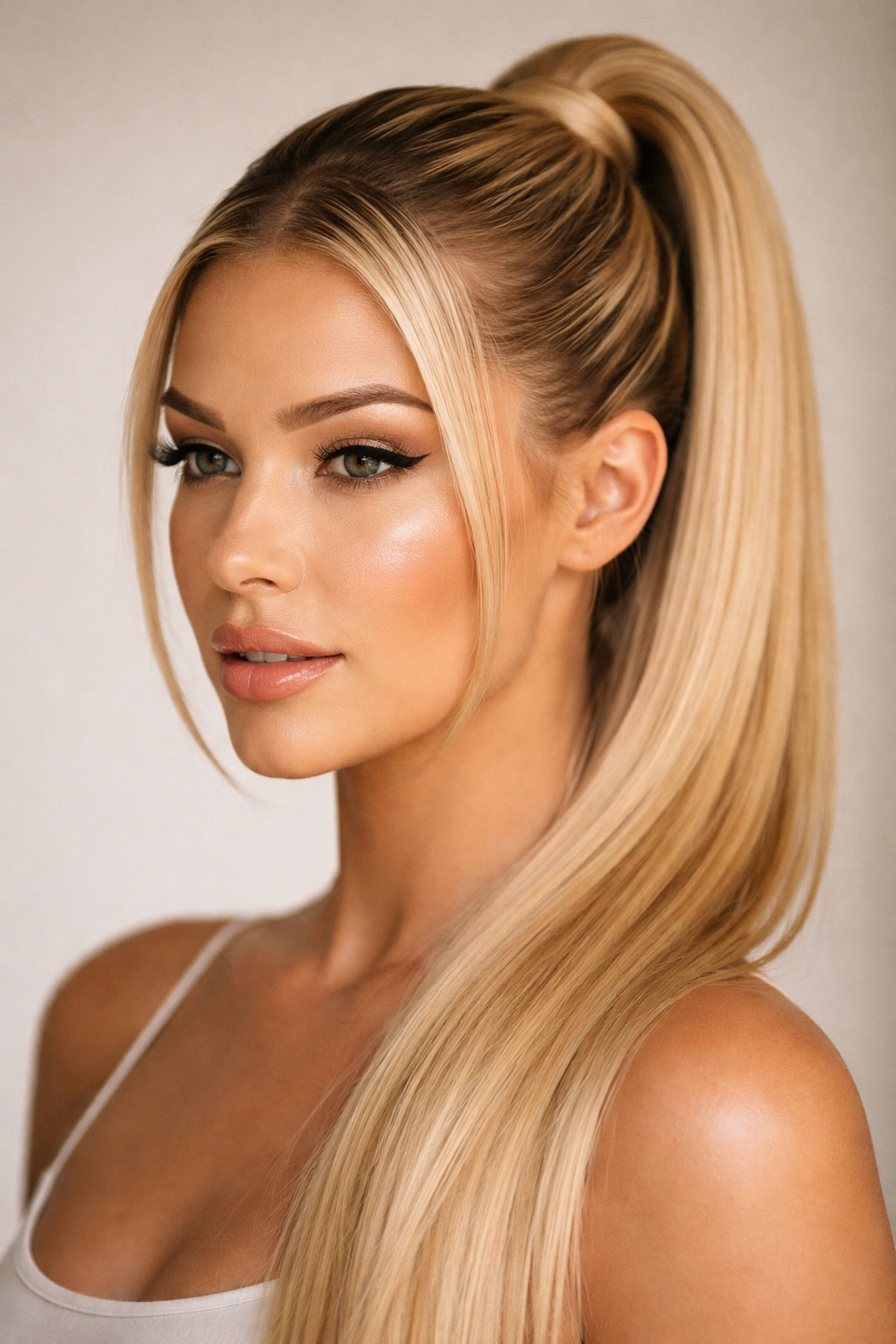
The most seamless blonde frontal ponytails share one universal truth: they don’t feel like extensions, they feel like intentional styling choices that happen to involve blonde hair and strategic placement. Whether you’re going for sleek editorial polish, textured lived-in ease, or dimensional rooted dimension, the success of the style depends on three foundational elements working together—the quality and shade of your blonde pieces, the placement strategy you choose, and the overall technique you use to integrate them into your ponytail.
The distinction between a seamless ponytail and an obvious one often comes down to small technical choices that most people won’t consciously notice: matching the texture of your extensions to the texture of your base, choosing shades that work with your natural color rather than in harsh contrast, and thinking about placement in three dimensions rather than just “at the front.” None of these approaches require expensive salon visits or professional installation, though they do require attention to detail and a willingness to experiment until you find the placement and styling method that feels most natural for your hair type and face shape.
Your blonde frontal ponytail should look like the best version of your real hair—just fuller, longer, and more strategically highlighted. When you nail that, that’s when people stop asking if it’s extensions and start asking what your secret is.
