



Four-texture hair is absolutely gorgeous, and the right ponytail style can celebrate your natural texture while keeping your hair protected and looking polished. If you’re a Black woman with 4C hair, finding a ponytail style that actually works with your texture—not against it—makes all the difference between a hairstyle that feels effortless and one that leaves you frustrated. The key is understanding that 4C hair has a unique coil pattern, shrinkage factor, and moisture needs, which means not every ponytail tutorial you see online will translate the same way for your hair.
The beautiful thing about 4C hair is its versatility and volume. Whether you’re styling for a casual day at work, a special event, or just wanting to protect your hair while it grows, there’s a ponytail style that’ll work beautifully for your texture. Some styles embrace your natural curl pattern and shrinkage, while others use extensions or careful manipulation to create sleeker looks when you want them.
Throughout this guide, I’m sharing 12 ponytail styles specifically designed with 4C hair in mind—styles that respect your hair’s moisture needs, minimize breakage, and actually look intentional rather than like you’re just pulling your hair back. Each one includes the exact techniques that work best for 4C texture, the tools and products that make styling easier, and honest tips about maintenance and longevity. Let’s dive into these styles and find your new favorite way to wear your hair.
1. High Bun Ponytail
The high bun ponytail is a timeless look that works beautifully when you understand how to work with 4C shrinkage. With 4C hair, your ponytail will sit higher on your head than you might expect because of the natural shrinkage factor—what looks medium-length loose can become quite a bit shorter once you gather it into a ponytail. This style is perfect for days when you want your hair completely off your face and neck, and it’s a genuinely protective option when done correctly.
How to Create This Look
Start with moisturized, detangled hair—detangle while your hair is wet or very damp with a leave-in conditioner to prevent breakage. Use a wide-tooth comb or your fingers to work through any tangles gently, starting from the ends and working upward. Once your hair is fully detangled, you can let it air-dry or use a blow dryer on low heat with a concentrator nozzle if you want a slightly smoother finish. Gather your hair at the crown—higher than you think you need because it will sit lower once secured—and smooth it gently with a soft brush or your hands.
Secure the ponytail with a silk or satin scrunchie (never regular elastics that can cause breakage). Wrap a small section of hair around the base of the ponytail to hide the scrunchie and create a finished look, then secure that section with bobby pins. If you want extra polish, smooth any flyaways with a light edge control—just a tiny bit of product goes a long way.
Why It Works for 4C Hair
This style keeps tension away from your edges and scalp when you do it gently, making it genuinely protective. The high placement also works with your hair’s natural volume rather than fighting it, so it looks intentional and flattering instead of strained.
Styling Tips for Success
- Moisturize before styling: Apply a leave-in conditioner or moisturizing spray to your entire head, paying special attention to the ends.
- Use soft hair accessories: Silk or satin scrunchies minimize friction and breakage compared to regular elastics.
- Don’t pull too tight: A common mistake is thinking tighter equals more secure—actually, a gentle hold that doesn’t stretch your hair roots is best for protection.
- Refresh between washes: Lightly mist with water and re-moisturize every 2–3 days to prevent your ponytail from drying out.
Pro tip: This style looks even better when you add a silk or satin bonnet at night—it keeps your ponytail looking fresh and prevents frizz and breakage while you sleep.
2. Low Ponytail
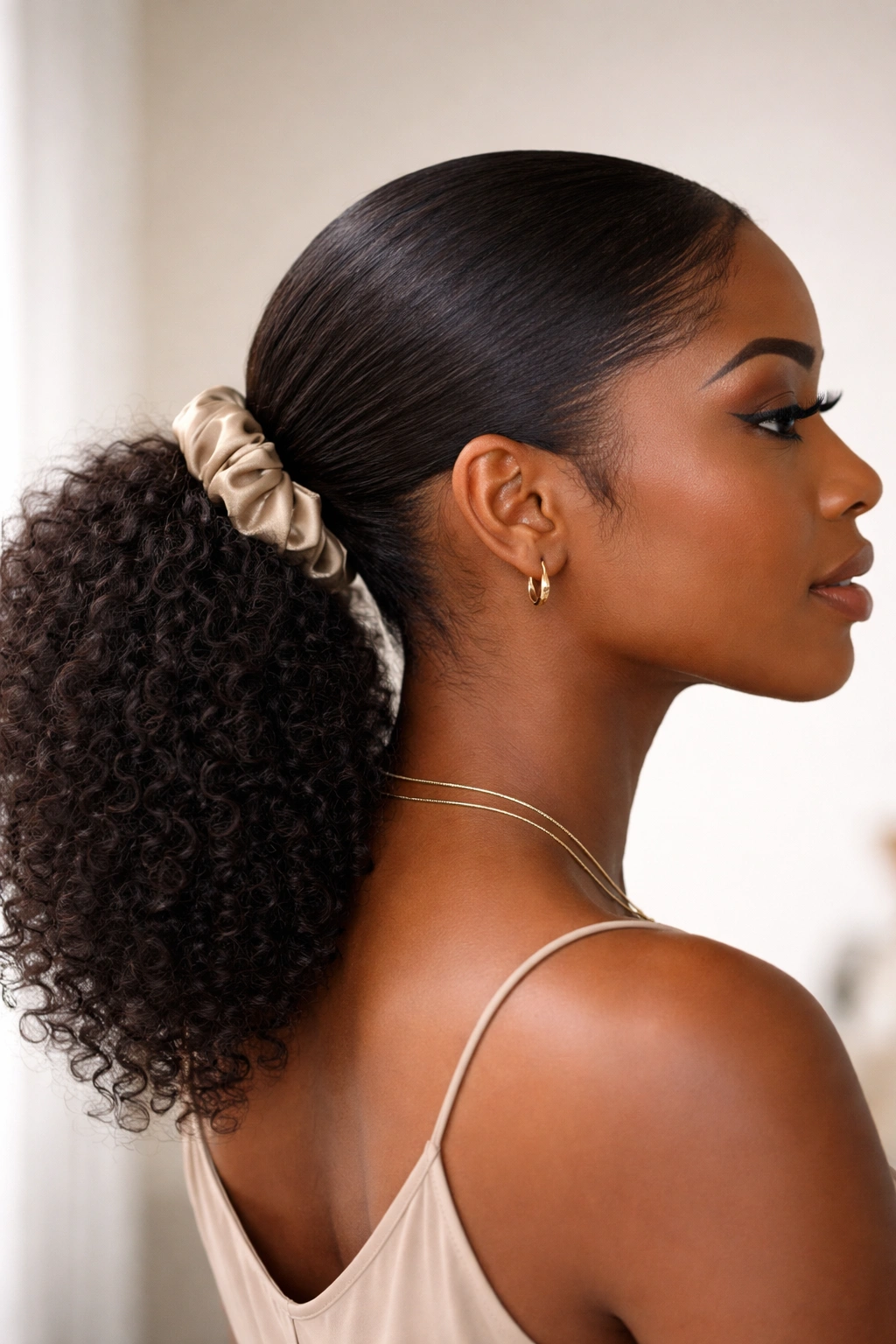
A low ponytail sits at the nape of your neck and offers a sleek, elegant look that’s perfect for work, date night, or anytime you want something polished without the high-impact styling of a top-of-head bun. This placement is particularly flattering for 4C hair because it lets your natural texture shine while still being contained and intentional.
How to Create This Look
Start with clean, moisturized hair and detangle thoroughly while damp. For a low ponytail, you want your hair smooth but not necessarily stretched—4C hair’s beautiful curl pattern is actually an asset here. Flip your head forward and let your hair fall naturally, then smooth it back gently with your hands or a soft paddle brush. Gather it low at the nape of your neck, roughly where your ears line up vertically.
Secure with a silk scrunchie and wrap a small section around the base. For extra smoothness and polish, you can use a tiny amount of edge control on any stray hairs, or leave it textured and natural depending on the look you’re going for. The beauty of 4C hair in a low ponytail is that the texture reads as intentional and beautifully voluminous, not messy.
Why It Works for 4C Hair
Low ponytails put less tension on your hairline and scalp because the hair isn’t being pulled upward as dramatically as with a high style. This means less stress on your edges and less risk of traction alopecia when you style this way regularly. Your natural curl pattern stays prominent, which looks gorgeous and celebrates your texture.
Styling Tips for Success
- Choose the right placement: The lower you go, the less tension overall—aim for at least 2–3 inches above your neck.
- Embrace the texture: You don’t have to smooth every bit of hair perfectly. Some flyaways and texture actually look more modern and intentional.
- Add shine with the right products: A tiny amount of argan oil or hair sheen spray on the finished ponytail adds polish without weighing your hair down.
- Keep it hydrated: Low ponytails can sometimes trap moisture against your neck, so check that your hair isn’t getting damp from sweat and sitting against your skin where mildew could develop.
Worth knowing: This style holds well for 3–4 days when done on stretched or blown-out hair, but only 1–2 days on fully natural, unmanipulated 4C texture—that’s fine; just plan your refresh days accordingly.
3. Sleek Ponytail With Extensions
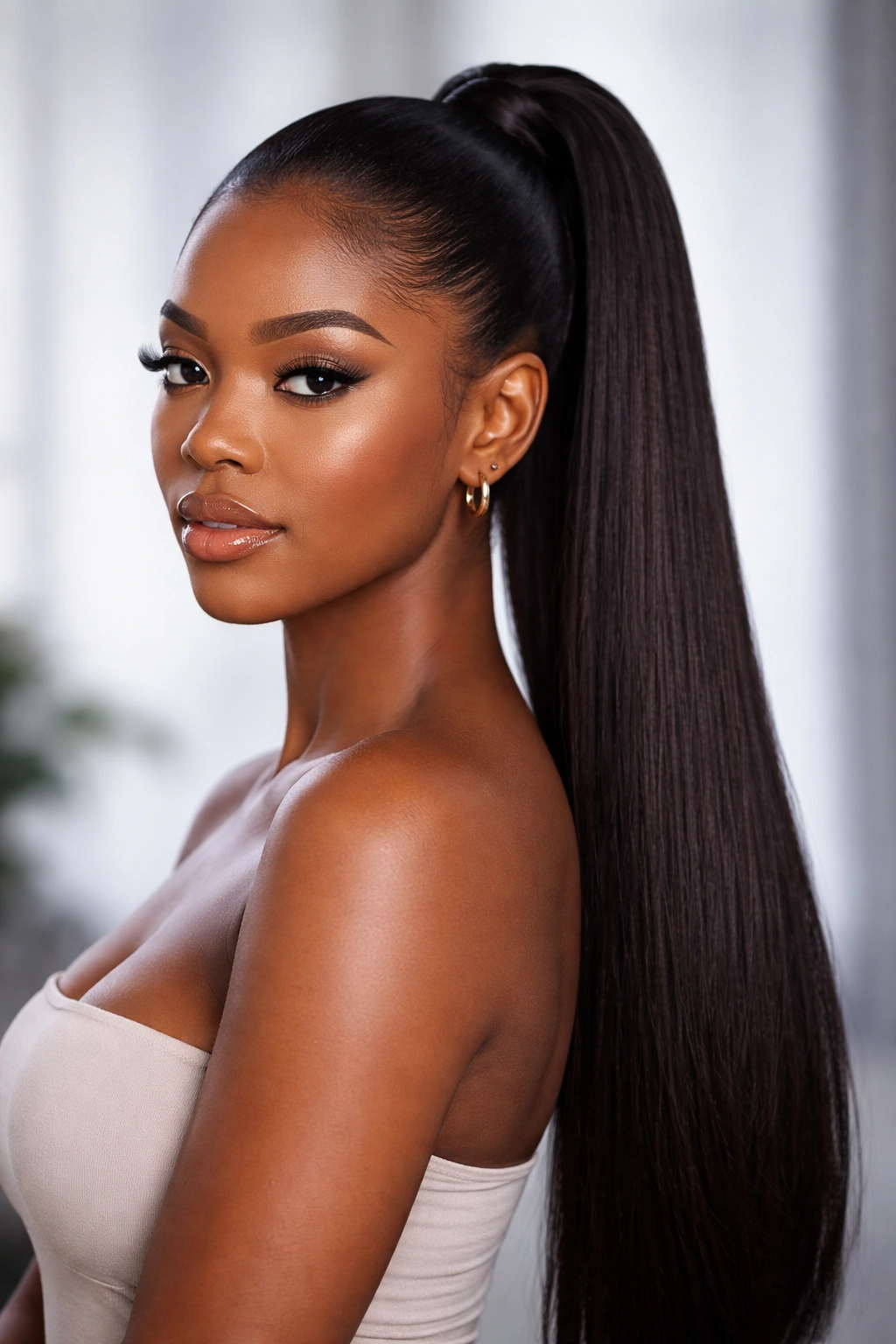
A sleek ponytail with extensions gives you length, volume, and incredible polish while protecting your natural 4C hair underneath. Extensions allow you to create a style that might be difficult with your natural hair alone while keeping your actual hair tucked away and moisturized. This is an investment-level style worth doing right, so let’s break down how to make it work for 4C texture.
How to Create This Look
Begin with clean, moisturized hair and blow-dry it smooth with a flat iron or blow dryer and concentrator nozzle. The goal is a stretched-out but not-necessarily-slick base that extensions can grip. Blow-drying also helps your natural hair dry completely before adding extensions, which is crucial for preventing moisture and mildew issues underneath.
Once your base is smooth and dry, part your hair into four quadrants and clip each section up. Start by adding hair weft extensions or clip-in extensions along the back and sides, starting low and building upward. For 4C hair, less tension in the added sections is better, so don’t pull the base hair too tight. Once your extensions are secure, gather both your natural hair and the extension hair together into a ponytail at your preferred height, then smooth with a fine-tooth comb and secure with a silk-covered elastic.
Why It Works for 4C Hair
Your natural hair gets a true break while styled with extensions—it’s tucked underneath and protected from daily manipulation, friction, and environmental stress. Sleek styles in particular can be hard on 4C hair’s curl pattern if done constantly, so using extensions takes that pressure off your natural texture.
Styling Tips for Success
- Use quality extensions: Cheap synthetic extensions shed, tangle, and look unnatural—invest in human hair extensions or quality synthetic for a sleek look that lasts.
- Secure extensions loosely: Avoid tight tension where extensions attach to your natural hair. Tension causes damage and breakage at the connection points.
- Keep your natural hair moisturized underneath: Even though it’s tucked away, spray your hairline and edges with a light mist of water and moisturizer every 2–3 days.
- Invest in a silk pillowcase: Extensions need care too. A silk pillowcase prevents tangling and matting while you sleep.
- Plan your removal: After 4–6 weeks, remove extensions carefully and give your natural hair a deep-conditioning break for at least a week before reinstalling.
Important note: Sleeping on extensions without protection causes major tangling. Use a silk bonnet or sleep on a silk pillowcase every single night.
4. Textured High Ponytail
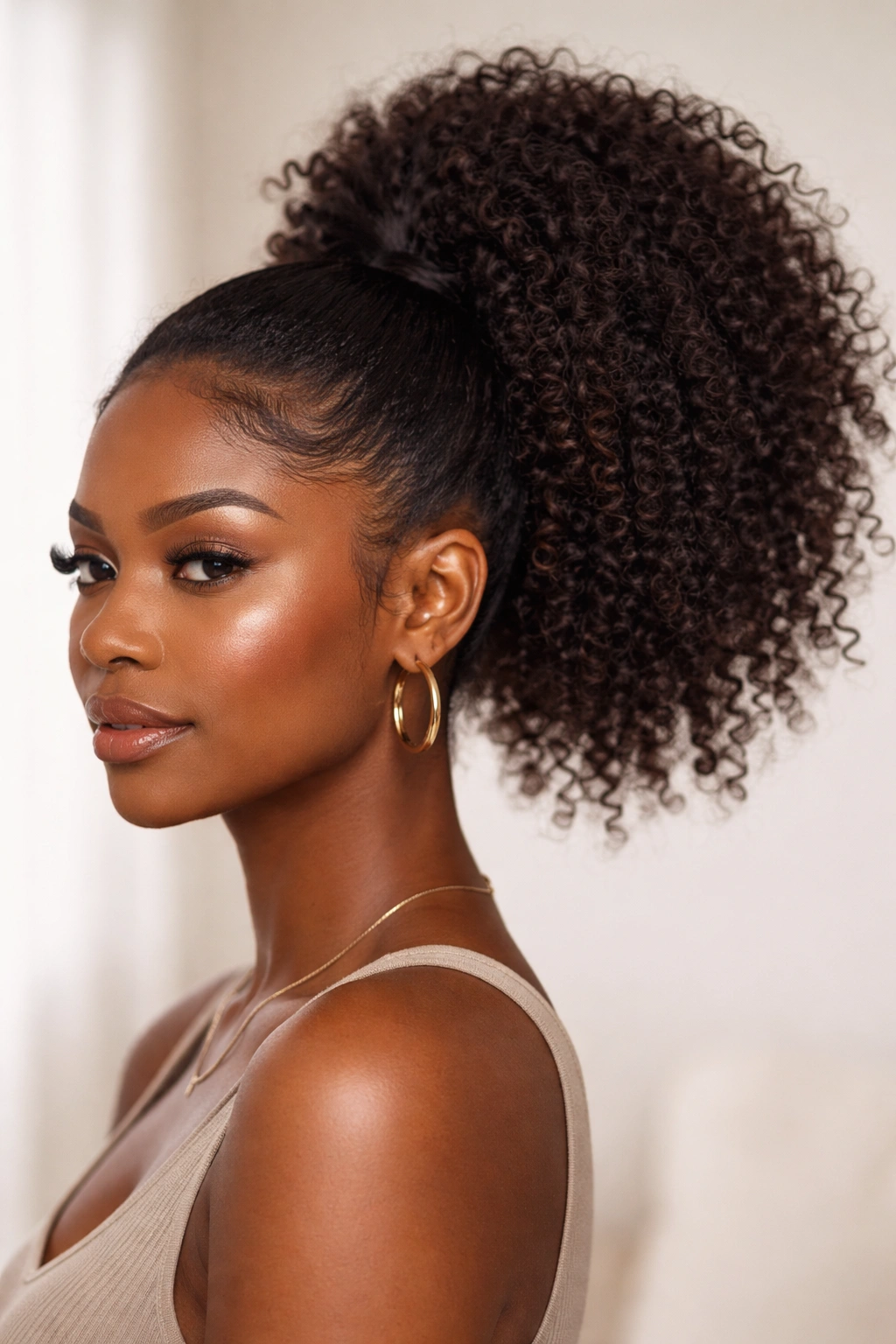
A textured high ponytail celebrates your 4C curl pattern instead of fighting it, creating a style that’s bold, voluminous, and genuinely protective when done right. This approach honors your natural texture rather than trying to smooth it into something it’s not, and the result is strikingly beautiful and way less work than trying to make 4C hair sleek all the time.
How to Create This Look
Start with moisturized, clean hair and apply a lightweight leave-in conditioner throughout. You don’t need to detangle unless there are tangles—with textured styles, you’re actually working with your natural coil pattern. Let your hair air-dry or use a diffuser attachment on your blow dryer to dry without disrupting your curls. You want your curls to be defined and full, not stretched out.
Once your hair is dry, gather it at the crown and secure with a soft silk scrunchie. The beauty here is that you don’t need to smooth anything—your natural curl pattern is the whole point. You can wrap a small section of hair around the base, or just leave it natural and textured with a few curls framing your face.
Why It Works for 4C Hair
Textured ponytails require way less styling time and product use, which means healthier hair overall. Your curl pattern isn’t being stretched or manipulated, so there’s zero tension on your roots and edges. This style is genuinely protective because you’re working with your hair’s natural pattern instead of against it.
Styling Tips for Success
- Define your curls with the right products: A light curl-defining cream or gel applied to soaking-wet hair helps your curls pop and last longer.
- Pineapple at night: Gather your ponytail loosely on top of your head in a scrunchie before bed—it’s called “pineappling”—to keep curls intact overnight.
- Refresh with water: Every morning or every other morning, lightly mist your ponytail with water and add a tiny bit of leave-in conditioner, then reshape.
- Embrace the shrinkage: Your ponytail will be shorter than you expect, and that’s perfect—it means you’re working with your hair’s natural state.
Insider knowledge: Textured ponytails look best when your hair has been moisturized and rested for at least 2–3 days after washing, so plan this style for mid-week wear rather than right after wash day.
5. Side Ponytail
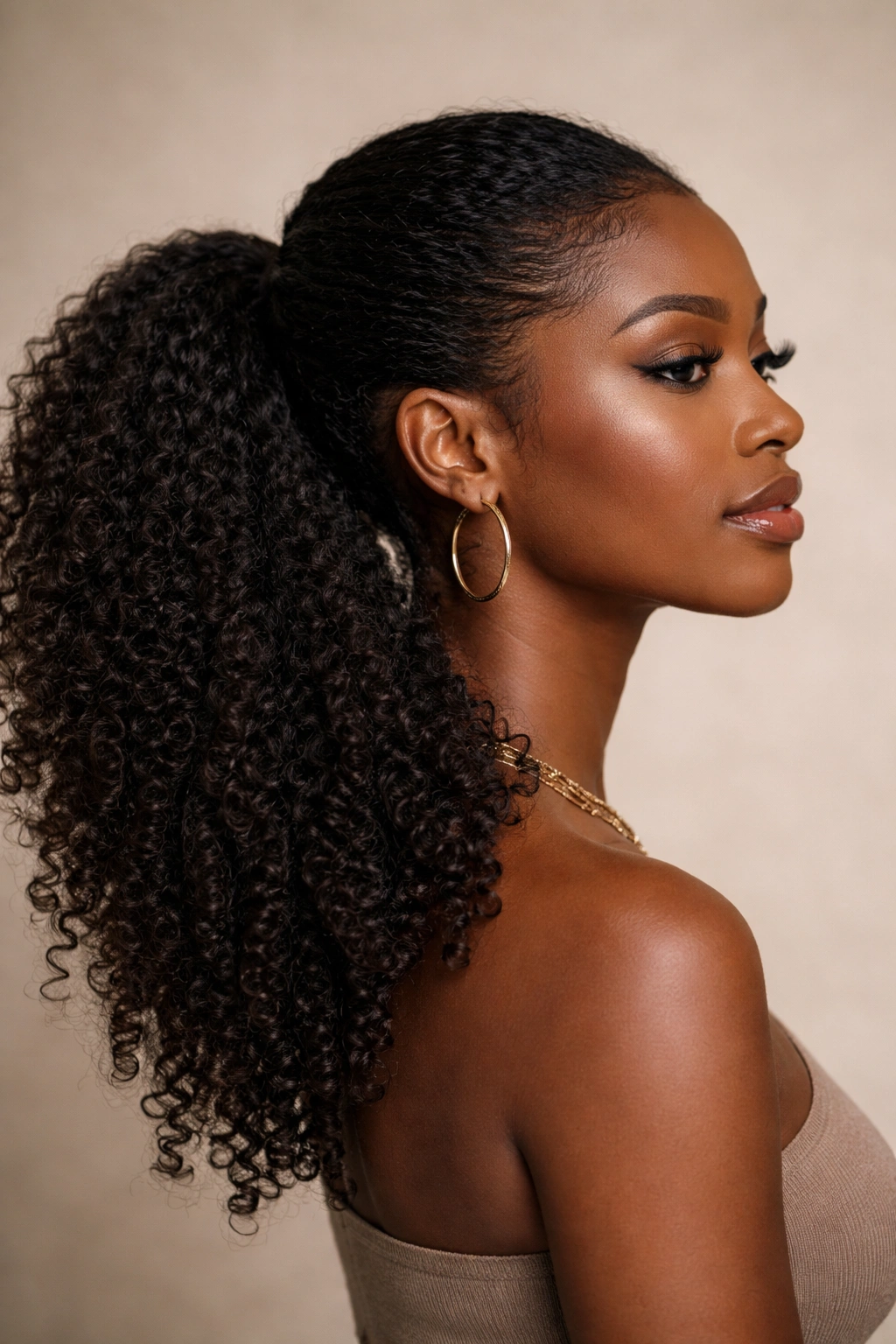
A side ponytail swept dramatically to one side creates movement, flatters your face, and works beautifully with 4C hair’s natural texture. This style feels feminine and intentional while being genuinely low-stress on your hair—your ponytail sits to the side of your neck rather than directly at the back, which changes the angle of tension and often feels more comfortable.
How to Create This Look
Start with moisturized, detangled hair that’s either air-dried or blow-dried to your preferred texture level. You can do this style with textured 4C curls or with slightly more stretched hair—both look gorgeous. Use a soft brush or your fingers to smooth your hair back toward one side, gathering it at the back of the opposite ear (so if you’re doing a left side ponytail, gather behind your right ear).
Secure with a silk scrunchie and wrap a section around the base. For extra flair, you can tease or fluff the ponytail slightly at the base to add volume, then smooth the length so the ends look polished. Some people like to leave a few face-framing pieces out on one side—super flattering and romantic.
Why It Works for 4C Hair
Side ponytails sit at a different angle than centered styles, which actually distributes tension more evenly across your head rather than concentrating it in one spot. This placement is also very flattering for 4C hair’s volume, as the swept angle showcases your hair’s natural fullness beautifully.
Styling Tips for Success
- Ensure even tension: Don’t pull harder on the side of your head doing the gathering—use gentle, even pressure throughout.
- Face-frame strategically: One or two loose pieces framing your face looks intentional and romantic; too many just look like your style fell out.
- Add texture variation: Mix smooth and textured sections if you want extra dimension. Pull some areas smooth and leave curls in others.
- Check your weight distribution: Side ponytails naturally sit heavier on one side, so make sure the weight feels balanced and doesn’t pull uncomfortably.
Pro tip: This style looks even better when you add a light hand-twisted section around the base or a small decorative hair clip. It elevates the look from casual to intentional.
6. Wrapped Ponytail
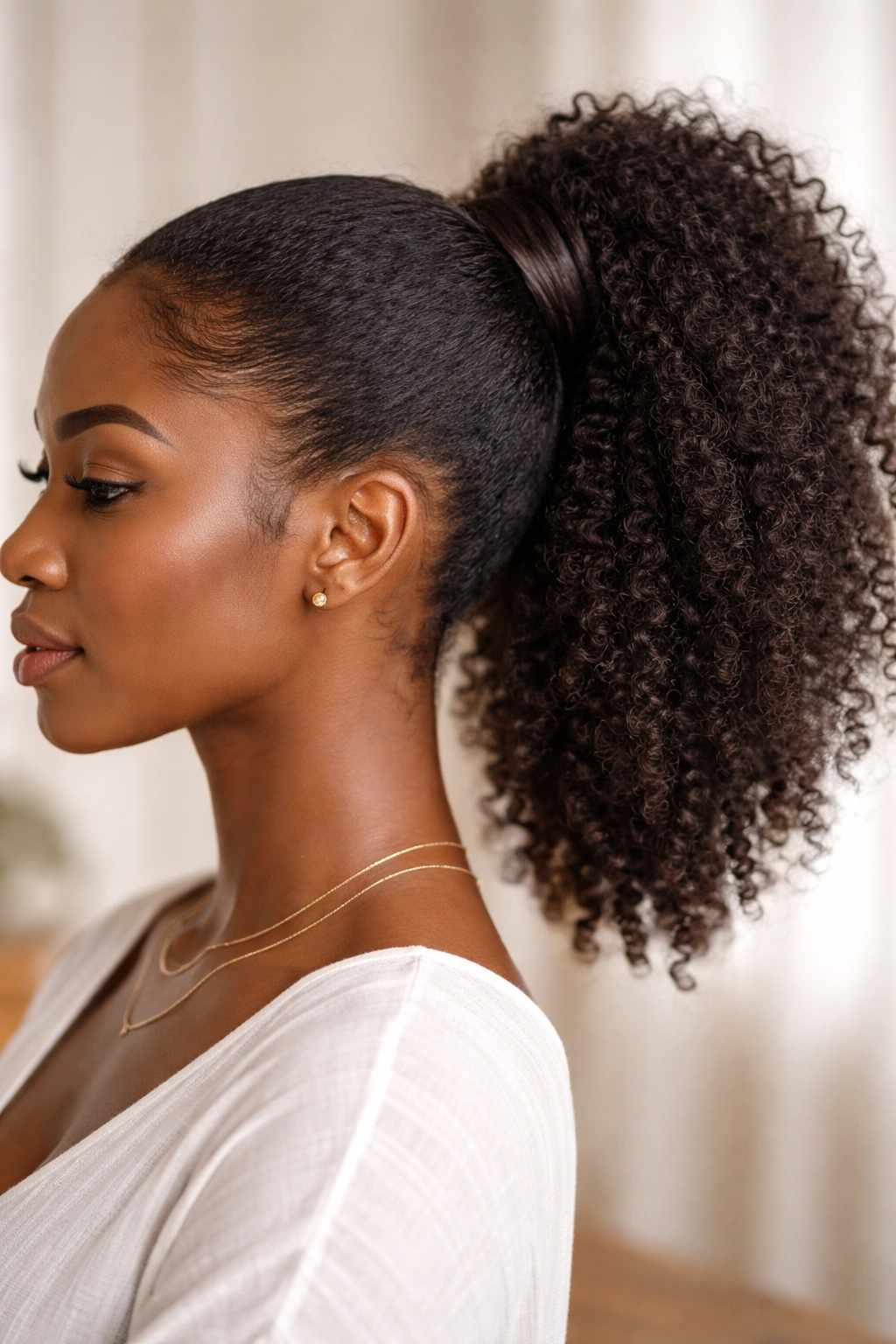
A wrapped ponytail involves securing your hair in a ponytail, then wrapping a strand of your own hair—or a piece of yarn, thread, or fabric—around the base to create a polished, finished look. This technique turns a simple ponytail into a deliberately styled statement, and it’s especially effective with 4C hair because the wrapping draws attention to your hair’s texture and volume.
How to Create This Look
Gather your hair into a ponytail at your preferred height and secure loosely with a silk scrunchie. Divide the ponytail into two sections and unwind them slightly. Take a thin strand from the back of your ponytail and wrap it around the base, spiraling upward about an inch, then secure the end with bobby pins tucked underneath. The spiral effect is what makes this look special—it’s not just a wrap, it’s a visible, intentional detail.
Alternatively, you can use a thin piece of yarn, leather thread, or even a small fabric strip to wrap around the base instead of using your own hair. This adds color contrast and makes the wrapped detail even more prominent. The fabric wrapping approach is perfect if your ponytail is shorter and you don’t have enough length to wrap your own hair comfortably.
Why It Works for 4C Hair
Wrapping your ponytail adds visual interest and polish to even the simplest styles. With 4C hair’s natural volume and texture, a wrapped base creates a beautiful focal point that celebrates your hair’s fullness. It’s also a protective styling detail because the wrapping covers the elastic, which prevents your hair from getting caught or stressed by the scrunchie directly.
Styling Tips for Success
- Use lightweight wrapping materials: If you use thread or yarn, stick with lightweight options that won’t weigh down your ponytail or create tension.
- Keep wraps loose: The wrapping should be tight enough to stay secure but loose enough that you could fit a fingernail underneath—you never want wrapping that cuts into your hair.
- Secure ends really well: Bobby pins holding the wrapped section should be completely hidden under the ponytail so they don’t show.
- Try metallic or contrasting colors: Gold, silver, or colorful thread wraps look stunning against 4C hair and add a trendy, intentional touch.
Cool variation: Instead of wrapping with one strand, create multiple thin wraps at different heights for a beaded, stacked look. Each wrap is about a quarter-inch wide, and you space them a half-inch apart vertically down the ponytail.
7. Braided Ponytail
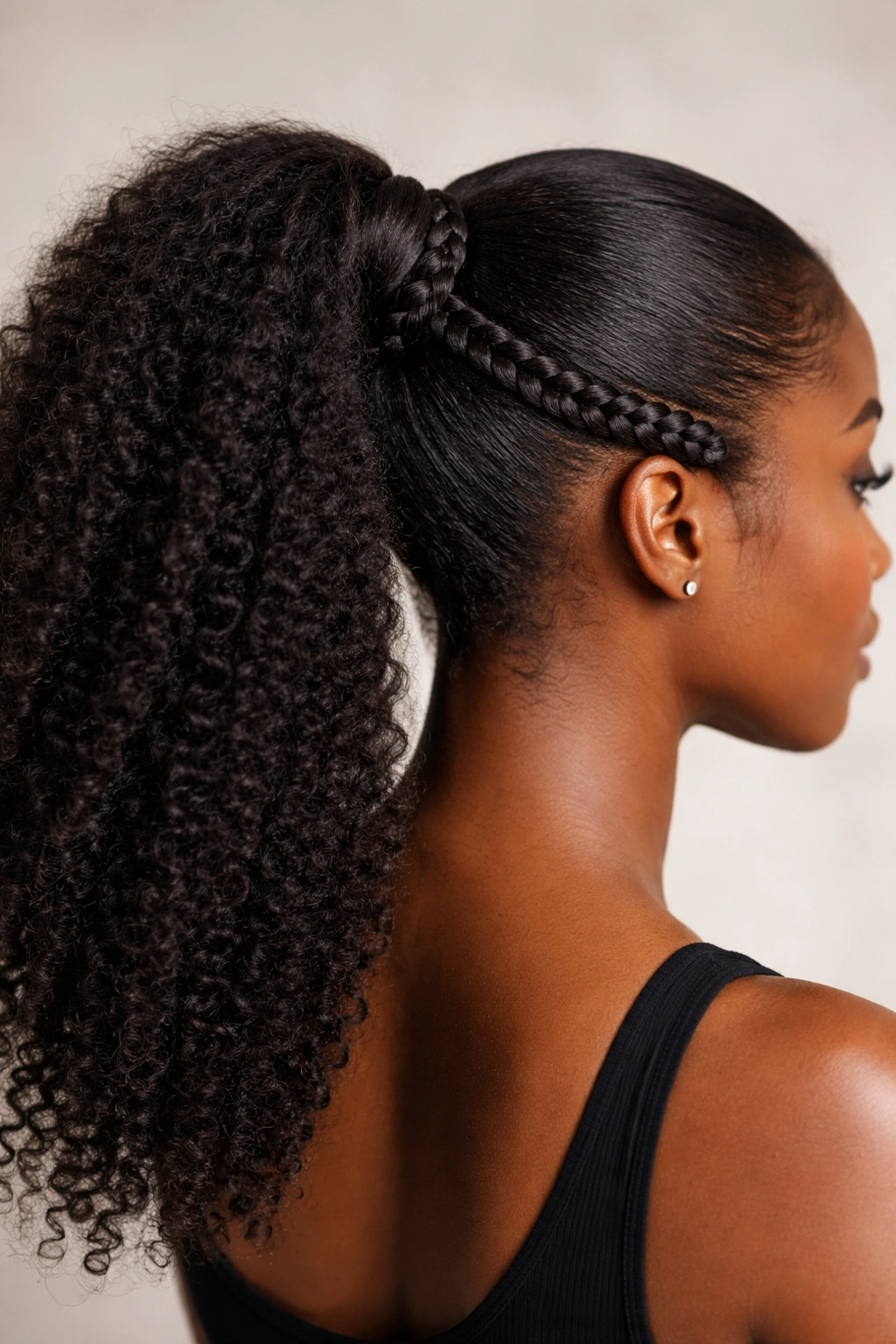
A braided ponytail incorporates a braid into your ponytail style—either a braid at the base that feeds into the ponytail, cornrows leading to a ponytail at the crown, or a braid woven through the gathered ponytail itself. This style offers serious protective benefits for 4C hair while creating an intricate, intentional look that feels fashion-forward and polished.
How to Create This Look
For the most straightforward version, gather your hair into a basic ponytail at your chosen height, secure it, then take a thin section from underneath and create a three-strand braid that wraps around the base of the ponytail, spiraling from bottom to top. Tuck the end of the braid underneath and secure with bobby pins. This takes about 5 minutes and transforms a simple ponytail into something special.
For a more intricate version, create two or three thin braids leading from your hairline toward your desired ponytail placement, then gather all your loose hair plus the ends of the braids into a single ponytail. This approach takes longer but creates a stunningly detailed style that absolutely works for 4C hair when you’re patient with the braiding.
Why It Works for 4C Hair
Braids protect your 4C hair by keeping sections separate and preventing the tangling that happens when loose textured hair rubs against itself constantly. Braided ponytails also allow you to stretch and define your curl pattern, creating a style that lasts longer than a purely textured ponytail because the braids hold their shape. The structured element of braids combined with the volume of a ponytail is especially flattering for 4C texture.
Styling Tips for Success
- Keep braids loose: Tight braids cause traction alopecia and breakage, especially at the attachment point. Your braids should be tight enough to hold their shape but loose enough that you could fit a fingernail between the strands.
- Add moisture to the braid: Use a light styling cream or leave-in conditioner while braiding to keep your hair lubricated and prevent breakage.
- Braid while damp: Damp hair is more pliable and easier to braid without creating tension.
- Sleep protected: Braids loosen a bit overnight, so use a silk bonnet or sleep on a silk pillowcase to minimize further loosening.
Worth knowing: Braided ponytails last 5–7 days when maintained well, making them a great low-manipulation protective style. Refresh every other night by gently re-braiding loose sections and re-moisturizing.
8. Puffed Ponytail
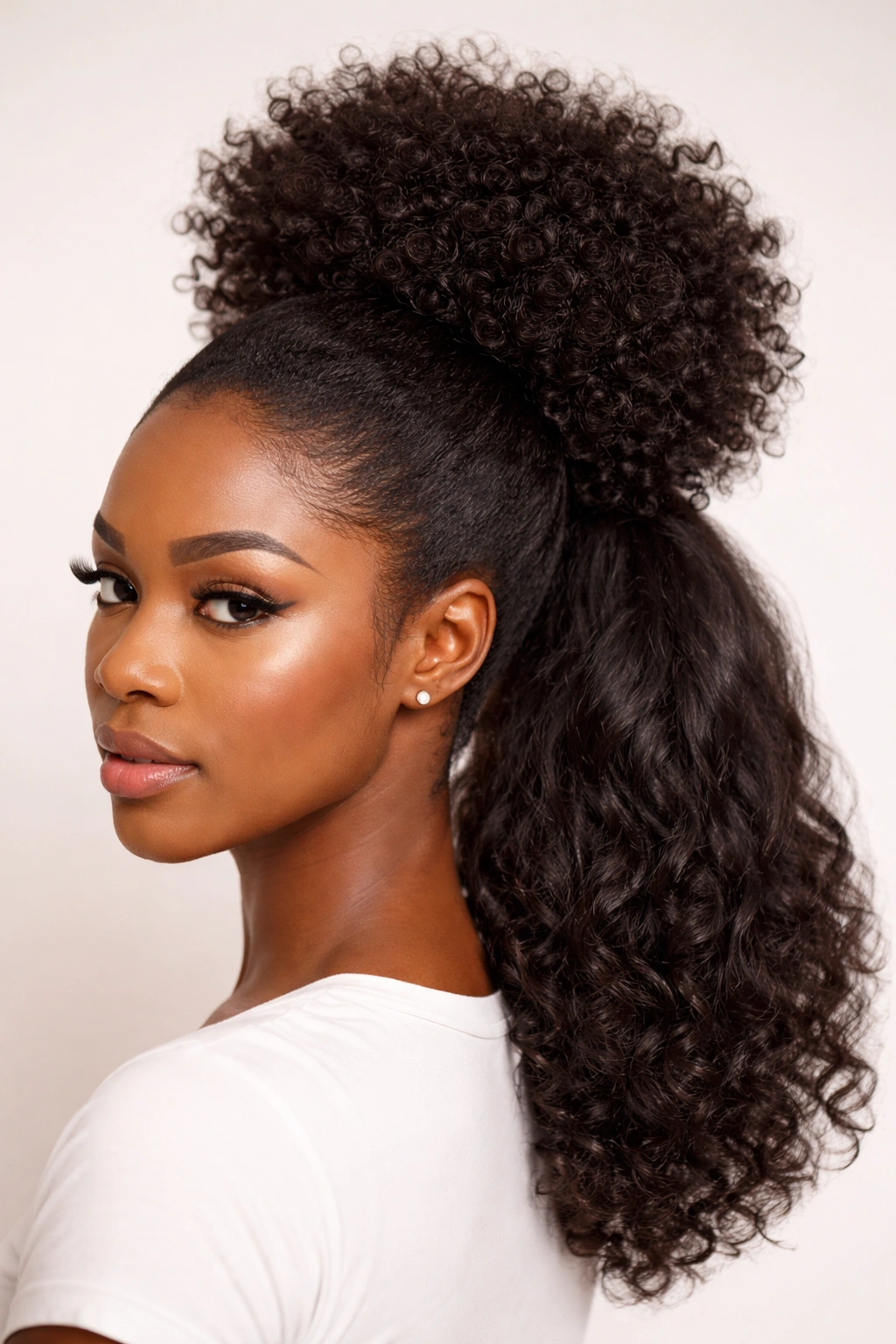
A puffed ponytail takes your natural 4C hair and creates maximum volume at the base by teasing or gently backcombing your hair before gathering it into a ponytail. The result is a bouncy, voluminous, almost cloud-like effect that celebrates your hair’s natural texture and thickness. This is an incredibly fun style that works best with unmanipulated 4C curls.
How to Create This Look
Start with clean, moisturized hair that’s at least two to three days post-wash, when your curls have settled and defined nicely. Apply a light leave-in conditioner and let your hair air-dry fully. Starting at the crown, use a fine-tooth comb or a teasing brush to gently backcomb small sections of hair at the roots, creating volume without damaging your curl pattern. Work section by section across your crown, creating an overall “fluffy” effect.
Once your entire crown is gently teased, gather your hair up and secure at the height you want your ponytail—usually high on the head for maximum puff. Smooth the outer layer with your comb or brush to polish the look so it’s intentional rather than accidentally tangled. Secure with a silk scrunchie and wrap the base.
Why It Works for 4C Hair
4C hair naturally has incredible volume and shrinkage, and a puffed ponytail celebrates both of these qualities. You’re not fighting your hair’s texture—you’re emphasizing it. This style creates the illusion of even more hair than you actually have, which looks striking and feels empowering.
Styling Tips for Success
- Use a gentle teasing method: A fine-tooth comb or specifically designed teasing brush is gentler than a regular brush. Work gently and avoid yanking, which breaks hair.
- Tease at the roots, not the ends: You want volume at the base of your ponytail, not throughout, so focus teasing effort on the crown and upper sections only.
- Don’t overdo it: A little teasing creates a beautiful puff. Over-teasing damages your hair and makes the style hard to take down without breakage.
- Tease before moisturizing: Tease your hair first, then apply a light styling cream once you’ve created your volume. This prevents product from weighing down your tease.
Pro tip: The puffed effect looks best 2–3 days after washing, when your curls have fully set and your hair has regained its natural oils. Trying this style on fresh wash day often results in a style that falls flat by evening.
9. Ponytail With Edges
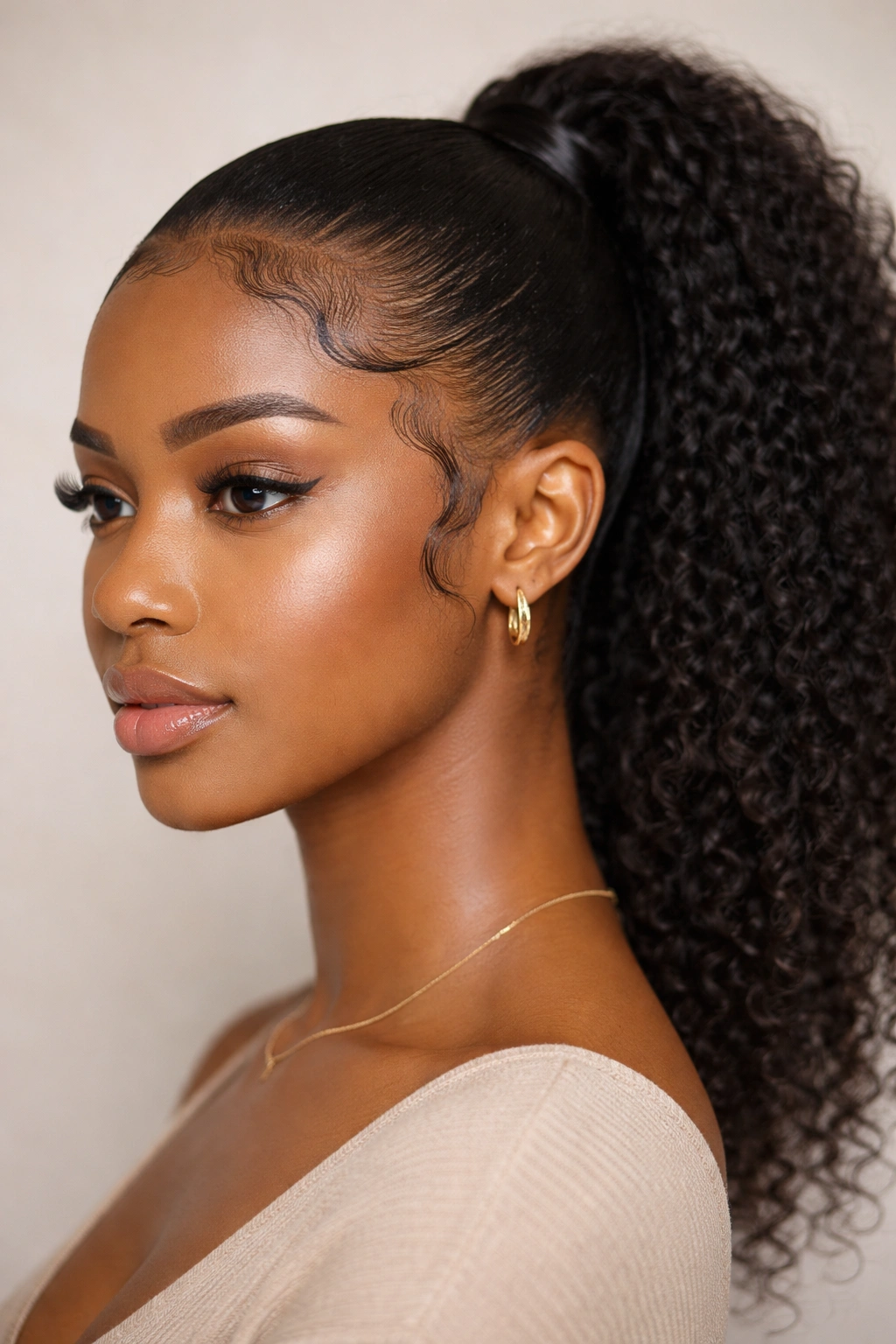
A ponytail with edges focuses on styling your hairline and the baby hairs around your face into a deliberate, polished frame for your ponytail. With 4C hair, your edges and hairline deserve special attention—they’re delicate and deserve styling that protects them while making them look intentional and gorgeous. This approach turns “flyaways” into a styling detail.
How to Create This Look
Gather your ponytail as usual at your preferred height. The key here is intentionally styling the baby hairs and edges around your face, hairline, and neck. Use a small amount of edge control—and I mean genuinely small, about the size of a pea—rubbed between your palms, then smooth it gently onto individual hairs or small sections around your hairline, ears, and the back of your neck.
For a sleeker look, use a fine-tooth comb or a soft brush to smooth these edges back, creating clean lines. For a more textured approach, you can smooth them backward and allow them to curl or coil gently. The point is intentionality—styling your edges means they look like a deliberate styling choice rather than stray hairs that escaped your ponytail.
Why It Works for 4C Hair
4C hair’s baby hairs and edges often coil tightly and can seem chaotic, but when styled deliberately, they frame your face beautifully and make your entire style look more polished. This attention to detail is what separates a “just-thrown-up” ponytail from a genuinely styled look.
Styling Tips for Success
- Use the right edge control product: Heavy pomades weigh down 4C hair’s delicate edges. Instead, try a light gel, edge control, or even a tiny bit of argan oil.
- Apply with a soft brush or your fingers: A firm brush can break these delicate hairs. Use a soft edge brush or just your fingertips to apply product and smooth.
- Keep edges moisturized: Your edges are the most delicate part of your hair and the driest, so keep them moisturized separately from the rest of your hair.
- Avoid overly tight styles: Tight edges are a major cause of traction alopecia. Even when styling your edges, never pull so tight that you see tension at your hairline.
Important reminder: If your edges are already thin or damaged, give them a break from styling. Let them rest and recover for several weeks with moisturizing treatments before doing edge-focused styles.
10. Layered Ponytail
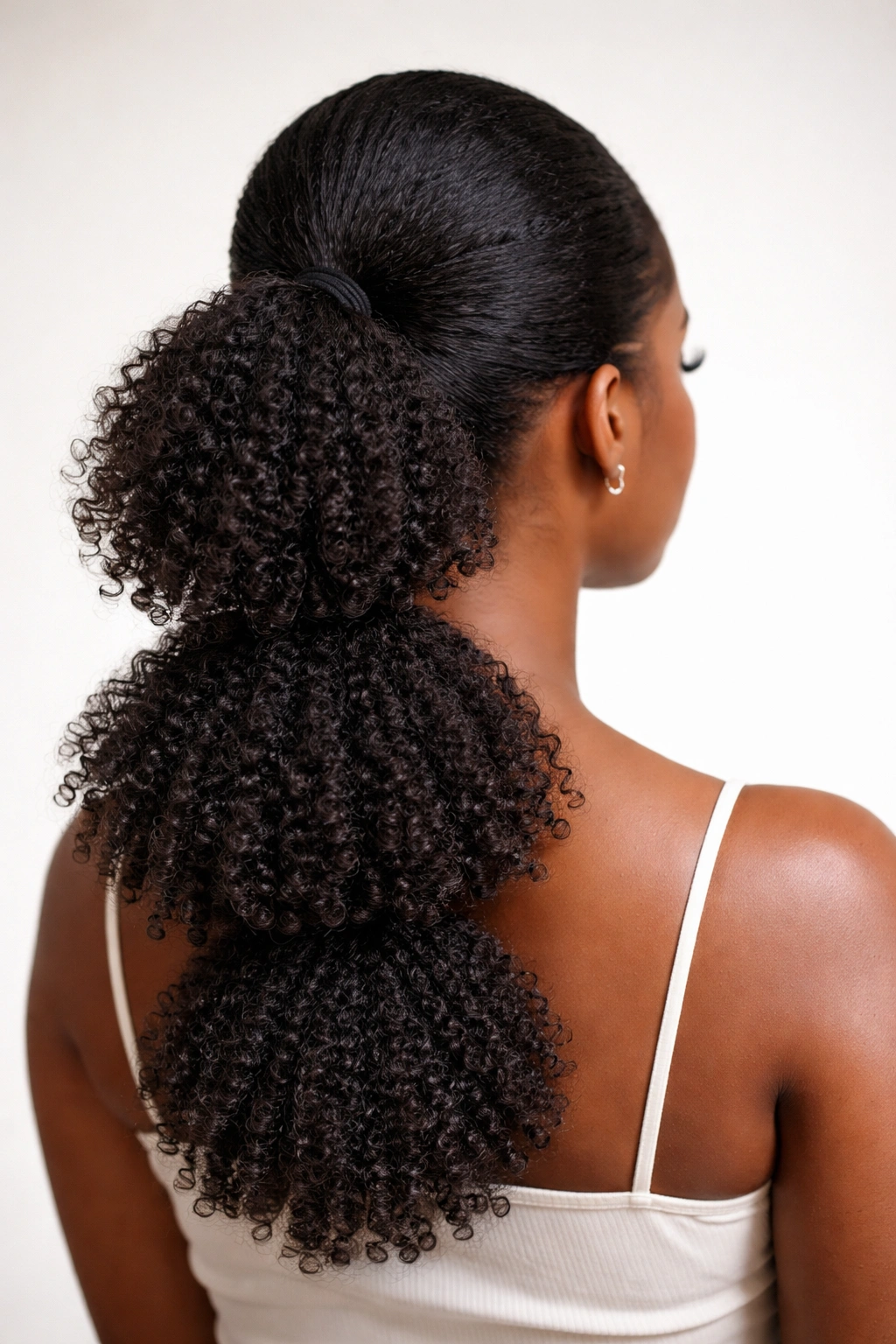
A layered ponytail creates visual depth and dimension by gathering sections of hair at different heights, then securing them together to create a stacked, multi-level effect. This style adds texture and interest to your ponytail while staying protective, and it works beautifully with 4C hair’s natural fullness and curl pattern.
How to Create This Look
Divide your hair into three horizontal sections from top to bottom. Start with the top section and gather it at your desired ponytail height, securing loosely with a silk scrunchie. Take the middle section and gather it just below the first ponytail, securing with another scrunchie. Finally, gather your bottom section just below that, creating three stacked ponytails.
Once all three sections are secured, you can leave them as distinct layers, or you can gently push them together slightly so they appear as one voluminous ponytail with visible layering. Wrap the base with a section of hair to hide the elastic and create a polished finish. The effect is dimensional and textured without requiring complicated braiding or manipulation.
Why It Works for 4C Hair
Layered ponytails look incredibly full and voluminous because you’re intentionally creating separation and lift at different heights. With 4C hair’s natural volume, this style is magnified beautifully. It also distributes tension across multiple gathering points rather than concentrating all the tension in one spot at the nape of your neck, making it more protective overall.
Styling Tips for Success
- Use multiple soft scrunchies: Each layer needs its own scrunchie, and they should all be silk or satin to prevent breakage.
- Keep sections loose: Don’t pull too tightly when creating each section. Your hair should feel comfortable and not stretched at the roots.
- Vary the spacing: Layers don’t have to be evenly spaced. Putting them closer together creates a different effect than spreading them out—experiment to find what you like.
- Moisturize between layers: The middle and bottom sections are tucked underneath, so spray them lightly with a moisturizing mist every 2–3 days to prevent drying out.
Creative variation: Try twisting each individual section before gathering it into a ponytail instead of leaving them straight. This adds even more texture and dimension.
11. Twisted Ponytail
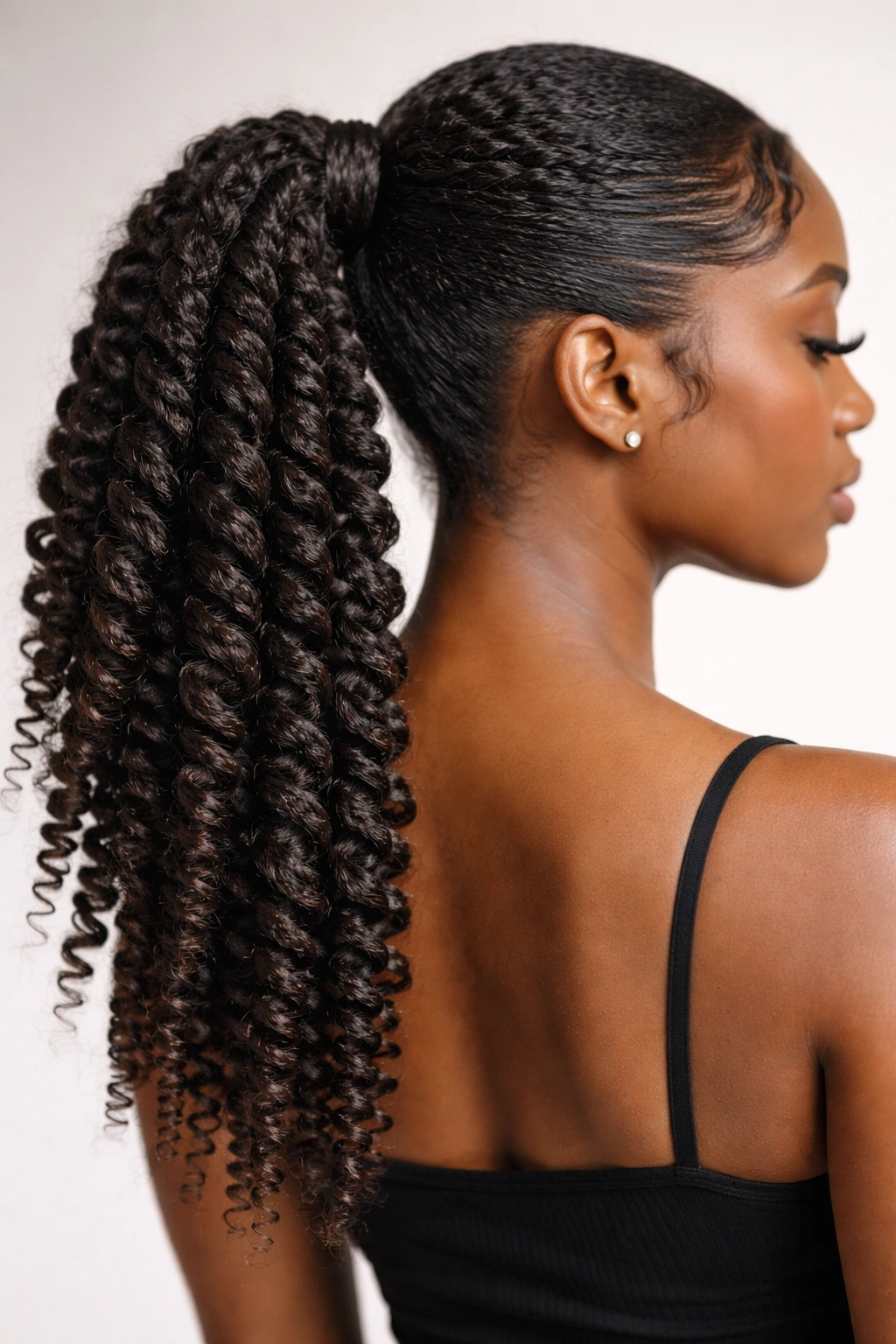
A twisted ponytail incorporates twists into your ponytail style—either two-strand twists leading to a gathered ponytail, or twists created within the ponytail itself. Twists offer serious protective benefits for 4C hair, especially because they stretch and define your curl pattern while keeping sections separated and preventing tangling.
How to Create This Look
For the simplest version, gather your hair into a basic ponytail and secure it. Then divide the ponytail into two sections and create a two-strand twist by crossing the sections over each other repeatedly down the length of the ponytail. Secure the end with a small elastic. This creates a beautiful spiraled effect that looks intricate but takes only a few minutes.
For a more involved approach, create two-strand twists from your hairline or crown leading back toward your desired ponytail placement, then gather all your loose hair plus the ends of the twists into one ponytail. This creates a detailed, protective style that celebrates your curl pattern.
Why It Works for 4C Hair
Two-strand twists stretch your 4C curls slightly, creating definition and allowing you to see the length of your hair more clearly. The twist structure also protects individual strands by keeping sections separate and preventing friction. Twisted ponytails last longer than loose textured ponytails because the twist structure maintains its shape through multiple days and refreshes.
Styling Tips for Success
- Moisturize before twisting: Apply a light leave-in conditioner or curl cream to damp hair before creating twists. This prevents your hair from drying out during the twisting process.
- Don’t twist too tightly: Tight twists cause breakage and tension at the roots. Your twists should be snug enough to hold their shape but loose enough to run your fingers through comfortably.
- Separate twists gently: If you want more texture and definition, gently pull apart each twisted section slightly to create a fluffier look.
- Protect twists while sleeping: Twists loosen and frizz overnight without protection. Use a silk bonnet or sleep on a silk pillowcase every night.
Maintenance note: Twisted ponytails look best for 5–7 days when properly maintained. Refresh by re-twisting loose sections and re-moisturizing every 2–3 days.
12. Half-Up Ponytail
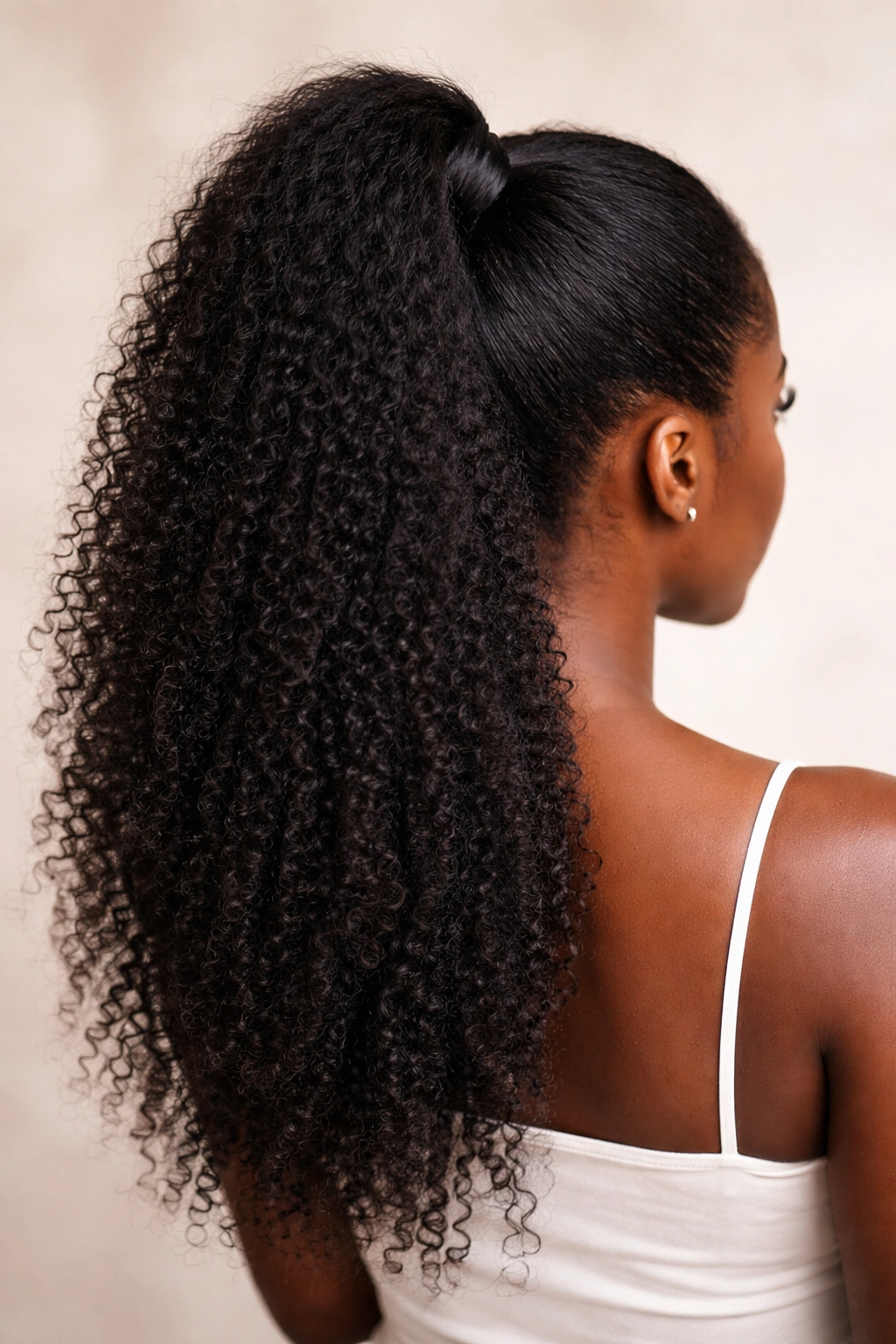
A half-up ponytail gathers only the top half of your hair while leaving the bottom half down, creating a style that’s somewhere between fully down and fully up. This approach offers the best of both worlds—you get your hair off your face and neck while still showing off your length and natural texture. It’s perfect for 4C hair because it protects your crown and hairline while celebrating your overall hair length.
How to Create This Look
Start with moisturized, detangled hair that’s either air-dried or blow-dried to your preferred texture. Using a brush or comb, create a part across the top of your head from temple to temple, or free-hand divide the top half of your hair. Gather only this top section at the crown and secure with a silk scrunchie.
You can wrap the base to hide the elastic, or leave it visible depending on the look you want. For a softer effect, pull a few face-framing pieces loose around your face before gathering the top section. For a sleeker look, smooth everything back tightly before securing.
Why It Works for 4C Hair
Half-up ponytails put significantly less tension on your entire head because you’re only gathering the top half of your hair. Your bottom hair stays loose and unmanipulated, which means less risk of damage overall. This style also showcases both your natural curl pattern (in the down section) and your ability to style (in the gathered top section), creating a beautifully balanced look.
Styling Tips for Success
- Create a clean part: A visible part looks intentional. Use a rattail comb or the thin end of a hair pick to create a crisp line across the top of your head.
- Vary your part placement: Move your part slightly forward or backward depending on your face shape and what you want to emphasize. A forward part draws attention to your face; a back part emphasizes length.
- Leave some softness: A few loose pieces around your face look romantic and intentional. Aim for 3–5 pieces on each side.
- Refresh the down section: Your down hair will compress slightly where it sits under the gathered top section. Refresh by lightly misting with water and re-fluffing every night.
Styling idea: Try adding a small braid or twist in the gathered top section instead of leaving it smooth. It adds visual interest without requiring significant extra time.
Final Thoughts
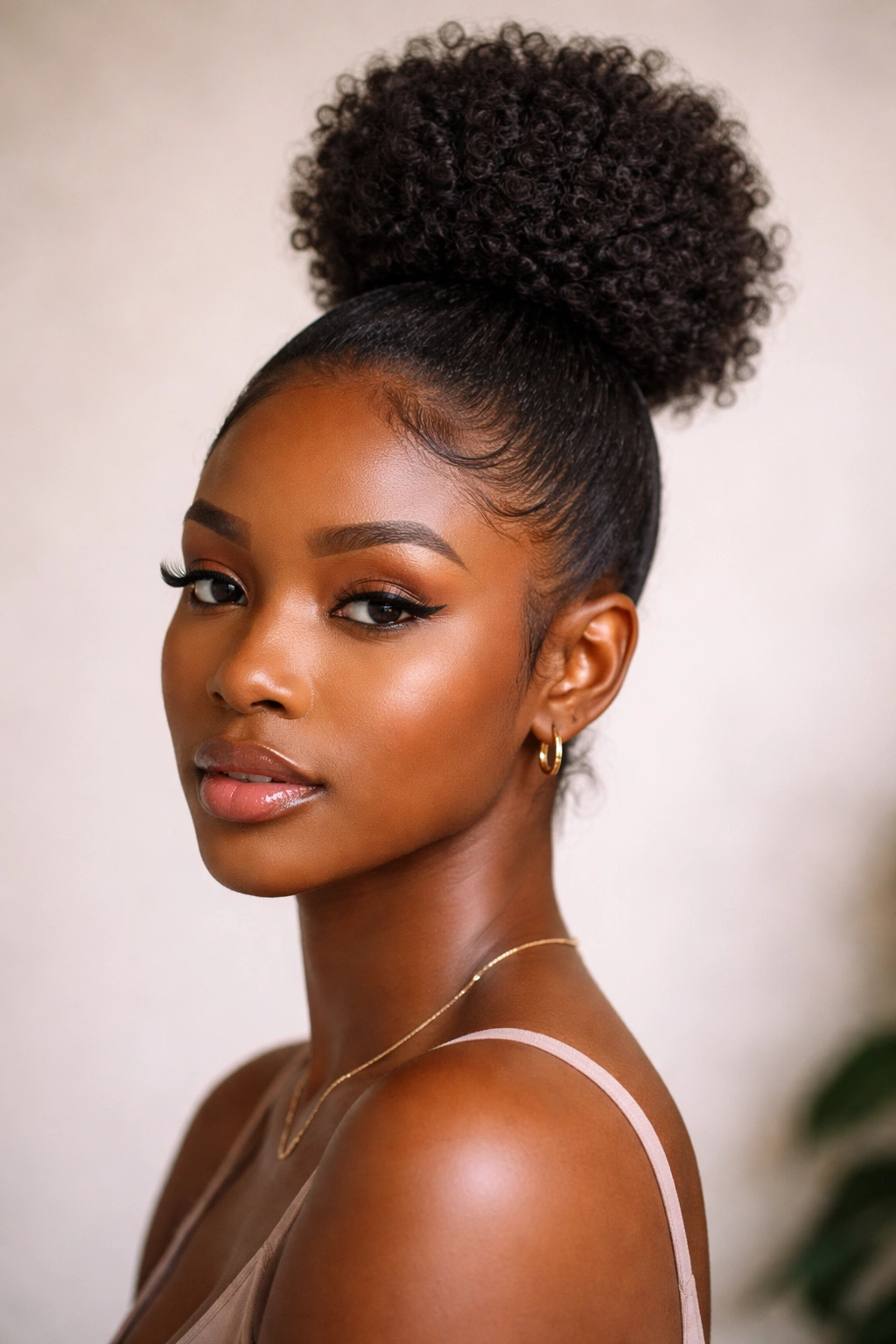
Finding the right ponytail style for your 4C hair is about understanding how your texture behaves, respecting your hair’s moisture needs, and choosing styles that work with your natural pattern rather than against it. The 12 styles here cover a range of formality, protection level, and styling time—from quick and casual textured ponytails to more involved braided or twisted options for when you have extra time and want something special.
The most important thing to remember is that your 4C hair is healthy when it’s moisturized and when tension is kept minimal. Every one of these styles can be protective when done with attention and care—using soft accessories, keeping tension gentle, and maintaining moisture between styling sessions. Pay attention to how your edges, scalp, and overall hair health feel with each style. If a style ever causes discomfort or pain, or if you notice your edges thinning or your scalp becoming irritated, that’s your signal to take a break and let your hair rest.
Experiment with different styles across several weeks and notice which ones make your hair feel healthiest and which ones make you feel most confident. Your favorite ponytail might be one you create by mixing elements from a few different styles. The goal is finding what works specifically for your hair, your lifestyle, and your style preferences—not forcing your beautiful 4C hair into styles that don’t serve it.
