



Textured hair has so much personality and movement—it deserves ponytail styles that actually celebrate what your hair naturally does instead of fighting against it. The right ponytail can work with your texture, showcase your curl pattern, and hold up through the entire day without turning into a frizzy mess by lunchtime. Whether you’re working with coils, waves, curls, or a combination of textures, there are endless ways to pull your hair back that feel polished, intentional, and authentically you.
The challenge with natural hair ponytails isn’t the lack of options—it’s knowing which techniques keep your ends protected, which products help your style last, and how to position your ponytail so it works with your texture rather than against it. A ponytail that works beautifully on straight hair might leave your curls looking limp, while a style that embraces your coils might frizz if you don’t use the right gel or mousse. This guide walks you through 15 distinct textured ponytail styles, from sleek and sophisticated to bouncy and carefree. Each one includes exactly what makes it work for natural hair and how to adapt it to your specific curl pattern.
1. High Textured Bun Ponytail
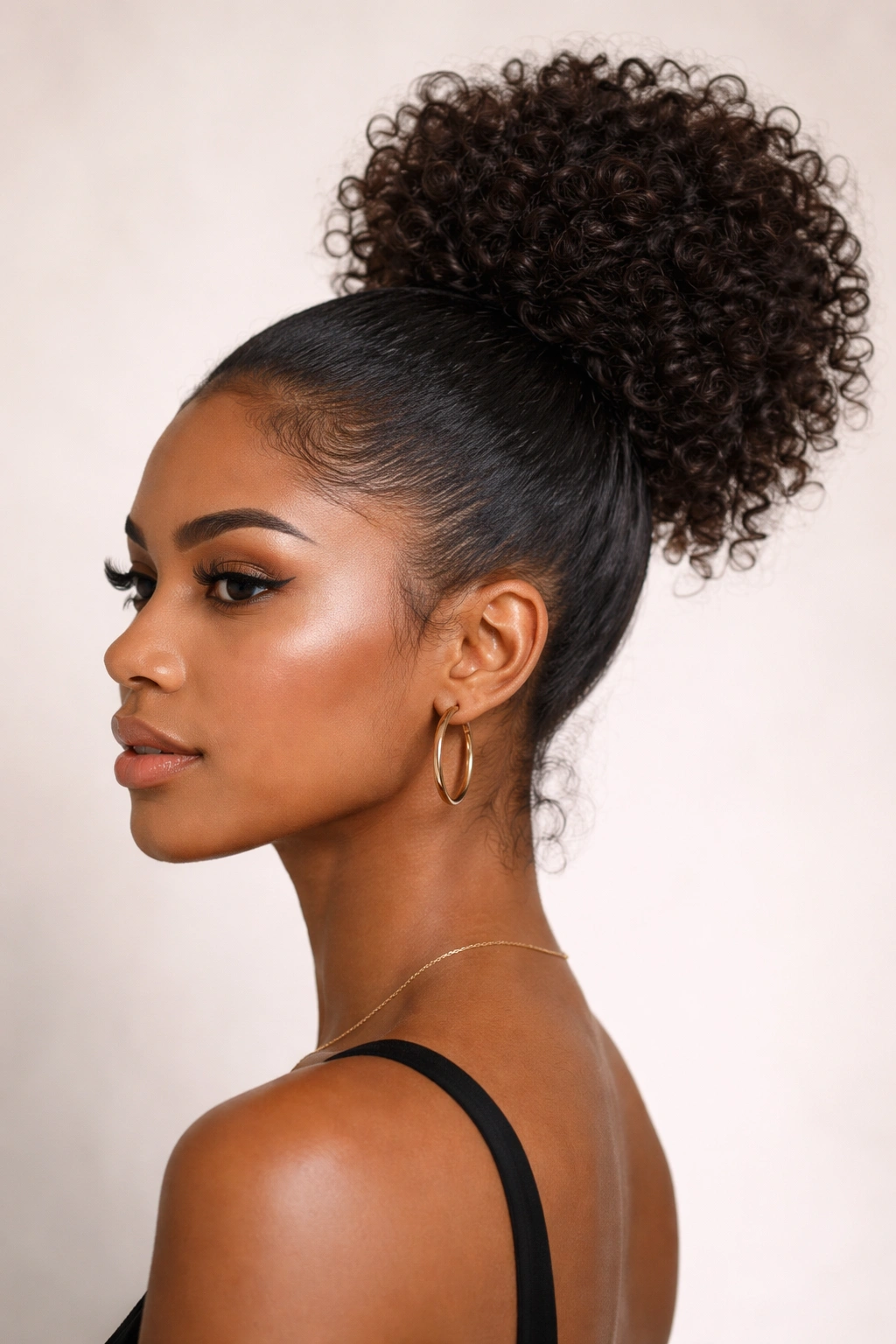
This style stacks a ponytail on top of a bun, creating height and dimension that natural hair excels at. The high placement gives the illusion of fullness and works beautifully whether your hair is coily, curly, or wavy. It’s effortless yet put-together—the kind of style you can wear to the gym, to brunch, or even to a casual dinner.
Why It Works for Natural Hair
Natural hair has inherent texture and volume, which means you don’t need to tease or backcomb to create a full, rounded bun. Your curl pattern does half the work for you. This style celebrates that natural lift instead of fighting it. The high placement also keeps hair off your face and neck while creating a dramatic profile that looks intentional rather than like you threw your hair up.
How to Style It
- Gather your hair at the crown with a loose hand, creating a high ponytail. Don’t pull too tightly—this protects your edges and hairline.
- Twist or coil the ponytail loosely, then wrap it around the base to form a bun shape. Pin it with bobby pins as needed.
- Leave the ends of your bun loose and undefined for that textured, curly finish that reads modern, not messy.
- Use a light hold gel or mousse on your baby hairs to smooth them without creating a plastic-looking edge.
Pro tip: This style works best on hair that’s been curled or has natural wave—try it the day after a wash and style for maximum bounce and definition.
2. Bubble Ponytail with Natural Texture
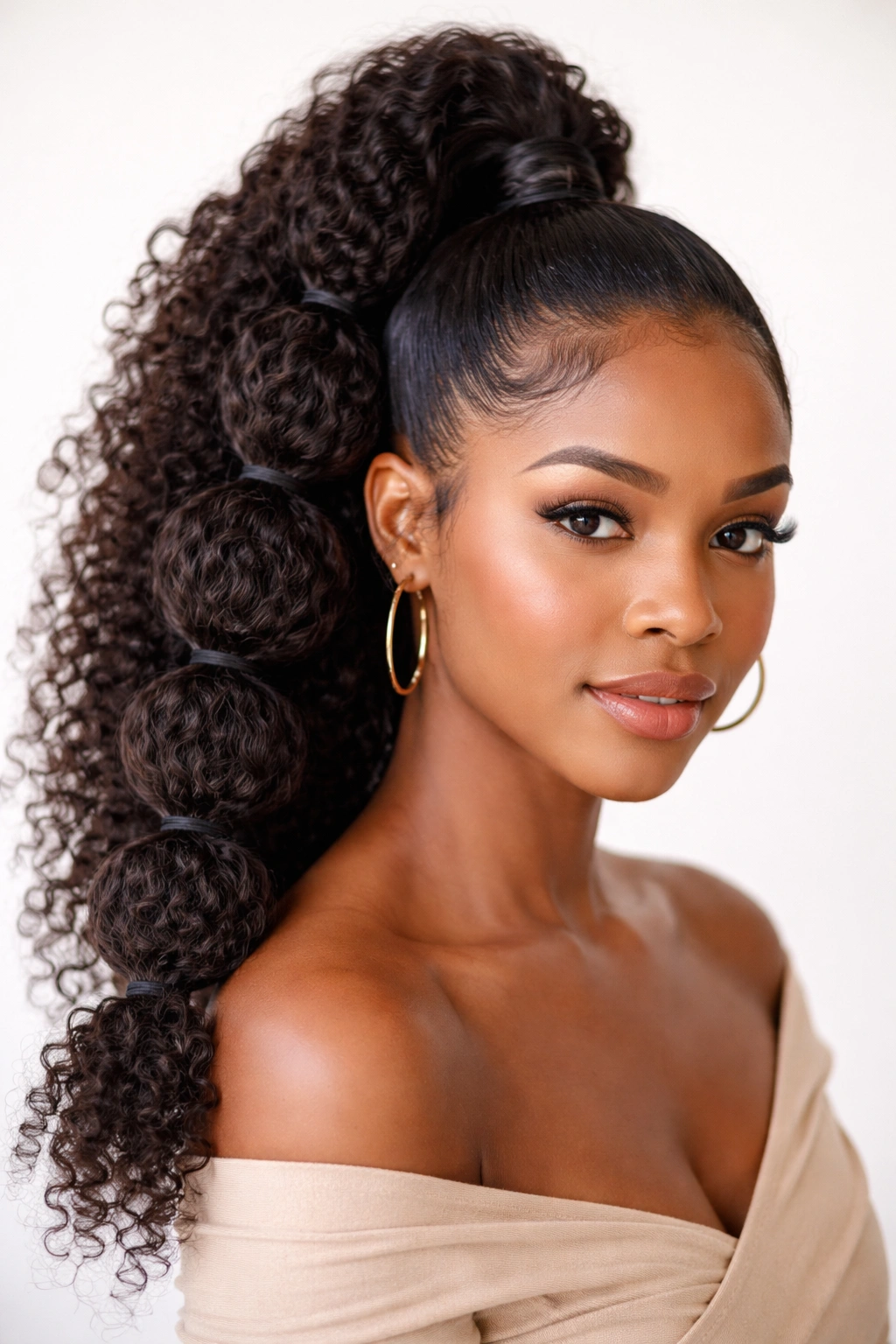
The bubble ponytail (also called a bloussant ponytail) uses multiple elastics to create distinct sections of pouffed hair. With natural texture, each bubble gets gorgeous dimension and curl definition that’s impossible to achieve on straight hair.
Why It Works for Natural Hair
Your curls and coils naturally create separation and volume between each elastic, so the bubbles look full and deliberate. There’s no need for teasing or backcombing—you’re just using what your hair already does. The style also gives the illusion of way more hair than you actually have, which is a huge perk for textured hair that might have lower density.
How to Style It
- Start with a high ponytail secured with an elastic. Make sure it’s snug but not painfully tight.
- About an inch or two below the first elastic, add a second elastic. Gently push the hair between the two elastics upward to create the first bubble.
- Continue this pattern down the length of your ponytail—add an elastic, create a bubble, repeat.
- Let your curl pattern breathe; don’t try to make the bubbles perfectly uniform. The organic, textured look is what makes this style work.
- Finish with a flexible-hold gel so the bubbles hold their shape without feeling stiff or crunchy.
Pro tip: This style shows off the individual definition of your curls beautifully, so it’s worth doing on a day when your curls are well-defined and bouncy.
3. Side-Swept Curly Ponytail
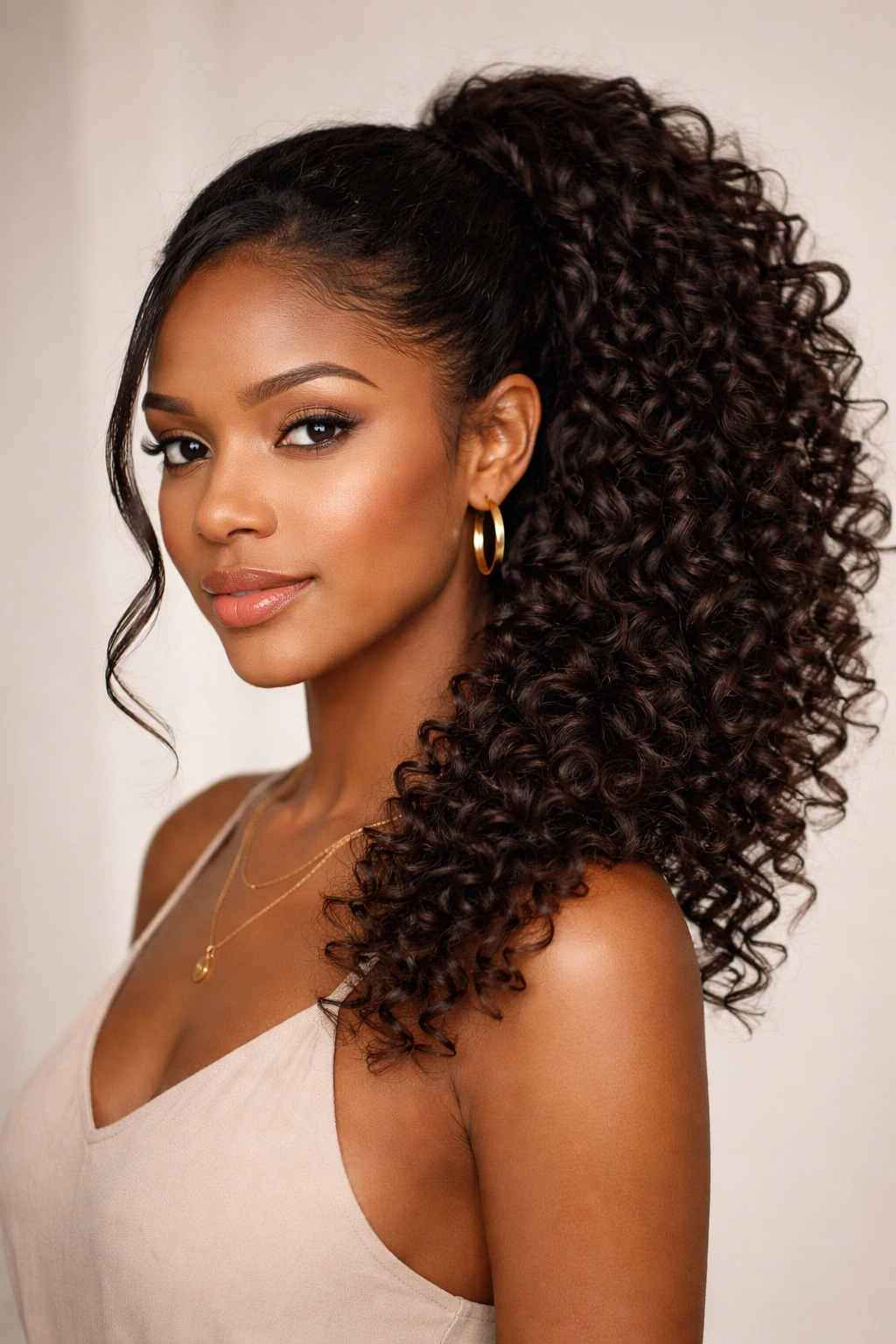
Instead of pulling your hair straight back, a side-swept ponytail angles toward one side of your head, creating an asymmetrical look that’s flattering and instantly feels more polished than a centered style. This works especially well if you have asymmetrical features or just want to change up your usual look.
Why It Works for Natural Hair
The angle of a side ponytail creates movement and shows off the dimension and texture of your curl pattern beautifully. Hair sweeping across one side reads as intentional styling, not accidental, and the movement makes your curls look even more lively and dimensional. It also works beautifully if you have shorter front layers or pieces around your face that you want to incorporate into the style rather than fight against.
How to Style It
- Use your fingers or a wide-tooth comb to gather your hair to one side—aim for a temple-to-temple angle rather than straight to the back.
- Secure with a clear elastic so the focus stays on your curls and texture, not the hair tie.
- Pull a few face-framing pieces gently loose if they’re too tight—these pieces soften the style and add dimension.
- Apply a curl-defining cream or gel to the loose pieces to keep them shaped throughout the day.
Worth knowing: You can adjust how much drama you want by changing how far to the side you pull your ponytail. Further to one side = more asymmetrical and artsy. Slightly off-center = subtly polished.
4. Braided Crown Ponytail
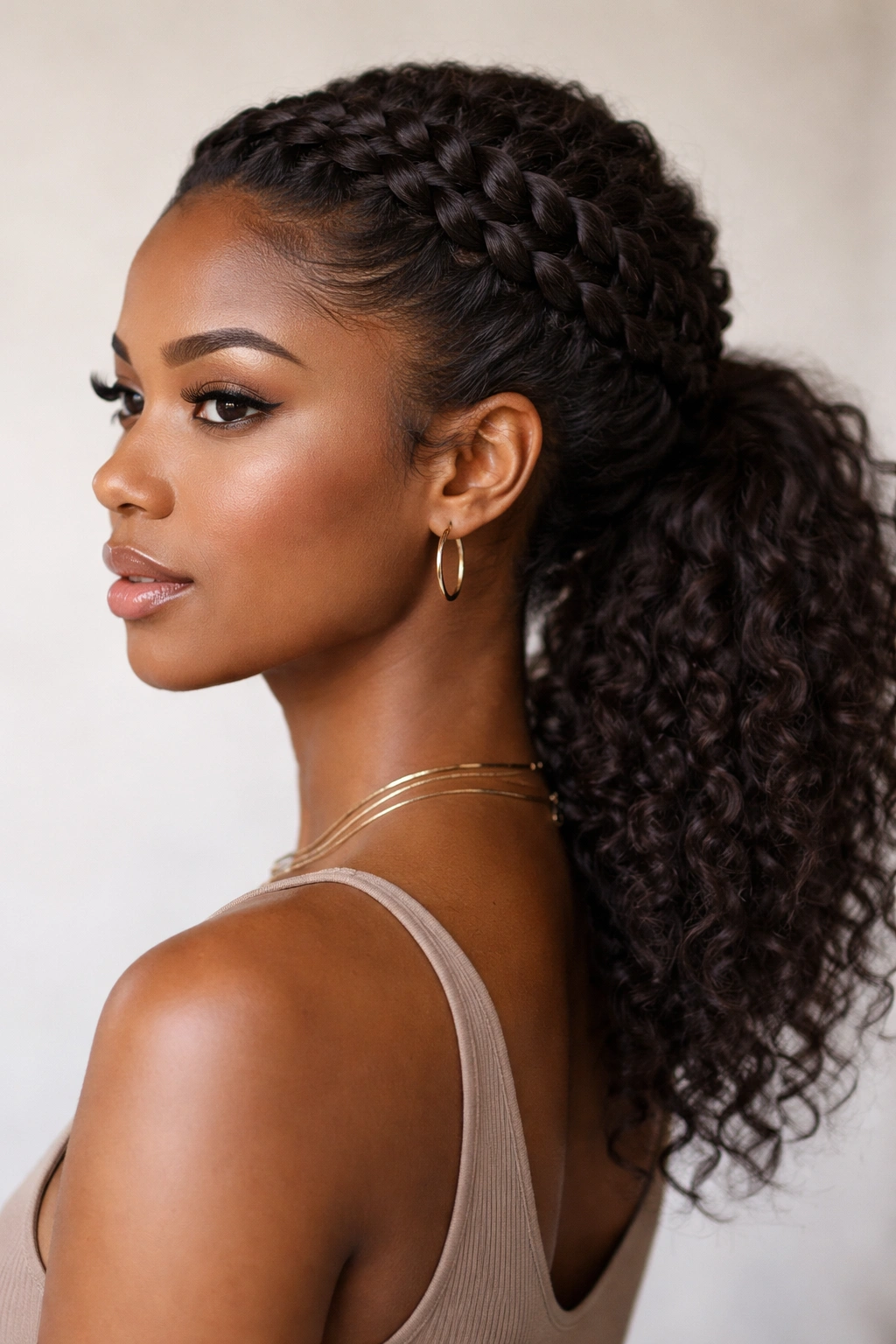
This style combines a crown braid with a loose ponytail, creating the feel of an updo while keeping your length down. The braid frames your face beautifully and adds an extra layer of texture and visual interest.
Why It Works for Natural Hair
A braided crown naturally incorporates your texture and curl pattern into the design. You’re not fighting frizz—you’re making it part of the aesthetic. The braid creates a beautiful border around your head while the ponytail keeps things low-maintenance. Plus, braids themselves look richer and more textured on natural hair because your curls sit within the braid sections rather than lying flat.
How to Style It
- Section off a crown area from one temple, up and over your head, to the opposite temple.
- Braid this section in a basic three-strand braid, incorporating your texture naturally. You don’t need tiny sections—work with your natural groupings of curl.
- Secure the end of the braid temporarily with a small elastic.
- Gather all your hair (including the braided section) into a ponytail at the nape of your neck or slightly lower.
- Release the small elastic from the braid end and let it blend into the main ponytail.
- Use a smoothing gel on the braid to define the sections while keeping the overall texture intact.
Pro tip: Do this style on day-two or day-three hair when your braids are already slightly loosened and your curls have relaxed—the braid will look more romantic and less stiff.
5. Twisted and Coiled Ponytail
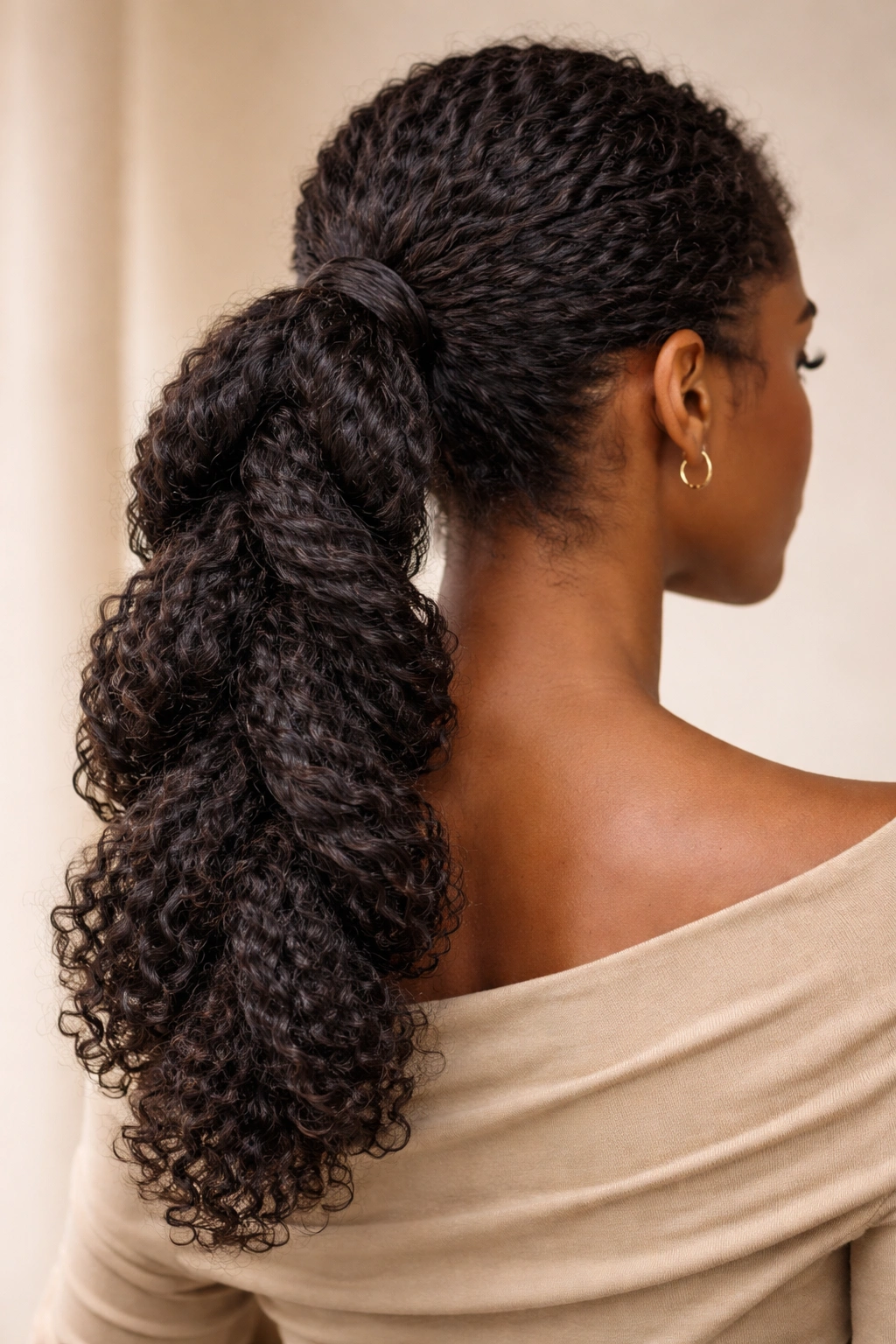
Instead of using a traditional braid, this style twists and coils the ponytail itself, creating a sculptural, textured effect that looks way more complex than it actually is.
Why It Works for Natural Hair
Twists and coils are made for natural hair. They work with your hair’s natural spiral pattern instead of against it. As you twist or coil a ponytail section, your natural curl pattern helps hold the shape, and the texture becomes part of the design rather than something to manage. This style celebrates your hair’s texture as a design feature.
How to Style It
- Pull your hair into a ponytail at whatever height you prefer—high, middle, or low.
- Divide the ponytail into 2-4 sections, depending on how much texture and visual interest you want.
- Twist each section tightly, then coil it loosely around itself. The coils don’t need to be uniform.
- Secure each coil with bobby pins, letting some coils sit on top and others nestle underneath for dimension.
- Use a flexible-hold gel to keep the coils in place without making them feel rigid.
Worth knowing: The looser you coil, the more dramatic and intentional the style looks. If your coils are too tight, it can look accidental rather than styled.
6. Low Puff Ponytail Hybrid
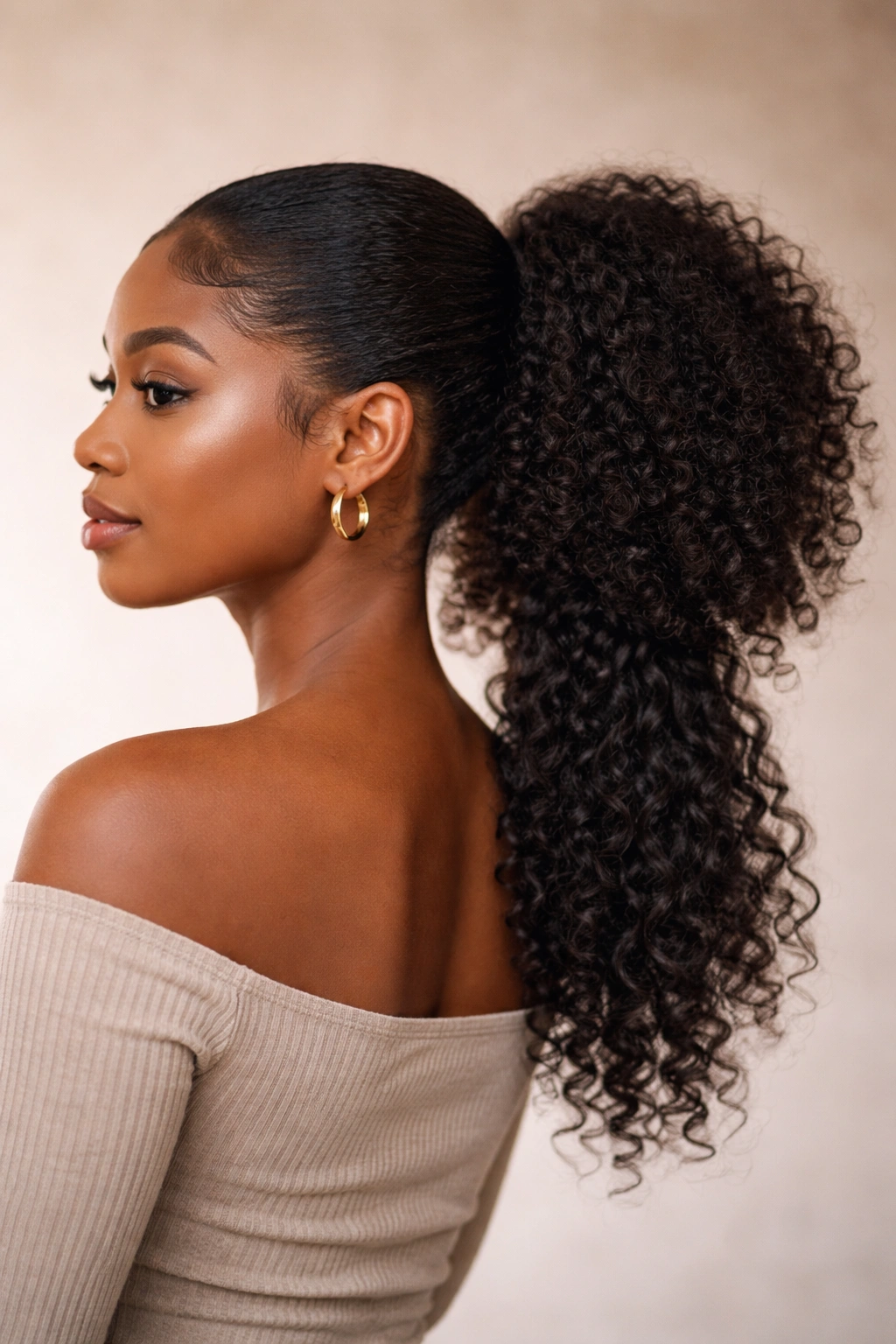
This style is essentially a puff (bun) that’s positioned low on your head and has a short ponytail tail hanging below it. It’s an easy way to wear your hair in a protective style that still feels fresh and modern.
Why It Works for Natural Hair
Puffs are one of the most natural styles for textured hair—you’re essentially just gathering your hair in its natural state. Adding a ponytail tail gives you the polished feel of a style without the commitment of a full updo. You get the best of both worlds: easy to do, protective, and put-together looking.
How to Style It
- Gather your hair into a low ponytail at the nape of your neck, securing it with an elastic.
- Leave about 3-4 inches of hair below the elastic—this becomes your ponytail tail.
- Take the section above the elastic and gently fluff it upward and outward to create a puff shape.
- Secure the puff with bobby pins so it holds its rounded shape.
- Let the tail of the ponytail hang naturally, or curl or braid it if you want extra texture.
- Apply a light gel to the perimeter of the puff to smooth any flyaways without flattening the volume.
Pro tip: This works beautifully as a protective style because the hair is gathered but not pulled too tightly, which means less stress on your edges.
7. Bantu Knot-Out Ponytail
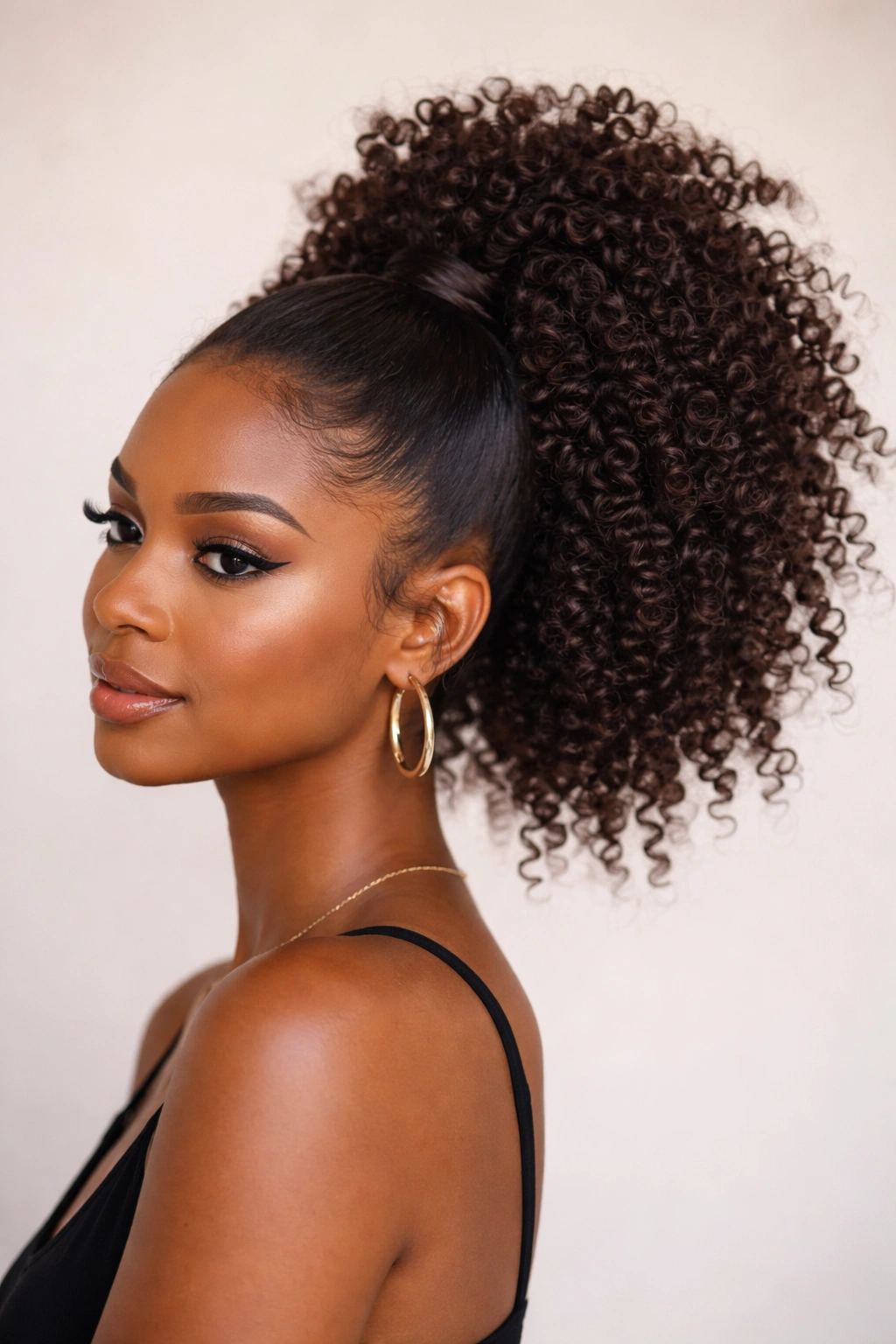
If you’ve done Bantu knots the night before (or earlier that day), unraveling them creates gorgeous, springy coils. A Bantu knot-out ponytail uses these coils as the ponytail itself, creating maximum volume and curl definition.
Why It Works for Natural Hair
Bantu knot-outs are a traditional natural hair styling technique that creates defined coils with incredible dimension. When you gather these coils into a ponytail, you get an incredibly full, textured tail that looks like you spent hours curling your hair—but you actually didn’t. Your hair did the work overnight.
How to Style It
- Create Bantu knots throughout your hair the night before or several hours before styling. Dampen your hair slightly with a moisturizing spray, apply gel, and twist small sections of hair into tight knots against your scalp.
- The next day, carefully unravel each Bantu knot, releasing the springy coil underneath. Use your fingers, not a comb, to avoid disturbing the coil pattern.
- Once all knots are unraveled, gather the coils into a ponytail at your preferred height.
- Secure gently with an elastic—the coils will naturally bunch together and create a full, textured ponytail with zero additional styling needed.
- Apply a lightweight oil or shine spray to the finished ponytail to add gleam without weighing down the coils.
Worth knowing: This style is best done on day-of or day-one after unraveling, when the coils are fresh, springy, and well-defined.
8. Clipped Textured Ponytail
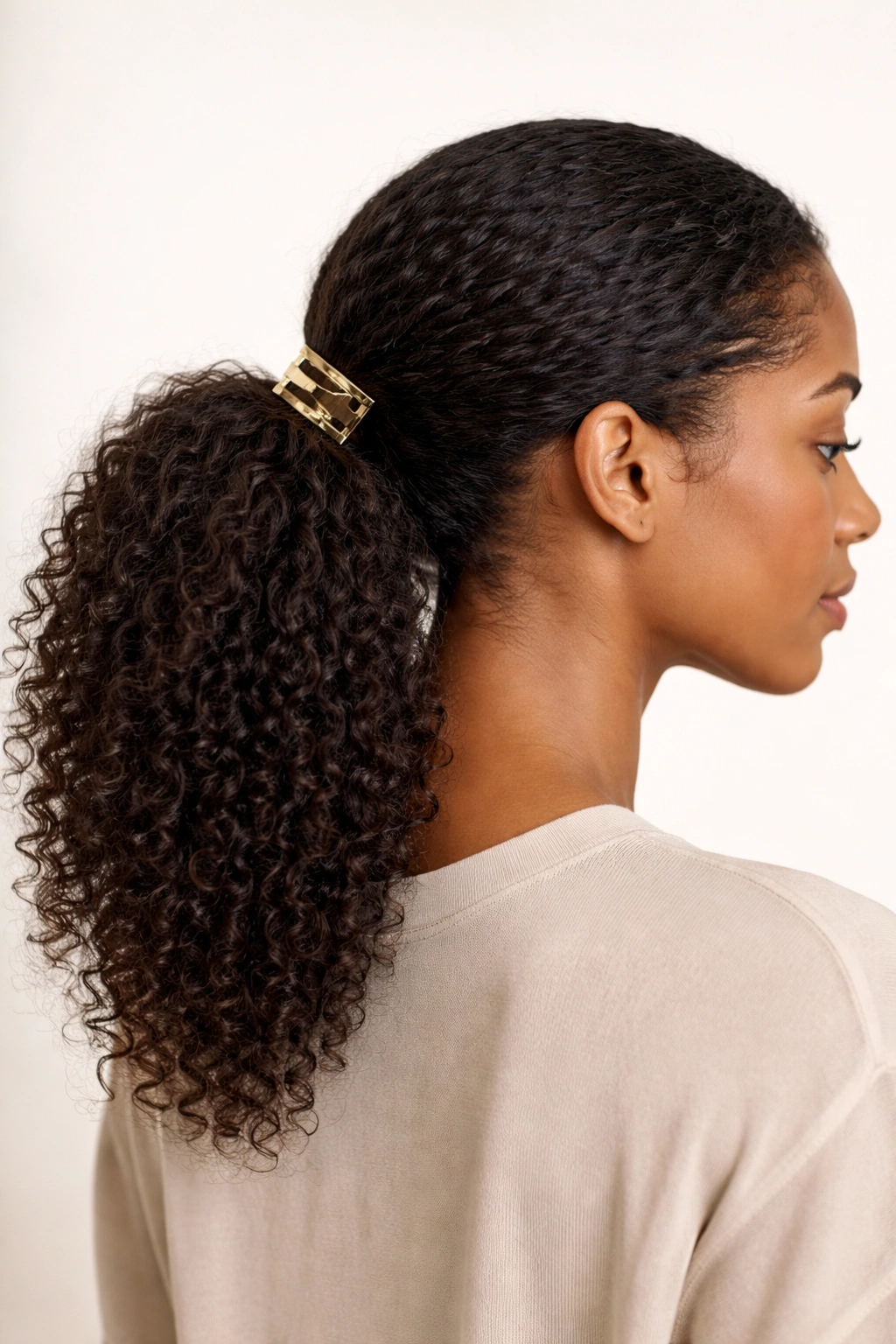
This style uses a hair clip instead of an elastic to gather a low ponytail, creating a sleek, intentional look that’s very on-trend. The clip becomes part of the design rather than hidden.
Why It Works for Natural Hair
Clips are gentler on natural hair than elastics because they don’t create a tight grip that can stress your edges or break fragile strands. They also look sophisticated and modern, which gives your textured ponytail an elevated, intentional vibe. Plus, you can easily adjust the height or position of the clip throughout the day without creating a crease in your hair.
How to Style It
- Gather your hair into a low ponytail, positioning it at the nape of your neck or slightly lower.
- Instead of securing with an elastic, clip your ponytail in place using a hair clip that matches your hair color or contrasts intentionally (gold, silver, tortoiseshell, or even a colored clip can look great).
- Leave some texture and movement in the ponytail itself—don’t try to make it slick. Your natural curl and wave are part of the aesthetic.
- If you have shorter pieces or layers around your face, let a few hang loose for a softer, less structured look.
Pro tip: This style works best when you intentionally show off the clip as an accessory rather than trying to hide it. Choose a clip with some visual interest—a tortoiseshell pattern, a metallic finish, or a unique shape.
9. Curly Wrap-Around Ponytail
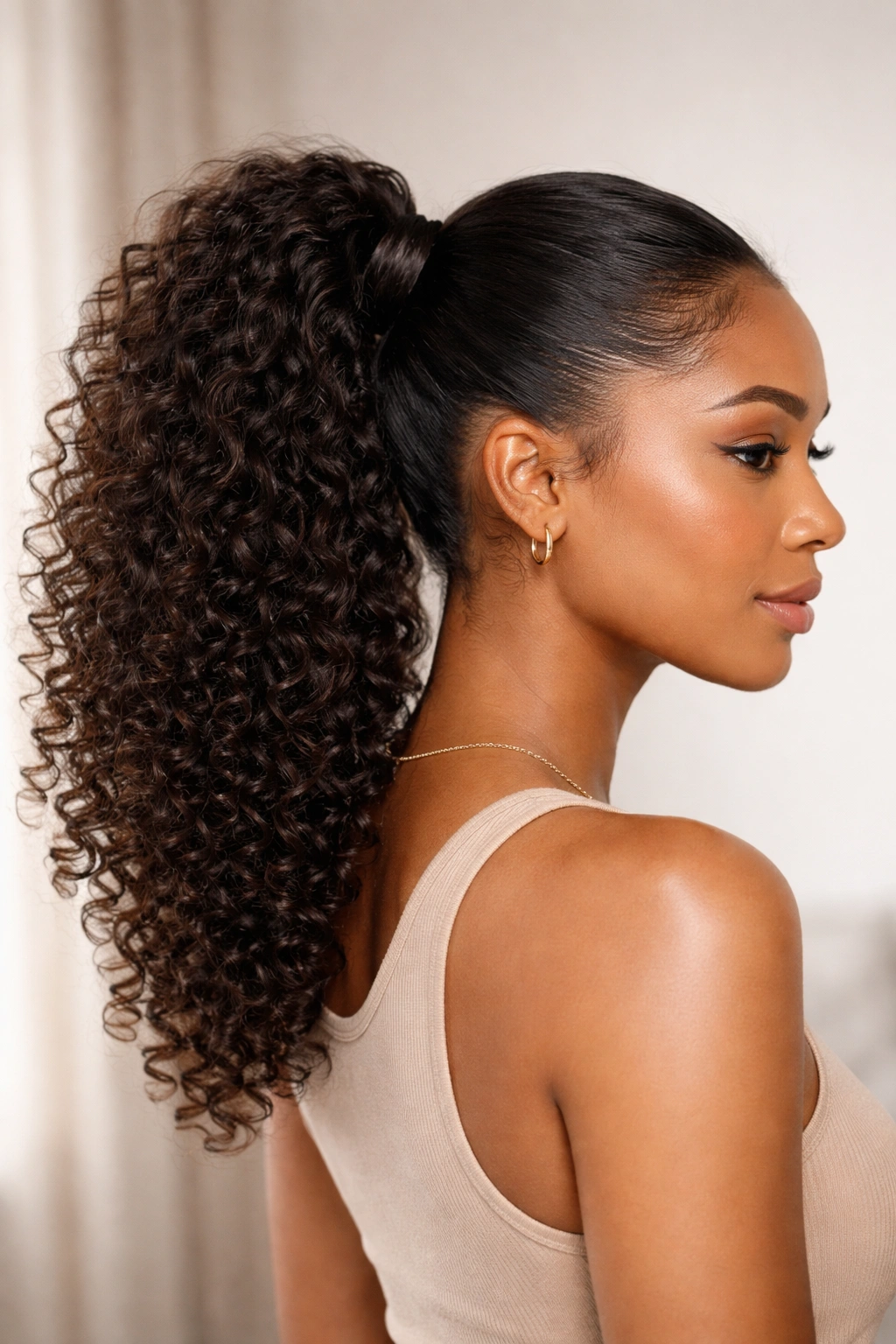
This style wraps a section of curly hair around the base of a ponytail elastic, completely hiding the elastic and creating the illusion of a seamless, polished updo.
Why It Works for Natural Hair
Your natural curls are perfect for this hidden wrap—they have enough grip and hold to stay in place without needing to be straightened or heavily gelled. The wrap-around section shows off your curl definition beautifully while making the whole style look intentional and finished.
How to Style It
- Create a ponytail at your preferred height and secure with an elastic.
- Take a 1-2 inch section from the bottom of your ponytail and wrap it around the elastic base, covering it completely.
- Secure the wrapped section with a bobby pin or small clip hidden underneath the wrap.
- If you want the wrap itself to have more definition and texture, use a curl-defining cream on that section before wrapping.
- Leave the main ponytail loose and textured below the wrap.
Worth knowing: The key to making this look seamless is making sure the wrapped section is from your actual ponytail, not from a separate piece of hair. It should blend in completely.
10. Sleek Middle Part Textured Ponytail
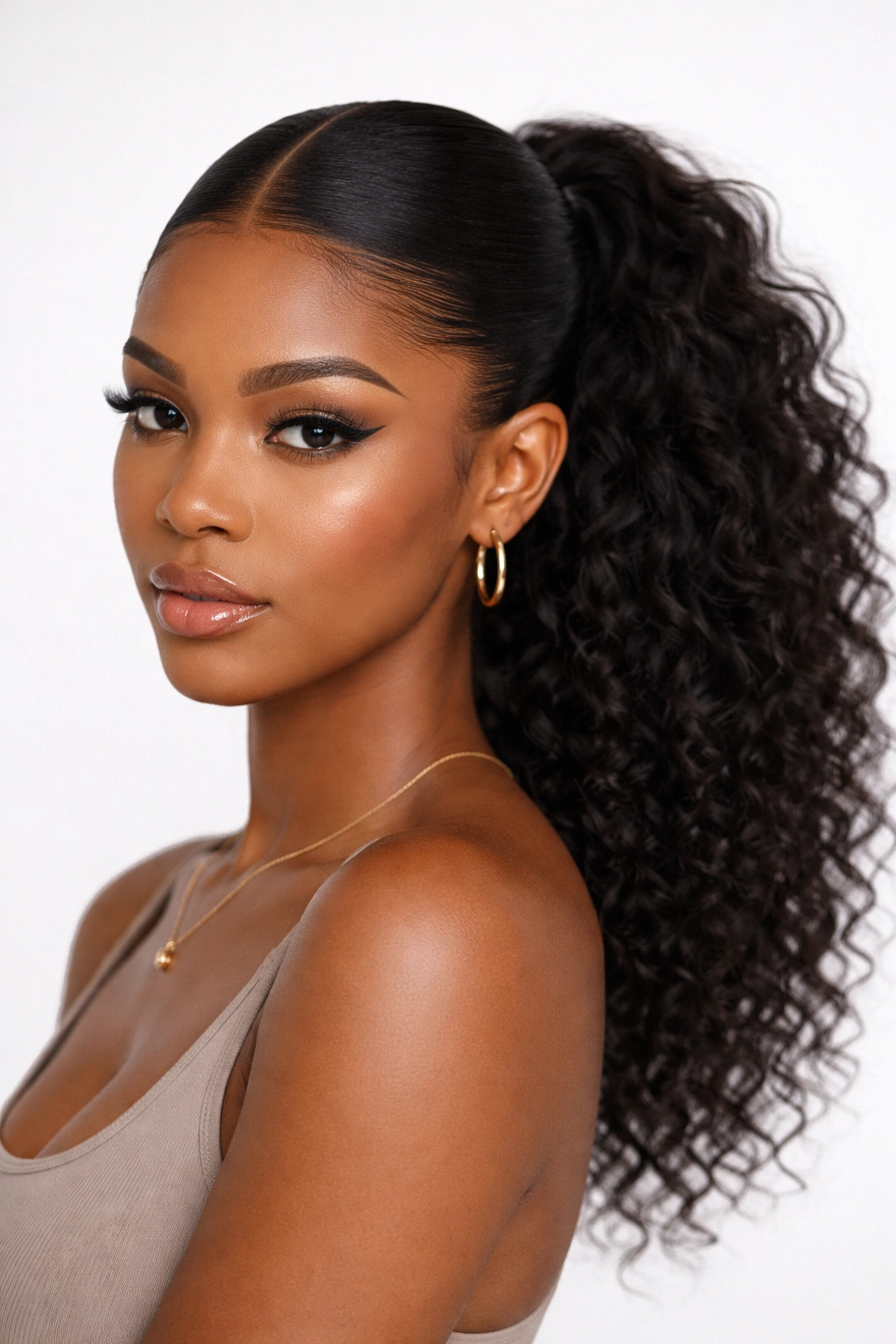
Sometimes the best way to wear a textured ponytail is to embrace the contrast: sleek, defined edges created with a precise middle part, paired with a full, textured ponytail tail. The structure of the parting makes the volume of the ponytail look even more dramatic.
Why It Works for Natural Hair
A sharp, clean middle part frames your face beautifully and creates an intentional, polished aesthetic. When paired with a full, curly ponytail, the contrast between the sleekness of the part and the texture of the ponytail is visually striking and modern. This style works whether your natural hair is coily, curly, or wavy.
How to Style It
- Use a rattail comb or the pointed end of a teasing brush to create a precise middle part from your hairline straight back.
- Apply a smoothing gel to the parted sections, creating a sleek finish on the front portions of hair.
- Gather your hair into a ponytail at your preferred height—high, middle, or low all work beautifully.
- Secure with an elastic and let the ponytail be as textured and loose as you want. The neat parting gives you enough polish that the ponytail can be wild.
- Use a gel stick to smooth any flyaways along the middle part and around your hairline.
Pro tip: This style is perfect for days when you have the time to get your edges smooth and polished—the precision of the parting really shines when your hairline is clean.
11. Half-Up Textured Ponytail
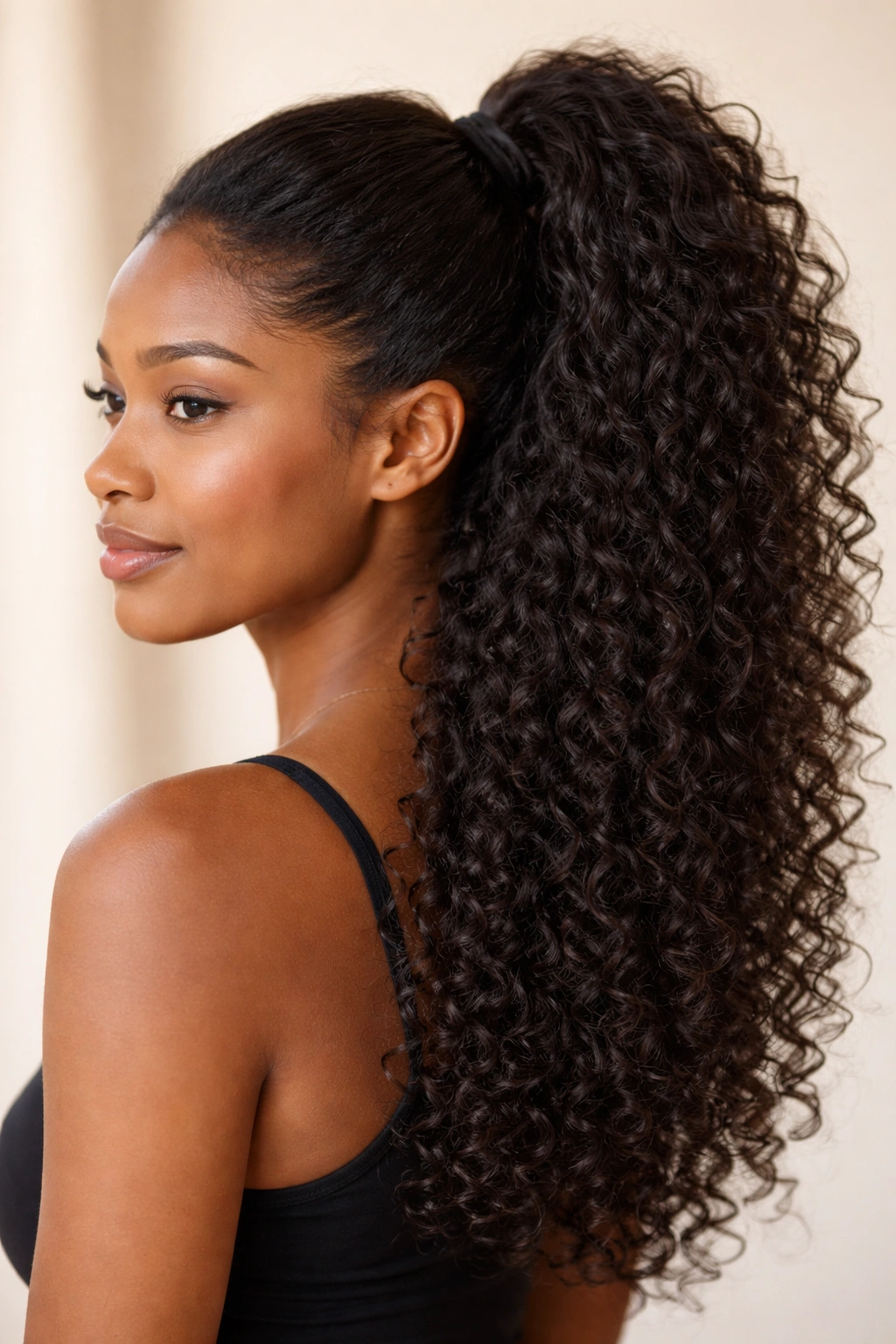
A half-up, half-down style takes half your hair into a ponytail while leaving the other half down, creating volume and showing off length and texture all at once.
Why It Works for Natural Hair
This style showcases the full beauty of your textured hair—you get the polished feel of a pulled-back style without sacrificing the visual drama of length and curl. The half-up section also keeps hair out of your face without the commitment of a full ponytail. With natural hair’s natural volume, this style looks full and intentional without any extra work.
How to Style It
- Section off the top half of your hair, from temple to temple across the crown, leaving the bottom half down.
- Gather the top section into a ponytail at the crown and secure with an elastic.
- Gently fluff the crown area to create volume and show off your curl pattern.
- Let the bottom half hang loose and natural, with all its texture and curl on display.
- Optional: wrap a strand from the ponytail around the elastic base to hide it, as described in the wrap-around style.
- Apply a curl-defining cream or gel to both sections for definition without crunch.
Worth knowing: You can adjust where you section off the hair to change the vibe—section higher for more pulled-back, section lower for more relaxed and loose.
12. Springy Coil Ponytail with Accessories
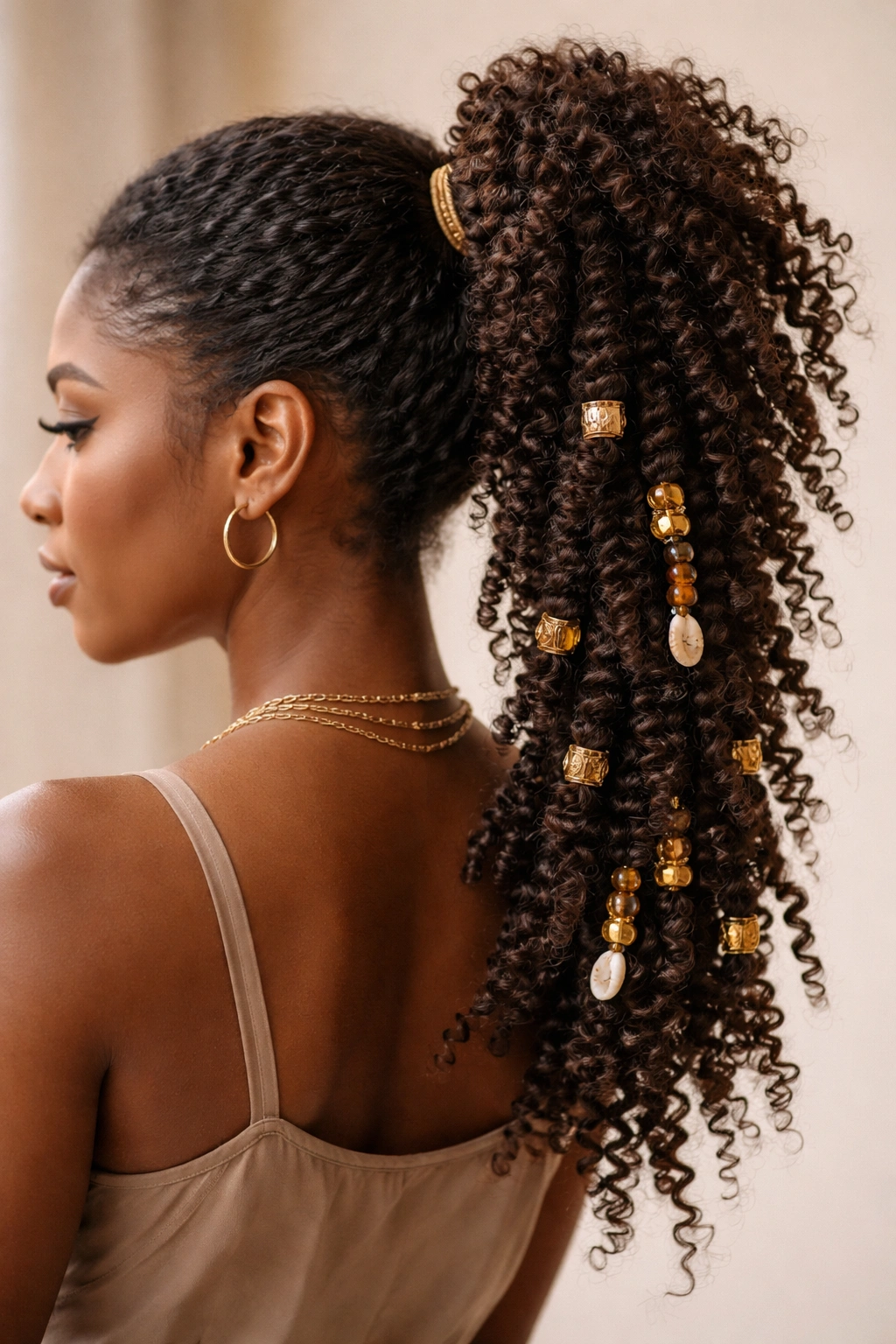
This style emphasizes your natural coils by gathering them into a ponytail and then adding decorative accessories—hair cuffs, beads, clips, or elastics with charms—that add visual interest and celebrate your texture.
Why It Works for Natural Hair
Accessories are a fun way to personalize your style and draw attention to your gorgeous coils. When you add cuffs, beads, or decorative clips to a coily ponytail, you’re saying that your texture is beautiful and worth celebrating. This is a styling choice, not a way to hide or manage your hair.
How to Style It
- Create a ponytail at your preferred height, using a clear or neutral elastic so it doesn’t compete with your accessories.
- Gather your coils loosely—you want them to maintain their springy, defined shape.
- Add hair cuffs, beads, clips, or elastics with charms down the length of the ponytail. Position them at intervals so they’re visible and intentional.
- Use a lightweight oil or shine spray to make your coils gleam, so they show off in the light alongside your accessories.
- Keep the ponytail itself loose and textured, letting your coils be the main event.
Pro tip: Choose accessories in metals or colors that complement your skin tone. Gold, copper, bronze, and warm silver tones work beautifully with natural hair.
13. Flat-Twisted Ponytail
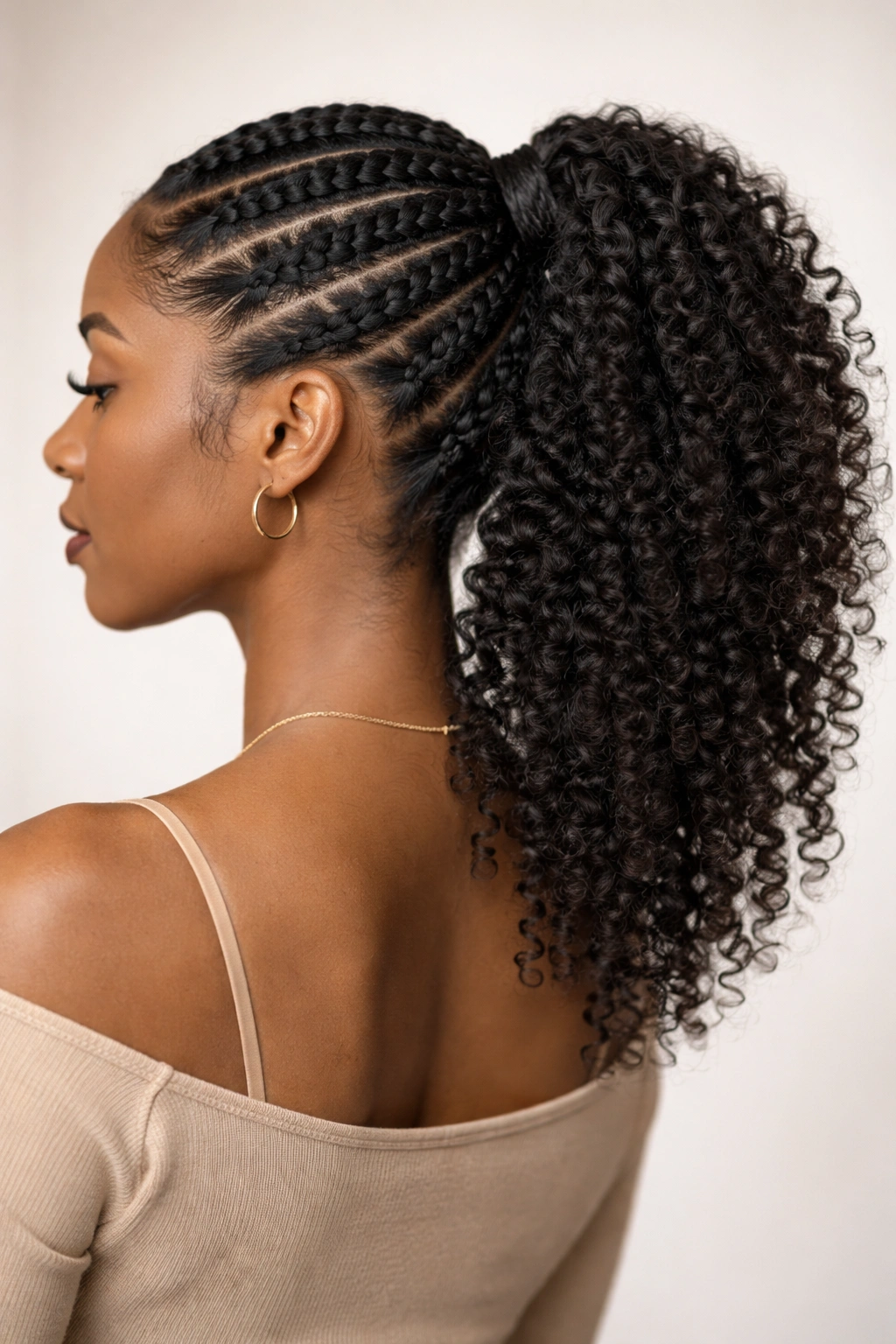
Similar to a braid, a flat twist creates texture and visual interest along the scalp while keeping your hair close to your head. When you gather flat-twisted sections into a ponytail, you get a style that’s intricate-looking but surprisingly easy to do.
Why It Works for Natural Hair
Flat twists work beautifully with textured hair because they incorporate your curl pattern naturally instead of fighting it. As you twist, your curls sit within the twist sections, creating a textured, dimensional look. The twists themselves become part of your style design.
How to Style It
- Create a clean center or side part, depending on your preference.
- Starting from one side, take a thin section of hair and begin a flat twist. A flat twist involves taking two strands and twisting them around each other while incorporating new sections of hair, like a braid but flatter against the scalp.
- Create as many flat twists as you want—you could do two on either side of your center part, or multiple smaller twists throughout.
- Gather all your hair (including the twisted sections) into a ponytail at your preferred height.
- Secure and let the ponytail itself be as textured and loose as you want.
- Use a twist-defining cream on the flat-twisted sections to enhance their definition.
Worth knowing: Flat twists look more intricate and sophisticated the next day or two, after they’ve loosened slightly and your curls have relaxed into them. Do them the night before if you can.
14. Soft Faux Hawk Ponytail
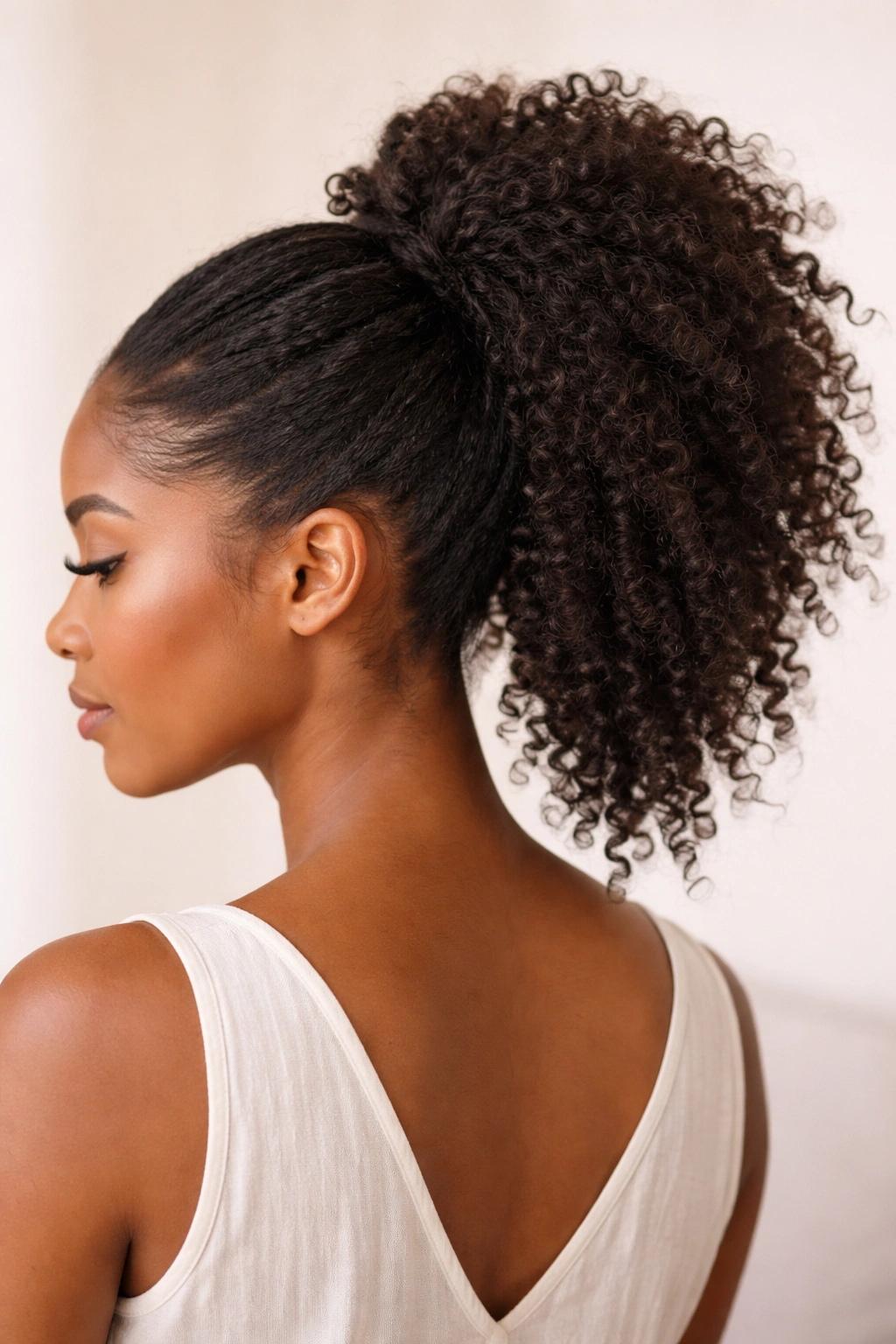
This style gathers two or more sections of hair into a center ponytail at the crown, creating the illusion of a faux hawk. It’s bold and playful while still being wearable for everyday life.
Why It Works for Natural Hair
With natural hair’s natural volume, a faux hawk reads as intentional and dramatic without needing to actually shave or style anything extreme. The gathered ponytail at the crown, paired with the volume on either side, creates a striking silhouette. The style is especially impactful when your natural hair has bounce and dimension.
How to Style It
- Create a deep side part or a center part, depending on which look you prefer.
- Gather a section of hair from one side toward the center crown, securing it loosely with a small elastic. Do the same on the other side.
- Combine both side sections into a single ponytail at the crown by removing the small elastics and securing them all together with one larger elastic.
- Gently fluff the ponytail at the crown to create height and show off your curl pattern.
- Let the sides of your hair sit naturally, creating volume below the gathered ponytail.
- Use gel to enhance the separation between the ponytail and the sides, creating definition.
Pro tip: This style works best when you have enough hair for volume—if your hair is finer or lower density, you might want to add extra fluff with a teasing brush to create the visual impact.
15. Curly Goddess Ponytail
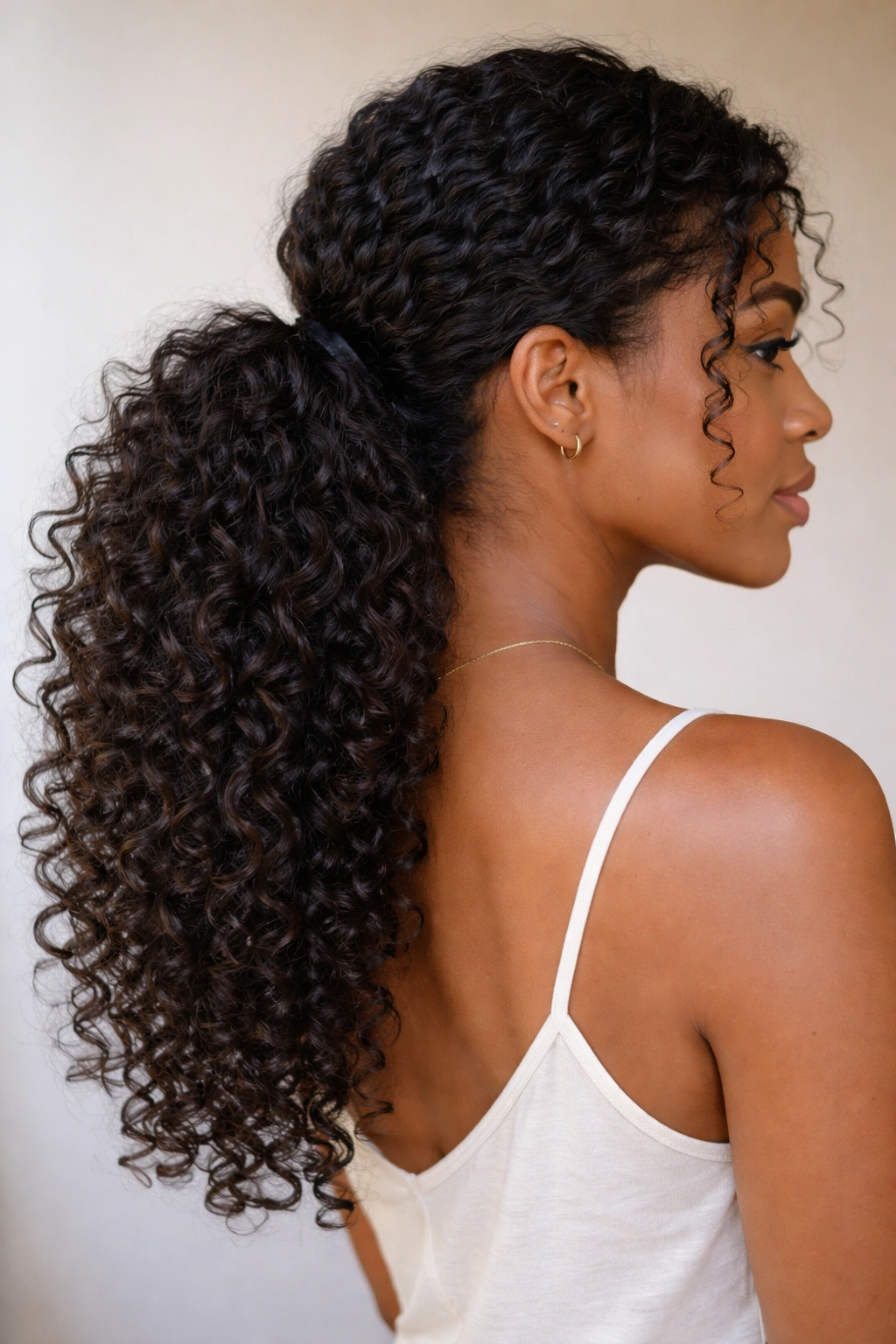
This is the most romantic, effortless-looking style—a low ponytail with maximum curl, movement, and volume that reads as effortlessly beautiful. Think curly, bouncy, and completely unstructured, but clearly intentional.
Why It Works for Natural Hair
This style is basically just you, but pulled back. Your natural curls are the star, and the low ponytail is just a vehicle to show them off while keeping hair generally out of your way. It’s the easiest style on this list to achieve with natural hair because you’re not fighting your texture—you’re embracing it completely.
How to Style It
- Gather your hair into a low ponytail at the nape of your neck, using a clear or neutral elastic.
- Keep the ponytail loose and slightly messy—perfect is the enemy of this vibe.
- Don’t try to smooth or define individual curls. Let them sit naturally in their most bouncy, voluminous state.
- Use a curl-activating cream or mousse on the ponytail to enhance your curl pattern without adding crunch.
- Pull a few face-framing pieces loose if they make you feel prettier or softer.
- Finish with a light hairspray or leave it unsprayed for that completely natural, just-gathered vibe.
Pro tip: This style is most impactful when your curls are well-hydrated and bouncy. Spray your hair lightly with a hydrating mist before pulling it back to ensure your curls have maximum movement and shine.
Final Thoughts
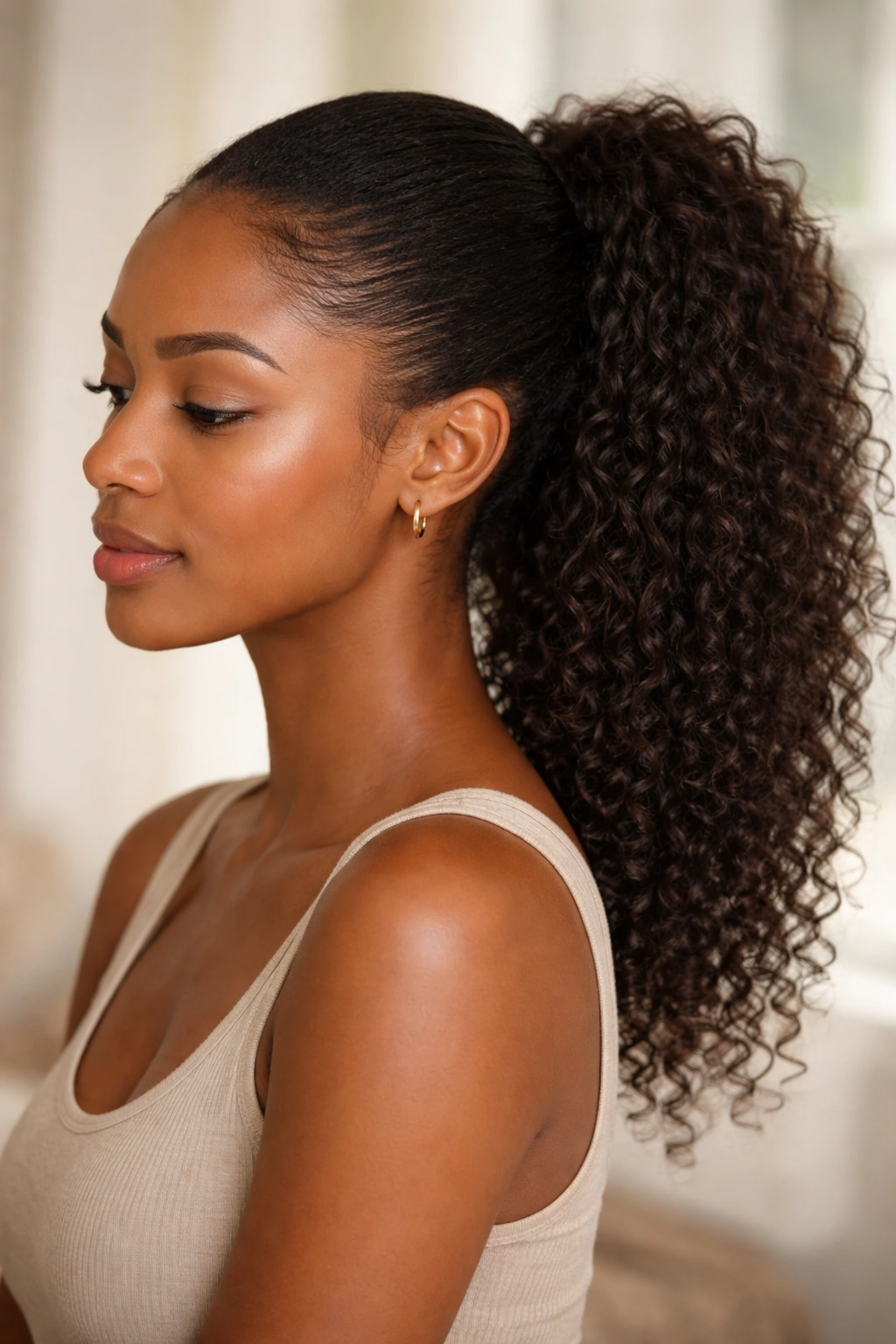
The beauty of textured ponytails is that they celebrate what your hair naturally does instead of trying to change it. Whether you’re going for sleek and polished, intricate and detailed, or soft and romantic, your natural texture is an asset, not something to work around. The 15 styles in this guide show that range—from tight, structured styles that emphasize precision to loose, bouncy styles that maximize volume and curl definition.
The best textured ponytail for you depends on your specific hair texture, the time you want to invest in styling, and the vibe you’re going for that day. A Bantu knot-out ponytail on a day when you did the prep work feels effortless and full. A flat-twisted ponytail feels intricate and intentional. A curly goddess ponytail is pure, unfiltered you. You don’t need to choose just one—these are all accessible options that work with your natural hair’s texture and movement.
The key to any textured ponytail that lasts all day and looks intentional is using products that work with your hair, not against it. A good curl cream, a flexible-hold gel, or a smoothing mousse makes the difference between a style that falls apart by afternoon and one that holds its shape and definition throughout the day. And remember that your natural texture requires a bit less maintenance than some other styles—you’re not fighting against anything, so the style naturally stays in place.
