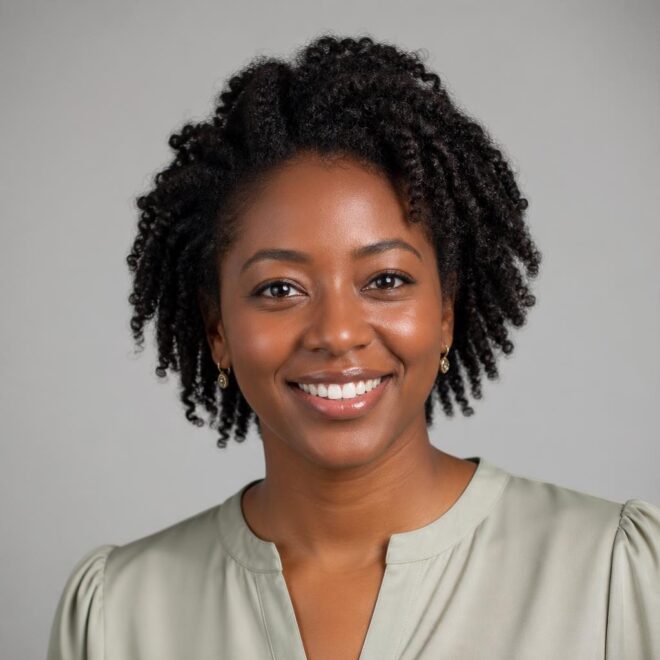


Short hair doesn’t mean you’re limited to sleek, polished styles. In fact, some of the most effortless, flattering hairstyles come from embracing the messy ponytail — that perfectly undone look that says you have your life together even when you’re running late. Messy ponytails work beautifully on short hair because they celebrate texture, movement, and a confident, casual attitude rather than fighting against shorter lengths.
The beauty of a messy ponytail is that it works with your hair’s natural texture instead of against it. Flyaways become a feature, not a flaw. Imperfect sections read as intentional and chic. And unlike sleek styles that require precision and time, messy ponytails are genuinely faster to create — which means you’ll actually wear them regularly instead of saving them for special occasions.
Whether you have a textured pixie cut, a chin-length bob, or shoulder-grazing layers, there’s a messy ponytail version that’ll feel both comfortable and cool. The key is knowing which style complements your hair type and face shape, and how to create that intentional-looking messiness without it sliding into actual bedhead. Let’s explore twelve different approaches that’ll transform how you think about styling short hair.
1. The Tousled High Ponytail
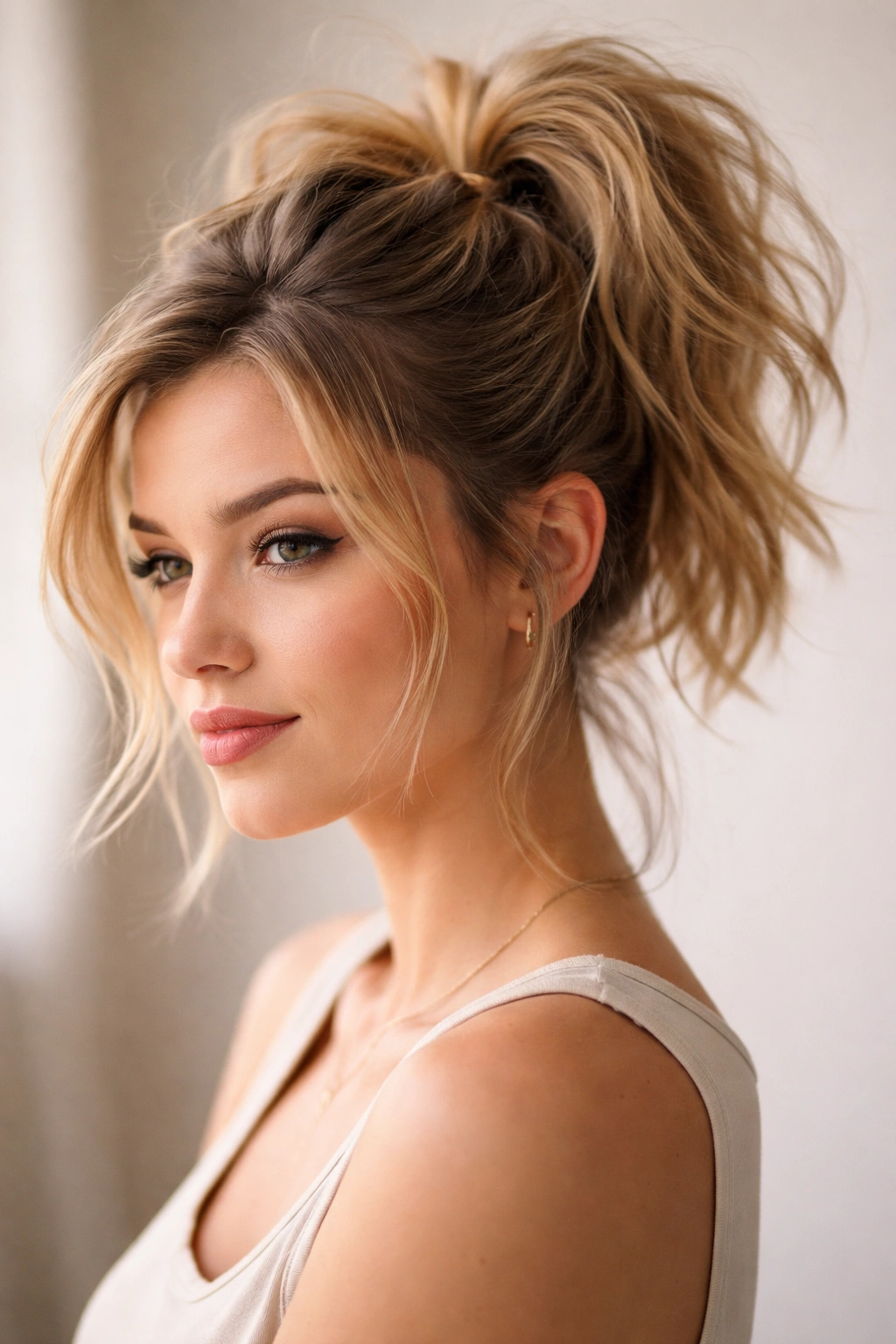
This is the go-to style when you want height without looking overdone. A high ponytail on short hair has real visual impact — it opens up your face, elongates your neck, and creates the illusion of volume even if your actual hair is fine or thin. The secret to making it messy rather than tight is in how you handle the crown section and how you finish the tail.
How to Create It
Start by roughing up your hair at the roots with your fingers, focusing especially around the crown. Spray a texturizing spray or dry shampoo throughout if you want extra grip and hold — this isn’t about making your hair look dirty, it’s about creating friction that prevents flyaways and makes the ponytail easier to control. Gather your hair high on the head, but don’t pull it tight immediately. Instead, hold it loosely while you secure it with an elastic, then gently pull small sections outward from the base of the ponytail for about an inch or two, creating that signature undone volume.
The Finishing Touch
Once you’ve created volume at the base, smooth your fingers down the tail itself to keep it from looking frizzy, but don’t obsess over making it perfectly neat. A few intentional wisps framing your face actually enhance the messy vibe. Lightly mist the finished style with flexible-hold hairspray — something that feels light and won’t crunch. This ponytail works best with hair that has some natural texture or waves; if you have very straight hair, consider using a curling iron to add loose waves before gathering the ponytail.
Best for: Oval and round face shapes; works on all hair textures
2. The Half-Up Messy Pony
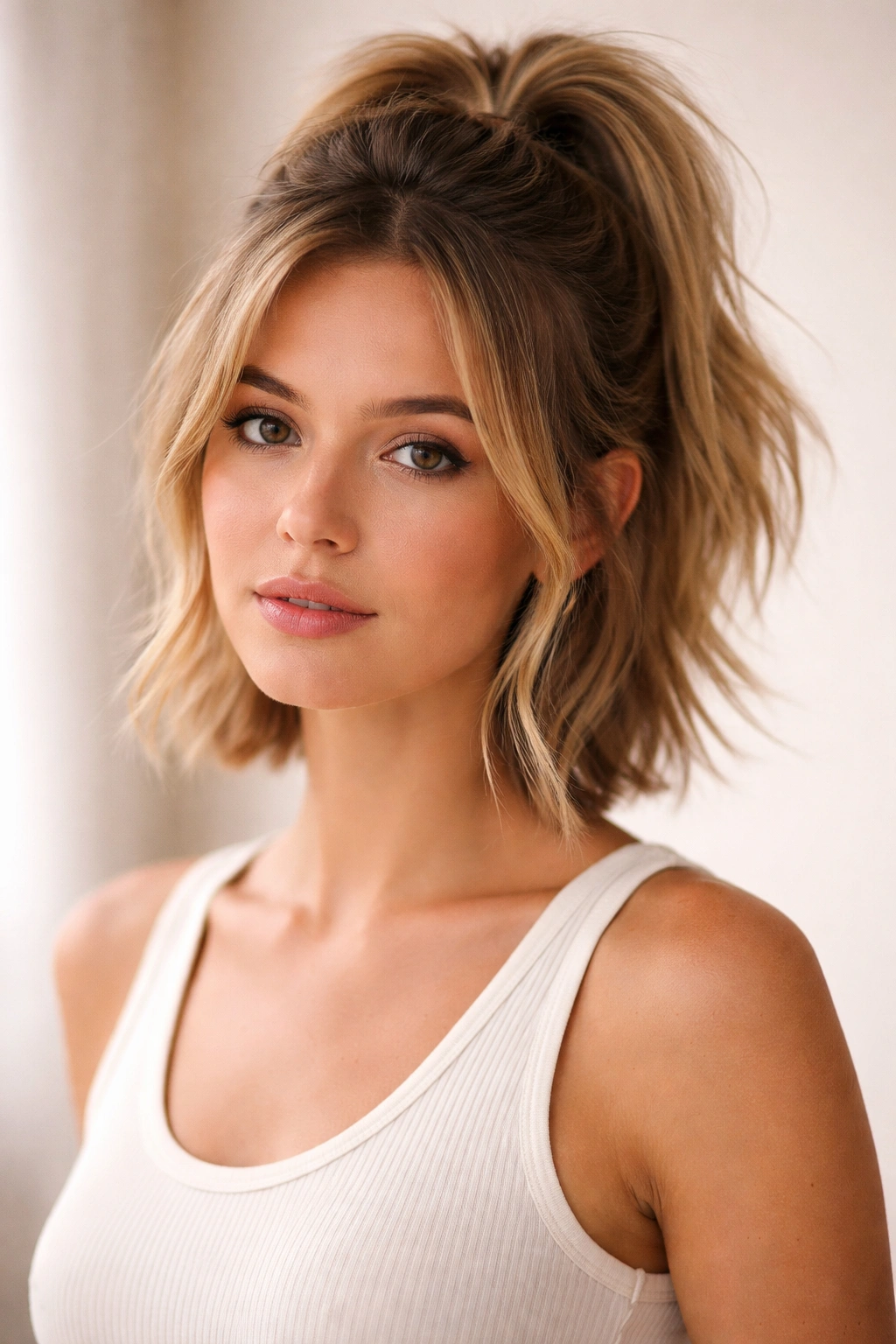
The half-up ponytail is perfect for short hair because it’s honestly the ideal compromise between wearing your hair down and pulling it fully up. It gives you the visual lightness of down hair while keeping strands off your face and neck. The messiness here comes from loose, irregular sections and softness around the face rather than any kind of tightness at the back.
Why It Works for Short Hair
Half-up styles were practically invented for hair that’s too short for a full ponytail but long enough to be frustrating when it falls in your face. The looseness of a messy version means you’re not fighting with tension at the roots, so it’s genuinely comfortable to wear for hours. It also reads as more modern and fashion-forward than a perfectly executed half-up style, which automatically makes you look like you’re intentionally choosing a relaxed aesthetic rather than settling for something practical.
How to Section and Secure It
Divide your hair horizontally across the crown — imagine a line from ear to ear across the back of your head. Gather the top section into a loose hand and secure it with a clear elastic or a small claw clip. Pull a few face-framing pieces down intentionally from near the temples. Then, from the gathered section, gently tease and pull outward at the elastic to create softness and volume at the base. The bottom half of your hair stays completely down and loose, softening the overall effect.
Best for: Straight, wavy, and curly hair; flatters all face shapes
3. The Textured Low Ponytail
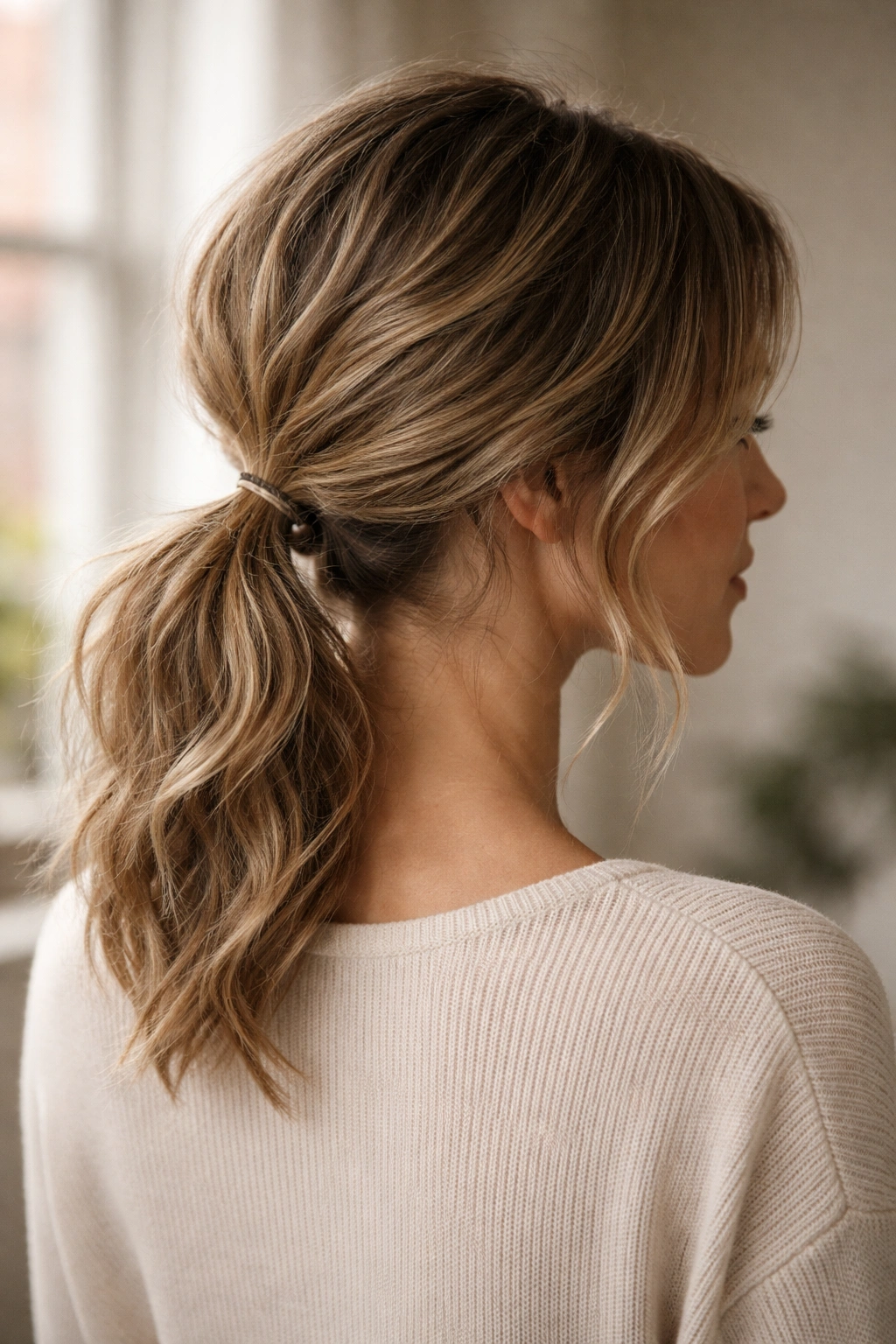
Low ponytails are deceptively sophisticated, and when you add intentional texture, they become a genuinely chic option that works for everything from casual days to dressier occasions. The low placement on short hair creates elegance, and the texture keeps it from looking severe or buttoned-up. This style rewards hair that has natural waves or curl, though you can create texture with a styling tool if your hair is straight.
Building In the Texture
Before you even gather this ponytail, your preparation work matters. Apply a sea salt spray, texturizing product, or a lightweight mousse to damp hair and either air dry it or blow dry it with a curling iron, creating loose, undone waves throughout. You want the kind of texture that catches light and reads as intentional rather than accidental. Once your hair has texture, gather it low at the nape of your neck — this low placement is what keeps the style from feeling too casual or sloppy.
Finishing for Impact
Secure your low ponytail, but don’t pull it tight. Instead, hold it loosely and wrap a small section of hair around the elastic base to hide it, securing that wrapped section with a bobby pin. This takes thirty seconds but transforms the whole look from “practical hairstyle” to “I definitely meant to do this.” Pull a few pieces gently away from the ponytail base, and consider leaving one or two face-framing pieces down if you want extra softness.
Best for: All hair types and textures; particularly flattering on square and rectangular face shapes
4. The Twisted Crown Ponytail
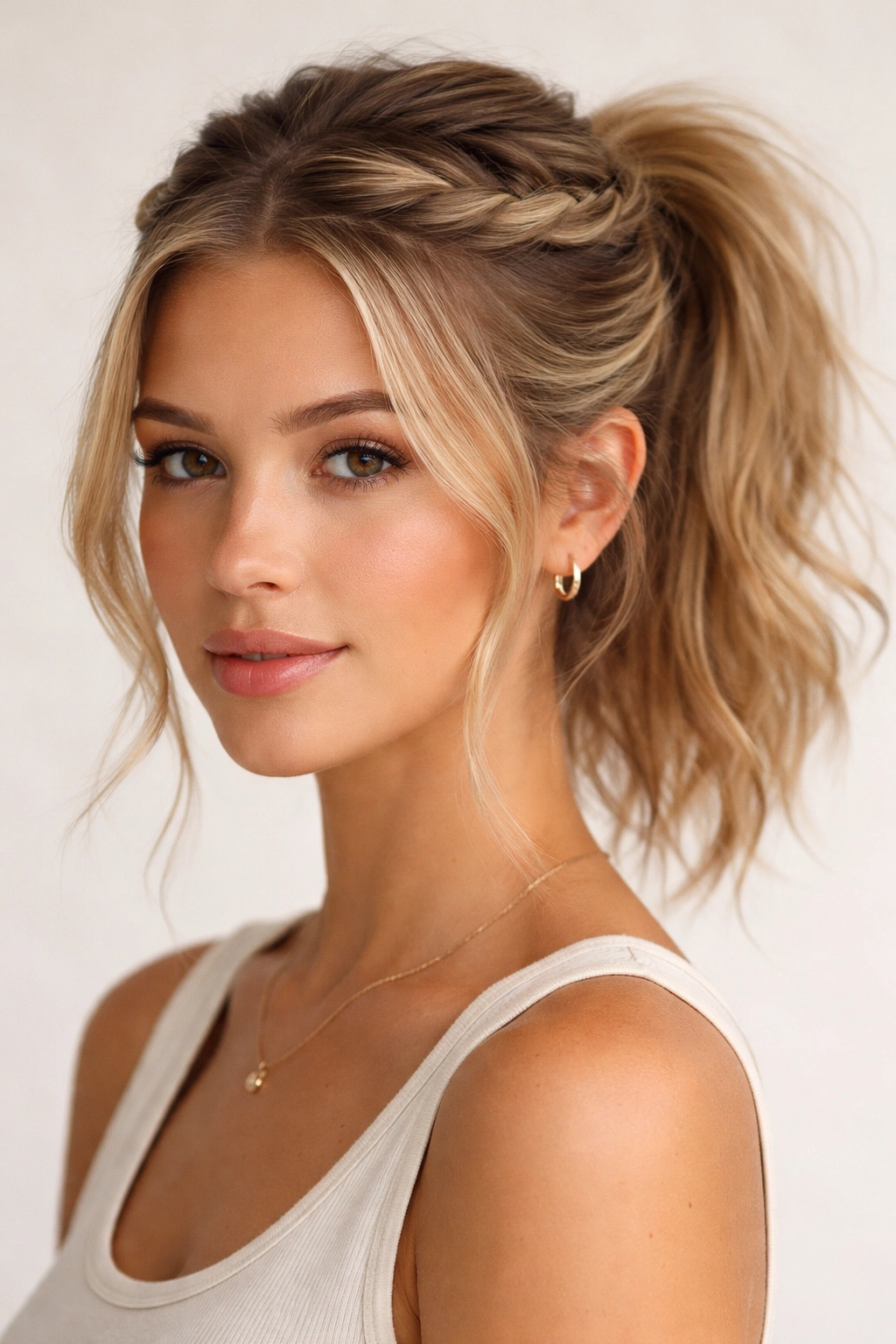
If you have slightly longer short hair — think a chin-length bob or slightly longer — the twisted crown ponytail gives you a styled, intricate-looking option that’s actually simple to execute. The twists create visual interest and make the ponytail look more intentional than a simple gathered style, but the messiness keeps it from feeling overdone or formal.
Creating the Twist Detail
Divide your hair into two equal sections from temple to temple, like you’re creating a side part. Take the section from one side of your head and twist it loosely (not tightly) back toward the crown, then secure it with a bobby pin. Repeat on the other side, twisting the hair back and pinning it so both twists meet at the crown. Now gather all your hair — including the twisted sections — into a ponytail at the crown or slightly higher, securing it with an elastic.
Adding the Messy Element
The magic of this style is that the twists themselves create structure and a focal point, which means the ponytail can be extra undone without looking unfinished. Pull sections gently outward from the elastic, create flyaways around the face, and don’t worry about making everything perfectly smooth. The contrast between the intentional twists and the casual messiness of the tail is what makes this style interesting. A texturizing spray applied before you start will give you more grip and make the twists hold better, especially if you have fine hair.
Best for: People with medium to thick hair; suits oval and heart-shaped faces
5. The Choppy Fringe Ponytail
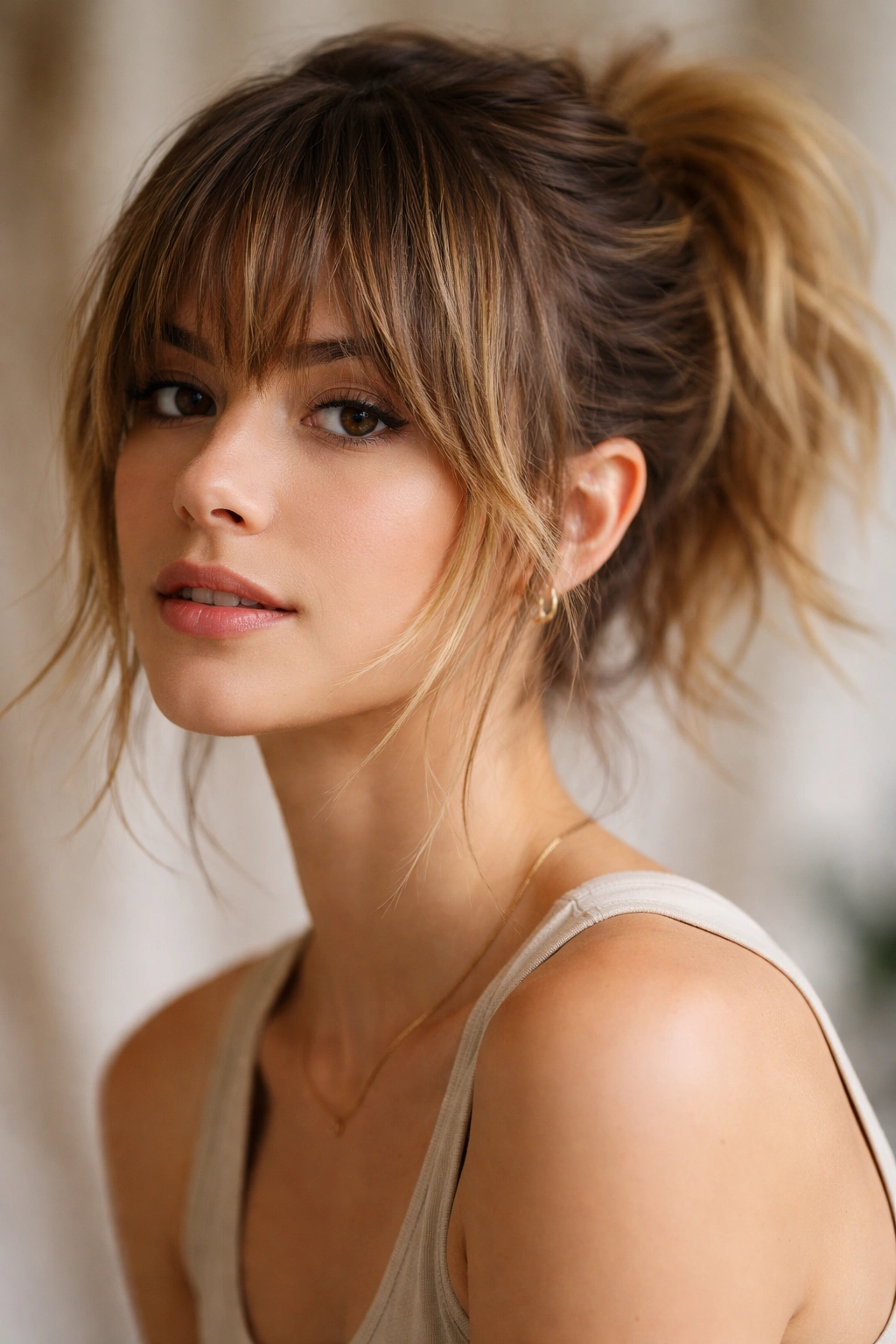
This style specifically plays up the beauty of short, layered hair with a stronger fringe or shorter pieces around the face. If your short hair has intentional texture through layers and shorter front pieces, this ponytail lets those elements shine while still creating a cohesive updo. The choppiness isn’t from sloppiness — it’s from the actual structure of your cut.
Styling the Layers
Before you gather your ponytail, use a curling iron or wand to create soft, piecey waves throughout your hair, especially focusing on the shorter layers and fringe pieces. These shorter pieces are going to frame your face rather than get tucked into the ponytail, so give them extra attention and definition. You want them to read as part of the intentional design rather than strays that escaped the ponytail.
The Ponytail Itself
Gather the longer sections of your hair into a ponytail — this might be just at the back, or slightly off to one side depending on your cut — and secure it with an elastic. The shorter pieces and fringe naturally fall around your face and shoulders, creating layers and movement. Mist the finished look with a light hairspray so all those intentional flyaways stay in place. This style works best if you have a cut with genuine variation in length rather than a blunt, one-length short cut.
Best for: Layered short cuts with textured fringes; suits all face shapes
6. The Sleek-to-Messy Gradient Pony
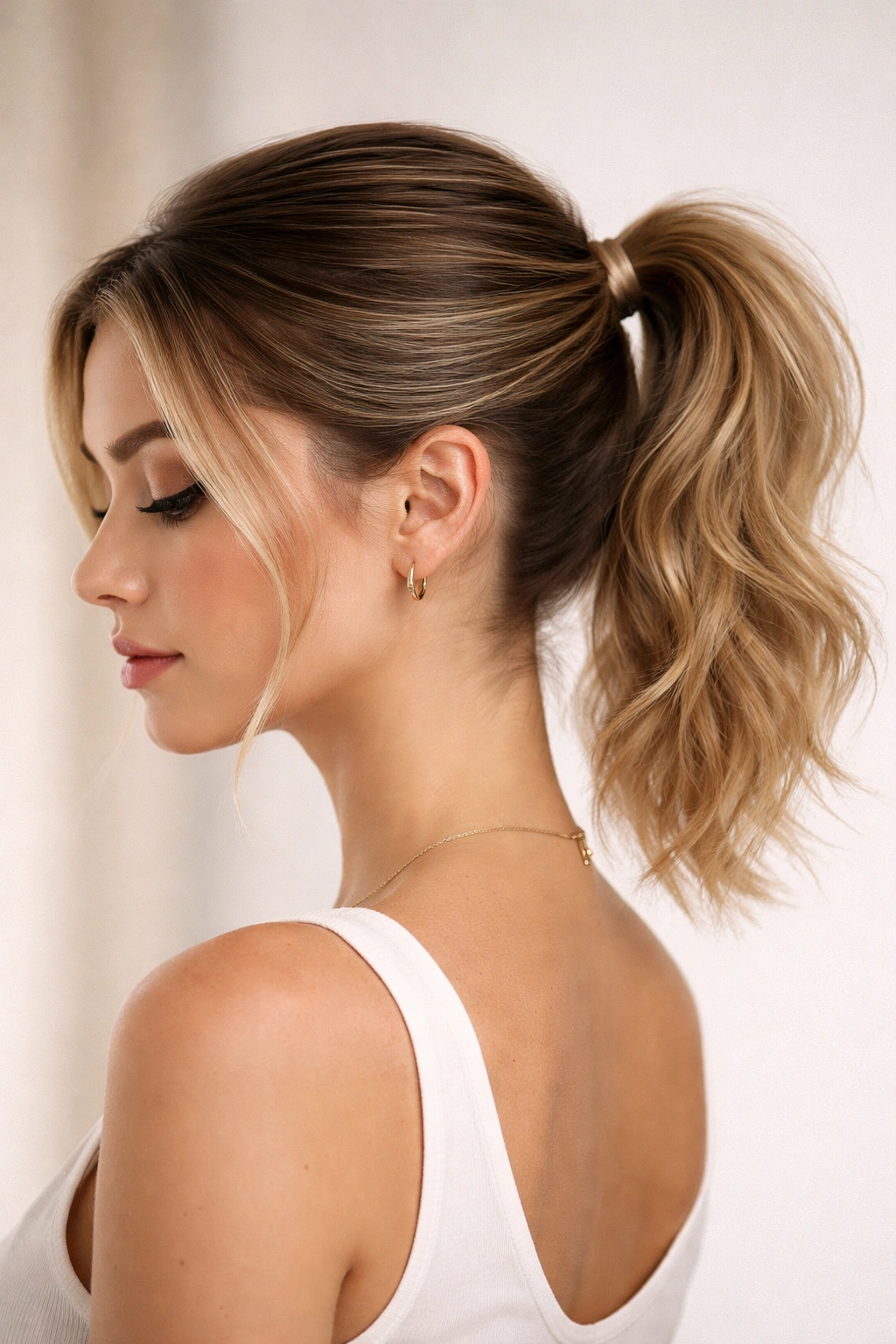
This is a more technical option, but it’s genuinely stunning if you have the time to play with styling. The concept is that your ponytail has a gradient of sleekness — the crown is sleek and controlled, and as you move toward the elastic and tail, it becomes progressively messier. It’s the opposite of most ponytails and creates a modern, fashion-forward vibe.
Creating the Sleek Crown
Start by smoothing your hair down against your head using a smoothing serum or light gel, focusing on the crown and the top section. Use a fine-tooth comb or brush to really smooth everything down and eliminate flyaways in this upper section. You want this part to look intentionally polished and controlled, almost like a mini wet-look style at the top of your head.
The Transition to Messy
As you move toward where you’ll secure your ponytail, gradually loosen your smoothing technique. Stop using the comb, start using your fingers, and let texture and movement come back into the hair. By the time you reach the elastic, your hair should feel completely undone and textured. Once you’ve secured the ponytail, pull sections outward gently and create flyaways, contrasting that polished crown with a completely relaxed tail. This style takes practice to balance correctly — you want the sleek section to read as intentional rather than just “the top part before I gave up.”
Best for: Fine to medium straight or wavy hair; especially striking on those with oval face shapes
7. The Voluminous Bubble Ponytail
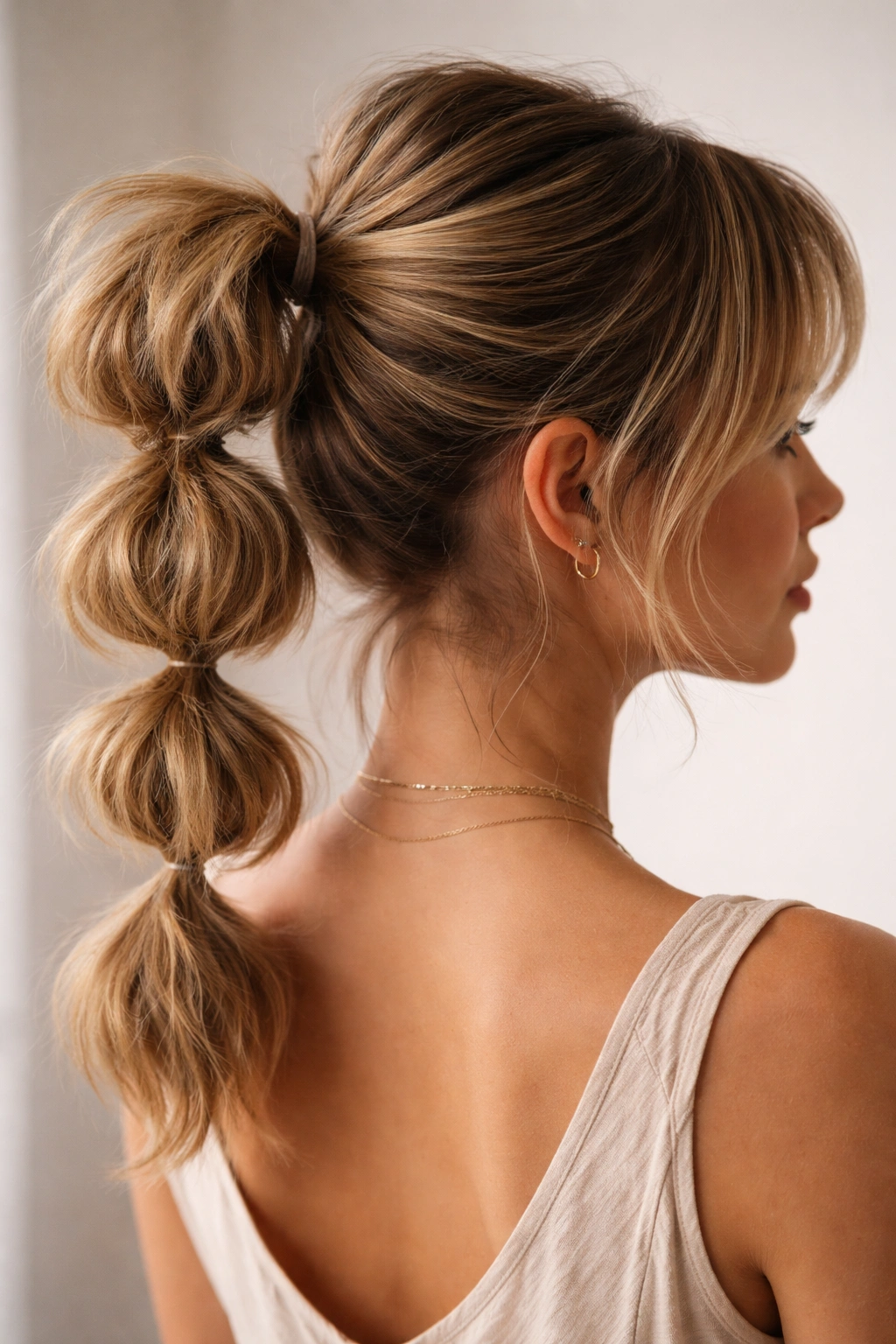
The bubble ponytail — sometimes called a stacked ponytail — is perfect for short hair because it creates the illusion of much longer, thicker hair while still being practical and easy to manage. The messiness here comes from the undone way you create and style each bubble rather than tight, defined sections. It’s playful and youthful without looking cartoonish.
How to Build the Bubbles
Start with a ponytail gathered at whatever height you prefer — high, mid-level, or low all work. Secure it with an elastic, then place another elastic 2 to 3 inches down the tail. Gently pull and fluff the hair section between the two elastics outward, creating a puffy bubble. Repeat this process down the length of your ponytail, spacing each bubble about 2 to 3 inches apart. You only need 3 to 5 bubbles depending on your ponytail length, so don’t overthink it.
Messy Styling Details
The key to keeping this looking intentionally messy rather than overdone is in how you fluff each bubble. Don’t create perfect, round spheres — instead, pull the sections outward unevenly, letting some areas puff more than others. Leave some smaller flyaways around the face and at the base of the ponytail. Use a texturizing spray before you start so the hair grips better and holds the bubbles longer without feeling stiff or crunchy. This style is genuinely fun and works beautifully on all hair textures, though it’s particularly striking on those with curly or textured hair.
Best for: All hair types; especially fun on curly and textured hair; works on all face shapes
8. The Side-Swept Casual Pony
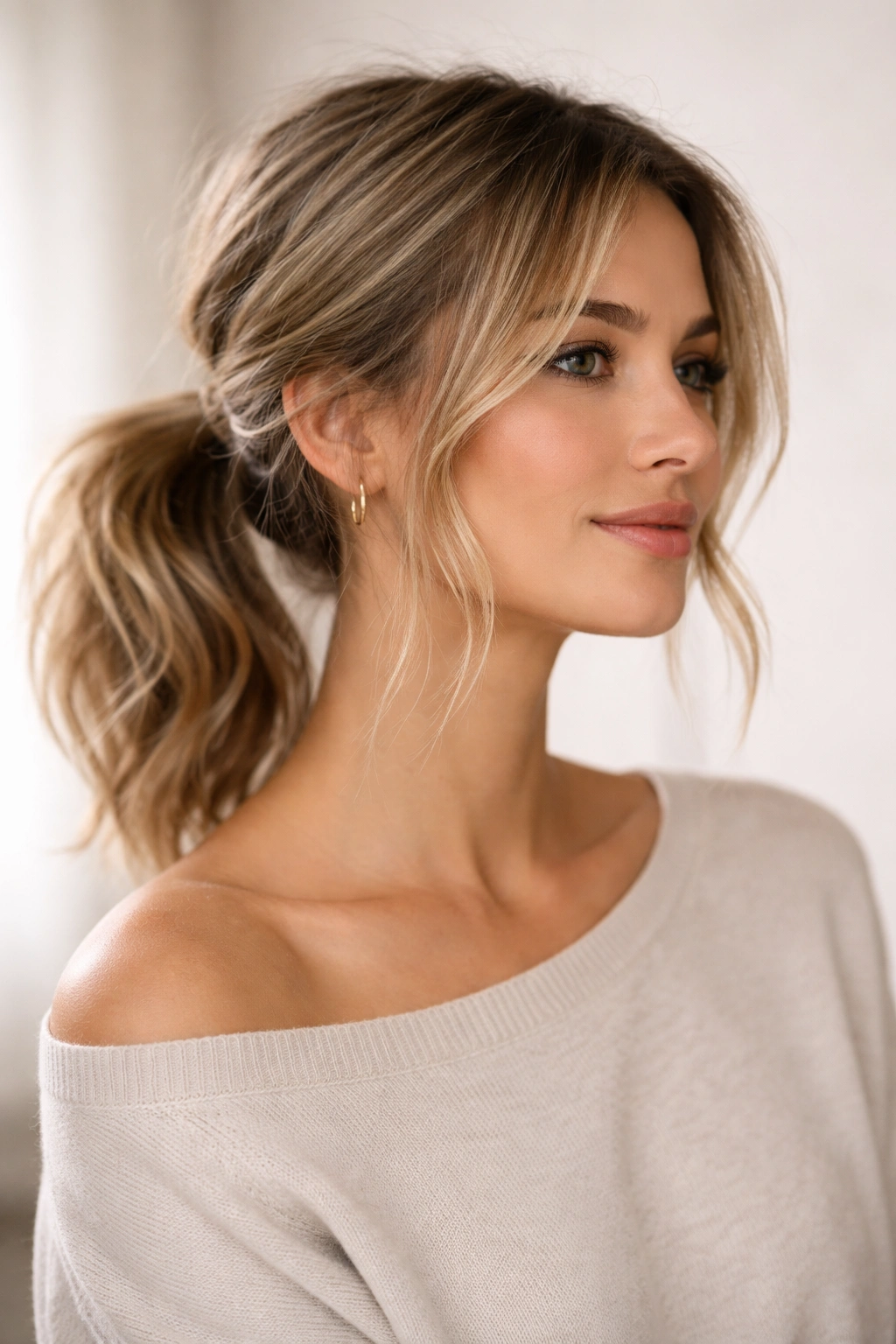
A side ponytail instantly makes any hairstyle feel more playful and less formal, and on short hair, a side-swept version reads as effortlessly cool rather than too casual. The beauty of this style is that it’s almost impossible to make it look overdone — the side placement and the inevitable softness around the face automatically read as relaxed and intentional.
Placing and Securing the Ponytail
Rather than gathering your hair at the center of your head, gather it to one side — how far depends on your preference and face shape, but aim for somewhere around your ear or slightly behind it. Secure it with an elastic, but don’t pull it tight. The looseness is essential to the vibe; you want some hair escaping around your face and at the base. If you have fine hair that doesn’t naturally hold texture, apply a texturizing spray to give the hair grip before you gather the ponytail.
Styling for Maximum Casual Appeal
Once secured, pull sections gently away from the elastic to create volume and softness at the base. Leave several face-framing pieces down — don’t try to tuck everything in. The messiness of a side ponytail comes naturally because of the angle and placement, so you don’t need to overthink the styling. A light mist of flexible hairspray helps everything stay put without feeling crunchy. This style is especially beautiful on those with heart-shaped or longer faces because the side placement balances facial proportions.
Best for: All hair textures; particularly flattering on oblong and heart-shaped faces
9. The Undone Top Knot Pony
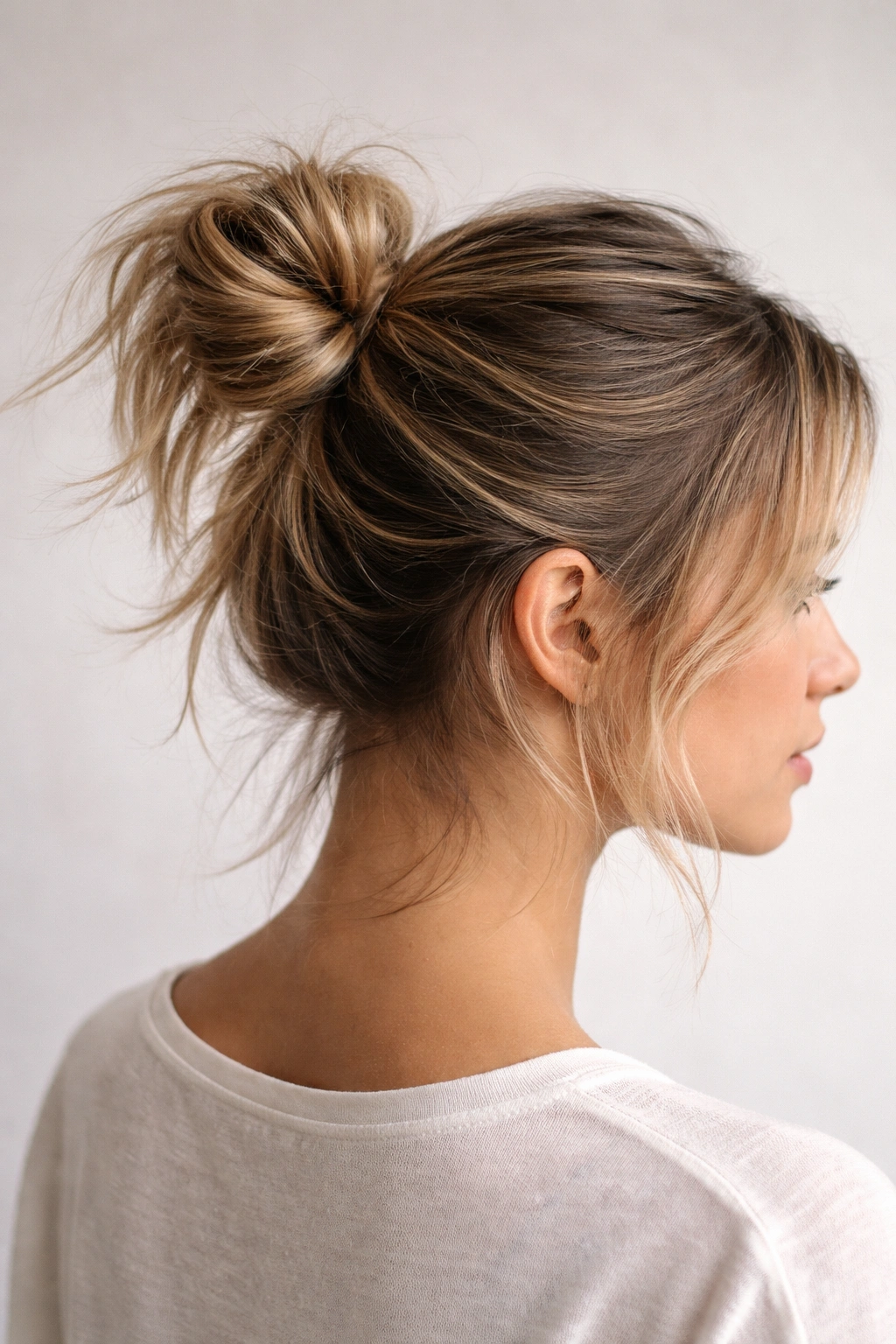
This is honestly part-ponytail, part-bun, and completely versatile. An undone top knot on short hair gives you an updo without requiring the length that traditional buns need. The messiness comes from the loose, imperfect way you twist and wrap the hair rather than from any technique failure. It’s genuinely comfortable to wear and looks intentionally styled.
Creating the Knot
Gather your hair into a high ponytail at the crown, then twist the ponytail loosely — not tightly — starting from where it’s secured. As you twist, wrap the twisted hair around the base of the ponytail, creating a loose knot or circular shape. Secure it with bobby pins hidden underneath the knot itself. This whole process should feel relaxed; if you’re pulling too tight, loosen your grip. Some hair will naturally escape the knot, and that’s exactly what you want.
Finishing Details
Once you’ve secured the knot, pull a few more strands gently away from the structure to emphasize the undone quality. Leave face-framing pieces down if you want softness, or keep them tucked for a slightly more polished effect. The difference between a sloppy knot and an intentional messy one is all about having control over which pieces are down and which are up. Use bobby pins to secure any pieces that feel too loose, and mist with a flexible hairspray. This style is perfect for workouts, hot days, or anytime you want a genuinely practical style that still looks intentionally styled.
Best for: All hair types; works on all face shapes; especially practical for active days
10. The Face-Framing Wispy Ponytail
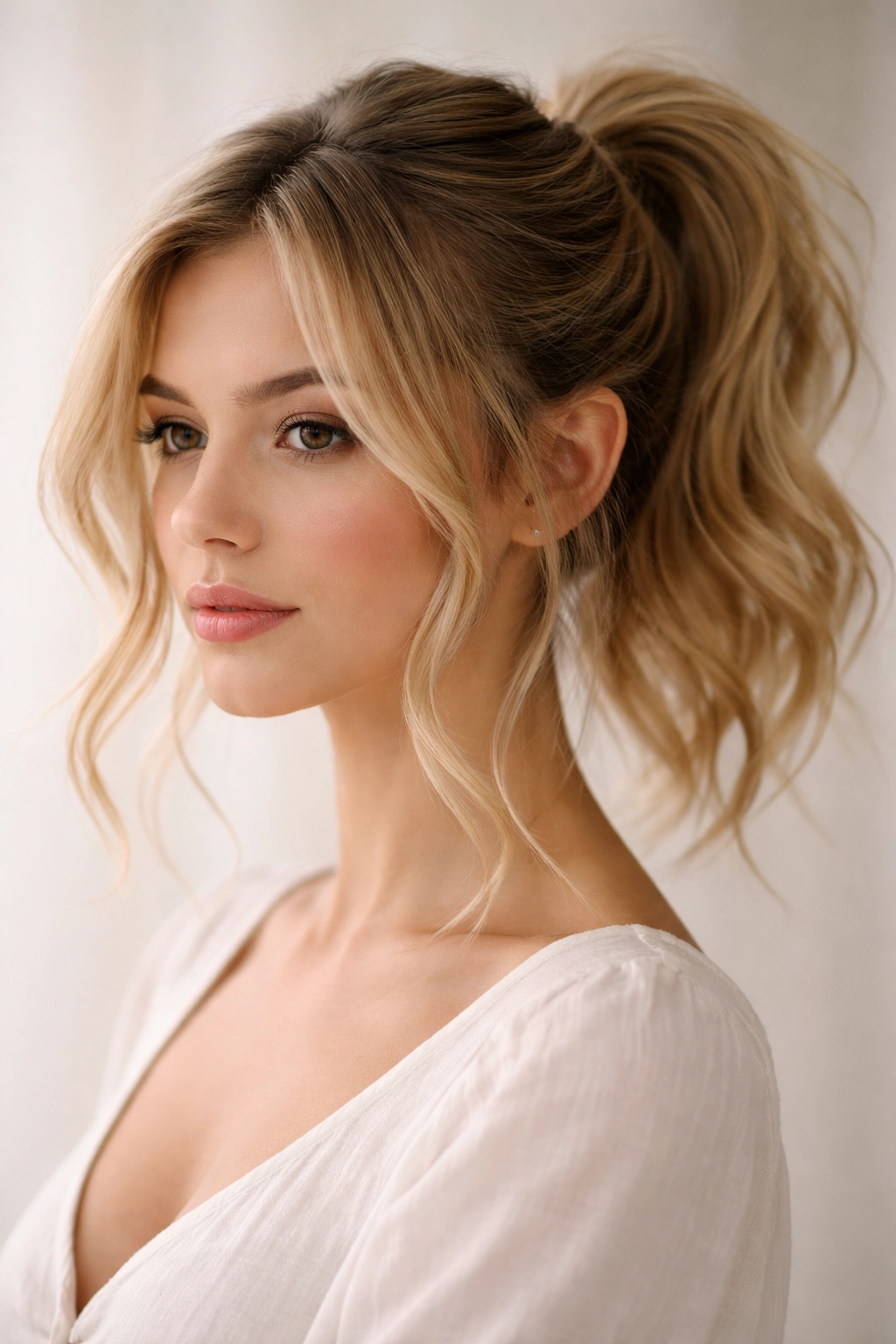
This is the most romantic and soft of the messy ponytail options — it’s created with the intention of leaving substantial amounts of hair down around the face and shoulders while still pulling the bulk of your hair back. On short hair, this means you’re creating softness and movement rather than severity, and the wispy elements do all the visual work.
Strategically Leaving Hair Down
Rather than trying to gather all your hair, make a conscious decision about which pieces will frame your face. Typically, you’ll leave pieces from your temples, cheekbones, and maybe a small section at the nape of your neck completely down. Everything else gets gathered into a ponytail — usually positioned at the crown or slightly off-center. The art here is in the intentionality; you’re not creating a ponytail that has flyaways, you’re creating a ponytail that features strategic face-framing pieces.
Styling the Wispy Pieces
Curl the pieces you’ve left down using a small-barrel curling iron or a wand, creating soft waves that complement the texture of your ponytail. These pieces should look polished and intentional, not sloppy. Once you’ve curled them, gently separate the curls with your fingers to create that just-tousled effect. Use a light texturizing spray on the pieces and a flexible hairspray on the whole style to keep everything in place. The contrast between the controlled ponytail and the soft, wispy pieces creates a gentle, effortlessly beautiful aesthetic that works for everything from casual to slightly dressier occasions.
Best for: All hair types; incredibly flattering on square and angular face shapes
11. The Braided Base Ponytail
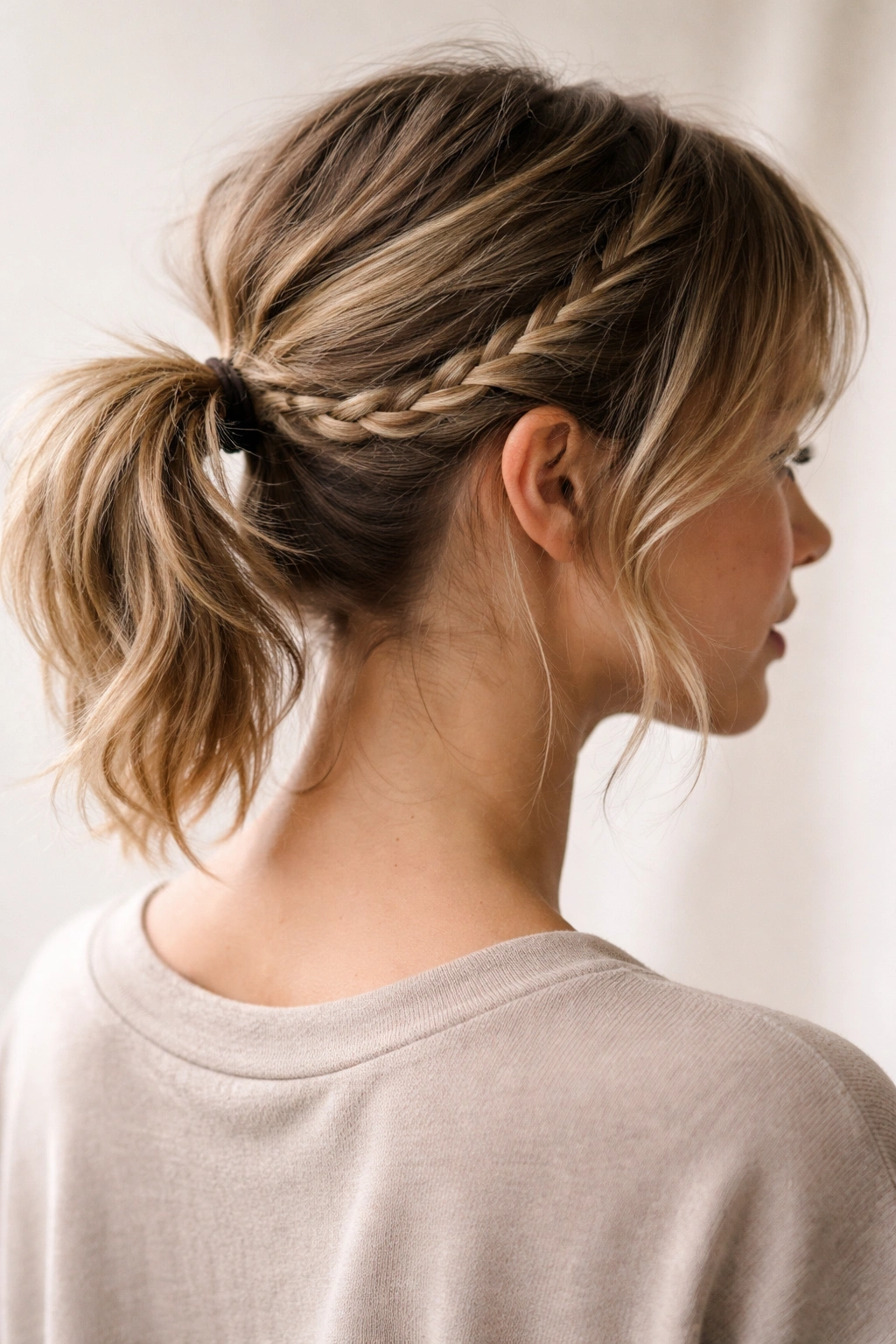
Adding a braid element to your ponytail base creates visual interest and texture without requiring advanced braiding skills. On short hair, this works beautifully because even a small braid reads as intentional and styled, and the messiness comes from keeping everything loose and imperfect rather than tight and precise.
Creating a Simple Base Braid
Before you gather your main ponytail, create a simple three-strand braid using a small section of hair from one side of your head. Start the braid near your temple and braid back toward the crown, using just a small amount of hair — you’re not creating a full side braid, just a thin detail braid. Once you reach the crown, secure the braid with a tiny elastic or bobby pin. Now gather all your hair, including the braid, into a ponytail at the crown. The braid becomes a detail element within the ponytail rather than a separate thing.
Messy Styling Approach
Keep the braid slightly loose and imperfect rather than tight and precise — you want it to read as part of a relaxed style rather than a structured one. Pull the braid gently at its edges to make it look thicker and less neat. Similarly, pull sections of the main ponytail away from the elastic to create volume and softness. The combination of the intentional braid detail and the messy ponytail creates a style that looks both polished and effortless. This is perfect if you want to look like you actually tried without spending time on complex techniques.
Best for: All hair types; works on all face shapes; especially nice on those with medium to thick hair
12. The Flyaway-Forward Pony
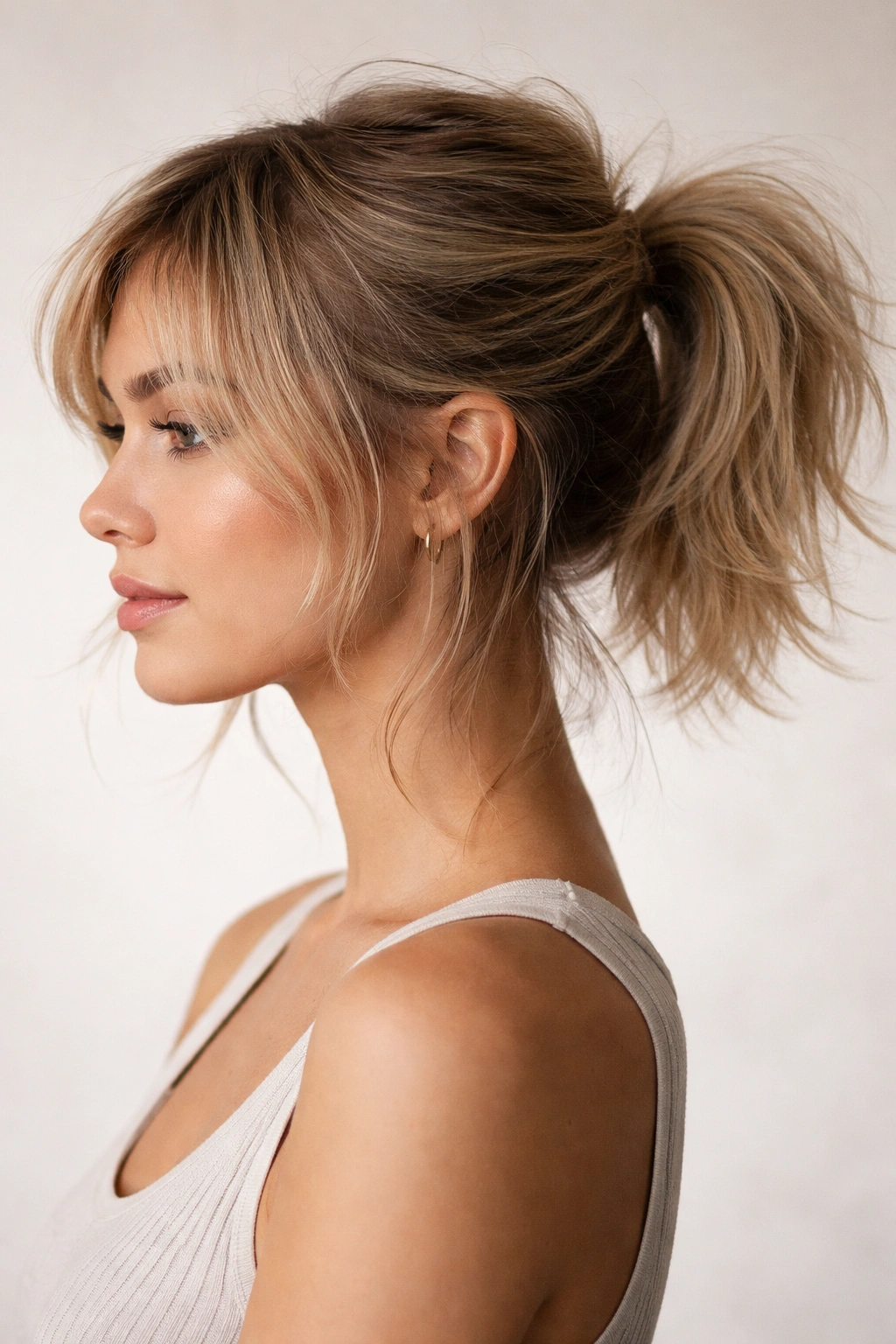
This is the most avant-garde and intentionally undone of the options — it’s a style where the flyaways and loose pieces aren’t accidents or afterthoughts, they’re the entire point. It works on short hair because the shorter length naturally creates more wispy, shorter pieces that you can intentionally position around your face and head. It’s genuinely cool and works best if you’re confident enough to embrace a slightly undone aesthetic.
Creating the Intentional Mess
Start with textured hair — either from your natural texture, from overnight waves, or from styling with a curling iron. Gather your hair into a ponytail, but don’t worry about neatness. Instead, focus on creating intentional wispy pieces around your entire head by gently pulling hair out from the main ponytail section by section. You want flyaways around your temples, at the back of your neck, and even some sticking up slightly at the crown. This should feel deliberate rather than accidental.
Finishing with Intention
Use a flexible hairspray — not a strong-hold product — to set all those intentional flyaways in place without making them look crunchy or stiff. The goal is hold without visible product. Consider slightly tousling the flyaways with your fingers after you’ve sprayed them to keep everything looking natural and not overly styled. This style reads as effortlessly cool on those who wear it with confidence, and it’s genuinely practical because you’re not fighting against your hair’s natural inclination to escape — you’re embracing it as part of the design.
Best for: Textured, wavy, and curly hair; works best on those with a naturally relaxed personal style
Final Thoughts
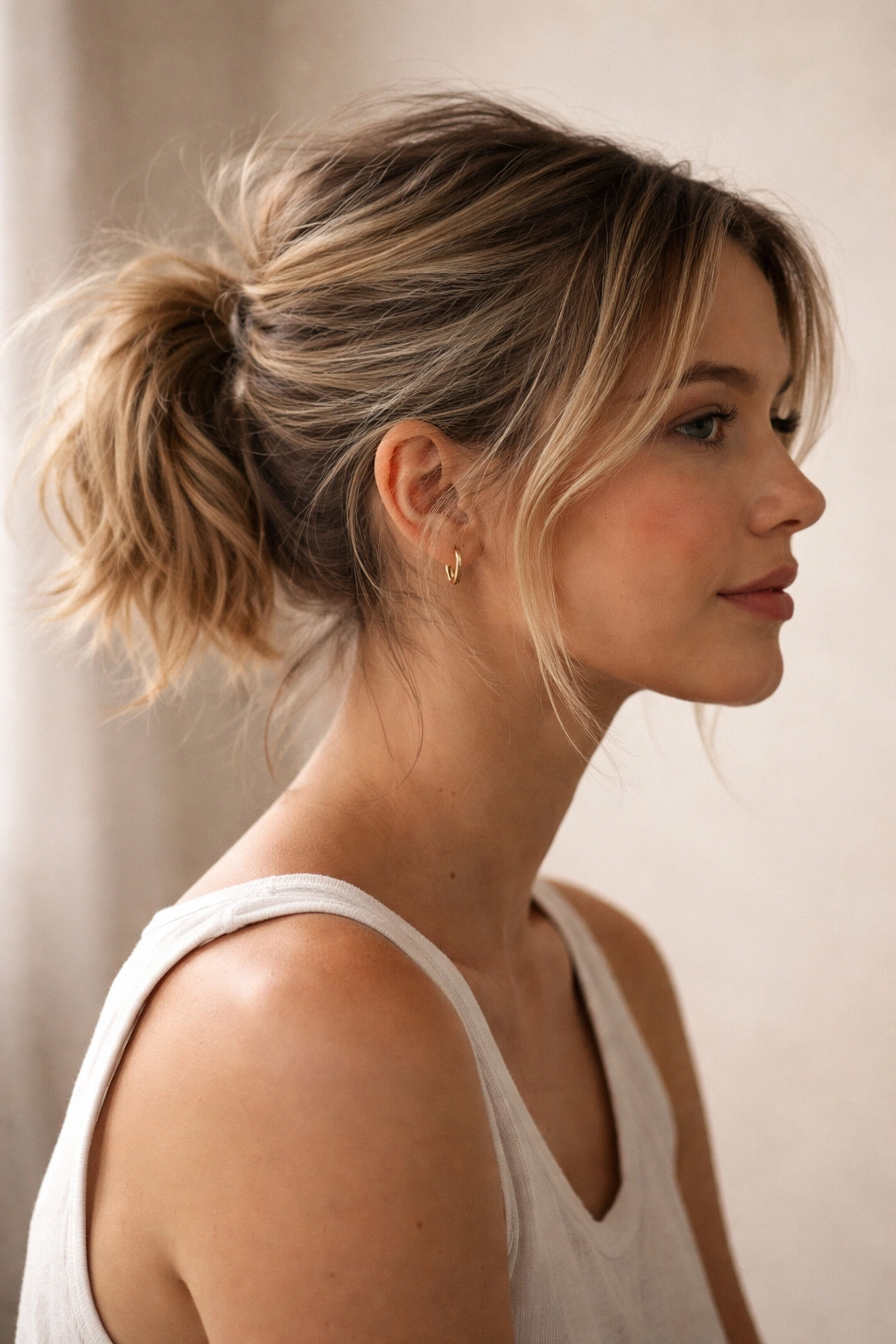
The beauty of a messy ponytail on short hair is that it works with your natural texture and length instead of against them. Whether you’re choosing a high, tousled style for maximum impact, a low textured version for sophistication, or something with intentional detail like twisted sections or braids, the core concept remains the same: embrace imperfection as a feature rather than a bug.
The real secret to mastering any of these styles is understanding that messy doesn’t mean careless. It means intentional softness, strategic placement of flyaways, and confidence in choosing relaxed styling over rigid perfection. Most of these ponytails actually take less time than a sleek, tightly pulled version because you’re not fighting against your hair’s natural texture and inclination to move.
Invest in good texturizing products — a dry shampoo, sea salt spray, or lightweight mousse — and you’ll find that almost any of these styles becomes easier and holds longer throughout your day. The product isn’t about making your hair look dirty; it’s about creating grip and texture that helps everything stay in place without feeling stiff. Start with the styles that feel most natural for your hair type and face shape, then experiment with variations once you’ve found your favorites.