



If you’ve been thinking weave ponytails are only for longer hair, you’re missing out on some genuinely stunning styling possibilities. Short hair and weave extensions work together beautifully when you know the right techniques—and the payoff is impressive. You get instant volume, length, and versatility without committing to permanent changes or waiting months for your hair to grow out.
The beauty of weave ponytails on short hair is how transformative they feel. You can go from a simple everyday look to something dramatically fuller and longer in just 15-20 minutes. The key is understanding which weave installation methods, placement angles, and styling tricks actually work with shorter lengths, rather than fighting against them. Most people assume short hair limits their options, but the truth is shorter hair often grabs weave extensions more securely, which means your ponytail stays put all day.
What makes weave ponytails so practical for short hair is that you control the intensity. You can add subtle length and thickness, or go bold with full, floor-length drama—it’s entirely up to you. The styles below work across different hair textures, face shapes, and occasions. Some are sleek and professional, others are fun and textured, and a few blur the line between casual and statement-making. Whether you’re prepping for a night out, trying to stretch a protective style, or simply experimenting with a new look, there’s a weave ponytail here that’ll work for you.
1. High Sleek Weave Ponytail
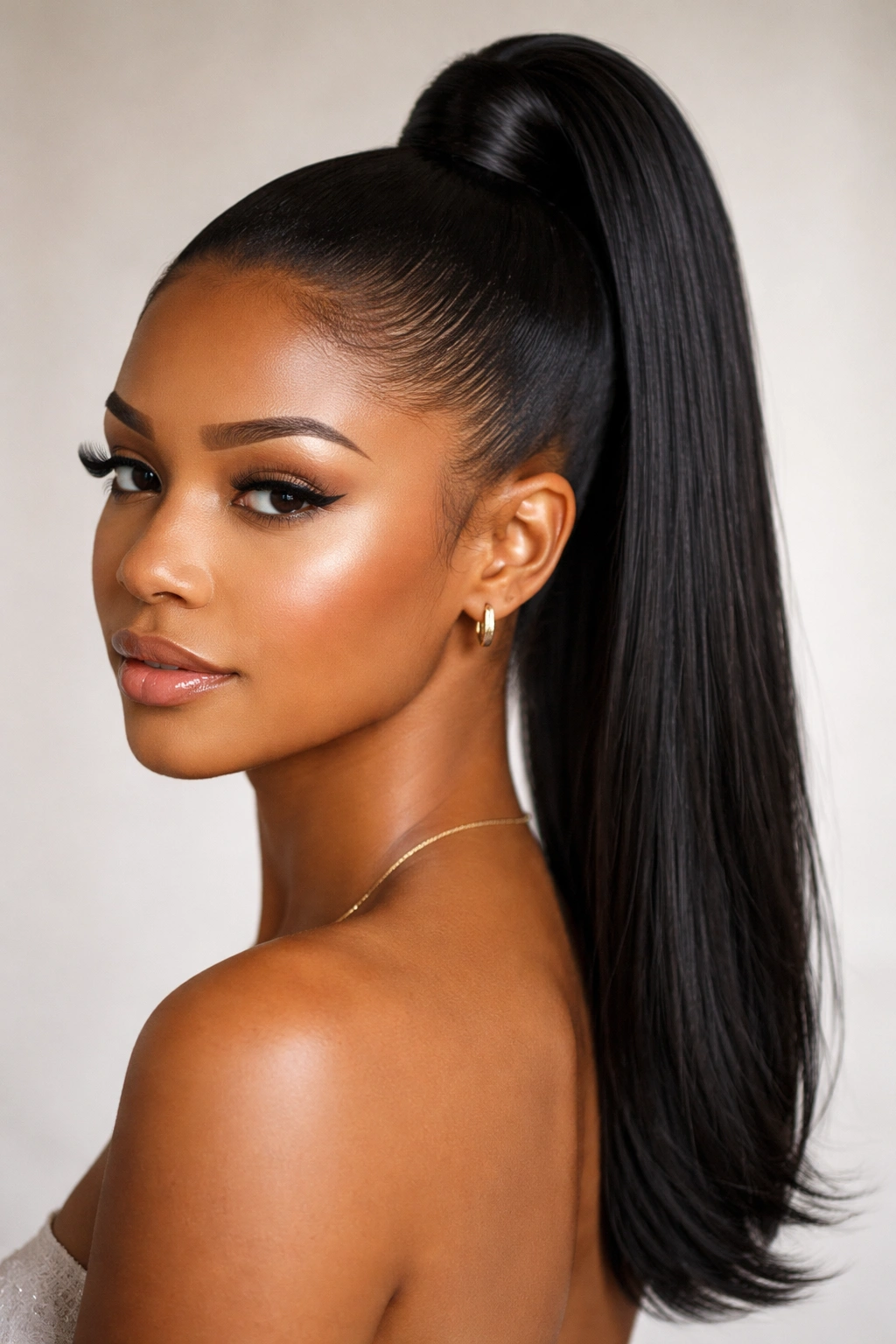
This is the workhorse style—clean, polished, and undeniably flattering. A high sleek weave ponytail sits at the crown, which instantly lifts your face and elongates your neck. The key with short hair is making sure your hair is smoothed back tightly enough that the transition from your natural hair to the weave looks seamless, not like there’s a visible gap where the clip-in or sew-in begins.
Why It Works for Short Hair
Short hair actually makes this style easier to execute than you’d think. Because you have less hair overall, it’s simpler to control and smooth back without flyaways. The weight of the weave pulls everything taut and keeps it in place all day. You won’t experience the sagging or loosening that sometimes happens with longer natural hair supporting heavy extensions.
How to Nail the Look
- Create a clean base by blow-drying your hair straight and smooth, then apply edge control to baby hairs and the hairline
- Use a fine-tooth comb to brush everything back into a high, centered position at the crown
- Secure your natural hair with a small elastic, then attach your clip-in weave ponytail directly over that base
- For a sew-in weave ponytail, cornrow a tight base track where the ponytail will sit, then hand-stitch the weft securely
- Smooth any flyaways with a soft brush and a light spritz of hair spray
- The sleeker you go, the more dramatic the effect—embrace the high shine and clean edges
Pro tip: Attach the weave about half an inch above your natural hair elastic, not directly over it. This creates a subtle cushion that prevents tension on your actual hairline.
2. Textured Weave Pony with Volume
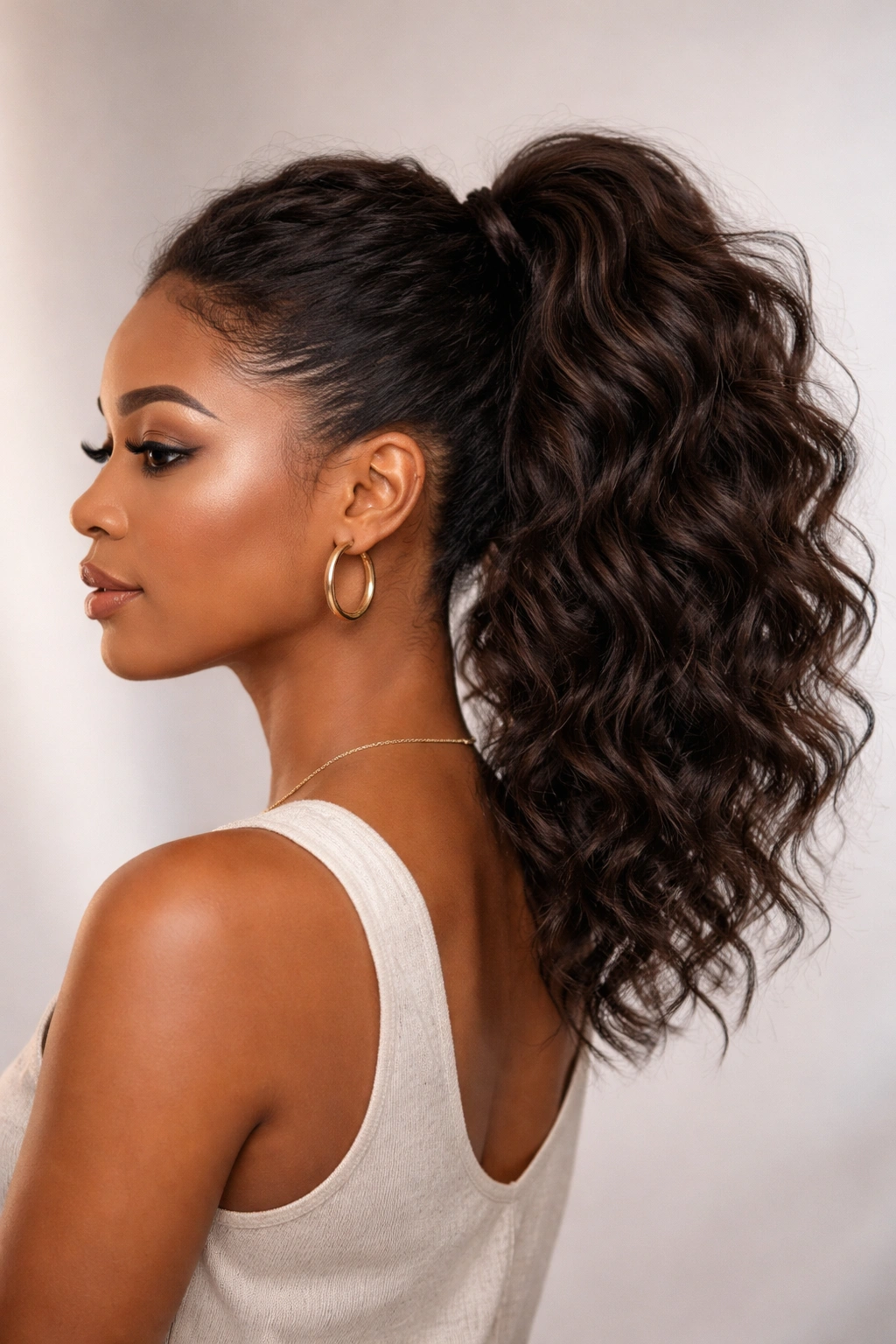
Why go sleek when you can go voluminous? A textured weave ponytail works magic on short hair because it multiplies your visual thickness. The texture catches light differently than smooth strands, making the whole ponytail appear fuller and richer. This style looks intentional and current without requiring a flawless, high-maintenance finish.
Why It Works for Short Hair
Texture is your friend when you’re working with less hair. Wavy, curly, or kinky weave strands create dimension and the illusion of density that you simply can’t achieve with straight lengths on short hair alone. The movement also softens the contrast between where your natural hair ends and the weave begins.
How to Nail the Look
- Start with a medium or high ponytail base—the height depends on your face shape
- Choose a textured weave that matches your natural hair pattern or complement it with a slightly different texture for contrast
- Don’t smooth everything back too tightly; leave a little softness around the face and crown for a lived-in effect
- After attaching the weave, run your fingers through it to separate and fluff the strands
- Use a curl cream or leave-in conditioner on the weave texture to enhance definition and reduce frizz
- You can twist sections of the ponytail, braid small pieces through it, or simply leave it loose and textured
Worth knowing: Textured weave is more forgiving about regrowth than sleek styles. It’s perfect if you want to stretch the time between touch-ups.
3. Braided Weave Ponytail
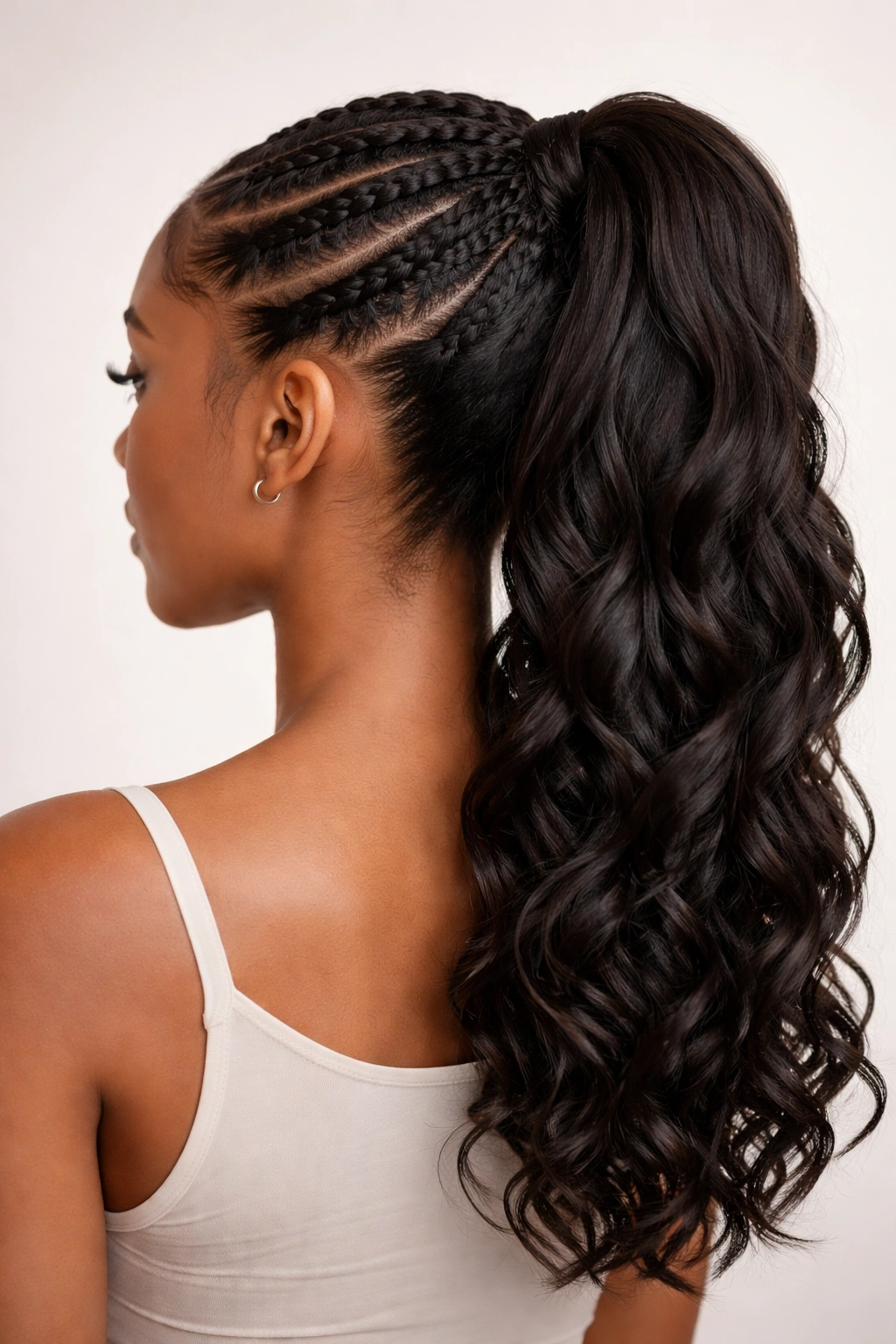
Braids and weave extensions make a powerful combination. A braided weave ponytail gives you extra hold, visual interest, and that “I woke up like this but also spent time on my hair” vibe. On short hair, braiding into your weave ponytail also helps disguise the connection point between your natural hair and extensions.
Why It Works for Short Hair
The braid structure adds grip and security, which matters when your natural hair is short. You’re distributing the weight of the weave across the braided base, reducing tension on any single point. Braids also add an architectural element that makes short hair feel fuller and more deliberately styled.
How to Nail the Look
- Create your ponytail base—gather your natural hair into a high or mid-level ponytail and secure it loosely
- Divide the section into 3 strands and begin braiding down from the base of the ponytail
- As you braid, weave your clip-in extensions into the braid itself, incorporating them as you go
- Braid all the way down to the ends, then wrap thread or a thin elastic around the bottom to secure
- Gently pull on each braid section to loosen and widen the braids for a fuller appearance
- Leave some texture—perfectly tight braids can look too neat for this style
Insider note: Dutch braids (braiding underneath rather than over the strands) create a bolder, more dimensional look than regular three-strand braids.
4. Half-Up Weave Pony
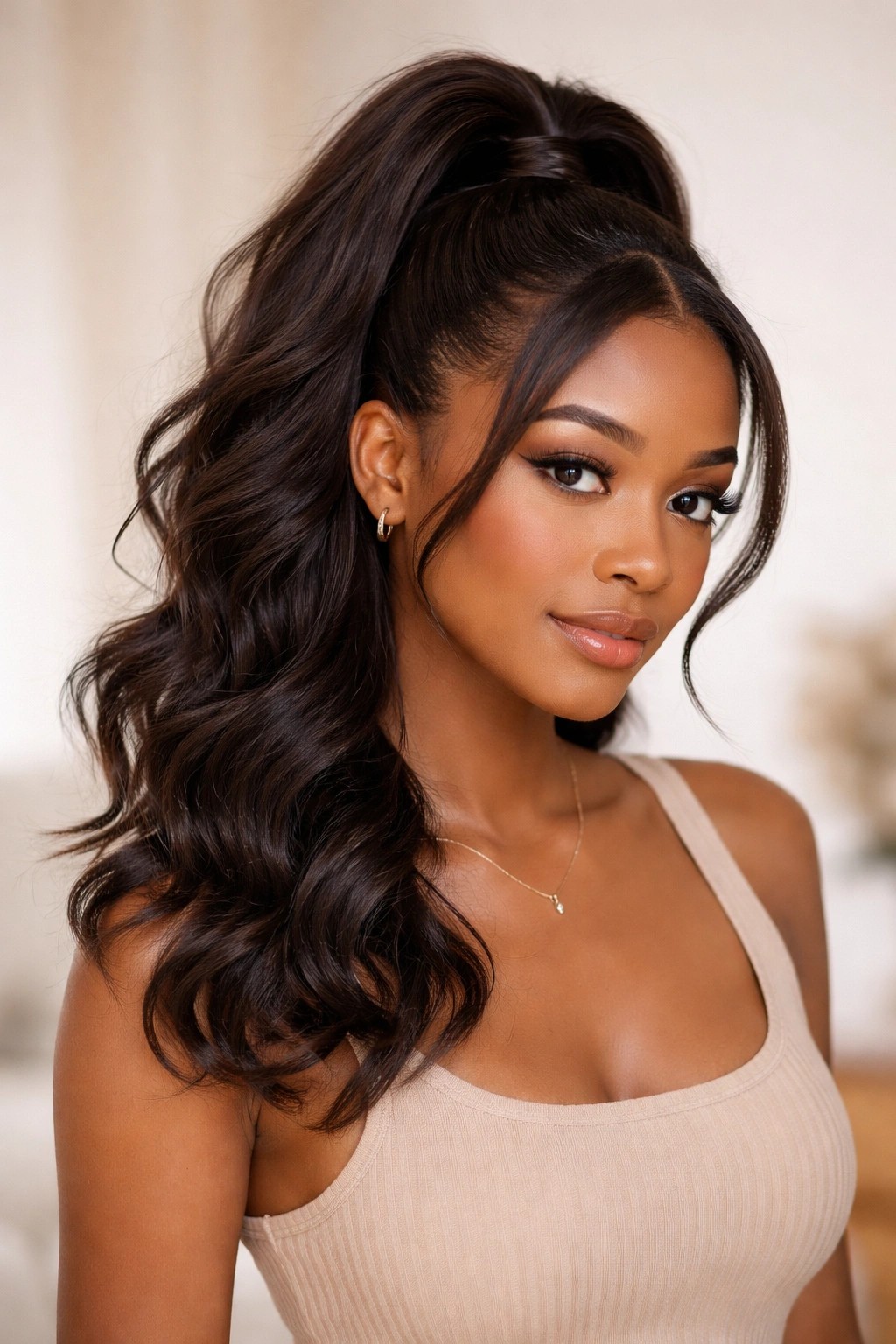
Sometimes less is more, and a half-up weave ponytail proves it. This style keeps some of your natural hair down while gathering the top half (plus weave extensions) into a ponytail. It’s versatile enough for casual settings but polished enough for work or events. The half-up approach also reduces the amount of weave you need, which makes it budget-friendly.
Why It Works for Short Hair
A half-up style with weave doesn’t force all your short hair into one tight pull. Instead, it blends your natural texture with the extensions in a way that looks intentional rather than compensatory. You get the volume and length boost without that obvious “I’m wearing a ponytail” declaration.
How to Nail the Look
- Section off the top half of your hair (imagine a line from ear to ear across the top of your head)
- Blow-dry or style the bottom half however you like—straight, wavy, textured, whatever suits your mood
- Smooth the top half back and gather it into a loose ponytail at the back of your crown
- Attach your weave extensions to this upper ponytail base
- Let the weave blend naturally with the bottom section of your hair
- You can smooth the top half sleek or leave texture throughout, depending on the vibe you want
Pro tip: Tease the crown a little before smoothing the top section back. This creates a subtle poof at the top that catches light and adds dimension.
5. Curled Weave Ponytail
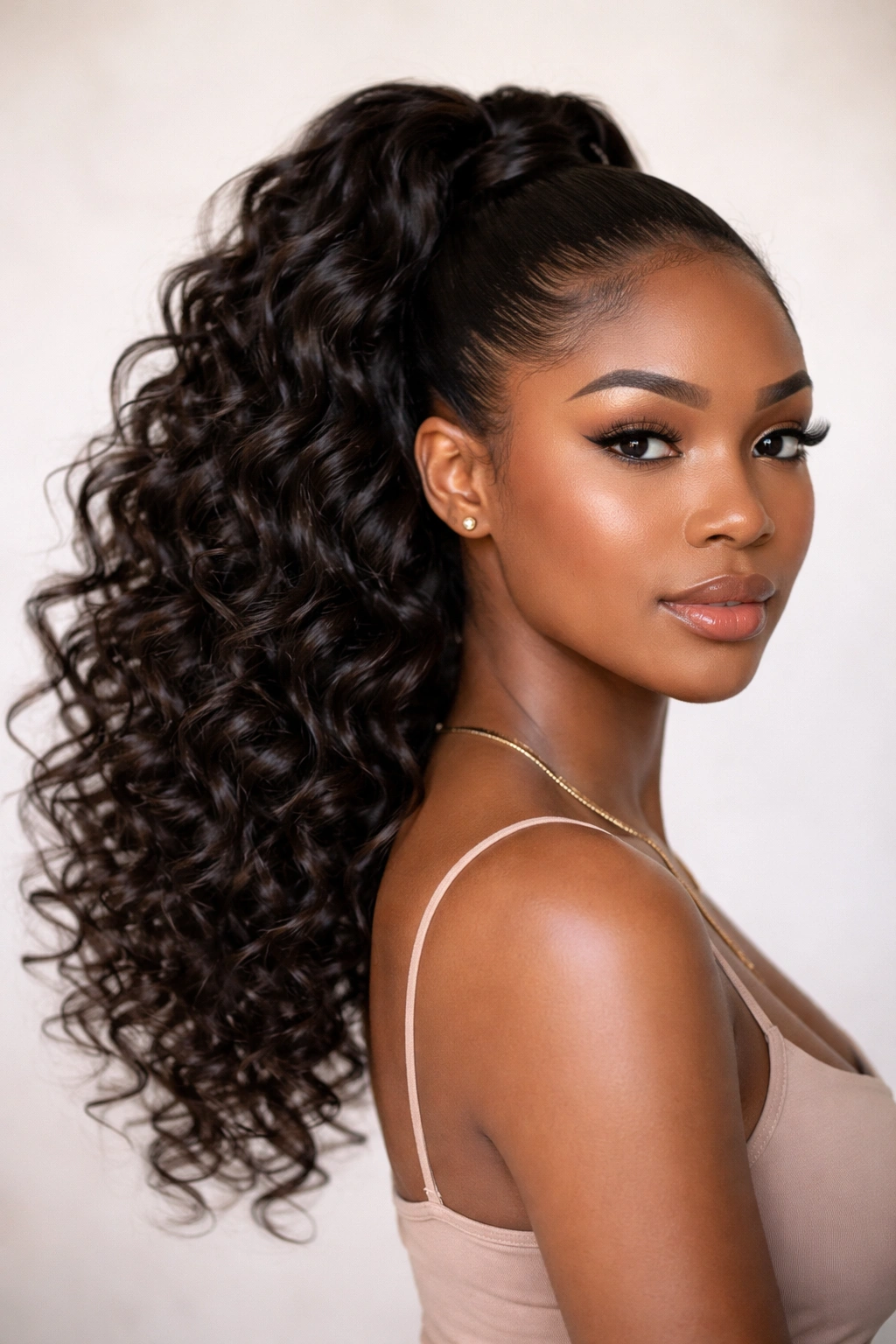
Curls make everything feel fresher and more intentional. A curled weave ponytail on short hair creates that enviable “I have long, thick, curly hair” effect without the years of growth or daily styling time. The curls add volume visually and help camouflage the point where your natural hair ends and the weave begins.
Why It Works for Short Hair
Curls are incredibly forgiving with ponytails, especially when your natural hair is short. The curl pattern bounces the weave away from your head, making it appear fuller and more voluminous than it actually is. Curls also work beautifully across multiple hair textures—whether you have straight, wavy, or coily natural hair, curled weave extensions complement them all.
How to Nail the Look
- Create your ponytail base at whatever height feels right for you—high, mid, or low all work with curls
- Attach your straight or wavy weave, then curl it using a curling iron, wand, or braiding method (braid damp hair overnight)
- Start curling from the middle of the weave lengths and work down; avoid curling the very top where it connects to your natural hair
- Use different curl sizes within the same ponytail for dimension—some loose waves, some tighter spirals, some in between
- Don’t brush the curls out afterward; instead, use your fingers to separate and define them
- A light spritz of flexible hold hairspray keeps everything in place without hardening the curls
Worth knowing: Curled weave holds better than straight weave on a short hair base. The weight is distributed across the curl pattern, so it doesn’t all pull down in one direction.
6. Side Weave Ponytail
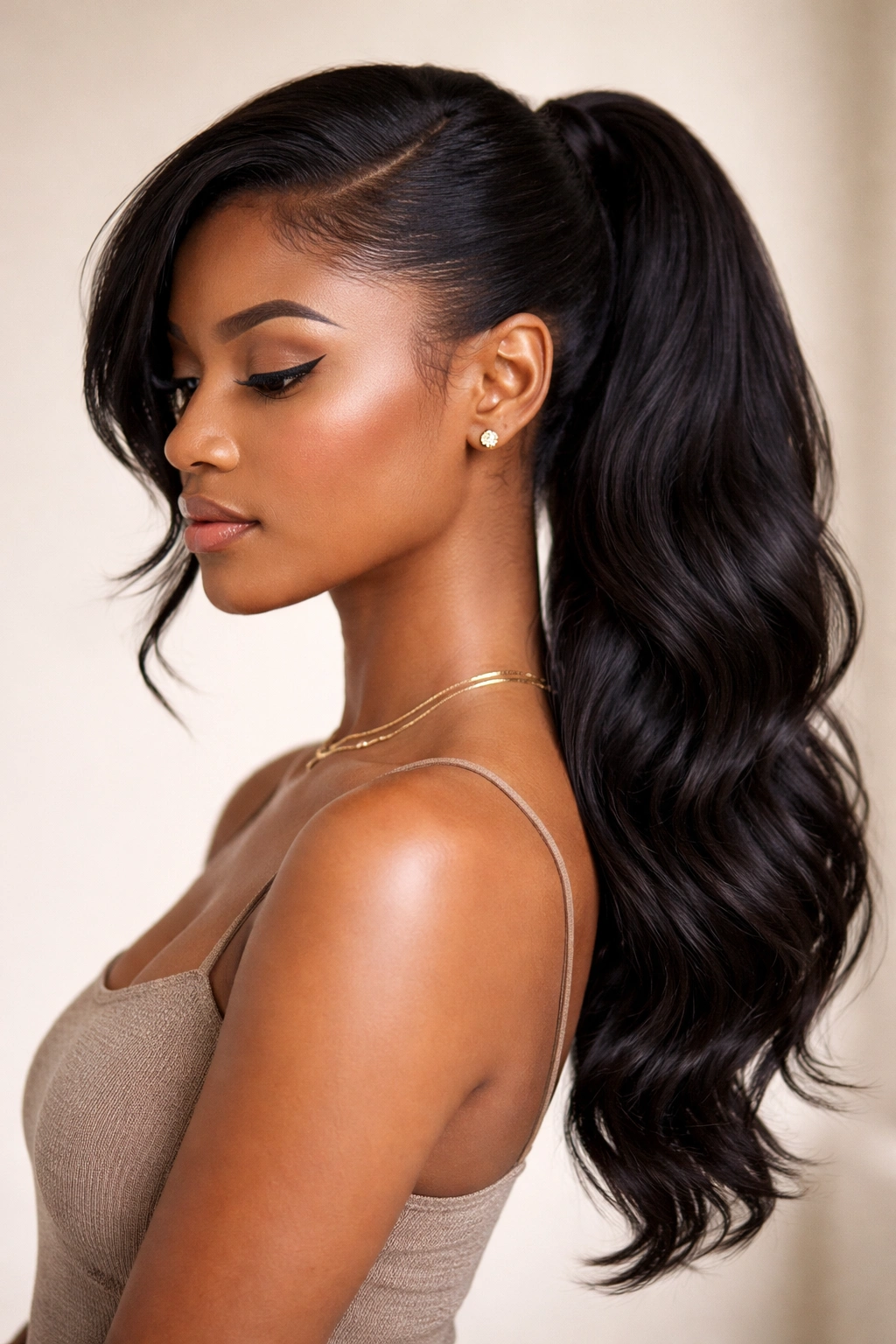
There’s something inherently flattering about a side ponytail. It draws the eye diagonally across your face, which is naturally more interesting than straight vertical lines. A side weave ponytail on short hair feels sophisticated and slightly editorial—like you’re channeling a runway look but making it work in real life.
Why It Works for Short Hair
Side ponytails actually make short hair look longer because the visual line sweeps sideways rather than straight down. The weave hangs at an angle, catching light differently and appearing fuller than it would in a centered ponytail. Side placement also works beautifully with short hair because you’re not trying to contain everything in a tiny high knot.
How to Nail the Look
- Create a deep side part on one side of your head
- Brush all your hair toward the opposite side, gathering it near the back of your ear (still to the side, not centered at the nape)
- Secure your natural hair with an elastic, then attach your weave ponytail over that base
- The weave should hang down along the side of your neck, creating a long diagonal line
- You can smooth it sleek, texture it, curl it, or even braid sections into it—the side placement works with all these variations
- For extra dimension, tease gently at the crown and let some face-framing pieces fall loose
Pro tip: Accessorize the opposite side of your face with an earring or clip. The off-center ponytail creates natural balance when you draw attention to the other side.
7. Layered Weave Pony
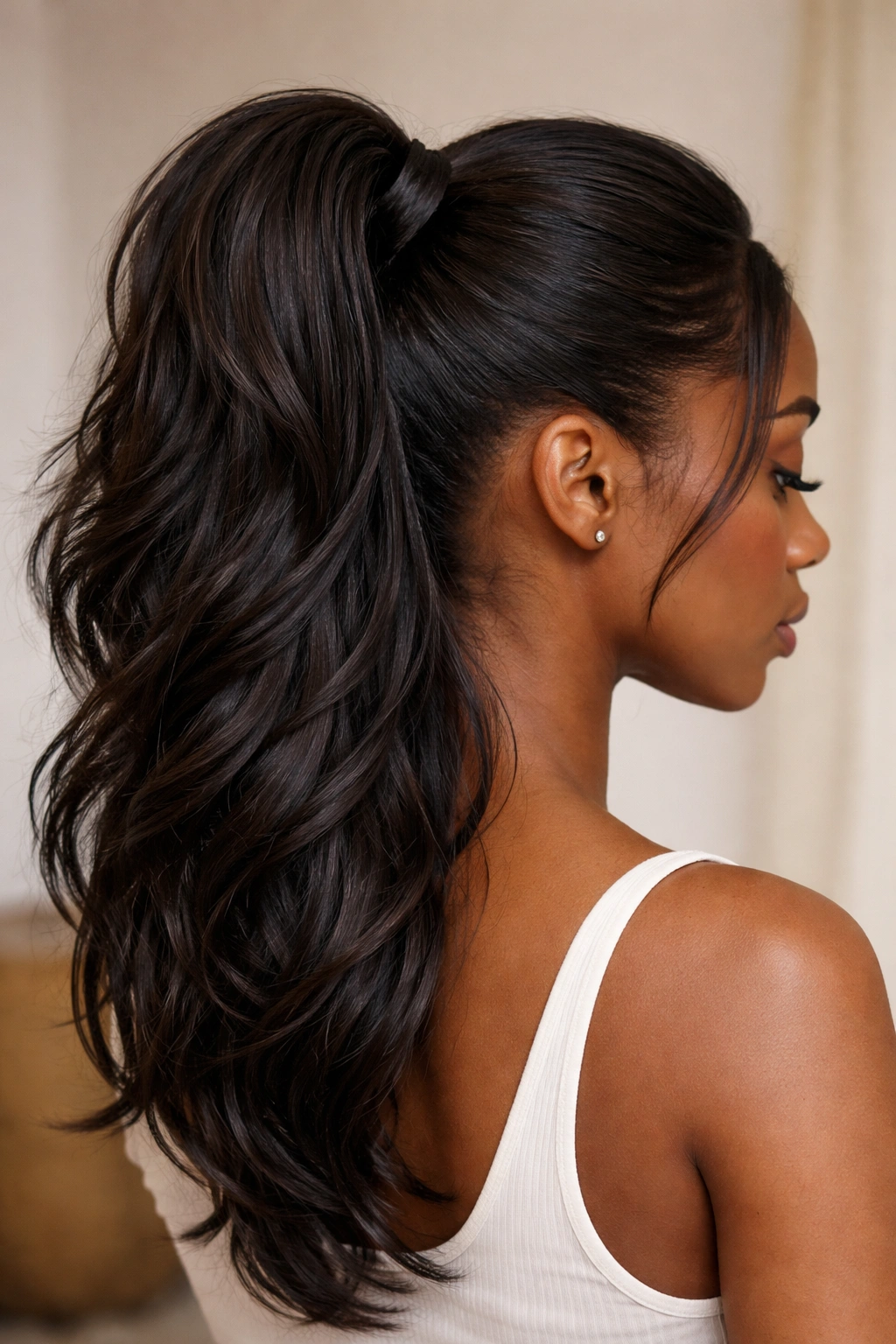
Layers create depth and movement. A layered weave ponytail sounds complicated but it’s actually a brilliant solution for short hair. You’re using multiple weave pieces of different lengths, which creates the illusion of incredibly thick, multi-dimensional hair. Layers also help the weave blend with your natural shorter lengths more smoothly.
Why It Works for Short Hair
Because you’re working with short natural hair, layering the weave around it rather than just adding length helps everything feel cohesive. You get volume at the crown where your natural hair is thickest, longer lengths underneath, and the whole ponytail appears intentionally styled rather than obviously extended.
How to Nail the Look
- Create your ponytail base at the crown or mid-level depending on face shape
- Attach a shorter, thicker weave piece first—this becomes your base layer and should be close in length to your natural hair or just slightly longer
- Layer a longer weave piece on top of that, creating a visible length difference
- You can add a third, even longer layer for extra drama if you want dramatic, multi-tiered length
- Smooth or texturize as you prefer, but let the layers show—don’t blend them into one uniform look
- Tease gently between layers to enhance the dimensional effect
Insider note: This style is perfect if you’re trying to ease yourself into longer weave. You’re not committing to floor-length extensions; instead, you’re building length gradually with layers.
8. Wrapped Base Weave Ponytail
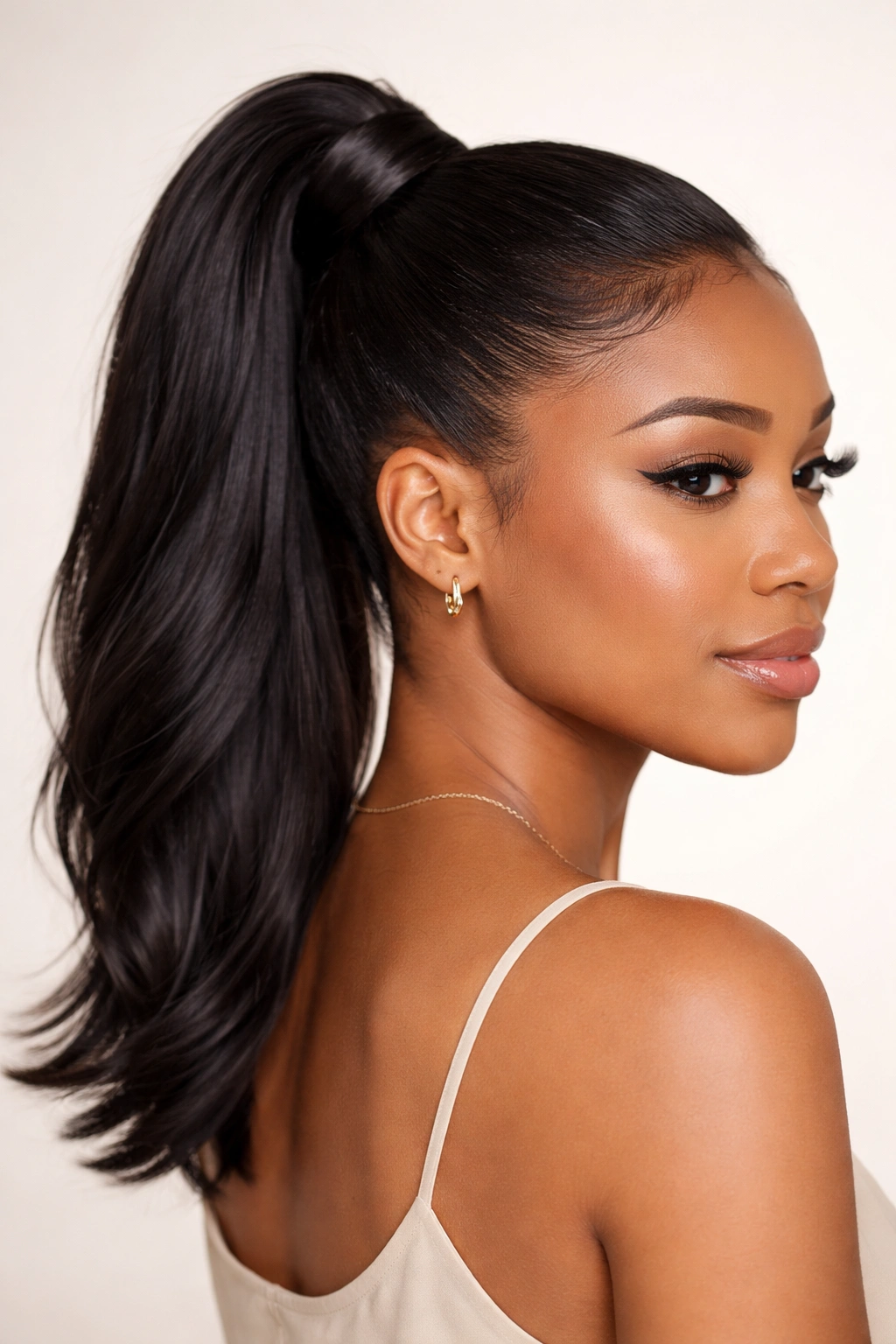
The details matter, and a wrapped base transforms a simple ponytail into something intentional and polished. Wrapping the base of your ponytail with a small section of hair (either your own or part of the weave) covers the elastic and connection point. It’s a tiny detail that makes a massive difference in how finished and professional the style looks.
Why It Works for Short Hair
When you’re working with short hair, hiding where your natural hair ends and the weave begins is key to making the style look intentional rather than obvious. A wrapped base does exactly that. It also adds a small visual anchor point that draws attention to the overall shape of the ponytail rather than the mechanics of how it’s constructed.
How to Nail the Look
- Create your standard high, mid, or low ponytail base
- Attach your weave ponytail as usual
- Take a small, thin section from the underside of the ponytail (about ½ inch wide)
- Wrap this section around the base of the ponytail where the elastic is, covering it completely
- Secure the wrapped section with a small bobby pin tucked underneath so it’s invisible
- Alternatively, use a decorative cuff, silk scrunchie, or hair jewelry to wrap the base—this adds a stylistic element beyond just concealment
- The wrapped section should be tight enough to look intentional but not so tight that it creates tension
Pro tip: Use a weave section that exactly matches your natural hair color for the wrap. If you can’t cut a piece from your weave, use a small section of your own hair from underneath the ponytail.
9. Ponytail with Frontal Weave Framing
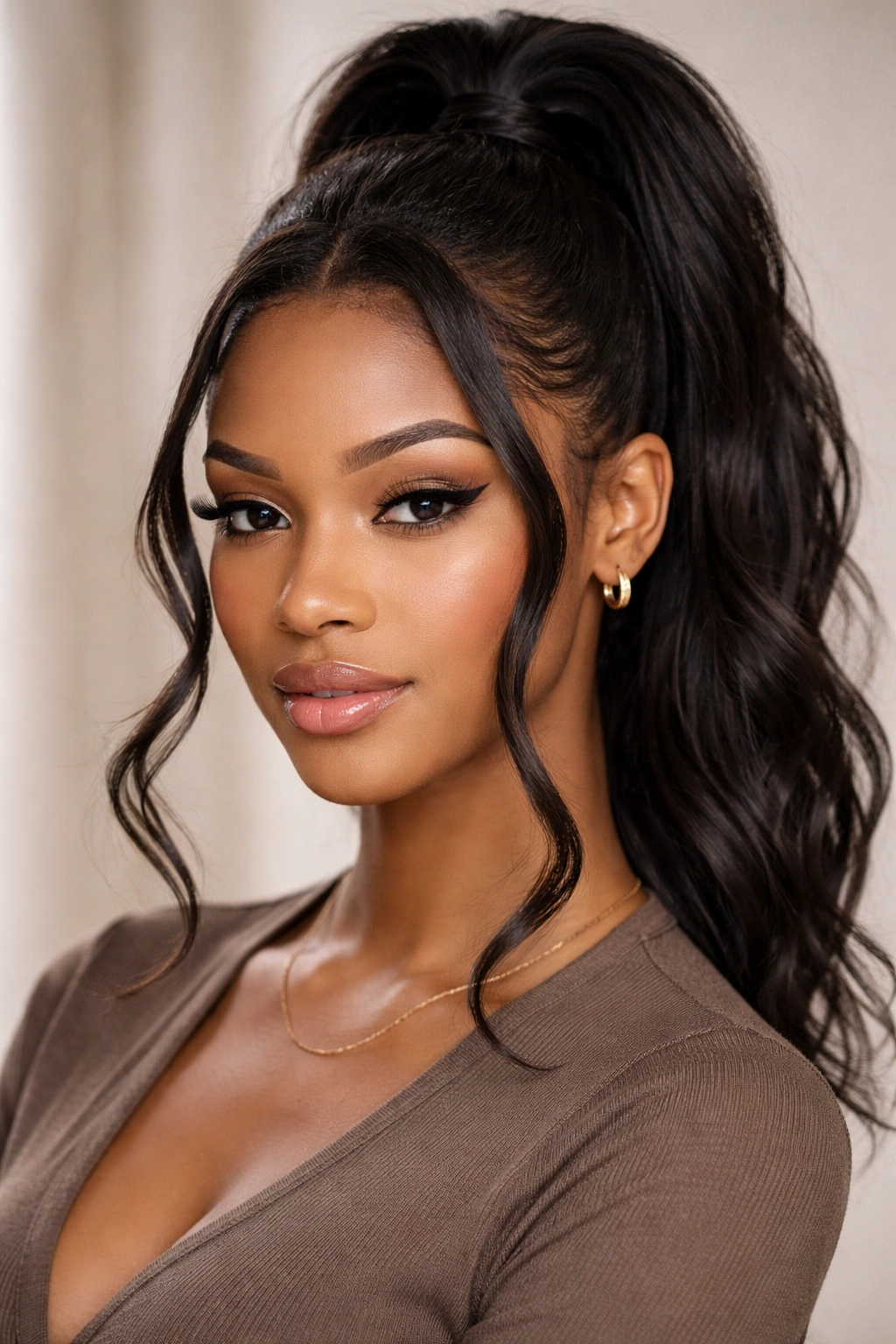
This style keeps some length around your face while the majority of your hair is gathered into a ponytail. It’s the perfect balance between a full weave ponytail and keeping some natural texture visible. The face-framing pieces make this style feel softer and less severe than a traditional pulled-back ponytail.
Why It Works for Short Hair
Face-framing pieces are incredibly flattering, and they help break up the visual weight of a ponytail on someone with short hair. You’re creating a layered look that feels intentional and styled rather than like you just tied your hair back. The loose pieces also help blend your short natural hair with longer weave extensions more gracefully.
How to Nail the Look
- Before creating your ponytail, decide how much framing you want—some people do just two small pieces near the face, while others frame more generously
- Section off small pieces on each side of your face and set them aside
- Create your ponytail base behind those sections, gathering the rest of your hair
- Attach your weave ponytail as usual
- Style the face-framing pieces however you like—soft waves, loose curls, straight and sleek, or textured
- These pieces can be longer or shorter than the main ponytail, creating intentional asymmetry
- Use a light hold product on the framing pieces so they don’t completely fall flat or get lost
Worth knowing: This style is ideal if you have a longer face shape. The horizontal lines created by the face-framing pieces balance longer face proportions beautifully.
10. Bubble Weave Ponytail
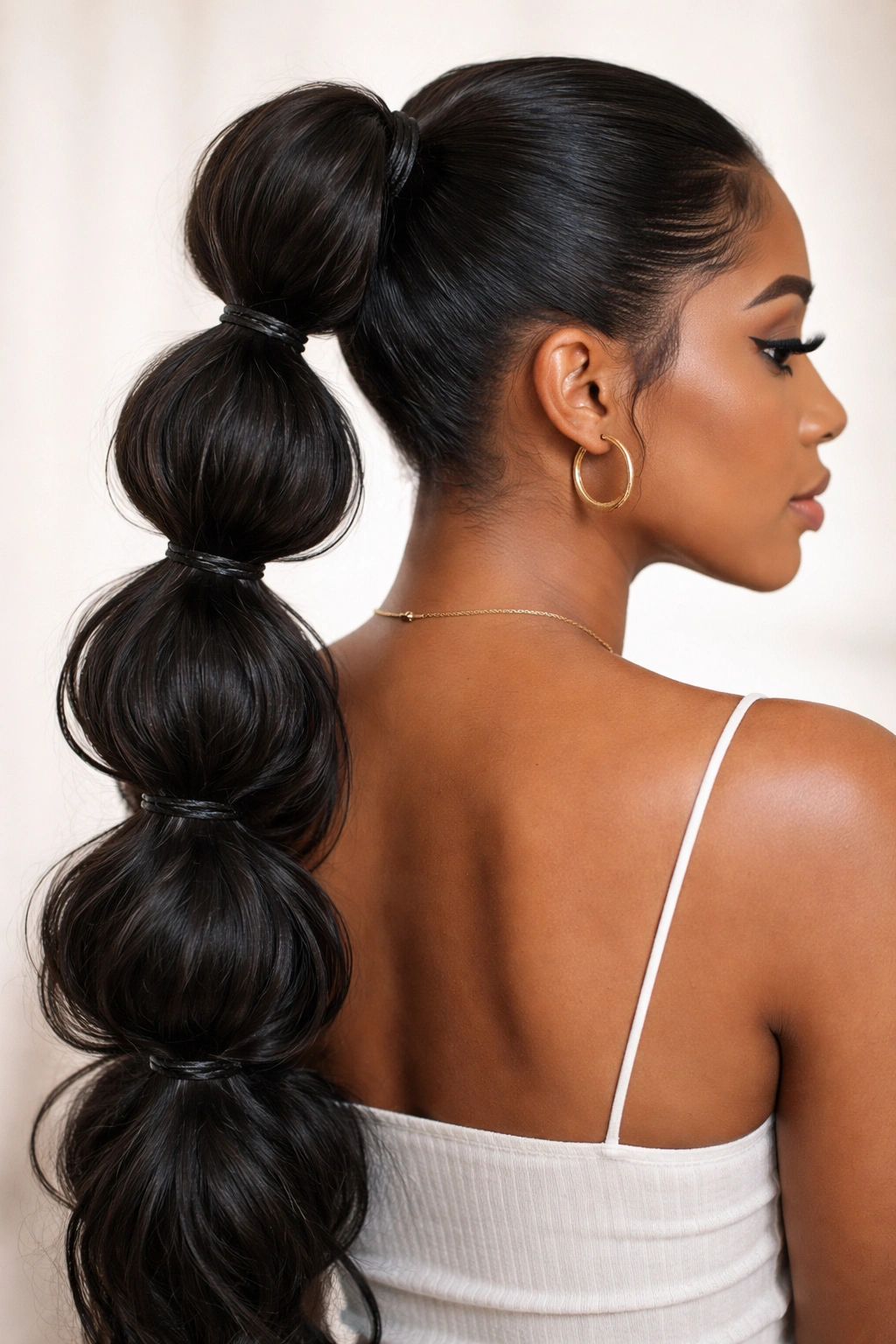
Bubble ponytails are playful, modern, and surprisingly easy to execute with weave extensions. You’re creating multiple sections within the ponytail, each separated by an elastic, which creates a stacked bubble effect. On short hair, this style adds visual interest and makes your weave appear fuller because the bubbles create dimension and movement.
Why It Works for Short Hair
The bubble structure is pure visual magic. By sectioning the ponytail and creating distinct bulges, you’re multiplying the perceived volume. What might look like a regular amount of weave on short hair suddenly feels thick and dramatic when you add the bubble technique. It’s also surprisingly easy to maintain—you can re-cinch the bubbles if they loosen throughout the day.
How to Nail the Look
- Create your ponytail base and attach your weave extension as you normally would
- Starting about 2 inches below where the weave attaches, place a small elastic around the ponytail
- Gently pull and tease the hair above that elastic to create the first bubble bulge
- Move down another 2-3 inches and place a second elastic
- Pull and tease again to create the second bubble
- Continue this pattern all the way down the ponytail—typically 3-5 bubbles work well depending on ponytail length
- You can keep the bubbles uniform or vary them slightly for a more organic look
- Curl or texture the ponytail ends for extra dimension, or leave them straight depending on your style preference
Pro tip: Use clear or matching-colored elastics so they blend in and don’t break up the line of the ponytail visually.
11. Cornrow to Weave Ponytail
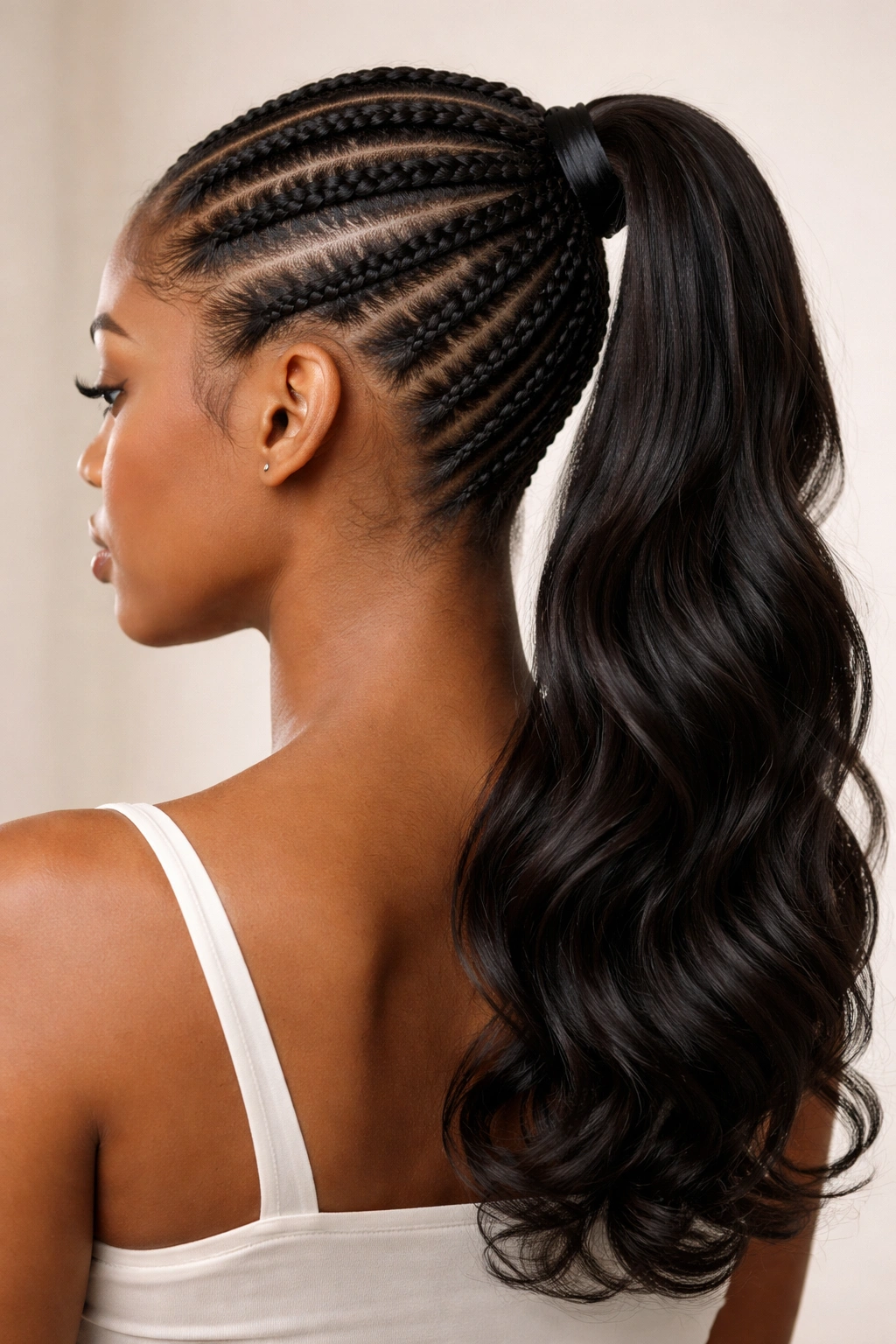
This style combines the security of cornrows with the length and volume of weave extensions. You’re braiding your natural short hair into cornrows, then attaching weave extensions at the end where the braids finish. This creates a sleek, intricate look that’s secure enough for active lifestyles while giving you the ponytail length and fullness you want.
Why It Works for Short Hair
Cornrows grip your short hair securely, which means your ponytail won’t slip or loosen even with movement. The braided detail also makes the style look intentional and intricate—it’s not just “I tied my hair back,” it’s an actual design. Cornrows also help blend your natural short hair with the weave because the texture and pattern of the braids create a visual transition.
How to Nail the Look
- Plan your cornrow pattern before you start. You can do one cornrow straight back to the nape, two cornrows for a split center, or multiple smaller braids that all converge at the ponytail point
- Section and braid your natural hair into tight, even cornrows
- Braid all the way down to the nape of your neck, then secure each braid with a small elastic
- Gather all the braids together at the nape (or at your preferred ponytail height if you want a higher placement)
- Attach your weave ponytail to this gathered braid base
- The braids become the foundation, and the weave extends from there
- You can leave the braids as they are or gently loosen them slightly for a fuller look
Insider note: Hand-stitching your weave to the cornrow base gives you the most secure hold. Clip-ins work too, but sew-ins are more stable for this particular style.
12. Low Twisted Weave Ponytail
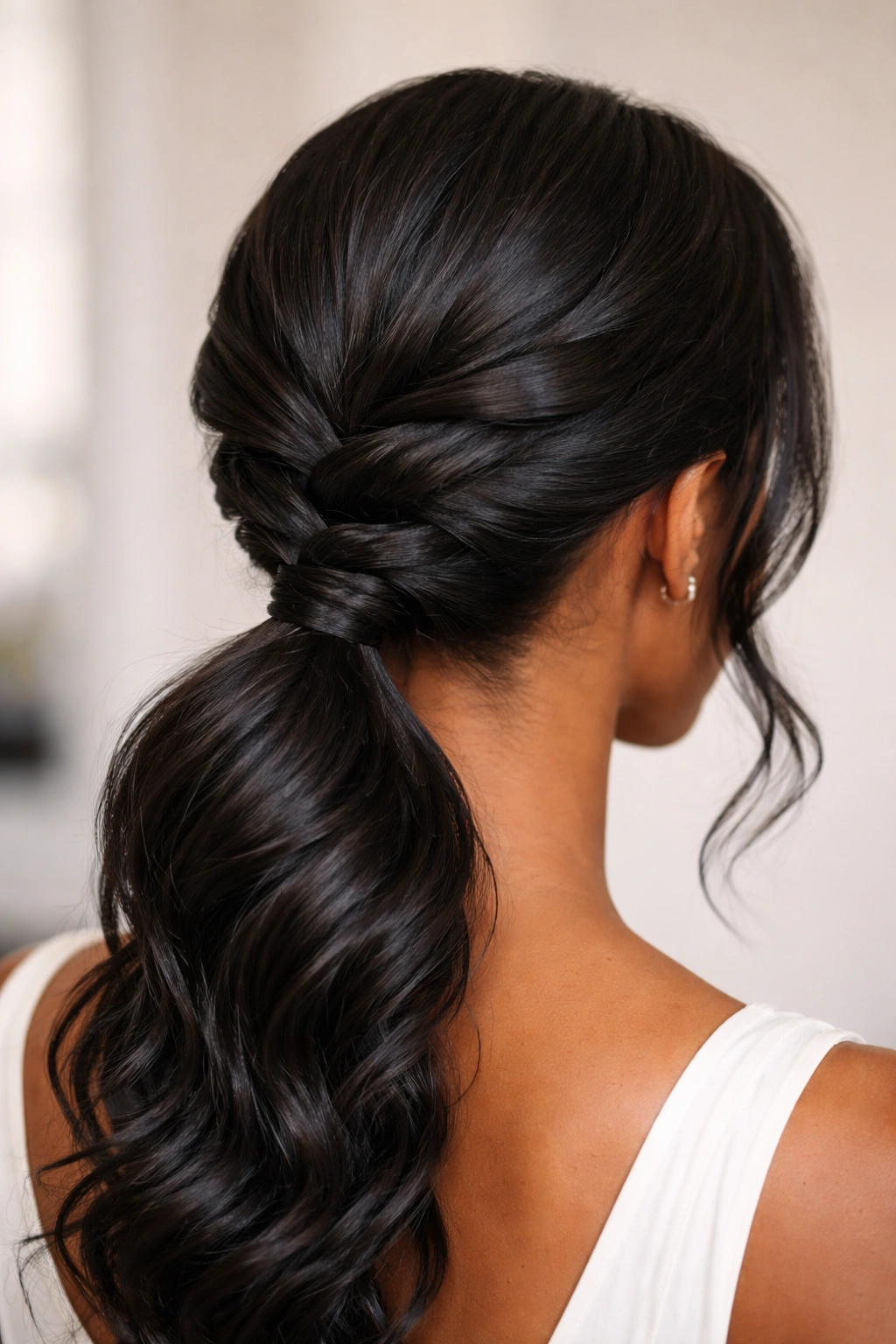
A low twisted ponytail is effortlessly elegant. Rather than a standard straight ponytail, you’re twisting sections of your hair and weave together as you gather them back. The twisting adds visual interest, creates texture, and makes the style feel more purposeful than a basic pulled-back pony. This style reads polished and put-together without looking overly done.
Why It Works for Short Hair
Twists add volume and visual interest to short hair in a way that a simple straight ponytail can’t. The twisted sections create dimension, catch light differently, and make the weave appear thicker. Twists also help blend your natural hair with the extensions because the twisting pattern creates a unified visual line from your head to the ponytail ends.
How to Nail the Look
- Gather your hair loosely toward the back and low on your head—this placement is key to the style
- Divide the gathered section into 2-4 subsections depending on how thick you want the twist to be
- Take the first subsection and twist it clockwise all the way down
- Take the second subsection and twist it counterclockwise
- Repeat the alternating direction pattern with any additional subsections
- Gather all the twists together and secure with an elastic
- Attach your weave ponytail to this twisted base
- You can add weave lengths to the individual twists before gathering them, or attach one unified ponytail length at the base—both approaches work beautifully
- Gently loosen the twists slightly to create a fuller appearance, but keep them defined enough that the pattern is visible
Pro tip: This style looks especially good when paired with soft, romantic curls at the ends of the weave. The contrast between the structured twists at the top and loose waves at the bottom is visually stunning.
Final Thoughts
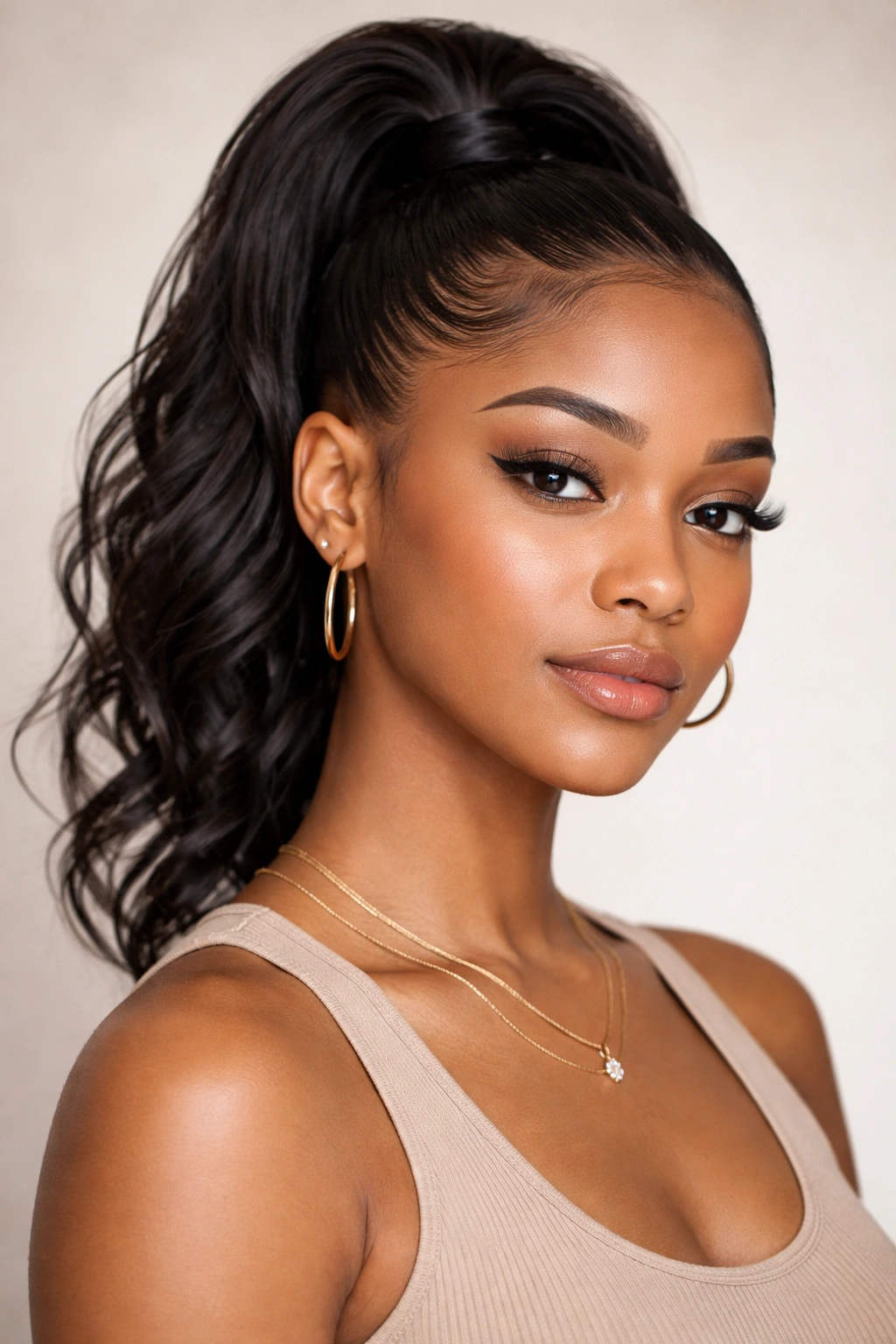
Weave ponytails on short hair aren’t a compromise—they’re an entirely different category of styling possibility. You get to experiment with length and volume on your own timeline, which removes a lot of the pressure and commitment of growing your hair out the traditional way. The styles above range from sleek and professional to textured and playful, which means there’s genuinely something here for every occasion, mood, and personal style.
The best part about short hair and weave extensions together is that they’re actually quite secure when installed correctly. Your shorter natural hair grabs the extensions well, and most of these styles won’t loosen or shift throughout a full day. Start with whatever style feels most like you, and don’t be afraid to experiment once you get comfortable with the basic installation process. Weave ponytails are incredibly forgiving—you can try multiple looks with the same extensions just by changing how you style, twist, or braid them.
