



Long curly ponytails are a stunning way to showcase the natural texture and versatility of Black hair while keeping strands off your face and neck. Whether you’re rocking coils, waves, kinks, or coily patterns, a well-executed long curly ponytail can elevate your look from casual to polished in minutes. The beauty of this hairstyle lies in how it celebrates your hair’s natural texture rather than fighting against it—these aren’t sleek, straight ponytails, but rather protective styles that work with your curl pattern to create volume, movement, and dimension.
The right long curly ponytail can be your go-to for everything from work meetings and date nights to casual weekends and gym sessions. What makes a curly ponytail work beautifully for Black women is understanding how to gather, secure, and style textured hair in ways that define the curls, minimize breakage, and actually last longer than a day or two. It’s not just about pulling hair back—it’s about creating structure, enhancing curl definition, and achieving that effortless-looking softness that keeps heads turning.
Long curly ponytails also offer significant protective benefits. By keeping the ends secured and elevated away from shoulders and clothing, you reduce friction-related damage and breakage. The ends of long hair are the oldest part of your hair and deserve protection, and a well-maintained curly ponytail accomplishes exactly that while looking absolutely gorgeous doing it.
Ready to discover exactly which curly ponytail styles will work best for your hair texture, lifestyle, and personal style? Let’s explore 12 stunning approaches that Black women are wearing right now to keep their curls healthy, beautiful, and thriving.
1. The High, Defined Coil Ponytail
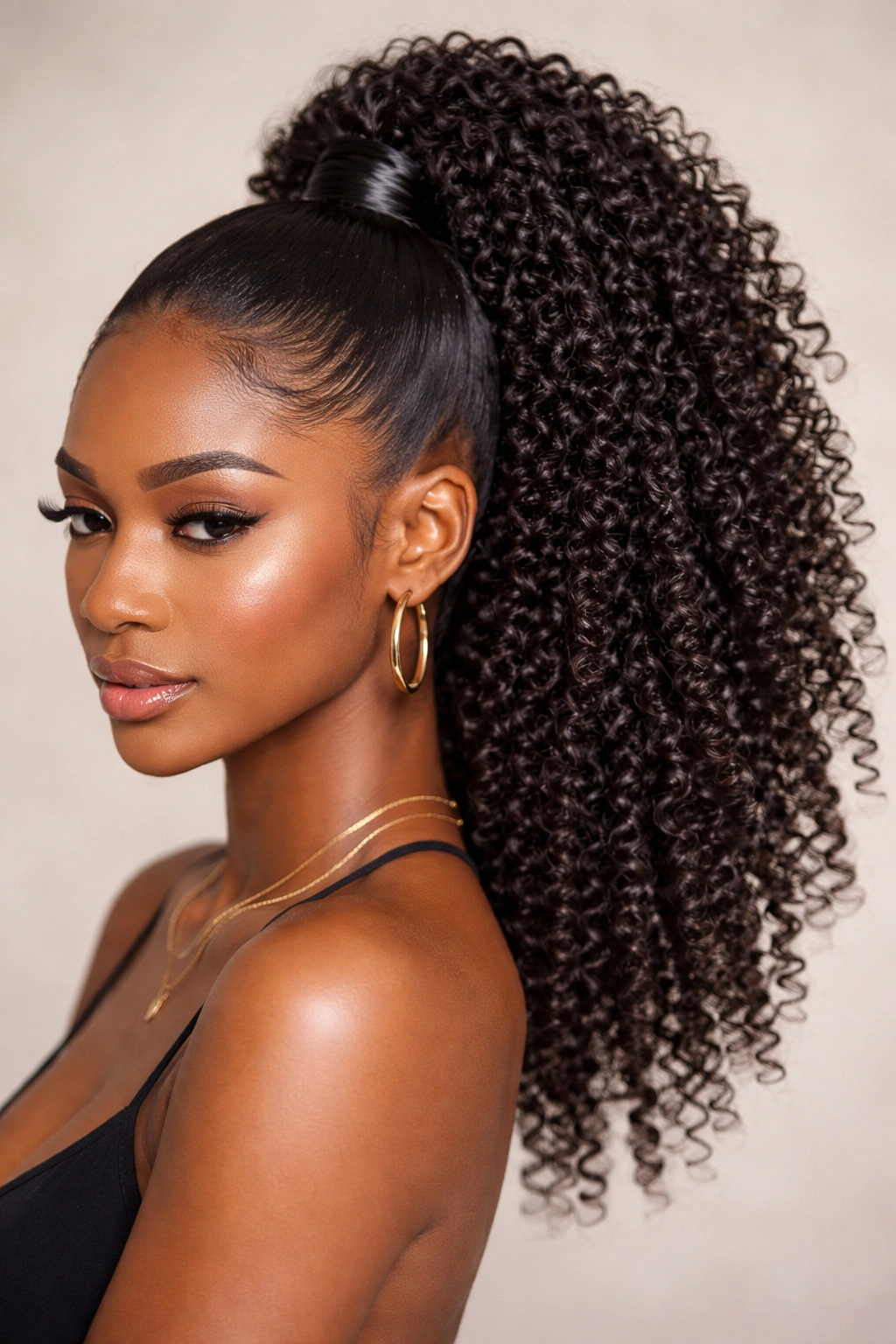
This is the signature look that celebrates tight coils in all their glory—pulling hair straight up and back into a high position that draws attention to your face and neck. The defining feature here is the way each coil remains distinct and separated rather than blended together, creating a striking dimensional effect from scalp to ends. You achieve this by using a moisturizing cream or gel that defines individual coils without flattening them or creating crunch.
Why This Style Commands Attention
The high coil ponytail works because it uses gravity and strategic product placement to showcase the natural spring and bounce of tightly coiled texture. When positioned high, the coils fan out slightly at the crown, creating an illusion of fuller, thicker hair. The style is timelessly elegant yet requires virtually no heat styling or manipulation beyond gathering and securing.
How to Perfect It
- Use a lightweight leave-in conditioner as your base product, applying to damp or freshly misted hair
- Brush through hair gently with a wide-tooth comb or paddle brush to detangle without stretching coils
- Gather hair at the crown into a high position and secure with a silk-lined hair tie (never rubber bands—they cause breakage)
- Apply a curl-defining cream or gel to the gathered ponytail, scrunching gently upward to reactivate coil pattern
- Let hair air dry completely or use a low-heat diffuser for faster drying while maintaining definition
- Finish with a flexible-hold product to tame flyaways without creating stiffness
Pro tip: If you’re starting from a stretched-out style, refresh your coils the night before by misting hair with water and applying product, then sleeping in a pineapple position (gathered loosely on top of your head in a silk scrunchie) to protect the curl pattern.
2. The Sleek Ponytail with Curly Ends
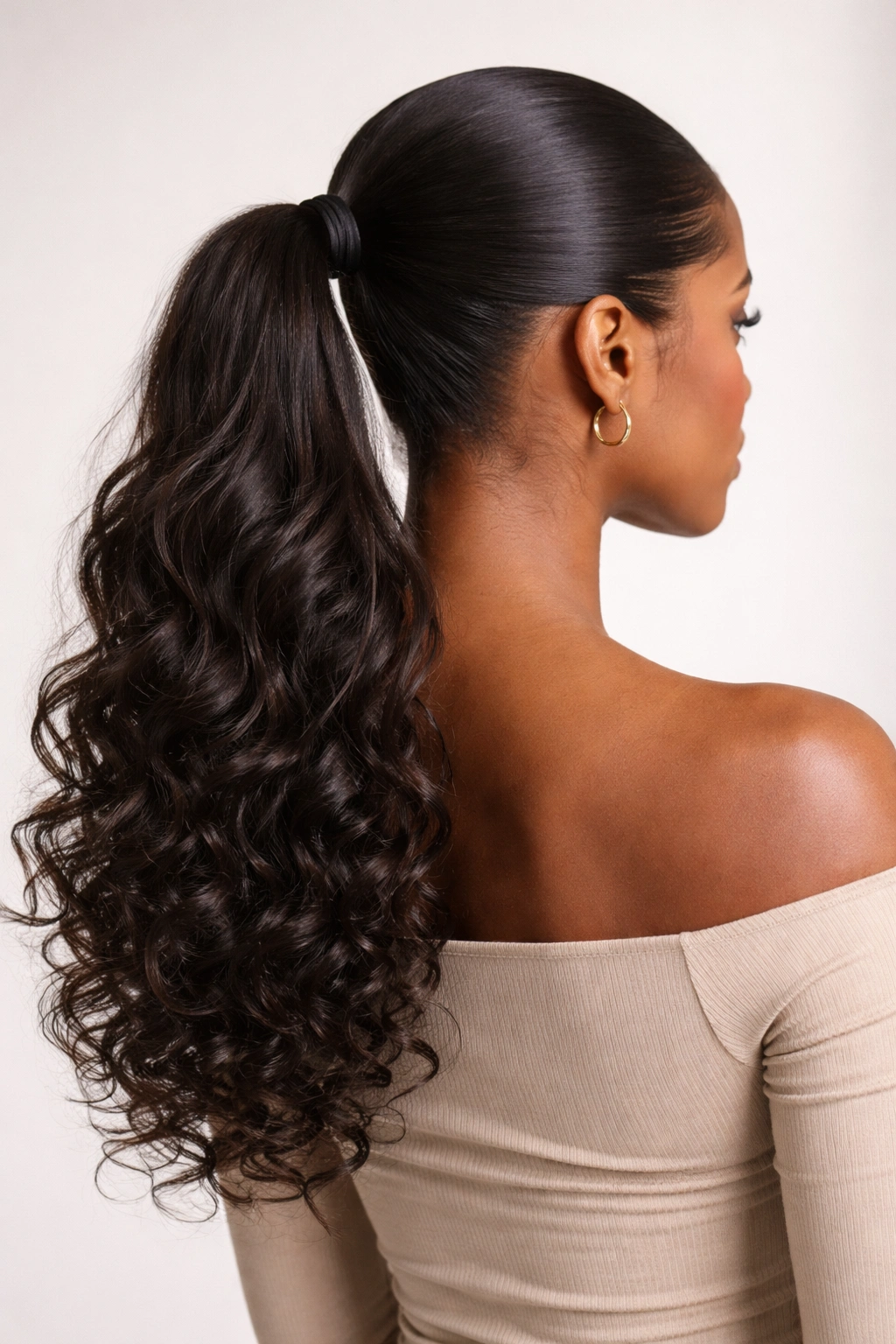
This hybrid approach keeps things sophisticated and office-appropriate while celebrating your curls where they matter most. The ponytail base is smooth and sleek from the nape of your neck up to where you secure it, but below the hair tie, your curls are left free, loose, and full of personality. It’s the perfect style for professional settings where you want to look polished without sacrificing curl celebration.
The Strategic Beauty of Two-Texture Appeal
The contrast between the smooth, controlled base and the voluminous curly ends creates visual interest and movement. From the back, people see your gorgeous curls; from the front, you look put-together and intentional. This style also makes your long curly ends appear even fuller and more dramatic since they’re not competing with texture at the crown.
Steps to Execute This Look
- Blow dry your entire head smoothly using a concentrator nozzle on low heat to stretch out your curls slightly
- Once smooth and stretched, gather hair into a middle-to-high ponytail position using a fine-tooth comb or edge brush
- Apply smoothing serum or butter to the gathered base to seal down any flyaways
- Secure with a silk-lined elastic tie
- Below the tie, reactivate your curl pattern by misting with water and applying a curl cream or lightweight gel
- Scrunch upward with your hands to encourage coils and waves to spring back to life
- Flip your head and allow curls to air dry or diffuse dry to the desired fullness
Worth knowing: A concentrator nozzle on your blow dryer is essential here—it directs airflow and prevents the frizz that comes from random heat application.
3. The Soft Braided Ponytail
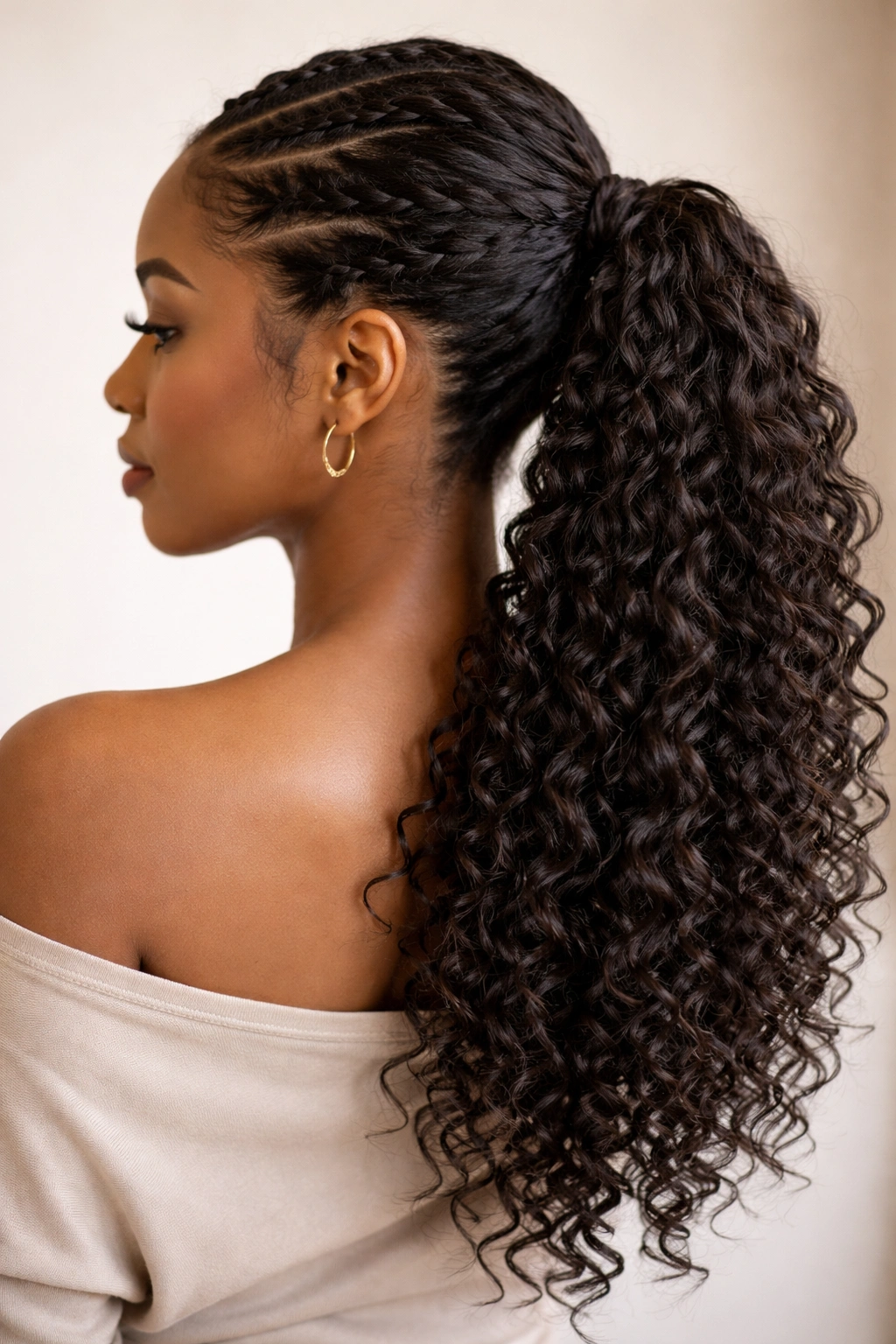
Instead of a traditional single ponytail, this style incorporates two-strand twists, three-strand braids, or box braids that converge into a unified ponytail at the back of the head. The braided sections can start from the temples, the sides, or the crown, creating directional movement that leads the eye backward. Curls within and around the braids stay loose and defined, adding dimension and softness.
Why Braids Elevate Curly Ponytails
Braids serve a dual purpose: they create an intentional, sculpted look while protecting the hair woven into them from friction and drying out. The braids also act as an anchor point, making the ponytail more secure and longer-lasting than a simple gather. You get styling sophistication combined with protective benefits.
Building Your Braided Ponytail
- Start with moisturized, defined curls—don’t over-manipulate or stretch the texture
- Create two or three braids (depending on your preference and hair thickness) starting from different points on your head
- Keep braids loose rather than tight to avoid tension on the scalp and breakage
- Gather the braids and loose curly sections together at the back of your head
- Secure everything with a silk-lined elastic or claw clip
- Gently shake out and separate the curls around the ponytail base to enhance fullness
- If braids feel stiff, mist them with water and curl cream to soften the sections and encourage the curls to relax slightly
Insider note: Braiding damp, product-laden hair keeps braids intact longer than braiding dry hair, which can slip apart as the day goes on.
4. The Pineapple Ponytail with Clips
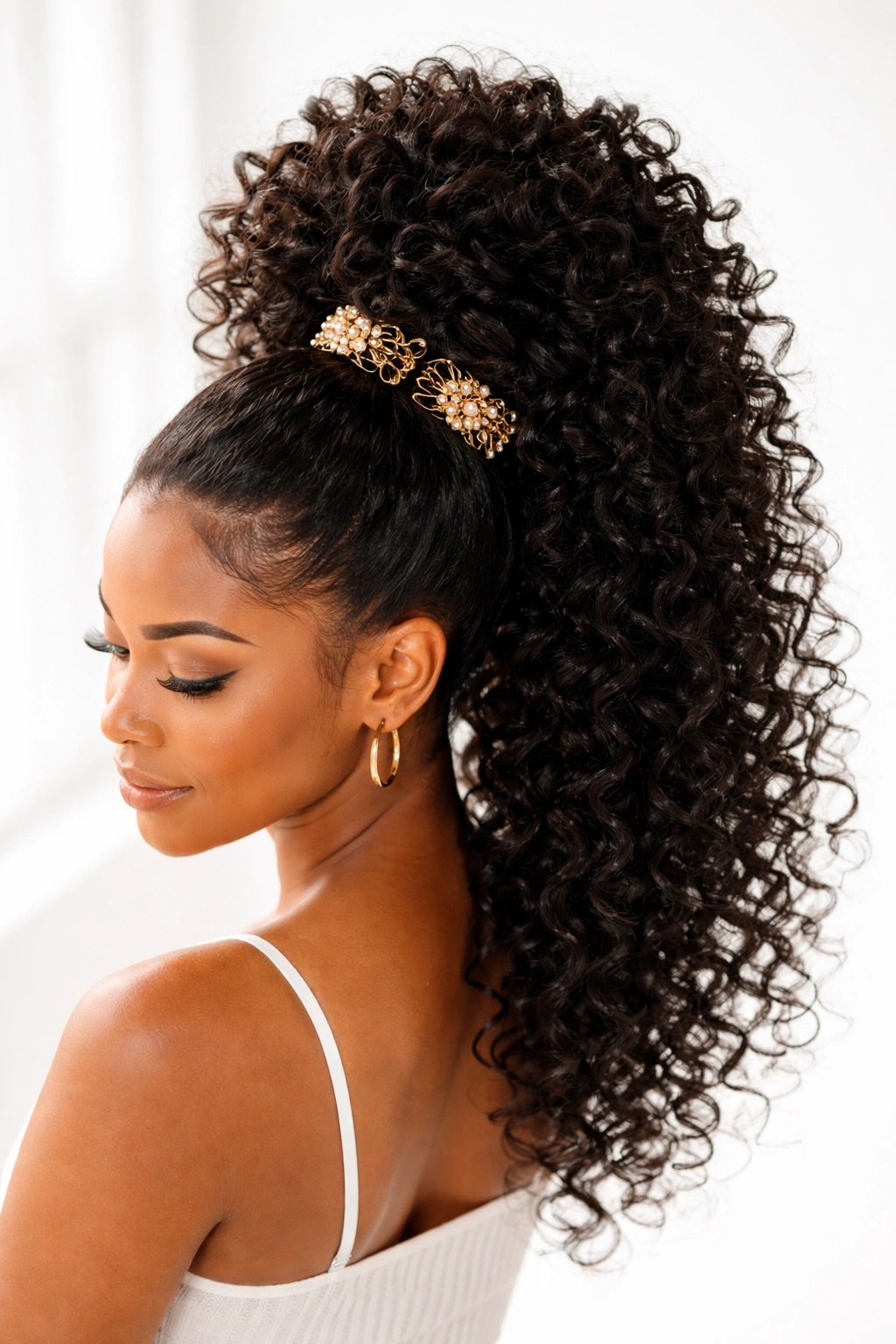
This style mimics the protective pineapple method people use for sleeping, but elevated and styled for daytime wear. Hair is gathered very high on the crown—almost at the very top of your head—and secured loosely to prevent tension. Decorative clips or claw clips positioned around the base catch flyaways and add visual interest while keeping everything in place without metal hair ties that can damage curls.
The Protective, Playful Appeal
The high positioning stretches hair minimally and the loose gathering keeps tension off your hairline. The use of clips rather than tight elastics means you can remove the style without the telltale creases that hair ties leave behind. It’s a style that looks deliberately playful and fashion-forward rather than utilitarian.
How to Create This Textured Look
- Apply a lightweight moisturizer to damp or refreshed curls
- Gather hair very high on your head, roughly at the crown
- Secure loosely with a silk scrunchie, leaving some slack rather than pulling tightly
- Use 2-3 decorative claw clips positioned around the base of the gather to catch flyaways and add design detail
- Allow curls to spring freely below the tie, naturally fanning out
- Mist with a light holding spray to set the style without crunch
- The clips themselves become part of the aesthetic—choose metallic finishes, tortoiseshell, or jeweled options that match your personal style
Quick fact: Claw clips are experiencing a massive comeback partly because they’re genuinely better for textured hair—they distribute pressure more evenly than thin elastics and don’t create stress points on individual strands.
5. The Twisted Crown Ponytail
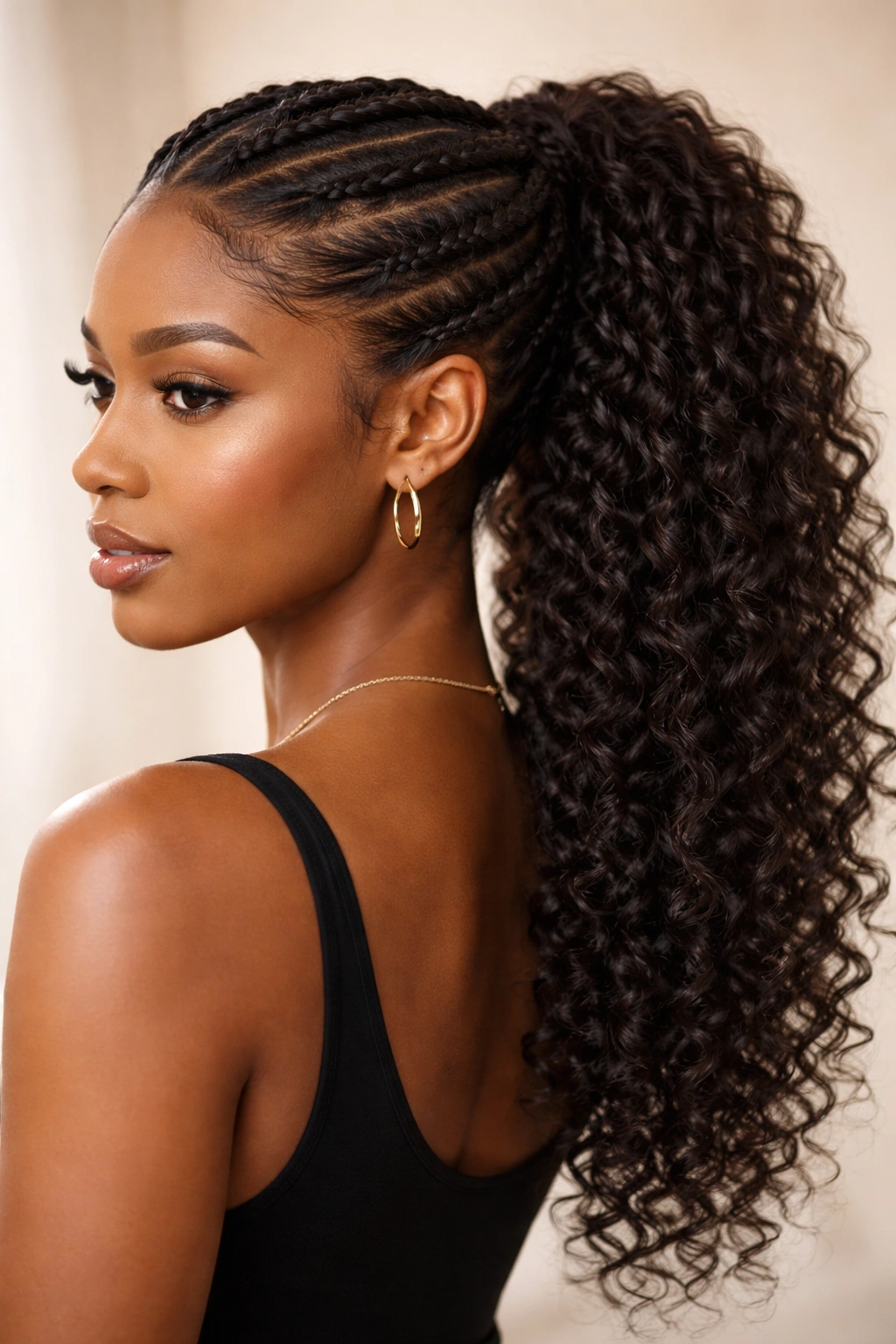
Two-strand twists frame the face and crown in an elegant spiral pattern, then converge into a ponytail at the back. This style works whether your twists are thick or thin, loose or tighter, because the aesthetic hinges on the spiral movement rather than precision. The twists themselves are protective—they minimize daily manipulation and exposure of individual strands to environmental stress.
Visual Drama and Protective Benefits Combined
The twisted crown creates a halo effect that’s both protective and visually striking. Twists are gentler on hair than braids since they don’t interlock strands as tightly, which means less breakage potential and more flexibility for curly hair to move naturally. The style reads as intentional and carefully put-together while actually requiring minimal maintenance.
Creating Your Twisted Crown
- Start with moisturized curls and apply a styling cream or lightweight gel
- Take a section of hair from one temple and divide it into two strands
- Twist the two strands around each other, incorporating new hair as you move toward the back of your head (similar to a French braid but with twists instead of braids)
- Repeat on the other side, creating a mirror-image twist
- Gather the twisted sections along with remaining hair into a ponytail at the back
- Secure with a silk hair tie or clip
- Gently separate the twisted sections to encourage coils to show through the twist pattern
- Pin flyaways down with bobby pins if desired, or leave them soft and loose for a more relaxed vibe
Pro tip: Two-strand twists stay intact longer when you apply product before twisting rather than after—the product holds as the twist sets, rather than weighing down already-formed twists.
6. The Voluminous Coiled Bubble Ponytail
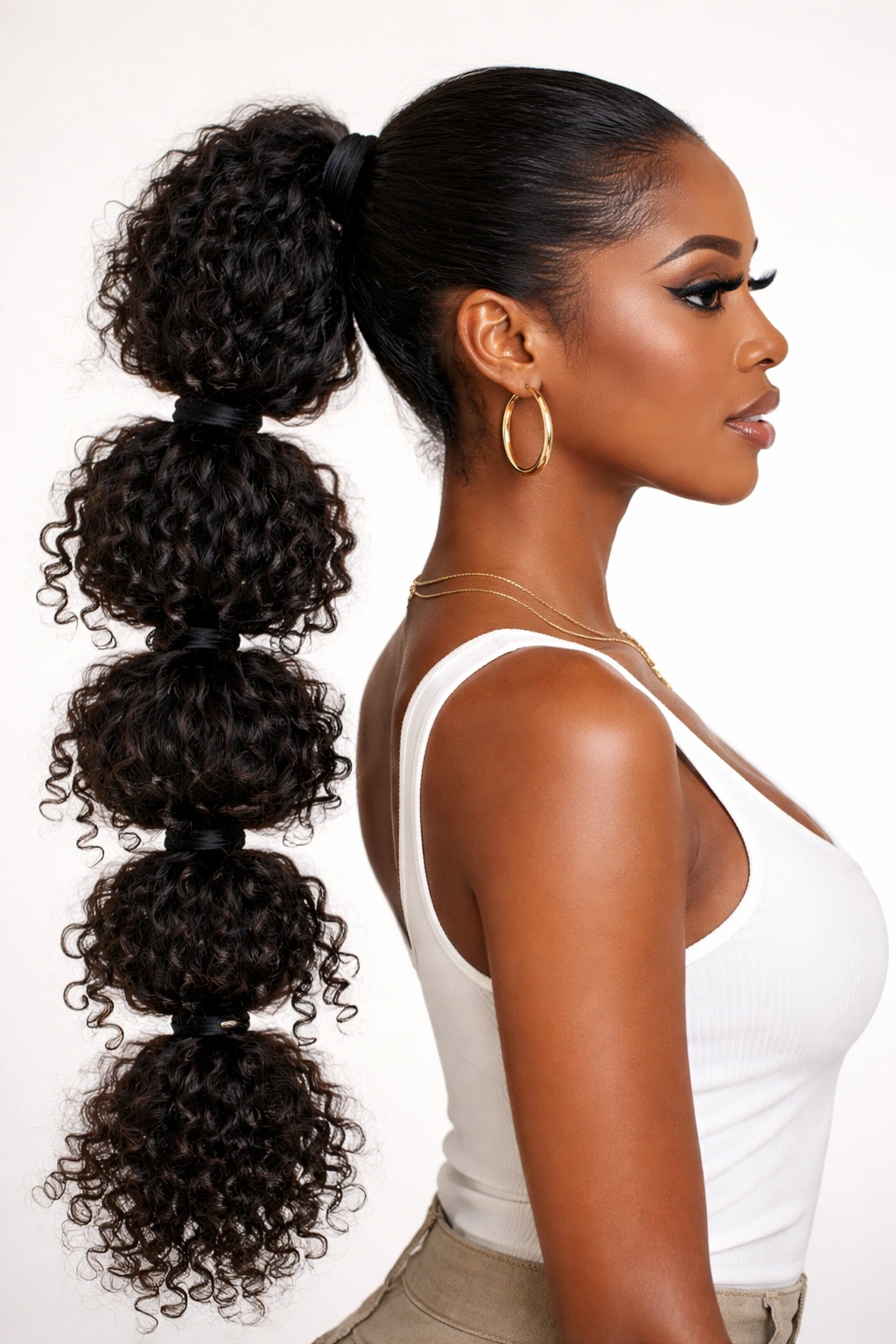
This playful style uses multiple hair ties or clips positioned at intervals down the length of the ponytail, creating distinct “bubble” sections that puff out between each fastening. Each bubble showcases full, uncompressed curls, making the overall effect luxuriously thick and textured. It’s a style that photographs beautifully and works especially well for events, nights out, or whenever you want to make a bold statement.
Why Bubbles Enhance Curl Texture
The strategic placement of ties creates visual separation and allows curls to expand fully in each section rather than being compressed into one continuous ponytail. The style actually creates the illusion of even thicker hair and longer length by the way the bubbles stack. It’s also surprisingly protective since curls in each bubble aren’t being gripped tightly—they’re cradled between fastening points.
Assembling Your Bubble Ponytail
- Gather hair into your desired ponytail position and secure with a silk hair tie
- Measure down approximately 2-3 inches and place another hair tie or clip, creating the first bubble
- Gently pull the hair section between the ties outward and slightly upward to puff out the bubble
- Continue this pattern down the length of the ponytail, spacing ties 2-3 inches apart
- Each bubble should be roughly the same size for visual balance, though you can vary slightly for artistic effect
- Fluff each bubble with your fingers, scrunching and separating curls to maximize the puffed-out appearance
- Use bobby pins or small clips to secure any loose pieces and enhance the intentional look
Worth knowing: Using a clear elastic or silk clip for bubbles (rather than thick, dark hair ties) creates a more refined look and makes the curls the focus rather than the fasteners.
7. The Side Ponytail with Maximum Volume
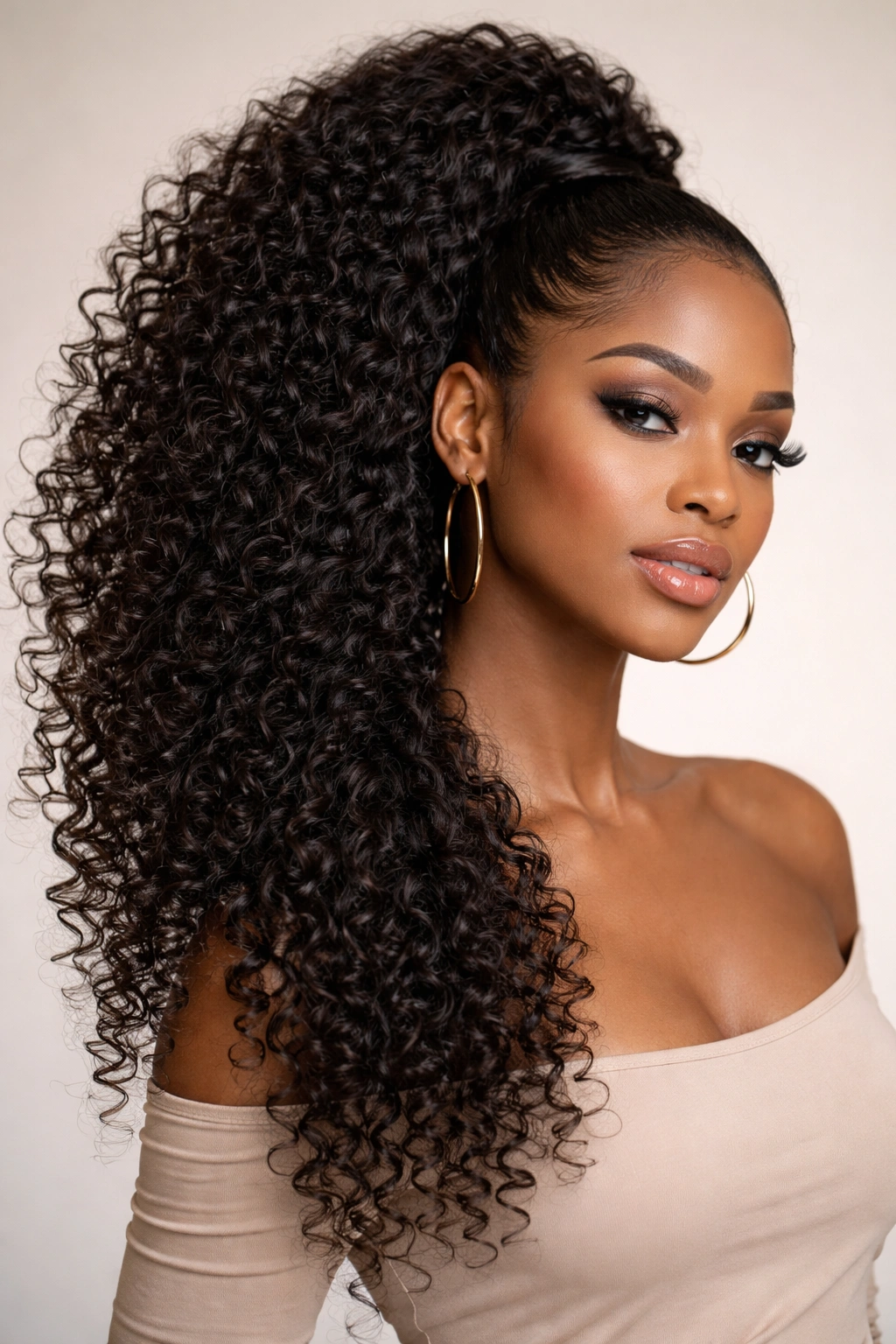
Gather your curls to one side of your head rather than center back, creating an asymmetrical silhouette that’s inherently more dynamic and interesting. The side positioning showcases the full breadth of your curl pattern while showing off your face and one side of your neck. This style works beautifully for everything from casual to dressy occasions and feels both effortless and intentional.
The Flattering Asymmetry Factor
Side ponytails naturally create movement and visual interest in ways center ponytails sometimes don’t. They also tend to feel more youthful and playful while remaining sophisticated. The asymmetry draws attention to your features and can actually make your face appear wider and more balanced due to the way the curved line of the gathered ponytail works as a compositional element.
Building Your Side Ponytail
- Apply moisturizer and styling product to damp or refreshed curls
- Flip your head to one side or lean your head to one side, then gather curls toward that side
- Secure at approximately the level where your ear meets your jaw, creating a low-to-middle placement
- The exact height depends on the length of your hair—longer hair can sit lower without looking droopy
- Use a silk hair tie or claw clip to secure
- Flip your head back upright, which will shift the ponytail naturally and create movement in the curls
- Gently separate and fluff curls around the gather point to enhance fullness
- Let curls fall over one shoulder, creating a cascading effect down the front of your body
Pro tip: A side ponytail looks even more striking when you add a decorative clip, bandana, or fabric wrap at the base—it emphasizes the intentional asymmetry and elevates the overall styling.
8. The Spiral Ponytail with Wrapped Base
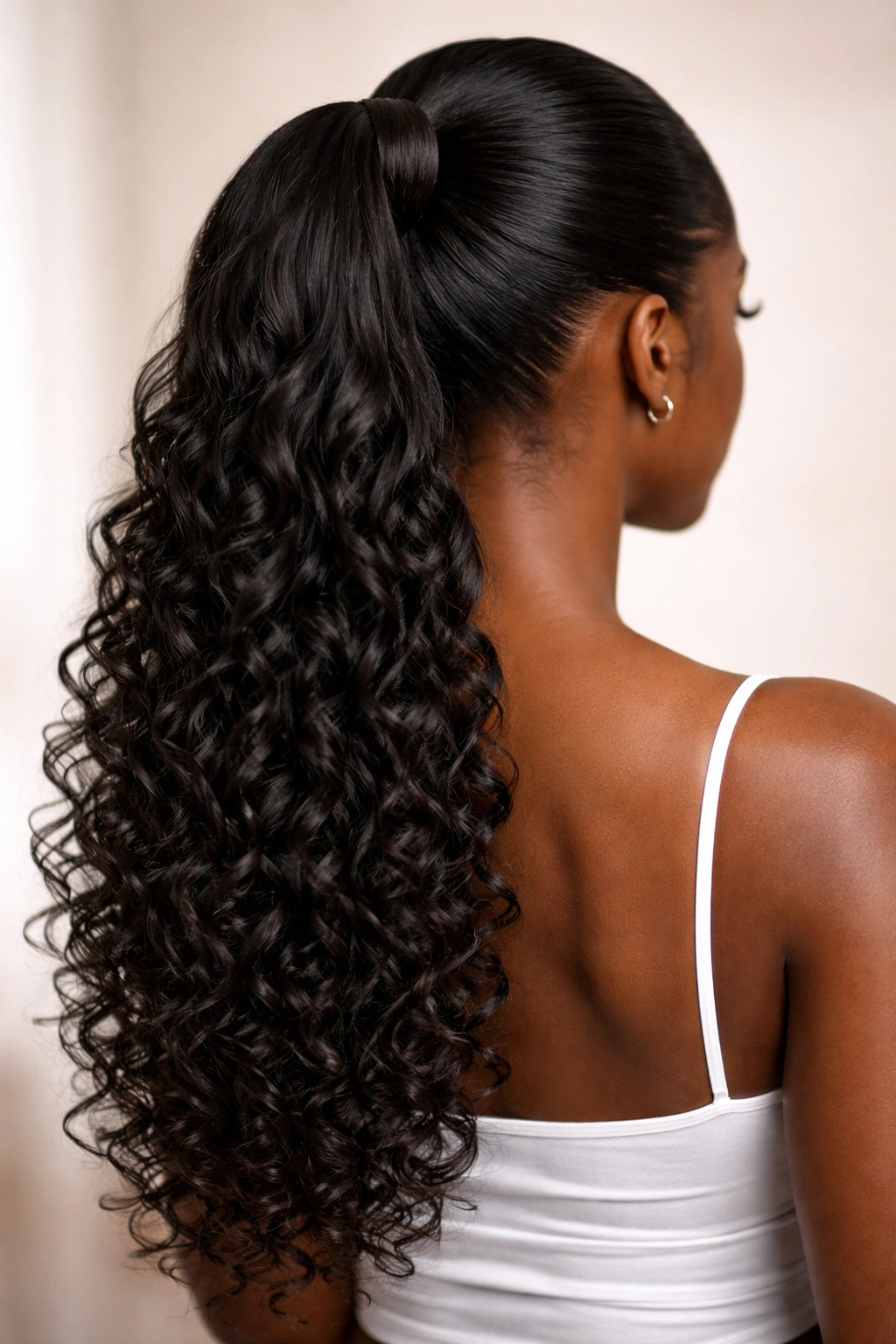
After gathering your curls into a ponytail, wrap a section of hair around the base to conceal the elastic and create a polished, seamless appearance. This finishing technique makes even a simple ponytail look professionally done and intentional. The wrapped section can be created from your own hair, or you can use a coordinating faux locs strand, fabric, or decorative wrap for added visual interest.
Why This Finishing Touch Matters
The wrapped base serves both functional and aesthetic purposes. Functionally, it conceals the hair tie and distributes pressure more evenly across the gathered hair. Aesthetically, it creates a clean, intentional look that transforms a basic ponytail into something polished and sophisticated. It’s the difference between a hurried style and a styled style.
Creating Your Wrapped Base
- Gather hair into your desired ponytail and secure with a silk elastic
- Take a thin, dime-sized section of hair from underneath the ponytail
- Wrap this section tightly around the base, concealing the elastic completely
- Secure the wrapped section with a bobby pin or small clip hidden underneath
- Alternatively, use a fabric wrap, ribbon, or coordinating yarn—wrap it around the base 2-3 times and tie it off
- If using faux locs or decorative strands, wrap them around the base the same way
- Fluff the ponytail curls so they spring out above the wrapped base, creating definition between the styled base and the free curls
Quick fact: Wrapping with your own hair actually helps protect your ends since it keeps the elastic from sitting directly against your curls—it distributes the tension points.
9. The Textured Twist-Out Ponytail
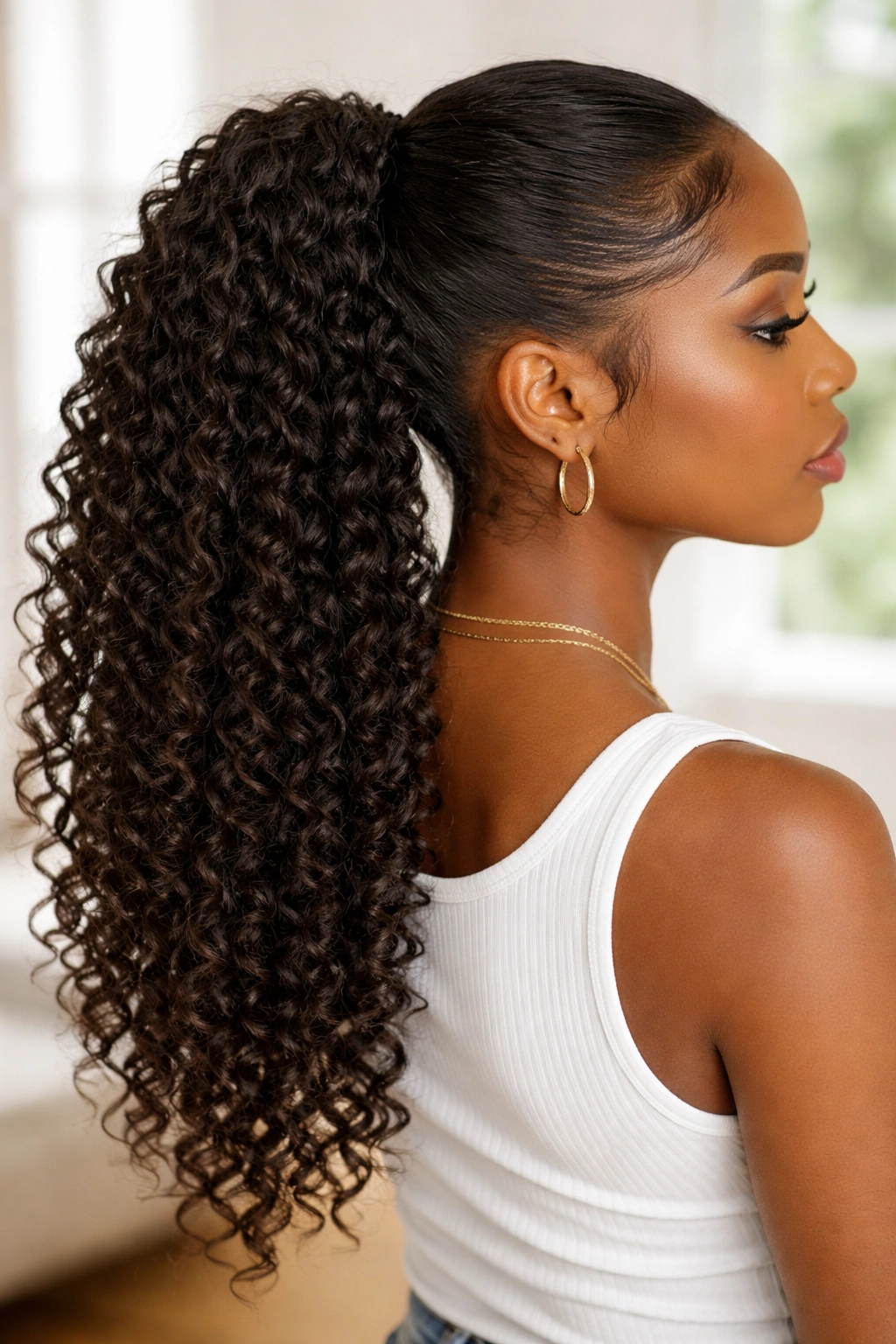
This style begins the night before: you create two-strand twists throughout your hair while damp, leave them in overnight, then untwist in the morning to reveal a gloriously textured pattern of waves and coils. You then gather this twist-out hair into a ponytail, celebrating the magnified texture and dimension the twists created. The resulting ponytail has incredible volume and definition.
The Overnight Preparation Advantage
Two-strand twists set a curl pattern while you sleep, so you wake up with pre-styled texture that requires minimal effort to look amazing. Gathering this textured hair into a ponytail showcases the twist-out pattern beautifully, and the style lasts longer than if you tried to curl or define the hair on the same day. You’re essentially doing your styling work the night before and reaping the benefits the next day.
Your Twist-Out Ponytail Timeline
- The night before, apply a moisturizing product to damp hair
- Create two-strand twists throughout your entire head—they can be uniform or varied in size
- Sleep on the twists, keeping them protected in a pineapple position or bonnet
- In the morning, gently untwist your hair, working slowly to avoid disturbing the curl pattern
- Once fully untwisted, you’ll have waves, coils, and texture throughout
- Gently gather this textured hair into a ponytail at your desired position
- Don’t comb or brush aggressively—use your fingers to gently separate sections and gather them
- Secure with a silk tie and let the texture speak for itself
Worth knowing: Untwisting while your hair is still slightly damp (rather than completely dry) makes the process gentler and helps curls set into their intended pattern.
10. The Low, Loose Curly Ponytail for Everyday Wear
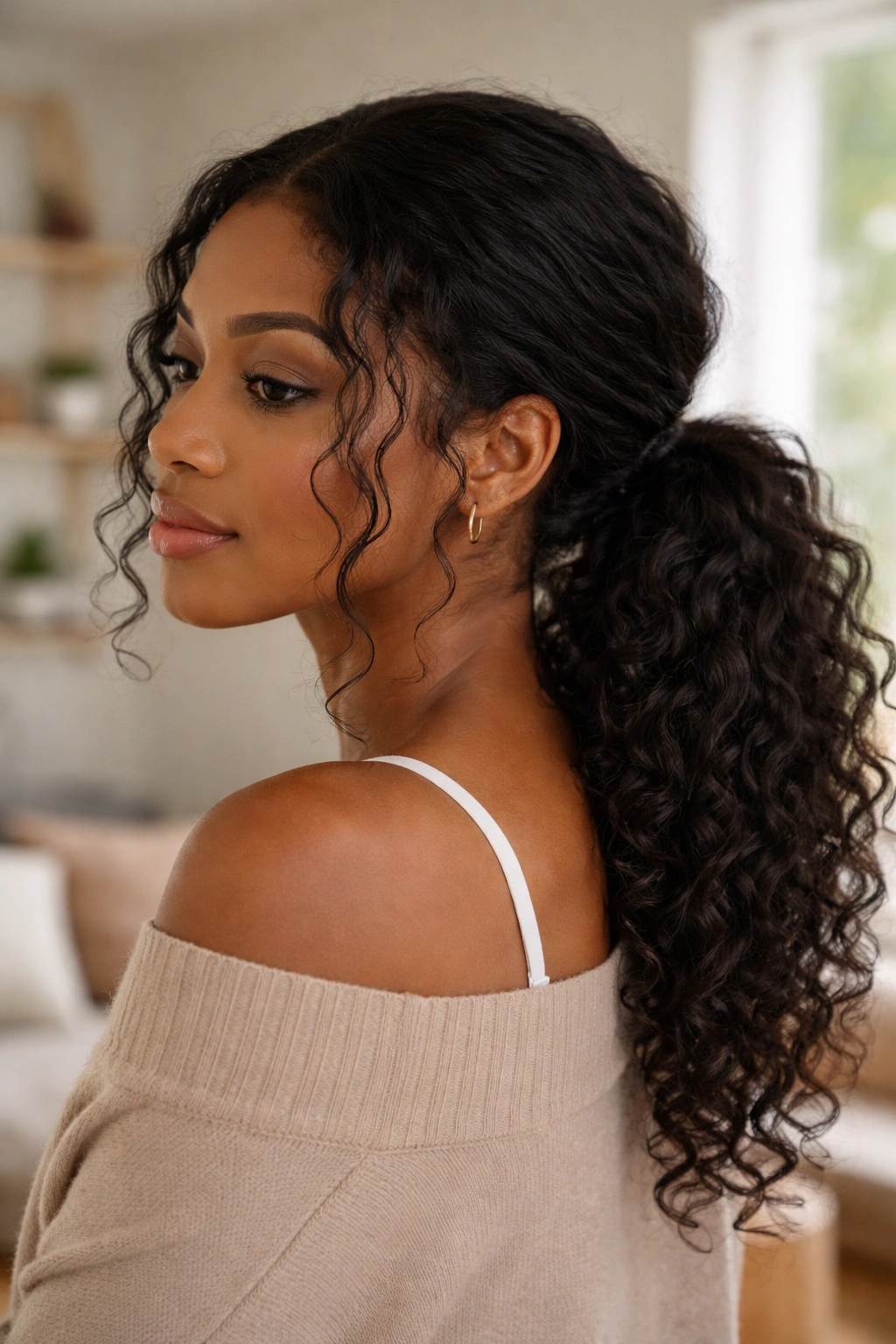
This relaxed, barely-there ponytail sits low at the nape of your neck and maintains softness throughout—it’s not sleek or tightly gathered, but rather a loose, casual collection of curls that feels effortless. It’s the ponytail you wear to work, to run errands, or on days when you want your hair off your face but don’t want to look overly styled. The key is intentional looseness rather than messy carelessness.
The Everyday Elegance of Barely-Pulled-Back
A low, loose ponytail flatters virtually every face shape because it doesn’t create tension or pull features taut. It allows you to wear your hair down in spirit while still getting it off your shoulders. The style reads as approachable and natural rather than formal or severe, making it perfect for professional and casual settings alike.
Achieving Intentional Looseness
- Start with moisturized, defined curls—either refresh curls from a previous style or work with freshly washed and dried hair
- Gather hair loosely at the nape of your neck, not pulling tightly
- Use a silk scrunchie or elastic, fastening without tension
- Leave several face-framing curls loose around your face for softness
- Allow curls to cascade loosely over your shoulder if desired
- Gently separate sections of the ponytail to create a textured, undone appearance
- A light misting of flexible-hold spray keeps the style looking intentional without crunch
Insider note: The key to a low ponytail looking polished rather than sloppy is leaving a couple of small tendrils loose around your face and ensuring the curls in the ponytail itself are defined and moisturized, not dry or frizzy.
11. The Stacked Ponytail with Accessory Details
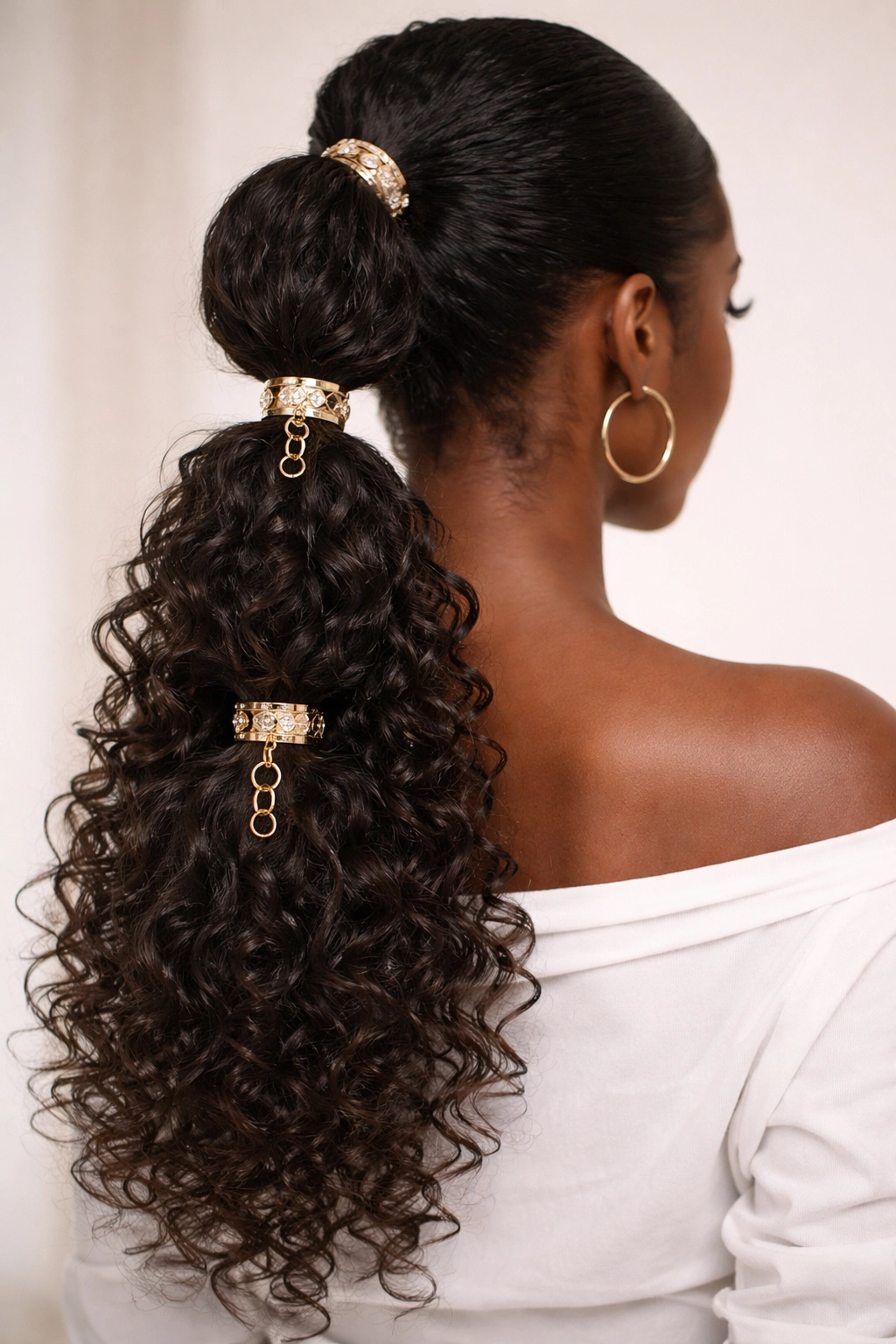
This advanced style incorporates two ponytails stacked vertically—a smaller one positioned higher, secured, then a second larger one positioned below it, using some of the same hair. Decorative clips, rings, or cuffs positioned at each level create visual interest and fashion-forward appeal. The stacking creates dimension and makes the style feel more intentional and design-focused.
Why Stacking Creates Impact
The stacked formation creates multiple focal points down the back of your head rather than one single gathering point. This breaks up the visual weight and creates a more dynamic silhouette. When combined with decorative elements, the style becomes a true fashion statement that shows intentional styling rather than a basic everyday ponytail.
Building Your Stacked Ponytail
- Section off the top third of your hair and gather it into a high ponytail, securing with a silk tie or clip
- Fluff and separate this upper ponytail to maximize volume
- Gather the remaining hair (plus the ends of the upper ponytail if desired for blending) into a second, lower ponytail
- Secure the lower ponytail with another tie or clip
- Add decorative elements: metal cuffs, rings, beaded clips, or wraps positioned at each securing point
- Ensure curls are well-defined and separated throughout both sections
- The two ponytails should feel connected as one cohesive style despite being stacked
Pro tip: A stacked ponytail lasts longer than a single ponytail because the weight is distributed across two securing points rather than concentrated at one spot.
12. The Crowned Curls Ponytail with Headwrap
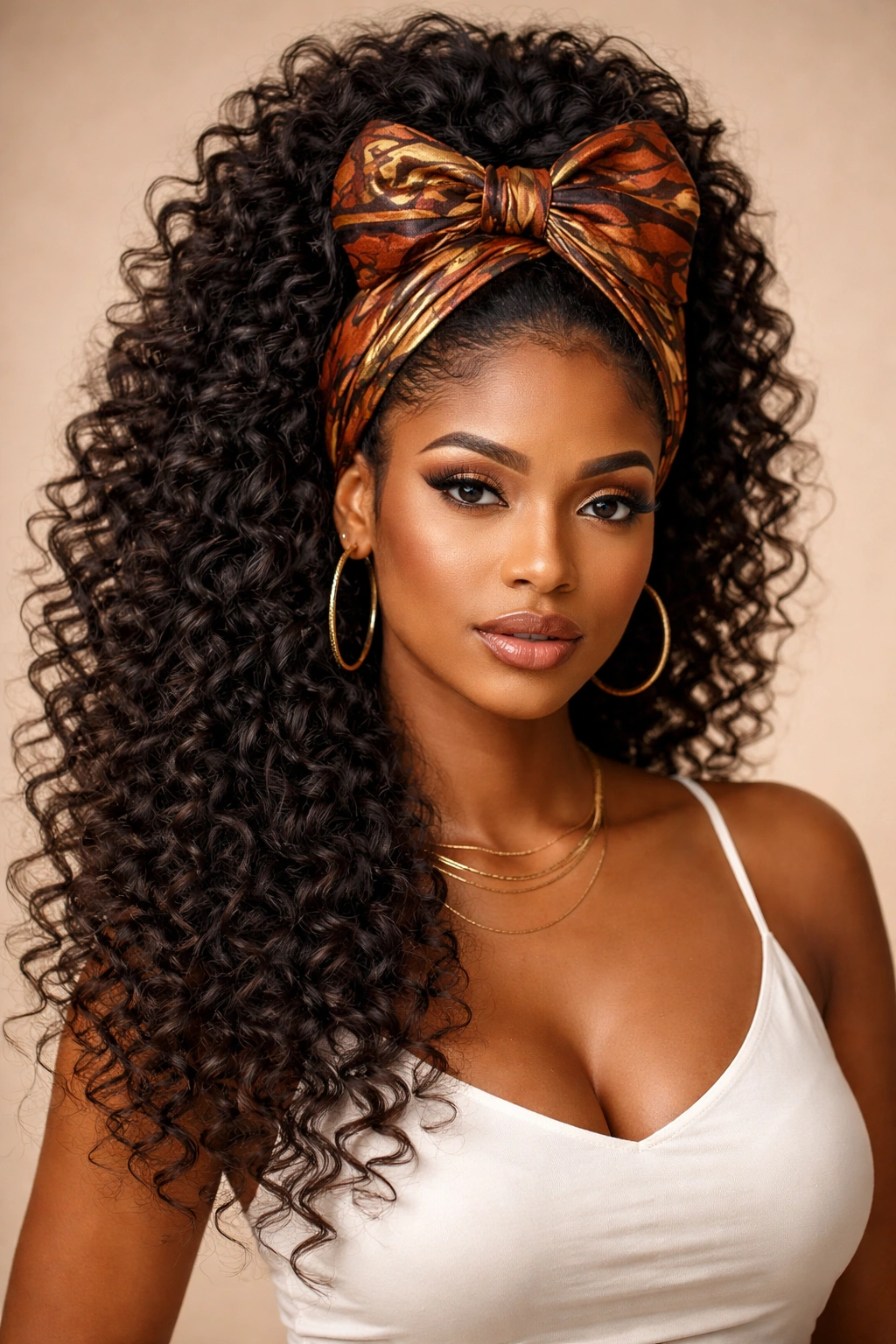
This celebratory style gathers curls into a full, voluminous ponytail at the crown, then wraps the base and crown area with a coordinating fabric, scarf, or wrap tied in a bow, knot, or decorative arrangement. The fabric becomes as much a styling element as the curls themselves, adding color, pattern, and cultural expression. This is the go-to style for special occasions, celebrations, and times when you want your curls front and center.
The Cultural Elegance of Crowned Curls
The headwrap tradition in Black culture represents beauty, pride, and intentional styling. When combined with a full, voluminous ponytail of defined curls, it creates an image of power, beauty, and celebration. The wrap elevates the style from casual to special without requiring any heat tools or complicated techniques.
Creating Your Crowned Curls Statement
- Gather curls high on your head into a voluminous ponytail—don’t pull tightly; allow curls to spring freely
- Secure with a silk tie or claw clip
- Use a long rectangular fabric scarf (silk or cotton), headwrap, or coordinating fabric
- Wrap the fabric around the base of the ponytail and your crown, covering the securing element
- Tie the ends in a bow at the front or side, or tuck them under the wrapped section
- Alternatively, wrap the fabric in a turban-style arrangement that frames your entire crown
- Fluff and separate curls above and around the wrap to create maximum volume and definition
- The fabric should feel like an intentional design element, not an afterthought
Worth knowing: A silk or satin wrap protects your curls from friction while also looking gorgeous—cotton wraps work but can absorb moisture from your curls and cause dryness.
Final Thoughts
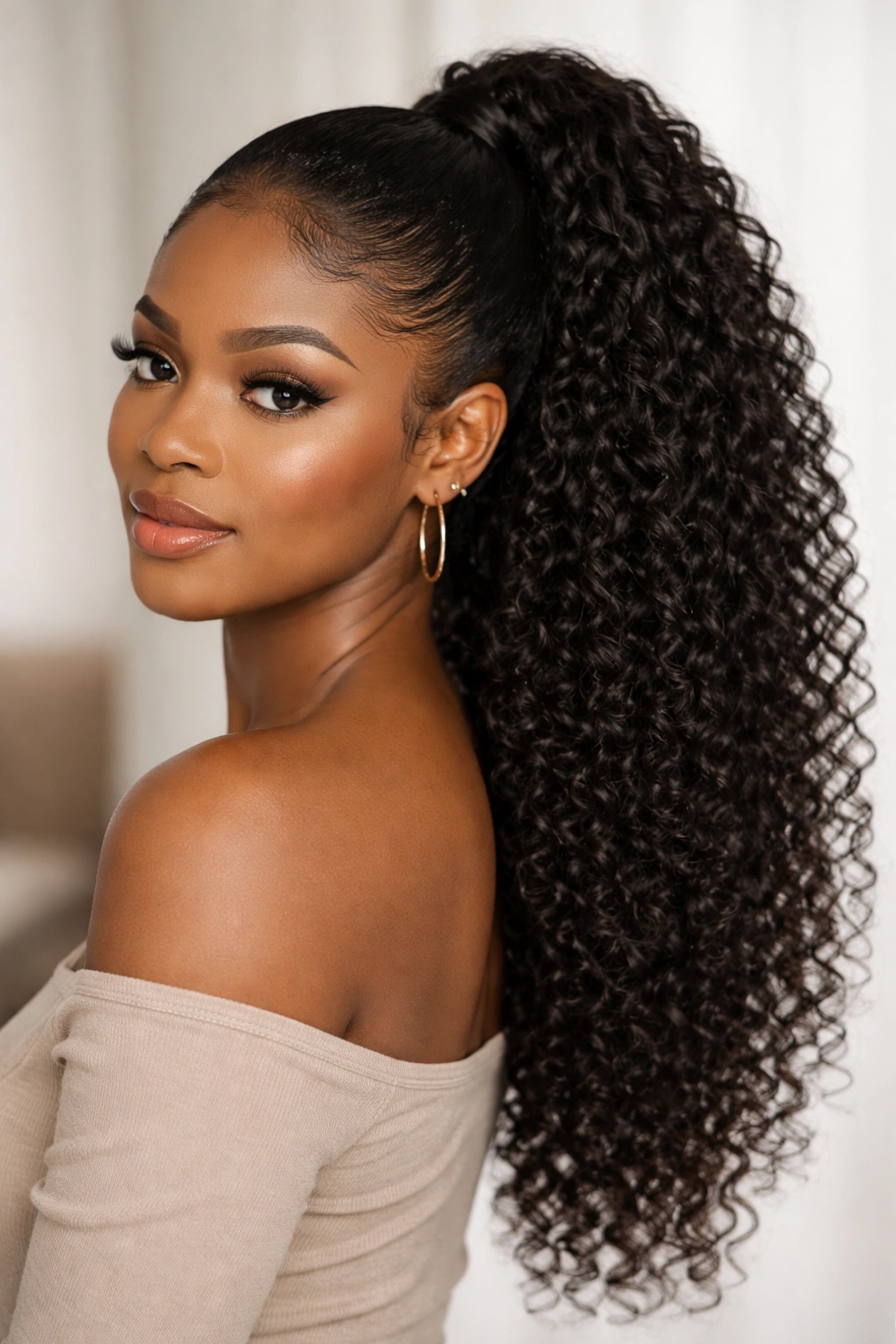
Long curly ponytails aren’t just a hairstyle—they’re a celebration of the natural texture and beauty of Black hair. Whether you’re going for sleek and polished, playful and voluminous, or adorned and celebratory, there’s a curly ponytail approach that fits your mood, your occasion, and your hair’s unique texture. The styles that work best are the ones that work with your curl pattern rather than against it, that protect your hair while making you feel confident and beautiful.
The most important thing to remember across all these styles is that healthy hair is gorgeous hair. Use moisturizing products, handle your curls gently, avoid excessive tension on your scalp, and never sacrifice the health of your strands for the sake of a style. Your curls are strong, versatile, and capable of stunning transformations—these ponytails are simply different ways of showcasing what you already have. Experiment with different positioning, try mixing approaches (like a side ponytail with twisted sections), and give yourself permission to evolve your style as your mood and life circumstances change. The beauty of long curly hair is that it grows with you, adapts with you, and offers endless creative possibilities for expression.
