



Braided ponytails sit at the sweet spot where effortless beauty meets genuine versatility. Whether you’re heading to a boardroom meeting, a casual weekend brunch, a gym session, or a dinner date, the right braided ponytail can work with absolutely any outfit and any occasion—and it’ll take you less time to create than you’d think. The magic isn’t just that braids look polished; it’s that they do exactly what you need them to do. They keep your hair secure and off your face while adding texture, visual interest, and a sense of intentionality that a basic ponytail simply can’t match.
The best part? Braided ponytails work with your hair, not against it. They’re forgiving with second-day texture, they actually improve as the day goes on (hello, undone strands that catch the light), and they translate across face shapes, hair lengths, and styles without requiring any special equipment or products. You just need your hands, about five minutes, and the confidence that comes from knowing which braid-and-ponytail combo will make your specific outfit look even better.
What follows isn’t a list of complicated styles that require a beauty degree. These are real, wearable braided ponytails that work whether you have thick hair, fine hair, curly hair, straight hair, shoulder-length ends, or waist-length waves. Each one solves a different styling problem and pairs beautifully with different outfits, from casual jeans to formal dresses. Pick your favorite, master it, and suddenly you’ve got a signature style that works everywhere.
1. Classic Three-Strand Dutch Braid Ponytail
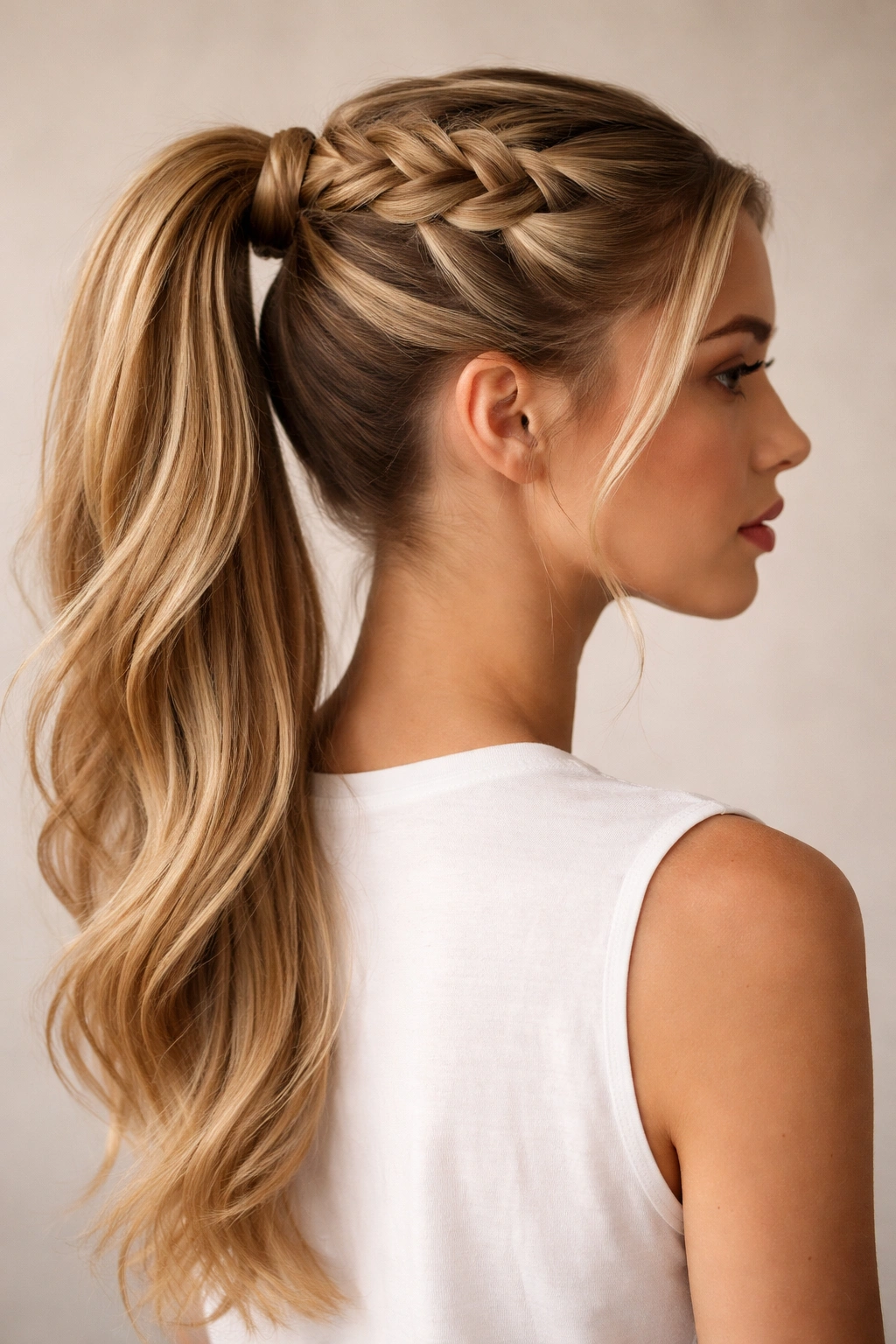
The Dutch braid is the workhorse of braided hairstyles—it sits on top of your head, catches light beautifully, and has a modern, intentional feel that dresses up anything from a t-shirt to a silk blouse. Instead of a traditional center-part French braid that runs down the back of your head, the Dutch braid reverses the weaving direction, creating a raised, dimensional look that photographs incredibly well and reads as “I put effort into this” even when you spent five minutes creating it.
Why This Style Works With Any Outfit
The Dutch braid into ponytail is pure visual volume without the styling tools. It creates definition and structure at the crown, which naturally balances broader shoulders, softens angular face shapes, and adds a touch of polish to casual outfits. Pair it with a leather jacket and jeans for cool-girl energy, or wear it with a business blazer for a modern take on professional hair. The raised braid draws the eye upward and adds height, making you look taller and more elongated. It’s also incredibly forgiving—flyaways and loose strands actually add texture and movement rather than looking messy.
How to Create Your Dutch Braid Ponytail
Start with dry or slightly damp hair. Brush thoroughly, then section off a triangle at the crown (from your part to roughly two inches back). Divide this section into three pieces and begin braiding by crossing one section under the next—not over, which is what makes it a Dutch braid. As you braid, incorporate hair from the sides by adding small sections into each strand as you cross it under. Continue this pattern straight back until you reach the base of your skull, then secure the braid with a small elastic. Gather all your hair (including the ends of the braid) into a low or mid-height ponytail and secure with your preferred elastic. Gently pull at the edges of the braid to widen it and create a fuller appearance.
Pro tip: Braid slightly loose rather than tight—a relaxed braid looks intentional and modern, while overtight braids can give an unintentionally severe appearance that fights against soft, approachable outfits.
2. Fishtail Braid Ponytail with Volume
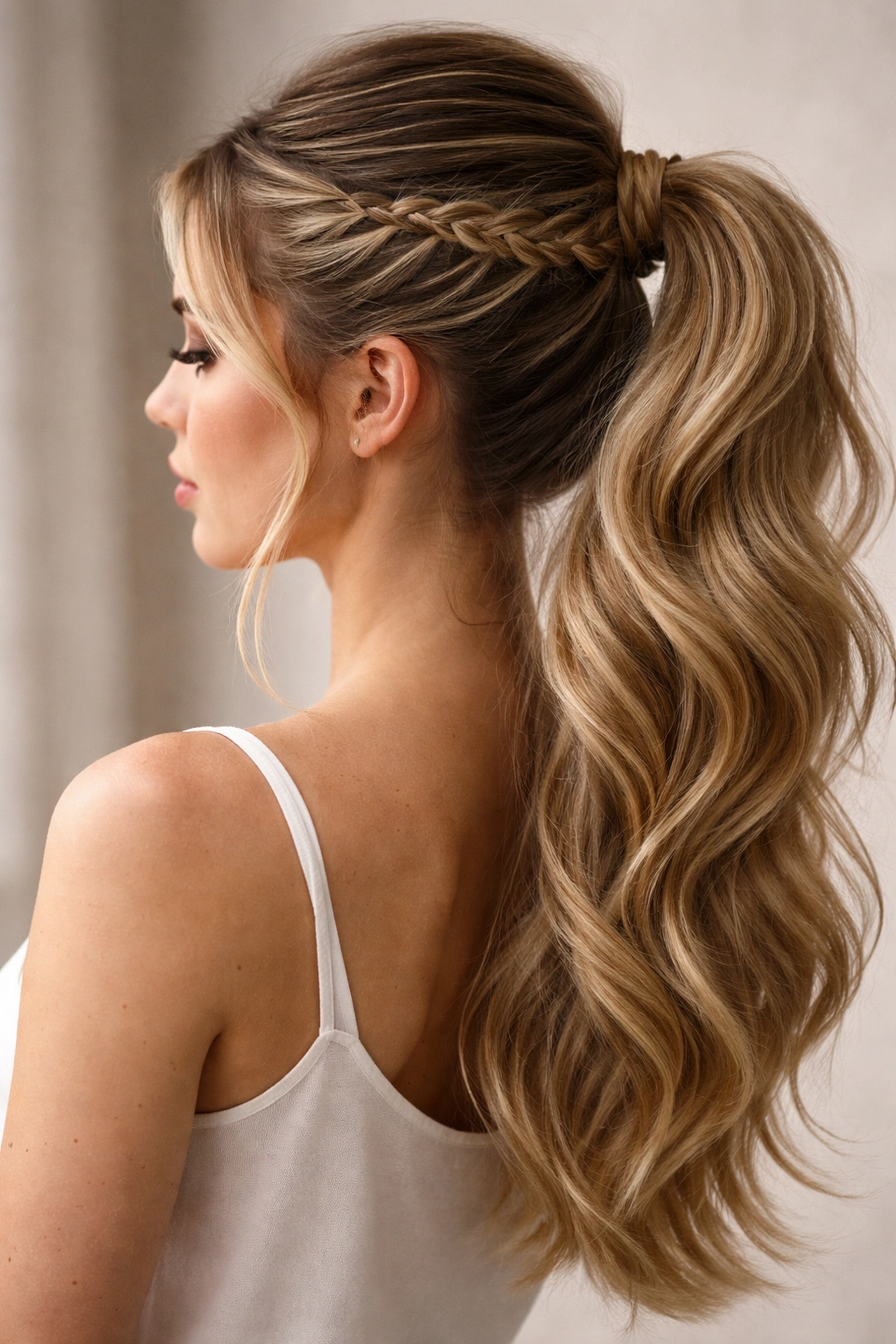
The fishtail braid is the texture artist’s dream. Unlike the geometric precision of a three-strand braid, the fishtail uses a two-strand weaving technique that creates a delicate, intricate pattern that catches light in a completely different way. When you pull the fishtail slightly loose after braiding, it expands into this gorgeous, almost feathered appearance that reads as “effortlessly beautiful” on every single person.
The Magic Behind the Fishtail
A fishtail braid uses only two main sections instead of three, which means it’s actually faster to create than it looks. The visual complexity comes from weaving tiny sections from each side across to the opposite strand—a meditative, rhythmic motion once you get the pattern down. The resulting braid is narrower than a Dutch or French braid, which means it photographs beautifully and works especially well if you have fine or medium hair (thick hair can look overwhelming in an ultra-wide braid). The fishtail pairs beautifully with feminine outfits like dresses, skirts, and delicate blouses because it has an inherent elegance.
Creating and Styling a Fishtail Braid Ponytail
Section damp or dry hair into a high ponytail and secure loosely with an elastic. Divide the ponytail into two equal sections. Take a small piece of hair from the outer edge of the left section, cross it over to the right section, and tuck it in. Repeat on the right side—grab a small piece from the outer right, cross over to the left. Continue this alternating pattern all the way down to the ends of your hair. The key is keeping your sections thin and consistent; thick sections look sloppy. Once you’ve braided the full length, gently pull the edges outward to create the feathered effect. This expansion is what transforms a simple braid into something that looks intricate and intentional.
Worth knowing: Fishtail braids are more forgiving of slightly damp or textured hair, so if you have waves or curls, this style actually benefits from your natural texture rather than fighting it.
3. Half-Up Half-Down Braided Ponytail
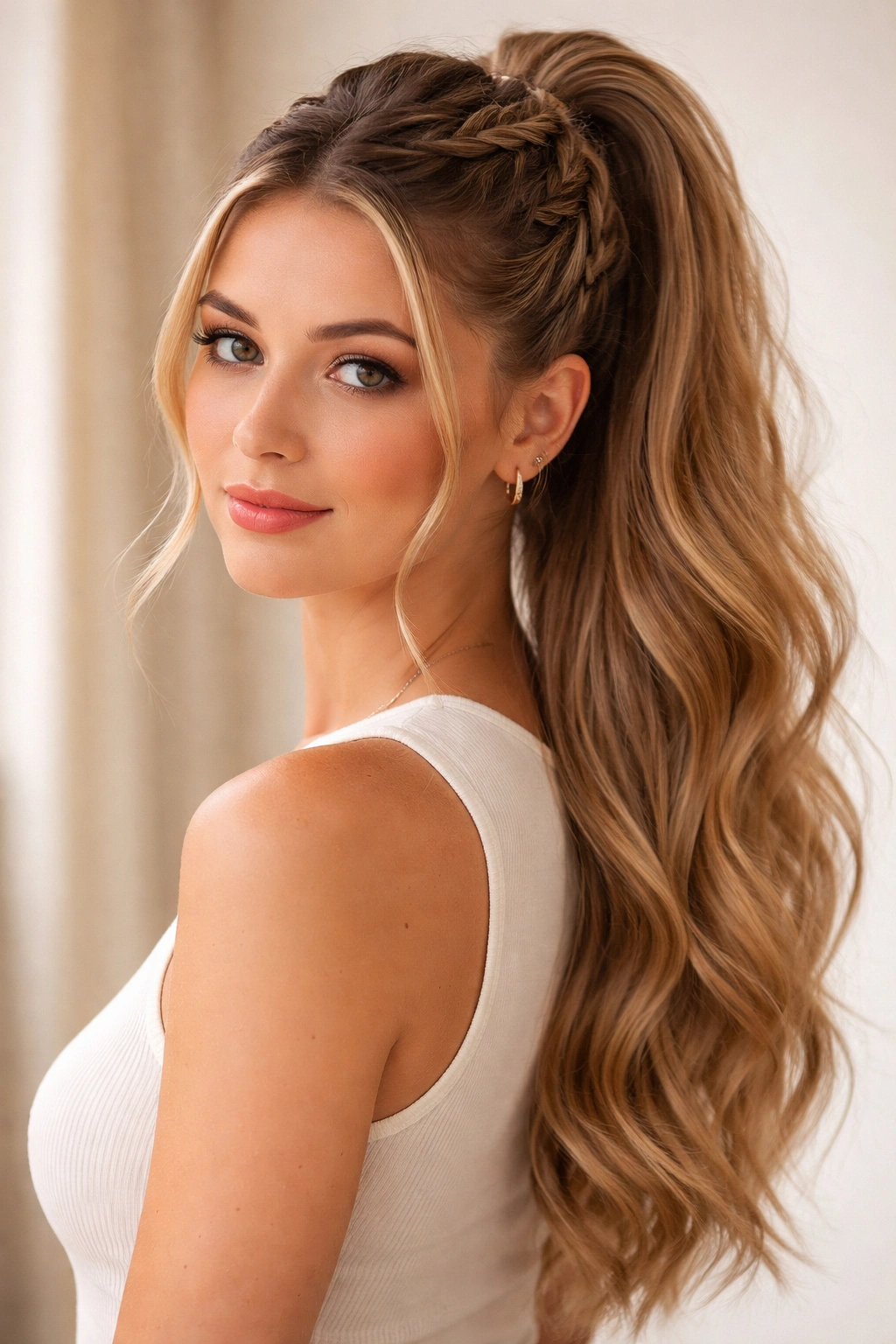
This is the style for days when you want your hair down but need it out of your face, or when you’re trying to bridge the gap between “I just woke up” and “I actually styled my hair.” The half-up braided ponytail takes the weight off the top of your head while keeping the majority of your hair down, which means it works with every hair texture and every outfit. It’s casual enough for weekend wear but polished enough for professional settings.
Why Half-Up Half-Down Hits Every Occasion
By containing only the top half of your hair, this style solves multiple problems at once. You get the polish and intentionality of a braided updo without the commitment of actually putting all your hair up. The exposed length around your shoulders and down your back adds softness and femininity that a full ponytail can’t achieve, while the braided top half adds structure and keep-your-hair-together reliability. This works beautifully with fitted tops, off-the-shoulder styles, and scoop-neck dresses where a full ponytail would feel too severe.
Building Your Half-Up Braided Ponytail
Start with dry or textured hair (slightly wavy is ideal). Take a horizontal section from temple to temple across the top of your head, about three to four inches deep. Create a three-strand braid using just this top section, starting at one temple and braiding straight back. As you braid, you can incorporate small sections of hair from the top of your head for a fuller look, or keep it as a contained section—both work depending on your hair texture and desired aesthetic. Once you’ve braided to the back of your head, secure the braid with a small elastic. You can leave the braid as-is for a neat appearance, or gently pull the edges to loosen it. All the hair below the braid stays down and loose.
Insider note: This style is absolute magic on day-two or day-three hair, because the texture that’s already there actually enhances the braid rather than fighting it.
4. Side Braided Ponytail
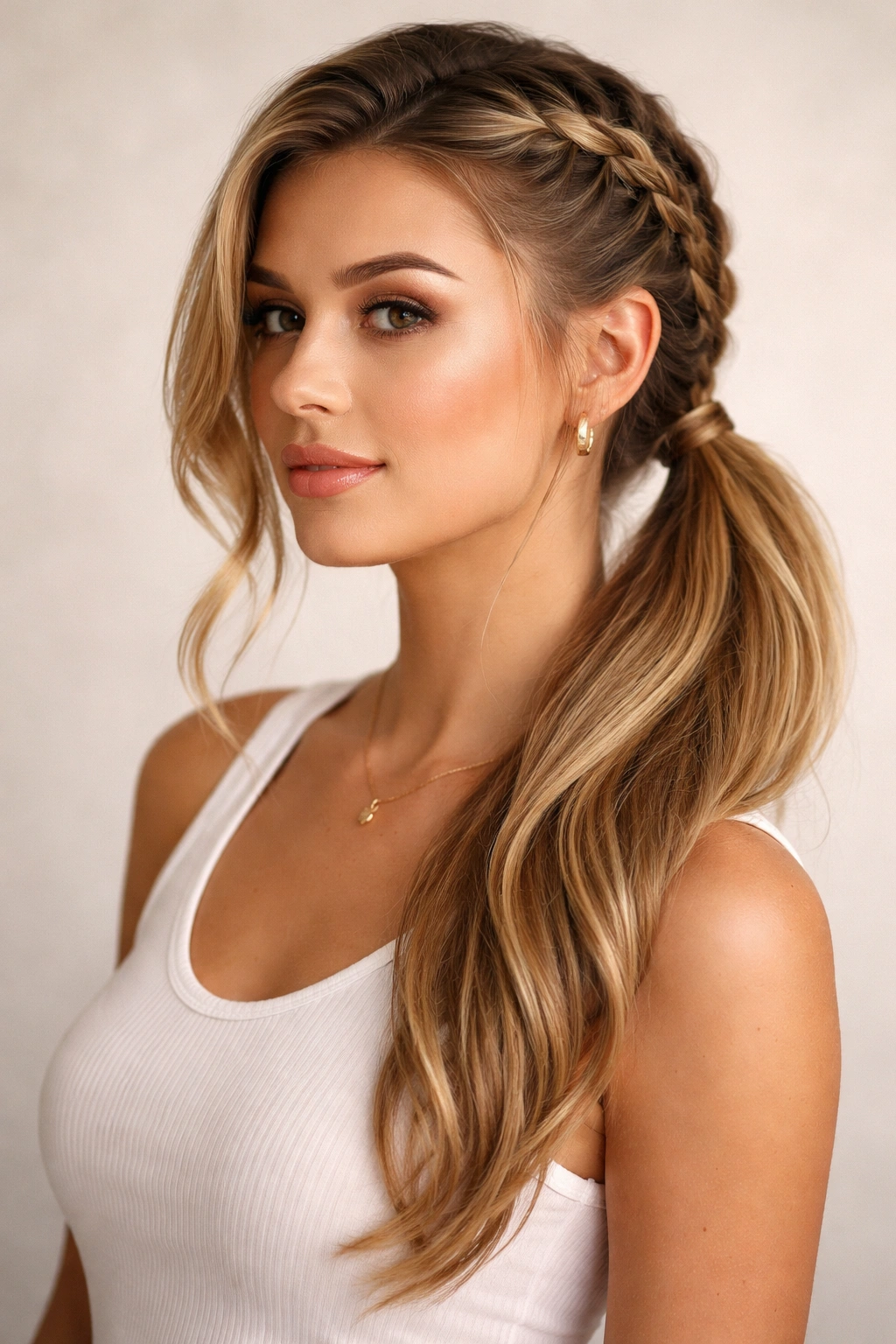
Moving your ponytail to the side isn’t just a style choice—it’s a mood. A side braid ponytail instantly reads as more playful, more approachable, and somehow more intentional than a centered style. It’s the perfect solution for dresses with asymmetrical hemlines, off-the-shoulder tops, and any outfit where you want the focus on one side of your body.
The Visual Power of Asymmetry
The side braid works because it creates movement and draws the eye diagonally across the body—which is a flattering line for almost every face shape. Wearing your ponytail on one side (especially combined with a braid) elongates the neck, balances round faces, and softens angular features. If you have one side of your face you prefer to show the camera, you can position the braid on your “camera-shy” side and show off your better angle. It’s a simple shift in position that completely changes the energy of an outfit.
How to Create a Side Ponytail with a Braid
Brush your hair and create a deep side part—the deeper the part, the more dramatic the side braid effect. Using the larger section of hair (the side with more volume), create a braid starting at the crown of your head. You can do a Dutch braid, a fishtail, or a simple three-strand braid depending on your desired look. Braid down toward the opposite shoulder, then gather all your hair (including the braid) into a low ponytail at the side or even back-side of your head. Secure with an elastic and gently loosen the braid for texture. The smaller section of hair on the other side stays loose, which creates the asymmetrical balance.
Pro tip: Spray the braid lightly with texturizing spray before you pull and loosen it—this makes the strands grip each other and hold their expanded shape all day.
5. French Braid Into Low Ponytail
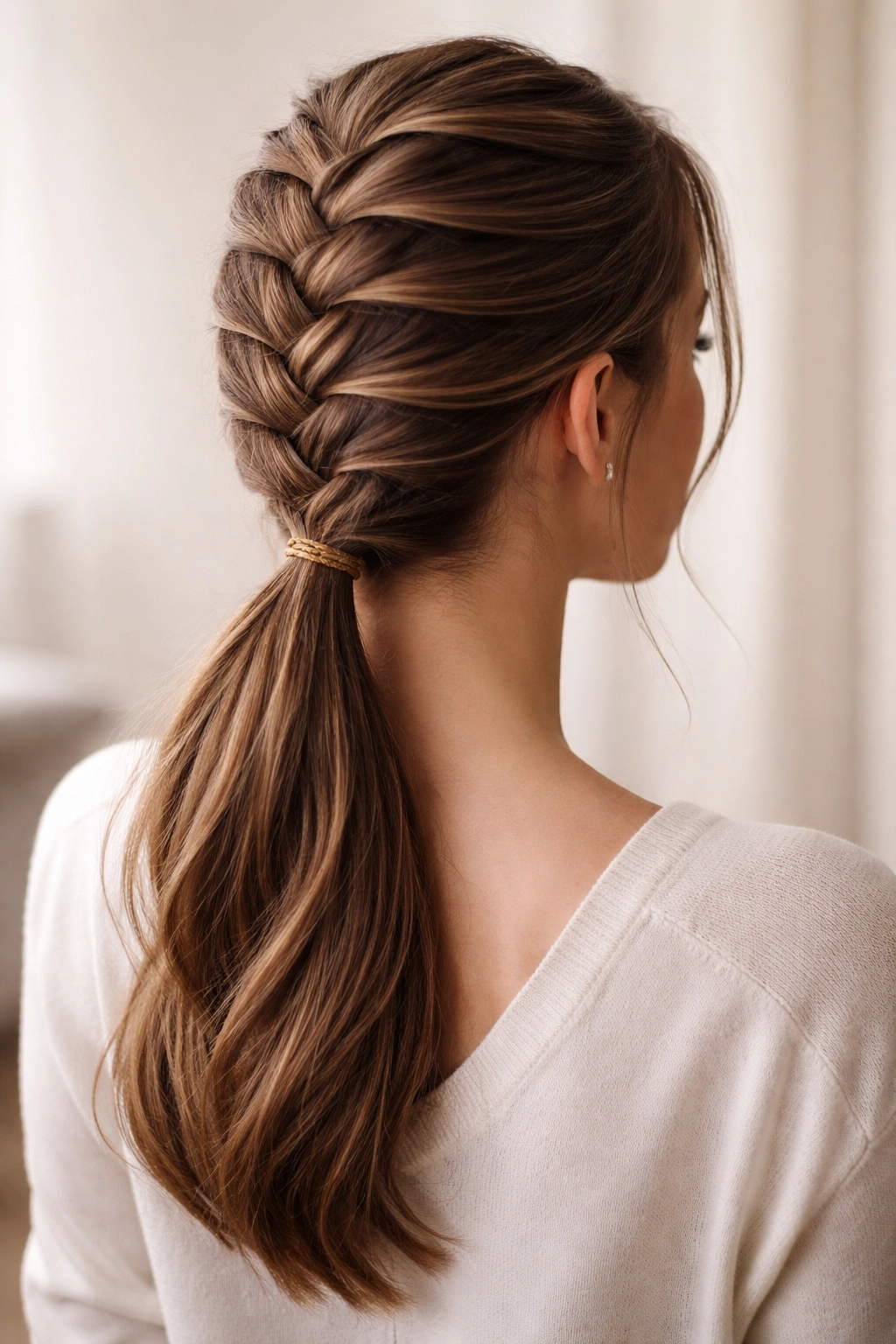
The French braid is the original braid-into-ponytail combo, and it remains a powerhouse because it’s always polished. A French braid starts at the crown and incorporates all your hair as it travels down the back of your head, so by the time you reach your ponytail, you’ve already created this beautiful, gathered appearance that feels intentional and controlled.
Why French Braids Read as Naturally Elegant
The French braid is elegant because it follows the natural curve of your head and the direction hair naturally falls. It doesn’t fight against your hair texture or your face shape—it works with them. The braid gathers hair as it goes, which means you get fullness and volume without any teasing or styling products. It works beautifully whether your hair is fine, thick, straight, wavy, or curly. Pair it with a formal dress, a crisp blazer, or even a casual sweater—the French braid automatically elevates whatever you’re wearing.
Creating a Flawless French Braid Ponytail
Start with clean, dry hair brushed smooth. Section a triangle of hair at your crown (between your temples and the crown). Divide this into three strands and begin braiding by crossing the right strand over the middle, then the left over the middle—this is the opposite of a Dutch braid and creates a braid that sits slightly inward on your head. As you braid, incorporate small sections from the sides by adding them into the strand you’re about to cross over. Continue this pattern straight down the back of your head until you reach your nape (or as far as you want to braid). Secure the end with a small elastic, then gather all your hair into a low ponytail and secure with your preferred elastic. Gently pull the sides of the braid to create width and softness.
Worth knowing: The key to a beautiful French braid is keeping the incorporated sections thin and consistent—thick sections will look bulky and uneven.
6. Double Dutch Braid Ponytail
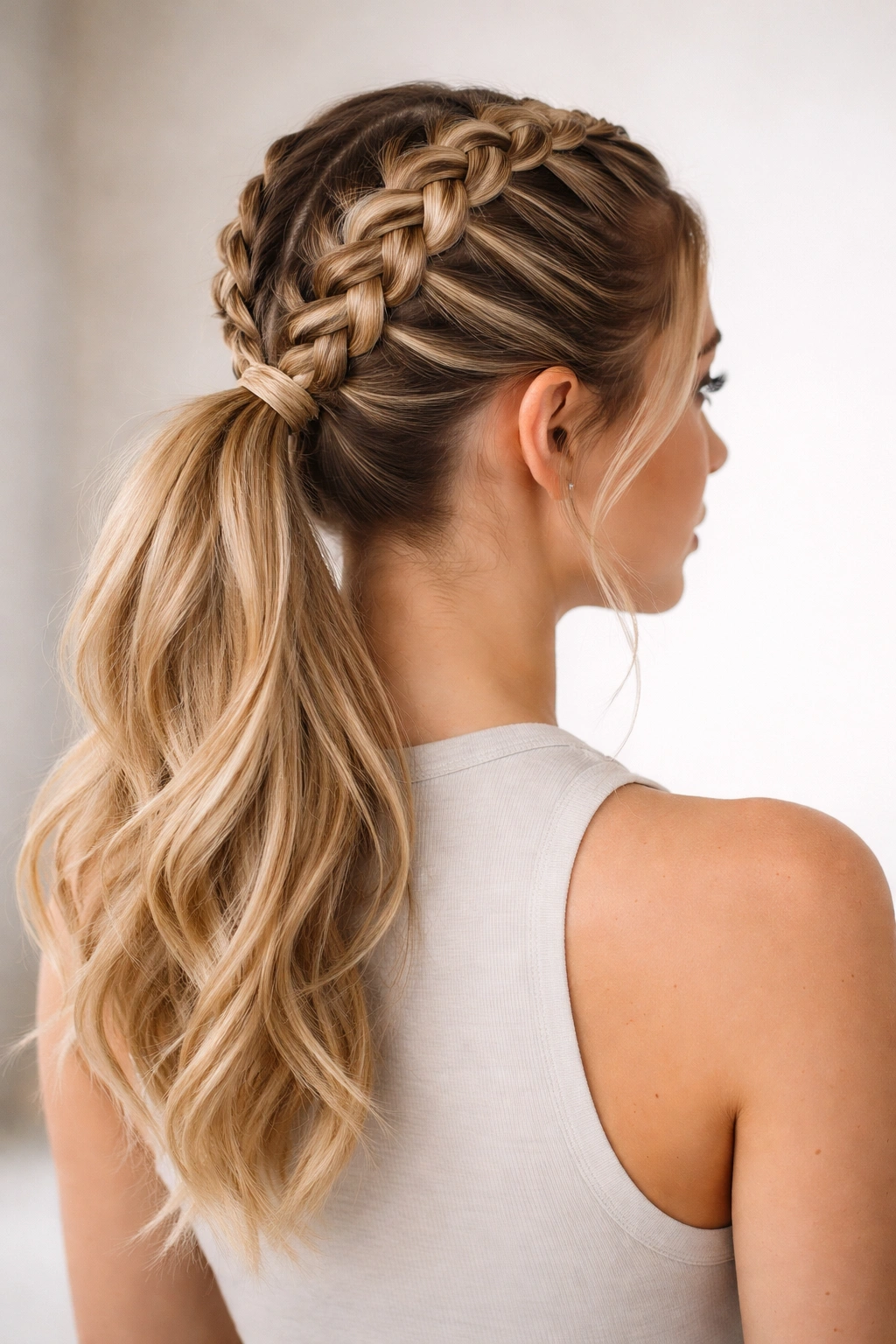
Double braids are having a moment because they’re playful without being silly, and they automatically look more intentional than a single braid. Two Dutch braids create symmetry and balance on your head, which means this style works beautifully with almost every outfit. It’s the sweet spot between “I made an effort” and “this actually looks effortless.”
The Versatility of Double Braids
What makes double Dutch braids so adaptable is that they can look edgy and cool with athletic wear or casual outfits, or polished and put-together with structured pieces and dresses. The symmetry is inherently flattering—it balances the face, adds width at the crown, and creates a sense of intention without requiring excessive styling. You can wear them tight and precise for a more polished look, or loose and undone for a relaxed vibe. They work on every hair length and texture because you’re simply doubling what you’d do with a single braid.
Building Your Double Dutch Braid Ponytail
Create a center part from your forehead to the nape of your neck. On one side of the part, section off a triangle of hair from your temple back to the crown. Create a Dutch braid using this section (remember, crossing under to create that raised appearance), incorporating small sections from the side as you go. Secure the end temporarily with a small elastic or hair clip. Repeat on the other side of the part with a Dutch braid of equal size. Once both braids are complete, release them from their temporary elastics and gather all your hair—including the ends of both braids—into a low or mid-height ponytail at the center back of your head. Secure with your preferred elastic and gently pull the sides of both braids to create softness and texture.
Pro tip: Make sure both braids are exactly the same tightness and width—asymmetrical braids will look unintentional rather than cool.
7. Twisted and Braided Hybrid Ponytail
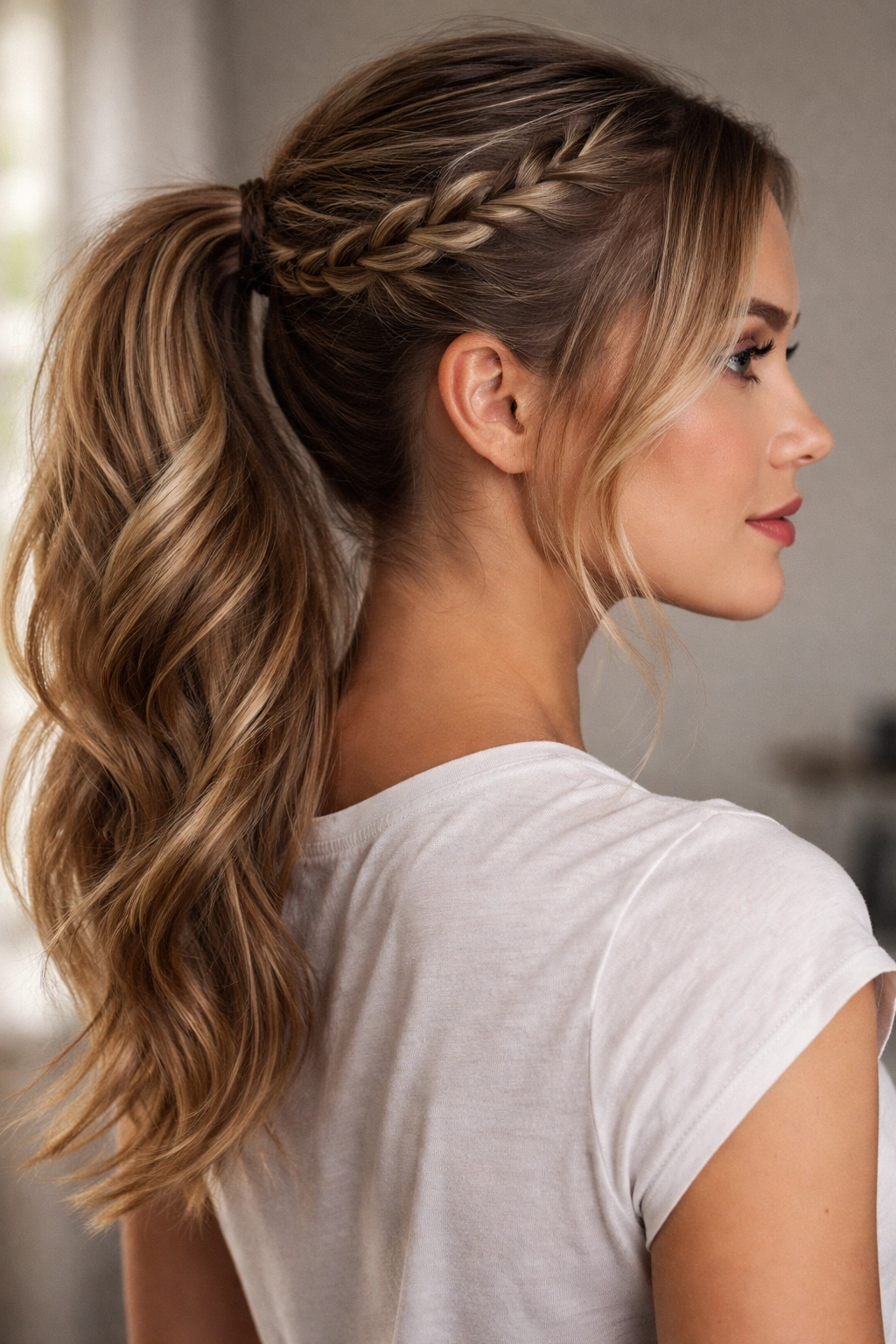
This is the style for when you want braid texture without the commitment of a full braid. By combining twists and braids, you create visual complexity and dimension that reads as more elaborate than it actually is. The mixture of techniques keeps the style from feeling too formal or too casual—it’s perfectly balanced for any situation.
How Hybrid Twists and Braids Add Dimension
A twist is essentially a two-strand spiral that’s faster to create than a braid but creates a similar textured effect. By mixing twists with braid sections, you add visual interest and create a style that photographs beautifully while remaining incredibly wearable. The texture catches light differently at each section, making your hair look fuller and more dimensional. This hybrid approach is especially flattering if you have fine hair, because you can use strategic placement of twists in areas where you want to create the illusion of more volume, and braids in areas where you have natural fullness.
Creating a Twisted and Braided Ponytail
Brush your hair smooth. Create a Dutch or French braid down one side of your head, starting at your temple. On the opposite side, create a two-strand twist by dividing a section into two pieces and wrapping one strand around the other as you incorporate small sections from your hairline as you go back. This creates a spiral effect that’s subtly different from a braid but equally textured. Secure both the braid and twist temporarily. Gather all your hair into a ponytail and secure with an elastic. Gently loosen both the braid and the twist to create an undone, intentional appearance.
Worth knowing: Twists actually hold better in textured hair, so if you have waves or curls, the twisted side of your hybrid style might look even better than the braided side.
8. Crown Braid Ponytail
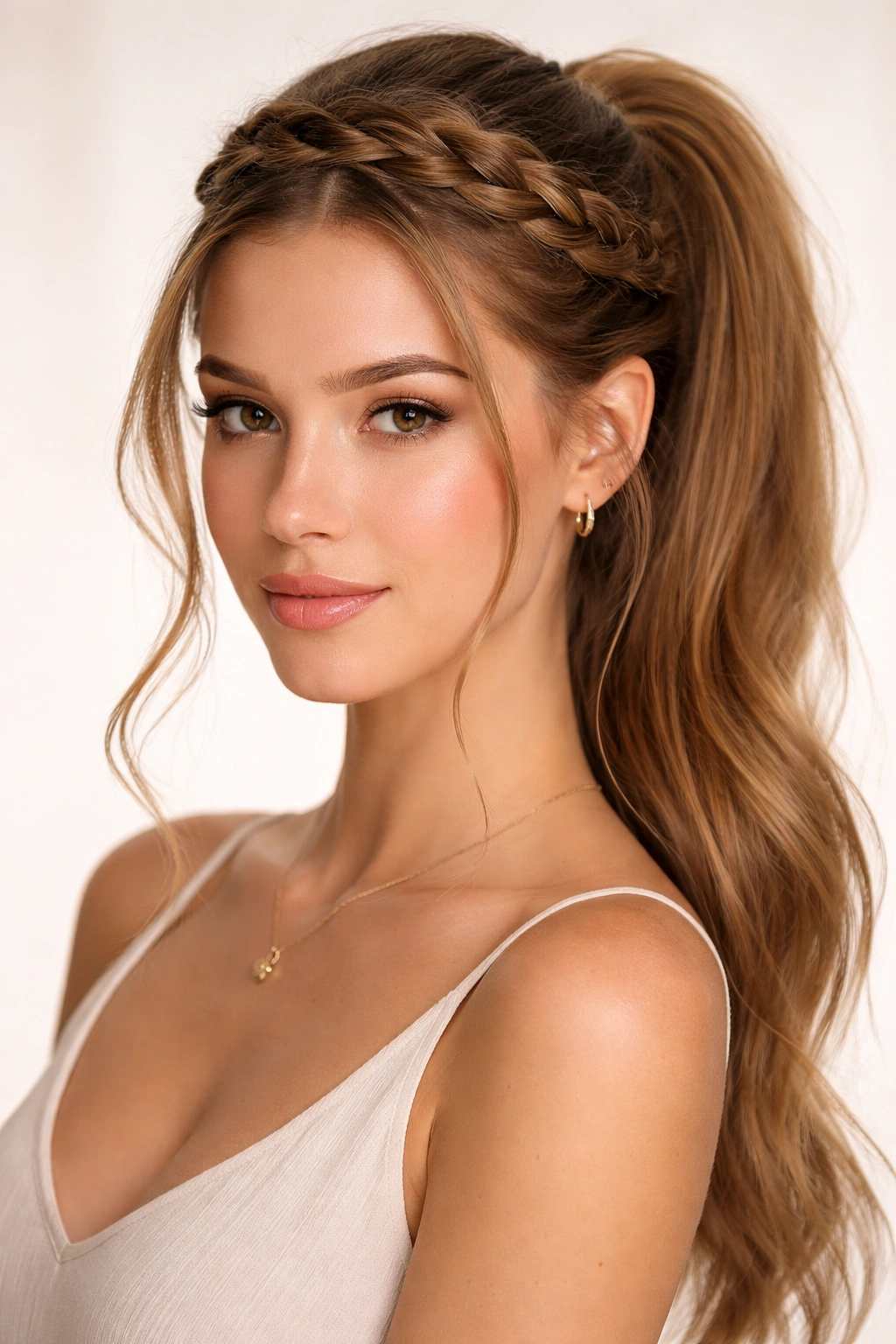
A crown braid is a braid that wraps around the back of your head like a halo, connecting at the base of your skull. When you then gather your hair into a ponytail from this point, you create this gorgeous appearance of having a braided crown with a cascading ponytail below it. It’s romantic, intentional, and works beautifully with everything from casual sundresses to formal events.
Why Crown Braids Work for Every Occasion
The crown braid has an inherent elegance because it frames the entire head and face. It’s flattering on every face shape because it draws the eye upward and adds softness around the face. The style works equally well with sleek, polished pieces or casual, laid-back outfits. It’s especially gorgeous with dresses, but also works beautifully with blazers, sweaters, and casual tops. The crown braid says “I took time with my appearance” without looking fussy or over-styled.
Creating Your Crown Braid Ponytail
Create a deep side part. On one side, section off a piece of hair and create a Dutch or French braid starting at your temple. As you braid, guide the braid back toward the opposite side of your head, creating a curved path rather than going straight back. This is where the “crown” effect comes from—the braid follows the curve of your skull rather than traveling straight down. When you reach the opposite side of your head at the nape area, secure the braid temporarily. Gather all your hair (including the ends of the crown braid) into a low ponytail at the base of your skull where the braid ends. Secure with an elastic and gently loosen the crown braid to create a soft, voluminous appearance.
Pro tip: The slower and more deliberately you create a crown braid, the more intentional and beautiful the final result—rushing this one shows.
9. Rope Braid Wrapped Ponytail
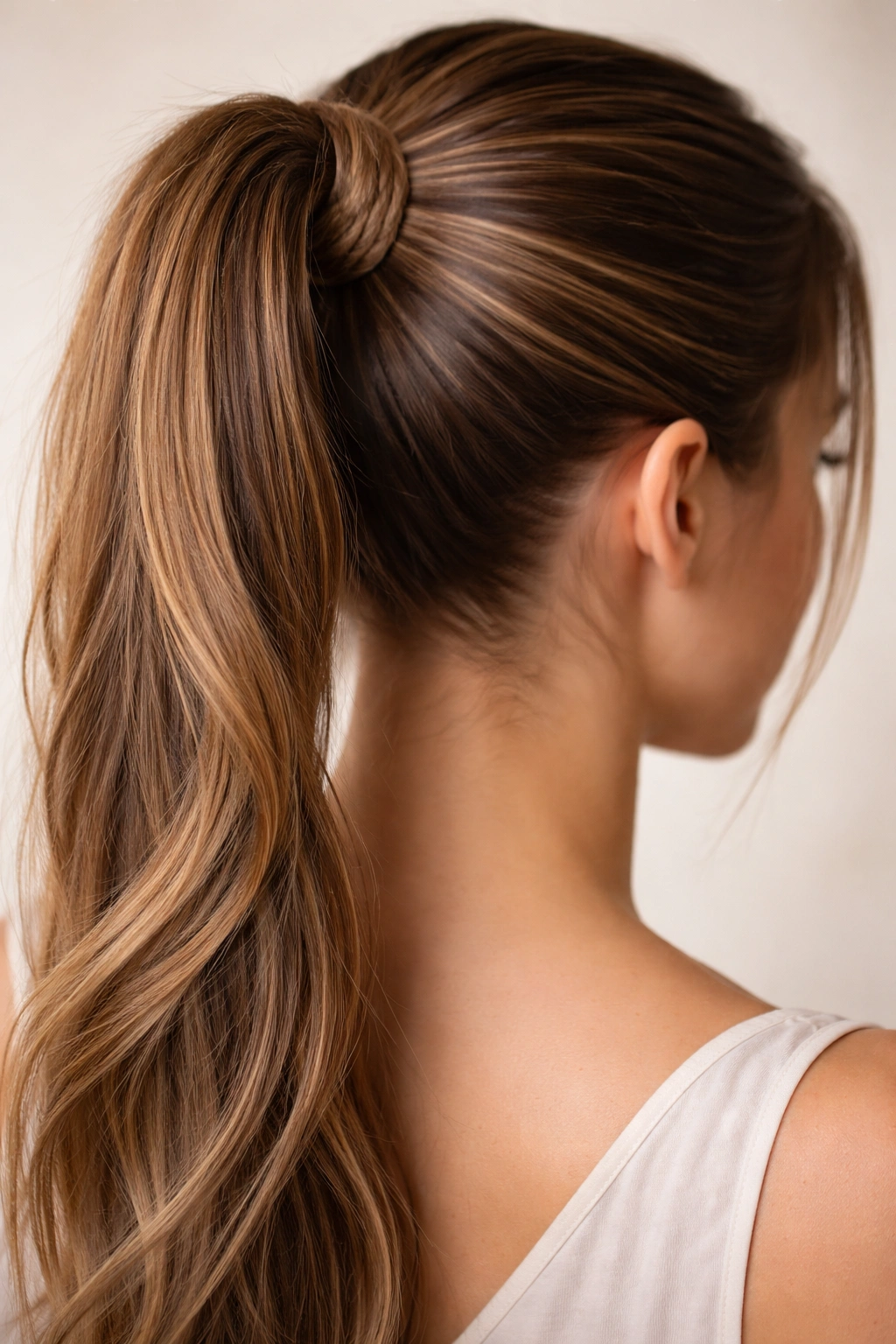
A rope braid is created by twisting two strands around each other in a spiral pattern—it’s technically not a braid at all, but the result is incredibly similar, and it’s usually faster to create. Wrapping a rope braid around the base of a ponytail creates an elegant detail that disguises your elastic and adds a handmade, artisanal feeling to your style.
The Elegance of a Wrapped Ponytail Base
By wrapping a rope braid around the base of your ponytail, you accomplish several things at once. You disguise the elastic, which immediately makes the style look more polished and intentional. You add a textured detail at exactly the point where the eye naturally lands. You create the illusion that your entire ponytail is braided when really you’ve only braided the base. This is the perfect solution for days when you want braid texture but also want the simplicity and speed of a basic ponytail.
Building Your Rope Braid Wrapped Ponytail
Create a high or mid-height ponytail and secure it loosely with an elastic. Take a small section of hair from underneath the ponytail base (a section about the thickness of a pencil). Divide this section into two strands and begin twisting them around each other, keeping the twist tight and controlled. Wrap this twisted rope around the base of your ponytail, completely covering the elastic, and secure the end of the rope with a bobby pin tucked into the ponytail. You can loosen the rope slightly after wrapping for a softer appearance, or keep it tight for a more polished look depending on your outfit and aesthetic.
Worth knowing: If you don’t have enough hair to create a visible rope braid from your own hair, you can use a thin extension or even a piece of ribbon or cord wrapped around the base—nobody will know it’s not all your hair.
10. Messy Braided Ponytail
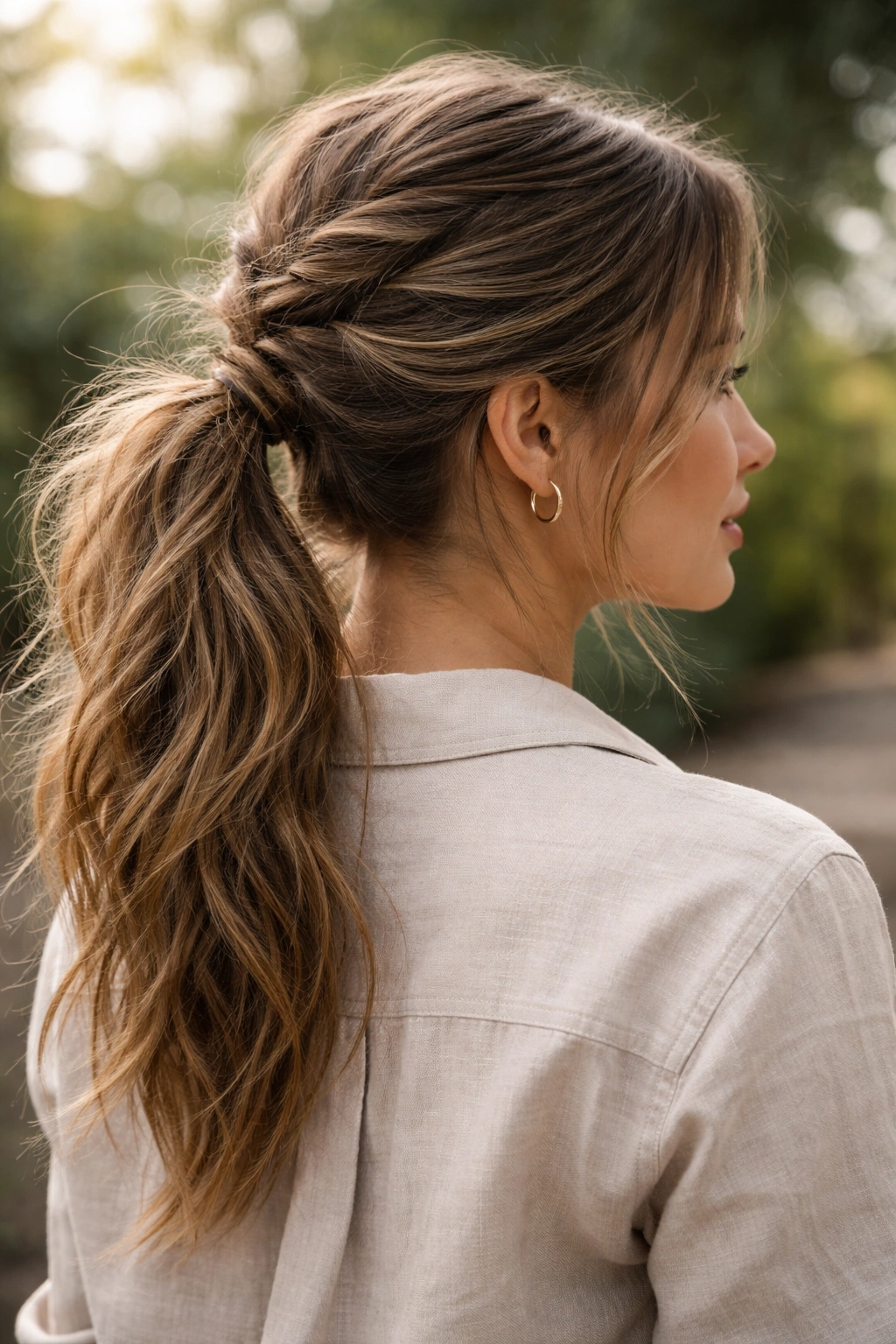
Sometimes the most versatile braid is one that’s intentionally undone. A messy braided ponytail is the ultimate everyday style because it works when your hair is textured, it works when you’re rushing, and it somehow manages to look polished despite being deliberately loose and lived-in. This is the style you reach for when you want something that looks effortless but is actually strategic.
Why Intentional Messiness Works Everywhere
There’s a reason “effortless” is the holy grail of styling—it reads as confident and approachable. A deliberately messy braided ponytail achieves that vibe while still showing that you put thought into your appearance. This style works with absolutely everything because the loose, relaxed texture complements both polished pieces and casual wear. It’s forgiving with second-day hair, it doesn’t require precision, and it actually improves as you wear it throughout the day.
Creating an Intentionally Messy Braided Ponytail
Start with textured or slightly damp hair. Create any braid you prefer—Dutch, French, fishtail, or three-strand—but braid it slightly looser than you normally would. Don’t aim for perfection; instead, allow small sections to escape as you braid. Gather all your hair into a ponytail and secure loosely with an elastic. Now comes the key step: go back and gently, deliberately pull sections of the braid outward, expanding it and creating width. Pull some pieces from the sides and even some from the back to create an undone appearance. A few flyaways actually add to this style, so don’t obsess over perfection. The result should feel intentional—like you meant to make it this way—rather than actually messy.
Pro tip: Use a texturizing spray or dry shampoo before you pull and loosen your braid—the grip it creates helps the strands hold their expanded position all day.
Final Thoughts
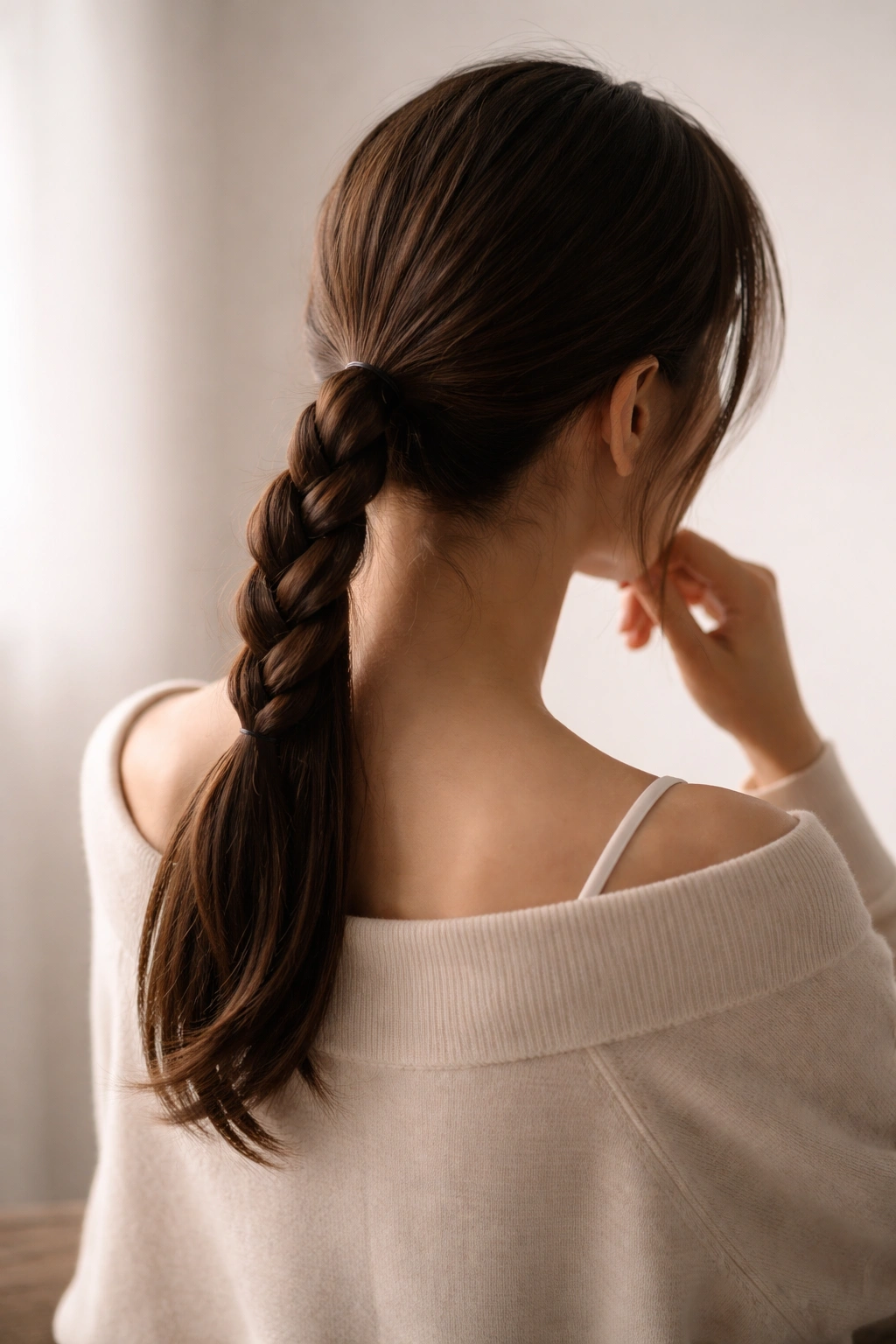
Braided ponytails work everywhere because they solve the universal styling problem: how do you keep your hair off your face while still looking intentional and put-together? The variations are endless, but what ties them all together is that single truth—a braid automatically adds polish, texture, and visual interest to your appearance, no matter what you’re wearing.
The beautiful part is that you don’t need any special tools, heat styling equipment, or expensive products to master these styles. You just need to understand the basic mechanics of a few different braiding techniques, then trust that you can adapt them to match whatever outfit and occasion you’re dressing for. Start with whichever style speaks to you, practice it three or four times until your hands remember the pattern, and suddenly you’ve got a signature style that works for every single day.
The real versatility comes from understanding that braids are flexible. A tight, precise Dutch braid reads differently with a blazer than a loose, messy fishtail does with a t-shirt and jeans. The same three-strand braid wrapped around your head as a crown becomes romantic with a dress, but edgy and cool when it’s two Dutch braids down the back with your head turned to the side. You’re not just learning hairstyles; you’re learning how to use your hair as a styling tool that adapts to whatever you need on any given day.
