



A side ponytail has an undeniable charm—it’s playful without being cartoonish, elegant without requiring a formal occasion, and infinitely flattering to most face shapes. But when you take that classic side style and elevate it into an updo, something magical happens. You gain the sophistication of an updressed look paired with the approachable, flirty energy that side-worn styles naturally carry. It’s the rare hairstyle that works equally well for a casual coffee date, a night out with friends, or a more polished event where you still want to feel like yourself.
The beauty of side updo ponytails lies in their versatility. They work with virtually every hair length (from shoulder-length to waist-length), suit all hair textures (straight, wavy, curly, and coily hair all play beautifully here), and adapt to whatever vibe you’re creating that day. Whether you want romantic and ethereal, sleek and modern, or textured and lived-in, there’s a side updo variation that delivers exactly what you’re after. These styles also have a practical advantage: they keep hair off your neck and face while still showing off length and movement in a way that traditional center updos sometimes don’t.
What makes these particular side updo ponytails special is how each one introduces a distinct technique—twists, braids, loops, wraps—that transforms a basic ponytail into something considerably more interesting. The flirt factor comes from the softness of placement at the side of the head, the way pieces can gently frame the face, and the inherent movement that comes when hair is swept to one side rather than pulled straight back. Even a seemingly minimal style like a high side ponytail reads as more intentional and polished than its center-pulled counterpart.
1. Twisted Wrap Side Ponytail
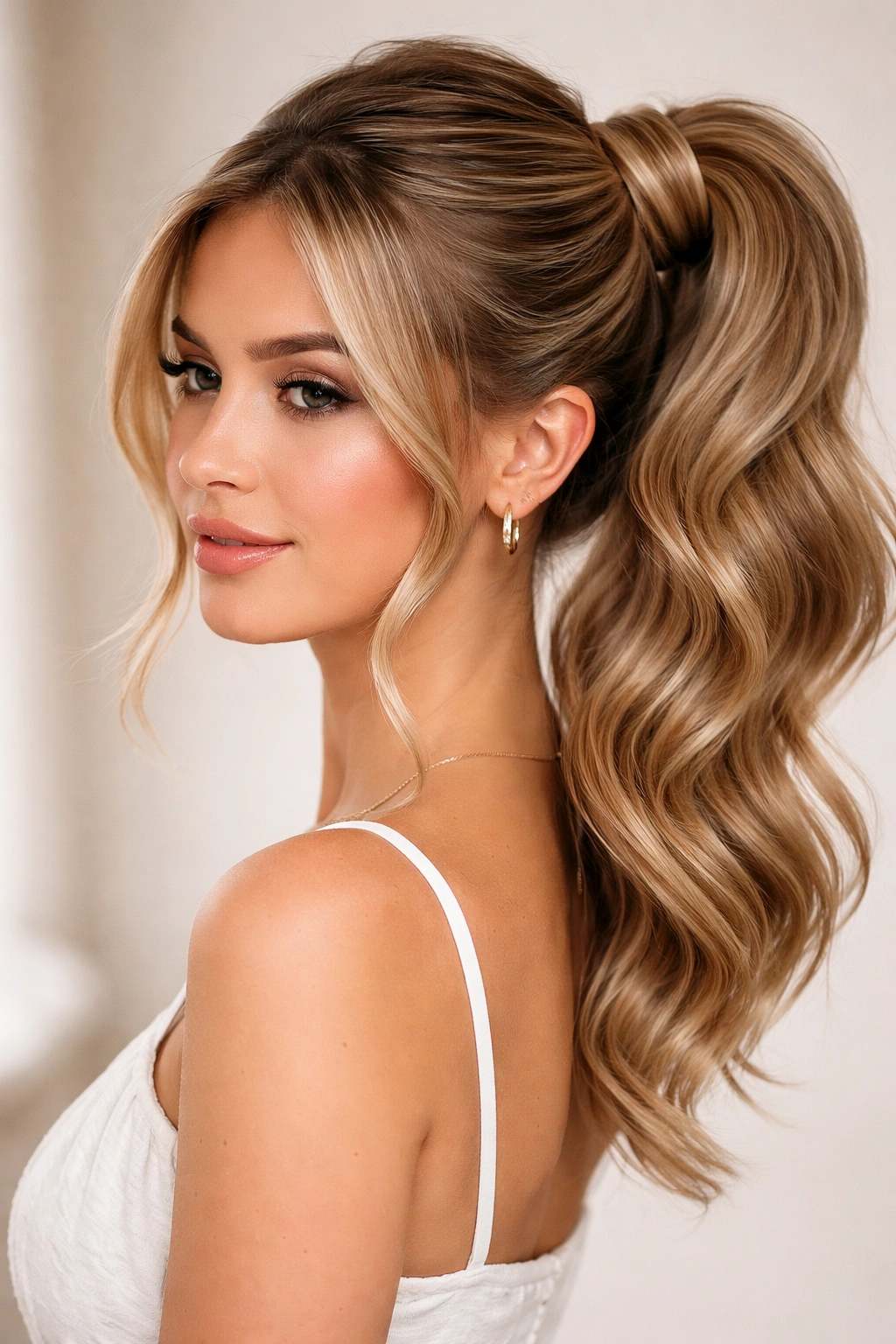
This is the gateway style for anyone who’s curious about side updos but wants something achievable on the first try. You’re creating a basic high side ponytail, then wrapping a section of hair around the elastic to hide it completely—the wrap transforms ordinary into intentional. The twist component comes from wrapping one of the ponytail sections back around itself before securing, creating soft dimension right at the base.
Why This Style Works for Flirtation
The wrapped base reads as polished from every angle, while the twisted detail is just interesting enough that people will ask how you did it. It’s that sweet spot where the effort-to-payoff ratio is heavily in your favor. The side placement automatically softens your face, and the twist adds movement without looking overdone.
How to Build It Step by Step
- Start with your hair completely brushed through, no knots. Tilt your head slightly toward the side where you want the ponytail to land—usually about an inch past the middle of the back of your head, positioned higher rather than lower for that updo effect.
- Gather hair at that spot and secure with an elastic. Before you finish the final pull-through, grab a small section of hair from within the ponytail and twist it loosely around your finger to create a soft spiral.
- Take another section from the ponytail, wrap it around the elastic and secured section, and secure it with a bobby pin that matches your hair color. This hides the elastic entirely.
- Use texturizing spray or a light hairspray on the twisted section to help it hold its shape throughout the day.
2. Side Braid Crown Updo
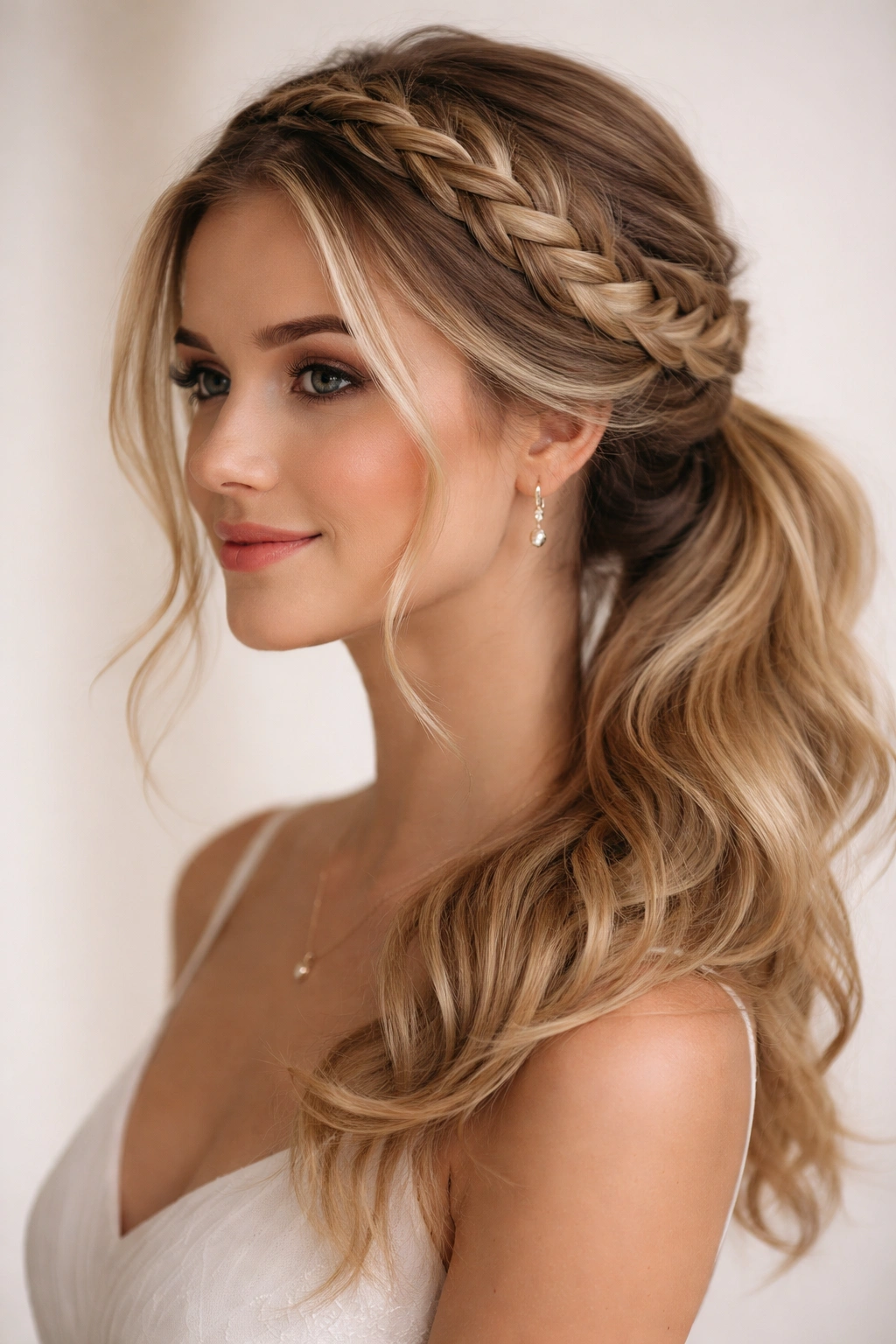
This style combines the romance of a crown braid with the friendliness of a side ponytail. You’re braiding from one side of your head, creating a frame for your face, then transitioning that braid into the base of your side ponytail. It’s more elaborate than it looks, but once you understand the mechanics, it becomes second nature.
The Flirt Factor Here
A braid that curves around your head has an inherent femininity that reads as both approachable and intentional. The side placement keeps it playful rather than formal. This style says you’ve put thought into your appearance without looking like you’ve spent hours on it—which is genuinely attractive.
Tips for Success
- Start the braid loosely. A tight crown braid can look severe and pull on your hairline. Aim for a braid that has some gentle give to it, which also makes it much easier to integrate into the ponytail base.
- Use dry shampoo or texturizing spray before braiding. Hair with texture grips better during braiding and holds the style longer, especially if you’re braiding hair that’s a day or two past a fresh wash.
- Angle your ponytail slightly higher than a typical side pony. Since you’ve already created a curved line with the braid, placing the ponytail too low can make the proportions feel off.
- Secure the braid and ponytail together rather than securing them separately—this creates unity and prevents the ponytail from drooping throughout the day.
3. Double Twisted Side Ponytail
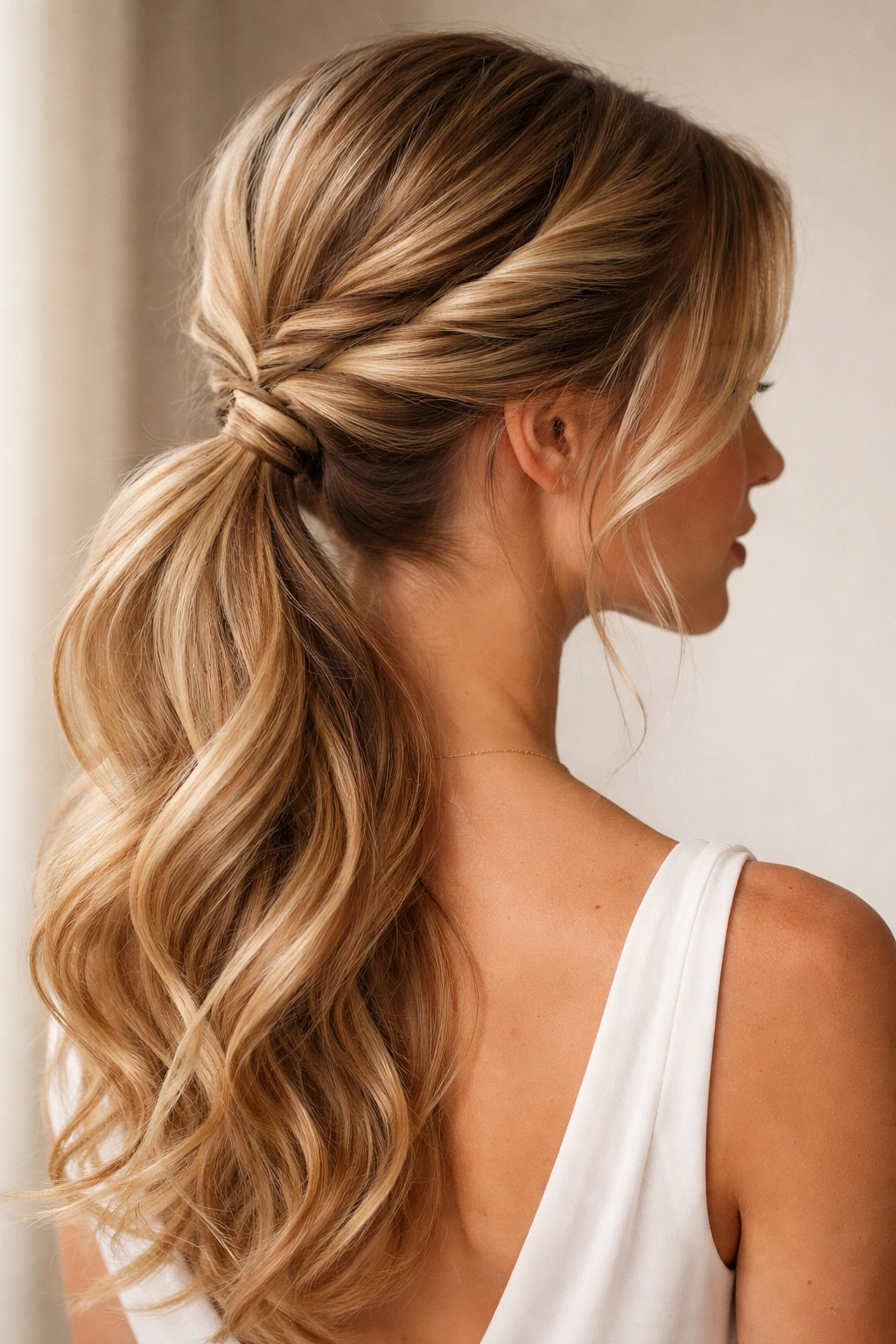
This style uses two parallel twists running down the back of your head, which merge into a single side ponytail. It’s visually interesting from every angle and gives you the sophistication of an updo without requiring braiding skill. The double-twist approach is forgiving and actually easier to execute than a single, perfect braid.
What Makes It So Flirty
Two twists create an intricate visual pattern that reads as intentional and playful. They frame the back of your head beautifully, and because they’re moving in slightly different directions before merging into the side ponytail, there’s an organic movement and flow to the whole style. It’s feminine without being fussy.
Building the Double Twist
- Brush your hair smoothly and part it down the center, separating the back half of your hair into two equal sections—one on each side of the center part.
- Starting on one side, take a 2-inch-wide section of hair at the crown and twist it downward toward your ear, incorporating hair as you go (like you’re creating a loose rope).
- On the other side, do the same thing, twisting from the crown down toward the opposite ear. The two twists should meet at the nape of your neck.
- Gather both twists together with the rest of your hair into a side ponytail positioned slightly back and to one side.
- Wrap a small piece of hair around the elastic to hide it and secure everything with bobby pins.
4. Romantic Side Swept Updo
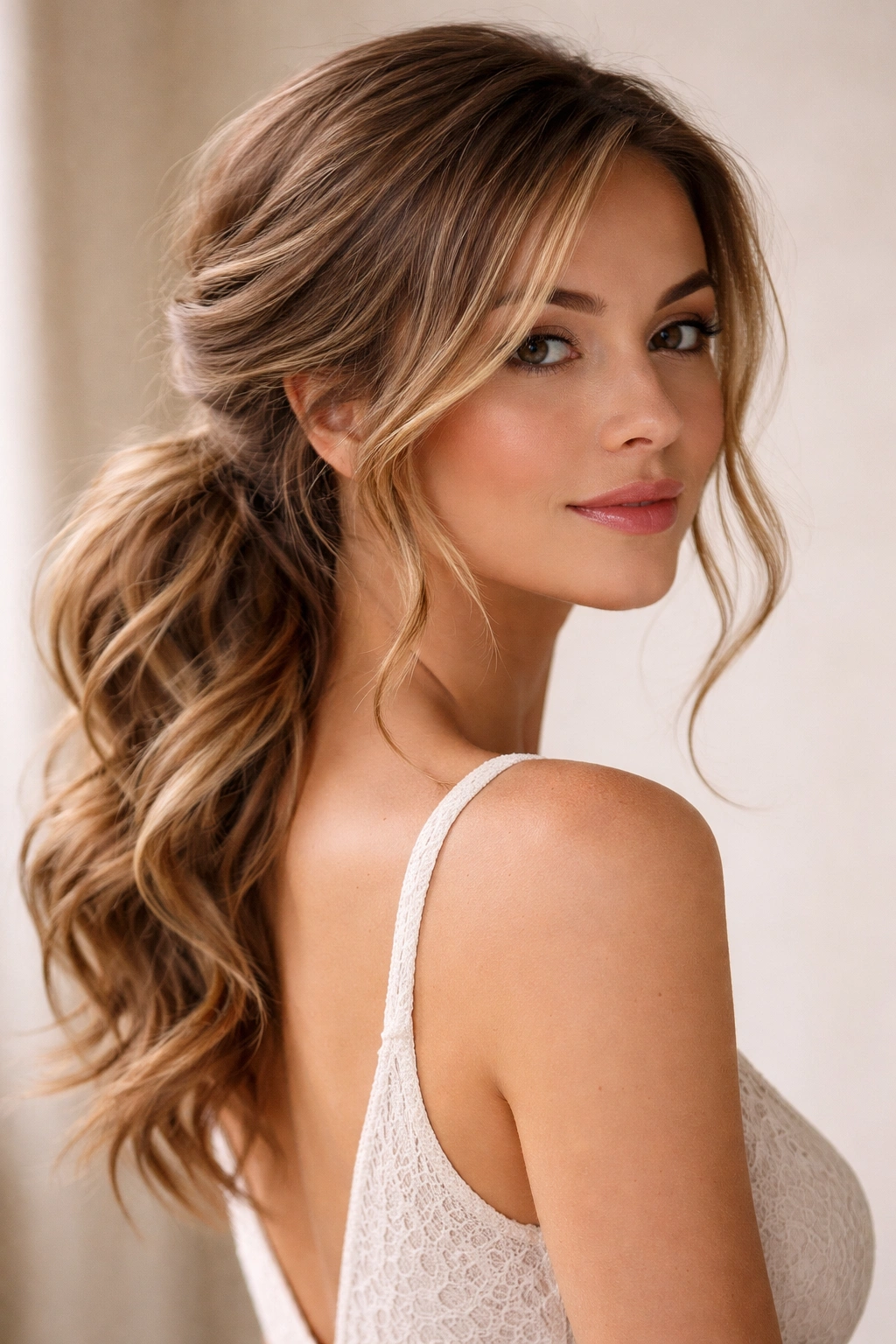
This is the style that makes you feel like you’re walking through a field in a period drama—soft, romantic, and genuinely beautiful. Unlike more structured updos, this one is intentionally lived-in and piece-y. You’re creating a relaxed side ponytail, then allowing face-framing pieces to stay loose for softness and movement.
Why It Reads as Flirty Rather Than Formal
The loose pieces around your face break up any severity that a traditional updo might have. Your face remains soft and visible, your neck is revealed for elegance, but the overall vibe stays approachable and romantic rather than stiff. It’s the hairstyle equivalent of wearing an evening gown with bare feet.
Execution Tips
- Start with texture in your hair. Waves or gentle curls are your friend here. If your hair is completely straight, add some waves with a curling iron or let your hair air-dry in loose braids for a few hours before styling.
- Don’t brush your hair smooth. Instead, use your fingers to gather it into a ponytail, which maintains texture and that piece-y quality.
- Leave 3-4 intentional face-framing pieces loose. These should be longer pieces that can move and flutter around your face, especially at the temples and cheekbones.
- Use a light-hold hairspray rather than a heavy-hold product. You want everything to feel soft and moveable, not cemented in place.
- Position your ponytail lower and further back than you might for other styles—a loose, romantic vibe often looks better when the ponytail sits a bit lower on your head.
5. Textured Bun Side Ponytail
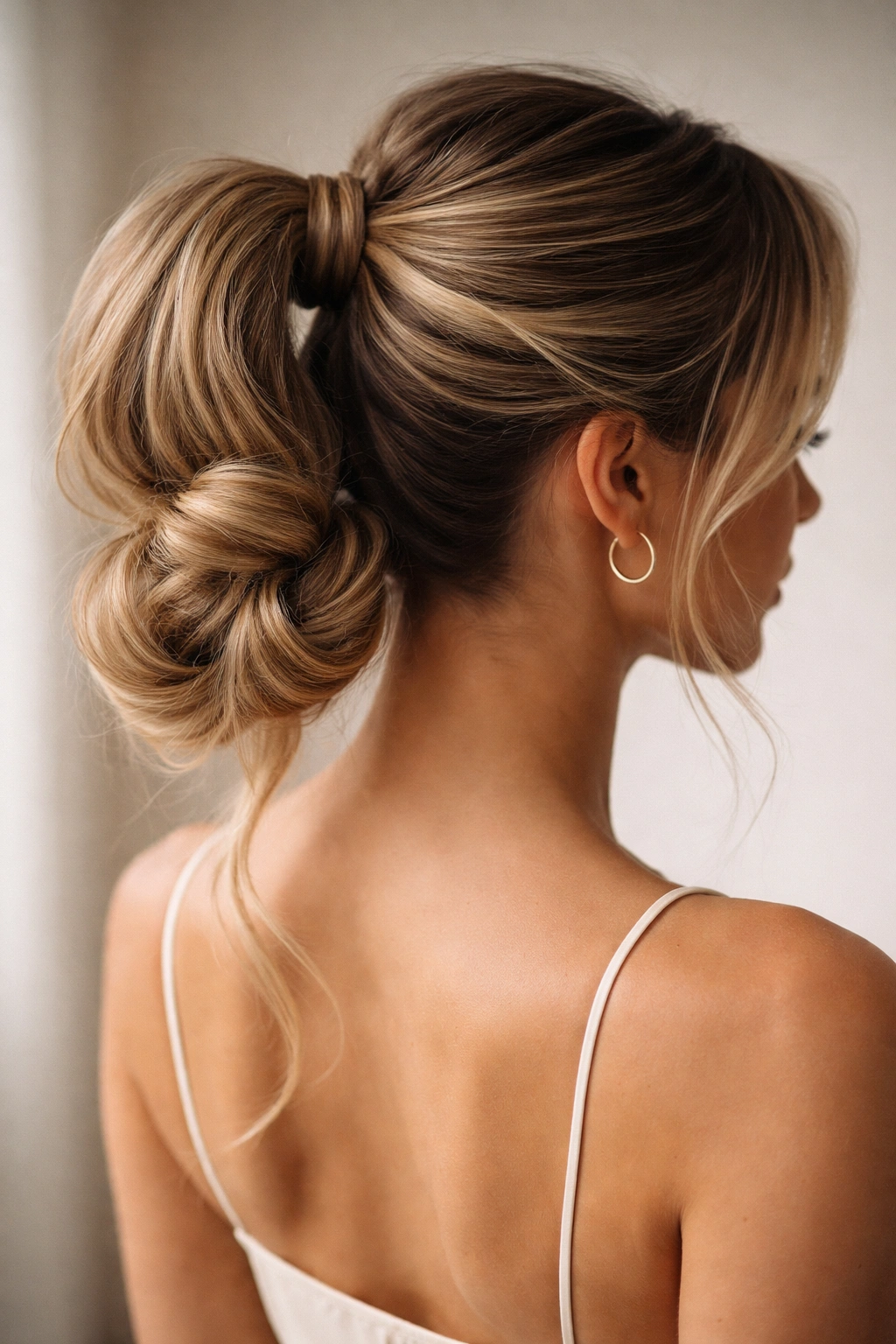
This style sits at the intersection of casual and polished—it’s a high side ponytail that you then twist and coil into a loose bun at the side of your head. It’s especially gorgeous with wavy or curly hair because the texture adds volume and visual interest without requiring any additional styling steps.
The Flirtation Here
A textured bun is inherently more interesting than a sleek one. Add the side placement and you’ve created something that looks effortlessly chic rather than overdone. The texture shows off healthy, beautiful hair while the updo structure keeps everything controlled and deliberate.
How to Create It
- Gather your hair into a high side ponytail and secure it loosely. You want the elastic loose enough that you can easily manipulate the ponytail section.
- Take the length of the ponytail and twist it loosely around itself, creating a rope-like spiral. As you twist, loosely coil this rope into a bun shape at the side of your head.
- Use bobby pins to secure the bun in place, tucking in any loose ends. The bun should look intentionally undone—not sleek and polished.
- Leave a few shorter pieces around your face and neck loose for softness. If your hair is naturally curly, let the curls fall where they want to. If it’s wavy, a few extra waves falling around your shoulders adds to the romanticism.
- Finish with a flexible hold hairspray that maintains the texture without making it crunchy.
6. Half-Up Half-Down Side Ponytail
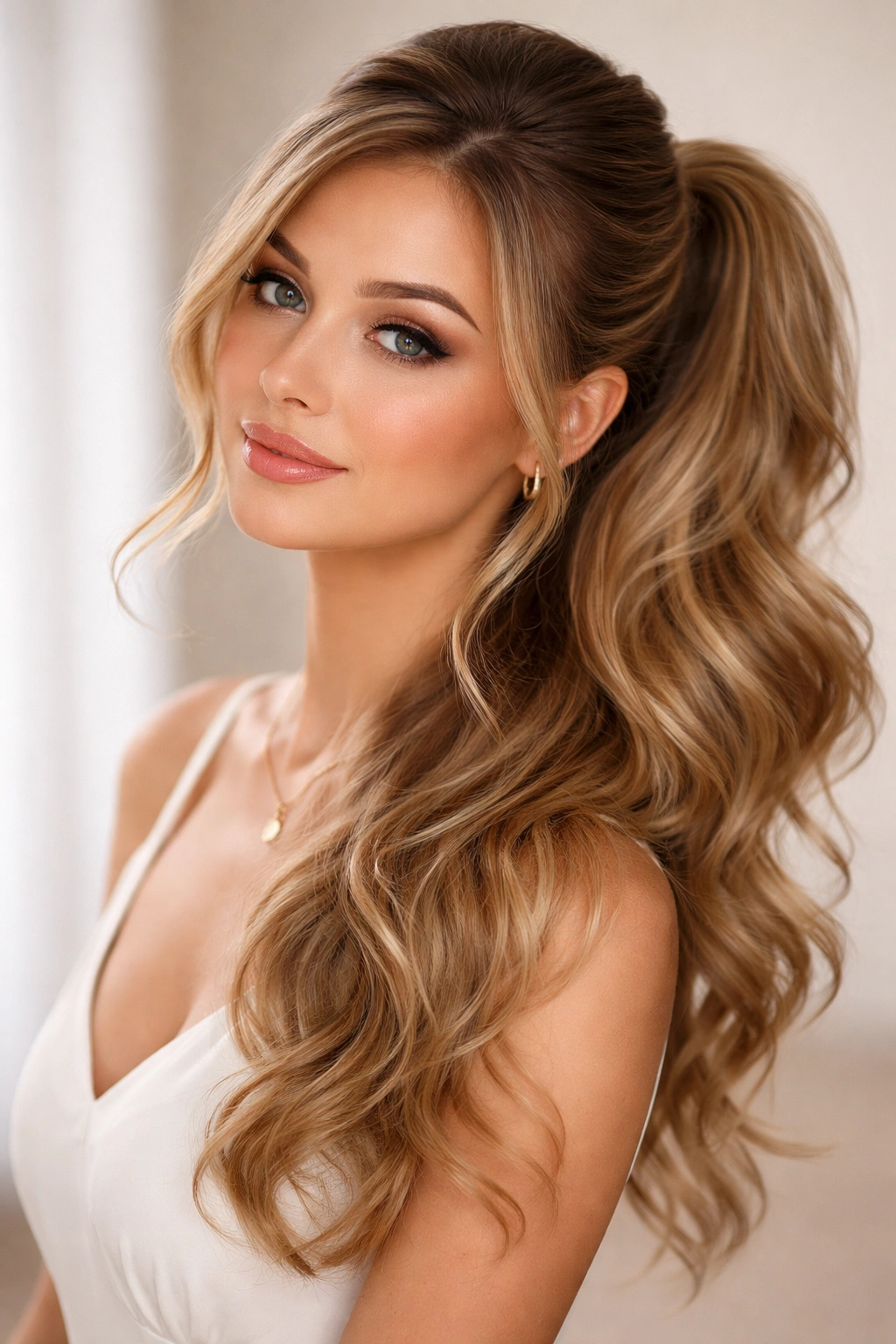
This hybrid style gives you the best of both worlds—the sophistication of an updo with the romance of hair worn down. You’re gathering only the top half of your hair into a side ponytail, while the bottom half stays loose and waves around your shoulders. It’s endlessly flattering and works whether you’re going for polished or casual.
Why This Reads as Flirty
Half-up styles have an inherent playfulness because you’re not fully committing to either direction. You’re showing intention while maintaining approachability. The side placement adds movement and softness to your face, while the gathered crown keeps everything controlled. It’s one of the most universally flattering styles because it works on virtually every face shape and age.
Styling for Success
- Create texture throughout your entire head of hair before gathering the top section. This is important because you want the down portion to look intentional, not like you just didn’t style it.
- Gather the top section from ear to ear, creating an invisible line across the crown of your head. Bring this section to the side and secure it loosely—you want it to look relaxed, not tight.
- Let the back section flow freely. If you have naturally straight hair, consider adding waves with a curling iron. If you have wavy or curly hair, use a diffuser or air-dry styling to enhance your natural texture.
- Add face-framing pieces by gently pulling a few wisps from the gathered section—this softens the line between the pinned-up and down sections.
- Use bobby pins rather than a visible elastic if possible. If you do use an elastic, wrap a piece of hair around it to camouflage it.
7. Side Fishtail Wrapped Ponytail
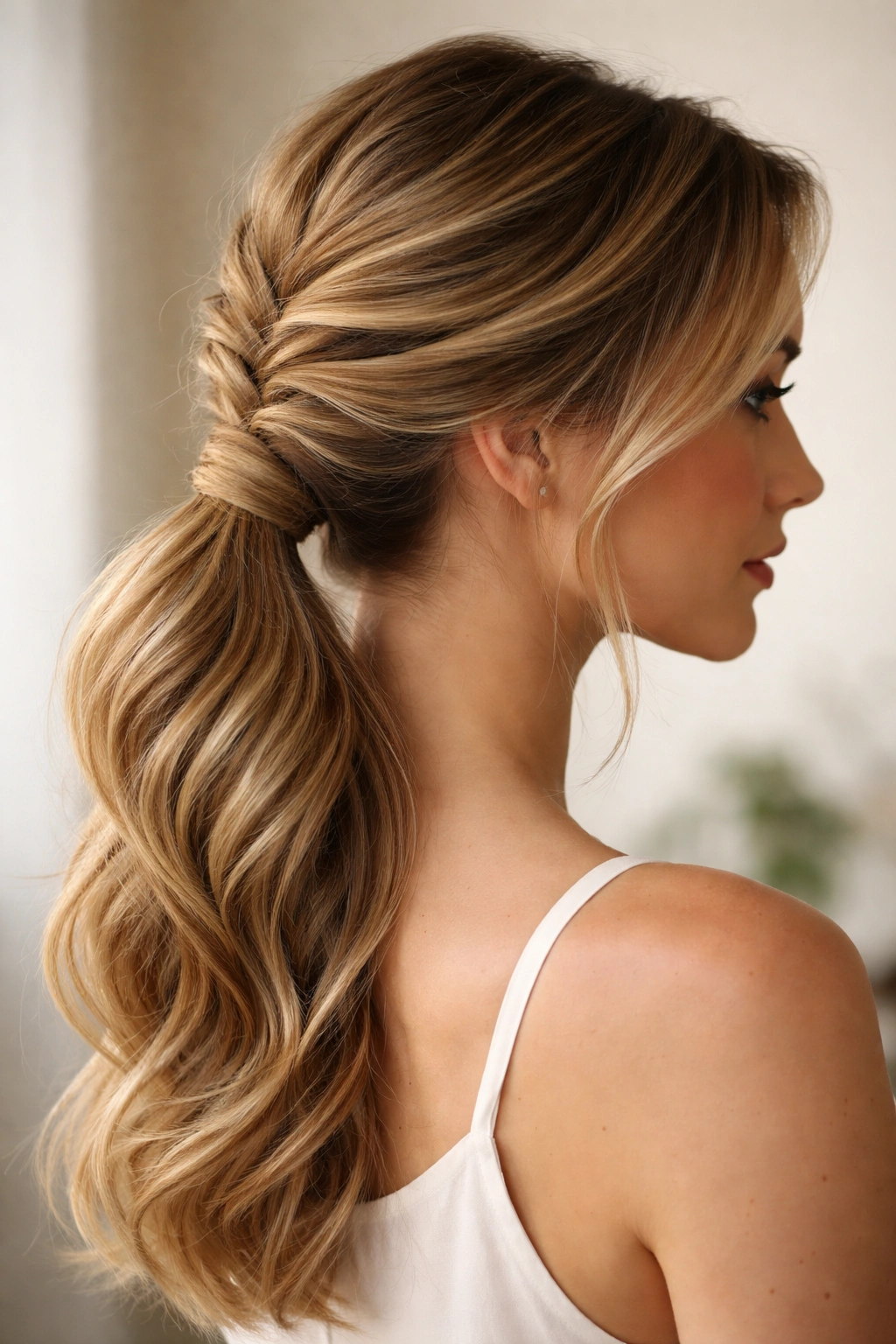
The fishtail braid has an intricate, delicate look that actually reads as easier to achieve than a traditional three-strand braid once you get the technique down. When you combine it with a side ponytail and wrap the base, you create something genuinely show-stopping without the fussy factor.
The Flirtation of Intricate Detail
A fishtail has a romantic, vintage quality that immediately elevates any style. When it’s positioned at the side and leads into a ponytail, you’ve created movement and visual interest that frames your face beautifully. It’s the kind of style that makes people assume you spent hours on your hair when you really only invested 10 minutes.
Building Your Fishtail Wrapped Ponytail
- Start with textured hair. Fishtails work best when hair has some grip and texture. Use dry shampoo or texturizing spray before you begin.
- Begin your fishtail braid at the crown, on whichever side you want your ponytail to land. As you braid, angle it toward your ear on that side—this creates the side direction naturally.
- Continue the fishtail braid down toward the nape of your neck, then gather the braid and the remaining loose hair into a side ponytail secured with an elastic.
- Wrap a small piece of hair around the base of the ponytail and through the elastic, completely hiding the elastic band. Secure the wrap with a bobby pin.
- Gently tug on the fishtail strands to loosen the braid slightly, creating a softer, more romantic appearance. The slight looseness actually makes the fishtail more visually interesting.
8. Delicate Looped Side Updo
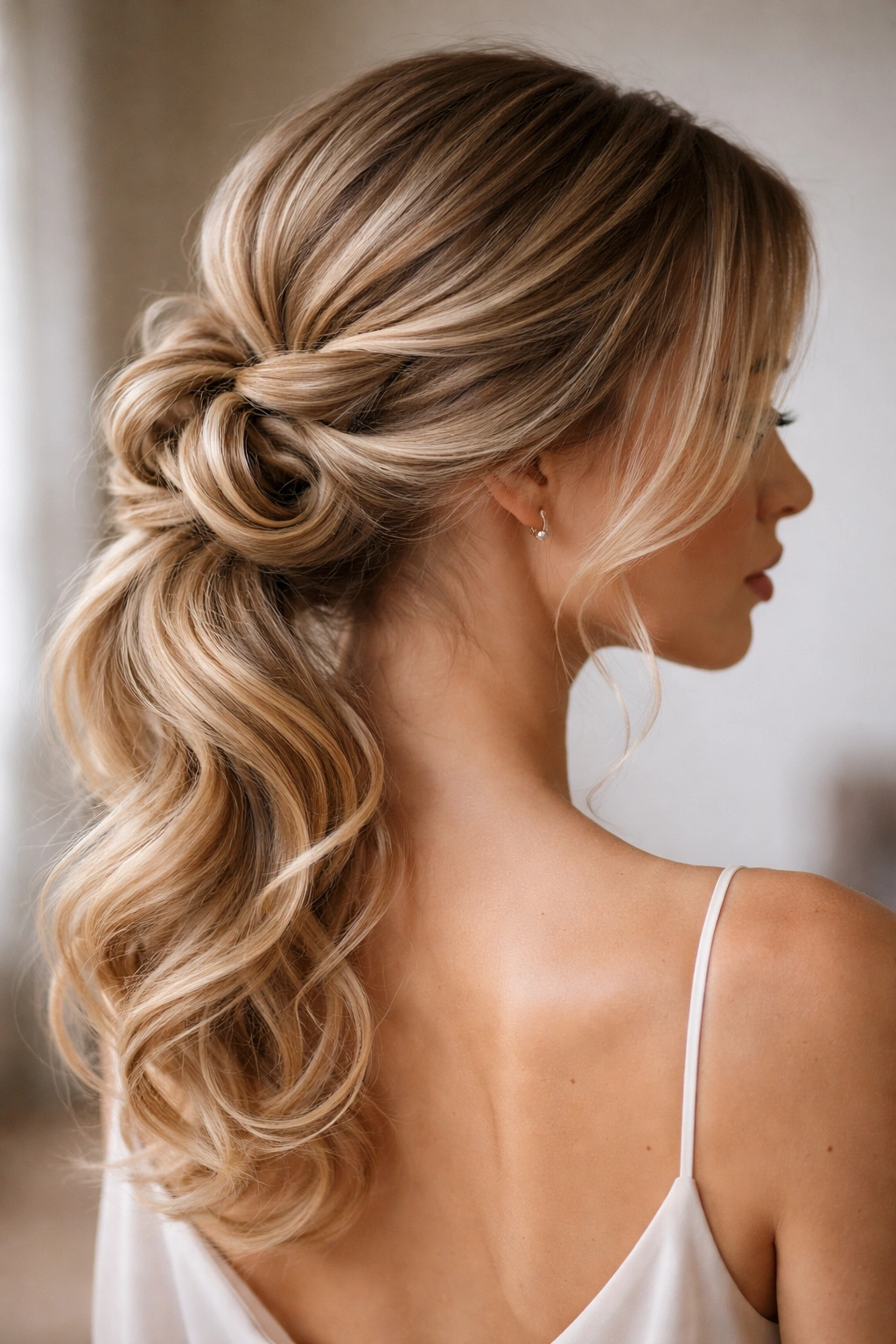
This style is pure elegance with an unexpected playfulness. You’re creating a side ponytail, then forming loops or coils from that ponytail and securing them against the back of your head. The loops create interesting depth and visual texture without the structure of a traditional bun.
Why It Reads as Flirty and Sophisticated
Loops have an almost bow-like quality that’s charming and a bit whimsical. They’re geometric enough to look intentional but soft enough to remain romantic. The side placement keeps everything feeling approachable rather than formal, even though the technique is quite elegant.
Execution Steps
- Create a clean side ponytail positioned at the back-side of your head, about ear level or slightly lower. Secure it snugly with an elastic.
- Divide the ponytail into 3-4 sections (depending on the thickness of your hair).
- Take the first section and create a loop, pinning the loop back against your head using a bobby pin that matches your hair color. The loop should be no larger than 2-3 inches in circumference.
- Repeat with each section, creating loops that overlap slightly and cover the back side of your head. The loops should look casual and organic, not perfectly matched.
- Tuck in any remaining length under the loops or blend it into the back of the style.
- Use hairspray to secure everything, but maintain a soft, natural look rather than a rock-hard hold.
9. Sleek Side High Ponytail
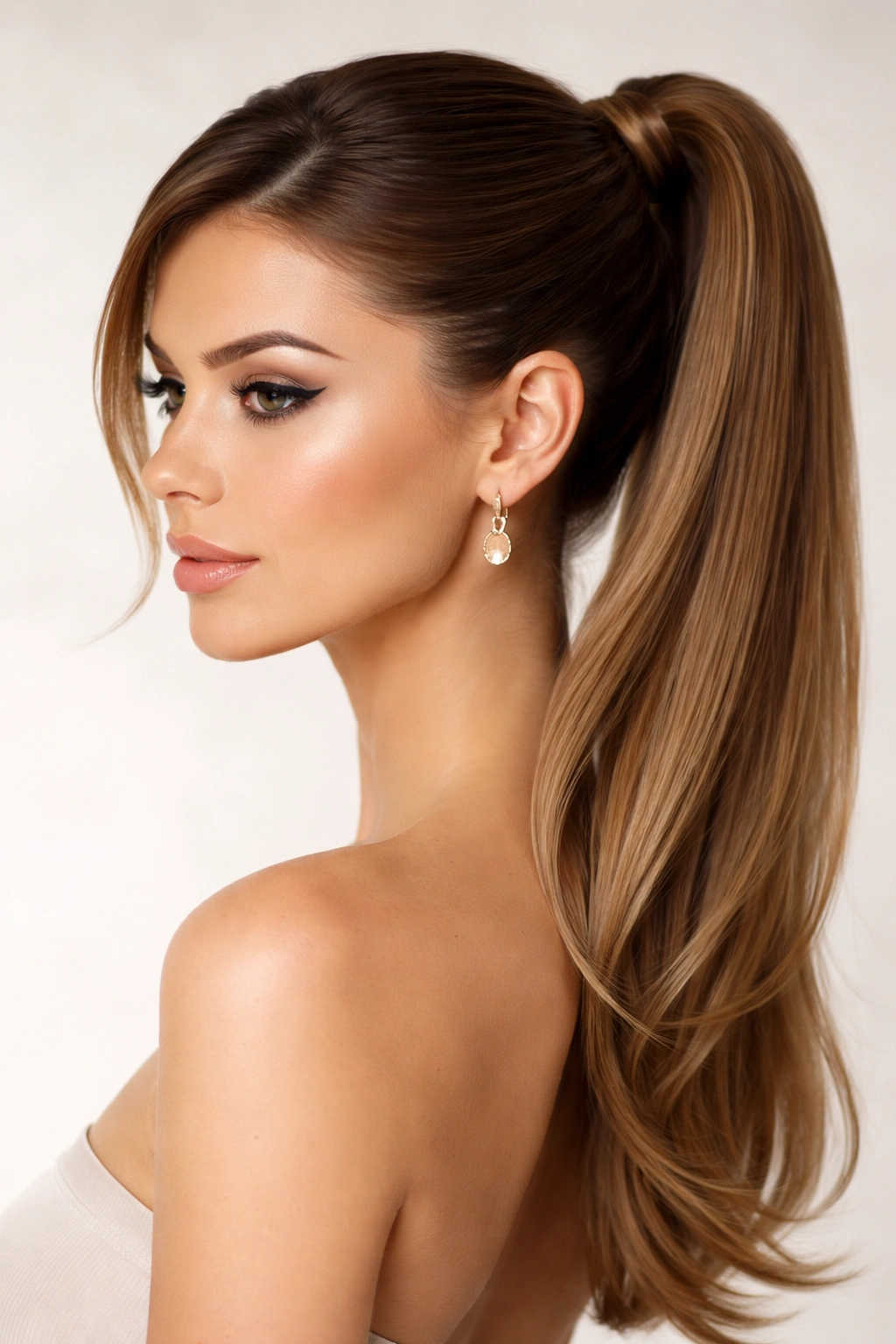
Sometimes the most flirty style is the simplest one. A sleek, polished side ponytail positioned high on your head reads as intentional and modern. There’s nothing fussy about it—just clean lines, great proportions, and the confidence that comes with showing your face and neck completely.
The Flirtation of Simplicity
There’s genuine power in simplicity. A sleek side ponytail shows off your face, your bone structure, and your neck in ways that more elaborate styles sometimes obscure. It reads as confident and modern, with an understated flirtation that says you know what works for you and you’re not overthinking it.
How to Achieve the Sleek Look
- Start with smooth hair. Blow-dry your hair straight or use a flat iron to create a smooth base. Avoid any texture or frizz—smoothness is the whole point here.
- Use a smoothing serum or lightweight hair oil on your ends before gathering your ponytail. This prevents flyaways and gives everything a polished appearance.
- Gather your hair high on one side of your head, positioning the ponytail at about ear level, angled back and up. Use a smooth elastic or a velvet scrunchie.
- Use a fine-tooth comb to smooth any bumps around the crown and sides before you secure your ponytail.
- Wrap a thin piece of hair around the base of your ponytail and secure it with a bobby pin. This detail elevates the whole look.
- Apply a light hairspray to tame any baby hairs and keep everything smooth throughout the day without making hair feel stiff.
10. Romantic Side Dutch Braid Updo
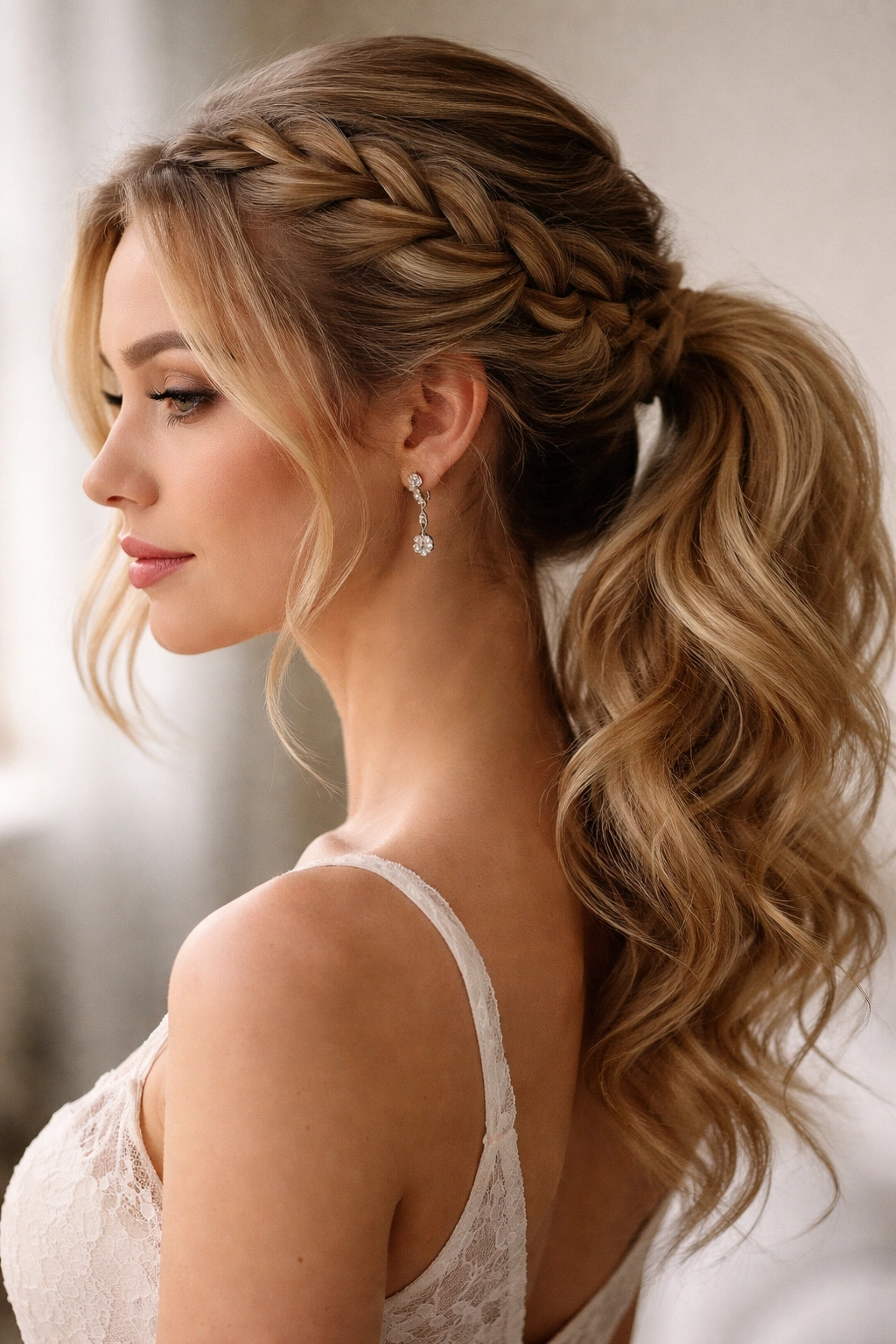
A Dutch braid (which looks like a French braid on the outside of your head rather than woven through the inside) creates interesting visual texture and dimension. When positioned at the side and integrated into a ponytail or updo, it becomes genuinely romantic and eye-catching.
Why Dutch Braids Read as Flirty
The Dutch braid has a three-dimensional quality that photographs beautifully and catches light in interesting ways. Because it’s braided on the outside rather than tucked in, it creates surface texture and shadow that’s visually fascinating. Position it at the side and you’ve created movement that frames your face while showing your hair off.
Building the Dutch Braid Side Updo
- Start with brushed, preferably textured hair. Texture makes braiding easier and helps the braid hold throughout the day.
- Begin your Dutch braid at the crown on the side where you want your ponytail. As you braid, angle it downward toward the nape of your neck, incorporating hair as you go.
- Continue until you’ve reached the nape, then gather the braid and remaining loose hair into a side ponytail.
- Secure the ponytail loosely at first, then wrap a piece of hair around the base.
- Gently tug on the braid strands to loosen it and increase its visual impact. A slightly loose Dutch braid is far more interesting than a tight one.
- Leave the ponytail section flowing loose, or twist it into a soft bun. Either way, the braid becomes the showstopper of the style.
11. Piece-y Side Ponytail Updo
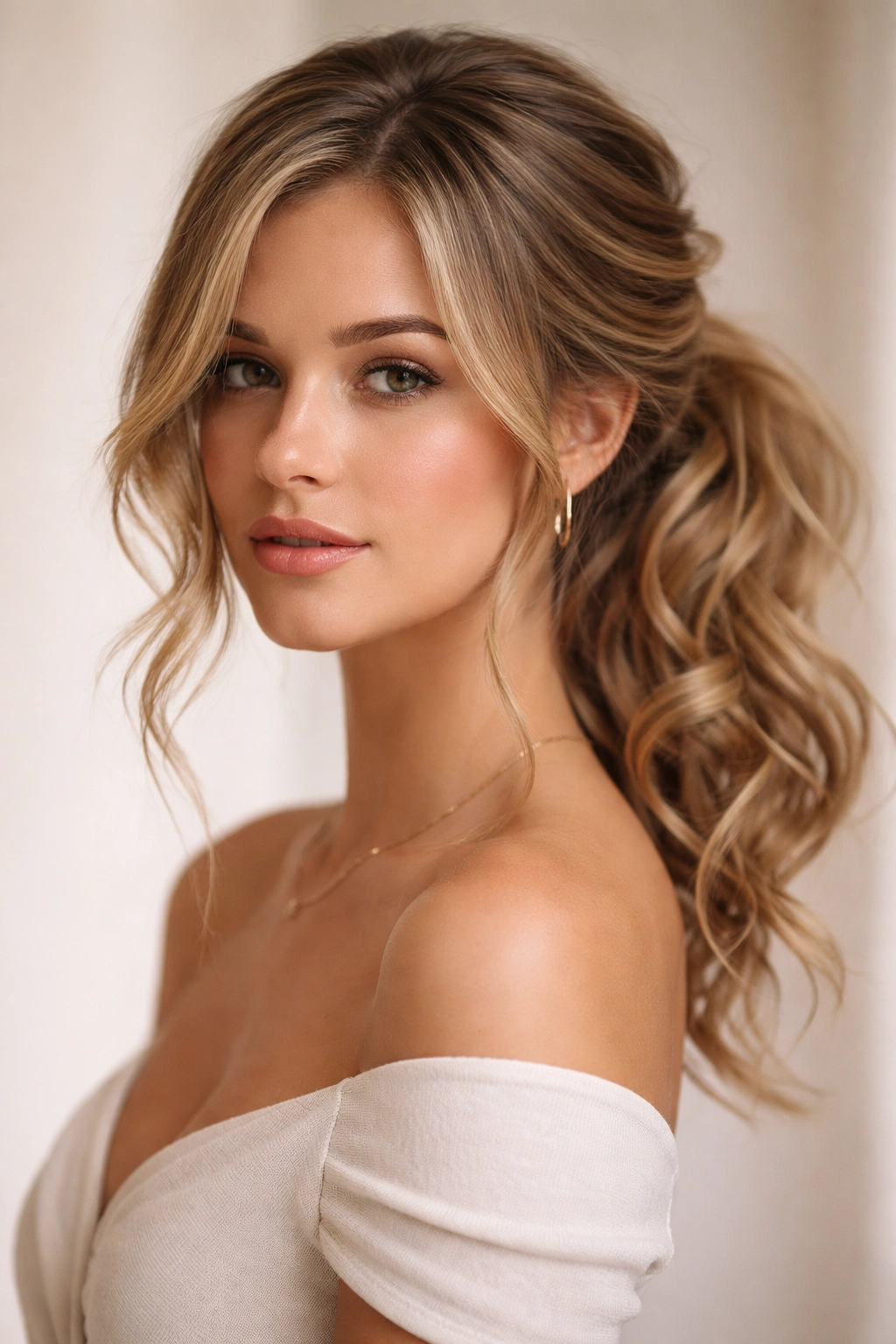
This style embraces a softer, less structured approach. You’re creating a side ponytail, but intentionally leaving wisps and pieces loose around your face, neck, and the back of your head. It’s the opposite of sleek—instead, it’s lived-in, romantic, and utterly charming.
The Flirtation of Intentional Looseness
There’s something deeply attractive about looking like you just threw your hair together but actually took thoughtful care with placement and texture. A piece-y side ponytail updo achieves this balance beautifully. It says confidence—confidence that you don’t need everything perfectly controlled to look great.
Creating the Piece-y Effect
- Start by adding waves or curls throughout your entire head of hair. This is essential because you want the loose pieces to have dimension and movement, not be limp and straggly.
- Gather your hair into a side ponytail, but do it loosely and with your fingers rather than a comb. Finger-gathering naturally creates that piece-y quality because you’re not pulling everything smooth and tight.
- Before securing the ponytail, identify which pieces you want to leave loose. Usually this means a piece on each side of your face and a few pieces at the nape of your neck.
- Gently pull these pieces free from the ponytail.
- Secure your ponytail with an elastic, then wrap a piece of hair around the base.
- Lightly mist the loose pieces with a flexible-hold hairspray so they maintain their wave and stay in position around your face.
- Consider curling the loose pieces with a 1-inch curling iron for extra definition and movement.
12. Wrapped Crown Side Ponytail
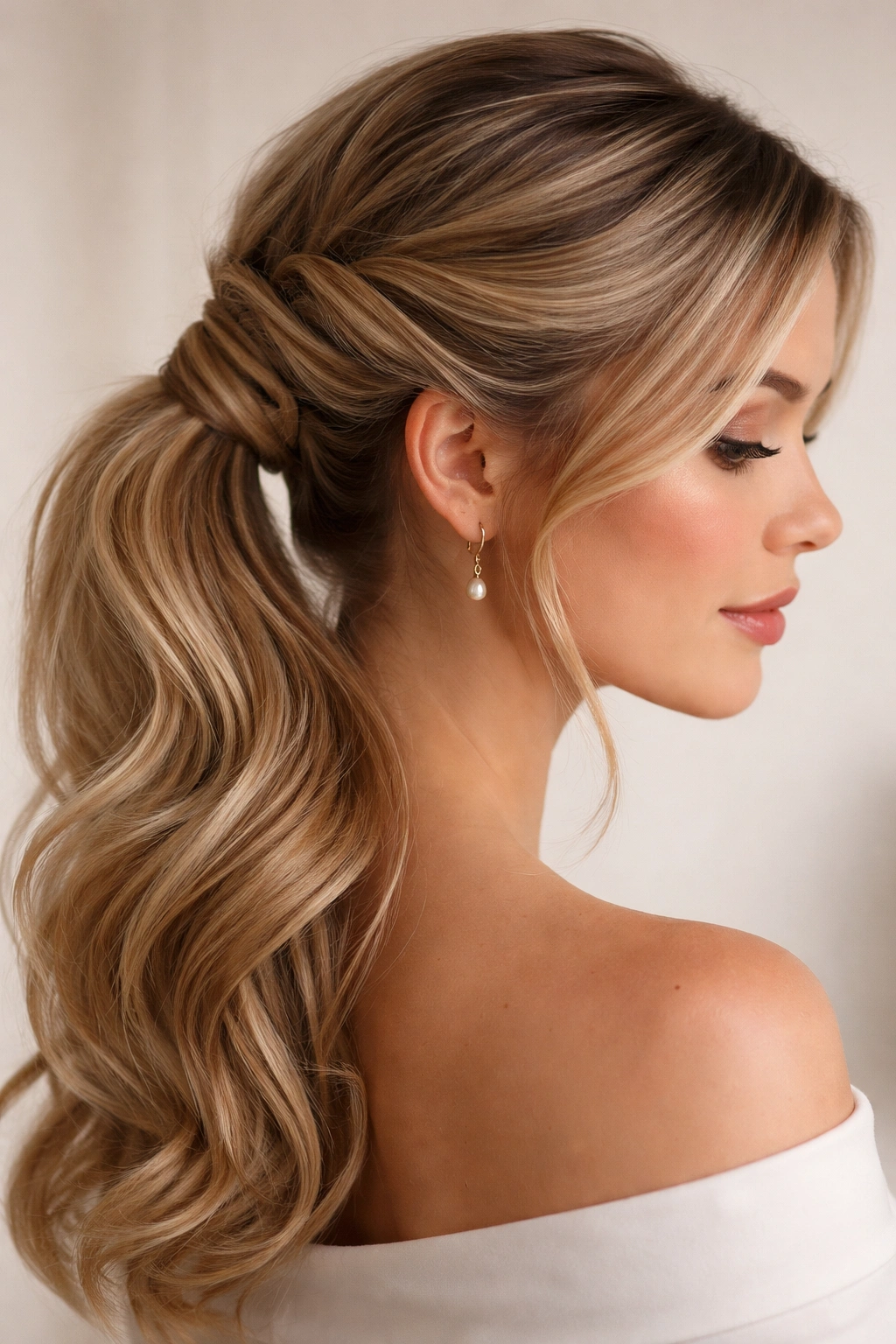
This style creates a decorative crown of wrapped hair around the base of your side ponytail. Multiple sections of your ponytail are wrapped around the elastic and around each other, creating an intricate crown effect. It’s more involved than simpler styles but worth the effort for its show-stopping impact.
Why This Creates Maximum Flirtation
There’s genuine elegance in this style. The crown wrapping elevates a side ponytail from casual to special-occasion-ready. It shows intentionality and care without reading as fussy or overdone. The side placement maintains playfulness while the crown detail adds sophistication—it’s the perfect combination.
Step-by-Step Execution
- Create a secure side ponytail positioned at the back-side of your head. Use an elastic that matches your hair color.
- Divide your ponytail into 4-5 sections by using bobby pins to secure each section separately. This keeps each section distinct as you work.
- Take the first section and wrap it around the base of the ponytail, securing it with a bobby pin. The wrap should lay flat against the side of your head, creating part of your crown.
- Take the next section and wrap it around the first section and the ponytail base, creating a layered, dimensional effect.
- Continue this process with each section, alternating which direction you wrap to create visual interest.
- Tuck in loose ends and secure everything with bobby pins.
- Use a firm-hold hairspray to keep the crown wraps in place throughout the day, especially if you’ll be moving around or in humid conditions.
Final Thoughts
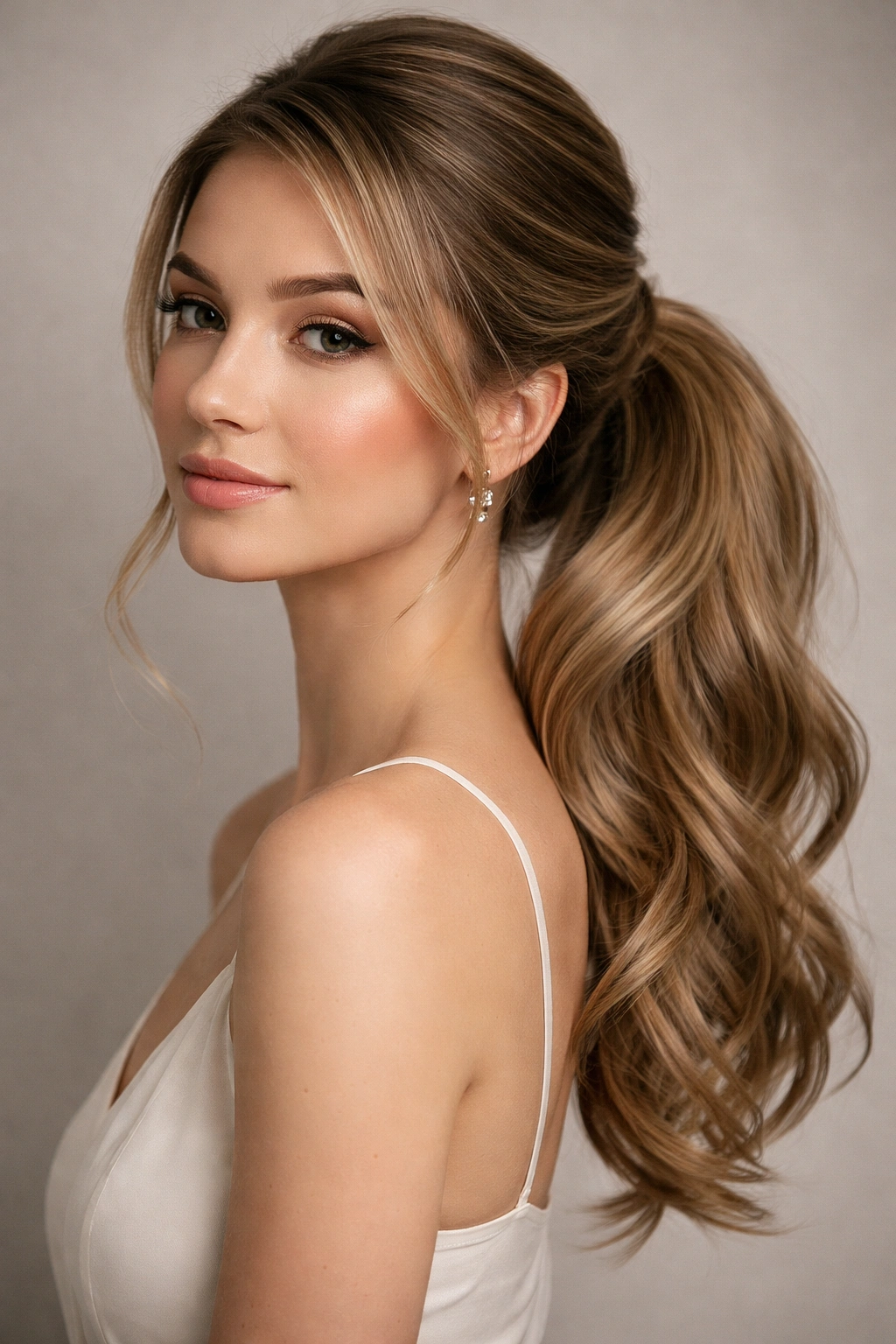
A side updo ponytail is one of those rare hairstyles that works across settings, face shapes, hair types, and personal styles. Whether you opt for the simplicity of a sleek version or the romance of a piece-y interpretation, you’re choosing a style that reads as both intentional and approachable. The flirt factor comes naturally with this placement and structure—there’s something about a side-worn style that softens your features and creates movement and light around your face in ways that center-pulled styles simply don’t match.
What makes these twelve variations powerful is that they give you options for mood and occasion while staying within the same aesthetic family. On days when you want to feel polished and put-together, the sleek side high ponytail or the wrapped crown updo delivers that vibe effortlessly. On days when you want to feel romantic and relaxed, the piece-y version or the textured bun works beautifully. Each variation teaches you a technique—twisting, braiding, looping, wrapping—that you’ll find yourself using in other hairstyles too, so the time you invest in learning these styles pays dividends far beyond this one look.
The best part? Every single one of these styles can be adapted to your specific hair length, texture, and personal preference. A style that works for thick, wavy hair can be adjusted for fine, straight hair. A style designed for shoulder-length hair can be adapted for longer lengths. The fundamental mechanics remain consistent while your execution becomes personalized. That’s the mark of a truly versatile hairstyle—one that feels like it was created specifically for you, even though countless people have worn some version of it before you.
