



Short locs can feel limiting when you’re trying to style them into a full, voluminous ponytail, but the reality is that length isn’t everything. The right technique, strategic sectioning, and a few styling tricks can transform even shoulder-length locs into a ponytail that looks thick, intentional, and genuinely impressive. What makes a short loc ponytail look full isn’t about having more hair—it’s about understanding how to position what you have, create the illusion of volume through layering and placement, and choose styling methods that work with the texture and weight of locs rather than against them.
If you’ve felt frustrated watching longer-haired friends pull off effortless high ponytails while your shorter locs seem to lie flat or look sparse, you’re about to discover that short locs have their own advantages. They’re easier to manage, hold styles longer without putting stress on your scalp, and when styled correctly, can actually look fuller and more deliberate than long locs pulled straight back. The key is knowing which ponytail styles play to the strengths of shorter lengths and how to execute them in a way that maximizes volume and visual impact.
What you’ll find in the styles below are real, tested approaches that work specifically with short locs. Some rely on creative parting and sectioning. Others use styling products and techniques to add dimension. Many work because they don’t fight your natural texture—they celebrate it. These aren’t styles that require your locs to be a certain thickness or maturity level, and they’re not styles that will damage your hair if done with intention and care. Whether your locs are classic, freeform, sisterlocks, or anywhere in between, you’ll find options that work with your specific situation.
1. The Bubble Ponytail with Soft Angles
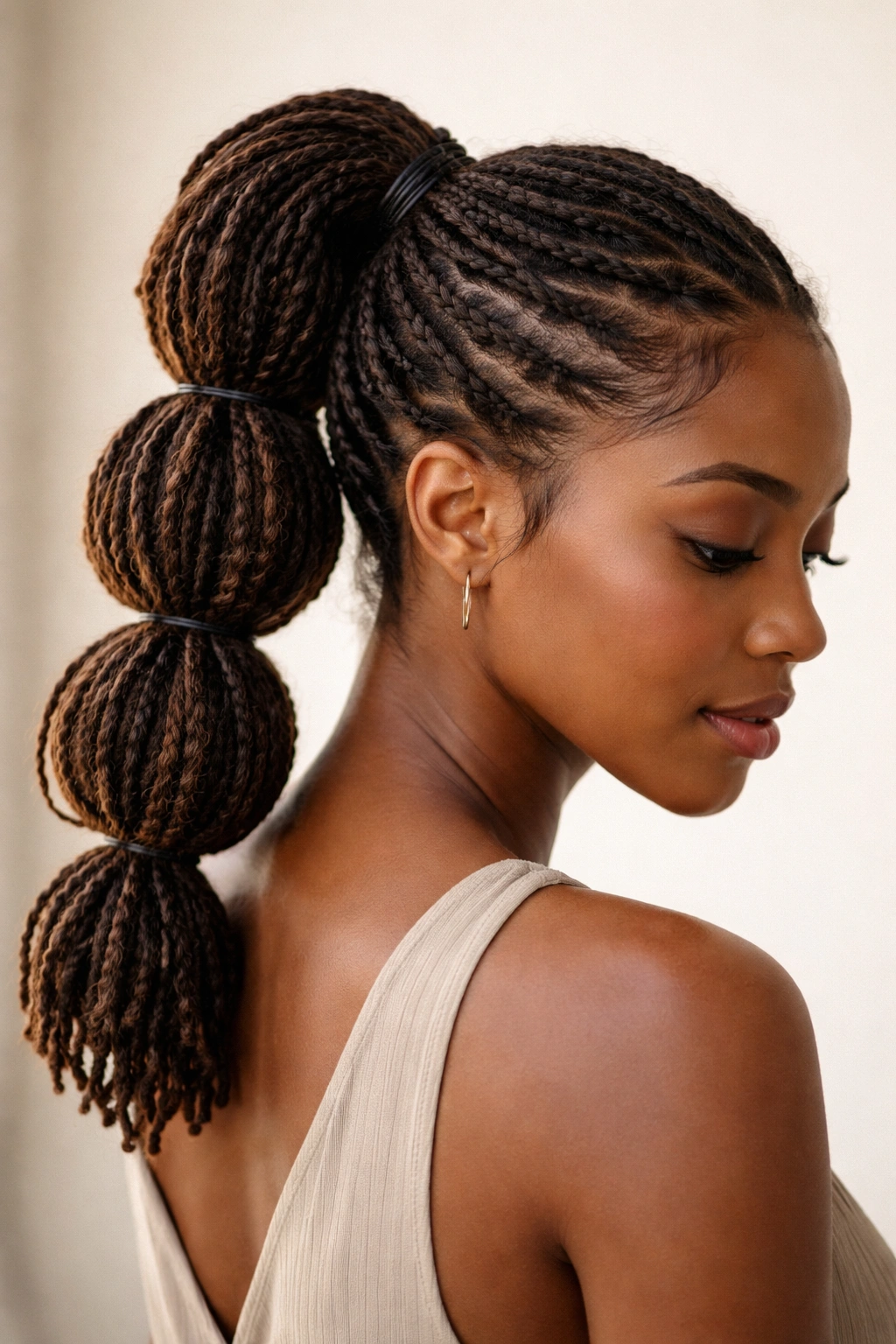
A bubble ponytail transforms short locs from looking thin and flat into a style with real dimension and movement. This style works by creating multiple pockets of volume along the length of the ponytail, which tricks the eye into seeing much fuller hair than you actually have. The beauty of this technique with short locs is that you don’t need massive length to pull it off—even shoulder-length locs create stunning bubbles that catch light and add visual height.
How the Bubble Effect Creates Fullness
The bubble ponytail works because each section is gathered separately and secured with a band, then released slightly between sections to create rounded, puffy shapes. With short locs, these bubbles are proportionate and look intentional rather than accidental. The key is not gathering too tightly—each bubble should feel loose enough that your locs can expand and show their natural texture without looking sloppy. When you’re working with shorter lengths, spacing your bubbles closer together actually makes the ponytail look fuller because the bands are visible less frequently along the length.
Step-by-Step Technique
Gather your locs into a base ponytail at whatever height feels right for your face—high, mid, or low—and secure it firmly with a clear elastic. Section this ponytail into 3-4 segments depending on your length, starting from the base. Take the first section below your base elastic, wrap a small elastic around it about an inch or two down, and gently pull the locs upward and outward to create a rounded bubble. Repeat for each section, ensuring each bubble has its own distinct shape. The bubbles should overlap slightly so the style flows together visually rather than looking separated into distinct pieces. Finish with a light hairspray to hold the shape without creating a stiff, product-heavy appearance.
What Makes This Work for Short Locs
- Creates multiple focal points that draw attention upward and throughout the style
- Celebrates the movement and texture of locs rather than forcing them into a smooth line
- Works at any height (high crown, mid-back, low nape) without requiring extreme length
- Looks intentional and styled without being overly fussy or complicated
Pro tip: If you want maximum volume, slightly dampen your locs before styling so they’ll hold the bubble shapes crisply as they dry. The moisture helps your locs expand into their fullest state within each bubble.
2. The Wrapped Crown Ponytail
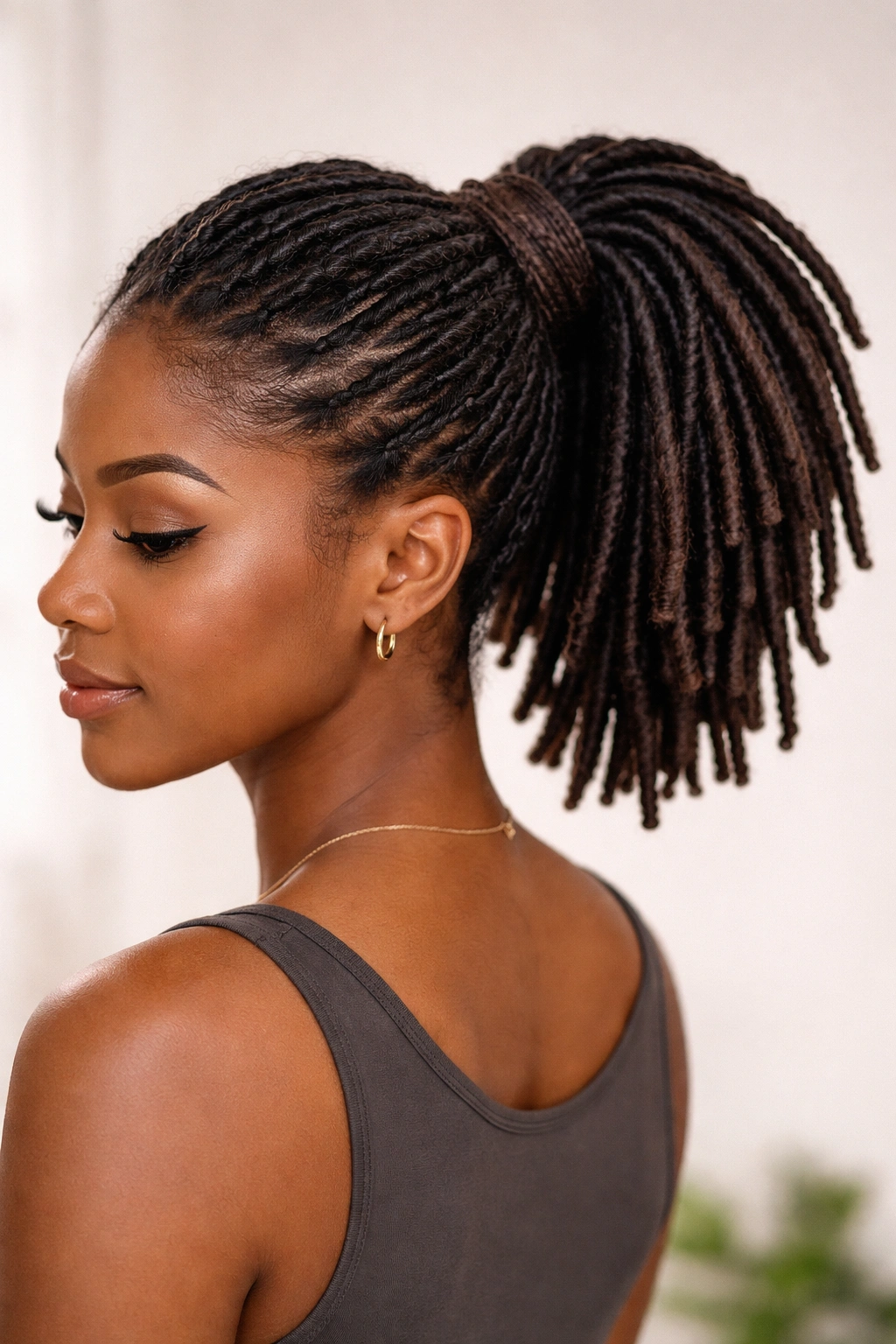
This style solves the “my ponytail looks too thin” problem by wrapping a section of locs around the base of your ponytail to create visual fullness and height. The wrap catches light, adds dimension at the crucial gathering point, and makes the overall style feel much more complete. It’s a styling trick that professional stylists use specifically because it works instantly and dramatically.
The Visual Magic of Base Wrapping
When you wrap locs around the elastic at the base of your ponytail, you’re doing two things simultaneously: you’re covering the elastic (which always looks less full than hair) and you’re creating a textured ring that makes the gathering point look thicker. With short locs, this wrap becomes even more important because the gathering point is closer to your scalp and more visible. A well-executed wrap can add up to half an inch of perceived fullness around the base, which changes how the entire ponytail reads visually.
How to Execute the Wrapped Base
Create your main ponytail with all your locs gathered at your chosen height and secured with an elastic. Take a small section—about 3-4 locs or one thicker loc—from the outside of the gathered ponytail and begin wrapping it around the base elastic, moving it around in a circular motion like you’re wrapping a present. As you wrap, keep slight tension so the wrapping section hugs the base tightly and doesn’t slip. When you’ve wrapped all the way around, tuck the end of that section under the wrap and secure it with a bobby pin or small elastic that matches your hair color. The wrap should feel secure but not so tight that it pulls uncomfortably at your scalp.
Why Short Locs Actually Shine Here
- The wrap is proportionate to your length and doesn’t look oversized or unbalanced
- Creates an intentional focal point at the most visible part of the ponytail
- Adds dimension without requiring you to add extra products, hair, or extensions
- Works with any ponytail shape—high, low, side-swept, or angled
Worth knowing: You can wrap in different directions (clockwise, counterclockwise, diagonal) depending on the mood you’re going for. A diagonal wrap has a more modern, artistic feel, while a straight circular wrap looks polished and classic.
3. The Twisted Rope Ponytail with Volume
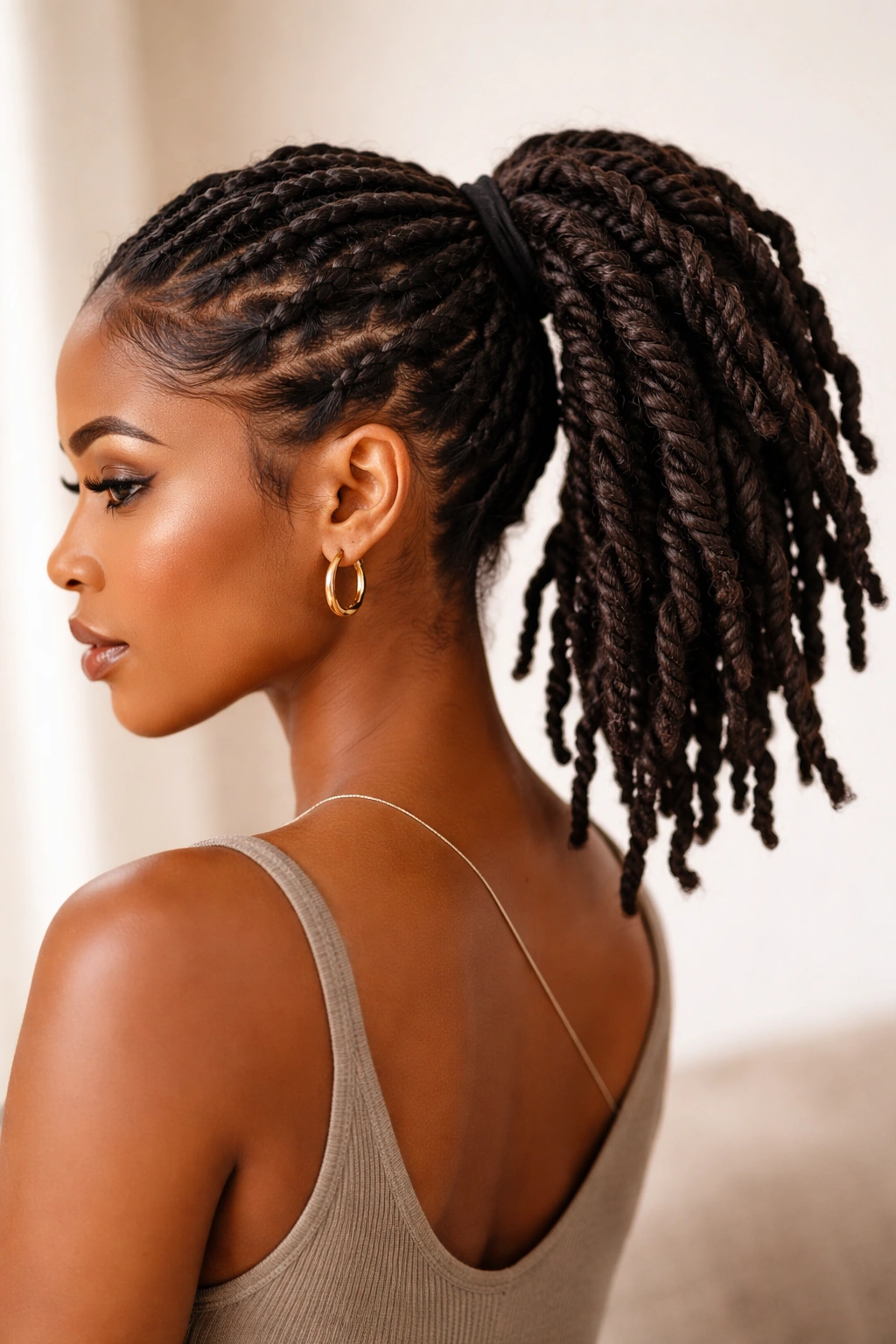
Rope twists are a classic loc styling technique, and when applied to a ponytail, they create visual interest and fullness that makes short locs look incredibly dimensional. The twisting motion naturally separates your locs and allows them to expand, creating width that a simple straight ponytail can’t achieve. This style reads as intentional and artistic, not like you’re trying to hide thin hair.
How Twisting Creates the Illusion of Fullness
When you twist locs, you’re using tension and motion to encourage them to spread apart slightly rather than lying flat against each other. This spreading is what creates perceived volume. With a rope twist in your ponytail, each twist adds texture and shadow to the ponytail, making it read as fuller because of all the visual detail. The twist also creates a spiral structure that’s inherently more interesting and eye-catching than a simple straight ponytail—and when something is visually interesting, it automatically seems fuller.
Creating Twisted Rope Sections
Divide your ponytail into 2-4 sections depending on how thick your locs are and how prominent you want the twists to be. Take the first section and, starting at the base, twist it tightly as you move down the length. Keep consistent tension throughout so the twist has a uniform appearance. Secure the end of the twisted section with a small elastic that matches your hair, then move to the next section. If you want maximum fullness, twist each section tightly and then gently pull on the twist to encourage the locs to fluff outward slightly. This gentle pulling is what really sells the fullness—it shows all the individual locs rather than keeping them compressed.
Why This Style Works With Short Lengths
- Twists add visual complexity that makes hair appear denser than it is
- The spiral structure is flattering to short ponytails and doesn’t look sparse
- You can create anywhere from 2 thick twists to 4-5 thinner twists depending on your preference
- Pairs beautifully with decorative cuffs or wraps placed at the base or between twist sections
Insider note: If you want the twists to hold their shape throughout the day, lightly spritz them with water before twisting and allow them to air dry. The moisture helps locs set into the twist pattern, and they’ll maintain that shape for days.
4. The Side-Swept Ponytail with Layered Sections
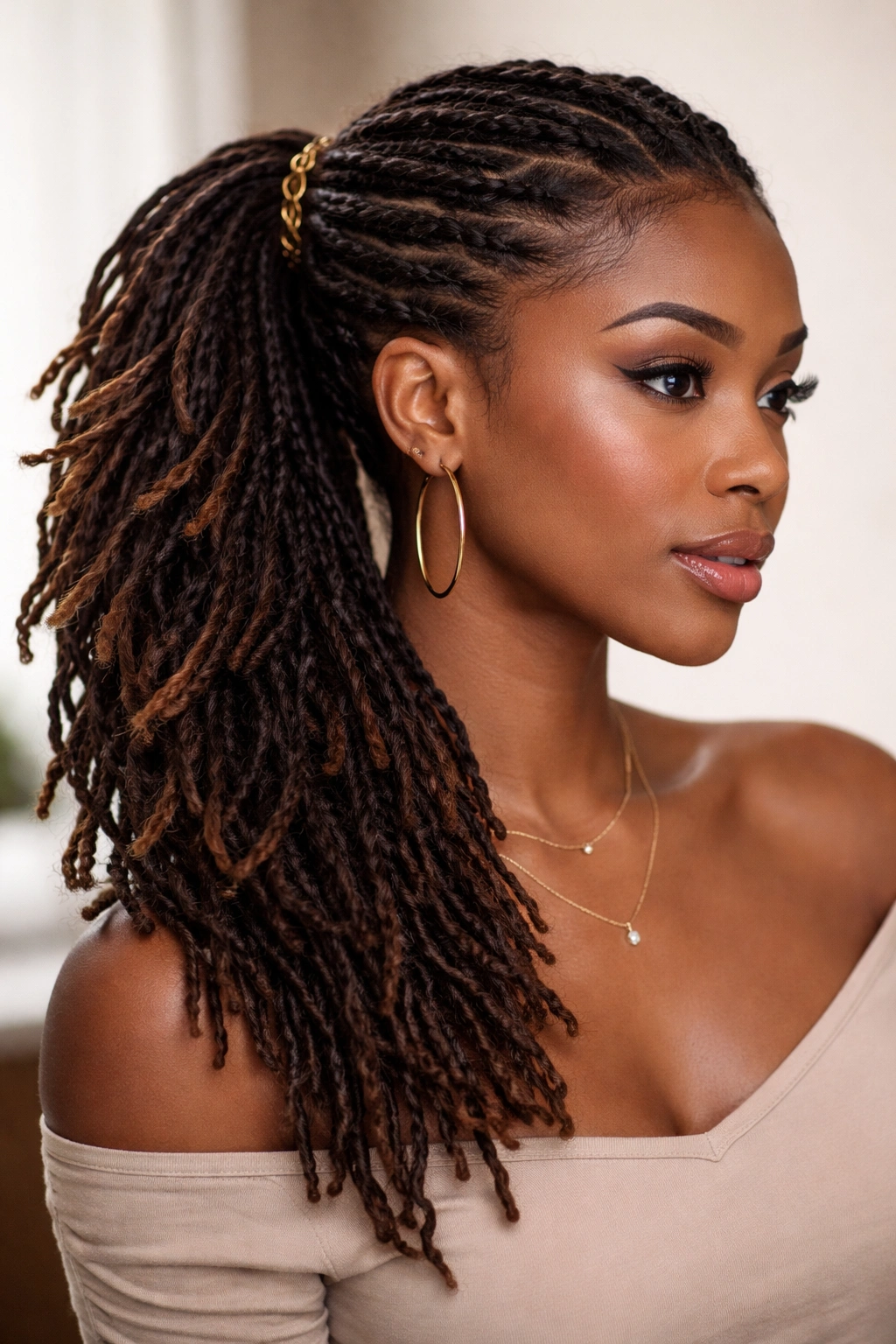
A side-swept ponytail skews your perspective and works brilliantly with short locs because the angle creates the illusion of more length and volume than a centered ponytail. When your ponytail sits off to one side, the way light hits it changes, creating shadows and highlights that read as fuller. This is a styling principle professionals use constantly—perspective and angle matter as much as actual hair quantity.
Why Side-Swept Creates the Fullness Effect
Side-swept styles work because they break the midline symmetry that can emphasize thinness. Instead of drawing attention straight back to where your hair gathers, a side-swept ponytail moves the focal point to the side, where uneven placement actually enhances the perception of fullness. Additionally, the angle of the ponytail itself creates a different silhouette—it looks more casual, more intentional, and definitely more voluminous than a straight-back style.
How to Perfect the Side Sweep
Gather your locs to one side, positioning the gathering point slightly off-center toward the side where you want the ponytail to fall. Secure it firmly, then take a small section of locs from the opposite side and pull them back toward the gathering point, creating a subtle curved movement through that side. This pull adds dimension and makes that side look fuller. Wrap your base as described in style #2 to add even more visual fullness at the gathering point. For maximum impact, slightly tease the crown area on the swept side before gathering the ponytail—this creates a subtle lift that enhances the overall volume impression.
The Specific Advantages for Short Locs
- The angle makes short lengths look intentional rather than limited by length
- Creates movement and visual flow that a centered ponytail on short hair can’t achieve
- The gathering point sits lower on one side, which can feel more balanced with shorter overall length
- Pairs perfectly with textured locs because the side angle shows off individual loc definition
Pro tip: If you’re side-sweeping to the left, tease slightly more on the right side to create subtle asymmetrical volume that balances the style and makes it look fuller.
5. The Textured High Puff Ponytail
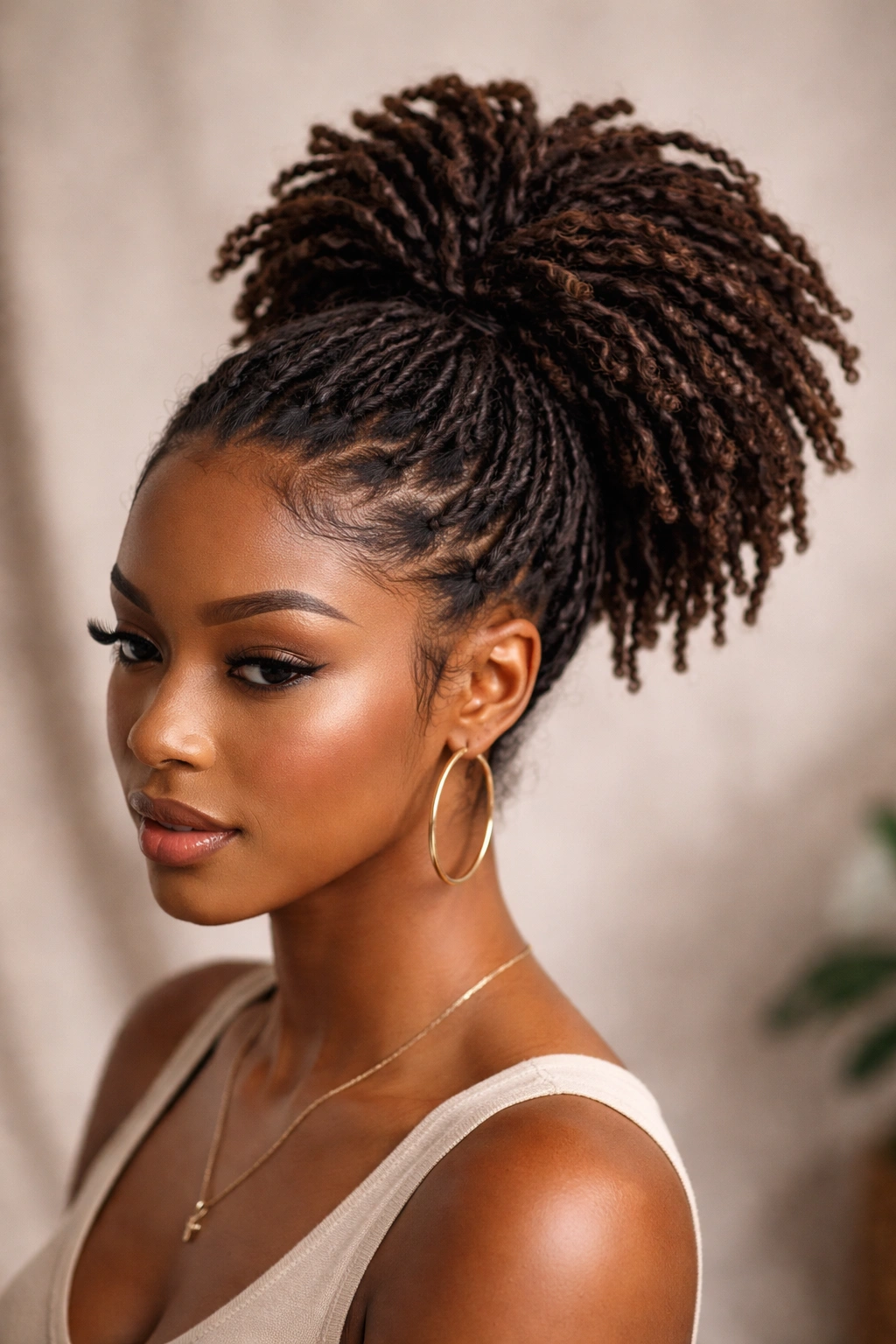
A high puff ponytail positions your locs at the crown and allows them to expand into a rounded, three-dimensional shape that looks naturally full. This style celebrates the texture of locs rather than trying to smooth them into something they’re not. The height automatically makes short locs appear longer and more voluminous because you’re elevating the bulk of your hair rather than letting it hang down in a slim line.
The Crown Positioning Advantage
When you gather a ponytail high on your crown rather than at the back of your head, you’re leveraging the natural width of your head to create fullness. The crown is your widest point, so positioning your ponytail there means the base has maximum area to expand into. With short locs, this crown placement is crucial because it uses the geometry of your head to enhance volume perception. A high puff also frames your face beautifully and creates a proportioned look—short locs with a high crown puff don’t look disproportionate the way they might in other styles.
Achieving the Puff Shape
Gather your locs high on your crown (as close to the very top of your head as your hairline allows) and secure them firmly with an elastic. The key to a full puff is not smoothing your locs back—you want some softness and release at the front and sides. Take your gathered ponytail and gently lift it upward and outward, allowing the locs to expand into a rounded shape rather than sitting flat against your head. You can use a pick or your fingers to gently fluff the puff, separating individual locs to increase the visual volume. The puff should feel full and bouncy, not compressed or tight.
Why Short Locs Excel at the High Puff
- The crown placement creates automatic fullness through head geometry
- High puffs look more balanced on shorter hair lengths
- The rounded shape is inherently flattering and makes hair look denser
- Creates a youthful, energetic look that’s flattering to most face shapes
Worth knowing: A textured puff benefits from a light mist of hairspray once you’ve shaped it, but avoid products that make locs look wet or shiny. You want them to look full and textured, not slicked down or product-heavy.
6. The Banded Stacked Ponytail
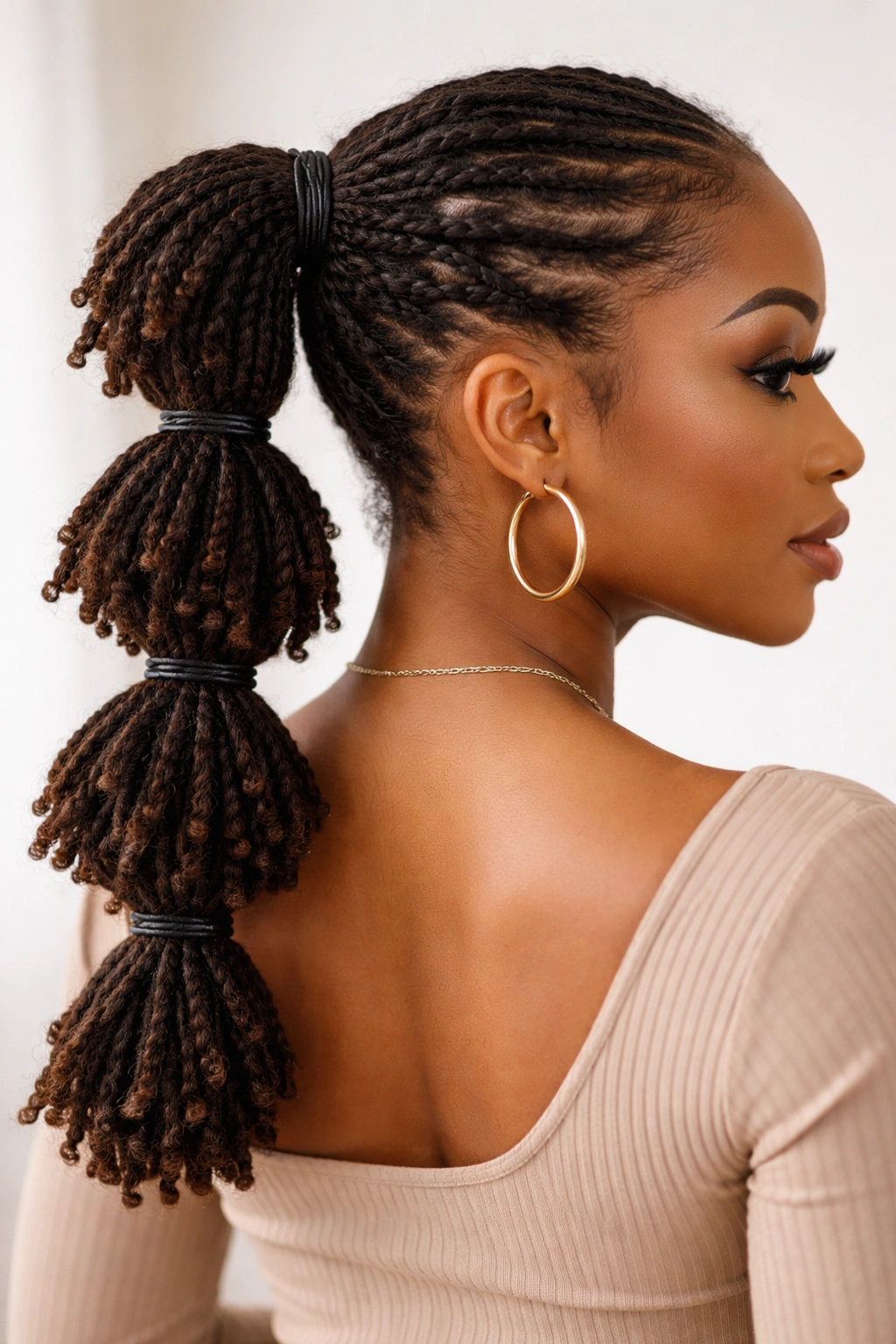
Stacking multiple ponytails on top of each other creates the optical illusion of a much fuller, thicker ponytail than you actually have. Each band is visible, and that visual repetition creates a sense of density and fullness that’s impossible to achieve with a single ponytail. This style is particularly striking with short locs because the stacking creates height and dimension that compensates for shorter length.
How Stacking Multiplies Visual Fullness
When you create a ponytail and then add another ponytail beneath it that incorporates the first ponytail’s base, you’re essentially creating a multi-layered effect. Each layer catches light differently, each layer adds visual weight, and the accumulated effect is a ponytail that looks significantly fuller than any single ponytail could. The bands are visible and intentional—they become a design feature rather than something to hide. With short locs, this stacking is brilliant because it focuses the eye on dimension and structure rather than length.
Creating the Stacked Effect
Start with your primary ponytail gathered at your chosen height and secured with an elastic. A few inches below that first elastic, gather a second ponytail that includes all your loose locs below the first ponytail, plus you’ll incorporate the first ponytail into this second gather. Secure the second ponytail with another elastic. If your locs are long enough, you can add a third stacked ponytail below the second. The key is ensuring each band is secure and each section has enough locs to look full rather than thin. The bands should be evenly spaced and clearly visible—they’re a feature of the style, not something to minimize.
The Specific Beauty for Short Locs
- Creates visible structure and intentional styling that reads as sophisticated
- Each band adds a focal point, drawing attention throughout the style
- Works beautifully with decorative bands or metallic elastics
- Makes short locs look longer through the vertical stacking effect
Pro tip: Use contrasting or metallic elastics for this style to make the bands really stand out. Gold, silver, or colored elastics turn the bands into a design feature and enhance the perceived fullness.
7. The Double Ponytail with Center Part
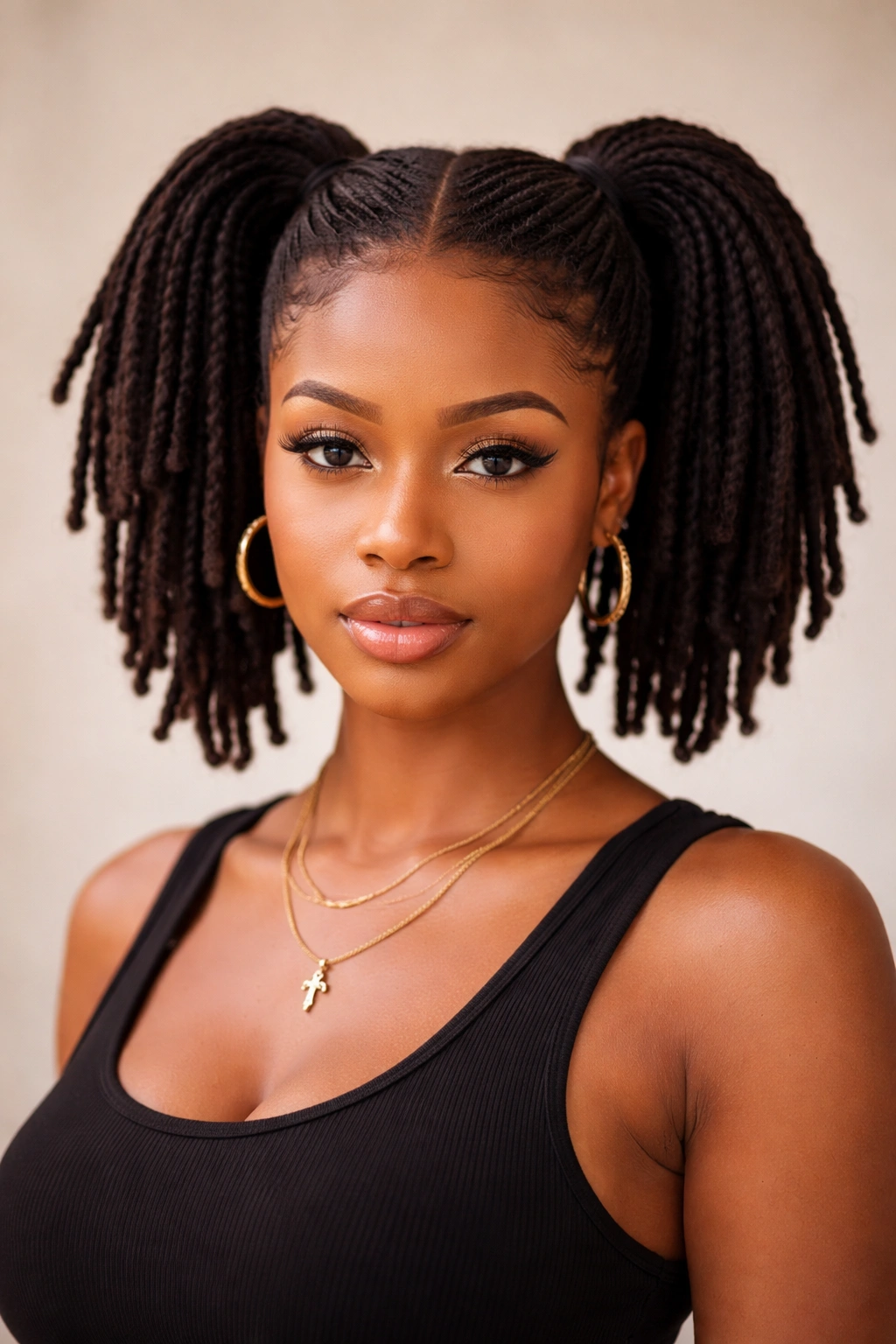
A double ponytail—where you create two separate ponytails instead of one—instantly doubles the visual fullness because you have two distinct shapes drawing attention instead of one thin line. This style works surprisingly well with short locs and creates a look that’s both youthful and intentional. The center part divides your locs equally and positions each ponytail for maximum visual impact and balance.
Why Two Ponytails Look Fuller Than One
The psychology here is straightforward: two objects are visually weightier than one. When you create two ponytails instead of one, you’re doubling the number of focal points and doubling the visual presence of your hair. Each ponytail can have its own fullness, and together they create a significantly fuller overall impression than combining all your locs into a single thin ponytail. With short locs, this doubling effect is dramatic because it transforms a style that might look sparse into one that looks balanced and intentional.
Executing the Center Part Double Ponytail
Begin with a clean center part running from your hairline straight back to your nape. Gather one half of your locs on one side into a ponytail at your preferred height and secure it firmly. Move to the other side and create a matching ponytail at the same height, ensuring both ponytails are equally positioned. Both ponytails should feel secure and equal in thickness—if one feels noticeably thinner, adjust your parting slightly to distribute locs more evenly. Wrap the base of each ponytail for added fullness, or add decorative elements like cuffs or beads to enhance the style.
What Makes This Perfect for Short Locs
- Instantly creates fullness perception through doubling
- The center part is flattering and elongates the face
- Each ponytail appears fuller than it would alone
- Works at any height and pairs well with decorative accessories
Insider note: If you want maximum fullness impression, slightly tease each side at the crown before gathering into ponytails. This adds subtle lift and volume that enhances both the part and the resulting ponytails.
8. The Goddess Braid Ponytail Hybrid
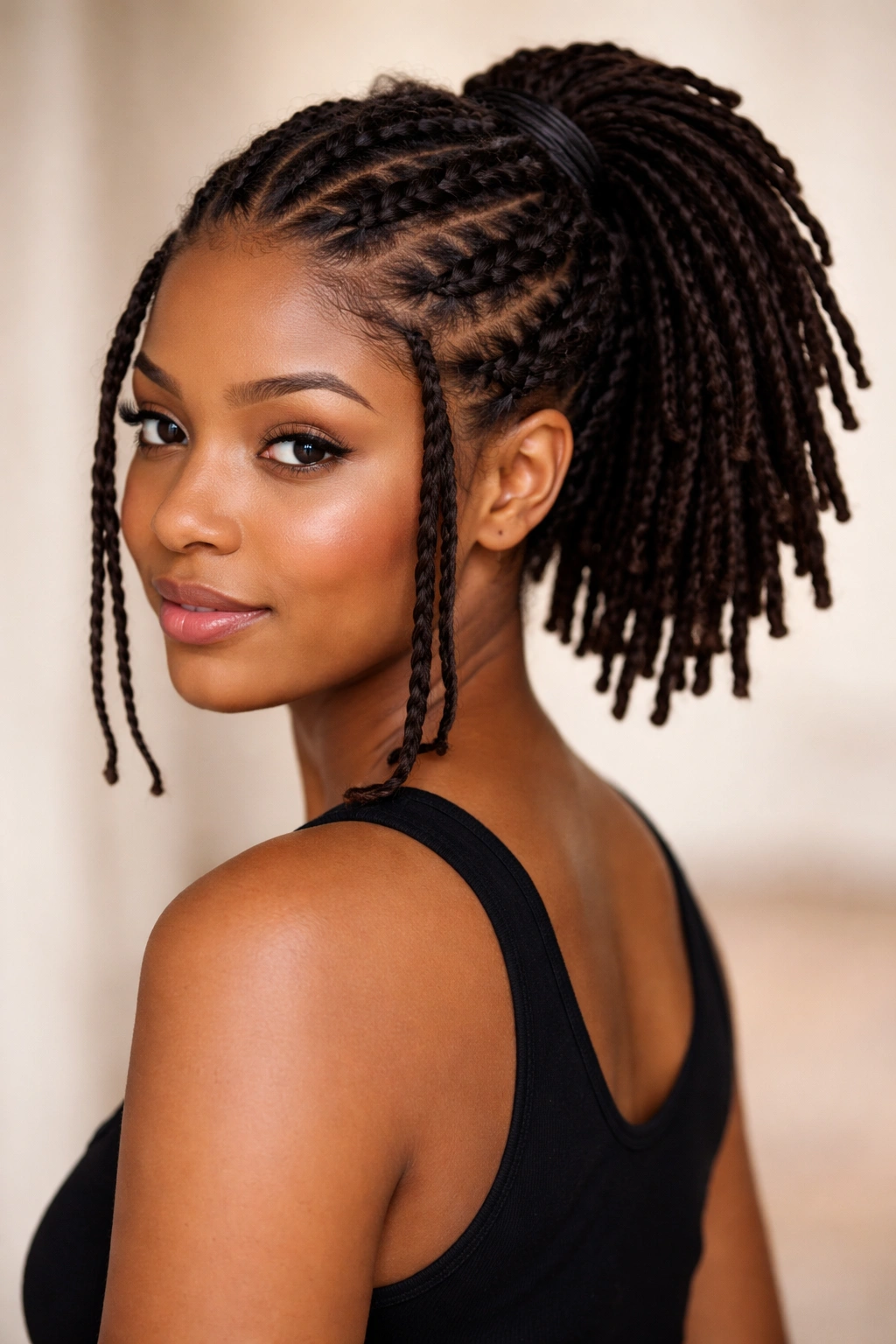
This style combines the elegance of a goddess braid with the practicality of a ponytail, creating something that looks simultaneously intricate and intentional. The braiding in the front and sides creates visual detail and fullness perception, while the ponytail behind keeps everything secure and manageable. For short locs, this hybrid approach is brilliant because it uses styling technique to create fullness that length alone can’t provide.
How Braiding Enhances Fullness Perception
When you braid sections of your locs, the braided areas naturally appear fuller and more textured than straight locs. The braid pattern creates shadows, highlights, and visual complexity that read as denser hair. When you braid from your temples or sides back toward a ponytail, you’re creating a visual frame that draws attention to the style’s structure and detail rather than to the sparseness of the overall length. The braids also secure pieces and help distribute visual weight, making the overall look more balanced and full.
Creating the Hybrid Style
Begin with a center or side part, then take a small section of locs from one temple and braid it back toward the back of your head, angling slightly toward where you want your ponytail base. Repeat on the other side, creating matching braids. These braids should meet near the back of your head, where you’ll gather all your remaining locs (including the ends of the braids) into a ponytail. Secure everything together, then wrap the base of the ponytail to add fullness. The finished look has visible detail from the front and sides, making it appear much more voluminous than a simple ponytail.
The Specific Advantages Here
- Creates visual interest and detail that makes the overall style look fuller
- The braids provide structure and elegance while keeping locs secure
- Works beautifully with short locs because the braids don’t need to be extremely long
- Combines two styling techniques into one cohesive, impressive look
Worth knowing: If your locs are very short, you can create much shorter, subtle braids that run just a few inches before joining the ponytail—they’ll still add the visual detail and fullness impression without requiring extra length.
9. The Faux Hawk Ponytail
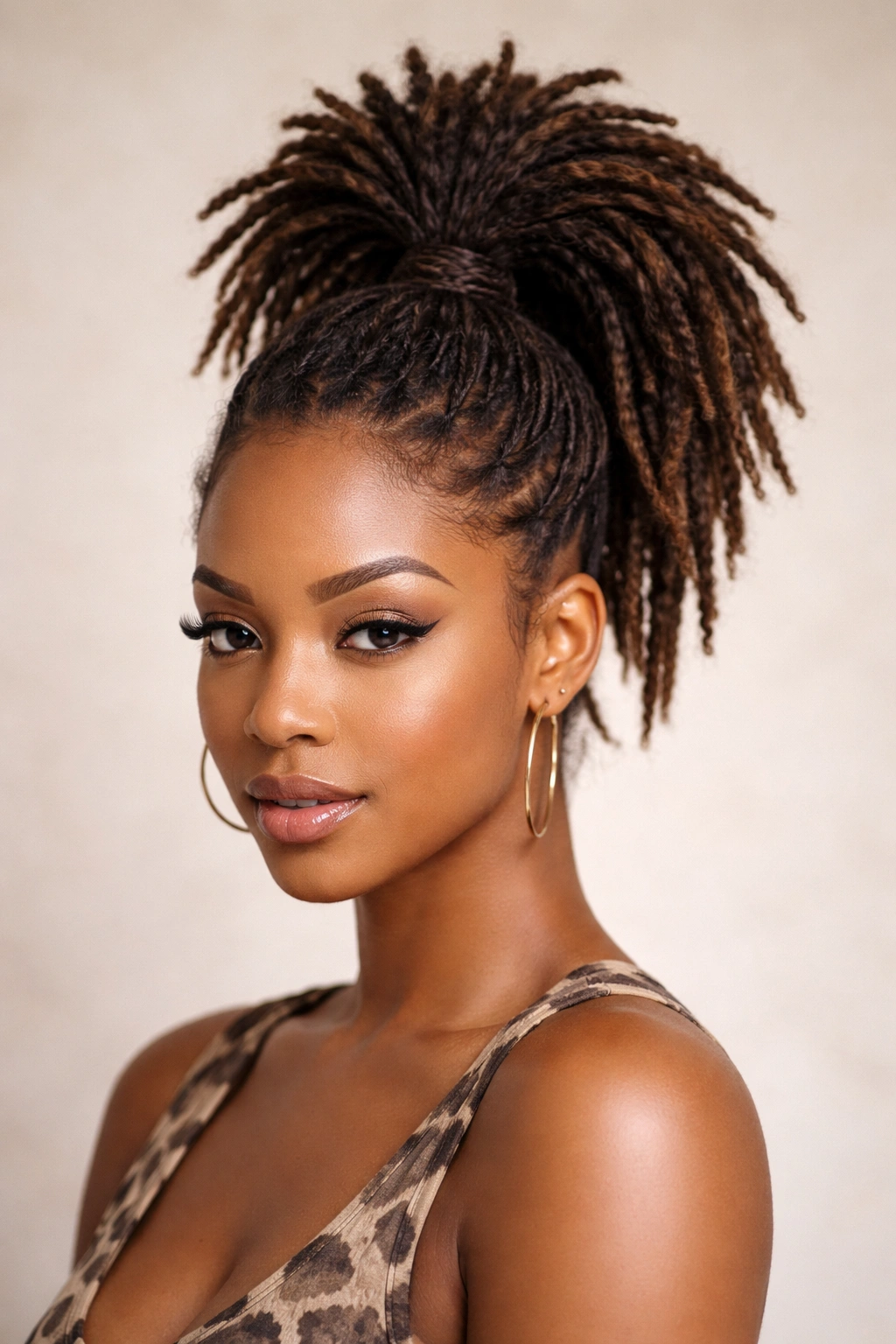
A faux hawk ponytail creates the illusion of extreme fullness by teasing and lifting your crown, then gathering your locs into a ponytail that sits high on that lifted base. This style tricks the eye by creating vertical height and dimension that makes short locs look significantly fuller and longer than they actually are. It’s bold, intentional, and perfect for anyone wanting a style that commands attention.
The Crown Lift Creates Volume Magic
The key to a faux hawk ponytail is the teasing and lifting at the crown. When you tease, you’re creating texture and increasing the volume of that section without adding hair. When you lift, you’re using that increased volume to create a pronounced shape. This crown work happens before you gather your ponytail, so the base of your ponytail sits on top of all that lifted, textured hair. The result is a ponytail that emerges from significant height and volume, making it appear much fuller than it would if gathered on a smooth, flat crown.
Building the Faux Hawk Base
Gather a section of locs at your crown (the top of your head, roughly from ear to ear in a curved line) and backcomb or gently tease this section to create texture and volume. Don’t go overboard—you want noticeable texture and lift, not a matted mess. Smooth the outer layer of this section slightly while keeping the lift underneath. This teased crown section creates a pronounced platform. Gather your remaining locs into a ponytail that sits on top of and slightly forward of this lifted crown section. The ponytail emerges from significant height, creating the faux hawk effect. Secure everything firmly and wrap the base of the ponytail for added fullness.
Why This Works Brilliantly With Short Locs
- Creates vertical illusion of length through crown height
- The lifted crown base makes the ponytail appear much fuller
- Works at any height and with any gathering position
- Creates a bold, modern look that celebrates the style rather than downplaying short length
Pro tip: Backcomb very gently with short locs to avoid matting or damaging your hair. A fine-tooth comb and light pressure work better than aggressive teasing. You’re looking for texture and lift, not a heavily matted look.
10. The Curled and Wrapped Ponytail
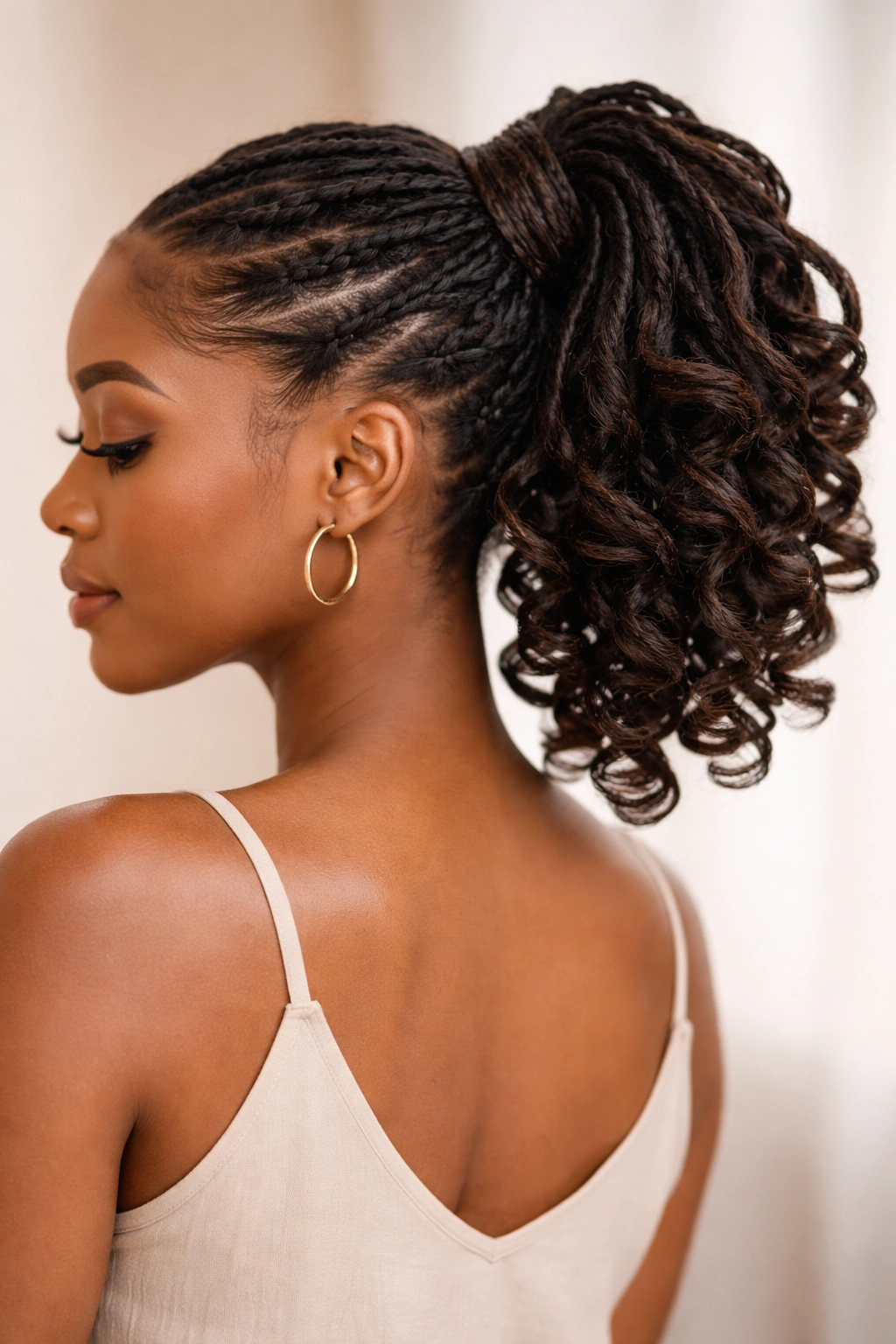
This style uses gentle heat and wrapping technique to create curl and fullness within the ponytail itself, making short locs appear voluminous and bouncy. The curls catch light differently than straight locs, creating shadow and dimension that reads as fullness. Combined with a wrapped base, this technique transforms a short ponytail into something that looks intentionally styled and genuinely full.
How Curls Create Fullness Within the Ponytail
When you curl your ponytail, you’re changing its structure from a straight line to a spiraled, three-dimensional shape. This spiraled shape takes up more visual space and catches more light than straight hair. The curls also naturally encourage your individual locs to separate and expand rather than lying flat together. With short locs, this curling and expanding is crucial because it adds dimension and texture that makes the overall ponytail appear fuller and more intentional.
Creating the Curl and Wrap
Gather your locs into a ponytail at your preferred height and wrap the base as described previously. Take your gathered ponytail and section it into 4-6 subsections. Take the first subsection and wrap it around a curling iron barrel (3/4 to 1.5 inches in diameter depending on your locs’ thickness), holding for 5-8 seconds until you feel a gentle curl form. Release and allow the curl to cool. Repeat for each subsection. Once all sections are curled and cool, gently finger-comb through the curls to separate your locs and increase the perceived volume. The finished style should look textured, bouncy, and significantly fuller than a straight ponytail.
The Advantage for Short Locs
- Curls create dimension and texture that makes locs appear denser
- The three-dimensional curl shape uses space more efficiently than straight hair
- Creates a polished, intentional look that works for both casual and formal occasions
- Lasts for days if you’re careful not to disturb the curls
Worth knowing: If heat styling concerns you, you can achieve a similar effect by dampening your ponytail, wrapping sections tightly around your finger or a rod, allowing them to air dry, and then releasing the curls. The result is gentler and can last even longer.
11. The Honeycomb Textured Ponytail with Strategic Picking
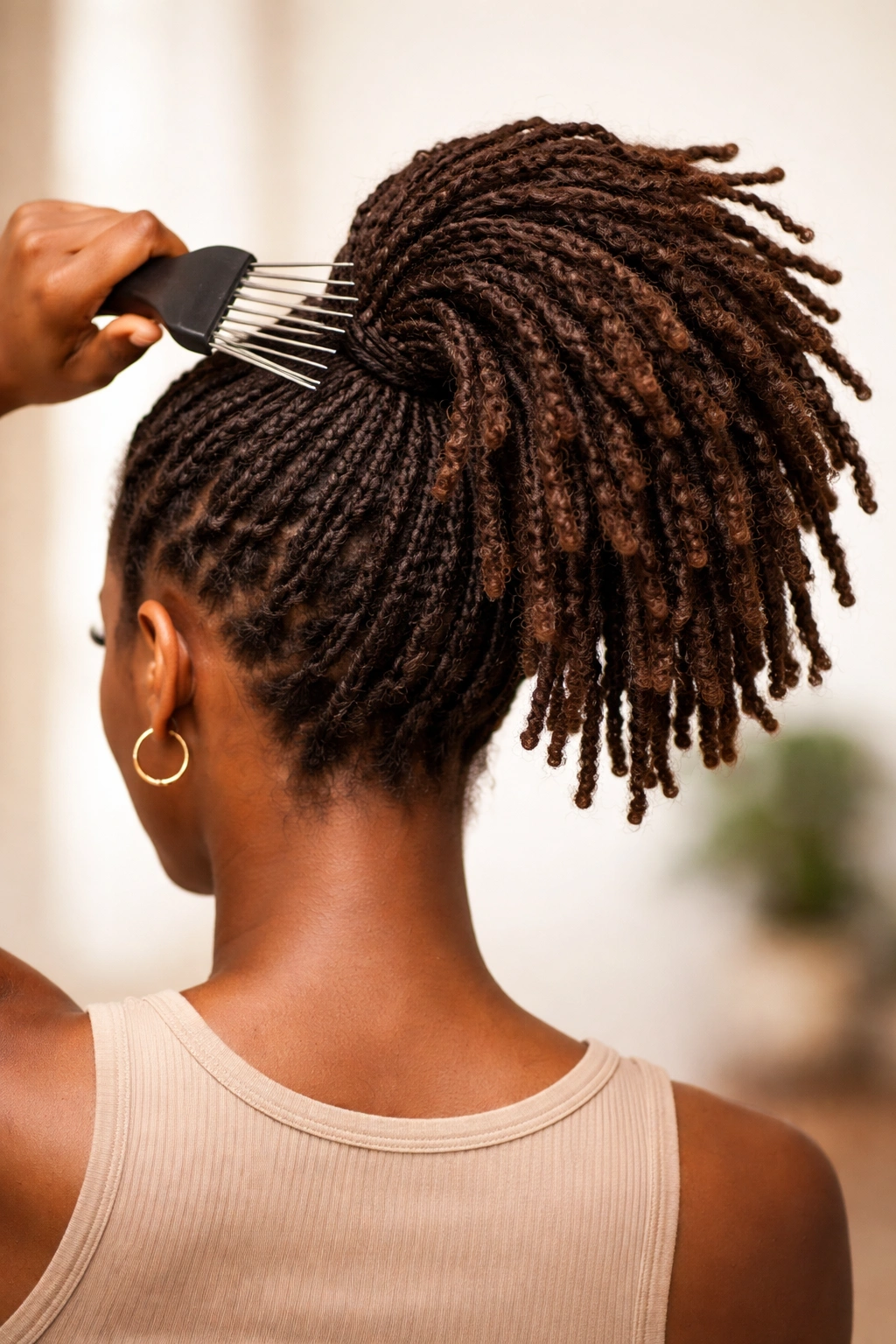
This style uses a pick or fluffing technique to deliberately separate your locs and create a honeycomb-like texture within the ponytail, maximizing the visual fullness of every single loc. Rather than fighting your locs’ natural texture, this approach celebrates it and uses deliberate picking to create an intentionally voluminous, textured shape. It’s a styling method that works beautifully with short locs because it focuses on making what you have look as full as possible.
How Picking Creates the Fullness Illusion
When you pick through a ponytail to separate locs, you’re increasing the surface area and allowing each loc to expand and be visible individually. A ponytail where locs are lying together tightly appears thin and dense in a negative way. A ponytail where locs are separated and textured appears full because you can see individual texture, depth, and dimension. With short locs, this picking technique is transformative because it turns what might look like a slim ponytail into a textured, full shape.
The Picking Technique
Gather your locs into a ponytail and secure firmly. Using a wide-tooth comb or a metal pick, gently work through the ponytail, moving from the bottom upward and separating locs as you go. Don’t pull aggressively—you’re not trying to undo your locs or create frizz, you’re just encouraging them to sit separately rather than pressed together. As you move upward, each loc should be distinct and visible. Once you’ve picked through the entire ponytail, take a step back and assess. If it looks fuller, you’ve done it right. A good honeycomb textured ponytail should look like intentional styling, not like your locs are coming apart.
Why This Works So Well With Short Locs
- Maximizes the visual fullness of every single loc
- Creates intentional texture and dimension without adding product or heat
- Works with any ponytail position and height
- Celebrates loc texture rather than trying to hide or minimize it
Insider note: Picking works best when your locs are dry. Attempt this technique on damp locs and you risk creating frizz or looseness. Let your locs air dry completely first.
12. The Layered Loc Ponytail with Face-Framing Pieces
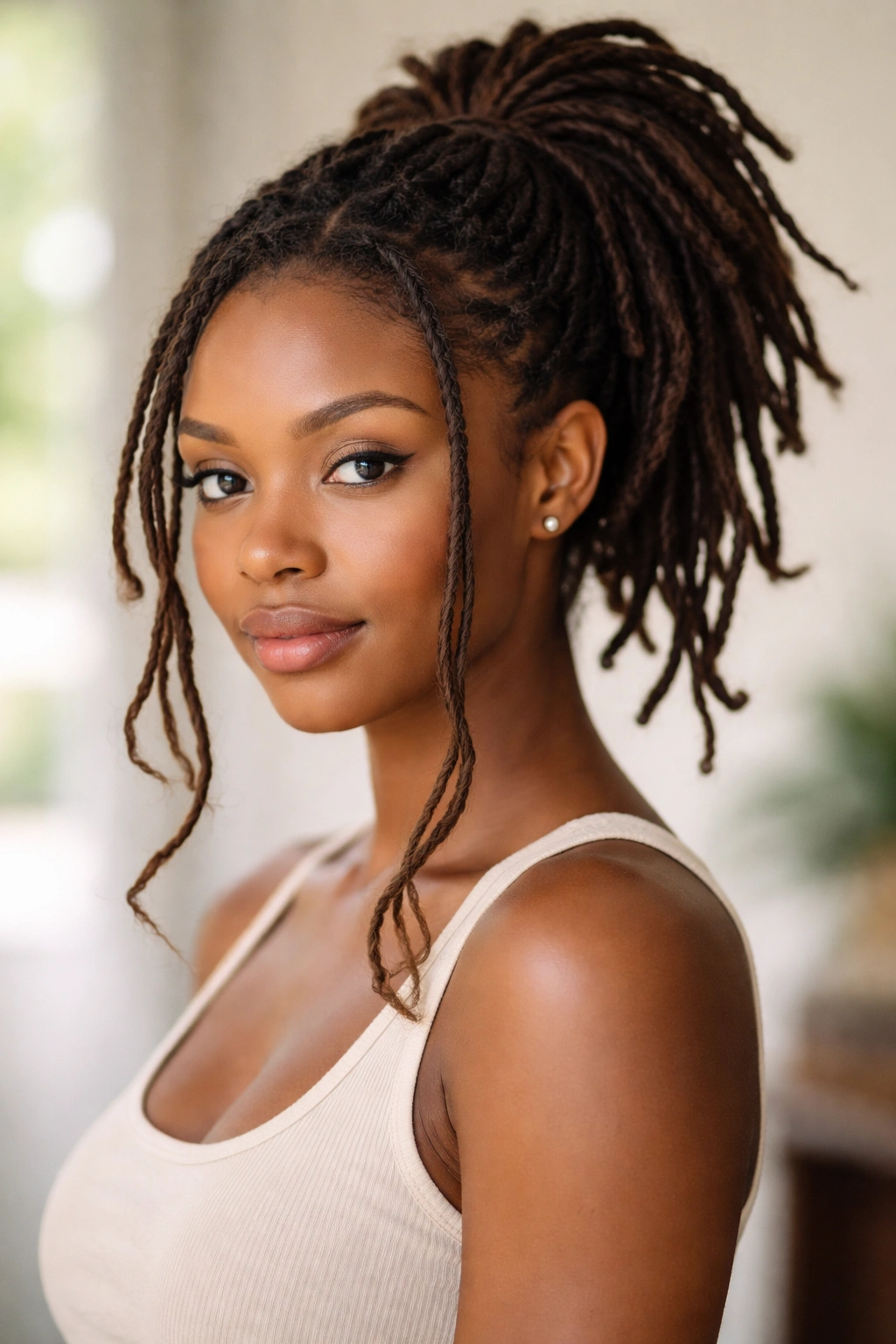
This final style creates fullness by leaving strategically placed locs unraveled at the front and sides, framing the face while the back locs gather into a ponytail. These face-framing pieces add dimension, softness, and visual fullness to the overall style. They also create movement and break up the line of the ponytail, making it appear fuller and less severe. For short locs, these intentional layers and pieces transform a simple ponytail into something that looks thoughtfully styled and undeniably full.
How Face-Framing Pieces Add Fullness
Face-framing pieces work because they break the clean lines of a gathered ponytail and create texture and movement around the face. They also add visual weight to the sides of the face, making the overall silhouette appear fuller. When you have short locs and want to maximize fullness, these framing pieces are crucial because they give you additional styling real estate—you’re not just working with the ponytail in back, you’re creating a complete, multi-dimensional look.
Creating the Layered Face-Frame
Begin by taking small sections of locs from your temples and sides—roughly from your cheekbones toward your ears. These sections won’t be included in your main ponytail; instead, they’ll frame your face and hang loose. Gather the remaining locs into a ponytail at your preferred height and secure firmly. Now style your face-framing pieces: you can leave them as loose locs, gently curl them, braid them, or wrap them with wire or thread. The key is keeping them separate and visible so they contribute to the overall fullness of the style. Wrap your ponytail base, and you’ve created a layered, dimensional look that reads as much fuller than a simple gathered ponytail.
The Specific Strength for Short Locs
- Face-framing pieces add volume and fullness that extends beyond just the ponytail
- Creates a soft, intentional aesthetic that works across multiple contexts
- Makes short hair lengths look more balanced and proportioned
- Allows for infinite variation depending on how many pieces you frame and how you style them
Pro tip: If your face-framing pieces tend to blend back into your ponytail throughout the day, secure them loosely with small bobby pins that match your hair color. The pins will be invisible but keep your pieces exactly where you styled them.
Final Thoughts
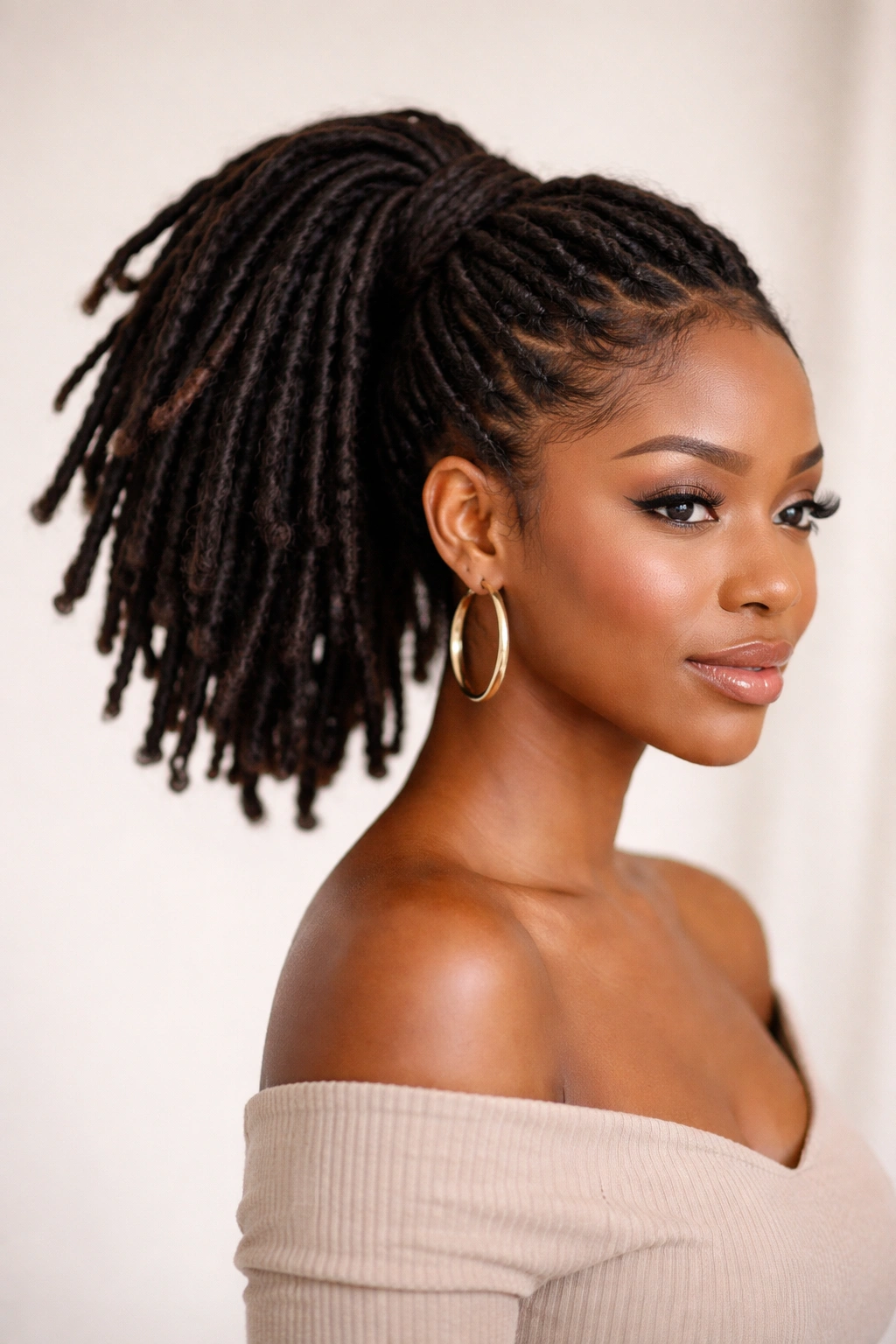
A short loc ponytail doesn’t have to look thin or compromised—it just has to be styled with intention and an understanding of how to maximize the fullness you have. The styles above work because they rely on technique, positioning, and perspective rather than on length alone. Some use wrapping and layering to create visual density. Others use angle and height to trick the eye into perceiving more volume. Several combine multiple techniques to create something that looks intentionally styled rather than like you’re trying to hide short hair.
The truth is, short locs are an asset in many of these styles. They’re easier to manage, they hold styles longer without putting stress on your scalp, and when styled correctly, they look intentional and modern. Your ponytail doesn’t need to be long to be full—it needs to be styled strategically. Pick the techniques that resonate with your hair type, your daily routine, and the look you’re going for. Every single one of these styles can be executed beautifully with short locs, and once you find your favorites, you’ll probably never feel limited by your length again.
