



A low swoop ponytail strikes the perfect balance between polished and effortless—it’s the hairstyle that works for a professional presentation, a weekend brunch, or any occasion where you want to look put-together without appearing like you tried too hard. Unlike a standard low ponytail that sits flat at the nape of your neck, a swoop ponytail adds movement and intentionality through the way the hair curves and flows as it transitions from loose waves to the gathered base. The swoop is what elevates the entire look, transforming a basic updo into something with genuine sophistication and modern edge.
The beauty of low swoop ponytails is their incredible versatility. Whether you’re working with fine, limp hair that needs volume tricks or thick, unruly waves that demand taming, there’s a swoop variation designed specifically for your hair type and styling comfort level. These styles also work beautifully across face shapes and hair textures—you’re not locked into one narrow version. Some swoops are ultra-sleek and architectural, others are soft and romantic, and still others blend casual texture with refined structure. What matters is understanding which swoop variation serves your lifestyle, your hair characteristics, and the impression you want to create.
The versatility doesn’t stop there. A low swoop ponytail is genuinely practical for everyday life. You can wear it while working out, but it looks refined enough for a dinner date. You can create one in five minutes or spend twenty minutes perfecting every strand, depending on how much polish you’re after. It works with virtually every hair length from shoulder-grazing to waist-length, and it transitions beautifully across seasons—add lightweight baby hairs for summer softness, swap in wool wraps for winter texture, or keep it pared down for a minimalist approach. Once you understand the core mechanics of how a swoop works, you can adapt it endlessly to match your mood and your plans.
1. The Sleek Low Swoop
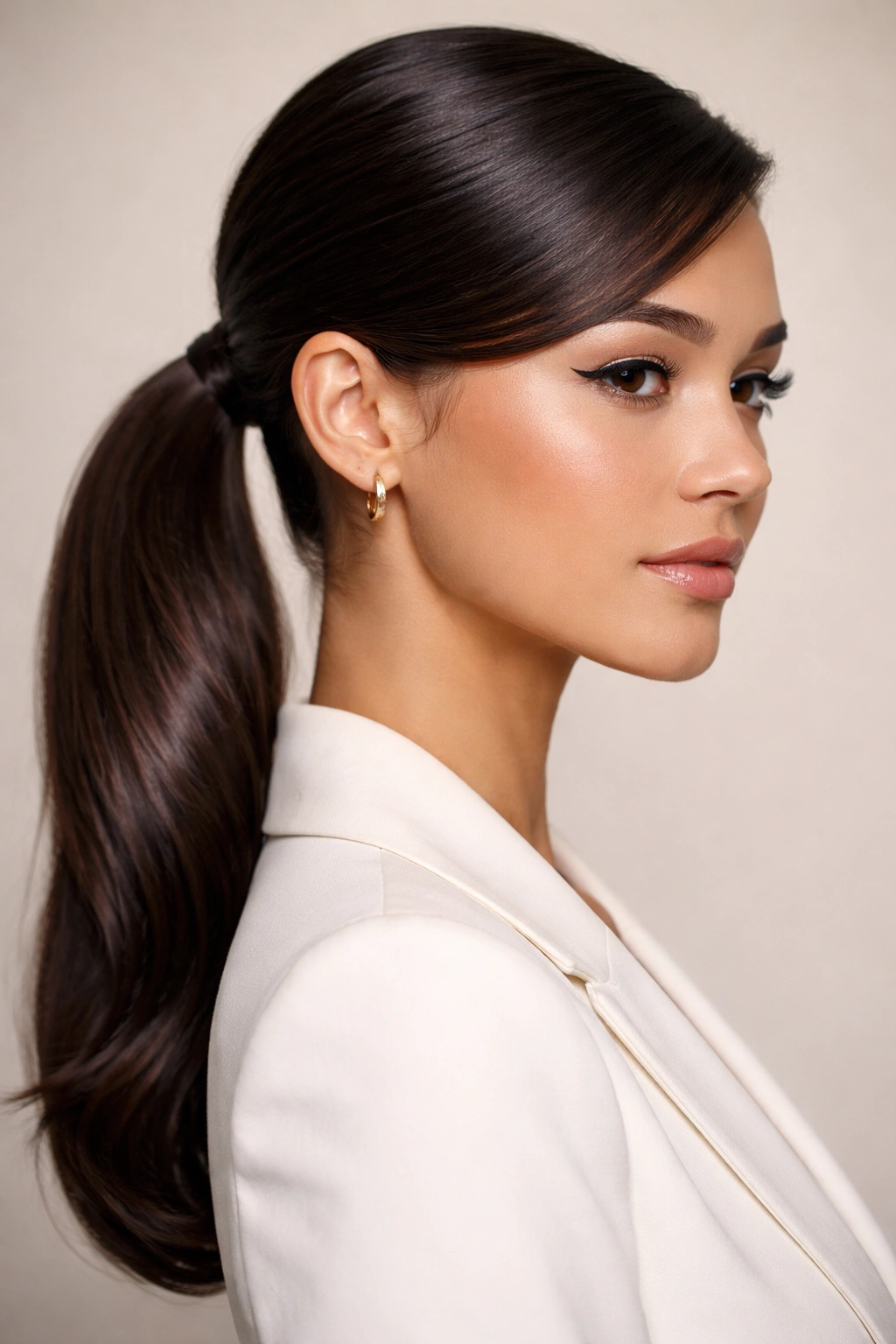
A sleek low swoop is the go-to for anyone who wants maximum polish with zero fuss. This version keeps every strand smooth and controlled, creating a clean silhouette that photographs beautifully and stays intact all day. The swoop itself is subtle—just enough movement through the hair to prevent it from looking severe, but smooth enough that you could wear it to a business meeting without question. This is the ponytail that says you have your life together, even on days when you absolutely don’t.
Why This Works for Polished Looks
The sleek low swoop works because the smoothness automatically reads as intentional. Your hair isn’t falling in your face, it’s not escaping in tendrils, and it doesn’t look like you grabbed it in a hurry. The swoop motion—where hair flows from loose pieces near the crown, curves around the side, and lands in a gathered ponytail at the nape—creates visual interest without sacrificing neatness. This is especially powerful for structured settings where refined aesthetics matter.
How to Create It
- Apply smoothing serum or lightweight styling cream to damp hair, working from mid-length to ends
- Blow-dry your hair straight using a paddle brush to ensure maximum smoothness
- Brush your hair back and to the side, creating a subtle diagonal line from your crown toward your nape
- Gather the hair loosely at the base of your swoop, using a clear elastic or a small hair tie wrapped in a thin section of hair
- Smooth down any flyaways with a fine-tooth comb and light hairspray
- Use a straightening iron on very low heat to smooth the elastic area and any stubborn pieces
- For ultimate polish, wrap a small section of hair around the elastic to hide it completely
Pro tip: Apply anti-frizz serum to your hands before smoothing down flyaways—this prevents adding more product directly to your finished style and keeps everything light and glossy.
2. The Textured Low Swoop
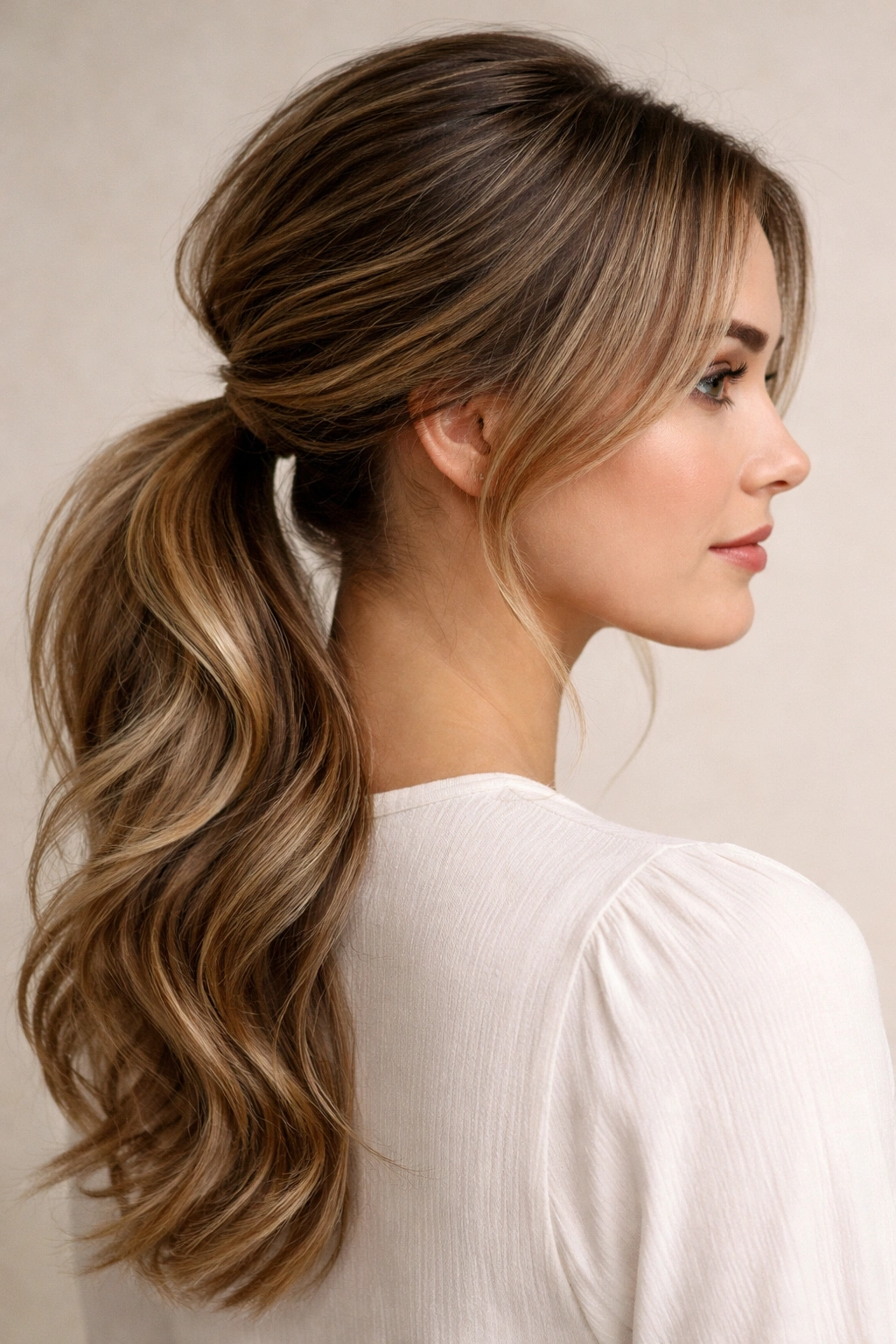
The textured low swoop is for anyone who loves the sophistication of a low ponytail but finds sleek styles boring or uncomfortable against their scalp. This version embraces soft waves, gentle curls, or deliberate piece-y texture throughout, creating a swoop that feels relaxed yet completely intentional. The texture adds dimension and movement, making this style feel fresher and less formal than a sleek version while maintaining that polished, put-together vibe.
Building Volume and Movement
Texture is your secret weapon for creating a fuller-looking swoop, especially if you have fine or thin hair. When your ponytail has visible texture, it occupies more visual space, reads as fuller, and naturally resists looking plastered to your head. The key is creating texture in the crown and upper sections first, then allowing that texture to flow into your swoop—you’re not crimping or waves throughout, you’re building strategic dimension that flatters your face and creates shape.
Steps to Perfect Textured Texture
- Apply mousse or volumizing cream to damp roots and blow-dry your hair with your head tilted down to build maximum root lift
- Use a large barrel curling iron or wand to create loose waves throughout your hair, focusing on the sections you’ll be swooping
- Once cooled, gently finger-comb the waves to break them apart into softer, more natural-looking texture
- Gather hair into a low ponytail, leaving the swoop section slightly loose so texture remains visible
- Use a texturizing spray or light hairspray to separate and accentuate the waves in the swoop area
- Gently pull at the swoop section to relax it and allow waves to show rather than lying flat
Worth knowing: Don’t make the mistake of creating tight ringlet curls and expecting them to look like a swoop—you want soft, broken-up waves, not defined curls. The waves should feel like you’ve been moving through a gentle breeze, not like you just left a curling station.
3. The Side-Swept Low Ponytail
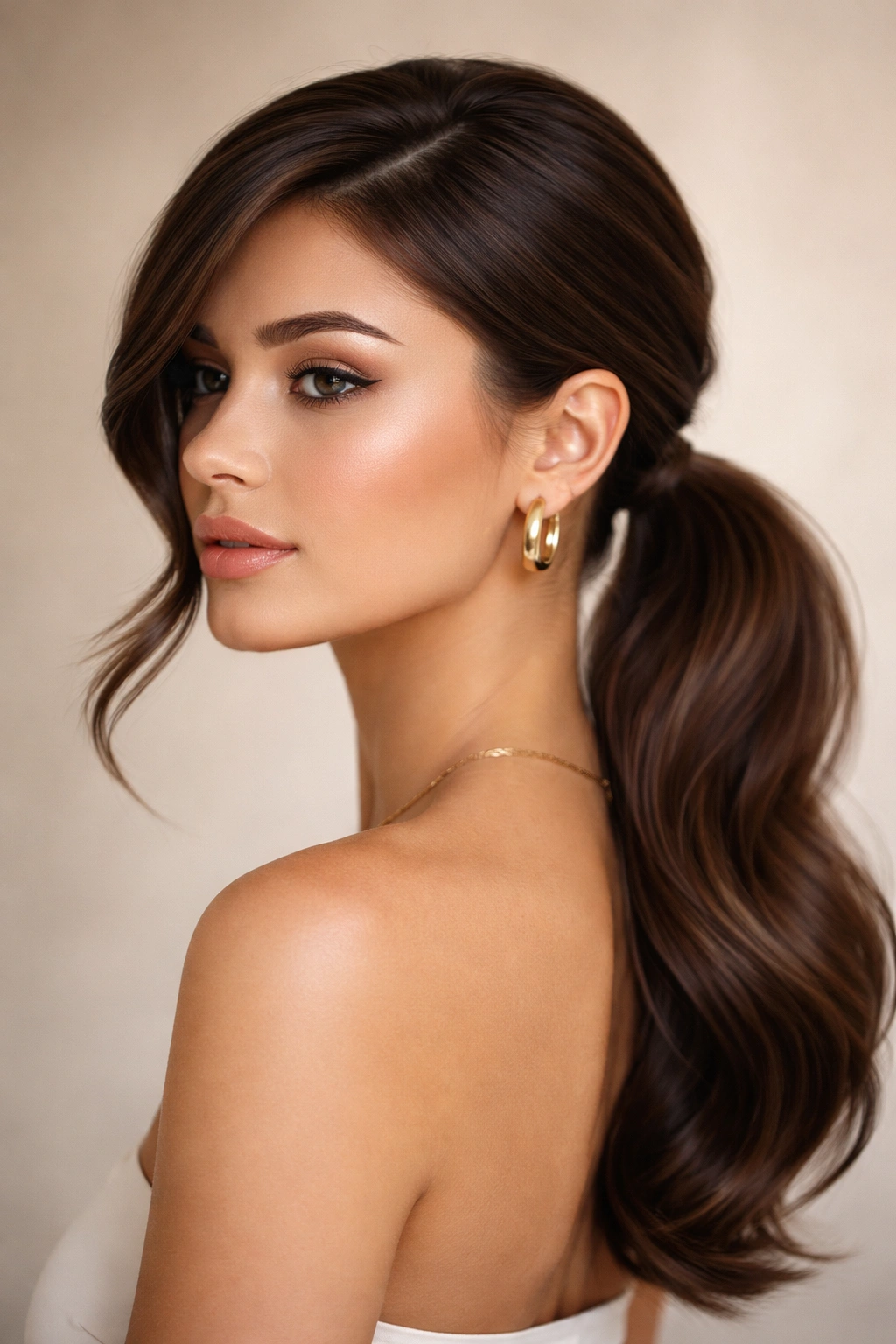
The side-swept low ponytail takes the swoop concept and emphasizes asymmetry, creating a look where one side of your face is more exposed while the other side is softly framed by the swoop. This dramatic variation is perfect for drawing attention to your features, adding visual interest to your profile, and creating an almost-unexpected elegance. It photographs gorgeously from certain angles and works beautifully if you have a side part you naturally favor.
Why Asymmetry Adds Polish
Asymmetrical hairstyles read as more intentional and fashion-forward than perfectly balanced styles. When your swoop is heavily weighted to one side, it shows that you’ve made deliberate choices about your appearance—you’re not just throwing your hair back, you’re styling it. The side sweep also creates visual interest for anyone viewing your profile, and it can actually be flattering for face shapes where full-frontal symmetry feels heavy or unflattering.
Creating the Perfect Side Sweep
- Part your hair heavily to one side, creating a deep side part that extends from your temple down to behind your ear
- Blow-dry your hair with your head tilted toward the heavier side to encourage the hair to fall that direction naturally
- Brush all your hair back and over to the dominant side, creating a smooth base
- Gather hair into a low ponytail positioned slightly off-center, toward the side where most of your hair is flowing
- Allow a small section of hair from the lighter side to remain slightly loose and frame your face
- Smooth the swoop with a fine-tooth comb, emphasizing the diagonal line from your crown to your nape
- Secure with an elegant elastic and wrap a strand of hair around the base to hide it
Pro tip: Spray your side part with light hairspray while your hair is still damp—this sets the part direction and makes it much harder for the swoop to shift throughout the day.
4. The Wrapped Low Swoop
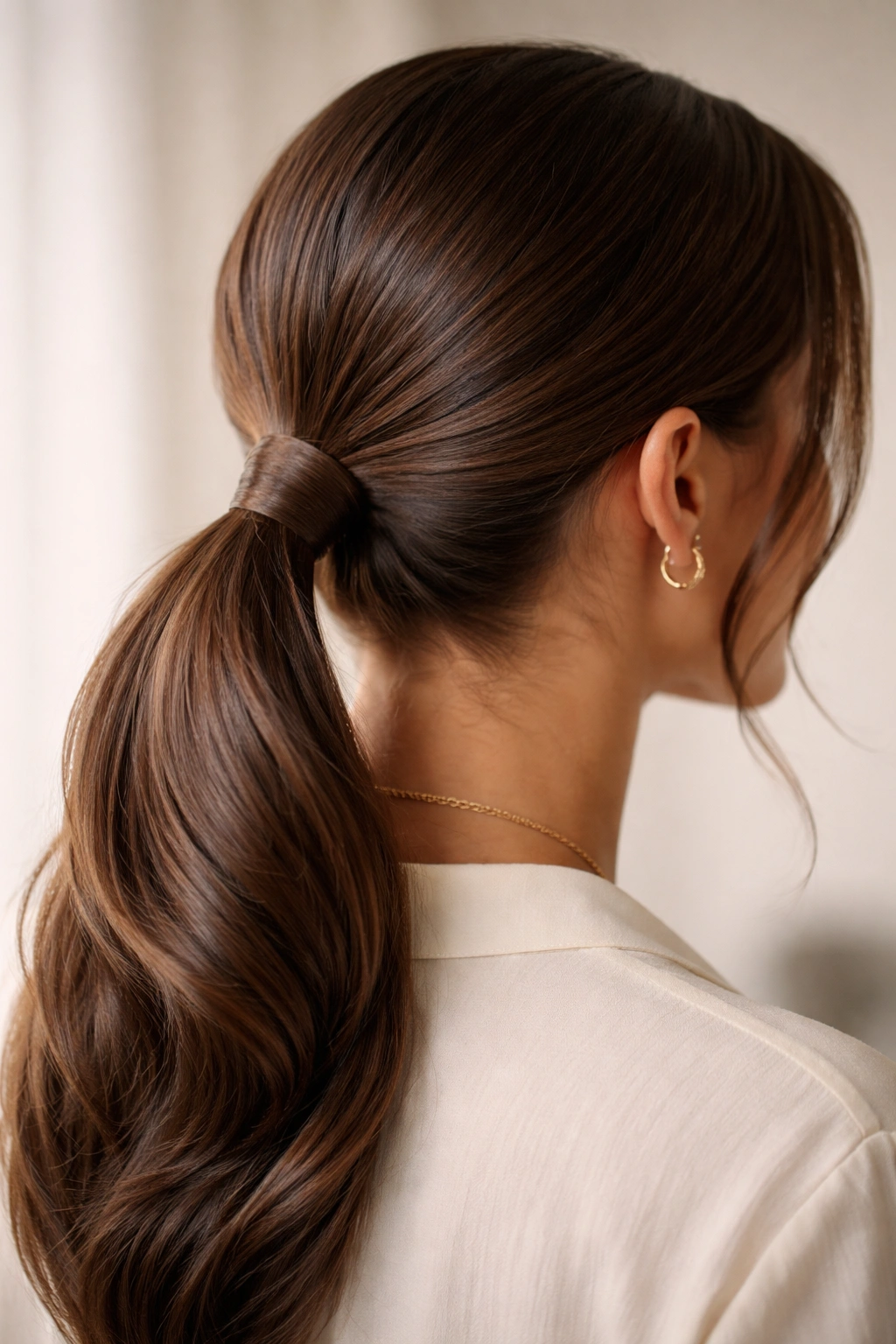
The wrapped low swoop takes your basic ponytail and elevates it through intentional wrapping—either wrapping a strand of your own hair around the elastic, wrapping with a decorative element like a silk ribbon or leather cord, or both. This detail-oriented approach is what transforms a casual style into something undeniably polished and shows that you’ve thought about your appearance. It’s a simple technique that reads as far more sophisticated than the effort it actually requires.
The Power of Intentional Details
Wrapping your ponytail base with something beautiful immediately elevates the entire look. It draws attention to the transition point between your loose hair and your gathered ponytail, turning something functional (the elastic) into a design element. Wrapping also allows you to introduce color, texture, or metallics into your style without drastically changing your hair—you could wear a sleek dark ponytail and introduce brightness simply through your wrap choice.
Wrapping Techniques That Look Professional
- Hair wrap: Take a thin section of hair from underneath your ponytail, twist it gently, and wrap it around the elastic 2-3 times, securing the end underneath with a bobby pin
- Ribbon wrap: Choose a silk ribbon that complements your outfit, tie it around the elastic base, and secure with a small knot at the back; you can leave the ribbon tails loose for a flowing look or tuck them into the ponytail
- Leather wrap: Use a thin leather cord or strip, wrap it once around the elastic, and tie it in a small bow or knot
- Silk scrunchie: Replace your standard elastic with a silk-covered scrunchie, which automatically looks more refined and is gentler on your hair
- Combination wrap: Wrap your hair section first, then weave a ribbon through it for a layered, textured effect
Important detail: Make sure whatever you’re wrapping with is secure enough that it won’t slip throughout the day. Test it by gently tugging—it should feel solid, not loose.
5. The Braided Low Swoop
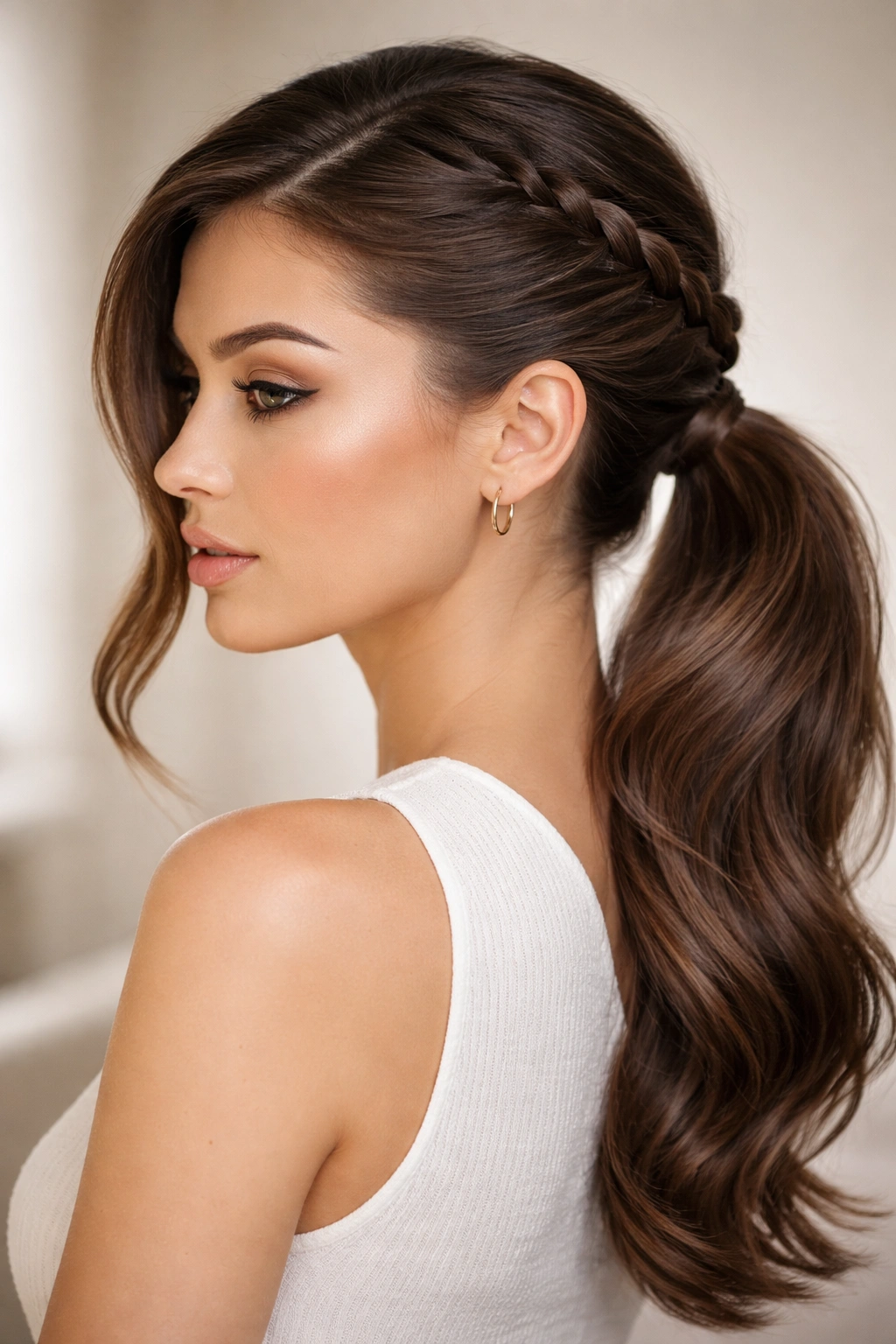
The braided low swoop weaves a braid into the swoop section itself, transforming a simple curve of hair into something with clear structure and visual complexity. This variation is perfect for anyone who loves braided elements but finds full-head braids limiting or uncomfortable. A braid in just the swoop section adds undeniable polish, holds your style in place beautifully, and creates texture without requiring waves or curls.
Swoop Braiding Styles That Work
The beauty of a braided swoop is that you can use virtually any braid variation—a three-strand braid, a french braid that starts at the crown, a fishtail braid for texture, or even a Dutch braid for visual impact. The key is that the braid should flow naturally with the direction of your swoop, creating an obvious connection between the loose hair at the crown and the gathered ponytail at the nape.
How to Braid Your Swoop Seamlessly
- Create your swoop line by brushing hair back and to one side
- Starting at your crown, begin a three-strand braid, incorporating hair as you move down and around toward your nape (similar to a french braid technique)
- Keep the braid slightly loose and relaxed rather than tight—you want the braided texture visible, not strangling your hair
- As you reach the point where you’ll be gathering your ponytail, secure the braid’s end with a small elastic
- Gather all your hair, including the braided section, into your low ponytail
- Gently pull at the braid to loosen it and create dimension
- Wrap your ponytail base with either a hair strand or a decorative element
Insider note: If you’re not confident with freestyle braiding, try this trick: create sections of hair using bobby pins to mark where you want your braid to flow, then braid between those sections. It’s much easier to control and creates a more polished result.
6. The Voluminous Low Swoop
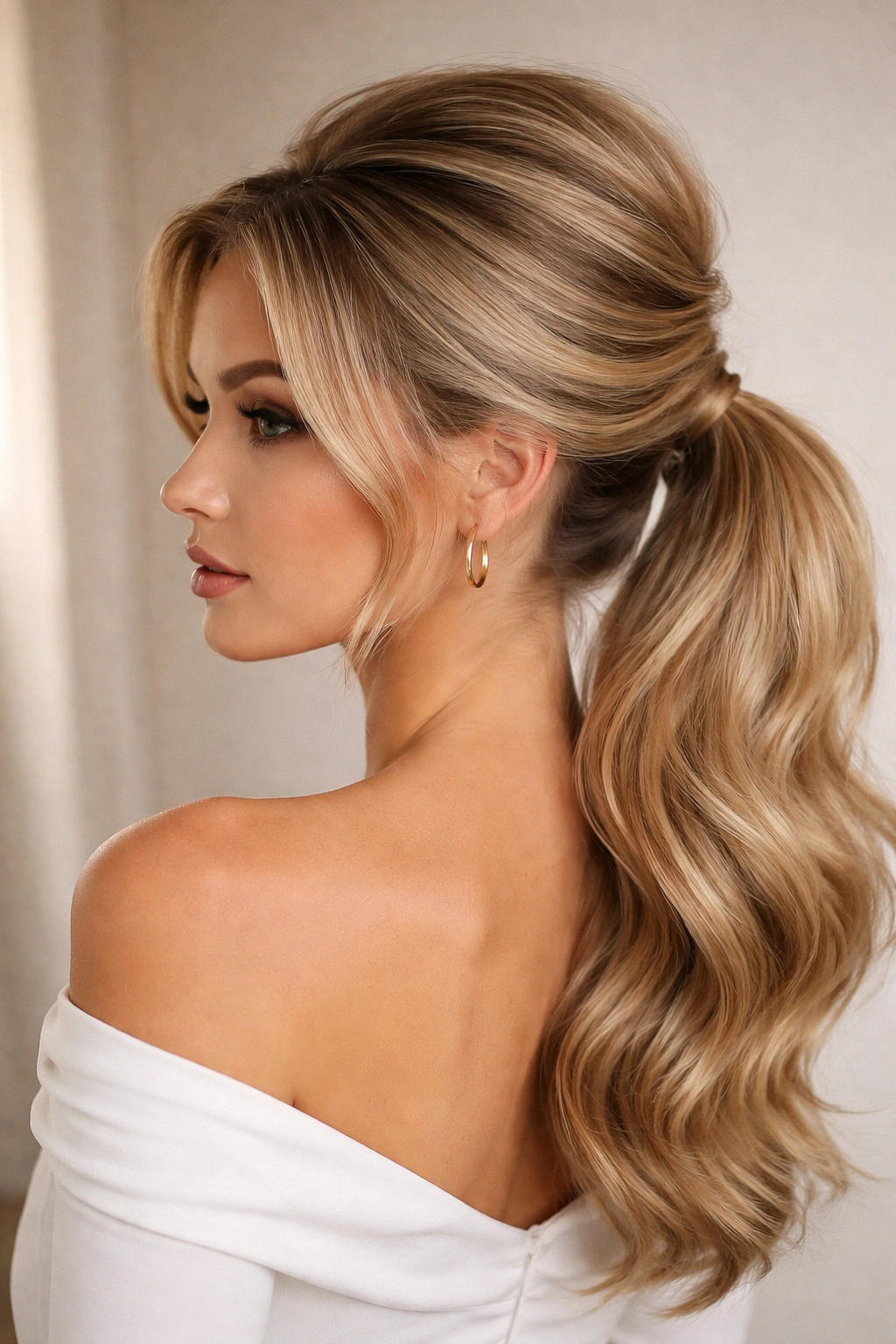
The voluminous low swoop is designed for anyone who wants their ponytail to look genuinely full and impressive while maintaining the elegance of a low placement. This version uses strategic teasing, volumizing products, and loose styling to create obvious dimension and body. The swoop is fuller, the base of the ponytail looks more substantial, and the overall effect is luxe and intentional without looking overdone.
Creating Genuine Volume
Volume at a low ponytail base is trickier than volume at a high style because gravity works against you. The secret is building lift at the crown and upper portion first, then allowing that volume to flow into your swoop section. You’re not trying to create volume throughout the entire ponytail—that would look costume-like. Instead, you’re creating the illusion of a fuller ponytail by keeping the gathered section slightly loose and using the right products and techniques.
Volumizing Techniques for Low Swoops
- Apply volumizing mousse to roots on damp hair and blow-dry with your head tilted down to create maximum lift
- Use a texturizing spray on specific sections where you want strategic volume rather than all-over fluffiness
- Tease very gently at the crown using a fine-tooth tease brush, creating a light cushion of texture rather than a matted tease
- Rough-dry your hair with your fingers rather than smoothly brushing it to encourage texture and hold
- When creating your swoop, don’t pull too tightly—leave the top section slightly relaxed so it retains body
- Gather your ponytail and wrap the base, then use bobby pins hidden underneath to create a slight lift or pouf effect just above the elastic
- Finish with a light hairspray that holds without stiffening
Pro tip: Don’t use heavy serums or oils if you’re going for volume—they weigh hair down. Stick with lightweight mousses, texturizing sprays, and dry texturizing products like dry shampoo in a tinted shade that matches your hair.
7. The Tousled Romantic Low Ponytail
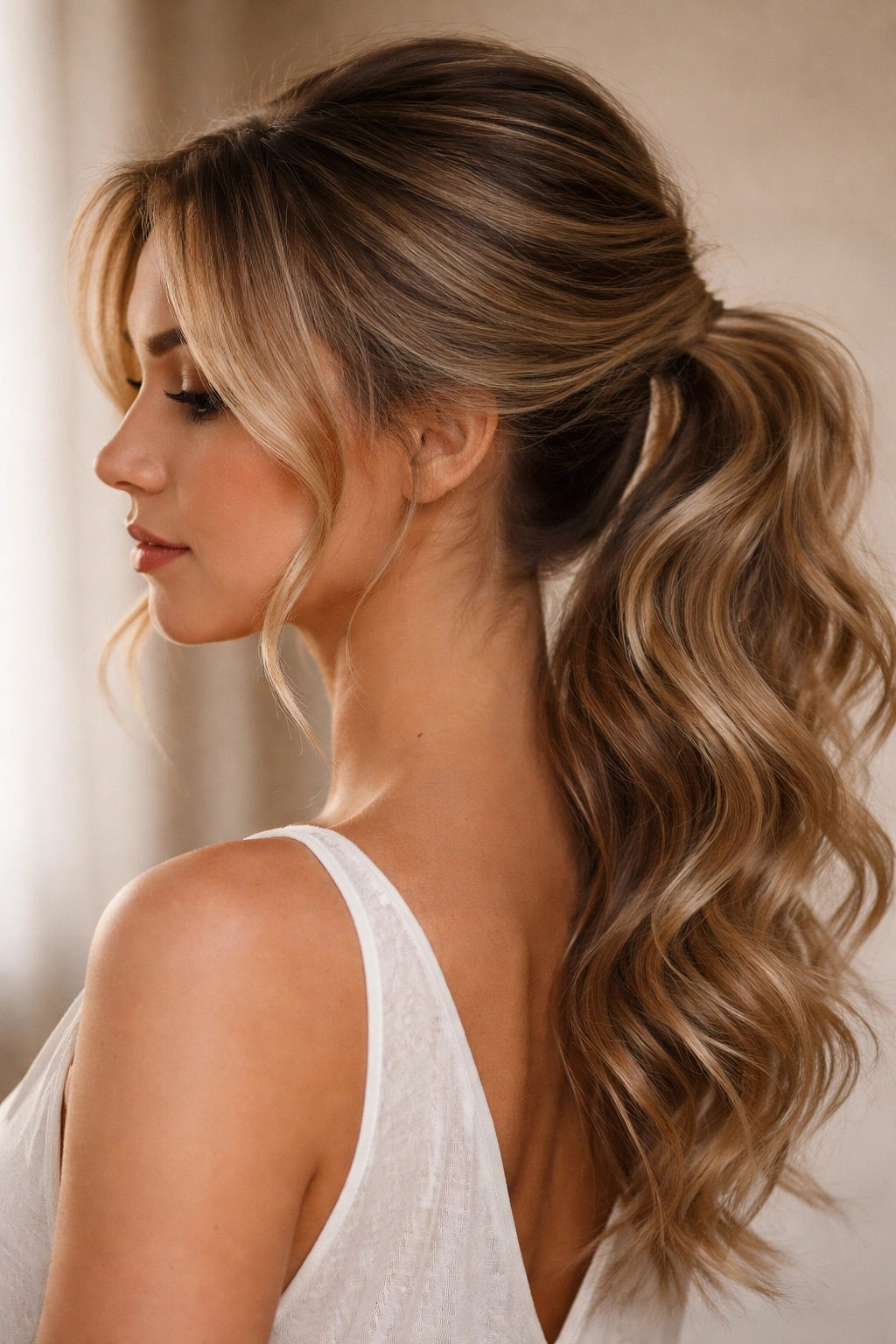
The tousled romantic low ponytail is for anyone who wants their style to feel effortlessly beautiful rather than meticulously controlled. This version embraces loose waves, a slightly undone swoop, and intentional imperfection that still reads as entirely polished. It’s perfect for dates, special events, or any occasion where you want to feel elegant without looking like you’re trying too hard.
The Art of Intentional Imperfection
Tousled styles are trickier to pull off than they appear—true effortlessness actually requires deliberate choices and careful execution. You’re not just letting your hair do whatever it wants; you’re styling it to look like you’re not styling it. This takes understanding your hair’s natural tendencies and working with them rather than against them. A tousled romantic swoop should feel like a beautiful accident, not an obviously finished style.
Creating Romantic Tousle
- Start with day-old or second-day hair if possible—it holds texture better and naturally has a softer, less-controlled appearance
- Create soft waves throughout your hair using a curling iron or wand, curling large sections around your iron and letting them cool
- Gently run your fingers through the waves to break them apart, focusing on creating varied texture rather than uniform curls
- Apply a light sea salt spray or texturizing spray to enhance the undone appearance and provide hold
- Gather your hair into a low ponytail, leaving several face-framing pieces loose and allowing the swoop section to feel slightly relaxed
- Don’t pull your ponytail tight—it should feel secure but soft, like your hair naturally gathered itself there
- Release a few small sections from your ponytail and curl them around your face or let them fall naturally for softness
- Use bobby pins to anchor pieces if needed, but hide them completely so they’re invisible
Worth knowing: The difference between “tousled” and “messy” is intentionality and cleanliness. Tousled should look like you’ve carefully arranged each piece; messy looks like you didn’t bother. Make sure your hair is freshly washed or styled—product buildup and true grime will read as messy, not romantic.
8. The Blended Swoop with Face-Framing Pieces
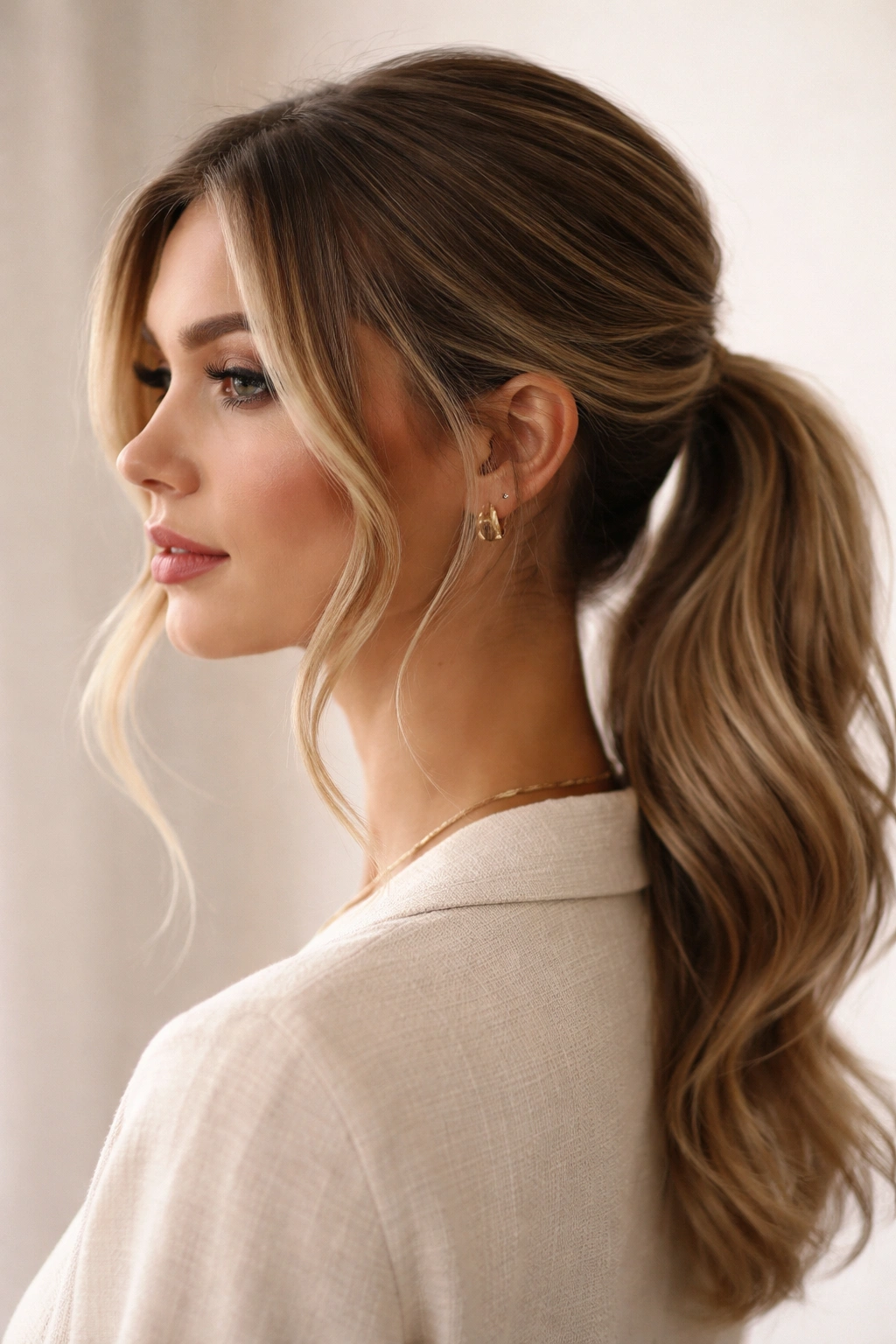
The blended swoop with face-framing pieces is perfect for adding softness around your face while maintaining the polished structure of a low ponytail. This version intentionally leaves several small sections of hair out of your ponytail—usually framing your cheekbones and jawline—creating a style that feels less severe than a fully gathered ponytail. The framing pieces can be straight, wavy, or curled, and they add movement and dimension that a standard swoop can’t achieve alone.
Why Face-Framing Matters
Face-framing pieces soften any hairstyle by drawing attention to your features rather than your scalp. They’re especially flattering if you have a longer face, prominent cheekbones, or any features you want to highlight. The frames also create visual interest and movement, making the entire style feel more dynamic. Additionally, face-framing pieces make a low swoop feel less formal and severe—they signal that your style is intentional and thoughtfully composed rather than simply utilitarian.
Selecting and Styling Framing Pieces
- Choose pieces from the area around your temples and cheekbones—these naturally frame your face and look intentional rather than like escaped hair
- Keep the frame pieces relatively thin (about the width of your thumb) so they don’t overwhelm your features
- Curl your framing pieces in the opposite direction of your swoop—if your swoop curves to the right, curl your face frames to curl slightly left
- Use a small barrel iron or wand to create gentle curves that will fall naturally alongside your cheeks and jawline
- Don’t fully incorporate these pieces into your ponytail—they should remain separate and visible
- You can also pull one or both framing pieces back slightly and secure them with a small bobby pin behind your ear, creating a semi-gathered look
- Finish the style by curling or straightening the very ends of your framing pieces to ensure they look intentional
Pro tip: If your face-framing pieces won’t hold a curl, use a light spritz of hairspray before curling, and let the curl cool completely before releasing it from the iron.
9. The Low Swoop with Accessories
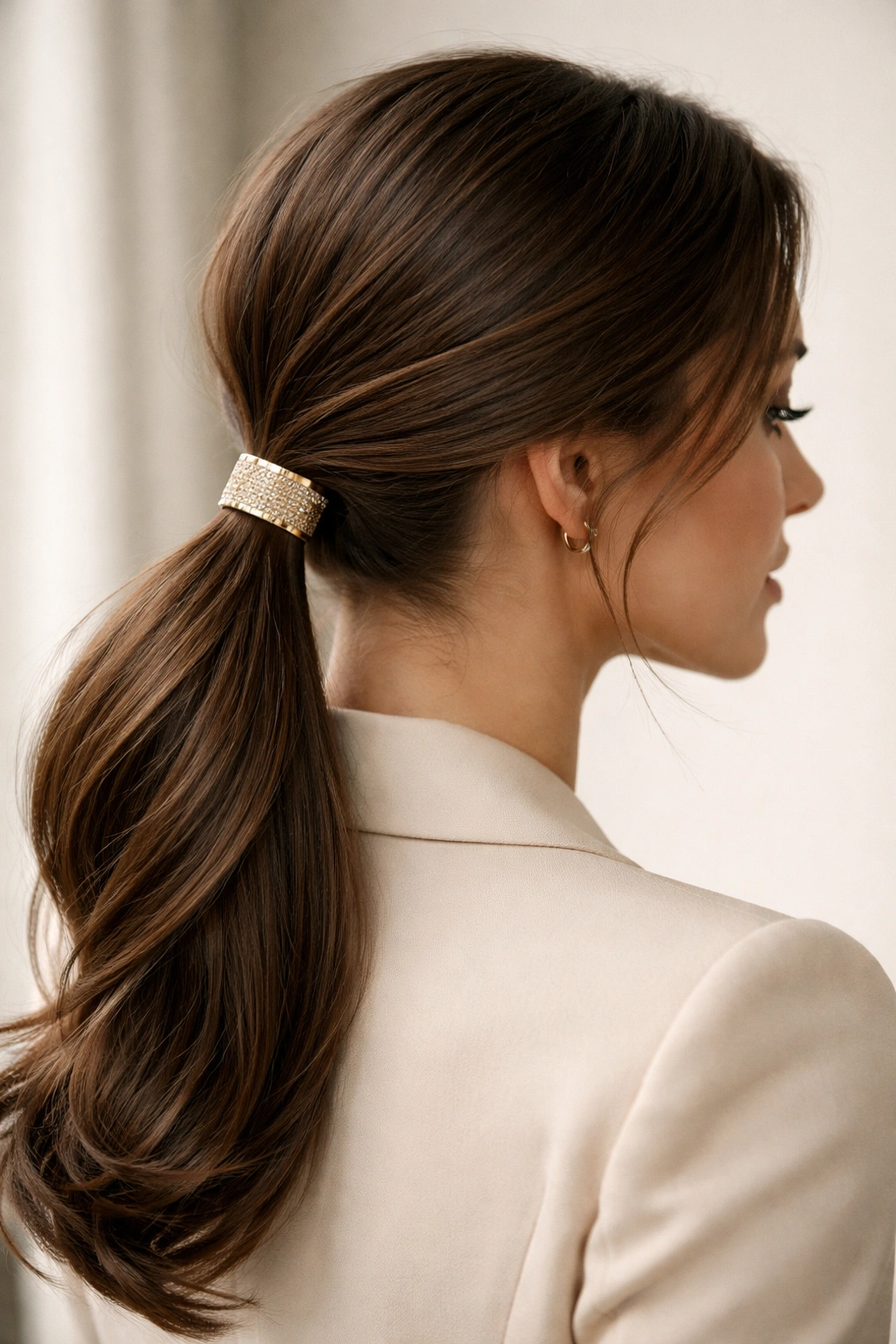
The low swoop with accessories transforms your ponytail into a jewelry moment by incorporating decorative elements that sit at or near the base. From delicate hair clips to sculptural cuffs to beaded elements, the right accessory can completely elevate your look and introduce color, shine, or personality that your hair alone can’t provide. This is especially useful if you’re wearing a simple outfit and want to add a statement element without cluttering your overall appearance.
Accessory Options That Read Polished
The key to wearing hair accessories without looking juvenile is choosing pieces that feel intentional and adult. Delicate gold cuffs, minimalist geometric clips, elegant pearl-adorned barrettes, leather strips, or architectural metal pieces all feel modern and sophisticated. You want to avoid bright colors, cartoon characters, overly shiny materials, or anything that looks like costume jewelry. The accessory should feel like an extension of your personal style, not like an afterthought.
Ways to Incorporate Accessories
- At the ponytail base: Wrap your ponytail base with your hair or ribbon first, then slide a cuff or ornamental hair clip over the elastic to cover it
- Threaded through the swoop: Create a small braid or twist in your swoop section and thread a thin metal cuff, leather cord, or beaded strand through it
- Clipped to a framing piece: Use a delicate hair clip to secure one of your face-framing pieces to the side of your ponytail base
- Scattered throughout: Use multiple small clips or decorative bobby pins hidden throughout your swoop section to create visual interest
- As your wrap element: Replace a traditional hair or ribbon wrap with a beaded strand, a silk cord, or a decorative cuff
Important: Whatever accessory you choose should be secure enough to last through your entire day. Test it before leaving the house—clip or tie it on and move your head around to make sure nothing shifts or falls out.
10. The Twisted Low Swoop
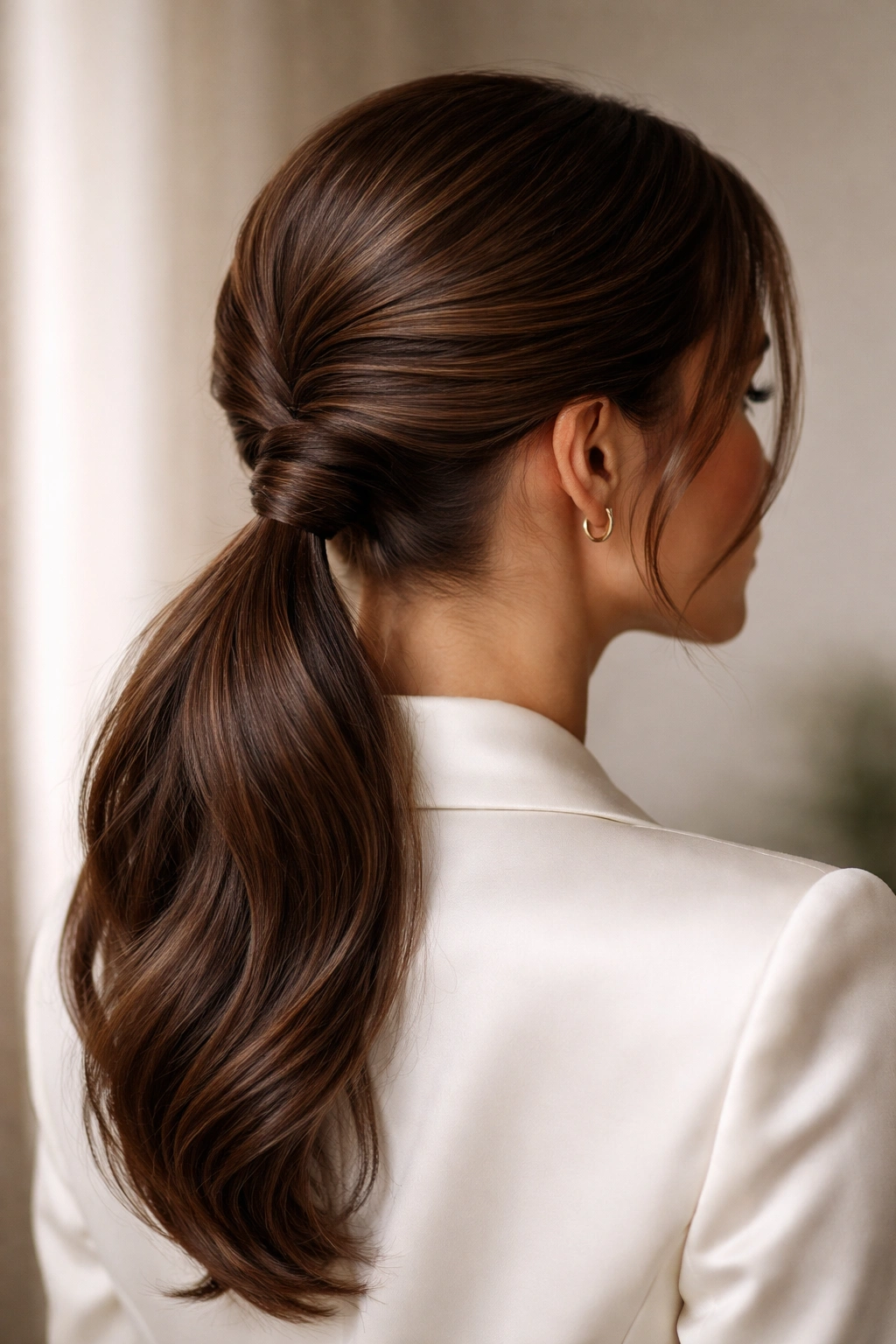
The twisted low swoop creates visible structure through deliberate twisting rather than braiding or waves. This version looks incredibly polished and sophisticated while being surprisingly easy to execute. The twist catches light beautifully, adds texture without looking frizzy or undone, and creates a swoop that has architectural interest without being overly complicated or time-consuming.
Why Twists Create Such Polished Appeal
A twisted swoop reads as intentional and thought-out. Twists catch light in a way that showcases shine and texture, making your hair look healthier and more lustrous. They’re also more secure than loose waves when you’re going about your day—the twist naturally keeps the swoop in place and prevents pieces from falling in your face or shifting throughout the day. For anyone who loves the idea of texture but struggles with maintaining waves, a twist is often the perfect solution.
Creating a Twisted Swoop
- Apply lightweight styling cream or texturizing spray to damp hair and rough-dry it to build texture
- Create a clear swoop line by brushing hair back and to one side
- Starting at your crown, take a section of hair and begin a gentle two-strand twist (similar to a french twist, where you’re incorporating hair as you move down)
- Keep the twist relaxed and slightly loose rather than tight—you want the twisted texture visible
- Twist down and around toward your nape, following the natural line of your swoop
- Secure the twisted section with a small elastic as it reaches your ponytail gathering point
- Gather all your hair into your low ponytail, incorporating the twisted section
- Gently pull at the twist to loosen it and create dimension
- Wrap your ponytail base to finish the look
Pro tip: If you struggle with two-strand twists, remember that this isn’t a hairstyle where perfection matters—slightly loose, slightly undone twists actually look more polished than perfectly tight ones. Focus on the overall shape rather than flawless execution.
11. The Half-Up Low Swoop Hybrid
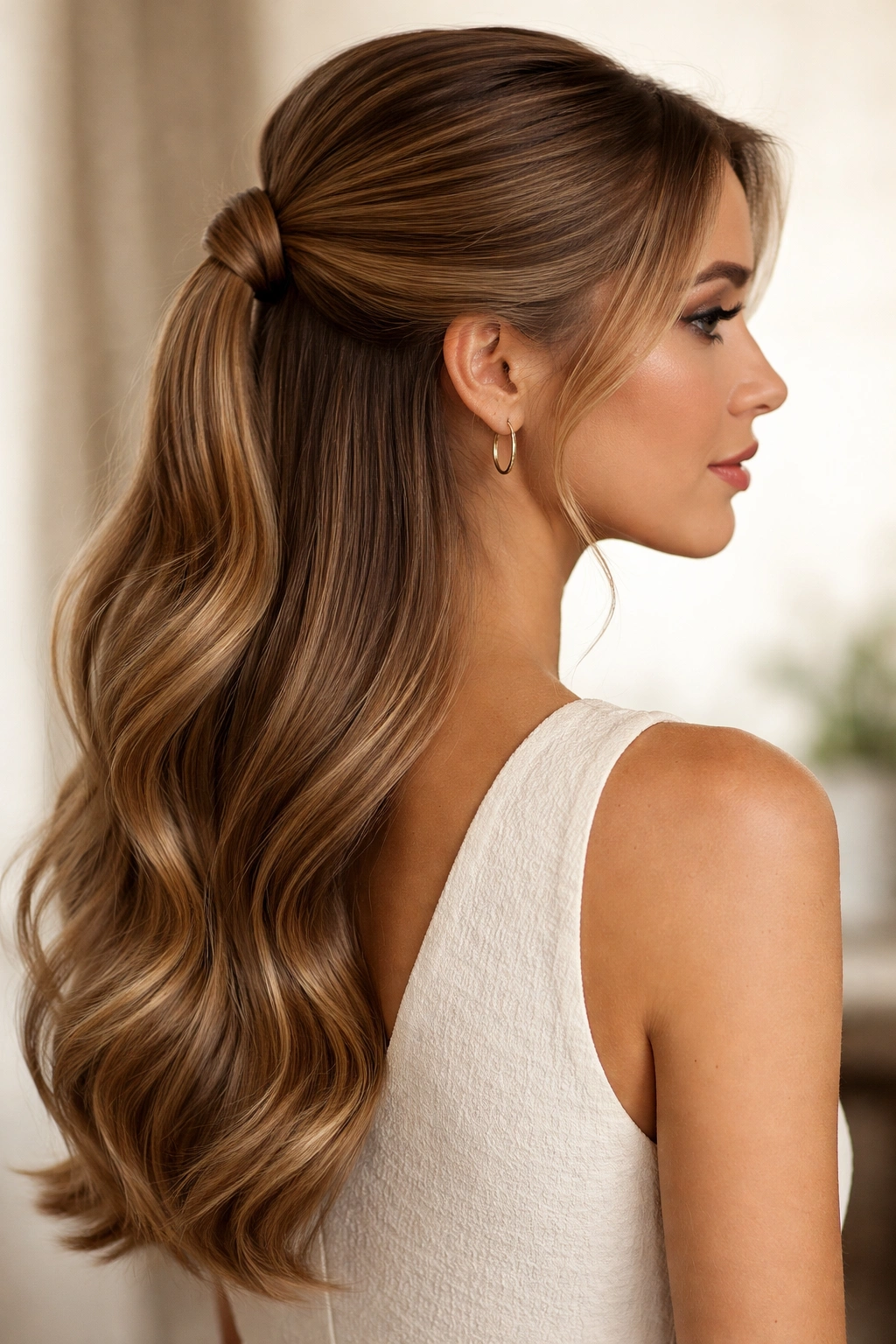
The half-up low swoop hybrid blends elements of a half-up style with a low ponytail, creating a sophisticated look that feels fresher and less dramatic than a full low swoop while still providing the polish and control. This version gathers only the top half to three-quarters of your hair, leaving the bottom section flowing. The result is a style that shows off length and movement while keeping hair off your face and neck.
Why Hybrid Styles Work
Hybrid styles offer the best of both worlds—you get the polished, put-together feeling of a gathered style with the movement and dimension of fully loose hair. This particular hybrid is wonderful for formal situations where a fully loose style feels too casual, but a fully gathered low ponytail feels too severe. It also works beautifully if you’ve spent time creating waves or curls throughout your hair—the gathered section showcases styling effort while the flowing section displays texture and movement.
Creating the Perfect Hybrid
- Style your entire head with soft waves or your preferred texture
- Gather the section from your crown back to about mid-scalp—approximately the upper half of your hair
- Swoop this gathered section down and around toward your nape, creating a curved line similar to a traditional swoop ponytail
- Secure this upper section with a small elastic at the base of the swoop
- Leave the lower half-section completely loose, allowing it to flow down your back with the waves or curls intact
- You can either wrap the gathered section’s base with hair or an accessory, or leave it subtle so the focus remains on the flowing lower section
- Gently pull at the gathered swoop section to relax it and ensure waves remain visible
- Curl or straighten the very ends of your flowing lower section to ensure it looks intentionally finished
Worth knowing: This style works best when there’s a clear visual distinction between your gathered section and your flowing section. If everything blends together, it can look like you couldn’t be bothered to fully style your hair. Make sure the line between gathered and flowing is obvious.
12. The Sleek Graphic Low Swoop
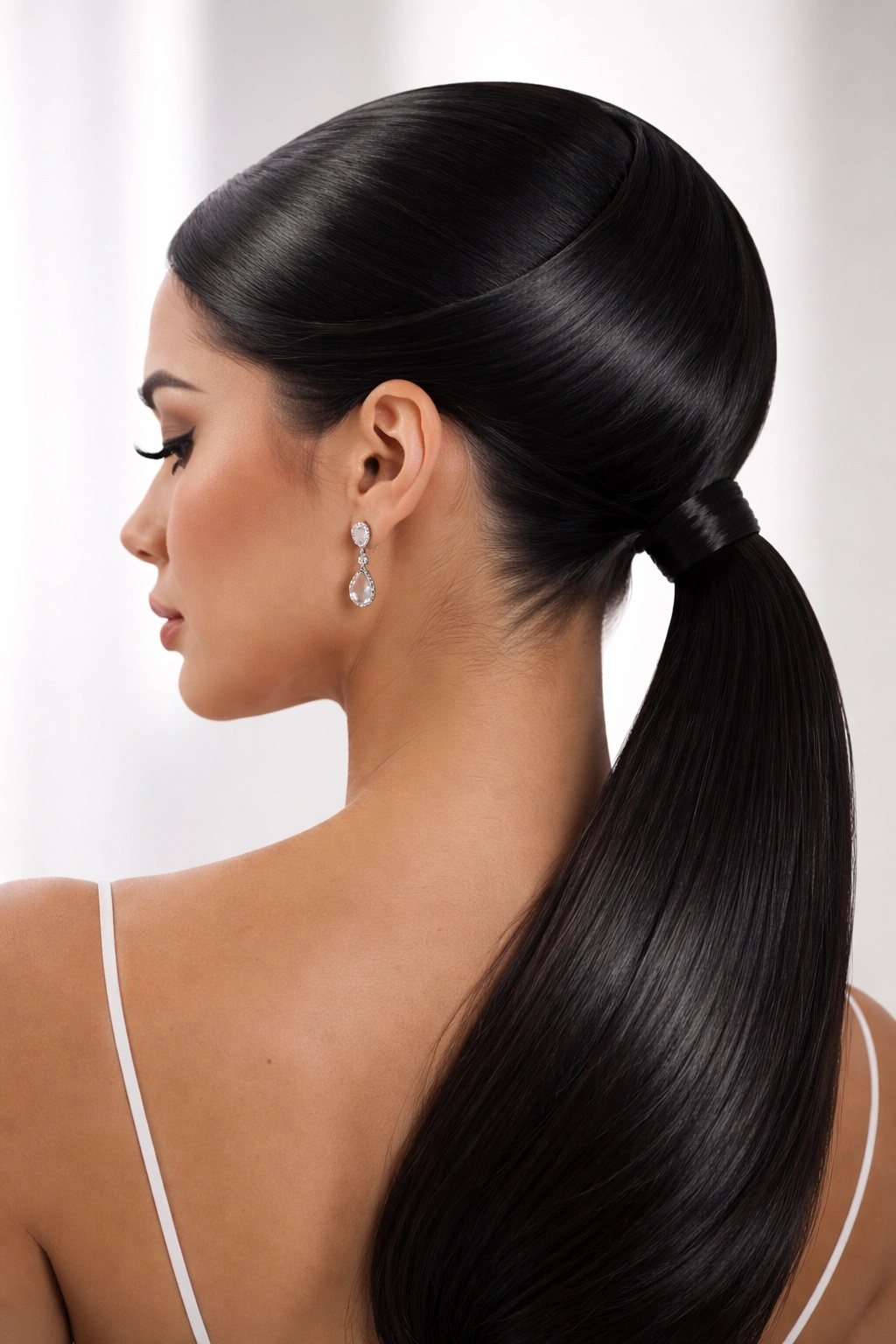
The sleek graphic low swoop is for anyone who wants their style to make a bold geometric statement. This version is rigorously sleek with strong lines—everything is smoothed and controlled except for the intentional swoop itself, which creates a defined curved line from your crown to your nape. The result is architectural, modern, and undeniably polished. This is the ponytail you wear when you want your hair to communicate precision and intention.
The Geometry of Polished Style
A graphic low swoop works because it uses negative space and clean lines to create visual impact. There’s nowhere for your eye to rest except on the clear swoop line your hair creates. This style reads as extremely intentional—you didn’t just throw your hair back, you composed it into a specific shape. The sleekness means there’s no room for accident or imperfection, which is exactly what makes it feel so polished and put-together.
Executing the Graphic Look
- Apply smoothing serum to damp hair and blow-dry using a paddle brush for maximum smoothness
- Use a straightening iron on very low heat to polish every section of hair, working from roots to ends
- Create a clear swoop line by brushing hair back and decisively to one side, establishing the angle from the start
- Use a fine-tooth comb to smooth every hair into the swoop line—no wisps, no flyaways, just clean curves
- Gather your hair into a low ponytail at the point where your swoop naturally gathers
- Secure with a clear elastic or one wrapped in a thin strand of your hair
- Use the straightening iron again on any pieces near your elastic to ensure absolute smoothness
- Apply anti-frizz serum to your hands and smooth down any flyaways with precision
- Finish with a strong-hold hairspray that locks the style in place without making hair feel stiff
- For extra graphic impact, create a razor-sharp center part or side part that complements your swoop
Pro tip: The key to a truly graphic look is maintaining it throughout the day. Bring a fine-tooth comb and a small bottle of anti-frizz serum with you so you can touch up your swoop if needed. Even one or two stray pieces will compromise the graphic effect.
Final Thoughts
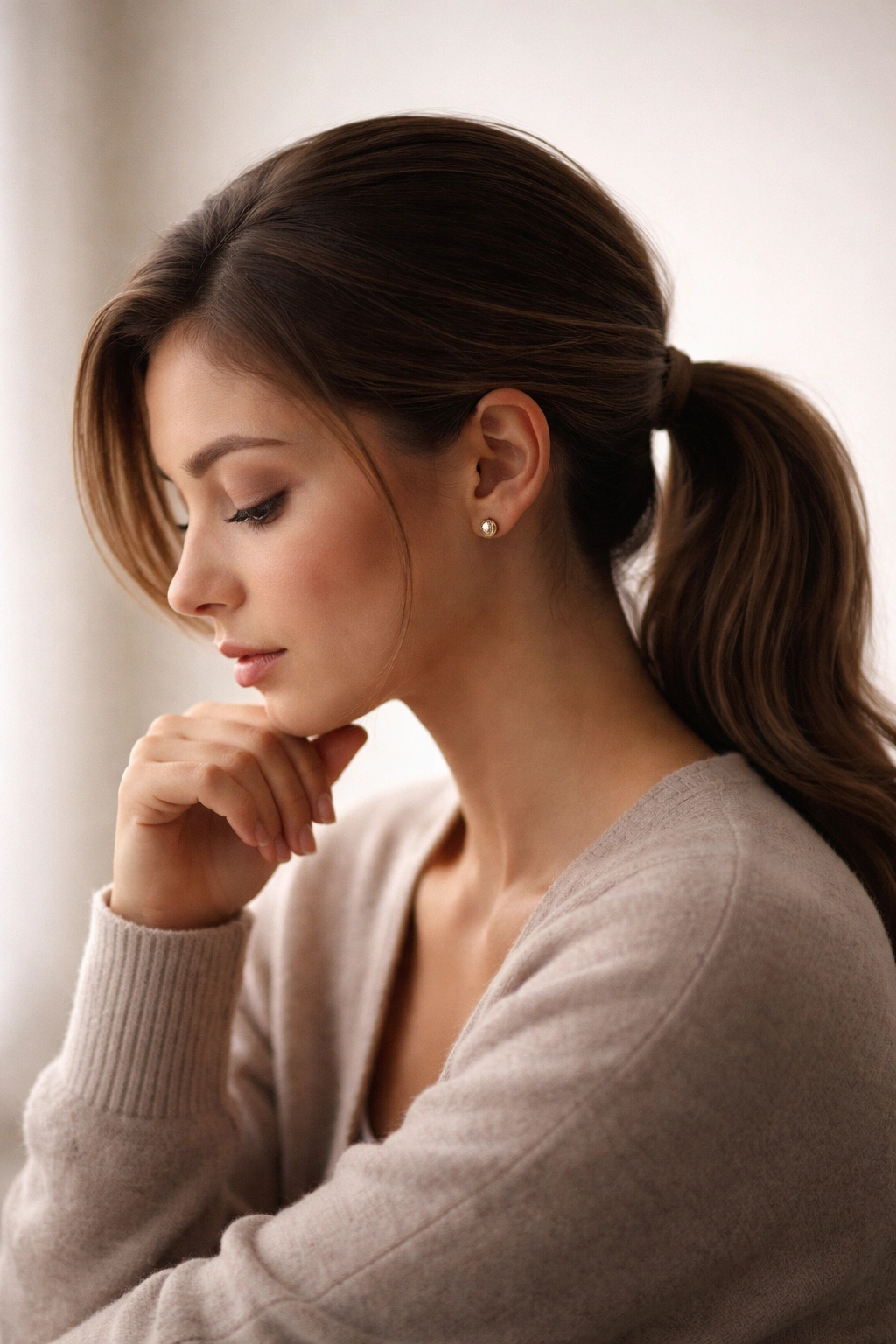
The right low swoop ponytail can transform how you feel about your appearance and how others perceive your polish and intention. Whether you choose a sleek, controlled version or a soft, romantic interpretation, the fundamental principle remains the same—you’re creating movement and intention through the way your hair transitions from loose to gathered. Each of these twelve variations serves different situations, hair types, and personal aesthetics, which means you have options that genuinely fit your life rather than forcing yourself into one narrow style.
The beautiful truth about low swoop ponytails is that they reward experimentation. Try the sleek version one day, the textured version the next, and notice how each one affects your confidence and the way you feel in your own appearance. Many people find that once they understand the mechanics of how a swoop works, they can intuitively adapt the basic concept to whatever they’re dealing with—thick hair, fine hair, wavy hair, straight hair, limited time, extra time, a formal occasion, or a casual day. That adaptability is what makes the swoop such a powerful styling tool.
Don’t underestimate the power of getting this one hairstyle right. A truly polished low swoop ponytail works across seasons, face shapes, occasions, and outfit styles. It communicates that you’ve put thought and care into your appearance without requiring an hour of styling time. It works whether you’re heading to a board meeting, a family gathering, or just running errands and wanting to feel more intentional. Master these variations, and you’ll have a hairstyle toolkit that genuinely serves your real life—not some idealized version of it.
