



Burgundy is having a major moment in hair color, and for good reason—it’s sophisticated, bold, and works beautifully against virtually every skin tone. When you combine that rich, wine-toned shade with the texture and dimension of braids, you get a hairstyle that looks expensive, intentional, and undeniably striking. Whether you’re looking for an everyday style that still turns heads or something special for an event, braided ponytails in burgundy offer endless possibilities.
The beauty of braided ponytails is that they’re as practical as they are gorgeous. They keep your hair off your face and neck while showcasing the color and texture in ways that loose hair simply can’t match. Braids add visual interest and movement, transforming a basic ponytail into something that feels polished and thoughtful. And here’s what makes burgundy specifically brilliant for this style: the darker wine tones catch the light differently when woven through braids, creating depth and richness that make the entire look feel more dimensional.
What you’re about to discover isn’t just a list of hairstyles—it’s a collection of distinct approaches to styling braided ponytails that range from edgy and unconventional to romantic and intricate. Some of these styles work beautifully for everyday wear; others are showstoppers for special occasions. Each one can be tailored to your hair length, texture, and skill level. Whether your burgundy is a full-head color, just your ponytail section, or even temporary highlights woven through, these styles will give you concrete inspiration for creating a look that feels uniquely you.
1. The Classic French Braid Ponytail
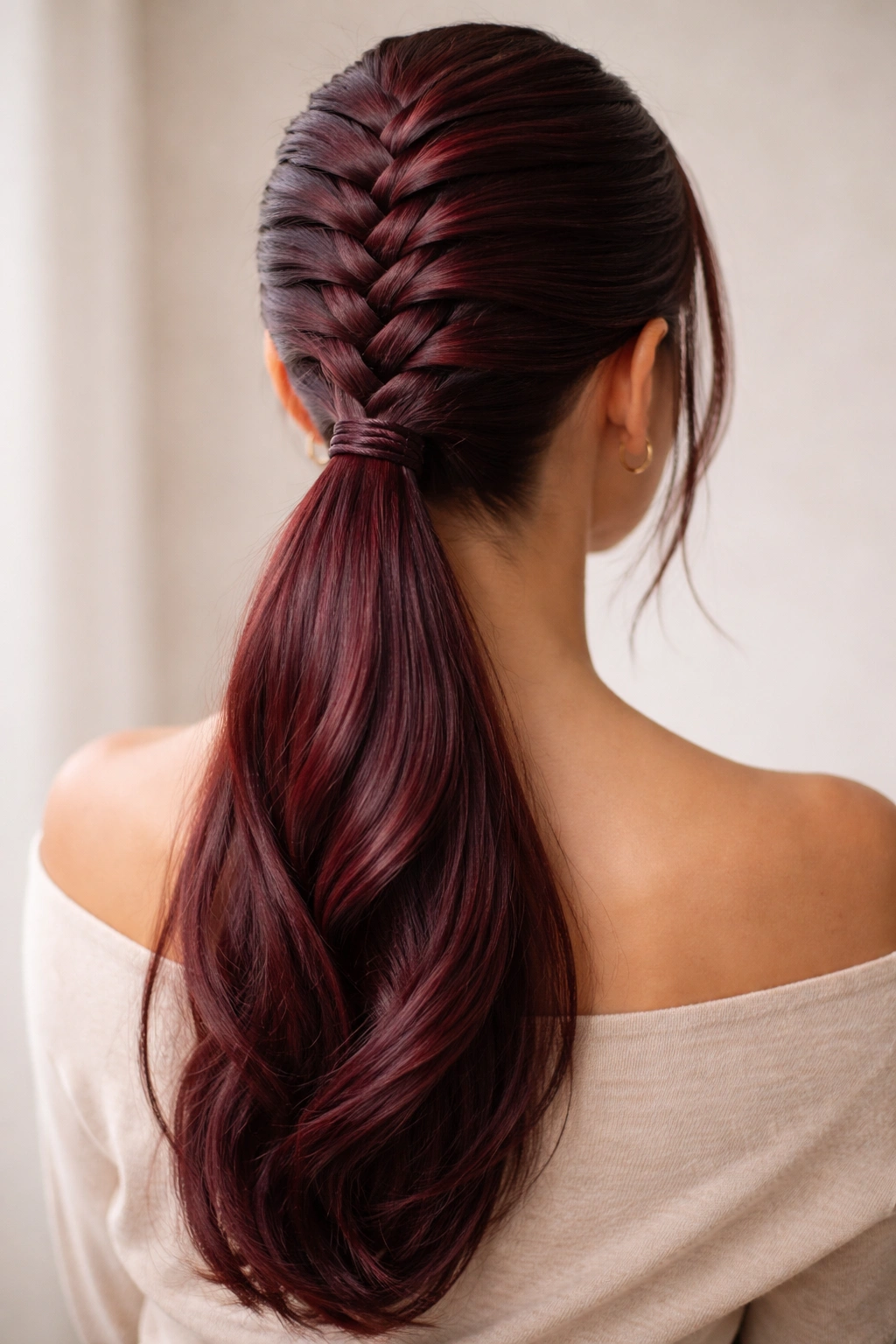
This is where braided burgundy ponytails begin—sleek, elegant, and timelessly chic. A single French braid runs from the crown straight back into a gathered ponytail, creating one seamless line from your scalp to the ends of your hair. The braid sits at the center, visible against your back, while the ponytail catches light and shows off the depth of your burgundy shade.
What Makes It Work
The French braid ponytail works because it’s structured but not fussy. Unlike loose ponytails that can look flat or boring, the braid adds texture and movement that draws the eye. The burgundy color gains dimension as it travels through the braided sections, catching light at different angles. This style reads as intentional and polished without requiring an advanced skill level.
Styling Steps to Follow
- Brush your hair smooth and apply a light texturizing spray if you have very straight hair
- Start the French braid at your hairline, incorporating small sections as you move back toward your crown
- Gather all your hair into a ponytail elastic at the nape of your neck where the braid naturally ends
- Loosen the braid slightly by gently pulling small sections outward for a softer, fuller appearance
- Finish with light hairspray to hold the shape without creating a helmet effect
Pro tip: French braid your hair the night before if you have thick or coarse hair—it’s easier to work with when there’s a bit of texture from sleeping on it.
2. The Dual Braid Ponytail
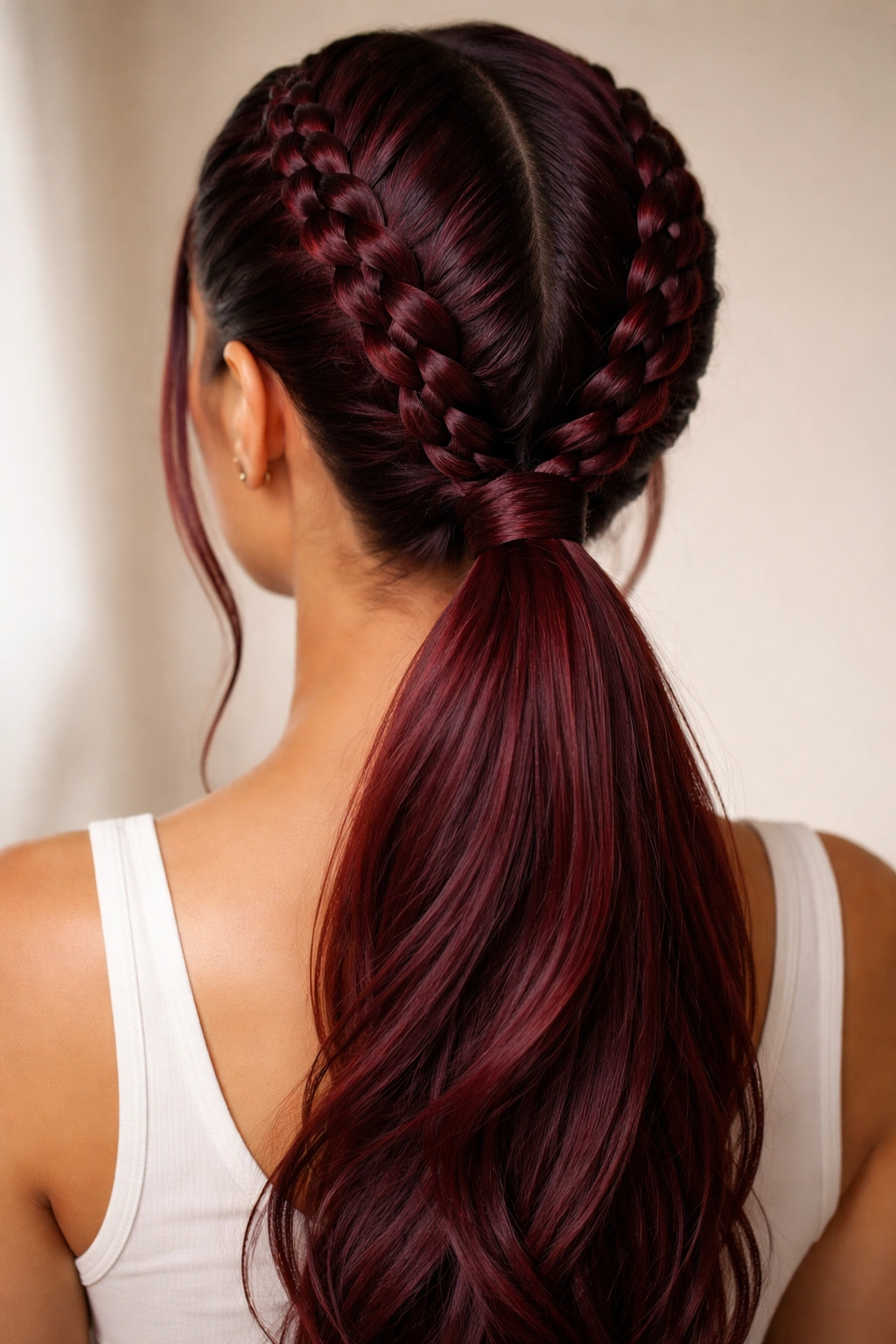
Instead of a single braid down the center, this style features two braids that begin at either side of your part line and meet at the back to form one joined ponytail. It’s more intricate than a single braid but creates beautiful visual balance and emphasizes the burgundy shade on both sides of your head.
Why Two Braids Feel More Interesting
Dual braids inherently feel more sophisticated and intentional than a single braid. They frame your face differently, creating subtle definition on both sides while the burgundy color stands out against your skin tone on each side. This style also works well if you have a natural center part or want to create one for symmetry.
How to Execute It Properly
- Create a clean center part from your forehead to the nape of your neck
- Start a French braid on the right side, beginning at your temple and moving back
- Start a matching French braid on the left side simultaneously for even, balanced sections
- Bring both braids together at the back of your head and secure with a clear elastic
- Gather any remaining loose hair into a ponytail with the braids, or leave the braided portions visible and secure them separately
Worth knowing: Taking video of yourself doing this style the first time helps you see which side gets tighter than the other, so you can adjust on your next attempt.
3. The Messy Textured Braid Ponytail
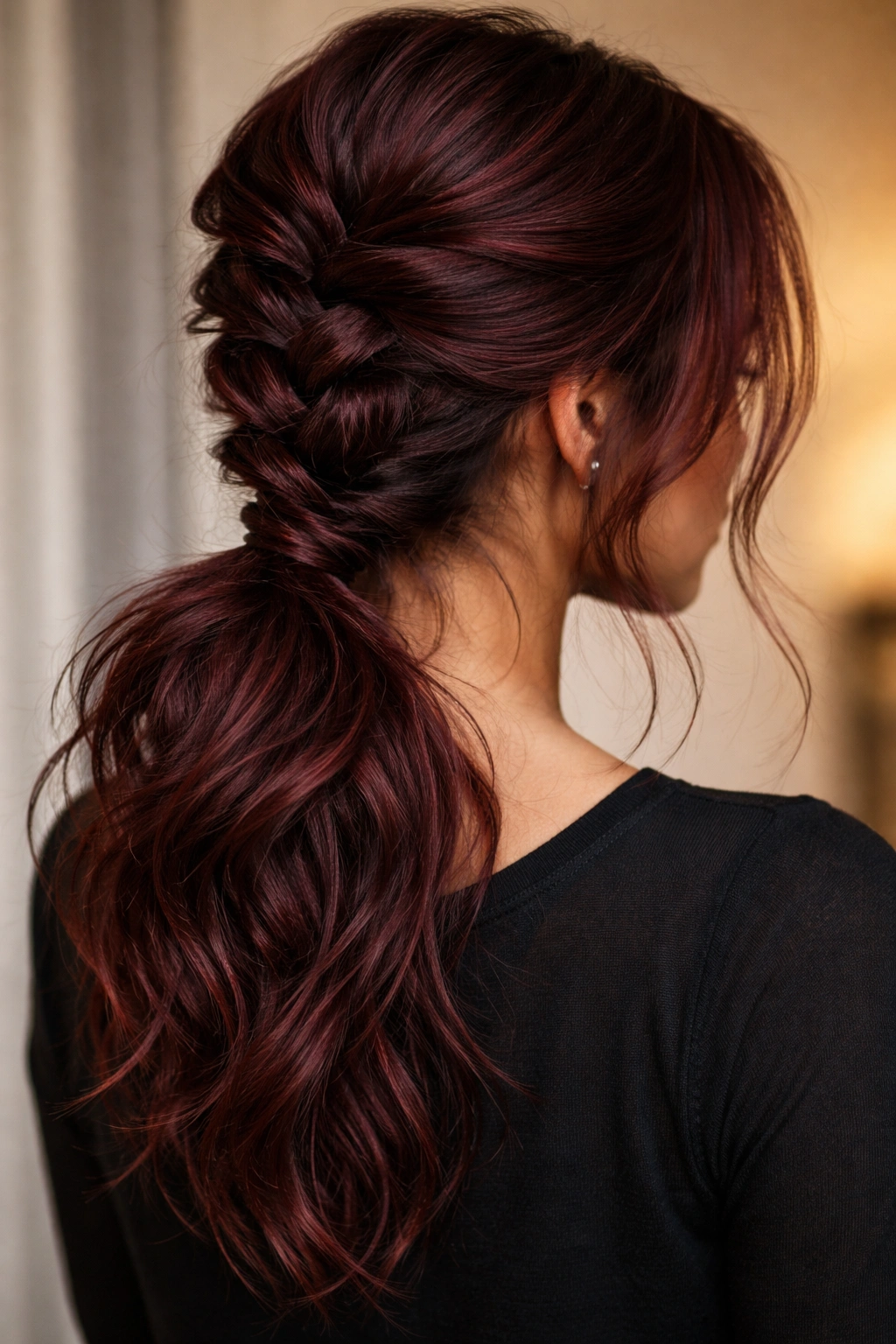
For those who find perfectly tight braids too formal, the messy textured version brings a relaxed, lived-in energy while still delivering serious visual impact. This style deliberately pulls pieces loose and creates a slightly undone appearance that somehow feels more modern and approachable than the polished version.
When Imperfect Feels Better
The messy braid style works because it looks effortless—like you styled your hair in five minutes and still ended up looking stunning. This approach flatters waves and texture better than a tight braid does, and it’s genuinely faster to achieve. The burgundy color shows through more dramatically in the loose sections, creating pockets of intense wine tone alternating with slightly lighter areas.
Building the Messy Effect
- Create a basic French braid or Dutch braid as your foundation
- Pull gently on each section of the braid, starting from the bottom and working upward
- Pull outward and slightly toward the back to create visible loose texture
- Don’t aim for symmetry—intentional asymmetry actually looks more deliberately undone
- Bring the braid down into a low ponytail, leaving some short pieces loose around your face and temples
- Mist lightly with dry texture spray rather than traditional hairspray to maintain the soft, undone feel
Insider note: Braiding slightly damp hair (not soaking wet) then letting it air-dry creates natural waves that make the messy effect look even more effortless.
4. The Dutch Braid Ponytail
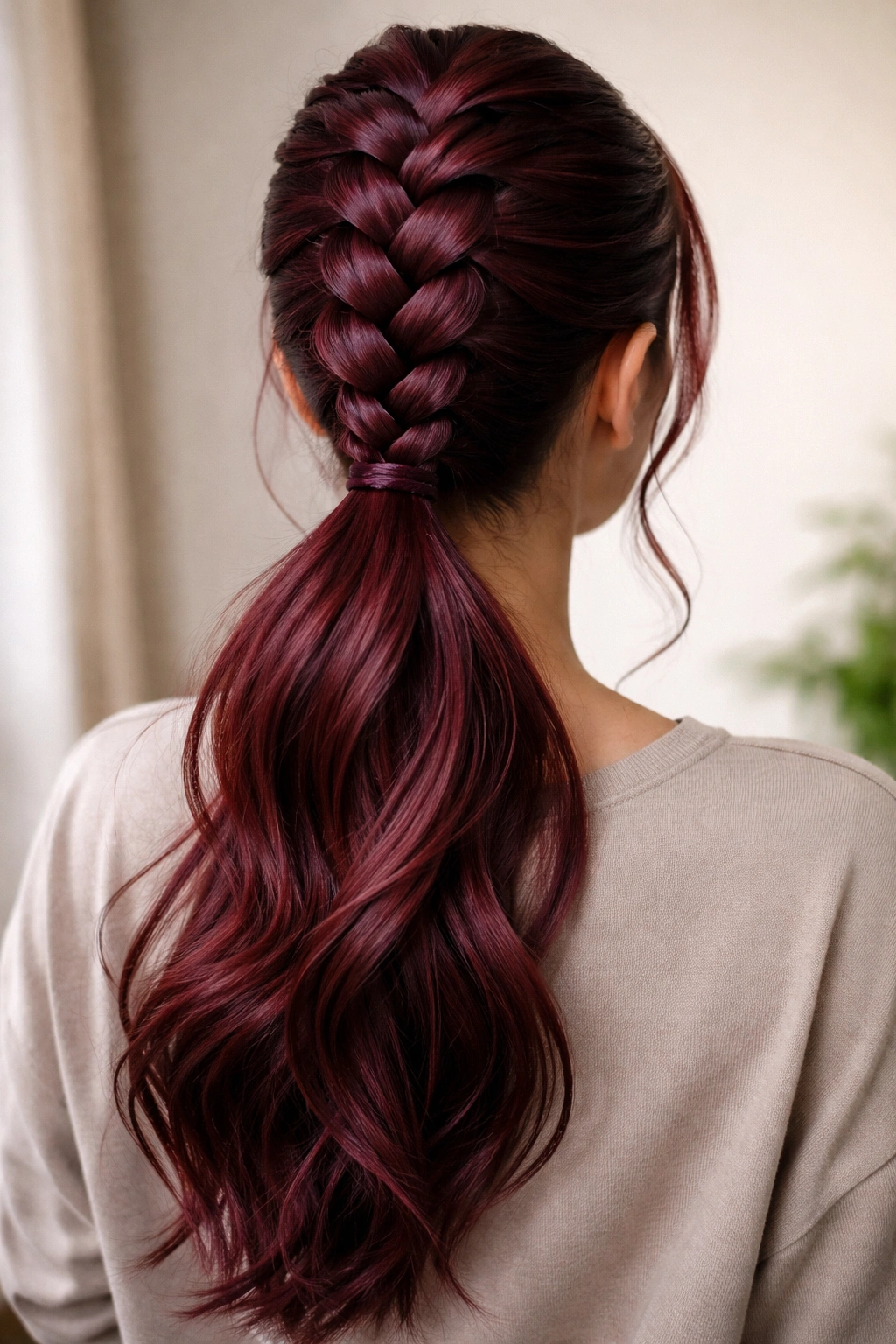
If you’ve never tried a Dutch braid, think of it as the French braid’s bolder sibling. The braid sits on top of the hair rather than woven through it, creating a raised, dimensional effect that makes burgundy color pop even more dramatically than other braid styles.
Why Dutch Braids Elevate the Look
Dutch braids are inherently more striking than French braids because they sit raised and visible on the scalp. This positioning means more of your burgundy shade is on display, and the braid itself becomes a true design element rather than just a practical way to secure hair. The style feels edgier and more fashion-forward while remaining completely wearable for everyday life.
Technique for the Best Result
- Apply light texturizing spray to dry hair for better grip
- Start at the crown and divide hair into three sections
- Cross the outer sections under the middle section (this is the reverse of French braiding)
- Continue adding small sections from the sides as you move down the back of your head
- The braid will naturally sit raised and prominent; don’t try to flatten it
- Secure into a ponytail at the base and gently pull the braid sections wider for more dimension
- Leave a few strands loose around the face for softness
Pro tip: Dutch braids look even more striking if you apply temporary burgundy or wine-colored hair chalk just to the braid sections before styling.
5. The Wraparound Braid Ponytail
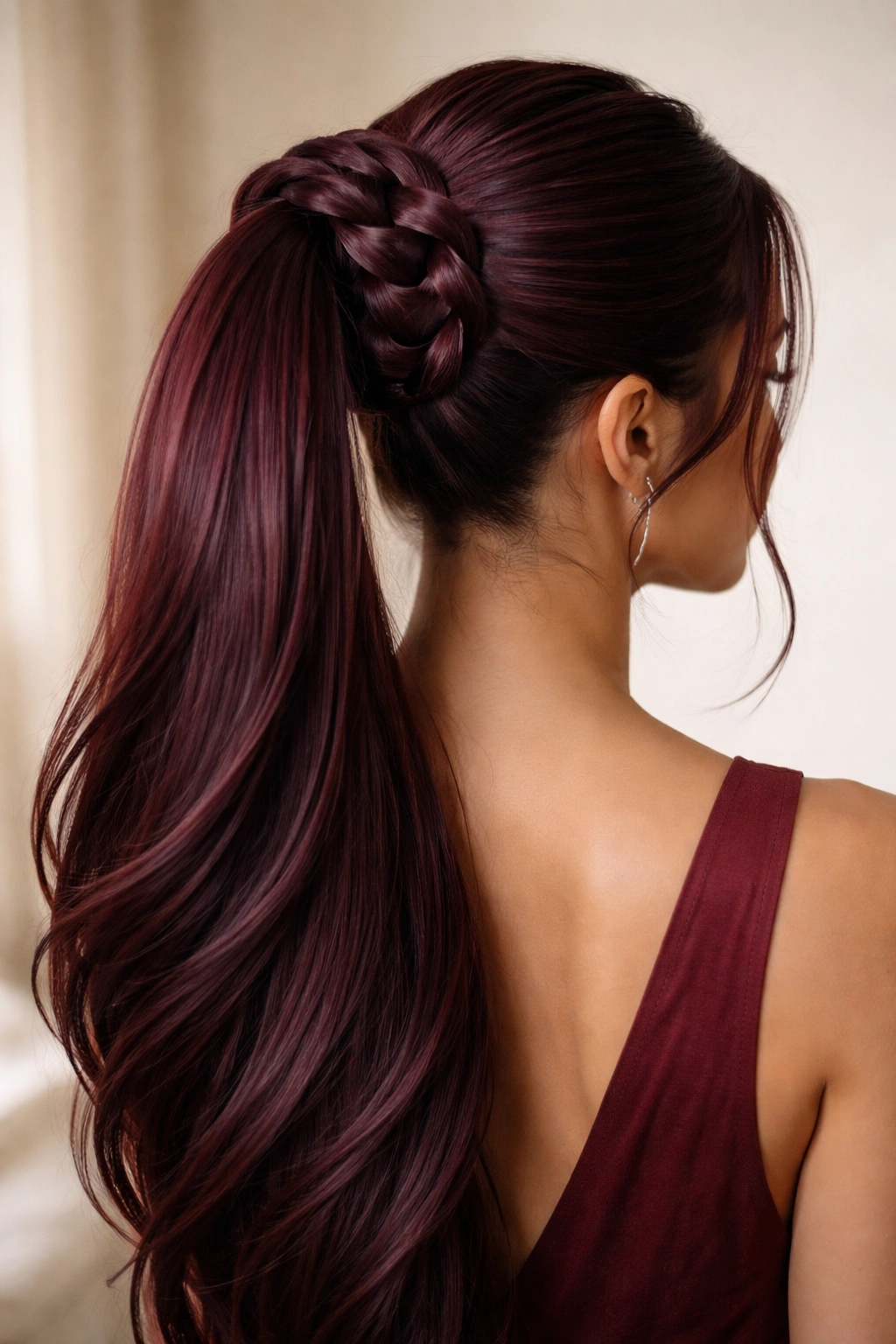
This style positions a thick, prominent braid around the outer edge of a centered ponytail, almost like the braid is hugging the base of the ponytail rather than incorporating it. It’s a genuinely unique approach that gives major visual interest and showcases the burgundy color in a completely different way.
The Visual Magic of the Wraparound
The wraparound braid feels theatrical and special because it separates the braided element from the ponytail itself. This creates contrast and dimension—the smooth ponytail and textured braid exist as distinct design elements that work together. It’s the kind of style that reads as “I really put thought into my hair today” even though it’s actually quite straightforward to create.
Building the Wraparound Braid
- Gather your hair into a low or mid-height ponytail secured with a clear elastic
- Section out a thick piece of hair from the left side of the ponytail base
- Create a loose three-strand braid with that section, running it around the base of the ponytail from left to right
- Secure the end of the braid by tucking it under the ponytail elastic or pinning it discreetly
- Adjust the ponytail shape and gently pull the braid sections looser for a fuller effect
- The braided section frames the entire base of the ponytail, creating visual depth
Worth knowing: If your braid doesn’t quite reach all the way around, use bobby pins in a matching shade to secure it flush against the base.
6. The Fishtail Braid Ponytail
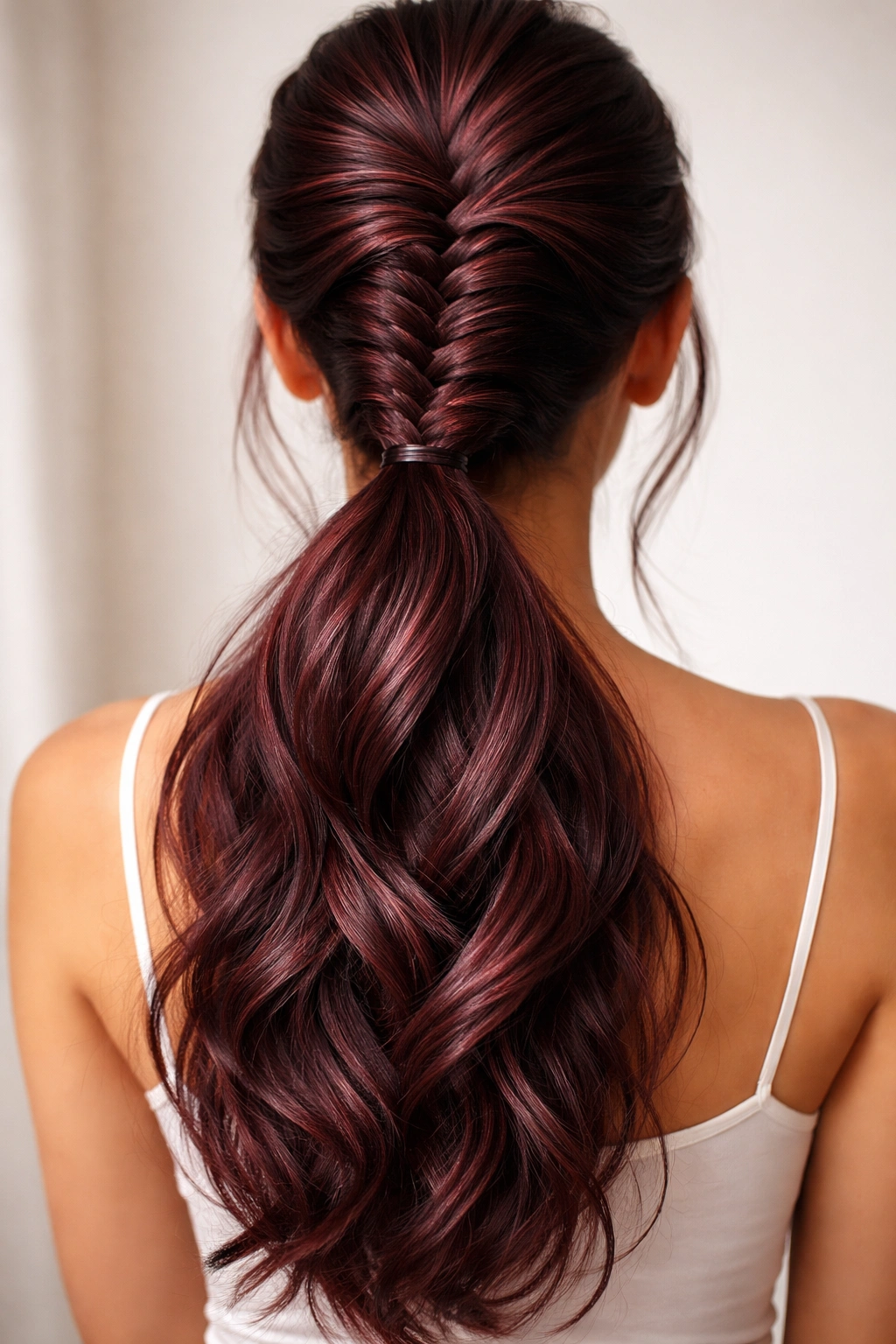
Fishtail braids create an entirely different texture than traditional three-strand braids—they’re lighter, airier, and create a lacy, intricate appearance that makes burgundy color shine through in beautiful detail. If you want braids that feel delicate and distinctly feminine, this is your style.
What Makes Fishtail Braids Special
Fishtail braids use only two sections instead of three, creating a woven pattern that feels less structured and more organic. The resulting braid is wider and fuller than a traditional braid, and it holds texture beautifully. When done in burgundy, the wine tone weaves through in a way that creates almost a ombré effect as your eyes travel through the braid.
Mastering the Fishtail Technique
- Divide your hair into two equal sections at the crown
- Take a small piece from the outer edge of the right section and cross it over to the left section
- Take a small piece from the outer edge of the left section and cross it over to the right
- Continue alternating, always pulling from the very outer edges
- The braid creates naturally as you repeat this pattern
- Bring it into a ponytail at the back and gently widen each section of the braid
- For best results, practice this style once or twice before wearing it out—the technique feels awkward until it clicks
Pro tip: Fishtail braids look even more intricate if you use a dry shampoo or texturizing spray beforehand to give your hair more grip.
7. The Crown Braid Into Ponytail
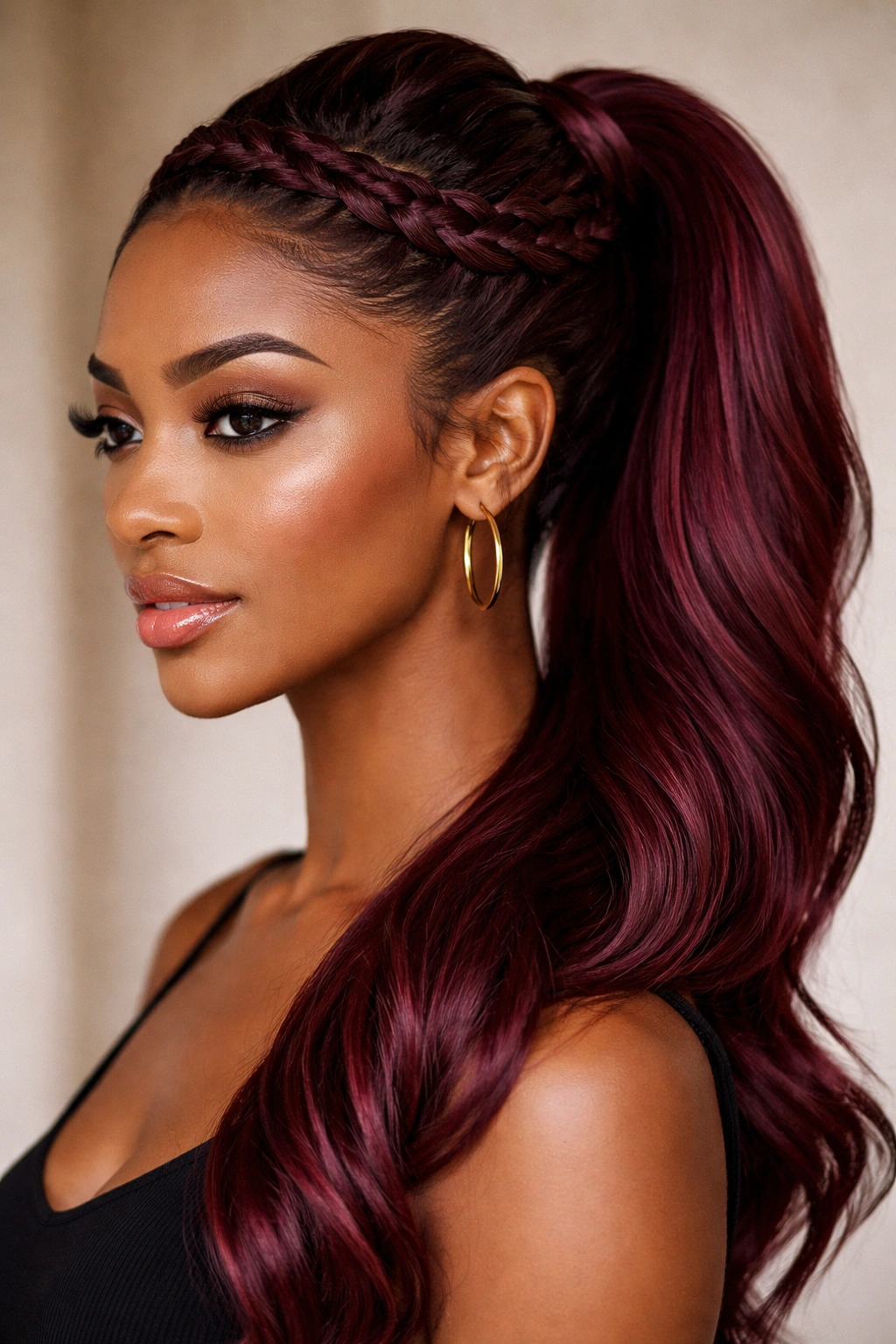
This romantic style creates a braid that follows your hairline like a crown, framing your entire face before meeting the rest of your hair in a back ponytail. It’s the kind of look that feels special enough for occasions but wearable for everyday if you love spending time on your hair.
The Appeal of the Crown Braid
A crown braid automatically elevates any hair color, but burgundy specifically gains an almost regal quality when framed this way. The braid follows the contours of your face and head, drawing attention to your features while showcasing the wine tone where it’s most visible. This style is perfect if you want to show off your burgundy while keeping hair mostly off your face.
Achieving the Crown Braid
- Begin braiding at one temple, starting with a small section of hair
- Follow the line of your hairline as you move across the back of your head
- Incorporate hair from just above your ear as you add sections, angling the braid to follow your natural hairline
- When you reach the opposite temple, continue the braid back into your regular hair
- Bring everything together into a ponytail at the back of your head
- Pull the crown braid slightly loose for softness and dimension
- Leave a few face-framing pieces down for a softer effect, or pin them back with bobby pins for a cleaner look
Worth knowing: Mark your starting point with a bobby pin so you know exactly where to begin if you’re learning this style for the first time.
8. The Thick Chunky Braid Ponytail
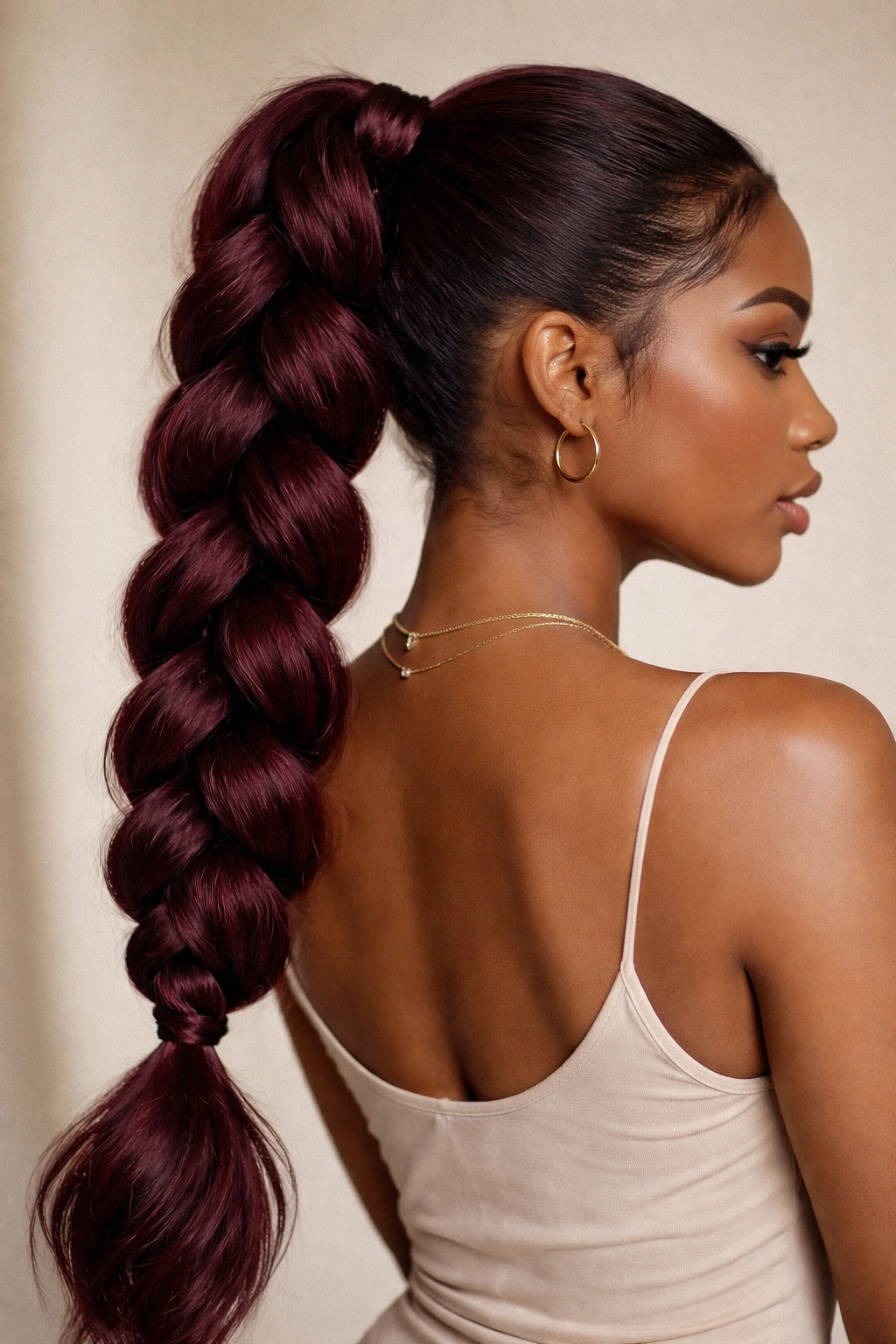
For maximum visual impact, create an intentionally thick, chunky braid where you use large sections of hair instead of the typical small, neat divisions. The result is bold, textured, and lets your burgundy shade take center stage with serious presence.
Why Chunky Braids Make a Statement
Chunky braids feel more modern and intentional than tight, intricate ones. They’re faster to create, easier to adjust, and actually show your burgundy color more clearly because the sections of wine tone are larger and less fractured. This style works particularly well if you’re showcasing a partial burgundy color treatment like a burgundy balayage or color-melting effect.
Creating Intentional Thickness
- Divide your hair into three large sections at the crown, using maybe half of your hair per section instead of the typical thin thirds
- Create a traditional or Dutch braid with these oversized sections
- Don’t worry about making it neat or tight—relaxed is actually the goal here
- Bring the braid into a ponytail and gently pull each chunky section looser
- The braid should look bold and textured rather than perfectly woven
- Secure with a larger hair elastic that’s proportional to the thick braid
- This style pairs beautifully with loosely waved ends of your ponytail
Insider note: Chunky braids look even more striking if you blow-dry your hair smooth first, then create the braid—the sleek base makes the chunky texture more dramatic by contrast.
9. The Twisted Braid Hybrid Ponytail
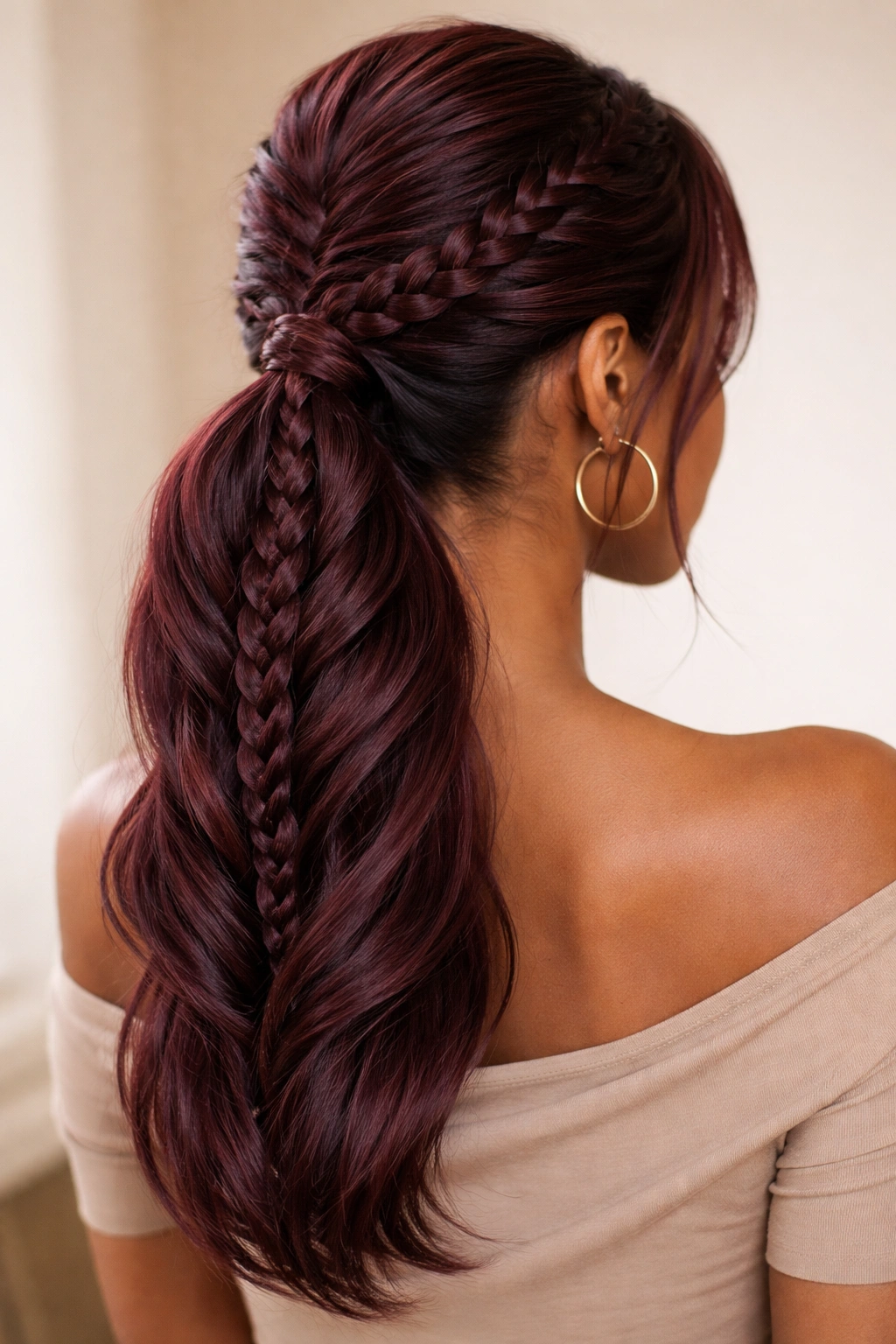
A true hybrid style, this combines traditional braiding with twisted sections to create varied texture throughout. The result feels more complex and interesting than a straight braid while still being achievable for someone who’s still perfecting their braid skills.
Why Mixing Braids and Twists Works
By alternating between sections that are braided and sections that are twisted, you create visual interest and movement. Twists are actually faster and easier to execute than braids, so mixing them in is practical while also looking intentional. The burgundy color weaves differently through twisted versus braided sections, creating depth and dimension that catches light.
Executing the Hybrid Approach
- Start with a three-strand braid section, creating about 2 inches of braid
- Switch to a two-strand twist by dividing into two sections and wrapping them around each other
- Continue for about 2 inches of twist, then return to braiding
- Alternate between braids and twists as you move down the back of your head
- The contrast between textures creates natural visual breaks in the color
- Bring everything into a ponytail at the nape of your neck
- Gently loosen both the braided and twisted sections for a softer, fuller effect
- You can keep the ponytail sleek or add more texture for a more relaxed vibe
Pro tip: Mark your transitions between braids and twists with a light dry shampoo spray to keep sections distinct and prevent them from blending together visually.
10. The Braided Low Ponytail with Face Frame
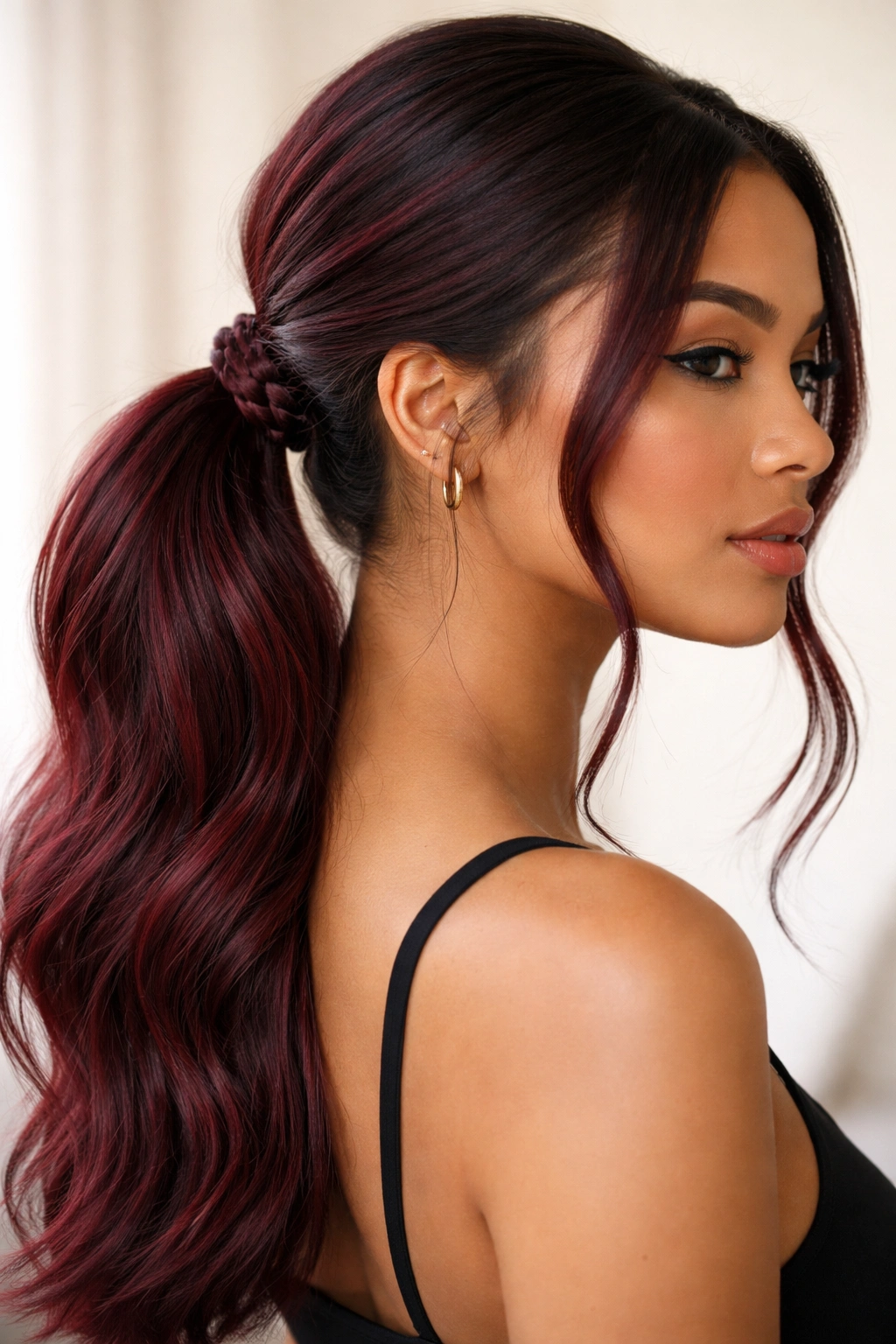
This sophisticated style keeps braids entirely at the back of your head, positioning them at the base of a low, sleek ponytail while leaving your face completely clear. It’s polished, intentional, and perfect for anyone who likes the idea of braids but wants to keep them subtle and professional.
Why Low and Subtle Works
A low ponytail automatically feels more mature and refined than a high one. By placing the braids specifically at the base rather than running down the entire length, you get the texture benefit without overwhelming your look. The burgundy remains visible and striking without taking over your entire head. This is the style to choose if you want something that works in professional settings and still feels interesting and styled.
Creating the Low Ponytail Base
- Brush your hair back and smooth it completely with a fine-tooth comb
- Gather hair into a low ponytail positioned at the nape of your neck, just above where your neck meets your shoulders
- Secure with a thick elastic band that matches your hair color for a seamless look
- From the secured ponytail, take a thick section and create a three-strand braid that runs around the base
- Alternatively, create two smaller braids that frame the ponytail from both sides
- Pin the base braids in place with bobby pins and smooth your face-framing pieces
- This style works beautifully with a deep side part
Worth knowing: A boar bristle brush gives you the smoothest base for this style—the bristles naturally distribute your hair’s oils and create a polished finish.
11. The Braided Bubble Ponytail with Burgundy
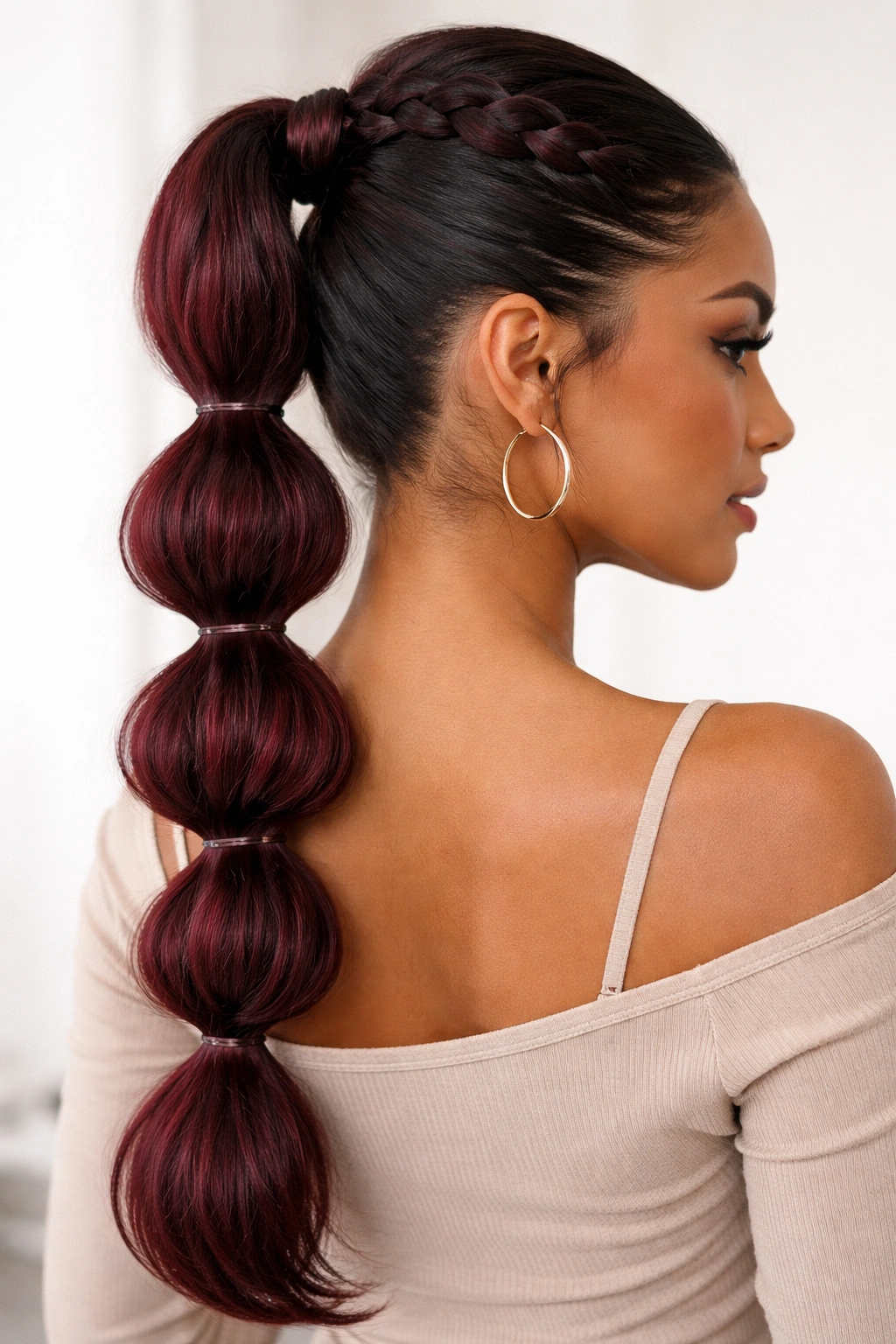
Combine braids with the trending bubble ponytail effect by creating multiple elastic sections throughout your braided ponytail, then gently puffing out the hair between each section. The result is playful, dimensional, and genuinely unique while showcasing your burgundy shade in multiple pockets of color.
Making Bubbles Work with Braids
A bubble ponytail naturally creates visual breaks and texture that make burgundy color more dynamic. By starting with a braid rather than straight hair, you’re adding yet another layer of texture and dimension. The bubbles catch light differently as they curve, making your wine tone appear to shift and change as you move. It’s a style that’s more interesting in person than in photos because of how the light plays across it.
Building the Braided Bubble Effect
- Create a braid from your crown down to the nape of your neck
- Secure the base with a small elastic
- Using additional small elastics, create sections down the length of the braid and ponytail, spacing them roughly 2-3 inches apart
- After securing each elastic, gently pull and puff out the hair above it to create a bubble effect
- The bubbles should feel full and rounded, not tight
- Smooth each elastic band so they sit neatly and don’t catch hair
- This works best if you use clear or color-matched elastics so they don’t distract from the style
Pro tip: Practice puffing out the bubbles gently so you don’t accidentally loosen your elastics—start from the very top and work downward.
12. The Side Braided Ponytail with Wrap
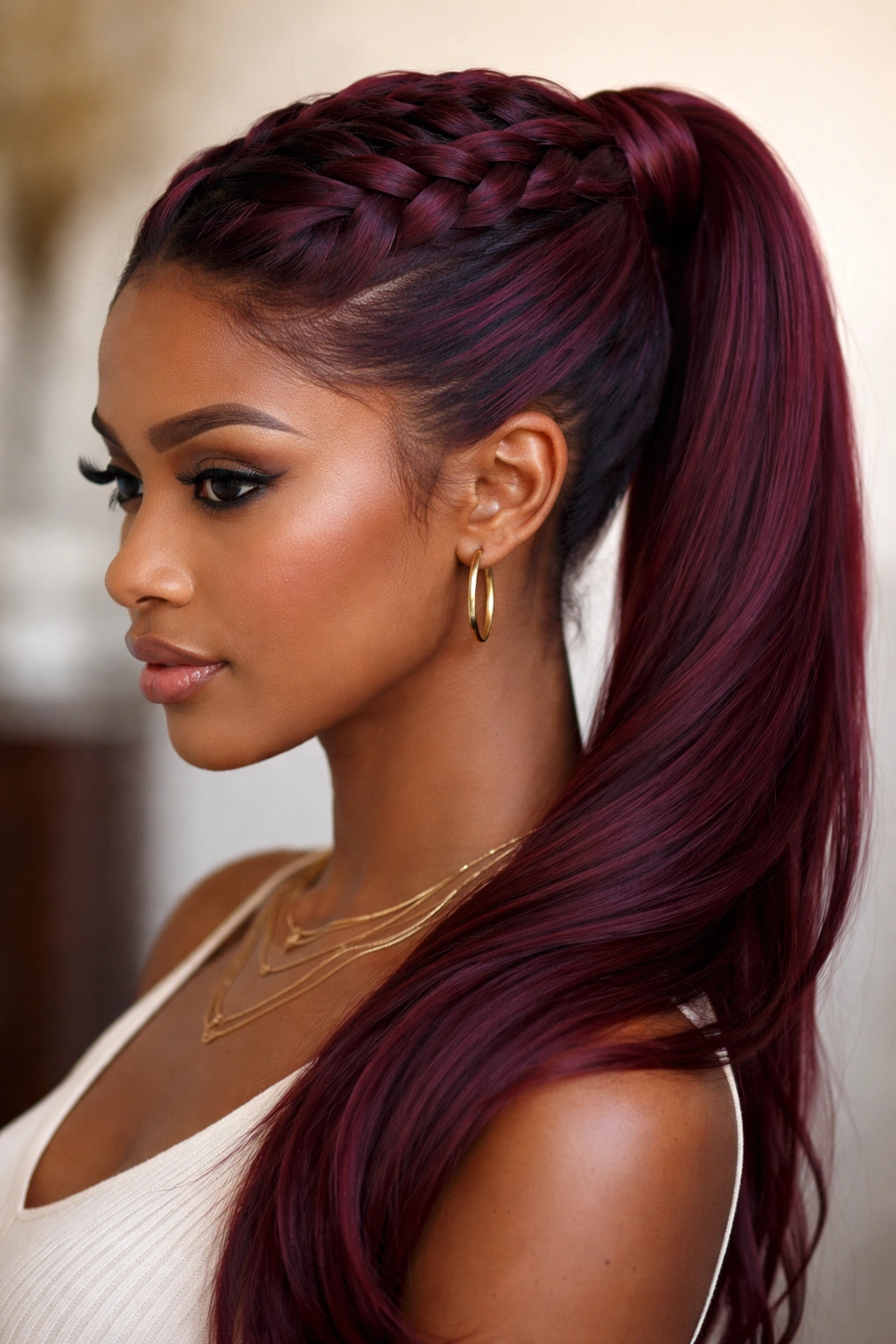
This dramatic style features a thick braid that begins on one side of your head, runs diagonally across toward the back, and wraps around to secure an angled ponytail. It’s bold, fashion-forward, and makes a serious statement while still being practical and secure.
Why Asymmetrical Braids Feel Modern
Asymmetrical styles automatically read as intentional and trend-aware. By positioning your braid off-center, you create visual interest and movement that a centered style simply can’t match. Your face is more visible on one side, and the braid draws attention to your features from an unexpected angle. The burgundy color becomes even more striking because it sits asymmetrically against your neck and shoulder.
Executing the Side Braid Wrap
- Create a deep side part, positioning your part line at one temple
- Begin a thick Dutch or French braid from the deeper side of the part
- Angle the braid diagonally toward the back and side of your head rather than straight back
- Incorporate sections as you move, following the angle toward the opposite ear area
- Gather your remaining hair into a low ponytail on the opposite side from where the braid started
- Bring the braid around and wrap it around the base of the ponytail, securing with pins
- Adjust the ponytail height so the braid wraps around it at a flattering angle
- Leave a few pieces loose around your face for softness and to frame your features
Worth knowing: This style looks even more striking if you do it when your hair has been curled beforehand—the waves make the braid sit differently and create more natural texture throughout.
Final Thoughts
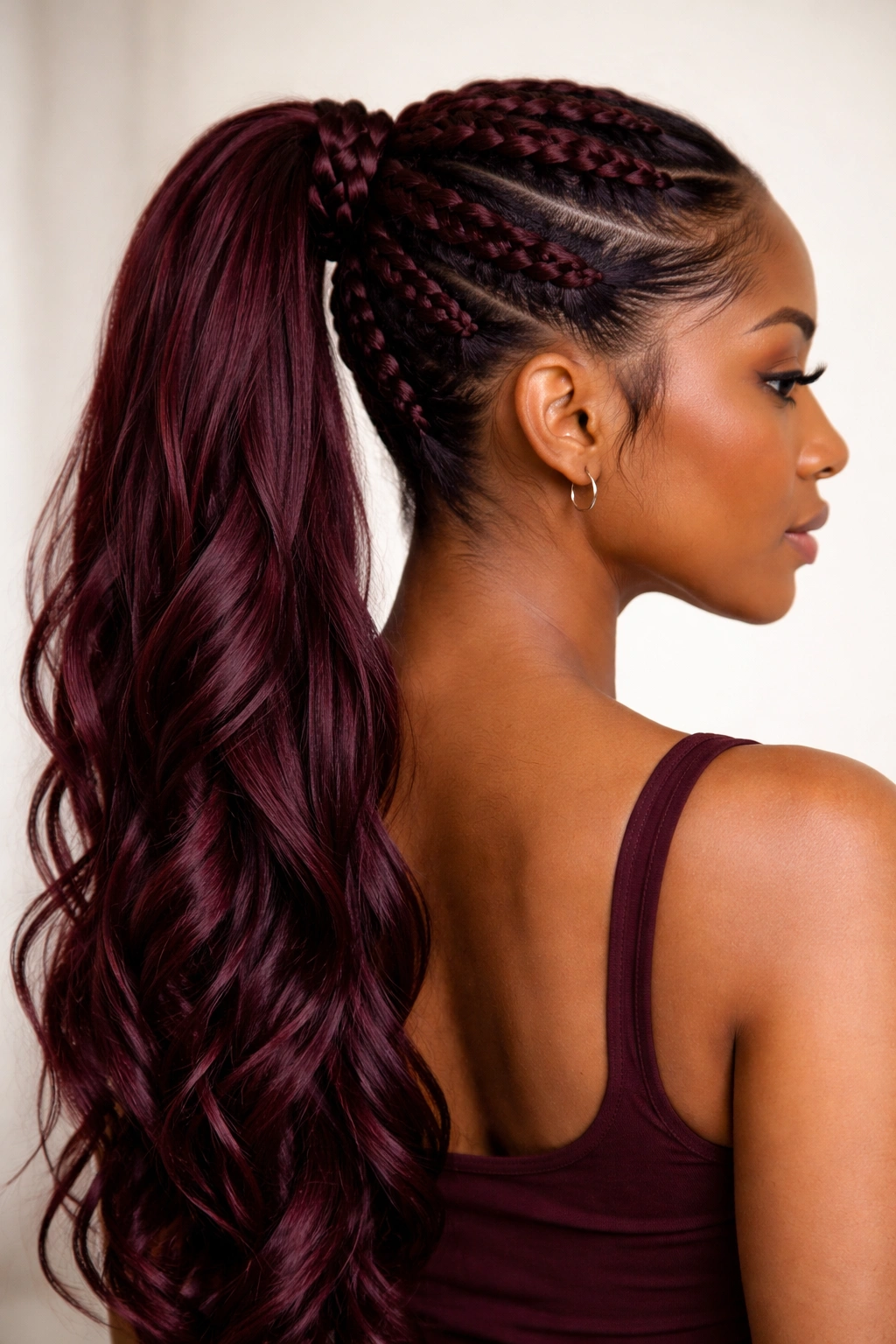
Burgundy braided ponytails offer something that plain ponytails never could—they combine the practicality of keeping hair secured with the artistry and visual interest of braid texture. Each of these twelve approaches gives you a completely different aesthetic, from romantic and delicate fishtail braids to bold and chunky Dutch braids. Some take five minutes to master, while others deserve a bit of practice before you wear them out into the world.
The real magic of these styles is that they work with essentially any burgundy shade. Whether you’ve gone full head of burgundy, just colored your ends, or used temporary color to test out the shade, these braided ponytails will showcase whatever version of burgundy you’ve chosen. They’re equally stunning with subtle wine tones and rich, dark burgundy.
Start with whichever style speaks to you most—don’t feel pressured to master all twelve at once. Pick one, try it a few times, and get comfortable with it. Once you’ve found your signature braided ponytail, you’ll naturally start experimenting with the others. The beautiful part about braids is that they get easier and more beautiful the more times you practice them, and you get better at seeing what works with your specific hair texture and face shape. These aren’t rigid styles to follow exactly—they’re starting points for creating a braided ponytail that feels uniquely you.
