



A ponytail isn’t just a hairstyle—it’s a versatility statement, especially for Black women with natural hair. Whether you’re styling textured waves, coils, or tight curls, the right ponytail can take you from a casual Monday morning to a polished Friday night without requiring a completely different look. The beauty of natural hair is that it holds volume, texture, and dimension that actually creates more styling possibilities, not fewer. Many people assume natural hair has fewer options, but the truth is almost the opposite: the grip, the body, and the natural bounce of coily and curly hair make ponytails sit differently—often better—than they do on straighter textures.
What makes ponytails work so well for natural hair is the foundation you build. Unlike sleek styles that rely on smoothness, natural hair ponytails celebrate dimension and movement. They can be sleek or voluminous, textured or defined, sporty or glamorous. The key is understanding how your specific hair texture responds to different securing methods, what products enhance your natural pattern without flattening it, and which styles actually feel comfortable for all-day wear. You’re not fighting your hair’s natural properties; you’re working with them.
The styles in this guide range from everyday casual to special-occasion elegant, and they all work beautifully with natural textures. Whether you have high porosity hair that loves moisture, low porosity hair that needs lighter products, or something in between, you’ll find multiple options that work with your hair’s unique needs. Each style here has been chosen because it doesn’t require damaging techniques like excessive heat or extreme tension—just thoughtful styling that keeps your hair healthy while looking absolutely stunning.
1. The High Puff Ponytail
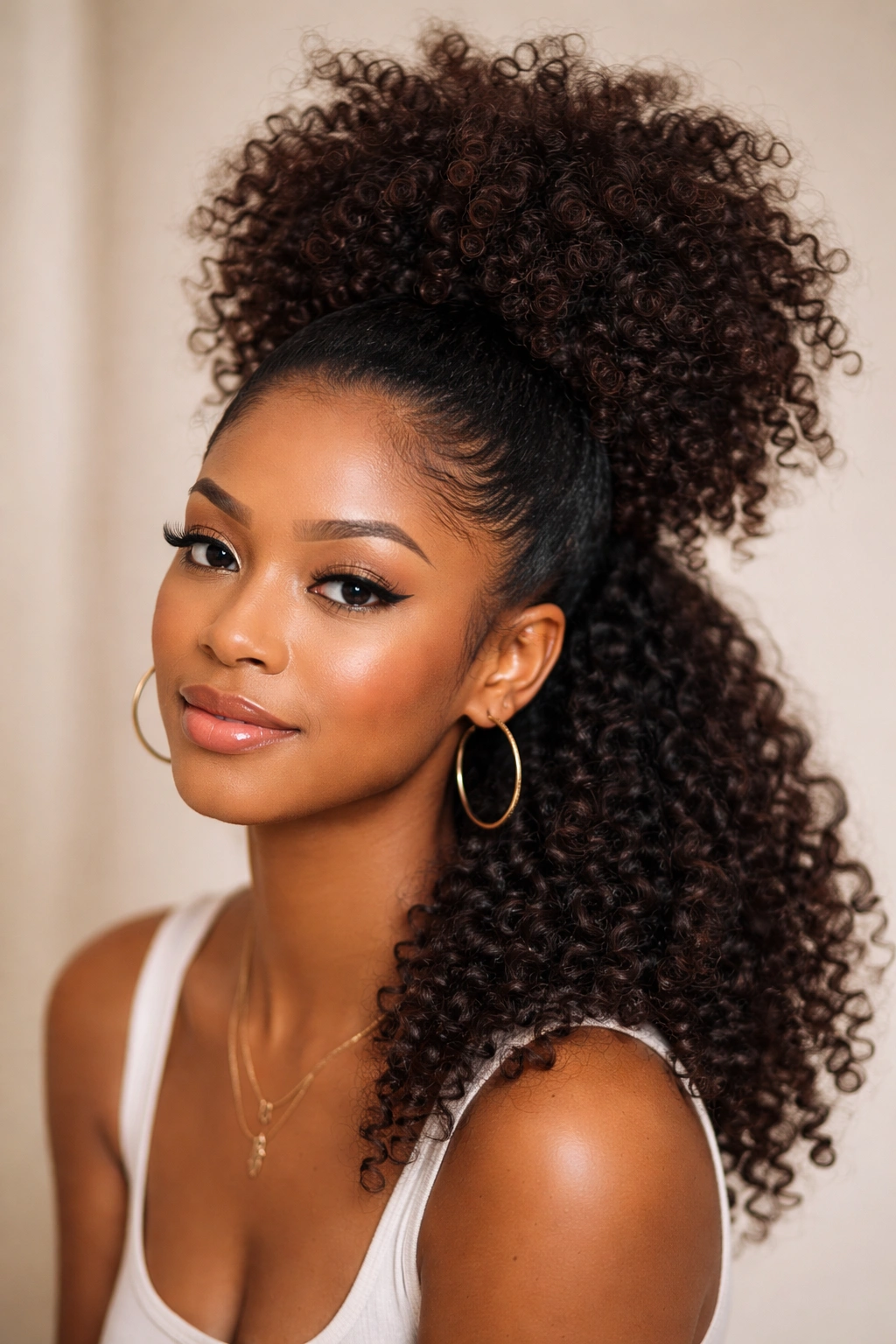
The high puff ponytail is the bridge between a protective style and an everyday look. It takes the top section of your hair, gathers it into a puff, and lets the rest of your curls flow freely below. What makes this style special is how it combines the ease of a ponytail with the confidence-boosting volume of a puff. The gathered section sits high on your head, creating height and dimension even before you’ve done anything with the lower section.
How to Create the Perfect High Puff Ponytail
Start with hair that’s been moisturized the night before—this style works best when your curls have a full drink of water or leave-in conditioner. Use a fine-toothed comb or a curl-defining brush to gently gather the hair from your hairline up to roughly the crown of your head. You’re not smoothing it back flat; you’re creating intentional texture. Secure this section with a silk or satin scrunchie (elastic bands break natural hair and cause unnecessary breakage). The key is making the puff full and rounded, not tightly pulled. Once you’ve secured the upper section, allow the hair below to fall naturally. You can leave it as loose curls, or gently separate them with your fingers for more definition.
What Makes It Work for Natural Hair
This style respects your curl pattern by not trying to force them into an unnatural shape. The puff will naturally take on whatever texture your curls have—tighter coils stay coiled, looser waves remain wavy. The bottom section gets a break from manipulation while still being styled, and the overall look feels effortless and put-together. You get the volume benefits of a puff without the commitment of making your entire ponytail puffed, which means less product buildup and less time styling. The style typically lasts 3-4 days with minimal refreshing.
Styling Tips for Success
Use a light hold gel or mousse on the gathered section to keep flyaways contained without creating crunchiness. If you want the upper puff to be fuller, tease the section gently before securing it. For the lower curls, you can spritz them with a curl-refreshing spray in the morning to reactivate the wave pattern. Sleeping on a silk pillowcase or bonnet will help both the puff and the loose curls maintain their shape overnight.
2. The Sleek Low Ponytail
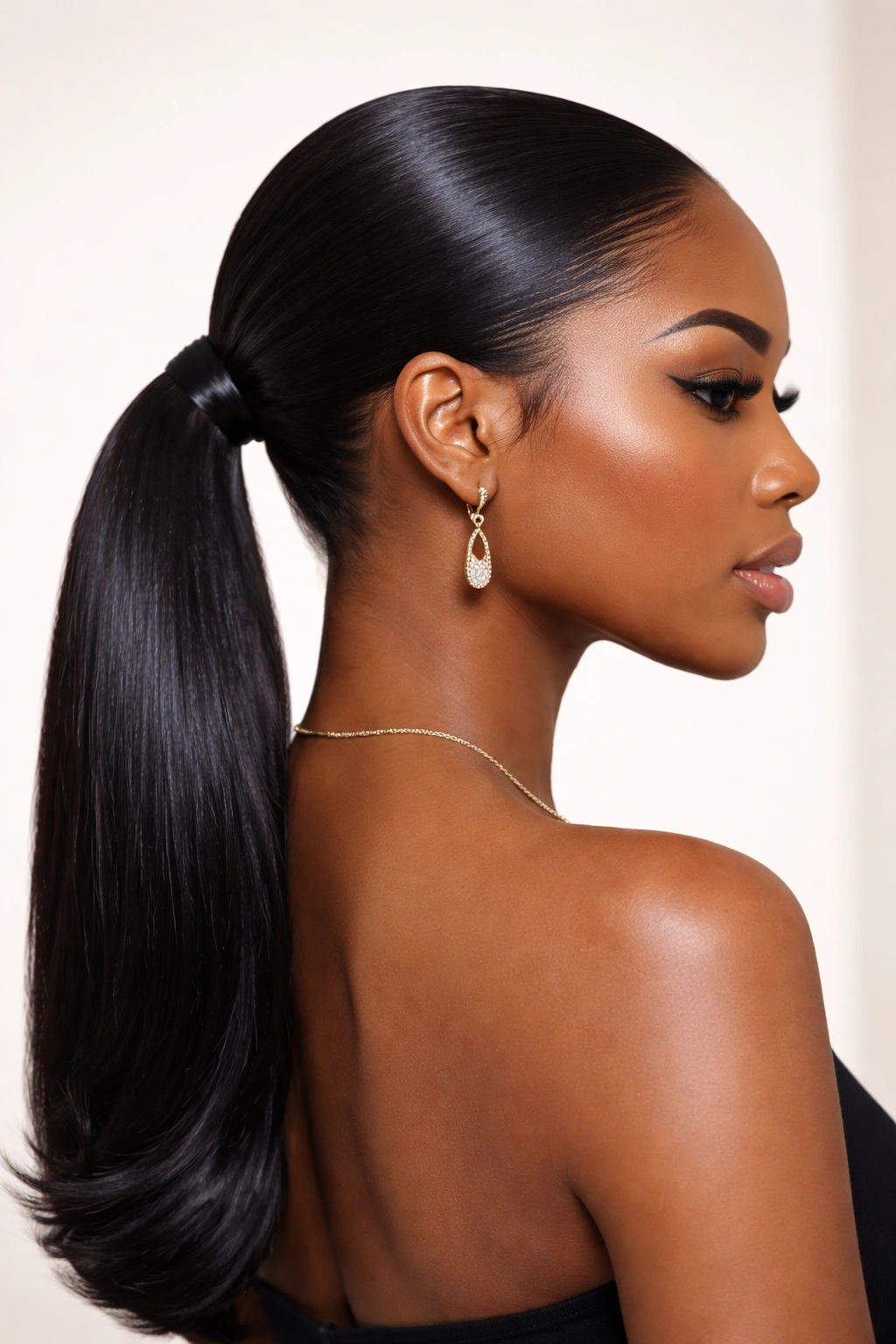
When you want polish without pretense, a sleek low ponytail delivers. This style takes advantage of natural hair’s grip by smoothing the hair back with a styling cream or gel, securing it low at the nape of the neck, and creating a finished look that reads elegant and intentional. The sleekness is the whole point—it’s the contrast between the smooth line and the textured curls at the base that makes this style visually striking.
Creating the Sleek Base
Start with clean, damp hair. Apply a smoothing cream or styling gel to your hands and work it through your hair, section by section, using a fine-toothed comb or a boar bristle brush to smooth without yanking. You’re not trying to make your hair straight; you’re directing the curl pattern back and creating definition through smoothness rather than fluffiness. The smoother the back section, the more polished the whole look becomes. Secure at the nape of the neck with a satin-lined claw clip or a satin scrunchie. The key difference between this and a messy ponytail is intentional smoothness—the texture should be visible and beautiful, not frizzy and undefined.
Why It Works on Textured Hair
Sleek ponytails actually look more striking on curly and coily hair than on straight hair because of the contrast. Your curls at the tail have more dimension and visual interest than straight hair would, so the style feels less severe and more dynamic. The smoothed-back section frames your face beautifully, and because you’re not trying to make all your hair straight, you don’t need excessive heat or tension. Your natural curl pattern actually enhances the sophistication of the look.
Maintenance and Refreshing
This style holds beautifully for 5-7 days if you protect it at night with a bonnet or sleep on a silk pillowcase. To refresh it on day three or four, lightly mist the smoothed section with water or a light styling spray and re-smooth with your hands and a comb. The tail curls will naturally freshen and define further as the days go on, actually looking better on day three than on day one.
3. The Textured Wrap Ponytail
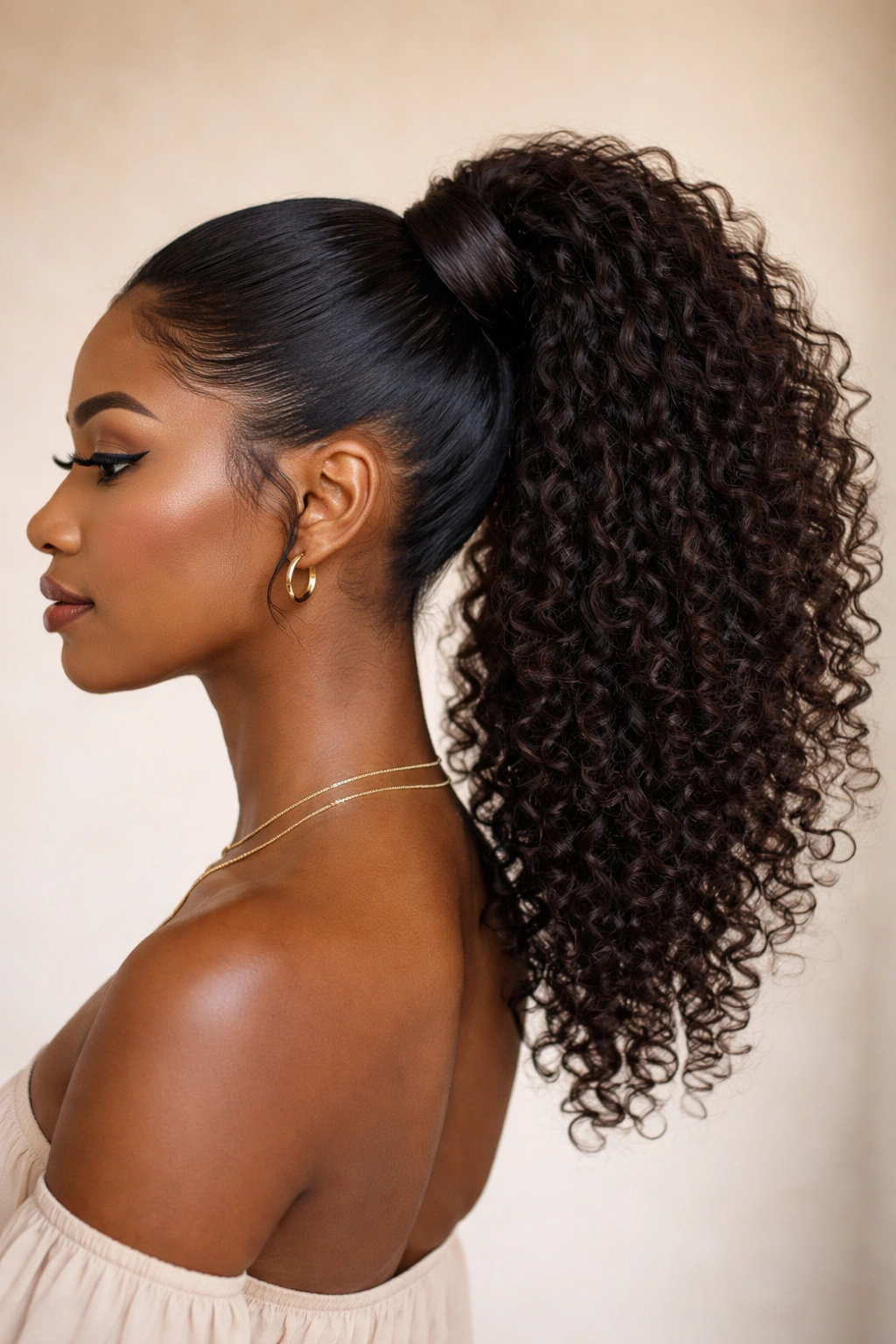
For something that celebrates rather than conceals your texture, the textured wrap ponytail is pure artistry. This style uses a section of your own hair—twisted, braided, or coiled—to wrap around the base of a full, voluminous ponytail, creating visual interest and dimension that goes way beyond a basic elastic band. The wrap serves both a functional purpose (securing the ponytail) and an aesthetic one (adding an intentional design element).
Building the Wrap
Gather your hair into a ponytail at the height you prefer, using an elastic band to temporarily secure it. Then, take a section of hair from the ponytail itself—about the thickness of a pencil—and twist, braid, or spiral it around the base where the elastic sits. The twist or braid should be tight enough to hold the elastic in place but loose enough that it looks intentional and beautiful, not strained. Secure the end of your wrap with a bobby pin tucked underneath so it’s invisible. Some stylists create multiple wraps stacked on top of each other, or use contrasting wrap styles for more drama.
Adding Visual Interest
You can create more impact by using hair accessories within or alongside the wrap—a gold cuff, decorative bobby pins, or small beads threaded into the wrap section. The wrap itself becomes the focal point, so you want it to be beautiful and intentional. Because it’s made from your own hair, it’s incredibly low-maintenance and moves naturally with your ponytail. This style works beautifully on ponytails of any height or fullness level.
Longevity and Care
The textured wrap ponytail lasts about 5-7 days with proper protection at night. The wrap itself may loosen slightly over time, but that actually adds to the lived-in, intentional aesthetic. You can re-secure it with bobby pins without disturbing the rest of your style. Because the wrap is made from your own hair, there’s no added weight or tension beyond what a normal ponytail creates, making this a relatively low-stress protective style option.
4. The Twisted Side Ponytail
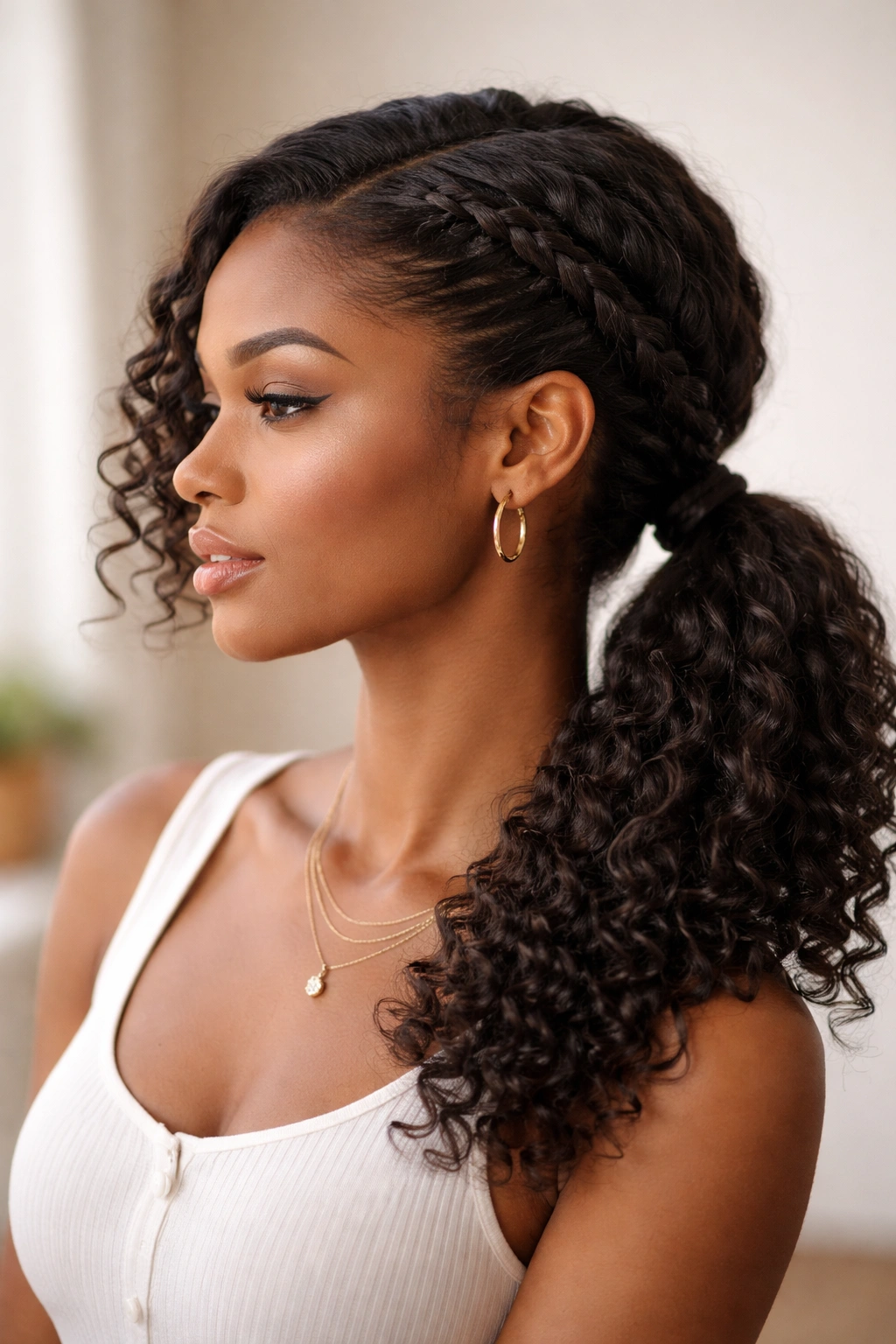
Side ponytails have an inherently playful energy, and when you add twists, you get sophistication mixed with that casual vibe. The twisted side ponytail involves creating two or more twisted sections from one side of your hair toward the opposite ear, then gathering them together with the rest of your hair into a low side ponytail. The twists add texture and visual movement while keeping everything secure.
Executing the Twist Sections
Start on one side of your head, near the temple. Take a small section of hair and twist it—not too tightly, but with enough tension to keep it defined. As you work the twist toward the opposite side of your head, gradually pick up more hair, incorporating it into the twist as you go. This creates what’s sometimes called a “twist-and-incorporate” braid-like effect. You can create two parallel twists or one central twist that gathers hair as it travels across the back of your head. Once both twists reach the lower side where you want your ponytail, secure everything together with an elastic band.
Styling for Impact
This style works beautifully when the twists are textured and a bit loose rather than perfectly neat. You want to see the individual curl pattern within the twist, which adds visual interest and sophistication. You can use a curl-defining cream or light gel on the twist sections to enhance their definition, and leave the rest of your hair to fall in its natural texture. The side placement makes this style feel modern and intentional, not like an accident of styling.
Best Hair Types for This Style
Twisted side ponytails work especially well on medium to thick hair that has enough volume to create visually interesting twists. If your hair is finer, you can still rock this style, but you might create fewer twists or use braids instead for more grip and definition. The style is particularly striking on hair with longer length, as the twists have more distance to travel and create more visual drama.
5. The Bubble Ponytail
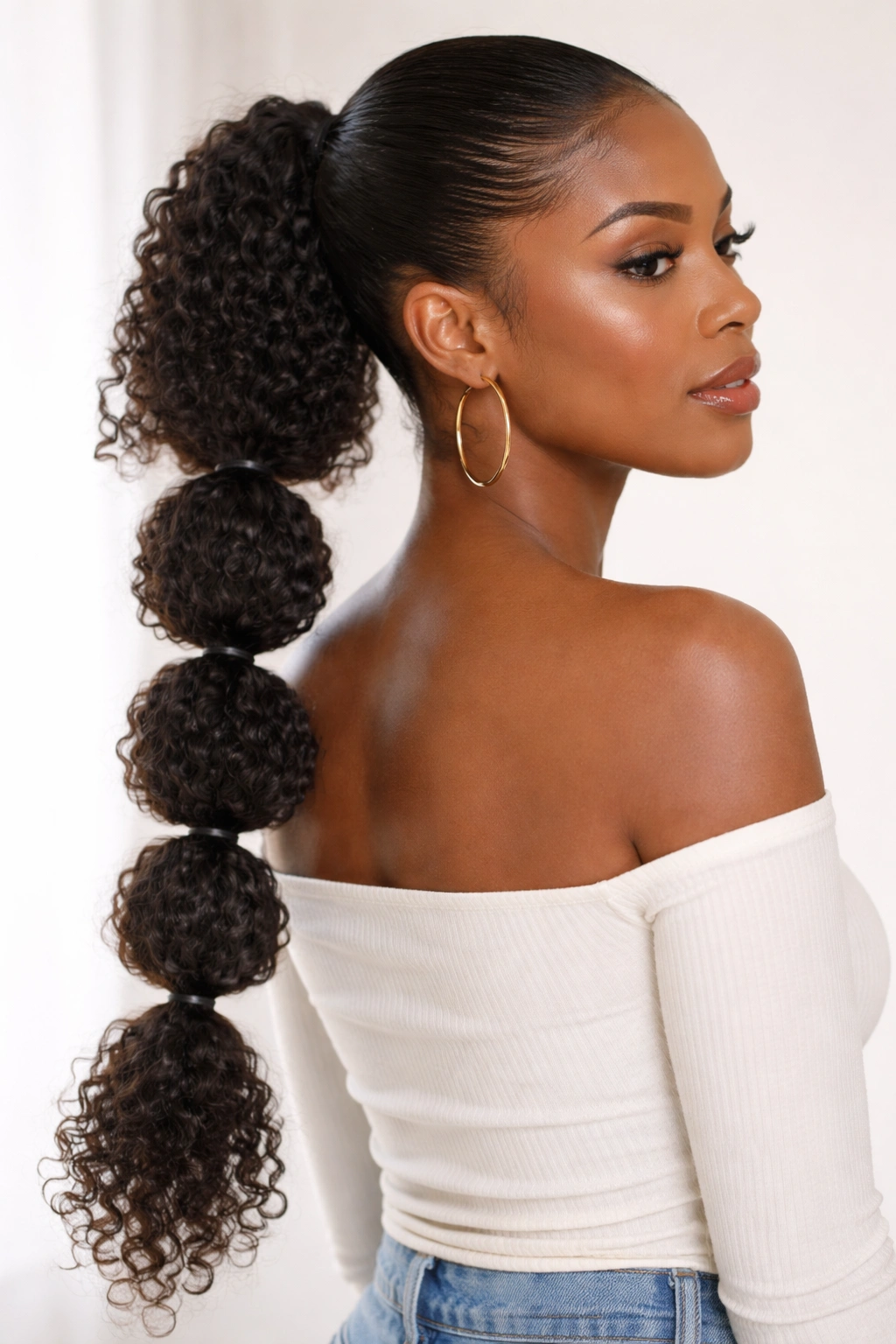
The bubble ponytail—sometimes called a bubble braid when it’s braided—is the playful, youthful option in your styling arsenal. This style uses multiple elastic bands spaced down the length of your ponytail, creating distinct “bubbles” of hair between each band. Each bubble puffs out slightly, creating a playful, dimensional look that’s eye-catching without being overdone.
Creating Defined Bubbles
Start with a standard ponytail secured at your preferred height. Then, using small satin or silk elastics (these are kinder to your hair than regular bands), place another elastic about 2-3 inches down the ponytail. Gently pull the hair between the first and second elastic outward and upward to create a puff. Repeat this process down the length of your ponytail, spacing the elastics evenly and making each bubble roughly the same size. You can create as many or as few bubbles as you like—two or three large bubbles feels modern, while more numerous smaller bubbles feels more playful.
Texture Variation
The bubbles actually look more striking on natural hair because of the texture variation. As you puff out each section, you’re showcasing the curl pattern, which creates inherent visual interest. Unlike on straighter hair where bubbles can look a bit flat, on textured hair each bubble has dimension and movement. The curls naturally spring into the puffed shape, so you don’t have to force anything or use excessive products.
Occasion and Wear Time
This style is perfect for casual settings, especially when you want something that feels a bit more intentional than a regular ponytail but still completely low-key. It typically holds well for 3-4 days with proper nighttime protection. The bubbles may slightly deflate after sleeping, but they refresh quickly with a light spritz of water or curl spray.
6. The Knotted Ponytail
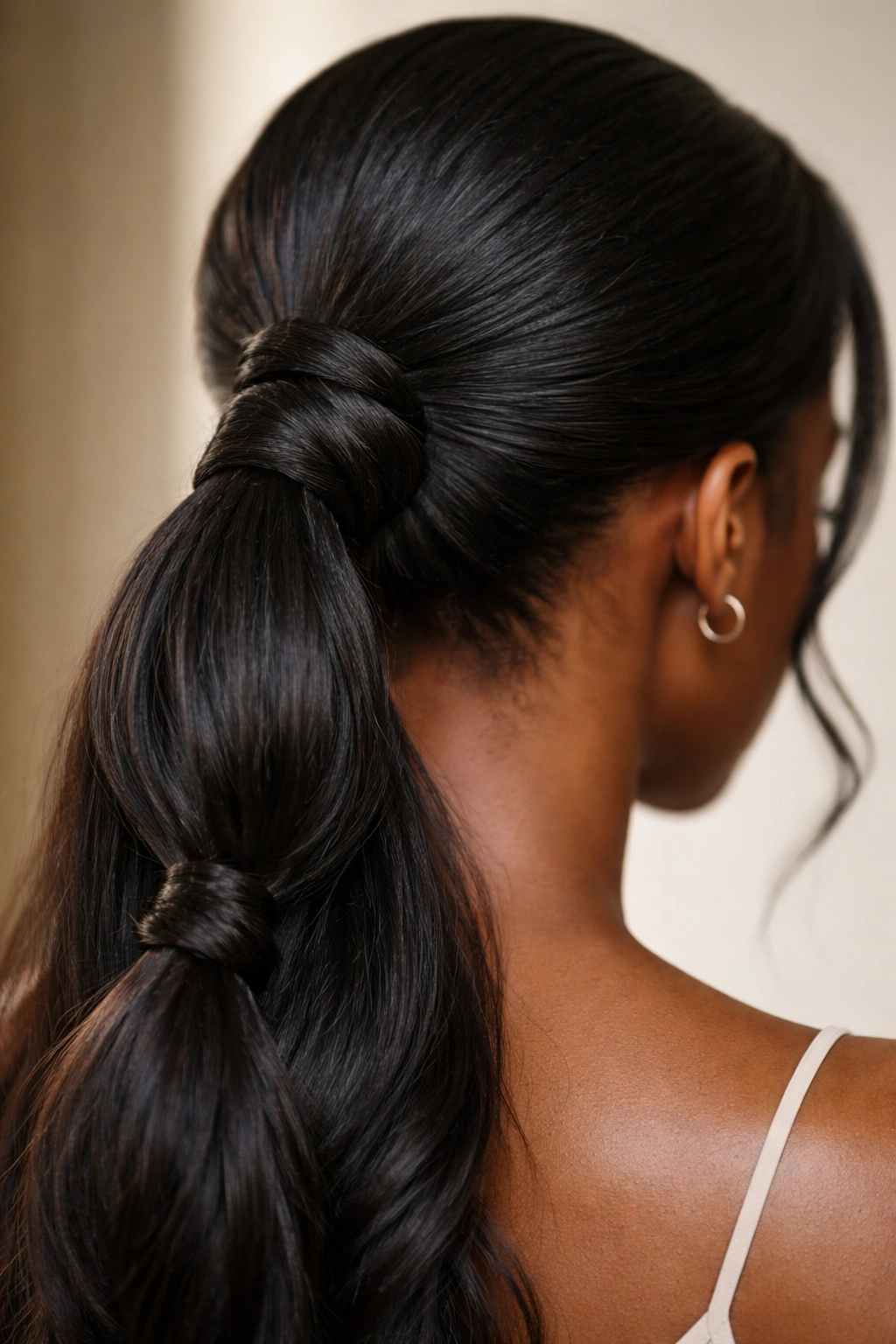
For something unique that requires zero additional products or accessories, the knotted ponytail is elegant and self-contained. This style involves gathering your hair into a ponytail, then tying an actual knot with a section of the ponytail itself, creating a secured, sculptural look that’s completely distinctive. It sounds complicated but is actually quite simple.
Tying the Knot
Gather your hair into a ponytail at your preferred height and temporarily secure it loosely with an elastic band. Take a section of the ponytail—about half an inch thick—and carefully tie it into a knot with the rest of the ponytail. The knot should sit right at the base of your ponytail, essentially replacing or supplementing your elastic band. Tighten it gently but firmly so it holds the rest of your hair securely. The beauty of this knot is that it creates a visual anchor point that’s completely different from a standard ponytail.
Styling Variations
You can create a single knot or multiple knots spaced down the length of your ponytail for a more elaborate look. Some people create a knot, then wrap a section of hair around the base for extra securing (combining this style with the wrap ponytail method). The key is making sure the knot is tight enough to hold everything securely but loose enough that it doesn’t strain your edges or create excessive tension.
Why It’s Worth Mastering
This style is particularly impressive because it requires only your hair and your hands—no elastics, clips, or products needed. It demonstrates a level of styling skill and intentionality that reads polished and creative. The knot creates a visual focal point that’s beautiful and unique. This is an excellent option on days when you’re out of satin elastics or when you want to minimize contact with your hair and scalp.
7. The Pony with Face-Framing Tendrils
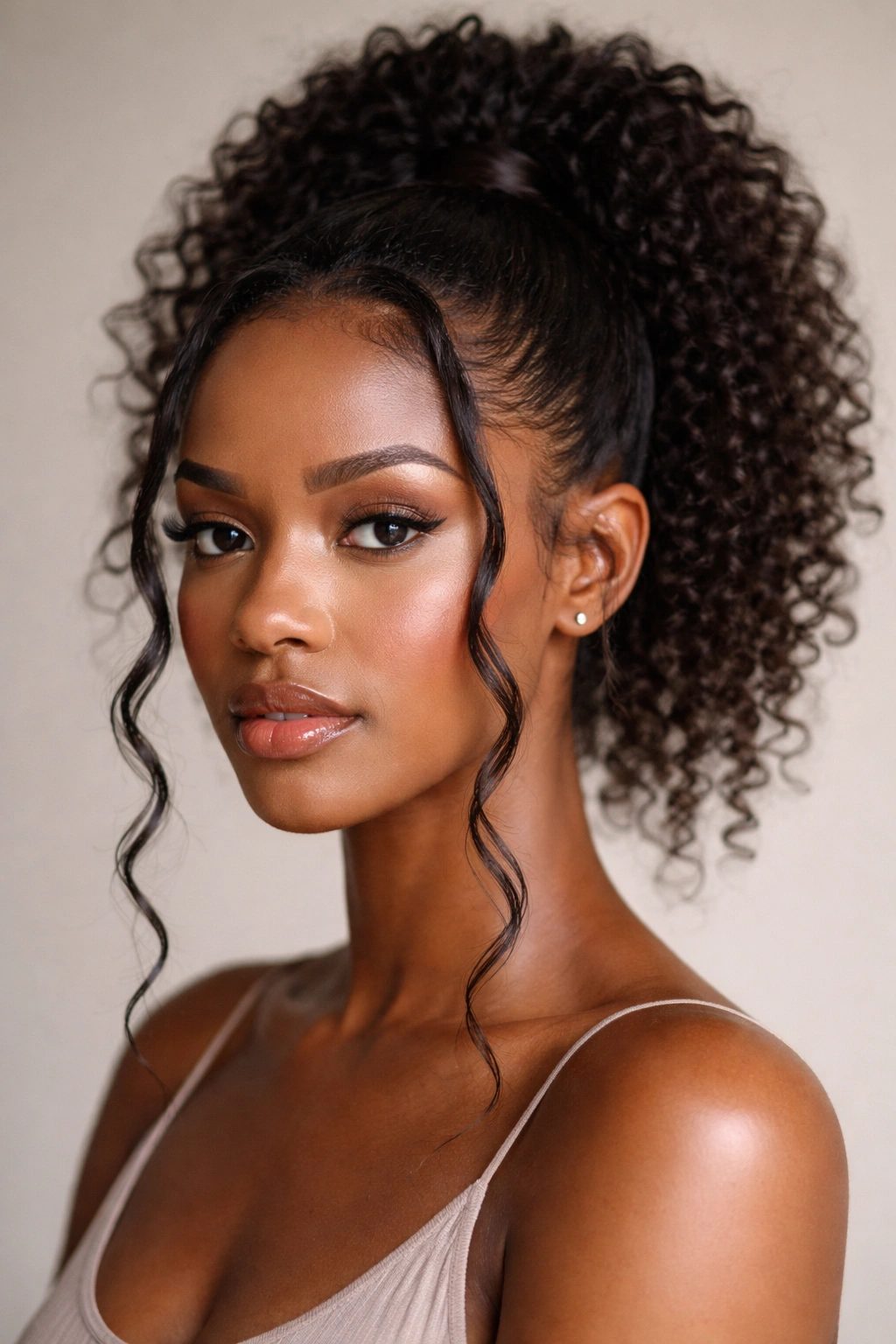
Sometimes you want a ponytail that’s slightly less structured, with a few pieces left down to frame your face. The pony with face-framing tendrils gives you the practical benefits of a ponytail—hair off your neck, manageable—while softening the look and drawing attention to your face. This style requires intention but not perfection.
Selecting and Placing Tendrils
Before gathering your ponytail, identify 2-4 strands that frame your face beautifully—usually the pieces closest to your temples and cheekbones. Leave these out entirely as you gather the rest of your hair into your ponytail. The gathered section should be smooth enough that the contrast between the neat ponytail and the loose face-framing pieces is visible and intentional. You can curl or wave these tendrils separately, braid them, or leave them as loose curls—the point is that they frame rather than define.
Styling for Softness
This style works beautifully on natural hair because the face-framing tendrils naturally have texture and movement. You can enhance this by using a curl-defining cream on those pieces or even gently coiling them around your finger to create tighter curls than the rest of your hair. The contrast between the neat ponytail and the textured framing pieces creates a balanced, intentional look that doesn’t feel overdone.
Occasion Versatility
This style works from casual to semi-formal depending on how you style it. A low ponytail with loose spiral tendrils reads relaxed and modern. A high, sleek ponytail with defined, sculpted tendrils reads more polished. This versatility makes it one of the most practical ponytail styles to master.
8. The Braided Ponytail Base
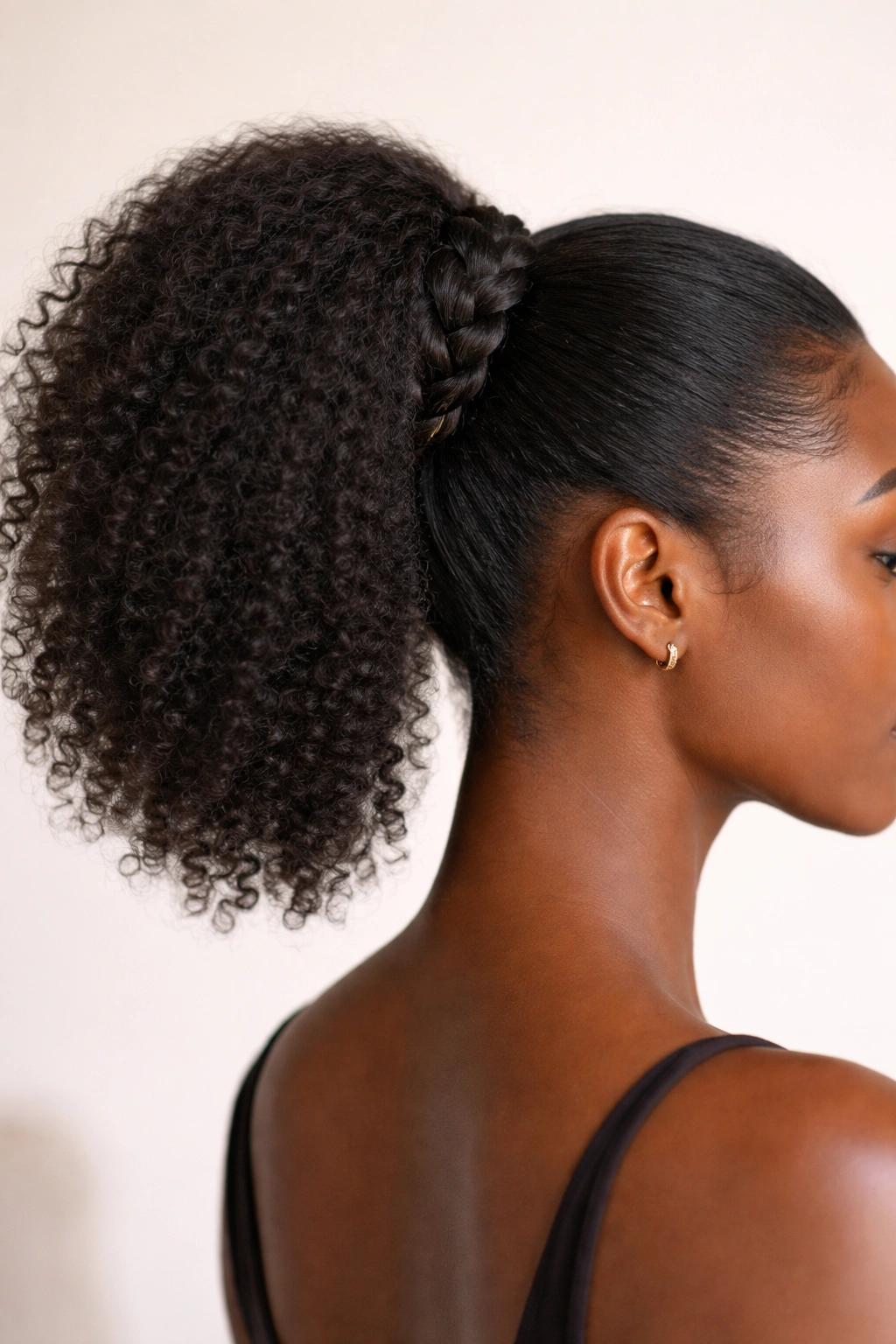
For texture and visual complexity, braiding a ponytail’s base is an excellent technique. Rather than simple elastics or wraps, you create a small braid using hair from the ponytail itself, then use that braid to secure everything. This creates a design element that’s both functional and beautiful.
Building the Braid Base
Gather your hair into a ponytail. Take three thin sections from the very top of your ponytail and create a tight, neat three-strand braid using just those sections. Braid down about 2-3 inches, then wrap the braid around the base of your ponytail where you’d normally put an elastic, securing it with a bobby pin. The braid acts as the securing element while also creating a beautiful design detail. You can even create multiple braids around the base for more drama, or use different braiding techniques (cornrows, two-strand twists, etc.) for variation.
Texture Considerations
This style works beautifully on all hair textures and types, but it’s especially striking on natural hair where you can see the texture within the braid. A braid on textured hair has more visual interest because the individual curl pattern creates dimension that a smooth braid might not have. The braid becomes a focal point that’s intentional and skillfully done.
Longevity
A braided ponytail base typically lasts 5-7 days with proper protection. The braid may slightly loosen over time, but this actually adds to the lived-in aesthetic. You can refresh or re-secure the braid without disturbing the rest of your ponytail.
9. The Half-Up Ponytail
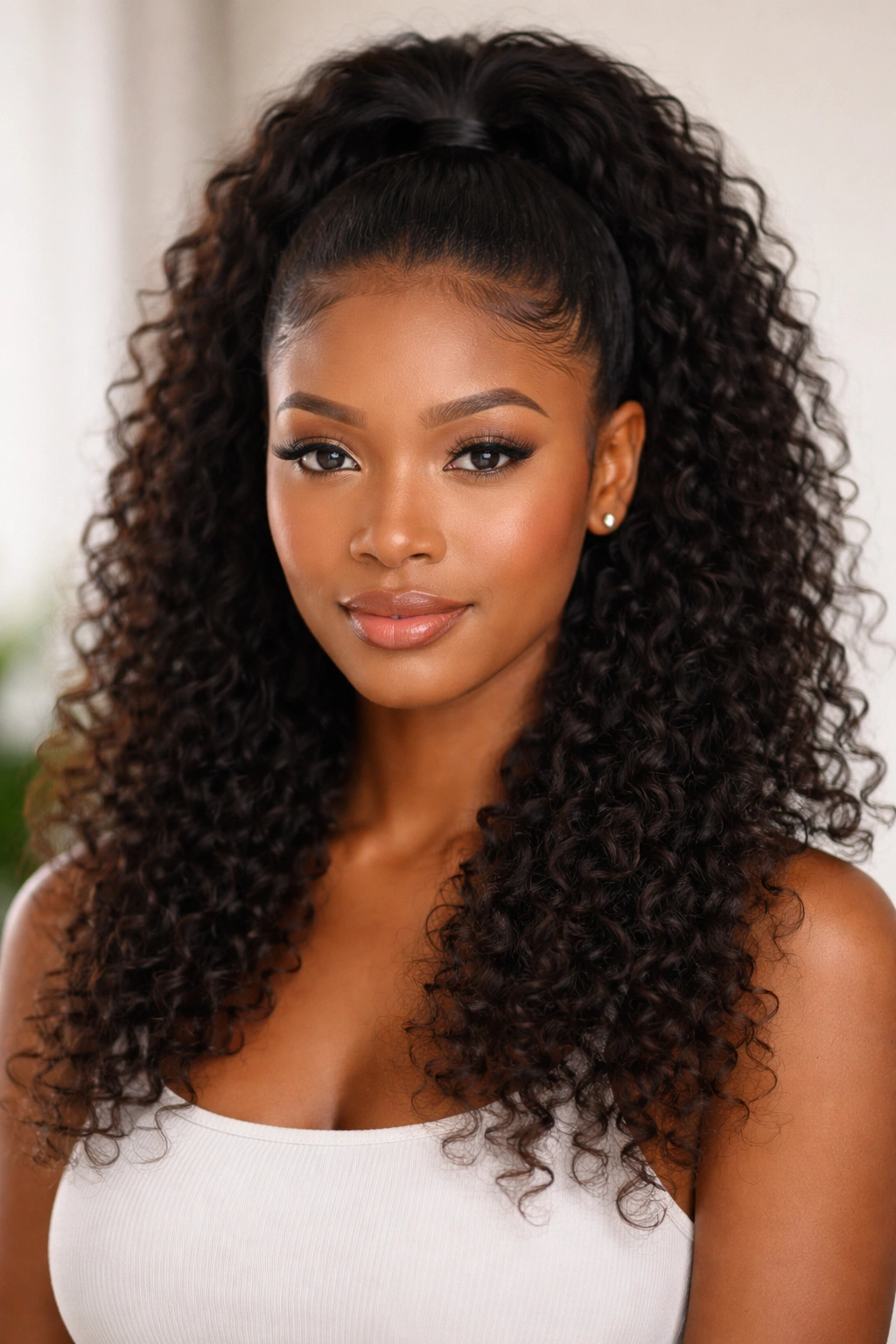
The half-up ponytail is the perfect middle ground when you want a style that’s somewhere between completely down and completely up. This style gathers only the top half (or slightly more) of your hair into a ponytail, leaving the bottom half to fall freely. It’s practical, youthful, and incredibly versatile.
Proportions and Placement
The magic of this style is getting the proportions right. If you gather too much, it looks like a regular ponytail with some loose hair underneath. If you gather too little, it looks unintentional. The sweet spot is usually about 60% of your hair up, 40% down, with the gathered section sitting roughly where a high ponytail would sit. Take the hair from your temples, crown, and the back of your head down to about mid-scalp, leaving everything below that point loose.
Styling Options
You can wear a half-up ponytail many ways: smooth and sleek, puffed and voluminous, twisted, braided, or wrapped. Each variation creates a completely different vibe. A smooth half-up reads polished and modern. A puffed half-up reads fun and youthful. A twisted half-up reads artistic and intentional. This is one style with multiple personality options.
Works on Every Hair Type
This style is genuinely flattering on every hair length and texture. It works beautifully on natural hair where the texture variation between the gathered section and the loose section creates visual interest. It’s practical for warm weather, exercise, or days when you want your hair somewhat managed but not completely off your neck.
10. The Faux Hawk Ponytail
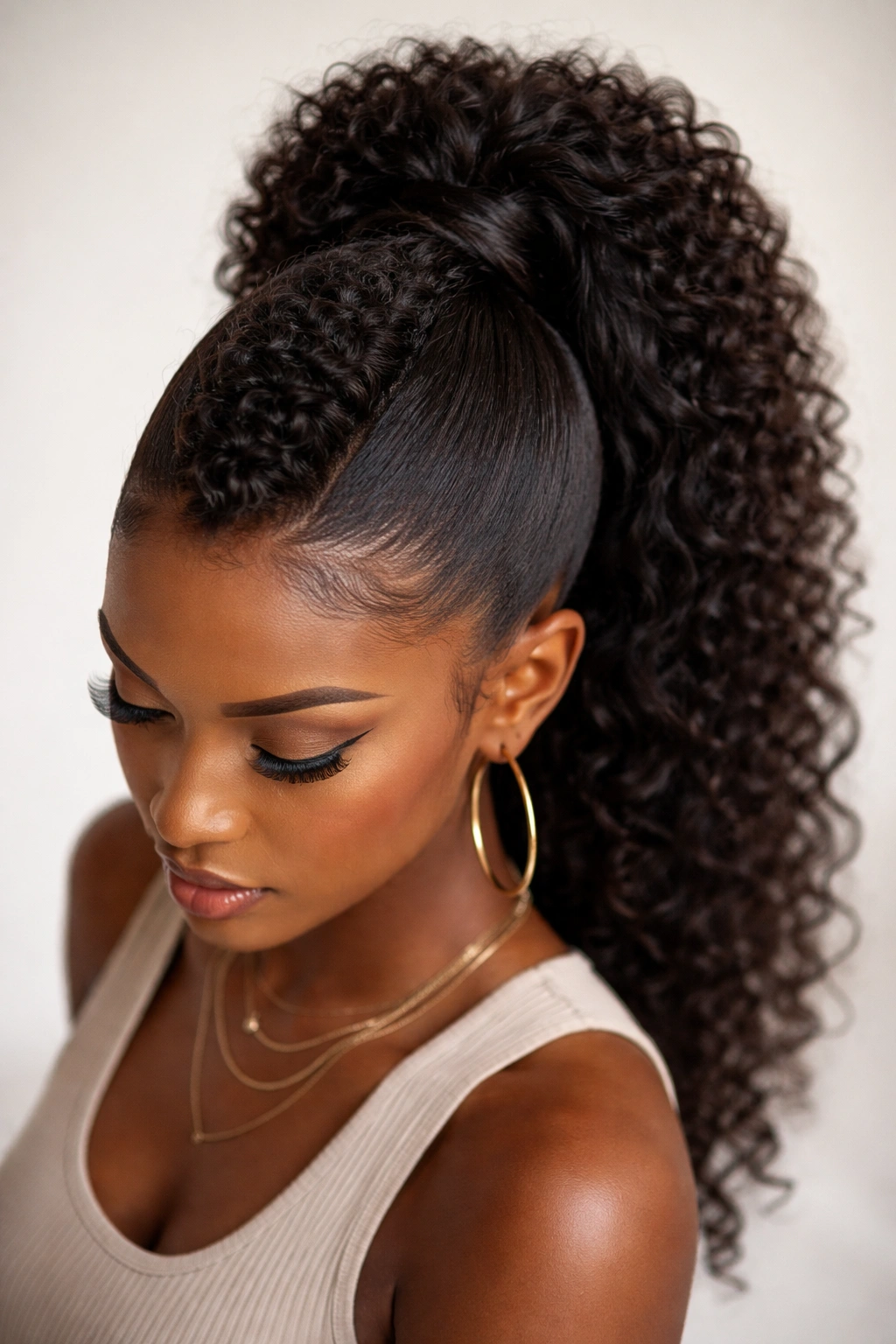
For something bold and undeniably striking, the faux hawk ponytail creates the illusion of a Mohawk using a central strip of fuller hair while the sides are smoother and less voluminous. This style requires more styling intention but creates an absolutely stunning result that commands attention.
Creating the Central Strip
To create the faux hawk effect, you’ll gather a central section of hair from your forehead all the way down to your nape—roughly the center third of your head—and make it more voluminous than the hair on either side. This can be achieved through teasing/backcombing the central section, using volumizing products, or arranging your curls so more of them are visible in that central area. The side sections should be smoother, sleeker, or less voluminous by comparison. Once you have this contrast established, gather all your hair into a high or mid-height ponytail, but arrange it so the fuller central section creates height and drama.
Product and Technique
You’ll want to use texturizing products on the central section—a light mousse, a sea salt spray, or a volumizing gel—to enhance and hold that fullness. The side sections can be smoothed with a smoothing cream. The visual effect should be a clear central strip of volume with tapered sides, all flowing into a ponytail at the back.
Statement Factor
This is a statement style, not an everyday style. It works beautifully for nights out, performances, creative events, or any occasion where you want to express boldness and artistry through your hair. It takes longer to style than a basic ponytail, but the payoff in terms of impact is substantial.
11. The Tucked Ponytail
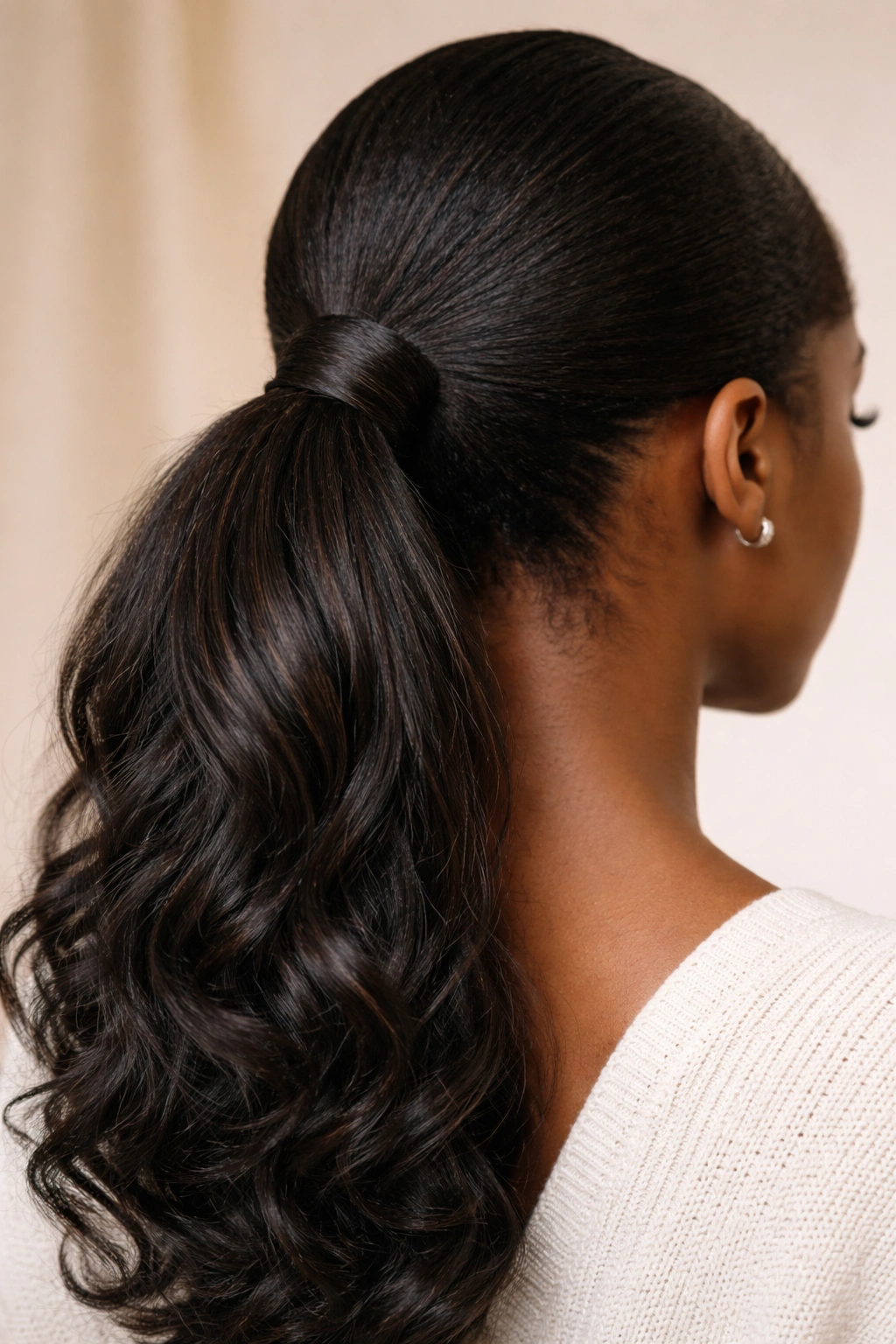
Sometimes called a “wrapped” or “hidden elastic” ponytail, the tucked ponytail conceals the elastic band by wrapping a section of your own hair around it. This creates a seamless, polished look where the securing mechanism is completely invisible—all you see is beautiful hair flowing from what looks like a naturally gathered section.
Perfecting the Tuck
Gather your hair into a ponytail and secure it with an elastic band. Then, take a thin section of hair from the underside of your ponytail and wrap it around the elastic band, covering it completely. The wrapped section should go all the way around the elastic, and you secure the end with a bobby pin tucked underneath the wrap where it won’t be visible. When done well, it looks like your hair is simply gathered together naturally, with no elastic band in sight.
The Polished Factor
This small technique makes an enormous difference in how finished your ponytail looks. It’s the difference between a casual, functional ponytail and a styled, intentional one. Because it’s a simple addition to a basic ponytail, you can use this technique on any of the other ponytail styles for extra polish—a tucked sleek ponytail, a tucked high puff, a tucked braided base, etc.
Time Investment
This technique adds only about two minutes to your styling time, but the payoff in terms of a finished look is well worth it. It’s particularly noticeable on formal occasions or professional settings where polish matters. Once mastered, the tucked technique becomes automatic and becomes part of your standard ponytail-building process.
12. The Kink-Out or Heatless Wave Ponytail
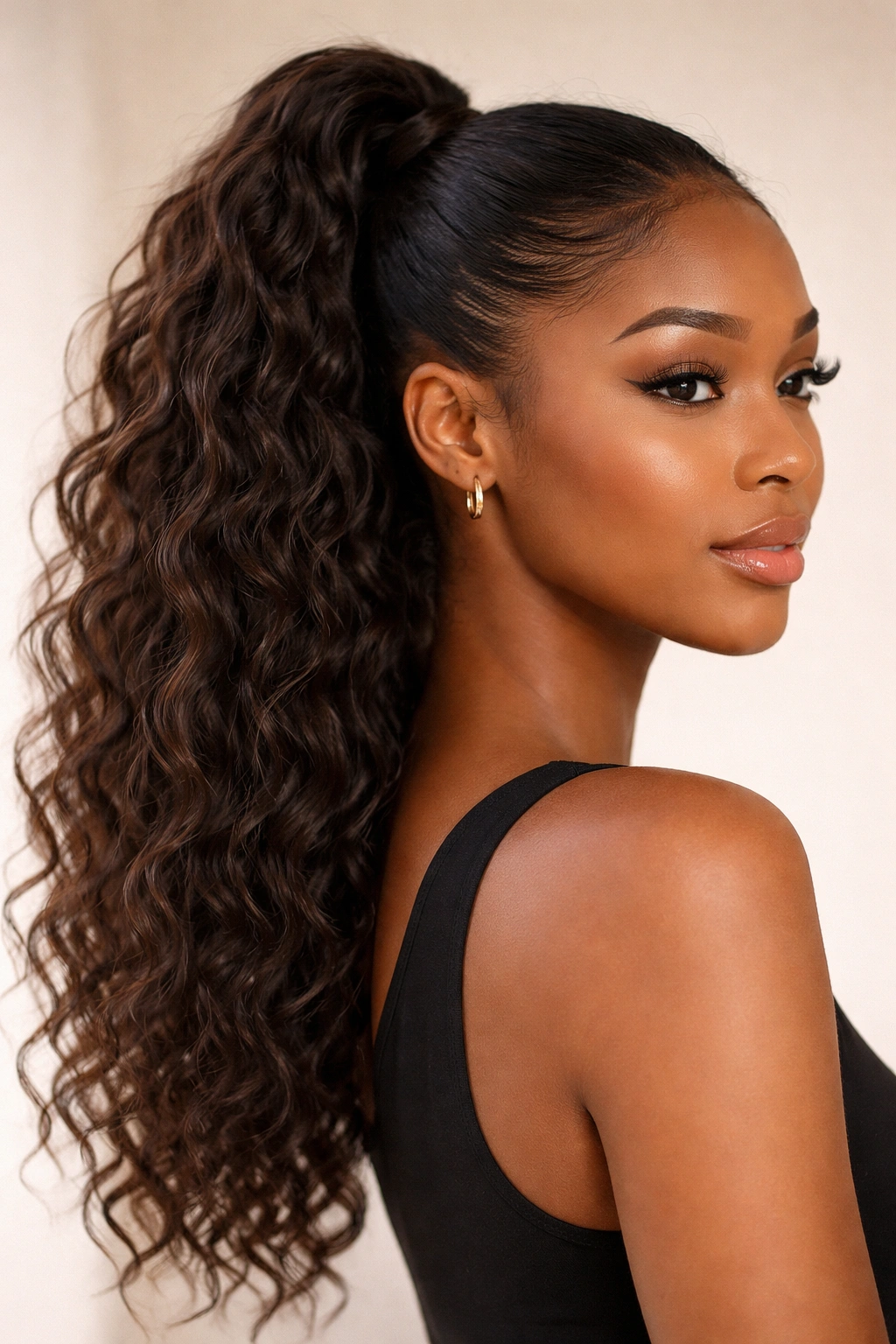
For a ponytail with intentional texture and movement that’s completely heatless, the kink-out ponytail uses braids worn overnight to create wave patterns that are then arranged into a voluminous, textured ponytail. This style celebrates your natural texture while creating the appearance of intentional waves without any heat damage.
Creating the Wave Base
The night before you want to wear this style, divide your hair into 4-6 braids of varying sizes and leave them in overnight. In the morning, unravel the braids to reveal beautiful wave patterns throughout your hair. Rather than wearing it down as a traditional kink-out, gather these waves into a ponytail at your preferred height. The waves create substantial volume and texture within the ponytail itself.
Arrangement and Definition
Because the waves are pre-set from the braids, they hold their pattern in the ponytail beautifully. You can use a curl-defining cream or light gel to enhance and define the waves further, or leave them as-is for a more natural, undone appearance. The ponytail itself will be noticeably fuller and more textured than a ponytail made from straight hair, which is the whole point.
Longevity and Refreshing
This style typically lasts 4-5 days because the wave pattern is set by the braids and doesn’t rely on product alone. To refresh it, you can re-braid sections overnight or lightly spritz with water or curl spray. The wave pattern gradually releases over several days, which can actually be beautiful—the style evolves rather than falls flat.
Final Thoughts
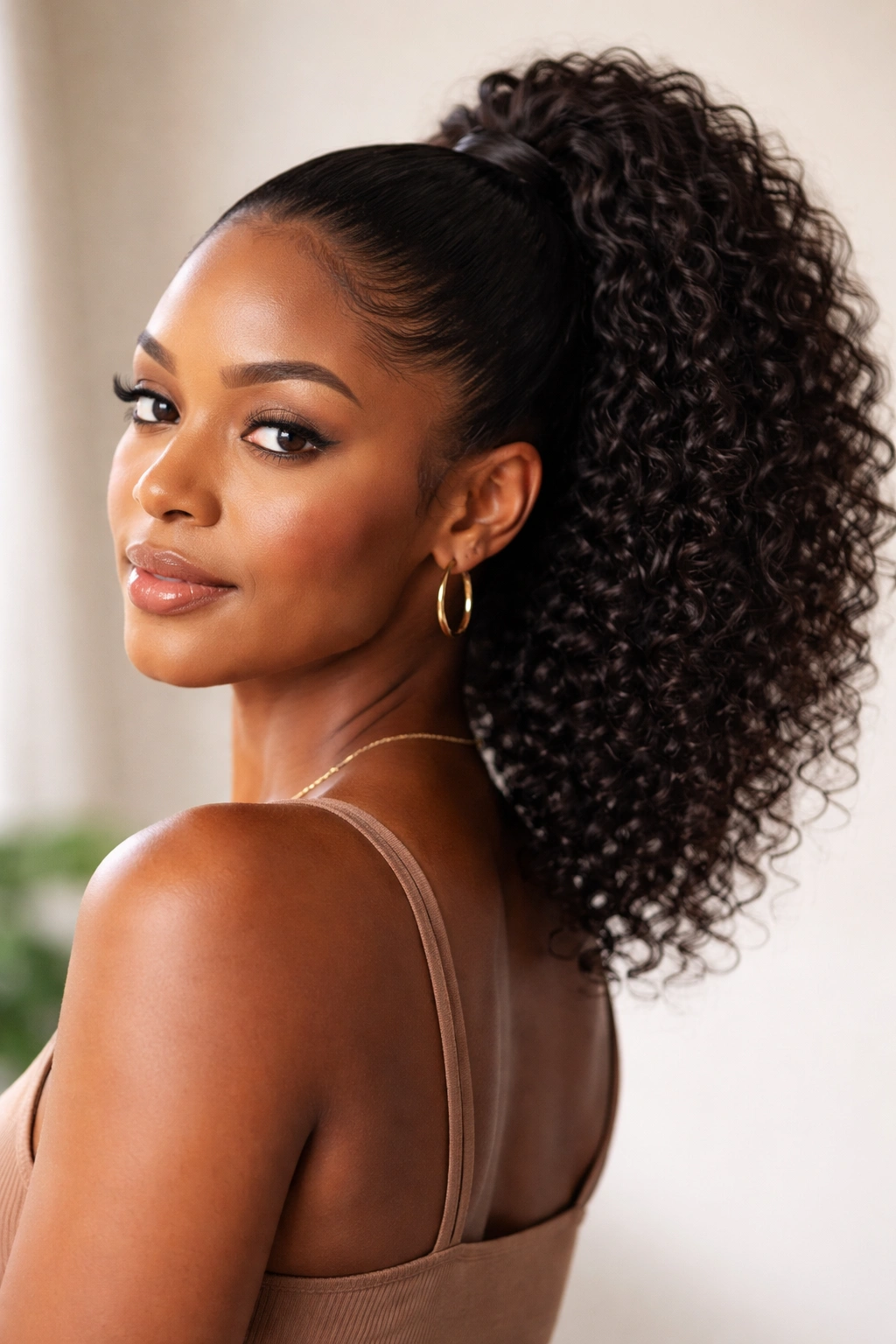
The ponytails that work best for Black women with natural hair are the ones that celebrate texture rather than fight it, that respect your curl pattern while still offering styling versatility, and that don’t require damaging techniques or excessive tension. Each of these twelve styles offers something different—from the simple confidence of a sleek low ponytail to the artistic boldness of a faux hawk, from the casual ease of a high puff to the polished sophistication of a tucked style.
Your natural hair is an asset in styling, not a limitation. The grip, the body, and the texture that make natural hair what it is actually create more ponytail possibilities, not fewer. A well-placed ponytail on natural hair can look better after three days than it does on day one, as your curls continue to set and define. You’re not trying to force your hair into a shape it doesn’t want to take—you’re working with its natural properties to create styles that are uniquely beautiful and uniquely you.
The best ponytail for today might be completely different from the best ponytail for next week, depending on how you’re feeling, what you’re doing, and what mood you want to express. That flexibility—the ability to shift between sleek and textured, casual and polished, simple and artistic—is one of the greatest gifts of styling natural hair. Master these techniques, understand your hair’s specific needs, and you’ll have a ponytail option for literally every situation and every version of yourself.
