



Box braids are the ultimate canvas for creating polished, protective ponytails that work for any occasion — from everyday wear to special events. The beautiful thing about combining box braids with ponytail styles is that you get longevity, versatility, and that undeniably sleek aesthetic that turns heads. Whether your braids are already installed or you’re thinking about getting them done, styling them into a ponytail opens up a world of creative possibilities that go far beyond a basic gather at the back of your head.
The genius of box braid ponytails lies in their dual power: they keep your braids looking fresh and organized while creating new visual interest and texture. A well-executed box braid ponytail can transform how your braids sit, elongate your neck and face, and give you options for different environments, moods, and outfit combinations. Real talk — once you discover how many ways you can style box braids into a ponytail, you’ll find yourself reaching for this look constantly.
What makes these styles so practical is that they require minimal extra styling each day. Your braids do most of the heavy lifting, and a ponytail simply reorients them into a fresh silhouette. You’re not wrestling with tons of new product application or spending an hour perfecting the style. Instead, you’re working with what you already have and positioning it strategically for maximum impact. Let’s walk through ten distinct box braid ponytail styles that deliver serious sleekness while keeping your protective style functional and gorgeous.
1. High Classic Box Braid Ponytail
The high ponytail is the foundation of sleek styling, and box braids make it absolutely effortless to achieve. Position your braids high on the crown of your head, pulling them tightly toward the back and securing them with a strong elastic at the nape of your neck or slightly higher, depending on your preference. This style creates immediate lift, makes your face appear more open and bright, and gives you that polished, intentional look that reads as put-together without looking overdone.
Why This Style Dominates for Sleekness
The high placement naturally smooths your hairline and creates clean lines from front to back, which is exactly what sleek styling is all about. Your braids become the focal point rather than blending into your neck area, so every one of those braids contributes to the overall visual impact. The tension itself — that feeling of your braids pulling slightly at the roots — keeps everything anchored and prevents any frizz or loose flyaways from disrupting the streamlined effect.
Pro Styling Tips
- Use a slicking gel or edge control on your hairline before gathering for that extra-polished foundation
- Wrap a small section of braid around the base of your elastic to hide it completely and create a seamless look
- Secure with bobby pins positioned invisibly at the base to ensure zero movement throughout your day
- Try attaching hair jewelry or gold cuffs around the elastic to add intentional style rather than just hiding it
Pro tip: The tension from a high ponytail should feel firm but never painful — if your scalp is throbbing after five minutes, it’s too tight and you risk traction alopecia over time.
2. Low Sleek Box Braid Ponytail
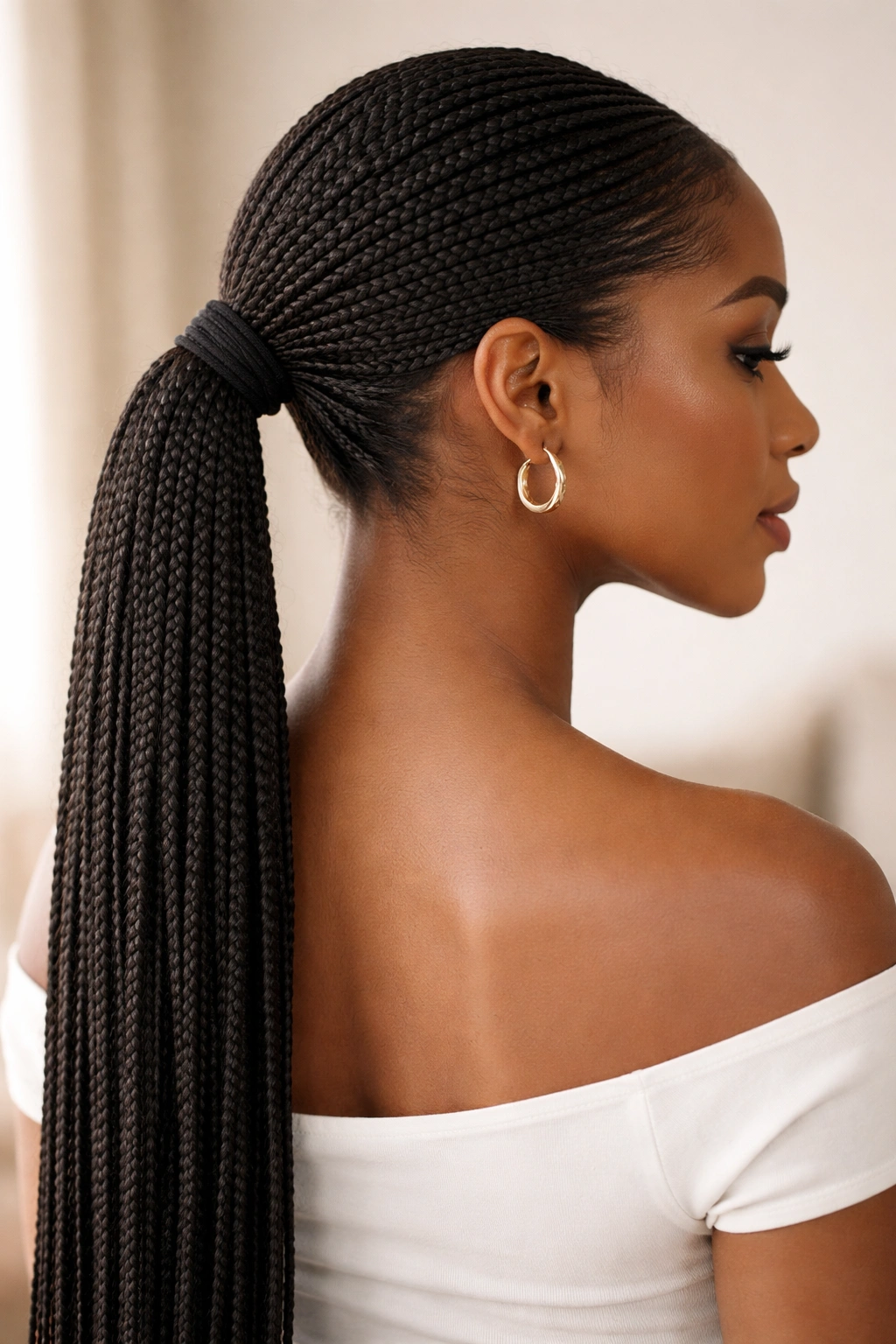
A low ponytail offers a different kind of elegance — sophisticated, understated, and effortlessly chic. Gather your box braids low, just at the nape of your neck or even lower along the back of your head. This placement works beautifully if you have a longer face shape or if you’re heading to a formal event where ultra-polished but subtly feminine energy feels right. The lower position also distributes tension more evenly across the length of your hair, making it comfortable for extended wear.
How Lower Placement Changes the Aesthetic
A low ponytail creates the illusion of length and sophistication while appearing less sporty than the high version. It’s the ponytail version that works in corporate settings, at dinner dates, during professional photography, and anywhere you want to communicate quiet confidence rather than athletic energy. The braids drape in a longer line from the gathering point, and the negative space at the top of your head creates visual breathing room that some find more flattering.
Styling Elements That Matter
- A sleek, tight grip on your braids at the gathering point — use multiple bobby pins for security
- A decorative hair cuff, leather wrap, or wrapped section of braid concealing the elastic
- Hair strands or small braids wrapped around the elastic for an embellished, intentional finish
- Optional: gentle finger-combing through the gathered braids to create a slightly softer, less severe look while maintaining the “sleek” illusion
Worth knowing: Low ponytails can feel more comfortable during activities where you’re moving around less (work at a desk, evening events, photoshoots) versus workouts or active days when gravity pulls differently on your scalp.
3. Side-Swept Box Braid Ponytail
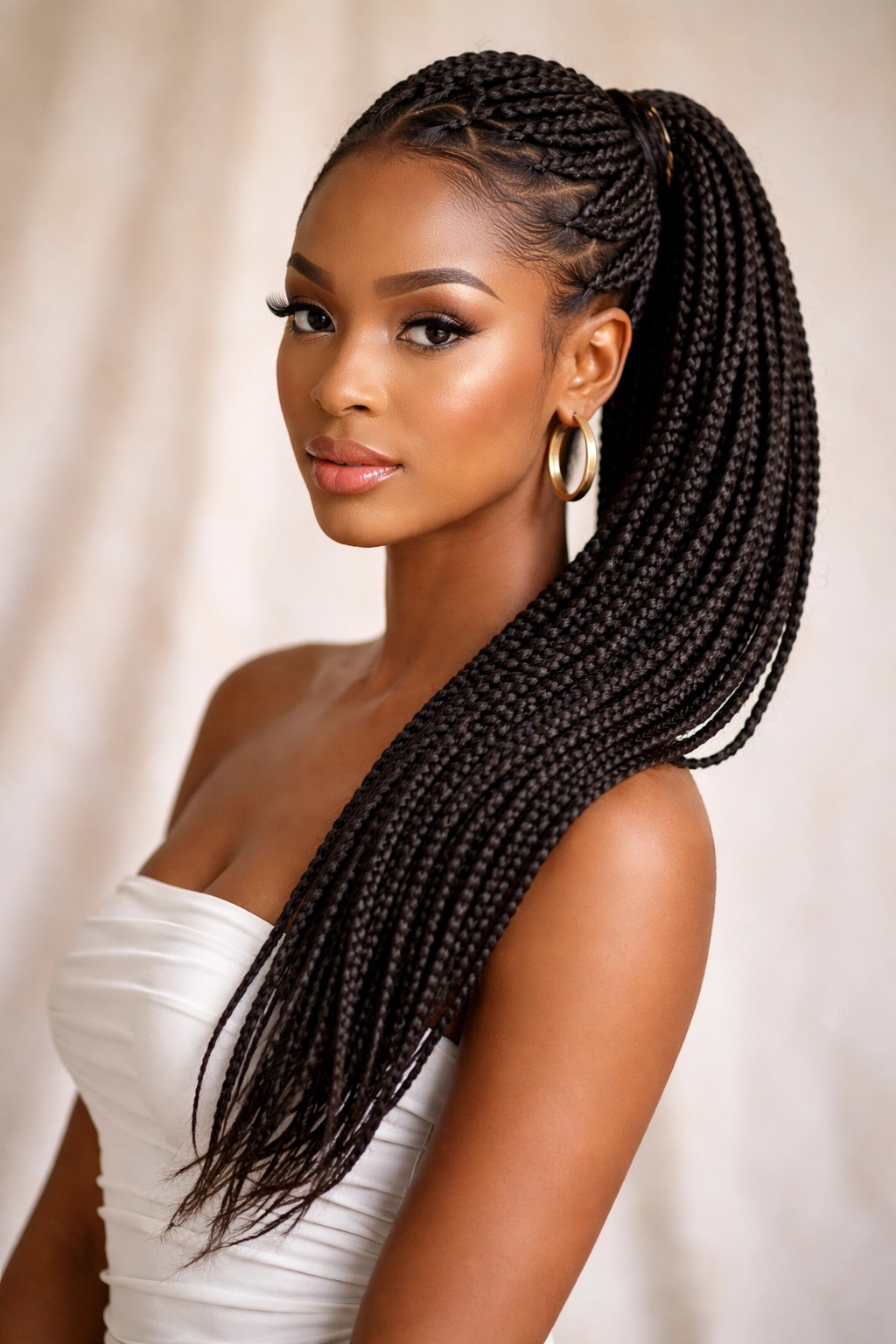
Side-swept styling instantly creates asymmetry and visual interest, transforming your look from balanced to directional and dynamic. Gather your braids to one side — typically toward your dominant side but actually whichever feels more comfortable and flattering to your face. The braids sweep across the back of your head and shoulder rather than hanging straight down, creating a cascading effect that’s both playful and refined depending on how you finish it.
The Visual Power of Asymmetry
A side-swept ponytail draws attention toward your face in a different way than center ponytails do. If you’re wearing an off-shoulder top or asymmetrical outfit, this becomes an easy styling match. The style is particularly flattering if you have one side of your face or a certain head shape you prefer to feature more prominently. There’s something about the directional movement of side-swept braids that reads as more intentional and styled than a centered ponytail, even though both require equal effort.
Making Side-Swept Look Intentional
- Position the gathering point slightly off-center at the back of your head, then allow the tail to drape toward your shoulder
- Add volume or texture on the opposite side of your head with additional styling or wrapping techniques for balanced visual weight
- Consider parting your hair slightly off-center in front to create a complementary line that flows toward your side-swept ponytail
- Wrap braids around the base in a spiral or curved pattern rather than straight across to enhance the directional effect
Pro tip: Side-swept works especially well if you’ve got one side of your face that photographs better or feels more confident — use your styling to celebrate that rather than hiding it.
4. Feed-In Box Braid Ponytail
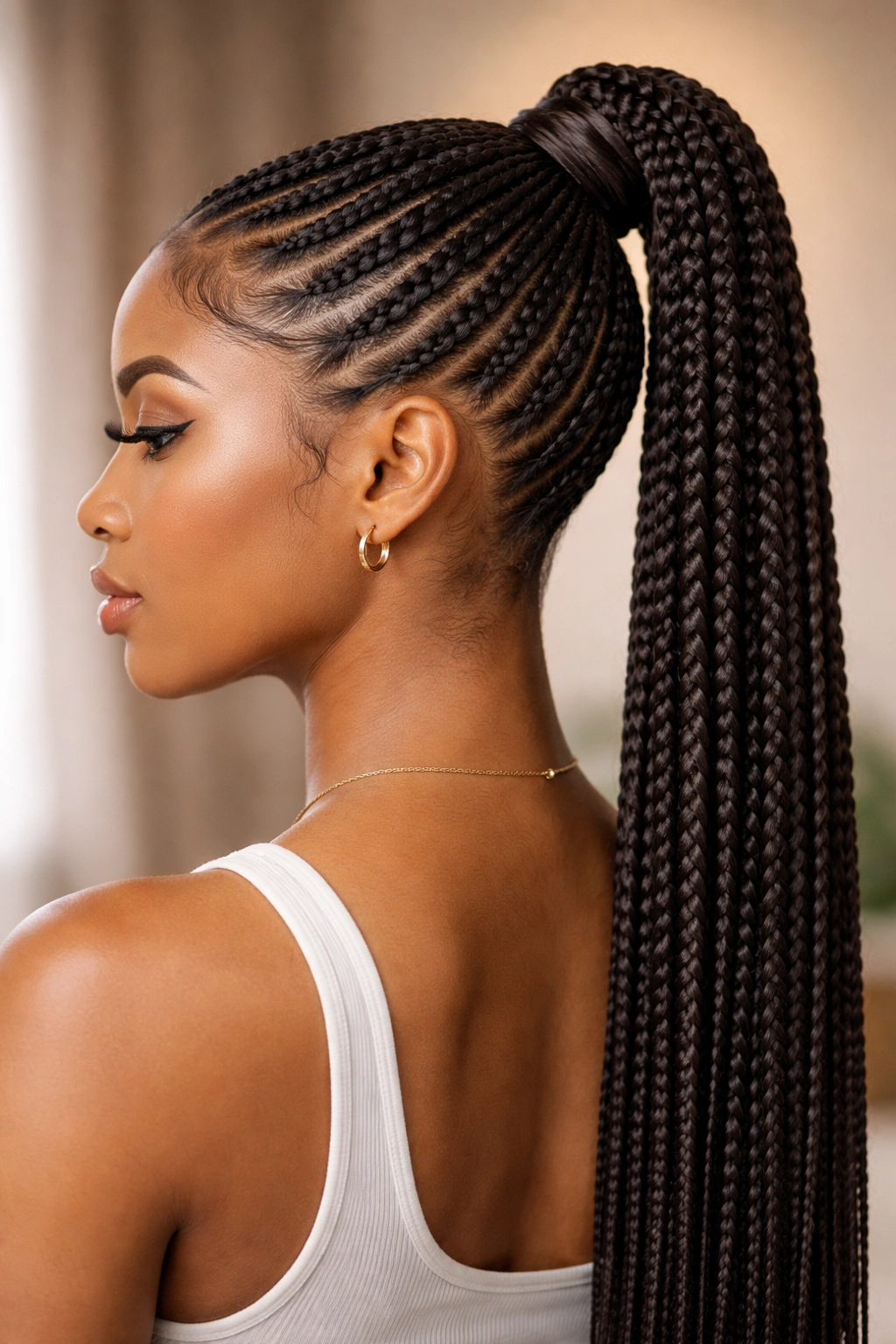
Feed-in braiding is a technique where your natural hair is gradually woven into the braid from the scalp, creating a seamless, integrated look rather than obvious box braids sitting on top of your head. When you style a feed-in braided ponytail, you’re working with braids that already have that sleek, sculpted appearance built in. Gather these braids into your ponytail with a secure elastic, and the result is a style that appears almost like a single unified hairstyle rather than individual braids bound together.
Why Feed-In Creates Maximum Sleekness
Feed-in braids are engineered for sleekness from the moment they’re installed — there’s no way to install them without creating that polished, controlled appearance. The transition from scalp to braid is gradual and intentional, which means your ponytail sits perfectly smooth against your head without gaps or lumps. This style requires the most installation skill from your braider, but the payoff is that styling requires minimal effort because the hard work is already done in the installation.
Feed-In Ponytail Finishing Touches
- Keep the ponytail simple and tight since the braids already carry visual interest
- Secure with a metallic or jeweled cuff that complements your skin tone without competing for attention
- Allow the tail itself to show off the braids — don’t hide them under wrapping
- Consider leaving one or two face-framing braids slightly loose while gathering the rest for a softly styled effect
Worth knowing: Feed-in braids typically last longer and look fresher longer than individual box braids because the installed structure is more integrated with your natural hairline and less prone to loosening.
5. Mohawk-Style Box Braid Ponytail
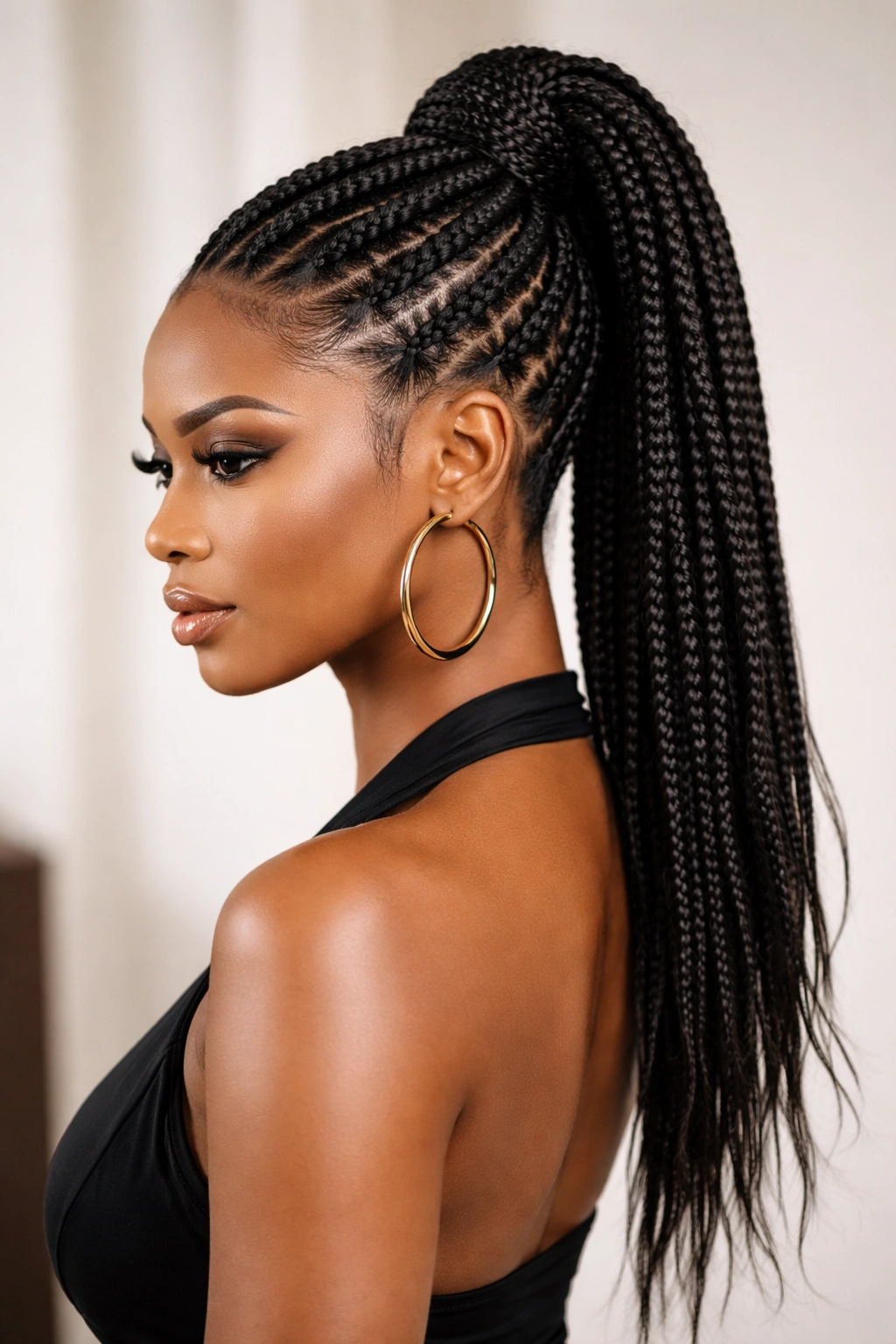
For maximum visual drama and undeniable sleekness, try a mohawk-style arrangement where you gather your braids down the center line of your head while leaving sections on the sides slightly looser or pulled back more subtly. This creates a raised, statement-making silhouette that reads as bold and intentional. The center gathering creates a strip of braids running from front to back, gathered into a ponytail at the nape or crown depending on your preference.
The Statement-Making Quality of This Style
Mohawk-style box braid ponytails are unapologetically bold. They work beautifully for people who love drawing attention, who are comfortable with their personal style, or who are heading somewhere they can express themselves freely (music festivals, creative events, confident everyday wear). The asymmetry of raised braids in the center and flatter braids on the sides creates a striking visual contrast that photographs incredibly well and genuinely makes a style statement.
Creating the Mohawk Effect
- Gather braids from the center of your hairline straight back toward your crown or nape
- Secure tightly with multiple bobby pins and elastics for absolute stability
- Leave side sections brushed back smoothly but with less tension to emphasize the center volume
- Enhance the sculpted appearance with edge control or gel along the sides to create clean lines
- Wrap a decorative element around the base of your ponytail to draw the eye to the gathered section
Pro tip: This style is genuinely easier to pull off with a fresh manicure or press-on nails because you’ll be handling your braids repeatedly to position them perfectly.
6. Twisted Wrap Box Braid Ponytail
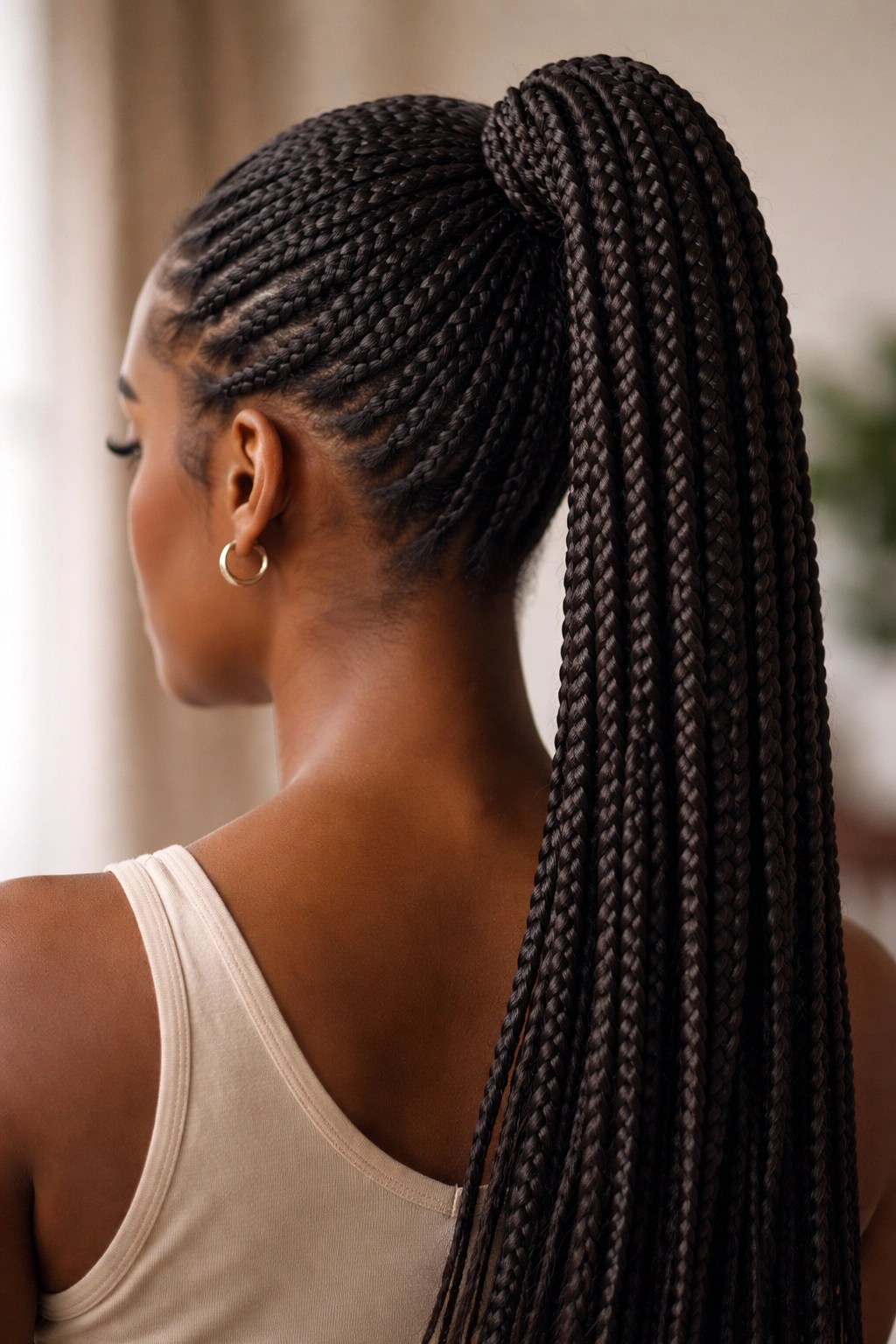
Instead of simply tying your braids together with an elastic, try wrapping a section of your braids around the base of your ponytail for an artisanal, crafted appearance. Gather your braids into the desired position, secure them with an elastic, then take one braid and wrap it around the gathering point, pinning the end underneath to hide it completely. This creates a finished, polished look that appears more intentional than a plain elastic and adds textural interest to your ponytail base.
Why This Detail Transforms the Whole Style
A wrapped base instantly elevates any ponytail from functional to styled. It’s the difference between looking like you quickly threw your braids back and looking like you curated this exact arrangement. The wrapped braid catches light differently, creates visual interest at the gathering point, and signals that attention was paid to finishing details. This same technique works with silk ribbons, string, or even a thin scarf wrapped around the elastic for additional customization.
Execution Tips for Flawless Wrapping
- Ensure your ponytail is pulled as tightly as you want it before you begin wrapping — don’t try to adjust tension after the wrap is in place
- Use bobby pins that match your braid color and secure them diagonally beneath the wrap where they won’t be visible
- Wrap in a single direction (clockwise or counterclockwise) around your ponytail base to create a clean, intentional spiral rather than going back and forth
- If using a ribbon or string instead of a braid, wrap it multiple times for a polished, balanced appearance
- Tuck the end of your wrapped braid underneath the gathered ponytail so no loose end dangles awkwardly
Worth knowing: A wrapped base also reinforces the security of your ponytail by creating additional points of contact and grip, meaning your ponytail will stay put through movement and activity.
7. Bubble Braid Ponytail
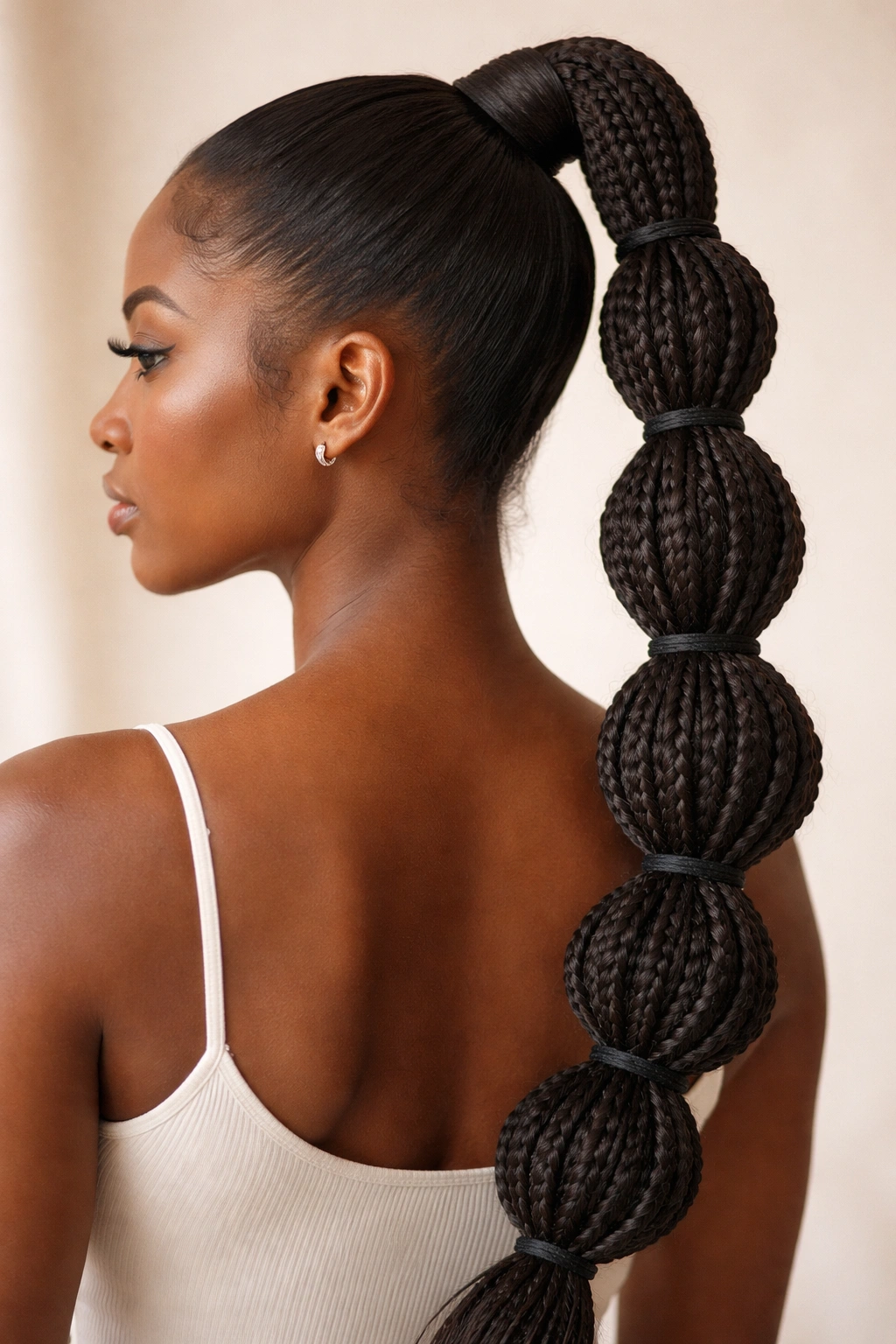
A bubble braid ponytail uses the same concept as bubble braids worn loose: you create a series of gathered sections running down the length of your ponytail, secured with small elastics at intervals. Gather your box braids into a ponytail first, then starting at the base near your head, wrap a small elastic around the gathered braids. Move down the ponytail length and add another elastic every 2-3 inches, creating visually distinct “bubbles” of braids between each elastic. The result is a sculptural, eye-catching style that’s playful yet polished.
The Visual Impact of Bubble Structure
Bubble braids create an almost three-dimensional appearance because each section puffs out slightly between the elastics, creating light and shadow play that’s genuinely striking. The repeated pattern communicates intentionality and craftsmanship — this is clearly a style that required thought and effort. It works beautifully at events where you want to stand out, on social media where photography captures the dimensional texture, and anytime you want to transform a basic ponytail into genuine statement-making hair.
Building Your Bubble Ponytail
- Start with a high or mid-height ponytail secured very tightly — loose foundations cause bubbles to look sloppy
- Use thin elastics that match your braid color to create clean visual lines
- Space your elastics evenly — measure the distance between sections for a balanced, intentional appearance
- Apply light tension when you wrap each elastic to avoid over-tightening and causing discomfort
- Optional: gently tease or fluff each bubble section slightly after securing to create fullness between the elastics
Pro tip: Metallic or jeweled elastics can elevate this style from playful to elegant — gold and silver options work with most braid colors and skin tones.
8. Half-Up Box Braid Ponytail
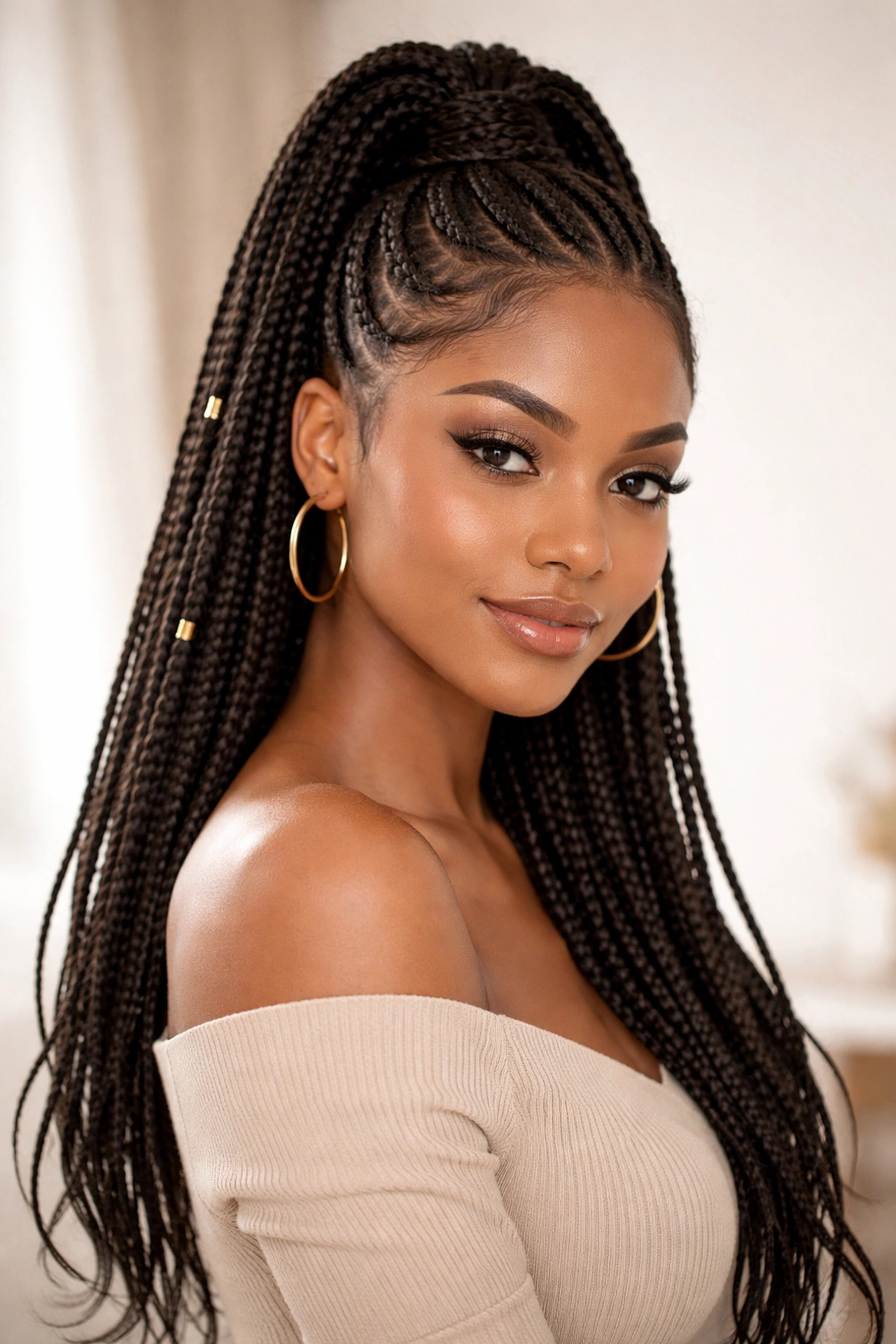
The half-up ponytail offers a beautiful compromise between wearing your braids fully down and fully up, creating a style that’s both elongating and face-framing. Gather only the top half of your braids toward the crown of your head and secure with an elastic, leaving the bottom half to fall freely down your back. This creates a layered, textured appearance and prevents all your hair from pulling on your hairline while still keeping braids off your face.
The Versatility of Partial Gathering
Half-up styling works in professional settings, casual everyday wear, athletic contexts, and anywhere you want some hair secured but not all of it gathered. The style is inherently flattering because you’re creating movement and dimension — not everything is sleek and controlled, which can soften the overall appearance while maintaining functionality. If you’re concerned about tension on your hairline or scalp sensitivity, half-up gives you the benefits of a ponytail without maximum pulling throughout the entire head.
Styling Your Half-Up Ponytail
- Decide whether you want the half-up gathered at the very crown or slightly lower for a different silhouette
- Ensure your gathering point is symmetrical by gathering from both sides evenly
- Leave your bottom braids falling completely loose, or optionally wrap them in individual elastics for additional texture
- Consider tucking the elastic under a wrapped braid section to hide it, which creates a more finished appearance
- Add volume to the half-up section by gently backcombing or teasing the braids at the crown for dimension
Worth knowing: Half-up styling is particularly smart if your box braids are wearing differently in the top versus bottom sections — you can keep the freshest-looking braids visible while securing the sections that need a refresh.
9. Curved Section Box Braid Ponytail
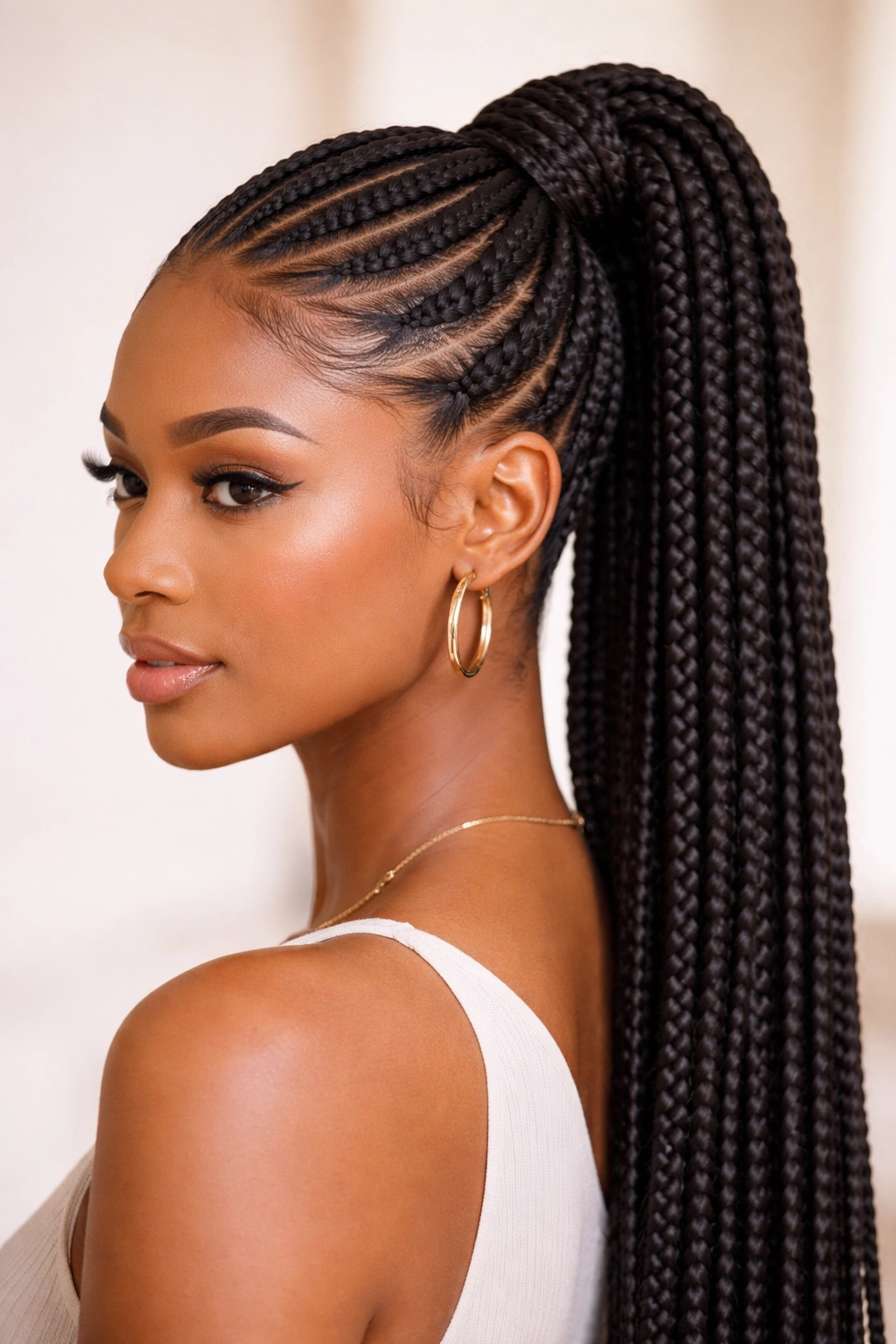
Instead of gathering your braids straight back, experiment with gathering them in a curved or diagonal pattern for a more contemporary, artistic silhouette. Rather than pulling directly from the front toward the back of your head, you might gather braids in a soft curve from one side toward the opposite lower area, creating an asymmetrical but balanced final arrangement. This requires more intentional placement and pinning, but the result is a style that looks dramatically more designed than a standard straight ponytail.
Modern Geometry in Hair Styling
Curved and diagonal gathering creates visual movement across your head rather than static front-to-back alignment. The curved line elongates your neck differently, photographs from new angles with different flattering effects, and generally makes your styling choices feel more sophisticated and intentional. This approach to ponytail gathering is less common than straight styles, which means fewer people will have seen exactly this arrangement before — automatic uniqueness without requiring a different base hairstyle.
Executing a Curved Gathering
- Start by planning your curve mentally before securing anything — where will your gathering point sit, and which direction does the curve flow?
- Pin sections of braids as you move through the curve to establish the line before securing with elastics
- Use multiple bobby pins along the curved line for stability rather than relying on a single gathering point
- Consider using a larger, statement-making cuff or wrap at your gathering point since it’s slightly off-center and becomes a visual focal point
- Ensure your curve feels balanced — a gentle curve reads intentional, while too sharp an angle can look accidental
Pro tip: Photograph yourself from the back and sides with your curved ponytail gathered — you might find that certain curves are more flattering than others based on your specific head shape and proportions.
10. Braid Within a Ponytail
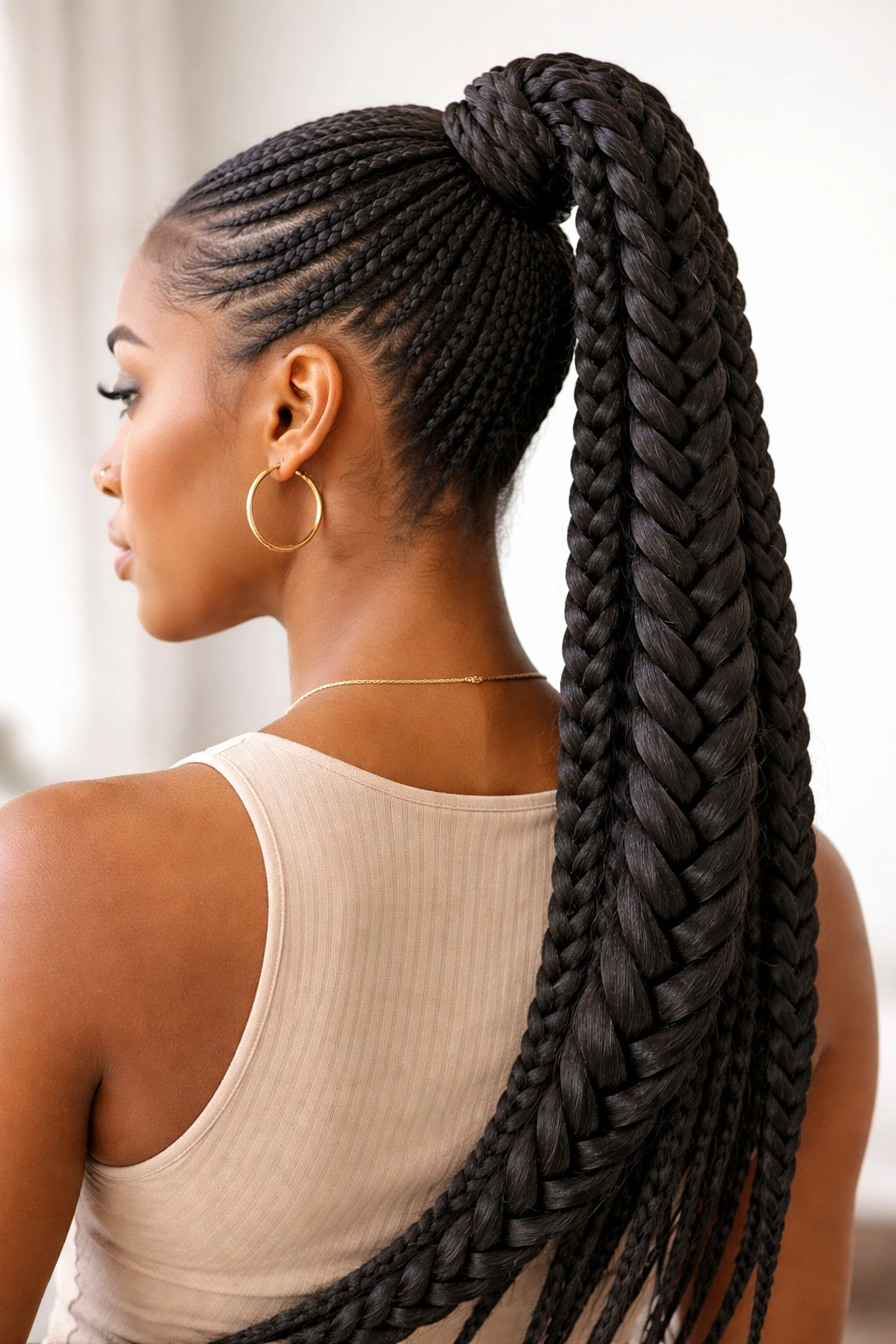
Take your box braid ponytail styling to the next level by literally creating a braid within your gathered braids. After securing your box braids into a ponytail, take the tail itself and braid it using the three-strand method, a feed-in braiding technique, or even a fishtail braid structure. You’re essentially braiding your braids, creating a layered, complex texture that reads as incredibly intricate and intentional. This style is the definition of sleek because every strand is controlled and positioned.
The Artistry of Layered Braiding
Braiding within a ponytail is where serious hair styling artistry lives. You’re working with existing texture and structure and elevating it further, which requires both technical skill and visual creativity. The resulting style is so textured and interesting that it works beautifully loose or secured at the ends for even more visual definition. This is the ponytail you wear when you want to communicate that hair styling is genuinely a passion and not an afterthought.
Creating Your Braided Ponytail Tail
- Gather your box braids into a secure high or mid-height ponytail first — this foundation must be tight
- Beginning at the base of your ponytail, separate the tail into three sections if you want a traditional three-strand braid, or into two sections for a two-strand twist
- Braid down the length of your ponytail tail, keeping consistent tension throughout so your braid sits flat and controlled
- Secure the end of your braided tail with a small elastic matching your braid color
- Optional: slightly tease or fluff each section of your braid after securing for additional texture and dimension
Worth knowing: This style can be slightly uncomfortable at the back of your neck if the braided tail extends far down your back and swings heavily — securing the end or laying the tail in a spiral around your ponytail base can solve this issue while maintaining the visual effect.
Final Thoughts
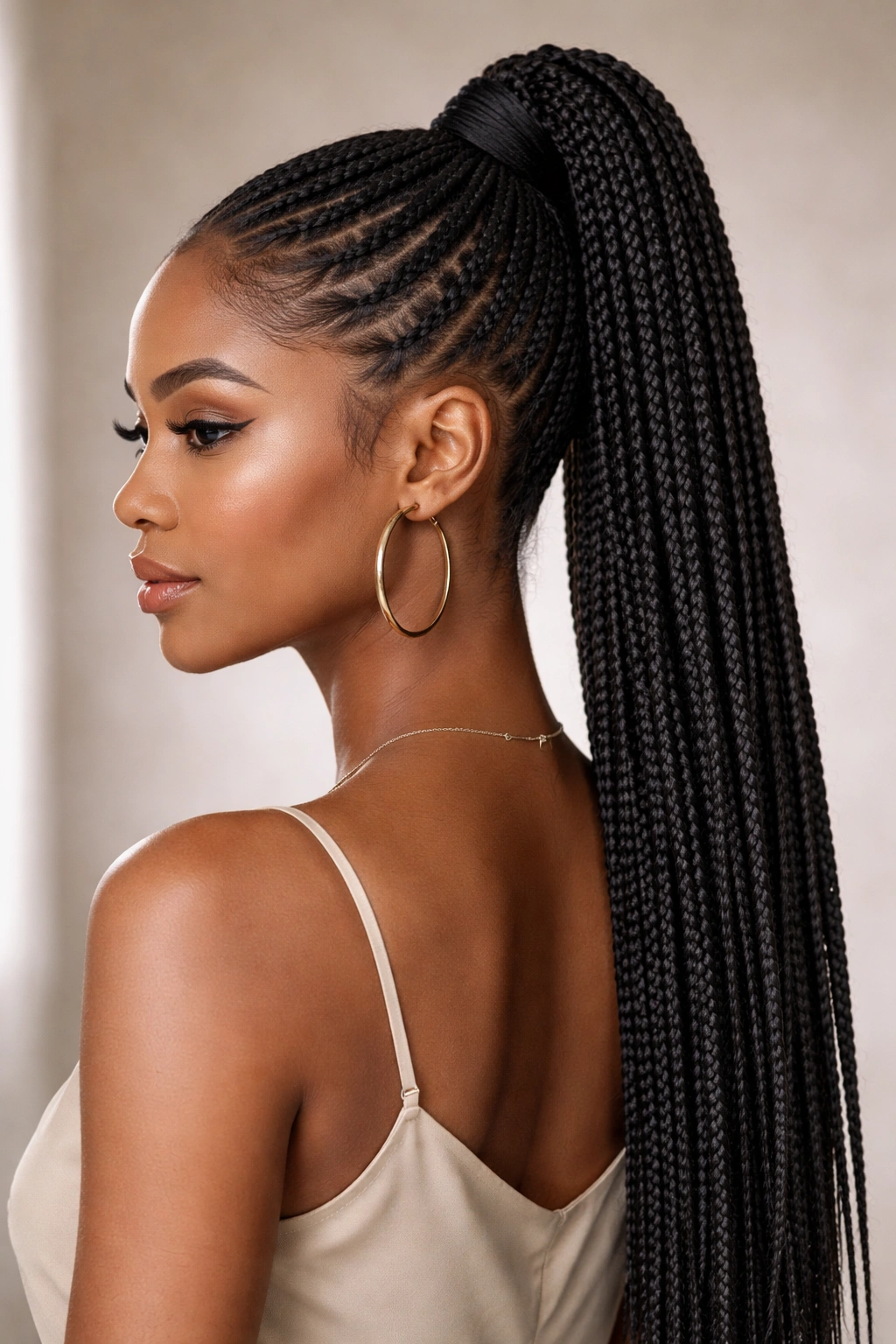
Box braid ponytails represent the sweet spot where protective styling meets creative expression. Each of these ten approaches offers something different — whether you’re drawn to the timeless elegance of a high classic ponytail, the artistic boldness of a mohawk arrangement, or the intricate complexity of a braid-within-a-braid style. The best choice depends on your lifestyle, the occasion, how your specific braids are installed, and honestly what feels most like you on any given day.
The real advantage of box braids is that they give you the freedom to experiment. You can try a different ponytail style every single day if you want to — swap between high and low, centered and side-swept, simple and sculptural — all without touching your hair beyond repositioning what you already have. This adaptability means your braids stay fresh and interesting for the entire duration you wear them, keeping you engaged with your style rather than bored by monotony.
Remember that comfort matters as much as aesthetics. A beautifully styled ponytail that causes scalp tension or discomfort isn’t serving you well, no matter how sleek it looks in the mirror. Pay attention to how your ponytails feel throughout the day, adjust tension as needed, and don’t hesitate to take your braids down regularly to massage your scalp and prevent traction alopecia. Sleek styling and healthy hair can absolutely coexist — they’re not mutually exclusive when you approach your braids with both creativity and care.
