



Purple hair has moved far beyond the realm of rebellious fashion statements—it’s now a sophisticated, versatile way to express confidence and creativity. Whether you’re drawn to rich jewel tones or soft pastel shades, a purple ponytail can transform your entire appearance in seconds while signaling that you’re unapologetically bold about your style choices. The beauty of purple is its incredible range: it can lean elegant and luxe in deep amethyst, playful and modern in lavender, or edgy and dramatic in plum. A well-executed purple ponytail isn’t just about hair color—it’s about construction, texture, and how you position that color to frame your face and catch the light.
What makes purple ponytails different from other color choices is their psychological impact. Purple sits at the intersection of red’s passion and blue’s calm, creating a shade that feels both energetic and thoughtful. This means your ponytail can work in professional settings, casual outings, special events, or everyday wear—depending entirely on how you style it. The key is understanding which purple shade flatters your skin tone, which ponytail construction technique complements your face shape, and how to care for colored hair so it stays vibrant week after week.
This isn’t a quick guide to throwing your hair in a elastic. Instead, here are ten distinct purple ponytail styles—each with specific techniques, styling tips, maintenance notes, and the exact look you can expect to achieve. Whether you’re considering going purple for the first time or you’re already committed to the color and want fresh styling inspiration, these options give you concrete direction.
1. Deep Amethyst High Ponytail
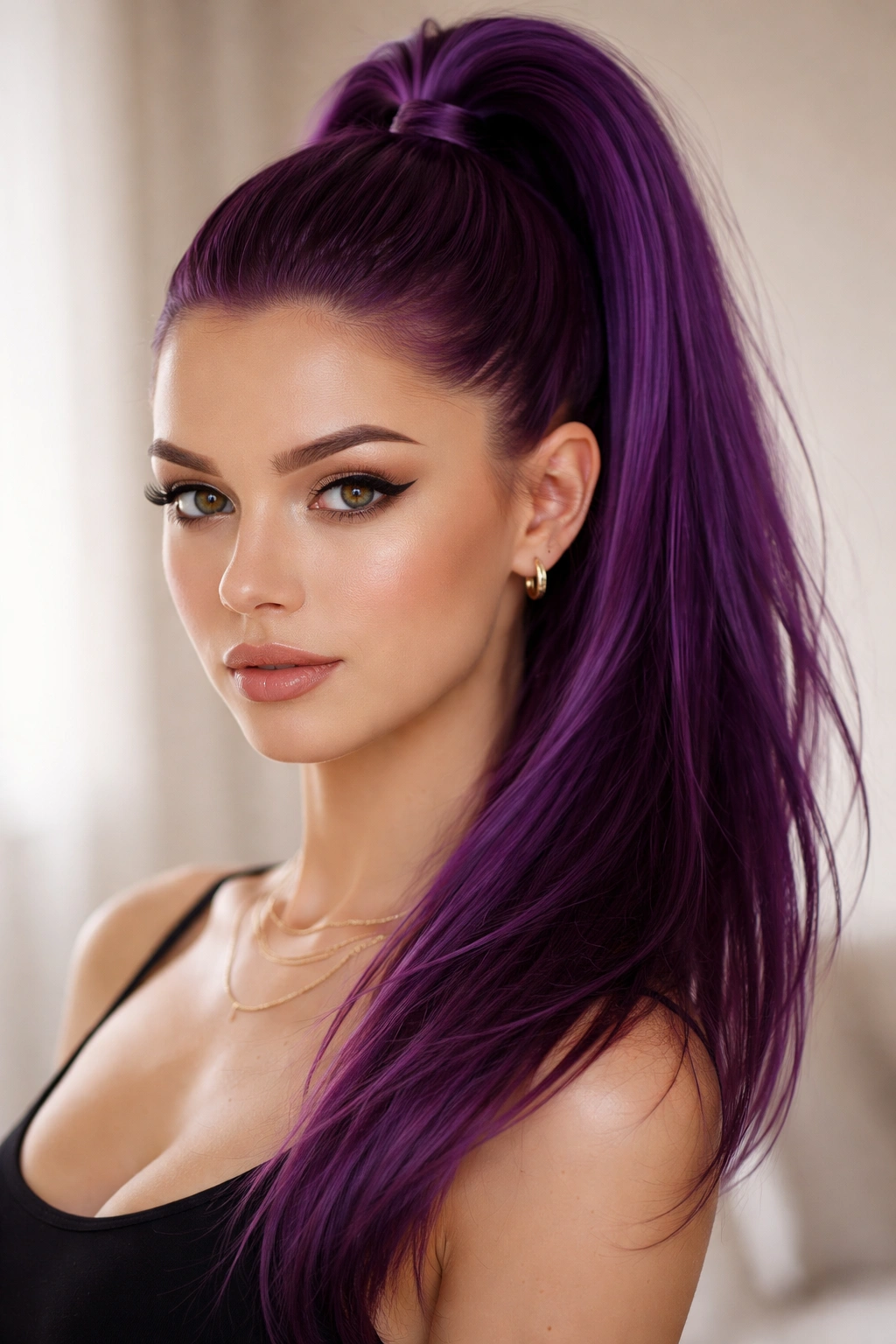
A high ponytail positioned at the crown creates instant lift and draws attention to your facial features, making this the ideal choice if you want purple hair to feel polished rather than edgy. Deep amethyst—a rich, jewel-toned purple that sits closer to burgundy than lavender—works beautifully in this style because the color gains dimension and luminosity when it’s positioned high and pulled taut.
How to Build the Look
The foundation matters here. Start with hair that has a clean, straight or smooth-textured base—this isn’t the place for frizz or texture you haven’t intentionally created. Apply a smoothing serum or anti-frizz cream from mid-length to ends before styling. Use a fine-tooth comb or brush to gather your hair into a high, centered ponytail, positioning it roughly two inches from your crown. Smooth the hair as you gather it, using bobby pins to anchor any loose pieces that frame your face. Wrap a small section of hair around the elastic to hide it completely, securing that wrapped section with two or three bobby pins. The wrapped base turns a standard ponytail into something intentional and polished.
Styling Tips and Maintenance
- Apply a lightweight shine spray to the ponytail after you’ve secured it—this catches light and makes the amethyst tone pop visually
- Deep purple tones can look murky or muddy under harsh overhead lighting, so this style shines brightest in natural light or warm, diffused indoor light
- Use a sulfate-free purple-toning shampoo twice weekly; sulfate formulas strip color faster and can turn amethyst into a muted gray-purple
- This ponytail works best when your hair is smooth and sleek—it emphasizes the color saturation rather than relying on texture for visual interest
- Plan to touch up roots every 4-6 weeks; the contrast between dark roots and bright amethyst becomes increasingly visible as hair grows
Pro tip: Pin a small velvet or silk scrunchie around the base of the wrapped section for a luxury finishing detail that’s also incredibly functional—it protects hair from breakage better than standard elastics.
2. Lavender Sleek Low Ponytail
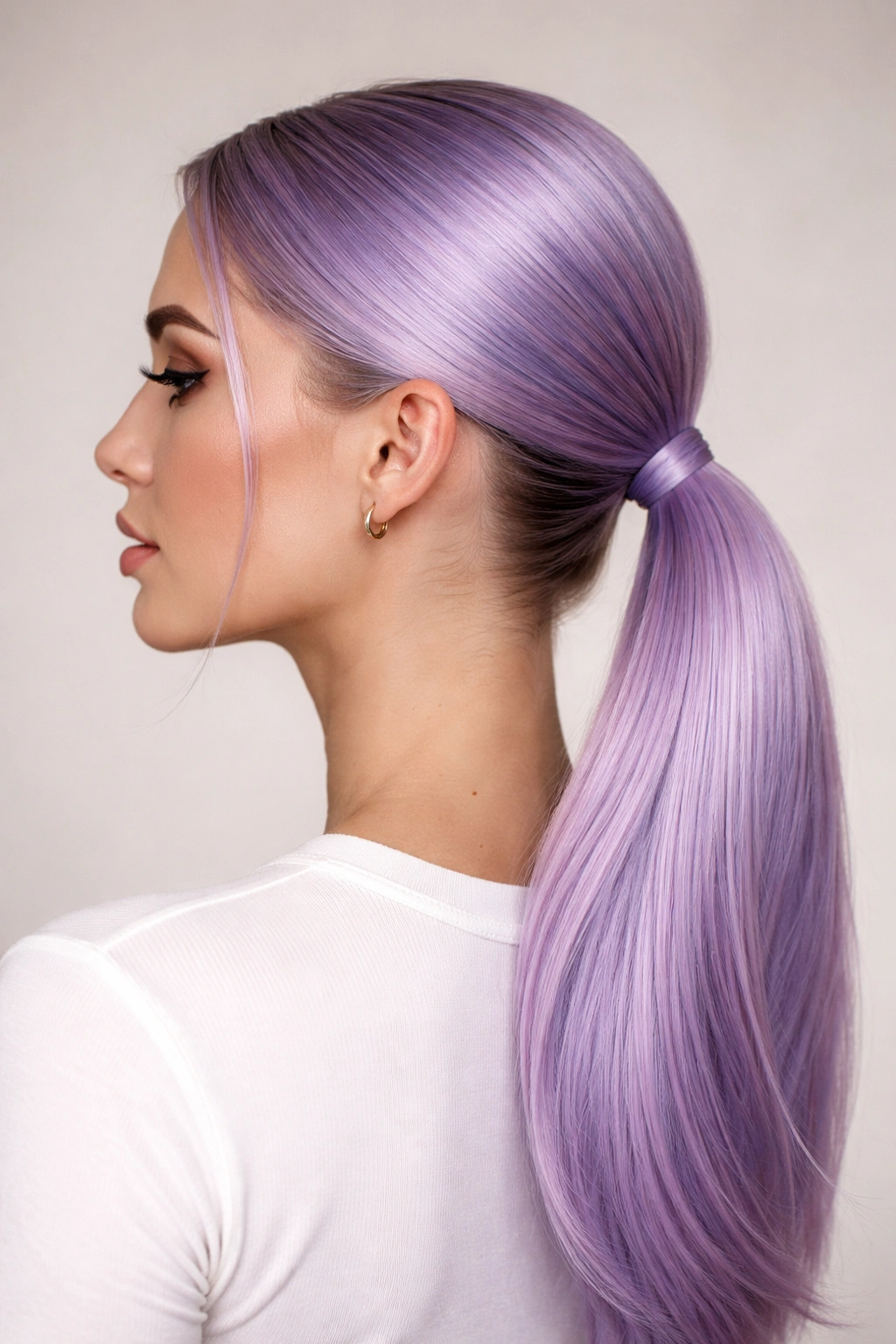
Soft lavender reads as modern, approachable, and intentional—especially when styled low and smooth against the head. This shade skews cooler and lighter than deep amethyst, which means it photographs beautifully and works in virtually any lighting. A low ponytail positioned at the nape of your neck elongates the back of the head and creates a sophisticated silhouette that works equally well for professional settings and casual weekend wear.
Building This Specific Style
Lavender shows its true color only when hair is very clean and well-moisturized, so shampoo 24 hours before styling to allow natural oils to coat your strands. Work a leave-in conditioner through your hair while it’s damp, then blow-dry it completely smooth using a paddle brush. The sleekness is essential—any texture will make lavender look dull and washed out. Once fully dry, use a fine-tooth comb to gather hair into a low ponytail positioned about two inches above the nape of your neck. Make the placement very precise; too high and it loses the elongating effect, too low and it looks accidental. Secure with a clear elastic or a silk scrunchie in a tone that matches your ponytail hair.
Essential Care Information
- Lavender is a lighter shade than deeper purples, which means it fades faster when exposed to sun and chlorine—protect it with a UV protection spray or a leave-in conditioner with SPF before spending time outdoors
- Wash with cool or lukewarm water, never hot; heat opens the hair cuticle and allows color molecules to escape
- Purple-toning shampoo is non-negotiable for lavender—use it for both shampoo and conditioner every other wash cycle
- Lavender works best on lighter hair bases (blonde, light brown, or pre-lightened hair); on darker bases, it can appear ashy or overly muted
- Sleep on a silk or satin pillowcase to prevent friction that dulls the color and causes breakage
Worth knowing: Lavender ponytails develop the most beautiful dimension when you’ve added individual highlights or balayage throughout your base color before applying the purple—this creates depth and makes the lavender appear more vibrant.
3. Purple Ombre Textured Ponytail
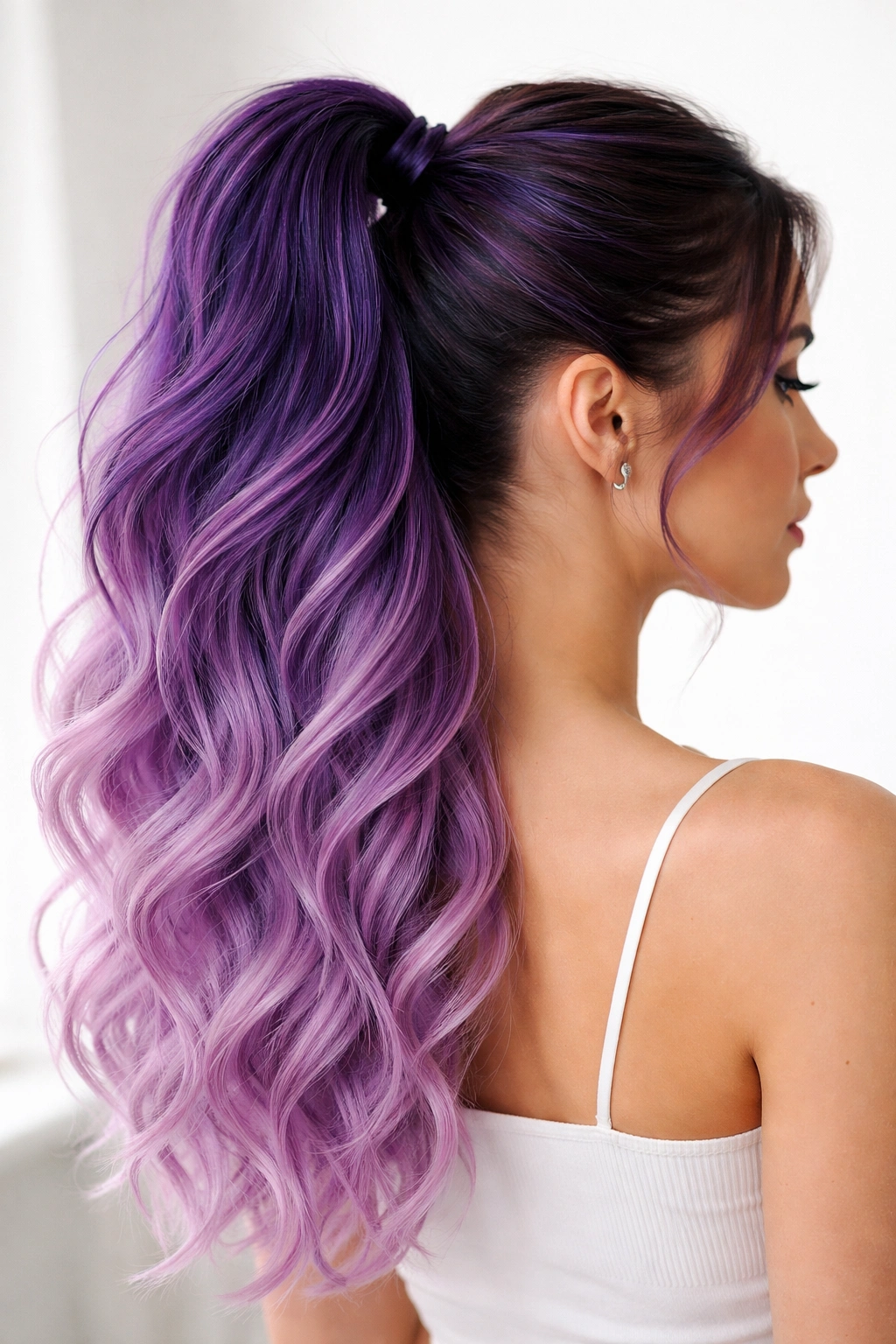
An ombre effect—where color gradually transitions from a darker root or mid-tone to lighter purple at the ends—adds visual sophistication and disguises regrowth beautifully. When paired with texture, this style becomes playful and fashion-forward while still feeling intentional and polished. The texture catches and reflects light differently across the gradient, amplifying the color depth.
Achieving the Ombre Effect and Texture
Start with hair that’s been professionally colored if this is your first time—ombre purple requires two tones applied with precision, and the transition line matters. At home, focus on the styling and texture. Apply a curl-enhancing mousse to damp hair, then blow-dry using a diffuser attachment (if curly) or with a round brush while twisting sections away from your face (if wavy). This creates natural-looking, lived-in texture without crispy or overly processed appearance.
Once your texture is set, create your ponytail slightly higher than center—around the mid-crown area. Use a texture-boosting spray or dry texture spray before gathering hair to increase grip and hold. Gently gather the hair, allowing some face-framing pieces to fall loose. Secure with an elastic, then lightly tousle the ponytail with your fingers to emphasize the texture and make the color transition more visually apparent. The movement is what makes the ombre read as intentional rather than uneven.
Maintenance for Ombre Purple
- Textured hair holds onto product and oils differently than smooth hair, so adjust your wash schedule accordingly—textured ombre typically needs washing every 4-5 days rather than every other day
- Use a hydrating, color-safe conditioner on the lighter purple ends after every wash; these ends are more porous and need extra moisture
- The ombre effect fades unevenly, with darker tones lasting longer than lighter ones; plan for a gloss or refresh every 6-8 weeks to restore the transition
- Avoid brushing textured hair when it’s dry; use a wide-tooth comb on damp hair only to preserve the texture and prevent breakage
Insider note: Add a small amount of shimmer powder or illuminating spray to just the tips of the ponytail under light for a subtle glow effect that makes the color transition pop even more dramatically.
4. Plum Braided Wrapped Ponytail
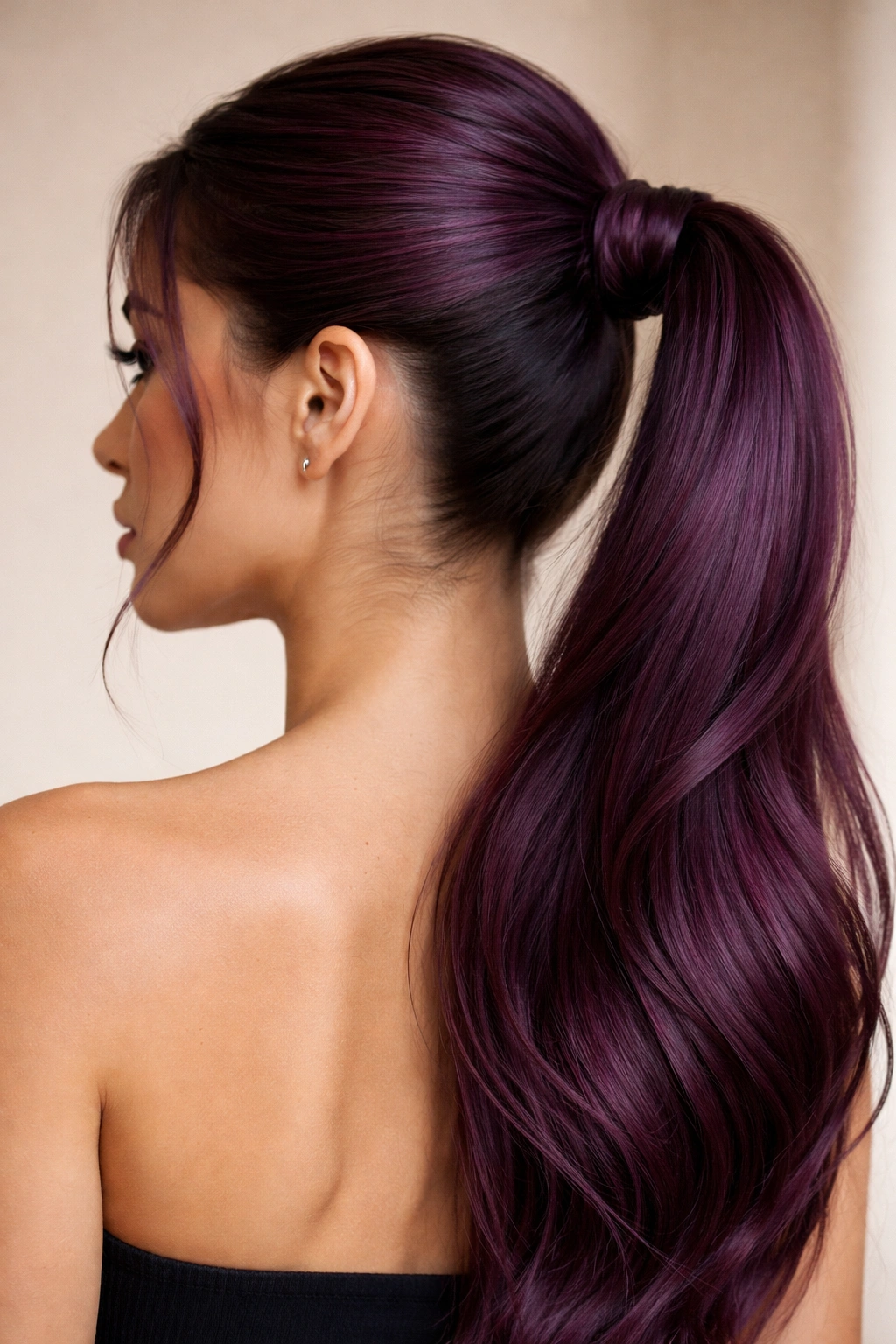
Plum is purple’s darker, more muted cousin—it leans slightly warmer and works beautifully on deeper skin tones or darker base hair. Wrapping the ponytail with a braid transforms it from basic into architectural, creating visual interest while keeping hair secure and protected. This style works for everything from formal events to everyday wear.
The Braiding Technique
Begin with your hair in a standard ponytail at your preferred height (high, mid, or low—plum works with any placement). Once you’ve secured the elastic, take a thin section of hair from the underside of the ponytail—about half an inch thick. Begin a three-strand braid using just this thin section, braiding around the base of the ponytail to completely conceal the elastic. When you’ve wrapped all the way around, pin the end of the braid into the base of the ponytail using bobby pins that match your hair color. The finished effect should look like the ponytail is tied with a braid rather than an elastic.
This technique serves two purposes: it looks intentional and polished, and it distributes tension more evenly across your hair, reducing breakage at the elastic point.
Why Plum Requires Different Care
- Plum contains warm undertones that can shift or fade toward muddy brown if you use traditional purple-toning shampoo; instead, use a color-depositing conditioner formulated specifically for warm purples or burgundies
- This shade is less prone to rapid fading than lighter purples, so you can extend time between washes slightly—typically 4-5 days instead of 2-3
- Plum shows dimension beautifully when lit from behind or the side, so this is the ideal shade if you spend time in natural sunlight or work under good lighting
- Avoid copper or brassy tones in your hair care products; they’ll push plum toward an undesirable burgundy-brown
Quick facts about this style:
- Plum works on virtually all skin tones when styled correctly—it’s more forgiving than lighter purples
- The braid wrap adds approximately 10-15 minutes to your styling time but makes a significant visual impact
- This style holds all day without adjustments once it’s secured properly
- The braid wrap protects the elastic area from moisture and sweat, extending the longevity of both the style and the hair health
5. Violet Bubbly Ponytail
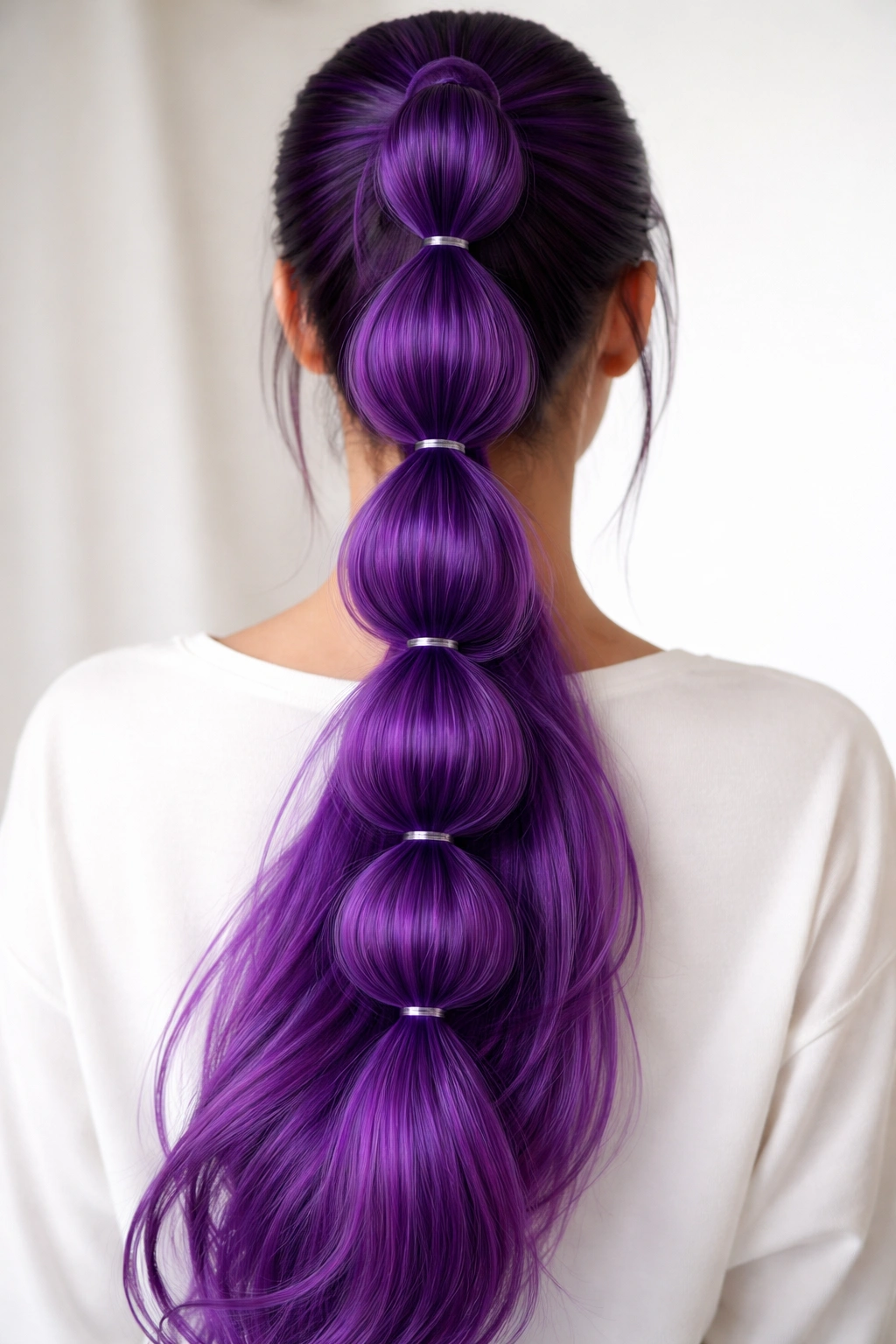
A bubbly ponytail uses multiple elastics spaced evenly down the length of the ponytail to create stacked, puffed sections—it reads as playful, youthful, and intentionally fun. Violet, a bright mid-tone purple with clear, clean undertones, absolutely sings in this style because the stacked sections create multiple light-catching surfaces. This is the look that makes a statement and announces that you’re having fun with your appearance.
Creating the Bubble Effect
Secure your hair into a standard ponytail at your chosen height. Apply a lightweight texturizing spray to the entire ponytail for grip and to help sections puff outward. Starting about two inches below the first elastic, place a second clear elastic around the ponytail. Gently pull and fluff the hair between the first and second elastic to create a puffed bubble. Continue down the ponytail, spacing elastics about 2-3 inches apart, and fluff each section as you go. The more you gently tousle and separate each bubble, the more voluminous and intentional the style appears.
For extra visual impact, twist each bubble slightly as you fluff it—this creates texture within each section and makes the violet color appear more dimensional.
Styling Decisions and Upkeep
- This style works best on hair with at least shoulder-length length; shorter hair doesn’t have enough length to create visible bubbles
- The bubbly effect photographs beautifully because the stacked sections create visual depth and shadow variation
- Plan to re-fluff the bubbles throughout the day—they gradually compress, especially under a hat or hood
- This style can cause breakage at the elastic points if you wear it too tightly; keep the bubbles comfortably puffed but not strained
- Violet is a warm-leaning mid-tone that works especially well on cooler skin undertones; it can appear slightly muddy on very warm skin tones
Pro tip: Use clear elastics in different sizes (a thicker one at the base, progressively thinner ones down the length) to create a more organic, less geometric bubble effect—this reads as more intentional than perfectly uniform bubbles.
6. Mauve Twisted Sleek Ponytail
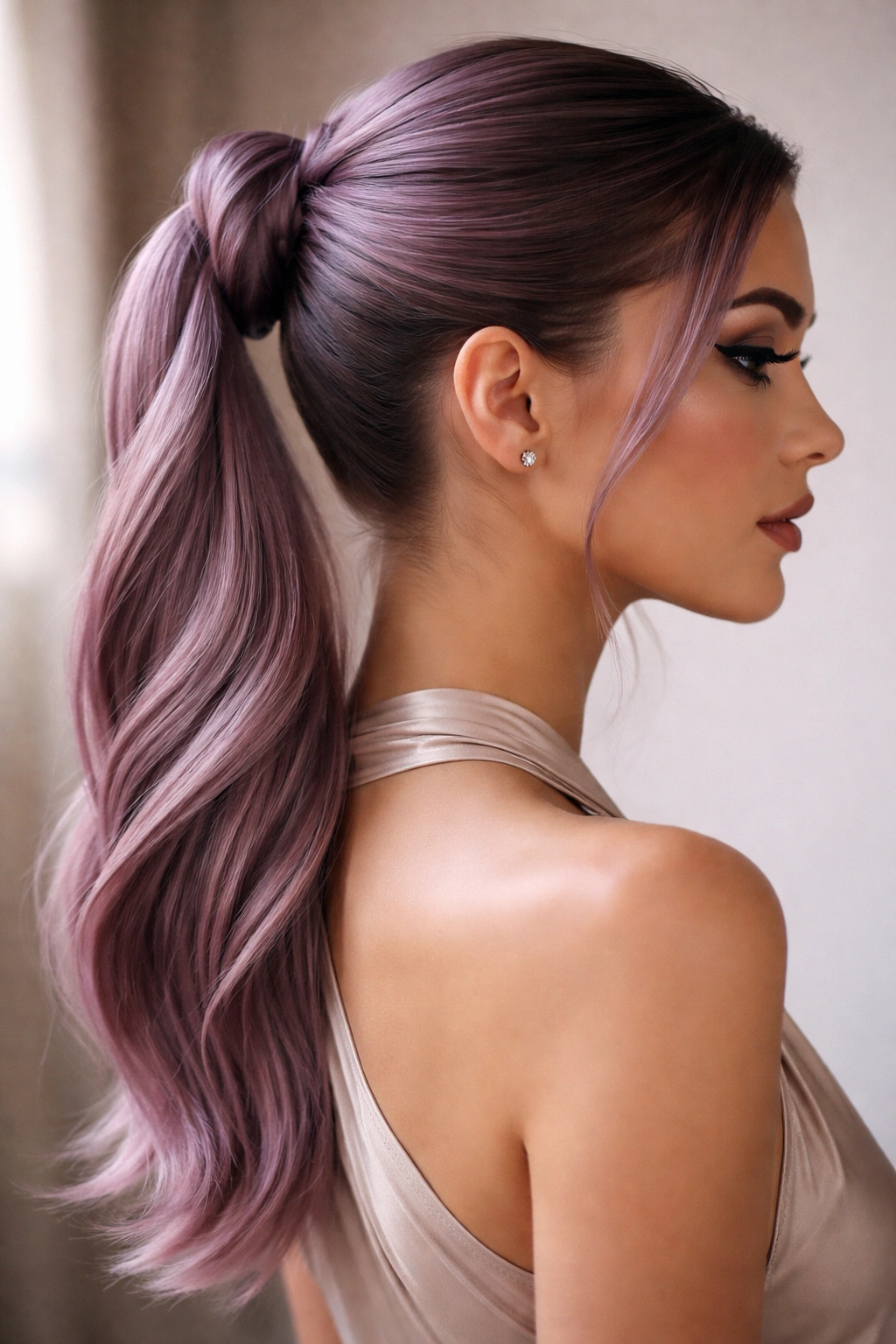
Mauve is muted purple with gray undertones—it’s sophisticated, modern, and works beautifully on mature skin tones or anyone wanting a purple that reads more subtle and refined. A twisted ponytail where the hair itself is twisted before securing creates a visual texture detail without actual curl or wave. The sleek, twisted surface catches light differently and adds dimension that a straight ponytail can’t achieve.
The Twisting Technique
Blow-dry your hair completely straight and smooth using a paddle brush and smoothing serum. Create a low or mid-height ponytail using a fine-tooth comb. Before securing with an elastic, divide the gathered hair into two thick sections. Twist one section clockwise and the other counterclockwise, then twist those two twisted sections together around each other—this is a double twist that creates beautiful spiral texture. Secure the twisted ponytail with a silk elastic or covered elastic, making sure the twists stay intact as you secure it.
The twist creates natural-looking texture detail without heat tools or styling products—it’s literally constructed into the ponytail itself.
Mauve-Specific Considerations
- Mauve requires very clean, healthy hair to show true color; any buildup or damage will make it appear dull and ashy
- This shade works best with a purple-based toner rather than violet-based; ask your colorist specifically for mauve or cool purple tones
- Mauve is the most forgiving purple shade in terms of skipping washes—you can extend to 5-6 days between washes without the color looking flat
- This shade photographs beautifully in both warm and cool lighting because of its gray undertones
- Mauve works exceptionally well on gray or silver hair; it creates a sophisticated, unified appearance rather than a color contrast
Worth knowing: Mauve pairs beautifully with minimal makeup and cool-toned accessories—it’s not a shade that plays well with warm, orangey makeup or warm metals. Keep your styling minimal and modern to let the mauve shine.
7. Royal Purple Voluminous Ponytail
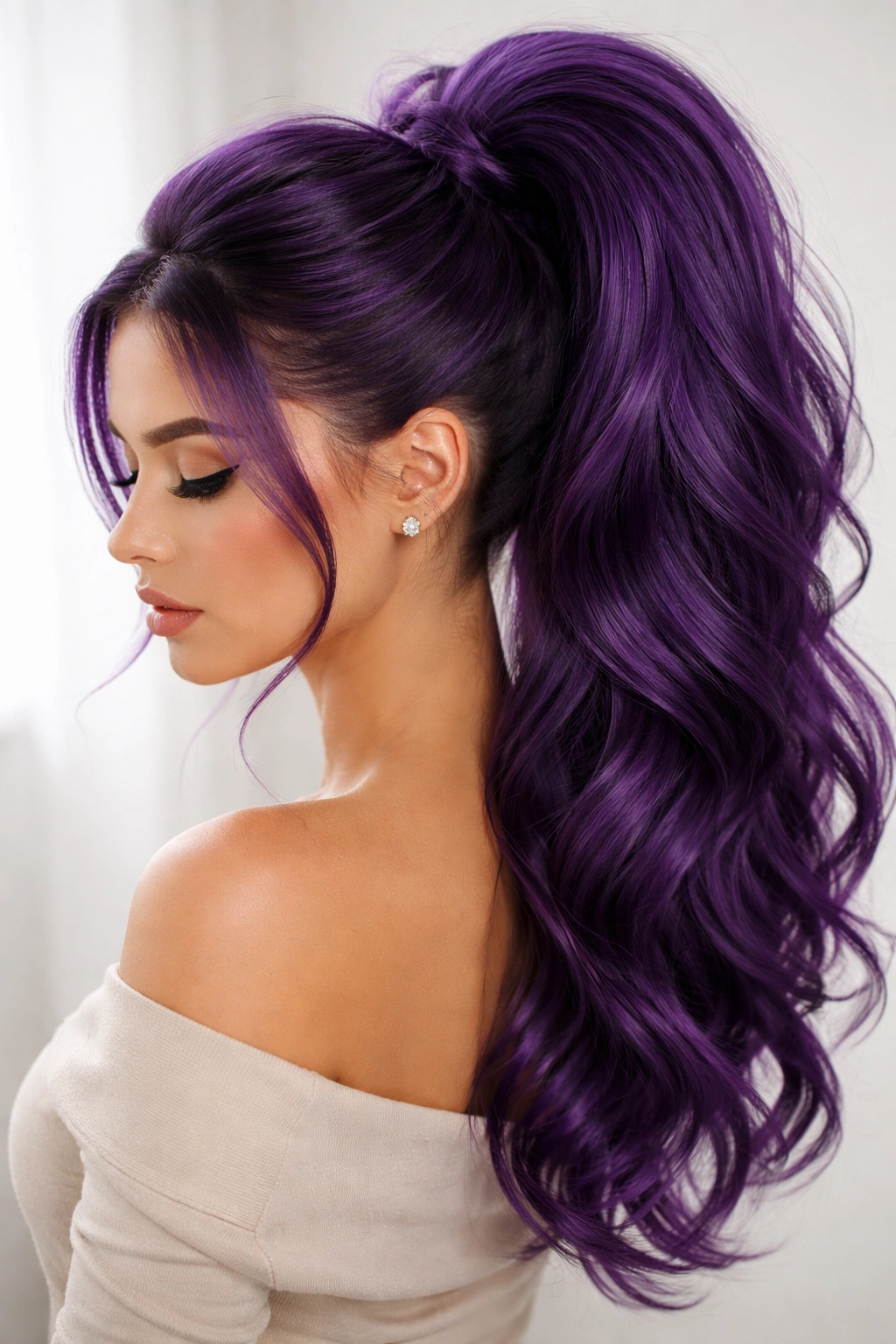
Royal purple is a true, saturated purple with balanced warm and cool undertones—it’s bold without being edgy, and it photographs like a dream. A voluminous ponytail maximizes visual impact by prioritizing height, fullness, and texture. This style announces confidence and works beautifully for special events, professional presentations, or any time you want to feel powerful.
Building Maximum Volume
Volume starts with the blow-dry. Apply volumizing mousse to damp roots, then blow-dry using a round brush, lifting hair upward and away from the scalp as you dry. This creates lasting root lift. Once fully dry, backcomb (also called teasing or ratting) the crown area—use a fine-tooth comb to gently brush backward from ends to roots, creating texture at the base that holds volume. Smooth the outermost layer gently so it looks sleek while the interior has texture and grip.
Gather your hair into a high ponytail at the crown, positioning it where the backcombed volume is thickest. Don’t smooth this ponytail too much—you want it to maintain the volume you’ve created. Secure with an elastic, then gently fluff and arrange the ponytail to maximize width and height. Use bobby pins to anchor any pieces that frame your face, and consider adding a decorative elastic or hair cuff around the base for visual emphasis.
Maintaining Volume with Royal Purple
- Royal purple retains color beautifully on voluminous, textured hair because the texture creates multiple light-reflecting surfaces
- Wash with a volumizing shampoo specifically formulated for color-treated hair; these formulas clean without stripping
- Use a dry shampoo or texture spray between washes to maintain volume—these products also help the purple color appear more vibrant
- This style requires more frequent touch-ups (every 4-5 weeks) because the visible roots stand out against the bold royal tone
- Sleep with your hair in a loose braid or high pony to preserve the volume overnight
Quick facts about royal purple volume:
- This is the style that turns heads; it reads as intentional, confident, and fashion-forward
- Volume maximizes color saturation—lighter purples look brighter and deeper purples look richer when there’s textural variation
- This style works on all hair types but delivers the most dramatic impact on medium to thick hair
- Royal purple is one of the most universally flattering purple shades; it works across most skin tones with proper color selection
8. Grape Purple Curled Ponytail
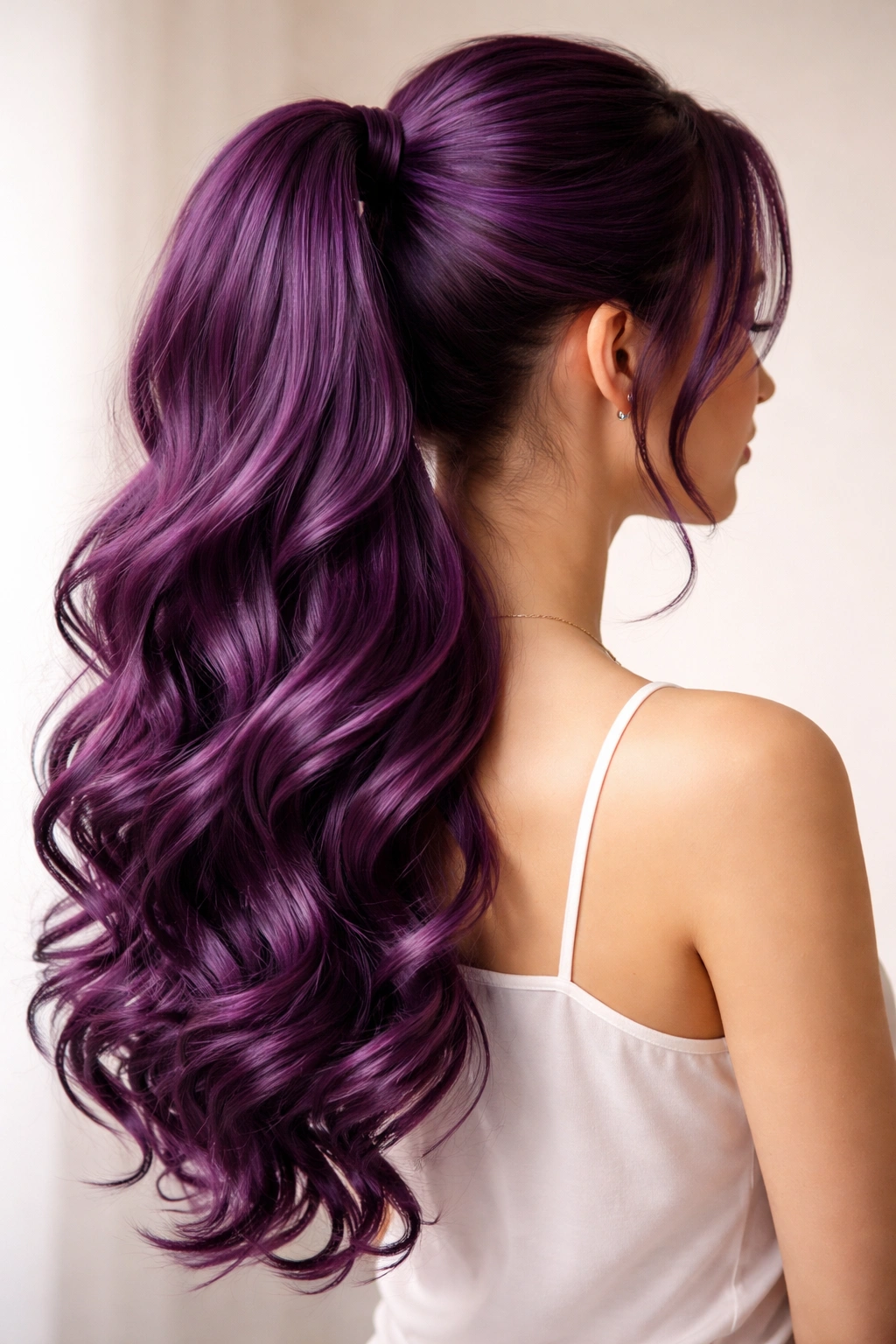
Grape purple is a deep, warm-toned purple with slight burgundy undertones—it’s moody and sophisticated while still reading as clearly purple. Curling the ponytail (rather than straightening or leaving it naturally textured) creates a romantic, feminine aesthetic while amplifying the depth and dimension of the grape tone. The curl catches light and creates shadow, making the color appear richer.
Creating Curl Definition in the Ponytail
Secure your hair into a ponytail at your chosen height. Apply a heat-protectant spray to the entire ponytail, then use a 1-1.5 inch curling iron to curl sections of the ponytail away from your face. Take vertical sections about the thickness of a highlighter marker, wrap each around the barrel, hold for 3-5 seconds, then gently release. The key is taking thin sections—thick sections won’t curl completely, and you’ll end up with waves instead of defined curls.
Once you’ve curled all sections, allow the curls to cool completely (hold each one loosely while it cools) before using your fingers to gently separate and loosen them. This creates soft, romantic curls rather than tight ringlets. Finish with a flexible-hold hairspray that won’t crunch the curls or make them look stiff.
Caring for Grape Purple Curls
- Curled hair is more porous than straight hair, so deep conditioning treatments are essential—apply a mask weekly to maintain shine and color vibrancy
- Grape purple is warm-toned, so use a color-safe shampoo formulated for warm purples or burgundies; standard purple-toning products can actually dull this shade
- Curls relax slightly throughout the day, so this style works best when you have 6-8 hours ahead of you rather than an all-day commitment
- Sleep on a satin pillowcase and secure your ponytail loosely with a silk hair tie to prevent the curls from flattening or frizzing
- Grape purple requires slightly less frequent color refreshing than lighter purples because the deeper tone masks fading better
Insider note: Refresh curls mid-week using a curling iron or hot rollers without washing your hair first—you’ll preserve color better and extend the vibrancy of the grape tone noticeably.
9. Lilac Windswept Ponytail
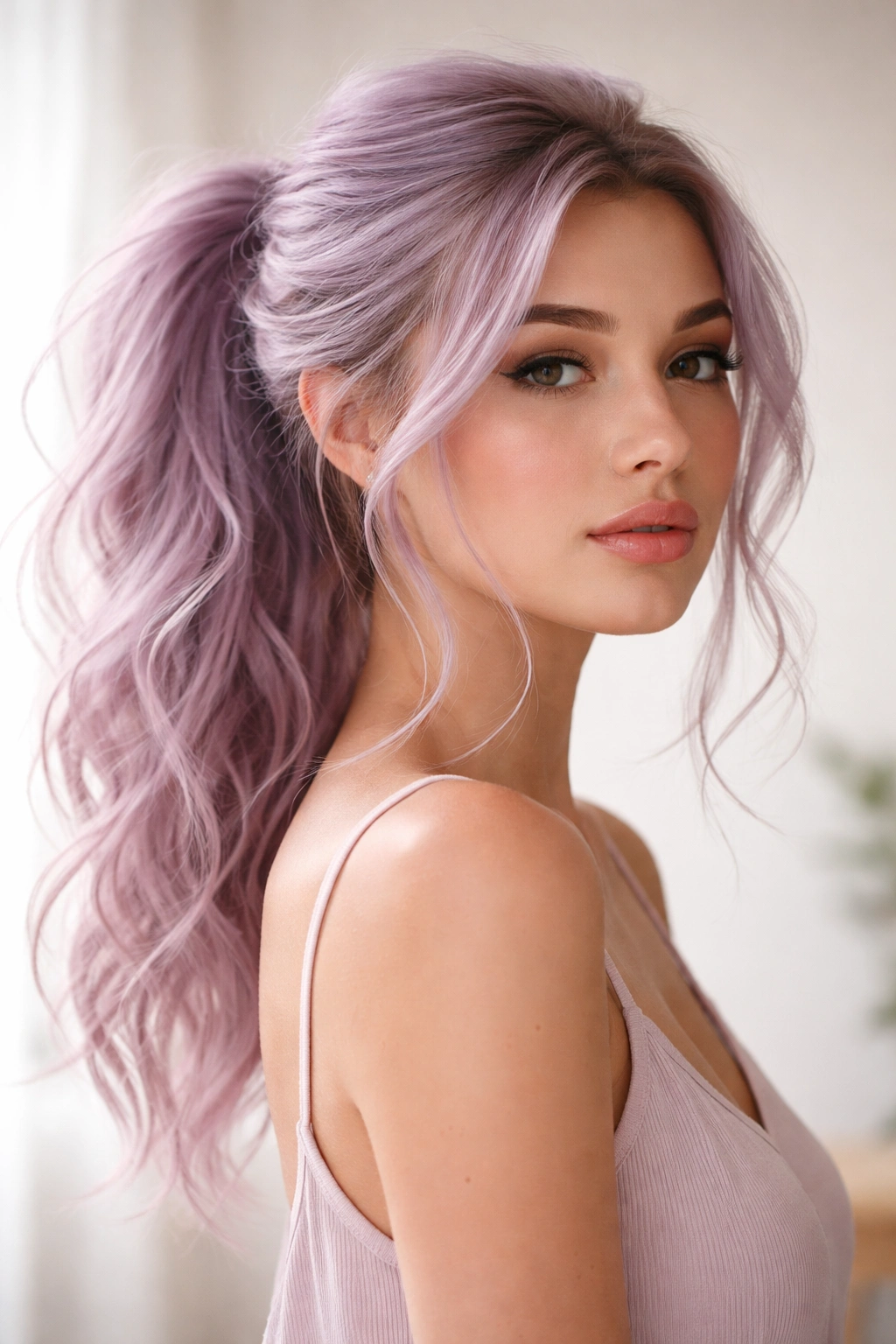
Lilac is pale purple with warm undertones—it’s delicate, ethereal, and reads as modern and artistic rather than bold or edgy. A windswept ponytail where loose, irregular pieces frame the face creates a soft, intentionally undone aesthetic. This style works beautifully for creative professionals, artists, or anyone who wants purple hair that’s pretty rather than punchy.
Building the Windswept Effect
Start with textured, slightly wavy or curly base hair—this is not a smooth, sleek style. Apply a texturizing spray to damp hair and blow-dry using a diffuser or by scrunching as you dry. Create loose, tousled waves that fall naturally. Once your texture is established, gather most of your hair into a low or mid-height ponytail, but intentionally leave face-framing pieces loose on each side.
The loose pieces should be roughly ear-length or longer, creating a soft frame rather than a structured style. Pull the ponytail slightly loose—not quite tight enough to feel controlled. Use a clear elastic or a tone-matched scrunchie, and allow a few small wisps to escape around the base. The finished effect should look like you pulled your hair back loosely while some pieces naturally fell forward. This casualness is the entire point.
Styling Lilac with Restraint
- Lilac fades faster than deeper purples because it’s lighter and sits on more porous portions of lightened hair—plan for color refreshes every 4-5 weeks
- This shade requires excellent base hair health; any damage or dryness will make lilac appear washed out and dull
- Avoid tight ponytails with lilac; the tension shows more obviously on pale colors and can make the style look accidental rather than intentional
- Use a leave-in conditioner daily to maintain the moisture that keeps lilac looking vibrant and rich
- Lilac works best on cooler skin undertones; on warm skin, it can appear slightly chalky or gray
Pro tip: Add a small, delicate hair clip or barrette on one side of the windswept ponytail to add intentionality without making the style feel overly structured—choose gold, pearl, or translucent materials that complement the delicate nature of lilac.
10. Eggplant Sleek High Ponytail with Undercut
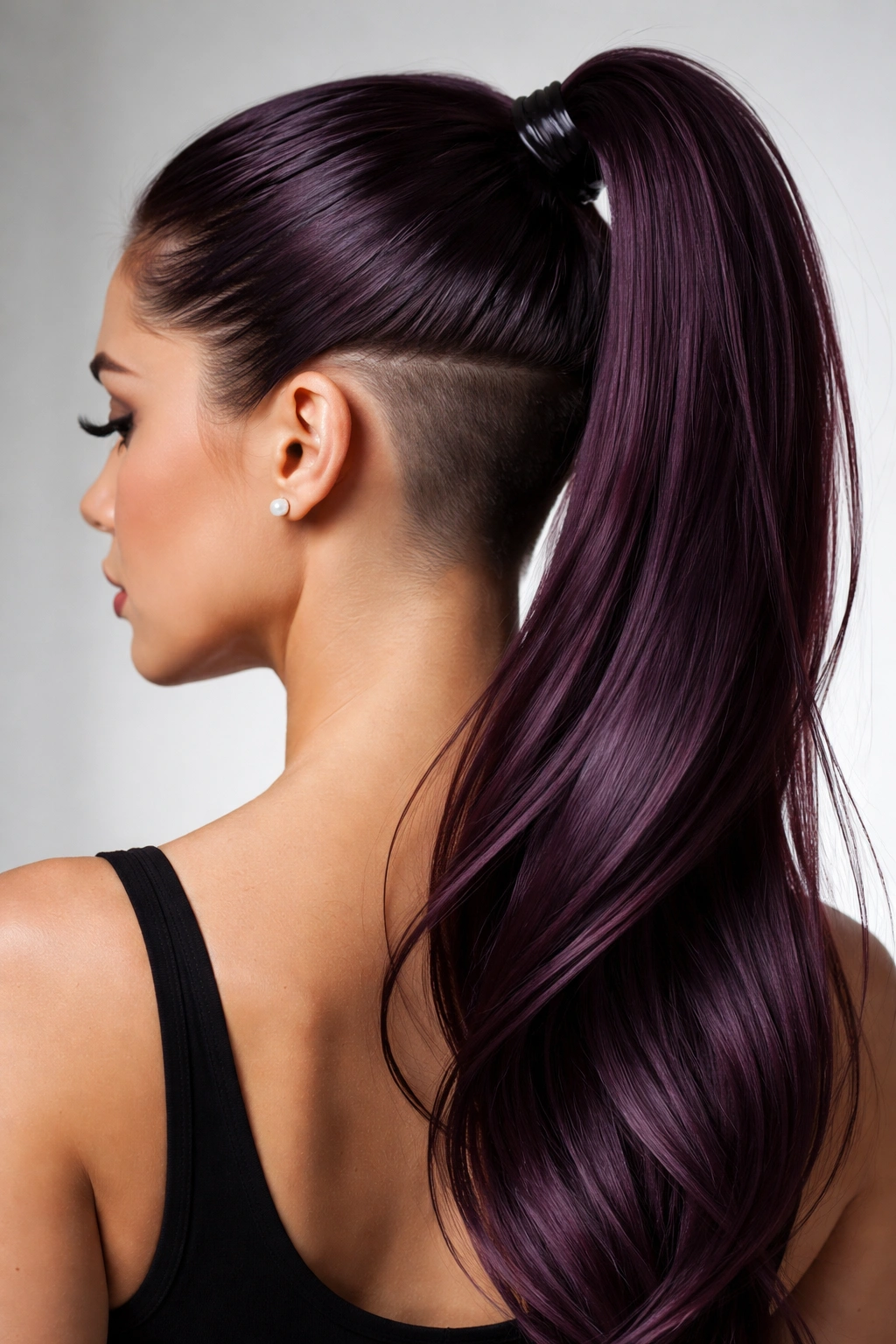
Eggplant is the darkest, most dramatic purple—nearly black with deep purple undertones visible in the light. When you add an undercut (where the very bottom layers of hair are cut shorter or shaved, hidden when hair is down but visible when pulled into a ponytail), you create visual edge and artistry. This is the statement ponytail for someone fully committed to bold, artistic self-expression.
The Undercut Integration
An undercut must be created before you can style it—this requires a skilled colorist or barber willing to shave or cut very short hair underneath while keeping your length on top. Once you have the undercut, styling the eggplant sleek high ponytail shows it off beautifully. Smooth your hair completely using a straightening iron and smoothing serum, creating a polished, almost wet-looking finish.
Pull your hair into a very high, tight ponytail at the crown. The tightness shows off your undercut because it pulls the top layers back, revealing the shaved or very short portion underneath. Wrap a thin section of hair around the base to hide the elastic. The eggplant against the exposed scalp or very short hair underneath creates a striking visual contrast—it’s edgy, modern, and absolutely intentional.
Maintaining Eggplant and Managing the Undercut
- Eggplant is the most stable purple color; it fades slower than all lighter purples because deeper tones are more resistant to sun and washing damage
- Undercuts require maintenance every 4-6 weeks as the shaved portion grows out; schedule trims to keep the visual impact crisp
- This combination only works if you’re committed to sleek, smooth styling—any texture or looseness makes the undercut visually disappear and defeats the purpose
- Eggplant photographs beautifully in both natural light and artificial light because the depth of the color remains visible in all conditions
- The tight ponytail required for this style can cause tension alopecia (hair loss at the hairline) if worn daily; rotate with looser styles on other days
Worth knowing: An undercut is a significant styling commitment—you need to either wear your hair up frequently or be willing to dye or cut the undercut hair regularly to maintain the visual contrast with the longer eggplant hair on top.
Final Thoughts
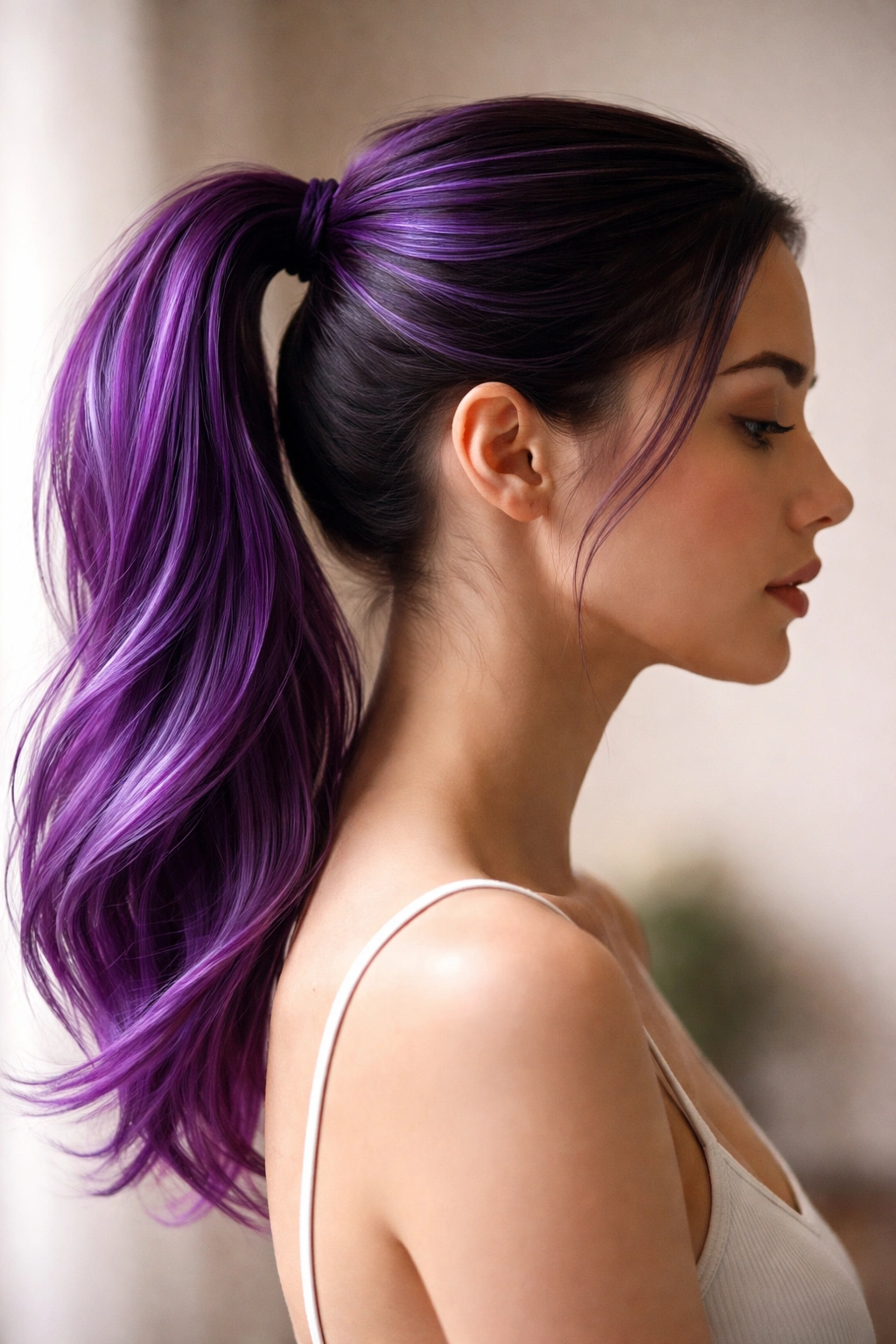
Purple ponytails sit at the intersection of boldness and sophistication, offering far more versatility than most people assume. The ten styles here cover nearly every aesthetic—from romantic and delicate to edgy and artistic—and every purple tone from barely-there lilac to nearly-black eggplant. The real power of choosing a purple ponytail isn’t just the color itself; it’s the confidence it signals.
The most important decision you’ll make is matching the shade of purple to your specific skin tone, eye color, and personal style. Deep amethyst and plum work beautifully on people with cooler undertones, while lavender, lilac, and mauve create the most flattering appearance on those with green or blue undertones. If you have warm undertones, grape purple or eggplant will feel more authentically you than pale violet or lavender.
Beyond shade selection, commit to the maintenance that colored hair requires. Purple fades noticeably faster than natural hair colors, which means investment in quality color-safe products, purple-toning treatments, and frequent refresh appointments. The upkeep is real, but it’s also the difference between a purple ponytail that looks vibrant and intentional versus one that fades into an ashy, muddy mess within weeks. If you’re considering going purple for the first time, understand that this is a visible choice—you’re not aiming for subtlety. You’re aiming for that moment when someone notices your hair and does a double-take. That moment is worth the maintenance.
