



When you’re looking for a hairstyle that combines protective styling with serious style points, braided ponytails hit that sweet spot perfectly. Long braided ponytails offer incredible versatility—you can wear them to the office, to the gym, to a night out, or anywhere in between. They keep your hair secure, reduce daily manipulation and breakage, and look stunning from every angle. For Black women, braided ponytails also connect to rich cultural traditions while giving you complete creative control over your look.
The beauty of braided ponytails is that they work across all hair textures and lengths. Whether you’re working with your natural hair, extensions, or a combination, there’s a braided ponytail style that’ll work for you. The key is choosing the right braid technique and knowing how to style it so it feels fresh and intentional, not just a default protective style.
Let me walk you through twelve gorgeous braided ponytail styles that’ll keep you looking polished while protecting your hair. Each style offers something different—some are edgy and modern, others feel classic and elegant, and a few blur the line between intricate artwork and everyday wear. You’ll find options for low-key understated ponytails and head-turning statement styles. The best part? Once you understand the foundation of each style, you can customize them endlessly.
1. Box Braid Ponytail
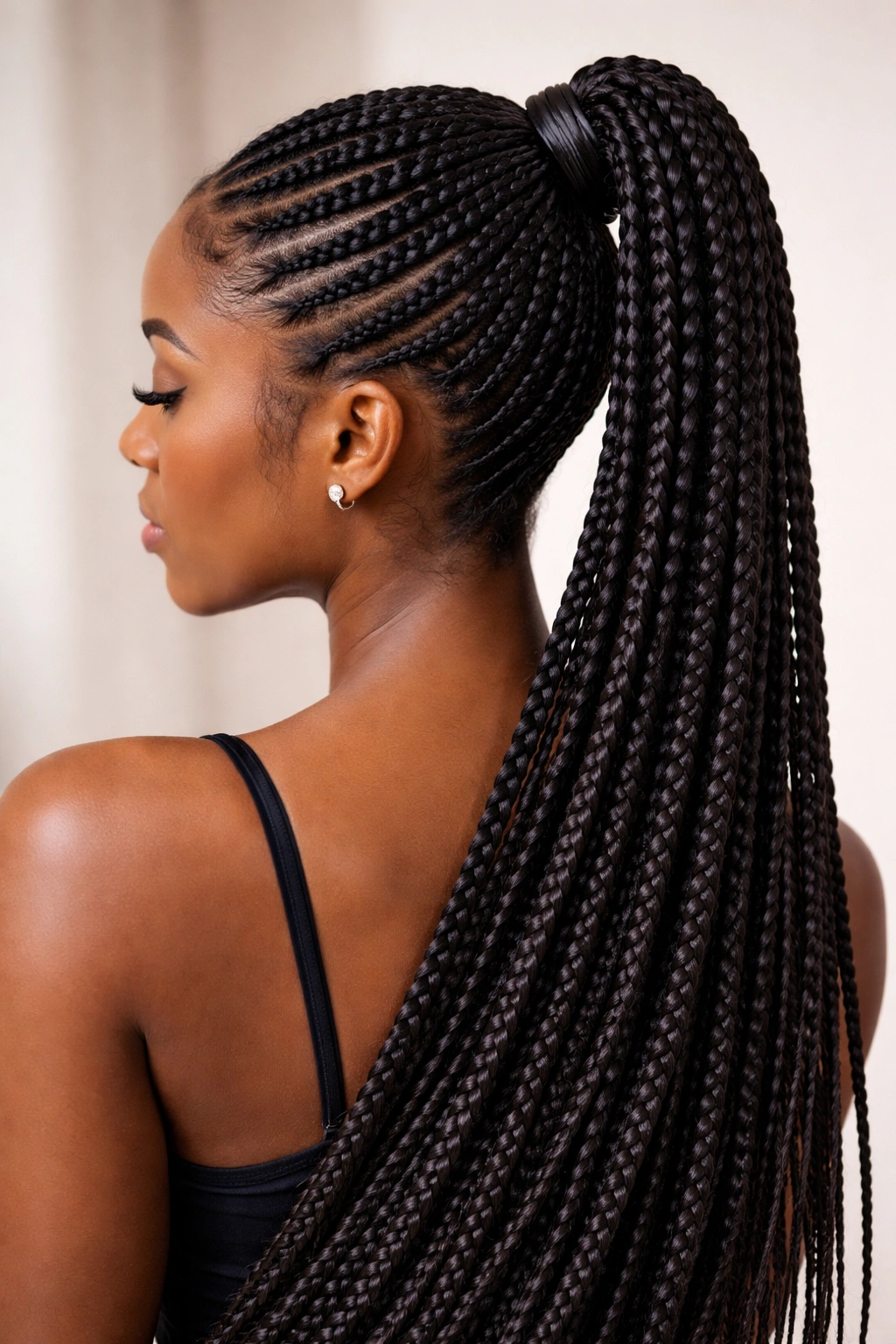
Box braids pulled into a sleek ponytail create a look that’s both powerful and effortlessly chic. This style works beautifully when you have long box braids already installed—you’re essentially extending their versatility by gathering them into a secure ponytail. The individual box braids maintain their structure and create clean, defined lines even when pulled back.
Why Box Braids Translate Perfectly to Ponytail Styling
Box braids are already individual units, so when you gather them into a ponytail, each braid remains distinct and visible. This means your ponytail has incredible texture and dimension that you just can’t achieve with straight hair alone. The weight and thickness of multiple braids also make the ponytail feel full and voluminous, even if your natural hair is finer. The low-maintenance factor continues—once your braids are in place, styling them into a ponytail takes literally five minutes.
How to Style Your Box Braid Ponytail
- Gather your braids at your desired height (high, mid-level, or low) using a elastic band, preferably one designed for textured hair that won’t snag
- For a sleek, polished look, use a soft bristle brush or your fingers to smooth any flyaways around your hairline with gel or edge control cream
- Leave a few braids unraveled at the base of the ponytail and fan them out for a softer, more romantic feel, or keep them all contained for maximum polish
- Add a decorative hair cuff or wrap around the base to elevate the style and create visual interest where the ponytail begins
- Consider leaving a few face-framing braids loose if you want a softer silhouette that frames your features
Pro tip: Box braid ponytails look especially striking when you’ve used different thicknesses of braids—mixing regular-sized braids with thicker or thinner sections creates visual depth that makes the ponytail feel more intentional and artistic.
2. Senegalese Twist Ponytail
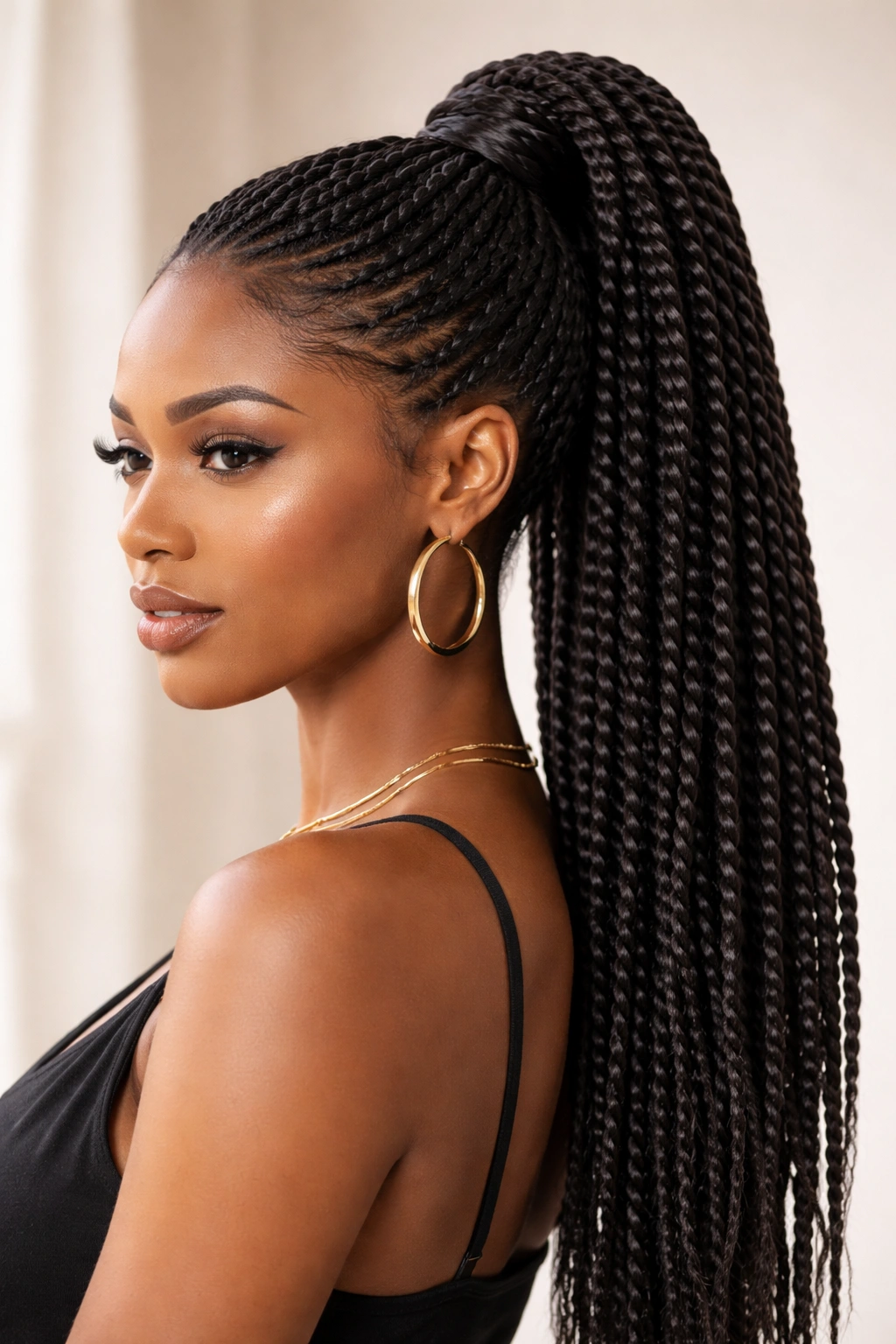
Senegalese twists are sleeker and more refined than box braids, making them absolutely stunning when pulled into a ponytail. These twists have a smooth, almost rope-like quality that photographs beautifully and photographs catch the light in gorgeous ways. When gathered together, Senegalese twists create an incredibly polished, refined aesthetic that works for formal events or professional settings.
What Makes Senegalese Twists the Ultimate Elegant Ponytail
Senegalese twists are created using two strands twisted together rather than three strands braided. The result is a smoother line and a more understated elegance compared to box braids. When multiple twists are gathered into a ponytail, they create a cohesive, streamlined look that feels sophisticated. The twists also have natural movement and flow that’s beautiful in the wind or when you’re moving around.
Styling Your Senegalese Twist Ponytail
- Pull all your twists back into a high or mid-level ponytail for maximum polish and a slight face-lift effect
- Smooth your hairline using edge control for a sleek, intentional look that emphasizes clean lines
- Wrap a thin piece of thread, yarn, or a decorative band around the base of the ponytail for a finished look
- Separate each twist slightly at the base to create a fuller appearance, or keep them tightly grouped for a sleeker silhouette
- Add a shimmery or metallic hair clip at the back of the ponytail for an extra touch of glamour
Pro tip: Senegalese twists photograph exceptionally well because the smooth texture reflects light beautifully—this is the ponytail style to choose if you know you’ll be taking pictures at an event.
3. Three-Strand Dutch Braid Ponytail
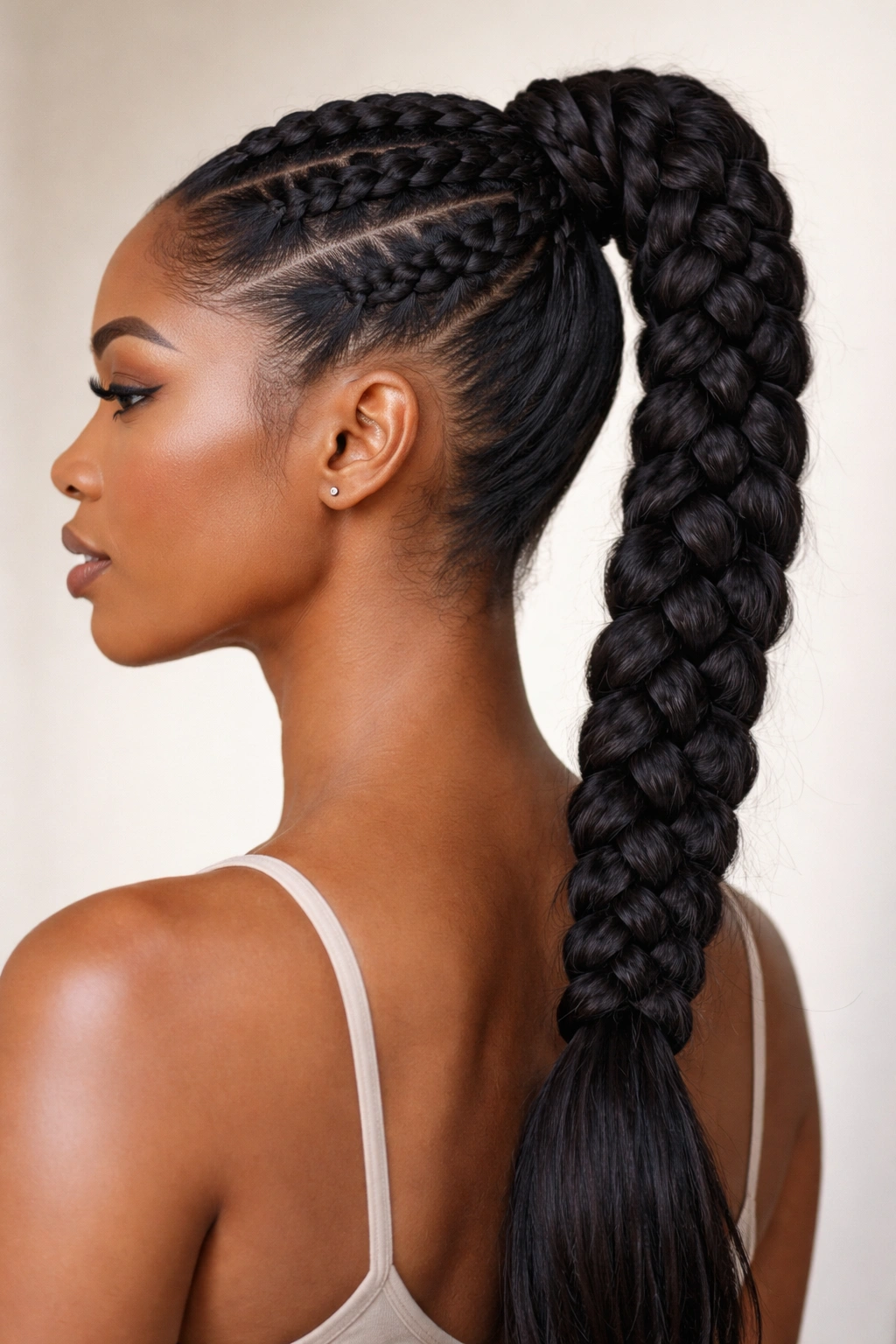
Dutch braids—also called reverse French braids—create a raised, almost sculptural effect that looks incredibly modern and put-together. When you gather Dutch-braided sections into a ponytail, you’re creating visual complexity and dimension that suggests you spent way more time on your hair than you actually did. This style works whether you’re braiding all your hair or just braiding sections before pulling everything back.
Why Dutch Braids Create Such Visual Impact in Ponytails
Dutch braids sit on top of your scalp rather than sinking into it like French braids, so they’re more visible and create more graphic, defined lines. When multiple Dutch braids are pulled into a ponytail, they create a sense of intentional artistry and craftsmanship. The style reads as modern and fashion-forward while still being completely wearable for everyday life. The raised braids also add height and volume at the crown, which is flattering for most face shapes.
Techniques for Your Dutch Braid Ponytail
- Dutch braid sections of your hair from the front or sides toward the back crown, creating 2-4 braids depending on how much visual interest you want
- Secure all the braided sections into a single ponytail at the crown or slightly lower, depending on your preference for height
- Gently pull the braids outward slightly to create a fuller, more voluminous appearance without making them look messy
- Leave your natural texture visible between the braids if you’re wearing your hair out, or pull everything tightly back for maximum polish
- Incorporate extensions into your Dutch braids if you want extra length or thickness in your final ponytail
Pro tip: Dutch braids look especially striking when you match your braid pattern to your face shape—side-swept Dutch braids balance a wider forehead, while centered Dutch braids create a sleek, elongated look.
4. Goddess Braid Ponytail
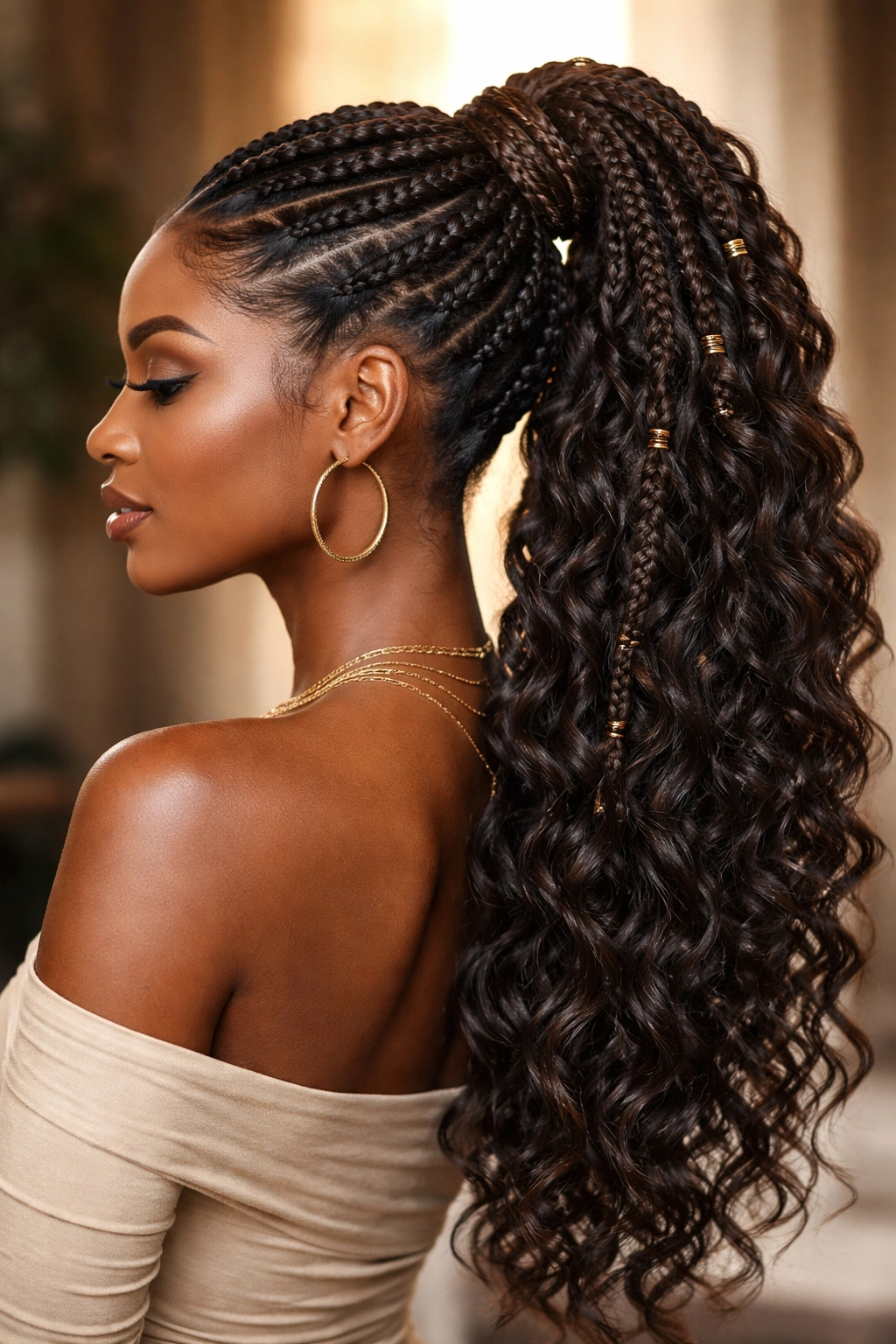
Goddess braids are thicker, wider, and more dramatic than traditional braids—they’re often made with four or more strands and incorporate loose, voluminous waves. When pulled into a ponytail, goddess braids create an incredibly full, luxe look that feels almost like a crown. This style is absolute perfection for special occasions, nights out, or whenever you want to make a statement with your hair.
The Luxury Factor of Goddess Braid Ponytails
Goddess braids have inherent volume and movement that makes any ponytail feel more elevated and special. The braids are wider and more substantial, so your ponytail feels thicker and fuller without needing to add as much hair. The braids also have a softer, more romantic quality than tight geometric braids—they’re looser and fluffier. When gathered into a ponytail, all that volume creates a seriously impressive finished look that absolutely turns heads.
How to Create and Style Your Goddess Braid Ponytail
- Work with a stylist who specializes in goddess braids, as they require skill to create the perfect balance of thickness and movement
- Have your braids installed with extensions if you want maximum length and volume in your final ponytail
- Gather your goddess braids into a high ponytail at the crown for maximum drama and visual impact
- Leave the braids slightly loose and fluffy rather than perfectly contained—that’s part of the goddess aesthetic
- Add flowers, decorative hairpins, or a statement hair cuff where your ponytail begins to amplify the style
- Flip your head upside down briefly to add even more volume to the ponytail before securing it
Pro tip: Goddess braids photograph spectacularly, so this is the style to choose when you know you’ll be at an event where you want professional photos of your hair.
5. Knotless Braid Ponytail
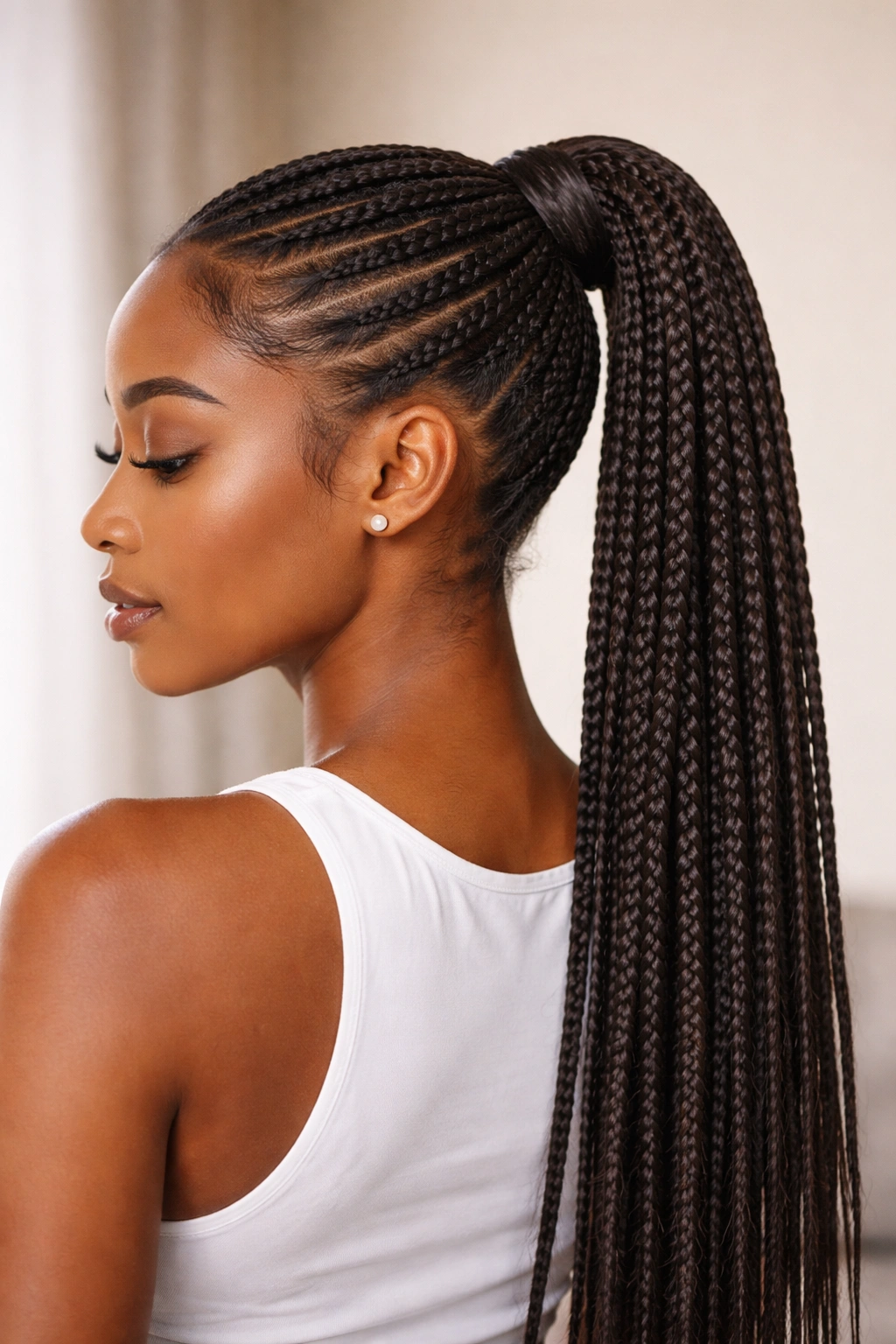
Knotless braids have taken over the protective styling world because they look more natural while still protecting your hair beautifully. These braids are created by feeding hair into the braid pattern rather than tying knots at the base, which means they have a smoother appearance and often look more like your natural hair texture. When pulled into a ponytail, knotless braids create an incredibly seamless, almost like-you-were-born-with-it aesthetic.
Why Knotless Braids Feel More Like Your Natural Hair
Knotless braids start smaller at the root and gradually get thicker as you move down the braid, which mimics how natural hair grows. The effect is that your ponytail doesn’t look artificially bulky at the base—it looks like your own hair simply pulled back. The smoother appearance also makes knotless braids easier to style into updos and ponytails without visible lumps or knots. The texture also feels less structured and more relaxed, which reads as more contemporary and fashion-forward.
Styling Knotless Braids into a Polished Ponytail
- Pull your knotless braids into a low, mid, or high ponytail depending on the vibe you’re going for—they work beautifully at any height
- Use a soft elastic band and secure it without twisting or kinking the braids, which can disrupt their smooth appearance
- Create a wraparound using one of your knotless braids unraveled at the base of the ponytail for a completely seamless, professional finish
- Add edge control at your hairline and smooth any flyaways for a polished, intentional look
- Separate your braids slightly at the crown to create volume without disrupting the overall sleek aesthetic
Pro tip: Knotless braids are your best bet if you’re going for a look that feels professional or minimal—they read as more natural and less “braided” than other braid styles.
6. Passion Twist Ponytail
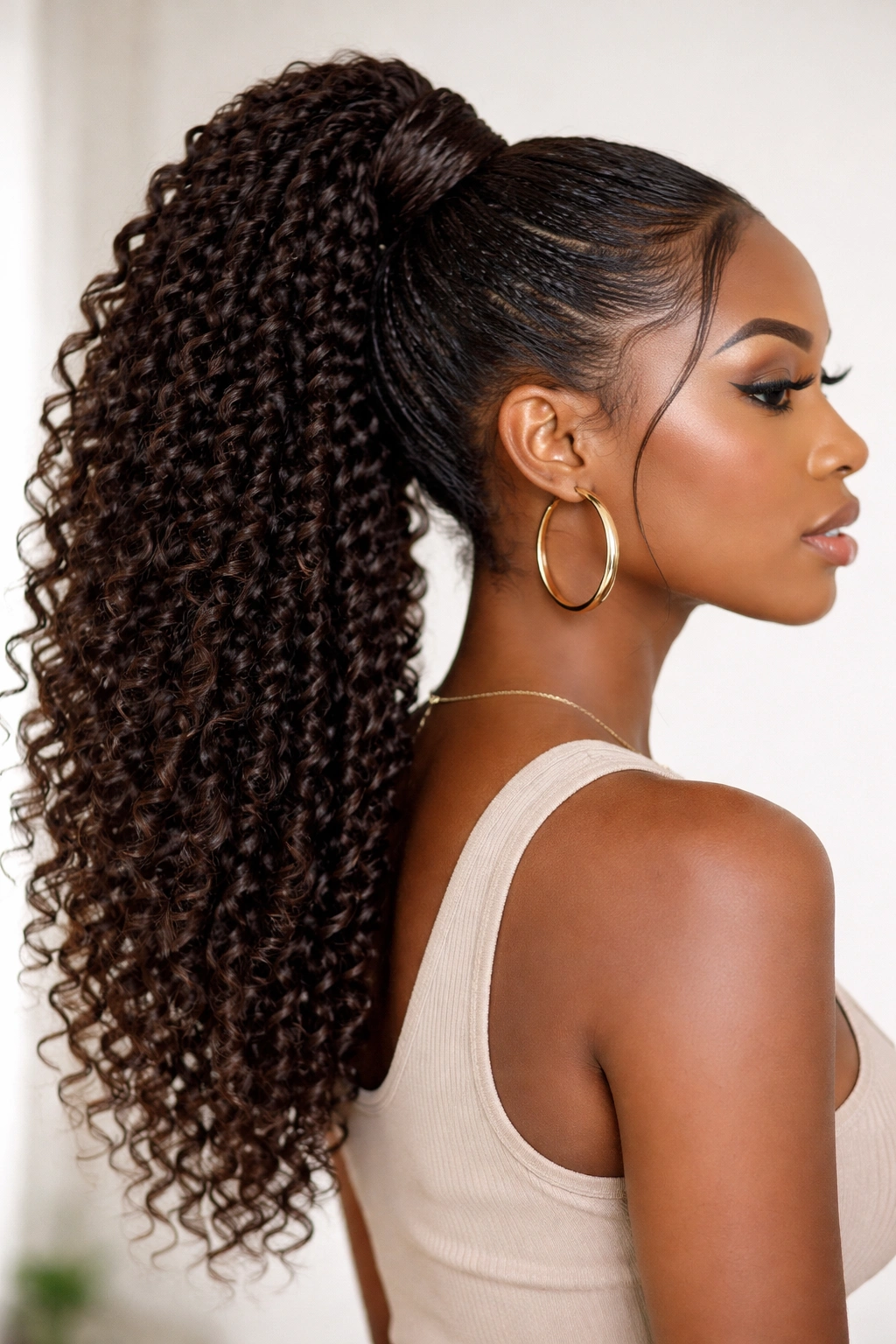
Passion twists are a newer protective style that combine the look of locs with the gentleness of twists. They’re created using a specific technique that twists hair around a core, creating a dimensional, textured look with built-in movement. When pulled into a ponytail, passion twists create a look that’s funky, fresh, and absolutely gorgeous.
The Modern Appeal of Passion Twist Ponytails
Passion twists have a looseness and organic quality that feels very current and fashion-forward. They’re less structured than box braids and less smooth than Senegalese twists—they occupy this perfect middle ground. The twists have natural wave and movement, so even when pulled into a ponytail, they maintain a relaxed, almost effortless aesthetic. The style photographs beautifully because the texture creates interesting shadows and depth.
Creating Your Passion Twist Ponytail
- Have your passion twists installed by a stylist experienced with this technique, as it requires specific knowledge to create properly
- Pull your twists into a ponytail at your preferred height, making sure to keep the twists intact and not disturb their structure
- Smooth your hairline with edge control for definition and polish
- Let the twists at the base of your ponytail fluff out slightly for a softer, more relaxed appearance
- Add a decorative band or cuff where your ponytail begins to draw attention to the point where all the texture gathers
- Consider leaving a few twists unraveled at the bottom of your ponytail for an undone, artistic vibe
Pro tip: Passion twists are perfect for the warm months because they have more movement and breathability than heavier box braids, so your scalp feels cooler and more comfortable.
7. Cornrow-to-Ponytail Hybrid
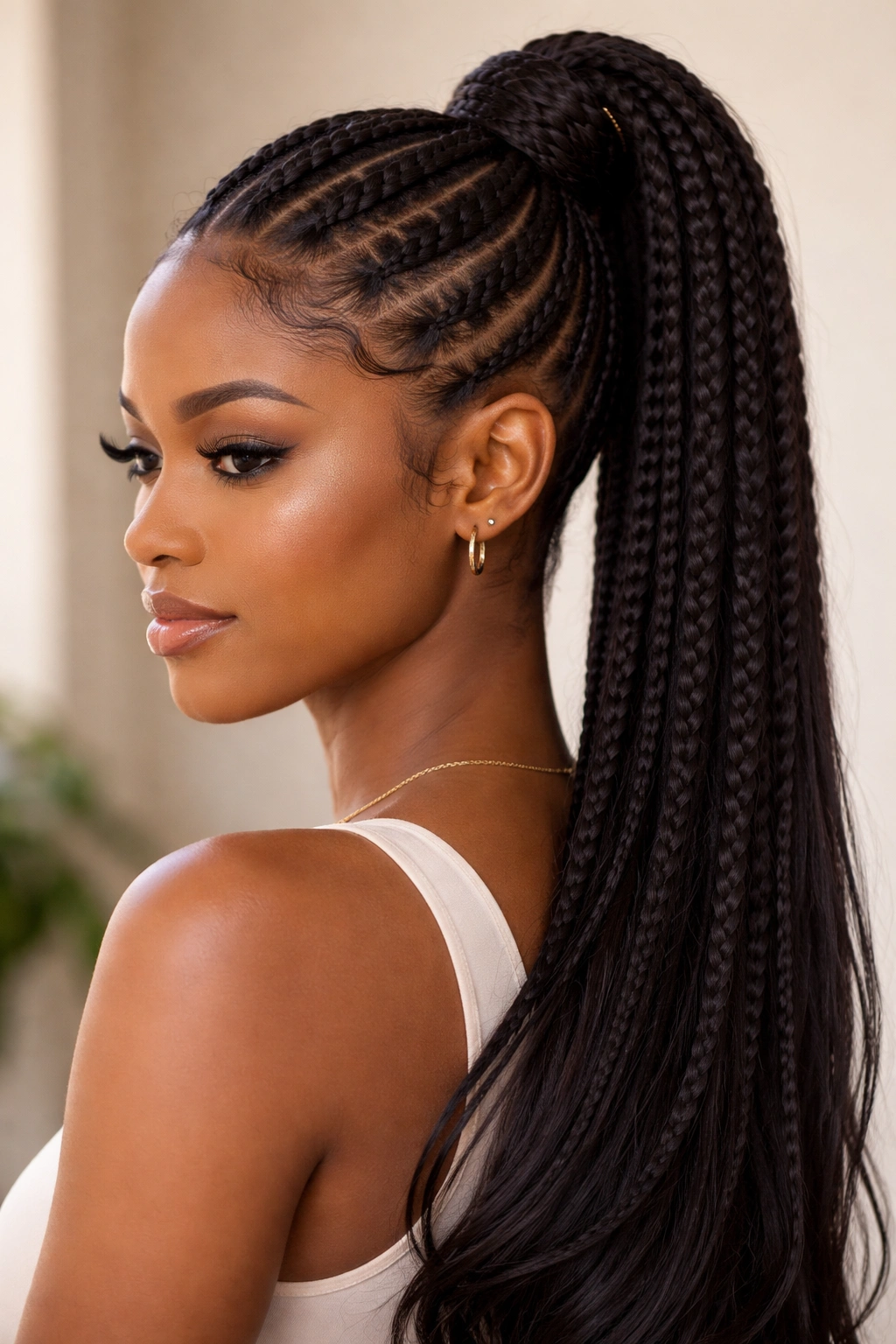
This is where you combine cornrows and a ponytail into one gorgeous unified style. You cornrow sections of your hair from your hairline toward the back, then transition those cornrows into either loose hair, twists, braids, or extensions that flow into your ponytail. The result is a style that’s intricate at the crown and free-flowing at the ends.
Why Cornrow Hybrids Create Visual Storytelling
Cornrows create a sense of movement and direction that leads the eye toward your ponytail. The graphic, sculptural quality of cornrows at the crown makes your ponytail feel like the exciting finale of a design rather than just hair pulled back. You get the best of both worlds—the protective benefits and artistic detail of cornrows combined with the versatility and movement of a ponytail. The style is also incredibly flattering because the cornrows create definition at the crown while the ponytail keeps hair off your face.
How to Execute Your Cornrow-to-Ponytail Hybrid
- Plan your cornrow pattern first—decide whether you want them going straight back, diagonal, or creating a more complex pattern
- Cornrow from your hairline toward your back crown, making sure your cornrows are tight enough to be protective but not so tight they cause tension
- Transition your cornrows into loose hair, braids, or twists that then get pulled into your ponytail
- Add extensions at the point where your cornrows transition to the ponytail for extra volume and length
- Smooth your cornrows with edge control for a finished, intentional look
- Leave your ponytail full and fluffy to create contrast with the structured cornrows
Pro tip: Cornrow-to-ponytail hybrids are incredible for active lifestyles because they keep hair completely off your face while the ponytail still has movement and flow.
8. Fulani Braid Ponytail
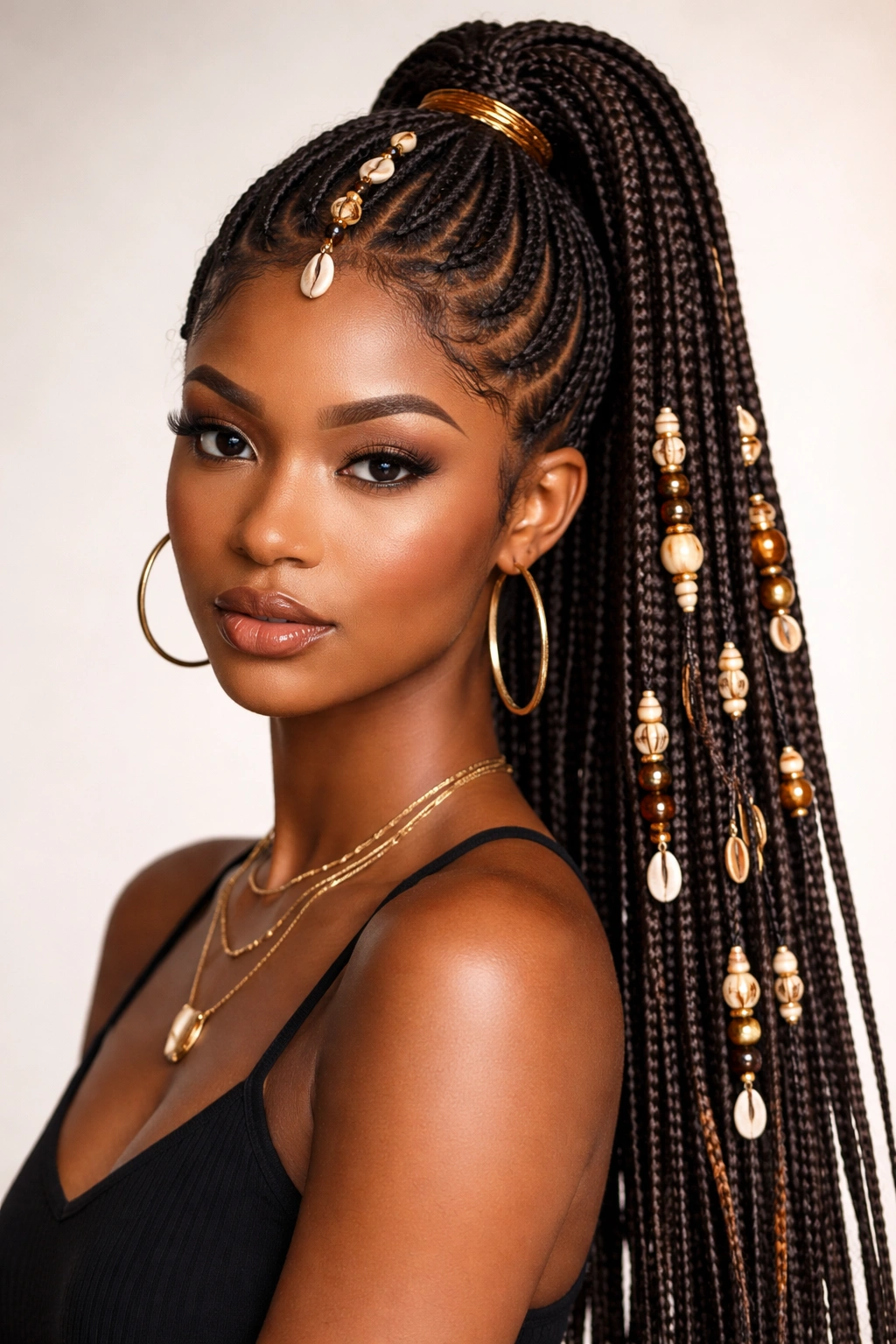
Fulani braids—also called tribal braids—are an iconic style with deep cultural roots. These braids typically incorporate beads, cowrie shells, or decorative wraps, and they’re often worn in patterns that create beautiful lines around the face and scalp. When pulled into a ponytail, Fulani braids create a look that’s both deeply cultural and absolutely stunning.
The Cultural Significance and Visual Beauty of Fulani Braids
Fulani braids come from West African traditions and represent a rich cultural heritage. The style includes decorative elements—typically beads and shells—that add visual interest and honor traditional aesthetic values. When worn in a ponytail, Fulani braids create a look that’s unmistakably intentional and culturally connected. The decorative elements catch light and create visual movement that makes the style feel special and celebratory.
Styling Your Fulani Braid Ponytail
- Wear Fulani braids as a way to honor and celebrate African hair traditions and cultural aesthetics
- Gather your braids into a high ponytail at the crown for maximum visibility of the beads and decorative elements
- Leave face-framing braids loose if you want a softer silhouette, or incorporate them into the ponytail for a cleaner look
- Let the beads and decorative elements be visible and celebrated—they’re part of the beauty of this style
- Add additional beads or shells at the base of your ponytail to create a cohesive, intentional design
- Consider pairing your Fulani braid ponytail with gold jewelry or earth-tone clothing to complement the natural beauty of the style
Pro tip: Fulani braids with ponytails look incredible when photographed in natural sunlight because the beads catch the light and create beautiful sparkle and dimension.
9. Fishtail Braid Ponytail
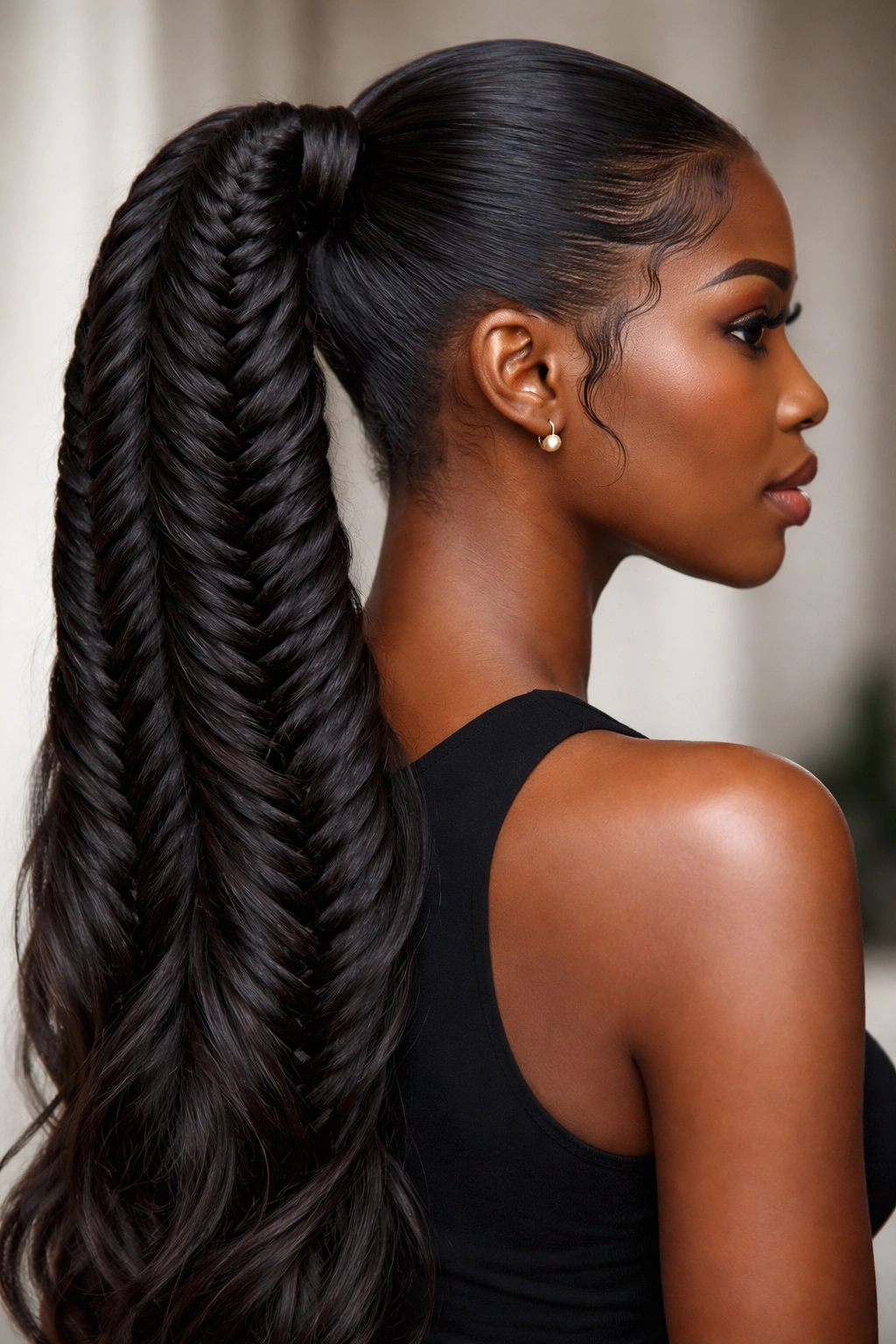
Fishtail braids look intricate and complex but are actually surprisingly accessible to create. They’re made using a different weaving pattern than traditional braids, which creates a distinctive herringbone or woven effect. When you pull a fishtail braid into a ponytail, you get a look that’s visibly different from standard braid styles.
What Makes Fishtail Braids Visually Distinctive
Fishtail braids have a connected, interwoven appearance that looks almost like a work of art. They create less defined sections than box braids, instead featuring a smooth, woven pattern that’s mesmerizing to look at. The visual effect is almost delicate, even though the braid is quite strong and secure. When multiple fishtail braids are pulled into a ponytail, the pattern becomes even more striking because you can see how each braid’s unique weave pattern fits together.
How to Create and Wear Your Fishtail Braid Ponytail
- Master the fishtail technique by practicing on loose hair first before attempting to cornrow-style fishtail braids
- Create 2-4 fishtail braids depending on how much visual interest you want and how thick you want your ponytail
- Gather your fishtail braids into a sleek, defined ponytail at your preferred height
- Don’t overcomplicate the style—the fishtail braids are interesting enough on their own without too much additional styling
- Use a clear elastic band so it doesn’t interrupt the visual flow of the braids
- Add edge control for a finished, polished appearance at your hairline
Pro tip: Fishtail braids look especially beautiful when you use two tones of hair or extensions—the color contrast makes the weaving pattern even more visible and interesting.
10. Lemonade Braid Ponytail
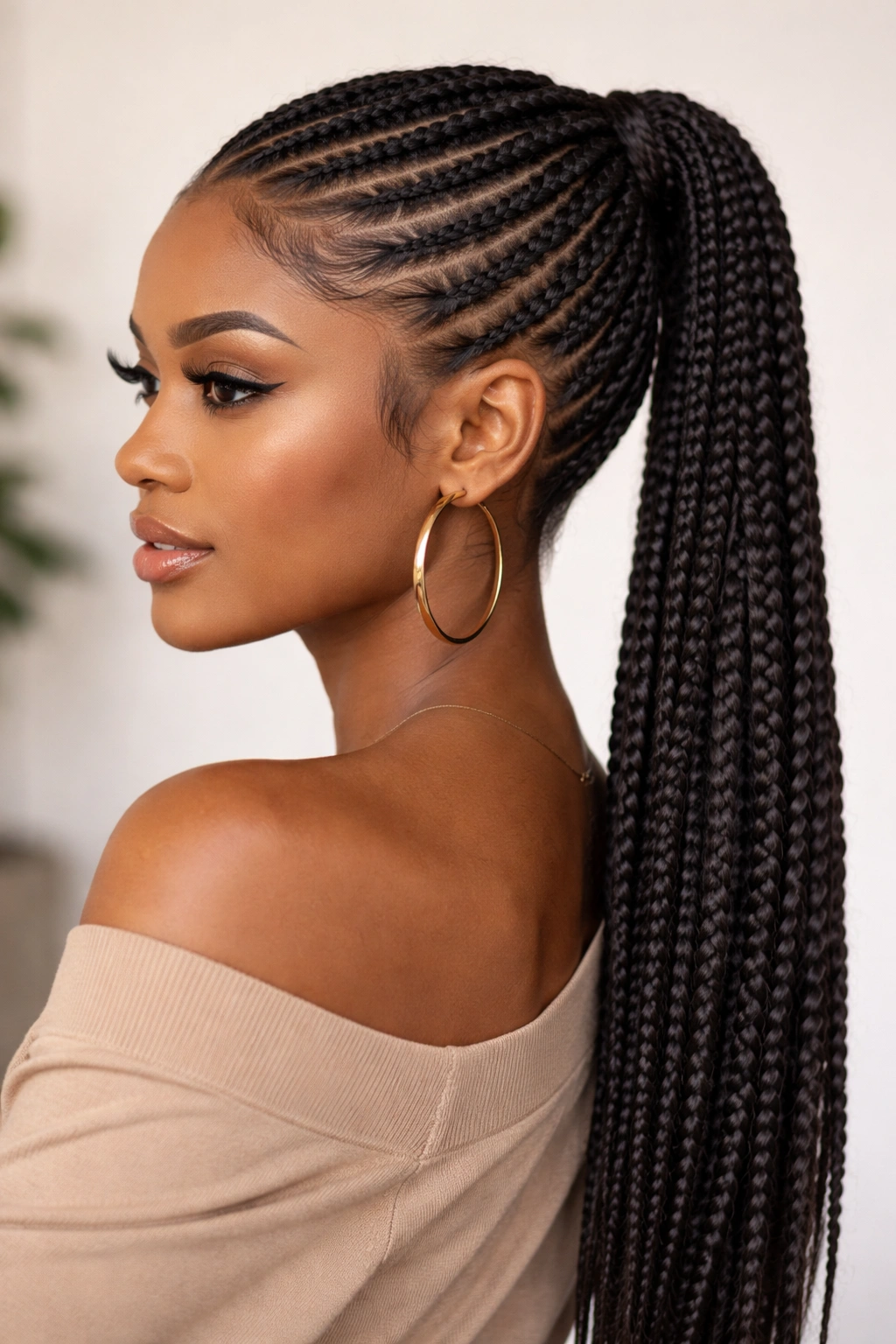
Lemonade braids—popularized by Beyoncé—are a side-swept cornrow style that’s glamorous and undeniably chic. These braids typically start at one side of your head and sweep toward the back, creating a diagonal line that’s both protective and fashionable. When incorporated into a ponytail, lemonade braids create a look that’s eye-catching and unforgettable.
The Glamour and Movement of Lemonade Braids
Lemonade braids have a naturally elegant quality because of their side-swept direction. The diagonal line is incredibly flattering for most face shapes, and the style has a sense of movement and direction even when you’re standing still. When you pull lemonade braids into a ponytail, you’re creating a sophisticated look that feels both protective and celebratory. The style also photographs beautifully from almost any angle because the diagonal lines are visually interesting.
How to Style Lemonade Braids into a Ponytail
- Create lemonade braids starting from one side of your head, typically starting near your temple and moving diagonally toward the back crown
- Make your lemonade braids neat and defined, with consistent thickness and tension throughout
- Gather your lemonade braids into a high or mid-level ponytail that complements the diagonal braiding pattern
- Add beads, decorative cuffs, or jeweled hair clips along your braids for extra glamour
- Leave your ponytail voluminous and full to contrast with the structured, defined lemonade braids
- Smooth edge control along your hairline and around your braids for a polished, intentional finish
Pro tip: Lemonade braids work beautifully for special events because they’re simultaneously elegant and bold—they show serious artistry while still feeling wearable and sophisticated.
11. Tree Braid Ponytail
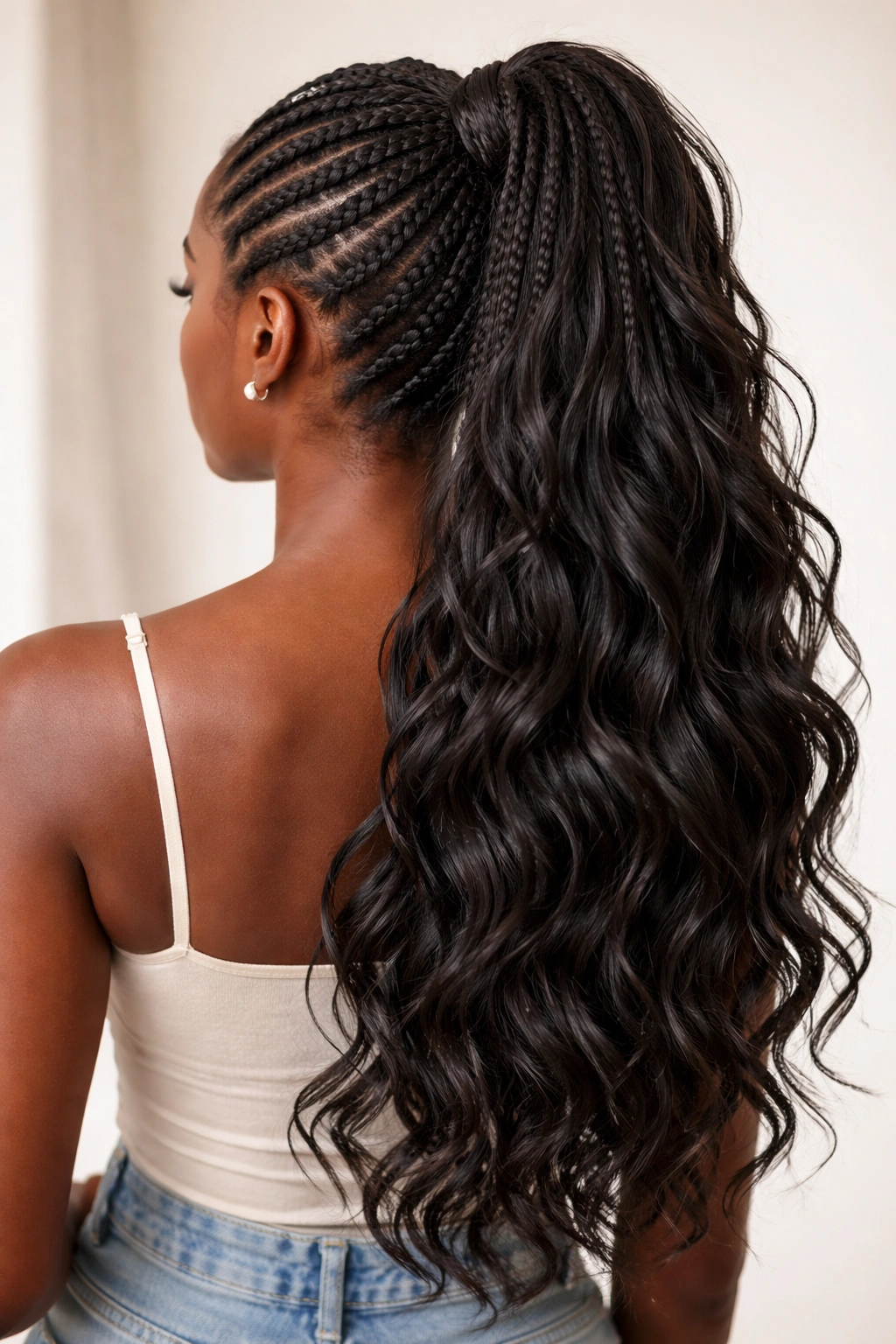
Tree braids are a clever protective style where you braid sections of extensions onto your natural hair and leave the ends free and unbraided. The result is a half-braided, half-loose style. When you pull tree braids into a ponytail, you create a unique look where the braided sections are gathered back while the loose ends create volume and movement in your ponytail.
The Unique Construction and Appeal of Tree Braids
Tree braids give you the protective benefits of braids where your natural hair is braided, but the freedom and movement of loose hair where the ends are left down. The contrast between the braided sections and the loose ends is visually interesting and creates dimension. When pulled into a ponytail, tree braids create a style that feels both polished and relaxed. You get incredible volume in your ponytail because you have both your natural hair and the loose ends of the extensions.
Wearing Your Tree Braid Ponytail
- Have tree braids installed with your natural hair braided close to the scalp and extensions left loose at the ends
- Gather all your hair—both braided and loose sections—into a ponytail at your desired height
- The braided sections will create visible texture at the crown and top of your ponytail
- The loose sections will flow freely below the elastic band, creating volume and movement
- Add a decorative hair cuff or band where the braids transition to the loose hair for visual interest
- Style the loose sections with waves or curls for additional softness and dimension
Pro tip: Tree braids are perfect if you want protection where your hair is braided but still want the feeling of loose, free-flowing hair in your ponytail—you get the best of both worlds.
12. Criss-Cross Braid Ponytail
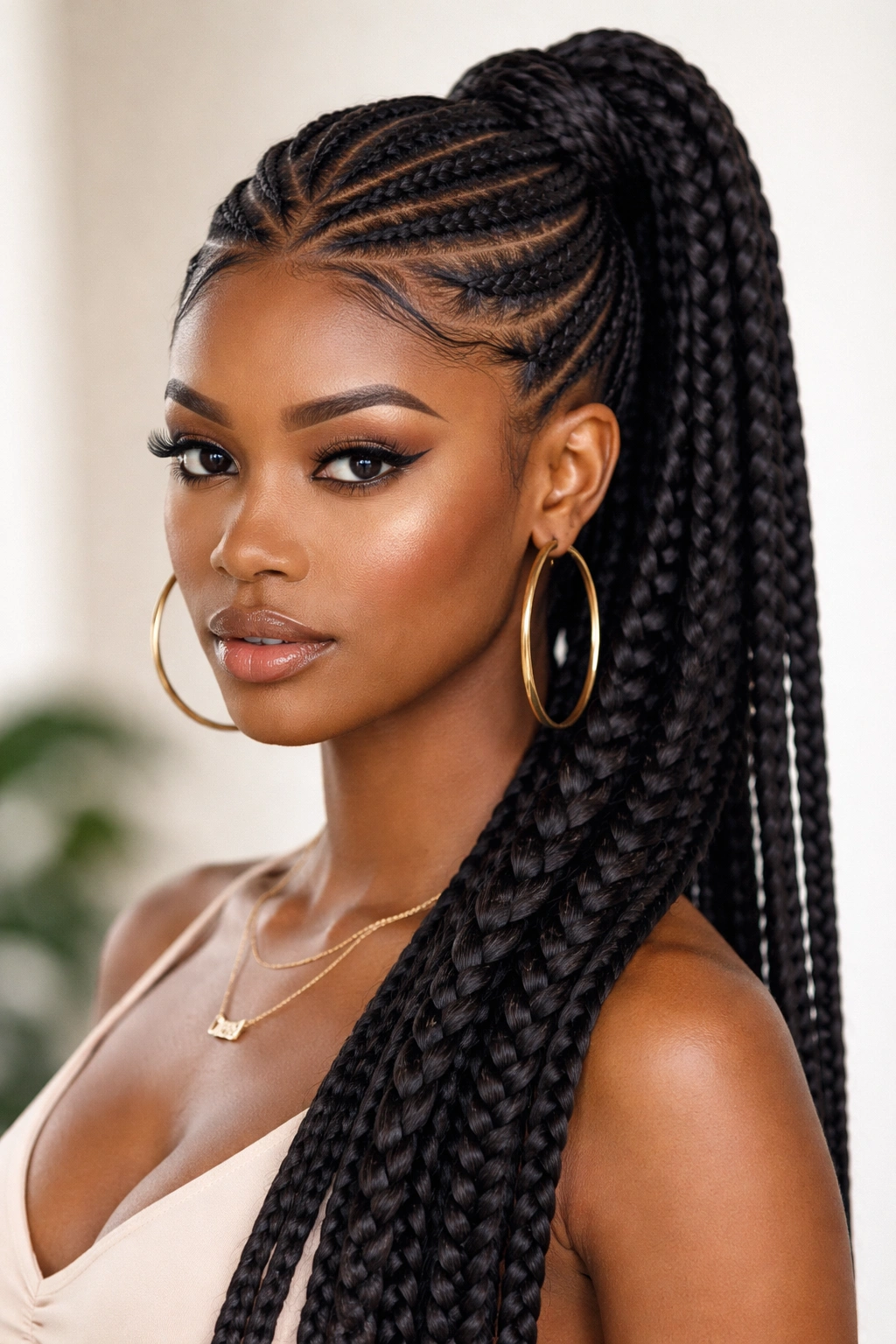
Criss-cross braids are exactly what they sound like—multiple braids that weave across each other and your scalp in a crisscross pattern before coming together into a ponytail. This style is incredibly intricate and creative, requiring a stylist with serious braiding skills and imagination. The result is a work of art that becomes your hair.
Why Criss-Cross Braids Are the Ultimate Statement Style
Criss-cross braids are undeniably bold and artistic. The overlapping pattern creates visual complexity and immediately draws attention to your hair. The style is playful and creative—it shows confidence and a willingness to take risks with your appearance. When you pull criss-cross braids into a ponytail, you’re creating a focal point that says something about your personality and your relationship with your hair. This is not a subtle style; it’s a statement.
How to Wear Your Criss-Cross Braid Ponytail
- Work with a stylist who has experience creating criss-cross braid patterns—this isn’t a style for DIY if you want it to look intentional
- Plan your pattern beforehand so your stylist knows exactly what you’re envisioning
- Keep the braids relatively neat and defined so the crisscross pattern is clear and visible
- Pull everything back into a ponytail that showcases the beautiful braiding pattern you’ve created
- Add decorative elements like beads or metallic hair cuffs that coordinate with the criss-cross pattern
- Consider keeping some face-framing elements loose if you want to soften the look
- Make this style when you’re ready to be seen and celebrated for your bold fashion choices
Pro tip: Criss-cross braids work beautifully for festivals, celebrations, or any event where you want your hair to be a conversation starter and a genuine work of art.
Final Thoughts
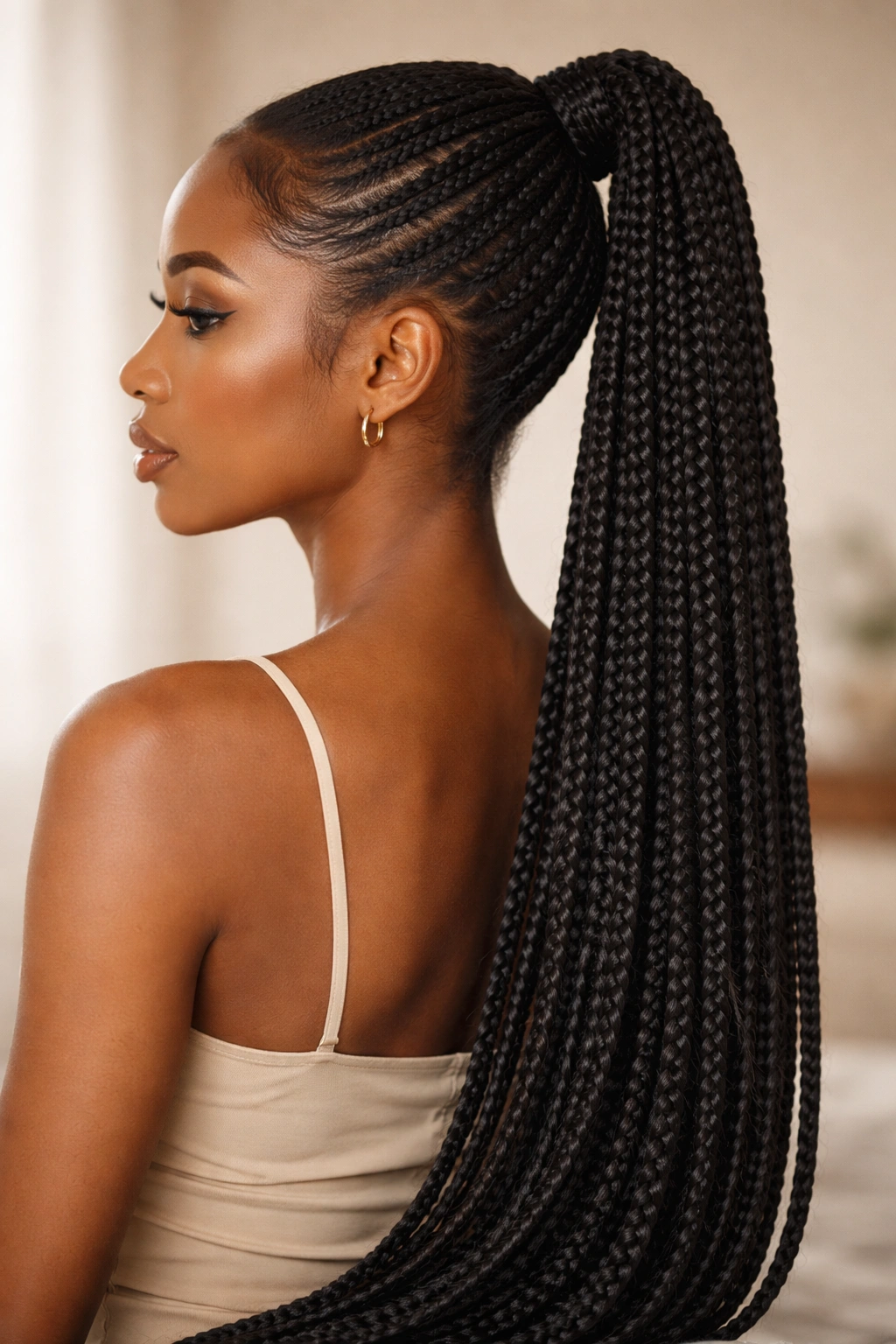
Braided ponytails offer an incredible range of possibilities for Black women who want to protect their hair while looking absolutely stunning. Whether you choose something sleek and minimal like knotless braids or something bold and artistic like criss-cross braids, you’re choosing a style that honors Black beauty and cultural traditions while keeping your hair healthy and strong.
The best braided ponytail for you depends on several factors—how much time you want to spend styling, what vibe you’re going for, and what kind of hair you’re working with. Some styles like box braids and knotless braids are incredibly versatile and work for almost any occasion. Others like goddess braids and passion twists make more of a statement and work perfectly for special events or when you want to feel extra glamorous.
Remember that your hair is yours to style however makes you feel confident and beautiful. These twelve styles are starting points and inspiration—once you understand the fundamentals, you can customize them, combine them, and make them completely your own. Work with stylists who understand Black hair, who respect cultural traditions, and who listen to your vision. Your braided ponytail should make you feel powerful, beautiful, and completely yourself.
