



A well-executed low side part ponytail can instantly elevate your entire appearance, whether you’re heading to the office, a casual brunch, or an evening event. There’s something undeniably sophisticated about a side-parted ponytail — it’s polished and put-together without looking like you spent hours getting ready, and it works with almost every hair texture and face shape when styled correctly. The beauty of this versatile look is that it bridges the gap between casual and formal, giving you endless styling possibilities without compromising that effortlessly refined aesthetic.
What makes low side part ponytails so compelling is their timeless appeal. Unlike trendy updos that cycle in and out of fashion, this styling approach has remained a go-to for everyone from fashion editors to Hollywood actors, and there’s a very practical reason why: the low placement creates an elongated, flattering silhouette while the side part adds an element of softness and intentionality. The best part? You can dress them up or down, adjust the texture to match your mood, and customize the details to match your personal style. Whether you prefer sleek and minimalist or soft and textured, there’s a version of this look waiting for you.
1. The Sleek and Polished Low Side Ponytail
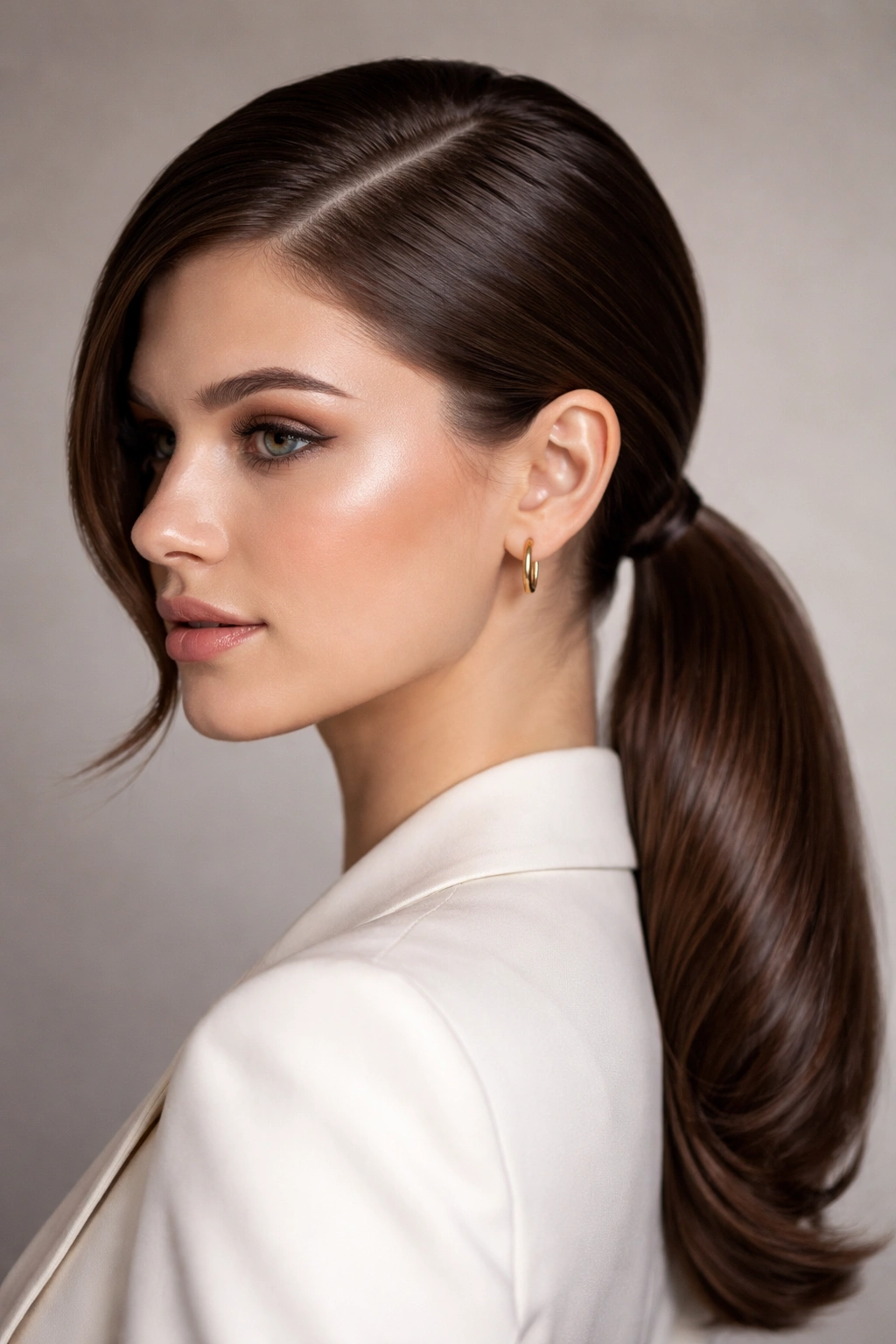
This is the classic, show-stopping version that works for literally any occasion — it’s the look you’ll see at red carpet events and high-powered business meetings because it looks undeniably professional. The key to nailing this style is starting with smooth, hydrated hair and using the right products to tame any flyaways. You’ll want to blow dry your hair straight, creating a deep side part that falls naturally to one side of your face. Once your base is smooth, gather your hair into a low ponytail positioned just slightly below ear level, centering it at the nape of your neck rather than directly at the center back of your head.
Why This Style Commands Attention
The sleek version works because it requires precision and creates visual impact through simplicity. The smooth surface of the ponytail reflects light beautifully, and the low placement keeps the focus on your face and neckline rather than drawing attention upward. This positioning is flattering for most face shapes because it doesn’t emphasize width at the crown and actually lengthens the appearance of your face and neck. The side part adds an asymmetrical element that makes even a simple ponytail feel intentional and editorial.
How to Get It Right
- Use a smoothing serum or anti-frizz cream on damp hair before blow-drying to create a slick base
- Blow dry with a paddle brush for maximum smoothness, working section by section
- Create your side part while hair is still slightly warm from the blow dryer — this sets the part direction
- Use a fine-tooth comb to smooth any bumps as you gather the ponytail, and secure with an elastic that matches your hair color
- Finish with a lightweight hairspray to lock everything in place without creating crunchiness
Pro tip: Apply a tiny amount of clear gel or mousse to your hairline before creating the side part — this keeps every strand in place and prevents the pesky baby hairs that can ruin an otherwise polished look.
2. The Textured Low Side Ponytail with Waves
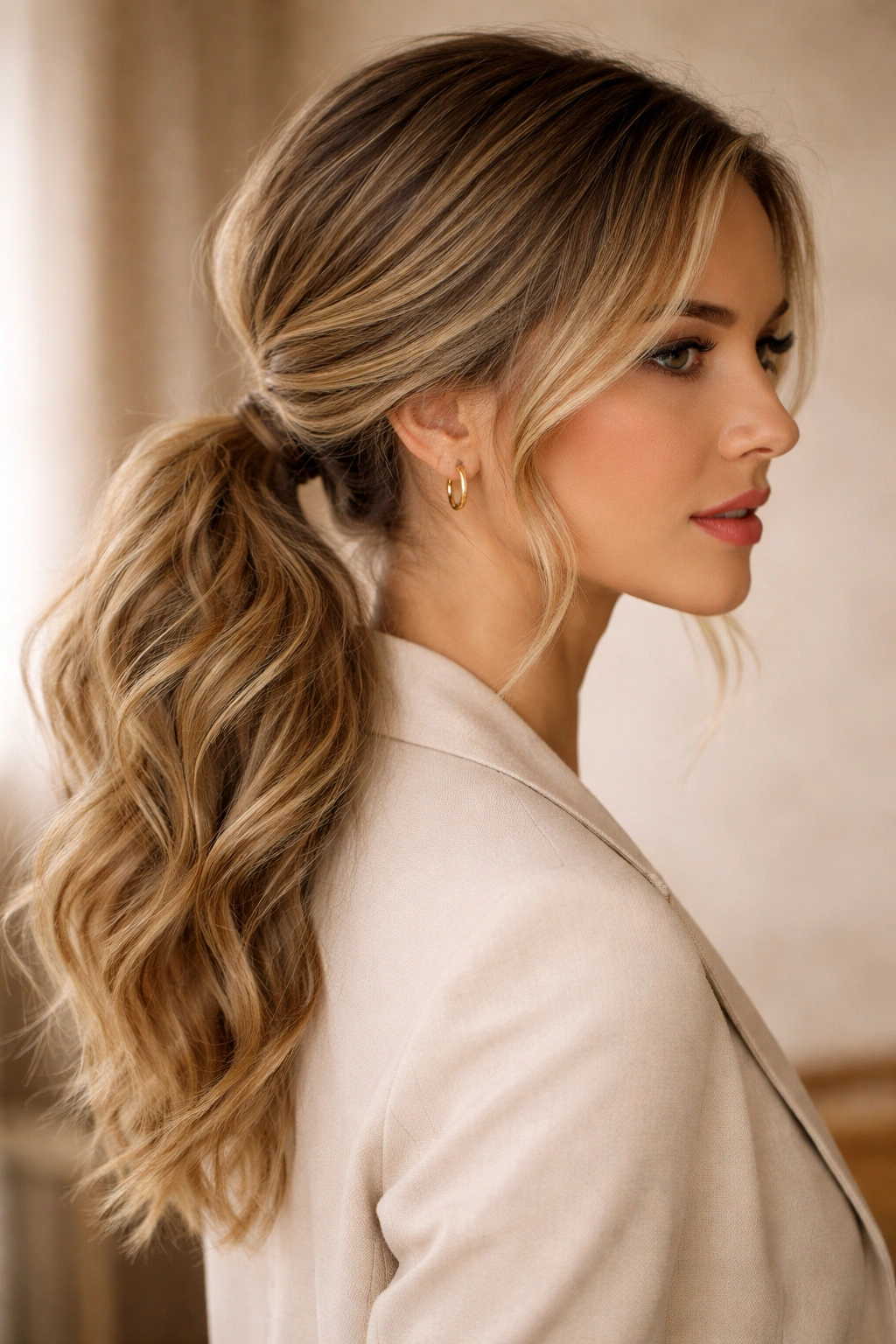
For those mornings when you want polish without looking like you visited a salon, the textured version delivers that perfectly imperfect aesthetic. This style starts with curled or waved hair — you can create these waves using a curling iron, flat iron, or even by air-drying with braids the night before. The waves add dimension and visual interest that makes the ponytail feel softer and more approachable than the sleek version, while the low side part still maintains that refined quality.
What Makes Waves the Perfect Addition
Waves and soft texture add movement and dimension that catches light in interesting ways, making your ponytail look fuller and more dynamic. This version is particularly flattering if you have fine or thin hair because the texture creates the illusion of volume. The waves also mean you don’t have to worry about absolute perfection — in fact, a slightly tousled, lived-in quality is actually the goal here. This style feels modern and effortless while still being polished enough for professional settings.
Building the Perfect Texture
- Spray damp hair with a heat protectant and blow dry with a round brush for added body
- Use a 1½-inch curling iron or waver to create loose waves throughout, curling sections away from your face
- Gently finger-comb through the waves to soften and separate them — you want wavy, not ringlet-curly
- Create your deep side part once the waves are set
- Gather into a low ponytail, allowing a few face-framing pieces to fall loose if you like
- Secure with an elastic and use a texturizing spray or dry shampoo for added grip and hold
Worth knowing: If you have naturally straight hair that won’t hold waves, try the braid method: braid damp hair into two or three braids, sleep on them, and unravel in the morning for effortless waves that last all day.
3. The Braided Low Side Ponytail
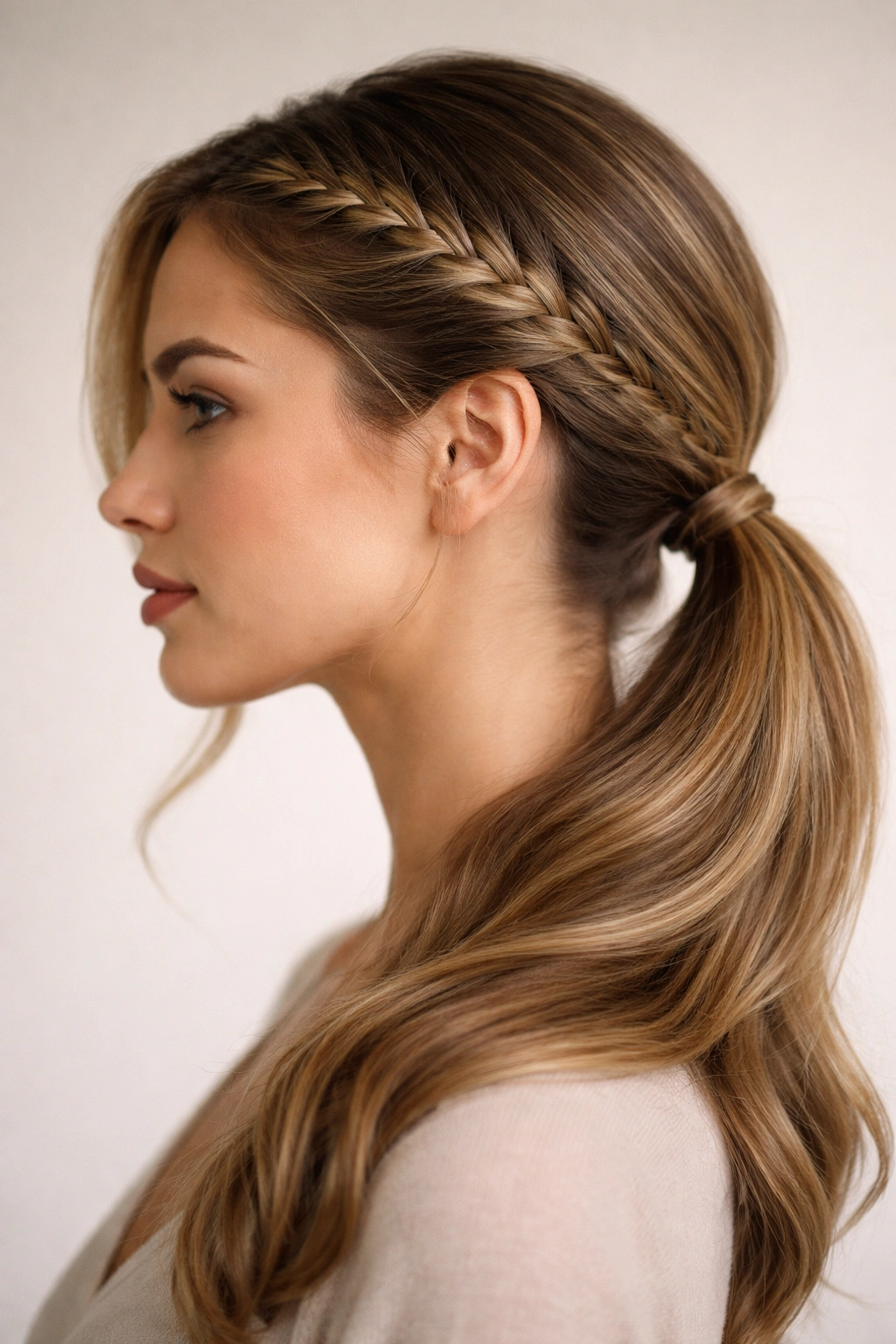
Adding a braid element elevates the low side ponytail into something more intricate and visually interesting. The most flattering approach is creating a thin Dutch or French braid that runs from your side part down and into the base of your ponytail, merging with the main section of hair. This technique adds an artisanal, hand-crafted quality that reads as intentional and detail-oriented — exactly what you want when you’re aiming for polish.
Why Braids Add That Extra Dimension
Braids break up the visual line of the ponytail while adding texture and interest. A braid running along the side of your head creates a natural flow that guides the eye and adds to the refined quality of the style. The braid also serves a practical purpose: it keeps hair from your face while creating softness around your features. This version works especially well if you have thicker hair or medium-length hair because the braid has something substantial to work with.
Executing the Braided Version
- Start with wave-textured or slightly damp hair for better grip and control
- Create your deep side part and identify where your braid will begin
- Starting from the deeper side of your part, begin a Dutch or French braid, working downward toward the back of your head
- Angle the braid so it naturally feeds into where you’ll position your ponytail
- Once you’ve braided about three-quarters of the way down, transition the braided section into your main ponytail
- Gather all hair into a low ponytail at the nape of your neck, letting the braided section merge with the rest
- Secure with a matching elastic and gently pull at the edges of the braid to create a softer, fuller appearance
Pro tip: Adding a thin ribbon or delicate hair accessory woven through the braid creates an extra-polished, fashion-forward vibe without looking overdone.
4. The Slicked-Back Low Ponytail with a Deep Side Part
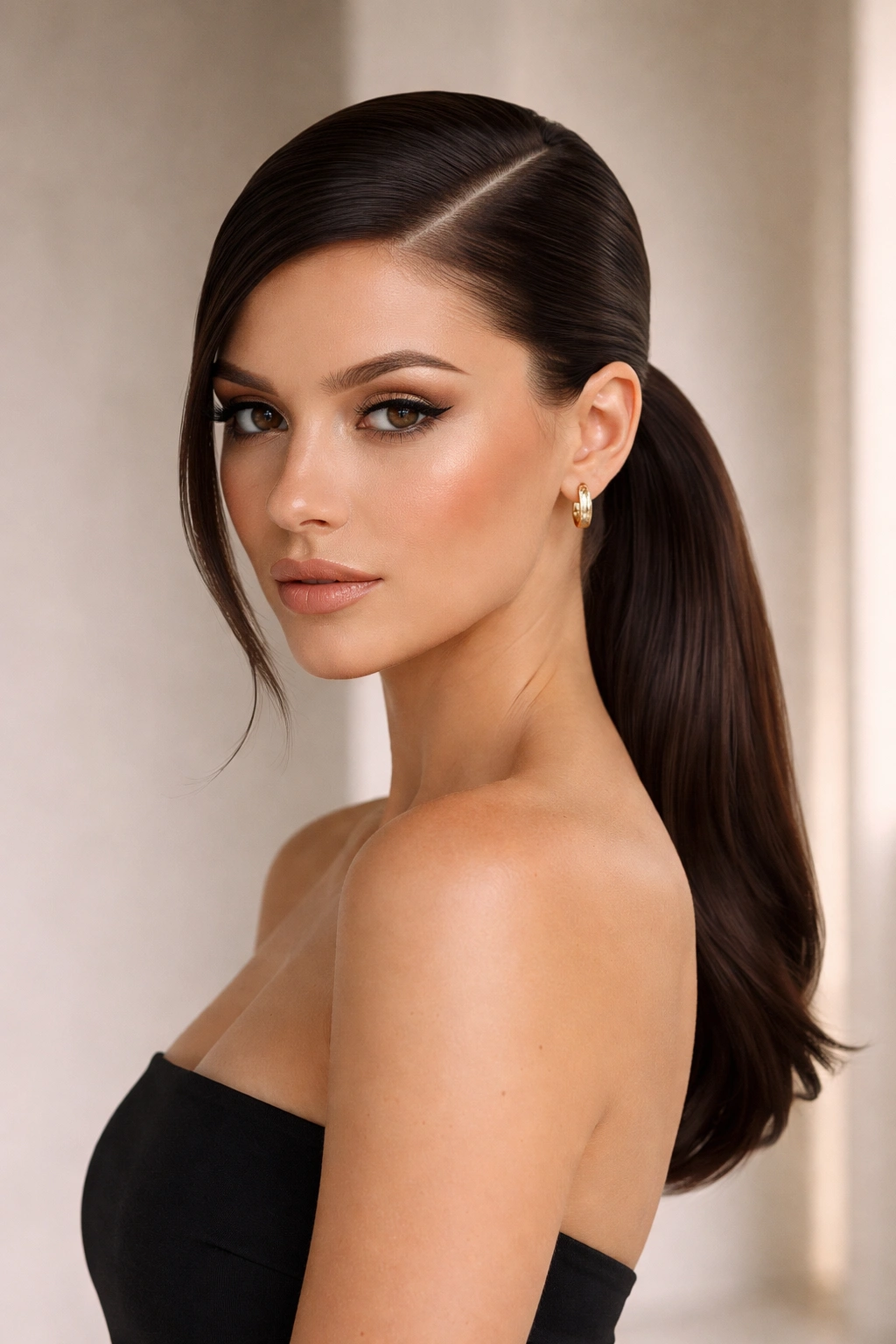
This is the ultra-modern, almost architectural version of the side part ponytail — think minimalist luxury. Everything is smoothed back very deliberately, with an exaggerated deep side part that creates strong visual impact. This style works beautifully if you have a strong jawline, prominent cheekbones, or a beautifully shaped face you want to showcase. The slicked-back approach removes any framing, putting your facial features front and center.
The Appeal of Maximum Sleekness
By pulling everything back smoothly and symmetrically (except for the side part itself), you create a clean canvas that highlights your bone structure and facial features. This style is particularly popular in high-fashion and editorial settings because it communicates intention, control, and modern sensibility. There’s something inherently confident about a slicked-back ponytail — it’s a look that says you know exactly what you’re doing. The deep side part adds just enough asymmetry to keep it from feeling severe.
Creating Maximum Sleekness
- Begin with very clean hair, ideally fresh from a wash so you have a clean slate
- Blow dry with a paddle brush, directing all hair backward smoothly
- Create an exaggerated side part while hair is still warm, making it as deep as feels comfortable
- Use a fine-tooth comb and smoothing gel to slick all hair back from your face toward the crown
- Position your ponytail at the very base of your skull, slightly lower than a traditional ponytail
- Smooth any flyaways with additional gel or mousse, and secure very firmly with a sturdy elastic
- Finish with a strong-hold hairspray
Real talk: This look requires commitment — it’s very noticeable if pieces slip out of place, so you need products that actually work and secure hold. Test different hairsprays and gels to find what lasts longest on your hair type.
5. The Soft and Romantic Low Side Ponytail
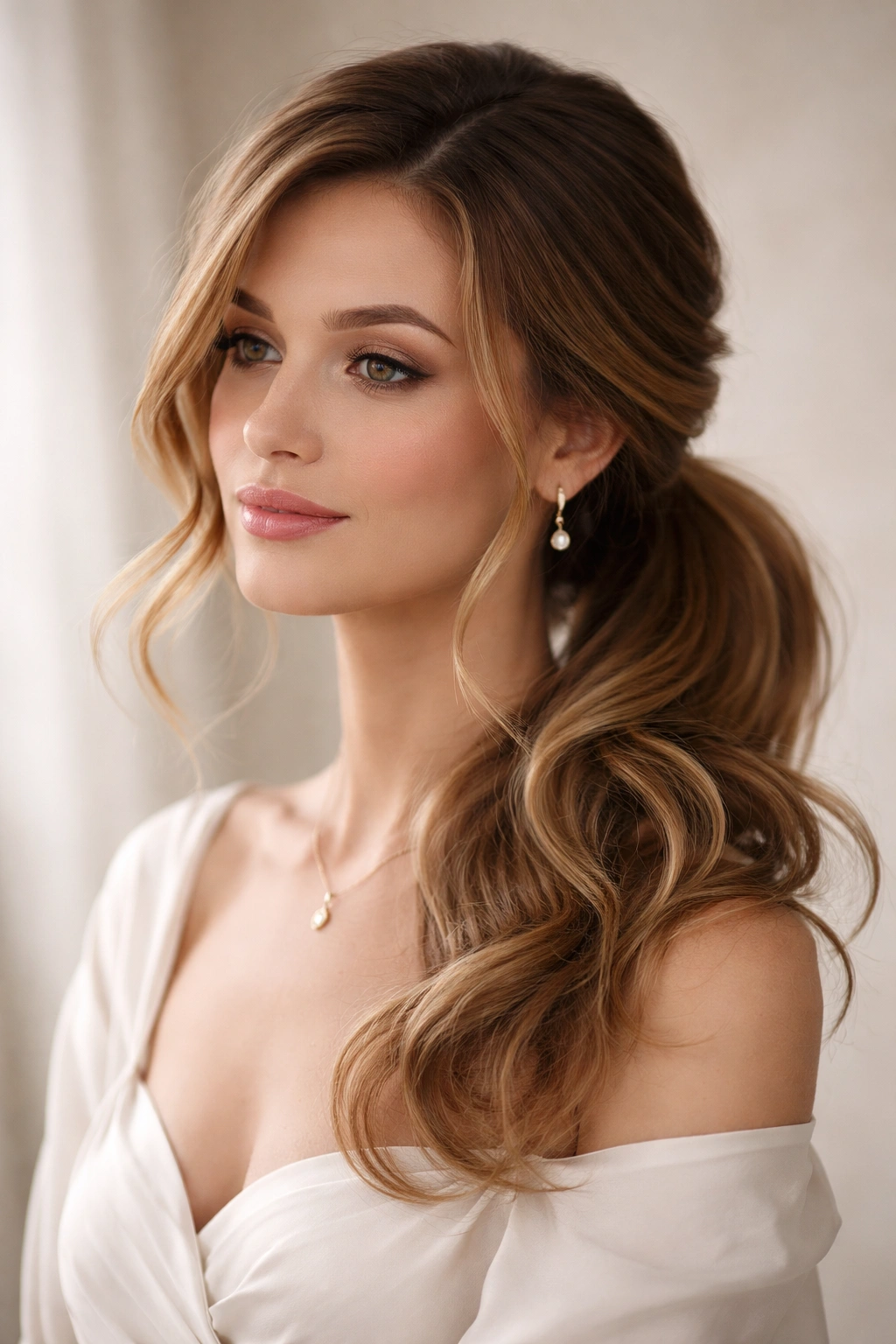
If you prefer a gentler, more romantic aesthetic, this version softens the side-parted ponytail while maintaining its polished quality. This style incorporates face-framing pieces and softer texture throughout, creating an approachable, romantic vibe that’s still put-together. It works beautifully for date nights, weddings, or any time you want to look lovely without appearing overly formal.
Creating Softness Without Sacrificing Polish
The secret to this version is leaving strategically placed pieces down around your face while keeping the bulk of your hair secured in a low ponytail. These face-framing pieces soften the overall look and create flattery by gently drawing attention to your best features. Soft waves throughout your hair add to the romantic quality, and the deep side part still maintains that intentional, polished edge. This strikes the perfect balance between casual and refined.
Building the Romantic Version
- Create soft, loose waves throughout your entire head using a curling iron or flat iron
- Part deeply to one side, allowing your hair to naturally fall in that direction
- Leave two or three thin sections of hair free at your temples and around your face
- Gather the remaining hair into a low ponytail at the nape of your neck, securing with a soft elastic
- Gently pull at the roots to create a slightly undone, lived-in texture
- Let your face-framing pieces fall naturally, curling them slightly away from your face if desired
- Use a light hairspray to hold everything without creating stiffness
Insider note: Spritz your face-framing pieces with a light texturizing spray before styling — this helps them hold their wave and creates more definition throughout the day.
6. The High-Fashion Low Ponytail with a Sculptural Side Part
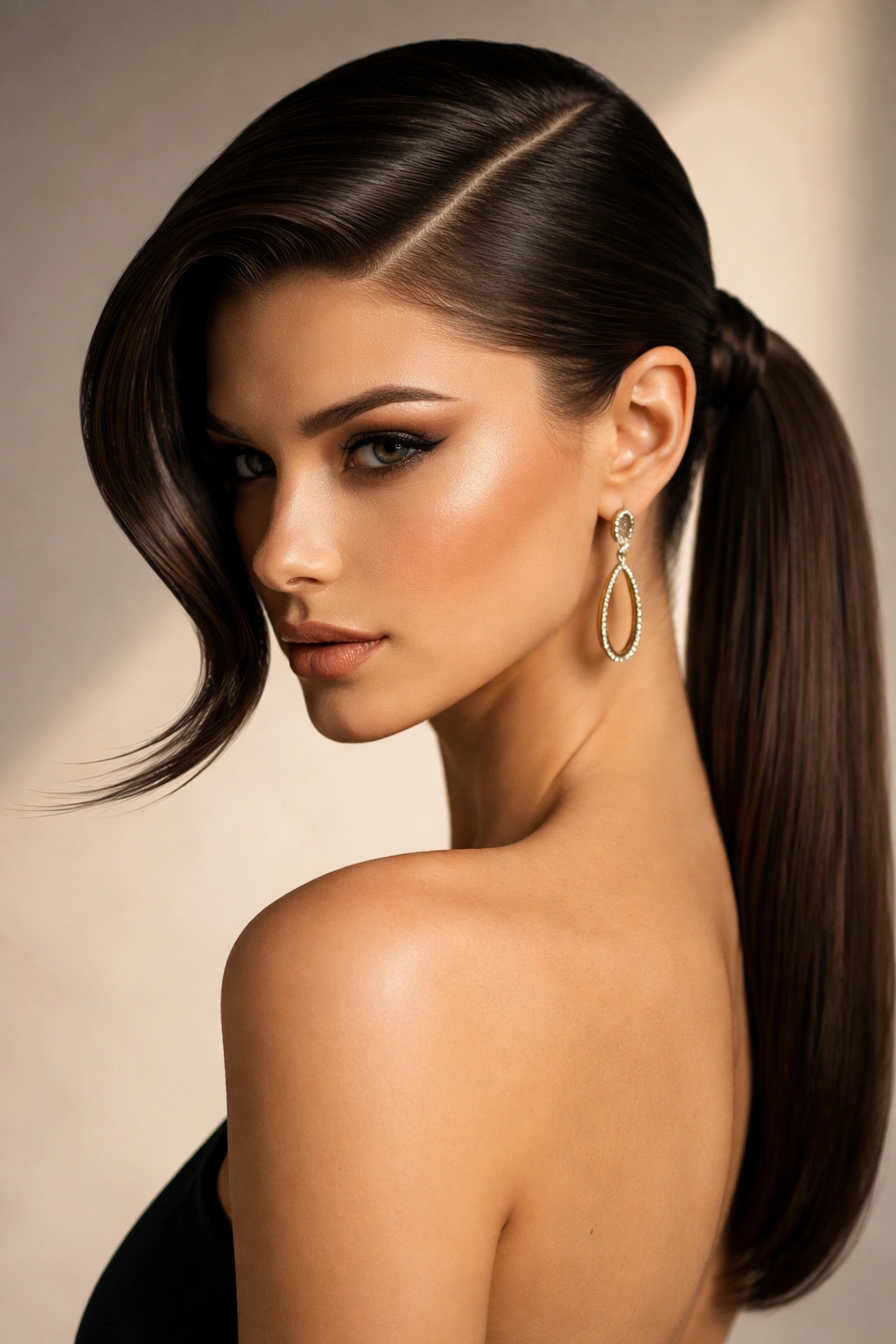
This is the version that looks like it came straight from a high-fashion editorial — it’s polished, modern, and just slightly unexpected. The side part is extremely deep and sculptural, creating an almost graphic line across your head. The ponytail itself is low and sleek, but what sets this apart is the way the side part is exaggerated and emphasized, making it a design element rather than just a practical parting choice.
Why This Version Reads as High-Fashion
Fashion-forward styling is often about making unexpected choices with total confidence. The sculptural side part does exactly that — it’s almost architectural in its precision. Combined with a sleek, low ponytail, it creates a modern silhouette that feels editorial and intentional. This look works particularly well for thicker hair or longer hair because there’s enough substance to create actual visual impact with the side part line.
Achieving the Sculptural Look
- Start with completely smooth, blow-dried hair
- Create your side part while hair is still warm, making it as deep and graphic as you prefer
- Use a fine-tooth comb to smooth the hair on both sides of the part into clean lines
- Apply smoothing serum or gel to define the part line and keep everything sleek
- Gather your hair into a very low, centered ponytail at the nape of your neck
- Secure firmly and smooth any flyaways with additional product
- The contrast between the defined part and the smooth ponytail is what makes this look special
Worth knowing: This look photographs beautifully and is especially striking in professional headshots, event photos, and any situation where you want to appear polished and modern.
7. The Ponytail with a Low Bun Finish
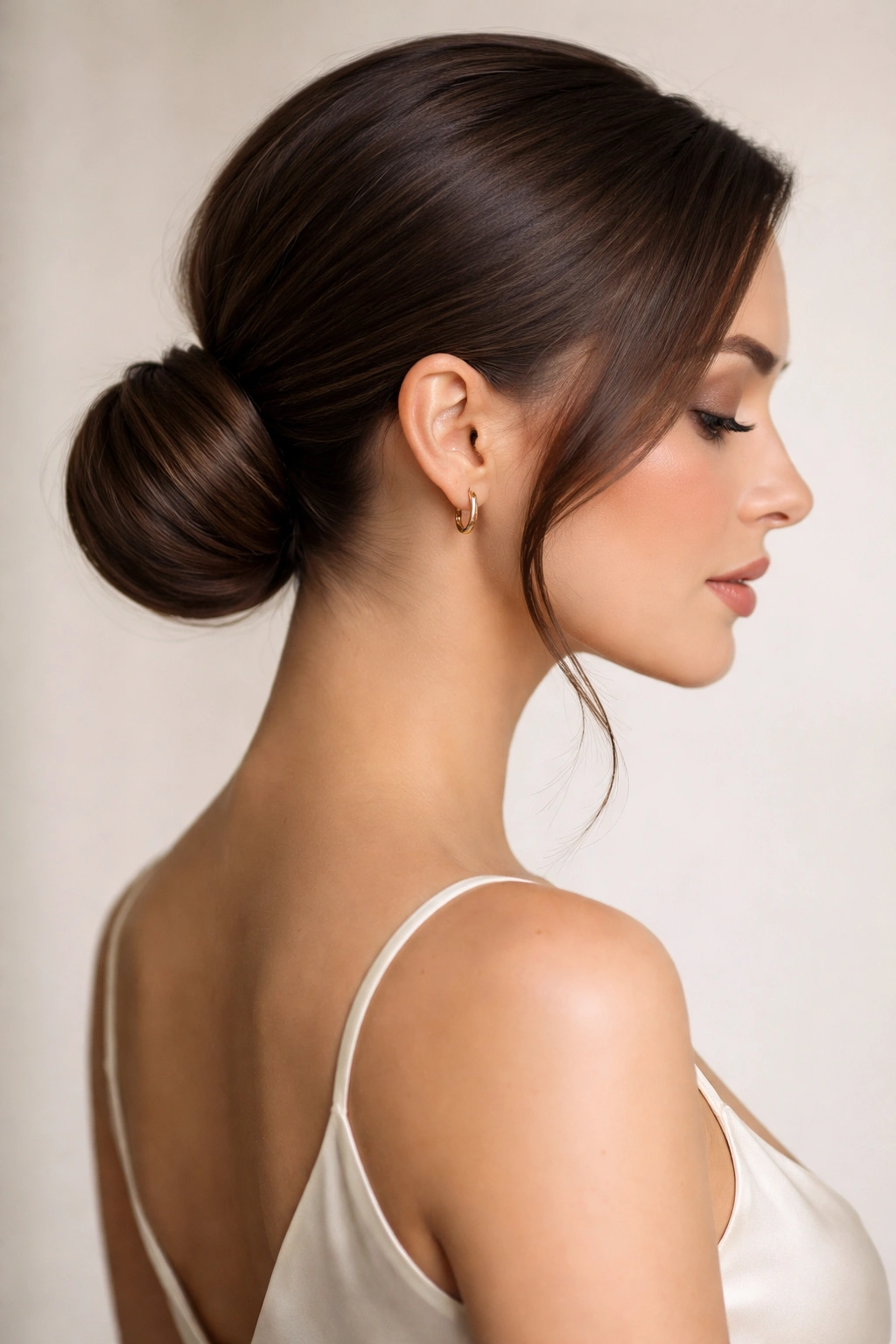
For something more formal or special-occasion appropriate, create a low ponytail and then twist the ponytail section into a low bun. This two-step approach gives you the sophistication of an updo without the severity, and the deep side part keeps it from feeling too traditional. The bun can be neat and compact or soft and romantic depending on your preference.
Elevation Through Detail
The bun finish transforms a simple ponytail into something that reads as more formal and intentional. It’s perfect for weddings, galas, professional events, or any time you want maximum polish. The side part adds a modern touch that prevents the bun from looking too classical or dated. This is also an excellent option if your hair is prone to falling out of a traditional ponytail — the bun base holds more securely.
Creating the Ponytail-to-Bun Transition
- Blow dry straight or with soft waves, creating your deep side part
- Gather hair into a low ponytail at the nape of your neck
- Twist the ponytail section loosely around its base, creating a spiral of twisted hair
- Wrap the twisted section into a bun shape and secure with bobby pins and a small elastic
- Gently pull at the bun edges to create a fuller, softer appearance if desired
- Smooth flyaways and finish with hairspray
Pro tip: The bun holds best if you twirl the ponytail tightly enough to create actual tension, but not so tightly that you create a sleek, hard-looking bun. Aim for a bun that looks casually elegant rather than severe.
8. The Half-Ponytail Low Side Part Hybrid
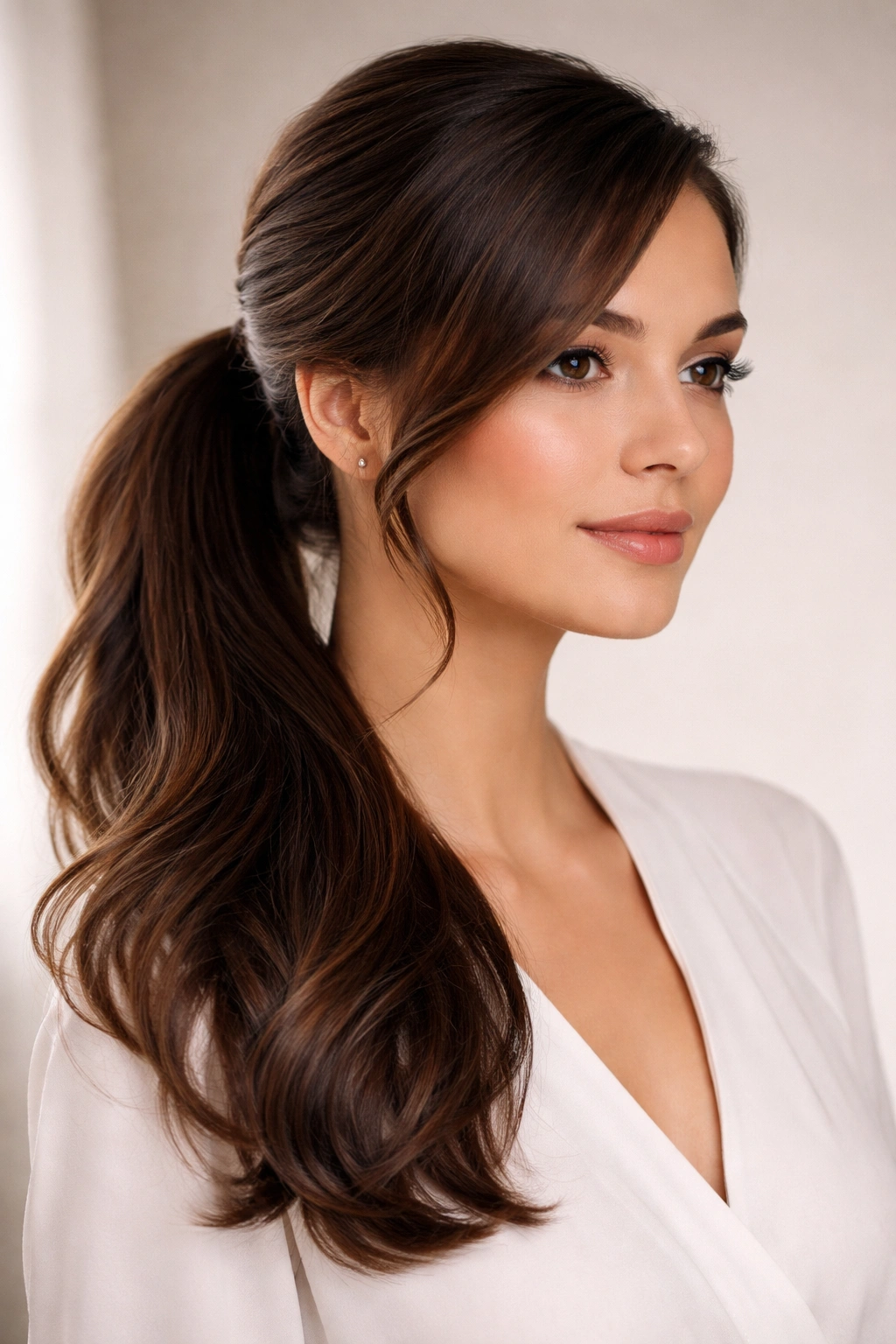
This clever hybrid style splits the difference between down hair and a ponytail, creating something that feels casual enough for everyday wear while maintaining polish. You create a deep side part, then gather only the top half of your hair (from roughly ear level up) into a low ponytail at the back of your head, leaving the bottom half down. The result is a style that shows off length while keeping hair off your face.
Why Hybrids Deserve More Attention
The half-ponytail hybrid gives you the best of both worlds: the off-the-face benefits of a ponytail with the length and movement of down hair. This approach works beautifully for everyday styling because it’s practical without looking overly formal. The deep side part adds polish to what might otherwise read as completely casual. This is an excellent option if you have longer hair and want to prevent it from getting in your way without committing to a full ponytail.
Executing the Half-Ponytail Approach
- Create a deep side part and blow dry with slight waves or texture
- Identify the line at approximately ear level — this is where you’ll divide your hair
- Gather only the top section of hair (from your side part down to ear level) into a small ponytail
- Position this smaller ponytail low on your head, just where a full ponytail would sit
- Let the bottom half of your hair fall loose, creating a blended look
- Secure the partial ponytail with a thin elastic that matches your hair color
- Leave a few face-framing pieces loose if desired for added softness
- The key is making the transition seamless so it looks intentional rather than accidental
Real talk: This style works best if you have fairly substantial hair — with fine or thin hair, the half-ponytail can look too sparse. If that’s your situation, try gathering slightly more hair (from your eyebrows back) to create a fuller base.
9. The Glossy Low Ponytail with Shine-Enhancing Serum
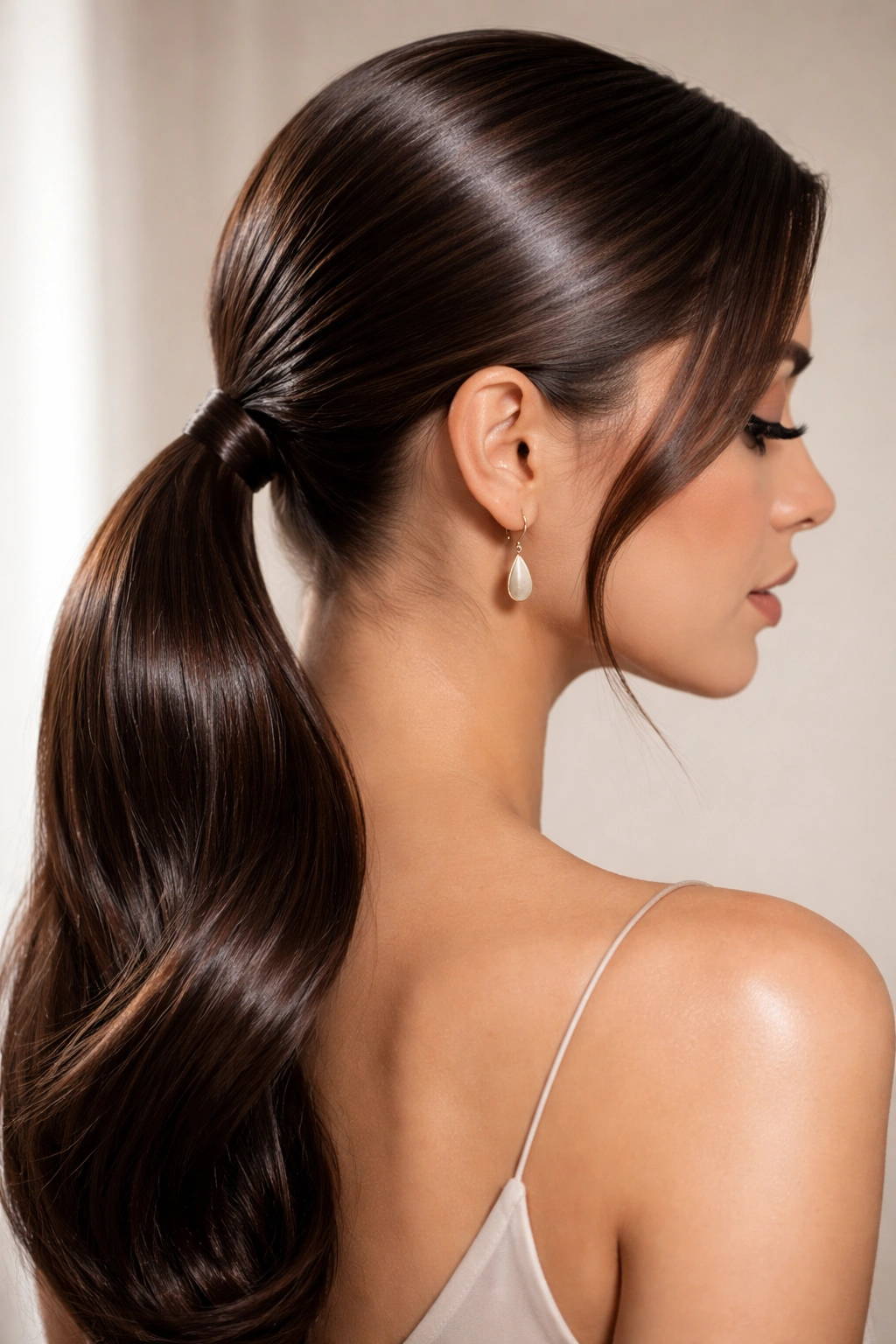
Sometimes polish is all about shine and luminosity. This version emphasizes hair health and glossiness by using leave-in conditioners, shine serums, and strategic lighting to make your hair literally glow. The style itself is simple — a low side part ponytail — but the focus is on making your hair look as healthy, shiny, and lustrous as possible.
The Power of Healthy-Looking Hair
Nothing reads as more polished than shiny, well-maintained hair. When your hair has visible shine and movement, it automatically elevates any hairstyle. This approach is perfect if you’ve invested in hair treatments, have naturally shiny hair, or want to make an impression through hair health rather than complex styling. The side part and low ponytail provide the structure, but the shine is what makes people notice.
Building Maximum Shine
- Start with deep conditioning treatments 24-48 hours before you need maximum shine
- Wash with a sulfate-free shampoo and hydrating conditioner
- Apply a leave-in conditioner to damp hair, focusing on mid-lengths and ends
- Blow dry with a concentrator nozzle on your blow dryer, directing the airflow downward to smooth your cuticles
- Apply a shine serum to your hair once it’s dry, working through lengths and smoothing the ponytail base
- Create your deep side part and gather into a low ponytail
- Use a light hairspray to hold without dulling shine
Pro tip: Silicone-based serums create the most visible shine, though they can build up over time. Alternate between silicone serums and lighter plant-oil based serums to get shine without greasiness.
10. The Textured Low Side Ponytail with Accessory Detail
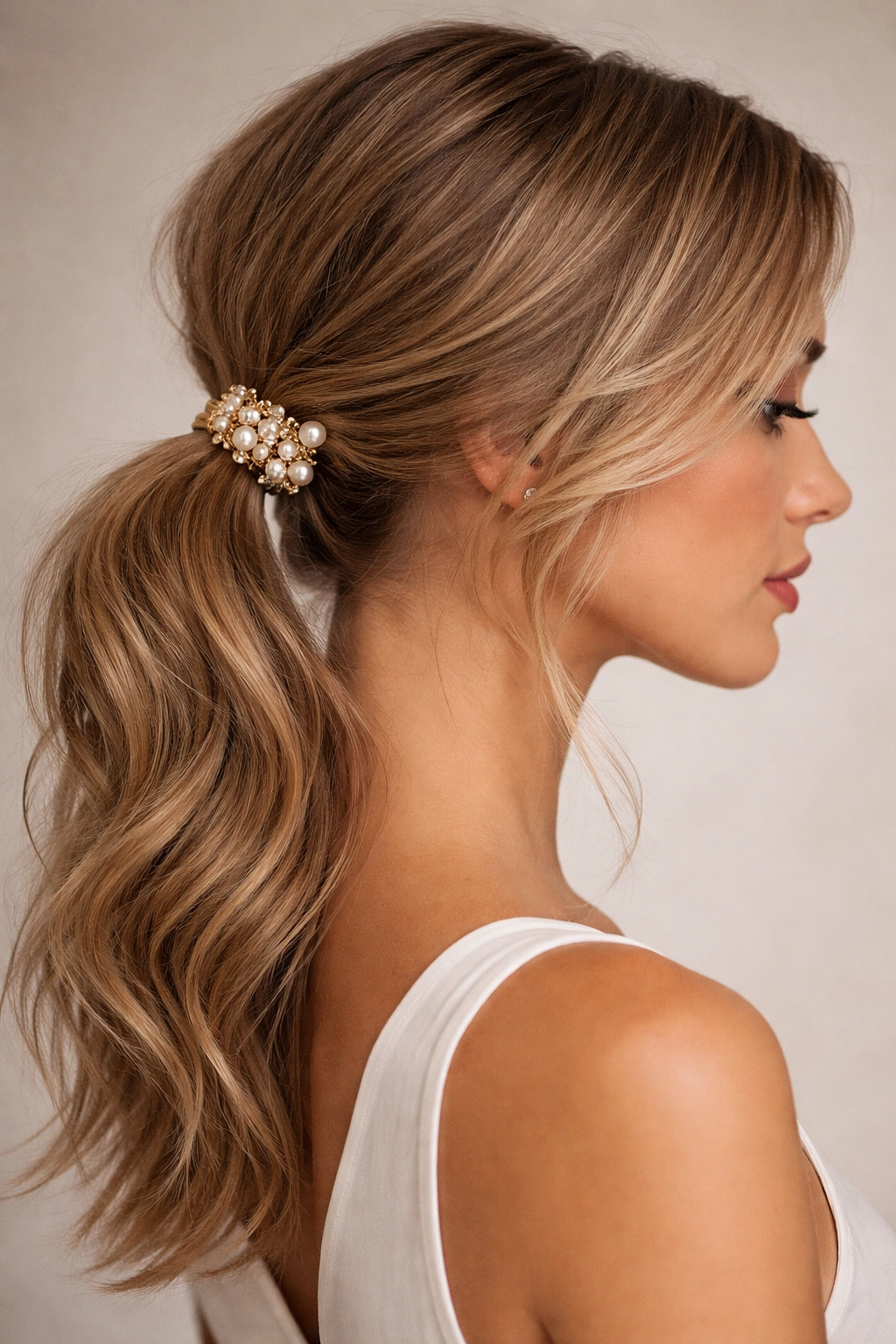
Elevate a standard low side part ponytail by adding an interesting hair accessory — a claw clip, jeweled barrette, gold hair cuff, or statement elastic. The accessory becomes a design element that transforms a basic style into something special and intentional. This approach is perfect for everyday polish because the accessory does much of the visual heavy lifting.
Making Accessories Work for You
A well-chosen accessory doesn’t just hold your hair — it makes a statement about your style and attention to detail. Metallic accessories read as more formal and polished, while textured or colored clips feel more modern and casual. The key is choosing something that complements your hair color and personal aesthetic. This strategy is especially useful on days when you don’t have time for complex styling but still want to look intentional and put-together.
Styling with Accessories
- Create soft waves or texture throughout your hair
- Form your deep side part naturally
- Gather hair into a low ponytail at the nape of your neck
- Instead of securing with a traditional elastic, use a statement barrette, claw clip, or decorative elastic
- Position the accessory at the base of your ponytail where the elastic would normally go
- You can either hide the ponytail elastic behind the accessory or use a matching elastic that coordinates
- Style any face-framing pieces to frame your features softly
Worth knowing: Claw clips in tortoiseshell, gold, or jeweled finishes look especially polished. Position them slightly off-center at the base of your ponytail for a more intentional, editorial look.
11. The Sleek Low Ponytail with a Subtle Flip
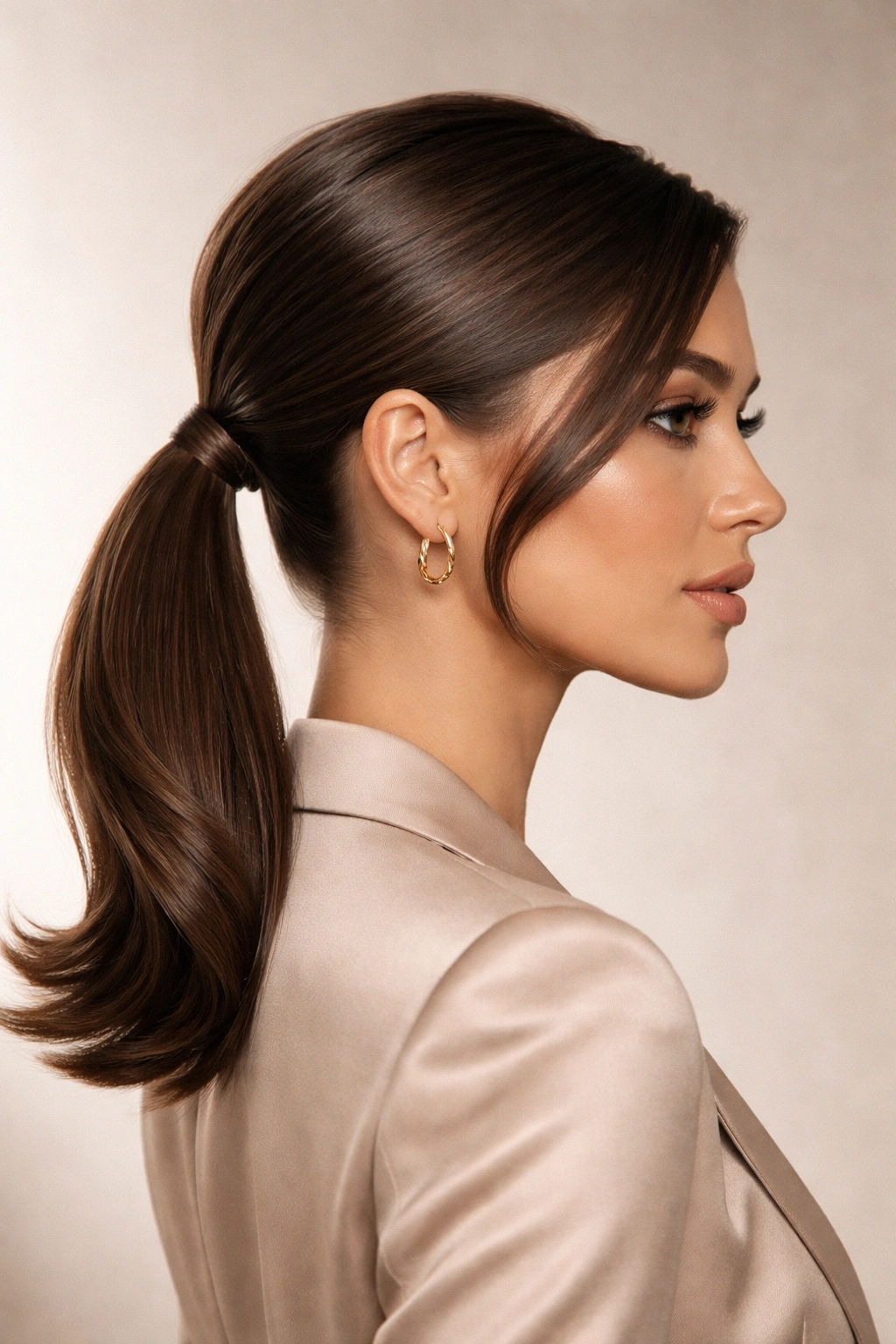
This variation adds movement and visual interest by gently flipping or curling the ends of your ponytail outward. It’s a small detail that makes a big impact — the flipped ends catch light and create dimension while maintaining the polished quality of a low side part ponytail. This works beautifully for professional settings where you want to look put-together but not overly formal.
The Subtle Movement Advantage
By adding just a bit of movement to your ponytail ends, you create visual interest without compromising polish. The flip reads as intentional and thoughtful rather than accidental or messy. This variation is particularly flattering because the outward flip creates a lengthening line and frames your shoulders beautifully. It’s also practical — the movement helps your ponytail look fuller and more dynamic.
Creating the Flip
- Start with straight hair blown out smooth with your deep side part in place
- Gather hair into a low, sleek ponytail and secure firmly with an elastic
- Use a straightening iron or curling iron to gently flip the ends of your ponytail outward
- Work in sections, curling about the last two inches of each section away from your body
- The flip should be subtle and gradual, not a dramatic curl — think gentle wave rather than ringlet
- Smooth any flyaways at the base with serum or gel
- Finish with a light hairspray to hold the flipped ends
Pro tip: If you’re short on time, apply a volumizing or texturizing spray to the ends of your ponytail before using a curling iron — this adds grip and helps the flip hold longer throughout the day.
12. The Effortless Low Side Ponytail with Piece-y Texture
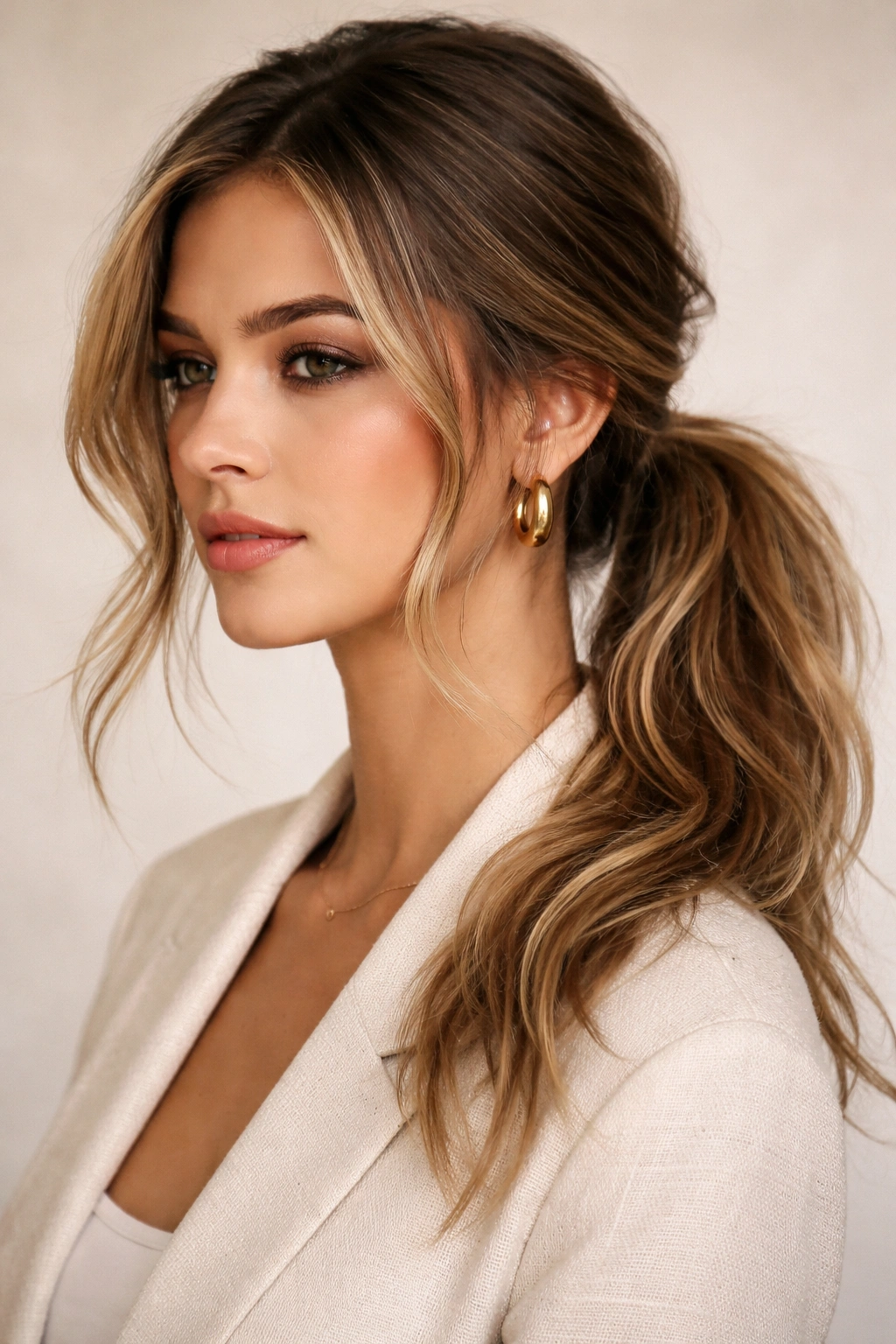
The final version embraces an intentionally undone, slightly piece-y quality that reads as effortlessly polished. This style starts with textured, piece-y hair (achieved through loose braids overnight, sea salt spray, or a dry shampoo texturizing method) and a deep side part. The ponytail itself is slightly loose and has a relaxed quality, with face-framing pieces and an overall lived-in aesthetic. It’s the style that says “I just threw this together” while actually requiring thoughtful execution.
The Appeal of Effortless Polish
The piece-y, effortlessly textured version is the current evolution of polished styling — it’s no longer about perfection, but about looking like you have your life together while maintaining an approachable, human quality. This style works for literally any setting because it’s casual enough for everyday wear and polished enough for professional or special occasions. The side part provides the polish while the texture and piece-y quality prevent it from feeling overdone.
Building the Effortless Texture
- Apply texturizing spray or dry shampoo to damp hair for grip and texture
- Blow dry with fingers rather than a brush, working texture into your hair and creating volume
- Alternatively, braid damp hair loosely into two braids, leave overnight, and unravel in the morning
- Create your deep side part, allowing it to fall naturally
- Leave several face-framing pieces loose, selecting thin sections that frame your features
- Gather the remaining hair into a low ponytail, intentionally leaving it slightly loose and piece-y
- Gently tousle and separate pieces throughout your hair for a lived-in appearance
- Use a light texturizing spray rather than a hard hairspray — this maintains the soft, piece-y quality
Real talk: This look requires accepting imperfection and embracing the idea that slightly undone is actually the goal. The ponytail shouldn’t look messy, but it should look like you didn’t spend hours perfecting every strand.
Final Thoughts
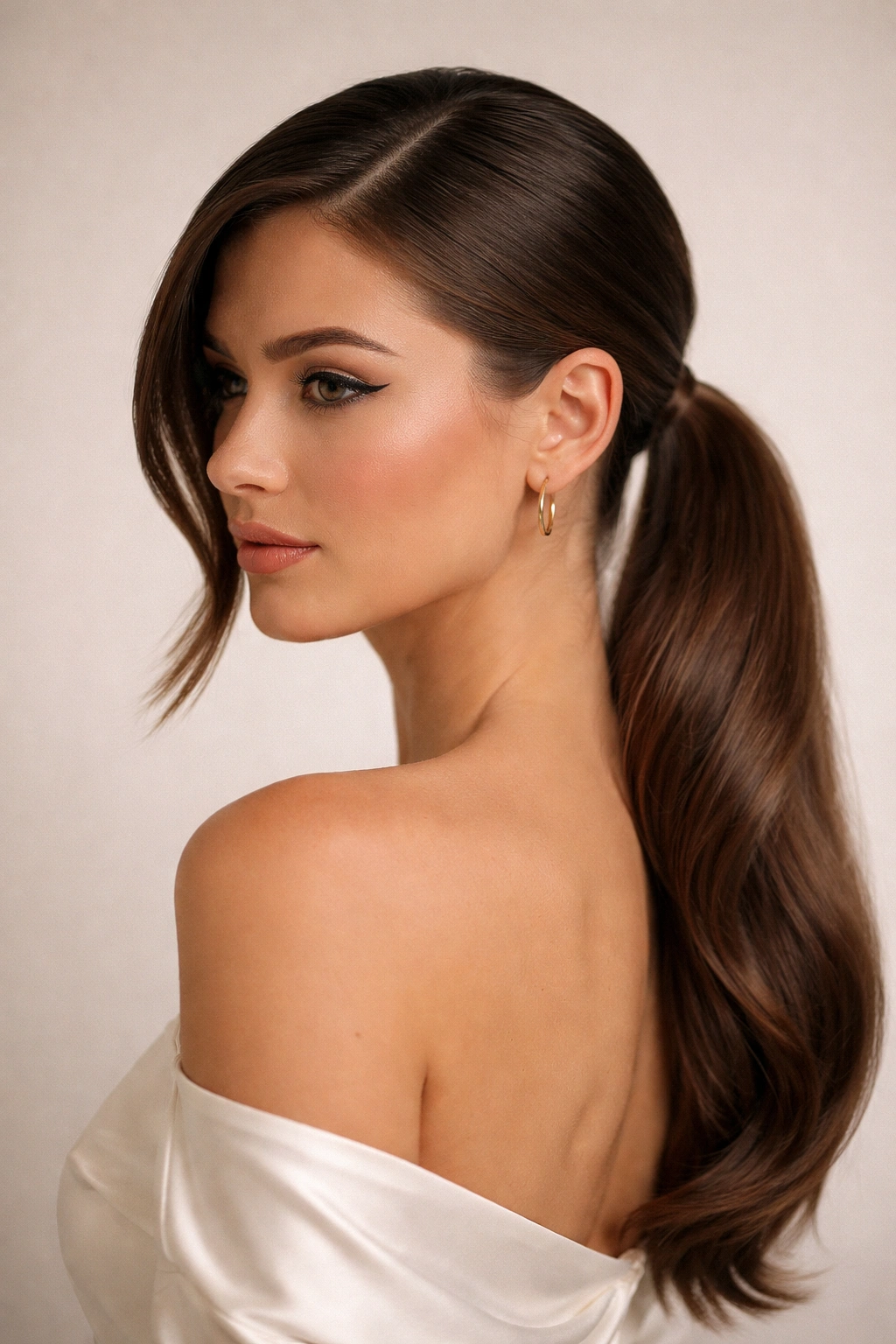
A low side part ponytail is one of those rare hairstyles that works for every age, hair type, and lifestyle. Whether you prefer sleek minimalism, romantic softness, textured movement, or effortless undone vibes, there’s a version that fits your aesthetic perfectly. The beauty of the side part is that it adds intentionality and polish to what might otherwise be a basic ponytail, transforming it into something that reads as deliberate and thoughtful.
The real secret to mastering low side part ponytails is understanding your hair’s natural texture, choosing the right products for your specific hair type, and recognizing that polish doesn’t require perfection. Some days your version might be sleek and refined, and other days it might be textured and piece-y — both are equally polished when executed with intention. Experiment with different variations to discover which approach makes you feel most confident and comfortable, then master that version so thoroughly that you can execute it without thinking.
