



A bad hair day doesn’t have to derail your entire look — especially when you’ve got clip-in ponytails in your styling arsenal. Whether you’re dealing with thin, damaged, or just flat hair, or you simply want to try a completely different vibe without the commitment, clip-in ponytails offer an instant transformation that takes minutes to apply. The best part? You can switch between styles throughout the week, experiment with colors and textures you’d never commit to permanently, and give your natural hair a complete break while still looking polished and put-together.
The clip-in ponytail market has evolved far beyond the stiff, obviously fake-looking pieces your mom might have experimented with decades ago. Modern options feature genuine human hair, innovative attachment systems, and styling versatility that rivals the real thing. From sleek and professional to textured and tousled, from short and playful to long and glamorous, there’s a clip-in ponytail style to match virtually any aesthetic you’re chasing.
The key to making clip-in ponytails look seamless is understanding which style works best for your hair type, your lifestyle, and the specific looks you want to achieve. Some styles work magic for adding volume to fine hair, while others excel at creating length and drama. Understanding what each style actually offers — beyond just the product description — helps you build a collection that gives you real versatility instead of redundant pieces that sit in a drawer.
What to Know Before Choosing Your Clip-In Ponytails
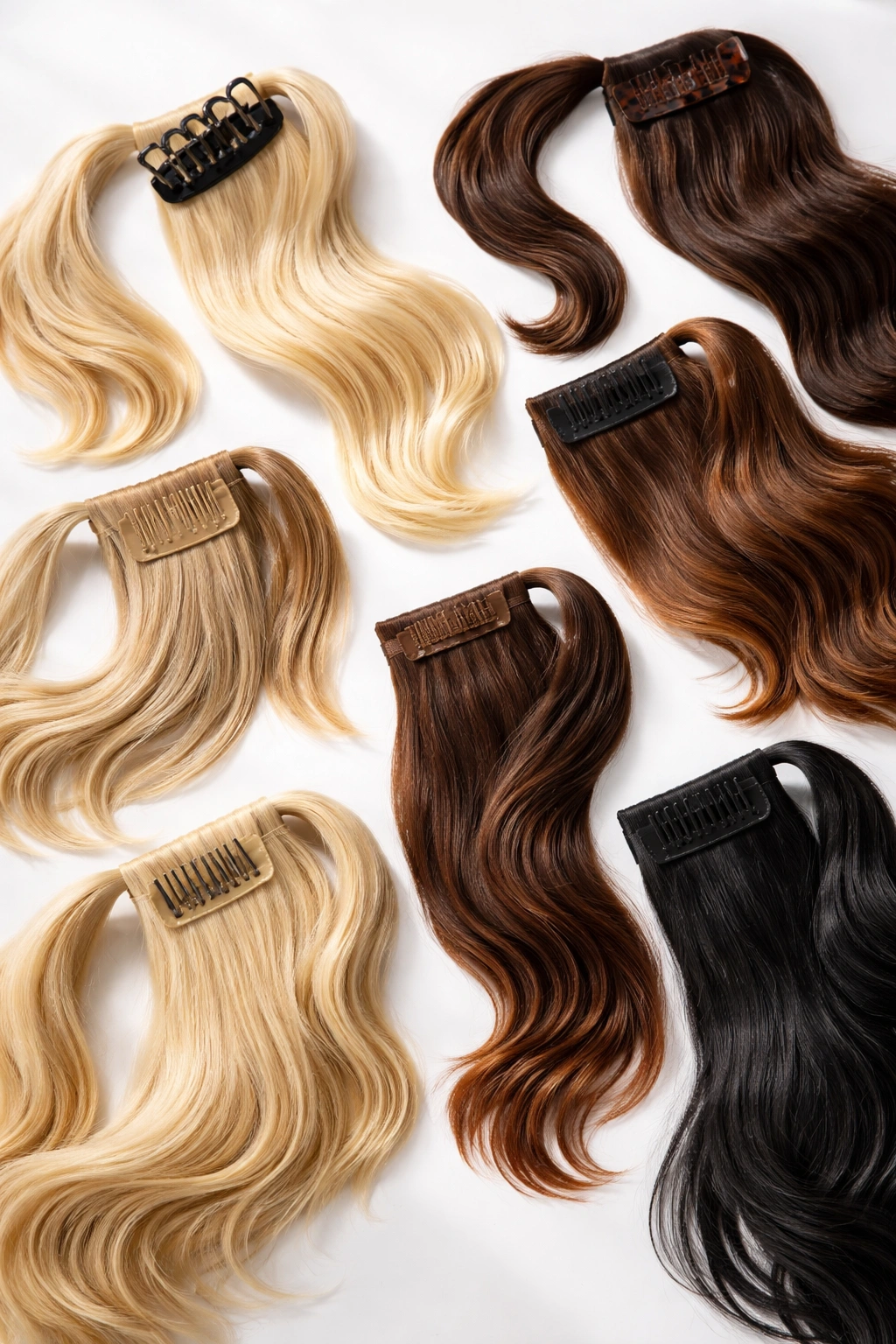
Picking the right clip-in ponytails starts with assessing your actual hair and daily needs. If your hair is thin or prone to breakage, you’ll want styles that don’t require aggressive backcombing or heavy teasing to blend properly. Those with thick, textured hair might actually prefer ponytails with more grip and security built in, since fine attachment systems can sometimes slip throughout the day.
Consider your typical day, too. If you’re mostly working from home or in a casual environment, you can experiment with bolder styles, vibrant colors, or dramatic lengths. But if you’re in a professional setting and need your ponytail to read as completely natural, you’ll want pieces that seamlessly match your hair color, have realistic density, and blend at the attachment point without any visible seams.
The attachment method matters far more than most people realize. Claw clips are quick and easy but can sometimes slip if not positioned perfectly. Snap-in systems require a bit more prep work but offer superior security. Some of the highest-end pieces use comb attachments that grip your natural hair roots, and those tend to hold strongest throughout a long day. Think about how much time you want to spend applying your ponytail each morning — quick grab-and-go is great, but not if it means retouching every few hours.
How to Prep Your Hair for the Best Results
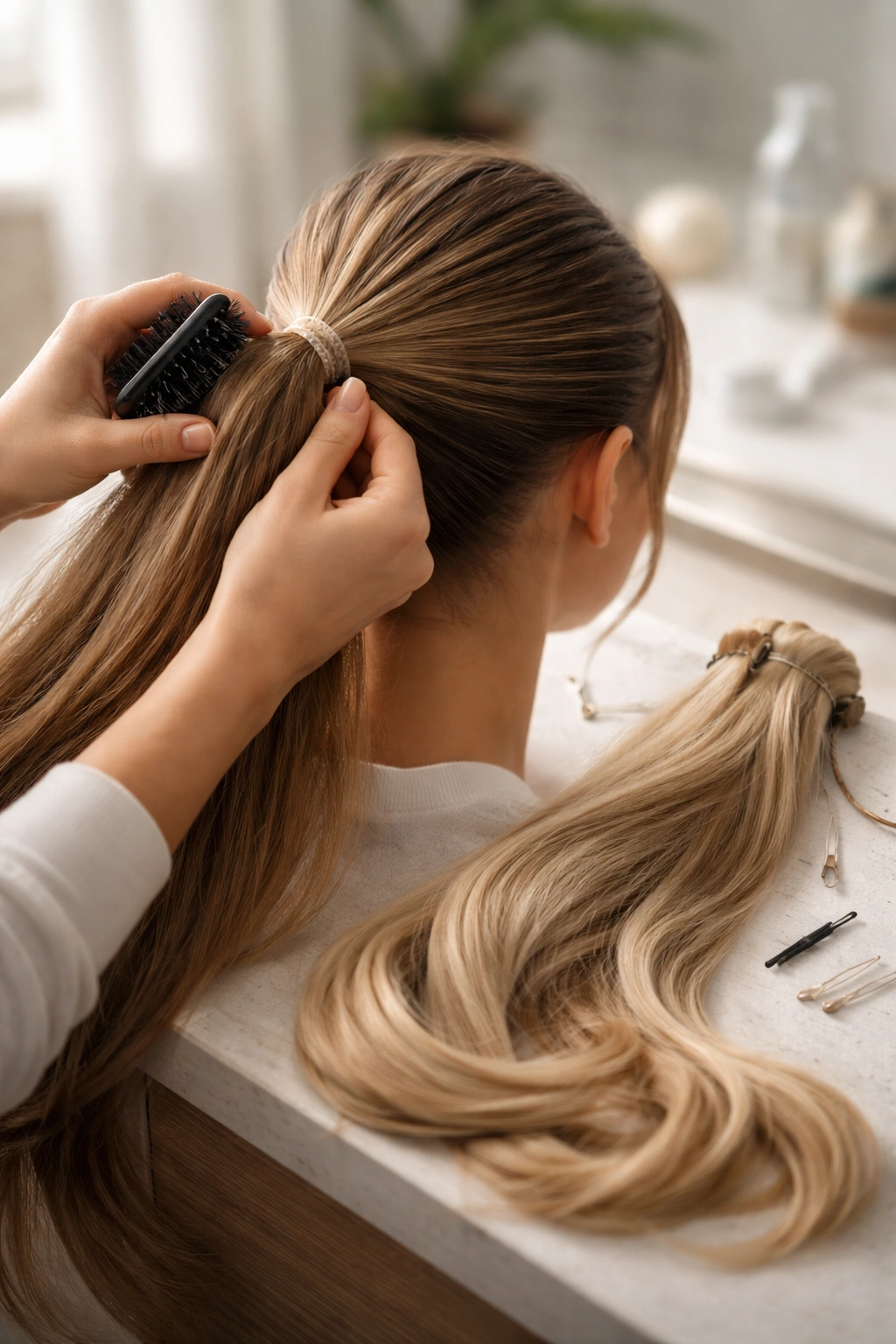
The foundation makes all the difference between a clip-in ponytail that looks polished and one that looks like you grabbed something random from the back of your closet. Start with clean or freshly dry-shampooed hair — not greasy, but with enough natural texture to give the clip something to grip. Completely smooth, freshly-washed hair can actually be slippery and cause ponytails to slip within an hour.
If you’re using a claw-clip style, create a ponytail base with your natural hair first. Section off the hair you want to pull back, smooth it with a brush or comb, and secure it tightly with a clear elastic. The clip-in piece attaches right over this base, so a secure foundation means your ponytail stays put all day. For heavier ponytails or longer styles, you might want to do a slightly higher ponytail base to distribute the weight better.
With snap-in systems, the process is different — you’ll typically position the snaps where you want the ponytail to sit, then clip the hairpiece directly onto your roots. This method actually works beautifully for people with finer hair because you’re not creating bulk with a traditional elastic base. Tease or backcomb the area gently where you’re going to clip, just enough to create texture for grip. A light texture spray helps tremendously and costs almost nothing.
1. Straight and Sleek High Ponytail
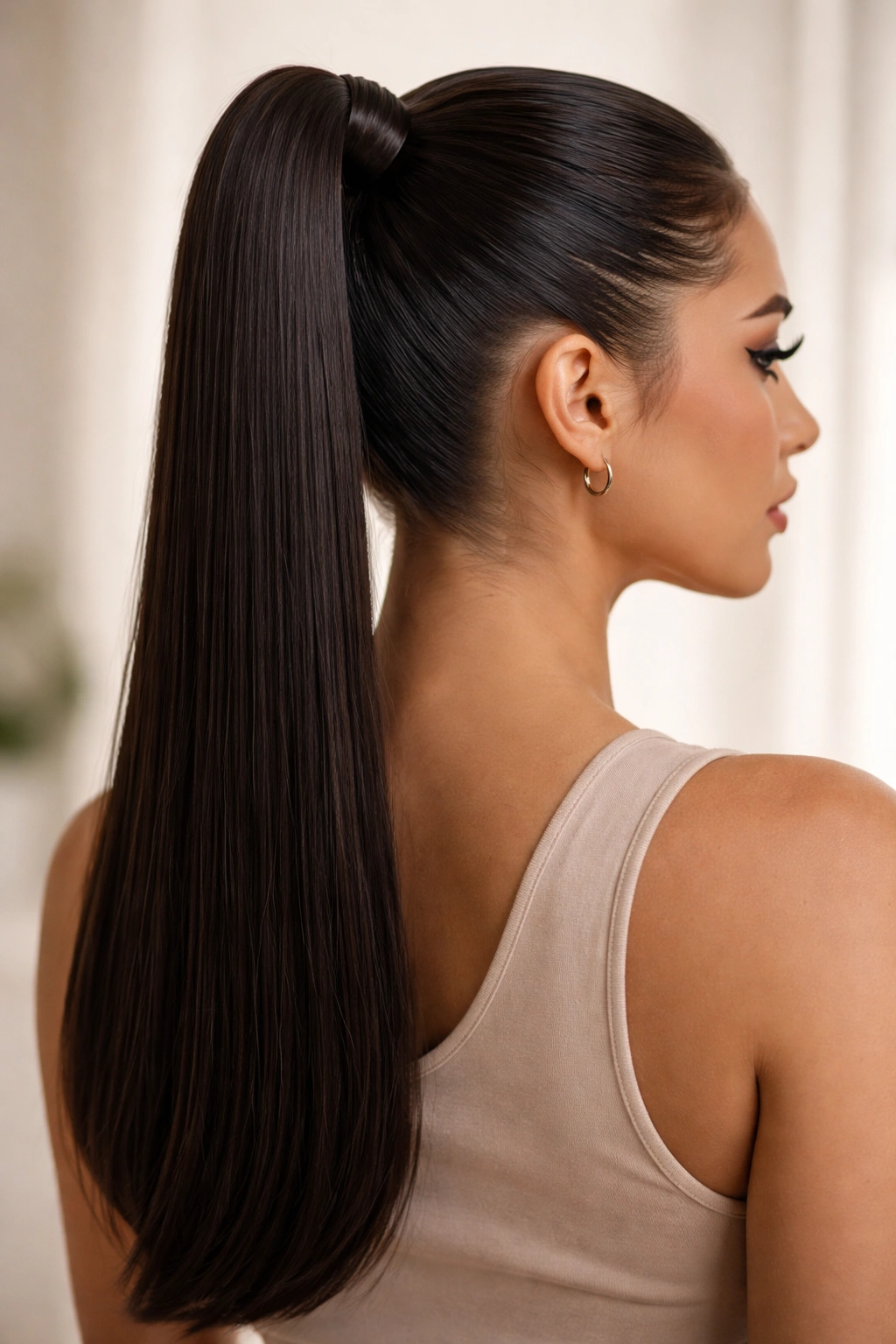
The straight high ponytail remains a power move for both professional and casual settings — it’s the style that says you’re pulled together without looking overdone. A quality clip-in straight ponytail should have perfectly smoothed strands with a subtle shine, no kinks or waves, and enough density to look full without looking costume-y.
Why It’s a Smart Investment
This style works because it’s endlessly versatile. Wear it to the office with a blazer and it reads as polished and focused. Pair it with casual clothes and it instantly elevates your vibe. The high placement elongates your face, draws attention upward, and creates a lift that actually works against gravity-related drooping that happens with age. The sleekness also works as visual architecture — it says intentional styling, even though you applied it in two minutes.
Best For and How to Style
- Works beautifully with round or square face shapes because the height creates vertical lines
- Pairs perfectly with a side part for asymmetrical elegance or a deep center part for balance
- Looks stunning with minimal makeup since your face isn’t framed by hair
- Try adding a small claw clip or hair stick through the base for editorial polish
The straight ponytail also serves as an excellent blank canvas for accessories. A silk scrunchie in a contrasting color, pearl bobby pins, or even a delicate chain wrapped around the base transforms the entire vibe. You can go minimalist and pristine or decorated and playful with the same base piece.
2. Textured and Tousled Ponytail
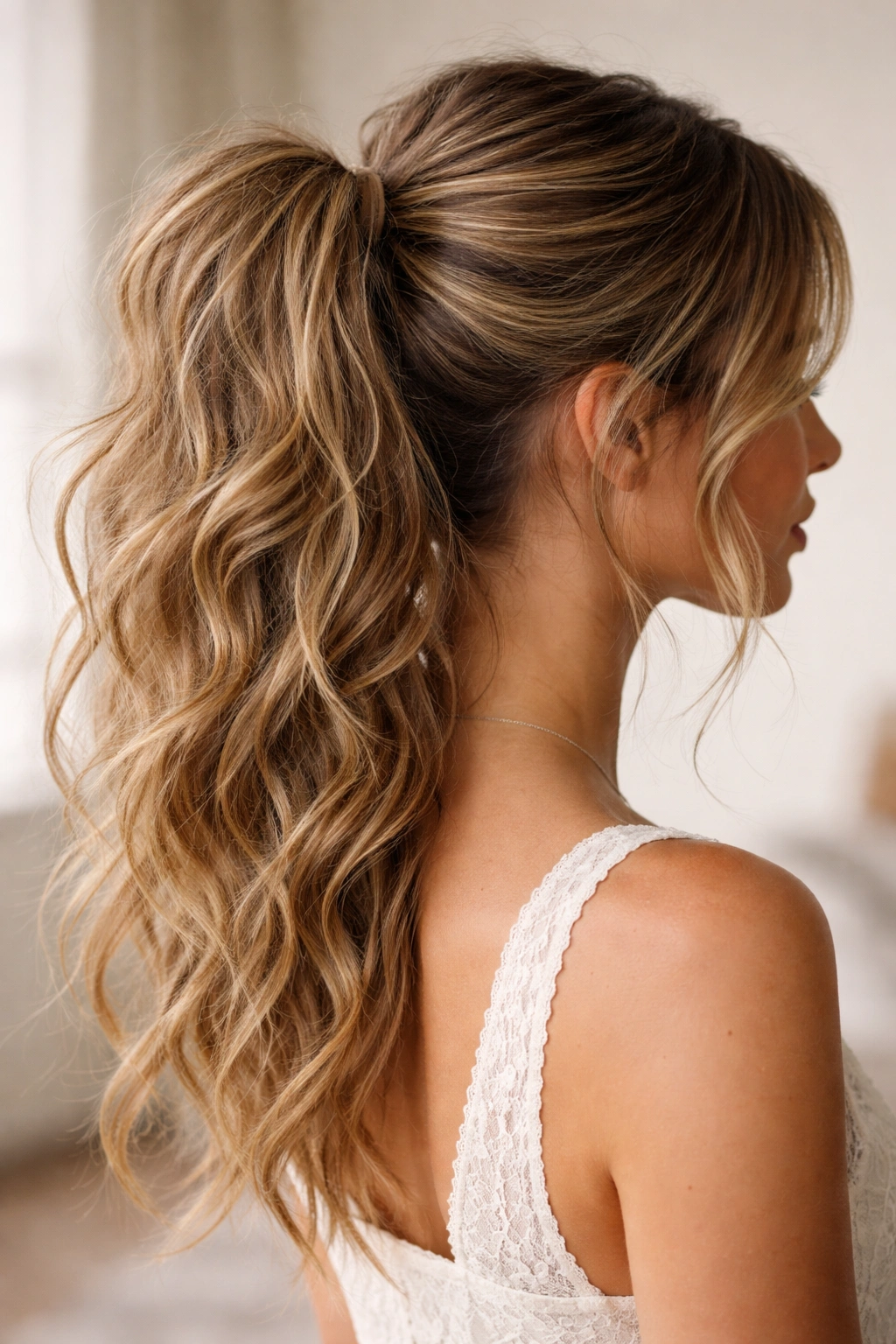
Not every day calls for sleekness. The textured ponytail embraces waves, curls, and piece-y movement — it’s effortlessly undone in the best way. This style features deliberate texture throughout, often with some shorter pieces or smaller sections interspersed with longer waves to create visual interest and dimension.
Why Texture Adds Sophistication
The beauty of a textured ponytail is that it looks intentionally styled rather than simply tied up. Those waves and curves add dimension that catches light, making even synthetic pieces read as more expensive and natural-looking than perfectly straight hair. The texture also helps disguise any obvious attachment point or seams because the eye follows the wave pattern rather than searching for where real hair ends and the clip-in begins.
Application and Blending Tips
- Style your base ponytail slightly loose rather than tight — texture benefits from some breathing room
- Use a texture spray or dry shampoo on your natural hair before clipping in, which helps everything blend together
- Don’t clip the piece in dead straight — angle it slightly off-center or tilt it to one side so the waves create visual movement
- Add a few face-framing strands from your natural hair and curl them to echo the texture of the ponytail
This style pairs beautifully with minimal makeup because the texture already provides plenty of visual interest. Wear it with a high-shine lip for balance, or go completely natural-looking when you want the ponytail to be the main statement.
3. Long and Layered Volume Ponytail
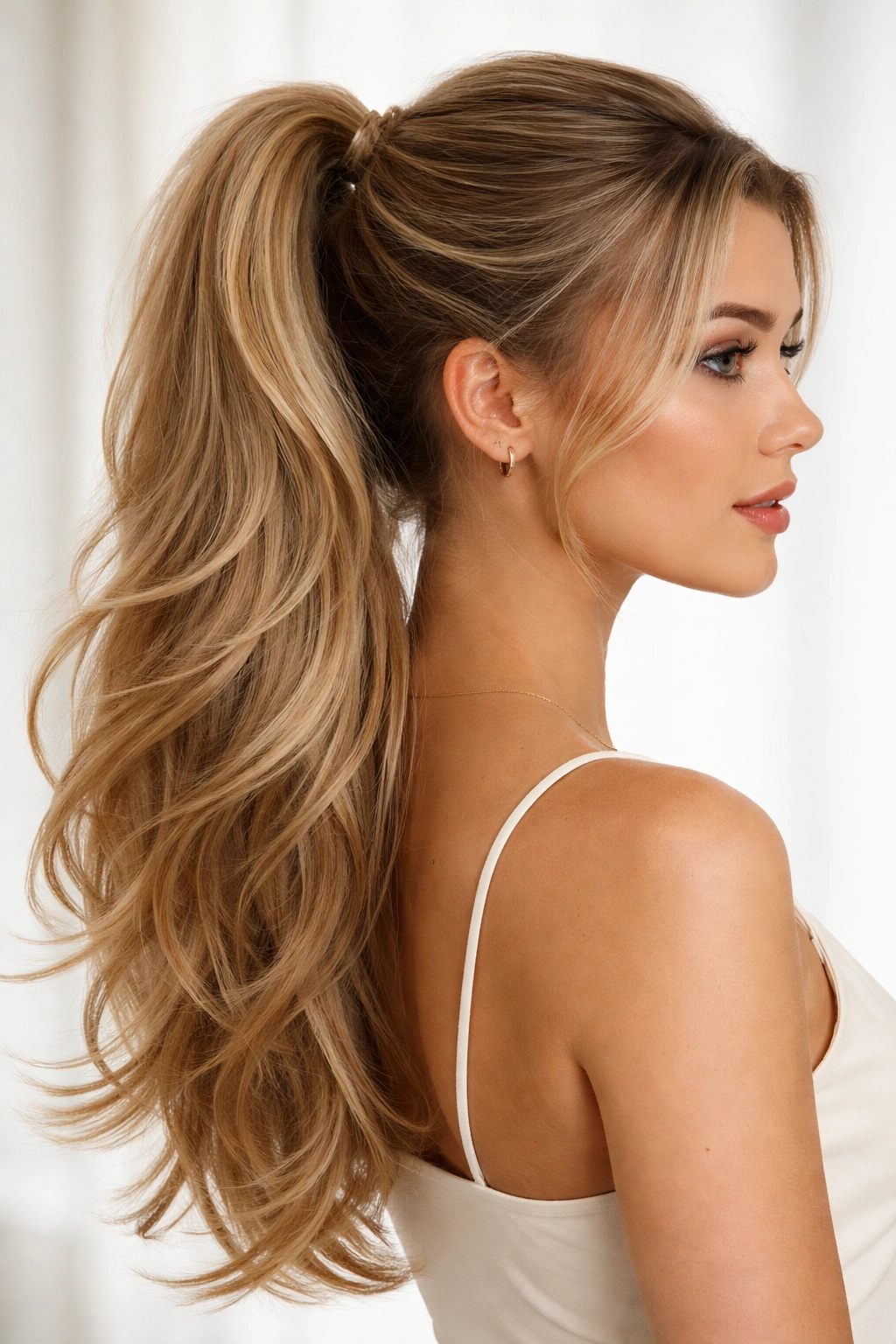
If your natural hair stops at your shoulders but you fantasize about long, cascading lengths, a layered volume ponytail delivers exactly that. This style features strategic layering throughout, with longer strands framing the ponytail and shorter layers building texture near the base. The layering creates lightness and movement rather than a heavy block of hair.
Why Layering Creates Movement
Those shorter layers aren’t decorative — they actually serve a function. They create air between the layers of hair, making the whole ponytail look less dense and heavy, which paradoxically makes it look more expensive and real. The layering also means you can style the shorter pieces differently from the longer strands, creating an asymmetrical, modern vibe that reads as intentional rather than accidental.
Styling for Maximum Impact
- Use the shorter layers to create face-framing by pulling out a few strands from the short-layer section and curling them around your face
- The longer strands can handle additional styling — try adding loose waves or spiral curls to the bottom third for extra dimension
- Layered ponytails work particularly well with a low or mid-height base, which balances the visual weight better than a high ponytail would
- Gently tease the shorter layers at the base to create height and prevent the piece from slipping throughout the day
This style transforms people with naturally fine or thin hair. You can go from wispy strands that barely reach your shoulders to a full, textured ponytail that looks genuinely thick and healthy.
4. Curly and Coily Ponytail
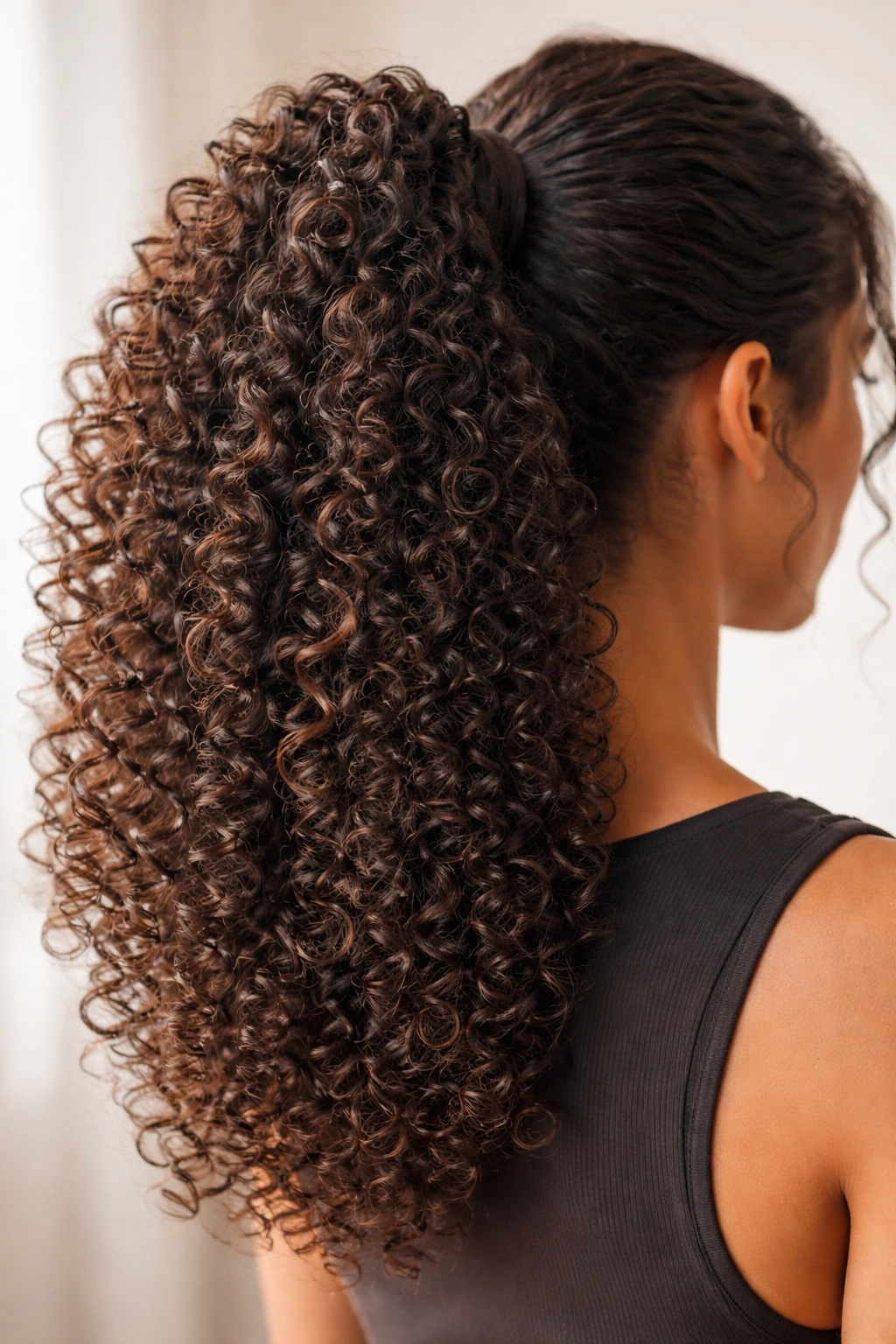
The curly ponytail celebrates texture and personality in a way that screams confidence. Whether you have naturally curly hair you’re giving a break to, or you’re experimenting with a texture you’ve never tried, a genuine curly or coily clip-in brings movement, volume, and dimension that instantly transforms your entire aesthetic.
Why Curls Change Everything
A curly ponytail doesn’t just add length — it adds presence and drama. The volume of curls means even a medium-length piece reads as incredibly full and luxurious. Curls also work as natural face-framing without any additional styling since the pieces spiral in different directions. The texture also completely transforms how the piece sits and moves throughout the day, creating an energetic vibe that’s almost impossible to achieve with straight hair.
Styling Curls for Longevity
- Apply a curl cream or anti-frizz serum to the clip-in ponytail before wearing, which keeps curls defined and bouncy throughout the day
- Avoid brushing curly ponytails, which disrupts the curl pattern and creates frizz — use your fingers or a wide-tooth comb if you need to separate sections
- Curly ponytails look best with a slightly loose base so the natural curl pattern can spring free
- Sleep in a silk bonnet or wrap the ponytail loosely if you’re wearing the same clip-in piece for multiple days
Curly ponytails pair beautifully with either minimal makeup (let the curls be the statement) or bold makeup (the curls can handle the competition). Try them with a deeper lip color than you’d normally wear — the fullness of the curls actually supports richer tones better than straight hair does.
5. Wavy Ombre Ponytail
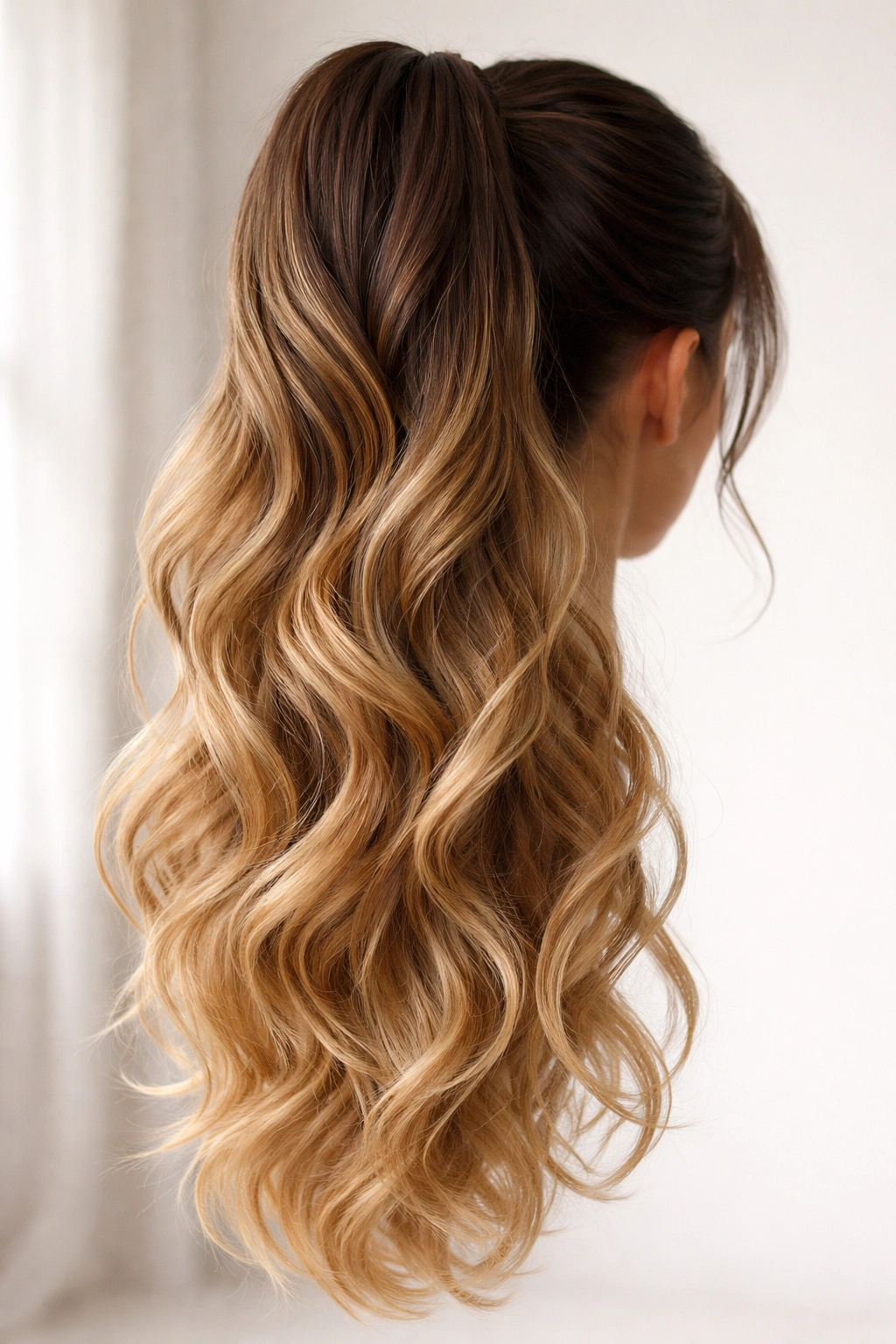
The ombre ponytail offers the best of both worlds — realistic waves that catch light, plus a color gradient that adds visual richness and depth. These pieces typically transition from a darker root color into lighter mid-tones and ends, creating dimension even when the hair is clipped in and stationary.
Why Ombre Creates Optical Illusion
Ombre works as a visual trick that makes hair look thicker and more expensive. The color transition draws the eye through the entire length, making even a medium-length piece feel substantial and interesting. The gradient also helps disguise the attachment point since the color shift naturally creates visual breaks that look intentional.
Choosing Your Ombre
- Darker roots with lighter ends (traditional ombre) works with virtually every hair color and skin tone
- Consider whether you want the contrast subtle and blended or dramatic and defined
- Ombre pieces work better with warm-toned skin when the lighter end is golden or honey-toned; cooler skin typically looks better with ashier blonde or platinum finishes
- If your natural hair color is very light, look for lighter ombre pieces where the root is a medium blonde rather than dark brown
Style the wavy ombre ponytail slightly loose so the waves catch light and the color gradient shows throughout. A smooth base with a slightly elevated clip-in placement lets those waves breathe and move as you go about your day.
6. Ponytail with Bangs Attachment
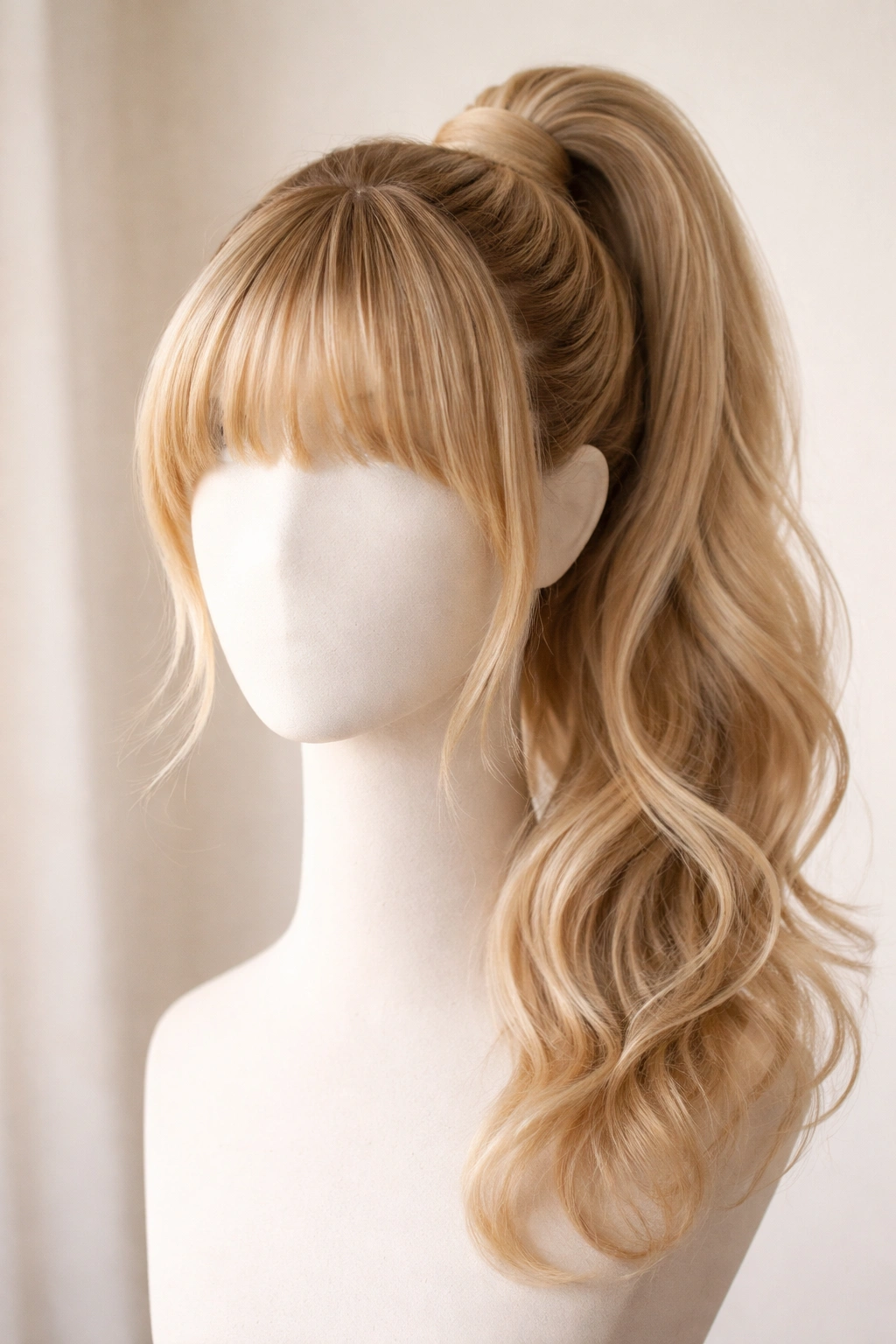
For people who’ve always wondered what bangs would look like without making a permanent commitment, a ponytail with an integrated bang attachment answers that question perfectly. These pieces include a separate clip-in section of bangs that attaches independently from the ponytail itself, letting you style both components separately or remove the bangs while keeping the ponytail in.
Why Bangs Are a Game-Changer
Bangs fundamentally reshape your face — they shorten the appearance of a longer face, draw attention to your eyes, and create instant visual drama. By using a temporary attachment, you can test-drive bangs with different styles without the commitment. You might discover that bangs absolutely work for you, or you might realize they’re not for you — either way, you learned something without cutting real hair.
Bang Styling Options
- Blunt, straight bangs create a bold, graphic look with a fashion-forward edge
- Wispy, layered bangs soften your features and work with more delicate face shapes
- Side-swept bangs offer the best of both worlds, adding face-framing movement with a softer look than blunt bangs
- Style the bangs separately from the ponytail for the most polished appearance — the bangs deserve their own curl or wave pattern
The bang attachment means you can change your entire look based on mood or occasion. Wear the ponytail alone for days you want classic polish, or clip in the bangs when you’re feeling experimental and dramatic.
7. Braided Ponytail with Extensions
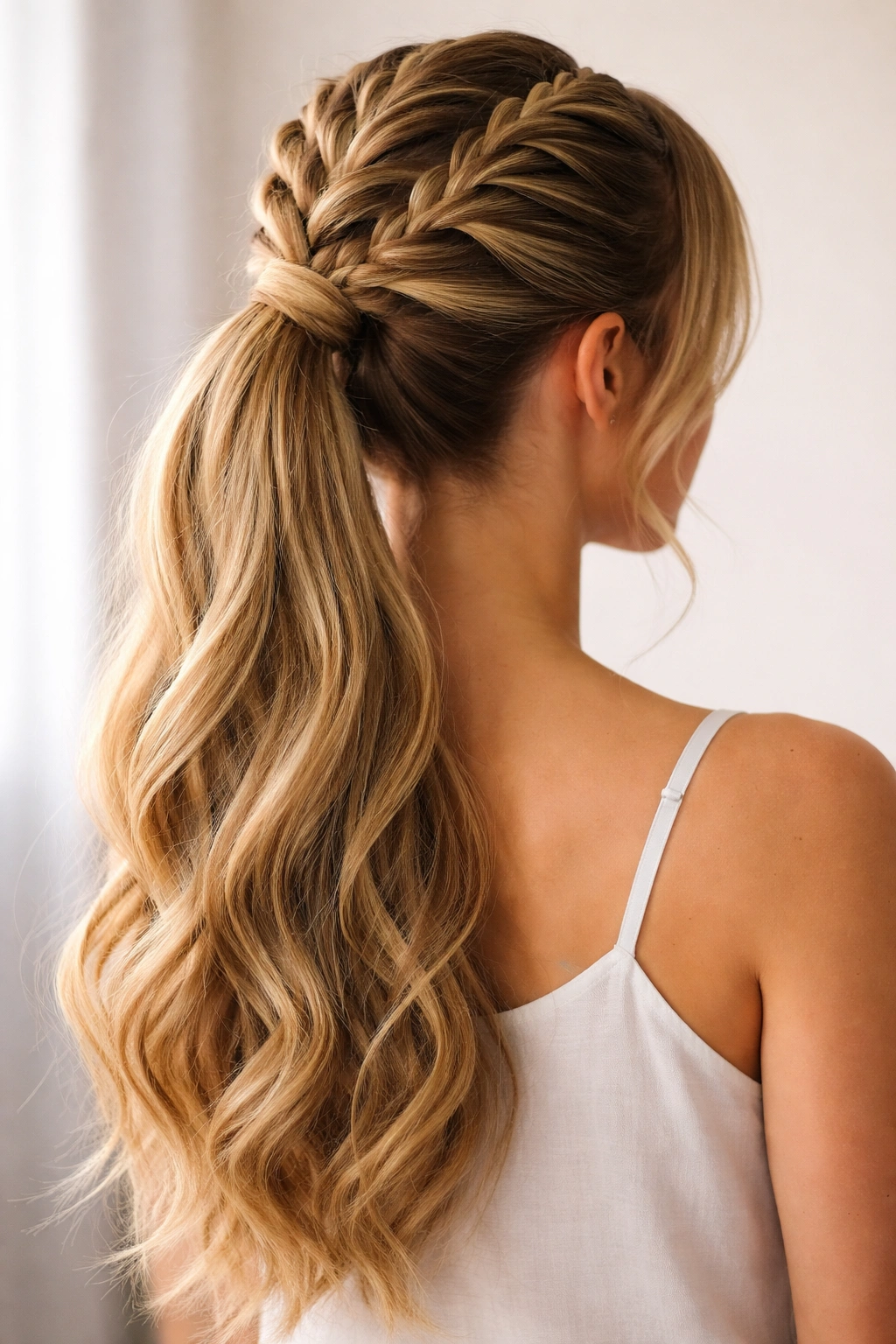
The braided ponytail merges multiple styling trends into one sophisticated piece. These feature an integrated braid through the top or sides, with longer ponytail length extending below the braid. The braid itself might be Dutch, fishtail, or a standard three-strand — the style typically determines the overall aesthetic.
Why Braids Add Complexity and Interest
A braid instantly elevates the styling game because it requires precision and intention. The braid draws the eye upward and creates a sophisticated visual frame around your face and crown. Braids also help grip clip-in ponytails better than straight hair alone, meaning a braided ponytail often stays perfectly positioned throughout an entire day without slipping.
Styling the Braid Section
- Tease your natural hair gently along the path where the braid will sit, creating texture for grip
- The braid section should sit close against your head but not tight — you want comfort for all-day wear
- You can pull the braid slightly loose after clipping in the piece, which softens the look and adds volume
- Accessorize the braid with thin ribbon, metallic thread, or small decorative clips woven through
Braided ponytails look particularly striking with half-up styling, where the braid sits at the crown while the lower ponytail shows your natural hair underneath for a few inches before transitioning to the clip-in piece.
8. Colored Statement Ponytail
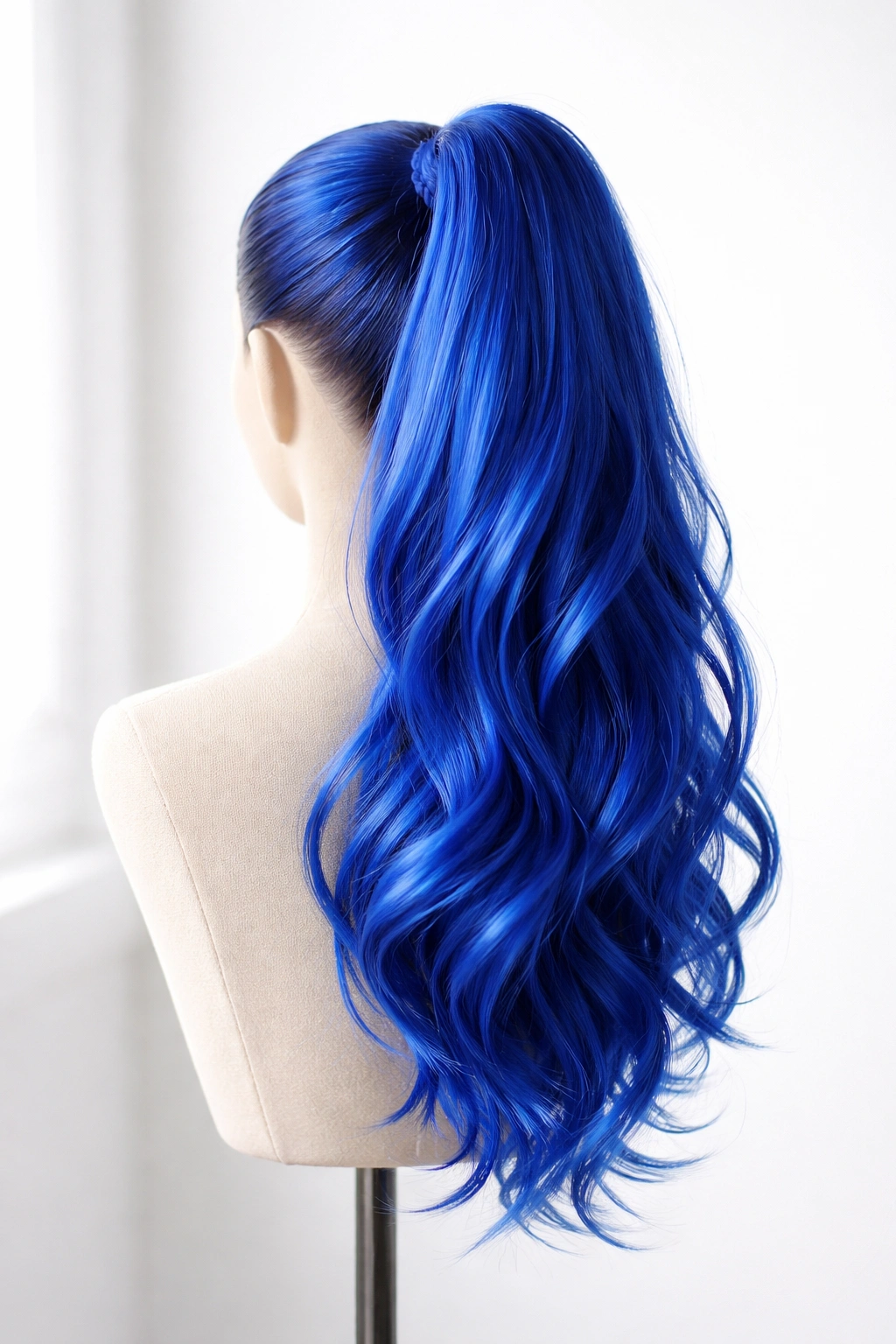
For those who crave bold color without the damage or commitment of permanent dye, a colored statement ponytail delivers pure creative freedom. These pieces come in virtually every color imaginable — jewel tones, pastels, vivid fashion colors, or sophisticated metallics. You can go for an exact color match to your natural shade, or embrace something completely unexpected.
Why Colored Ponytails Work as Accessory Pieces
A colored ponytail functions like a premium accessory — it’s an instant way to refresh your look without any permanent change to your actual hair. The color acts as a focal point that draws attention, making even a simple outfit look intentional and styled. You can coordinate the ponytail color to your outfit, your mood, or the season without any real commitment.
Choosing Your Statement Color
- Deep jewel tones (emerald, sapphire, burgundy, amethyst) work with virtually every skin tone when you choose the right undertone
- Pastel colors make a softer, more approachable statement than bright fashion colors, but require more careful skin tone matching
- Metallic colors (rose gold, gold, silver, copper) work beautifully as transitional pieces if you’re nervous about bold color
- Your natural hair color matters less than your skin tone when choosing a statement color
The beauty of a colored ponytail is the total creative freedom. Try colors you’ve always secretly wanted but never allowed yourself to experiment with. Wear them for one week and switch back to your natural color the next — the experimentation costs far less than permanent damage and gives you way more flexibility.
9. Sleek Bun Ponytail Hybrid
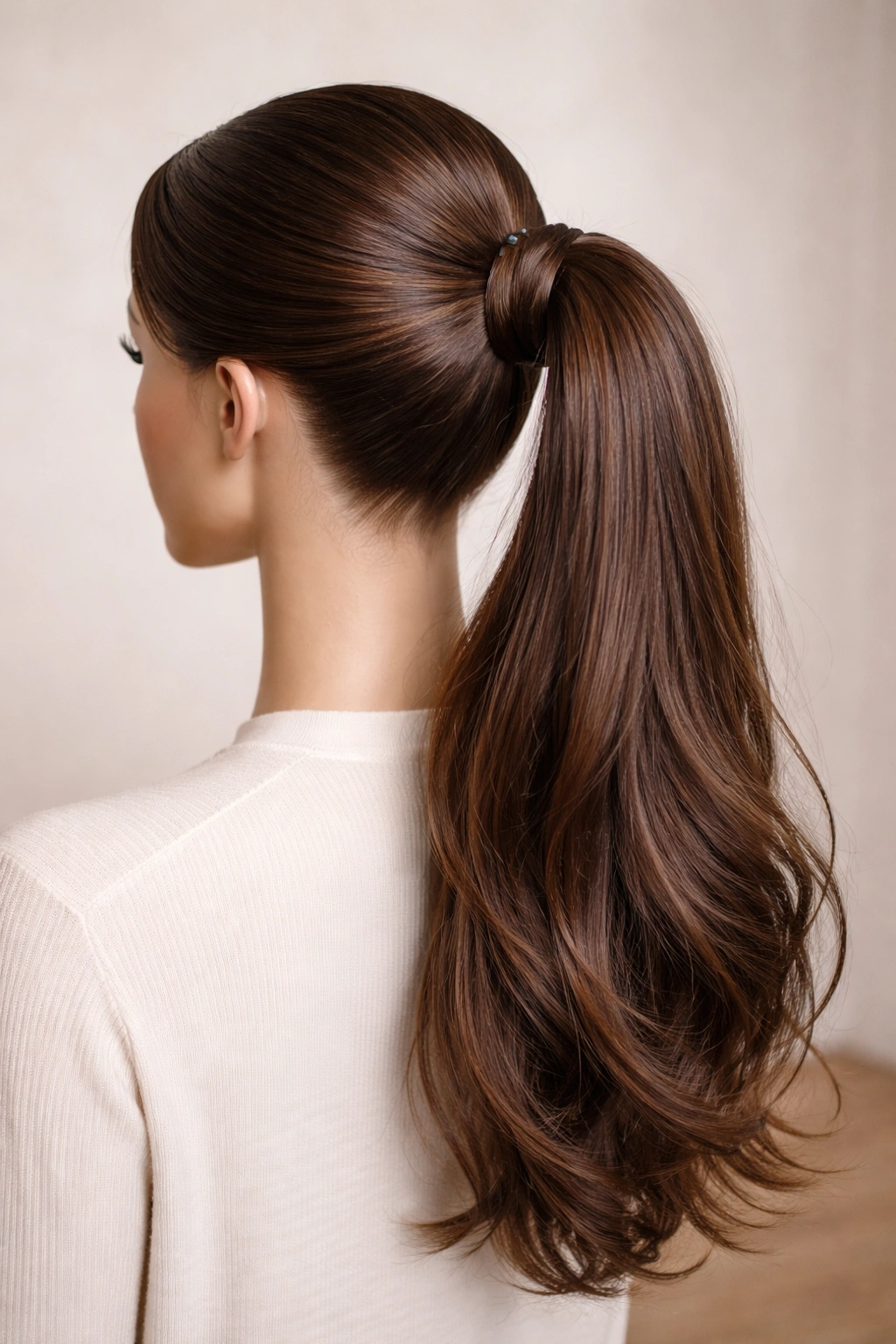
This clever hybrid combines ponytail length with bun styling, creating a piece that looks like a low bun from the front but flows into ponytail length when you look at it from the side or back. The style works beautifully for professional settings where a traditional bun is required but you want more length and movement than a standard bun offers.
Why This Hybrid Solves Multiple Problems
The bun-ponytail hybrid addresses a real issue: traditional buns can look too structured and severe for some people, but loose ponytails don’t read as professionally polished. This piece splits the difference by offering the sleek, controlled aesthetic of a bun while maintaining the fluidity and movement of a ponytail. It’s particularly smart for people with very fine or thin hair who struggle to create a visually full bun with their natural hair alone.
Styling This Hybrid Piece
- Position the clip-in at the nape of your neck, which is where a bun base naturally sits
- Smooth your natural hair into a low, tight base, then clip the piece directly onto your smoothed hair
- The front and sides should read as a neat, controlled bun while the back shows the longer, flowing sections
- You can add a decorative clip, metal cuff, or fabric wrap around the base to enhance the bun illusion
This style works beautifully in creative professional settings and looks absolutely polished for events, interviews, or any situation where you want to look serious and put-together without looking boring.
10. Ponytail with Volume at the Crown
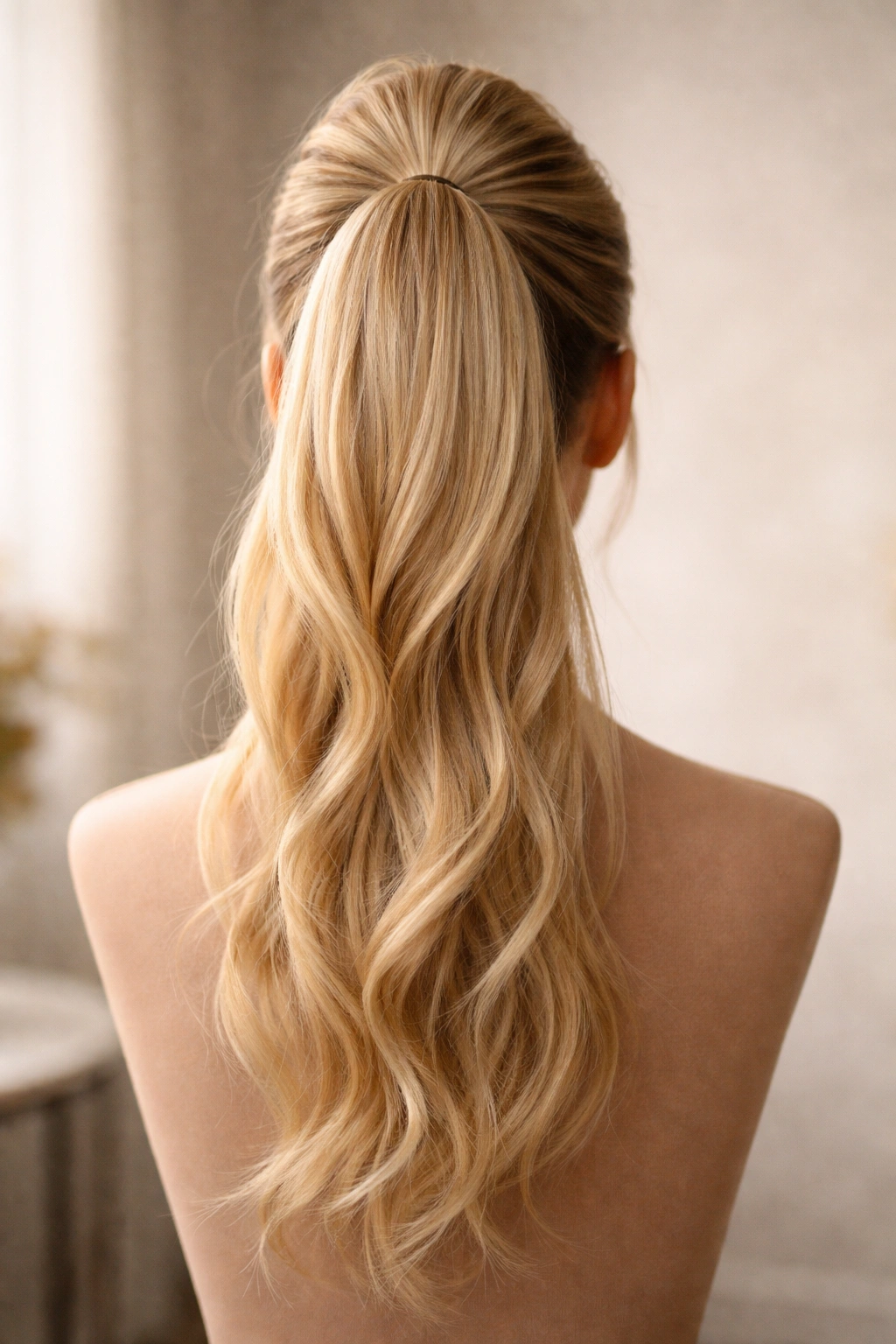
One of the most common complaints about natural hair is lack of volume at the crown, which makes the whole face look tired and drawn. A clip-in ponytail with built-in crown volume solves this problem by featuring thicker density in the upper section where it attaches, then tapering slightly toward the ends.
Why Crown Volume Matters
Volume at the crown creates a visual lift that affects how your entire face appears. It opens up your features, makes your eyes look larger and more awake, and creates a youthful, energetic silhouette. The crown volume also helps balance proportions — if you have a longer face shape, that crown height helps create horizontal lines that feel more balanced.
Maximizing the Crown Effect
- Tease your natural hair at the crown specifically, creating a solid foundation for grip
- Position the clip-in slightly higher and more centered than you might with a standard ponytail, letting the built-in volume sit where it needs to
- You can pull a few strands from around your face and pin them into the crown section, blending your natural hair with the clip-in piece seamlessly
- Use a volumizing spray on the crown section of the clip-in itself before clipping it in, which amplifies the thickness
This style is particularly smart for people over 40 or anyone dealing with natural thinning at the crown — you get the visual fullness and face-opening benefits of the volume without any commitment or damage to your actual hair.
11. Vintage Hollywood Ponytail
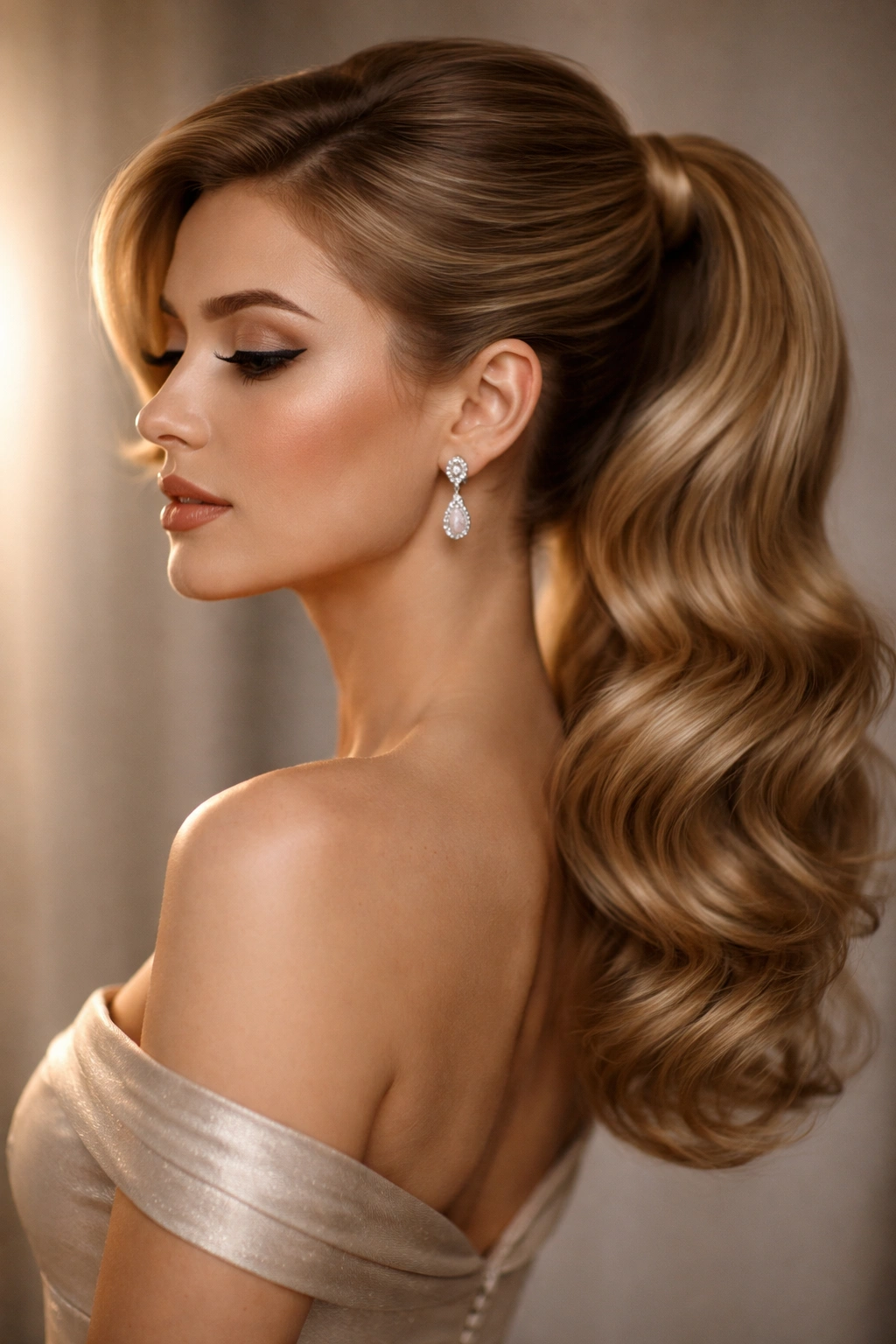
The vintage Hollywood ponytail channels classic elegance with soft waves, romantic movement, and a side-swept or low-placed positioning that feels nostalgic and refined. These pieces typically feature loose, romantic waves with subtle layers that create depth and dimension without looking disheveled.
Why Vintage Styling Never Gets Old
Hollywood glamour never truly goes out of style because it’s fundamentally flattering to nearly every face shape. The soft waves catch light beautifully, creating dimension and luxury. The side-swept or low positioning softens facial features while still creating enough structure to look intentional. This style reads as effortlessly elegant rather than trying-too-hard styled.
Achieving the Vintage Vibe
- Use a large barrel curling iron on the finished ponytail to create romantic waves, or request it pre-waved from the seller
- Pin one side slightly back with a vintage-inspired clip or comb, creating that classic side-sweep
- Add a decorative hair stick, pearl pin, or silk ribbon to the base for authentic vintage touches
- Pair with classic makeup — strong brows, winged eyeliner, and a bold lip — to complete the era
The vintage Hollywood ponytail works for both special occasions and everyday styling if you want to feel a bit more polished and intentional. It’s professional enough for work settings but special-occasion worthy for date nights or events.
12. Bubble Ponytail with Clip-In Extension
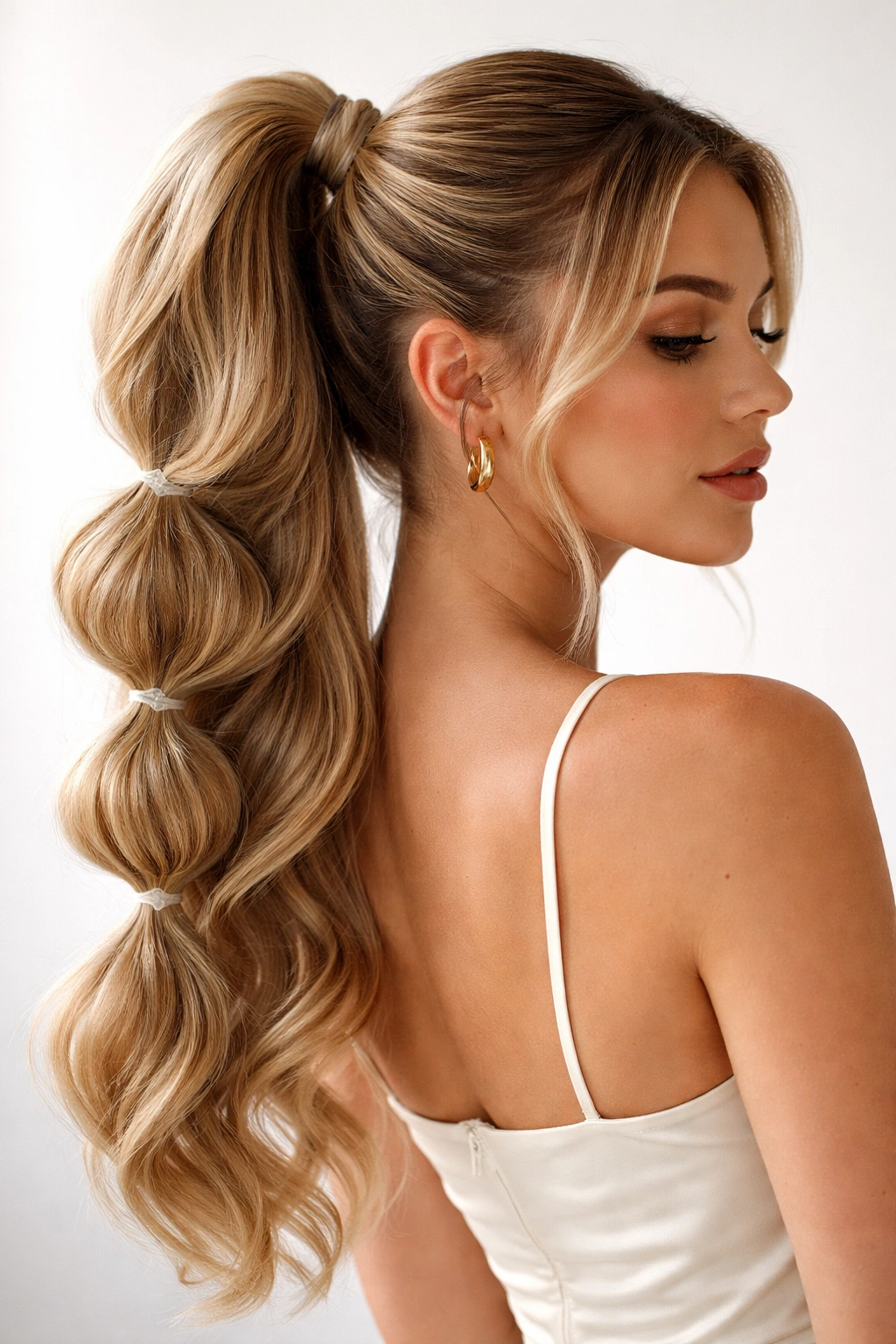
The bubble ponytail uses multiple clear elastics spaced down the length of the ponytail, creating distinct “bubbles” of volume between each elastic. A clip-in version eliminates the tediousness of the style while delivering the playful, dimensional aesthetic. The bubble effect creates texture and visual interest that looks contemporary and fashion-forward.
Why Bubbles Work as Textural Interest
The bubble ponytail isn’t just decorative — the technique actually creates visual softness and movement. Each bubble creates a section of controlled volume, and the gaps between bubbles create shadow lines that add dimension. The style is playful without looking juvenile, and it works as an interesting conversation piece while still being wearable in casual professional settings.
Styling Your Bubble Ponytail
- Position the clip-in straight back in a high ponytail position for maximum visual impact
- You can add your own elastics over the clip-in piece if you want to customize the bubble placement, or wear it as-is if it comes pre-bubbled
- Pull each bubble slightly, creating a puffed-out section between elastics for maximum texture
- Add decorative elements like small clips, charms, or metallic elastics to enhance the trendy feel
The bubble ponytail works beautifully with casual outfits, creative work environments, or any time you want to signal that you don’t take yourself too seriously. It’s a style that says you’re confident enough to experiment with something playful.
Final Thoughts
Building a collection of clip-in ponytails gives you styling power that goes way beyond what you can achieve with your natural hair alone. Each style serves a different purpose — some work best for professional settings, others are pure creative expression, and some simply save your natural hair on days when damage-free length and volume matter most.
The key to actually using your collection is being honest about which styles you’ll realistically wear. If you hate maintaining waves, a textured ponytail will sit unused. If you’re uncomfortable with bold colors, a statement pink ponytail won’t make it into your regular rotation. But once you nail down the styles that actually work for your lifestyle and aesthetic preferences, clip-in ponytails become one of your most valuable styling investments.
Quality matters tremendously with clip-in pieces because a cheap ponytail that slips, tangles, or sheds will frustrate you into abandoning the whole category. Investing in human hair pieces with secure attachment systems means you’re actually going to reach for them repeatedly, which dramatically extends the ROI. A $60 ponytail you wear twice a week for a year costs just 23 cents per wear — compare that to a $20 piece you try once and abandon, and the math becomes obvious.
The beauty of clip-in ponytails is the freedom they represent. You get to experiment without consequences. You can protect your natural hair while still exploring different lengths, textures, colors, and styles. You can be a different person on Monday than you are on Friday, all without actually altering your hair. That’s not just convenient — it’s genuinely empowering.
