



Blonde hair has become an increasingly popular choice for Black women, and when it comes to styling that blonde length into a ponytail, the possibilities are genuinely endless. Whether you’re going for sleek and professional, textured and voluminous, or something playfully trendy, blonde ponytails offer a striking way to express your personal style while giving you the practical benefits of an updo. The key is understanding which ponytail style works best with your hair texture, face shape, and the overall look you’re aiming for—because not every ponytail flatters every person equally, and that’s perfectly fine.
The beauty of ponytails is that they’re versatile enough to work for literally any occasion. You can wear one to the gym, to the office, to a night out with friends, or to a formal event—it all depends on how you style it and what details you add. For Black women with blonde hair, the contrast between your natural skin tone and the lighter hair color creates a stunning visual that deserves a ponytail style that honors that beauty. This guide walks you through 12 distinct blonde ponytail styles, each with its own character, level of difficulty, and best-use scenarios.
Before we dive into the specific styles, it’s worth knowing that the health of your blonde hair matters just as much as the style itself. Blonde hair—especially on Black women who may be working with textured or coily hair that’s been color-treated—needs consistent moisture, protection from heat damage, and thoughtful styling practices to look and feel its best. You’ll get the most impact from these ponytail styles when your hair is well-conditioned, protective products are applied before styling, and you’re intentional about how tightly or loosely you secure each style.
1. The Sleek High Ponytail with a Wrap
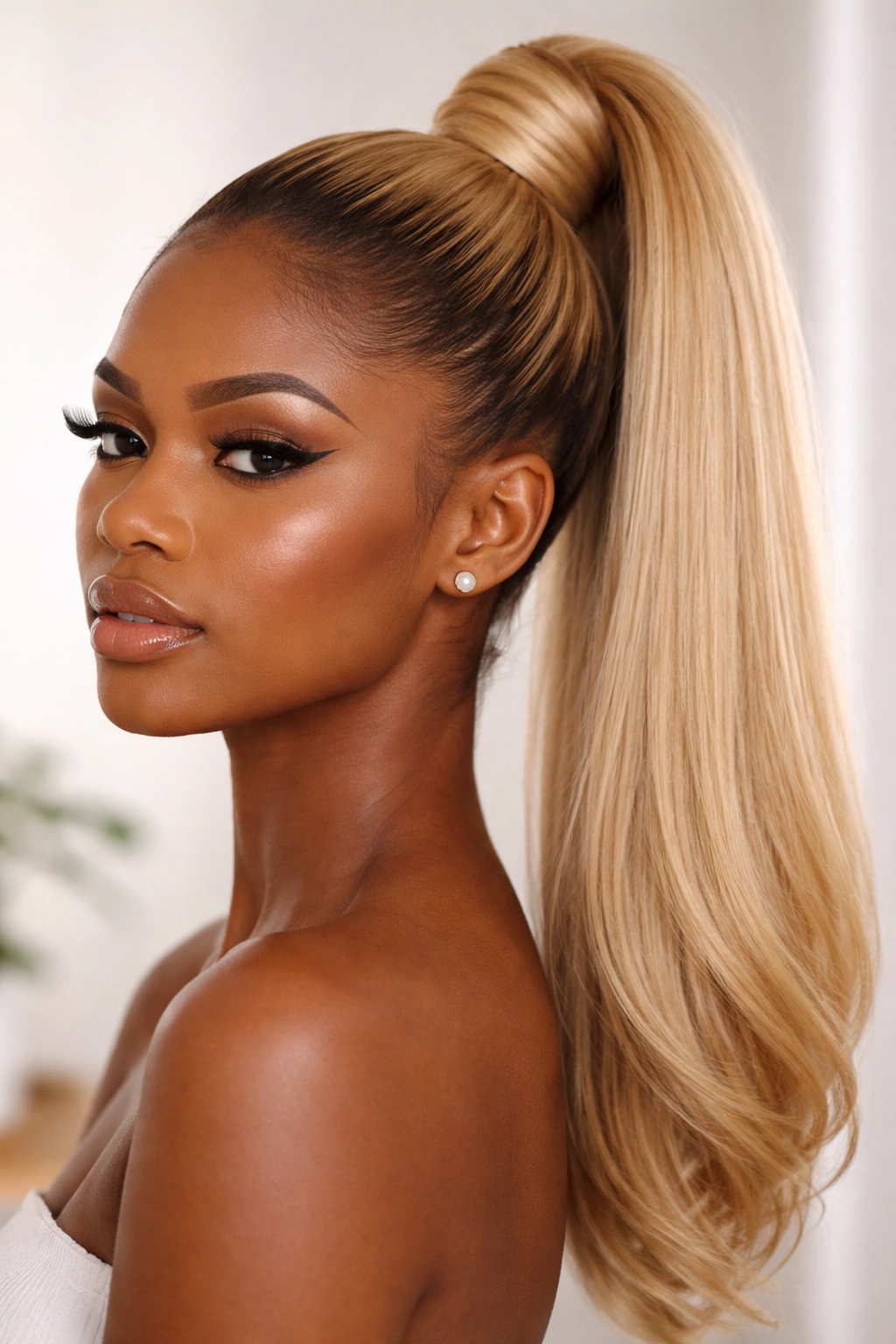
A sleek high ponytail is a timeless choice that photographs beautifully and reads as instantly polished, whether you’re at work or out socially. The key to nailing this look with blonde hair on a Black woman is making sure the slickness doesn’t flatten your natural texture in an unflattering way—instead, you’re using the smoothness to create intentional contrast and definition.
Why This Style Works So Well
The high placement of this ponytail naturally elongates your neck and face, which is why it’s beloved by stylists for virtually every face shape. When your blonde hair is gathered smoothly at the crown and pulled taut, it creates a sophisticated silhouette that commands attention. The added wrap—a section of hair twisted or braided around the base where your ponytail begins—is what transforms a basic ponytail into something that looks intentional and finished.
How to Create This Look
- Use a smoothing cream or gel designed for textured hair to tame flyaways and create that sleek finish you’re after
- Blow-dry your hair straight or use a flat iron on low to medium heat to smooth your blonde strands
- Gather hair at the crown (about 2-3 inches above where your natural hairline peaks) and secure tightly with a clear elastic or a hair tie that matches your blonde shade
- Take a thin section of hair from the ponytail itself and wrap it around the base at least twice, then pin it securely with bobby pins that match your blonde
- Use edge control to smooth any baby hairs around your hairline for a polished finish
- For extra longevity, finish with a light hairspray that won’t flake or feel crunchy
Pro tip: If your natural texture is very coily or kinky, consider getting a press or blow-out before styling this look—it’ll make the slickness much more achievable and long-lasting.
2. The High Ponytail with Textured Waves
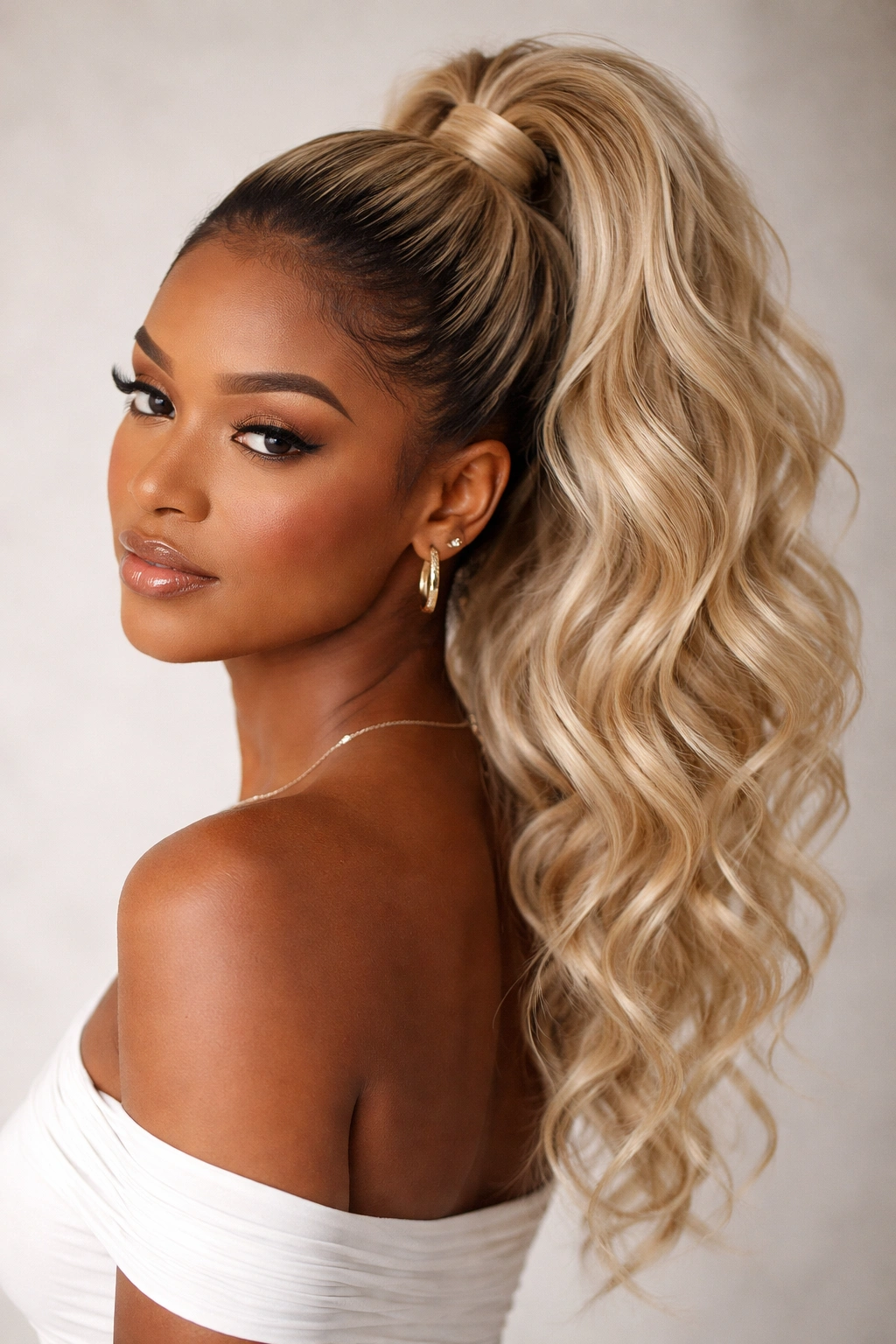
This is the version of a high ponytail for when you want sophistication with a softer, more romantic edge. Instead of going completely sleek, you’re letting your blonde hair’s natural texture (or creating waves if your hair is straighter) flow downward, which looks gorgeous and feels more relaxed than a completely smooth style.
The Appeal of Textured Waves
Textured waves add dimension and movement to blonde hair in a way that pure sleekness doesn’t. This style lets you showcase the actual beautiful texture of your hair rather than fighting against it, which is especially important if you’ve invested time and money into blonde color on textured hair. The waves catch light differently at various angles, making your blonde shade look richer and more complex.
Styling This Version
- Apply a curl-defining cream or light mousse to damp hair, focusing on the mid-lengths and ends
- Use a curling iron (1.5 to 2 inches wide) to create loose waves throughout your hair, working in sections from back to front
- Gather your hair into a high ponytail at the crown and secure it gently—you want it tight enough to stay put but not so tight that it pulls texture flat
- Wrap the base with a thin hair section as described above
- Use your fingers to gently separate and loosen the waves slightly, creating a fuller, more organic appearance
- A texturizing spray applied to the ponytail itself helps the waves hold their shape throughout the day
Worth knowing: The tighter you gather the ponytail base, the more the weight of your hair will pull the waves downward and create that beautiful cascading effect.
3. The Sleek Low Ponytail
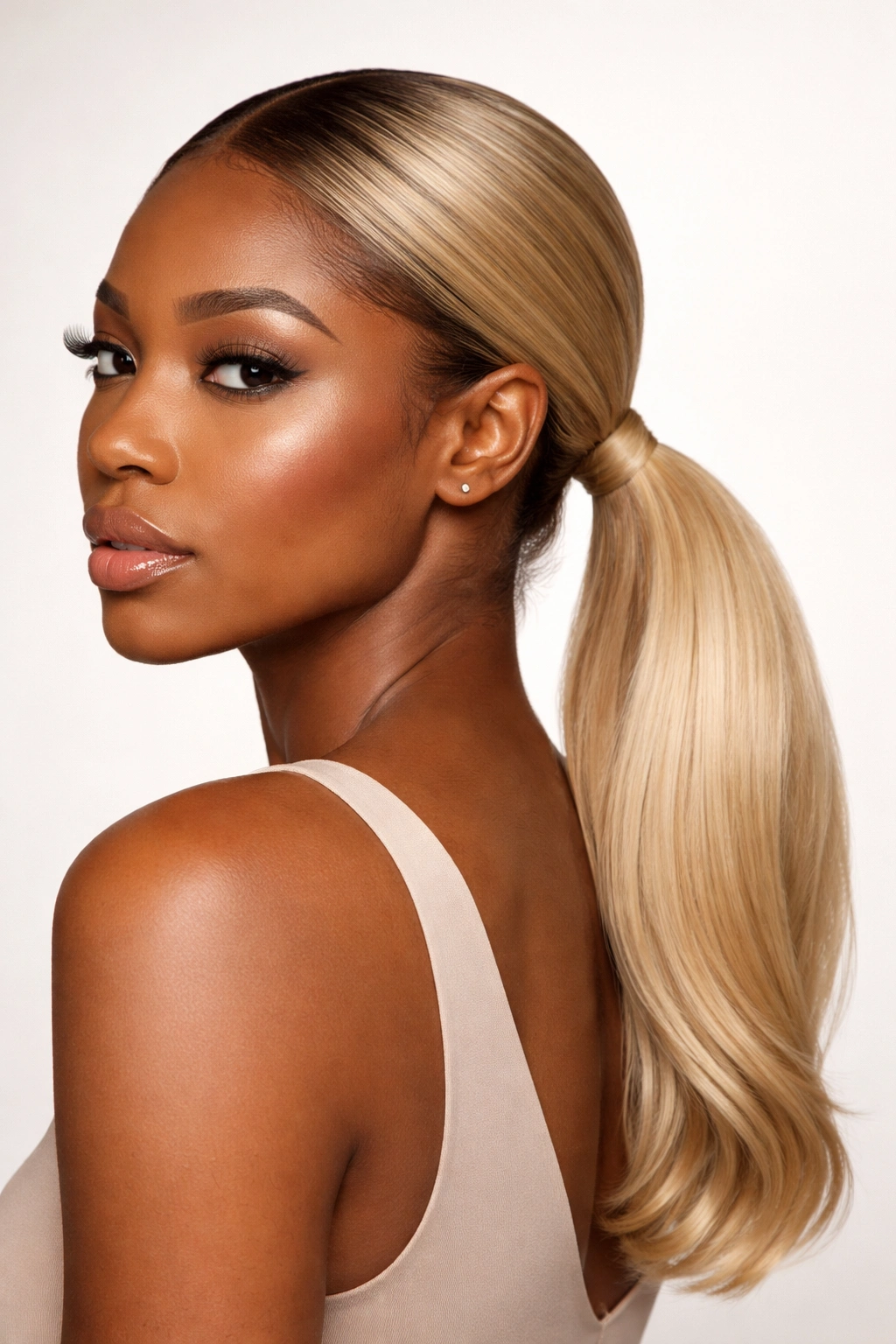
Don’t underestimate the low ponytail—it’s actually one of the most sophisticated and adaptable styles you can wear, and it’s particularly striking on blonde hair because it lets the color do most of the visual work. A low ponytail sits at the nape of your neck or just below your ears, and the relative restraint of the placement makes it feel effortlessly elegant.
Why Blonde Hair Shines in This Style
Low ponytails are inherently understated, which means all the attention goes directly to your hair color, texture, and the quality of the style itself. There’s nowhere to hide with a low ponytail—it has to be sleek, it has to be healthy-looking, and it has to be placed with precision. That’s exactly why it works so beautifully for showcasing blonde hair. The longer face-framing around your cheekbones and jawline is flattering for most face shapes, and the brightness of blonde in that zone really brightens your complexion.
Creating the Perfect Low Ponytail
- Start with smooth, well-moisturized blonde hair (freshly washed and either air-dried or blow-dried straight works well)
- Apply smoothing cream or serum to combat frizz, especially if you have textured hair
- Find your natural low ponytail placement—this is usually about 2-3 inches below where your ears naturally sit, centered at the base of your skull
- Use a fine-tooth comb to smooth hair back from your face and neck into that placement point
- Secure with an elastic that matches your blonde shade, and wrap a thin hair section around the base
- Smooth down any flyaways with edge control or a smoothing balm
- Consider leaving out two thin face-framing pieces if you want to soften the overall look
Insider note: A low ponytail actually looks even more polished if you don’t attempt to make it perfectly, impossibly sleek—a tiny bit of intentional texture or a few face-framing wisps that move slightly makes it feel modern rather than severe.
4. The Braided Ponytail
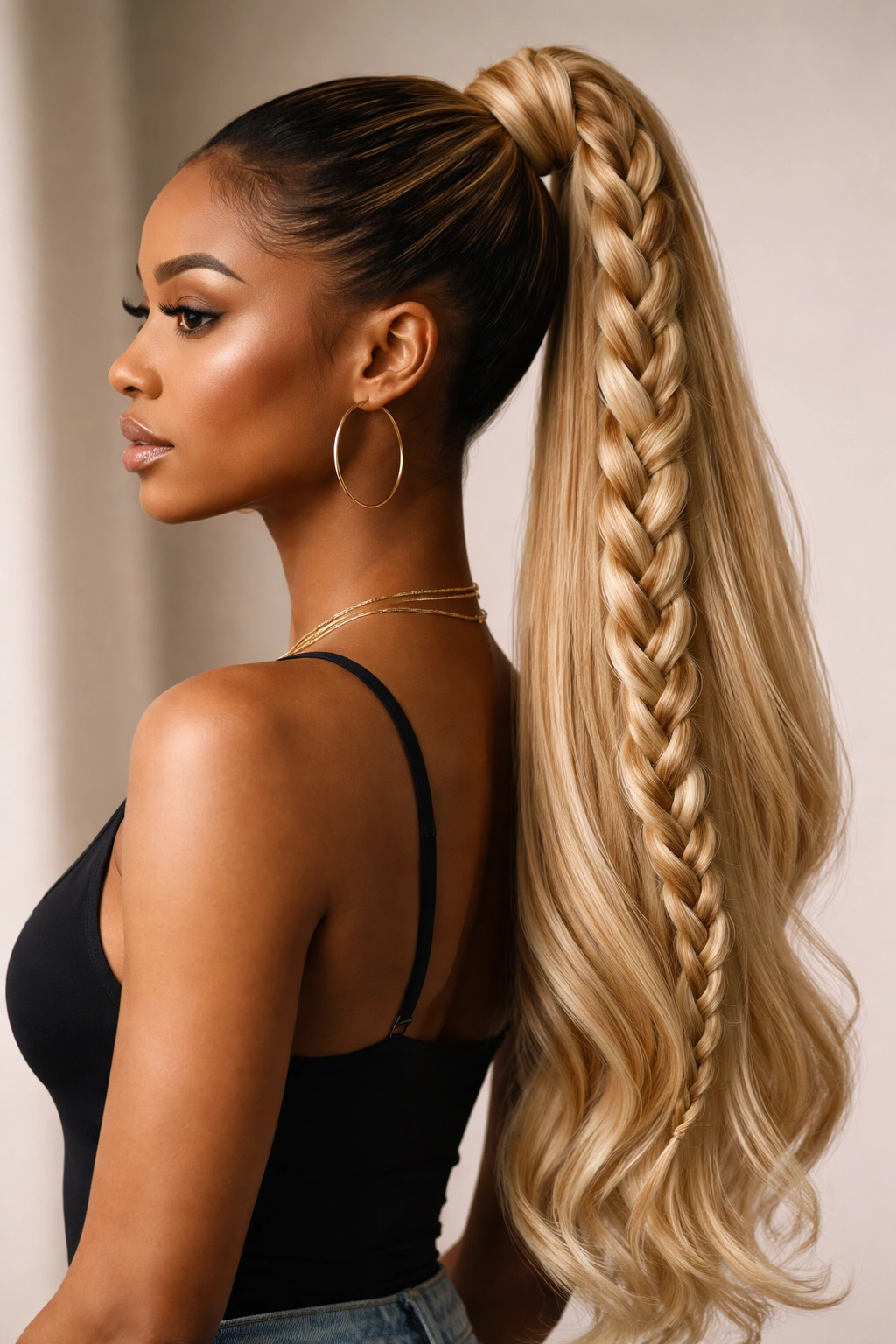
Braided ponytails are where blonde hair gets to show off in a way that sleek styles sometimes can’t. The braiding technique creates visual interest, adds texture, and can make your ponytail look fuller and more voluminous than it actually is. For Black women with blonde hair, a braid through the length of a ponytail is a genuinely striking choice.
The Different Braiding Options
You have several directions you can take this: a three-strand braid down the entire length of the ponytail (classic and always works), a fishtail braid (creates a delicate, intricate look), a Dutch braid that incorporates the ponytail base itself (looks more complex than it actually is), or even incorporating braids into the placement and gathering of the ponytail. Each creates a slightly different visual and requires a different skill level.
How to Braid Your Ponytail
- Gather your blonde hair into your desired ponytail height and secure it with an elastic
- Starting at the base of the ponytail, divide the length into three equal sections (or two for a fishtail braid)
- For a three-strand braid: cross the right section over the middle, then the left over the middle, continuing this alternating pattern all the way down
- Keep tension even as you braid—too tight and it’ll look stiff; too loose and it’ll unravel
- Once you reach the end, secure with a small elastic that matches your blonde shade
- Gently pull at the braid edges to slightly loosen and expand it, which makes the braid look fuller and more intentional
- Use a texturizing spray to help the braid hold its shape
Quick facts:
- Fishtail braids require more sections (five or more thin strands) but create a more intricate, lace-like effect
- Dutch braids (braiding by crossing sections under rather than over) photograph slightly differently than regular three-strand braids
- Braids hold better on day-old or second-day hair than on freshly washed hair
- Spraying the braid lightly with hairspray as you work through it helps secure each strand
5. The Bubble Ponytail
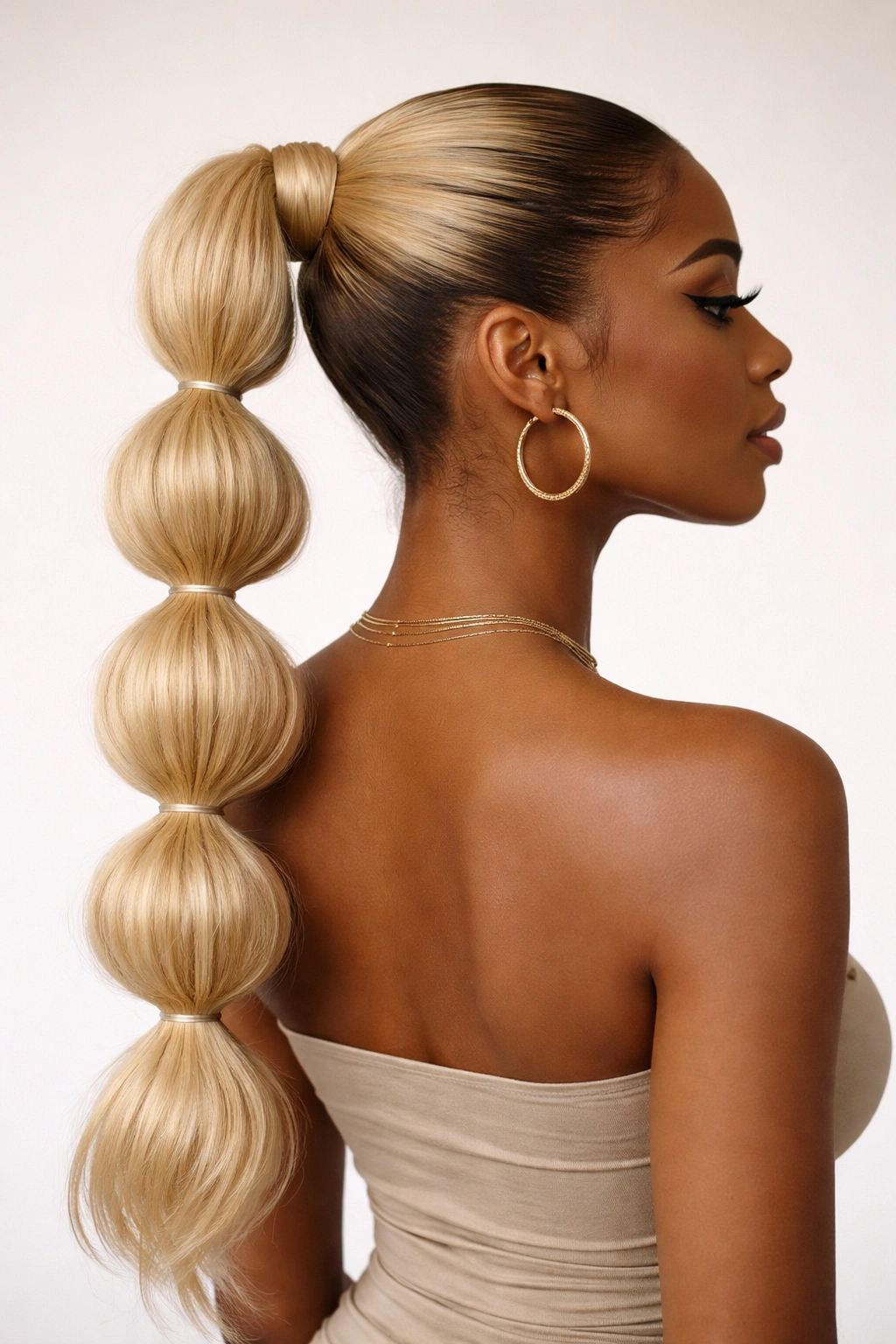
A bubble ponytail is playful, eye-catching, and honestly kind of fun to wear—it’s the style you choose when you want your blonde hair to make a statement. This style involves gathering your hair into a ponytail and then creating multiple smaller “bubbles” by securing sections of hair with small elastics along the length of the ponytail, creating distinct bulges or poufs that give an almost sculptural quality.
Why This Works for Blonde Hair
Blonde hair is naturally eye-catching, and a bubble ponytail amplifies that effect by literally creating visual stopping points along the length of your style. Each bubble highlights a different section of your blonde length, making the color impact even stronger. This style also works beautifully for creating the illusion of fuller, longer hair, since the bubbles add dimension and volume that a sleek ponytail doesn’t.
Executing the Bubble Ponytail
- Gather your blonde hair into a secure ponytail at your desired height and use an elastic to hold it
- Starting about 3-4 inches down from the base elastic, wrap a small elastic tightly around the ponytail to create the first “bubble” above it
- Gently pull upward on the hair between the two elastics to create a small puff or bulge—this is your bubble
- Move down another 3-4 inches and secure another small elastic, then puff out that section
- Continue this pattern all the way down the length of your ponytail, creating as many bubbles as you want (typically 3-5 bubbles looks balanced)
- You can make all the bubbles the same size or vary them slightly for a less uniform look
- Use a texturizing spray to add grip and keep the bubbles from flattening
Pro tip: Bubble ponytails photograph exceptionally well and look more complex than they actually are—they’re great for creating impact for events, dates, or just days when you want your hair to be a conversation starter.
6. The Two-Tone Blonde Ponytail with Darker Roots
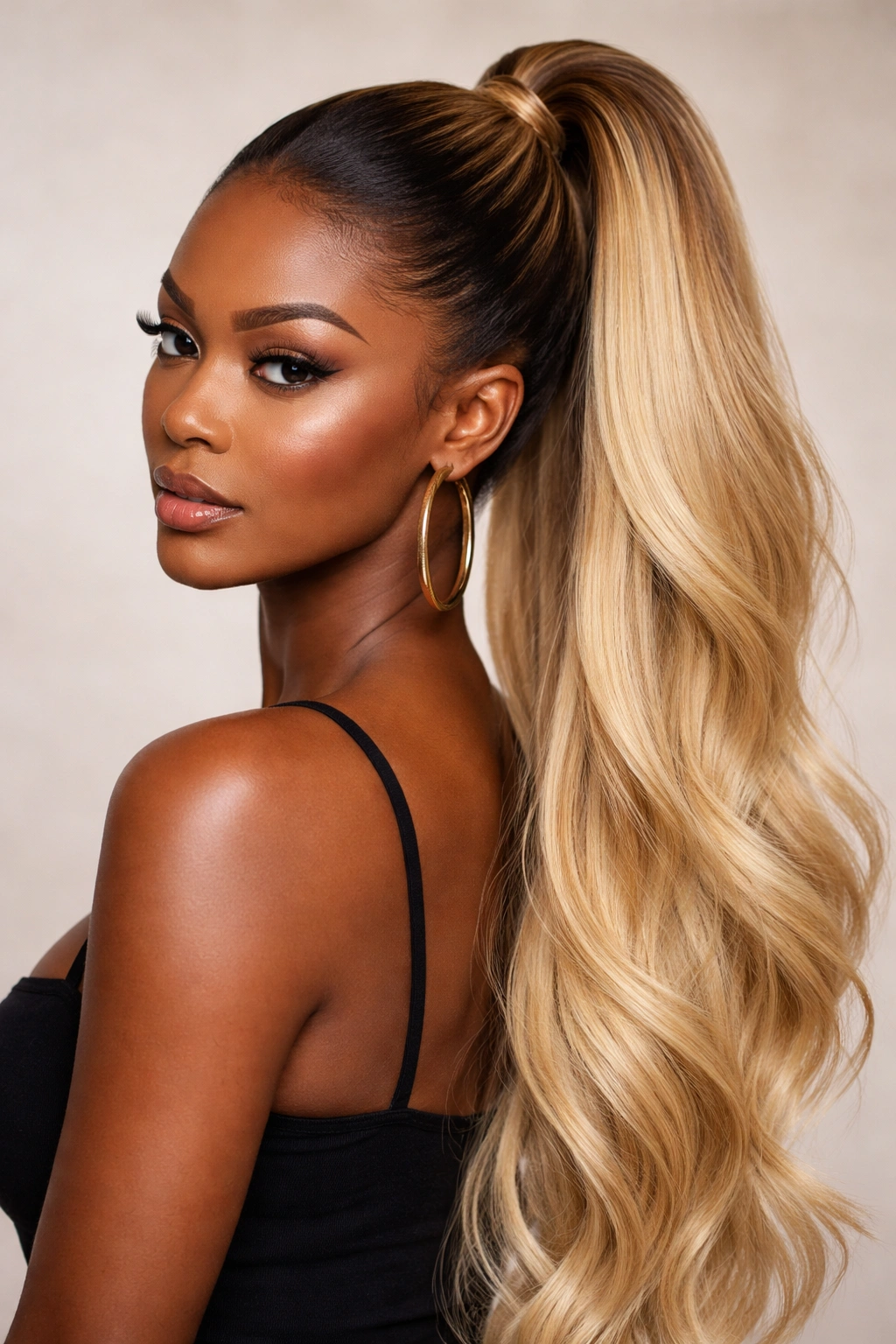
Here’s where strategy comes into play: if your blonde ponytail features a noticeable darker root situation—whether that’s natural regrowth or a deliberate rooted blonde technique—you can style it in a way that makes that contrast look intentional and modern rather than like a styling problem you’re trying to hide.
Making Roots Look Intentional
Root shadowing (where darker tones are left at the root for a lived-in, low-maintenance look) is genuinely beautiful on blonde hair, especially when your natural color adds to the contrast. Instead of slicking everything back, this style embraces the two-tone effect by styling in a way that shows off both the darker base and the lighter blonde lengths. It’s sophisticated, slightly edgy, and very current in terms of how people are approaching blonde hair.
Styling to Emphasize the Contrast
- Blow-dry your hair with some texture—not completely smooth, which would flatten the rooted effect
- Create a deep or slightly off-center part, which automatically shows more of the darker root area
- Gather hair into a ponytail that starts a bit lower than a traditional high ponytail (this creates more face-framing around the part)
- Keep the crown area slightly less slicked, allowing some of the darker roots to show
- Style the ponytail length with waves or a slight bend to add movement
- Leave out two or three face-framing pieces on each side of the part—this shows the color graduation beautifully
What to know: This style works best if the contrast between your roots and your blonde is fairly obvious—if the difference is very subtle, the rooted effect may not read as intentional. If you have just a tiny bit of regrowth, you might prefer a different style until you refresh your color.
7. The Slicked Ponytail with Decorative Hair Cuff
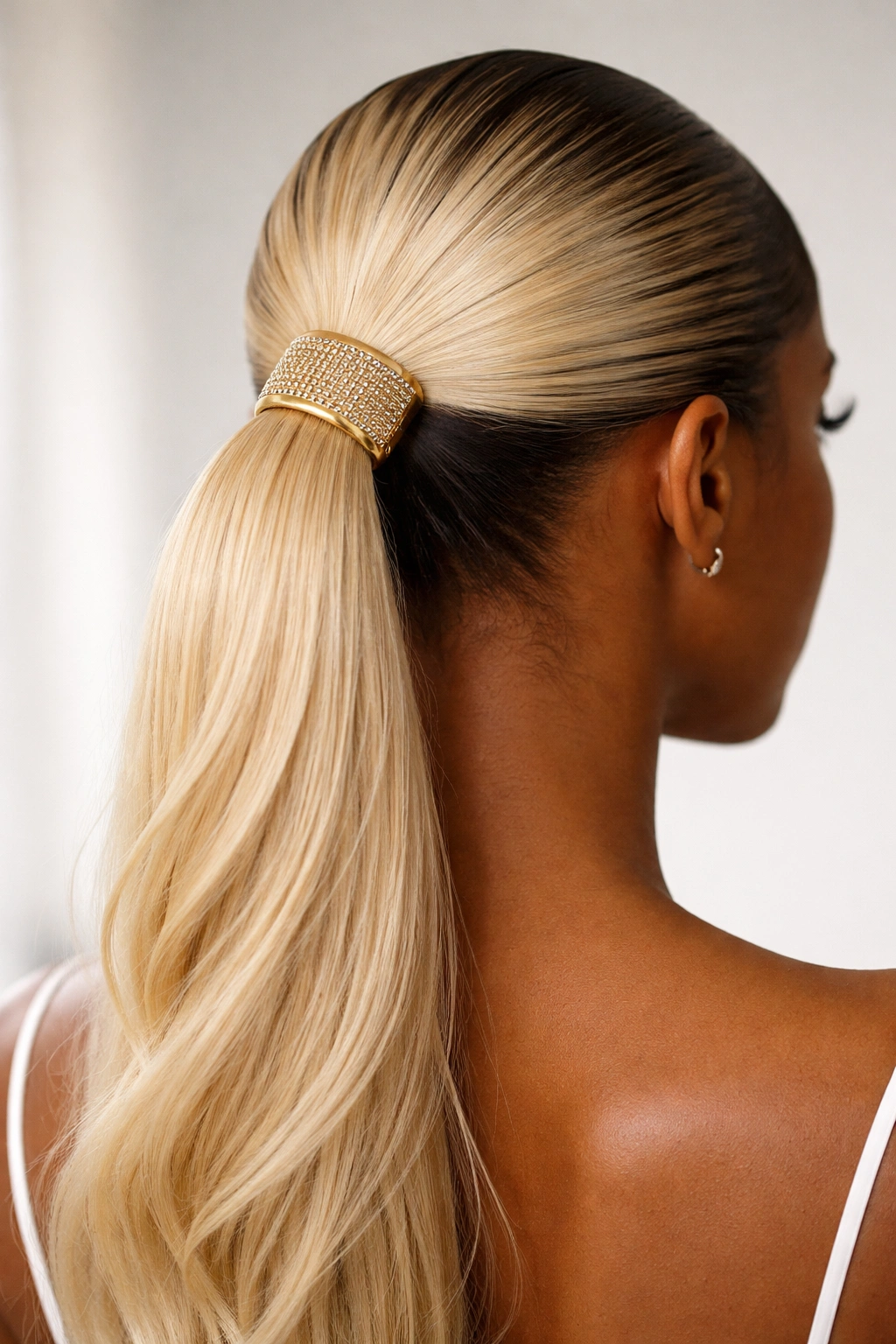
A sleek, slicked-back ponytail is classic, but adding a decorative element—like a cuff, a clip, or a metal accessory at the base—transforms it from simple to editorial. The contrast between the smooth, controlled hair and a shiny, eye-catching accessory creates instant visual interest without requiring any additional styling complexity.
The Visual Impact of Hair Accessories
For blonde hair, metallic or jeweled cuffs tend to create the most striking effect. Gold tones harmonize beautifully with warmer blonde shades, while silver or chrome cuffs look stunning against cooler, ashier blondes. The accessory draws the eye to the back of your head and adds an intentional, polished finishing touch that reads as either playful or sophisticated depending on which cuff you choose.
How to Style This Look
- Create a sleek, smooth ponytail using your usual smoothing products and techniques (blow-dry straight or use a flat iron)
- Gather at your preferred height and secure with a clear elastic
- Wrap a thin hair section around the base to cover the elastic, as usual
- Slide your chosen cuff over the wrapped base—most cuffs simply slide on and off without additional fastening
- Smooth down any flyaways with edge control
- If you’re using a cuff with a particular design, position it so the design faces forward or to the side for maximum visibility
Quick facts:
- Metal cuffs stay put better than plastic ones and look more premium
- Cuffs work for both high and low ponytails, though they’re most visible and striking in higher placements
- You can find hair cuffs at most beauty supply stores, accessories retailers, and online—prices range from a few dollars to premium designer options
- Mixing and matching different cuffs based on your outfit or mood is a fun way to create variety from the same basic ponytail style
8. The Curly or Coily Ponytail
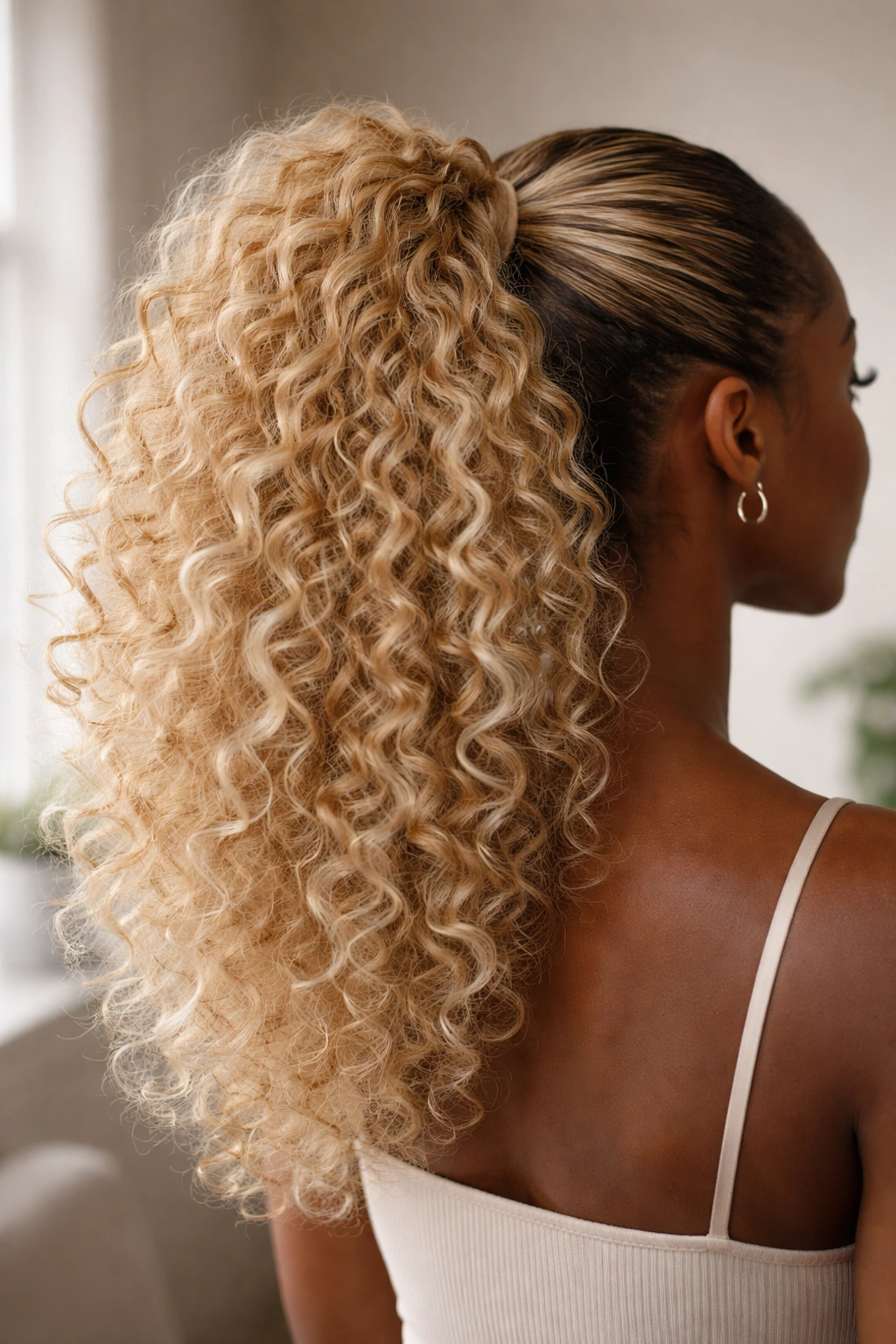
If your blonde hair is naturally curly or coily (or if you curl it intentionally), a ponytail that celebrates that texture rather than fighting it is absolutely the way to go. A full, bouncy, textured ponytail shows off your curl pattern beautifully and tends to photograph gorgeously because all those individual curls catch light.
Embracing Your Natural Texture
Whether your curls are tight coils, loose waves, or somewhere in between, gathering them into a ponytail that maintains their shape and volume is a totally different approach than smoothing everything straight. This style celebrates texture, adds visual richness, and honestly requires less daily manipulation than constantly fighting your hair’s natural pattern.
Creating a Textured Ponytail
- Start with clean, hydrated curls that have been conditioned well (curly hair needs moisture to look its best)
- Apply a curl-defining cream or mousse to damp hair and let it air-dry or diffuse dry it with a blow dryer
- Once dry, use your fingers (not a brush, which disrupts curl pattern) to gently gather curls into your desired ponytail placement
- Secure with a ponytail holder designed for textured hair—these tend to have better grip than standard elastics
- Rather than wrapping a thin hair section around the base, you might prefer to use a colorful elastic, a decorative scarf, or a cuff that coordinates with your blonde shade
- Gently fluff the ponytail by separating curls slightly and shaking it gently to add volume
- Use a curl-refreshing spray or light mousse to maintain curl pattern throughout the day
Worth knowing: Curly ponytails are actually lower-maintenance daily wear than sleek ponytails—once you’ve styled it, you can refresh it the next day with just a light spritz of water or curl spray rather than restyling from scratch.
9. The Half-Up, Half-Down Blonde Ponytail
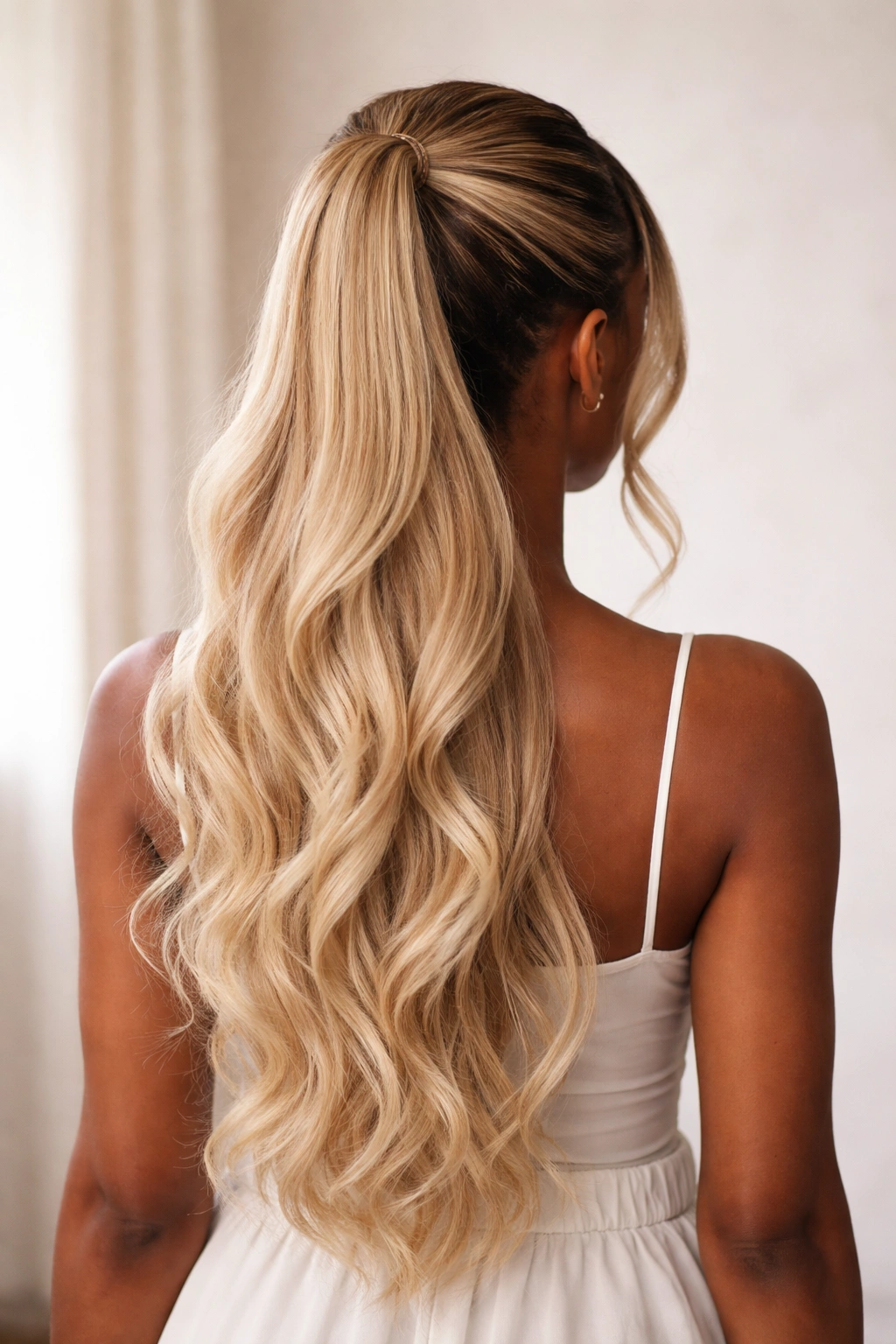
A half-up, half-down style is the perfect middle ground if you’re torn between wearing your blonde hair fully up or fully down. You get some of the practical benefits of an updo—hair off your face and neck—while still showcasing the full length and movement of your blonde strands. This style is incredibly versatile and flatters virtually every face shape.
The Versatility of Half-Up Styling
This is genuinely one of the most flattering styles for Black women because it frames your face beautifully, shows your hair length, and creates a romantic, intentional look without requiring an extreme amount of styling effort. The portion of hair that’s up can be sleek, textured, braided, or a combination of techniques, giving you tons of creative flexibility.
How to Create a Half-Up Ponytail
- Start with your hair down and styled however you prefer (straight, wavy, curly—all work beautifully)
- Determine where you want the “dividing line” for your half-up—this is typically at about temple height or slightly higher
- Gather the hair from temples back to the crown area (roughly the top half or slightly less of your total hair)
- Secure this section with an elastic at the crown, creating your upper ponytail
- Leave the bottom half of your hair completely down, where it can flow and move freely
- You can wrap the base of the upper ponytail with a thin hair section, or you can leave it as is
- Add face-framing waves or curls to the lower half if desired
- Consider adding a decorative element like a cuff, pin, or small barrette to the upper ponytail base
Pro tip: A half-up, half-down style actually looks best with some texture or movement in both the gathered and the loose sections—completely smooth slicked hair combined with completely loose hair can look a bit disconnected, whereas wavy or textured hair throughout creates a more cohesive look.
10. The Ponytail with Bohemian or Loose Braids Woven Through
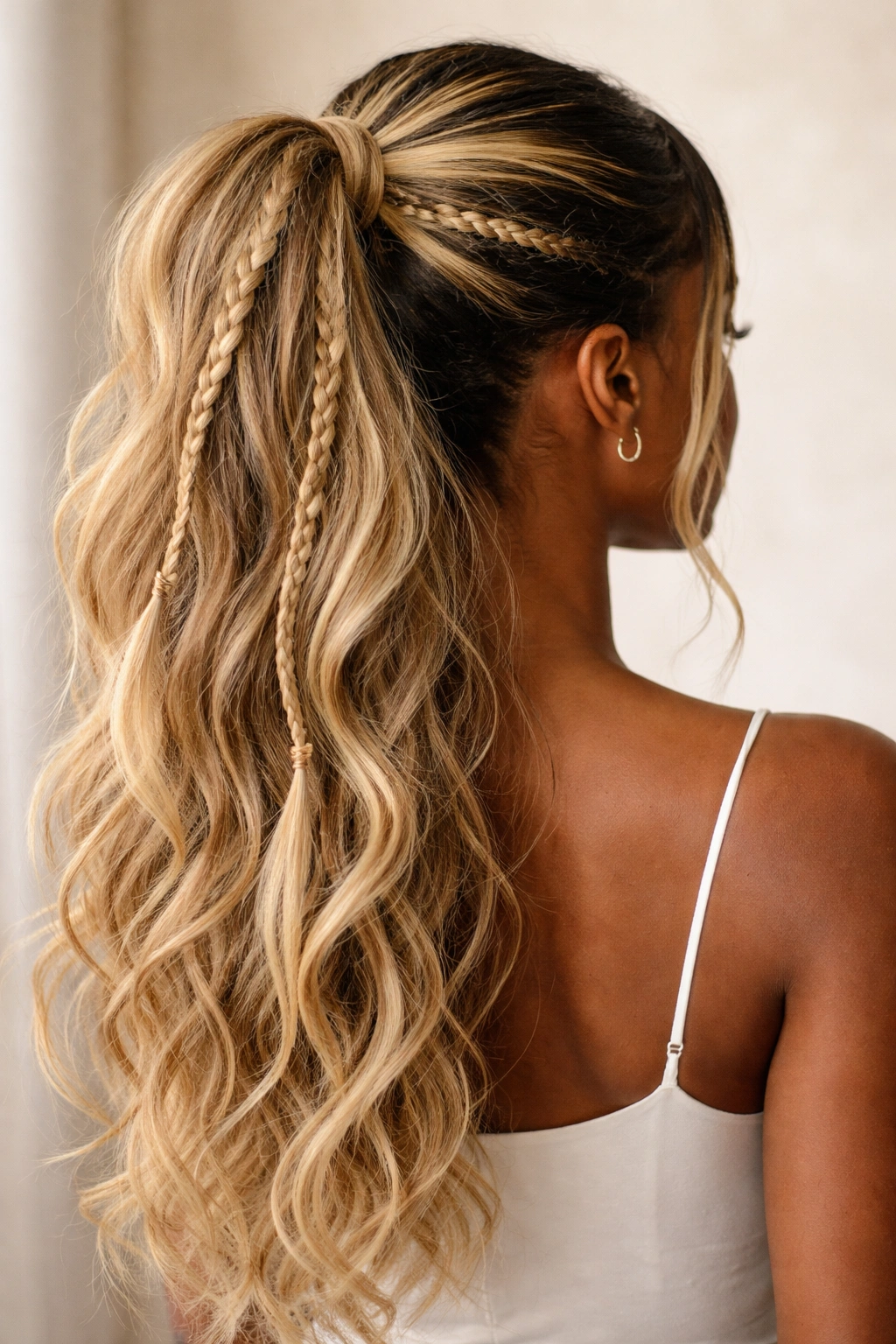
This is the style that looks complicated but is actually very achievable with practice. You’re creating a ponytail and then adding loose, decorative braids through the length of it, sometimes starting from within the ponytail base itself. It has a romantic, slightly undone quality that’s absolutely stunning for events or just days when you want something more interesting than a standard ponytail.
The Aesthetic and Appeal
Loose braids woven through a ponytail create visual texture and movement that draw the eye through the style. For blonde hair, these braids can be created using the blonde strands themselves, or you can incorporate braiding hair in a matching or complementary shade to create more defined lines and visual interest. This style reads as either bohemian and relaxed or elevated and intentional depending on how polished you make the braids.
Creating Braids Through Your Ponytail
- Gather your blonde hair into a ponytail at your desired height and secure it
- Divide the ponytail into 3-4 sections
- Take one section and create a loose three-strand braid, stopping just short of the end and securing with a small elastic
- Repeat with your other sections, creating multiple braids that all start from the ponytail base and flow down
- Gently loosen each braid slightly by pulling at the edges—this creates a softer, less structured look
- You can let the braids hang parallel to each other, or weave them slightly across the ponytail for a more intricate effect
- Use texturizing spray to add grip and keep the braids from unraveling
Insider note: If you want more defined visual lines, you can use a thin section of braiding hair or even embroidery thread woven into each braid, which creates contrast against your blonde and makes the braids more visible.
11. The Sleek Side Ponytail
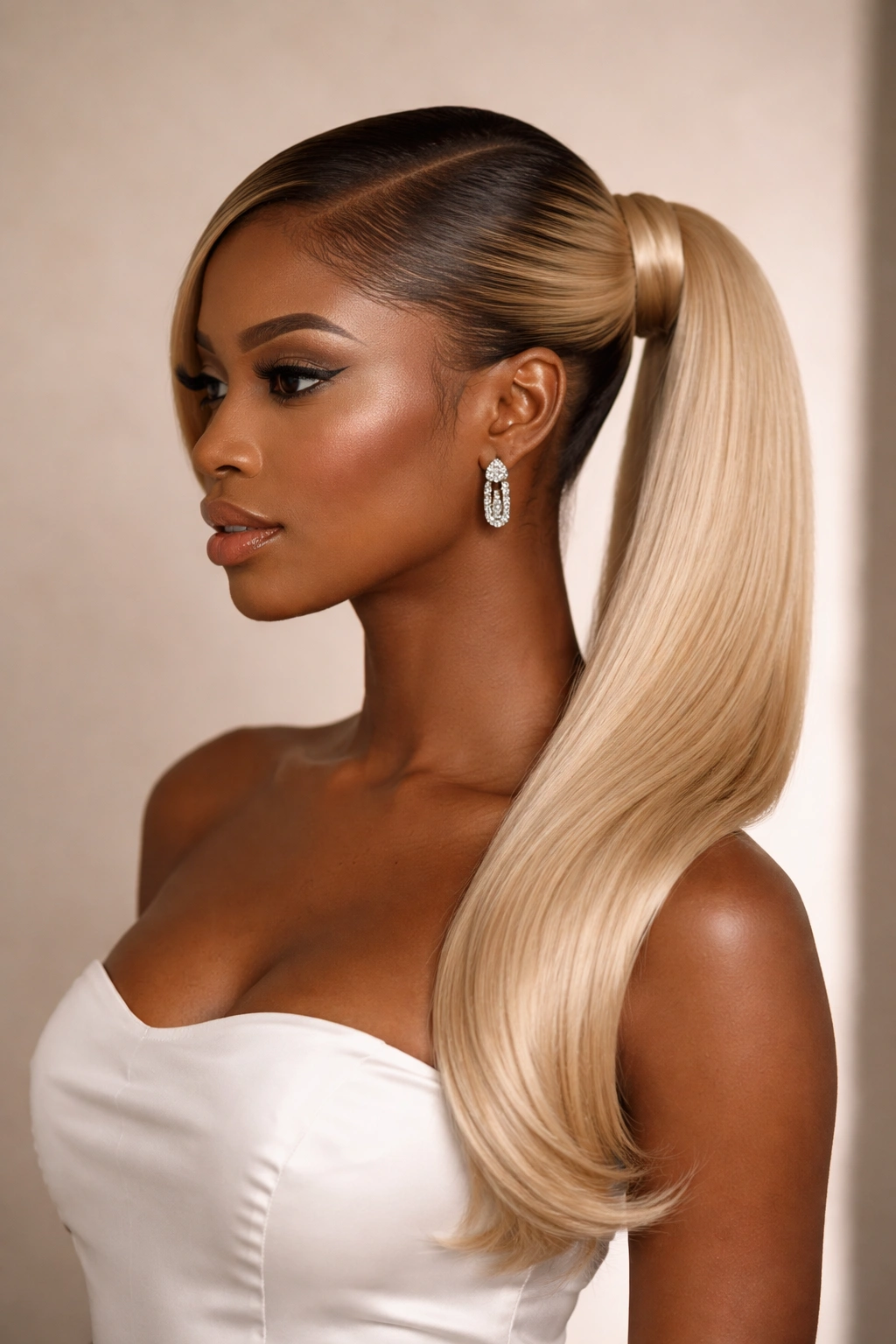
A side ponytail is inherently more artistic and less conventional than a centered high or low ponytail, which makes it an excellent choice when you want to create an intentionally styled look. Everything is pulled to one side of your head, creating asymmetry that’s visually interesting and slightly edgy.
Why Side Placement Works for Blonde Hair
Side ponytails naturally create more face-framing on one side of your face, which shows off your blonde color beautifully and creates dimension. The asymmetry is flattering for most face shapes and instantly reads as a deliberate, thoughtful styling choice rather than a casual updo. There’s something almost editorial about a sleek side ponytail.
Styling a Side Ponytail
- Blow-dry your hair smooth or use a flat iron to create a sleek base
- Create a deep side part, starting at the crown and angling toward the back
- Smooth your hair to one side (whichever direction appeals to you) using smoothing cream or gel
- Gather all of your hair into a ponytail positioned at the side of your head—this is typically at or slightly below ear level, gathered toward the back rather than directly at the temple
- Secure with an elastic and wrap the base as usual
- Smooth down flyaways with edge control, paying special attention to the face-framing pieces on the opposite side of the part
- You can leave a few thin face-framing pieces loose on both sides for softness, or keep everything pulled back for maximum sleekness
Quick facts:
- Side ponytails work especially well on hair that’s shoulder-length or longer, since shorter hair doesn’t have as much length to create the side effect
- This style is particularly flattering if you have a wider forehead or prefer to not show your forehead, since the side placement automatically creates more coverage
- Side ponytails photograph beautifully from one angle but may not look balanced if photographed from the opposite side—position yourself accordingly
12. The Blonde Ponytail with Colorful Hair Wraps or Ribbons
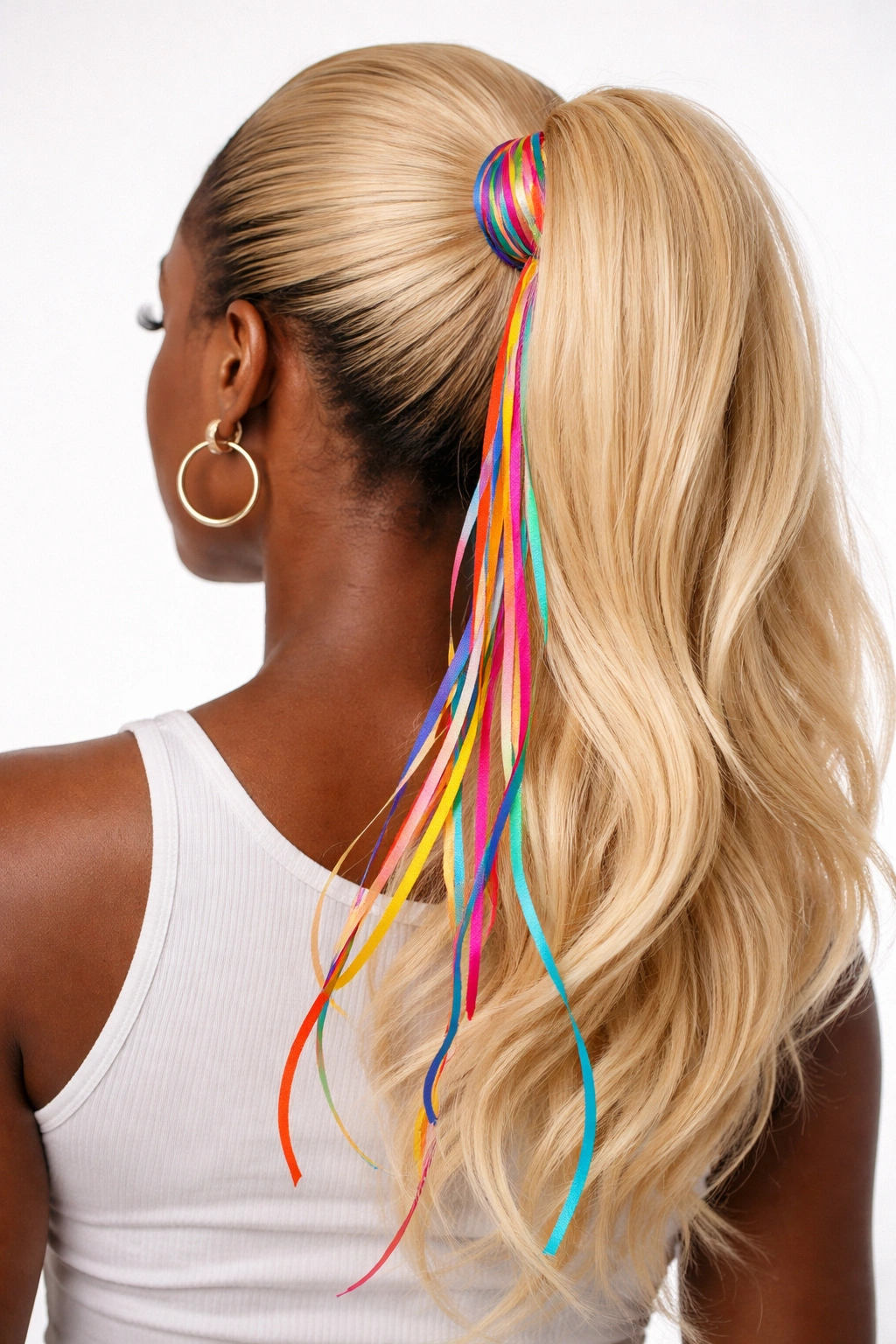
This is your chance to get really creative and playful with styling. Instead of wrapping the ponytail base with your own hair, you can use colorful ribbons, fabric wraps, metallic cords, or even thin sections of braiding hair in contrasting colors to create an eye-catching accent at the base.
Creating Visual Interest with Wraps and Ribbons
Hair wraps and ribbons instantly elevate a basic ponytail into something unique and personalized. You can match them to your outfit, choose them based on mood, or pick colors that create stunning contrast with your blonde shade. This styling technique is especially popular for creating versatility—the same basic ponytail style looks completely different when you swap out the wrap color or material.
How to Add Wraps and Ribbons to Your Ponytail
- Create your base ponytail (high, low, side—whichever style you’re going for) and secure it
- Choose your ribbon, wrap, or braiding hair in your preferred color and material
- If using a ribbon: wrap it around the ponytail base multiple times and tie it off, leaving the ends either tucked in or flowing freely
- If using a fabric wrap: wind it around the base snugly, overlapping as you go, and secure with a small elastic or bobby pins that match your blonde
- If using braiding hair: wrap it around the base in a similar pattern to how you’d wrap your own hair, and secure with an elastic at the end
- You can wrap neatly and precisely for a polished look, or wrap more loosely for a boho vibe
- Leave the ends of your wrap material dangling or tuck them in depending on the effect you want
Pro tip: Metallic ribbons and cords photograph gorgeously and add an instant premium feel to any ponytail style, while bright solid colors create bold, playful energy. Consider having a few different options on hand so you can match your wrap to your mood or outfit.
Final Thoughts
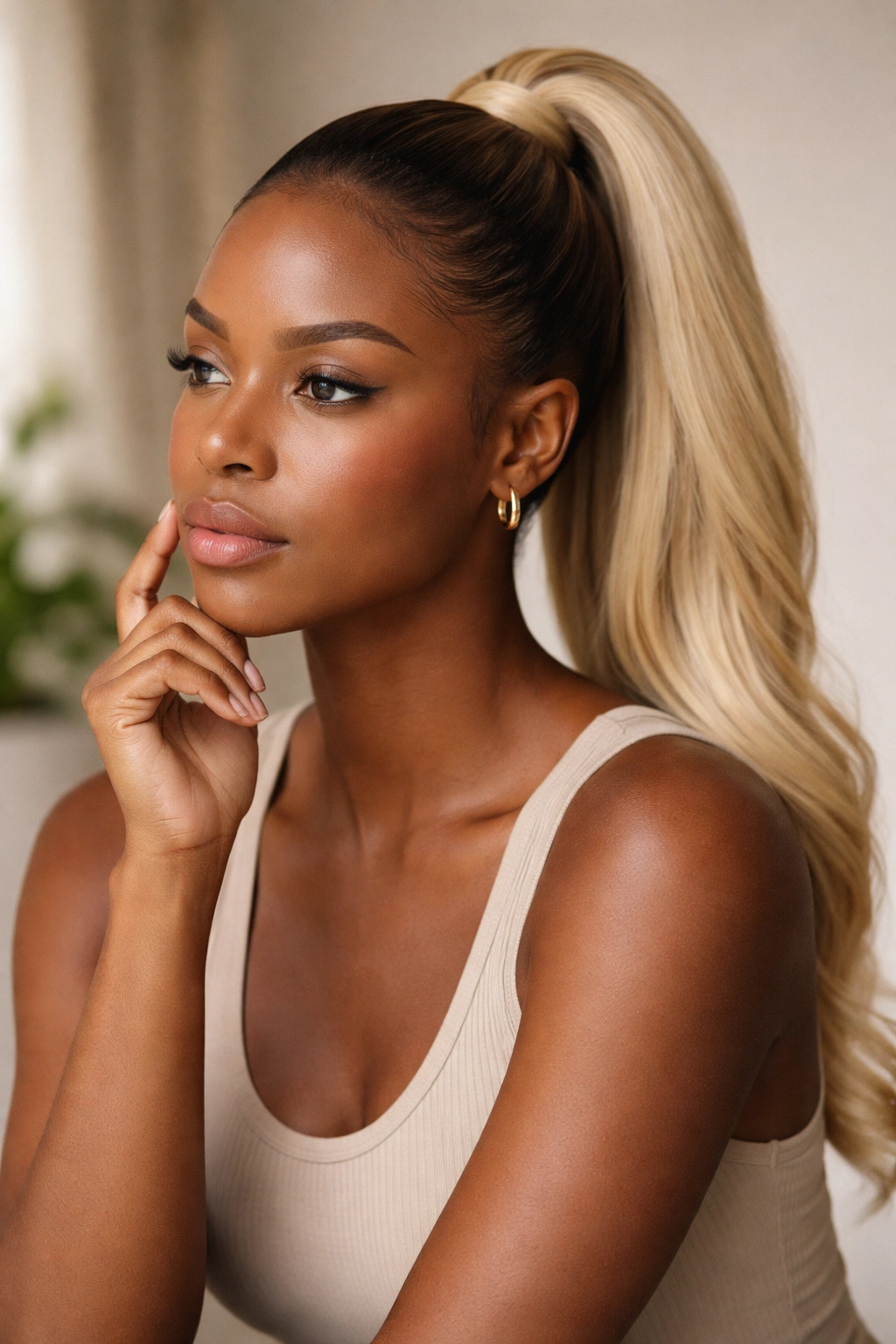
Blonde ponytails offer Black women an incredible range of styling possibilities, from sleek and professional to textured and playful. The style you choose depends on your hair texture, the occasion, your personal aesthetic, and honestly how much time you want to spend styling on any given day. The gorgeous thing about ponytails is that they’re practical—they keep your hair off your face and neck, which is genuinely useful—but they’re also deeply customizable.
What works beautifully for one person might not feel right for another, and that’s exactly as it should be. The best ponytail for you is the one that makes you feel confident, that suits your face shape and hair type, and that fits into your life realistically. Some days you’ll love the simplicity of a sleek high ponytail, and other days you’ll want the drama and interest of a bubble ponytail or a style with braids woven through.
Remember that the health and integrity of your blonde hair matters just as much as the style itself. Whatever ponytail you choose, use heat protectant products before styling, keep your hair well-moisturized (blonde can dry out quickly, especially if it’s been color-treated), and don’t pull your hair so tightly that it creates tension at the roots. A beautiful ponytail is one that looks good and feels comfortable to wear. Give yourself permission to experiment, try styles multiple times if they don’t work perfectly on the first attempt, and most importantly, enjoy the versatility that a great ponytail gives you.
