



Medium-length hair is basically the sweet spot for ponytails—long enough to gather into a substantial, polished look, but short enough that you’re not dealing with the weight and styling challenges of full-length hair. Yet despite this advantage, plenty of people with shoulder-length or collarbone-length hair feel stuck in a rut, rotating between the same tired high or low pony without exploring the full range of possibilities. The truth is, medium hair actually has more styling potential than you might realize, and small tweaks to positioning, texture, and finish can transform the same basic ponytail into something completely different—whether you need a sleek, professional look for work, something effortlessly tousled for the weekend, or a more complex braided style that looks impressive but takes less time than you’d expect.
The key to making ponytails work beautifully with medium hair isn’t about having a specific hair type or texture—it’s about understanding how placement, the finish of your base hair, and the details you add can change everything. A high ponytail reads completely different when you’ve added texture and left a few face-framing pieces. That same placement becomes edgy and modern when you slick it back with gel. A low ponytail transforms from basic to elevated when you add a subtle braid or wrap a section of hair around the elastic. The styles that follow all work genuinely well with medium-length hair, and each one comes with the specific why-it-works insight and the practical how-to detail that actually makes styling easier.
1. The Classic High Ponytail
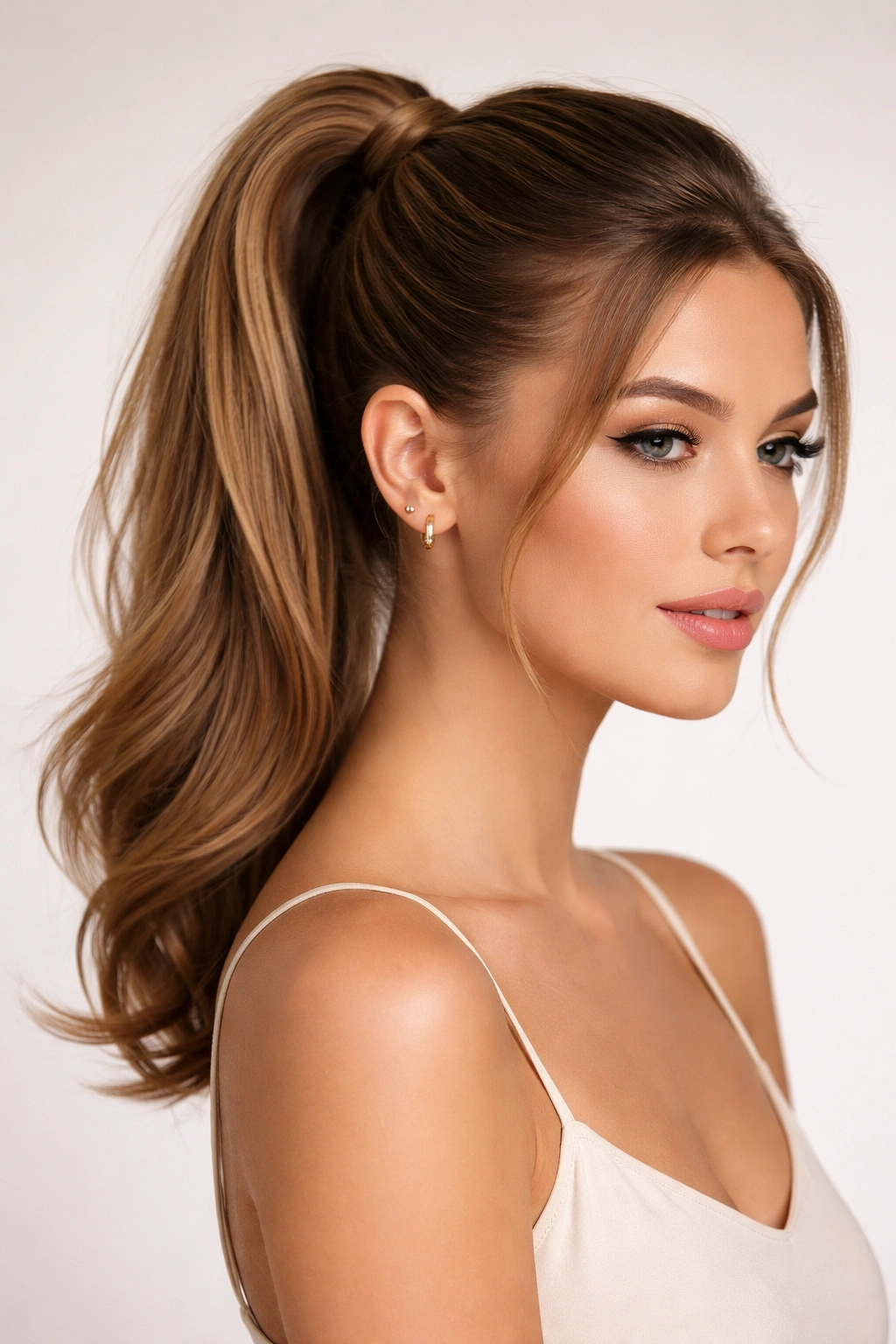
The foundation of every ponytail wardrobe, the classic high pony is the style you reach for when you need to look polished in five minutes, and it works especially well with medium hair because the placement sits right at the crown without pulling too much weight awkwardly downward. This style is deceptively simple—which means the details matter more than you’d think. The difference between a sloppy high pony and one that actually looks intentional comes down to smoothness at the roots, the height of the placement, and whether you’ve captured every piece or left a few face-framing sections out on purpose.
Why It Works for Medium Hair
With medium-length hair, a high ponytail doesn’t create the heavy, unflattering weight pull that longer hair can sometimes suffer from. Instead, it creates an open, fresh look around your face while keeping strands off your neck and shoulders. The shortness of medium hair also means the ponytail itself sits at a perfectly visible height—high enough to look intentional and polished, not so high that it strains your scalp after a few hours.
How to Perfect It
- Use a fine-tooth comb to smooth flyaways and gather hair at the crown, positioning the elastic about an inch above where your natural part would be
- Secure with a sturdy elastic and smooth the base layer with a lightweight smoothing serum or gel to eliminate bumps
- Wrap a small section of hair around the elastic base to hide it completely, securing the wrap with a bobby pin tucked out of sight
- Leave a few wispy pieces around your face intentionally for a softer, less severe finish
Pro tip: Blow-dry your roots with your head flipped upside down before creating your ponytail to add volume at the base, which creates a more lifted, modern appearance than a flat crown.
2. The Sleek Low Ponytail
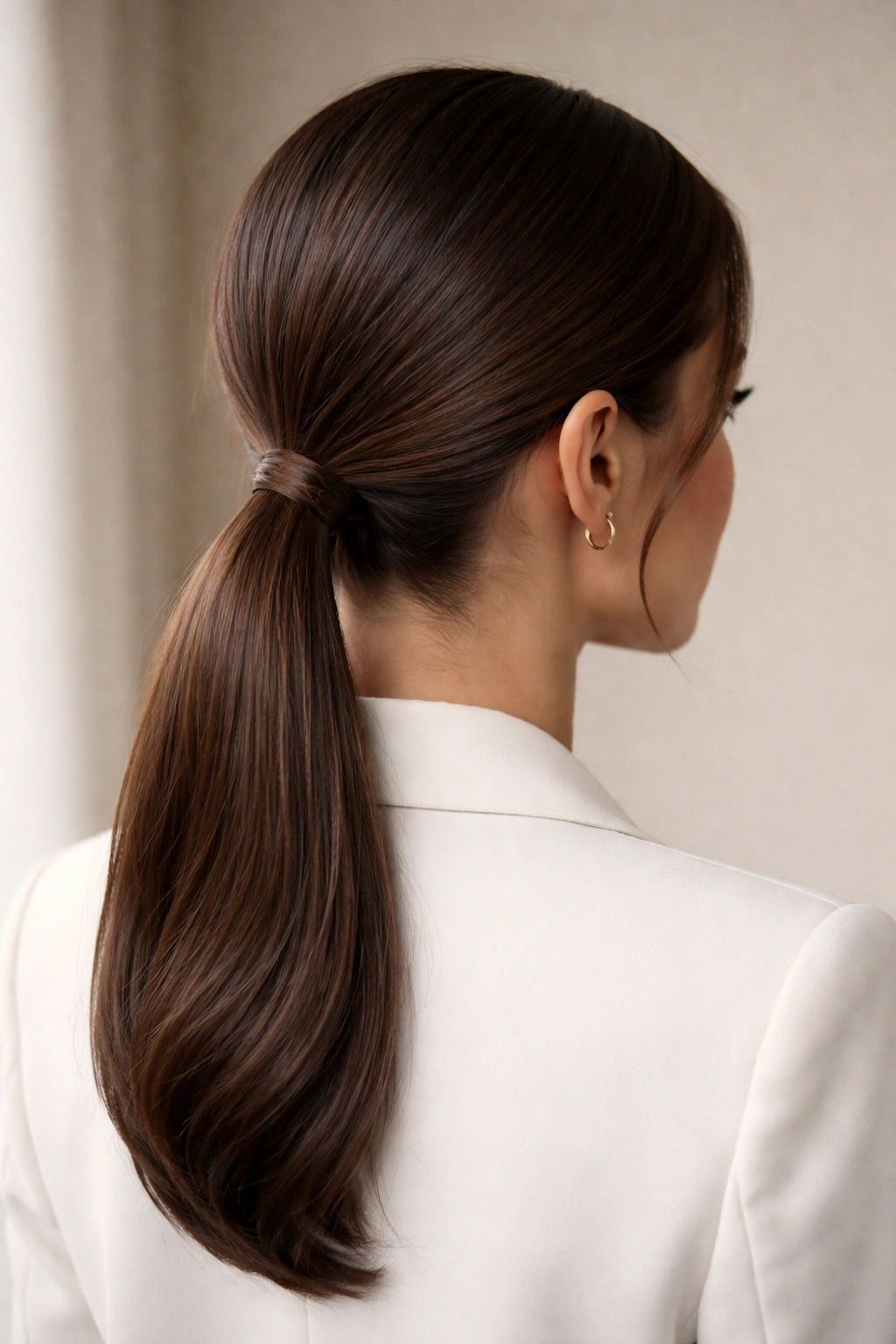
The low ponytail sits at the nape of your neck and reads polished, mature, and deliberately styled—exactly the look you want for client meetings, date nights, or anywhere you need to project calm competence. With medium hair, a low pony has the advantage of not requiring as much length to look substantial and finished, and the nape placement is flattering because it doesn’t emphasize the jawline the way a high or middle placement can sometimes do.
Why It Works for Medium Hair
Medium-length hair creates the ideal proportion for a low ponytail—substantial enough that the ponytail itself has presence and doesn’t look wispy or incomplete, but short enough that it doesn’t create an uncomfortable heavy pull at the base of your skull after hours of wearing it. The style also shows off your entire face and neck without distraction, making it perfect for when you want the focus on your features or your outfit.
How to Perfect It
- Brush hair back smoothly, gathering it low at the base of your neck rather than at the very bottom
- Use a thin elastic in a color that matches your hair for a seamless appearance
- Smooth the back section with a lightweight styling cream or anti-frizz serum to ensure absolute sleekness
- Pin flyaways with bobby pins secured horizontally into the base of the ponytail for invisible hold
- Optional: wrap a small section around the elastic base for extra polish
Worth knowing: A sleek low pony looks most intentional when paired with a deep side part, which adds dimension to your face and prevents the look from feeling too severe.
3. The Textured High Ponytail
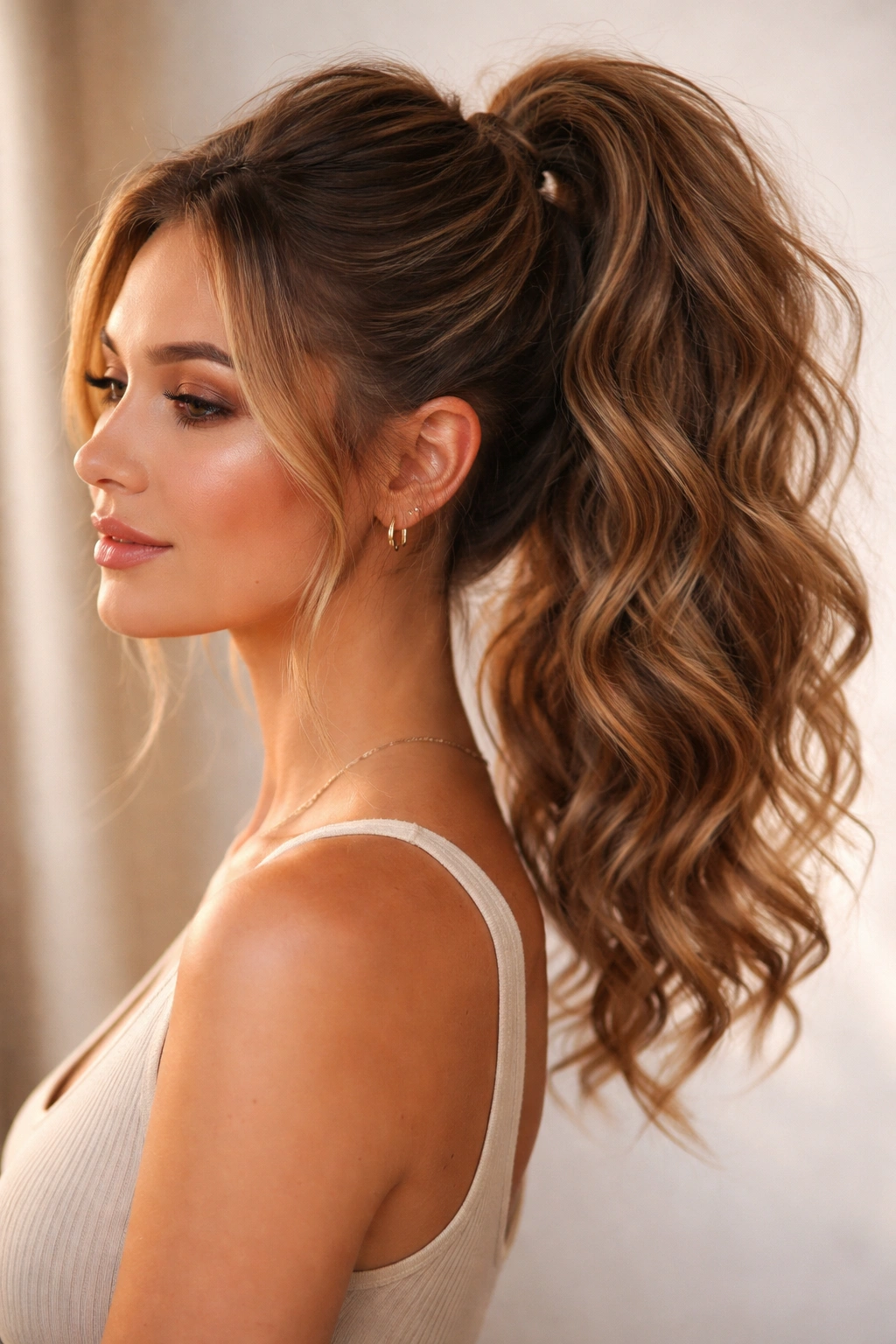
This style takes the classic high ponytail and adds dimension and movement, creating something that looks effortless but actually requires a bit more intentional styling. Texture completely changes how a ponytail photographs, how it looks on video, and how it feels to wear—a textured version feels modern and approachable where a sleek version reads formal and refined. With medium hair, you’ve got enough length to create meaningful texture without the bulk problems that longer hair sometimes develops.
Why It Works for Medium Hair
The magic of a textured high ponytail with medium hair is that texture makes the entire style look fuller and thicker than it actually is. If your hair is fine or medium-density, adding waves or curl to both your base hair and your ponytail creates the illusion of much more volume. The style also photographs incredibly well and works beautifully for any occasion from casual to semi-formal.
How to Perfect It
- Blow-dry your hair with a medium-barrel round brush to create body and movement
- Create loose waves throughout using a 1.25-inch curling iron, curling away from your face on the front sections and in any direction on the back (consistency doesn’t matter for this casual look)
- Gather hair into a high ponytail at the crown, keeping the texture loose rather than smoothing it
- Tease gently at the base of your ponytail to add extra volume at the crown
- Leave face-framing pieces down on both sides for a softer, less structured appearance
Pro tip: Spritz your textured ponytail with a light texturizing spray or dry shampoo after you’ve secured it to further enhance the tousled, effortless appearance.
4. The Half-Up Half-Down Style
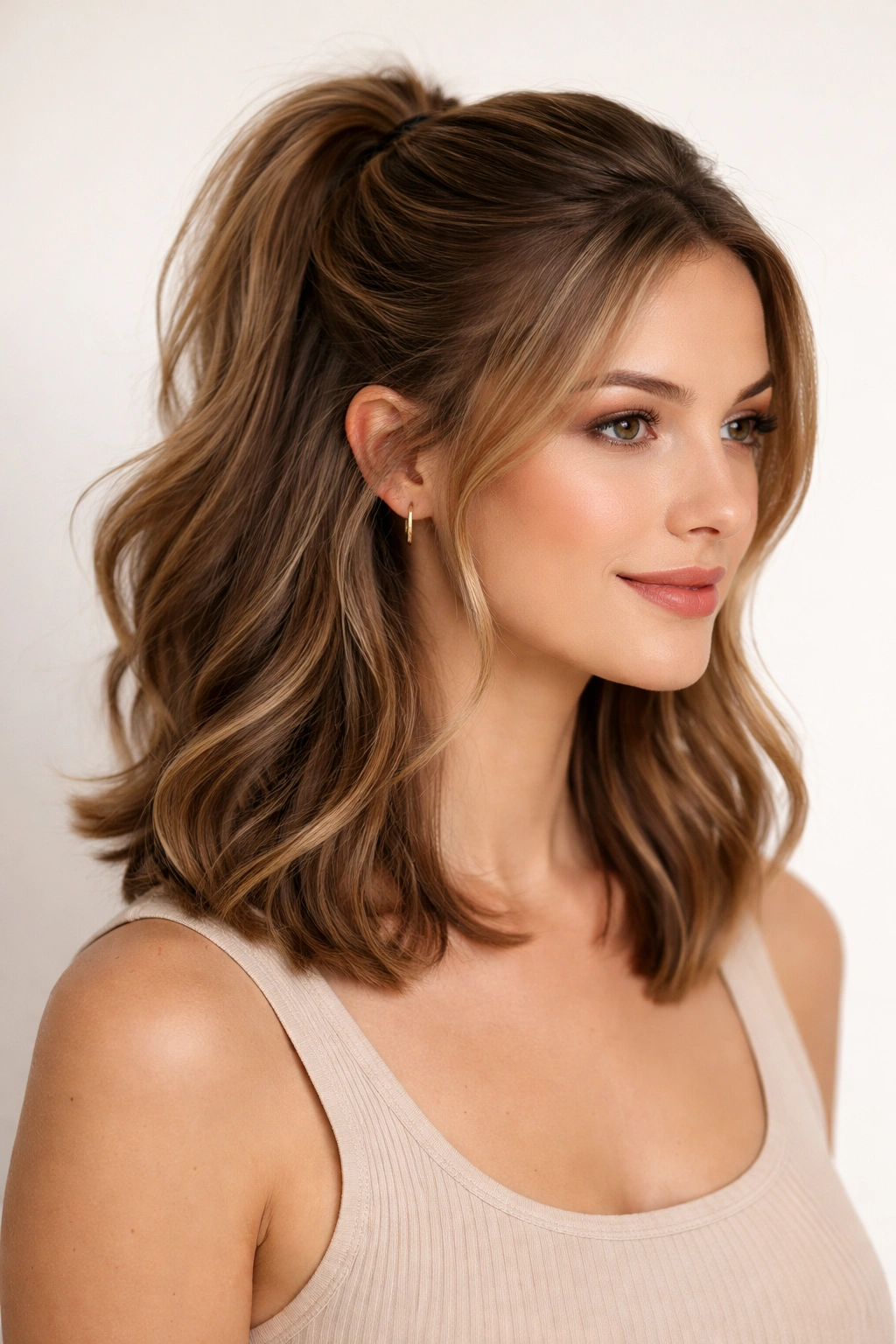
The half-up half-down ponytail is borderline genius for medium hair because it gives you the benefits of an updo (hair off your face, polished appearance) without the commitment of a full ponytail or bun. This style works equally well as a quick everyday option or a more dressed-up look depending on whether you texture your hair or keep it sleek, and it’s one of the few styles that looks intentional even if your hair is slightly second-day texture or hasn’t been freshly washed.
Why It Works for Medium Hair
With medium-length hair, the half-up section stays proportionally balanced to the hair flowing down—you’re not trying to corral too much length into the upper half, which can sometimes look bottom-heavy. The style also shows off the length and movement of your hair while keeping the front sections pulled back enough to open up your face. It’s genuinely flattering on almost every face shape because you can adjust where you take the upper section based on your features.
How to Perfect It
- Part your hair down the middle or to one side, depending on your face shape
- Blow-dry your lower section into loose waves or curls if you want definition
- Take a section of hair from each side at about ear level, bringing both pieces to the back of your head
- Secure both sections with a clear elastic or a decorative clip at the crown or slightly lower, depending on how much hair you want in the upper section
- Gently pull at the secured section with your fingers to add dimension and softness
Insider note: Curling the lower section of hair in the direction away from your face creates a more flattering frame than curling it toward your face, which can feel dated.
5. The Bubble Ponytail
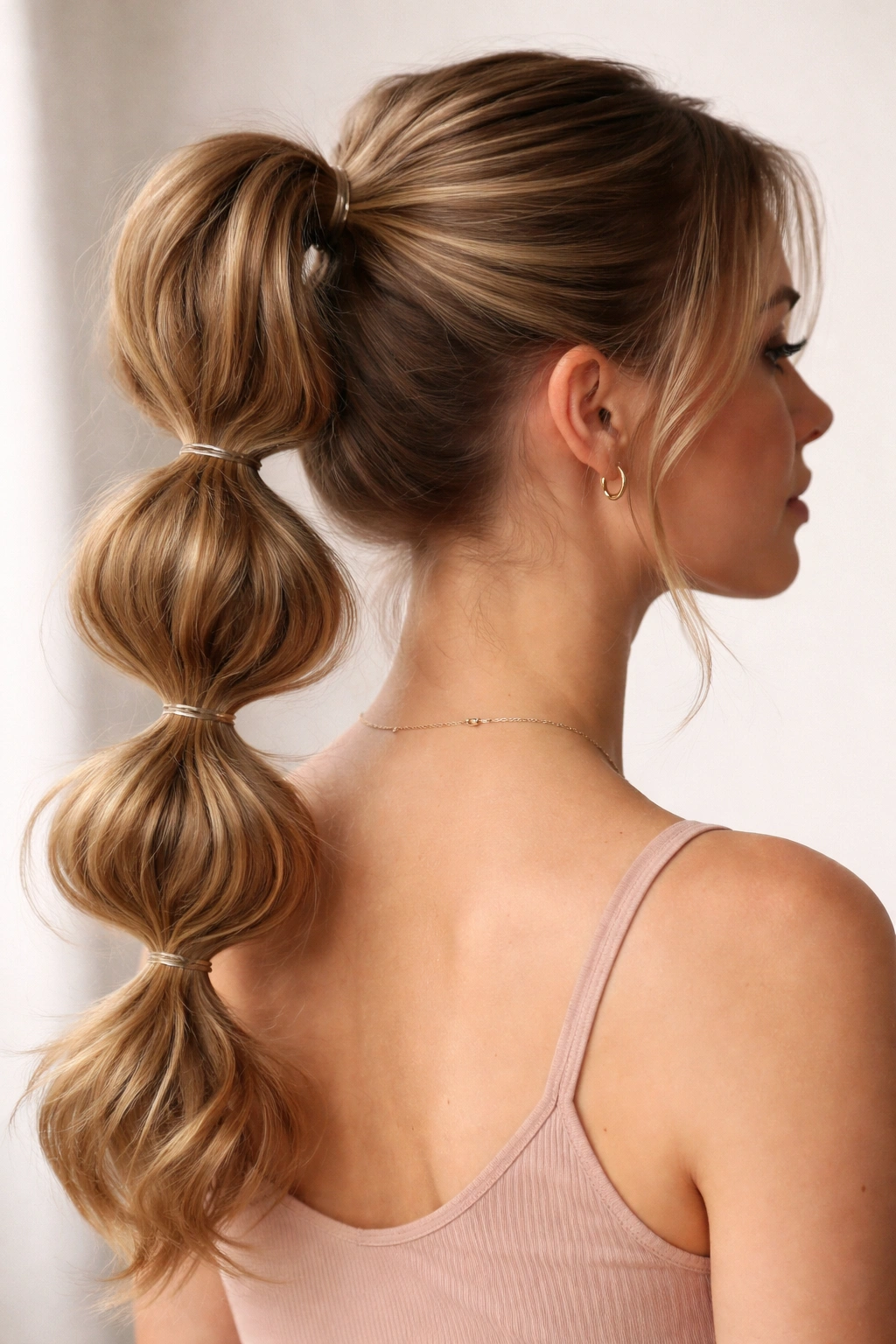
The bubble ponytail is a style that looks more complicated than it actually is, which is exactly why it’s so satisfying to create. The style works by creating multiple sections within a single ponytail and securing each section independently, which creates a tiered, dimensional effect that reads as a lot more effort than you’ve actually put in. With medium hair, bubble ponytails have the perfect length to create two or three distinct “bubbles” without looking sparse or gappy.
Why It Works for Medium Hair
Medium hair is genuinely the ideal length for bubble ponytails because you have enough total length to create multiple sections, but not so much length that each bubble ends up looking thin. The style also adds visual interest and movement to your ponytail, making even relatively straight or fine hair look more textured and dimensional. It’s a great option for when you want something that feels special but don’t want to spend an hour styling.
How to Perfect It
- Start with a high or mid-height ponytail secured with a clear elastic
- Locate where you want your first bubble to end (about 2-3 inches down from your elastic)
- Secure that section with another clear elastic, then gently tease and pull at the hair between your first and second elastic to create a puffy bubble effect
- Repeat this process once or twice more down the length of your ponytail, spacing each bubble evenly
- Fluff each bubble gently with your fingers until they all appear soft and full
Pro tip: This style looks best when you’ve added texture to your hair beforehand—even loose waves will make the bubbles appear fuller and less flat.
6. The Braided Ponytail
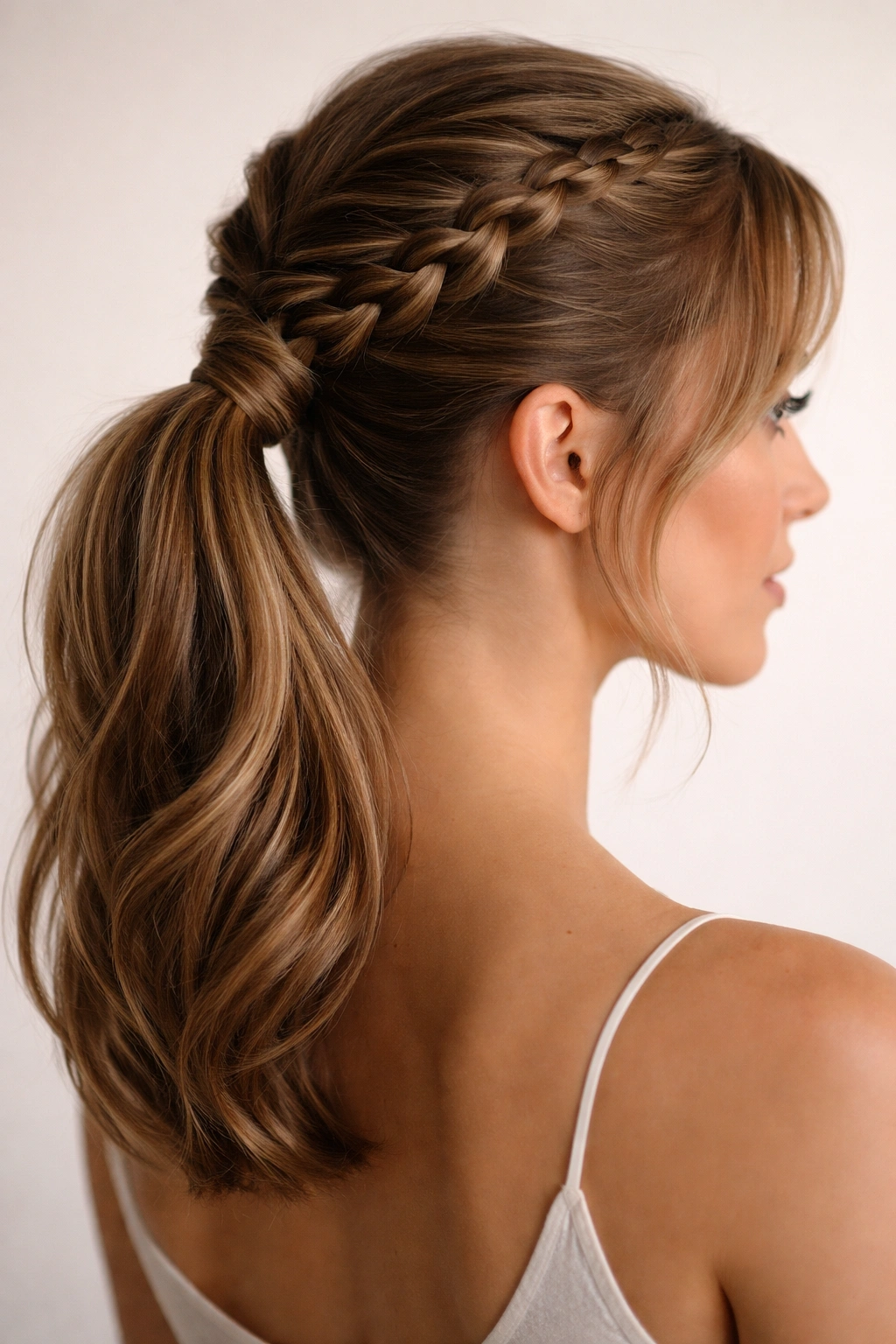
A braid woven through or around your ponytail takes a basic style and makes it feel intentional and artistic, and it’s surprisingly easy to execute once you understand the mechanics. The beauty of this approach is that you can create a braid that starts at your crown and incorporates into your ponytail, or you can braid the ponytail itself after it’s already gathered. With medium hair, both approaches work beautifully and create distinctly different aesthetics.
Why It Works for Medium Hair
The length of medium hair makes braiding accessible without becoming overwhelming—you’ve got enough hair to create a defined, visually clear braid, but not so much that braiding becomes tedious or takes forever. A braid incorporated into a ponytail also adds texture and visual complexity that makes medium-length hair look fuller and more intentionally styled. The style photograph beautifully and works for both casual and dressed-up occasions depending on how you execute it.
How to Perfect It
- Option 1: Start with a high or mid-height ponytail, then divide the ponytail into three sections and French braid downward, creating a three-strand braid that runs down the length of your ponytail
- Option 2: Before gathering your ponytail, create a Dutch braid that starts at your crown on one side and follow your natural part line backward, incorporating all hair as you go, then secure the braid and the remaining loose hair into a ponytail at your desired height
- Either way, secure the braid end with a small elastic that matches your hair color
- Gently pull at the edges of the braid to make it appear fuller and more textured
Worth knowing: A braid within a ponytail is especially effective if your hair is straight or fine, because the braid adds visual texture and dimension that makes everything look fuller.
7. The Messy Bun Ponytail
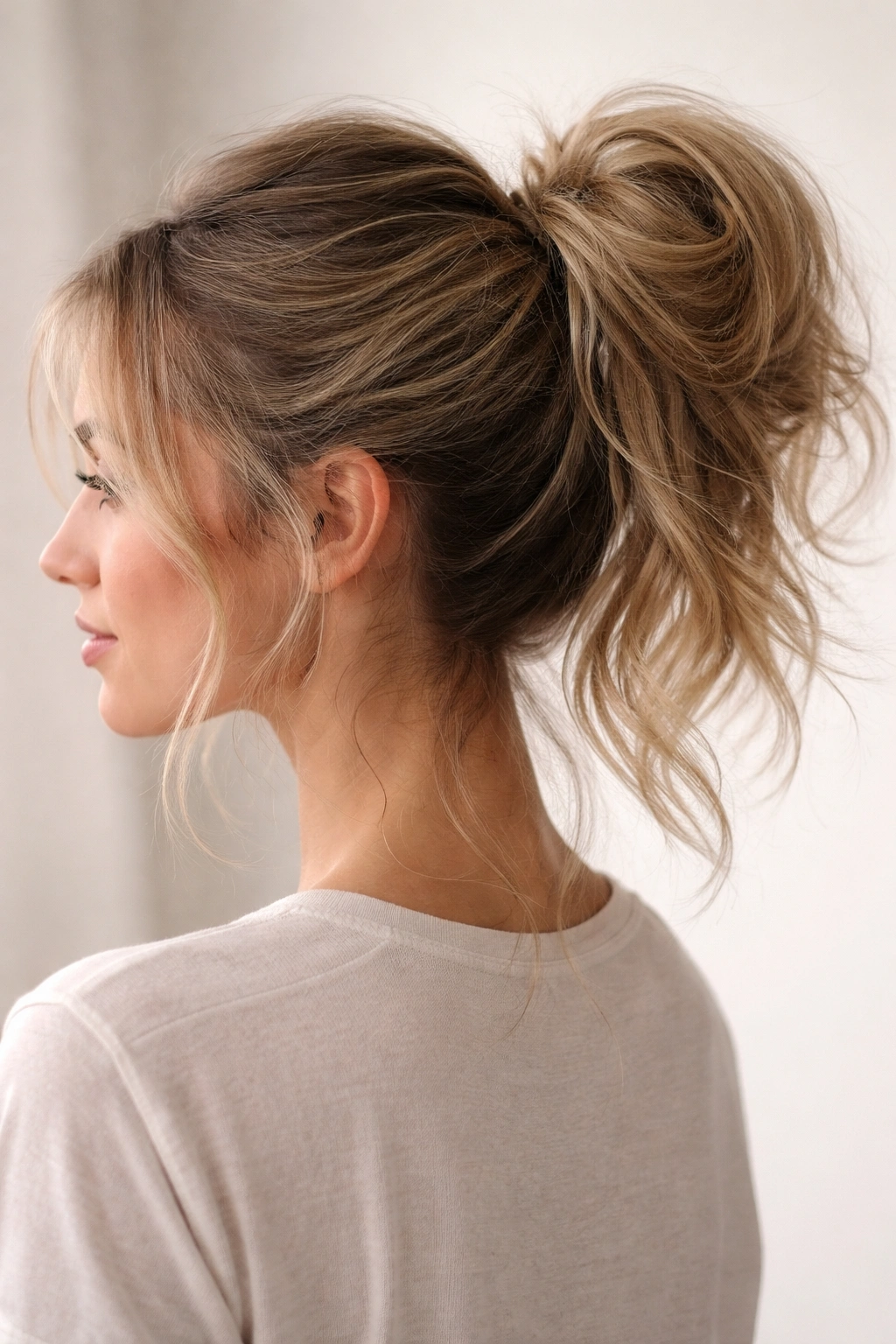
This is the style that looks like you didn’t try while simultaneously looking intentionally styled, and it’s become such a staple for good reason—it works for genuinely any occasion, from a morning gym session to a casual dinner to a lazy Sunday at home. The “messy bun ponytail” is essentially a ponytail that’s been twisted or braided and then loosely looped and pinned, creating something between a ponytail and a bun with way more texture and dimension than either style alone.
Why It Works for Medium Hair
Medium hair is the exact right length for creating a messy bun ponytail that looks full and intentional rather than sparse or stringy. You’ve got enough hair to create real volume and interesting texture, but not so much that the style becomes heavy or requires an hour to pin properly. The beauty of this style is that it’s genuinely forgiving—imperfection is actually the point, so you can’t really mess it up.
How to Perfect It
- Create a high or mid-height ponytail and secure it with an elastic
- Twist the entire ponytail loosely, or divide it into two sections and twist them together
- Wrap the twisted ponytail around the base to form a loose coil, allowing some pieces to escape and fall messily
- Secure the wrapped bun with bobby pins, tucking them in from underneath so they’re hidden
- Gently pull at pieces around the bun to increase the tousled, undone appearance
- Leave face-framing pieces down intentionally for a softer, more casual vibe
Pro tip: Apply a light texturizing spray to your hair before creating this style—the texture makes the bun appear fuller and more intentionally messy rather than accidentally messy.
8. The Side Ponytail
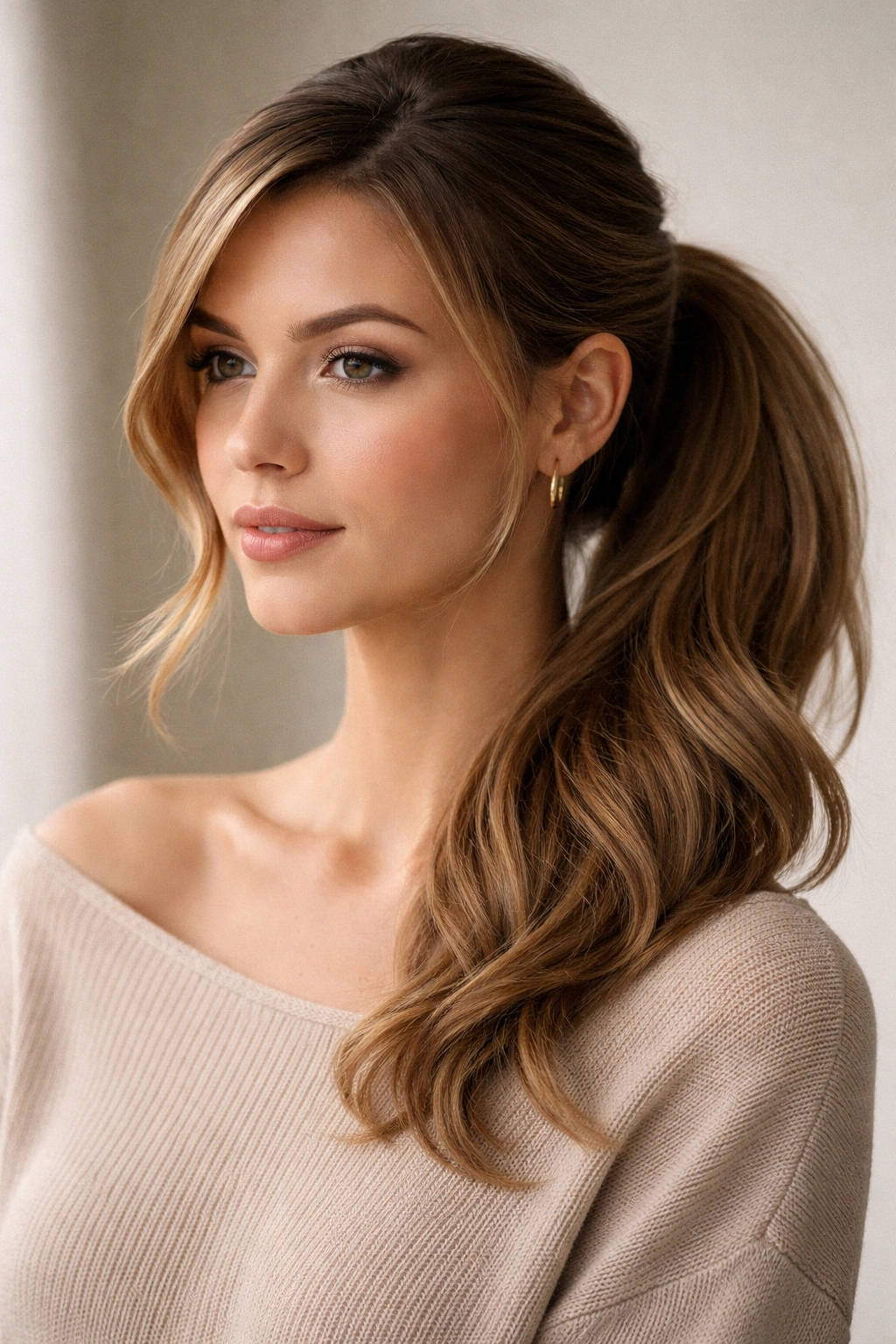
The side ponytail sits off to one side rather than centered at the back, creating a more dramatic, modern silhouette that works beautifully for medium hair. This placement is flattering on almost every face shape because you can adjust which side you choose based on your features—if you have asymmetrical features or prefer one side of your face, the side ponytail lets you choose which side to emphasize. The style also creates an interesting visual line that’s different from the predictability of a centered pony.
Why It Works for Medium Hair
With medium hair, a side ponytail has enough substance to look intentional and polished rather than like you just happened to tie your hair to the side. The style also shows off your side profile beautifully and creates an elegant neck line, making it perfect for events where you’ll be photographed from multiple angles. The style also works with virtually any hair texture because the side placement itself adds visual interest regardless of whether your hair is stick-straight or very curly.
How to Perfect It
- Determine which side you want your ponytail to sit on (typically the side opposite your natural part looks most flattering)
- Brush all hair over to that side, creating a deep side part
- Gather hair into a ponytail at the nape of your neck on your chosen side, securing with an elastic
- Smooth flyaways and add texture as desired—a side pony looks equally good sleek or textured
- Optional: Create a braid within the side ponytail for added complexity, or wrap a small section around the elastic base
Insider note: A side ponytail reads differently depending on which side you choose—the side that’s more visible to your face-forward position should align with the side that photographs best in your opinion.
9. The Wrapped Ponytail
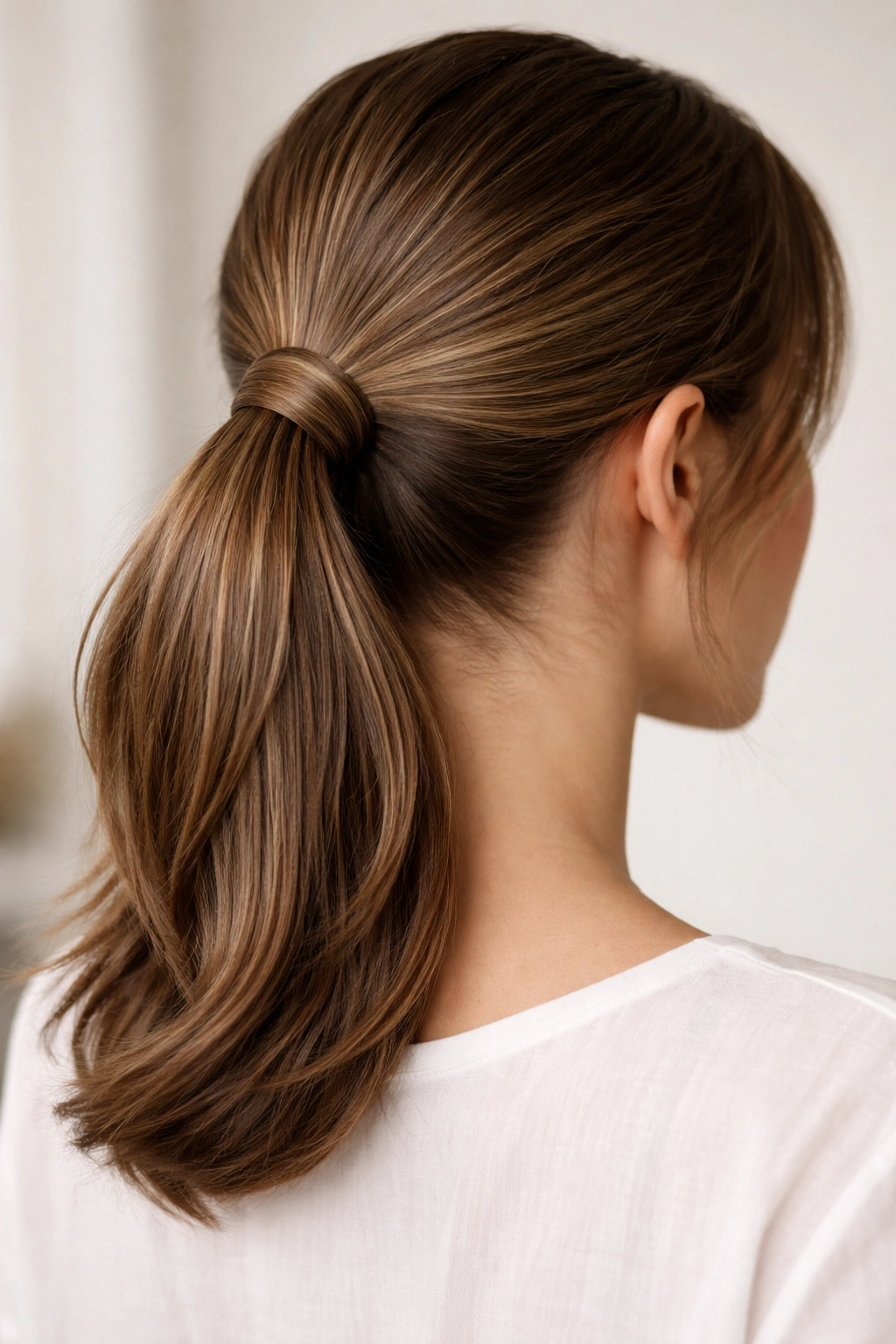
The wrapped ponytail is simply a basic ponytail that’s been elevated by wrapping a thin section of hair around the elastic base, which completely changes how polished and intentional the style looks. This is one of those styling moves that takes about 30 extra seconds but creates a disproportionate change in how finished your ponytail appears. Once you start doing this, you’ll never go back to visible elastics—it’s one of the most effective styling tricks that almost nobody does.
Why It Works for Medium Hair
With medium hair, wrapping a small section around your ponytail base is easy to accomplish and creates a significant visual impact. The wrap hides the elastic completely, making your ponytail look less utilitarian and more intentionally styled. The technique also works with any ponytail placement or texture, so it’s genuinely a universal upgrade you can add to any of the other styles on this list.
How to Perfect It
- Create your ponytail at your desired height and position, securing with an elastic
- Take a very thin, small section of hair from the outer edge of your ponytail (about ¼ inch thick)
- Wrap that section tightly around the elastic base, covering it completely
- Secure the wrapped section with a bobby pin tucked horizontally underneath the wrap, hidden from view
- Trim any excess length if the wrapped section extends beyond the elastic
Pro tip: If you have hair that’s resistant to staying wrapped, apply a tiny dab of pomade or clear gel to the section before wrapping—it’ll stay in place all day without looking shiny or product-heavy.
10. The Twisted Ponytail
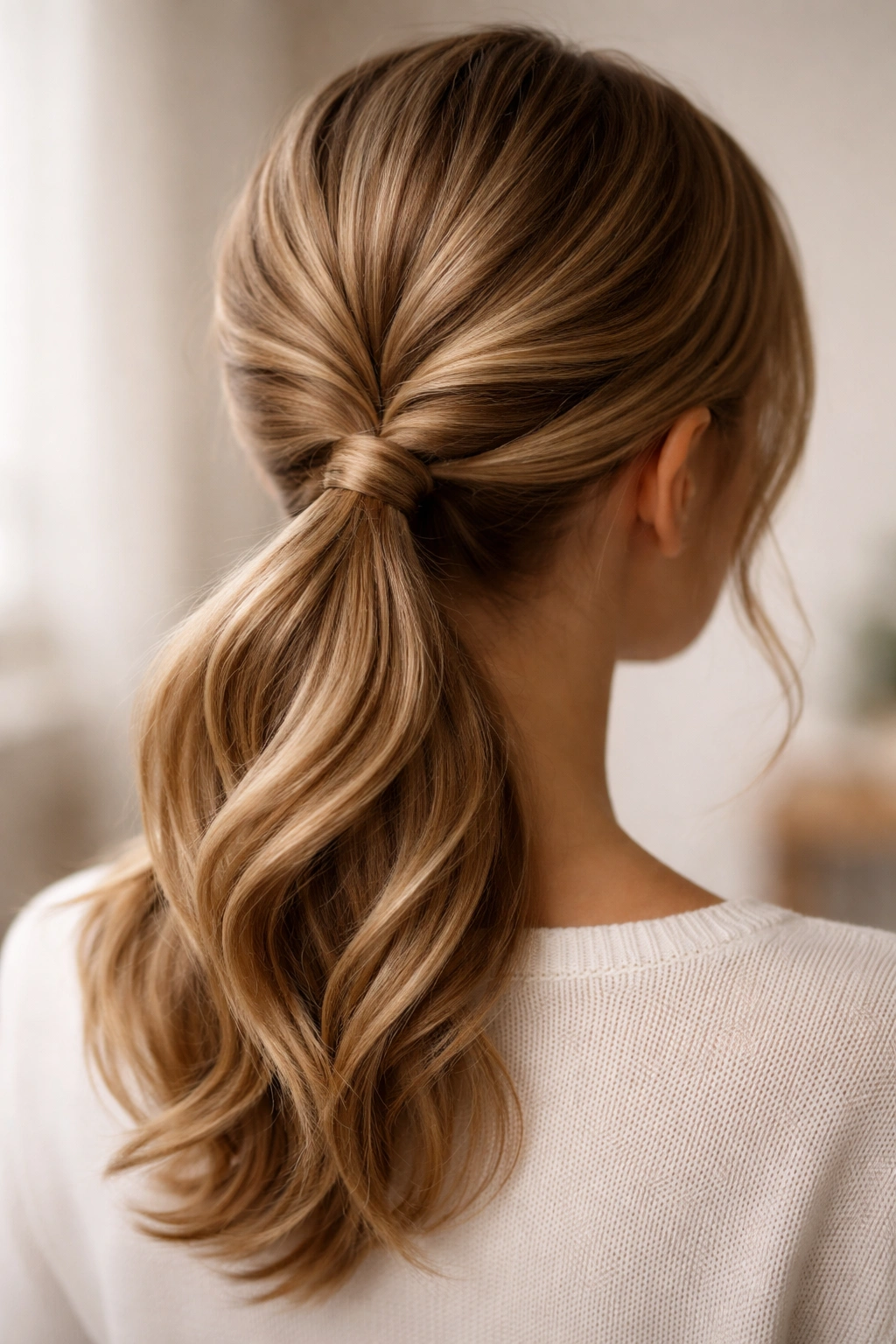
The twisted ponytail is textured without requiring a curling iron, braided without requiring braiding skills, and elegant without requiring complicated technique—it’s basically the style equivalent of easy dinner that looks impressive. You create this style by twisting sections of hair and incorporting them into or around your ponytail, which creates a complex-looking result from genuinely simple technique. With medium hair, twists hold beautifully and create defined visual texture.
Why It Works for Medium Hair
Twists are actually easier to execute than braids because you’re only working with two sections of hair rather than three, and the results are equally beautiful. With medium-length hair, twists create clear, defined texture that makes your ponytail look fuller and more intentionally styled. The technique also works on virtually any hair type—from fine and straight to thick and curly—making it genuinely versatile.
How to Perfect It
- Gather your hair into a high, mid, or low ponytail depending on your desired look
- Divide your ponytail into two equal sections
- Twist one section away from you, then twist the other section away from you, then wrap the two twisted sections around each other, creating a rope-like effect
- Secure the twisted ponytail at the end with a small elastic
- Gently pull at the twisted sections to make them appear fuller and less tightly wound
Worth knowing: For a more polished look, flatten each twist slightly as you create it by running your fingers down the length—this creates a ribbon-like rather than rope-like appearance.
11. The Curled Ponytail
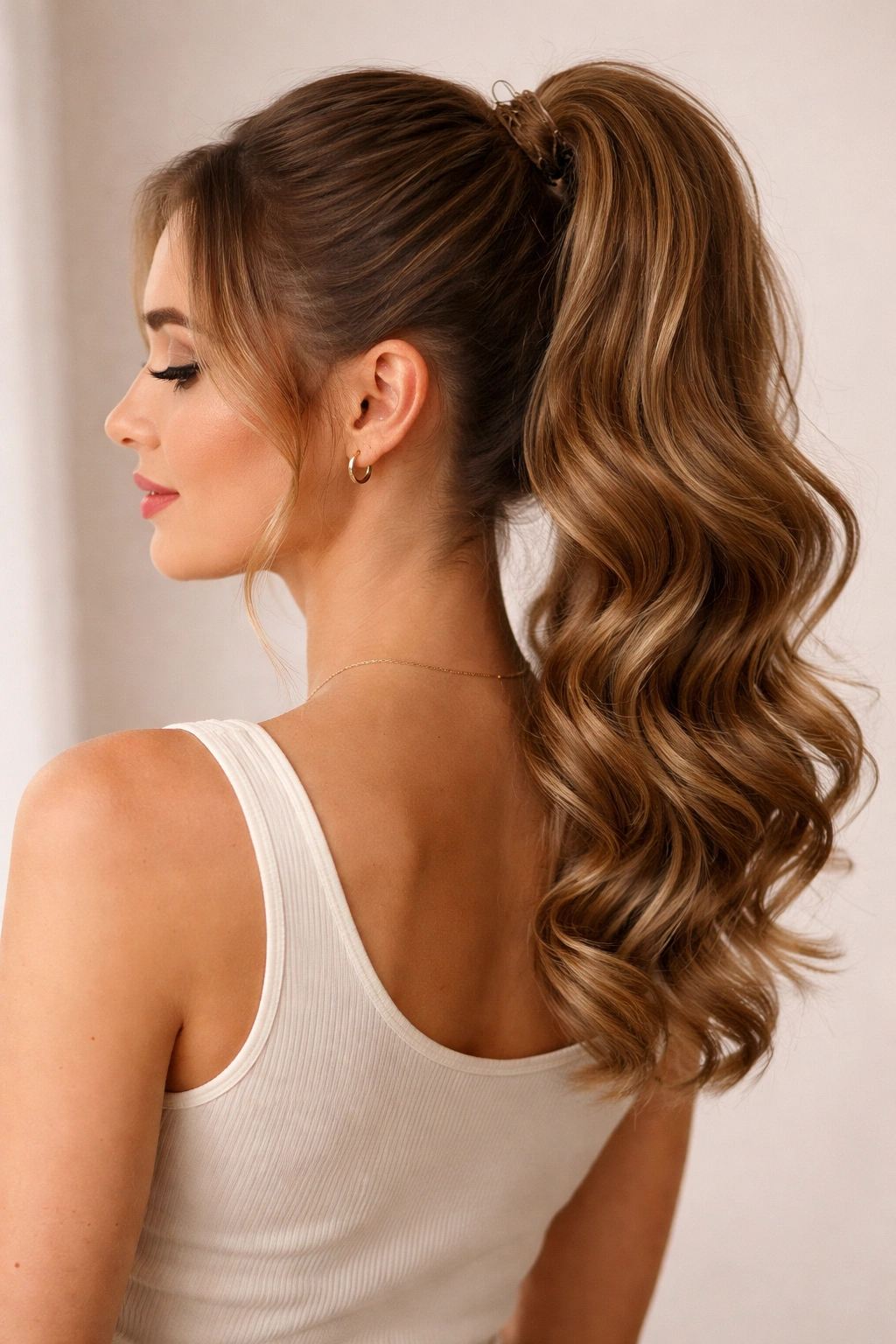
This style takes a basic ponytail and adds curl or wave specifically to the ponytail section itself, which completely transforms how the ponytail drapes and photographs. Rather than curling your entire head and then pulling it into a ponytail, you gather your hair first and then add texture to just the ponytail portion, which is actually faster and creates a more intentional, modern look. With medium hair, curled ponytails have enough length to show off the curl pattern without becoming overwhelming.
Why It Works for Medium Hair
Curled ponytails look more polished and intentional than simply straightening your hair and putting it in a pony, and they create movement and dimension that reads as more styled. With medium-length hair, you have enough ponytail length to create beautiful curl or wave without the style looking sparse. The technique is also faster than curling your entire head, which makes it practical for both everyday and special-occasion styling.
How to Perfect It
- Create your ponytail at your desired height using straight or slightly wavy hair
- Divide your ponytail into 3-4 sections
- Curl each section with a 1.25-inch curling iron, wrapping hair around the barrel and holding for 8-10 seconds
- Release curls gently and allow them to cool completely before touching them
- Once cooled, separate curls gently with your fingers to create more movement and less uniformity
- Set with a light hairspray to maintain curl through the day
Pro tip: Curling your ponytail away from your face on the front sections and in varying directions on the back sections creates a more natural, less uniform appearance than curling everything in the same direction.
12. The Dutch-Braided Ponytail
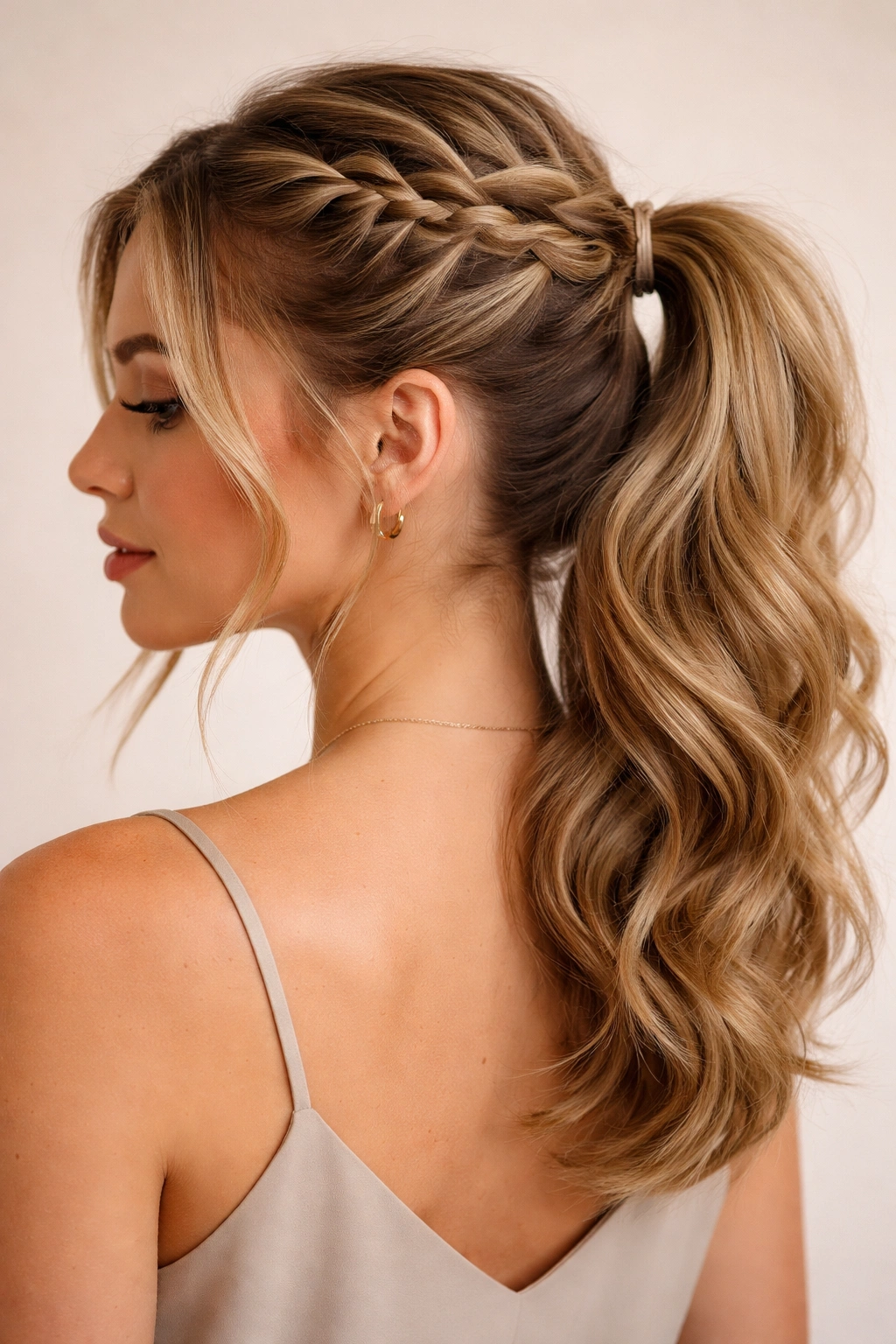
The Dutch braid (which is like a French braid but with the braid sitting on top of the hair rather than woven underneath) creates a more sculptural, modern look than a standard French braid, and incorporating it into a ponytail elevates the entire style. This works beautifully with medium hair because you have enough hair to create a defined, visually clear braid without the length becoming unwieldy. The style looks intricate enough that people assume you spent way more time on it than you actually did.
Why It Works for Medium Hair
A Dutch braid is especially flattering with medium hair because the braid sits prominently and creates a strong visual line from your crown down your back. The raised braid also creates the illusion of more volume at the crown, which is genuinely flattering on most face shapes. The style works equally well as a casual everyday look or something more dressed up depending on how you finish the rest of your hair.
How to Perfect It
- Section off a smaller portion of hair at your crown where you want your braid to start
- Create a three-strand Dutch braid by crossing each strand under the center section rather than over it, which creates the raised appearance
- As you braid, gradually pick up sections of hair from both sides, incorporating them into your braid
- Continue braiding back toward your desired ponytail placement, then gather the braided section plus all remaining hair into a ponytail
- Secure with an elastic and wrap a small section around the base to hide it completely
Worth knowing: Dutch braids hold beautifully in medium-length hair and actually look better slightly textured rather than completely smooth, so you can braid hair that’s a day old without worrying about it being too slippery.
13. The Voluminous Teased Ponytail
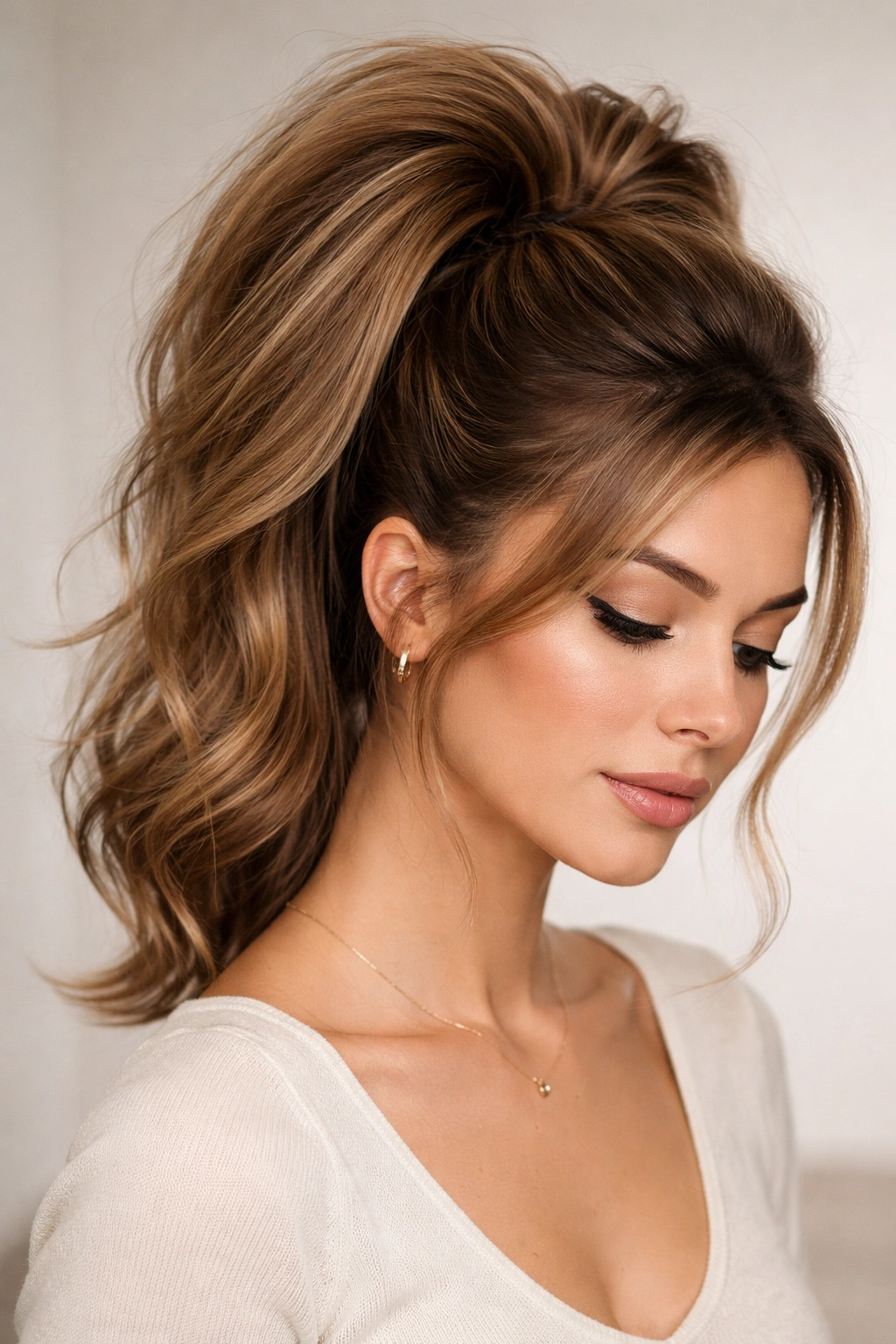
This style is all about creating maximum volume at the crown and the base of your ponytail, which creates a lifted, modern silhouette that photographs beautifully and looks flattering from every angle. Teasing (also called backcombing) is a technique where you brush a section of hair backward to create texture and hold, which allows you to build volume without heavy product. With medium hair, strategic teasing creates significant volume without making your hair look damaged or matted.
Why It Works for Medium Hair
Teasing is genuinely one of the fastest, most effective ways to add volume to medium-length hair, and the results last throughout the day without requiring additional styling. When you tease at the crown and at the base of your ponytail, you create the illusion of thicker, fuller hair and a lifted facial appearance. The technique works on virtually any hair type and texture, making it genuinely universal.
How to Perfect It
- Blow-dry your hair for maximum hold
- Take a small section of hair at your crown and lightly backcomb it using short, quick brushing motions from the ends toward the roots
- Gently smooth the outer layer of the teased section with a fine-tooth comb while leaving the inner texture intact
- Create your ponytail at your desired height, positioning it directly over the teased section
- Tease lightly at the base of your elastic to add volume to the ponytail base itself
- Smooth flyaways with a fine-tooth comb and set with hairspray
Pro tip: Teasing works best on hair that’s slightly textured or second-day hair rather than freshly washed strands, which can be too slippery to tease effectively.
14. The Fishtail Braid Ponytail
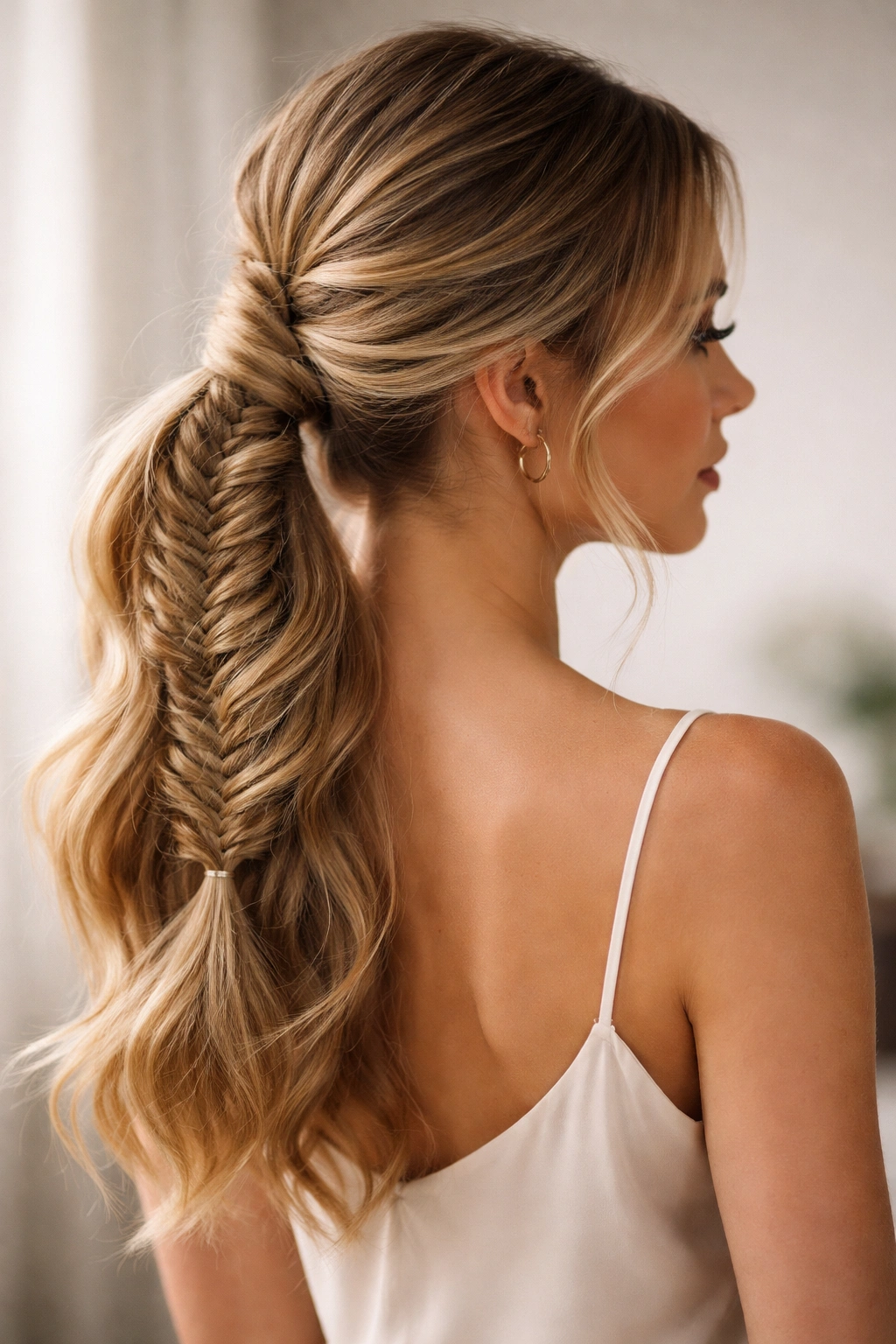
The fishtail braid is a two-section braid that creates an incredibly intricate-looking final result, which makes it perfect for when you want something that looks impressively complicated but is actually relatively easy to execute. Incorporating a fishtail into a ponytail creates a style that’s genuinely show-stopping, and with medium hair, the fishtail has enough length and substance to look substantial and intentional. The braid creates a delicate, romantic aesthetic that works beautifully for special occasions.
Why It Works for Medium Hair
The fishtail braid is actually easier to execute with medium hair than with very long hair because you’re not working with as much length, which means less potential for tangles or mistakes. The braid also creates beautiful texture and dimension, making even fine hair appear fuller. The style photographs incredibly well and creates a genuinely distinctive look that most people won’t have seen a thousand times before.
How to Perfect It
- Divide your hair into two equal sections
- Take a tiny piece of hair from the outer edge of the right section and cross it over to join the left section
- Take a tiny piece of hair from the outer edge of the left section and cross it over to join the right section
- Continue alternating: always taking from the outer edge of whichever section is currently on top
- As you work your way down, gradually incorporate additional hair from each side, eventually gathering all hair into a single braided ponytail
- Secure at the end with an elastic and gently pull at the braid edges to make them fuller
Insider note: The fishtail braid looks better slightly loose and textured than tight and uniform, so don’t stress about making it perfectly symmetrical—a little asymmetry actually looks more intentional and modern.
15. The Sleek Gel Ponytail
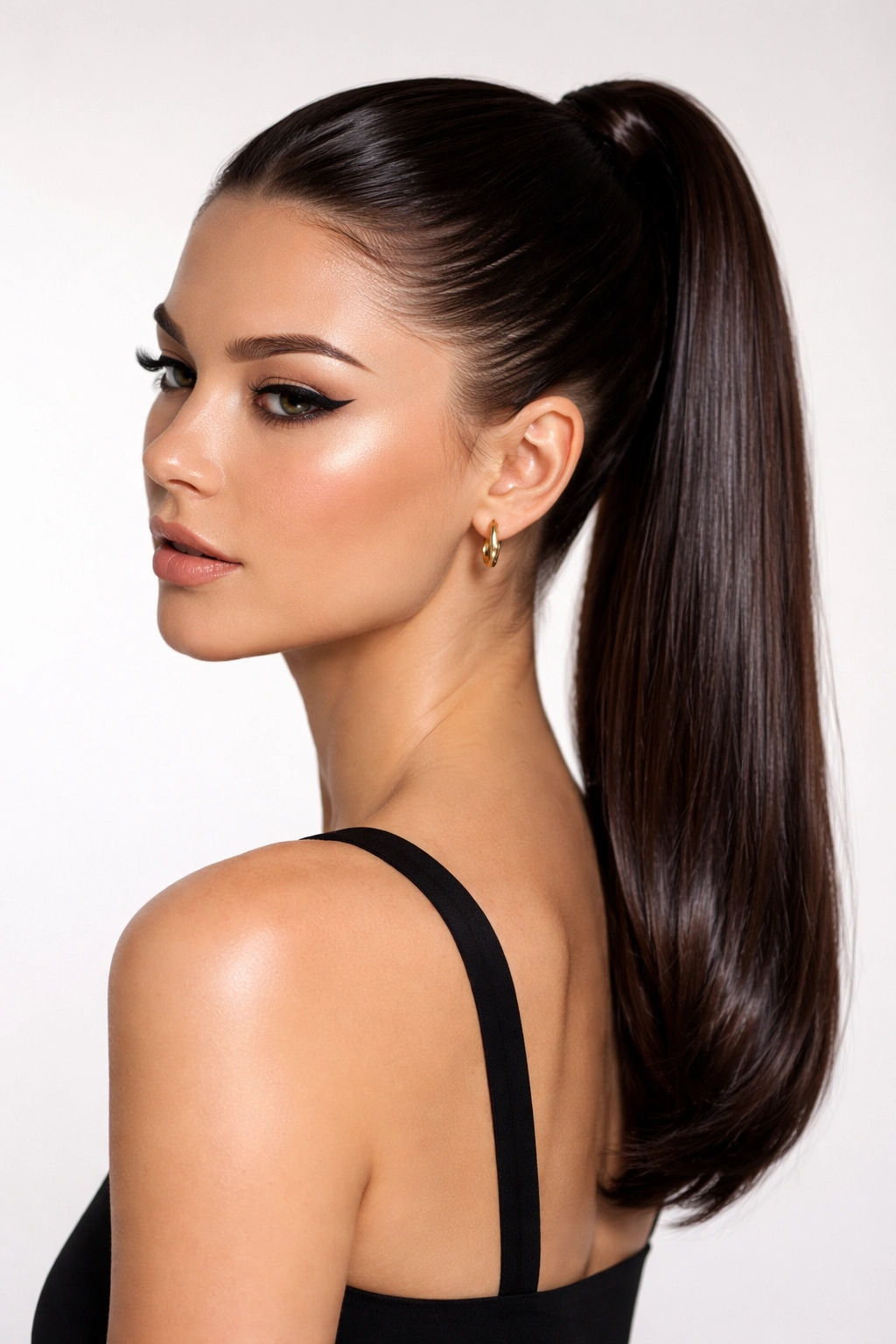
The sleek gel ponytail is the ultimate polished, editorial-looking style—every single hair is perfectly smooth and in place, creating a look that reads as intentional and put-together. This style requires gel or a strong hold styling product, but the results are worth it because the smoothness is genuinely impressive and lasts all day. With medium hair, a sleek gel ponytail is easier to execute than it might be with longer hair, because you have less total length to smooth and secure.
Why It Works for Medium Hair
The gel ponytail is actually ideal with medium hair because you have enough length to create a visibly substantial ponytail, but not so much length that applying gel becomes a multi-hour project. The style is incredibly flattering and works for any occasion from gym to office to evening event, depending on what you pair it with. The sleekness also shows off your face and facial features beautifully, making it perfect for when you want the focus on your skin and features.
How to Perfect It
- Apply a smoothing serum or lightweight conditioner to damp hair and blow-dry completely smooth
- Apply a strong-hold gel (specifically designed for hair, not hand gel) by running a small amount through your fingers and smoothing it over your entire hairline and scalp
- Gather hair into a high, mid, or low ponytail depending on your preference, using the gel to smooth every piece as you gather
- Secure with a thin elastic in a color matching your hair
- Use a fine-tooth comb to smooth flyaways and apply a tiny bit of additional gel to any pieces that aren’t staying in place
- Optional: wrap a thin section around the elastic base for a more finished appearance
Pro tip: Let your hair air-dry or blow-dry completely dry after applying gel—the product sets better on completely dry hair and will hold all day without flaking or feeling stiff.
Final Thoughts
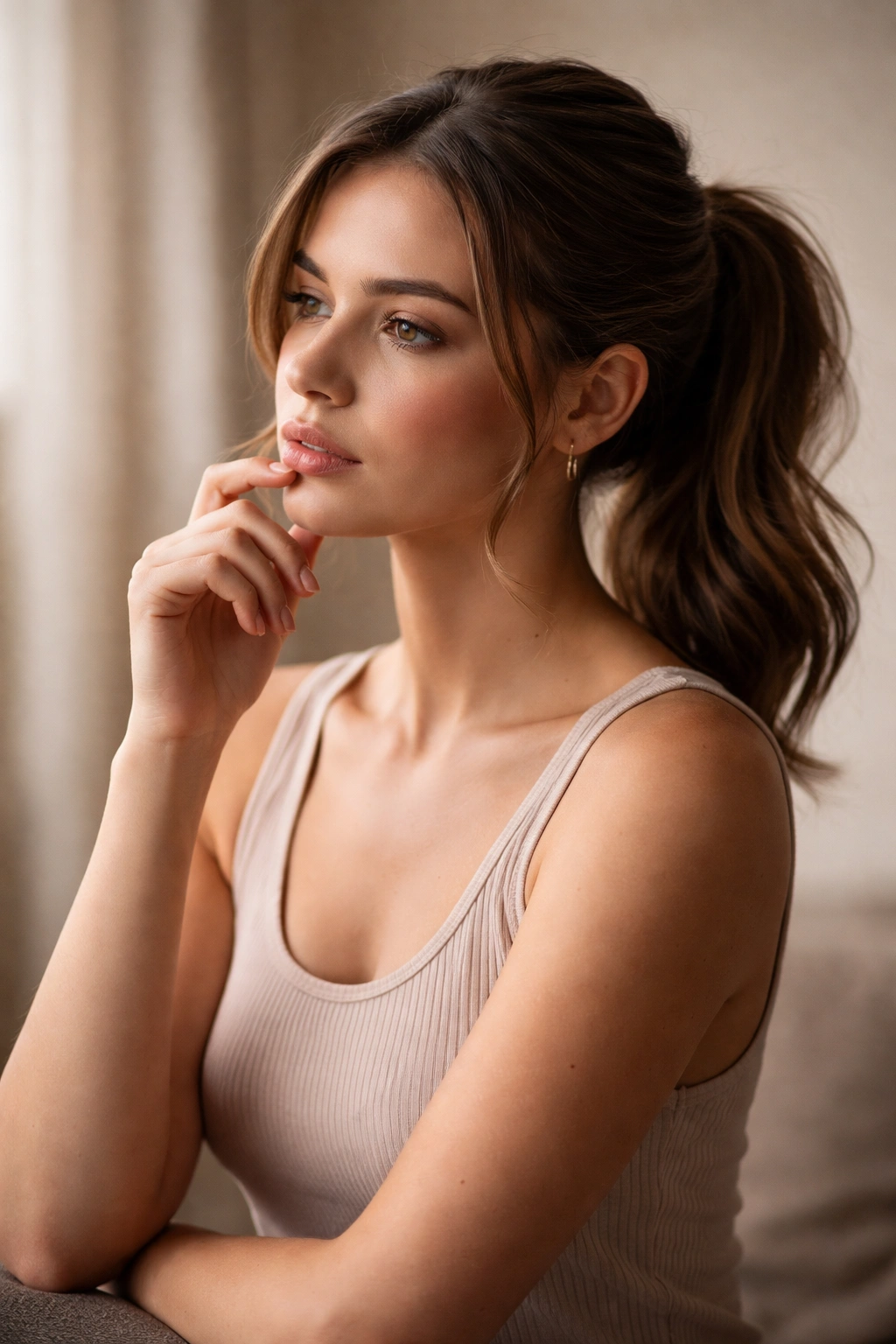
The true magic of styling medium-length hair is that you’ve got enough length to create real presence and visual interest, but not so much length that styling becomes complicated or time-consuming. Each of these fifteen styles works genuinely well with medium hair specifically—not as a compromise or scaled-down version of what you’d do with longer hair, but as styles that actually reach their full potential with this length. The styles range from five-minute-flat looks like the classic high pony to slightly more involved options like the fishtail braid, but none of them require special equipment or advanced techniques.
The best part is that you can rotate between these styles depending on your mood, your schedule, and what you need that day. A textured high ponytail works for casual days when you want to feel put-together without trying too hard. A sleek low pony works for professional settings or formal events. A bubble or twisted ponytail works for when you want something that feels special. Medium hair gives you the flexibility to switch between casual and polished, simple and complex, without needing to grow it out or cut it shorter.
Start experimenting with whichever styles appeal to you most, and don’t hesitate to combine techniques—add a twist to your high pony, add a braid to your side pony, add curls to your half-up style. The more you play with these styles, the faster they’ll become second nature, and you’ll find yourself creating variations you didn’t even know were possible.
