



Half up ponytails have become a go-to style for Black women wearing their natural hair, striking that perfect balance between protective and versatile. Whether you’re heading to work, hitting the gym, or stepping out for a casual weekend, a well-executed half up ponytail keeps hair off your face while showing off your texture and volume. The beauty of this style lies in its adaptability—you can wear it sleek and polished, textured and playful, or anywhere in between depending on your mood and the occasion.
What makes half up ponytails so appealing for natural hair is how they work with your curl pattern rather than against it. Unlike styles that require extensive heat or tension, these looks celebrate the natural movement of coils, coils, and curls while keeping things neat and intentional. You get the practicality of a protective style with the flexibility to switch things up without reaching for heat tools every single time. Plus, they’re genuinely fun to experiment with—there are endless ways to section, layer, and embellish depending on how much time you’re willing to invest.
The key to nailing any half up ponytail on natural hair is understanding your specific hair texture, knowing which products give you the hold and definition you need, and mastering a few basic sectioning techniques. From sleek and sophisticated to textured and bold, the following ten styles offer something for everyone—whether you’ve got tightly coiled 4C hair or loose waves. Each can be dressed up or down, adapted to different hair lengths, and customized with accessories to match your personal style.
1. The Classic Coil-Out Half Up
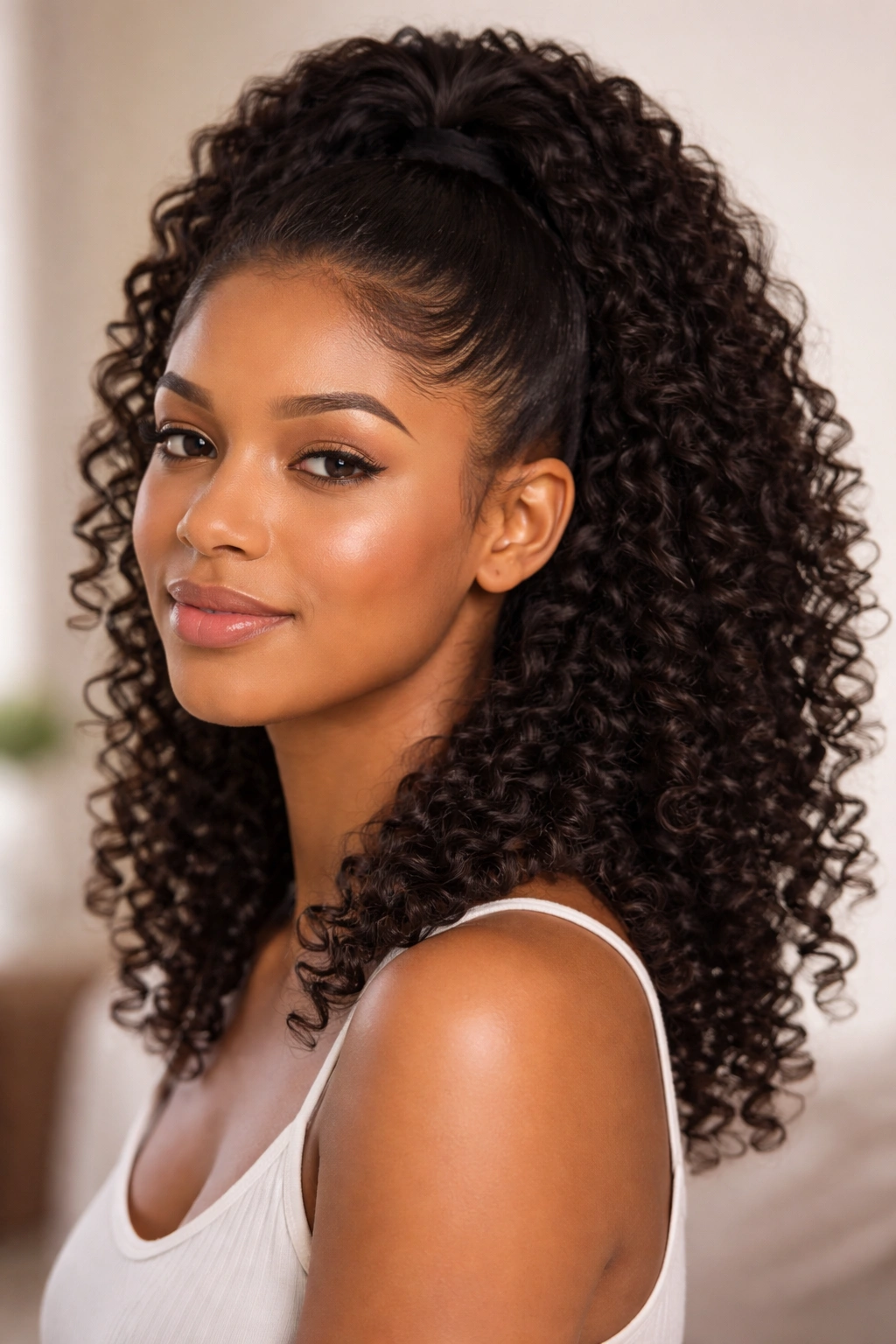
This is the foundation style that works beautifully on nearly every natural hair texture. You’re taking hair from the front sides and crown, securing it into a ponytail at the back of your head while leaving the bottom half down. The magic happens when you work with your actual curl pattern—no forcing your hair into shapes it doesn’t naturally want to take.
How to Create This Look
Start with hair that’s been washed and deeply moisturized. Apply your favorite leave-in conditioner and styling cream to damp hair, then let it air dry or use a diffuser attachment on low heat if you prefer. Once fully dry, gently finger-comb or use a wide-tooth comb to separate your curls without disrupting them too much. Section your hair by taking hair from your temples back toward your ears, then across the crown to roughly the middle-back of your head. Use a soft elastic or silk hair tie to secure these sections into a ponytail, positioning it at the nape of your neck or slightly higher depending on how much fullness you want.
Best Hair Type For
This style works beautifully on 3C through 4C hair types. If you’ve got looser waves, you might add a tiny bit of curl-defining gel to encourage more definition in the gathered section. For tighter coils, the natural texture speaks for itself—minimal product manipulation is your friend here.
Styling Tips
The trick is not to over-handle your hair while creating this look. Don’t try to make your ponytail perfectly smooth if your texture doesn’t naturally lay that way. That tension defeats the purpose and damages your edges. Instead, embrace the softness and slight variation in your coil pattern. If you want a little more polish, smooth the edges with a small amount of edge control, but keep it light.
2. The Sleek-Top Textured-Bottom Half Up
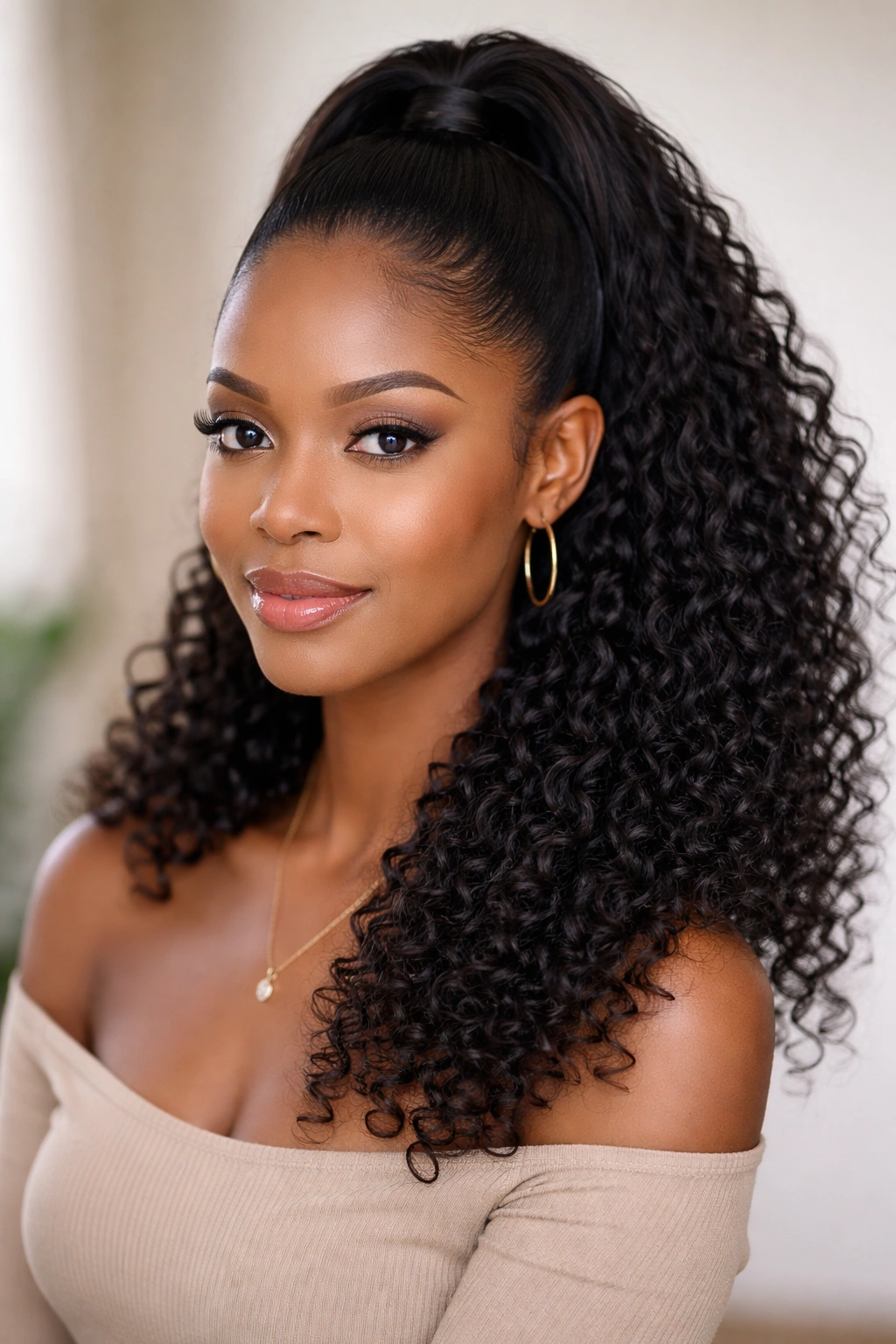
This style gives you two distinct textures in one look—a smooth, controlled crown and gathered section that contrasts with the loose, defined curls or coils below. It’s sophisticated enough for professional settings while maintaining the visual interest of natural texture.
How to Create This Look
Begin with moisturized hair that’s been allowed to dry completely. Apply a smoothing cream or gel to the top section of your hair—from your hairline back through the crown. Use a fine-tooth comb to smooth this section down, creating a sleek surface from your forehead back to the crown. Once smooth, gather your smoothed hair along with a section from the back-crown, and secure it with a sleek elastic band. The ponytail itself can sit low and voluminous, or you can gently tuck and pin it slightly higher depending on your preference.
Best Hair Type For
This works particularly well for those with medium to looser curl patterns (3B through 4A) where you can actually achieve visible smoothness without breaking the hair. If you have very tightly coiled hair, this style is absolutely doable—it just takes more time and a very good smoothing product to create that contrast effect.
Styling Tips
Don’t rely on heat to create smoothness; instead, use a quality smoothing cream or lightweight gel applied to damp hair, then smooth with a comb and allow it to dry. This protects your hair far better than a flat iron. Make sure your ponytail elastic is covered with a small piece of hair wrapped around it—this finishes the look and prevents the elastic from showing, which automatically makes it look more polished and intentional.
3. The Twisted Crown Half Up
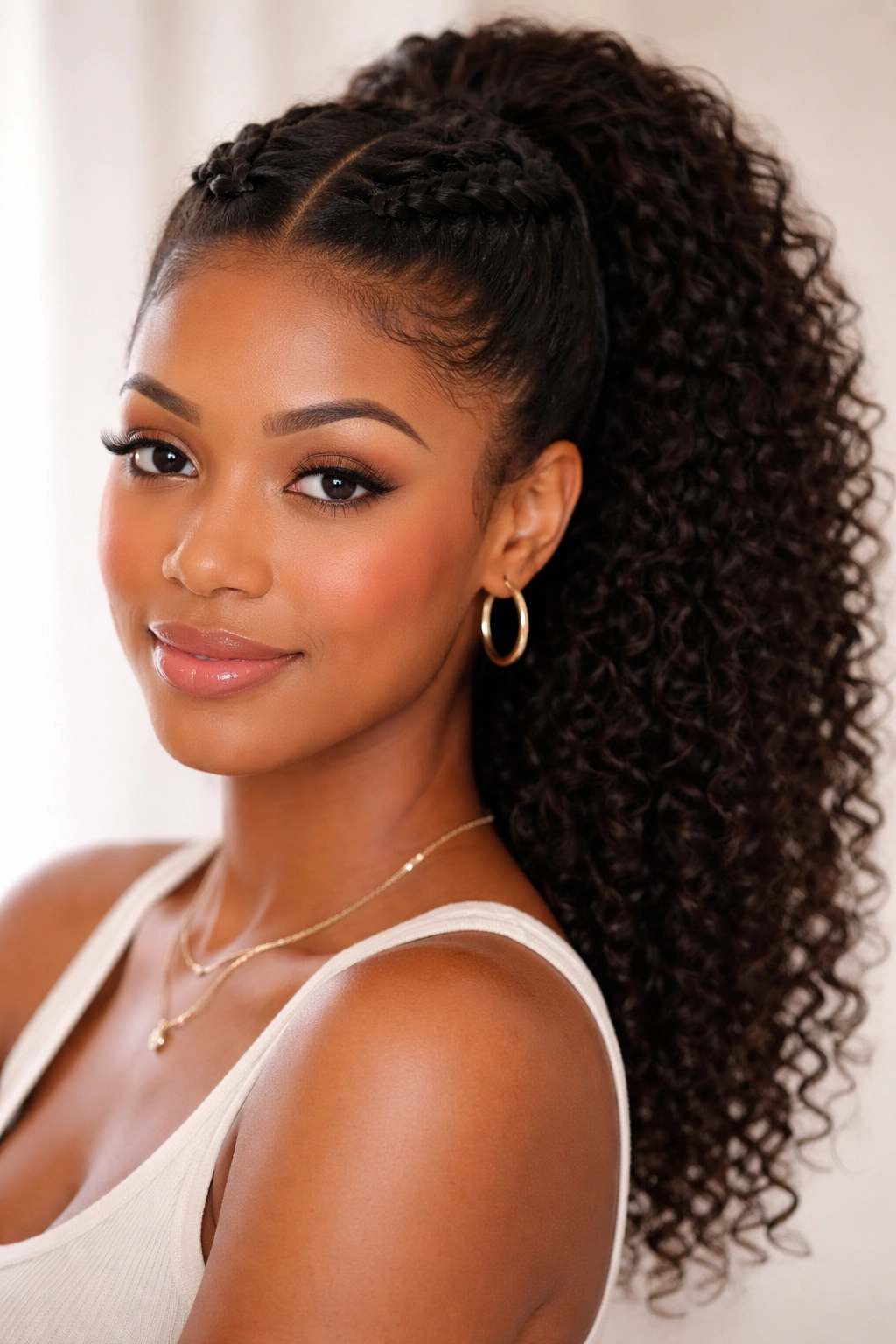
This style incorporates two-strand twists along the crown before gathering the ponytail, adding texture, dimension, and a handcrafted feel to a classic half up. It takes a bit more time but creates a genuinely stunning result that photographs beautifully.
How to Create This Look
Section your hair into two halves: everything from your forehead back to roughly mid-head on one side, and the same area on the other side. Working with one section at a time, divide the hair into two strands and twist them together from your hairline back toward the crown. Don’t make these twists tight—keep them relaxed and slightly loose so they frame your face beautifully. Once both twists reach the back of your head, gather these twisted sections along with the remaining hair below them, and secure everything into a ponytail with a soft elastic.
Best Hair Type For
Two-strand twists show up beautifully on all hair types, from loose waves to very tight coils. If your hair is shorter or finer, keep the twists thicker and fewer so they’re easier to manage. Longer, thicker hair allows for more delicate, intricate twisted sections.
Styling Tips
Don’t be afraid to let these twists look slightly imperfect—a few baby hairs, slightly uneven sections, and relaxed tension actually make this style look more natural and intentional. If you want extra hold, apply a light styling cream or gel before twisting, but you don’t need much. The twists themselves provide visual interest and texture without needing to be severely manipulated.
4. The Braided-Sides Half Up
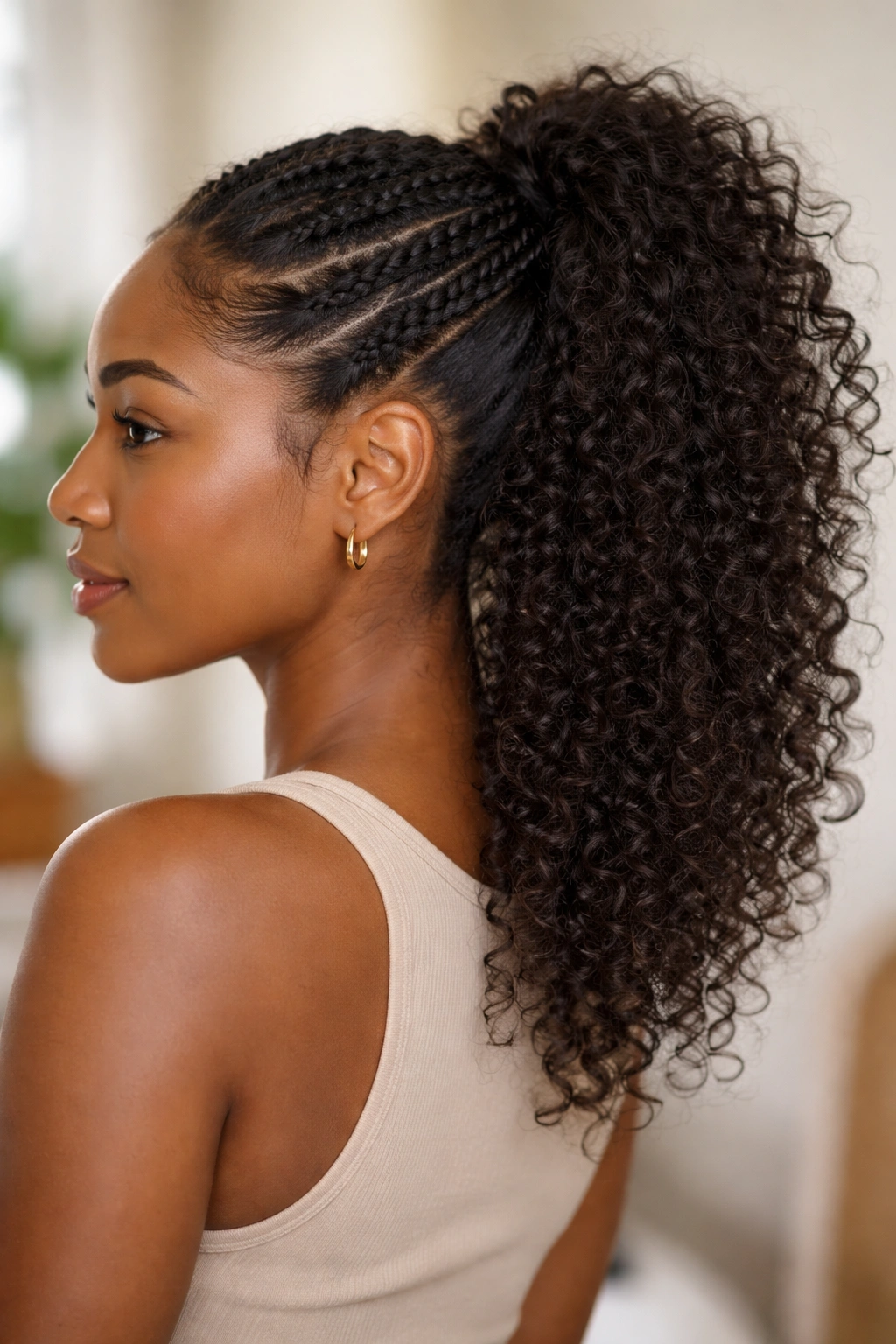
This variation incorporates thin box braids or cornrows along the sides of your head before gathering the ponytail. It adds an extra layer of definition while keeping everything secure and looking deliberately styled. This is especially practical if you’re dealing with flyaways or frizz around your edges.
How to Create This Look
Start by creating two thin box braids or cornrows along each side of your head, beginning at your temple and braiding back toward your ear. These braids should flow into the back section of hair that you’ll eventually gather. Once your braids reach the back of your head, release them gently and gather all hair—the braids plus the remaining loose hair—into your ponytail. The braids become incorporated into the gathered section, adding visual interest and texture right at the base of your ponytail.
Best Hair Type For
This works on almost all textures, though it’s particularly striking on 3C and looser 4A hair where the contrast between the braided sections and loose curls is most visible. On very tight coils, the braids and loose texture still look great together but might blend together more seamlessly.
Styling Tips
Keep your braids loose and slightly relaxed—overly tight braids can damage your hairline and don’t photograph as well anyway. If you’re concerned about frizz or definition in the loose sections, apply a light curl cream before gathering. The beauty of this style is that it looks polished without being stiff or severe.
5. The Puff-Top Half Up
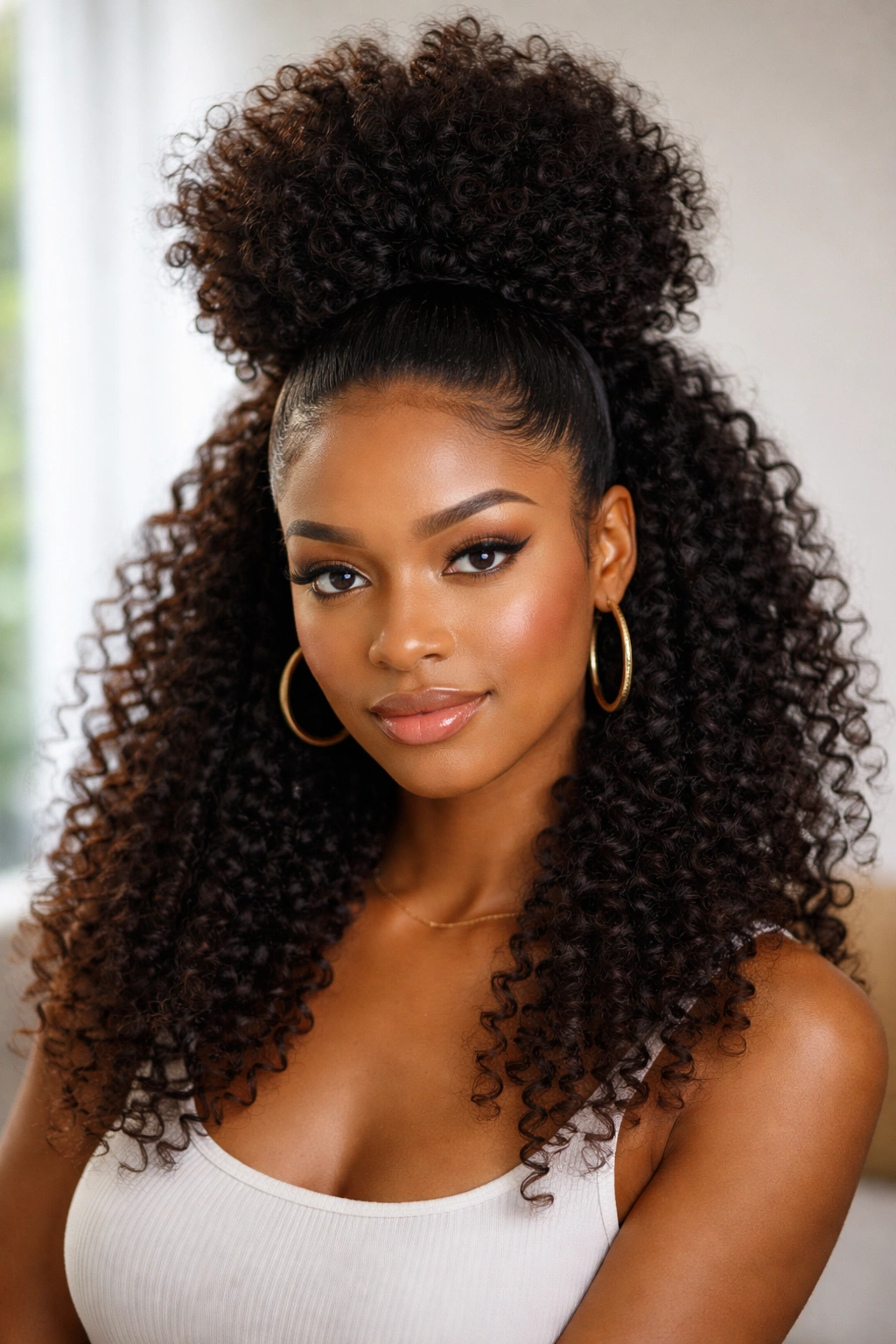
This style takes your natural texture and volume and concentrates it into a defined, rounded puff at the crown before letting the bottom half hang loose and textured. It’s playful, youthful, and makes a bold visual statement while keeping hair manageable.
How to Create This Look
Gather hair from your temples back through the crown, pulling it up to create height at the very top of your head. Instead of securing it into a traditional ponytail at the nape of your neck, secure it much higher—aim for the crown or slightly forward of center. Use an elastic band to create the basic puff, then gently fluff and arrange the gathered hair to create a full, rounded shape. You can smooth the edges around your face for a polished version, or leave them slightly loose and textured for a more relaxed vibe.
Best Hair Type For
This style absolutely shines on thicker, more voluminous hair types (4A and 4B textures). If you have finer hair, you can still create a puff—just work with smaller sections and use a bit of volumizing product to enhance what you’ve got.
Styling Tips
The key to a great puff is not making it too tight. You want it full and bouncy, not strained. Gently fluff the gathered hair with your fingers, teasing slightly if needed to create the rounded shape you want. If you prefer a smoother puff, apply a light smoothing cream before securing. The bottom half of your hair can stay in its natural state—loose coils, waves, whatever your texture dictates.
6. The Wrapped-Elastic Half Up
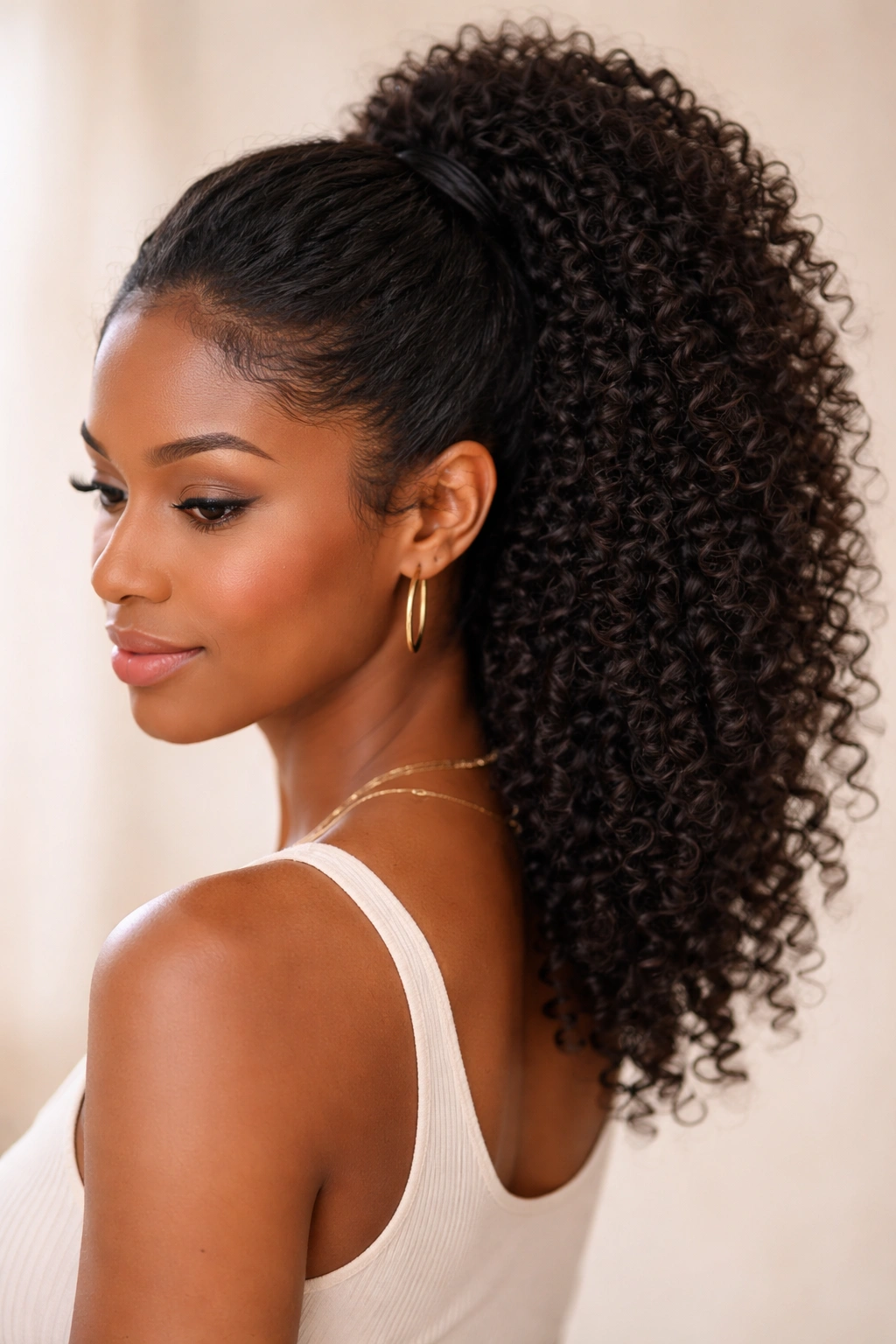
This style uses a decorative wrap—whether that’s another piece of your own hair, a thread, or a ribbon—to cover the elastic band, adding a finished, intentional polish to any half up ponytail. It’s a simple addition that elevates the overall look significantly.
How to Create This Look
First, create your basic half up ponytail however you prefer—sleek, textured, twisted, braided, whatever style speaks to you. Once secured, take a thin section of hair from underneath the ponytail, wrap it around the elastic band several times to completely cover it, and then tuck the end of this wrapping hair underneath itself and secure with a bobby pin. Alternatively, you can use a colorful thread, thin ribbon, or even a small scarf tied around the elastic.
Best Hair Type For
This finishing technique works beautifully on all hair types and textures. It’s purely decorative and doesn’t require any specific hair characteristics—it just looks polished and intentional.
Styling Tips
If you’re using your own hair to wrap the elastic, take your time to make the wraps neat and secure. If you’re using thread or ribbon, experiment with colors that complement your outfit or create an intentional contrast. This one small addition transforms a casual half up into something that looks genuinely thought-out and styled.
7. The Voluminous Half-Puff
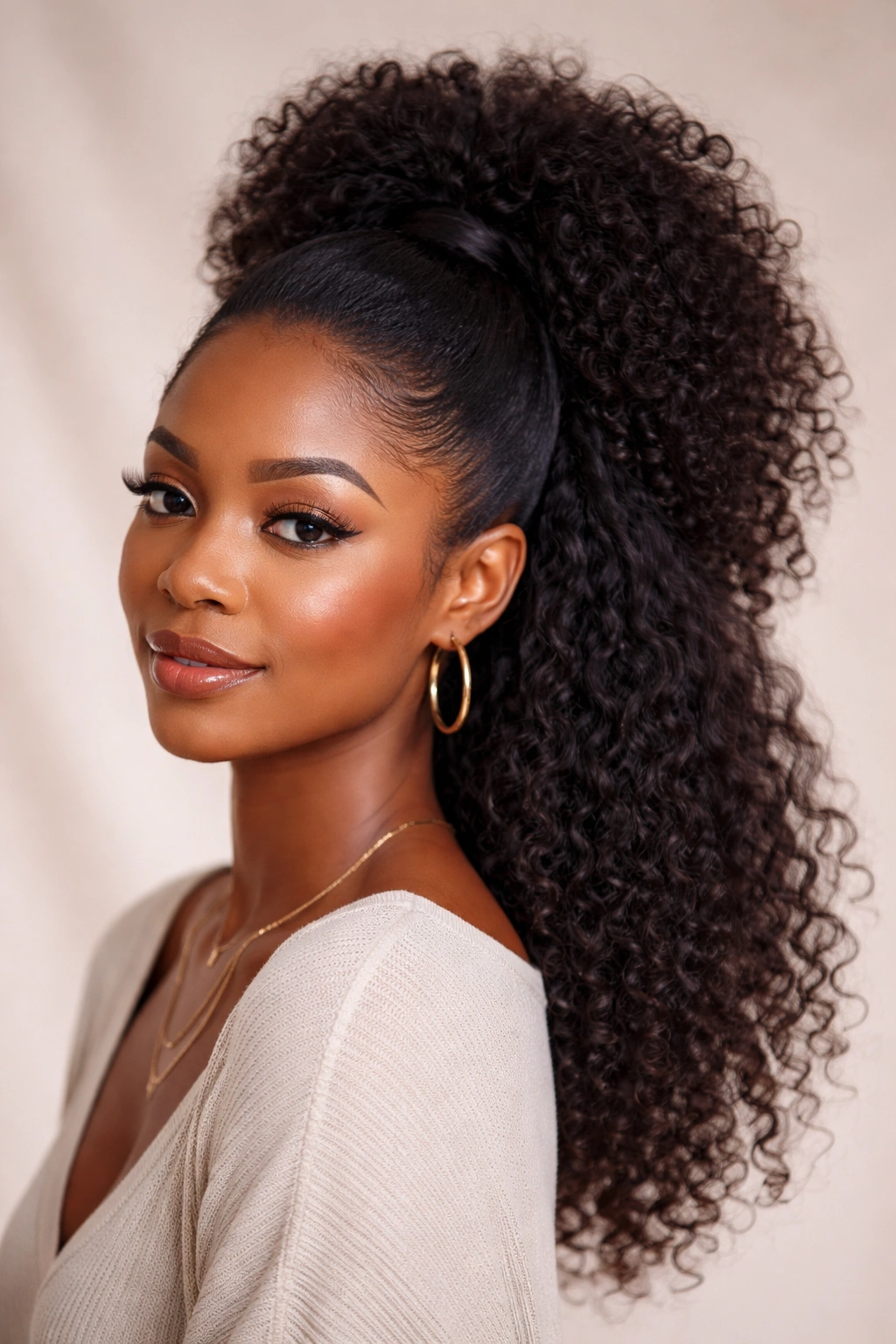
This style blends the puff and the ponytail, creating volume and height at the crown while still maintaining the half-up silhouette. It’s more dramatic than a sleek half up but more polished than a full puff, hitting a sweet spot of style and practicality.
How to Create This Look
Start by creating more height in your crown section than you would with a traditional half up. Tease or gently backcomb the roots of the section you’re gathering to add volume at the base. Gather your hair high on your head, but instead of pulling it into a tight ponytail, leave the gathered section slightly loose and voluminous. You’re aiming for a rounded, puffy effect at the crown that gradually transitions into the texture below. Secure with a soft elastic, then gently arrange and fluff the gathered section to maximize volume.
Best Hair Type For
This works best on 4A through 4C hair types where your natural volume and texture already give you that rounded effect. If you have looser curls or waves, you can still achieve this look by adding a tiny bit of volumizing product and doing some gentle teasing.
Styling Tips
Don’t make this look too polished—a little bit of intentional messiness makes it more visually interesting. Let some baby hairs escape around your face, and allow the texture of your gathered section to show through without trying to smooth everything down. The goal is controlled volume, not tight precision.
8. The Multi-Textured Half Up
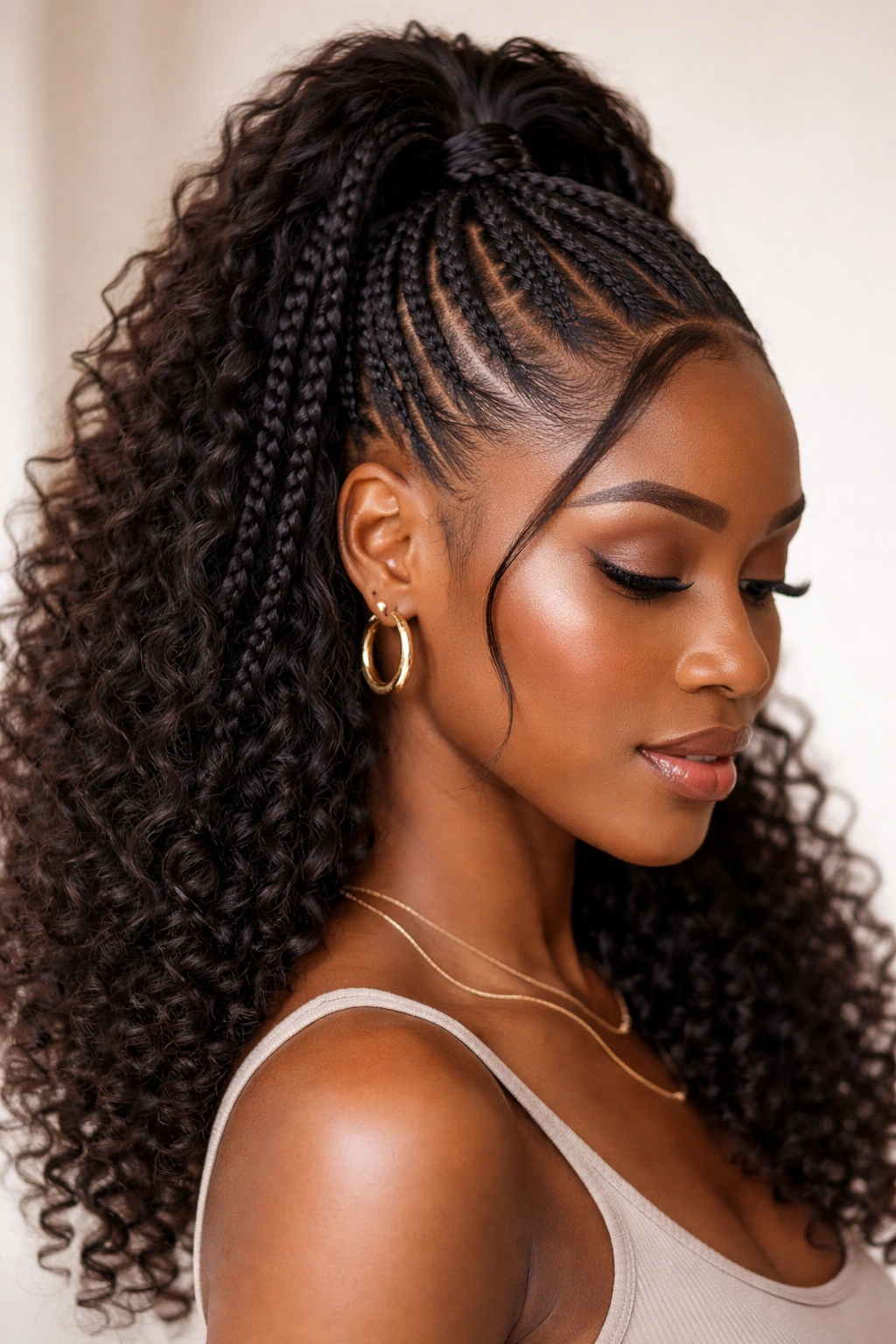
This style intentionally combines multiple textures within one look—maybe some twisted sections, some braided sections, some smooth sections, and some loose curls all working together in the gathered portion. It’s intricate and eye-catching without being overwhelming.
How to Create This Look
Before you begin gathering, create small sections of different textures throughout the area you’ll eventually pull into your ponytail. You might create one or two two-strand twists, one or two small box braids, smooth one small section with gel, and leave another section completely loose. Then gather all of these varied sections together into your ponytail. The result is a gathered section that has visual depth and interest from multiple different textures working together.
Best Hair Type For
This style works beautifully on all textures, and it’s particularly striking on medium to looser curls (3B through 4A) where the different textures create noticeable visual contrast. On very tight coils, the textures blend together more but still create dimension.
Styling Tips
The key is not to overdo it—choose maybe three different textures maximum so it looks intentionally designed rather than random or messy. Take your time during the initial texturing phase; you want clear, defined sections that each tell their own visual story.
9. The Edge-Controlled Half Up
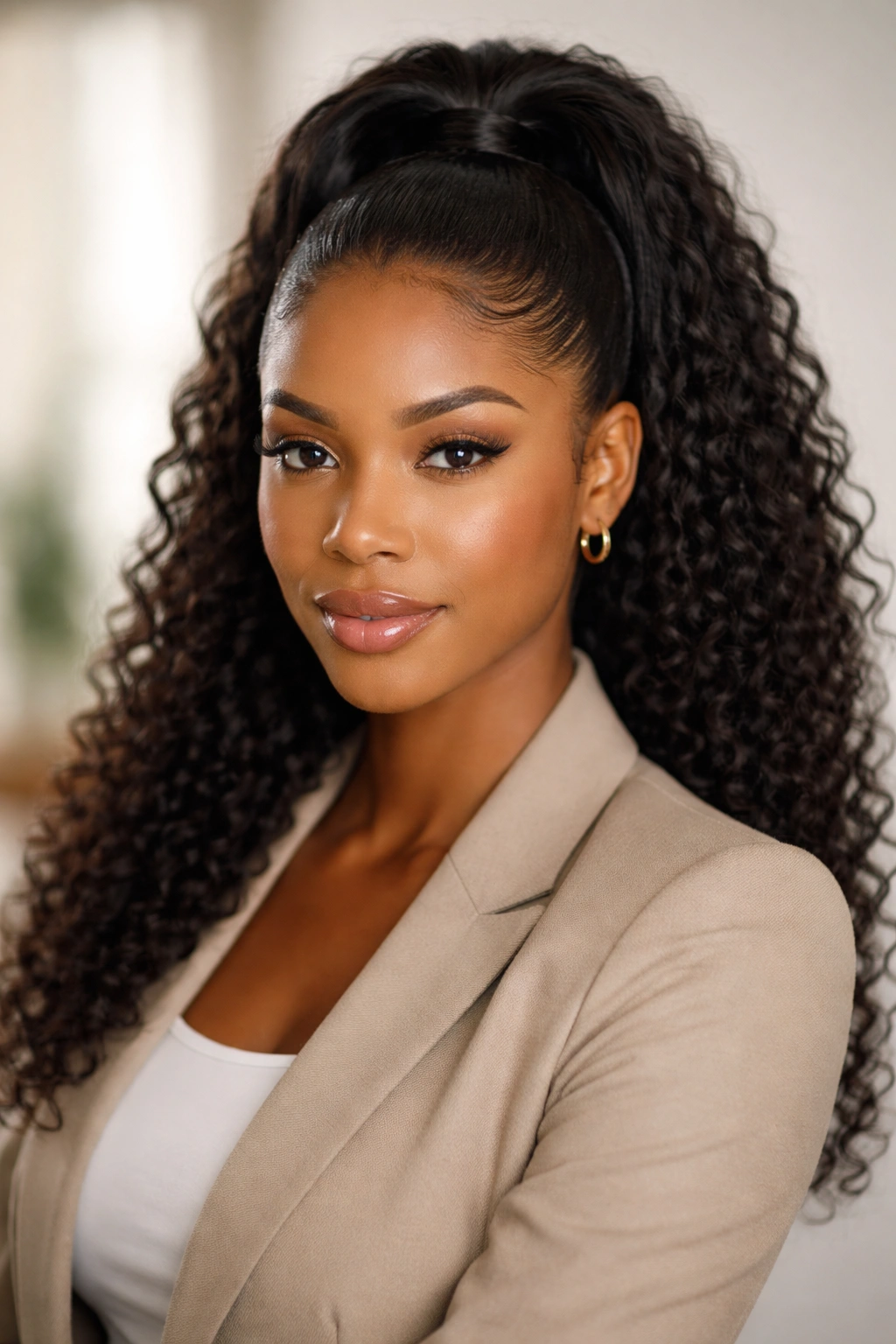
This style emphasizes neat, smoothed edges with baby hairs laid down, creating a polished, professional appearance while the rest of your hair remains in its natural texture. It’s perfect for work environments or any setting where you want to look deliberately put-together.
How to Create This Look
Apply edge control product along your entire hairline, parting, and around your ears. Use a small, firm brush or toothbrush to smooth these edges down and lay them flat against your head. Once your edges are secured and smooth, proceed with your half up ponytail—whether that’s sleek, textured, twisted, or any other variation you prefer. The key difference is that this style emphasizes the precision of your edges as part of the overall look.
Best Hair Type For
This look works beautifully on all hair types. It’s particularly striking on looser curl patterns where the smoothed edges create clear definition, but it’s equally valid and professional-looking on tighter coils.
Styling Tips
Invest in a good edge control product that actually holds without flaking. Apply it to damp hair if possible, smooth gently, and allow it to dry fully before running your fingers through it. This keeps your edges crisp throughout the day. Don’t overload on product—a little goes a long way and prevents that stiff, plasticky appearance.
10. The Accessorized Half Up
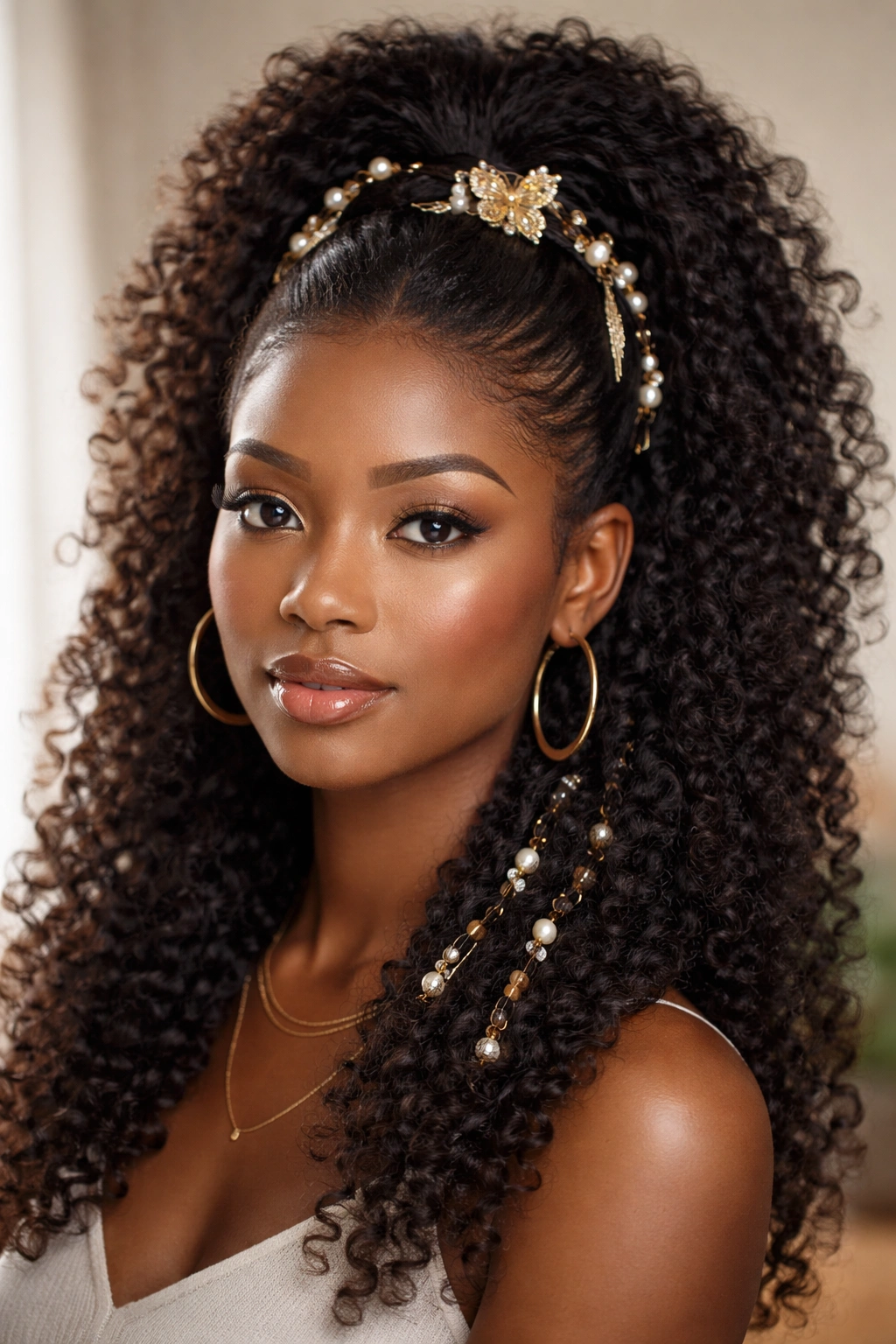
This final style takes any half up ponytail and elevates it with intentional accessories—hair clips, cuffs, ribbons, beads, or other decorative elements that personalize the look and add visual interest.
How to Create This Look
Start with your preferred half up style—keep it simple so your accessories become the focal point. Once your ponytail is secured, add your chosen accessories. You might clip a decorative clip around your ponytail base, slide metal cuffs onto the gathered section, weave a ribbon or scarf through the hair, attach clip-in bobby pins with beads or stones, or add any other embellishments that appeal to you. The accessories should complement rather than compete with your hair texture.
Best Hair Type For
This technique works beautifully on all textures. The accessories are purely decorative and don’t require any specific hair characteristics. What matters is choosing accessories that complement your particular style and aesthetic.
Styling Tips
Less is more with accessories—choose one or two statement pieces rather than loading your ponytail with multiple competing elements. Make sure whatever you choose is secure enough to stay put throughout your day. If you’re using hair cuffs or rings, position them thoughtfully rather than just randomly scattered. Consider your outfit and the occasion when selecting accessories; they should feel like an intentional part of your overall look, not an afterthought.
Prep and Product Essentials for Natural Half Up Ponytails
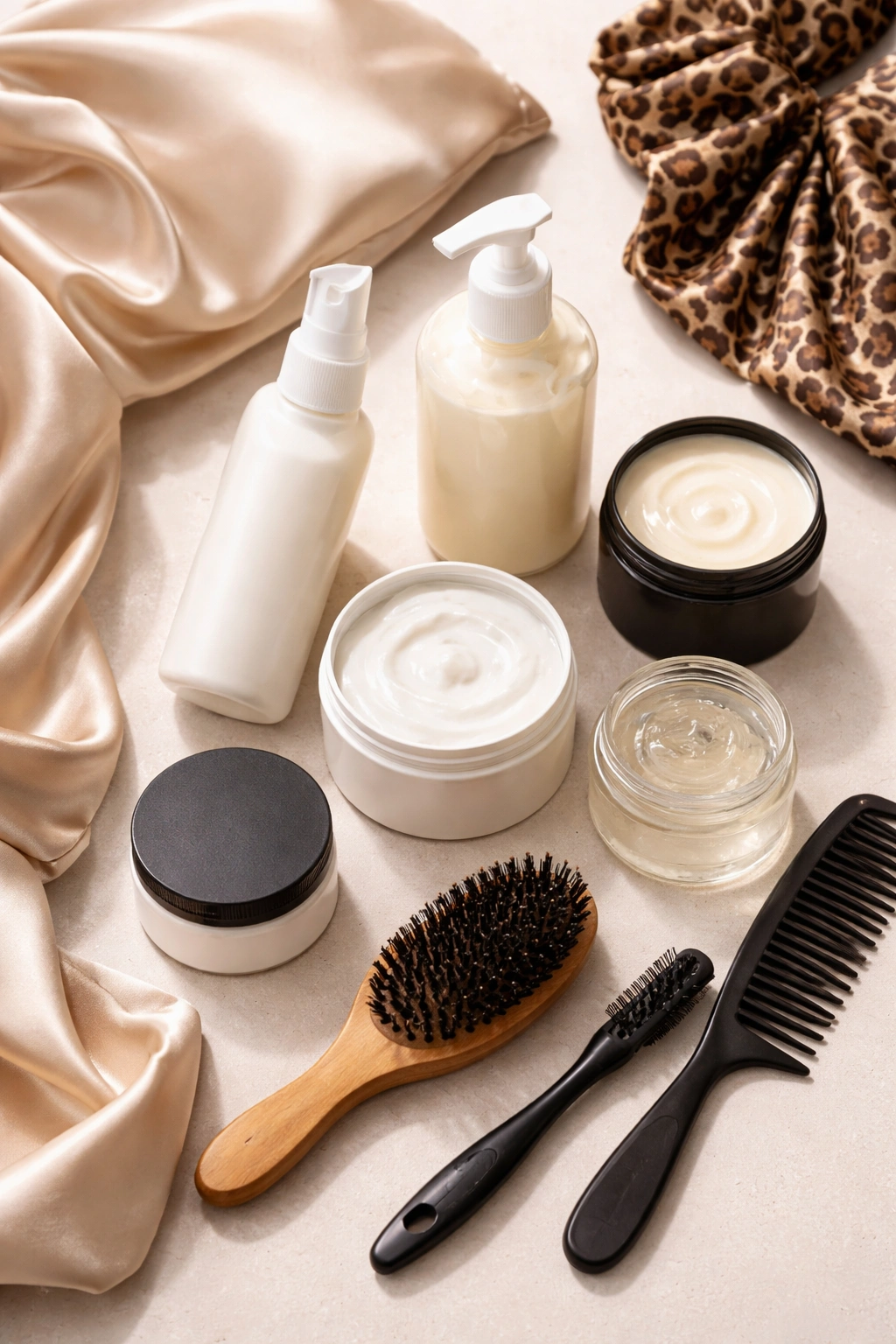
Your foundation makes all the difference. Start with clean, moisturized hair—this is non-negotiable. A good co-wash or sulfate-free shampoo followed by a deep conditioning treatment gives your hair the moisture foundation it needs to hold a style without drying out or breaking. When your hair is properly moisturized, it holds styles better, looks shinier, and feels healthier overall.
Leave-in conditioner is your workhorse product for half up ponytails. Apply it to damp hair before styling, as it provides slip for detangling, moisture for hold, and definition for your curls. A lightweight styling cream comes next—this gives you enough hold to keep your ponytail secure without making your hair feel stiff or crunchy. Gel is optional depending on how much hold you need; some half ups don’t require any gel, while others benefit from a light layer.
Edge control is worth mentioning separately because edges matter. A good edge control product keeps baby hairs smooth and polished throughout your day without flaking or leaving visible residue. Choose one formulated for natural hair that won’t dry out or damage your edges with constant application.
How to Make Your Half Up Last Multiple Days
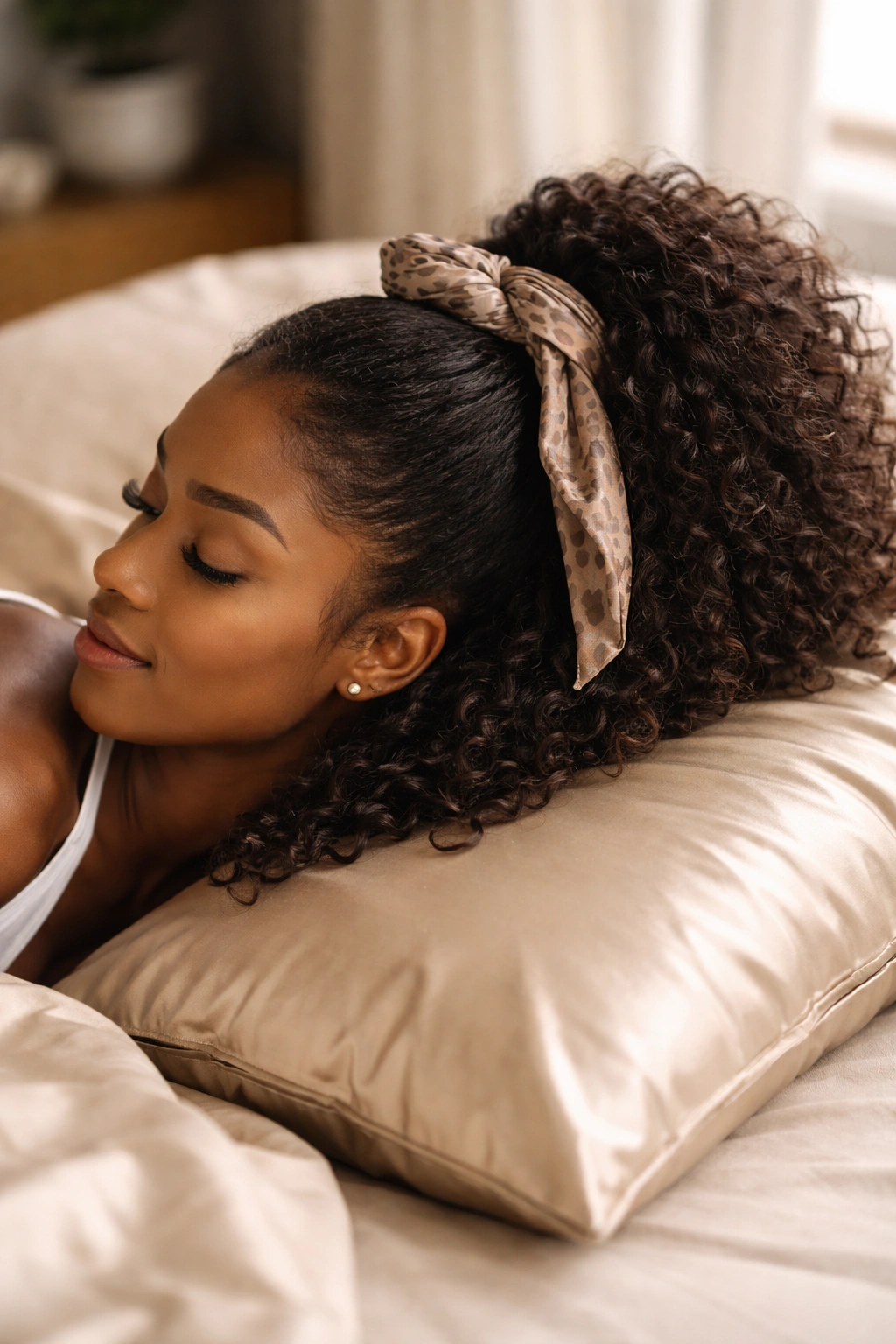
The beauty of a well-executed half up is that it can genuinely last three to five days with proper care. Sleep on a silk or satin pillowcase every single night—this reduces friction and frizz dramatically. If you’re protecting your ponytail section, wrap it loosely in a silk scarf or bonnet before bed. Your loose bottom section can be loosely gathered or left to rest however feels most comfortable.
In the morning, if you notice frizz in your loose section, spray lightly with water and gently scrunch with a curl cream or refresher spray. You can revive your ponytail section by misting it lightly with water and allowing it to air dry, or by quickly diffusing on low heat. Some people find that their half up looks even better on day two or three as the style settles and curls relax slightly.
When you do take your ponytail down, gently separate any sections that have slightly matted together from being gathered, and lightly mist with water if needed. Your hair should bounce back to its natural texture without requiring a full wash.
Best Styling Tools for Half Ups
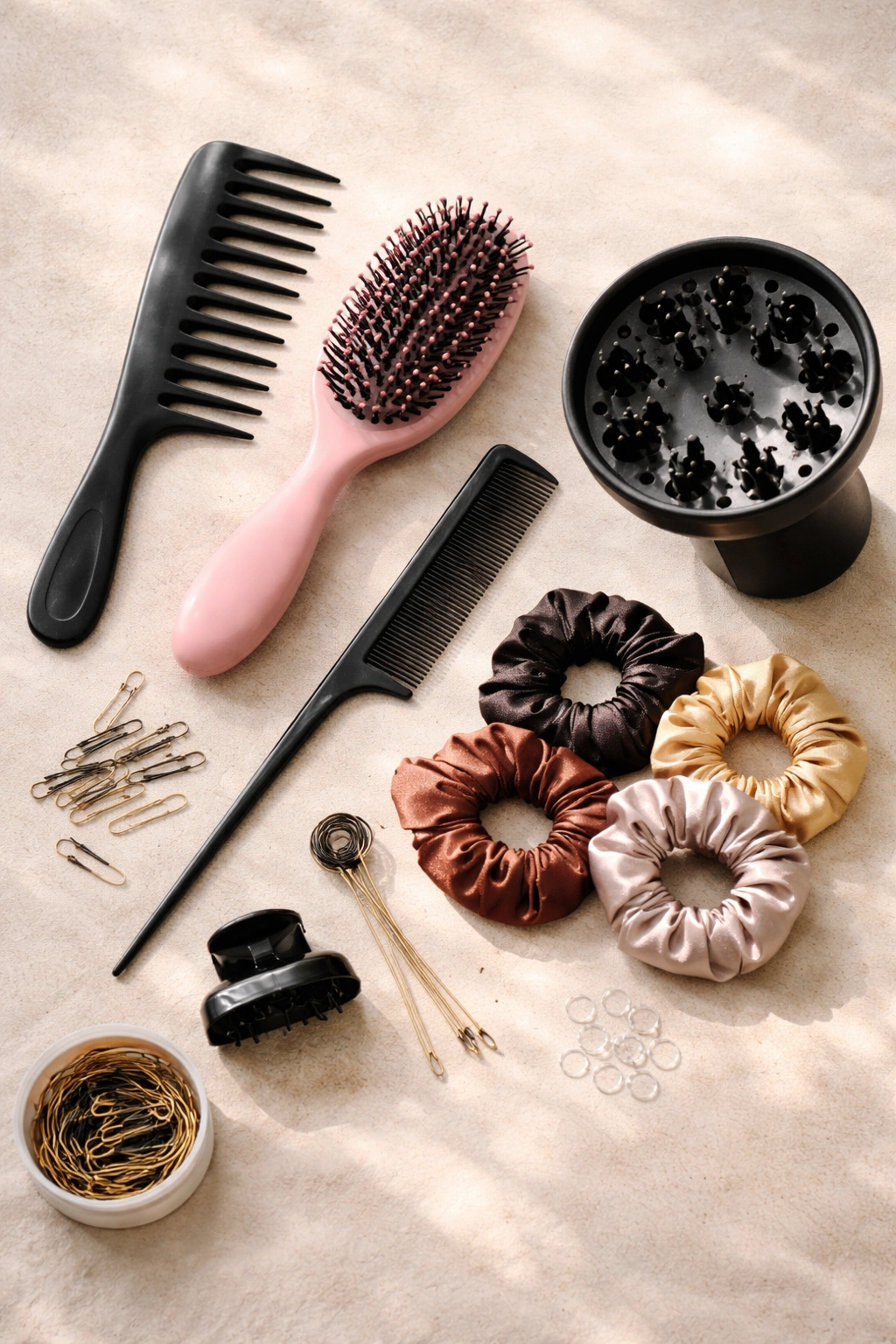
You don’t need many tools, but the right ones make a significant difference. A wide-tooth comb or detangling brush helps separate your curls without disruption. A fine-tooth comb works for smoother sections or edges. Soft fabric hair ties prevent breakage and damage to your edges—avoid elastic bands that grab and stress your hair. Silk or satin hair ties are ideal; they create less friction than cotton elastics.
Bobby pins secure any wrapped sections or tucked-under pieces. Grab a few different shades so they blend with your hair color rather than standing out. If you’re creating twists or braids, you might use a small clip to hold sections while you work. A diffuser attachment on your blow dryer, if you choose to use heat, helps dry your hair gently while maintaining your curl pattern rather than disrupting it.
Everything else—accessories, clips, cuffs, ribbons—is purely optional and depends on your personal style and preferences.
Troubleshooting Common Half Up Ponytail Issues
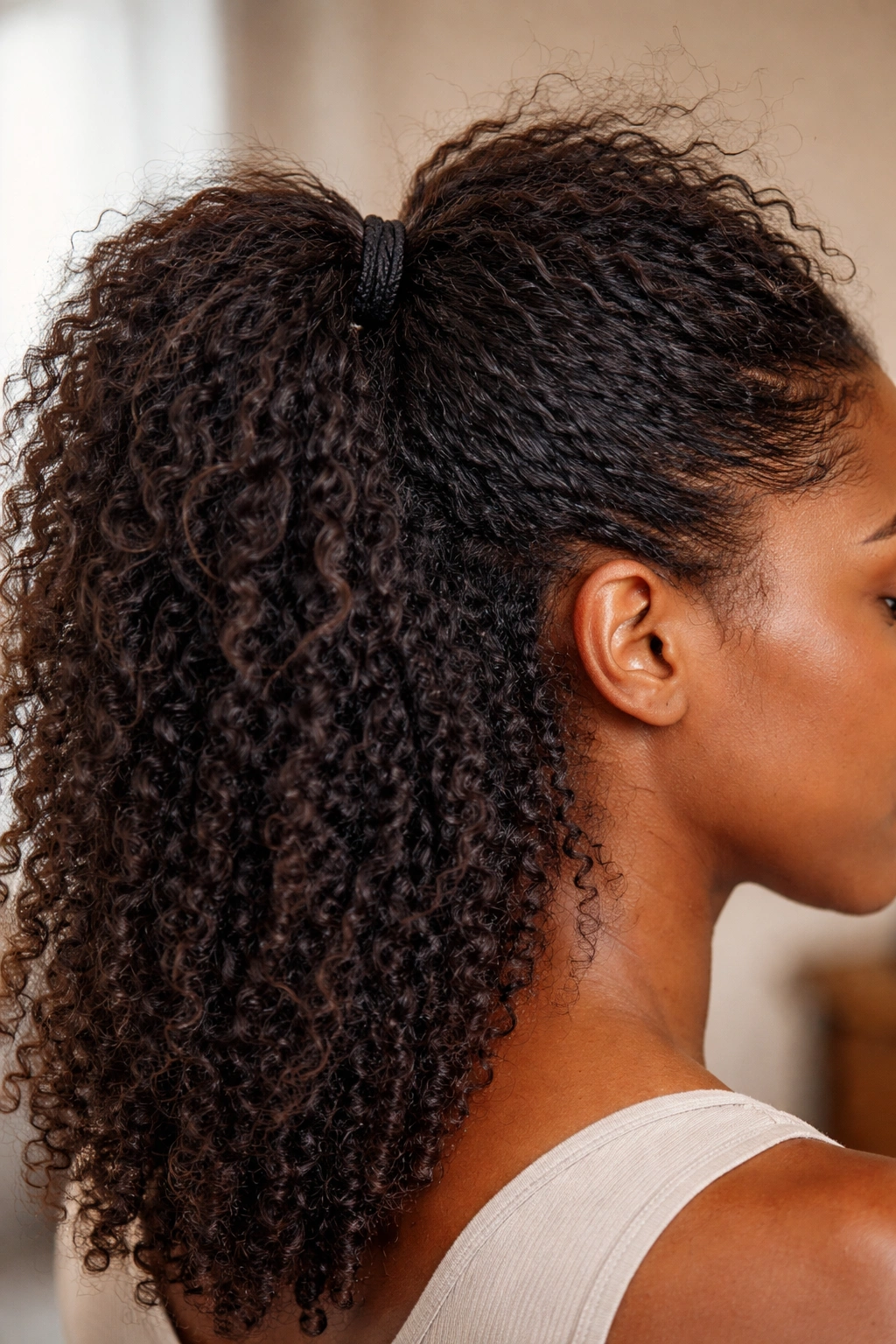
If your ponytail slips down throughout the day, your elastic might be too loose, or your hair might need more grip. Try using a grip elastic or fabric-coated elastic rather than standard rubber bands. If your hair is slippery, make sure you’ve applied enough leave-in conditioner and styling product to give the elastic something to grip, but not so much that everything feels heavy.
Frizz in your gathered section usually means your hair needs more moisture or better edge definition. Make sure you’re deep conditioning regularly, and consider applying a light smoothing product before gathering if you’re aiming for a sleeker look. For textured versions, a little frizz is intentional and beautiful—embrace it.
Flyaways or baby hairs escaping everywhere can be tamed with edge control applied directly to those stray hairs, or with a tiny bit of smoothing cream rubbed gently on your fingers and then applied to the flyaways. Don’t over-manipulate; a few stray hairs actually look more natural than perfection.
If your ponytail feels too tight after a few hours, you’ve likely pulled too hard. Next time, gather your hair but leave just slightly more slack in the elastic. Your ponytail should feel secure but not like it’s pulling on your roots.
Customizing Half Ups for Different Hair Lengths
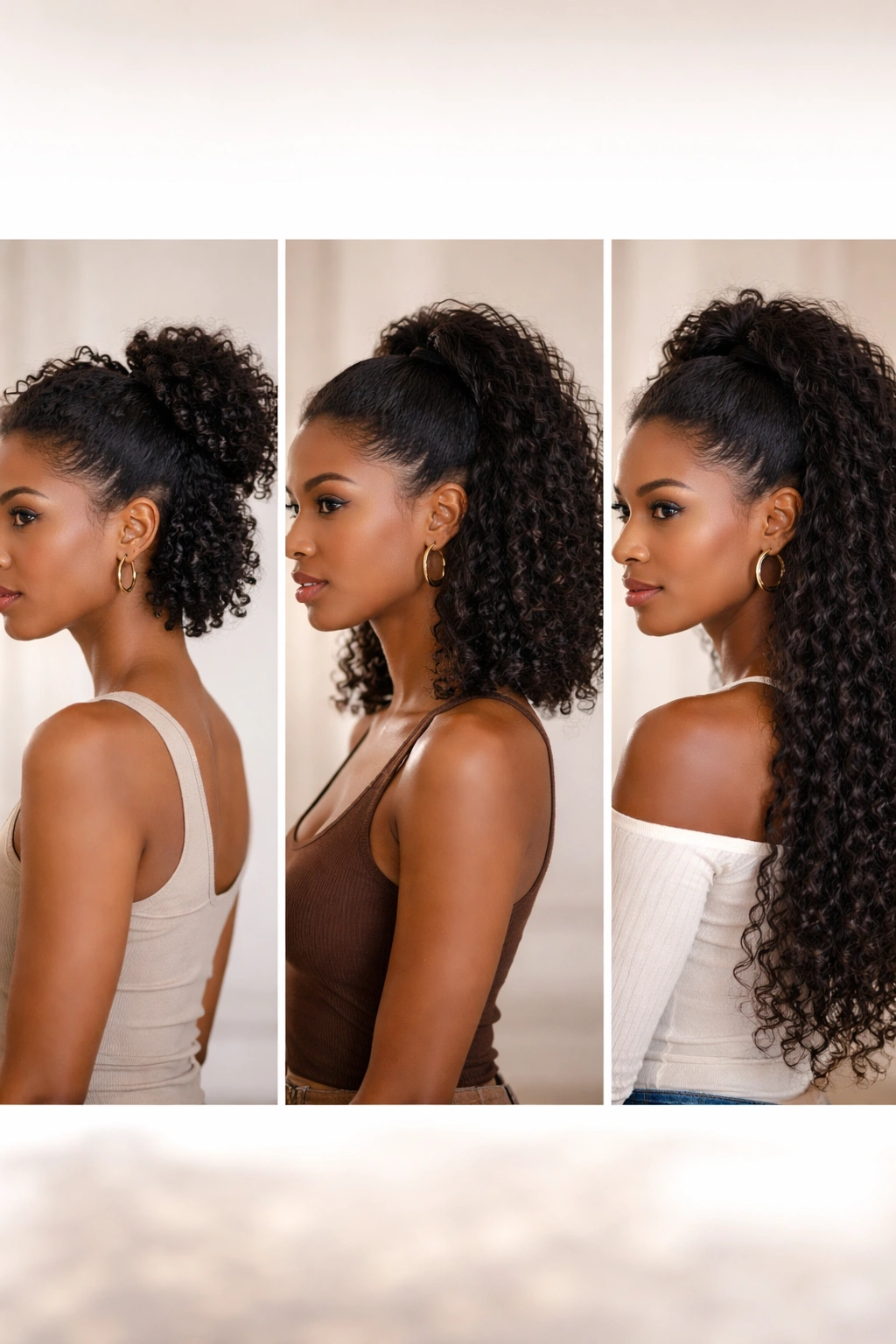
Half ups work beautifully on all lengths. On shorter hair (chin-length to shoulder-length), your ponytail section might be quite short, but it still creates the half-up silhouette and keeps hair off your face. Make sure your elastic is positioned high enough to create visual interest and balance.
Medium-length hair (shoulder to mid-back) gives you plenty to work with for all the variations mentioned above. This length is genuinely ideal for half ups because you have enough hair to create volume and texture while still maintaining the clean separated look between your gathered and loose sections.
Longer hair (past mid-back) allows for more dramatic half ups with significantly more volume in both the gathered and loose sections. Your ponytail can hang longer, and you have more flexibility with how high or low you position it.
On very short hair, you might create more of a crown-gathered situation rather than a traditional ponytail, which is still the half-up concept—some hair gathered at the top, some left down. The principle remains the same even if the execution looks slightly different.
Final Thoughts
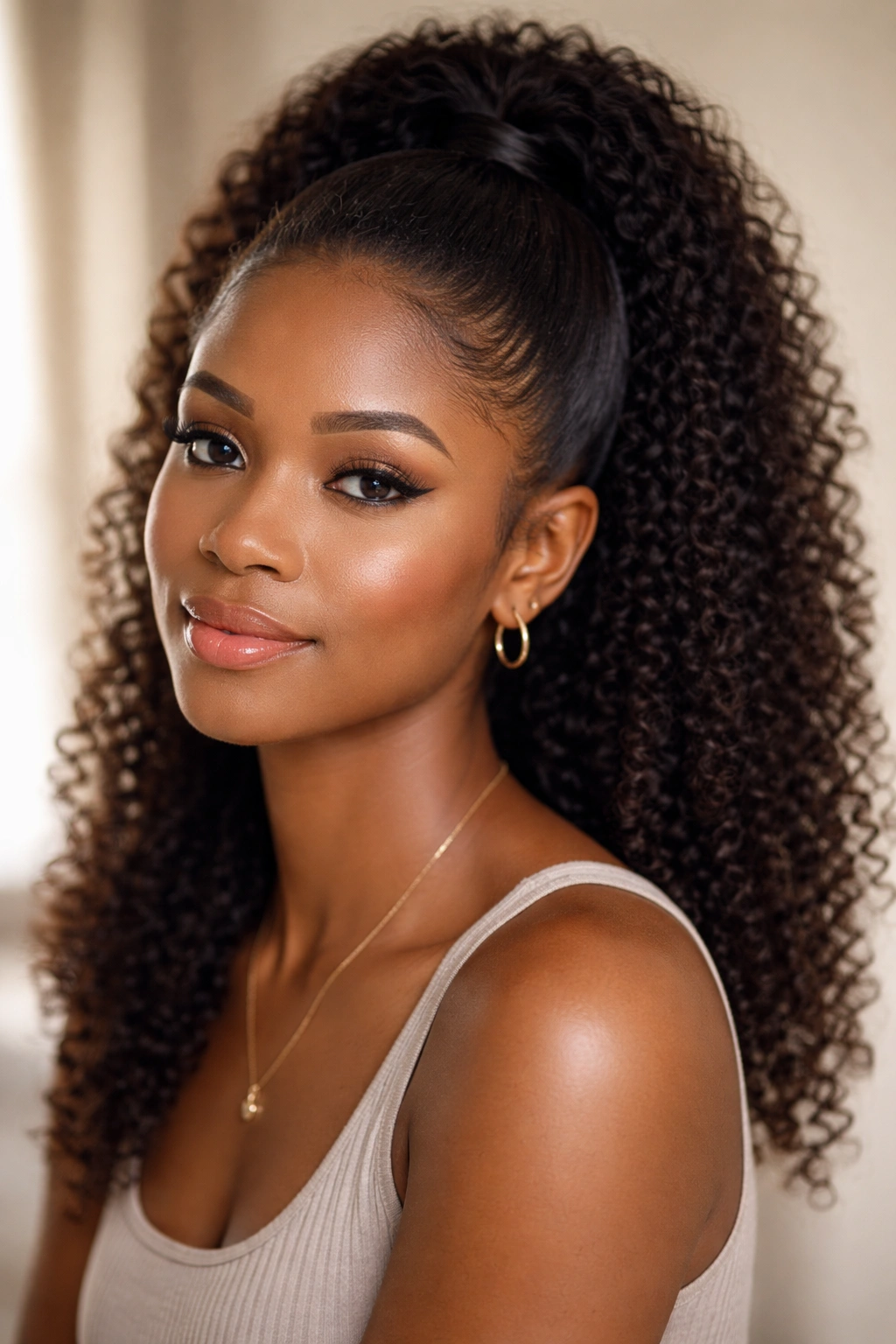
A great half up ponytail is one of those styles that looks effortless once you’ve done it a few times, but actually involves intention, knowledge about your hair, and skill with basic techniques. The ten variations above offer genuine range—from sleek and professional to textured and playful—so you can choose styles that match your lifestyle, your hair type, and your personal aesthetic. None of these styles requires heat damage, excessive tension, or constant manipulation of your hair, which means you’re protecting your natural texture while still having plenty of styling options.
The key to success is working with your hair rather than against it. Use products that your specific curl pattern responds to, choose gathering techniques that your length and density can actually support, and don’t be afraid to adapt these styles to what feels right for your hair. Your half up doesn’t need to look exactly like someone else’s half up to be beautiful and intentional. Experiment, pay attention to what makes your hair feel and look its best, and give yourself permission to make each style your own.
