



Curly hair and ponytails have a complicated relationship—one that’s getting better every day thanks to better styling techniques and a cultural shift toward embracing natural texture. The thing is, curly hair ponytails don’t have to look limp, scraggly, or like you’re just pulling your hair back out of desperation. When you work with your curls instead of against them, you can create stunning, intentional styles that showcase your texture while keeping your hair off your face and neck.
The challenge most people with curly hair face is that traditional ponytail styling—tight, slick, completely smooth—just doesn’t work with the natural volume and movement of curls. You pull your curls back tightly, they end up looking thin and flattened, and by the end of the day they’re frizzing in weird directions. But there are so many creative approaches that let your curls shine while still giving you the practicality of a pulled-back style. Whether you’re dealing with tight coils, loose waves, ringlets, or a combination of curl patterns, there’s absolutely a ponytail option that’ll make you feel confident and put-together.
The styles that work best for curly hair tend to embrace movement, allow for some texture, and avoid pulling so tightly that you’re fighting against your natural curl pattern. You’ll want to think about where the ponytail sits, how you’re securing it, whether you’re creating definition through styling products or allowing some frizz for texture, and whether you’re working with wet curls or dry ones. The right ponytail can take you from a casual weekend look to something polished enough for a professional setting—it all depends on how you approach it.
1. The Loose High Ponytail with Textured Layers
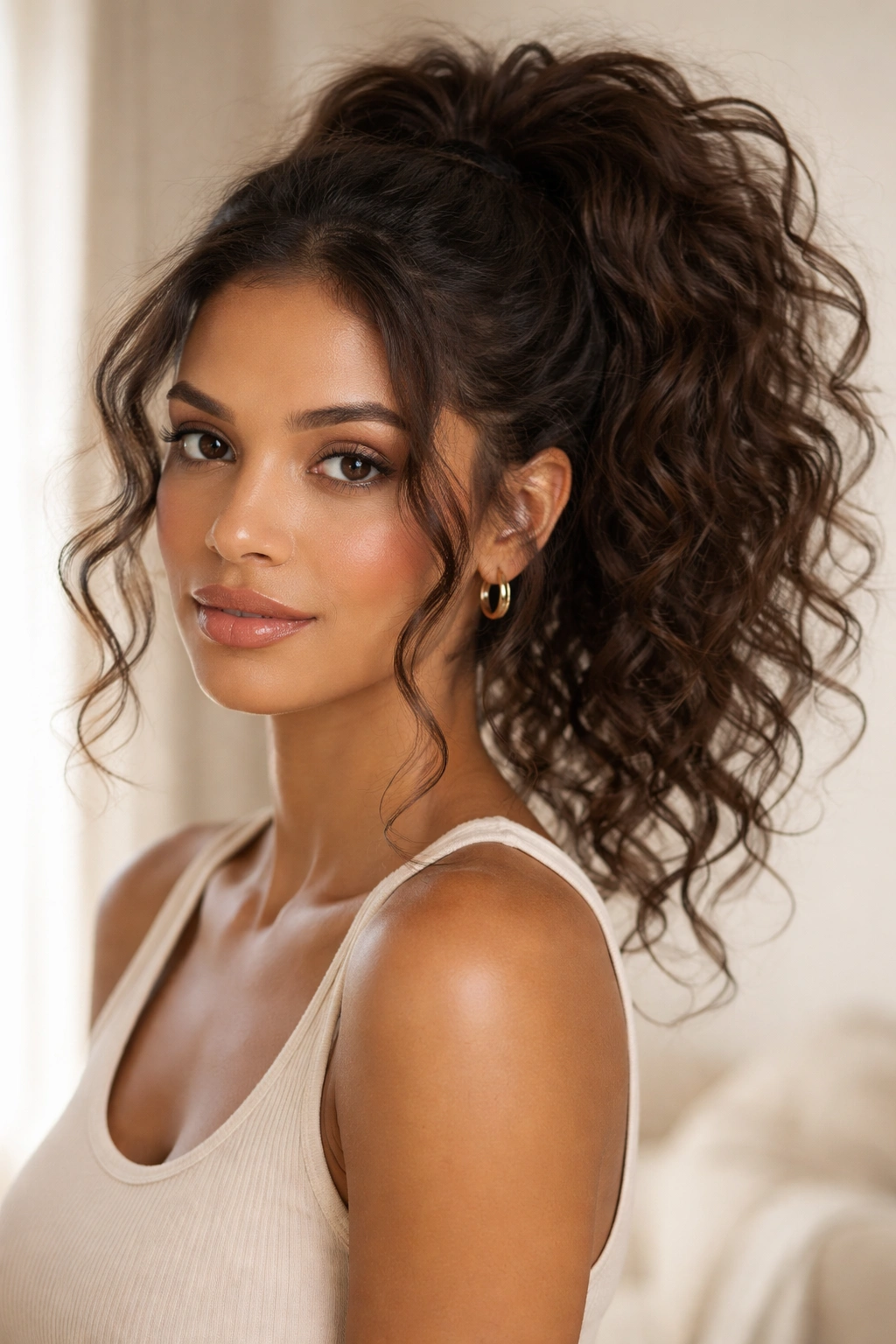
This is the easiest curly-hair ponytail to master, and it works beautifully on days when your curls are already looking good. Instead of pulling your hair back tightly, you’re gathering your curls loosely at the crown and securing them in a way that lets individual strands escape and frame your face. The goal here is relaxed, effortless-looking movement—the exact opposite of a sleek, controlled style.
Why This Works for Curly Hair
A loose ponytail respects your curl pattern instead of fighting it. When you pull curly hair tight, you flatten the curl at the roots and create tension that actually causes frizz as the day goes on. A loose gather lets your curls maintain their natural shape while still keeping most of your hair off your face. The looser tension also means less breakage at the hairline, which is especially important if you have fragile curls or a sensitive scalp. You’ll also notice this style actually gets better throughout the day as your curls relax and some strands naturally fall loose—that’s a feature, not a bug.
How to Create This Look
Start with hair that’s at least partially dry (fully soaking wet curls are harder to work with here). Run your fingers through to gently separate and define your curls, then gather the hair from temple to temple at the crown—think of a triangular section from the front. Secure loosely with a soft hair tie or claw clip. Pull gently on a few face-framing pieces to loosen them intentionally. If you want extra definition, apply a curl cream or light oil to individual curls as you work. Avoid using a brush or comb, which will break up your curl pattern.
Pro tip: Spray the finished style lightly with a flexible-hold hairspray. This keeps the overall shape while allowing curls to move naturally—way better than a heavy-hold product that’ll look stiff.
2. The Defined Coil Ponytail with Gel
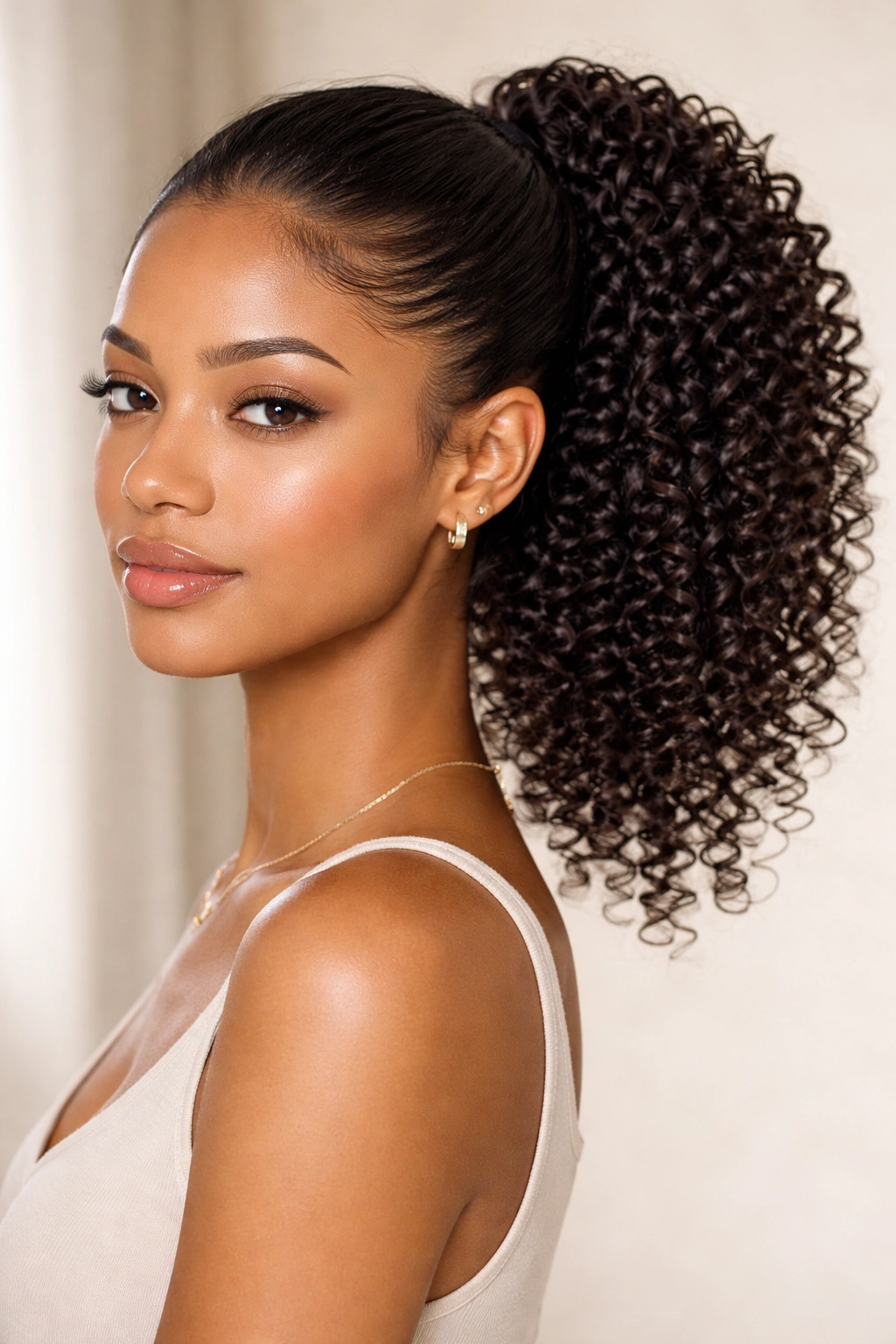
This style is pure celebration of your curl pattern. It works especially well if you have tighter coils or ringlets, and it’s the kind of look that says you’re confident in your texture. You’re using gel to define each coil individually, then gathering them into a ponytail that’s structured but still shows off every beautiful spiral.
Why This Works for Curly Hair
Gel is your friend when you want to create intentional definition and keep frizz at bay without losing that recognizable curl shape. A gel-defined ponytail looks intentional and groomed without looking like you’re fighting your natural hair. This style also ages well—because the curls are individually defined, they’ll still look fresh even as they soften and relax throughout the day. The defined look also photographs beautifully, which is a nice bonus if you’re the documenting type.
How to Create This Look
Apply a curl-defining gel to soaking-wet hair section by section, scrunching each coil between your fingers to encourage definition. You can use a praying hands technique (rubbing gel between your palms and smoothing down sections) or apply it directly and work it in with your fingers. Finger-rake gently to separate coils if they’re clumping together. Allow to air dry or use a diffuser attachment on your blow dryer on low heat. Once dry, gather your curls at the nape of your neck or higher at the crown, depending on the occasion. Secure with a hair tie that won’t leave dents.
Worth knowing: Different gels have different levels of hold and shine. Experiment to find which one works best with your curl pattern—some people swear by eco-friendly options, others love the hold of stronger formulas. What matters is that you feel good in it.
3. The Sleek Top with Curly Ponytail
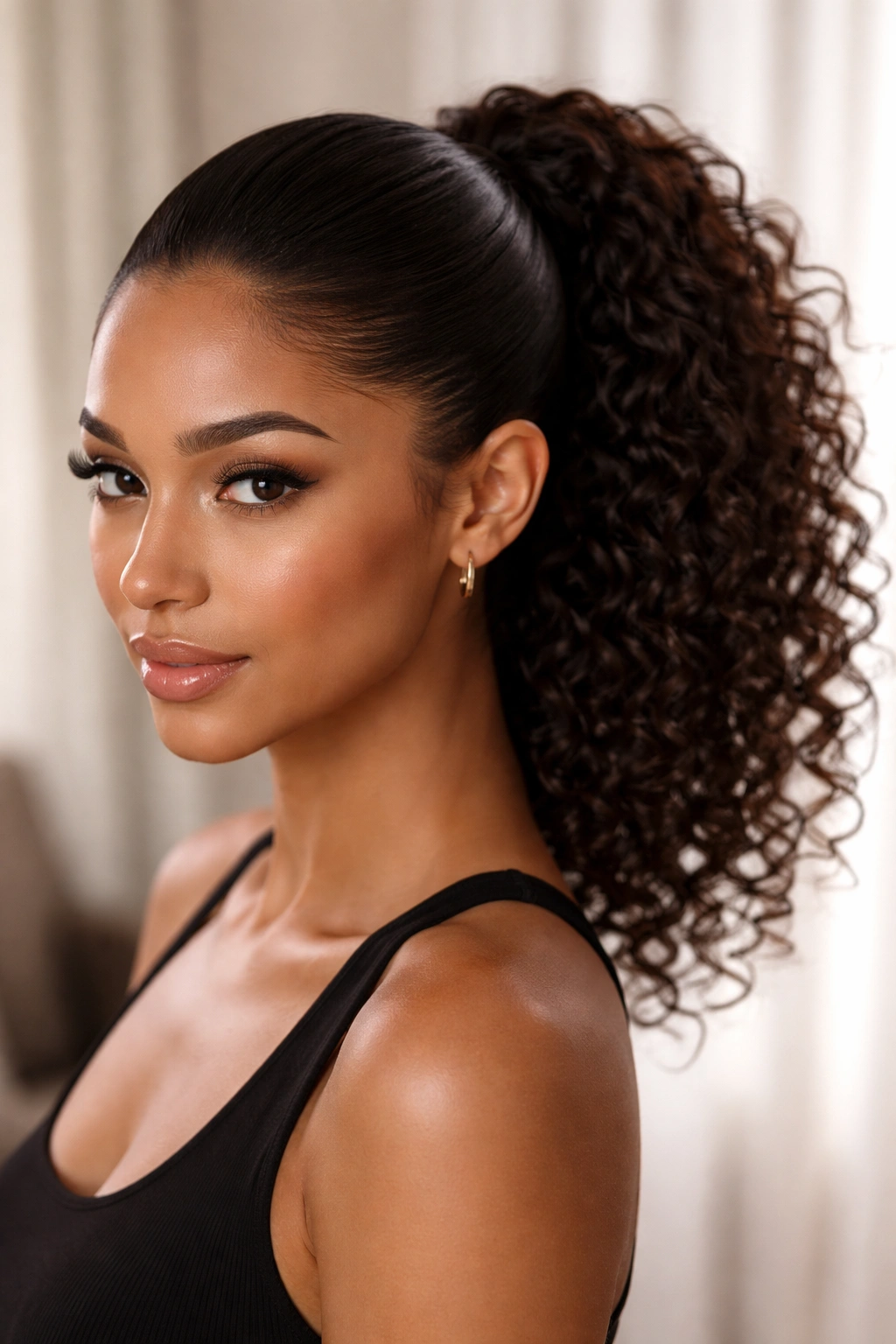
This is a hybrid style that gives you the polished upper half and the full, textured lower half. You’re smoothing or gelling the hair at your roots and crown, then letting the ponytail section keep its natural curl, movement, and volume. It’s sophisticated enough for work but still shows off your texture.
Why This Works for Curly Hair
This style solves a common curly-hair problem: the crown area often has less volume or definition than the rest of your hair, and it can look thin when you pull it back. By smoothing the top strategically, you create a clean foundation that actually makes the ponytail look fuller and more intentional. You’re not fighting your curl pattern—you’re directing it where you want it. The smooth top also reads as more “done” and professional while still being authentically you.
How to Create This Look
Start with damp or dry hair that already has some curl definition. Apply a curl cream, gel, or edge control to the crown and upper back area, smoothing it back gently with your fingers or a soft brush. Be light-handed—you want sleek, not shiny or wet-looking. Gather the lower sections of hair (from roughly ear-level down) into a ponytail at the nape of your neck, leaving that smooth crown area visible. You can wrap a small strand of hair around the base of the ponytail to hide the elastic. Let the ponytail curls fall naturally or scrunch them gently with product if they need definition.
Insider note: This works especially well for professional settings because the smooth top signals “polished” while the curly ponytail is undeniably you.
4. The Low Twisted Ponytail with Volume
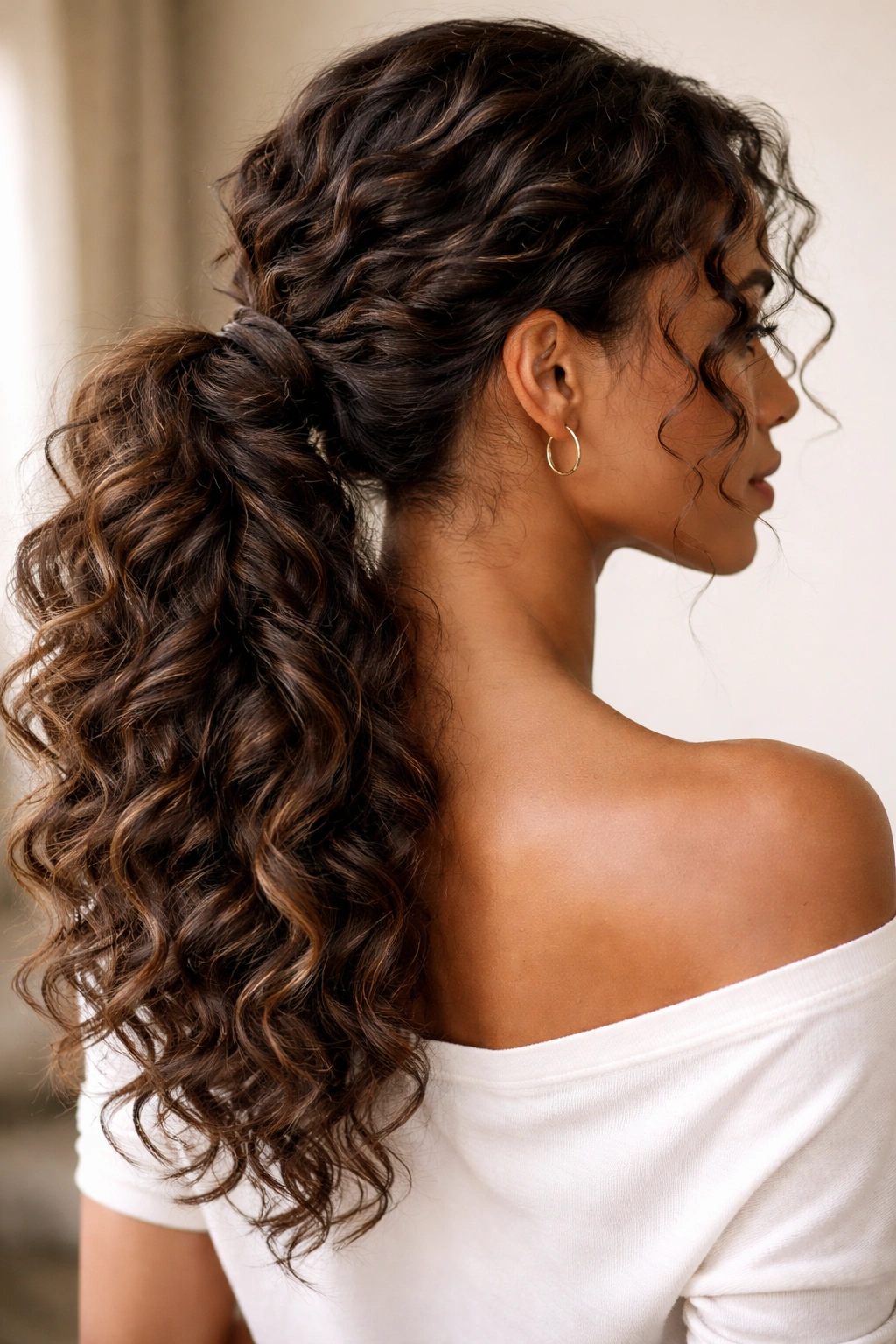
Two-strand twists created with ponytail sections add dimension and visual interest that a simple ponytail just can’t match. You’re dividing your ponytail into sections, twisting each one individually, and then securing them together—it looks intricate but is actually simpler than it sounds once you do it once or twice.
Why This Works for Curly Hair
Twisting actually enhifies your curl pattern instead of disrupting it. The twists follow the natural movement of your curls and can even help them curl tighter and more consistently. This style also creates visual height and texture that makes your hair look fuller and more voluminous than a standard ponytail. Plus, it’s genuinely fun to create, and people often assume it took way more effort than it actually did.
How to Create This Look
Gather your curls into a low ponytail at the nape of your neck. Divide the ponytail into 3-4 sections depending on how much detail you want. Take one section and split it into two strands. Twist those two strands around each other tightly, then release and let the twist settle into a relaxed spiral—your natural curls will actually help the twist look more defined. Repeat with remaining sections. Secure the twisted sections together at the bottom with a small elastic or bobby pins. You can leave the twists separate for an intentionally intricate look, or gently separate them slightly to puff them out and show off the texture.
Pro tip: Doing this with damp hair that already has curl definition gives you the best results. The twist will help set the curls and they’ll last longer.
5. The Bubble Ponytail with Curls
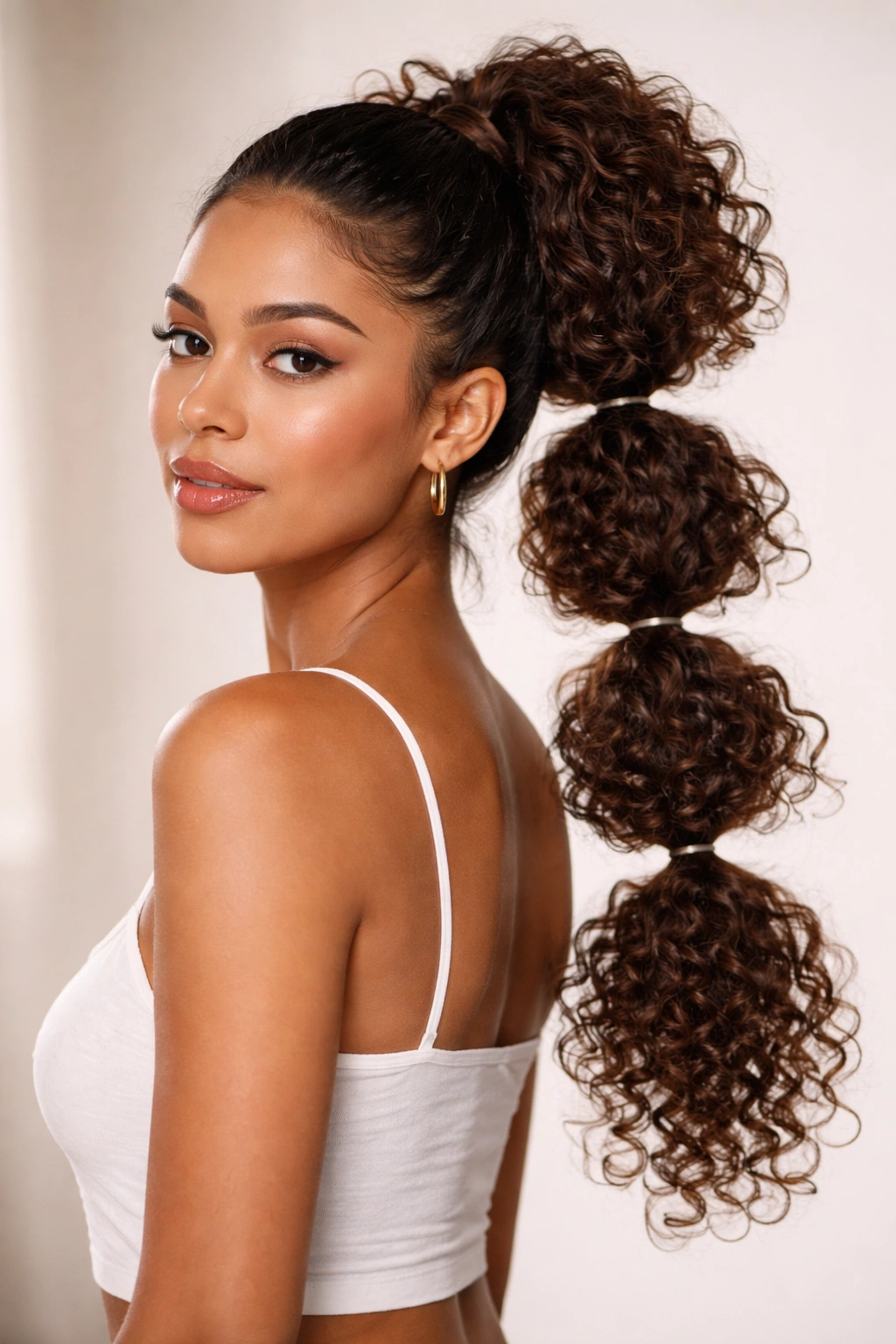
Bubble ponytails—created by securing sections of a ponytail with multiple elastics to create separated, puffy sections—are having a moment, and they look absolutely stunning on curly hair. Each bubble puffs out with all your natural curl texture, creating height and drama that’s genuinely eye-catching.
Why This Works for Curly Hair
Curly hair is naturally voluminous and textured, which means your bubbles will actually bubble—they won’t look flat or limp like they sometimes do on straighter hair. Each section between elastics will expand with your curls, creating a full, intentional look that photographs beautifully and feels confidence-boosting to wear. The multiple elastics also distribute tension more evenly across your hair, which is gentler than one single tight elastic.
How to Create This Look
Gather your curls into a high or mid ponytail and secure with an elastic. About 2-3 inches down from the base, add another elastic, bunching the hair between the two elastics to create the first bubble. Repeat this process down the length of your ponytail, spacing the bubbles about 2-3 inches apart. As you create each bubble, gently scrunch and fluff the hair between the elastics to make it puff outward. The final bubble at the bottom can be left full or you can add a hair clip or claw clip for style.
Key detail: This style works best when your hair is mostly dry but still has its curl definition. If your curls are too wet, the bubbles will be flatter and fall out of shape too easily.
6. The Pineapple with Soft Ponytail
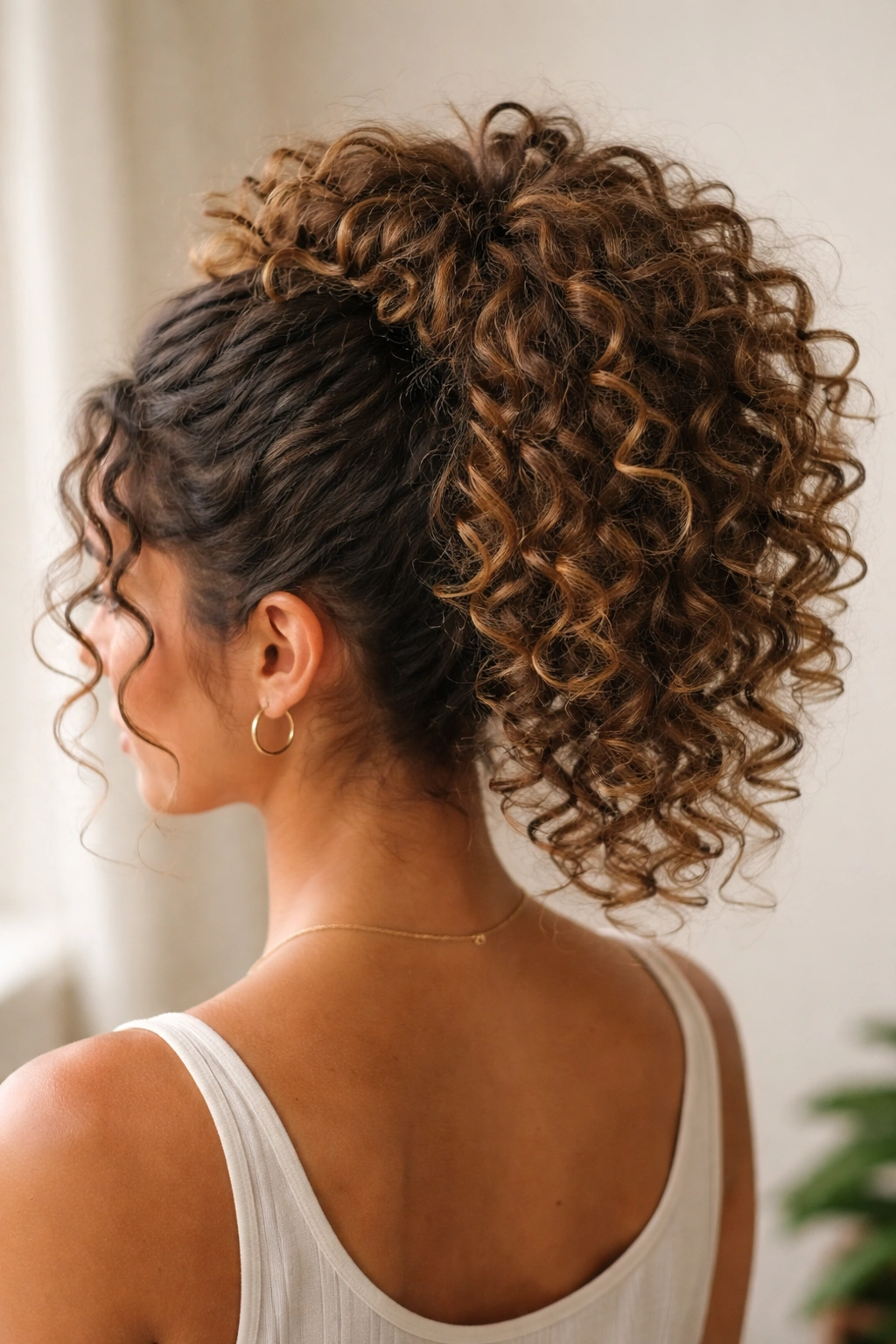
The pineapple method (a loose ponytail on top of the head used for overnight curl protection) has a cousin that works as an actual daytime style. By doing a very soft, high pineapple and letting curls fall naturally around it, you get height, volume, and a style that looks intentionally textured rather than accidental.
Why This Works for Curly Hair
This style originated from curl care, which means it’s fundamentally respectful to your curl pattern. You’re gathering hair gently instead of sectioning or twisting, which means minimal disruption to your curl shape. The high placement gives you serious volume and presence without requiring you to blow-dry or heat-style your curls. It’s the kind of look that makes people ask if you did something different with your hair—and the answer is yes, but not in a time-consuming way.
How to Create This Look
When your curls are mostly dry and have good definition, gather them loosely at the very top of your head—like where you’d place the highest high ponytail possible. Use a soft elastic or even a silk scrunchie (which causes less friction and breakage). Secure the ponytail loosely; you want it to sit gently on your hair, not pull tightly. Gently pull the top layers around the elastic to create softness and puffiness at the crown. Let the rest of your curls fall naturally around your shoulders and face. You’re not aiming for neat here—you want textured, lived-in, intentional.
Real talk: This works even better on day-two or day-three curls, when they’ve had time to develop more definition and hold their shape.
7. The Half-Up Half-Down Curly Knot
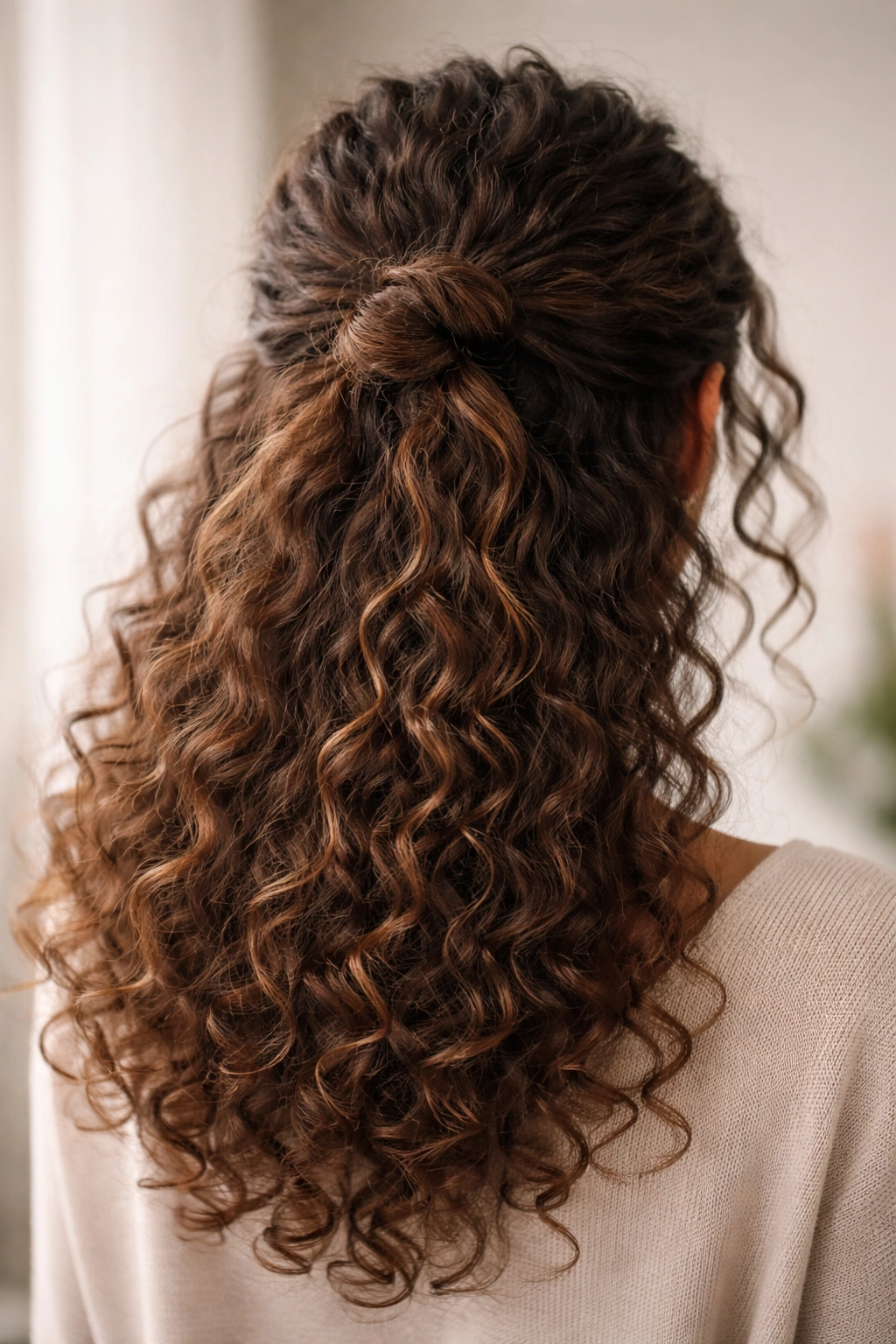
This style splits the difference between a full ponytail and wearing your hair completely down, giving you the practicality of pulled-back hair while still showing off length and texture. A half-up knot (created by twisting half your hair and securing it) feels polished but not overdone.
Why This Works for Curly Hair
A half-up knot respects your desire to see and feel your curls while still clearing your face and neck. It’s genuinely versatile—it works for casual hangouts, professional settings (depending on the knot’s tightness and placement), and even fancier occasions if you use decorative pins or let some face-framing pieces fall strategically. The knot itself becomes a design feature when you have visible texture, especially if you twist deliberately and let some of the twist show.
How to Create This Look
Take a section of hair from each side of your head at temple level, twisting each section loosely. Bring the two twisted sections to the back of your head (about mid-crown height) and tie them together with a small elastic, or twist them around each other and secure with bobby pins to create an actual knot rather than a ponytail. Pull the knot gently to loosen it and create texture. Leave the bottom half of your hair completely down, allowing your curls to frame your face and fall to your shoulders.
Pro tip: If you want this to look extra intentional, wrap a small strand of hair around the base of the knot and pin it to hide the elastic. It’s a tiny detail that makes it feel more finished.
8. The Braided Crown Ponytail
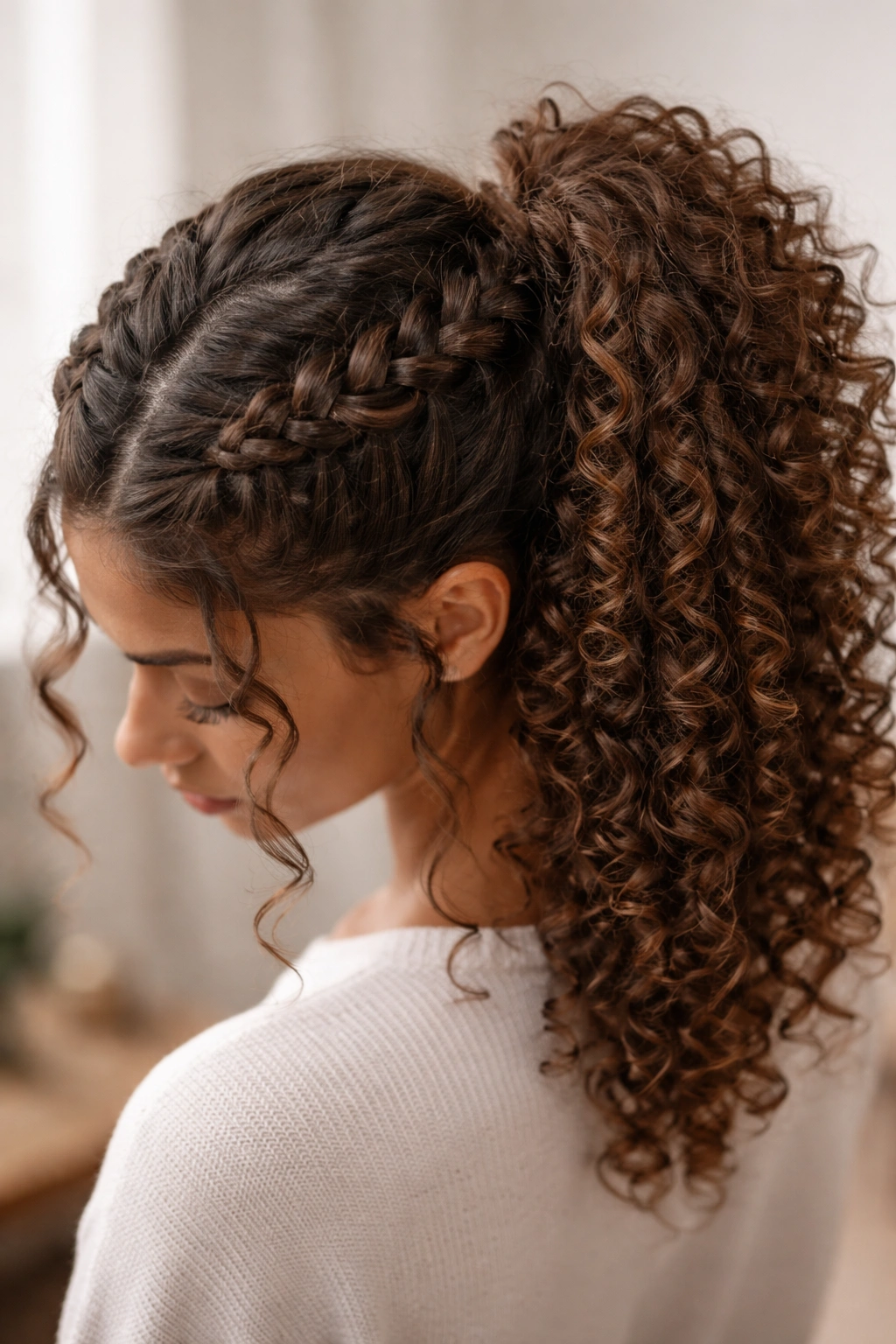
Braids and curly hair can be a tricky combo (braids sometimes slide out of curls, or look too neat against textured hair), but a braided crown that flows into a ponytail is absolutely magical. You’re using the braid to create structure at the top, then letting the ponytail section be fully textured and free.
Why This Works for Curly Hair
A Dutch braid or French braid (where you’re braiding under rather than over) actually complements curly texture beautifully, especially if you use your curls to fill the braid rather than fighting them to create a tight weave. The braid creates intentional style without losing your curl pattern. The contrast between the structured braid and the voluminous, textured ponytail is genuinely stunning and feels special without looking overly done.
How to Create This Look
Starting at one temple, create a Dutch braid (underhand braid) that travels across the crown toward the opposite ear. As you braid, be gentle and allow your curls to stay within the braid—don’t pull them too tightly. Once you reach the back of your head (roughly ear level on the opposite side), secure the braid and then gather all your hair (including the braid) into a ponytail. The braid should be visible as a structural element against the full, curly ponytail. You can tease the ponytail sections gently to increase volume.
Key detail: This works best when you start with curls that already have definition. Damp curls are trickier to braid; mostly-dry curls are your friend here.
9. The Twisted Low Pony with Wrapped Base
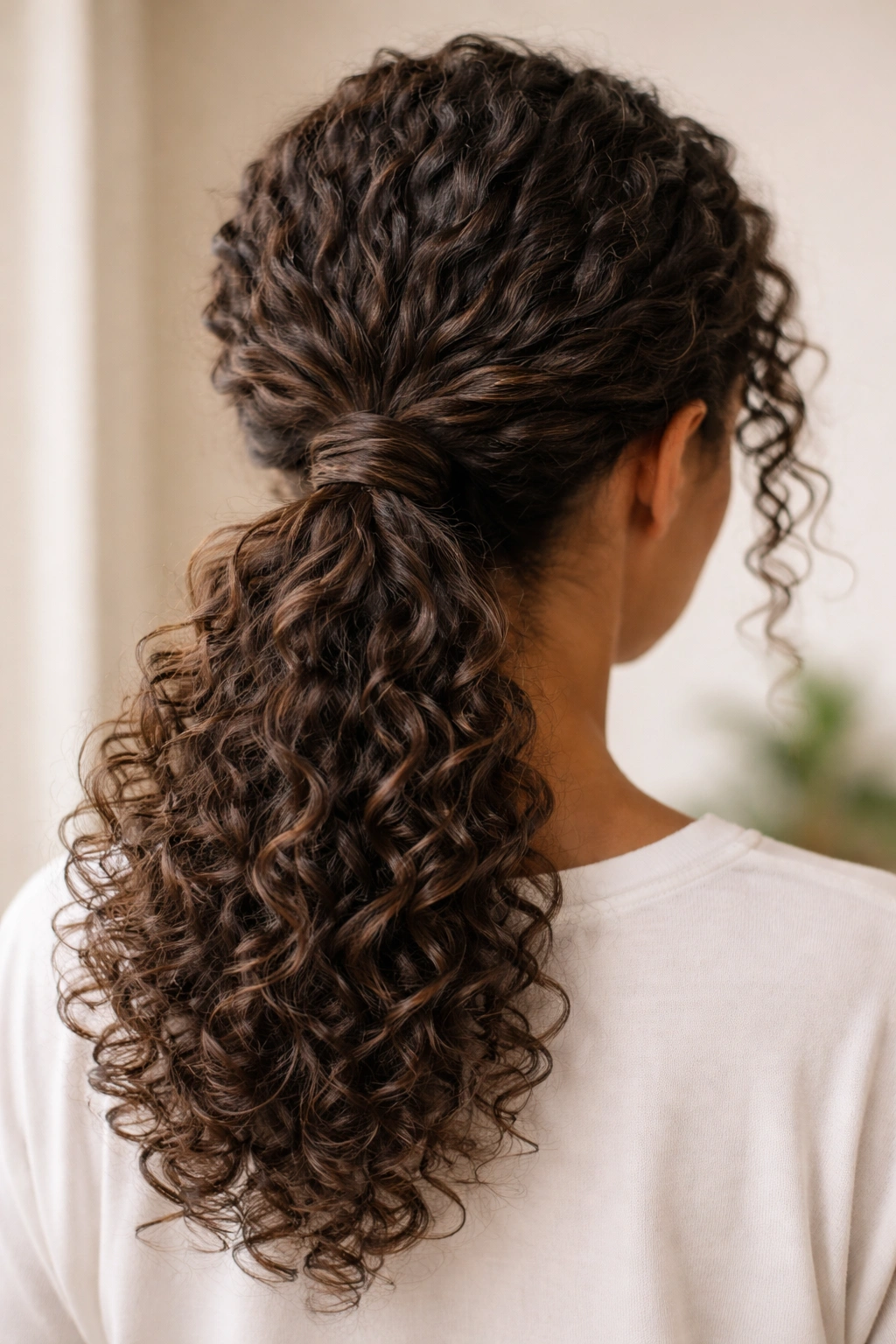
Sometimes the styling details make all the difference. A wrapped base transforms a simple ponytail from casual to intentional, and when you add twists to your gathering sections, you’re elevating the entire look. This is the ponytail that makes people think you spent real time on your hair.
Why This Works for Curly Hair
Twists naturally encourage curl definition and prevent frizz by directing movement in a specific way. A wrapped base hides your elastic and creates a finished, polished appearance that reads as deliberate. Combined, these details transform a simple style into something that looks salon-worthy. The best part? It still takes fewer than five minutes once you know what you’re doing.
How to Create This Look
Divide the hair you’re pulling back into 2-3 sections. Twist each section gently, then gather them together at the nape of your neck and secure with an elastic. Take a small strand of hair from the ponytail, wrap it around the base of the ponytail to hide the elastic, and secure it with a bobby pin tucked underneath. The wrapped section should be relatively seamless and invisible. Your natural curls and the texture of the twists will provide all the visual interest you need.
Insider note: Using a strand from your actual ponytail for the wrap (rather than a separate strand) looks more seamless and polished.
10. The Side Ponytail with Volumizing Products
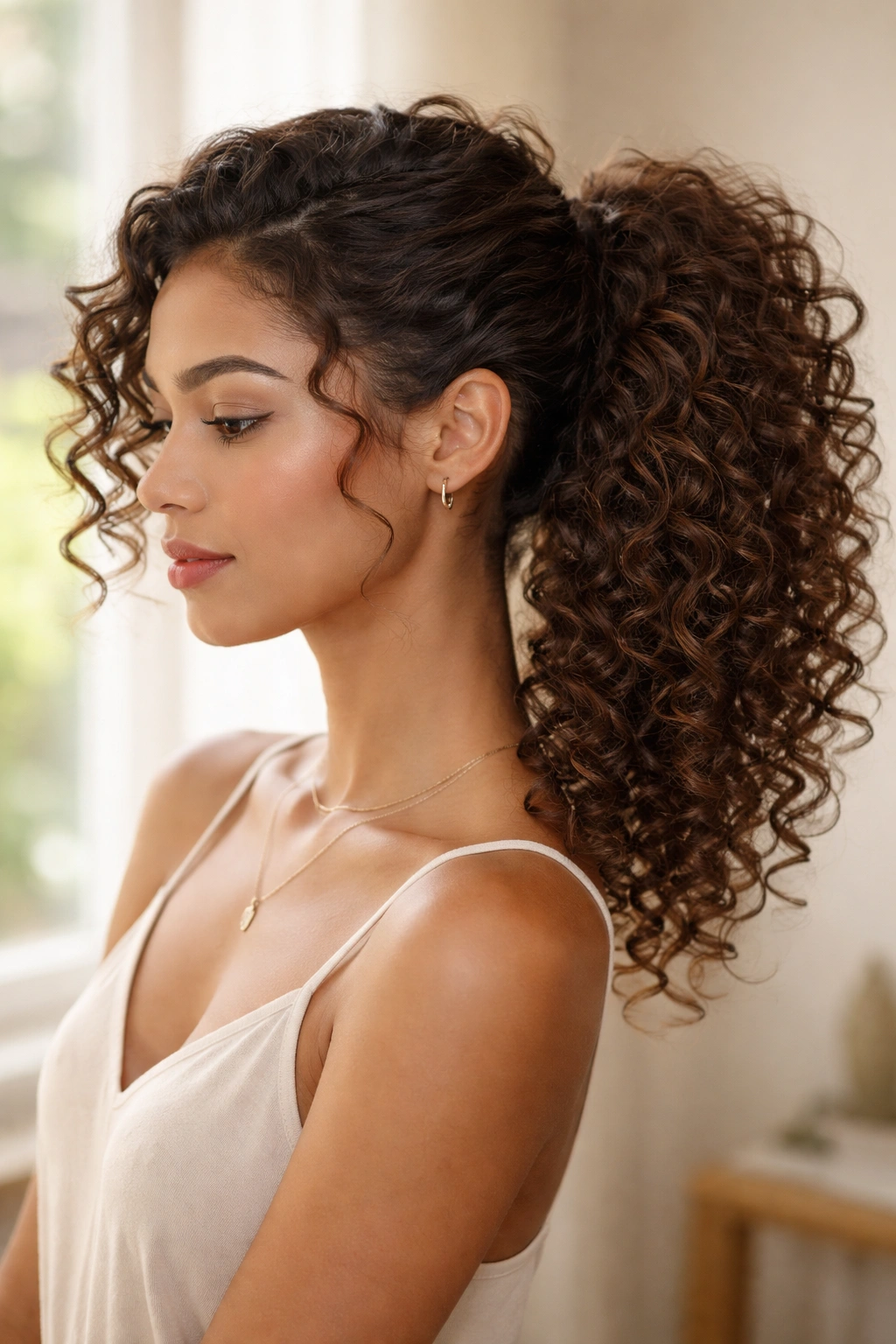
A side ponytail worn low on one side of the neck is instantly feminine and romantic—and it’s perfect for curly hair that you want to show off while still keeping it somewhat controlled. This style works especially well if one side of your hair has particularly beautiful curls.
Why This Works for Curly Hair
Side ponytails showcase your curls beautifully because they’re positioned at an angle where your curls fall naturally and catch light from different directions. You’re not fighting gravity or your curl pattern—you’re working with it. A low side ponytail also avoids the common problem of hair pulling down at the crown, which can happen with center ponytails on people with heavy, thick curls.
How to Create This Look
Apply volumizing mousse or a lightweight curl cream to damp hair, then scrunch to encourage curl definition. Once mostly dry, gather your hair to one side of your neck (right at the nape level or slightly lower). Use a soft elastic in a color that matches your hair. Leave some face-framing pieces loose if you want a softer look. You can add extra volume at the crown by gently teasing the roots before gathering your hair, or by loosening the ponytail slightly once it’s secured.
Pro tip: Volumizing products (mousse, spray, or lightweight creams) are your best friends for side ponytails because they help your curls maintain shape and fullness without weighing them down.
11. The Claw Clip Ponytail with Movement
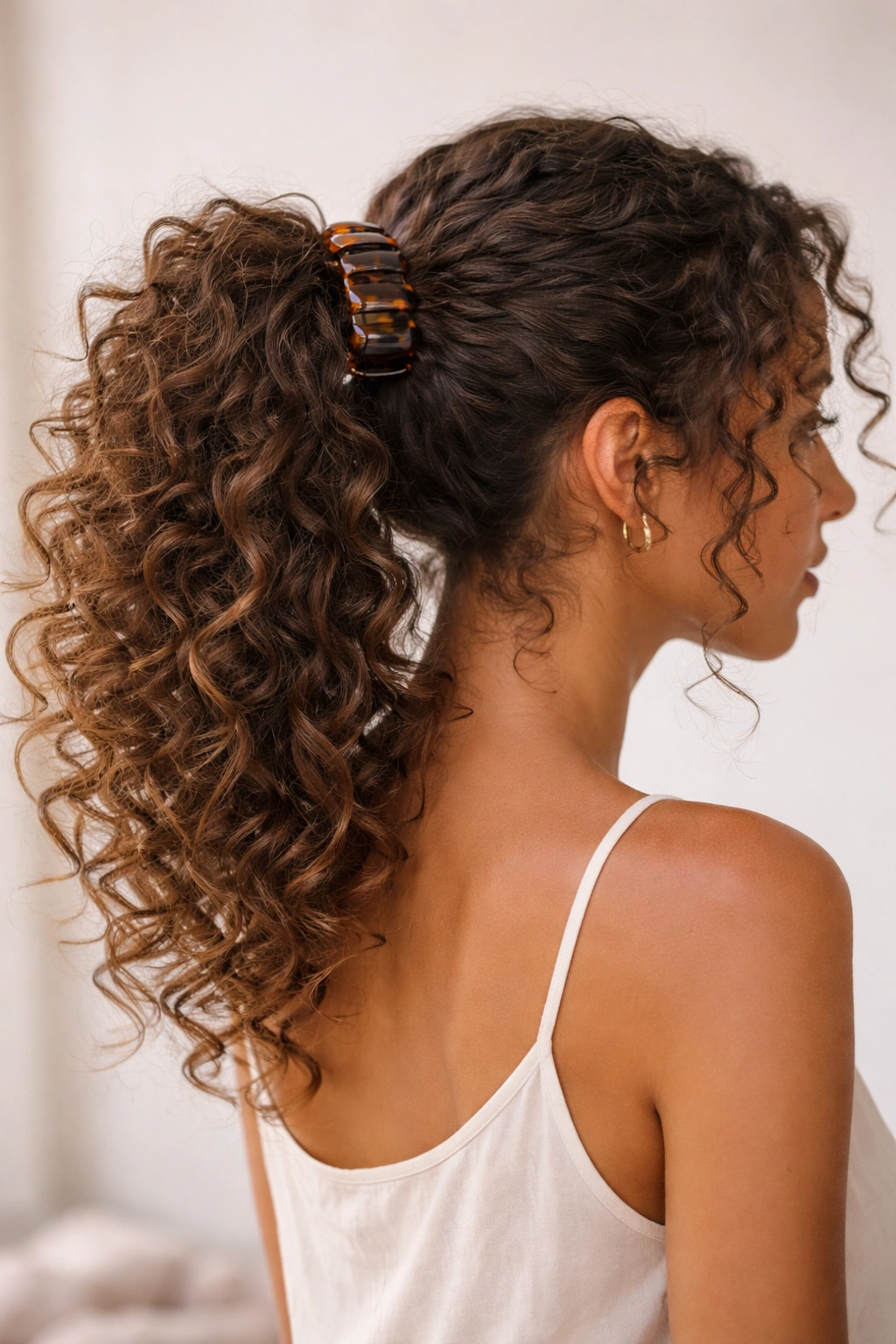
Skip the elastic entirely and use a claw clip instead. Claw clips are gentler on curly hair, they create an instantly polished look, and they allow more movement and texture to show than a traditional elastic ever could. This is the low-effort style that somehow looks high-effort.
Why This Works for Curly Hair
Claw clips don’t create the tight crimping that elastics do at the base of your ponytail, which means less breakage and less pressure on your scalp. They also naturally allow strands to escape, which is perfect for curly hair where that escape is actually flattering—those strands frame your face and add softness. The clip itself becomes a design feature, especially if you choose one in a fun color, pattern, or metallic finish.
How to Create This Look
Gather your curls loosely into a ponytail shape, right where you want to wear it (high, mid, or low). Clamp the claw clip horizontally across the gathered hair, positioning it so it holds everything securely but not so tightly that you’re creating tension. Some pieces will naturally fall loose around the clip—that’s perfect. You can intentionally loosen a few more sections if you want the look to be extra soft and textured.
Real talk: Make sure your claw clip is actually gripping your hair securely before you trust it for a full day. Position it right at the base of your gathered hair for the best hold.
12. The Double Ponytail with Texture
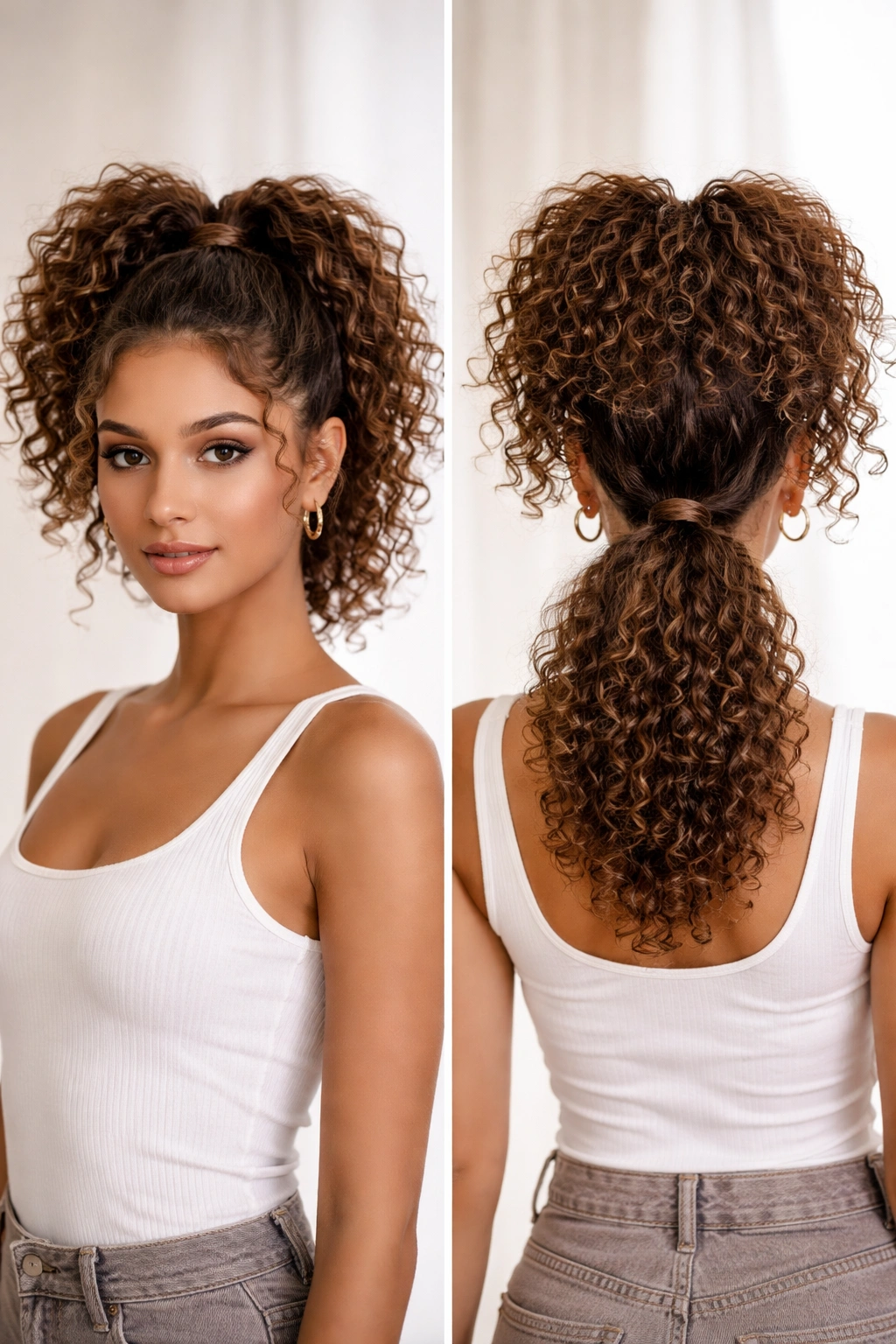
Double ponytails (one secured high on your crown, one secured lower at the nape) sound playful, but when you do them on curly hair with intention, they actually look sophisticated and fashion-forward. You’re creating height, movement, and visual interest all in one style.
Why This Works for Curly Hair
Two ponytails mean twice the opportunity to show off your curl texture and volume. The upper ponytail sits higher than any single ponytail could, creating maximum height and presence. The combination of full, textured sections creates a look that’s undeniably cool and intentional. This style also distributes the weight of your hair across two elastic points rather than one, which is gentler on your scalp and hairline.
How to Create This Look
Gather the upper section of your hair (roughly from temple to temple across the top of your head) into a high ponytail and secure with an elastic. Make sure this ponytail is secure before moving to the next step. Then gather the remaining hair at the nape of your neck into a second ponytail and secure it as well. Both ponytails should be full and textured, celebrating your curl pattern. You can leave them side-by-side, or cross them slightly over each other for a more intentional design element.
Key detail: This style works best when both ponytails have comparable volume and texture. If one section is significantly thinner, the style loses its balance.
Final Thoughts
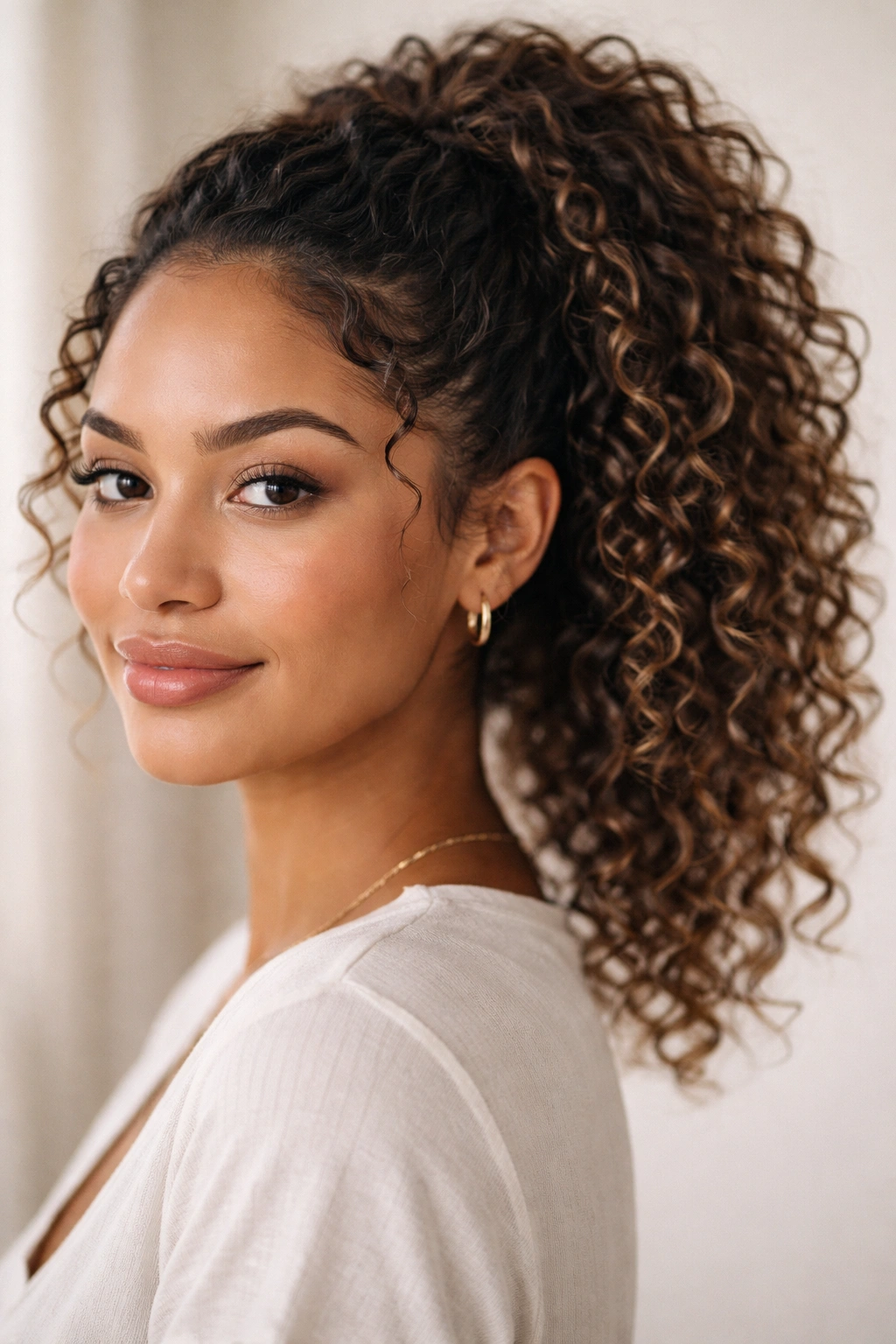
The beauty of curly-hair ponytails is that they celebrate what you’ve already got instead of forcing your hair into a shape it doesn’t naturally want to be. Whether you’re going for soft and romantic, structured and polished, or playfully textured, there’s a ponytail style that’ll make you feel genuinely good in your hair. The most important thing is choosing a style that respects your curl pattern—loose enough that it isn’t fighting your natural movement, but intentional enough that it looks deliberate rather than accidental.
Your curl pattern, thickness, length, and the specific texture of your curls will all influence which of these styles works best for you. Some might require a bit of experimentation with products or technique before they feel perfect. That’s completely normal. The goal isn’t to force your hair into a style it can’t do; the goal is to find the styles that make your curls look their absolute best and make you feel confident and comfortable. Once you land on your favorites, you’ll have genuine go-to options for every situation—and that’s the real win.
