



Low curly ponytails are a staple in Black hair styling—versatile, elegant, and endlessly customizable depending on your texture, lifestyle, and mood. Whether you’re working with natural curls, coils, waves, or installed hair, a low ponytail pulls off that effortless-yet-polished look that works for everything from casual days to professional settings. The magic of wearing your curls up is that you get to showcase both the movement and volume of your texture while keeping hair off your face and neck.
What makes low curly ponytails so special for Black women is how they celebrate natural texture while maintaining a refined aesthetic. Unlike sleek styles that require hours at the salon, many of these ponytails work beautifully with your curls exactly as they are—no heat, no relaxing, just intentional styling that enhances what you already have. You can switch up the ponytail position, add twists, braids, or decorative elements, and completely transform your look with the same base of curly hair.
The versatility is genuinely remarkable. A low curly ponytail can be worn loose and bouncy for a romantic or casual vibe, or you can pull it into a tighter, more structured version for work or formal events. You can add accessories, wrap sections, incorporate braids, or keep it completely natural. That flexibility means once you master a few core techniques, you’ll have dozens of styling options at your fingertips—perfect for those mornings when you need a quick, put-together hairstyle that still honors your natural texture.
1. The Loose Curly Low Ponytail
The classic loose curly low ponytail is the foundation of everything else—it’s the hairstyle you return to again and again because it works, it’s fast, and it looks effortlessly beautiful. This style pulls your curls up into a low position at the nape of your neck, with most of the texture left completely loose and unstructured, falling naturally from the elastic or hair tie.
Why This Style Stands Out
This ponytail succeeds because it requires minimal manipulation while maximizing the visual impact of your curls. There’s no need to brush out your texture into a smooth dome or create sharp edges—in fact, the whole point is to leave your curls exactly as they are. The softness around your face and the flow of the curls down your back create movement and dimension that feels intentional, not rushed. It’s appropriate for literally any setting: work, weekend plans, gym trips, dates, or everyday wear.
What You’ll Need
- A soft hair elastic, clip, or claw that won’t create harsh creases (fabric-covered elastics are ideal)
- Lightweight leave-in product or curl moisturizer applied to damp hair an hour or two before styling
- Optional: a silk or satin scarf to tie around your ponytail for overnight moisture retention
- A mirror positioned so you can see the back of your head clearly
Pro tip: Don’t brush or comb your curls when creating this ponytail—use your fingers to gather the hair, which keeps the curl pattern intact and prevents frizz. You want to see individual curl clumps, not a smooth, blended texture.
2. The Twisted Low Ponytail with Movement
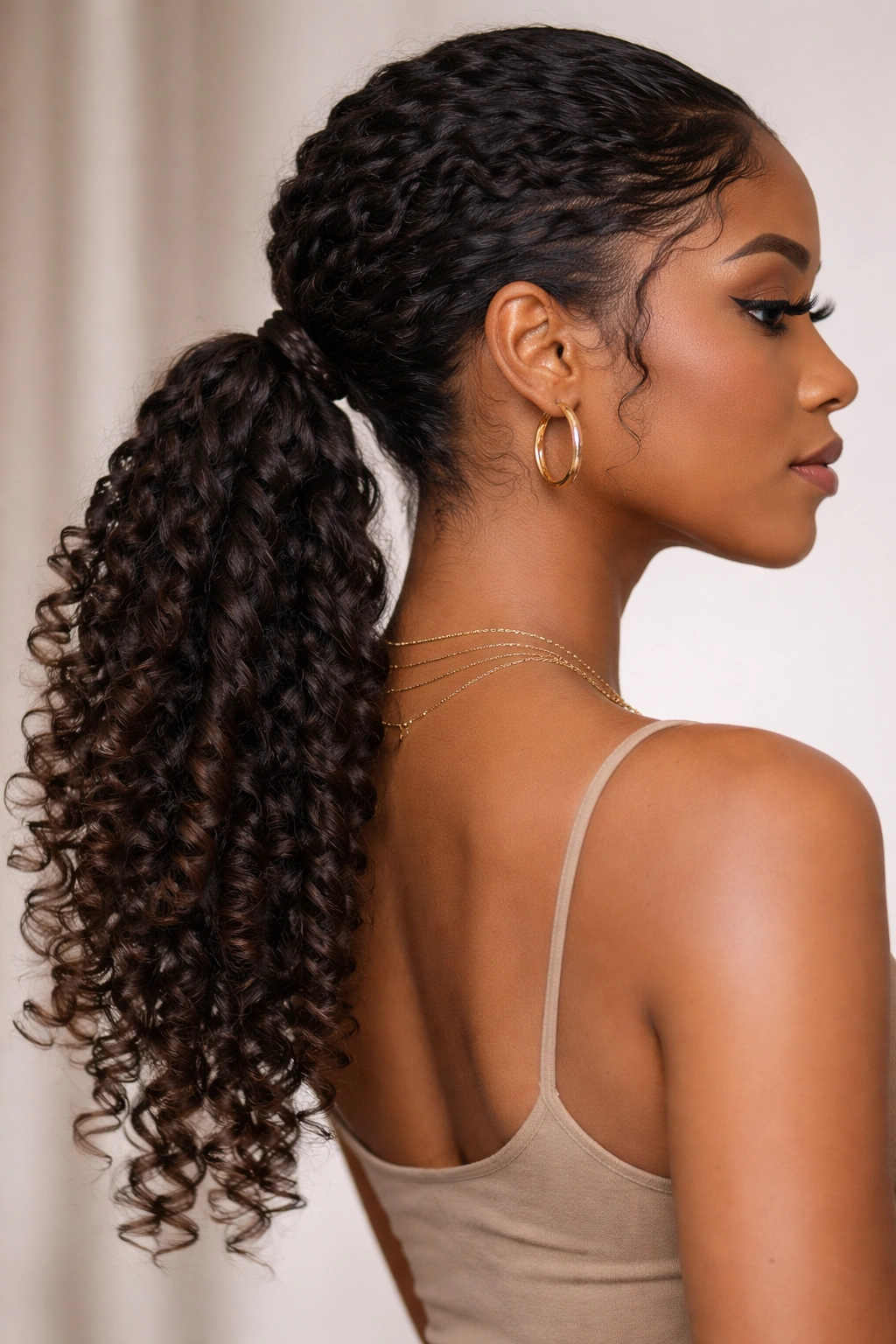
This style takes your curly hair one step further by adding two-strand twists throughout the ponytail, creating texture, dimension, and a deliberately intentional look that reads as more styled than a simple loose ponytail, yet still feels completely natural and low-maintenance.
How the Twists Create Visual Interest
Two-strand twists wrap around curly hair in a way that emphasizes each section’s natural coil pattern, making the entire ponytail look more defined and sculpted. Instead of curls blending together, the twists keep them visually separated, which is especially striking if you have medium to thick curly or coily hair. You’ll typically do between 4 and 8 twists, depending on how much hair you’re working with and how dramatic you want the effect to be.
The Technique That Works
Gather your hair into a low ponytail position as you would with the loose style, but instead of fastening it immediately, divide the gathered hair into sections—usually 4 to 8 equal parts. Take one section and split it into two strands, then twist them around each other, allowing your natural curl pattern to shine through. Repeat with each section, then secure the entire ponytail once all twists are complete. Some stylists secure each twist individually with small elastics before gathering the whole ponytail, which gives you more structure and a more intentional appearance.
Worth knowing: The more twists you create, the more texture and definition your ponytail will show—perfect if you want a statement hairstyle. Fewer twists keep things simple and less fussy, which works well on busy mornings.
3. The Braided Low Ponytail
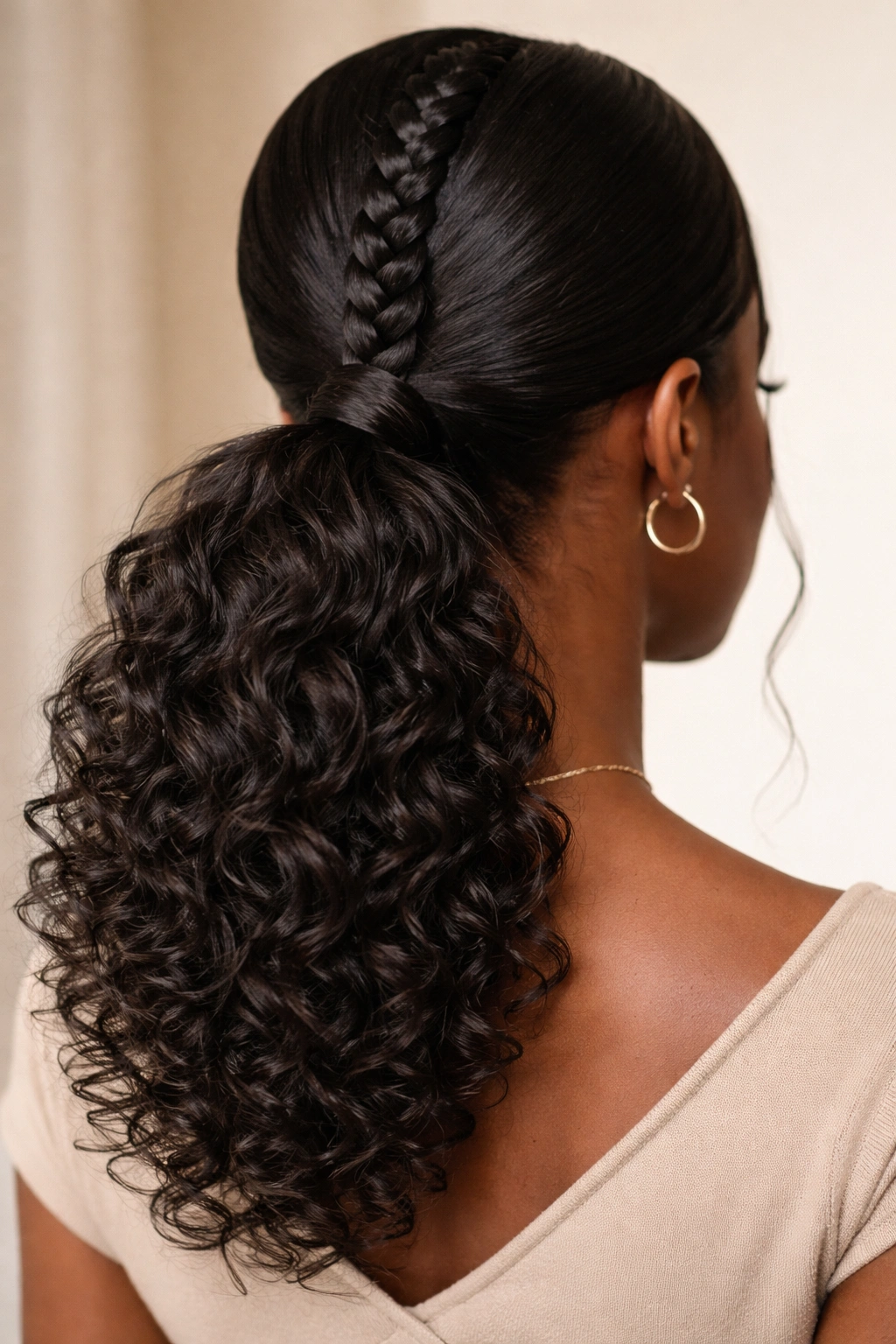
A braided low ponytail incorporates one or more braids into the ponytail itself, whether that’s a single braid woven through the center, multiple thin braids spiraling around the base, or braids incorporated into the actual gathering of hair. This is the style when you want something that looks polished enough for professional settings while still celebrating your texture.
Why Braids Elevate the Look
Braids add structure and intentionality to a low ponytail—they signal “I took time with my hair” even though the actual styling might take only 10 to 15 minutes once you get comfortable with the technique. The braid creates a focal point and visual pathway for the eye, transforming a simple ponytail into something with clear dimension and design. Braids also hold curly hair slightly more securely than a simple elastic, so your style will stay fresh longer throughout the day.
Variations That Change the Effect
You can create one thick braid down the center back of your ponytail (classic, clean, professional), multiple thin braids that spiral around the base (romantic, textured, more time-intensive), or braids woven into the sides of your hair before you even gather the ponytail. Some stylists do cornrows or box braids along the sides, which then feed into a curly ponytail at the base—this hybrid approach combines structure with texture beautifully.
Insider note: French braiding or Dutch braiding works especially well with curly hair because the braid seats naturally into the curl pattern, creating a seamless visual blend between the structured braid and the loose curls below it.
4. The Half-Up, Half-Down Curly Ponytail
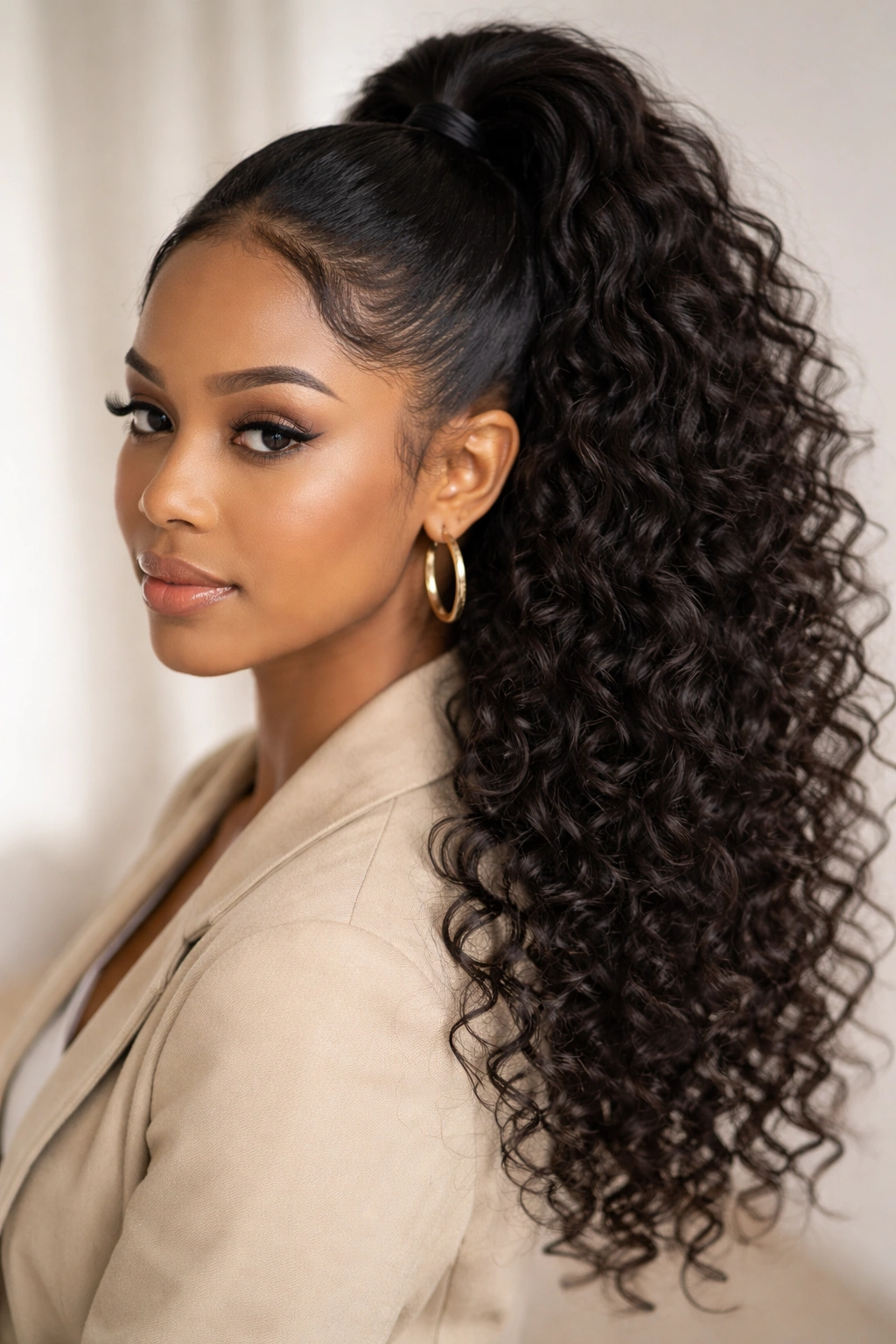
This hybrid style takes a section of hair from the top and sides of your head, gathers it into a ponytail or bun at the crown or mid-back area, and leaves the bottom half of your hair completely loose. It’s the perfect compromise when you want some hair off your face without fully committing to a full ponytail.
When Half-Up Works Best
Half-up ponytails shine when you’re going for that “approachable but polished” aesthetic—think job interviews where you want to look professional but not overly done, or dates where you want your styling to feel intentional but not like you spent an hour getting ready. The style also works beautifully if you have a lot of hair and don’t want the weight of a full ponytail pulling on your scalp, or if you’re trying to stretch out your style between wash days and want to focus moisture retention on the protected lower half.
The Visual Effect
Pulling up just the top section creates a face-framing effect because it removes hair from around your face and temples, while the loose curls below show off length and volume. Your curls get to demonstrate their full range—some height and texture on top, then the bounce and swing of the full length below. This style is particularly stunning if you have longer hair (shoulder-length or beyond), because the contrast between the pulled-up section and the cascading curls creates dramatic visual movement.
Pro tip: Curl your hair or refresh your curls the night before, then do the half-up style in the morning on hair that’s been sitting overnight and has more defined clumps and hold.
5. The Wrapped Low Ponytail with Decorative Elements
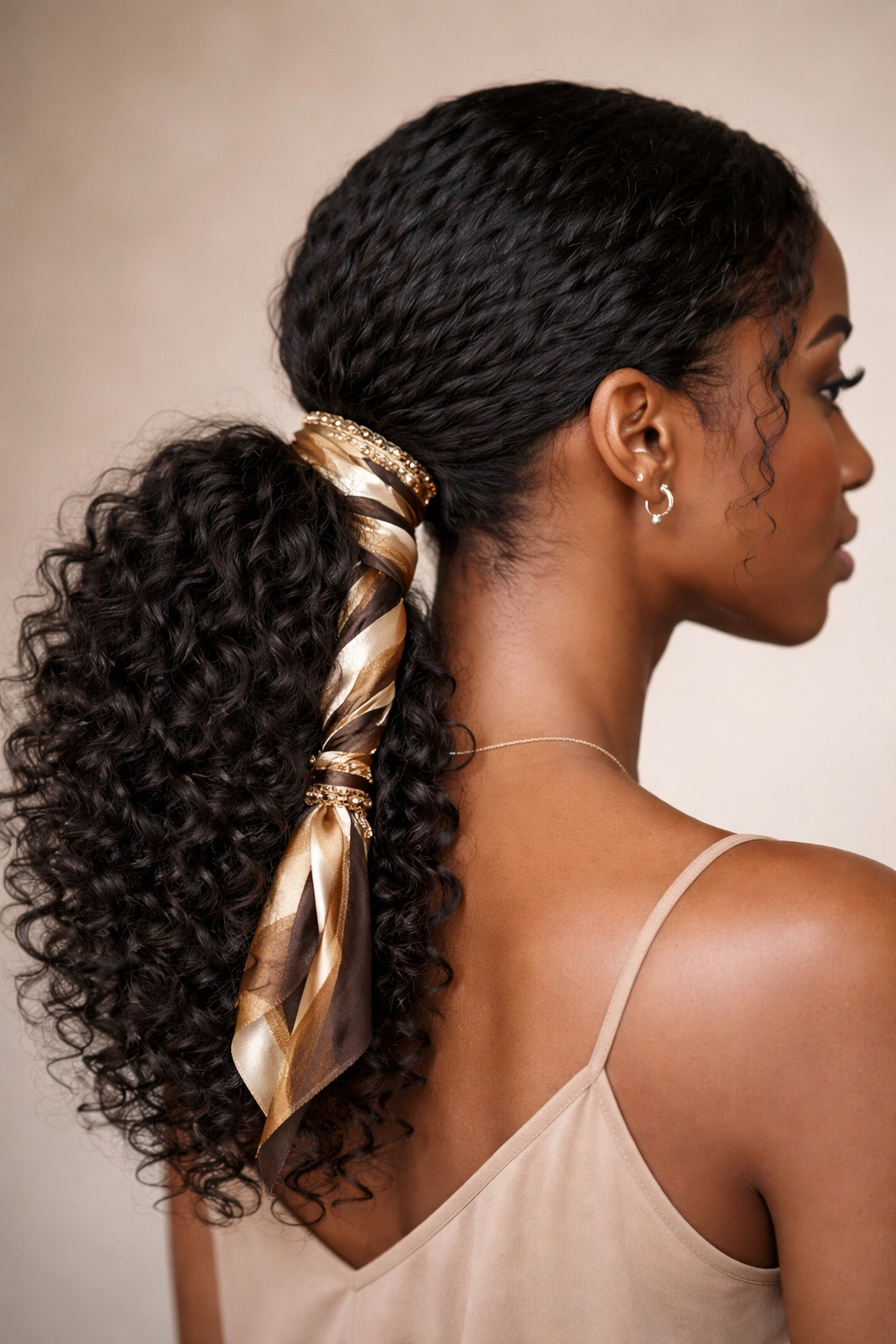
A wrapped low ponytail involves securing your curls into a low ponytail, then wrapping either a section of your own hair, a decorative cord, ribbon, or fabric around the base where the elastic is—essentially covering the elastic and adding a visual accent that transforms a basic ponytail into something more intentional and designed.
Why Wrapping Changes Everything
The wrapping serves two purposes: it hides the elastic (which can sometimes look a bit bare or industrial) and it gives you endless customization options. You can wrap with your own hair for a classic look, use a colorful ribbon that matches your outfit, add a silk wrap for protective styling, or even incorporate cords and beads for something more decorative and celebratory. The wrap is usually 2 to 4 inches wide and goes around the base of the ponytail multiple times until it’s secure.
Materials and Techniques
For a hair wrap, take a thin section of hair from the ponytail itself, keep it separated while you secure the main ponytail with an elastic, then wrap that section around the base, tucking the end underneath to hide it—like you’re disguising where the ponytail starts. For fabric or ribbon, you’ll need to pin or tie it at one end, wrap it around the ponytail base, and secure it with bobby pins or another elastic at the other end. The wrapped section should be tight enough that it doesn’t shift but loose enough that it’s not cutting off circulation or creating tension headaches.
Worth knowing: Silk wraps aren’t just decorative—they’re protective because they reduce friction between your hair and whatever elastic or clip you’re using, which helps minimize breakage and frizziness.
6. The Low Ponytail with Pulled-Out Face-Framing Pieces
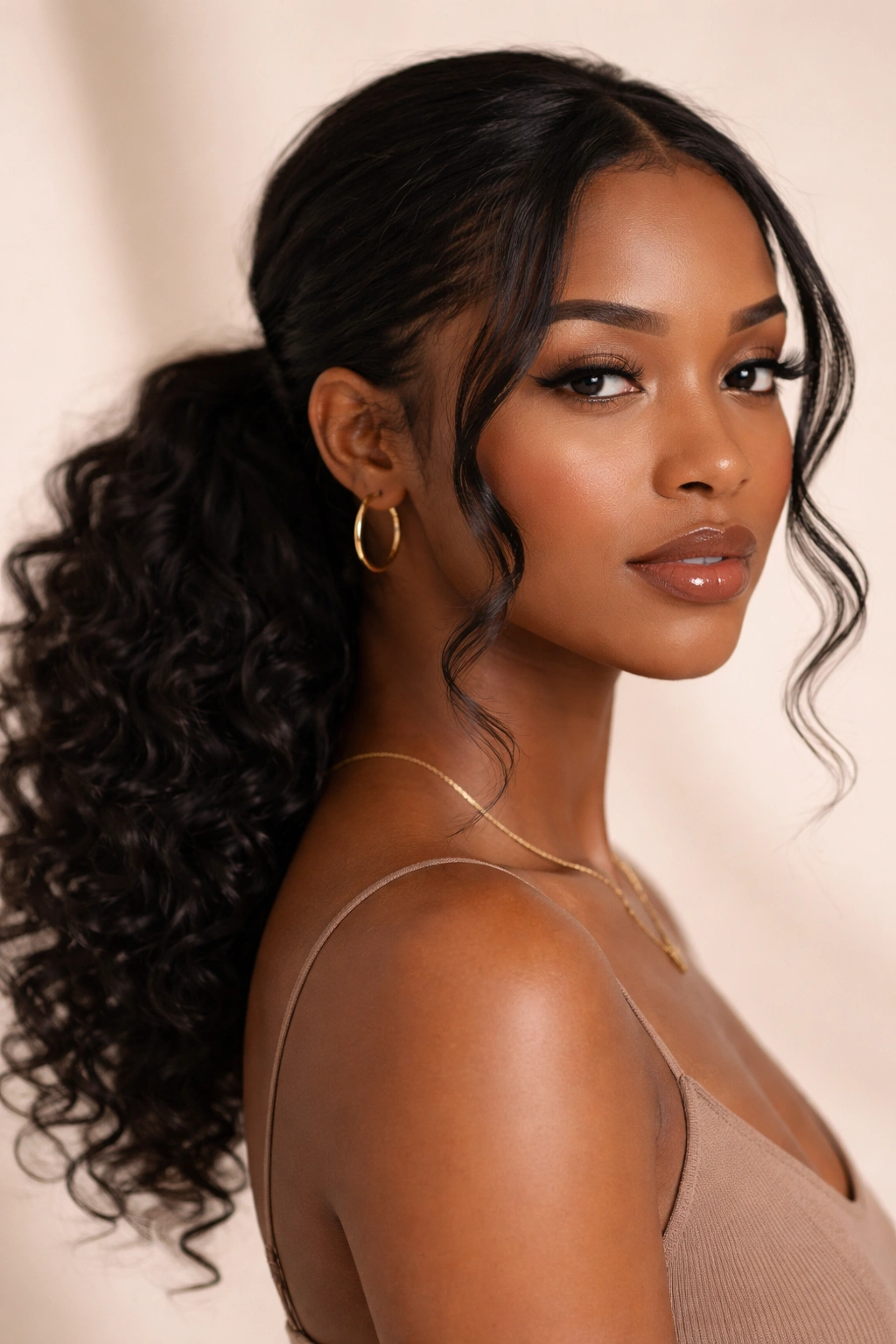
This style gathers your curly hair into a standard low ponytail, but then strategically pulls out small sections of curls along the hairline, around the temples, and around the ears, creating a softer, less severe look with curls framing the face. It’s incredibly flattering and works with virtually any face shape because the frame is customizable.
How the Face-Frame Softens the Style
A tight, fully secured low ponytail can sometimes look severe or emphasize features in ways you might not want. By intentionally releasing a few curls, you soften the overall aesthetic and create a romantic, relaxed feeling. These pulled-out pieces also draw attention to your face and can be styled to follow your bone structure—you might pull out more pieces on one side if that’s your preferred angle, or create symmetrical pieces if you prefer balance.
The Styling Process
Start with your hair gathered and secured into a low ponytail. Then, using a fine-tooth comb, your fingers, or a small tool, gently pull or comb out a thin section of curls from around your hairline—these can be as thin as a pencil or as thick as a marker, depending on how dramatic you want the effect. Repeat on both sides of your face, and optionally around the ears and back of the neck. You can arrange these pulled-out pieces however feels right—some people let them fall naturally, others lightly pin them or use curl cream to define them further.
Pro tip: Pull out pieces after you’ve secured the ponytail, not before—this way, you know exactly how much tension is in the style and can adjust accordingly.
7. The Sleek Low Ponytail on Curly Hair
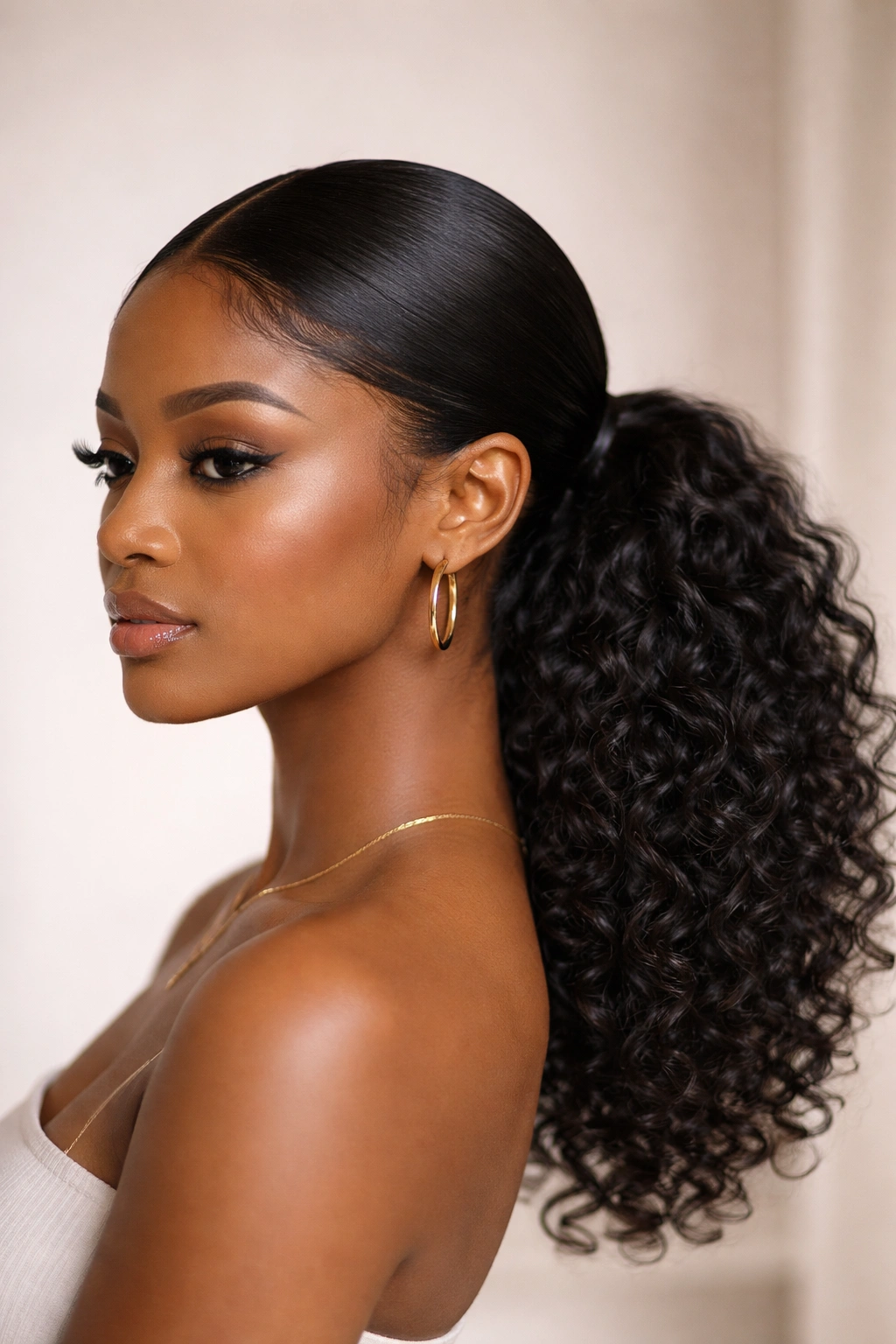
Wait—a sleek ponytail on curly hair? Yes, and it’s stunning. This style smooths your curls with gel or edge control, creating a defined, tight base and part, while the ponytail itself remains full and curly at the bottom. You’re essentially getting structure on top and texture on the bottom, all in one style.
Achieving the Sleek-Textured Contrast
To create this look, brush or comb your damp hair smoothly straight (using a brush with wide teeth or a paddle brush, never harsh combs that disturb your curl pattern). Apply a strong-hold gel or edge control to lay your hair flat, then gather it into a low ponytail position. The top of your head will be completely smooth and show your scalp, your part line will be sharp and defined, but once you secure the ponytail, the curls in the ponytail section spring back to their natural pattern, creating beautiful contrast.
Who This Look Works Best For
This style is especially popular in professional settings because the sleek top reads as “polished and intentional,” while the textured bottom honors your natural curls and shows that you’re not trying to be something you’re not. It’s also practical if you’re in a transition period with your hair or if you’re protective styling installed curls and want the curls visible but the roots protected.
Styling Tips for Longevity
Use a strong-hold gel that doesn’t flake, crack, or get crusty as the day goes on—test it on a smaller style first if you haven’t used it before. Apply gel smoothly and evenly, following your part line clearly, and let it set for a few minutes before gathering your ponytail. You can smooth down any baby hairs with an edge brush or toothbrush. The sleek top will hold all day, while the ponytail curls will stay bouncy and textured.
Worth knowing: This style works particularly well on second-day or third-day hair, when your curls are already set from a previous styling and just need the top portion smoothed.
8. The Bubble Ponytail with Curly Sections
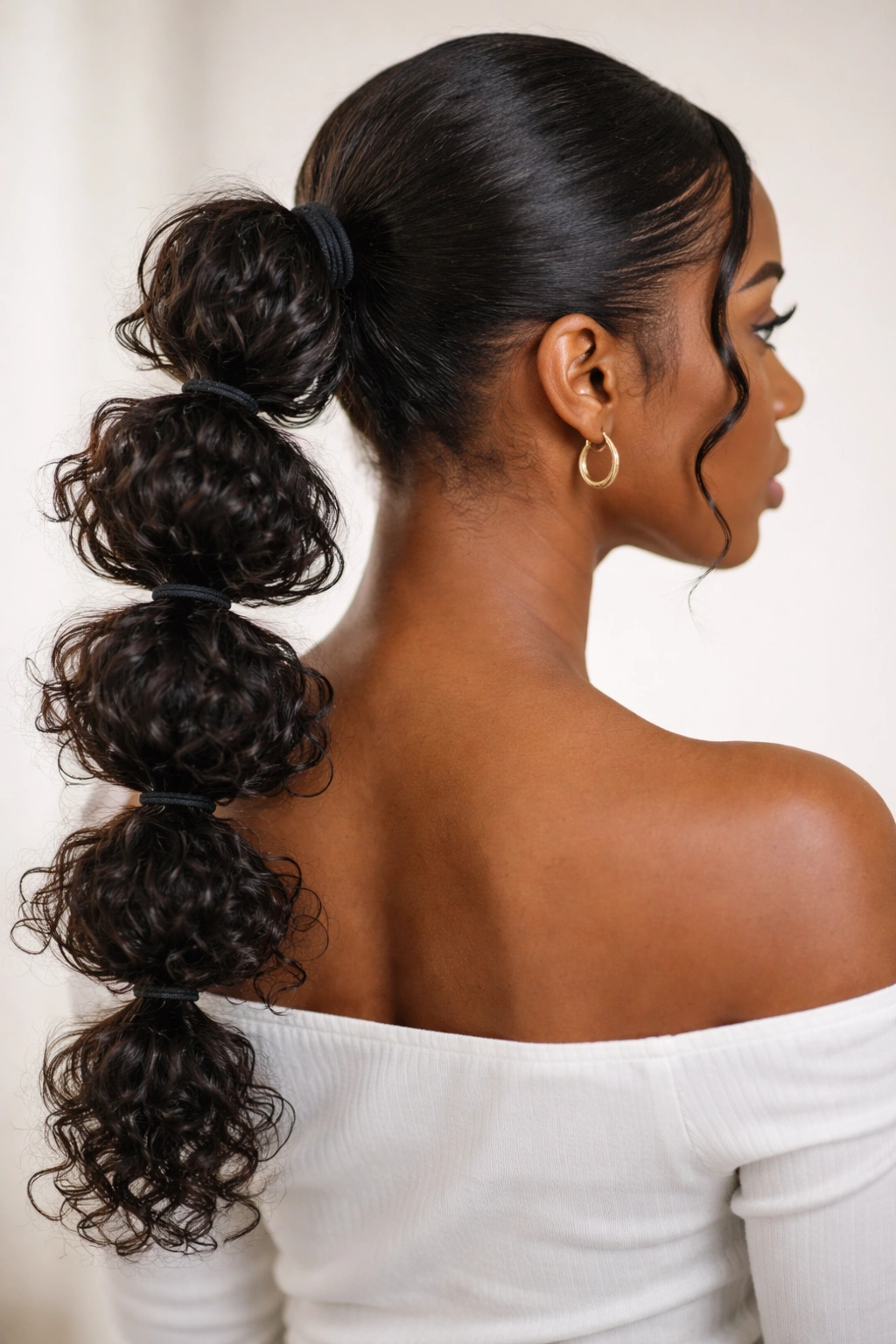
A bubble ponytail uses multiple elastics spaced down the length of your hair to create distinct, full sections that puff out between each elastic—kind of like bubbles stacked on top of each other. On curly hair, this creates an incredibly dimensional, fun look with lots of texture and movement visible at each bubble.
Why Bubble Ponytails Suit Curly Hair Perfectly
The bubble effect is built on creating volume and fullness between each elastic, which means curly hair is ideal for this style. Your natural texture creates that “puff” automatically, whereas people with straighter hair sometimes have to tease or backcomb to achieve it. With curly hair, you simply secure the ponytail, then create the bubbles by sectioning it with additional elastics and gently pulling and fluffing each section to make it visibly fuller.
Creating the Bubble Effect
Start with a basic low ponytail secured with an elastic. Measure down about 2 inches and place another elastic around the ponytail. Using your fingers, gently pull and separate the curls between the first and second elastic, spreading them outward to create a visible bubble. Repeat this process down the length of your ponytail—typically 3 to 5 bubbles depending on ponytail length. Each bubble should be visibly distinct and full.
Best Occasions and Styling Notes
Bubble ponytails photograph beautifully, so they’re perfect for special occasions, celebrations, or when you want a hairstyle that’s a little more playful than your everyday look. They’re also a great protective style because they’re not pulling hair too tightly anywhere—each section has room to breathe. The style works on shorter and longer hair, though longer hair (12 inches and up) tends to show the bubble effect more dramatically.
Insider note: You can add decorative accessories—beads, cuffs, or charms—around each elastic to make the bubble ponytail even more special.
9. The Double-Bun Low Ponytail (Space Buns at the Nape)
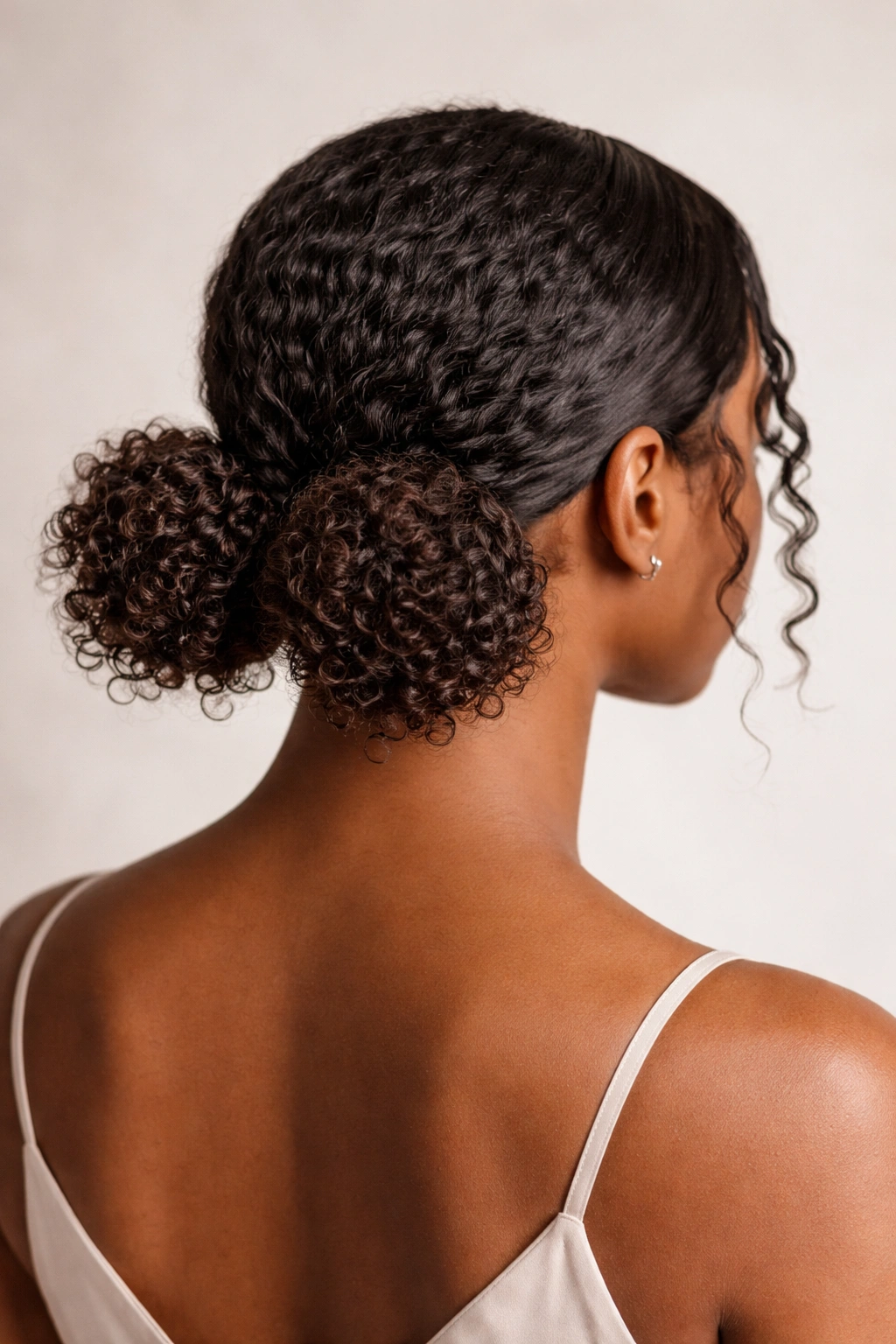
Instead of a single ponytail, split your gathered curly hair into two sections and create two small buns at the nape of your neck, positioned close together or slightly spaced apart. This playful style combines the practicality of a low ponytail with a fun, fashion-forward twist that works for casual, creative, or celebratory settings.
How Double Buns Read Differently Than a Single Ponytail
While a single low ponytail reads as polished and professional, double buns feel more youthful, playful, and creative. The style says you’re confident enough to wear something a little less traditional, which makes it perfect for casual days, creative workplaces, fashion events, or just when you want to have fun with your hair. The double buns also create a beautiful balance if you have a round or oval face, because two focal points sometimes work better visually than one.
Creating Structured vs. Loose Buns
You can make these buns as tight and structured as you want, or you can keep them looser with curls poking out—both versions work beautifully with curly hair. For a tighter look, twist your gathered curls and wrap them into a bun shape, securing with bobby pins or a small elastic. For a looser, more textured version, simply coil the gathered curls loosely and secure them, allowing curls to escape and frame the bun.
Positioning for Maximum Effect
Position your buns slightly lower (closer to the nape) for a more sophisticated look, or higher (closer to where a single low ponytail would sit) for something slightly more playful. You can position them symmetrically for balance or asymmetrically if you’re going for something edgier.
Pro tip: This style holds particularly well if your curls have been set for a day or two—freshly washed curls can sometimes be too soft to maintain structured buns all day.
10. The Curved Low Ponytail (Curved Part with Curly Ponytail)
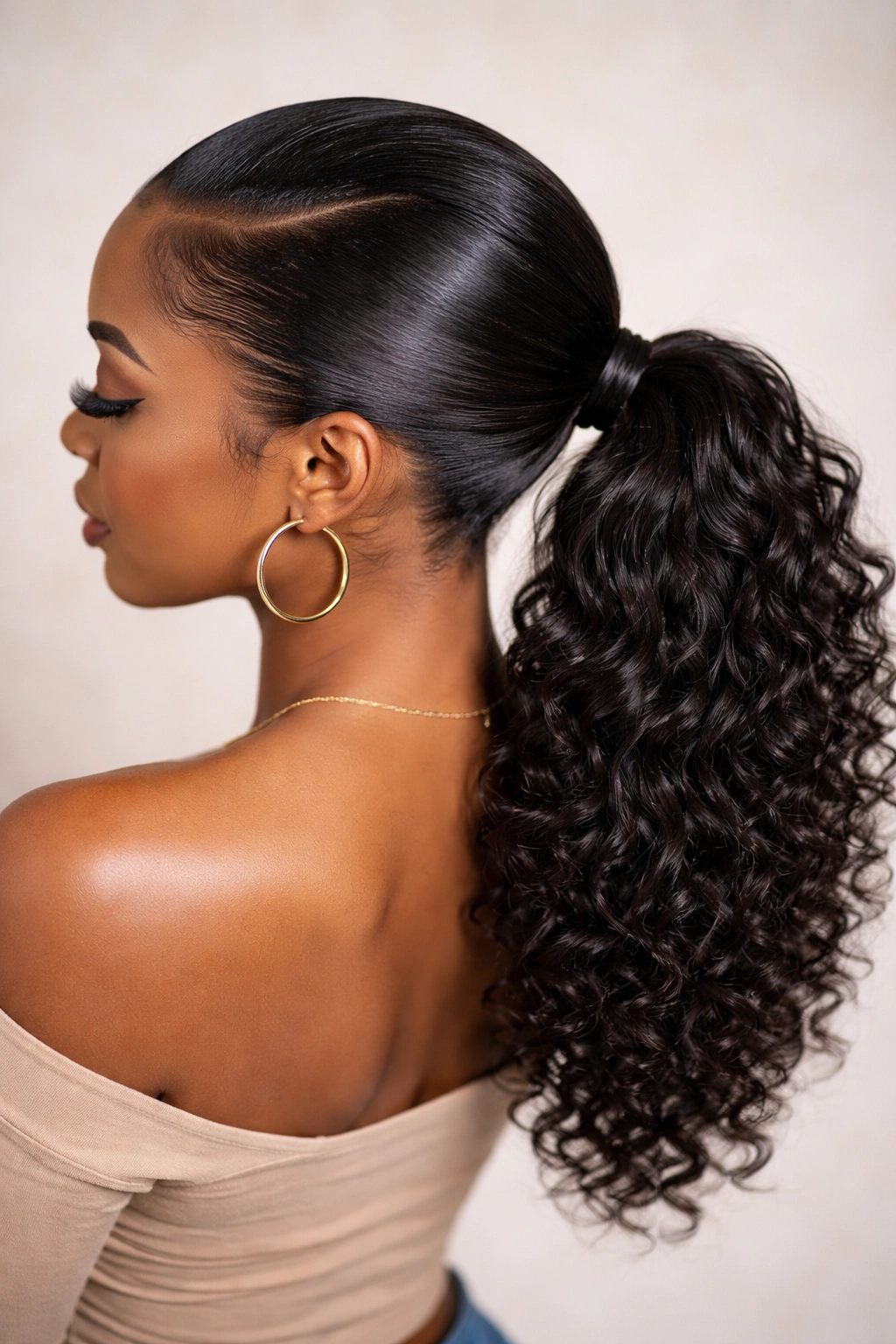
This final style is subtle but striking—instead of a straight center or side part, you create a curved or zig-zag part that feeds into a low ponytail, creating visual movement and interest even before you get to the ponytail itself. It’s the kind of detail that elevates a simple ponytail into something more intentional and designed.
Why the Curved Part Matters
A straight part is classic and clean, but a curved part creates movement and draws the eye in an interesting direction. The curve can go from one side to the other, creating a swooping effect, or it can zigzag back and forth, creating a more graphic, geometric look. The curve should feel natural to your head shape—if you have a curved hairline or asymmetrical features, the curve can complement those.
Creating a Curved Part on Curly Hair
Start with damp or slightly damp curly hair. Using a fine-tooth comb or rattail comb, part your hair along the curved line you envision. You want the part to be visible and clean, so it helps to have a little product on your hair (curl cream or gel) so the part sits clearly. Once your part is set, gather your curly hair into a low ponytail position—the curve of your part will naturally flow into the ponytail, creating a cohesive look from scalp to ends.
Who Should Try This Style
This is the style for people who love the details, who want a “designed” look that’s still low-key, or who are confident enough to rock something just slightly different. It works beautifully in professional settings (it reads as intentional and creative, not unprofessional), on dates (it shows you put thought into your appearance), and for creative work environments where a little extra polish and personality is celebrated.
Worth knowing: A curved part photographs incredibly well, especially from above or from the side—so if you’re planning to be in photos, this is a subtle way to create visual interest.
Final Thoughts
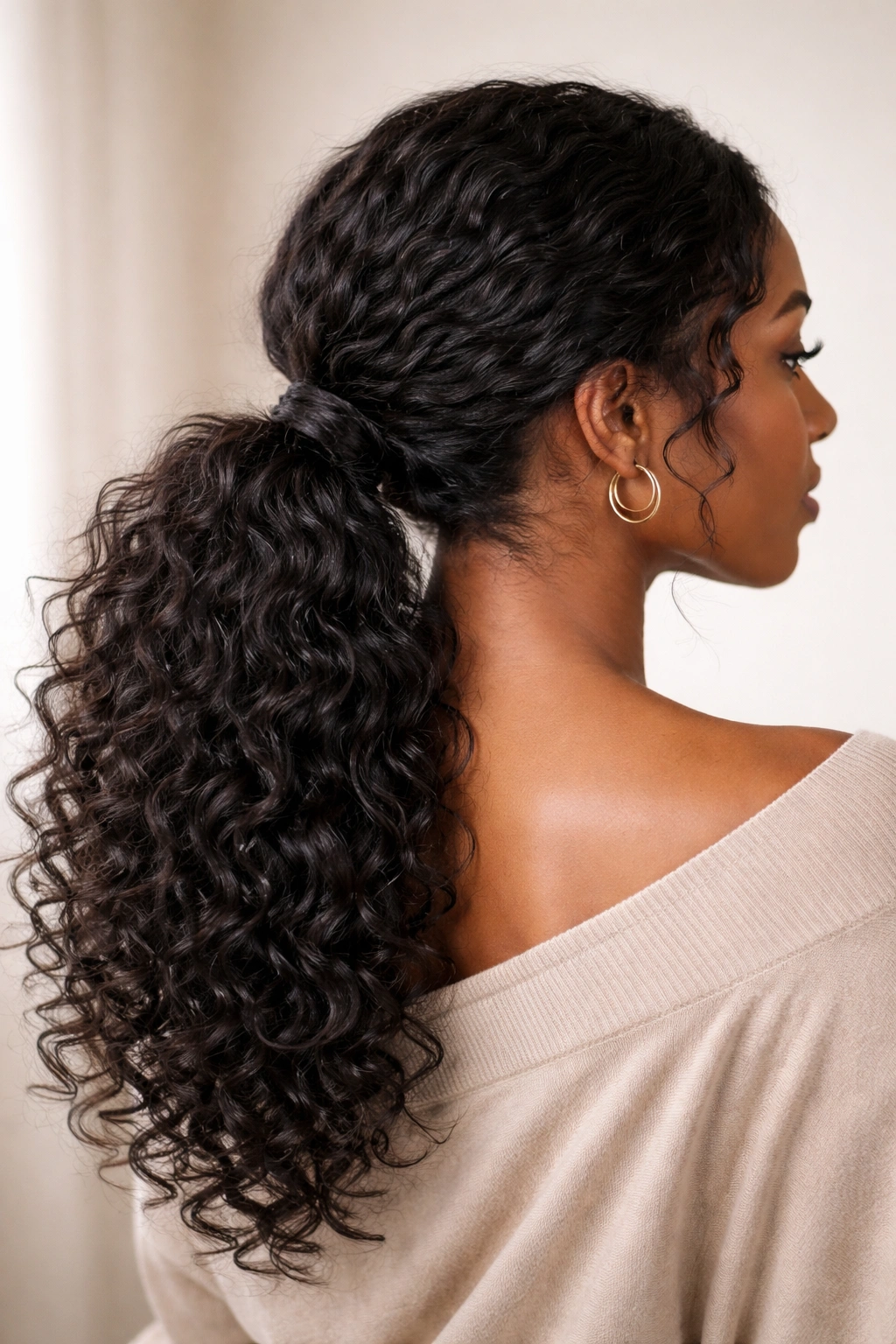
Low curly ponytails are endlessly adaptable because you’re working with a naturally beautiful texture that needs minimal manipulation to look intentional and polished. Whether you’re reaching for the quick loose curly ponytail on a busy morning, the sleek-topped ponytail for work, or the more playful bubble or double-bun version for the weekend, you’ve got options that work with your hair, not against it.
The beauty of these styles is that they’re not rigid or unforgiving—curly hair has built-in forgiveness and movement, so slight imperfections in your ponytail become charming details rather than glaring mistakes. You can adjust these styles, personalize them, and make them your own. A wrapped ponytail can become your signature look, a braided ponytail can work in your gym rotation, and that curved-part ponytail can become your go-to for days when you want to feel intentional.
The best low curly ponytail is the one that works for your lifestyle, your curl pattern, and your confidence level. Start with the style that sounds most approachable, practice it a few times until it feels effortless, then experiment with the others. You’ll probably find yourself returning to certain versions again and again—keep those in your regular rotation, and revisit the others when you want to switch things up or try something new. Your curls are versatile, and these styles prove it.
