



Natural hair offers incredible versatility, and braided ponytails are one of the most protective, stylish, and wearable ways to showcase that potential. Unlike loose protective styles, braided ponytails pull hair into a single focal point while keeping ends tucked away, minimizing friction and breakage. They’re also genuinely practical — you can rock them to the gym, to work, to brunch, or straight into evening plans without looking like you’re still in “protective mode.” The magic happens when you combine different braiding techniques with the natural texture and volume of textured hair, creating looks that are equal parts functional and undeniably gorgeous.
The beauty of braided ponytails on natural hair is that they work across virtually every hair type and texture, from 4A to 4C and everything in between. Whether your natural hair is shoulder-length or waist-length, fine or thick, you’ll find multiple braiding options that complement your texture and face shape. Plus, braided ponytails hold their shape longer than loose styles, so the investment in styling time pays off for days — sometimes a full week or more if you’re strategic about sleep prep and moisture maintenance.
Let’s break down twelve of the most flattering, functional, and fresh braided ponytail styles you can create on natural hair. Each one offers something different, whether you’re after maximum height and volume, a sleek and polished vibe, or something that lands perfectly in between.
1. Box Braids Ponytail
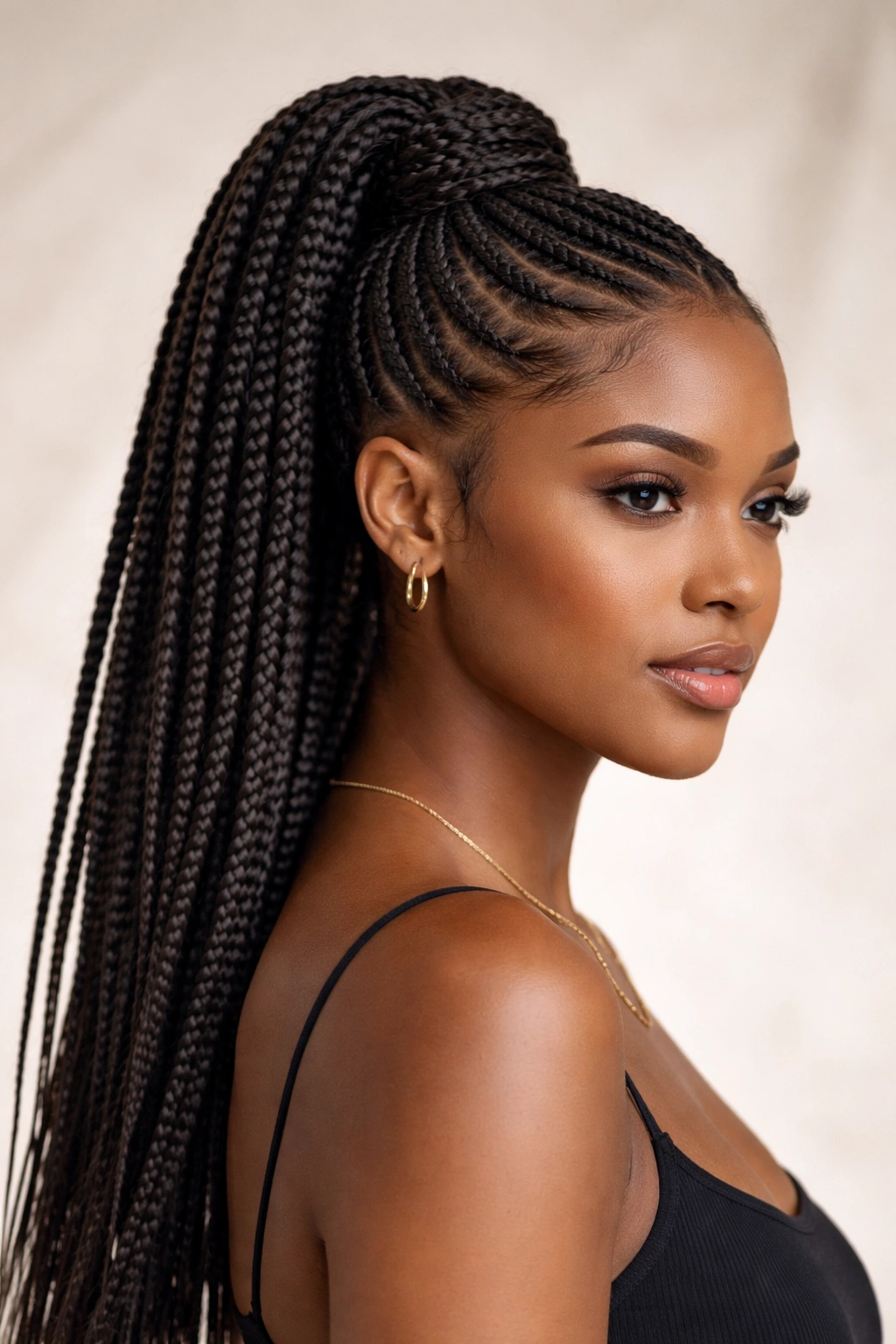
Box braids in a high ponytail are the gold standard of protective styles, and they look particularly stunning when gathered at the crown or top of the head. This style works beautifully because box braids have inherent weight and structure — when you pull them into a ponytail, they don’t flatten or deflate the way loose hair sometimes does. The braids maintain their shape, creating a voluminous, defined ponytail that photographs beautifully and holds strong through humidity, sweat, and everyday movement.
Why This Style Stands Out
Box braids ponytails offer the perfect marriage of practicality and aesthetic polish. The individual braids catch light differently than a solid ponytail would, creating subtle dimension and visual interest. Because each braid is its own unit, you can manipulate the ponytail itself — weave a small braided section through the base, wrap the elastic with hair, or even create a secondary braid woven through the ponytail for extra intrigue. This style is genuinely low-maintenance once you’ve invested the time in the box braids themselves, making it ideal for busy schedules or anyone looking to give their natural hair a true break from daily styling.
What You Need to Know
- High ponytails (gathered at the crown) tend to be most flattering and create the most volume, while mid-height or low ponytails offer a sleeker, more conservative approach
- Box braids typically last 6-8 weeks before they start to frizz noticeably, but your ponytail will look sharp for the full duration if you refresh the base every 2-3 weeks
- Size matters: thicker box braids create a bolder, chunkier ponytail with less density, while thinner braids give you a sleeker look with more “pieces” to work with
- Sleep on a silk or satin pillowcase or wrap your ponytail before bed to reduce frizz and keep the braids smooth longer
Pro tip: Wrap the base of your ponytail with a small section of braiding hair or a matching silk ribbon — it polishes the look, hides the elastic, and creates a finished, intentional appearance that elevates the entire style.
2. Fulani Braids Ponytail
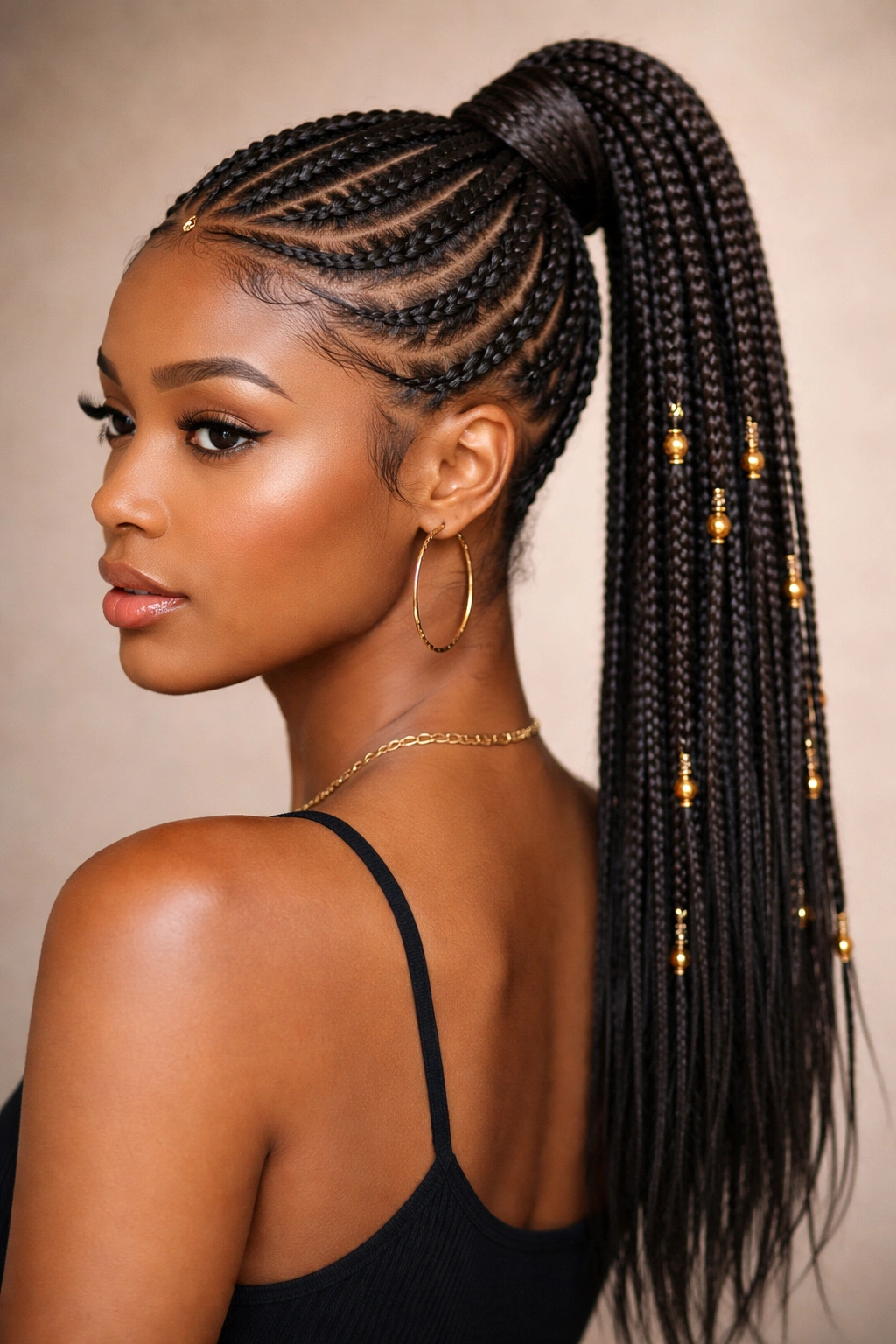
Fulani braids — characterized by thin, often beaded rows that wrap around the crown and sides of the head before flowing into a ponytail — are undeniably iconic and deeply rooted in cultural tradition. When you pull the front sections into a ponytail at the nape or gather all the braids together into a high pony, you create a style that’s equally striking from the back and the front. The beauty of this approach is that it allows you to see the full pattern and detail of the front braiding work while still pulling everything into a contained, polished ponytail.
How to Make It Your Own
Fulani braids are deeply personal and culturally significant, so approach them with respect and intention. If you’re wearing them, educate yourself on their origins and significance rather than treating them as just another trend. The style becomes a statement when you understand what you’re wearing. You can modify the look by varying the placement of beads (or choosing not to use them), adjusting the number of front braids that feed into your ponytail, or creating a feed-in technique that makes the braids look like they’re growing from your scalp. Some people keep the ponytail itself loose (allowing it to fluff out at the bottom) while others braid it all the way to the ends for a more contained look.
Styling Strategies
- Fulani braids with beads photograph incredibly well and tend to photograph even better than they look in person — the beads catch light in ways that create visual impact
- The weight of a full ponytail can pull on your edges and hairline if you’re not careful, so make sure the front braids aren’t excessively tight or pulled too far back
- This style looks especially striking when paired with gold beads or natural wood beads, which complement a wide range of skin tones
- If you’re concerned about tension on your edges, consider this: wear your ponytail lower on the head or in a looser, more relaxed configuration that distributes tension more evenly
3. Feed-In Braids Ponytail
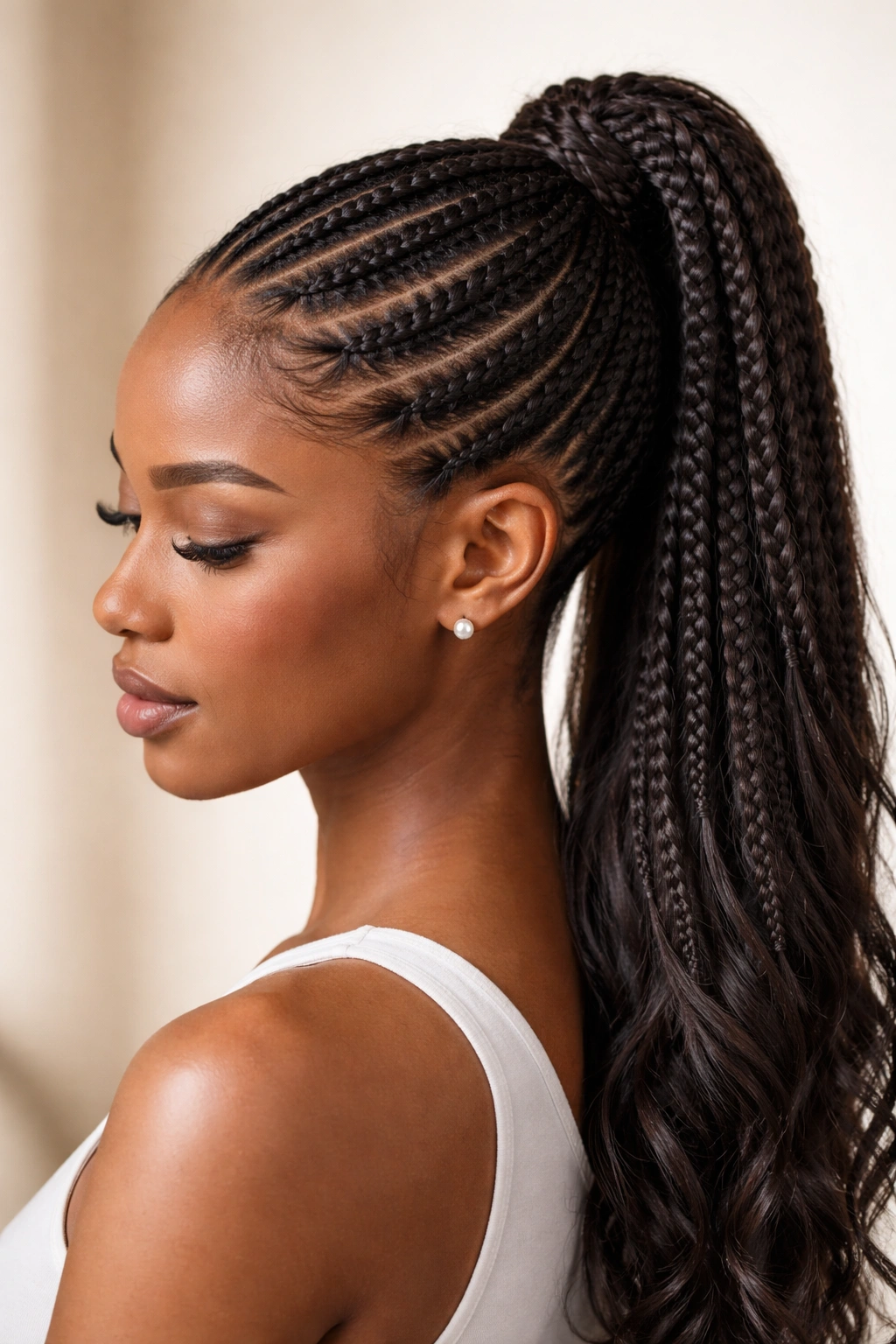
Feed-in braids are the technique that makes box braids look like they’re growing directly from your scalp because you gradually introduce extension hair into each braid as you work down from the roots. This creates a seamless, intentional look that reads as incredibly polished. When you gather feed-in braids into a ponytail, especially a high one, you get the visual benefit of the hair appearing to naturally flow from your head — there’s no visible track or bump at the base, just a continuous line of textured hair flowing into your ponytail.
The Technical Advantage
Feed-in braids require more skill and time than traditional box braids, which is why they typically cost more, but the payoff is worth it if you’re particular about the finish. The technique distributes tension more evenly throughout each braid because the hair isn’t all introduced at once at the roots. This can mean less stress on your hairline and less overall tension-related breakage. Aesthetically, feed-in braids look newer and fresher for longer because you’re not dealing with a visible demarcation line between your natural hair and the extensions. Gather them into a sleek, high ponytail, and you’ve got a style that looks intentionally done, not hastily thrown together.
Making This Work
- Feed-in braids take 4-6 hours depending on your hair density, braid thickness, and your stylist’s speed, so plan accordingly and budget extra time
- This style works beautifully if you have a slightly rounded hairline that you’d prefer to minimize — the continuous feed-in technique can be manipulated to create the illusion of a smoother, fuller hairline
- Ponytails with feed-in braids look most polished when pulled high and tight, though you can absolutely wear them looser if that’s your preference
- The longevity is similar to box braids (6-8 weeks), but the initial installation takes longer and typically costs more
4. Lemonade Braids Ponytail
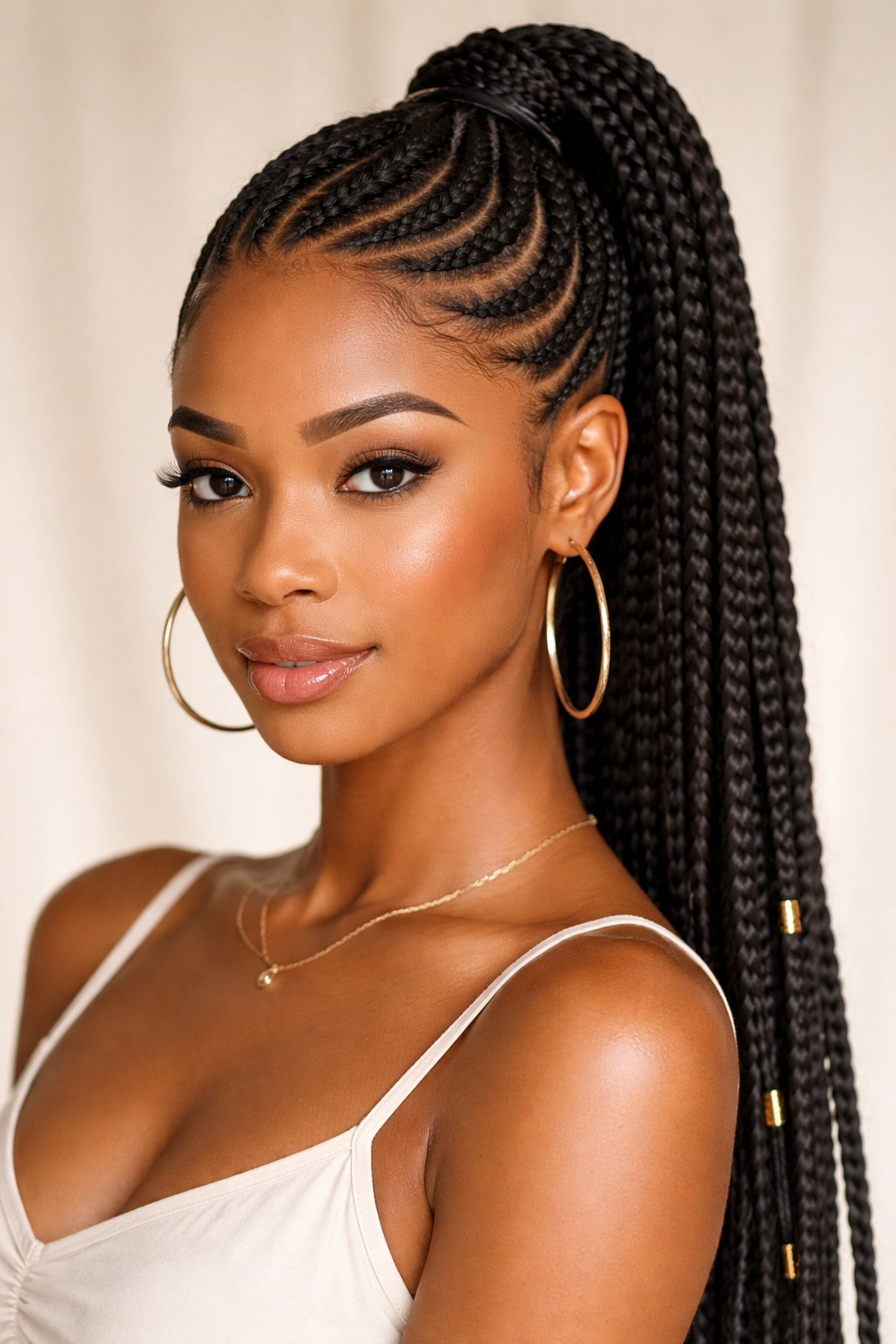
Lemonade braids are essentially cornrows or Dutch braids that angle toward the side or center of your head in a curved, decorative pattern before gathering into a ponytail. They got their name from Beyoncé’s iconic 2016 Lemonade visual album, where she wore them styled into a low, side ponytail. What makes this style so versatile is the infinite ways you can arrange the front-facing braids — they can curve gently around your scalp, create a symmetrical pattern, or follow a more abstract, artistic path depending on your preference and your stylist’s creativity.
Why This Approach Works
Lemonade braids demonstrate how the front-facing detail can become the focal point of your entire look. Because the braiding design is visible from the front and from the side, this style works beautifully for occasions where you’ll be photographed or seen from multiple angles. The ponytail itself can be sleek or voluminous, tight or loose — the impact comes from the patterned detail work at the front. Many people find this style strikes a perfect balance between “I took time with this” and “I wasn’t trying too hard,” which translates to versatility across different settings.
Styling Considerations
- Lemonade braids typically work best with box braids or feed-in braids gathered at the ponytail point rather than all the way down as cornrows, though that’s a personal preference
- The placement of the ponytail (high, mid, low) dramatically changes the impact of the style — a high lemonade braid ponytail reads bold and playful, while a low one reads sleek and refined
- The curved or angled path of the front braids should complement your face shape; softer curves tend to work for rounder faces, while straighter or more pronounced angles can work for more angular features
- Plan for touch-ups every 2-3 weeks if you’re wearing this for an extended period, as the front braids tend to show frizz first due to more frequent contact and friction
5. Two-Strand Twists Ponytail
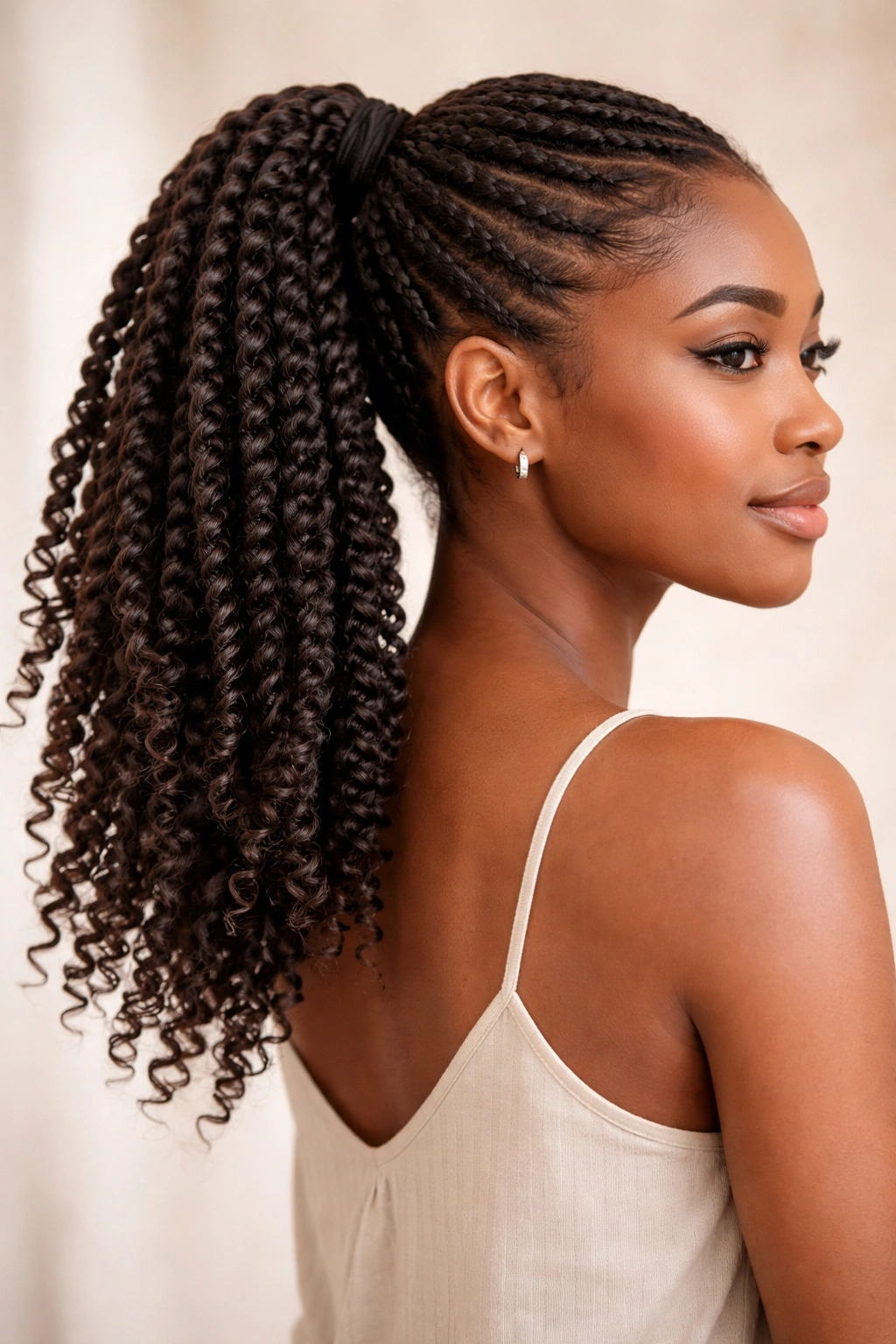
Two-strand twists are lighter, more delicate than braids, and they create a distinctly different texture and visual impact. When you gather two-strand twists into a ponytail, especially if the twists are relatively thick, you get a bouncy, voluminous look that’s perfect for anyone who wants their ponytail to move and sway rather than sit in a rigid shape. Twists also tend to be easier to create than braids, making them accessible for people who prefer lower-tension protective styles or who want to create their style at home without paying for professional installation.
The Twist-Specific Advantage
Twists create a different silhouette than braids — they’re rounder, bouncier, and catch light in a softer way. When you combine two-strand twists with natural hair texture, you get this beautiful interplay of defined twist structure with the fluff of your natural curl pattern, especially if your twists begin to unravel slightly as they age. This creates dimension and texture that reads as intentional and interesting rather than undone. Ponytails made from two-strand twists also tend to be lighter on your hairline and edges because they distribute tension more gently than braids do, making them a genuinely protective option if you’re recovering from any tension-related damage.
Key Points for Success
- Two-strand twists can be created on slightly dampened hair with a lightweight cream or butter, making this a more accessible DIY protective style
- Twist thickness affects the final look dramatically — thick twists create fewer visual “lines” and read as more modern and bold, while thin twists create a delicate, intricate look with many visible twist lines
- Twists last about 2-4 weeks depending on your sleep habits and how much you’re moving around, making them a shorter-term protective style than braids
- The ends of two-strand twists can be sealed with slightly warm water to prevent unraveling, or you can intentionally let them unravel for a softer, more textured look
- This style photographs beautifully outdoors where the light hits the twisted texture — the dimension is genuinely stunning
6. Goddess Braids Ponytail
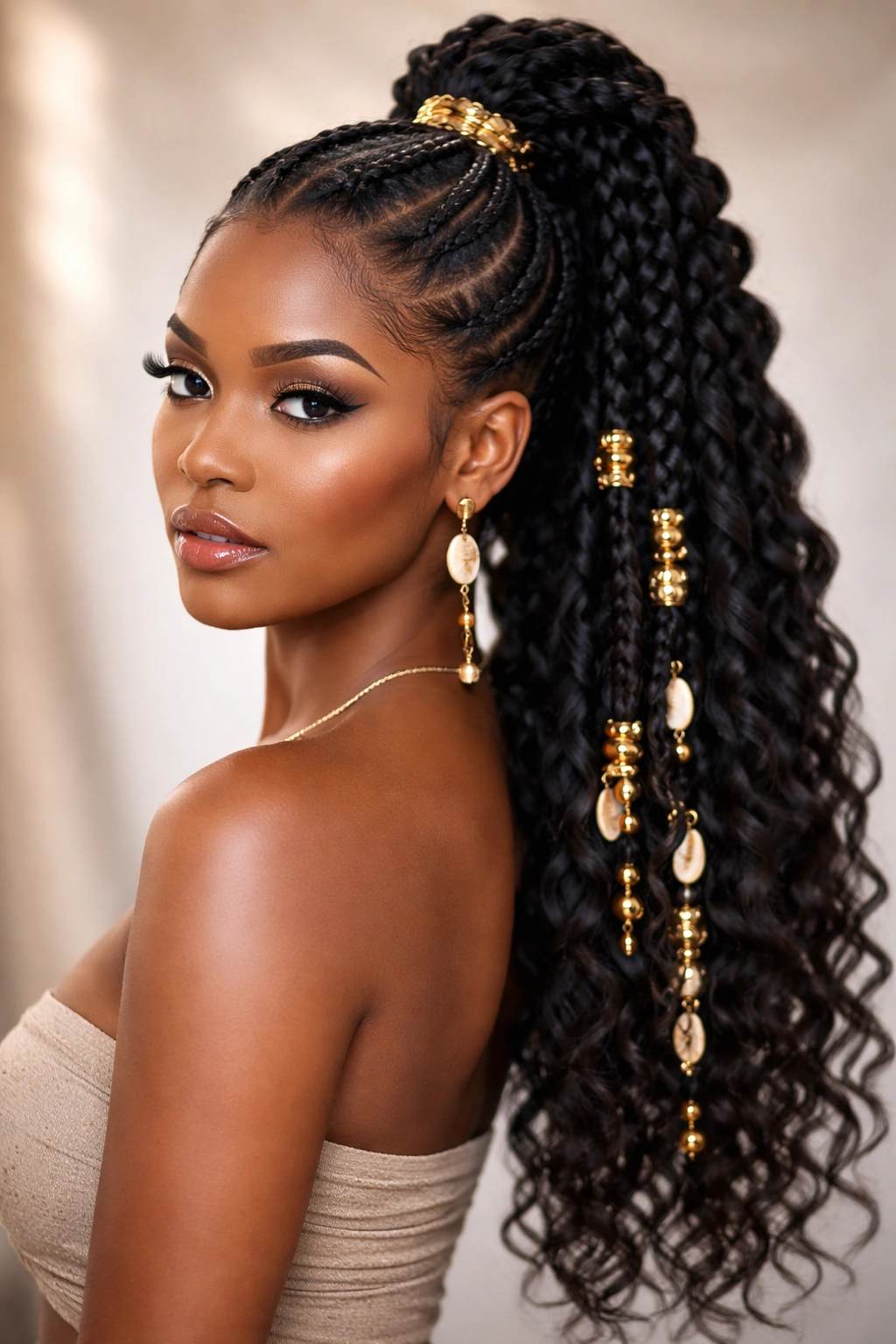
Goddess braids are essentially thicker, chunkier box braids that often incorporate some degree of decoration (beads, cowrie shells, gold cuffs, or colored string) and tend to be worn in a looser, more relaxed configuration. When gathered into a ponytail, goddess braids create an especially voluminous, statement-making look that’s hard to ignore. The beauty of this style is that it feels celebratory and bold — you’re not trying to blend in or keep things subtle; you’re making a clear aesthetic statement with your hair.
The Aesthetic Edge
Goddess braids are thicker than standard box braids, sometimes up to half an inch in diameter or wider, which means fewer total braids and more visual weight. When you pull them into a high ponytail, the weight and thickness create an impressive, commanding presence. This style pairs especially well with face-framing pieces or a looser interpretation where some of the braids escape the ponytail slightly, creating a more romantic, less structured vibe. The decoration options are endless — you can keep it simple with no embellishment, add coordinating beads, incorporate metallic cuffs, or weave decorative string through the braids.
Wearing It With Intention
- Goddess braids typically cost more than standard box braids because of the size and decoration, so this is an investment style rather than something quick and budget-friendly
- This style works best with high or mid-height ponytails that showcase the thickness and impact of the braids
- The larger braids mean fewer total braids on your head, so while the protective benefits remain, you’re getting slightly less coverage in terms of pure surface area
- Goddess braids make a statement, so pair them with clothing and styling choices that feel intentional rather than casual
7. Triangle Braids Ponytail
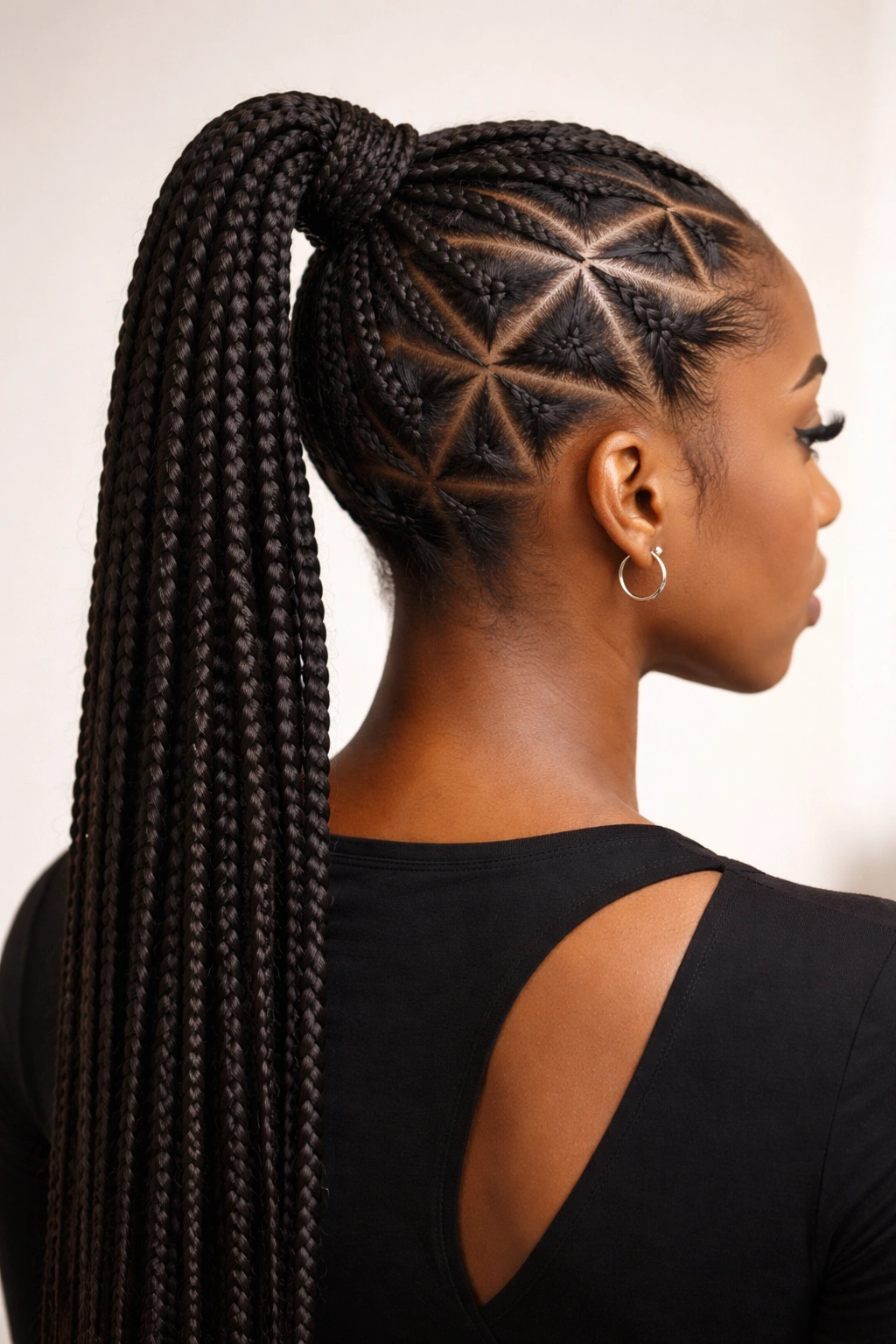
Triangle braids (also called triangle knotless braids when done with the feed-in technique) are created by parting your hair into triangular sections and braiding each triangle, which creates a distinctive geometric pattern across your scalp. When you gather these braids into a ponytail, you’re creating a look that’s both elegant and intricate. The triangular sections catch light differently than traditional square box braids, and the entire effect reads as more deliberate and thoughtful. This style requires skilled handiwork to create clean, uniform triangles, so it’s worth investing in a stylist who has genuine experience with this technique.
Visual and Practical Benefits
Triangle braids offer a unique visual advantage because they create a distinct geometric pattern that’s visible from above and from the side. If you love the aesthetic of cornrows but want the longevity and structure of braids, triangle braids split the difference beautifully. They also tend to feel slightly less heavy on the hairline because the triangular parting pattern distributes tension differently than traditional square sections. When gathered into a high ponytail, the geometric pattern becomes even more visible and striking, especially if you photograph your style or see yourself in a mirror.
Execution and Longevity
- Triangle braids require a stylist who’s experienced with creative parting patterns and has the precision to create uniform, clean triangles
- This style lasts about as long as box braids (6-8 weeks) but may require slightly more frequent touch-ups because the geometric parting pattern makes regrowth more visible
- The parting pattern means you can actually see your hairline more clearly with this style, so it works best if you’re comfortable with your hairline visibility or prefer to showcase it
- Some people alternate between regular box braids and triangle braids seasonally to keep their protective styling looking fresh and varied
8. Halo Braids Ponytail
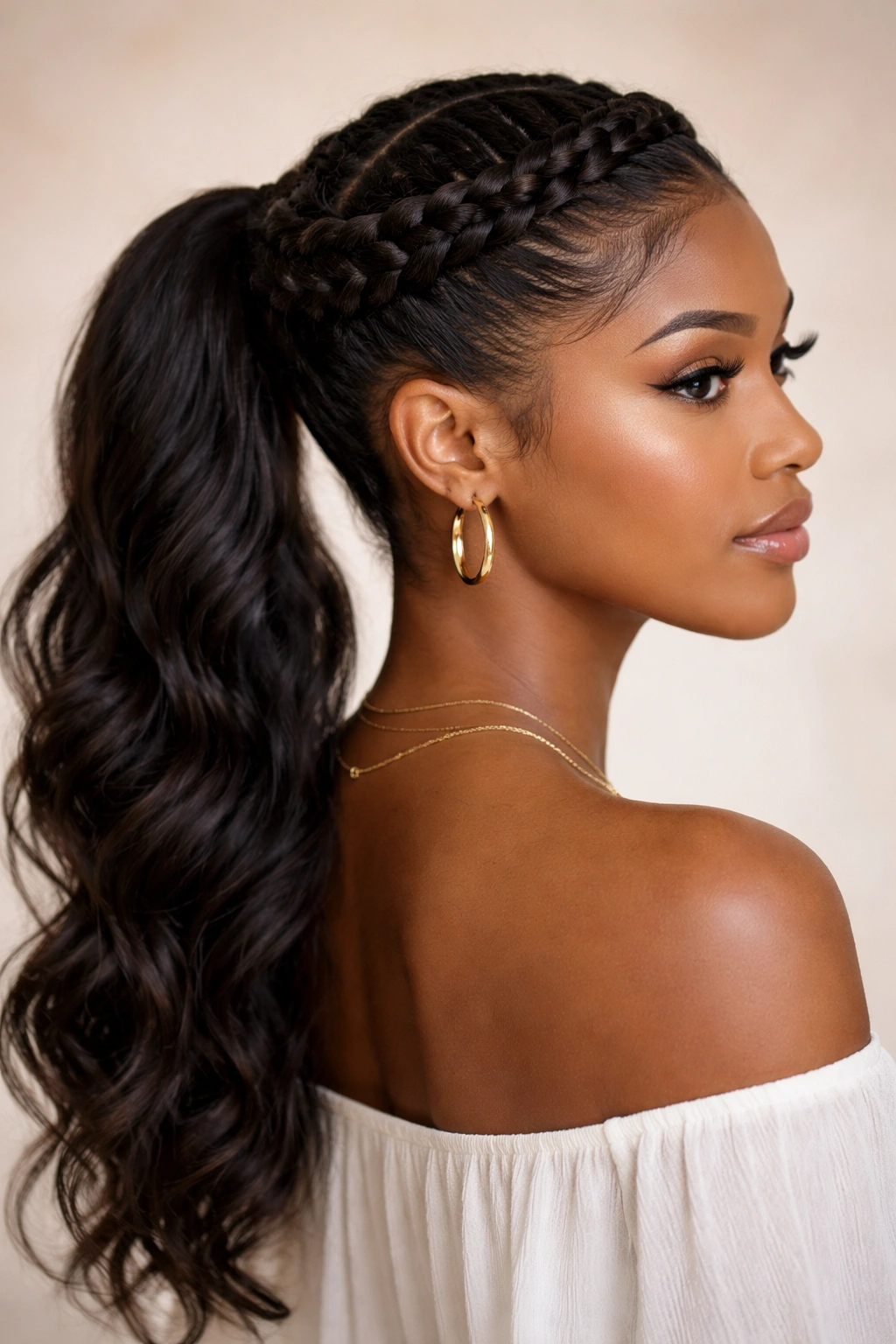
Halo braids are literally braids that wrap around the crown of your head in a circular pattern, resembling a halo or crown. When you incorporate a ponytail into this style, you typically keep the halo intact and allow the ponytail to flow from the back, or you gradually transition the halo braids into a ponytail that starts at the back of your head. This creates an incredibly romantic, intentional look that’s perfect for occasions where you want something that feels special and put-together.
The Romantic Appeal
Halo braids represent one of the most flattering protective styles you can create because they frame your face beautifully while keeping hair off your neck and shoulders. Adding a ponytail element means you get both the face-framing benefit of the halo and the practicality of a ponytail that keeps everything in place. This style works across all hair types and textures, from loose natural waves to tightly coiled 4C hair — the braiding technique adapts to your texture. The romantic aesthetic means this style transitions seamlessly from casual to dressy, making it workable for different occasions throughout the week.
Creating Your Version
- Halo braids can be created with traditional box braids, feed-in braids, or even two-strand twists depending on your preference and the overall aesthetic you’re going for
- The halo itself can be positioned higher (creating more of a crown effect) or lower (sitting closer to your ears) depending on your face shape and personal preference
- You can create additional braids that feed into the ponytail, or let the halo transition naturally into a gathered ponytail without additional braiding
- This style works beautifully with accessories like hair cuffs, jeweled hair pins, or decorative elastics at the base of the ponytail
9. Dutch Braids Ponytail
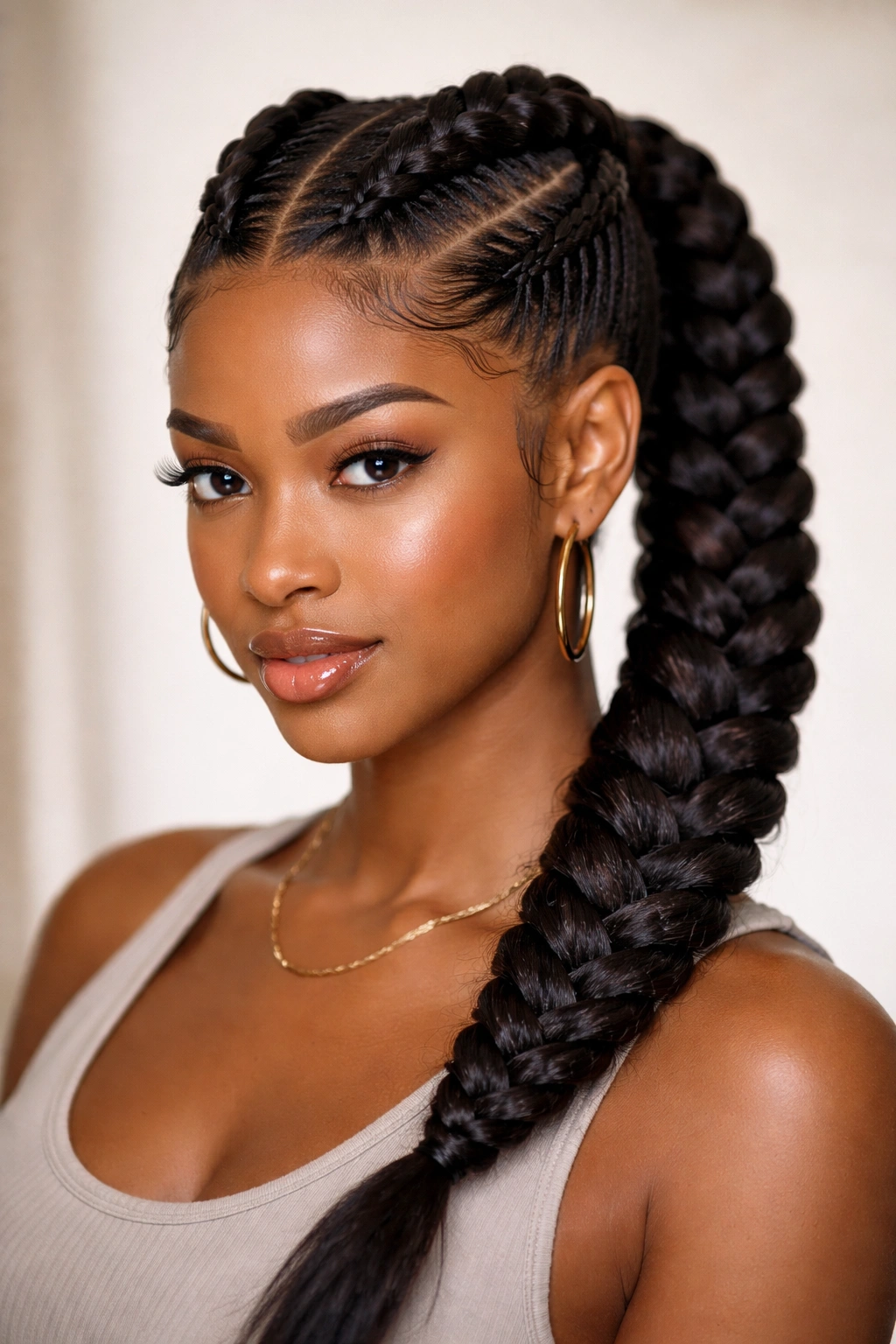
Dutch braids are essentially the reverse of French braids — the hair crosses under instead of over, creating a raised, dimensional braid that sits prominently on top of your head. When you create Dutch braids that feed into a ponytail (typically starting from the front and working toward the back), you create a style that’s equally striking from the front and back. Dutch braids create exceptional visual impact because they’re raised and prominent, making them perfect if you want your braiding work to be clearly visible and celebrated.
Why Choose Dutch Over French
Dutch braids have become increasingly popular on natural hair because they photograph beautifully and create a modern, intentional aesthetic. The raised nature of the braids means they sit above your natural hair texture rather than blending seamlessly into it, which creates contrast and dimension. When you pull Dutch braids into a ponytail, you’re creating a hybrid style that has the face-framing quality of a front braid combined with the practicality and longevity of a ponytail. This works especially well if you have hair that’s shoulder-length or longer, as it gives you enough length to create visible braiding work while still pulling everything into a secure, practical ponytail.
Styling for Maximum Impact
- Dutch braids work best when created with thick sections and multiple braids, rather than single thin braids which can look sparse
- The contrast between your natural hair texture and the raised braid structure is part of the appeal, so don’t worry about making the braids “blend in” — let them be prominently visible
- You can create additional decorative elements by wrapping the base of the ponytail with a small braid or by adding small cuffs or beads to the Dutch braid sections
- Dutch braids tend to hold their shape well for 1-2 weeks before needing refreshing, making them a shorter-term style than box braids but longer-lasting than loose braids
10. Cornrow Bun Ponytail
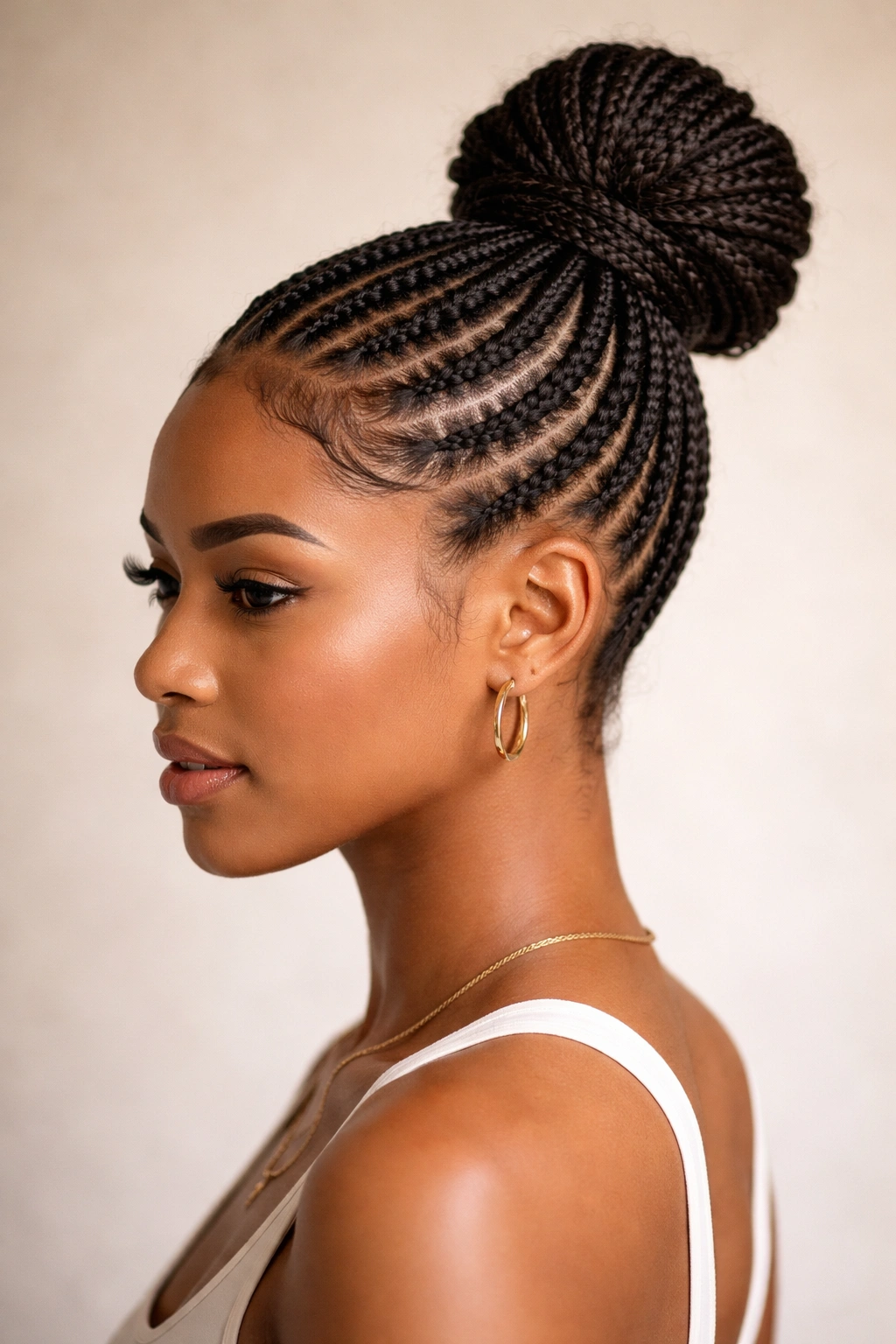
Cornrows feeding into a high ponytail or bun create a look that’s simultaneously sleek, polished, and intricate. Cornrows are braids that sit flush to the scalp, creating clean lines and a seamless appearance that reads as intentional and carefully done. When the cornrows transition into a ponytail or bun at the crown, you create a style that has the elegant, refined quality of an updo combined with the practicality and longevity of a protective braid style.
The Sleek-and-Sophisticated Appeal
Cornrow ponytails are the go-to style for situations where you need your hair to look polished and professional while still being protective. The cornrows create visible structure and design work, showing that you’ve invested time and intention, while the gathered ponytail or bun keeps everything neat and contained. This style works beautifully in workplace settings, in professional photographs, or anywhere you want to project competence and polish alongside cultural pride and aesthetic intention. The braiding pattern is visible from multiple angles, making this a style that looks intentional from the front, back, and sides.
Technical Execution
- Cornrows require a skilled stylist to create clean, even lines without tension that’s too tight
- The direction and pattern of the cornrows matter — angled cornrows create a different visual impact than straight-back rows
- Cornrows maintain their appearance for 2-3 weeks before requiring touch-ups or refreshing
- A ponytail or bun at the end can be kept very sleek and tight, or you can allow some texture and volume for a softer appearance
- This style is particularly protective because the cornrows distribute tension evenly and keep your actual hairline clear of tight elastic bands
11. Passion Twists Ponytail
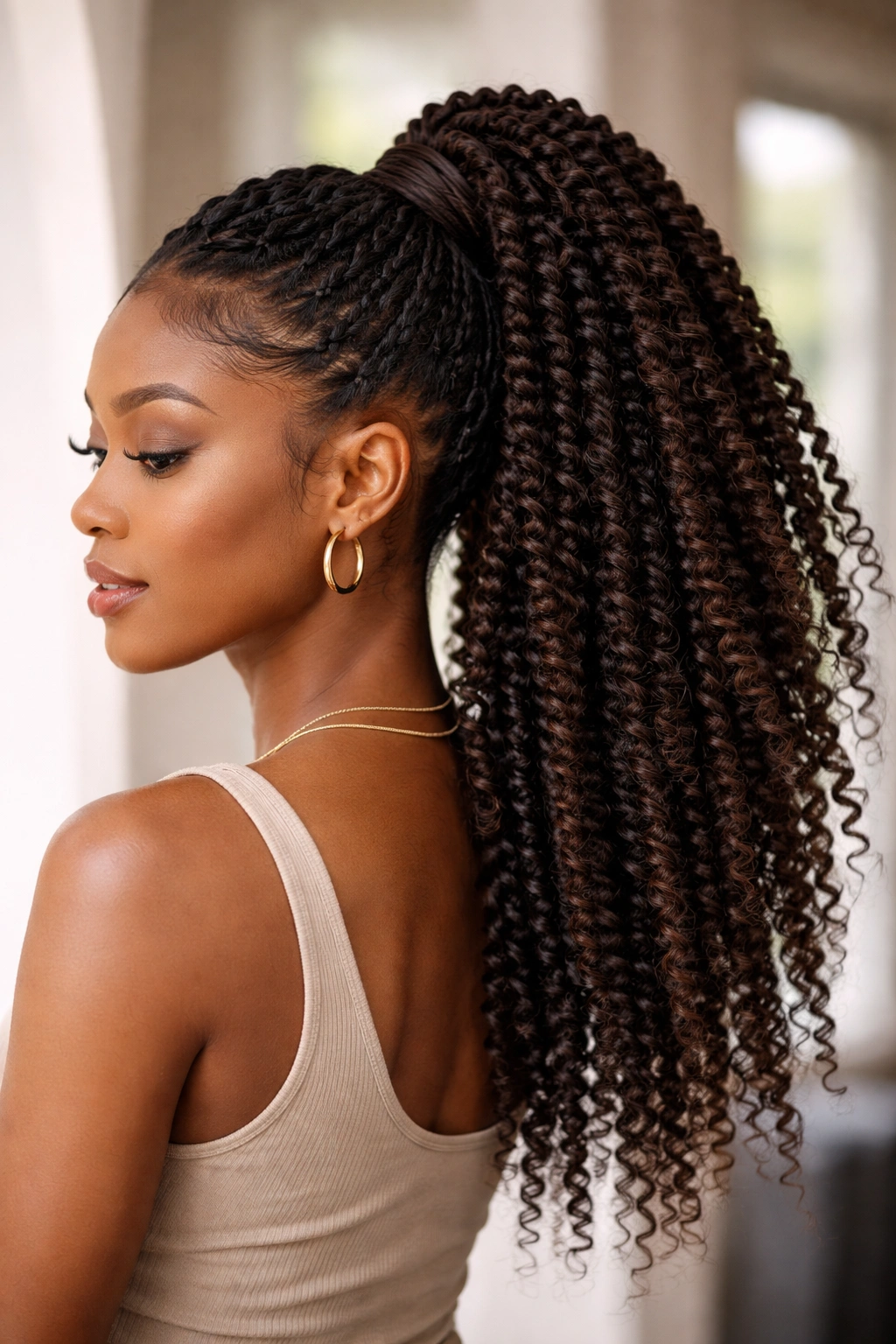
Passion twists are created by using pre-twisted extensions that are then twisted together with your natural hair, creating a thicker, more textured result than traditional two-strand twists. The pre-twisted extensions add body and create a distinctive look that’s really blown up in popularity. When you gather passion twists into a ponytail, you get a bouncy, voluminous style with tons of visual texture and movement. This style is particularly stunning if you have fine or medium-textured natural hair, as the pre-twisted extensions add weight and dimension that you might not achieve with just your own hair.
The Textural Magic
Passion twists create this gorgeous interplay of texture where the pre-twisted extension is visible but also slightly merges with your natural hair twist pattern. The result is a ponytail that reads as rich, textured, and intentionally done. Because the extensions are pre-twisted, they hold their shape much better than traditional twists do, meaning your ponytail will maintain its visual impact for longer. The bounce and movement of passion twists also makes them feel lighter on your hairline and edges compared to braids, making them an excellent choice if you’re working on recovering from any tension damage or just prefer lighter-weight protective styles.
Practical Considerations
- Passion twists typically cost less than box braids because you’re using pre-made extensions rather than hand-braiding from scratch
- Installation is faster than braids (usually 2-4 hours depending on your hair density and twist thickness)
- The style lasts about 3-5 weeks before you’ll notice significant frizz and unraveling, making it a medium-length protective style
- Passion twists look particularly good gathered in a high ponytail where the texture and movement are most visible
- You can style them slightly looser and more romantic or keep them sleek and polished depending on the occasion
12. Senegalese Twists Ponytail
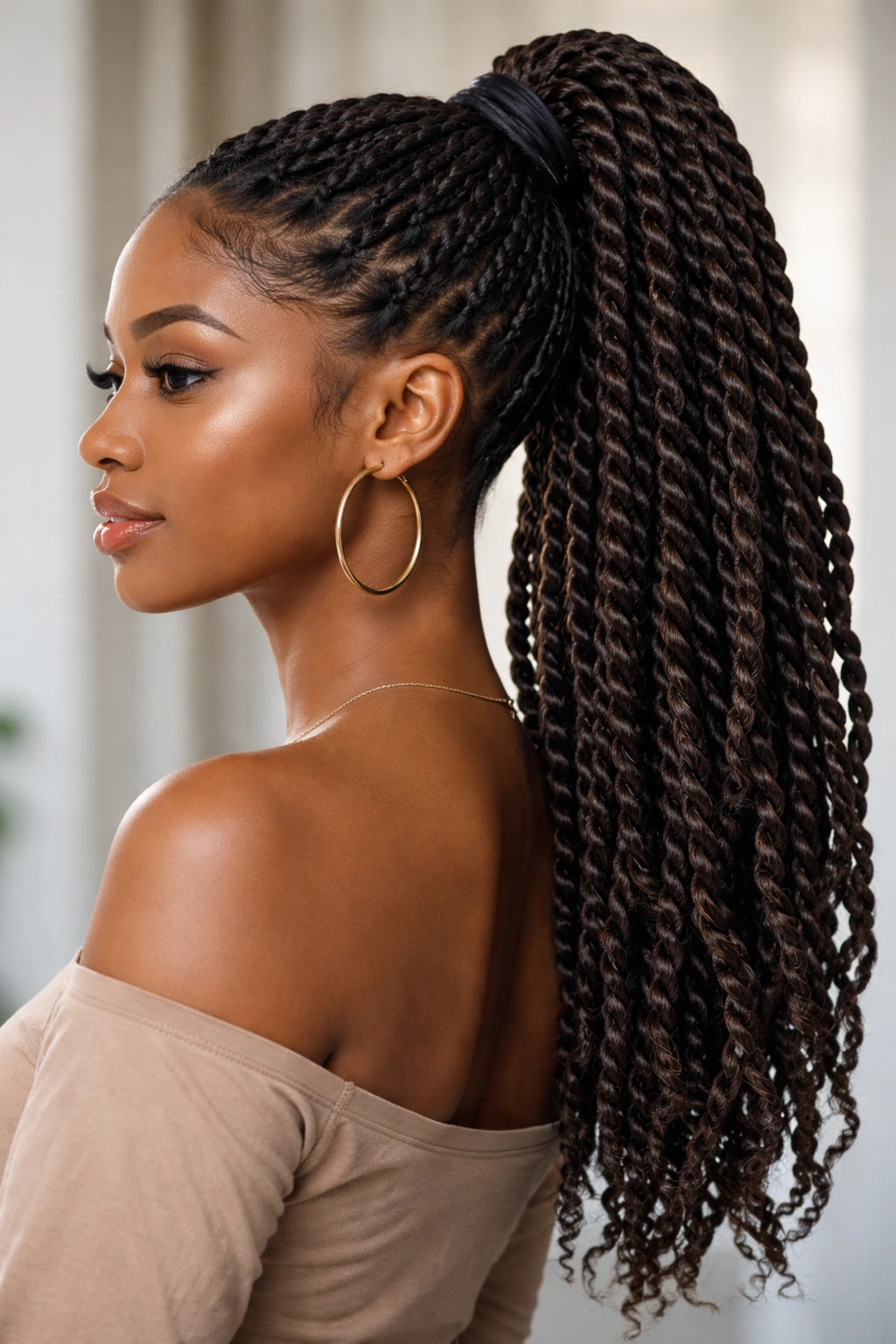
Senegalese twists are two-strand twists created with hair extensions, typically thicker and more defined than natural hair twists. They’re created by twisting extension hair with your natural hair, then spiraling the twisted strand around itself to create a thick, ropelike twisted effect. When gathered into a ponytail, Senegalese twists create a style with exceptional volume, movement, and visual impact. This is a genuinely show-stopping protective style if you want something that reads as bold and confident rather than minimal and understated.
The Bold Statement
Senegalese twists are thicker and heavier than traditional twists, meaning they create a commanding presence when gathered into a ponytail. The rope-like quality of the twists creates visual texture that’s different from braids — it’s rounder, bouncier, and more fluid. This style works beautifully for warm weather because the twists are looser and more breathable than braids, allowing your scalp more air circulation. When you pull them into a high ponytail, you create an undeniably striking look that photographs beautifully and makes a clear statement about your aesthetic choices.
Making This Work for You
- Senegalese twists are typically the fastest protective style to install (often just 2-3 hours) because the twists are relatively simple compared to intricate braiding patterns
- This style lasts about 3-5 weeks depending on how well you maintain it and how much activity you’re doing
- The weight of Senegalese twists makes them less ideal if you have sensitive edges or a tender hairline, though they’re still more gentle than box braids
- Gathering them into a ponytail actually helps distribute the weight more evenly, making this a good option even if you typically avoid heavier protective styles
- The ponytail itself can be kept very tight and sleek, or you can let the twists fluff out slightly at the base for a softer, more relaxed appearance
Final Thoughts
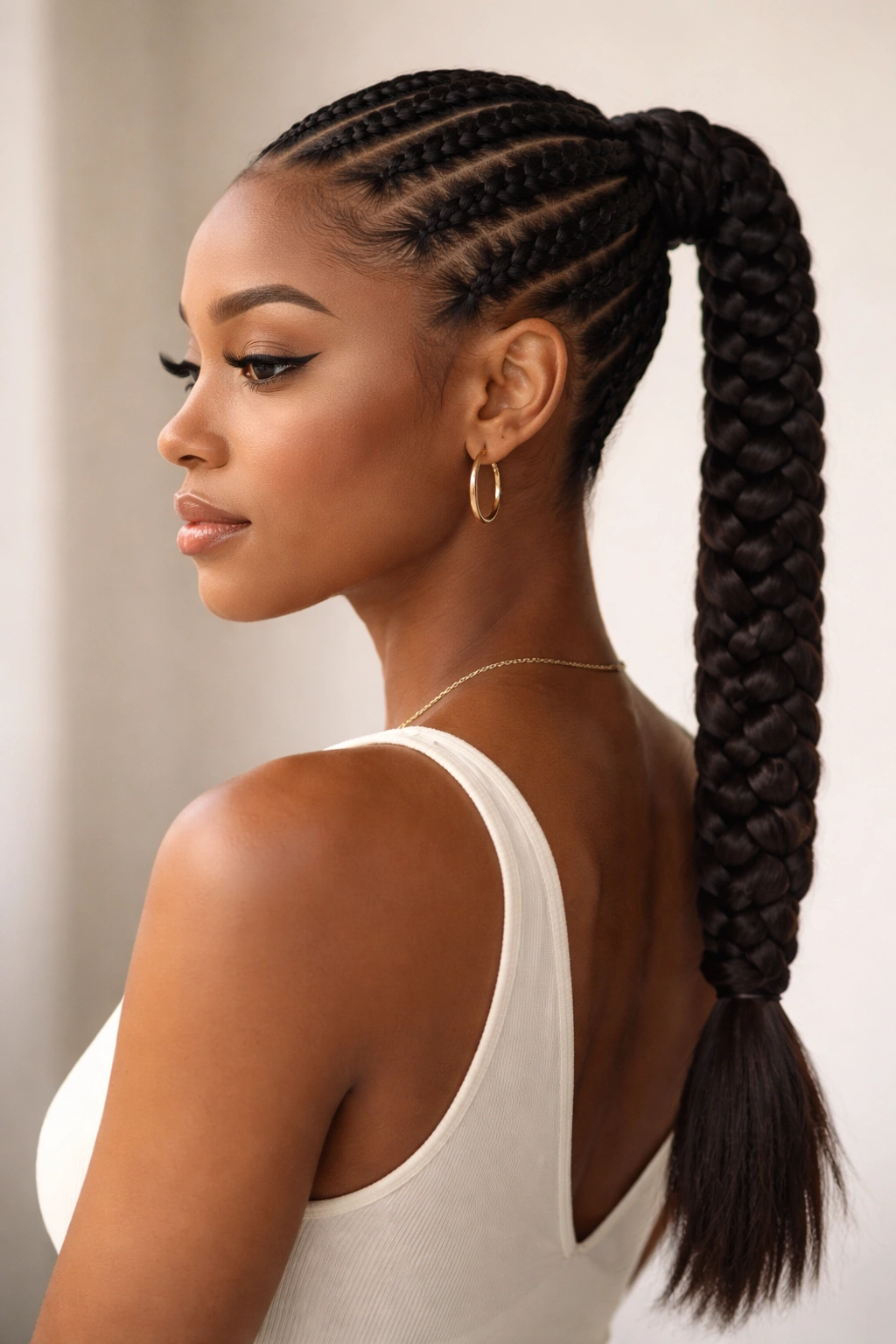
Braided ponytails represent one of the most versatile, protective, and genuinely beautiful ways to style natural hair. Whether you choose the classic structure of box braids, the cultural significance and detail of Fulani braids, the romantic appeal of halo braids, or the bold statement of Senegalese twists, you’re investing in a style that protects your hair while allowing you to express yourself aesthetically. The key is choosing a braiding technique and ponytail placement that aligns with your lifestyle, your hairline concerns, your texture, and what actually makes you feel confident and beautiful.
The secondary key — and honestly just as important — is finding a stylist who gets your vision and who has the skill to execute it without excessive tension or corner-cutting. A well-done braided ponytail should feel secure but not painful, should look intentional rather than sloppy, and should last long enough to feel like a worthwhile investment of both time and money. Take time to scroll through reference images, communicate clearly with your stylist about what you’re envisioning, and don’t hesitate to speak up during installation if something feels too tight or uncomfortable.
Your natural hair is genuinely versatile, and braided ponytails are just one of the infinite ways you can celebrate that versatility while keeping your hair protected and manageable. Whatever style you choose from this list, wear it with intention and confidence — that’s ultimately what makes any hairstyle sing.
