



Double updo ponytails have become a go-to move for anyone who wants hair that looks polished without spending an hour in front of the mirror. The magic of this style lies in its versatility—you can dress it up for a formal event, tone it down for everyday wear, or dress it up for creative weekend looks. What makes double updos so appealing is that they create the illusion of extreme height, sophistication, and detail while actually being fairly straightforward to execute once you understand the mechanics. The key is knowing which variations work best for your hair texture, face shape, and the occasion you’re styling for.
Whether you’re working with thick, coarse hair or fine strands that need strategic backcombing, there’s a double updo ponytail approach that’ll work for you. These styles sit somewhere between a casual ponytail and a full formal updo, giving you the best of both worlds—the ease of a pony with the polished finish of an updo. Let’s walk through ten variations that deliver that seamless, expertly-done look.
1. Classic Double Stacked Ponytail
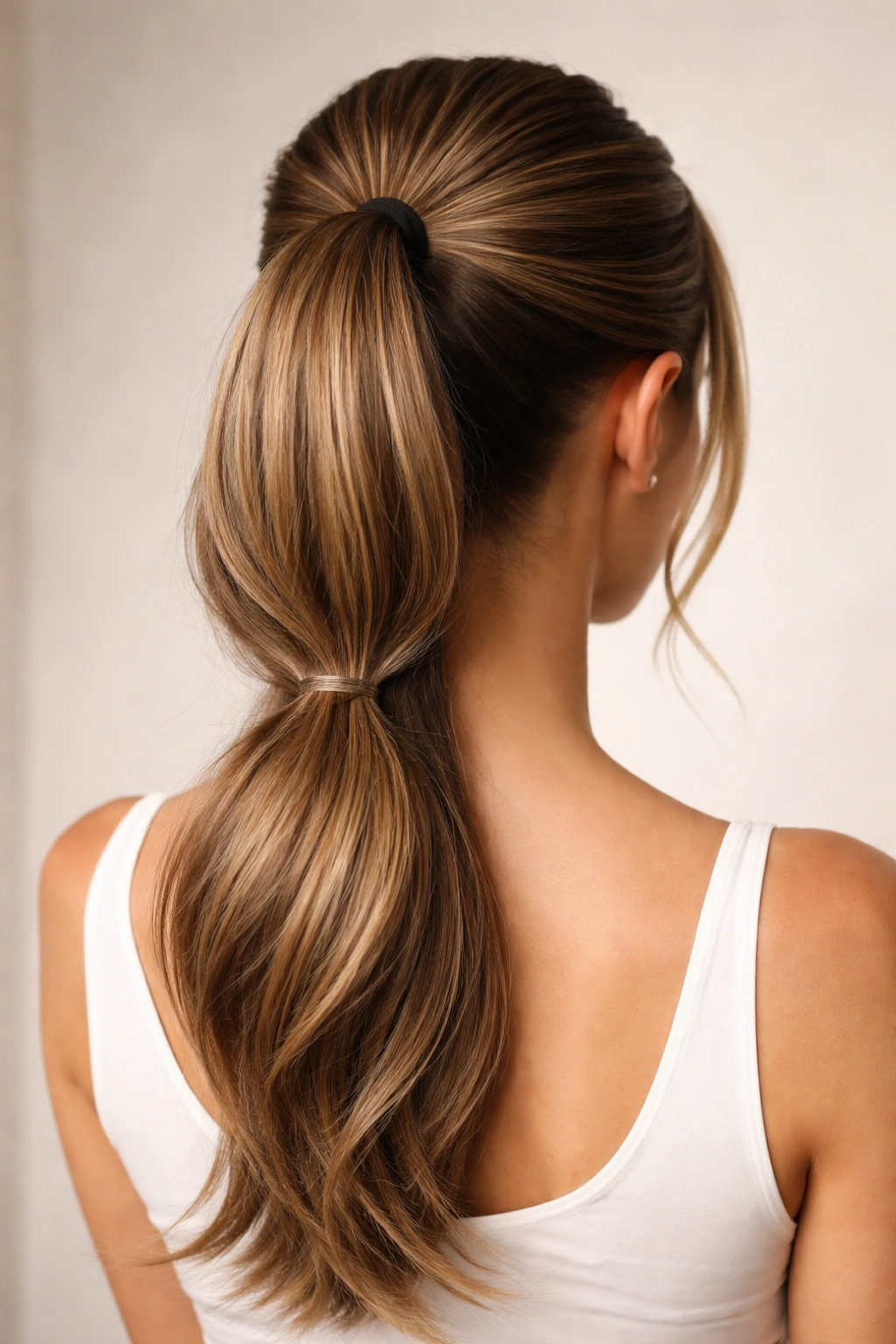
This is the foundational double ponytail that most people recognize and love. You create one ponytail at the crown, secure it, then create a second ponytail slightly lower, incorporating the first ponytail into it. The result is a stacked effect that looks fuller and more intentional than a single pony.
Why This Approach Works for Most Hair Types
The stacking technique automatically creates height and texture without requiring tons of product or teasing. Because you’re layering two elastic points, the style holds beautifully throughout the day, even in fine hair. The overlapping hair creates natural dimension that photographs well and looks polished from every angle.
How to Build the Foundation
- Brush your hair back smoothly into a high ponytail at the crown, securing it with an elastic
- Create a second ponytail 1.5 to 2 inches directly below the first one
- Pull the lower elastic slightly loose and slide the top ponytail through the center, drawing it down to create visible separation
- Gently tease the hair between the two elastics with a fine-tooth comb to hide the gap and create seamless blending
- Smooth the outer layer with a lightweight smoothing spray to keep flyaways under control
Pro tip: Use a clear elastic for the bottom ponytail so it blends visually with your hair color and doesn’t create a harsh line.
2. High-Low Asymmetrical Double Ponytail
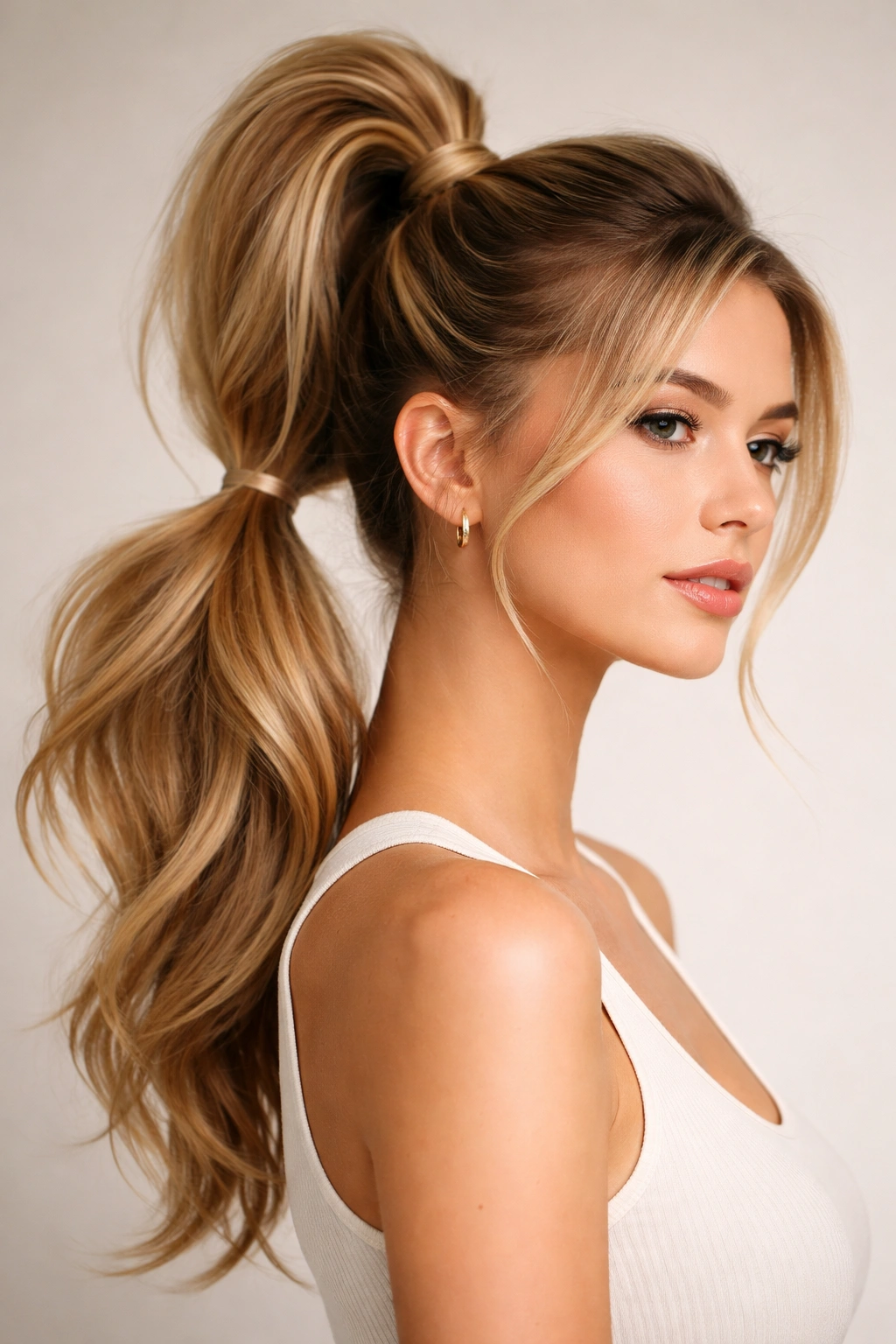
This variation breaks the symmetry of a centered double ponytail by placing one high on the crown and one lower and slightly off to the side. It’s a more modern, editorial take that feels less traditional and more intentional.
The Art of Intentional Asymmetry
Asymmetrical styling tricks the eye into perceiving more volume and movement than actually exists. Because the two ponytails aren’t vertically stacked, they read as separate elements rather than a unified shape. This style works particularly well for heart-shaped and oval faces because the off-center placement balances proportions beautifully.
Styling Steps for Seamless Asymmetry
- Brush your hair toward the back, creating a center part or a part slightly off-center
- Secure a high ponytail at the crown, positioning it 1 inch to the right or left of center
- Gather the remaining hair and create a second ponytail 3 to 4 inches lower and shifted slightly to the opposite side
- Pull a small section from the back of the higher ponytail and wrap it around the second elastic to hide it
- Use a paddle brush to blend the area between the two elastics, softening any harsh lines
This style pairs beautifully with loose waves or curls that cascade down, creating movement and preventing the look from feeling too severe.
3. Twisted Rope Double Updo
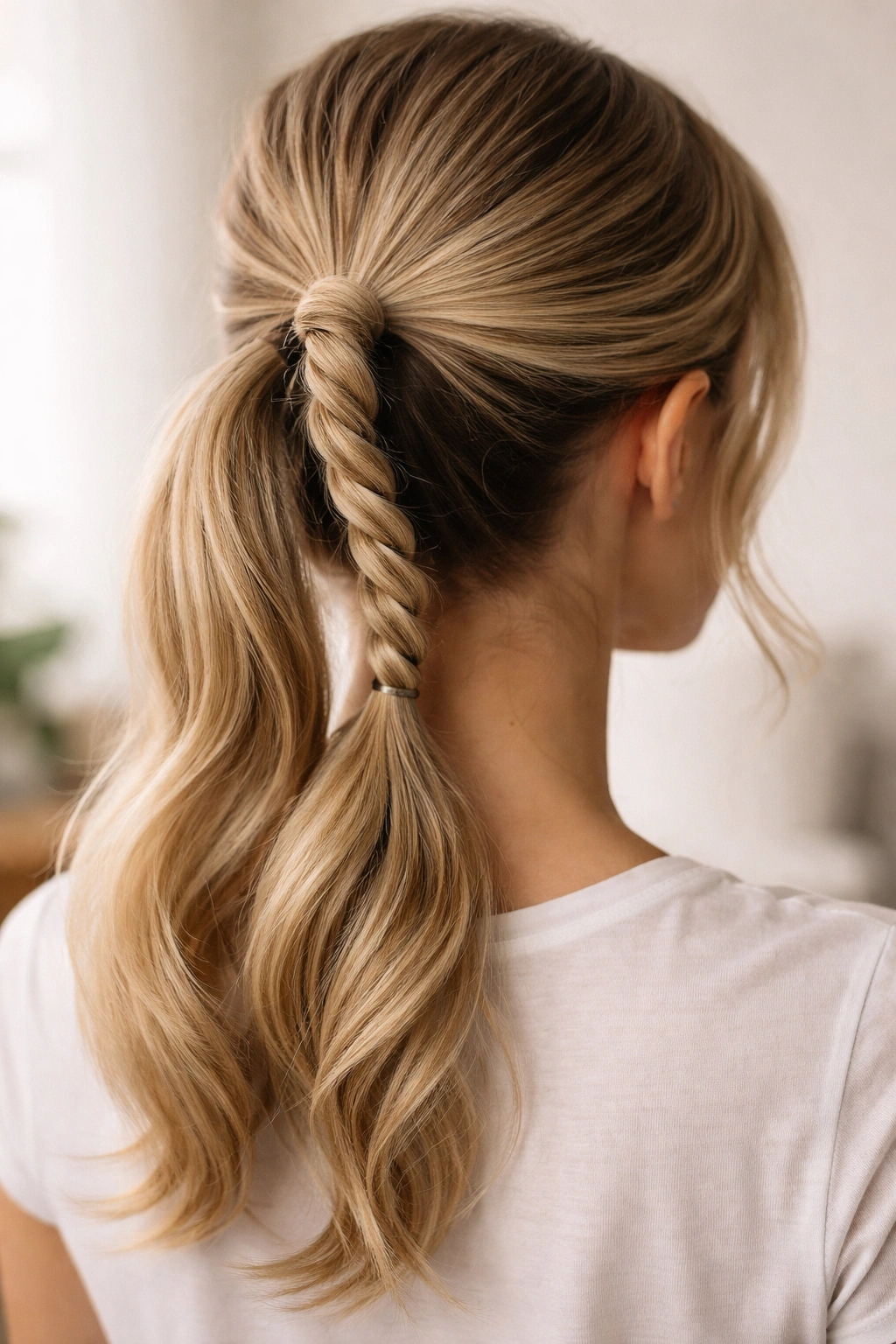
Instead of simple ponytails, this style incorporates a rope twist (also called a spiral twist) running between the two elastic points. It adds visual interest and makes the style feel more deliberate and fashion-forward.
Building Texture Through Twisting Technique
Rope twists work best on hair with some texture or wave already built in. If your hair is super slick and straight, lightly braid or backcomb the section you’re about to twist—this gives the twist something to grip. The twist creates a focal point that draws the eye and makes thin hair read as fuller because of the visual texture.
Creating the Twisted Connection
- Secure your high ponytail at the crown using your preferred method
- Create your lower ponytail positioned 2 to 3 inches below the first
- Take a small section of hair (about 1 inch wide) from underneath the top elastic and divide it into two equal strands
- Wrap the two strands around each other in a tight rope pattern, working downward toward the lower ponytail
- When you reach the lower elastic, wrap the twisted section around it to conceal it completely
- Secure the twist with bobby pins tucked beneath the lower ponytail so they’re invisible
Worth knowing: Rope twists hold better on second-day hair, so if you have time, style this the day after you’ve washed your hair for maximum staying power.
4. Sleek Double Bun Ponytail Hybrid
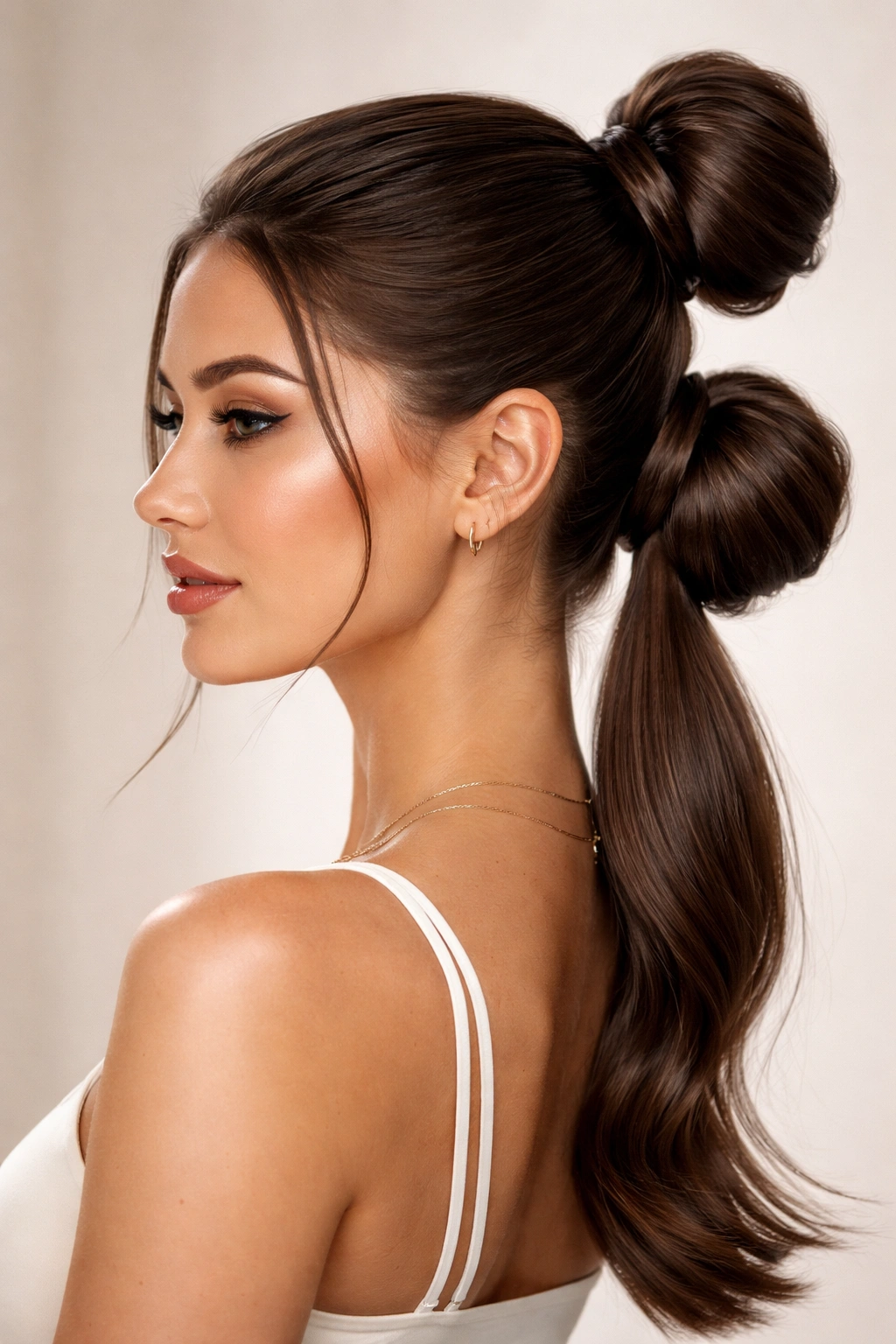
This style takes the stacked ponytail concept and curls each section up into a bun, creating double buns that sit stacked vertically. It’s polished enough for formal occasions but playful enough for everyday wear.
The Balance Between Sleek and Voluminous
The hybrid approach gives you sleekness at the base (where the elastics are tightly secured) and volume at the crown (where the buns sit). This visual contrast is what prevents the style from looking too juvenile or costume-like. The key is making sure each bun maintains soft edges despite the slick base.
Executing the Double Bun Stack
- Create a high, tight ponytail at the crown using a fine-tooth comb for sleekness
- Twist or braid this ponytail and wrap it into a small, compact bun at the base
- Secure with bobby pins, then gently loosen the bun by pulling the exterior loops to create softness
- Create a second ponytail directly below, twisting or braiding it in the same direction as the first
- Form the second bun slightly lower, again loosening the edges after securing with pins
- Use a small amount of texture spray or dry shampoo at the base of each bun to prevent slipping
Each bun should appear intentionally undone, not rushed—this is the difference between editorial and sloppy.
5. Textured Double Ponytail with Face-Framing
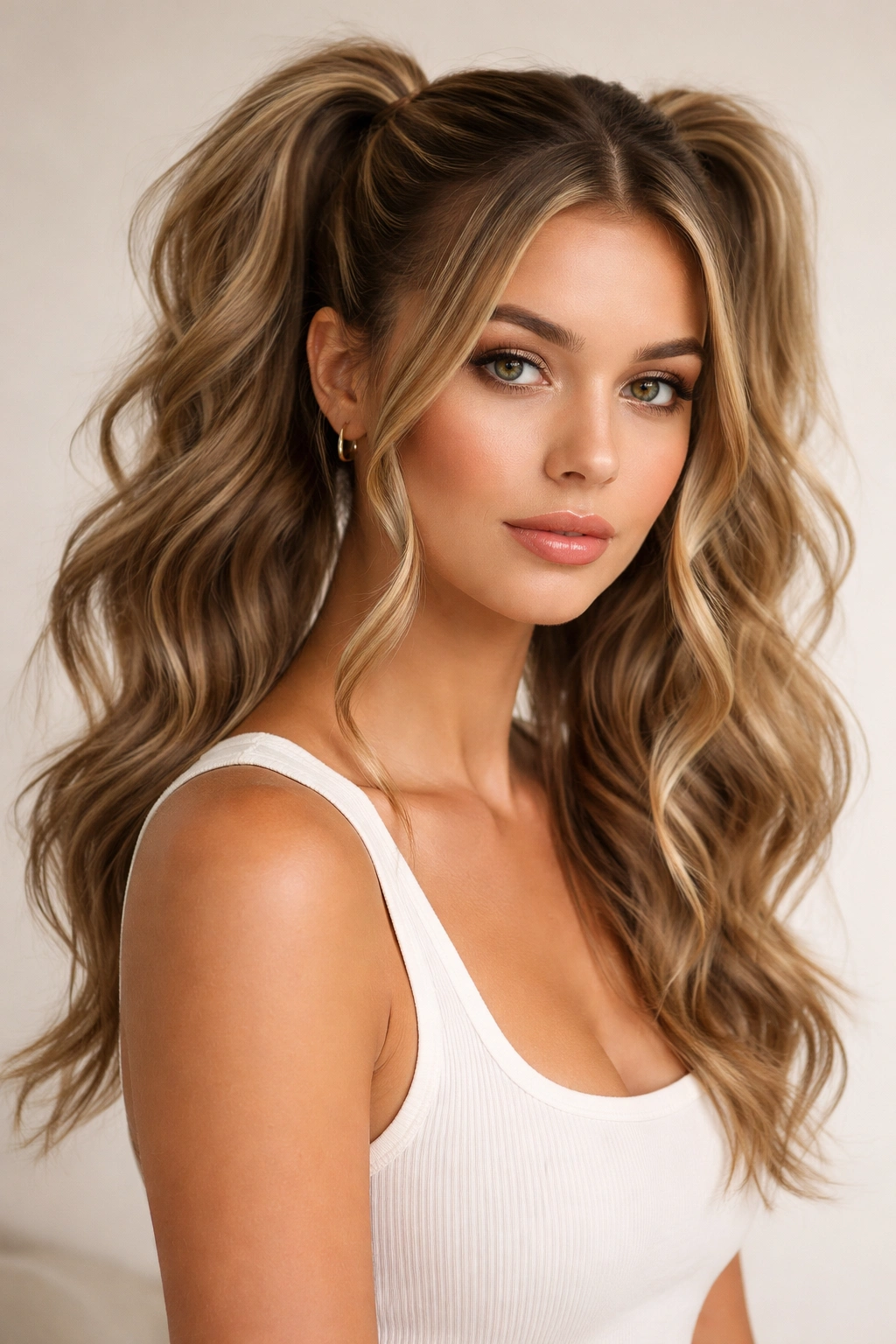
This style keeps the double ponytail structure but intentionally leaves two small sections of hair loose on either side of the face. These face-framing pieces soften the overall look and add romantic movement.
Why Face-Framing Changes Everything
Even in a formal updo, small face-framing pieces draw attention to the face and create a softer aesthetic. This is psychology of styling—the same exact ponytail placement reads completely different with framing pieces versus pulled back completely. If you have a longer face or prominent features, face-framing makes the style feel approachable rather than severe.
Creating the Frame Without Losing Structure
- Before creating your ponytails, separate two sections, one on each side of your face from temple to jaw
- Create your high and low ponytails as usual with the remaining hair
- Take one face-framing section and gently curl it with a curling iron or braid it loosely
- Pin the curled or braided piece behind the ear using bobby pins that match your hair color
- Repeat on the other side, ensuring both pieces mirror each other for balance
- Lightly spray the face-framing pieces with flexible hold spray so they stay in place but don’t feel stiff
The face-framing pieces should look like they could have simply fallen out of your ponytails, even though you’ve deliberately styled them.
6. Dutch Braided Double Ponytail
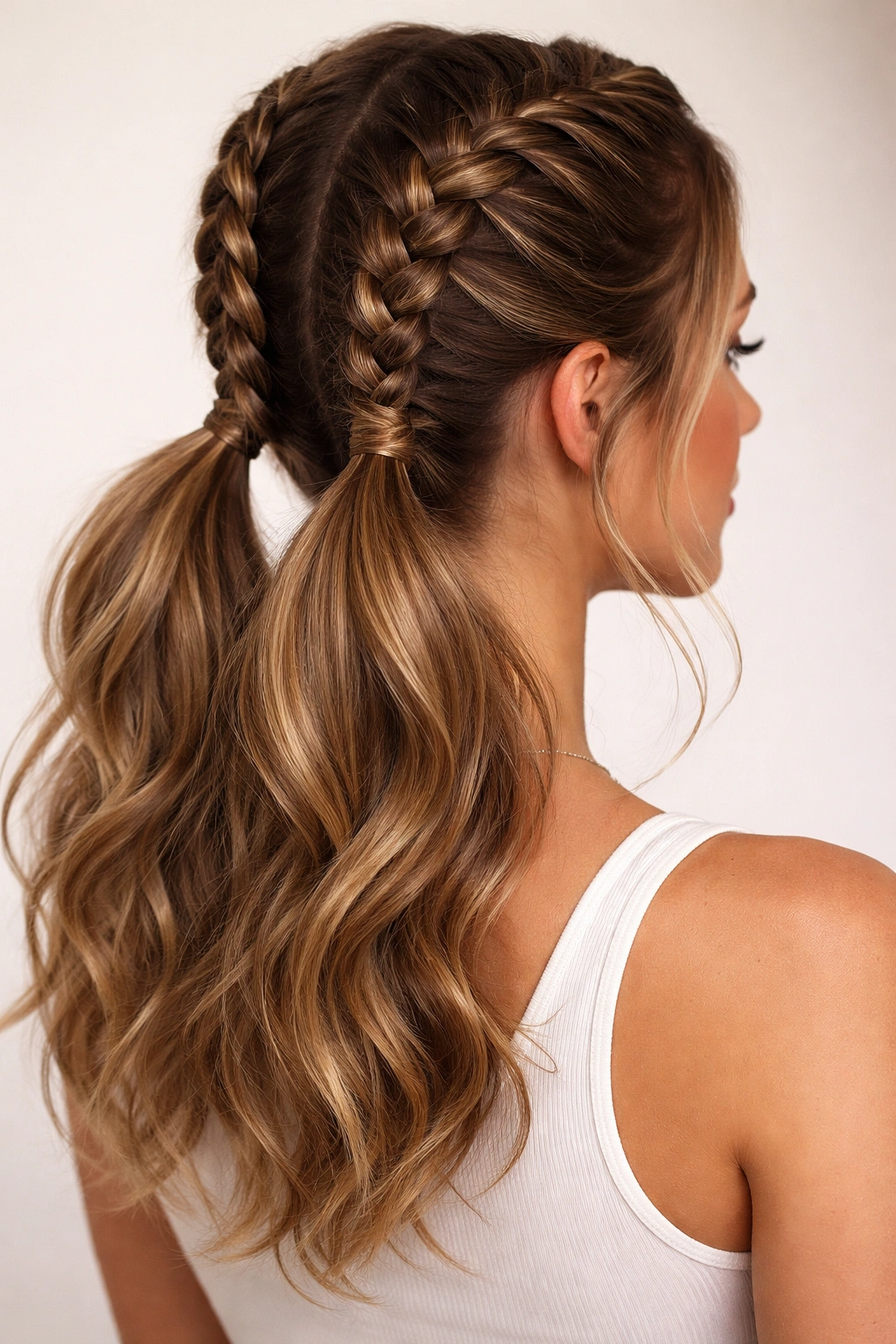
This version incorporates Dutch braids running down into each ponytail section. It’s more intricate-looking than it actually is to execute, making it perfect for occasions where you want to look like you spent significant time styling.
Why Braids Elevate the Entire Aesthetic
Braids automatically read as more formal and intentional than smooth hair. They also add grip and texture, meaning your style will hold better throughout the day. A Dutch braid (which sits on top of the hair rather than weaving under like a French braid) is particularly flattering because it creates height and dimension.
Building Braids Into Your Double Updo
- Section your hair into two halves with a center part from forehead to nape
- On one side, create a Dutch braid starting at the temple and braiding toward the back of your head
- Secure the end of the first braid with a small elastic
- Repeat the process on the other side of your head
- Bring both braids together at the nape and combine them into one lower ponytail, or keep them as two separate ponytails for a different look
- Gently pull the sides of each braid to loosen it and create a fuller appearance
- Use bobby pins to tuck any loose ends neatly into the ponytail(s)
This style works beautifully on slightly textured or wavy hair—if your hair is very straight, apply some texture spray to the lengths before braiding.
7. Half-Up Double Ponytail with Volume
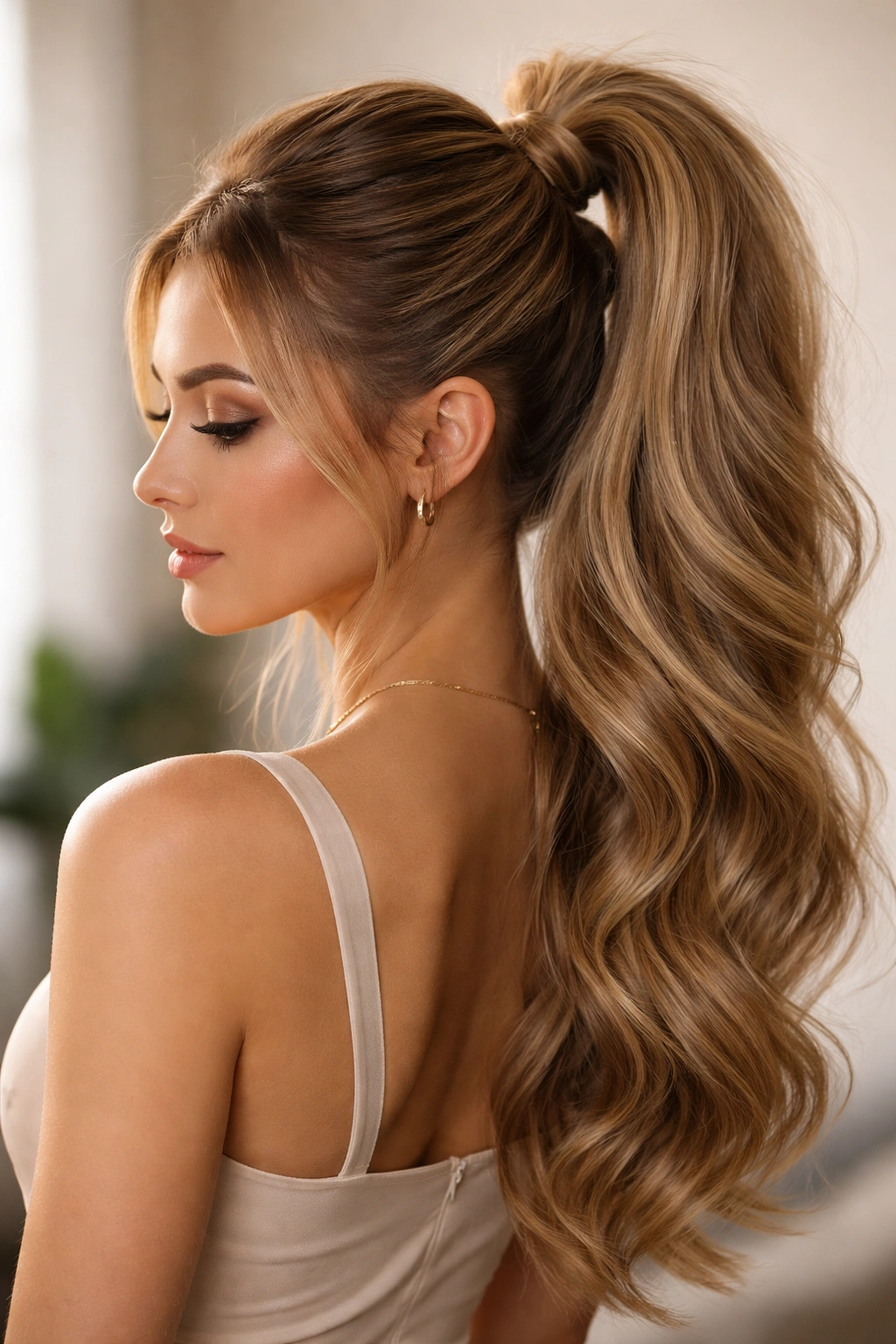
This variation takes the double ponytail concept but keeps the very bottom section of your hair completely down and loose. It creates a silhouette that’s half-up, half-down while maintaining the stacked ponytail detail at the crown.
The Psychology of Half-Up Styling
Half-up styles feel less formal than full updos while still conveying intention and polish. They work wonderfully for everyday looks that need a little elevation, or for events where you want a more relaxed vibe. The loose hair at the bottom adds movement and makes the hairstyle feel effortless.
Creating Volume at the Crown
- Tease the crown area gently with a fine-tooth comb to build a foundation
- Gather hair from ear to ear (leaving hair below the ears completely loose) and secure in a high ponytail at the crown
- Create a second ponytail 2 inches below the first, again using only the hair above ear level
- Leave all hair below ear level untouched and loose
- Gently backbrush the entire crown area above both elastics to add fullness
- Curl or wave the loose bottom section for added texture and movement
- Apply a light hairspray to keep the crown volume in place without making it feel stiff
The loose bottom section should read as voluminous and intentional, not like the bottom half of your hair was forgotten.
8. Sleek Graphic Double Ponytail
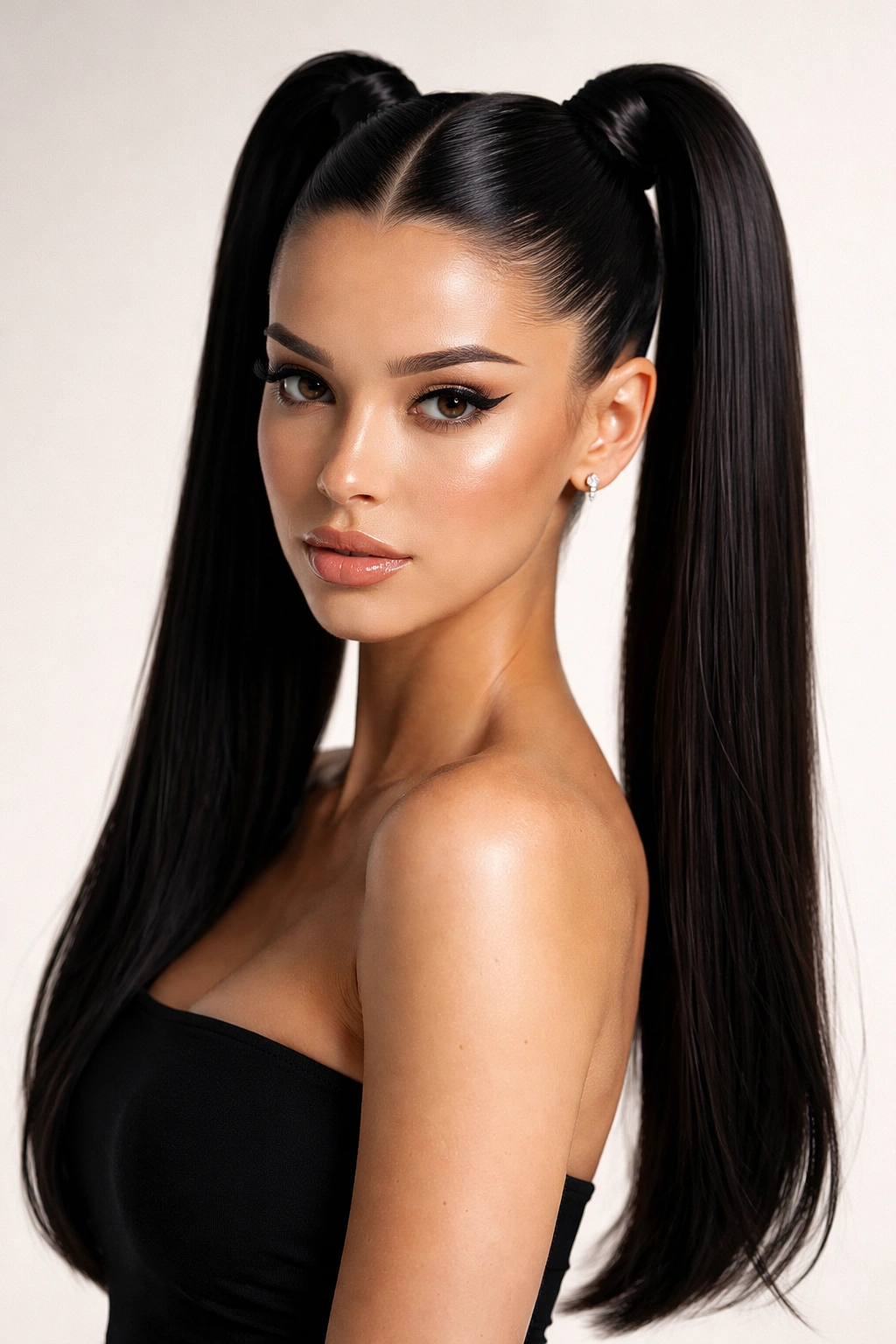
This is the most modern, architectural version—two perfectly smooth, tightly-pulled ponytails with zero texture or looseness. It’s bold, clean, and reads as very current and editorial.
When Sleekness Is the Statement
Graphic styles work best when everything is absolutely intentional and controlled. Any stray hair or looseness breaks the aesthetic, so this requires excellent technique and good product. The beauty is in the simplicity and precision, not in the texture or detail.
Achieving Flawless Sleekness
- Start with very smooth hair (a flat iron helps if you have natural texture)
- Use a fine-tooth comb and a lightweight smoothing cream to create your first ponytail at the crown
- Pull the elastic as tight as is comfortable, positioning it high and centered
- Create the second ponytail 2 inches below, again using the comb and smoothing cream
- Use a clear elastic for both ponytails so the line is visually clean
- Wrap a small section of hair around each elastic to hide it, securing with pins
- Apply a strong-hold smoothing spray to eliminate any flyaways
- Use the edge of a comb or a fine edge-control product to perfect the front hairline and any parted sections
This style photographs stunningly in bright light and reads as fashion-forward and intentional.
9. Wispy Double Ponytail with Soft Curls
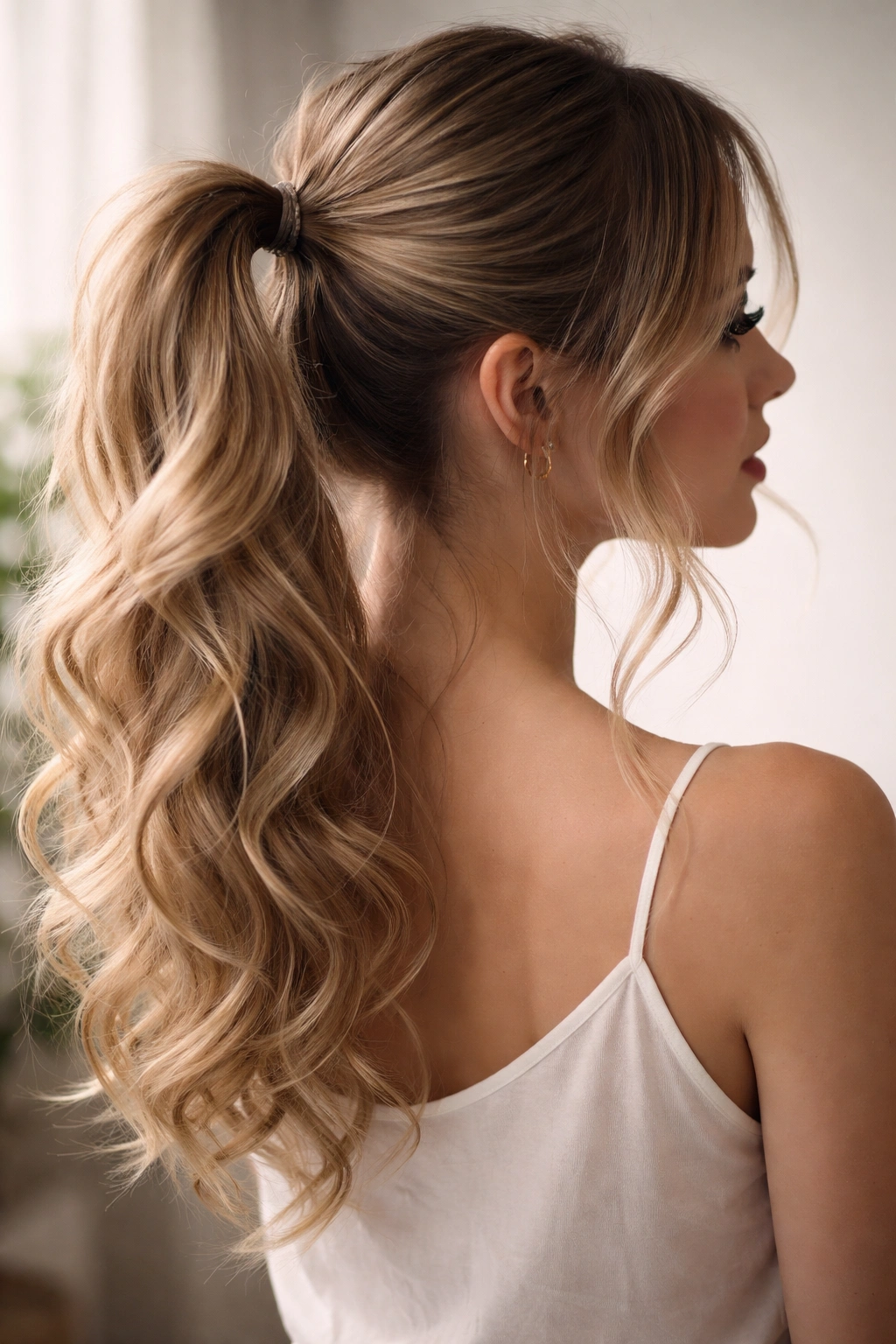
This romantic variation keeps the double ponytail structure but adds soft waves and curls throughout, with intentionally loosened sections for movement and texture.
Balancing Structure With Softness
The contrast between the structured elastic points and the soft, loose curls is what makes this style work. It prevents it from looking too structured or too undone. This is the sweet spot for people who want polish without severity.
Building Soft, Touchable Texture
- Create your high and low ponytails using the same technique as the classic version
- Taking the time to add soft waves to your hair before creating the ponytails makes a huge difference—use a curling iron on medium heat, curling away from the face
- After securing both ponytails, very gently loosen the top section by pulling small wisps of hair free and letting them fall around the face
- Tease the back of the lower ponytail to add shape and fullness
- Use a curl-enhancing spray or light texture spray to define the waves without crunching them
- Allow some curls to fall loose from the ponytails—don’t tuck every single strand back perfectly
The magic is in the imperfection—a few loose spirals and wisps make this style feel romantic and effortless rather than overdone.
10. Braided Crown Double Updo
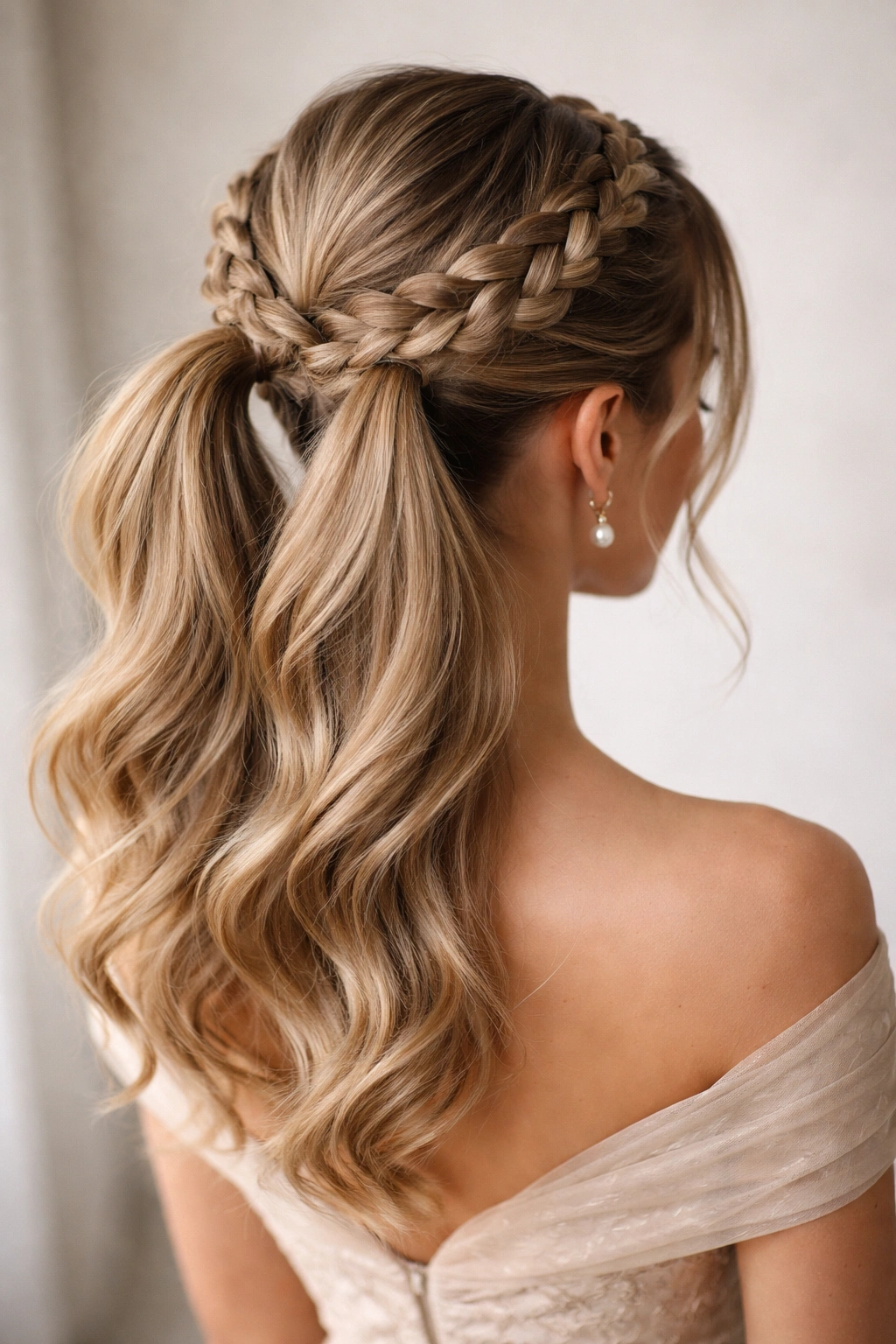
This final style creates a crown-like frame using braids that lead into two upswept ponytails. It’s romantic, formal, and works beautifully for weddings, proms, or any special occasion.
Creating Elegance Through Strategic Braiding
Crown braids naturally draw attention upward and make the face appear lifted. Because the braids start at the sides and work their way around to the back, they create a frame that flatters virtually every face shape. Combined with an upswept double ponytail, you get a hairstyle that feels bridal and polished.
Building Your Braided Crown
- Decide whether you want a full crown (braids on both sides meeting at the back) or a half crown (braids starting higher, leaving some face frame loose)
- Create a Dutch braid or French braid starting just above one ear, braiding across the back of the head toward the opposite ear
- Repeat on the other side, so the two braids meet at the nape
- Gather all hair into a high ponytail at the crown, incorporating the ends of both braids
- Create a second ponytail 2.5 inches below, again securing tightly
- Loosen the braids slightly by pulling the sides gently—this creates volume and softness
- Gently tease the crown area above the first ponytail to add additional height
- Wrap a small strand around each elastic to hide it, securing with bobby pins
Finish with a light hairspray so everything holds without feeling stiff or heavy.
Final Thoughts
Double updo ponytails work because they split the difference between casual and formal, easy and intricate. The best version for you depends on your hair texture, the occasion, and how much time you want to spend styling. Start with whichever of these resonates most with you—the classic stacked version if you want simplicity, the braided crown if you’re going for maximum polish, or the wispy curled version if you prefer romance over structure.
The real skill in any of these styles is the blending—making sure the line between your two elastics disappears visually so the whole thing reads as one seamless, intentional look. That’s what separates these from looking like you just threw your hair in two ponytails. Spend a little time backcombing and smoothing that middle section, use bobby pins generously to hide your elastics, and don’t be afraid to gently loosen the style once you’ve secured it. Your double updo should feel finished, not stiff. With practice, any of these ten styles will become second nature, and you’ll have a whole arsenal of polished looks that work for everything from casual Fridays to formal events.
