



Straight hair is the ultimate canvas for a high ponytail. There’s something about the way perfectly straight strands stack and flow at the crown that makes high ponytails feel polished, sophisticated, and almost effortlessly elegant. While curly and wavy textures bring movement and volume naturally, straight hair offers a sleek, refined quality that transforms a simple high ponytail from casual to intentional—perfect whether you’re heading to the office, a formal event, or just a day when you want to feel put-together.
The beauty of a high ponytail on straight hair is the control it gives you. Your hair cooperates. There’s no frizz to fight, no unruly waves rebelling against your styling direction. Every strand can be exactly where you want it, creating clean lines, sharp edges, and a finished look that reads as both modern and classic. But that doesn’t mean all high ponytails are created equal. The style you choose, how you position it, what texture you add to it, and which accessories you pair it with completely transform the vibe—from minimalist and athletic to glam and statement-making.
Whether you prefer your high ponytail razor-sharp and severe, flowing and soft, volumized and bouncy, or adorned with texture and dimension, straight hair makes every approach accessible. These twelve high ponytail styles showcase the range of what’s possible when you have straight hair to work with. Each one is distinct enough to feel like a completely different look, yet simple enough to achieve without professional help or hours in front of the mirror.
1. Classic High Ponytail
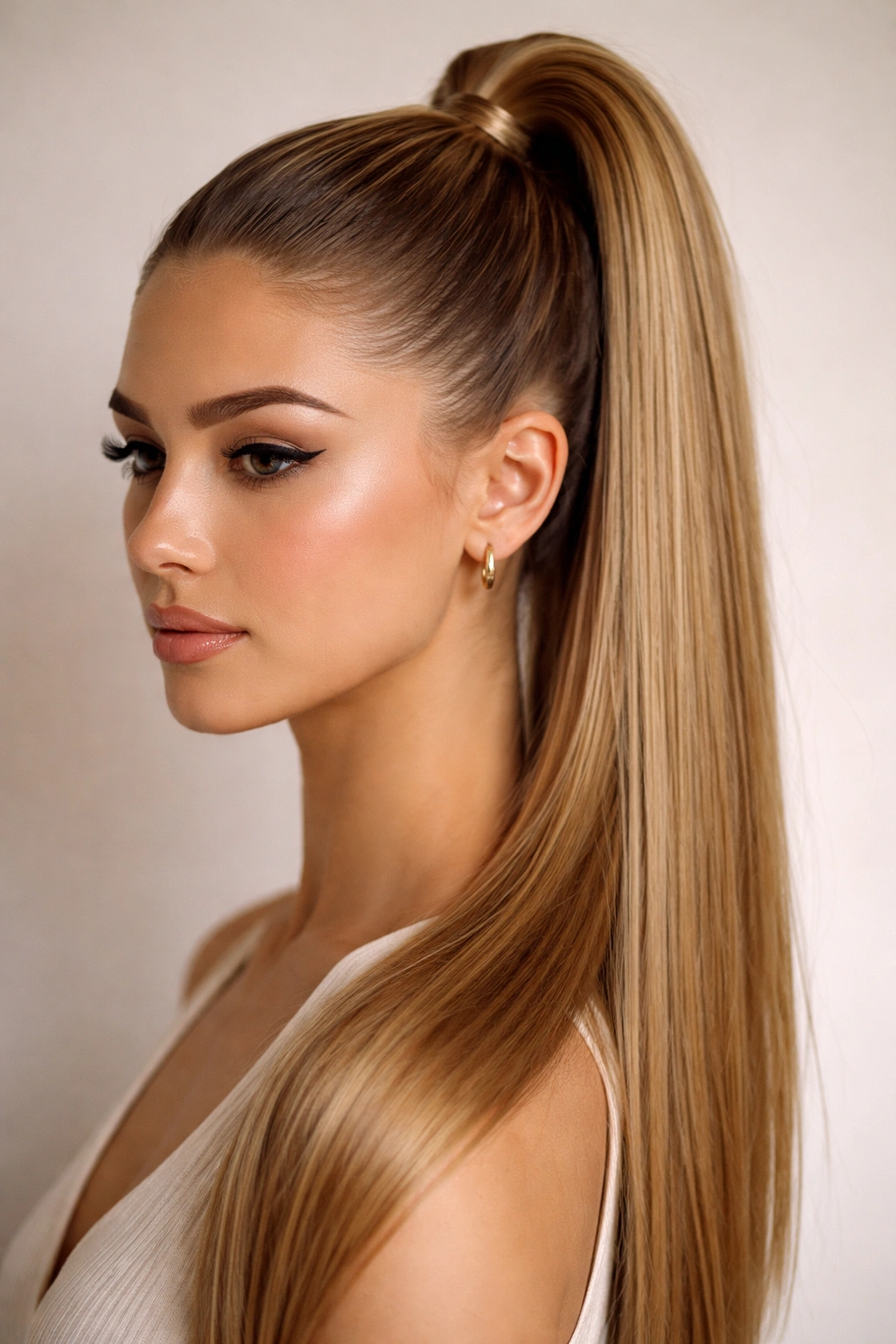
The classic high ponytail is the foundation for everything else. It’s the style you reach for when you want your hair completely off your face and neck, secured high on your crown where it feels weightless and fresh. On straight hair, this style achieves an almost architectural perfection—every strand gleams and falls at exactly the same angle, creating a unified, polished appearance that looks intentional no matter the occasion.
Why It’s the Go-To High Ponytail
This style works because it’s honest. There’s nowhere to hide with a classic high ponytail, which is exactly why it looks so effortlessly polished on straight hair. The sleekness of your hair is the entire point—you’re not adding layers of texture or accessories to distract from it, you’re celebrating it. The high placement creates an instant face-lift effect, brightening your complexion and drawing attention to your eyes and cheekbones.
How to Perfect the Classic Version
- Blow-dry your hair completely straight with a paddle brush for maximum smoothness
- Use a fine-tooth comb to gather hair at the crown, roughly one inch above where your natural hairline curves at the back of your head—not too high on the very top of your head, but genuinely high
- Secure with a clear elastic or silk-wrapped elastic that doesn’t damage straight hair
- Take a small section from the ponytail itself and wrap it around the base to conceal the elastic, then pin the wrapped section underneath with a bobby pin
- Smooth any flyaways with a lightweight smoothing serum or edge control, applied to a soft brush
- For extra polish, flatten the back of the ponytail with a paddle brush—straight hair responds beautifully to this and looks intentionally streamlined rather than simply secured
Pro tip: The difference between a sloppy ponytail and a polished one often comes down to that wrapped-around-the-base technique. It transforms the whole look instantly and removes the bulky elastic from view.
2. Sleek High Ponytail with Center Part
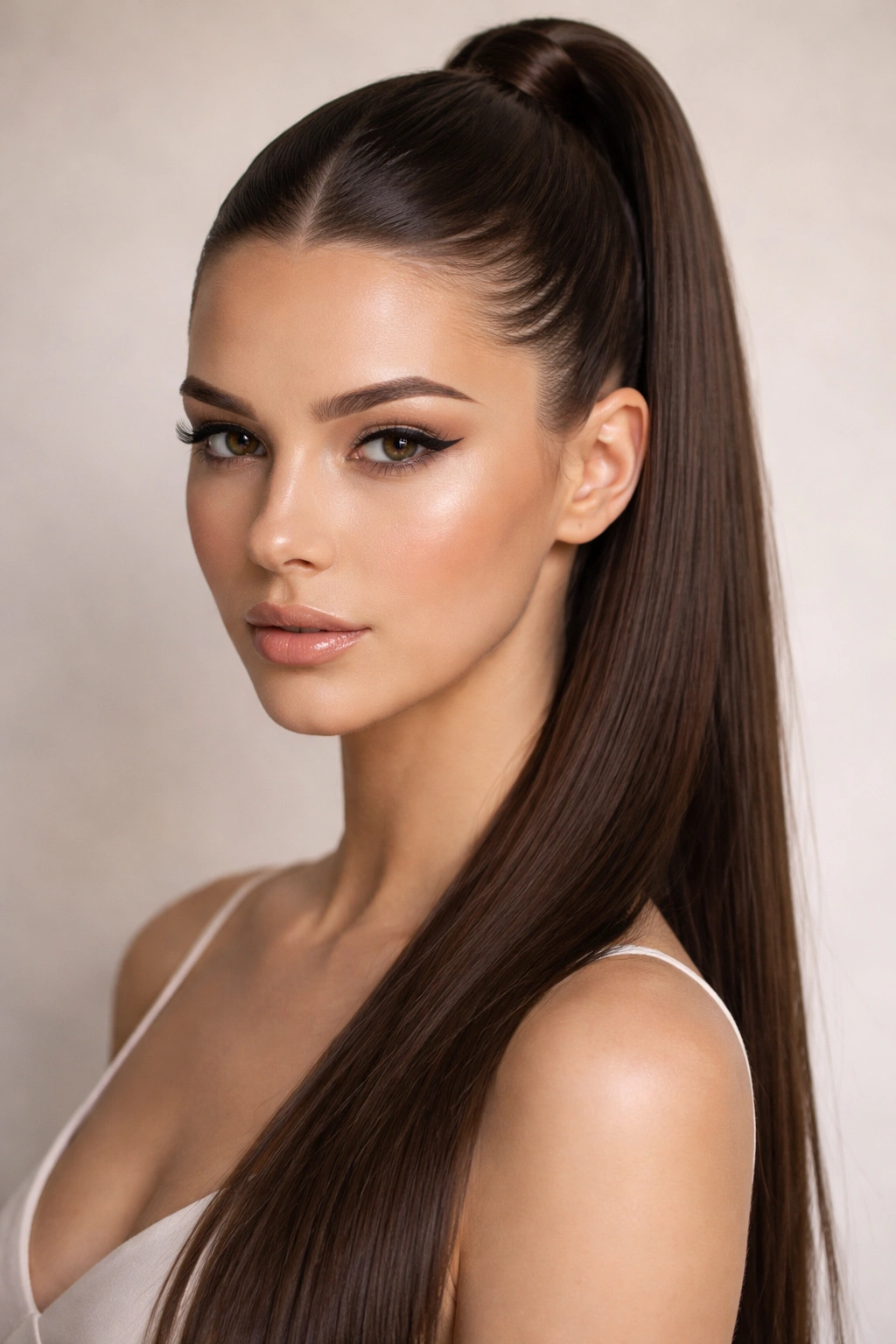
A center-parted high ponytail is graphic and modern in a way that feels very current and fashion-forward. The center part creates perfect symmetry down the middle of your face and head, which pairs beautifully with the high placement of the ponytail. On straight hair, this combination feels both editorial and wearable—you look like you’ve stepped out of a fashion magazine, but the style is achievable and practical.
What Makes the Center Part Special
The center part elongates your face and creates a formal, intentional aesthetic that side-parted ponytails can’t quite replicate. There’s an almost geometric quality to it that straight hair emphasizes beautifully. The two equal sections framing your face feel balanced and thoughtful, making even a simple ponytail read as deliberately styled rather than thrown-together.
Creating the Center Part Approach
- Wet your hair and blow-dry it fully straight with your hair parted exactly down the center—use a fine-tooth comb as a guide
- As you blow-dry, direct both sections backward and slightly away from your face to encourage volume at the roots
- Once dry, use a fine-tooth comb and your styling gel to reinforce the center part line with precision
- Gather hair into a high ponytail, pulling the ponytail tight so the part remains visible even when secured
- Ensure both sides are equal and smooth before fastening with your elastic
- Apply smoothing serum to the lengths of the ponytail for a glossy, unified appearance
- For extra definition, you can smooth the part line with a fine comb and a tiny bit of gel for grip that lasts all day
Worth knowing: A center part is unforgettable once it’s in place, and straight hair holds the crease beautifully for hours or even days if you don’t disturb it.
3. High Bubble Ponytail
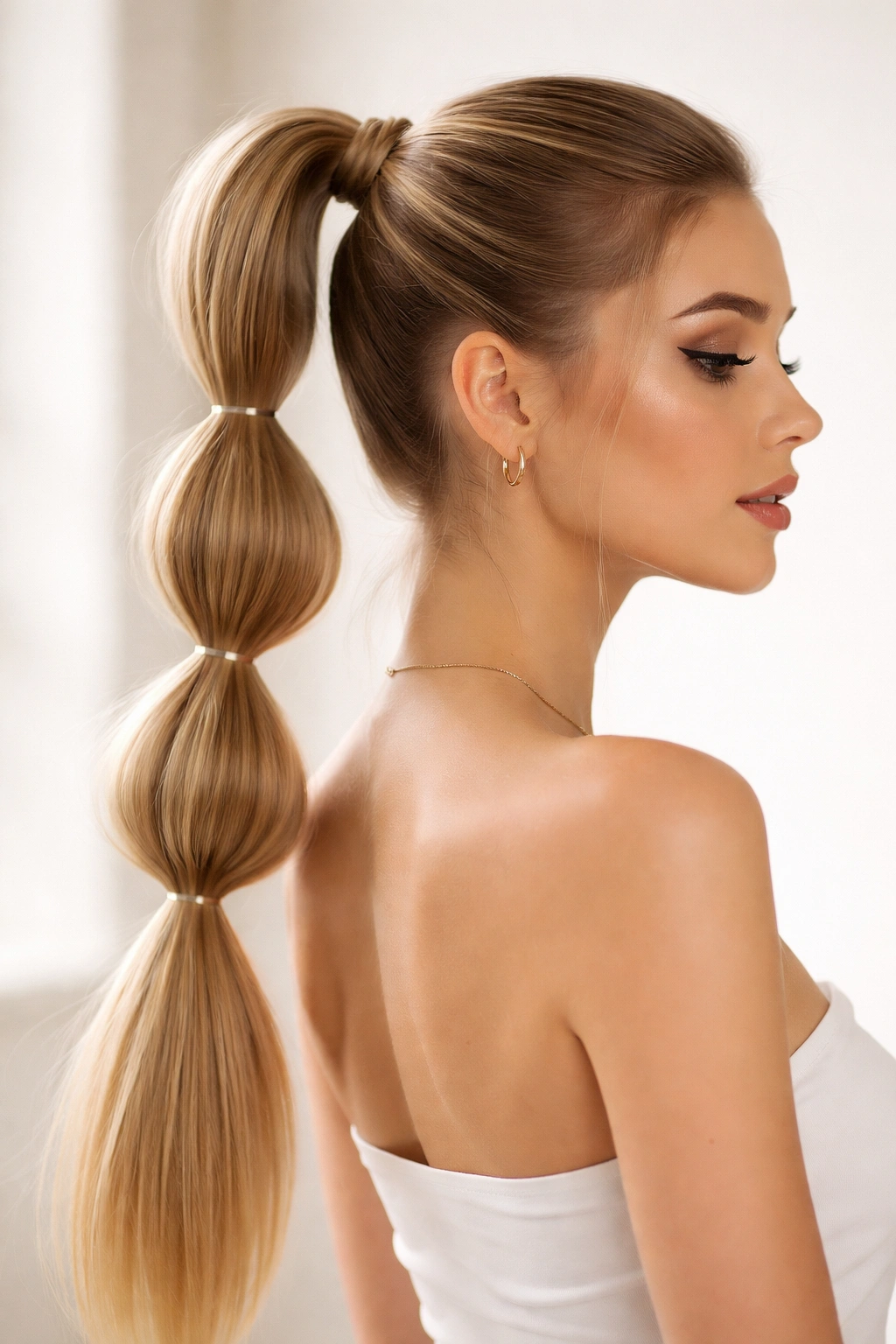
A bubble ponytail transforms straight hair into a playful, textured composition that reads as modern and deliberately styled. Instead of a single cohesive ponytail, you’re creating distinct sections by using multiple elastics spaced an inch or two apart along the length, gathering the hair between each elastic into small “bubbles.” On straight hair, this technique creates visually distinct segments with a subtle three-dimensional quality that ordinary ponytails lack.
The Appeal of Bubble Structure
Bubble ponytails look intricate and considered—like you’ve spent effort creating something fun and fashion-forward. What’s remarkable is how simple they actually are to execute on straight hair. Because your hair naturally falls in clean lines and doesn’t have competing texture to navigate, the bubbles stack vertically and create that graphic, segmented look without any fuzziness or messiness. It’s a style that looks playful but still polished.
Building Your Bubble Ponytail
- Start with a high base ponytail secured with a clear elastic, pulled as tight as you’d like
- Measure down the ponytail about 1.5 to 2 inches and wrap a second clear elastic around that point
- Using your fingers, gently pull and fluff the hair section between the two elastics, creating a bubble shape that fans out slightly
- Repeat this process down the entire length of your ponytail, spacing elastics consistently for a uniform look
- The last bubble can extend all the way to the ends of your ponytail
- For extra visual impact, pin small decorative clips or delicate hair jewelry at the base of each elastic
- This style photographs beautifully and holds strong throughout the day without losing definition
Quick fact: Bubble ponytails work especially well if you have thick, dense straight hair, but they’re achievable with any hair thickness—just adjust the bubble size accordingly.
4. High Textured Ponytail
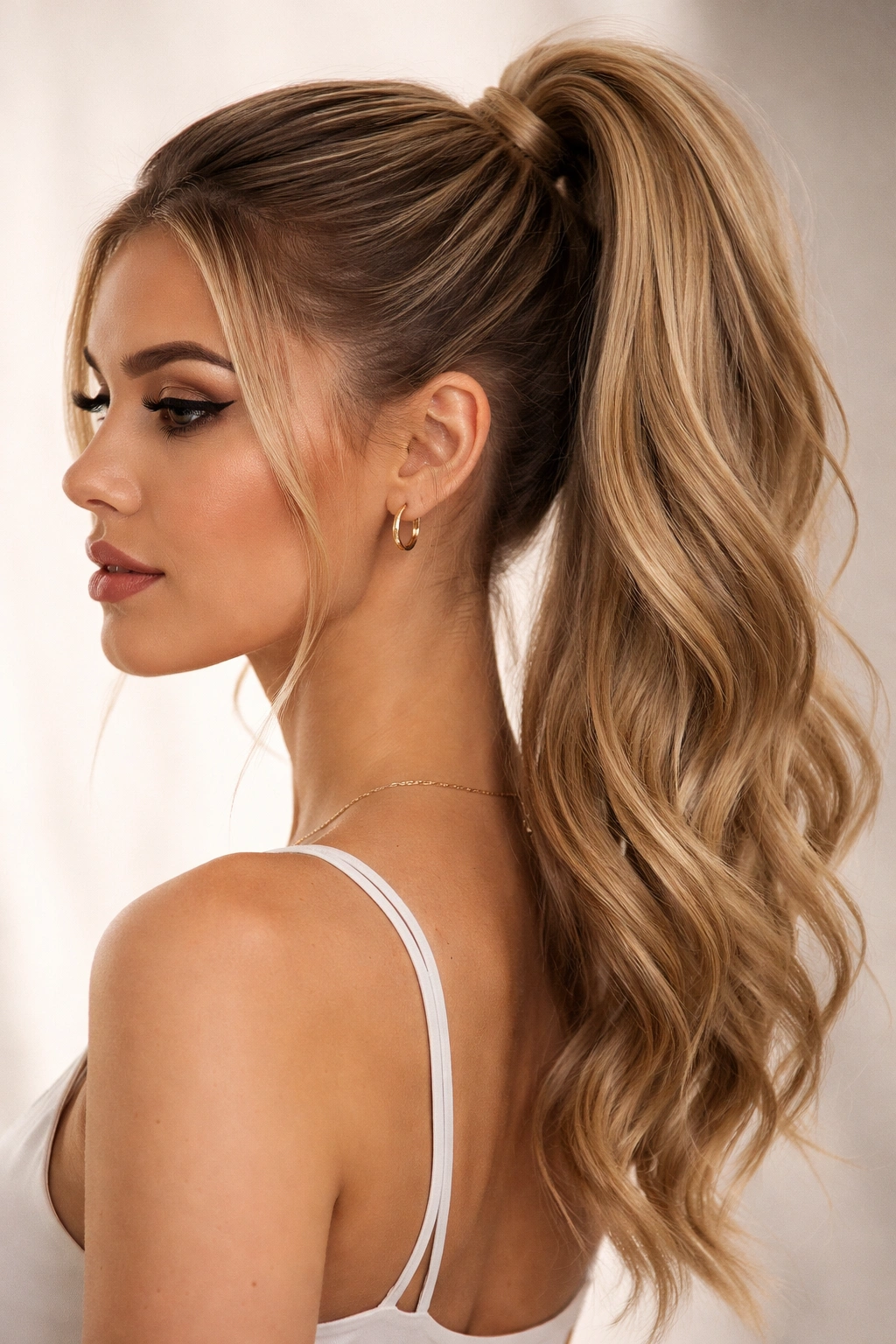
Straight hair is smooth and sleek by nature, so deliberately adding texture to a high ponytail creates contrast and visual interest that catches the light and adds movement to an otherwise static style. A textured high ponytail reads as more fashion-forward and dimensional than a purely smooth alternative, while still benefiting from the refined base that straight hair provides.
Creating Texture on Straight Hair
Adding texture to straight hair is an intentional choice that breaks up the uniformity of your ponytail. You might use a waving iron to create soft waves in the ponytail itself, use a texturizing spray to add grip and dimension, or even braid sections and then release them into soft texture. The key is that the texture becomes an accent within the overall sleek silhouette, not the defining characteristic.
Textured Ponytail Techniques
- Blow-dry your hair straight as your base, but before securing the ponytail, wave the mid-lengths and ends using a loose waving iron or curling iron
- Create large, loose waves rather than tight curls—the goal is texture that catches light and moves, not obvious spiral curls
- Secure the ponytail high at the crown, allowing the textured lengths to drape and flow more dramatically than smooth hair would
- Alternatively, divide your ponytail into 3-4 sections and braid each one, then gently pull apart the braids to release soft, undone texture
- For a more subtle approach, spray the secured ponytail with sea salt texture spray and scrunch lightly for grip and a lived-in quality
- This approach works beautifully for evening events or any occasion where you want polish with personality
Insider note: The combination of a sleek, precise high ponytail base with soft textured ends is genuinely one of the most flattering modern styles—it feels expensive and editorial.
5. High Ponytail with Sleek Wrap
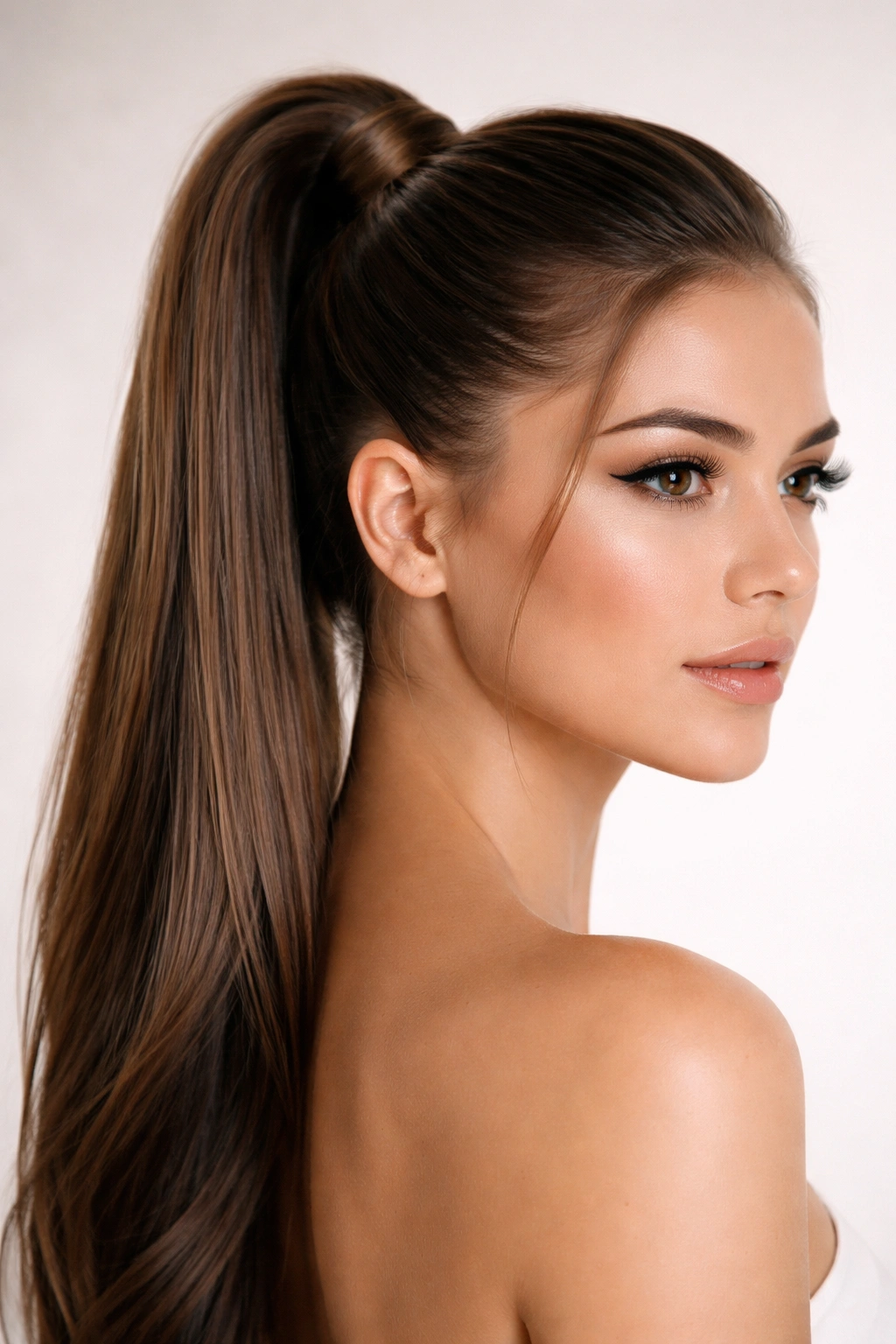
A wrap is one of the simplest techniques that has the biggest impact on how polished and intentional your high ponytail appears. Instead of just using an elastic, you take a thin section of hair from within the ponytail itself and wrap it around the base, concealing the elastic entirely and creating a finished, seamless look that reads as deliberately styled. On straight hair, this wrapped section gleams and stays perfectly smooth and in place.
Why the Wrap Matters
The wrapped-around-base technique is what separates a casual ponytail from one that looks intentional and finished. It removes the bulky elastic from view, frames the base of the ponytail beautifully, and adds a subtle detail that transforms the overall aesthetic. On straight hair, the wrapped section catches light and sits smoothly against the base without any bumps or irregularities.
Executing the Wrap Technique
- Secure your high ponytail with a clear elastic, pulled tight
- Take a one-half-inch-wide section of hair from the side of your secured ponytail
- Using a fine-tooth comb and light hairspray, smooth this section and wrap it around the elastic base, going around one to one-and-a-half times depending on your hair thickness
- Secure the wrapped end underneath the ponytail with a bobby pin, hidden from view
- Use a smoothing serum on the wrapped section so it gleams and blends seamlessly with the surrounding hair
- For extra grip, apply a tiny amount of styling gel to the wrap before securing it, ensuring it holds perfectly all day
Pro tip: A silk-wrapped elastic underneath your hair wrap (instead of a clear elastic) creates an even more luxe, finished appearance—the silk won’t damage your hair and looks expensive.
6. High Ponytail with Statement Accessories
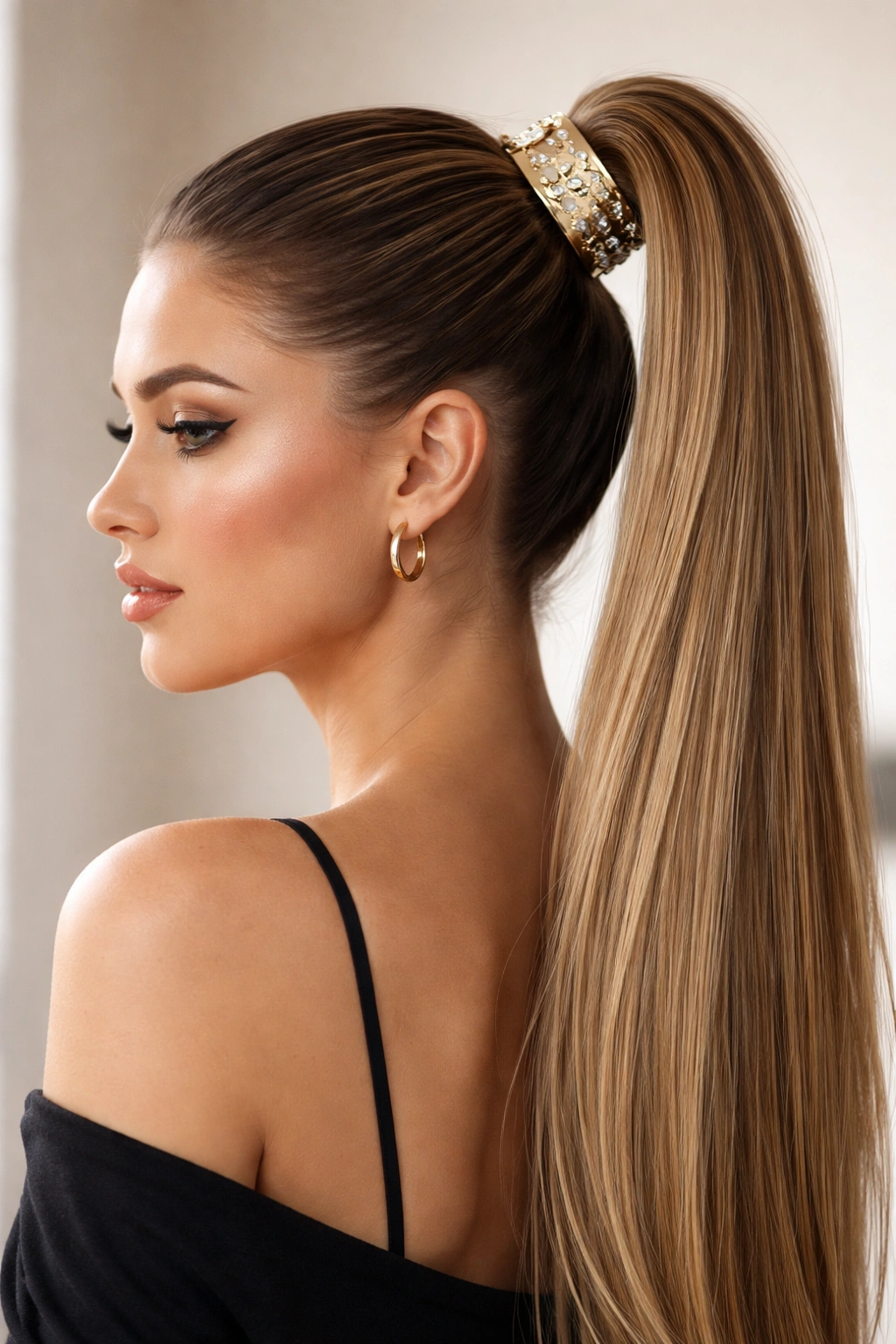
Straight hair provides the perfect foundation for showcasing hair accessories because your hair holds its shape so cleanly and predictably. Whether you choose a jeweled clip, a sleek metallic cuff, a delicate hair pin arrangement, or an ornate elastic itself, accessories become architectural elements in your hairstyle rather than afterthoughts. They’re meant to be seen and admired on a foundation of straight, polished hair.
Choosing Accessories That Shine
The best accessories for straight hair high ponytails are those with visual weight and detail that they won’t compete against complicated texture. A statement claw clip, a metal hair cuff, or a collection of bobby pins worn visibly at the base creates intentional, modern styling that reads as considered and fashion-forward. Gemstone hair clips, pearl-studded elastics, and sculptural metal pieces all work beautifully when your hair is the sleek canvas beneath them.
Accessory Application Methods
- Secure your high ponytail with a simple clear elastic first, keeping it tight and smooth
- Slide a statement cuff or claw clip over the elastic and ponytail base, positioning it where it frames the cluster of hair nicely
- For a more editorial look, use several delicate bobby pins worn visibly, crossing them over each other at angles for a graphic, fashion-forward appearance
- If using a jeweled or ornate elastic as your primary fastener, coordinate your wrap accordingly so the elastic becomes the focal point
- Ensure any accessories sit exactly at the point where your hair meets the elastic—not floating above it or buried within the ponytail
- The accessory should feel like an intentional statement, not like you’re trying to hide something
Quick tip: When using statement accessories, keep the rest of your ponytail entirely smooth and sleek—let the accessory be the drama.
7. High Side-Swept Ponytail
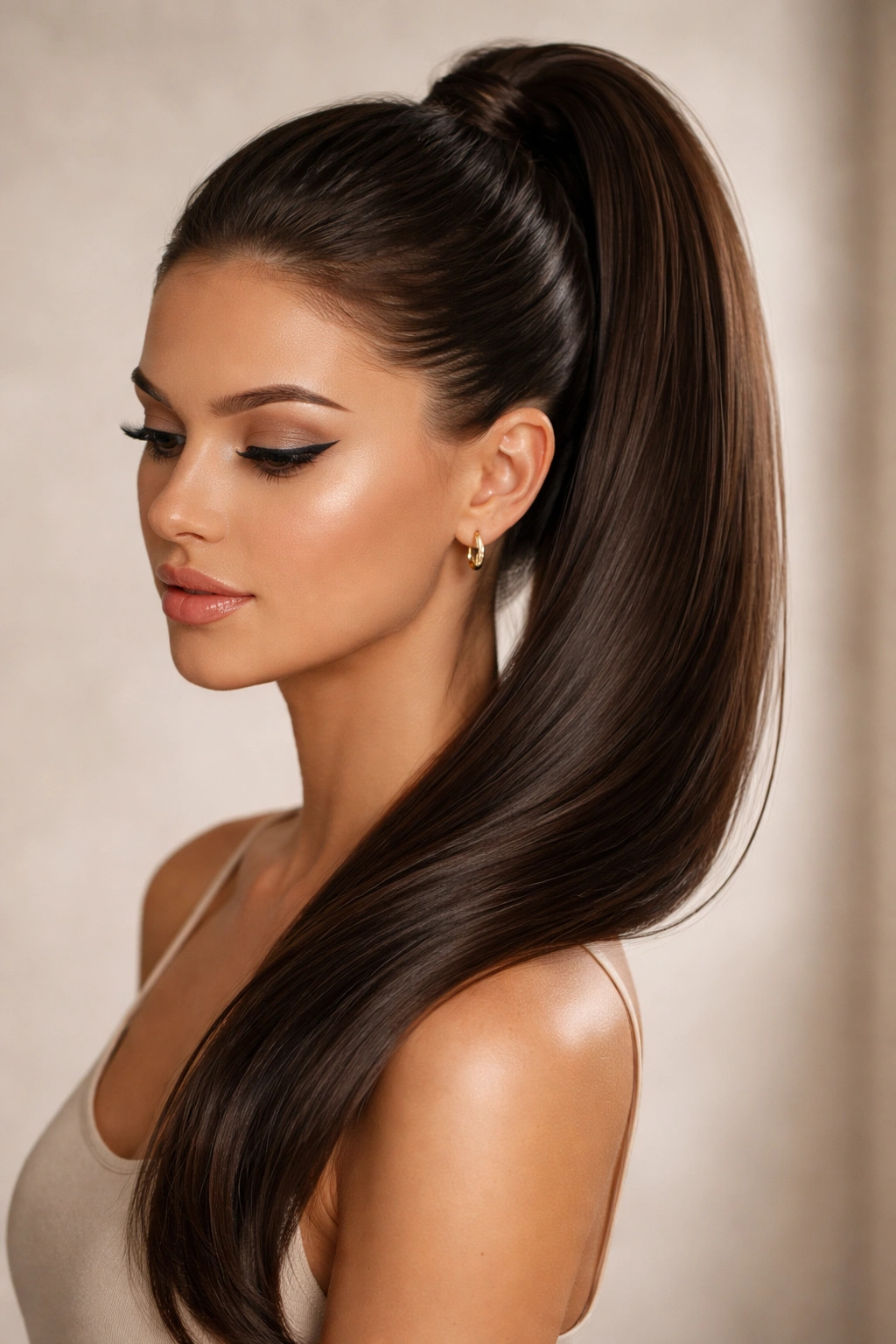
A side-swept high ponytail takes the high placement you love and tilts it slightly to one side, creating asymmetry and movement that feels more dynamic than a centered approach. Instead of gathering hair directly at the crown, you secure it slightly off-center, which creates a flowing diagonal line from one side of your head to the other. On straight hair, this asymmetry reads as intentional and modern.
The Visual Impact of Side-Swept
Side-swept styles have an inherent elegance and movement that centered styles can’t quite match. The slight tilt creates the impression of motion and flow, even when your hair is entirely still. Combined with the sleekness of straight hair, a side-swept high ponytail feels both relaxed and refined—casual enough for everyday wear but polished enough for more formal occasions.
Creating the Side-Sweep Effect
- Blow-dry your hair straight, directing the roots slightly toward your preferred side with your blow dryer and paddle brush
- Rather than parting your hair down the exact center, create a side part that’s slightly deeper than center—this sets up the asymmetrical foundation
- Gather your hair into a high ponytail, but position it slightly off-center, following the trajectory of your side part
- Pull the ponytail tight and smooth, maintaining that slight off-center positioning at the crown
- The ponytail itself should drape straight down, but the gathering point is what creates the asymmetry
- Use your smoothing products to enhance the sleek quality and ensure no flyaways disrupt the clean side-sweep
- This style looks especially flattering if you position the ponytail toward your stronger side (the side with naturally fuller hair)
Worth knowing: A side-swept high ponytail actually photographs more interestingly than a centered one because the asymmetry creates visual movement in a still image.
8. High Ponytail with Layered, Loose Ends
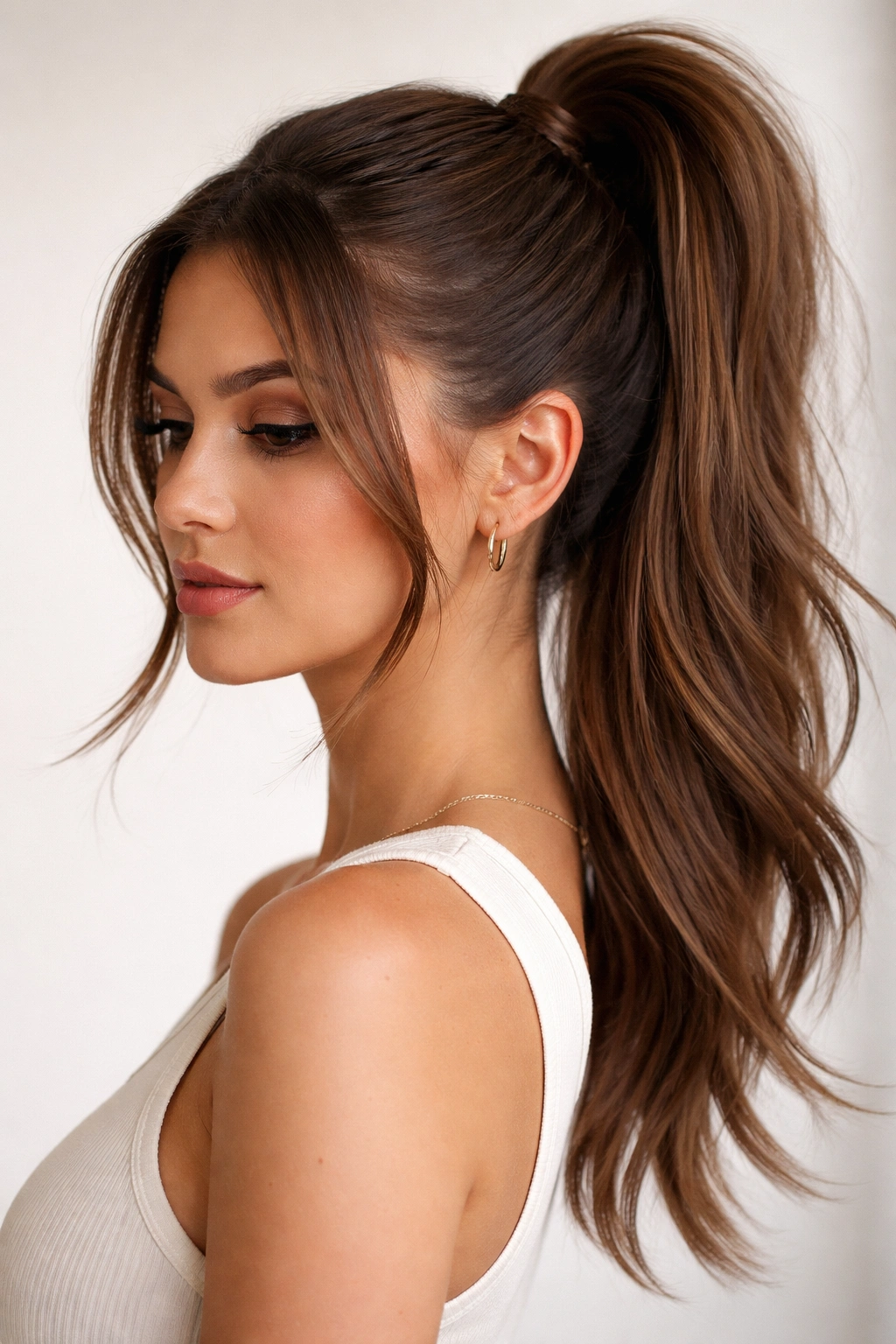
Instead of securing your entire ponytail into a single cohesive bundle, you can create visual interest by leaving some face-framing layers loose while pulling the bulk of your hair into a high ponytail. The loose layers frame your face and shoulders while the high ponytail keeps everything else off your face. On straight hair, these contrasting elements—the secured ponytail and the loose layers—create a style that feels intentional and thoughtfully composed.
Balancing Secured and Loose Sections
This approach combines the face-framing advantages of loose hair with the practical benefits of a high ponytail. You get the brightness of an off-the-face style without sacrificing the softness of face-framing pieces. The loose layers add movement and dimension to an otherwise static ponytail, creating a more approachable, less severe silhouette than a complete high ponytail alone.
Styling Layered Loose-Ends Ponytails
- Before securing your ponytail, identify which face-framing pieces you want to leave loose—typically one half-inch section on each side of your face
- Gently brush those sections aside and secure them with a clip temporarily
- Gather the remaining hair into a high ponytail and secure tightly
- Release the clipped sections and let them frame your face naturally
- Use a curling iron to add a very gentle wave to the loose layers—straight, completely flat pieces can read as unfinished, while soft waves feel intentional
- Smooth the main ponytail with your straightening iron for maximum contrast between the textured loose pieces and the sleek ponytail
- This style reads modern and fashion-forward while remaining practical and wearable
Pro tip: The loose layers should be subtle and delicate—you’re not creating a half-up-half-down style, just barely-there face-framing that softens the high ponytail effect.
9. High Ponytail with Braided Wrap
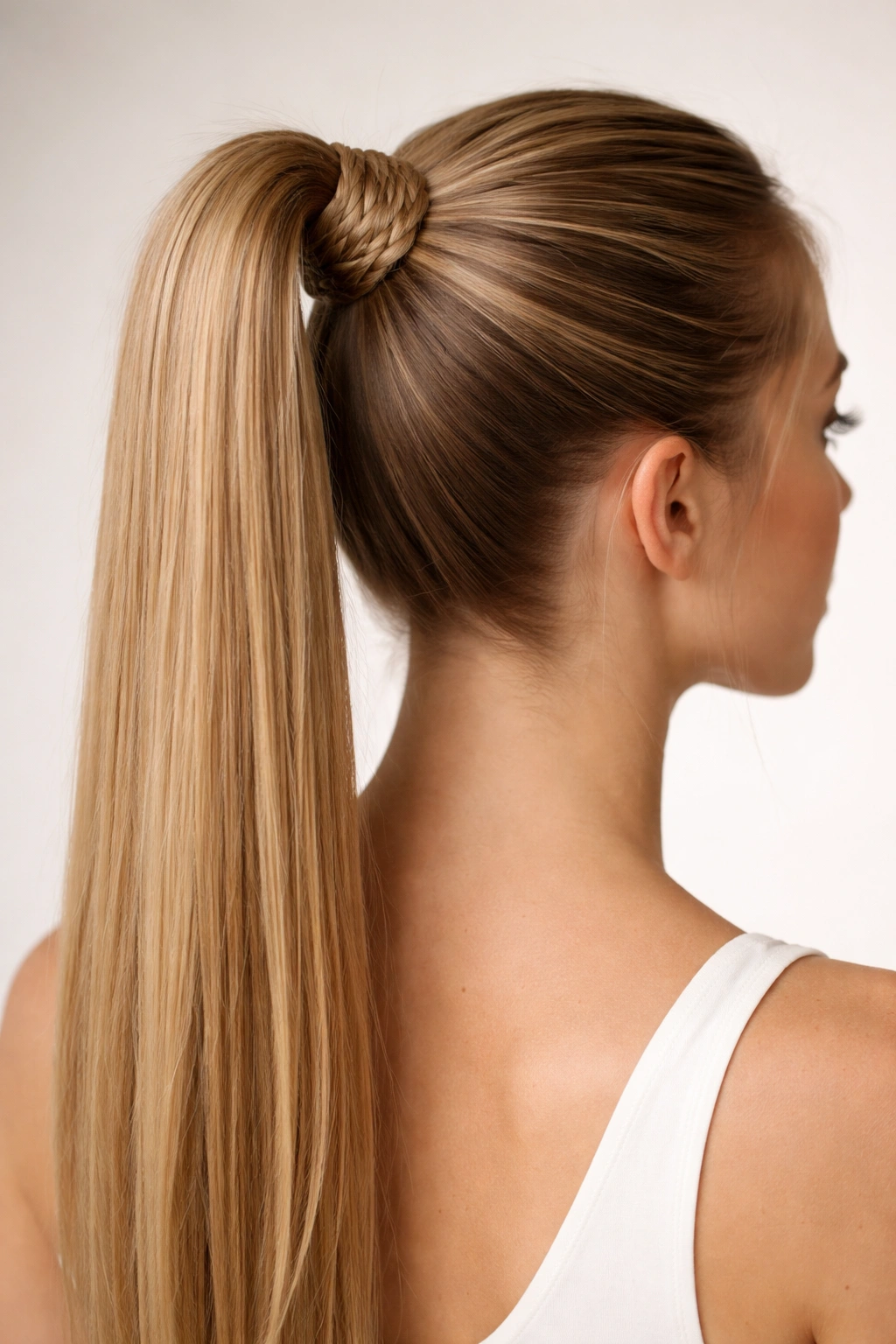
Instead of wrapping a simple hair section around the base of your ponytail, you can create a more textured, detailed look by braiding that wrap section. A three-strand braid wrapped around the elastic base adds dimension and visual interest while maintaining the polished quality of a wrapped-base ponytail. On straight hair, the braid sits cleanly against the base without any frizz or loose strands disrupting the overall aesthetic.
Why a Braided Wrap Elevates the Style
A braided wrap transforms an ordinary ponytail into something that reads as more intentionally styled and thoughtful. The braid adds visual texture and detail that a simple wrap can’t provide, making the overall look feel more fashion-forward and less everyday. It’s a technique that takes perhaps thirty extra seconds but dramatically changes how polished and considered your style appears.
Creating the Braided Wrap
- Secure your high ponytail with a clear elastic, pulled tight and smooth
- Take a section of hair from the side of your ponytail (roughly three-quarter-inch wide)
- Divide that section into three equal strands and begin a three-strand braid directly at the base of the ponytail
- Braid tightly for precision, maintaining even tension so the braid sits uniformly against the elastic
- Continue braiding until you’ve gone around the elastic one or one-and-a-half times depending on your hair thickness
- Secure the braided end with a bobby pin underneath the ponytail, hidden from view
- The braid should feel sculptural and intentional, not loose or undone
Quick fact: A braided wrap works beautifully with thick, dense straight hair because the braid maintains its definition and doesn’t get lost against your head.
10. High Volumized Ponytail
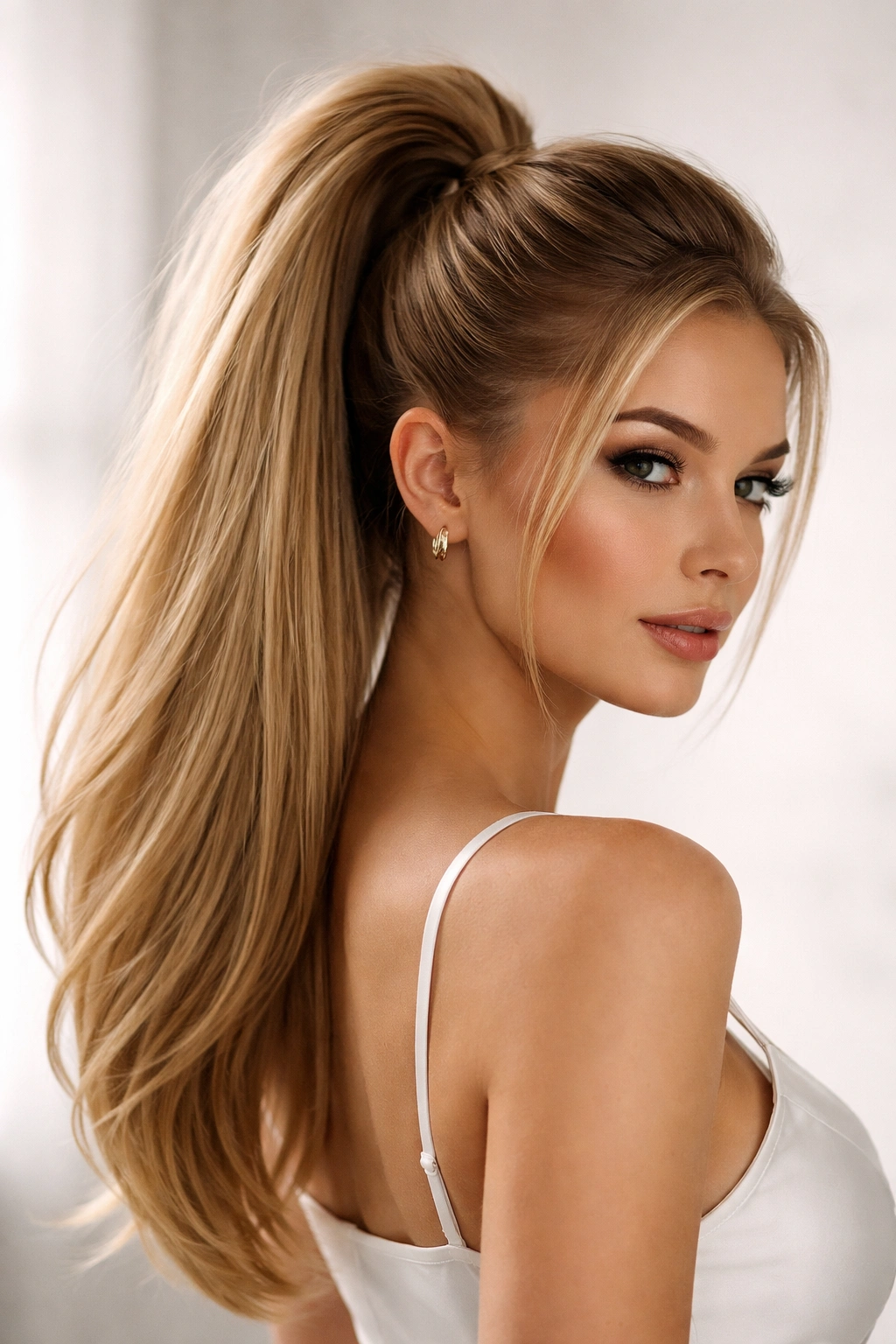
A volumized high ponytail takes the classic style and amplifies the height and fullness at the crown. Instead of a sleek, tight ponytail pulled straight up, you’re creating volume and lift through blow-drying techniques and strategic backcombing. On straight hair, volume doesn’t come naturally, so these techniques create a bouncy, dimensional look that reads as more youthful and approachable than a flat high ponytail.
Building Volume Into Straight Hair
Straight hair requires intentional techniques to create volume, but the payoff is volume that actually lasts throughout the day because you’re not fighting natural wave or curl. The volume sits exactly where you place it and holds through blow-drying and backcombing. A volumized high ponytail feels more polished and intentional than a completely sleek version, adding personality and movement to your style.
Volumizing Techniques for High Ponytails
- Blow-dry your hair with your head tipped forward, directing heat toward your roots to create lift at the crown
- Use a volumizing mousse at the roots before blow-drying for extra grip and hold
- Once your hair is dry, use a fine-tooth comb to backcomb gently at the crown, creating texture and grip that holds volume
- Smooth the outer layer with your comb so it looks polished rather than obviously backcombed
- Gather your hair into a high ponytail, pulling it up and slightly back to emphasize the volume at the crown
- The ponytail itself should remain sleek while the base around the crown maintains that volumized quality
- Finish with a light hold hairspray that doesn’t weigh down your style
Insider note: A volumized high ponytail is secretly one of the most flattering styles for all face shapes because the height and fullness at the crown creates balance and draws the eye upward.
11. Half-Up High Ponytail
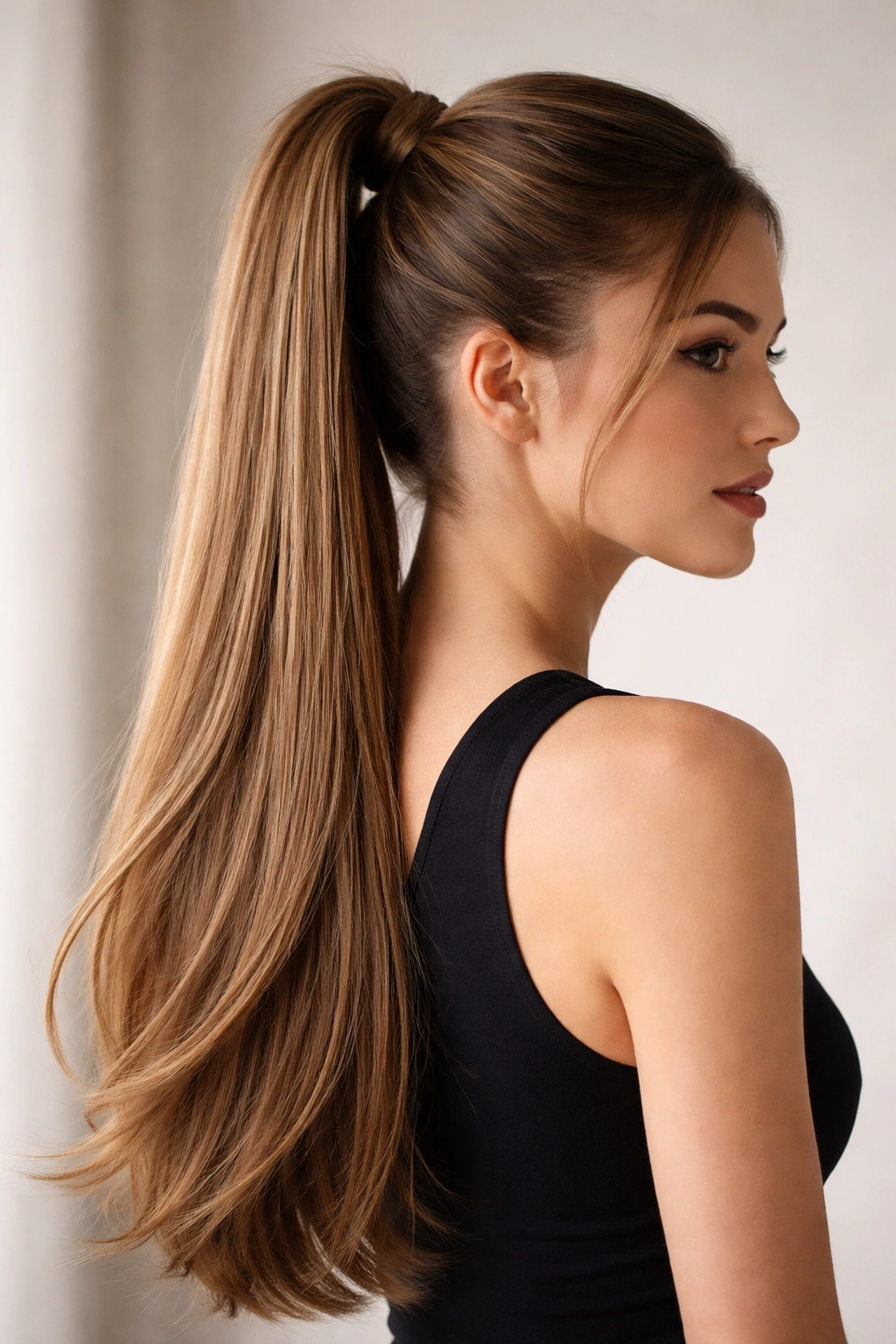
A half-up high ponytail is the perfect compromise between keeping hair completely down and pulling it entirely up. You gather the top half of your hair into a high ponytail while leaving the bottom half down, creating a style that’s practical and pretty at the same time. On straight hair, this means the upper ponytail remains sleek and controlled while the lower half flows freely, creating an interesting contrast in texture and positioning.
Why Half-Up Works
Half-up styles combine the practical benefits of a ponytail (hair off your face and neck) with the softness and movement of down hair. It’s a style that feels less severe than a complete high ponytail while still being more practical than wearing your hair entirely down. For straight hair, half-up is especially flattering because the upper portion can be perfectly smooth and polished while the lower half maintains flow and length.
Styling the Half-Up High Ponytail
- Decide where you want the division—roughly at your ear level or slightly above, creating a clear line between upper and lower sections
- Gather only the top portion of your hair (everything from the crown to your division line) into a high ponytail at the crown
- Secure with a clear elastic, making it tight and smooth
- Leave the lower half of your hair completely down and smooth with a paddle brush
- Optionally, add soft waves to the lower half using a curling iron—the texture contrast between the sleek ponytail and gentle waves is beautiful
- Apply smoothing serum to the ponytail portion and texture spray or light hairspray to the bottom section to set your style
- For extra polish, use the wrap-around-the-base technique on your upper ponytail
Pro tip: A half-up high ponytail is ideal for days when you want your hair styled but don’t want the intensity of a complete high ponytail.
12. High Braided Ponytail
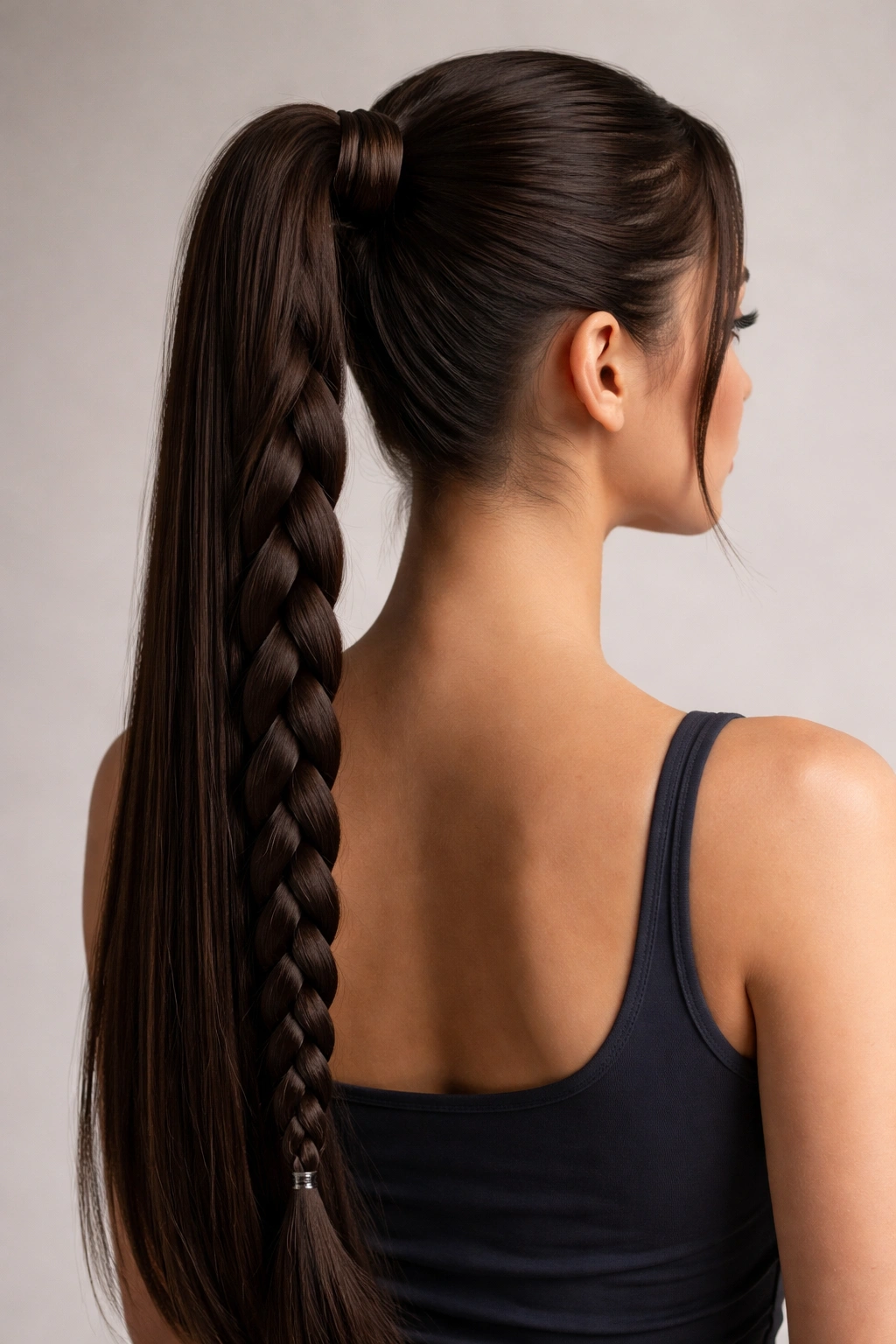
A braided high ponytail takes your high ponytail one step further by braiding the entire length of the secured ponytail rather than leaving it straight. You secure the hair high at the crown, then divide the ponytail into sections and braid it, creating a style that’s both polished and textured. On straight hair, a braided ponytail reads as intentionally styled and fashion-forward—the braid adds dimension and detail that straight ponytails can’t offer alone.
The Impact of a Braided Ponytail
Braiding your ponytail transforms it from simple to statement-making. The braid adds visual interest, texture, and a sense of intentionality that reads as more carefully considered than a straight ponytail. Combined with the sleek foundation of straight hair, a braided ponytail feels both modern and timeless—the kind of style that works for casual occasions and dressier events alike.
Creating the Braided Ponytail
- Blow-dry your hair completely straight and smooth
- Gather hair into a high ponytail at the crown, securing with a clear elastic pulled tight
- Divide the ponytail into three equal sections and begin a three-strand braid directly at the elastic base
- Keep the braid tight and even, maintaining consistent tension throughout the entire length
- If you want the braid to feel looser and more relaxed, you can gently pull the braid strands after you’ve finished braiding—this releases some of the tension and creates a softer, more undone appearance
- Secure the end of your braid with a small elastic, preferably clear or in a matching color
- For extra polish, smooth the outer edges of the braid with a fine-tooth comb so it looks intentional rather than just twisted
- This style holds beautifully throughout the day and actually looks better after a few hours as the braid relaxes slightly
Quick fact: A braided ponytail is one of the few ponytail styles that actually photographs better the messier and more lived-in it becomes—slight looseness looks intentional and modern rather than unfinished.
Final Thoughts
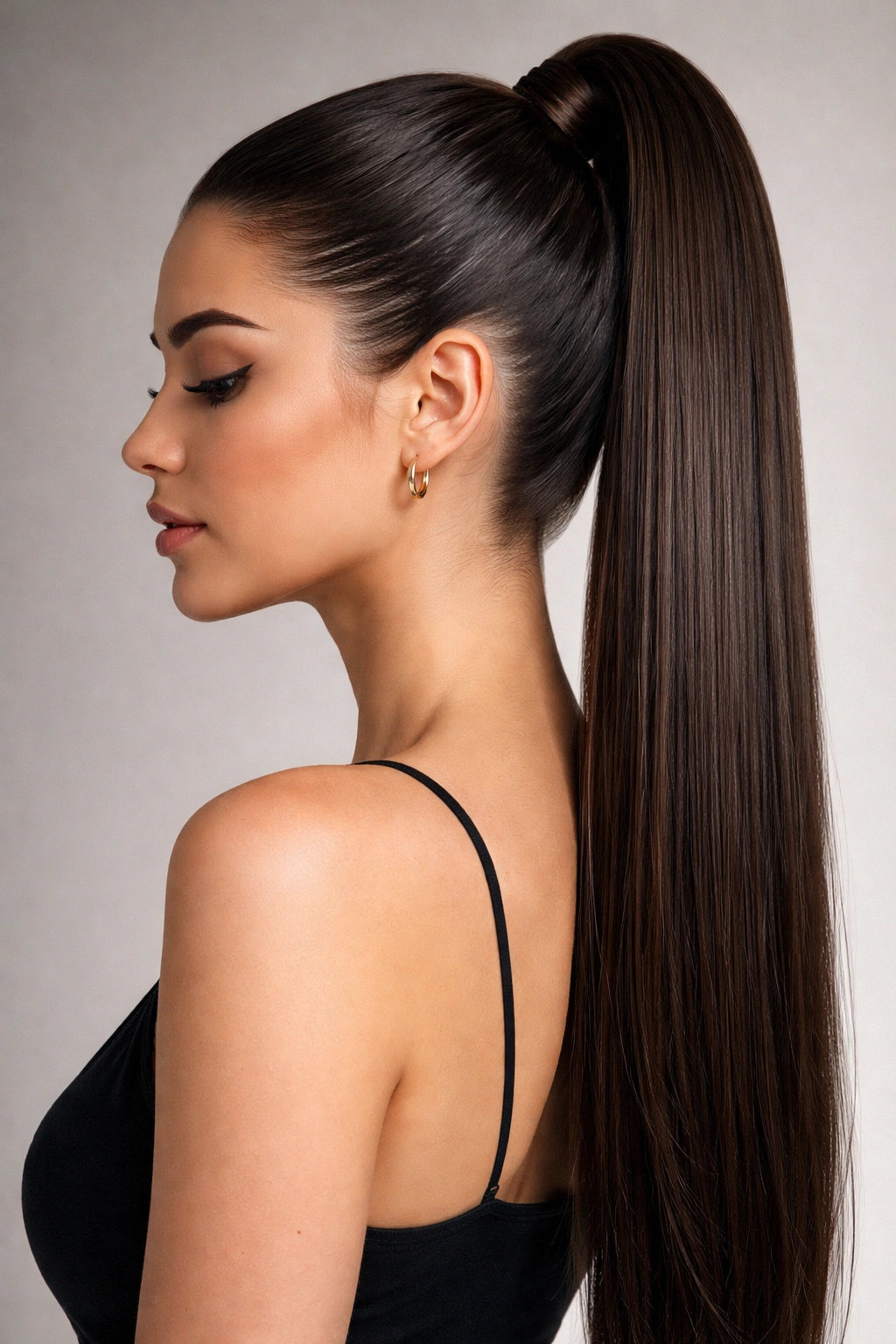
Straight hair is genuinely one of the easiest hair textures to style into a high ponytail, but that doesn’t mean every high ponytail needs to look identical. These twelve variations showcase how much visual range is possible with the same basic placement and structure. Whether you’re drawn to the minimalist elegance of a classic wrapped-base ponytail, the playful dimension of a bubble ponytail, the textured movement of a braided version, or the soft balance of a half-up approach, straight hair makes each variation achievable without requiring special techniques or products.
The real secret to mastering high ponytails on straight hair is understanding that your hair’s natural smoothness and control are assets, not limitations. Instead of fighting your hair texture or trying to add dimension that doesn’t come naturally, lean into what straight hair does beautifully—holding shape, maintaining sleekness, catching light, and responding precisely to whatever styling direction you choose. A high ponytail on straight hair can be as simple or as elaborate as you want it to be, and it will look polished either way.
The style you choose depends entirely on the mood you want to create. For days when you need maximum practicality and minimum fuss, the classic or sleek versions deliver. When you want to feel more put-together or fashion-forward, the textured, braided, or accessorized options feel intentional and considered. The beauty of having this many variations in your styling arsenal is that you never need to wear the same high ponytail twice unless you want to—each one reads as completely different, even though they all share that same high placement at the crown. Master the techniques, trust that your straight hair will cooperate, and enjoy how effortlessly polished you look.
