



Stitch braids have become one of the most versatile and stylish protective hairstyling techniques for Black women, combining the security of traditional braiding with a sleek, polished aesthetic that works for literally any occasion. The beauty of a stitch braid lies in how the technique creates that signature smooth, almost sculpted appearance—braids that look almost three-dimensional and intricately detailed. When you elevate stitch braids into a ponytail, you’re not just creating a hairstyle; you’re building a look that’s equal parts elegant, protective, and undeniably fierce. Whether you’re heading to the boardroom, a special event, or just want to refresh your everyday look, stitch braid ponytails offer incredible flexibility in styling while keeping your hair safe from breakage and manipulation.
The technique itself involves braiding in a way that creates that distinctive raised, textured pattern—a look that’s bold enough to make a statement on its own, yet pairs beautifully with ponytail styling that ranges from playful and sporty to sophisticated and editorial. What makes stitch braids particularly appealing is that they work across different hair textures, lengths, and thickness levels. You can wear them loose and romantic, slicked back and minimalist, decorated with accessories, or styled into intricate updos. Let’s explore twelve stunning ways to style stitch braid ponytails that’ll have you excited about your next salon appointment.
1. Classic High Stitch Braid Ponytail
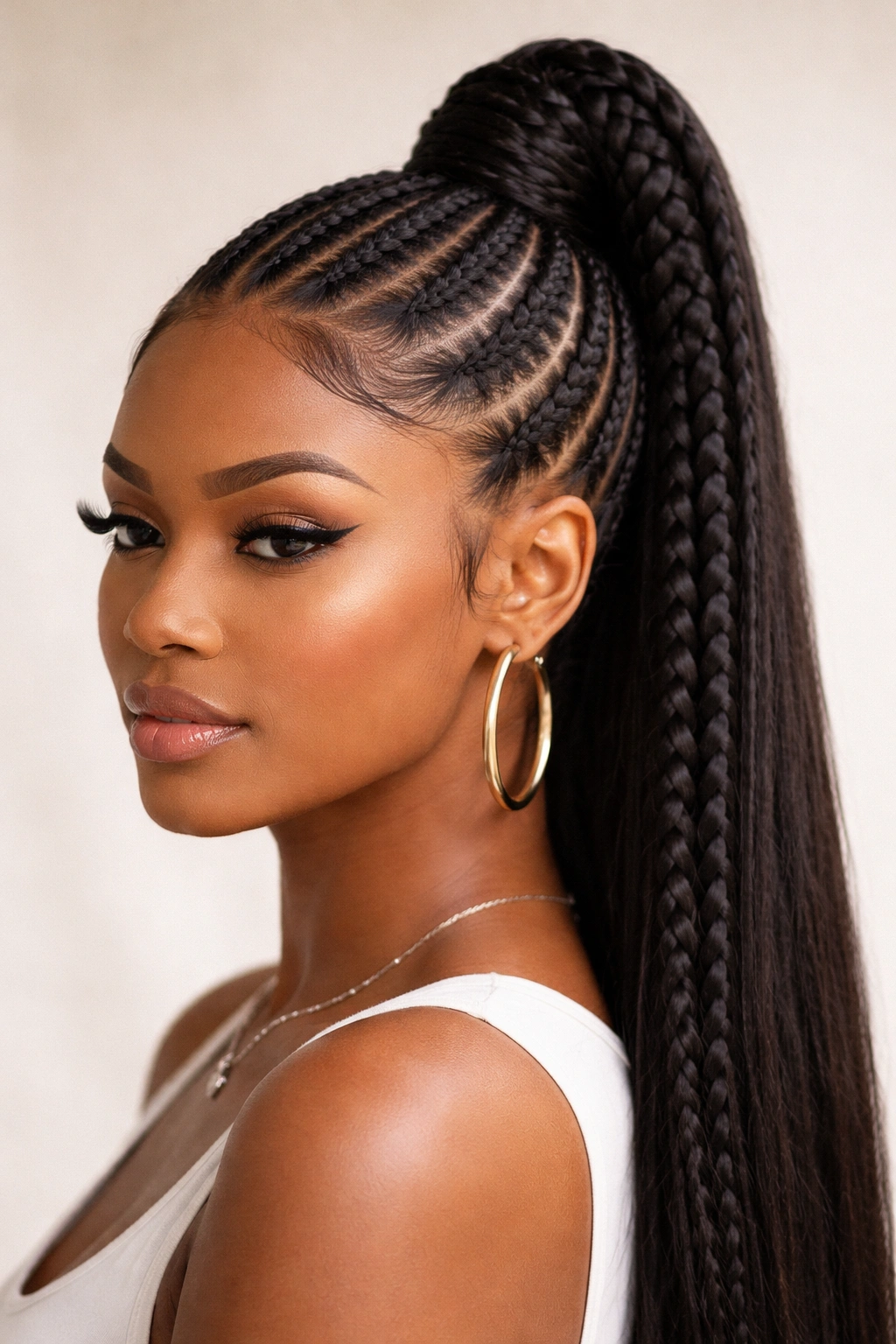
A high stitch braid ponytail is the power move of ponytail styling—confident, commanding, and perfectly polished for someone who wants their hairstyle to announce their presence the moment they walk in the room. This style works by braiding stitch patterns from the crown or slightly behind it, then gathering all the hair into a high ponytail that sits at the very top of the head, creating that eye-catching lift and volume that elongates your entire face and neck.
What Makes It Stand Out
The high placement is what gives this style its impact—it immediately draws the eye upward and creates a sense of energy and movement that lower ponytails simply can’t match. Because the stitch braids are visible from the front and sides, they become a major design feature rather than just a functional element. The height also makes it perfect for showing off facial features, neck jewelry, or a sharp makeup look, which is why you’ll see this style so frequently on red carpets and at upscale events. The combination of technical braiding skill and elevated placement signals that this is a deliberate, well-thought-out style choice.
How to Style It Best
- Start with clean, moisturized hair that’s been detangled thoroughly—stitch braids look sharpest when they’re working with hair that’s in good condition
- Braid 2-4 stitch braids from your crown, angling them slightly toward the back of your head where you plan to gather the ponytail
- Use a fine-tooth comb to smooth any flyaways and create that signature sleek finish along the braids
- Gather all hair into a elastic at the crown or just slightly behind it, securing the ponytail tightly so it stays put throughout the day
- Wrap a small section of hair around the base of the ponytail to hide the elastic and create a finished, polished appearance
- Consider leaving the ponytail length natural, or adding a subtle wave or curl to the ends for dimension
Pro tip: If you want serious longevity with this style, invest in a silk or satin scrunchie instead of a standard elastic—it prevents breakage at the ponytail base and helps your edges stay intact over the weeks you’ll wear this style.
2. Sleek Low Stitch Braid Ponytail
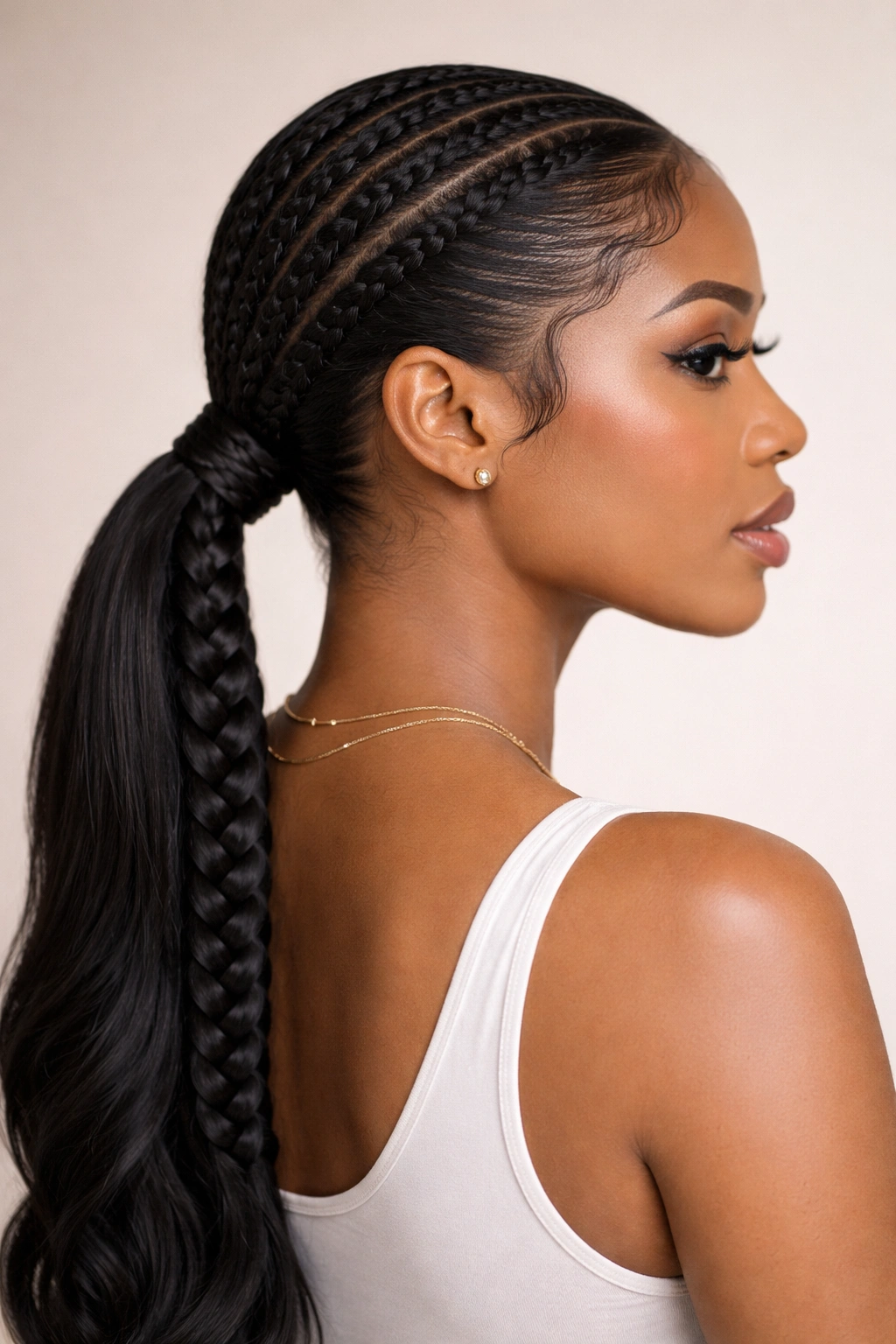
The low stitch braid ponytail is your go-to for when you want sophistication without the “look at me” energy of a high placement. This style sits right at the nape of your neck or just slightly above, creating an understated elegance that feels effortlessly refined and works beautifully in professional settings where you want polish without drama.
The Refined Appeal of Low Placement
There’s something undeniably chic about keeping the visual weight of your hairstyle closer to your neck—it feels balanced, intentional, and unexpectedly fashion-forward in a way that defies trend cycles. The low ponytail with stitch braids avoids the “too casual” vibe of a regular bun or flat ponytail, because those braids immediately elevate the entire look into territory that feels deliberately styled. This placement also works beautifully if you’re dealing with a shorter hairline or prefer not to have tight tension pulling from your crown, since the braiding patterns can start further back or even incorporate more of your natural hair pattern before transitioning into the braided sections.
Creating the Perfect Low Stitch Braid Look
- Part your hair in a way that feels natural to your head shape—this might be a clean center part, a deep side part, or an off-center part
- Create 2-3 stitch braids starting from wherever feels comfortable, angling them gently toward the back of your head
- Let the braids do some of the visual work by keeping them as the focal point rather than trying to over-slick everything
- Gather your ponytail low, right at the nape, and secure with a smooth elastic
- Leave a small section of hair out to wrap around the base, or use a decorative cuff to add subtle detail
- This style pairs beautifully with clean edges, so invest time in laying your edges with a firm-hold gel if that’s your preference
Worth knowing: Low ponytails can feel heavy if your hair is quite thick, so consider getting your stitch braids done with slightly thinner sections than you might for a high ponytail—it’ll feel more balanced and stay in place better throughout the day.
3. Double Stitch Braid Ponytail
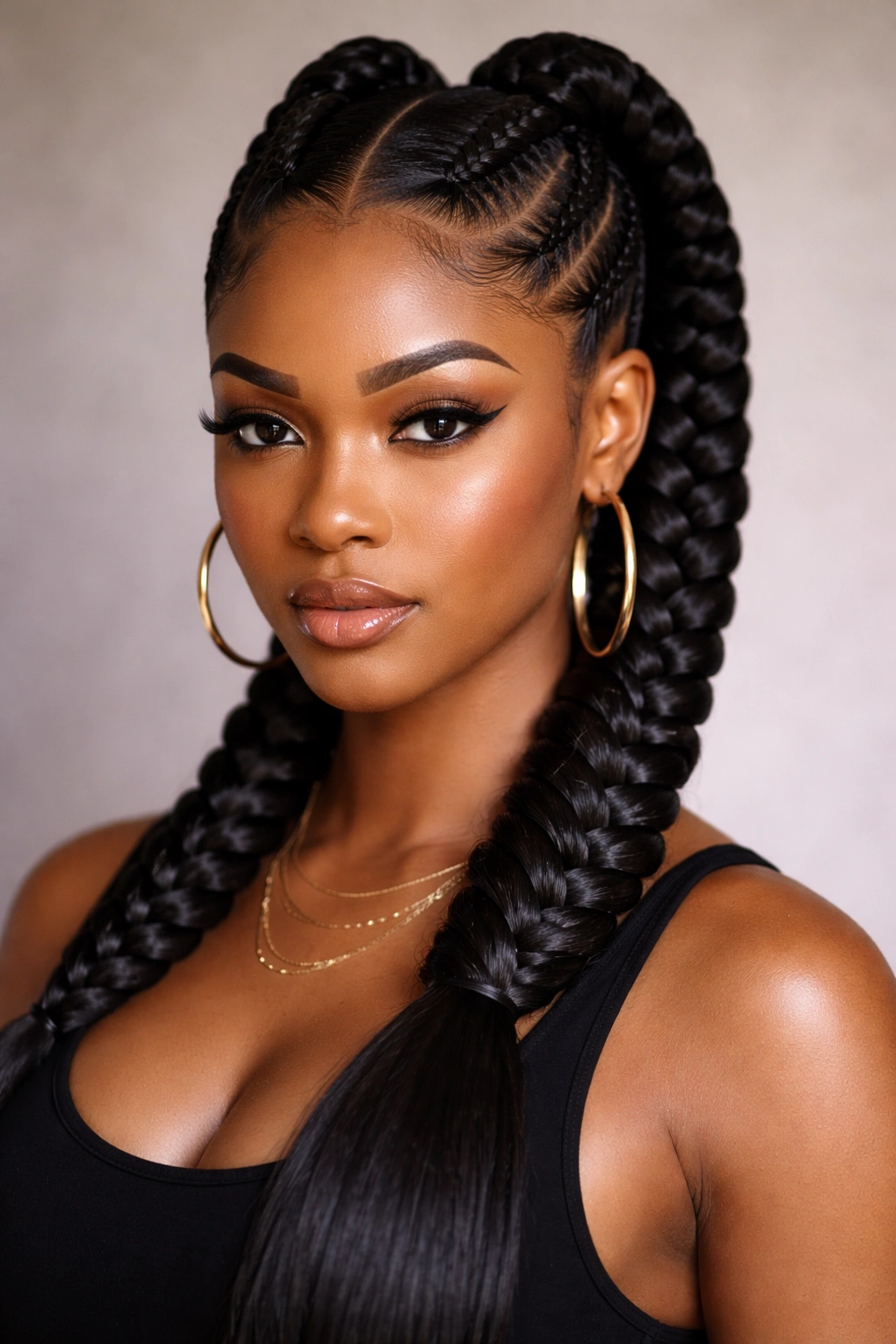
If you love the texture and dimension that stitch braids create but want to take the drama level higher, a double stitch braid ponytail gives you exactly that—two separate stitch braids on either side of your head that meet in a gorgeous, sculptural ponytail that looks almost like jewelry for your hair.
Why Double Braids Make an Impact
Two braids create a symmetry that feels incredibly intentional and artistic, almost like you’re framing your face with gorgeous woven texture on both sides. This style is particularly striking on someone with a strong face shape because those braids act as visual anchors, drawing attention to your eyes and cheekbones in a way that single braids can’t quite achieve. The double braid setup also tends to feel more modern and on-trend than a single braid, and it photographs beautifully—those twin lines of texture create visual interest that translates perfectly to photos.
Styling Your Double Stitch Braids
- Create a center part (or an off-center part if that feels more flattering to your face shape) as your guide
- Braid one stitch braid starting from one side, angling it toward the back of your head
- Braid a matching stitch braid on the opposite side, mirroring the angle and thickness of the first braid
- Bring both braids together at the back of your head and secure them into a single ponytail with your elastic
- The ponytail itself can be sleek and simple, or you can curl the ends for a more romantic feel
- Add a decorative hair cuff where the two braids meet the ponytail for extra visual interest
Real talk: Getting two perfectly matched braids requires either serious skill if you’re self-styling, or a braider you trust completely—mismatched braids in a double setup are much more noticeable than in other styles, so this is worth the investment in a quality stylist who gets your vision.
4. Side Stitch Braid Ponytail
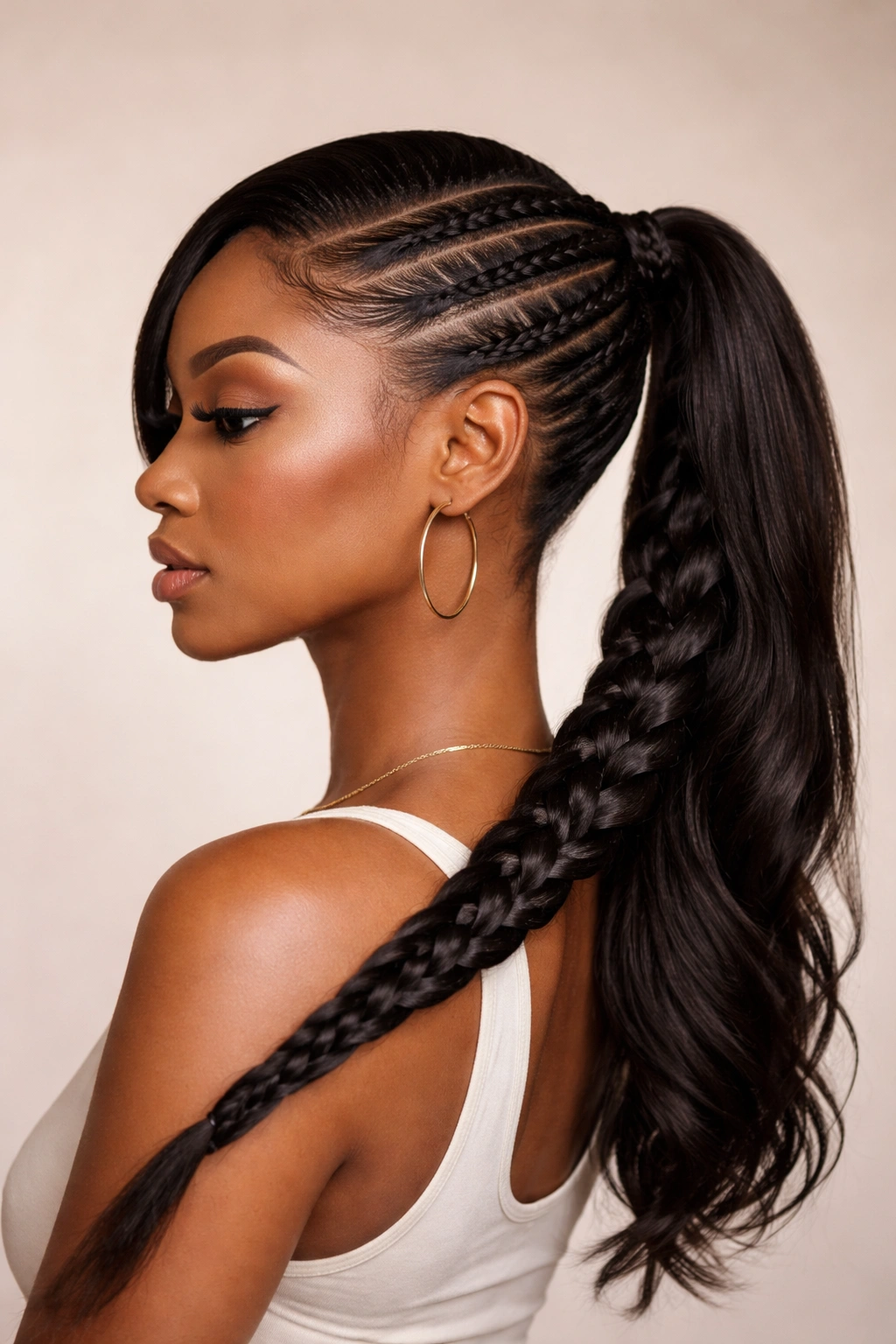
A side stitch braid ponytail gathers all that beautiful braided texture to one side of your head, creating an asymmetrical silhouette that’s instantly fashion-forward and feels slightly more daring and editorial than a center-focused ponytail. This style is particularly gorgeous on someone with a strong profile or beautiful side features you want to highlight.
The Drama of Asymmetry
There’s a reason asymmetrical hairstyles feel so modern and intentional—they break away from the perfectly balanced styles we’re accustomed to, and that departure from symmetry reads as creative and confident. A side stitch braid ponytail does this beautifully because you’re not just moving the ponytail placement; you’re literally reorganizing where the visual weight of your entire hairstyle sits. The braids themselves become even more prominent when they’re all flowing to one side, and that’s a feature, not a bug.
How to Create the Side Stitch Braid Look
- Create a deep side part, leaning in the direction you want your ponytail to fall
- Braid 1-2 stitch braids on the fuller side of the part, angling them toward the direction of your desired ponytail placement
- Smooth back the hair on the opposite side, or leave it loose and sleek
- Gather your ponytail to the side where your braids are meeting, and secure with a smooth elastic
- The side ponytail can sit at different heights depending on the vibe you’re going for—higher for bold, lower for romance
- Consider curling or waving the ponytail ends to add movement and prevent the overall look from feeling too linear
Insider note: This style is particularly stunning on someone with a longer neck, since the asymmetry and side placement create longer sight lines that emphasize length—but honestly, if you love the asymmetrical vibe, you absolutely can wear it beautifully regardless of neck length.
5. Stitch Braid Ponytail with Curly Ends
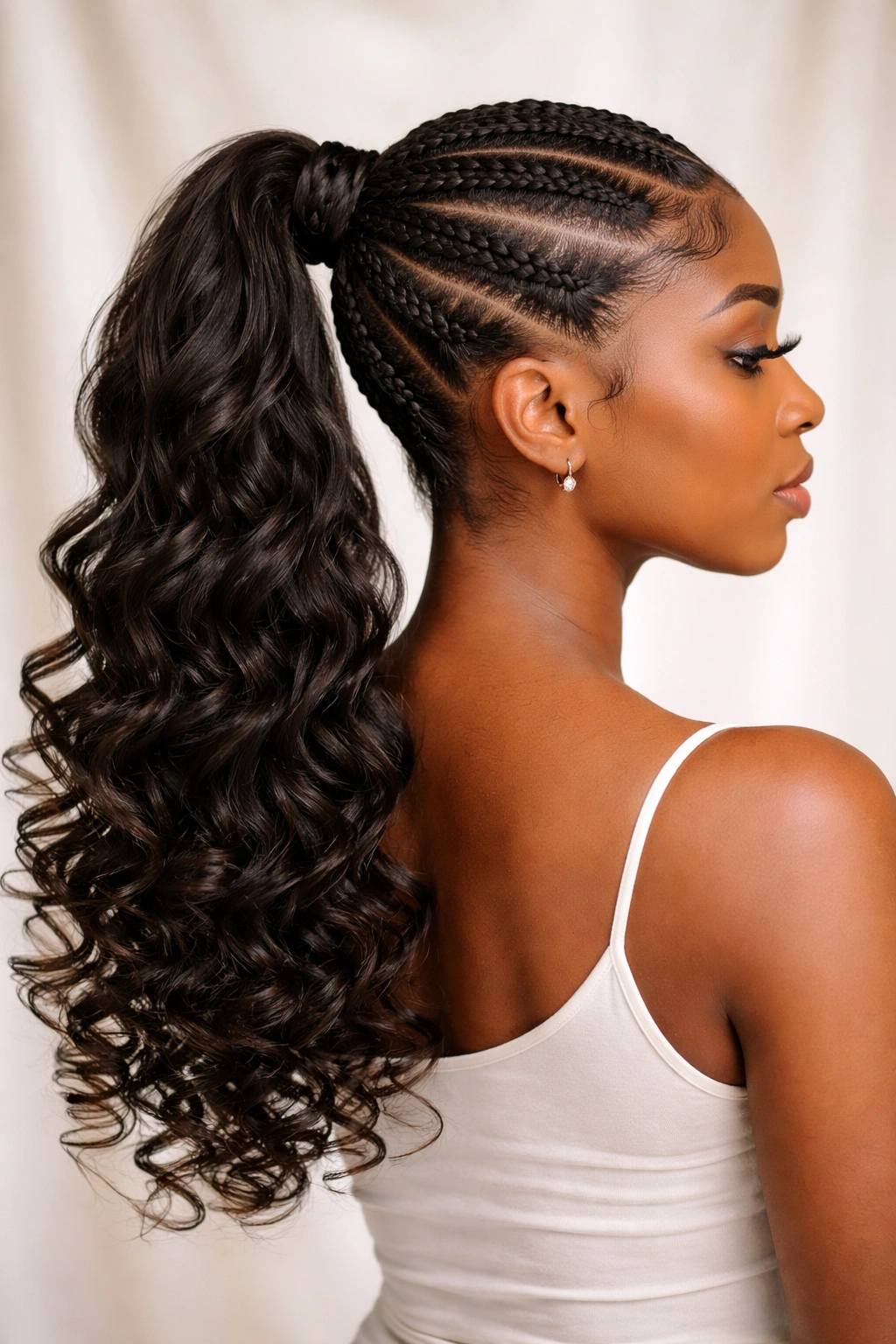
The moment you add curl or wave to the ends of a stitch braid ponytail, you shift the entire energy from sleek and minimalist to romantic and textured—suddenly you’ve got a hairstyle that works just as well for a night out as it does for a casual weekend brunch. The contrast between the precision of the stitch braids and the movement of curled ends creates a visual balance that feels effortlessly styled.
Creating That Texture Contrast
Curly or waved ends give your stitch braid ponytail dimension and movement that straight hair simply can’t replicate, and that texture makes the style feel less severe and more approachable. The curls catch light differently than straight hair, creating little pockets of shadow and shine that make the overall hairstyle more visually interesting. If your hair has natural texture, this is an ideal way to work with your hair’s natural pattern rather than fighting against it with heat tools or product.
Getting the Best Curled-End Results
- Style your ponytail as you normally would—high, low, double, side, whatever placement you prefer
- Divide your ponytail into 3-5 sections depending on how full you want your curls to be
- Use a curling iron, curl cream on natural curls, or perm rods overnight to create your desired curl pattern
- If using heat, curl away from your face for a flattering shape, and aim for loose, bouncy curls rather than tight ringlets (unless tight curls are your preference)
- Let curls cool completely before touching them, so they set and last longer
- Gently separate and fluff your curls with your fingers rather than a brush, which can disrupt the curl pattern
Pro tip: Curly ends look their absolute best when they’re well-moisturized and have some shine—use a lightweight curl cream or oil on your ends to keep them looking fresh and prevent that dry, frizzy appearance that can make curls look tired.
6. Wrapped Stitch Braid Ponytail
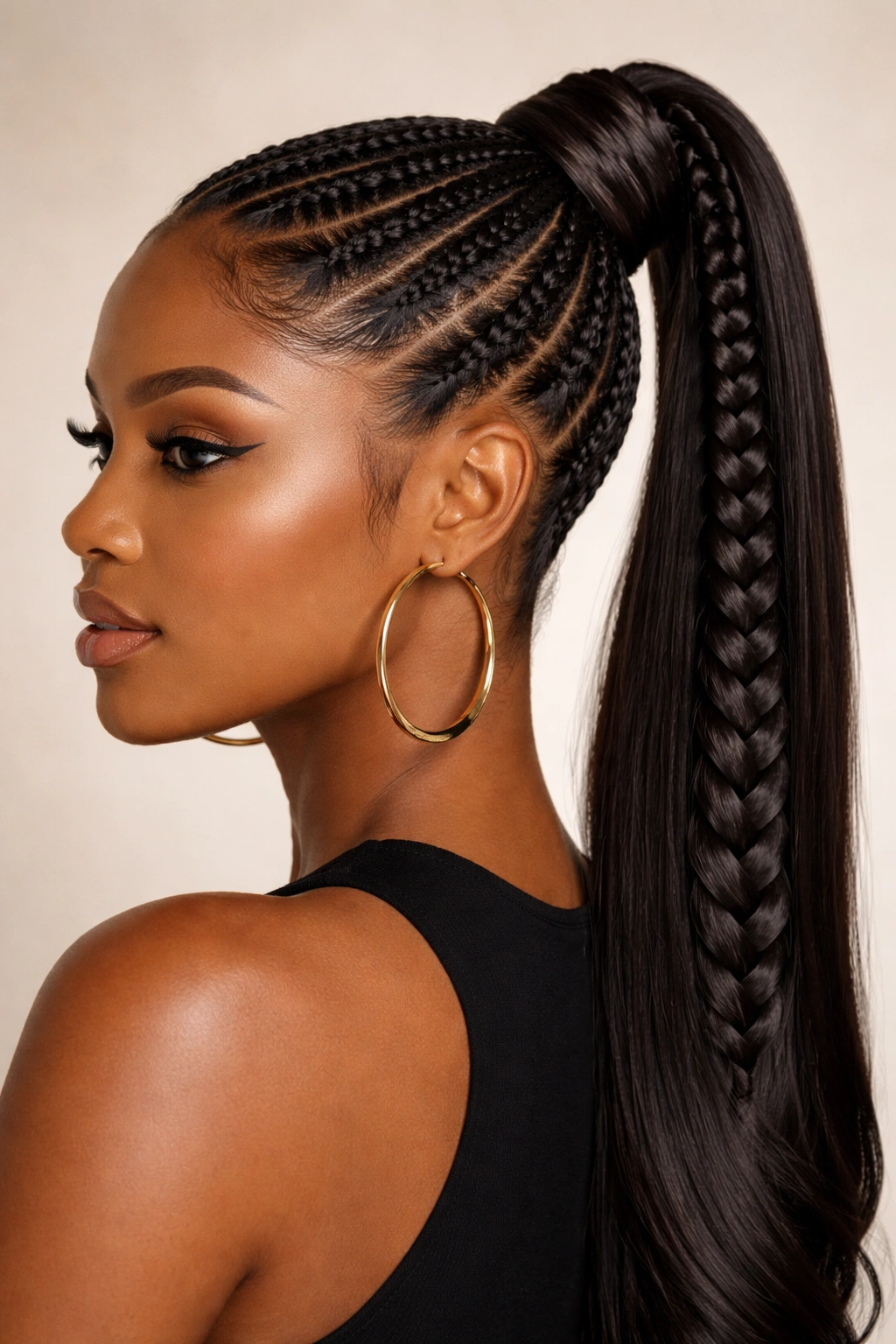
A wrapped stitch braid ponytail takes the elegant detailing up several notches by incorporating additional wrapped sections, creating a layered, sculptural look that feels almost like you’re wearing hair art. You’re essentially creating multiple visual bands around your ponytail base, which adds depth and dimension that reads as incredibly intentional and high-fashion.
The Visual Impact of Wrapping Details
Wrapping a section of your hair around the ponytail base instantly transforms it from a simple pulled-back look into something that feels curated and special. When you add multiple wraps or incorporate the stitch braids themselves as part of the wrapping design, you create visual interest that catches light and movement differently depending on how someone’s viewing you. This technique is also excellent if you want to disguise a thinner-looking ponytail or add visual weight to the back of your head.
Building Your Wrapped Stitch Braid Ponytail
- Create your stitch braid ponytail as you normally would—the placement (high, low, side) is up to you
- Once the base is secure, take a small 1-2 inch section from underneath the ponytail
- Wrap that section around the elastic, covering it completely and pinning it in place with bobby pins that match your hair color
- For extra detail, you can braid that wrapped section before wrapping it, or use a decorative cuff in addition to the hair wrap
- Some stylists add a second or even third wrap for extra dimension—just make sure each wrap is secure and hidden
- Leave your ponytail ends natural, curled, or styled however you prefer—the wrapping detail is the star here
Worth knowing: This style requires a bit more maintenance than a basic ponytail because those wraps can shift if you’re moving around a lot or sleeping on that side—a silk pillowcase and a light retouch from your stylist every few weeks will keep it looking fresh.
7. Thick Chunky Stitch Braid Ponytail
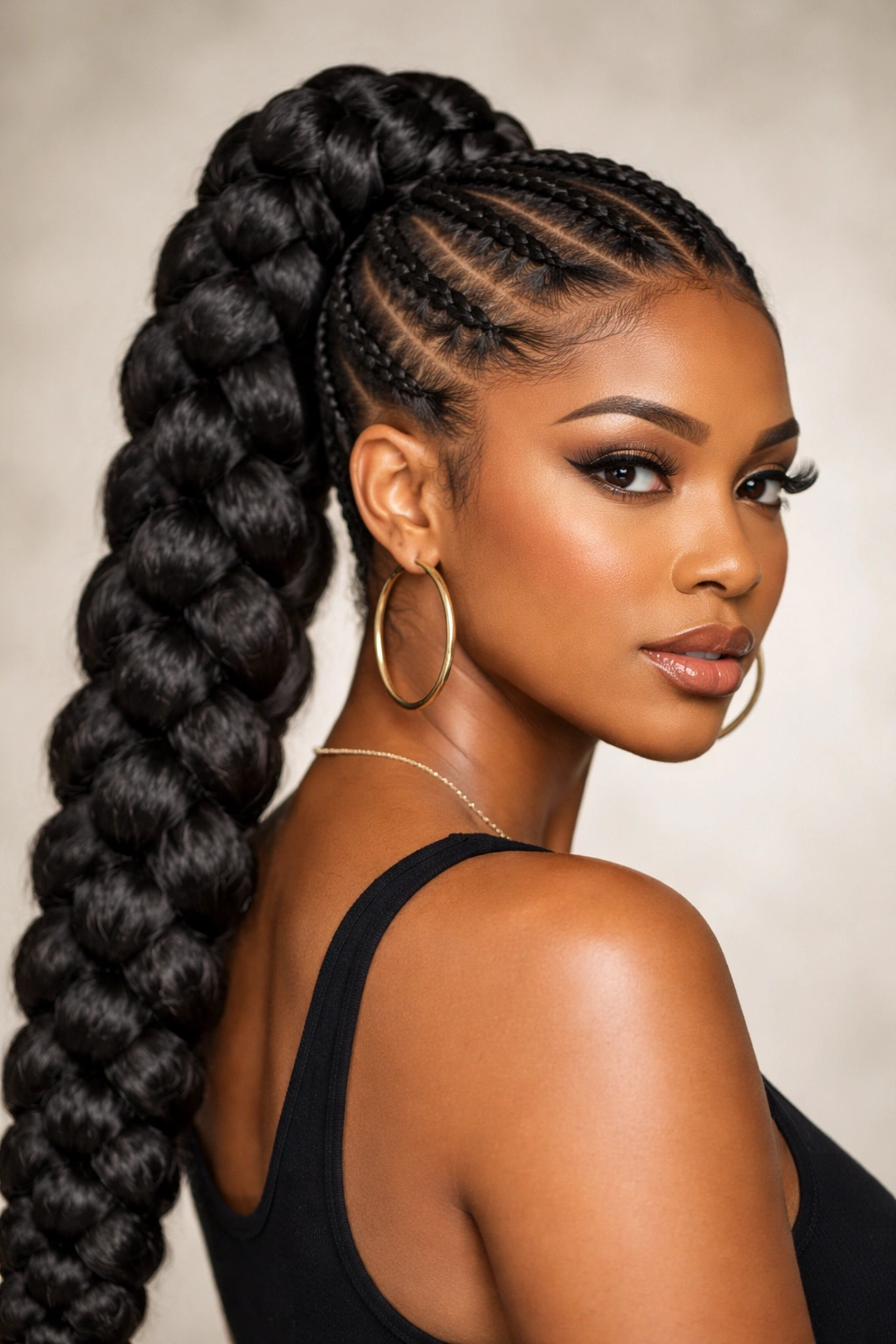
If you prefer bold statements and aren’t afraid of texture, a thick chunky stitch braid ponytail showcases your hair’s volume and density beautifully, creating braids with serious presence and impact. These aren’t delicate, fine braids—these are substantial, visually striking braids that demand attention and work particularly well on someone with thick, coarse hair that can support thicker sections.
Why Chunky Braids Command Attention
There’s something undeniably powerful about thick braids—they feel strong, confident, and unapologetically bold. The stitch pattern on a thicker braid is even more pronounced and textured, creating those gorgeous shadow lines that make the braid look almost three-dimensional. Chunky braids also tend to last longer and maintain their neat appearance better than finer braids, particularly if you have very thick hair that’s prone to breakage or matting in smaller braid sections.
Creating a Successful Chunky Stitch Braid Look
- Work with a stylist who’s experienced with thick braids and understands how much tension your hair can handle without causing discomfort
- Typically, you’ll do 2-3 chunky stitch braids rather than 4-5 thinner ones, since the visual impact is there regardless
- Make sure your braids are started cleanly at the roots—sloppy beginnings are much more noticeable on thicker braids
- The braids themselves might sit slightly thicker at the base and taper gradually, which is completely normal and looks intentional
- Style your ponytail at whatever height feels right, and let those gorgeous thick braids be the focal point
- Consider adding hair accessories like gold cuffs or beads that can rest on the thicker braids without slipping
Real talk: Thick braids require more scalp care during the braiding process and after—make sure your stylist isn’t pulling so tightly that you’re experiencing pain or tension headaches, and spend time every few days massaging your scalp with oils to prevent itching and buildup.
8. Stitch Braid Ponytail with Knotless Braids
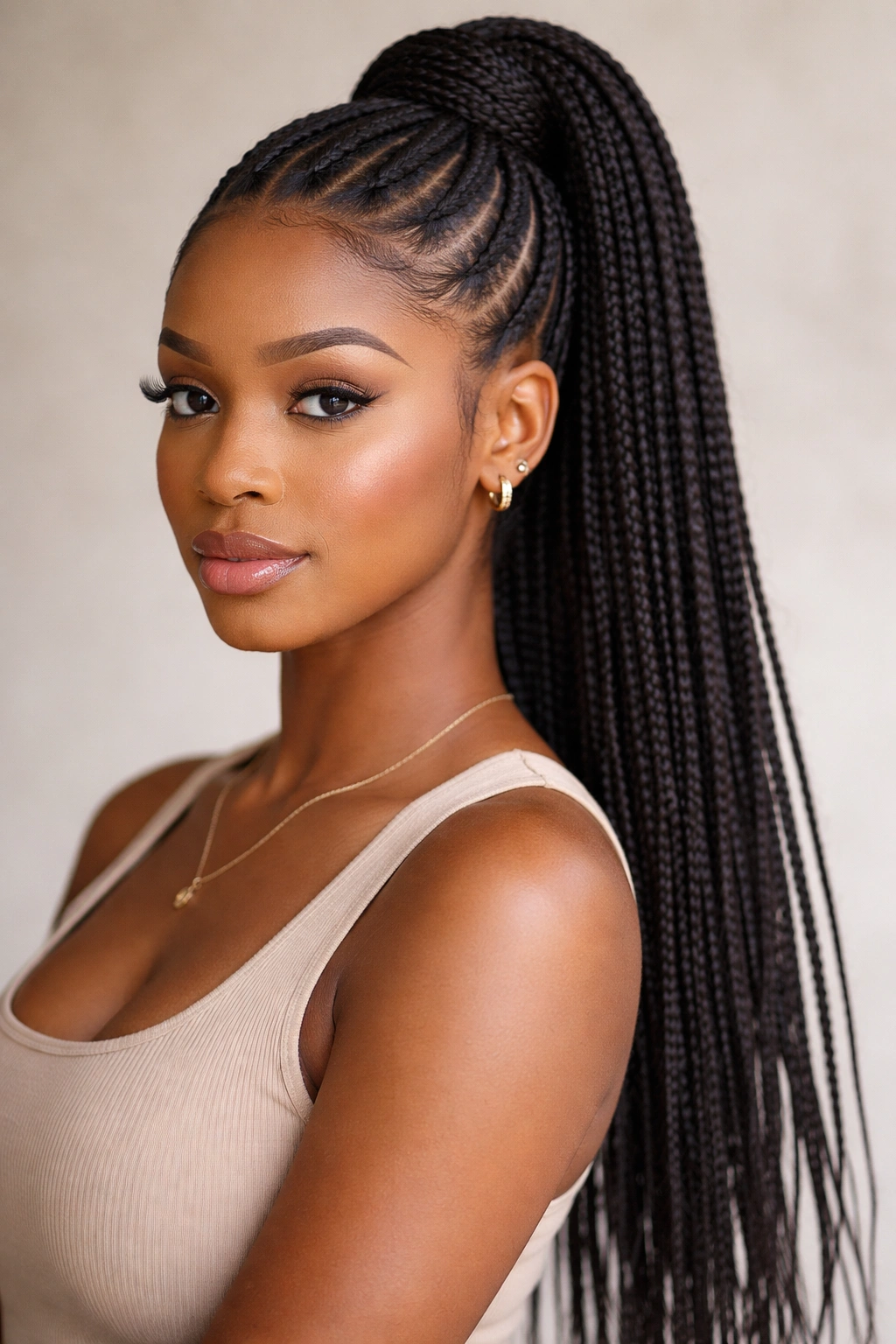
Knotless braids offer a gentler approach to protective styling while still achieving that gorgeous stitch braid aesthetic, making them an excellent choice if you have a sensitive scalp, thinner edges, or simply prefer the feel of braids that don’t have the tight, heavy sensation of traditional box braids. The knotless technique creates a softer, more tapered appearance that’s equally beautiful in a ponytail.
The Advantages of Going Knotless
Knotless braids are created without that initial knot at the base, which means there’s less tension pulling at your hairline and roots—a genuine game-changer if you’ve experienced scalp soreness or edge breakage from tighter braiding styles. The braids themselves taper more naturally from root to end, which often looks more refined and modern than the blunt ends of traditional braids. Many people also report that knotless braids feel lighter and more comfortable, especially when styled into a ponytail where all that weight is gathered in one spot.
Styling Knotless Braids into a Ponytail
- Request knotless braids from your stylist, specifying that you’ll be styling them into a ponytail so they can adjust the thickness accordingly
- The starting point should feel comfortable at your scalp—if anything feels too tight, speak up immediately
- Once your braids are complete, you can style them into any ponytail configuration: high, low, double, side, whatever you prefer
- Knotless braids tend to unravel slightly more easily than traditional braids, so make sure the ends are well-sealed with thread or a small elastic
- The softer appearance of knotless braids actually looks incredible when worn in a ponytail because they photograph with a more refined, elegant quality
- These braids typically last 4-6 weeks with good care, sometimes longer depending on how gently you handle them
Pro tip: Knotless braids benefit tremendously from a silk bonnet or scarf at night—the lack of tension at the base means they’re slightly more prone to loosening, and protective styling at night prevents unnecessary unraveling and keeps your braids fresh-looking longer.
9. Colored Stitch Braid Ponytail
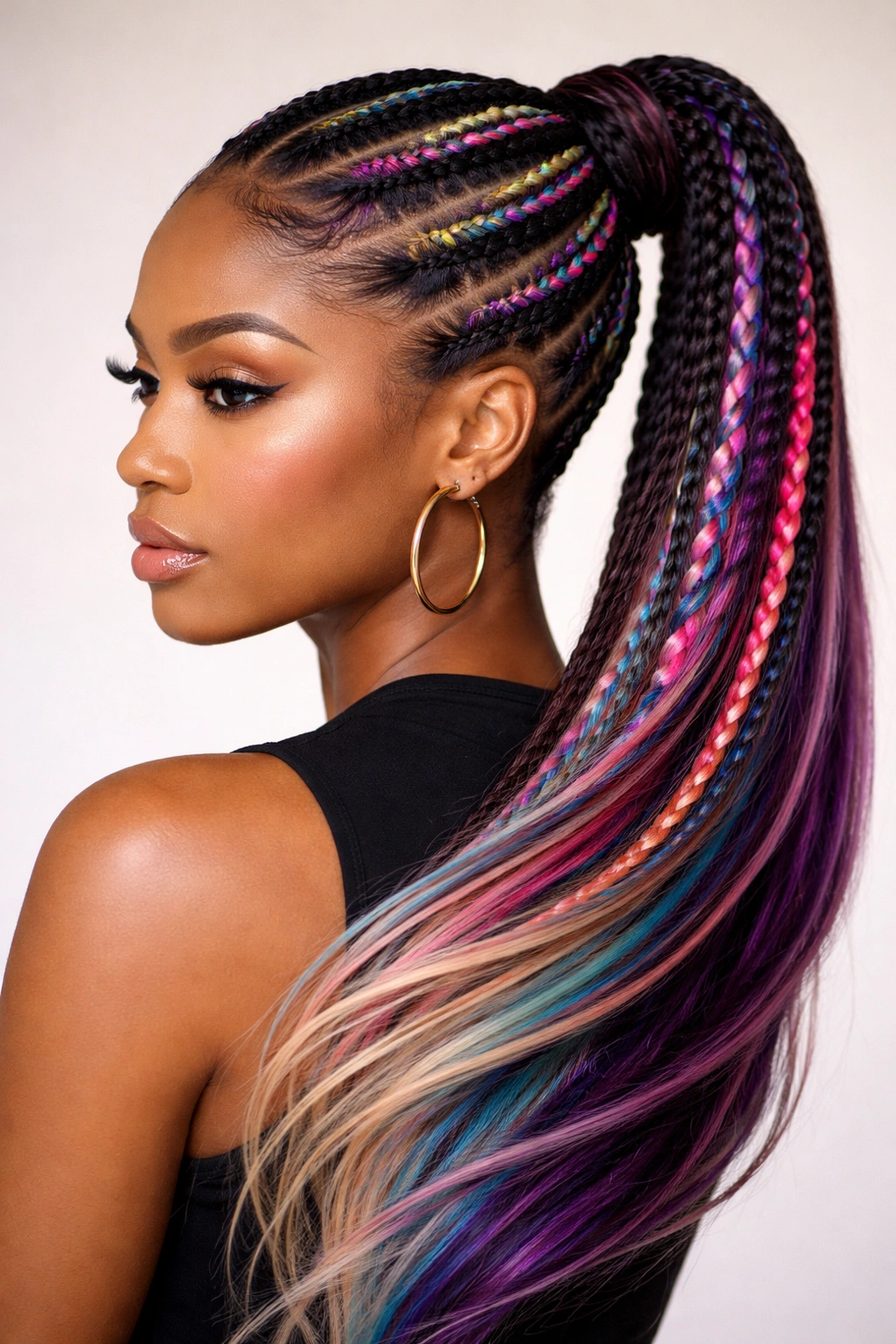
Adding color to your stitch braid ponytail opens up a world of creative possibilities, whether you’re going for subtle highlights with a contrasting color, bold statement pieces with vibrant hues, or even a full ombré effect that flows through your braids. Color completely transforms how a stitch braid ponytail reads visually, adding dimension and personality that makes the style unmistakably yours.
The Impact of Adding Color
Color draws the eye and creates visual separation and depth—a colored stitch braid ponytail immediately stands out and signals that this is a look someone has chosen deliberately. Even subtle color choices like adding blonde, burgundy, or bronze tones to the ends of braids can make a massive difference in how the overall style reads. Bold colors work beautifully with the texture of braids because the braided pattern itself creates multiple light-catching surfaces that make color appear more dynamic and vivid.
Incorporating Color into Your Stitch Braids
- Decide whether you want color woven throughout the braids, just at the ends, or in specific accent pieces—this choice affects both how you’ll have the color applied and how long it’ll last
- Box braids accept both human hair extensions with color already woven in, and colored hair additions placed strategically during the braiding process
- Consider how the color will complement your skin tone and natural hair color—warm tones (golds, reds, oranges) generally suit warmer skin tones, while cool tones (blues, silvers, purples) suit cooler tones
- Colored braids require the same protective care as regular braids, but colored hair extensions may need slightly more gentle handling to prevent color fading
- Your ponytail placement and the positioning of your colored sections can be strategically planned with your stylist for maximum visual impact
- Maintenance includes gentle washing, moisture treatments, and avoiding excessive sun exposure if you want your color to remain vibrant
Worth knowing: If you’re adding synthetic color to natural hair, be aware that synthetic fibers don’t blend seamlessly the way natural hair does—this can actually look stunning as a bold statement, but if you prefer a more blended look, ask your stylist about human hair extensions in your chosen color.
10. Stitch Braid Ponytail Updo
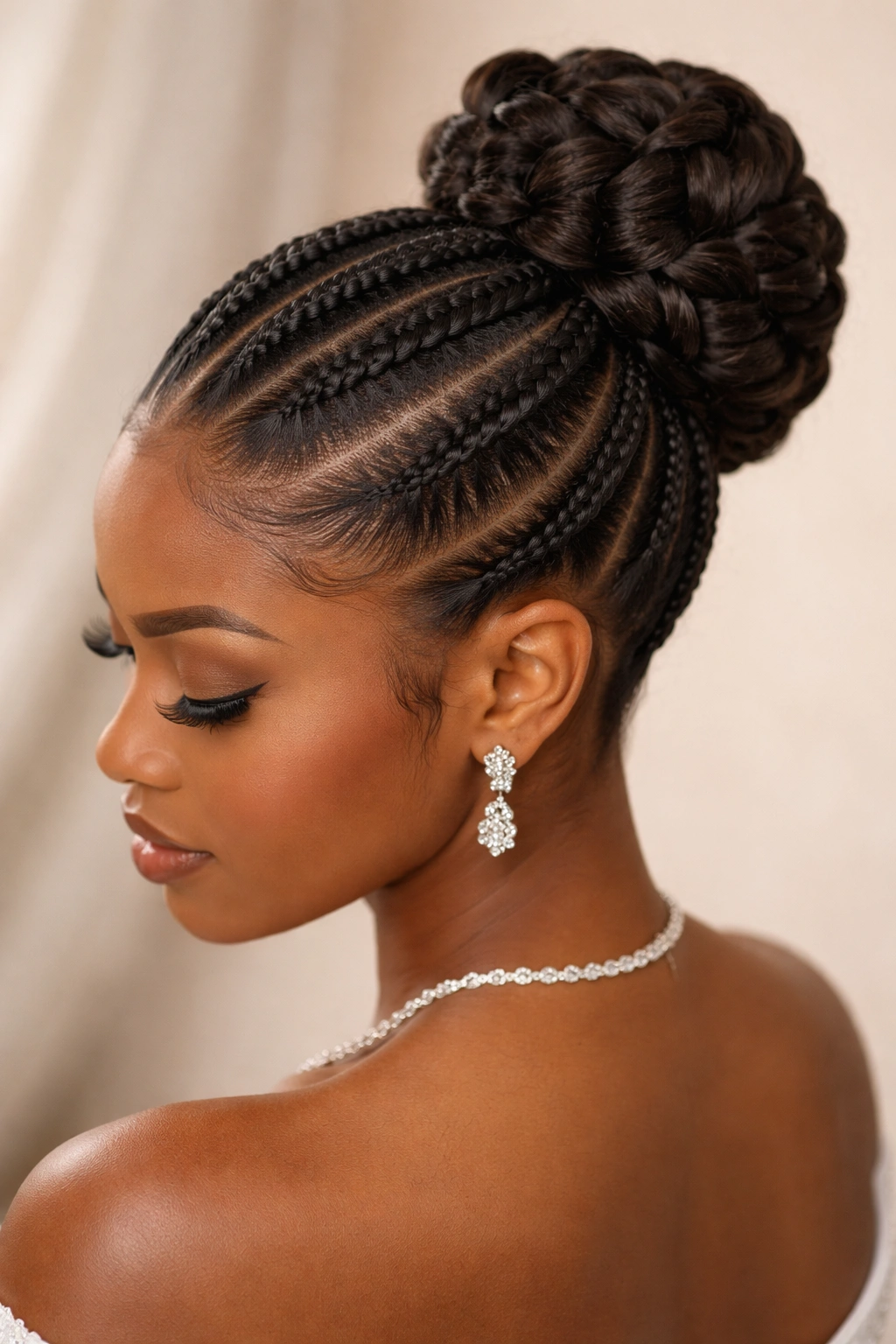
Taking your stitch braid ponytail and transforming it into an updo creates a completely different vibe—suddenly you’ve got a look that’s appropriate for weddings, galas, formal events, and any occasion where you want to look seriously polished and put-together. The braids become even more prominent in an updo because they’re twisted, pinned, and designed to be visual focal points rather than just a path to a hanging ponytail.
Elevating the Stitch Braid into Formal Territory
An updo version of a stitch braid ponytail combines the protective benefits of braids with the refined, special-occasion elegance that an updo implies. You’re essentially creating a tiered look where the braids draw the eye up and around your head, then the updo itself becomes this sculptural, intentional-looking arrangement that screams occasion and effort. This is the hairstyle you wear when you want to look like you just stepped off a runway or out of a bridal magazine.
Creating Your Stitch Braid Ponytail Updo
- Create your stitch braids starting from your crown or temples, angling them toward the back of your head where you’ll gather your updo
- Once your braids are complete and your ponytail is secured, divide the ponytail into sections
- Twist or braid the ponytail section, or tease it for volume, depending on the type of updo you’re creating
- Coil and pin the ponytail into a bun, a twisted knot, a series of loops, or whatever updo shape appeals to you
- Make sure the braids are visible and frame your updo beautifully—this isn’t about hiding them; they’re a major design feature
- Secure everything thoroughly with bobby pins, and consider using a light hairspray to keep flyaways in check
- Add decorative elements like hair jewelry, decorative pins, or fresh flowers woven into the braids or updo
Real talk: Stitch braid updos look absolutely stunning in photos but require professional styling in most cases—this isn’t a quick self-style situation, so budget time and money for a skilled stylist who understands how to balance the braids and updo so everything looks intentional and beautiful.
11. Stitch Braid Ponytail with Edges
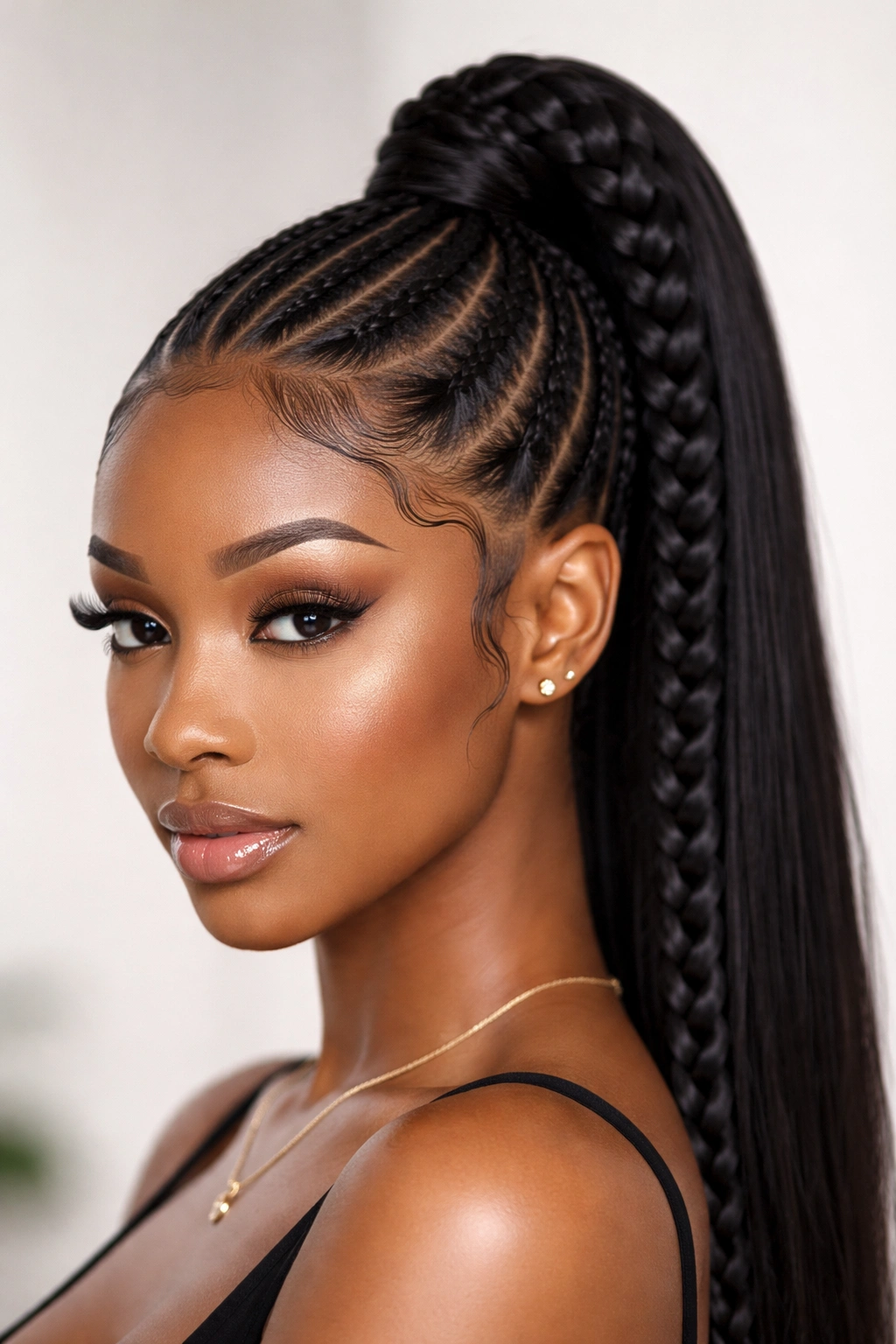
Paying specific attention to your edges when styling a stitch braid ponytail takes a good style and makes it an exceptional one—smooth, laid edges are the finishing detail that elevates an entire look from “pretty nice” to “incredibly polished.” This is the difference between a hairstyle that looks good and one that looks like you just left a professional photoshoot.
Why Edge Work Matters
Your edges are the frame around your face, and when they’re smooth, laid, and intentional-looking, they create a visual foundation that makes literally every hairstyle look better. Well-done edges signal attention to detail and grooming, and they’re particularly important with stitch braids because the clean lines of the braids are already drawing attention to your face and front hairline. If your edges are rough or flyaway while your braids are perfectly laid, there’s a visual disconnect that’s hard to ignore.
Perfecting Your Edge Game
- Start with clean hair that’s been moisturized, since dry edges are nearly impossible to lay smoothly
- Use an edge control product with medium to strong hold—look for products formulated specifically for laying edges, as regular styling gels tend to flake
- Apply the product to your hairline and edges, using a soft-bristled brush or toothbrush to smooth hair down in the direction you want it to go
- Create patterns if that’s your preference—baby hairs styled into waves, curves, or geometric shapes add extra personality
- Let the product dry completely (and I mean completely) before touching your edges, so the pattern sets
- Maintain your edges by refreshing them every 2-3 days with a little product and brush work
- Silk bonnets at night protect your laid edges from getting messed up while you sleep
Pro tip: If you have very short, delicate edges, strong gel products can actually cause more damage than help—use gentler hold products like edge creams or light oils, and accept that your edges might not lay as dramatically, but you’ll preserve their health and length in the process.
12. Textured Stitch Braid Ponytail
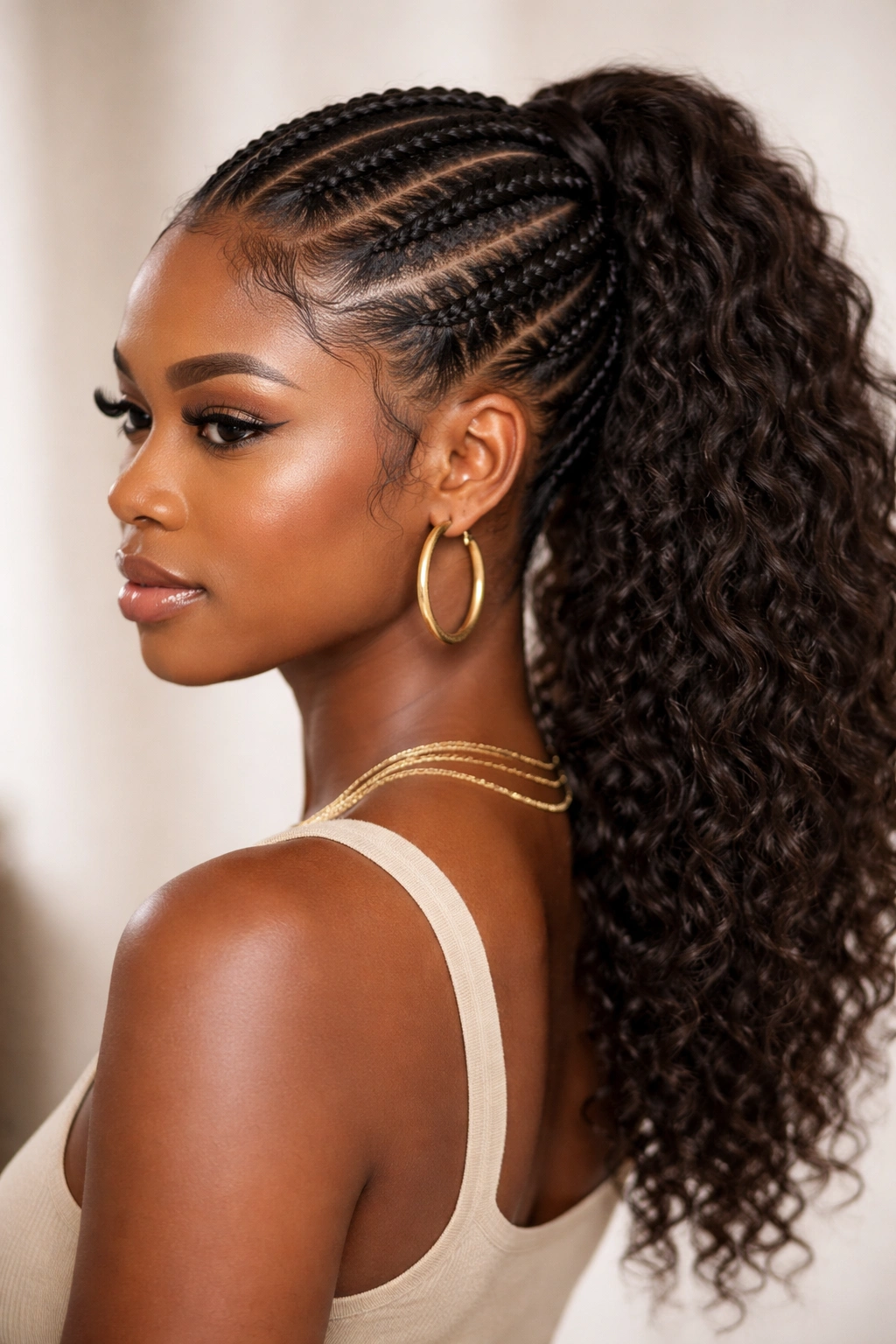
A textured stitch braid ponytail celebrates and emphasizes the natural texture within your hair and styling choices, creating a style that feels organic, intentional, and beautifully aligned with your natural hair texture rather than fighting against it. This approach is particularly gorgeous on someone with natural texture who wants to honor their hair’s actual patterns while incorporating the protective benefits of braiding.
Embracing Texture as a Design Feature
Texture is interesting—it catches light, creates depth, and makes a hairstyle feel dimensional and alive in a way that overly smooth, flat styles sometimes can’t achieve. When you lean into texture rather than fighting it with excessive smoothing products and heat styling, you end up with a hairstyle that feels authentically you, that requires less maintenance, and that photographs beautifully because texture creates visual interest at every angle.
Building Your Textured Stitch Braid Ponytail
- Create your stitch braids with natural, slightly looser tension rather than pulling everything taut—this allows your natural texture to show through and around the braids
- You can braid with your natural hair, or add textured extensions that complement your natural pattern
- Rather than smoothing every single stray hair into submission, embrace the little wisps and texture pieces that escape your braids
- Style your ponytail in whatever placement feels right, but don’t obsess over making every hair perfectly smooth
- Consider adding texture to your ponytail ends by working with your natural curl pattern, creating twists, or braiding the ponytail section
- Use styling products that enhance texture rather than flatten it—curl creams, texture sprays, and light oils are your friends here
- This style often requires the least maintenance of any ponytail option, since you’re not fighting your hair’s natural inclination
Worth knowing: Textured stitch braids can look slightly less “done” than extremely smooth, polished braids—and that’s actually the entire point. If you prefer a more refined, sleek appearance, this might not be the style for you, but if you love that organic, intentional, beautifully-imperfect vibe, this is your moment to shine.
Final Thoughts
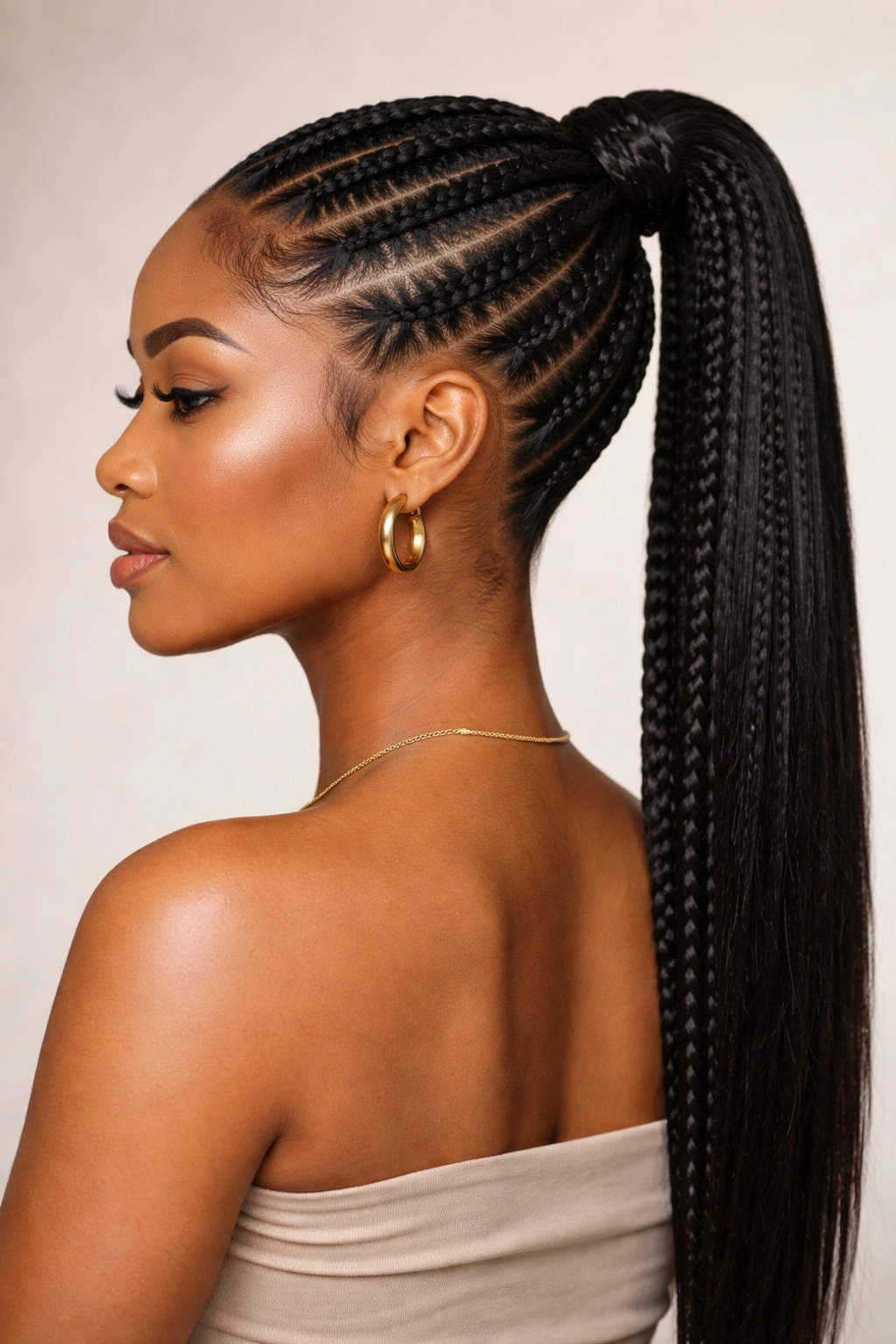
Stitch braid ponytails are genuinely a chameleon hairstyle—they transform completely depending on where you place them, what you do with the ends, how thick or fine your braids are, and what little styling details you add along the way. Whether you’re drawn to the architectural precision of a high, sleek style or the organic flow of a textured, loose variation, there’s a stitch braid ponytail that’s absolutely perfect for you and your lifestyle.
The best stitch braid ponytail is the one that makes you feel confident and beautiful when you catch your reflection, that works with your hair’s natural characteristics rather than against them, and that you actually enjoy wearing for the weeks it’ll last. Don’t be afraid to try a few different variations—what works for your friend might not be the one that clicks for you, and that’s completely okay.
Take your time finding a stylist who genuinely understands stitch braiding technique and who listens when you describe what you want. A great stylist will offer suggestions based on your hair type, face shape, and lifestyle, and they’ll make the entire braiding experience feel comfortable and collaborative rather than rushed or painful. Your edges, your scalp health, and your overall comfort during and after the styling process matter infinitely more than following a trend perfectly, so trust your instincts and speak up if something doesn’t feel right.
