



There’s something undeniably polished about a truly sleek ponytail. When it’s done well, it transforms your entire look—turning a casual day into something more intentional and put-together without requiring hours in front of the mirror. The beauty of sleek ponytails is that they work for almost every occasion, from the office to a night out, and they’re especially flattering on longer hair, which gives you options that shorter lengths simply don’t have.
Long hair presents a unique advantage when it comes to creating sleek styles. The length and weight of your strands can actually work in your favor, helping you achieve that smooth, controlled finish that makes a ponytail look genuinely polished rather than just hastily pulled back. The key is understanding that sleekness isn’t about perfection—it’s about intentionality. It’s the difference between a ponytail that says “I put thought into this” versus one that says “I grabbed my hair on the way out the door.”
What makes a ponytail truly sleek comes down to a few core elements: smooth flyaways controlled by the right products, strategic placement that flatters your face and neck, proper tension that keeps everything in place without looking uncomfortably tight, and small finishing details that elevate it from basic to genuinely stylish. Throughout this guide, you’ll discover twelve distinct takes on the sleek ponytail that work beautifully on long hair, each with its own personality and best use cases. Whether you’re heading to a formal event or just want to look more polished on a regular Tuesday, there’s a style here that’ll work for you.
1. Classic High Sleek Ponytail
The high sleek ponytail is the foundation style—the one that works across virtually every situation and sets the standard for what “sleek” actually means. It sits at the crown or just above it, creating an elongated silhouette that’s both elegant and youthful. When executed properly, this style pulls your features upward and creates a clean, uncluttered look around your face and neck.
Why It Remains the Gold Standard
The high placement naturally flatters most face shapes because it creates vertical lines and draws attention to your features rather than framing them with hair. On long hair, the extended length of your ponytail tail creates a striking visual line that emphasizes your hair’s length and health. The height also prevents the style from looking droopy or tired, which is why this version remains the go-to for professional settings and formal events.
How to Perfect the High Sleek Look
- Start with clean or day-old hair and apply a smoothing serum or lightweight styling cream from mid-length to ends before you begin
- Use a fine-tooth comb to brush hair straight back, pulling it up to the crown area and securing with a sturdy elastic
- Use a small brush or old toothbrush dampened with finishing spray to smooth any flyaways around your hairline
- Consider wrapping a small section of hair around the elastic to conceal it for an elevated finish
Pro tip: Applying your smoothing product just to the top layer of hair (rather than your entire head) gives you sleekness where it shows while keeping your underneath layers softer and less weighed down.
2. Low Sleek Ponytail
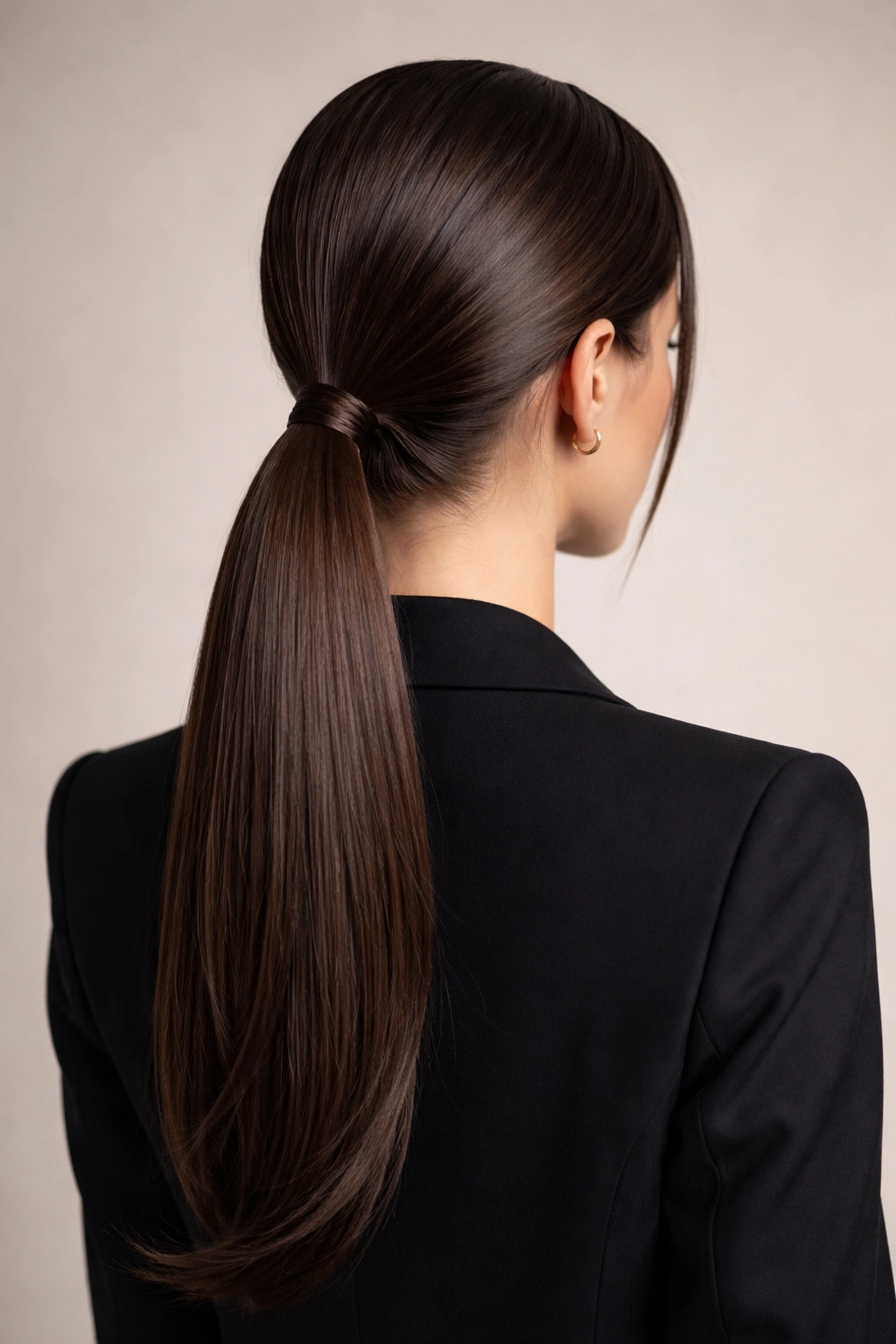
The low sleek ponytail is the sophisticated older sibling of the high version—it’s elegant, understated, and surprisingly versatile. This style sits at the nape of your neck, creating a longer, more graceful silhouette. It reads as polished rather than sporty, making it ideal for professional environments, date nights, or any situation where you want to look intentionally styled without appearing overdone.
Why It Works for Every Setting
A low ponytail has an inherent sophistication that comes from its placement alone. It’s close enough to your neck to feel refined and grown-up, but far enough down to showcase the length and movement of your hair. On long hair, this positioning lets you show off your length while maintaining that sleek, controlled aesthetic. It also feels more secure than a high style—the weight distribution keeps everything in place throughout the day.
Steps to Achieve Salon-Quality Results
- Apply a smoothing cream or anti-frizz serum to damp hair, focusing on the mid-lengths and ends
- Blow-dry hair straight with a paddle brush, using tension to smooth the cuticle
- Brush all hair back and gather it low at the nape, just above where your neck curves
- Secure with a strong elastic and use a fine-tooth comb with finishing spray to smooth the surface layer
- Wrap a thin section of hair around the elastic base for a polished, professional appearance
Insider note: The lower your ponytail, the more critical the smoothing step becomes—any texture or frizz becomes more noticeable on a low style, so invest a few extra minutes in the prep work.
3. Sleek Bubble Ponytail
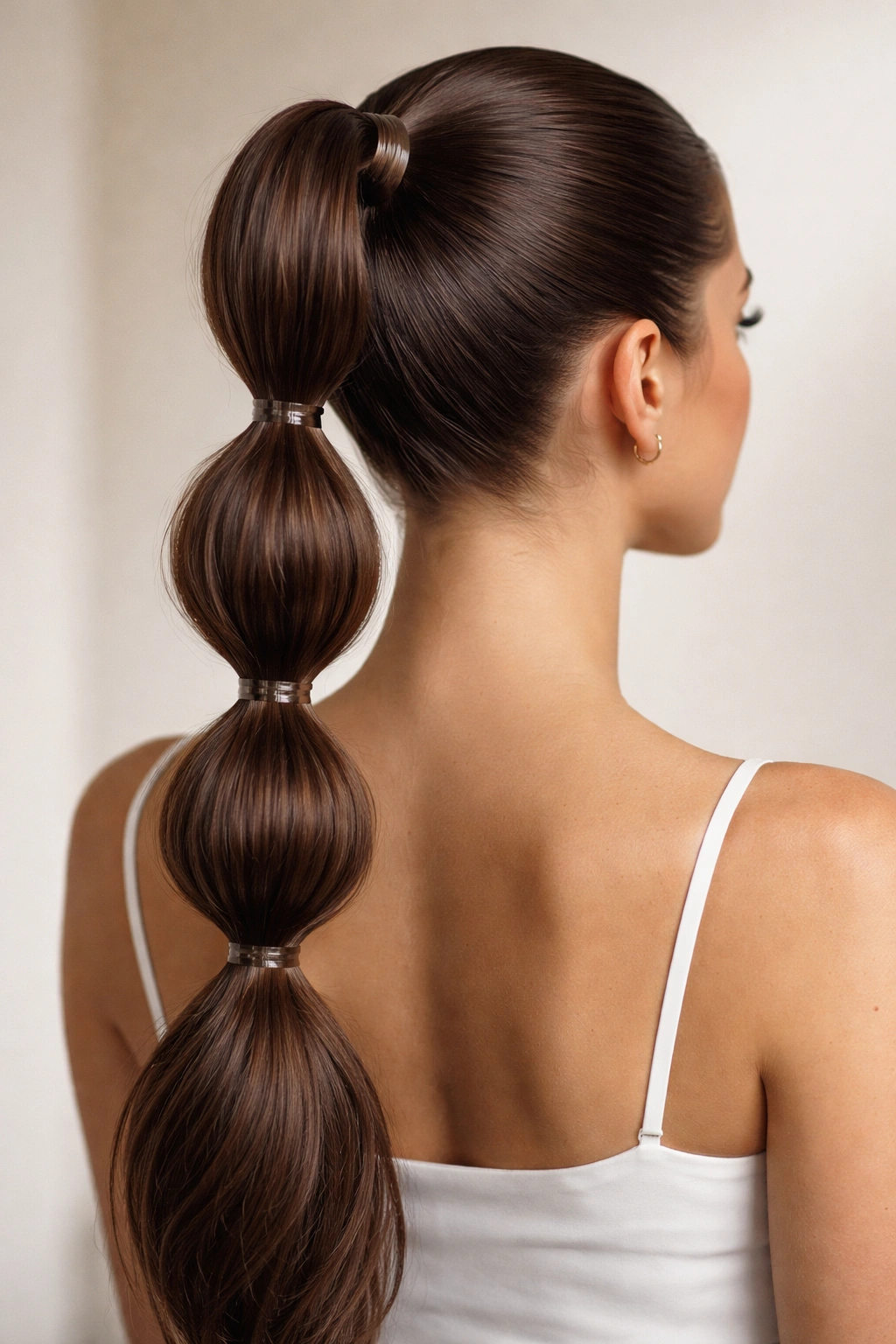
The bubble ponytail—also called a bubble braid or segmented ponytail—takes the sleek ponytail concept and adds playful dimension through strategic sectioning. Instead of one smooth tail, you create multiple “bubbles” of volume by dividing your ponytail with elastics placed an inch or two apart, then gently fluffing each section. It looks modern, Instagram-worthy, and somehow manages to be both sleek and fun.
What Makes the Bubble Ponytail Stand Out
This style bridges the gap between minimalist and statement-making. It takes the control and polish of a sleek ponytail while adding visual interest through its segmented structure. The bubbles create an illusion of more dimension and fullness, which is particularly flattering on long, straight hair that might otherwise look flat. It’s playful enough for a casual day but polished enough for creative professional environments.
Building Your Bubble Ponytail Step-by-Step
- Start with a sleek high or mid-height ponytail secured tightly with an elastic
- Place a second elastic about an inch below the first, then gently push the section between them upward and outward to create the first bubble
- Add a third elastic another inch down, push the new section up to create a second bubble
- Repeat this process three to four times, depending on your hair length and desired look
- Use a fine-tooth comb to smooth any loose hairs, and finish with hairspray for hold
Worth knowing: The key to perfect bubbles is tension—when you push each section out, you’re creating volume, but a light touch with your fingers (rather than aggressive fluffing) keeps the style looking intentional rather than messy.
4. Wrapped Ponytail
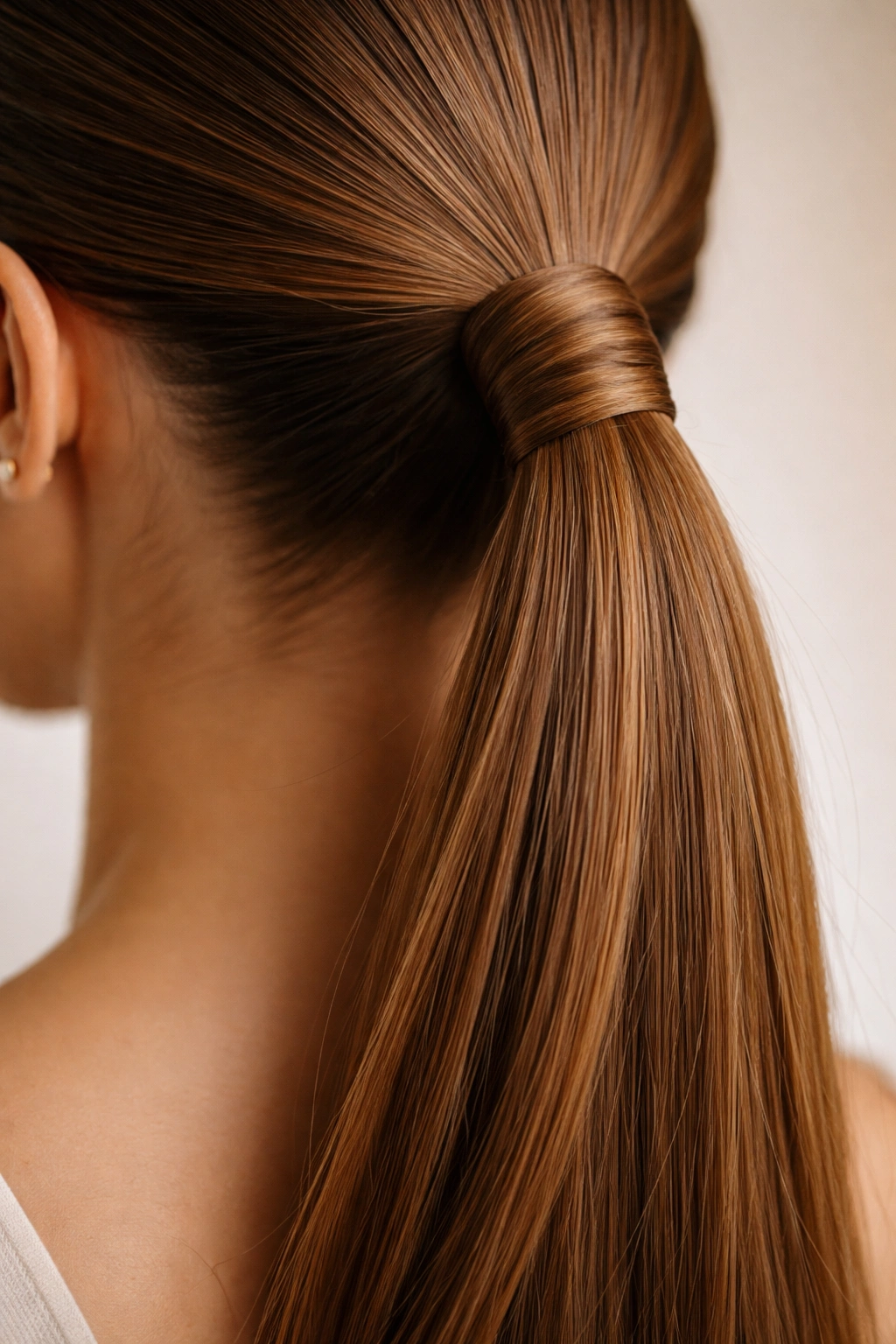
A wrapped ponytail takes the basic sleek style and elevates it through one small but incredibly effective detail: wrapping a thin section of your own hair around the elastic base. This simple technique completely transforms how polished and finished the style looks, turning it from casual to genuinely professional in seconds. It’s the kind of detail that signals you’ve taken time with your appearance.
Why This Small Detail Changes Everything
Wrapping hair around the base of your ponytail does two critical things: it conceals the elastic entirely, which automatically makes the style look more refined, and it adds a subtle decorative element that feels intentional and elegant. On long hair, this wrapped section creates a clean transition from your head to your ponytail tail, eliminating that gap that makes a basic elastic visible. It’s a technique used by professional stylists specifically because it’s so effective at elevating any ponytail.
The Wrapping Technique That Actually Works
- Create your sleek ponytail (high, low, or mid-height—this works with any placement)
- Before securing, leave out one thin section from your gathered hair
- Wrap this section tightly around the elastic two to three times, then pin the end underneath using a bobby pin matched to your hair color
- Smooth the wrapped section with a fine-tooth comb and finishing spray
- The wrapped hair should sit flush against the base with no visible elastic or bobby pin
Pro tip: If you’re having trouble keeping the wrapped section in place, use a tiny dab of gel or pomade on the bobby pin before inserting it—this creates extra grip without looking shiny.
5. Slicked Back Sleek Ponytail
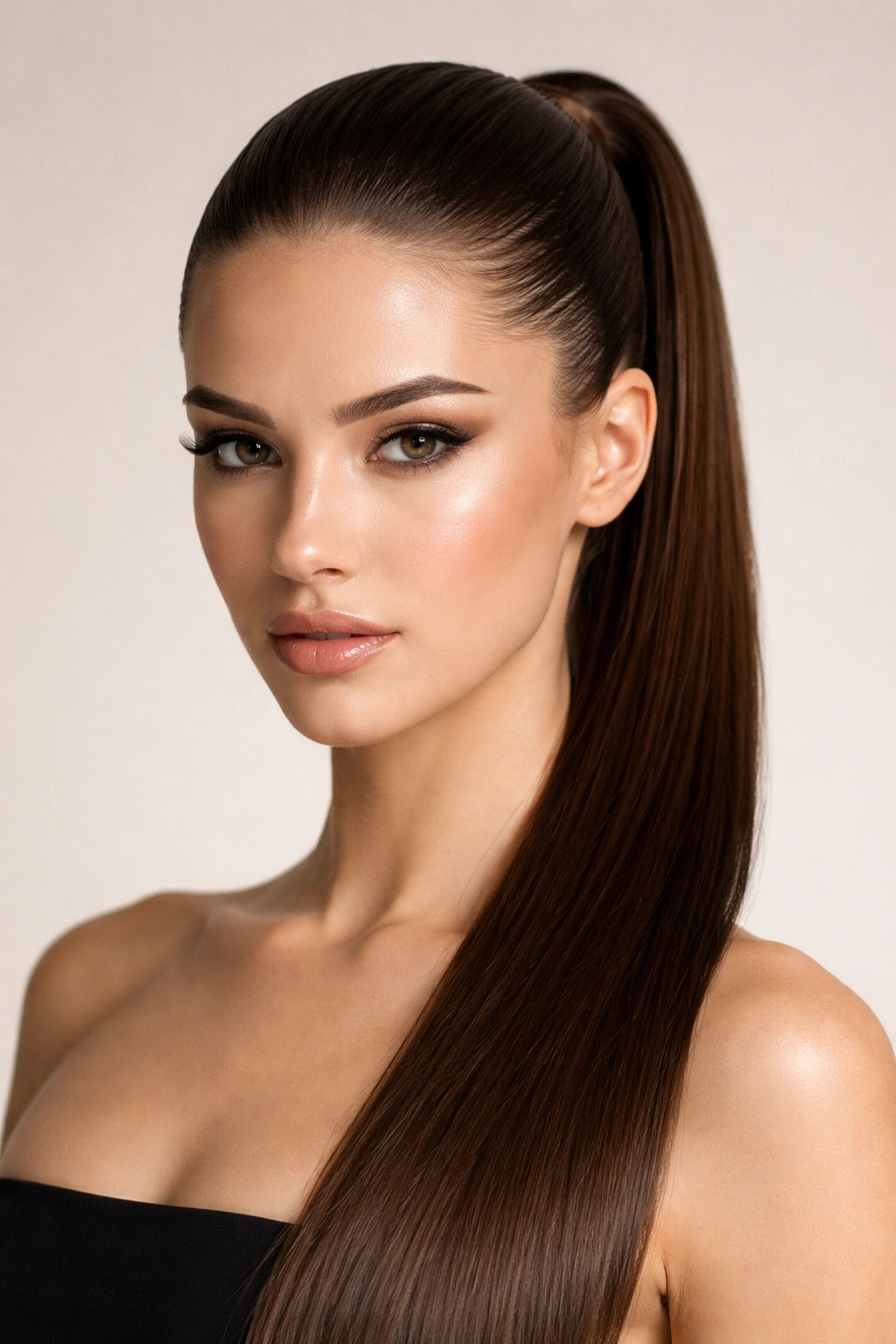
The slicked-back style takes the sleekness concept to its most extreme—every strand pulled straight back from your face and smoothed flat against your head. This is the most dramatic, almost severe version of the sleek ponytail, and it works beautifully for certain face shapes and occasions. It creates clean lines, shows off your features, and reads as bold and confident.
When Slicked-Back Is Your Best Choice
This style works exceptionally well if you have a balanced or oval face shape, strong bone structure, or enjoy making a statement. It’s ideal for athletic contexts, performance settings, or when you want maximum hair control. The slicked-back approach also works beautifully for creating that editorial or high-fashion aesthetic—it’s the ponytail of choice for runway shows and editorial photo shoots because of how dramatically it frames your face.
Creating the Sleek Slicked-Back Effect
- Apply a smoothing cream or gel to damp hair, working it through from roots to ends
- Blow-dry with a paddle brush, pulling hair taut and smooth
- Use a stiff-bristled brush to brush all hair straight back from your hairline
- Gather into your preferred ponytail position and secure with a strong-hold elastic
- Apply a smoothing serum or gel to the surface with a fine-tooth comb to eliminate any texture
- Use a finishing spray with strong hold to keep flyaways locked down
Insider note: If you find the slicked-back look too severe on your face, try softening it by leaving two thin face-framing pieces loose—you get the sleekness benefit with more dimension around your face.
6. Side Sleek Ponytail
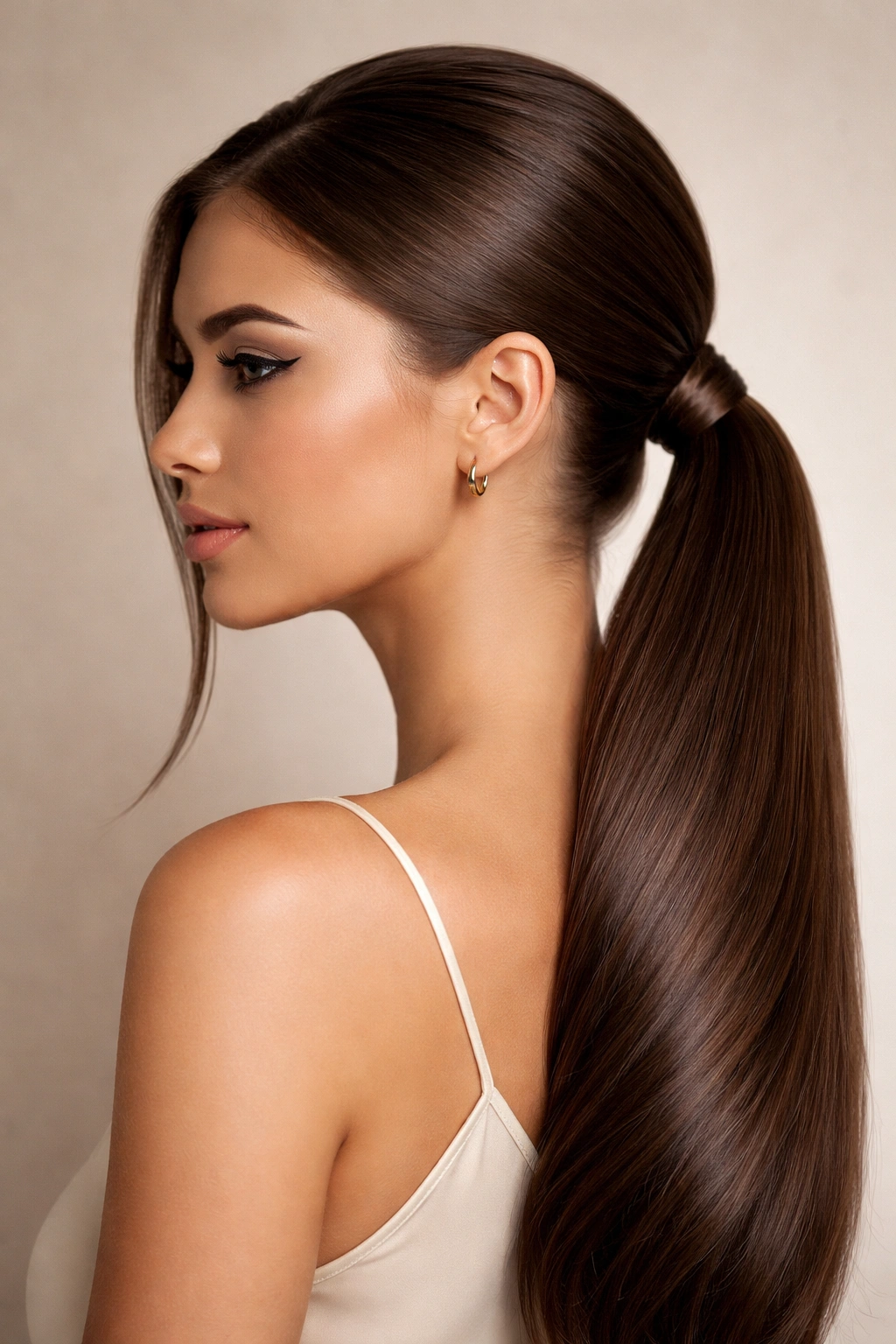
The side sleek ponytail gathers all your hair to one side, typically just below or at ear level, creating an asymmetrical silhouette that’s both elegant and flattering. This placement is exceptionally kind to most face shapes because it draws attention to one side while leaving the other side of your neck and shoulder bare and elongated. It’s the ponytail equivalent of a center part’s sophisticated younger sibling.
Why Side Placement Is So Flattering
A side ponytail creates visual balance and softness, especially if you have a wider face or prefer not to pull everything straight back from your features. The asymmetry itself is inherently interesting and fashion-forward, which is why this style works beautifully for date nights and creative professional settings. On long hair, the side placement lets you showcase your length while maintaining that sleek, controlled aesthetic.
Executing the Side Ponytail Perfectly
- Apply smoothing serum to damp hair and blow-dry smooth
- Create a deep side part on the side you want the ponytail to fall toward
- Brush all hair back and over to one side, gathering it just below the ear or at ear level
- Secure with an elastic and wrap a thin section around the base for polish
- Smooth the gathered hair with a fine-tooth comb and finishing spray
- Consider leaving two thin, wispy strands loose around your face for softness
Worth knowing: The deeper your side part, the more dramatic the asymmetry will be—experiment with different part placements to find what feels most flattering on your specific face shape.
7. Smooth Braided Ponytail
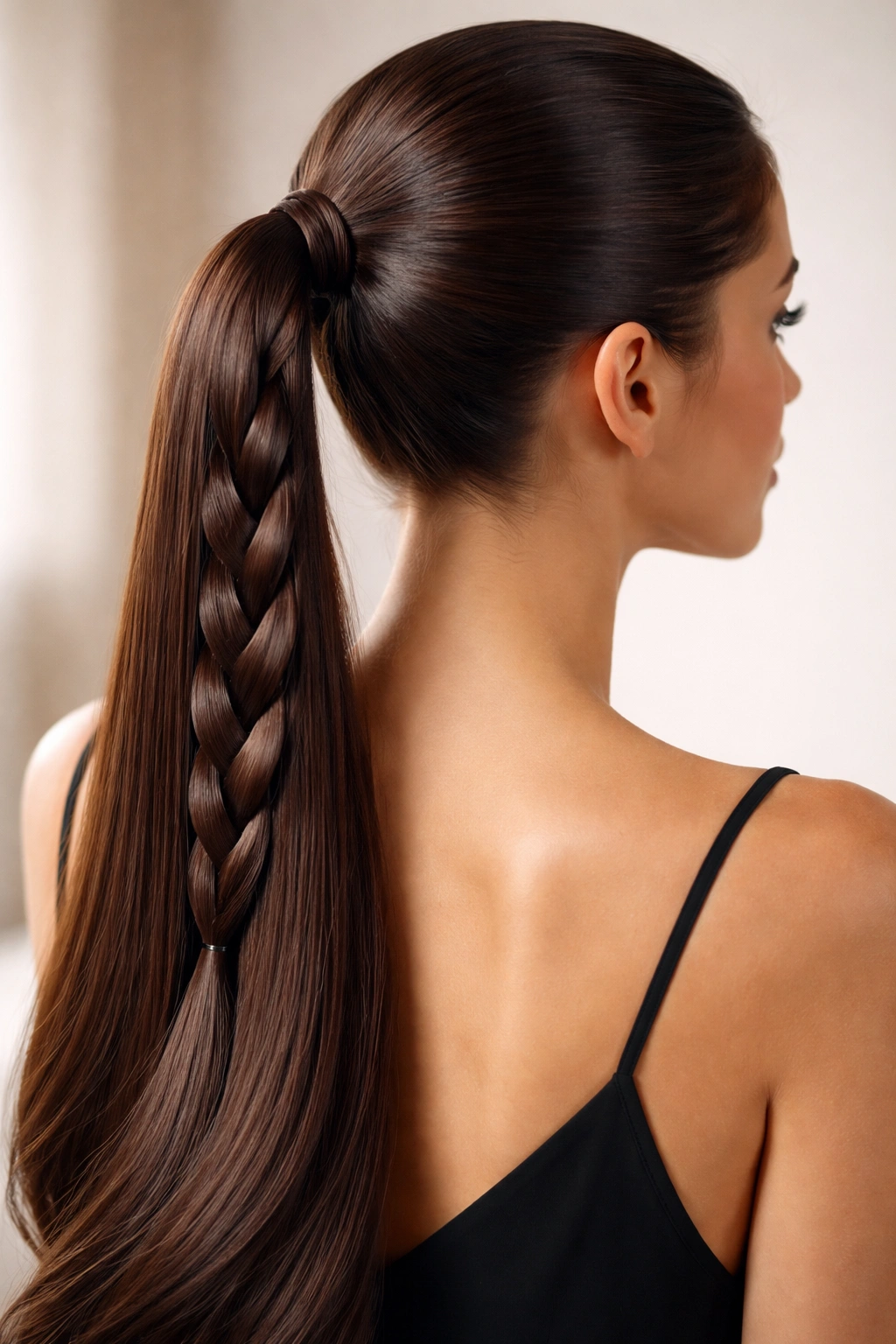
A braided ponytail combines the sleekness of a smooth style with the textural interest of a braid, creating a hybrid that’s more interesting than a plain ponytail but more polished than a casual braid. There are multiple braiding approaches—you could braid just the tail itself, create a Dutch braid into the ponytail, or do an intricate braid pattern throughout. Each variation reads as more elevated than a simple sleek style.
What Makes Braiding Elevate Your Ponytail
A braid adds craftsmanship and intention to your styling, automatically making it look like you’ve invested time and effort in your appearance. The braided section creates visual texture and movement while maintaining sleekness through its structured, controlled appearance. On long hair, a braided ponytail is particularly striking because the braid has more length to showcase its pattern and detail.
Creating a Sleek Braided Ponytail
- Start with your sleek ponytail (high, low, or side placement—all work beautifully)
- Take the gathered ponytail tail and section it into three parts
- Braid loosely, keeping each strand smooth and maintaining consistent tension
- Secure the braid end with a small elastic and use a fine-tooth comb to smooth flyaways
- Optional: gently stretch the braid slightly by pulling on the outer edges to add dimension and softness
- Finish with hairspray to set everything in place
Pro tip: Three-strand braids are classic, but you could also try a Dutch braid (braiding under rather than over) for a different visual effect, or a French braid that incorporates your whole ponytail for maximum impact.
8. Sleek Twisted Ponytail
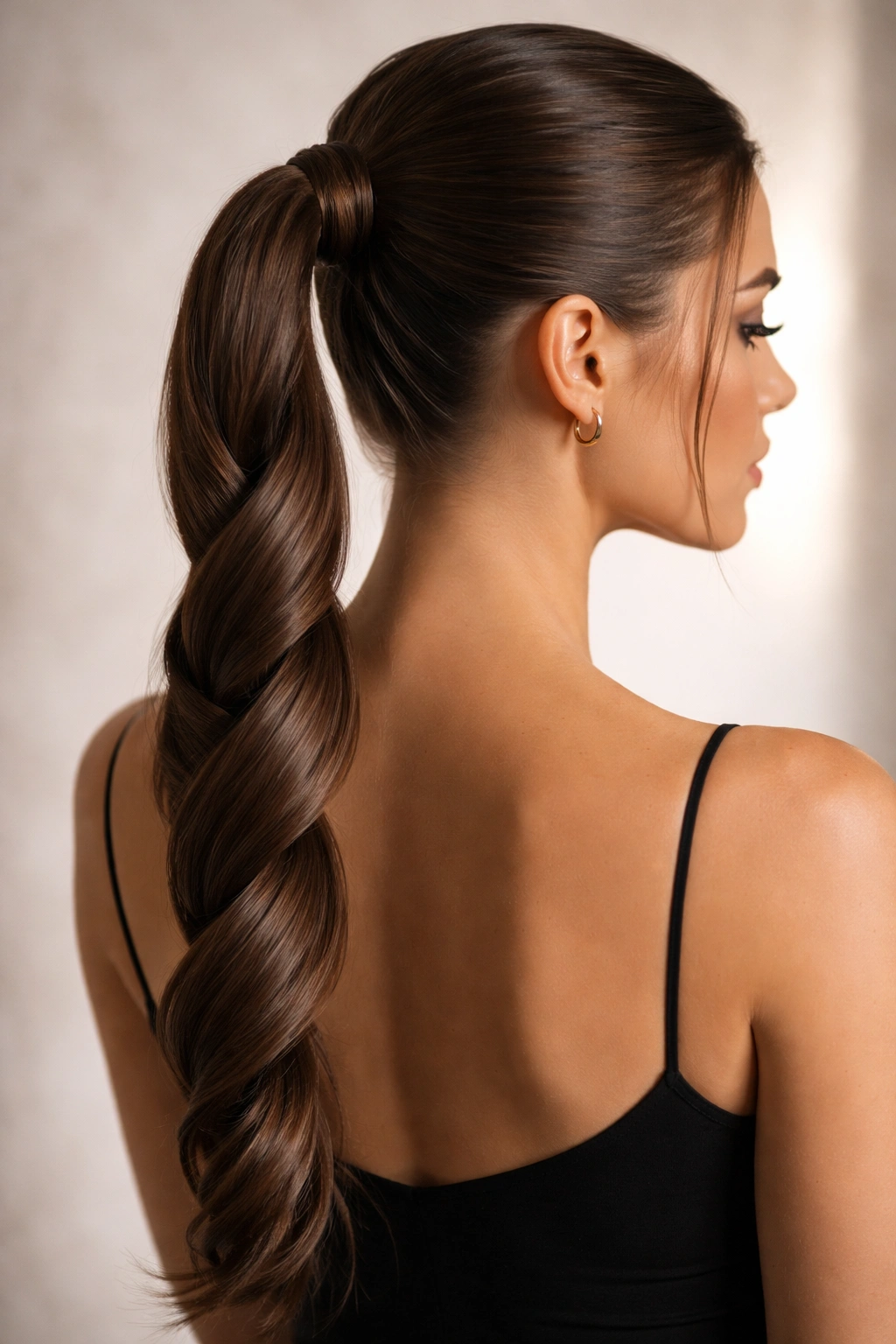
A twisted ponytail creates the visual interest of a braid without requiring the three-strand coordination of actual braiding. Instead, you simply twist your gathered ponytail tail around itself, creating a spiraled, rope-like effect. It’s elegant, less common than a standard ponytail, and requires minimal skill—yet it reads as intentional and polished.
Why Twisting Is Underrated as a Styling Technique
Twisting is genuinely one of the easiest ways to add visual sophistication to a basic ponytail because it requires almost no special skill, yet it looks intentional and crafted. The twisted effect creates a subtle texture and movement that’s more interesting than a flat tail while maintaining the sleekness factor. It’s particularly effective on long, straight hair because the length lets the twist pattern really show.
How to Create a Beautiful Twisted Ponytail
- Secure your sleek ponytail (any placement works)
- Divide the ponytail tail into two sections
- Twist one section around the other, maintaining gentle, even tension
- Continue twisting until you reach the ends, then secure with a small elastic
- Use a fine-tooth comb to smooth any loose hairs at the base
- Finish with a light hairspray to hold the twist without making it look stiff
Insider note: If your ponytail feels too thick to twist smoothly, try wrapping a thin strand of ribbon or yarn around the twisted sections as you work—it adds visual interest while making the twist easier to control.
9. Slicked Low Bun Ponytail Hybrid
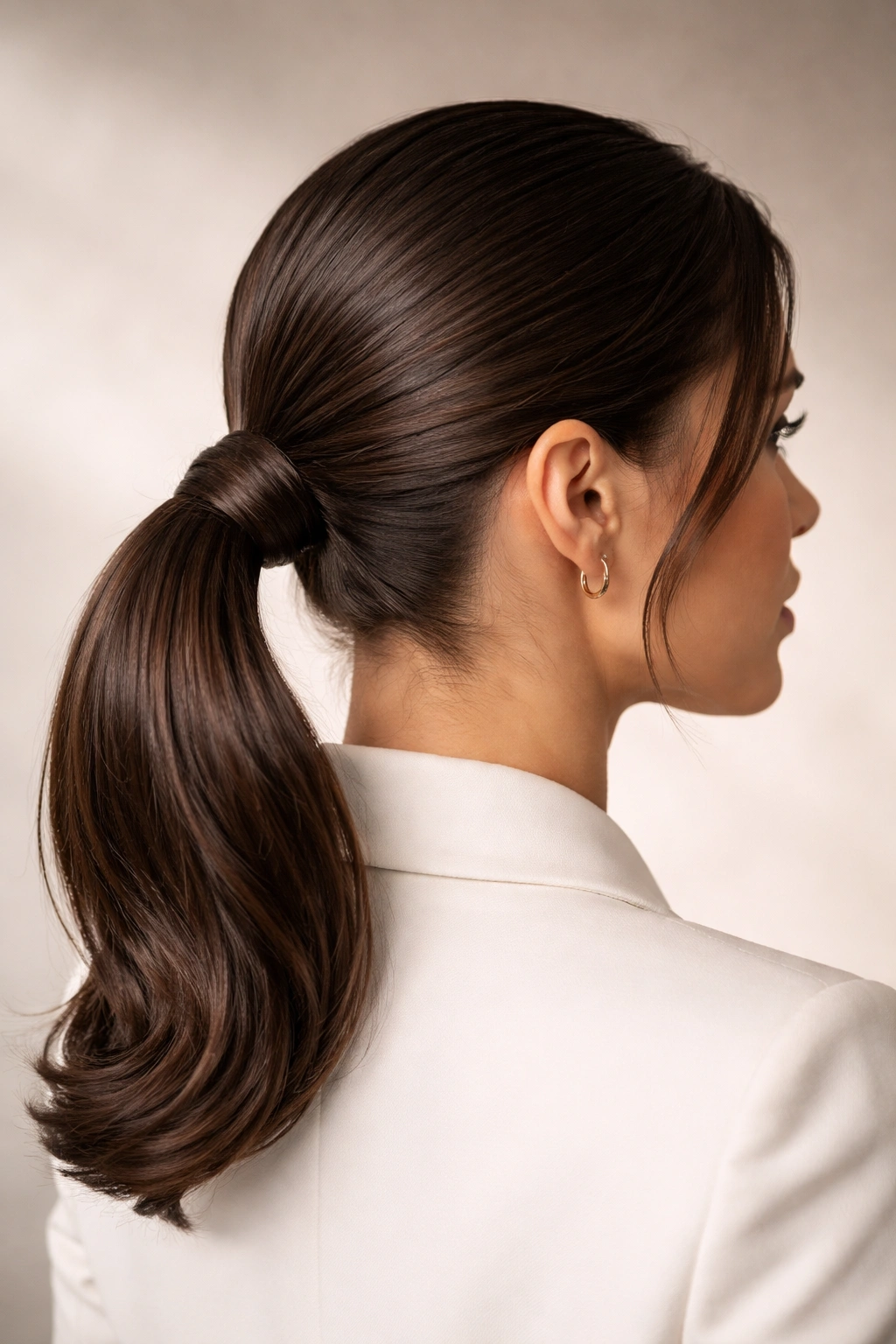
This style sits at the intersection between a ponytail and a bun—you gather your hair into a low sleek ponytail position, then twist or wrap that tail loosely around its base to create a relaxed bun shape. It’s more polished than a simple bun but maintains the sleekness of a ponytail, making it ideal for situations where you want maximum polish but also want your hair fully secured.
Why This Hybrid Style Is So Practical
The bun-ponytail hybrid gives you the secured-ness and polish of a bun with the elegance of a long ponytail. It works beautifully in professional settings, at formal events, and anywhere you need hair completely out of the way while maintaining an elegant aesthetic. On long hair, this style is particularly effective because even a loosely formed bun looks substantial and intentional.
Building the Low Bun-Ponytail Hybrid
- Create a sleek low ponytail with a wrapped base
- Take your ponytail tail and loosely twist it around itself
- Wrap the twisted tail around the base of your ponytail to create a bun shape
- Secure the end with bobby pins matched to your hair color
- Smooth any loose hairs with a fine-tooth comb and finishing spray
- The bun should look relaxed and effortless, not tight or perfectly rounded
Worth knowing: This style is surprisingly forgiving—if your bun shape isn’t perfectly round or symmetrical, it actually looks more intentional and modern than a tight, perfect bun would.
10. Sleek Half-Up Ponytail
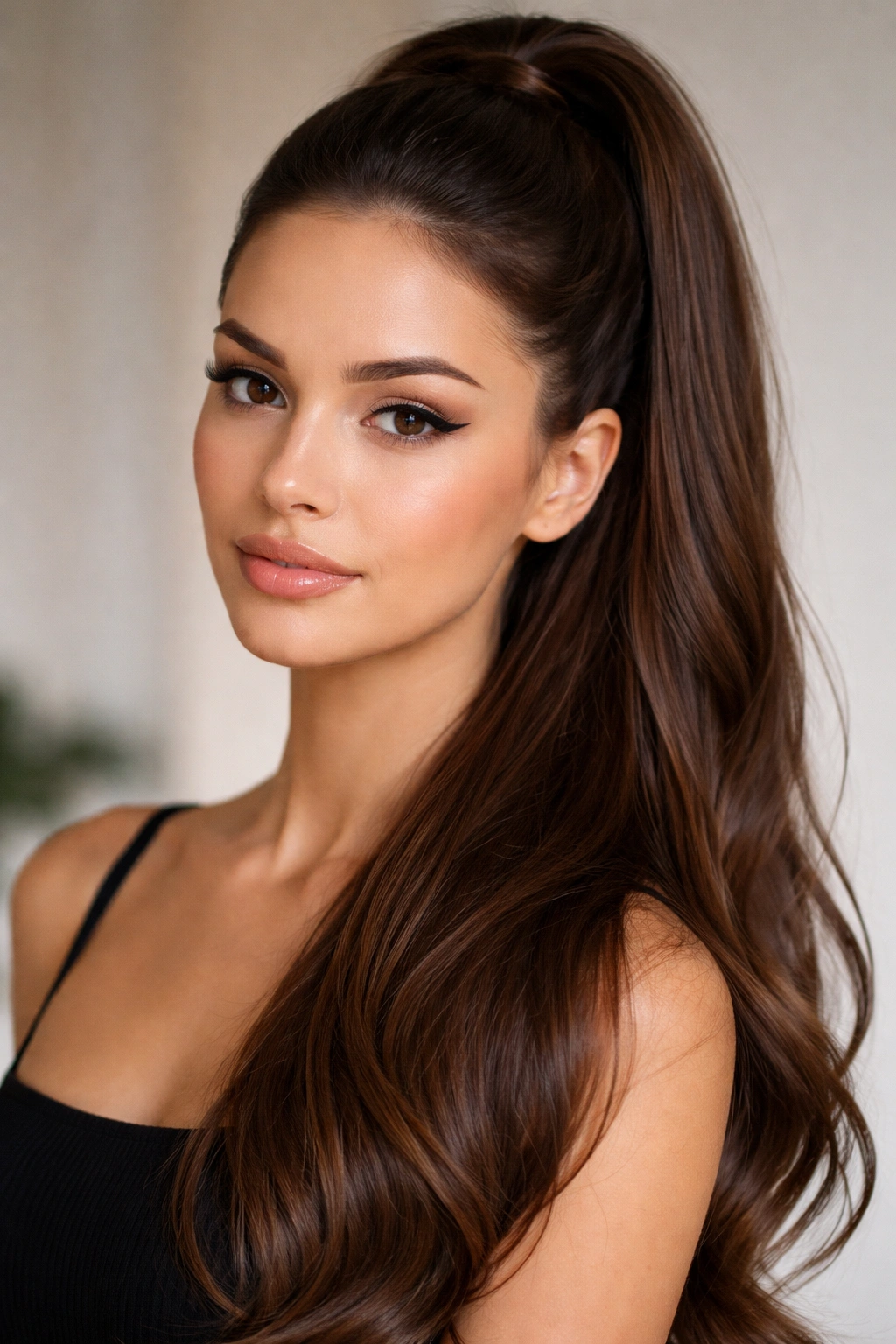
The half-up ponytail gathers only the upper portion of your hair while leaving the lower section down, creating a hybrid style that offers the face-framing softness of down hair with the polish and control of a pulled-back style. It’s ideal for situations where you want to keep hair out of your face without full commitment to a full ponytail, and it’s exceptionally flattering across different face shapes.
Why Half-Up Works When You Want Balance
Half-up styles are the Goldilocks of hair styling—not too much, not too little, just right. For sleek half-ups, you get the polished upper portion while the flowing lower section adds softness and femininity. On long hair, this creates a beautiful contrast between the controlled top and the flowing bottom, and it’s one of the most universally flattering placements.
Creating Your Sleek Half-Up Style
- Apply smoothing product to damp hair and blow-dry smooth
- Take a section of hair from approximately ear to ear across the crown
- Brush this upper section smooth and gather it into a high ponytail position
- Secure with an elastic and wrap a thin section around the base
- Leave the lower portion of your hair down and smooth it out
- Use a fine-tooth comb on both the gathered section and the flowing portion, finishing with hairspray
Pro tip: The key to half-up looking intentional rather than accidental is making sure the upper section is visibly secured and polished—this is not the place for a loose or casual-looking ponytail.
11. Smooth Sleek Ponytail with Face-Framing
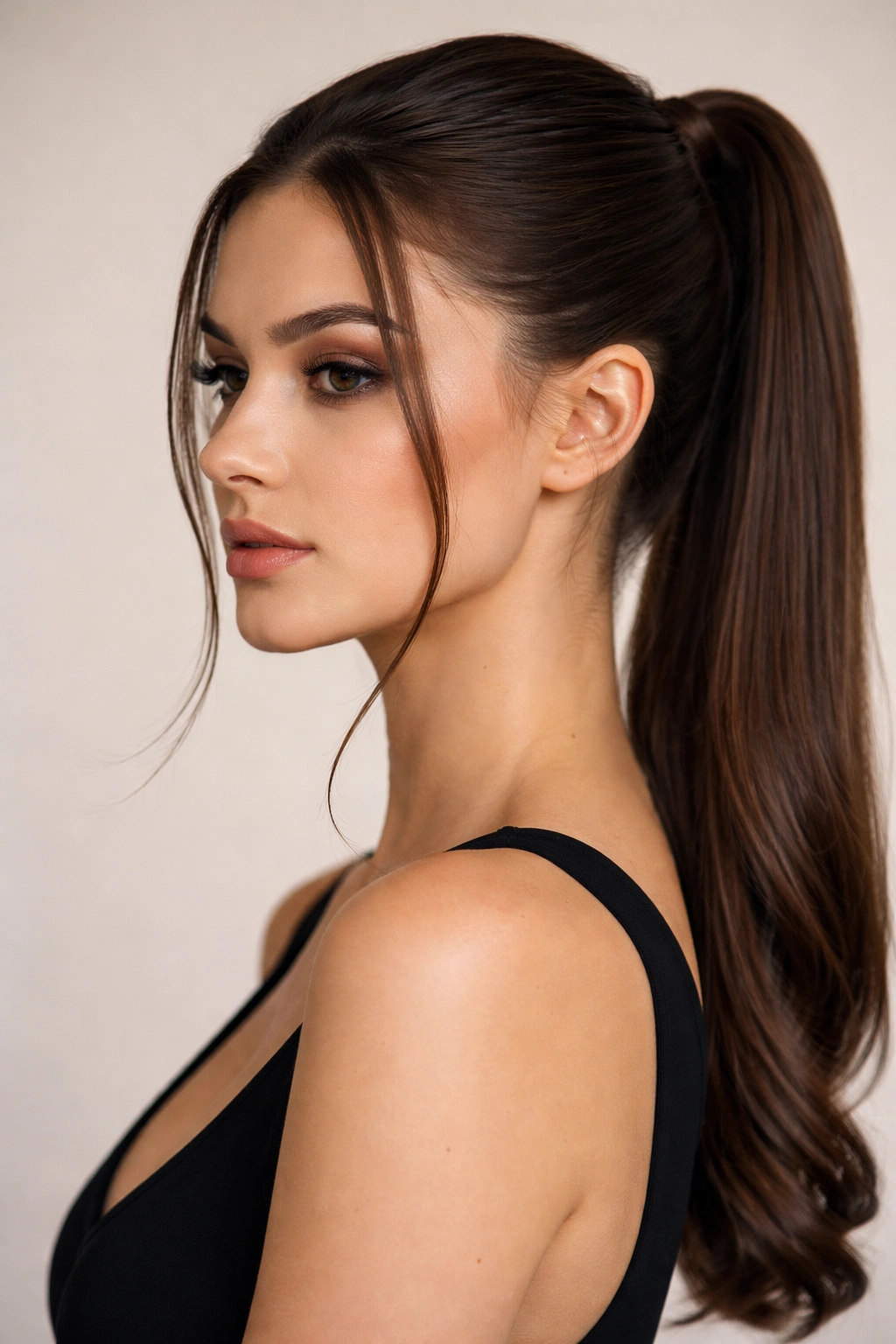
This variation intentionally leaves two thin, wispy sections of hair loose around your face rather than gathering everything back completely. These face-framing pieces soften the ponytail, add dimension, and create a more feminine aesthetic while maintaining the sleekness factor through the rest of the style. It’s particularly flattering if you prefer not to pull your hair completely away from your face.
Why Face-Framing Adds Flattering Softness
Face-framing pieces create dimension and draw attention to your features in a flattering way, making this style particularly kind to angular face shapes or anyone who feels uncomfortable with a completely pulled-back look. The contrast between the sleek gathered portion and the soft, wispy face-frames is visually interesting and reads as intentional rather than like pieces fell out. It’s one of the most universally flattering ponytail variations.
Styling Face-Framing Sections into Your Ponytail
- Before gathering your ponytail, isolate one thin section on each side of your face (about the thickness of a pencil)
- Set these sections aside and secure the rest of your hair into your sleek ponytail
- Bring the face-framing sections forward alongside your face
- Optional: curl or wave these pieces slightly with a flat iron for added softness
- Use a smoothing serum on all sections and finish with a light hairspray
- The face-framing sections should feel soft and slightly wispy, not stiff
Insider note: If your face-framing pieces feel too thick, you can always remove them and re-section them thinner—start with less hair in each frame and adjust as needed until the proportion feels balanced.
12. Polished Sleek Curved Ponytail
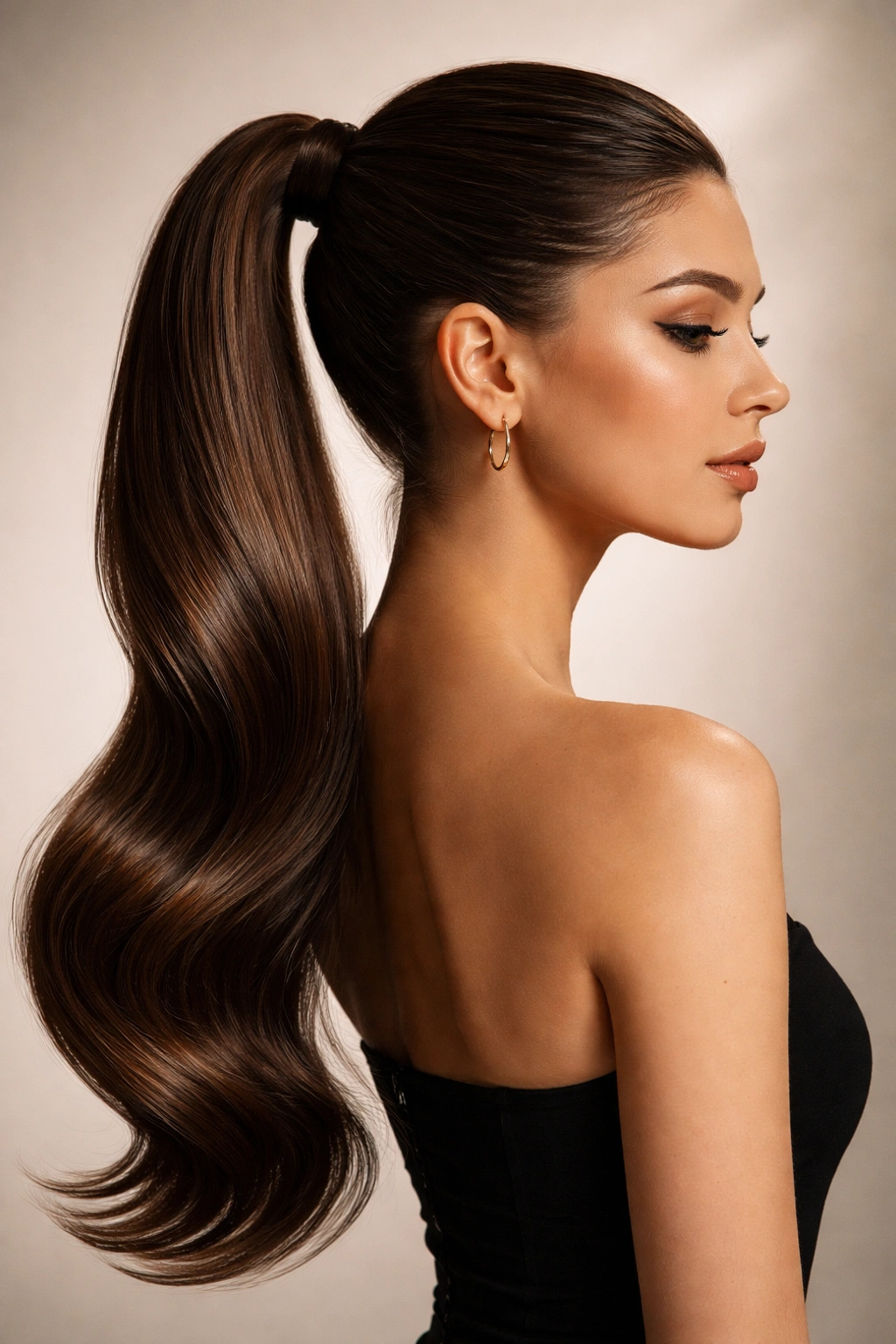
This final style takes the sleekness concept and adds movement through a subtle curve or wave pattern applied to the ponytail tail itself. Rather than completely straight and flat, the tail has gentle curves or subtle waves that give it dimension and movement while maintaining the overall sleek, polished aesthetic of the gathered portion. It’s elegant, sophisticated, and surprisingly modern.
Why Adding Movement Elevates a Sleek Style
A curved or waved ponytail tail adds visual interest without sacrificing sleekness or polish—it’s the best of both worlds. The curves create a more dynamic silhouette and show off your hair’s length and health through movement rather than flatness. This style is particularly striking in person because the movement catches light and creates dimension that photographs beautifully.
Creating Curves and Waves in Your Ponytail Tail
- Secure your sleek ponytail as usual with a wrapped base
- Section your ponytail tail into two to three sections
- Using a flat iron or curling iron, create gentle S-curves or waves through each section
- Work from top to bottom, ensuring consistent wave placement
- Allow waves to cool completely before running your fingers through them
- Use a light finishing spray to hold the curves without making them look stiff
- Gently run your fingers through the waves to soften and blend them
Worth knowing: The tighter your curls or waves, the more dramatic the effect—for sleekness with movement, you want subtle, loose waves rather than tight curls.
Final Thoughts
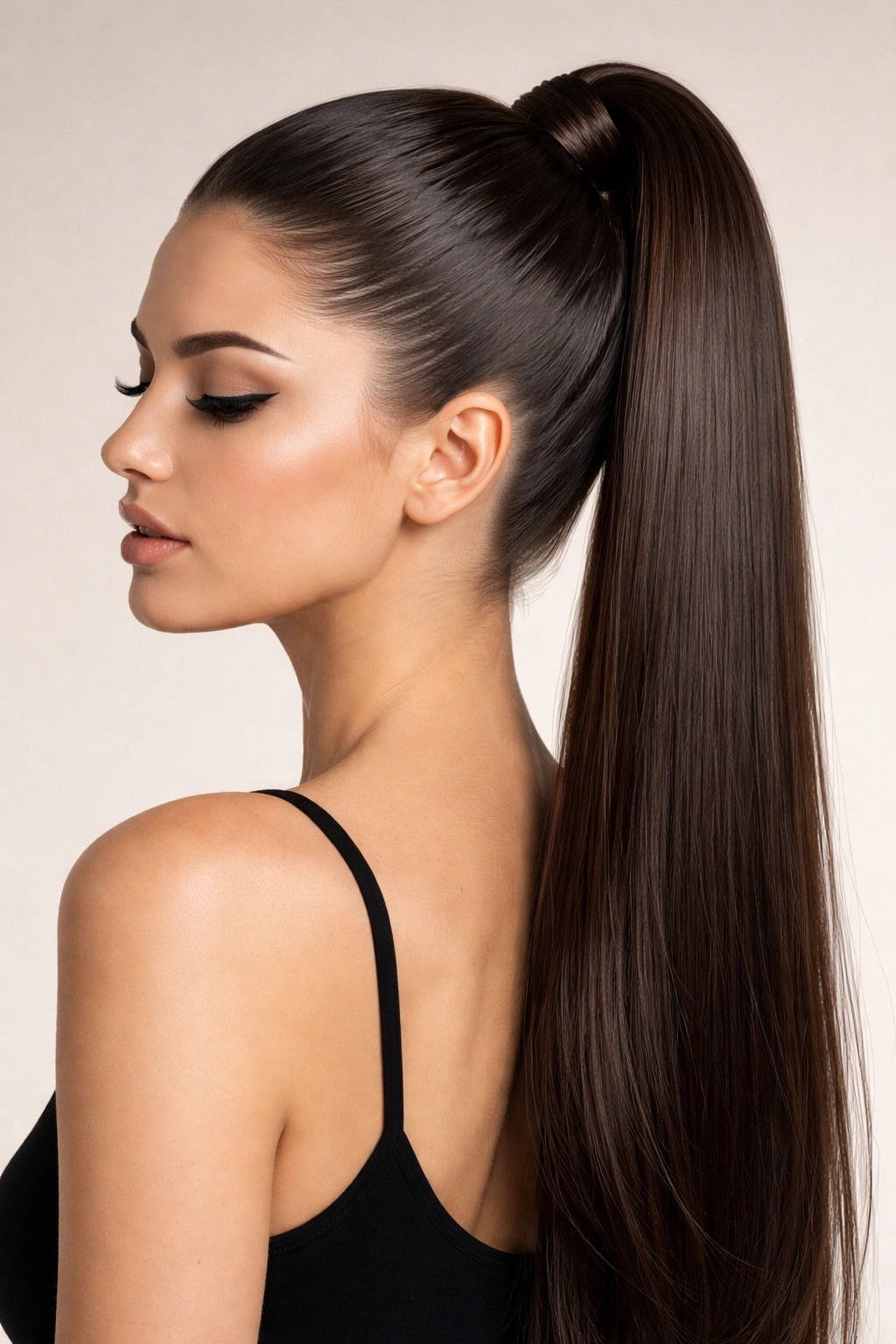
A sleek ponytail isn’t just a hairstyle—it’s a statement that you’ve put thought and care into your appearance. What makes these twelve variations so valuable is that they each bring something slightly different to the table: some are maximally polished for formal settings, some add playful elements like bubbles or braids, some are incredibly practical for busy days when you need your hair secure but still look intentional. The beauty of having long hair is that you can move between these styles with confidence, knowing that your length gives you options that shorter hair simply doesn’t have.
The common thread running through all these styles is that they require three core elements: smooth, healthy-looking hair that’s been properly prepped with the right products, attention to the small details that separate casual from polished (like wrapping your elastic or smoothing flyaways), and practice with the actual technique so you can execute it smoothly. None of these styles are genuinely difficult—they just require intention and a few minutes in front of the mirror.
Which style resonates most with you probably depends on the context where you’ll wear it most often and how much time you’re willing to invest in styling. But here’s the truth: once you master the basic sleek ponytail and understand how to smooth and control your hair properly, every single variation becomes accessible. Start with whichever style speaks to you, practice it until it feels natural, then build your skills from there. Your long hair is genuinely one of your best styling assets—these twelve approaches are just the beginning of what you can create.
