



Hair color is one of the most transformative tools in a stylist’s arsenal, and when strategically placed through a ponytail, highlights create instant dimension, movement, and visual interest that a solid color simply can’t match. Highlighted ponytails do more than just look beautiful—they create the illusion of fullness, enhance facial features, and add texture that catches light from every angle. Whether you’re drawn to subtle, sun-kissed tones or bold, contrasting streaks, the right highlight placement can completely elevate your ponytail game and give your overall look a polished, intentional edge.
The magic of highlights in a ponytail lies in how they interact with movement and styling. When you wear your hair pulled back, you’re putting your face and neckline on full display, which means strategic color placement becomes even more important. Highlights framing the face, spiraling through the length of the tail, or concentrated at the ends all create different visual effects—some brighten and lift, others add edge and drama. The best highlighted ponytails aren’t accidents of color; they’re thoughtfully planned combinations that complement your skin tone, hair texture, and personal style while working harmoniously with your base shade.
If you’ve been wearing solid-colored ponytails and feeling like something’s missing, or if you already love highlights but haven’t considered how they transform a pulled-back style, you’re about to discover a whole new dimension to this timeless hairstyle. Let’s explore fifteen of the most stunning highlighted ponytail approaches, each with specific styling techniques and maintenance tips to help you pull off the look with confidence.
1. Face-Framing Babylights Around a Sleek Ponytail
Babylights are fine, delicate highlights that mimic naturally sun-kissed hair, and when concentrated around the face while you’re wearing a sleek ponytail, they create an instantly brightening effect that draws attention exactly where you want it. This style keeps the bulk of the ponytail in your natural or primary color while placing these ultra-thin, dimensional highlights from the hairline back to about chin length on both sides of the face.
Why This Style Works So Well
The brilliance of face-framing babylights is that they’re incredibly flattering for nearly every face shape and skin tone. Because the highlights are so fine and blended, there’s no harsh line between colors—instead, you get a soft, lit-from-within glow that doesn’t require maintenance on the entire head. The lighter pieces frame the face and add dimension exactly where your features are showcased, making eyes appear brighter and cheekbones more defined. This style is especially effective if you have a rounder or wider face shape, as the placement creates vertical movement that elongates.
How to Style and Maintain
- Use a smoothing serum or lightweight gel when pulling hair back to make the contrast between highlighted and non-highlighted sections more visible
- Babylights require touch-ups every 10-12 weeks, but because they’re only in the face-framing zone, maintenance is minimal compared to full highlights
- This look pairs beautifully with polished, sleek ponytails or slightly undone, textured versions depending on the occasion
- Ask your colorist to place the finest pieces around your temple area and blend them deeper into the hairline for the most natural-looking result
Pro tip: If you’re new to highlights, babylights are the gentlest introduction—they’re nearly impossible to regret because of how subtle and blended they naturally look.
2. Melted Toffee and Caramel Ribbons Through a High Ponytail
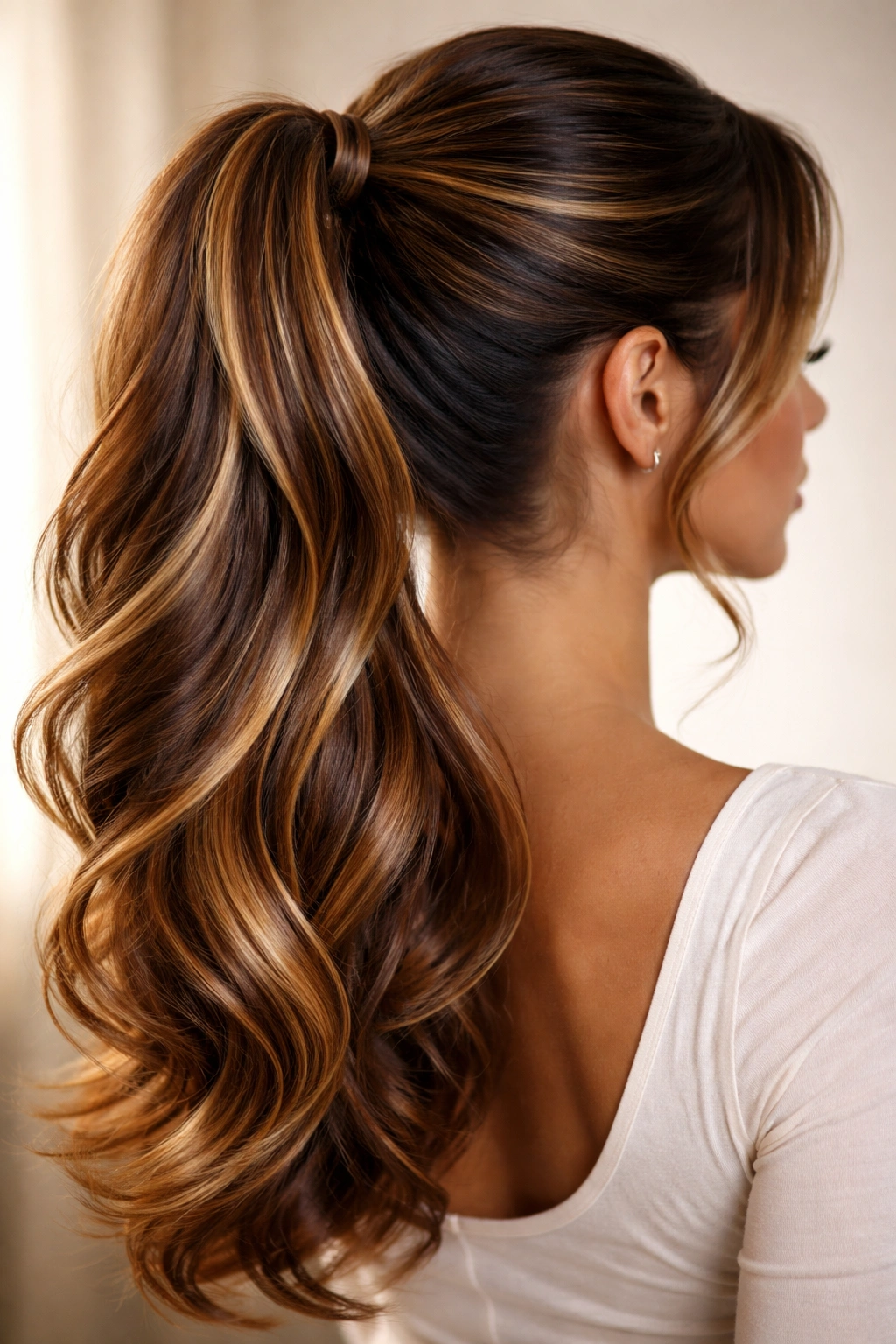
This approach uses larger, ribbonlike sections of warm, caramel and toffee tones woven vertically through the entire length of a high ponytail, creating the impression that each strand has been individually hand-painted. The contrast between the deeper caramel ribbons and lighter toffee pieces creates movement and depth that follows the ponytail from crown to ends.
What Makes This Combination Special
Toffee and caramel are warm, approachable colors that work across a surprisingly wide range of skin tones, from fair to deep. When placed as ribbons rather than overall balayage, they create defined sections of color that look intentional and artistic without being harsh. The high ponytail placement means these warm tones are visible from all angles—front, back, and side—making this style incredibly three-dimensional. The warmth in these shades also tends to complement most eye colors and brings out natural flush in the skin.
Styling Tips for Maximum Impact
- Textured, slightly undone ponytails show off ribbon highlights better than perfectly smooth ones—try a soft wave or curl before pulling back
- When washing, use color-safe shampoo and cool water to preserve the vibrancy of the caramel and toffee tones
- These warm tones actually look richer and more dimensional on second-day hair, so you can extend time between washes
- Consider a deeper base color (like dark chocolate brown) to make the caramel and toffee ribbons pop with contrast
Worth knowing: This style photographs beautifully because the warm tones catch flash and natural light differently, creating depth that reads even in photos.
3. Icy Blonde Money Pieces with a Brunette Base Ponytail
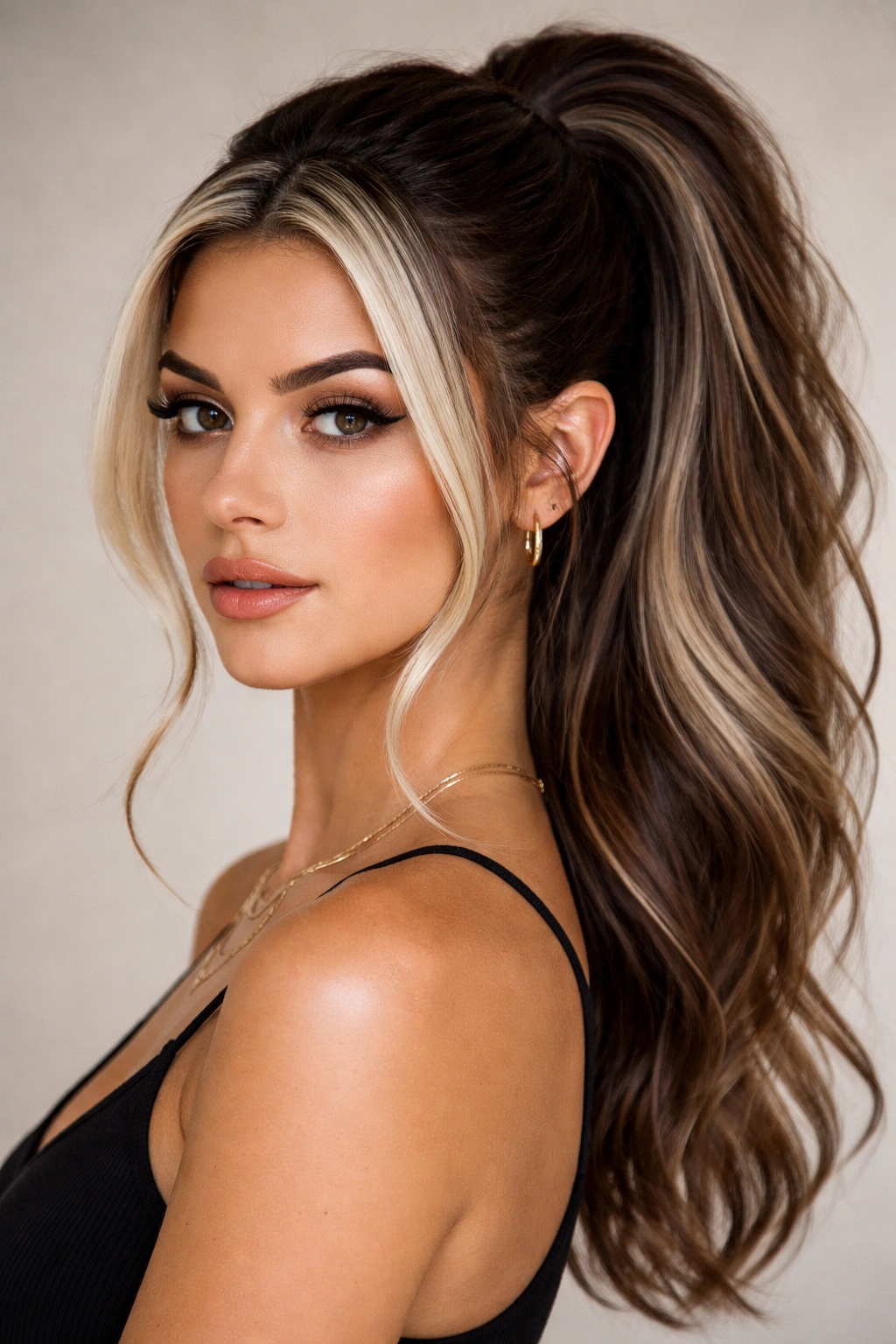
Money pieces are the thicker face-framing highlights placed just in front of the ears, and when done in icy blonde tones against a rich brunette base, they create a striking, high-contrast look that’s impossible to miss. These pieces are thicker and bolder than babylights, making a statement while still keeping the ponytail rooted and grounded in the darker base color.
The Face-Flattering Power of High Contrast
Icy blonde money pieces against a brunette base create an optical illusion of lifted, brighter skin—the contrast literally makes your face appear more radiant. This style works particularly well for cooler skin tones and those with fair to medium complexions, though anyone with deep skin tones can absolutely pull this off by choosing a lighter blonde that contrasts richly with their base. The money pieces draw the eye upward and outward, making the face appear fresher and more youthful. This is one of the most high-impact highlight placements because the result is dramatic without being over-the-top.
Styling and Upkeep
- Keep the base color rich and saturated—roots showing slightly on the money pieces actually enhances the intentional, high-contrast look
- These pieces will require touch-ups every 8-10 weeks because blonde on brunette shows growth clearly
- A glossing treatment every 4-6 weeks keeps the icy tone from turning brassy or yellow
- Low ponytails and sleek styles showcase money pieces best, as they frame the face prominently
Real talk: If you’re considering this look, commit to a glossing routine. Icy blonde can shift to brassy when exposed to sun and chlorine without maintenance.
4. Lived-In Rooted Blonde Ponytail with Diffused Balayage
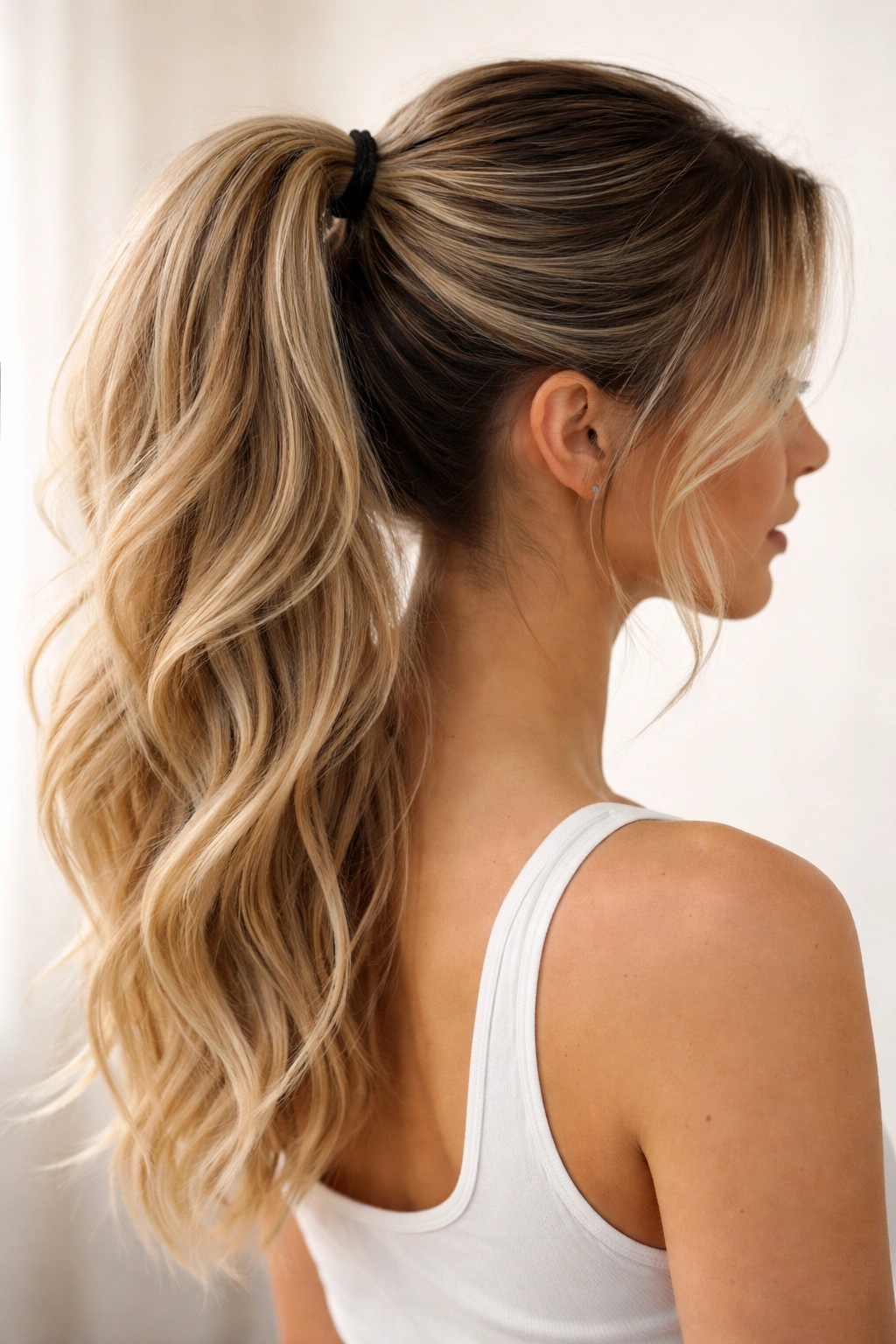
This style embraces the beauty of regrowth by intentionally keeping darker roots while placing softer, diffused balayage highlights throughout the length of a blonde or light-brunette ponytail. Rather than trying to hide root growth, this approach celebrates it as part of the design, creating a low-maintenance, high-style effect that looks effortlessly chic.
Why This Approach Is So Wearable
Rooted blonde with diffused balayage removes the pressure of perfect root touch-ups while maintaining dimensional, expensive-looking color. The softer balayage pieces blend into the rooted base gradually, creating depth without harsh lines. This style actually looks better as it grows out, meaning you can stretch appointments and spend less time and money maintaining it. It’s a perfect choice if you love the brightness of highlights but want a more forgiving, lived-in aesthetic that doesn’t demand perfection.
Achieving the Rooted Look
- Start by asking your colorist for a hand-painted balayage placement rather than foil highlights—the softer placement blends better with roots
- Keep roots darker (even slightly darker than your natural color if you want maximum impact) and allow them to grow out without worrying about precision
- Use a purple or blue-toning shampoo every 2-3 washes to keep blonde from yellowing as it fades
- This works best on ponytails worn slightly undone or textured, where the softer, blended effect shines
- Refresh the balayage every 4-5 months rather than every 6-8 weeks, since the softer placement doesn’t look dated as quickly
Pro tip: Photograph your finished color in different lighting—natural daylight, harsh indoor light, and evening light—to see the full dimension before committing to the style.
5. Dimensional Red and Copper Highlights Through a Dark Base Ponytail
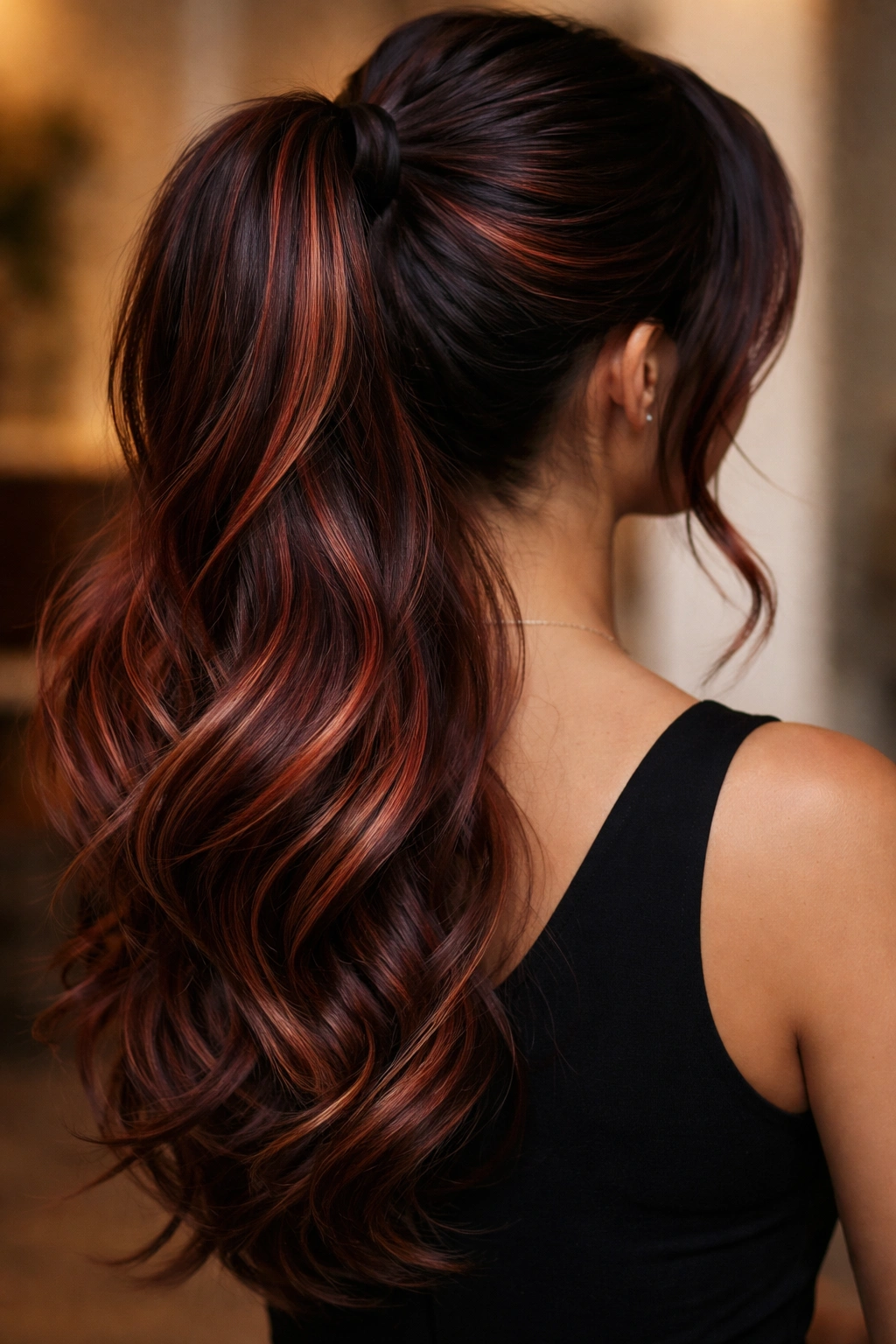
Rich, warm copper and red highlights woven through a dark brunette or black base create a ponytail that seems to glow from within, especially in warm light or sunlight. These jewel-toned highlights add richness and warmth without lightening the overall appearance, making this style work beautifully for deep skin tones and cool-to-neutral complexions.
The Warmth Factor in Red and Copper Tones
Red and copper highlights are criminally underrated—they don’t read as “going lighter” the way blonde does, yet they create stunning dimension and movement. These warm tones reflect light beautifully and actually make skin appear warmer and more awake. The jewel-tone quality means these highlights remain rich and saturated even as they fade, rather than turning brassy like some blonde tones. This style is particularly striking on deeper skin tones, where the copper catches light gorgeously against the darker base.
Maintenance and Styling Strategies
- Red and copper tones require a dedicated color-safe shampoo and conditioner—they fade faster than other colors without proper care
- Wash in cool water and use a color-protecting leave-in conditioner to extend vibrancy
- These highlights work stunningly in textured, voluminous ponytails where light can play off each strand
- Consider a deep conditioning mask once weekly if you have these colors, as red and copper can be slightly drying
- A glossing treatment every 4-5 weeks keeps the copper bright and prevents it from dulling to muddy brown tones
Worth knowing: Red and copper tones are especially stunning on people with warm or golden undertones in their skin, but they can work on cool-toned skin too—just choose warmer copper over cooler red.
6. Platinum and Rose Gold Split-Color Ponytail
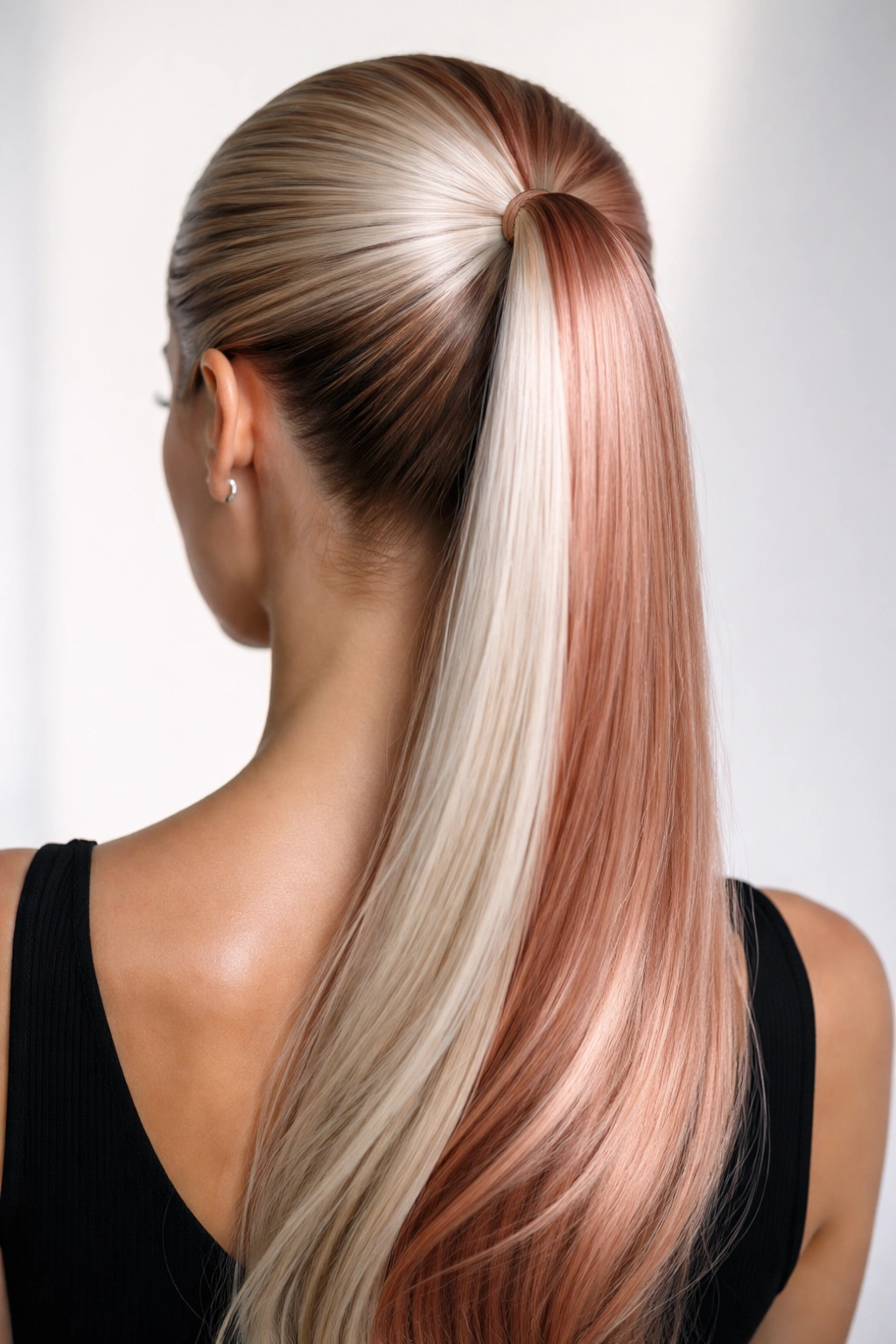
This bold style divides the ponytail into two distinct sections—platinum blonde on one side and rose gold on the other—creating a striking two-toned effect that’s artistic and fashion-forward. The split can be done straight down the middle or slightly offset for a more undone effect.
Making a Statement with Intentional Contrast
Split-color ponytails are for those who aren’t afraid of color and want a look that truly stands out. The contrast between cool platinum and warm rose gold creates visual movement and depth while allowing each color to enhance the other. This style photographs incredibly well and immediately reads as intentional and editorial. It works across most skin tones because you have a cool and warm option working together, so at least one will flatter your undertone.
Styling Considerations for Split Color
- Low and sleek ponytails show off the split most dramatically—you want clear definition between the two sections
- Consider asking your colorist to do a very slight diagonal blend where the colors meet rather than a razor-sharp line, which is more forgiving as it grows out
- Both platinum and rose gold require glossing treatments every 4-5 weeks to maintain vibrancy and prevent brassiness
- This look benefits from a strong styling product like a pomade or gel to keep each color section visibly distinct
- The contrast becomes softer and more blended as colors fade, which actually gives you a graceful transition period before needing a full refresh
Pro tip: If you’re nervous about this level of commitment, ask about a temporary version using clip-in extensions with different colors first.
7. Soft Lived-In Balayage Ponytail with Subtle Sun-Kissed Ends
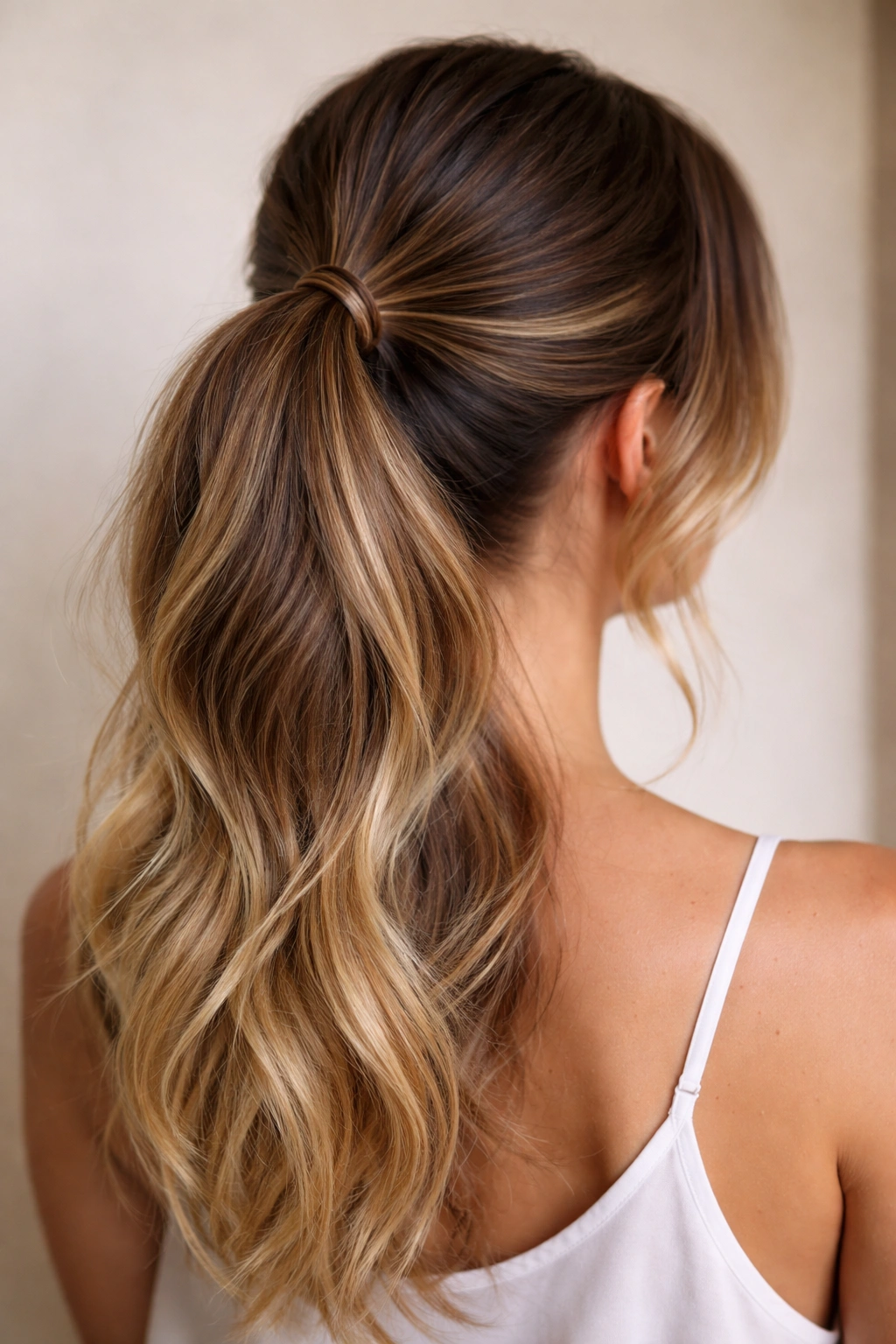
This gentle approach places lighter, sun-kissed tones primarily on the ends and mid-lengths of the ponytail while keeping the roots and upper sections in a slightly darker, rooted tone. The effect mimics hair that’s been naturally lightened by sun exposure, creating a soft, dimensional, effortless-looking result.
The Underrated Beauty of End-Focused Highlights
Many people assume highlights need to start near the roots to be noticeable, but concentrating them on the ends and mid-lengths creates a beautiful, natural effect that works especially well on ponytails because the lighter ends are visible and catch light beautifully. This placement also means your ponytail looks fuller and more dimensional since lighter colors recede slightly, making the ends appear thicker. The sun-kissed effect is universally flattering and reads as polished even on shorter, shoulder-length ponytails.
Achieving the Lived-In Look
- Ask your colorist for a hand-painted balayage with softer placement—avoid the precision of panel highlights
- Keep your base color solid and saturated; the contrast between rooted color and lighter ends creates the dimension
- This style is wonderfully low-maintenance, requiring touch-ups only every 6-8 weeks since the rooted effect is intentional
- Textured waves or curls emphasize the lighter ends more than straight hair, so consider adding movement when styling
- Use a dry texture spray to enhance dimension—it makes the color variation more visible and adds volume
Real talk: This is the best starter highlight look if you’re nervous about commitment, because it looks intentional even if the placement isn’t perfect, and it grows out gracefully.
8. Pearl and Ash Blonde Highlights on a Cool-Toned Base Ponytail
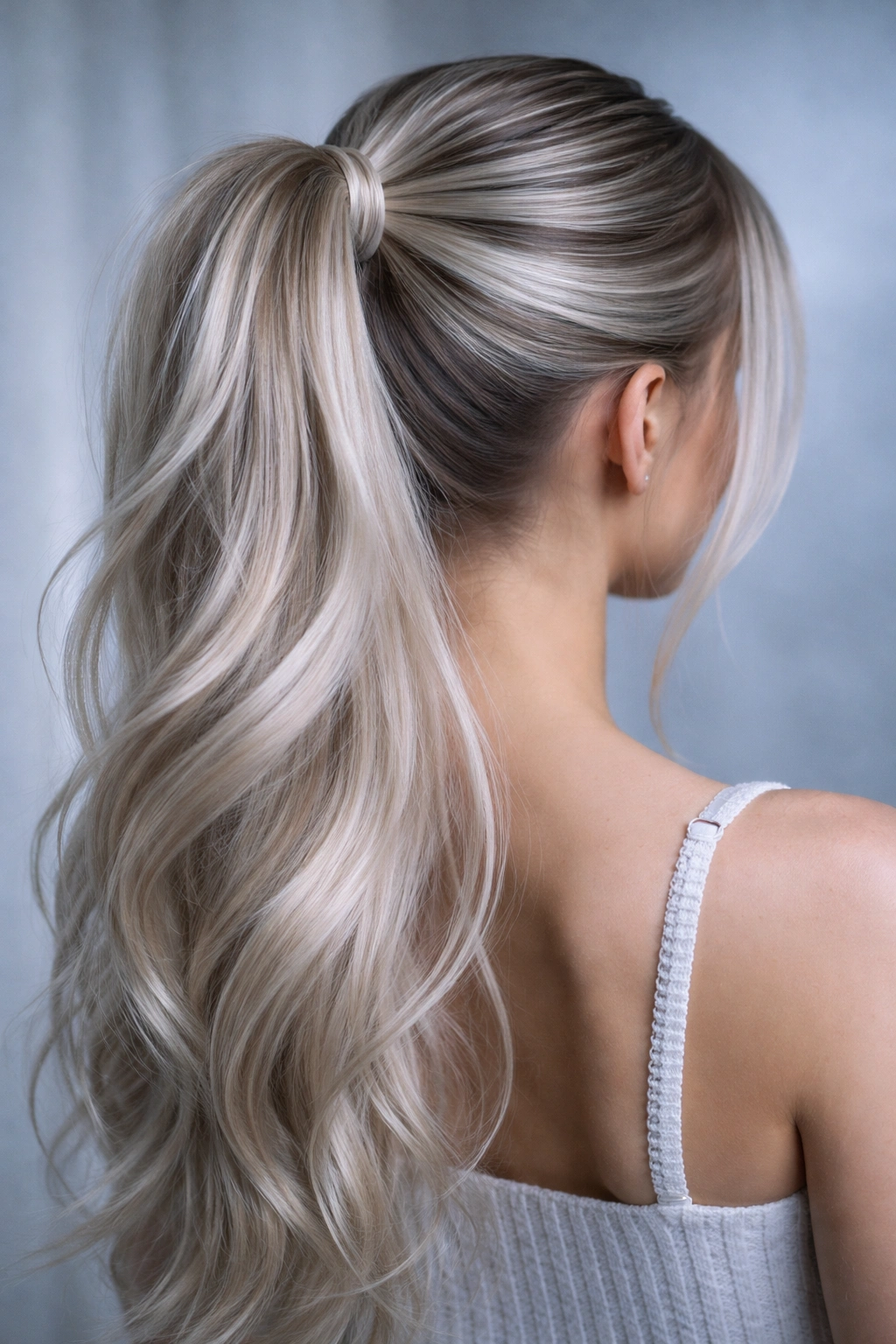
Pearl and ash blonde tones are cool-leaning, almost platinum shades that create an ethereal, sophisticated look when placed through a matching cool-toned base. This entire palette works best on fair to medium skin tones with cool undertones, creating a cohesive, monochromatic appearance that reads as high-fashion and intentional.
The Elegance of Cool Monochromatic Tones
Pearl and ash blonde together create an icy, cool-toned effect that’s less warm and brassy than traditional honey blondes. This palette is incredibly sophisticated—it reads as deliberate and editorial rather than accidental or outdated. The subtle variation between the pearl and ash tones creates dimension without contrast, so you get depth and movement from the placement and tone variation rather than from bold color difference. This is the palette of choice for those who love blonde but want it to feel modern and refined.
Color Care for Cool Tones
- Use a purple shampoo religiously—every 2-3 washes—because cool blonde tones turn yellow and brassy without it
- Invest in a color-safe conditioner and use it every time you shampoo
- Consider a glossing treatment every 3-4 weeks to keep the cool tone fresh, especially during summer months
- Pearl and ash tones can feel a bit severe on warmer skin tones, so this look is most flattering on cool complexions
- This palette works beautifully in sleek, polished ponytails where the subtle tonal shifts are most visible
Worth knowing: Cool blonde requires more maintenance than warmer blonde tones, but the payoff is a look that feels refined and intentional rather than just light.
9. Bronde Ribbons with Hidden Dimensions
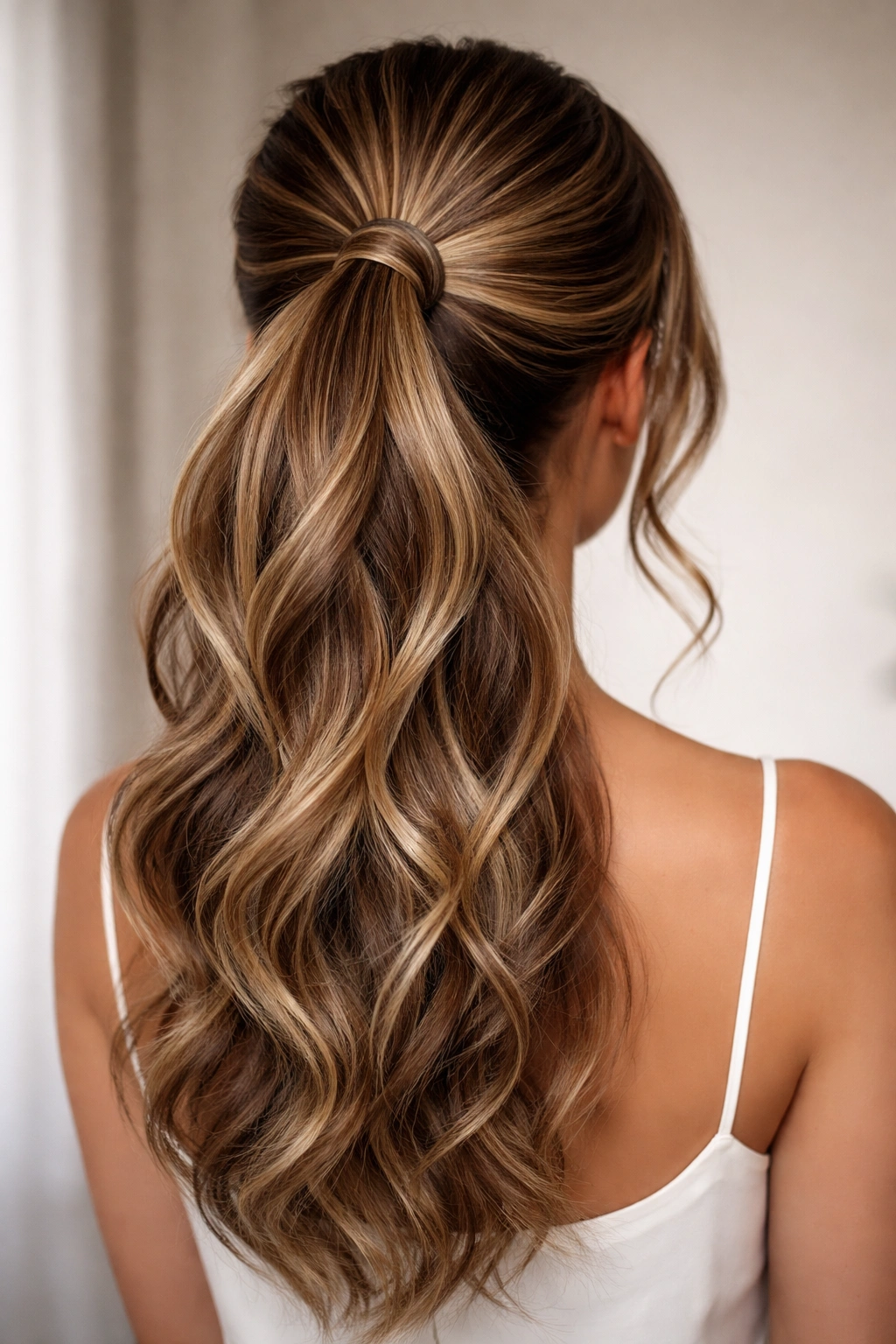
Bronde—the perfect blend of brown and blonde—uses ribbon-like highlights distributed throughout the ponytail to create an effect that’s dimensional, warm, and incredibly wearable across nearly all skin tones. The hidden dimension comes from subtly darker ribbons interspersed with lighter ones, creating depth as the hair moves.
Why Bronde Is the Most Versatile Highlight Option
Bronde lives in the perfect middle ground—it’s lighter than brunette but darker than blonde, making it flattering on warm, cool, and neutral skin tones. The warm caramel and golden tones in bronde ribbons bring life to the face while the darker pieces keep the overall look grounded and not too light. This approach is one of the most forgiving in terms of regrowth and maintenance because the color range is narrow enough that six weeks of growth doesn’t look noticeably obvious. Bronde actually improves with a bit of lived-in fading—many people love how their bronde looks after 3-4 weeks more than on day one.
Styling Bronde for Maximum Impact
- Bronde looks best in slightly undone, textured ponytails where you can see the interplay of light and darker ribbons
- These tones look richest in warm lighting but don’t appear dull in cool light either
- Touch-ups are needed every 8-10 weeks, but you can extend this by using a root-blending spray in a matching brunette shade
- Low and mid-height ponytails showcase bronde ribbons better than extremely high styles
- Bronde works on nearly all hair types and textures, from fine and straight to thick and curly
Pro tip: Bronde is an excellent choice if this is your first time getting highlights, since it’s forgiving, wearable, and you’ll love it even if the placement isn’t perfectly precise.
10. Copper Penny Highlights Concentrating Around the Ponytail Holder
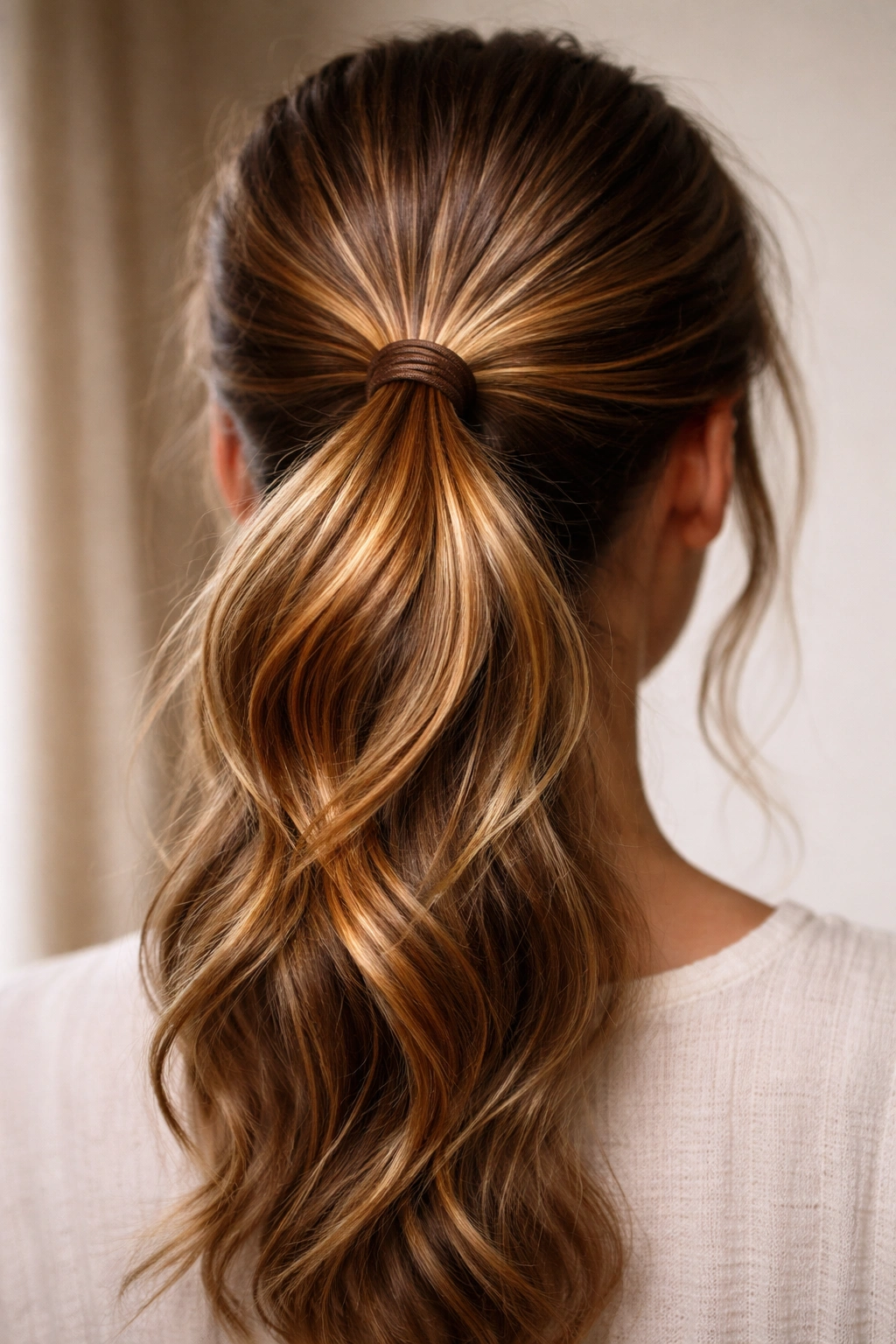
This strategic approach places warm, shimmery copper highlights specifically in the area where your hair is gathered and held, creating an intentional focal point right at the base of the ponytail. The copper pieces catch light exactly where the ponytail begins, drawing attention to this often-neglected area.
The Genius of Focal-Point Highlighting
By concentrating highlights around the ponytail holder rather than spreading them throughout the entire length, you create a deliberate focal point that makes even a basic ponytail feel styled and intentional. This placement is particularly striking because it’s unexpected—most people highlight their ends or roots, not the binding area. The copper tone is warm and eye-catching, making the gathered section of hair appear denser and more voluminous. This approach is also incredibly practical because you only need to color a small section of hair.
Application and Maintenance
- Ask your colorist to paint copper highlights in a focused zone, about 2-3 inches around where you’ll position your elastic
- This means touch-ups are minimal and very fast—just a few pieces every 8-10 weeks
- Work copper highlights into the ponytail placement rather than trying to keep them perfectly separate
- This style looks best with a sleek or slightly textured ponytail in a darker base color for contrast
- Copper naturally warms and can turn slightly orange as it fades, so a glossing treatment every 3-4 weeks keeps it penny-bright
Worth knowing: This is an excellent approach if you want impact with minimal commitment—you’re essentially just highlighting one section rather than your entire head.
11. Honey-Kissed Highlights with Deeper Lowlights in a Textured Ponytail
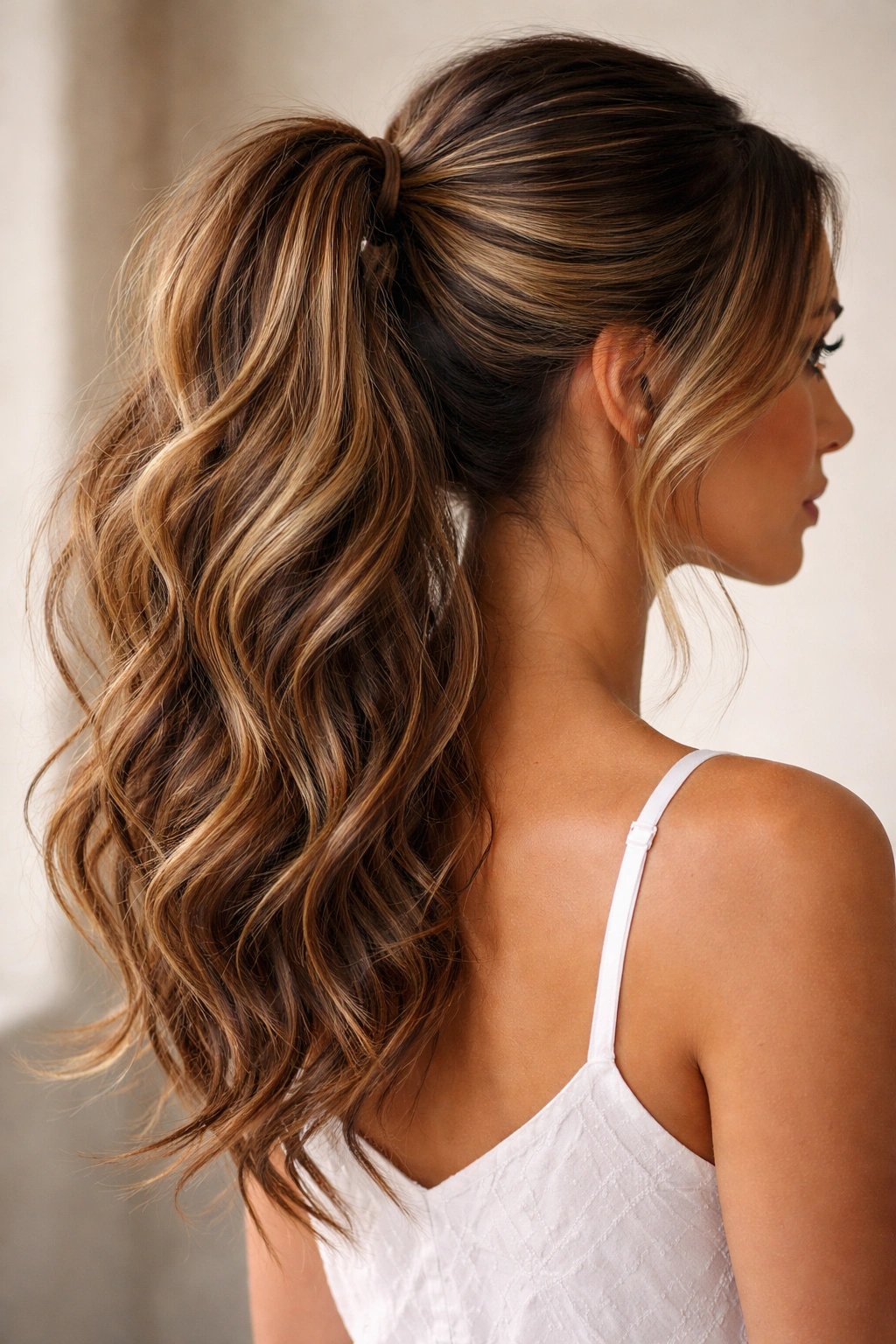
This dimensional approach combines warm, honey-blonde highlights with subtle darker lowlights woven throughout a textured ponytail, creating a rich, complex depth that’s enhanced by movement and waves. The combination of lighter and darker pieces creates the illusion of shadows and highlights on a finished painting.
Creating Dimension With Complementary Tones
Honey blonde is warm and approachable, while the complementary lowlights in deeper caramel or chocolate tones create contrast and depth. This combination works because the lighter and darker pieces are close enough in tone to look naturally dimensional rather than having an obvious line of demarcation. The effect is sophisticated without being harsh, and it’s one of the most forgiving approaches in terms of growing out—your natural regrowth blends with the darker lowlights beautifully.
Styling for Textured Impact
- This look absolutely requires texture to shine—straight hair makes it harder to see the interplay between lights and darks
- Consider a loose wave or curl before putting your hair up, or braid your ponytail while damp and release it for a softer wave
- Textured styles show off both the honey highlights and deeper lowlights, creating visual movement that changes as you move
- These colors look richer and warmer in golden, warm lighting, but they’re still beautiful in all conditions
- Touch-ups every 8-9 weeks keep the honey blonde bright without being too frequent
- Use a light texture spray or mousse when styling to enhance the dimensional effect
Pro tip: If you’re planning to wear your ponytail textured, apply highlights with your stylist while your hair is already wavy—they can place color more strategically when they can see how texture breaks up the sections.
12. Sundial Highlights Radiating From a Center Ponytail
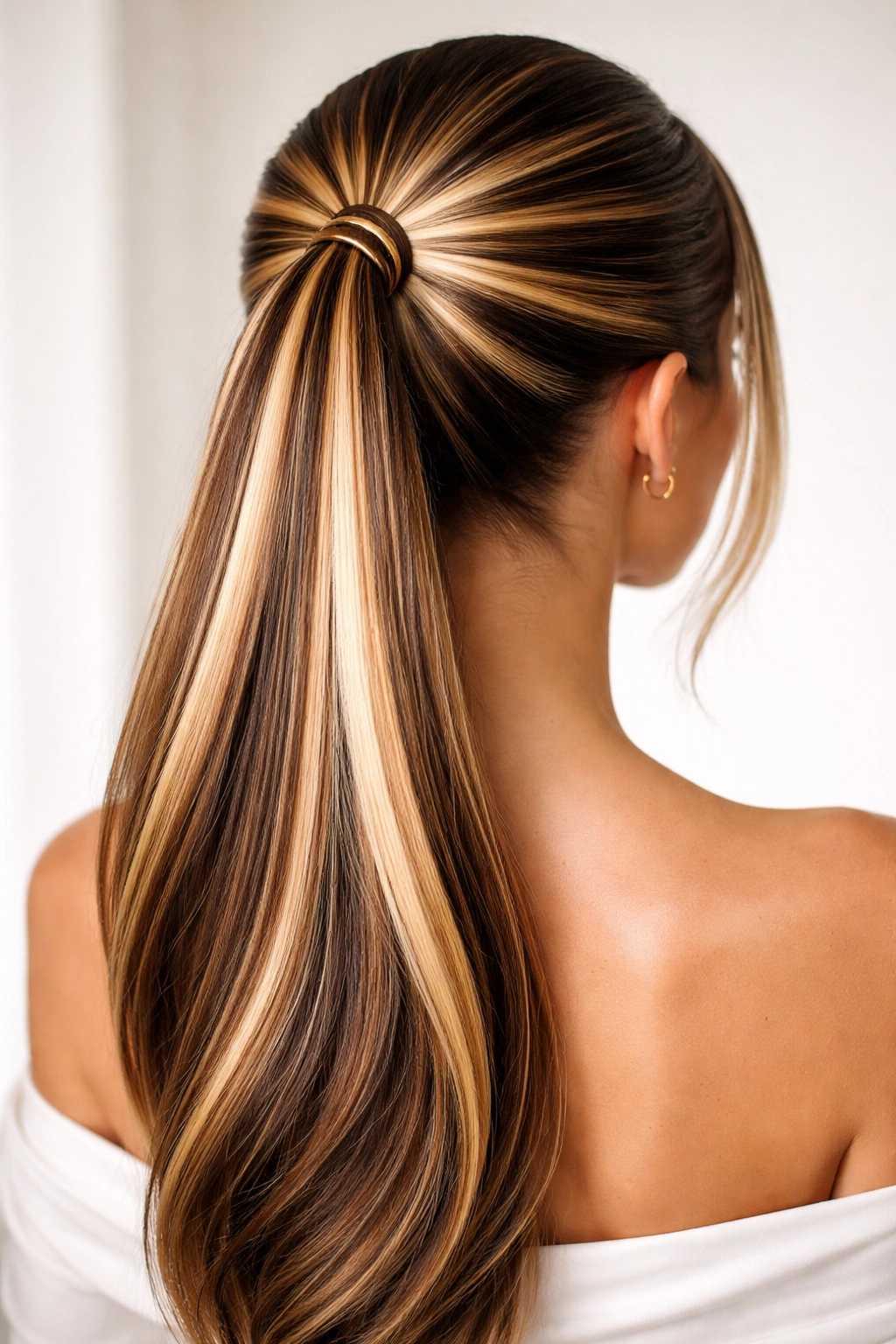
This artistic technique places highlights that radiate outward from the center of the ponytail like rays of sun, creating a dimensional effect that’s three-dimensional and moves beautifully as your ponytail swings. Lighter pieces alternate with slightly darker sections in a deliberate pattern.
The Eye-Catching Geometry of Sundial Highlights
Sundial highlights are a statement—they’re placed with intention and they look artistic and fashion-forward. This technique works best on mid to thick hair where you have enough density to show off the radiating pattern. The effect is most dramatic on sleek ponytails where you can clearly see the geometric pattern, but it’s equally beautiful on textured ones where the rays seem to catch light differently. This is the approach for someone who wants their ponytail to be a focal point and conversation starter.
Technical Application
- This requires a skilled colorist who understands placement and geometry—ask to see examples of their sundial work before booking
- The contrast between the lighter rays and darker sections can be subtle or dramatic depending on your preference
- Works best on mid-tone to darker bases so the highlighted rays truly stand out
- Fine hair can look thinner with this approach, so it’s better suited to thick or medium-density hair
- This look requires touch-ups every 8-10 weeks to maintain definition, but the regrowth actually enhances the pattern as it grows in
Worth knowing: This is definitely an advanced, fashion-forward look that reads as intentional and editorial rather than traditional or subtle.
13. Smudged Bronde Root Smudge with Lived-In Ends
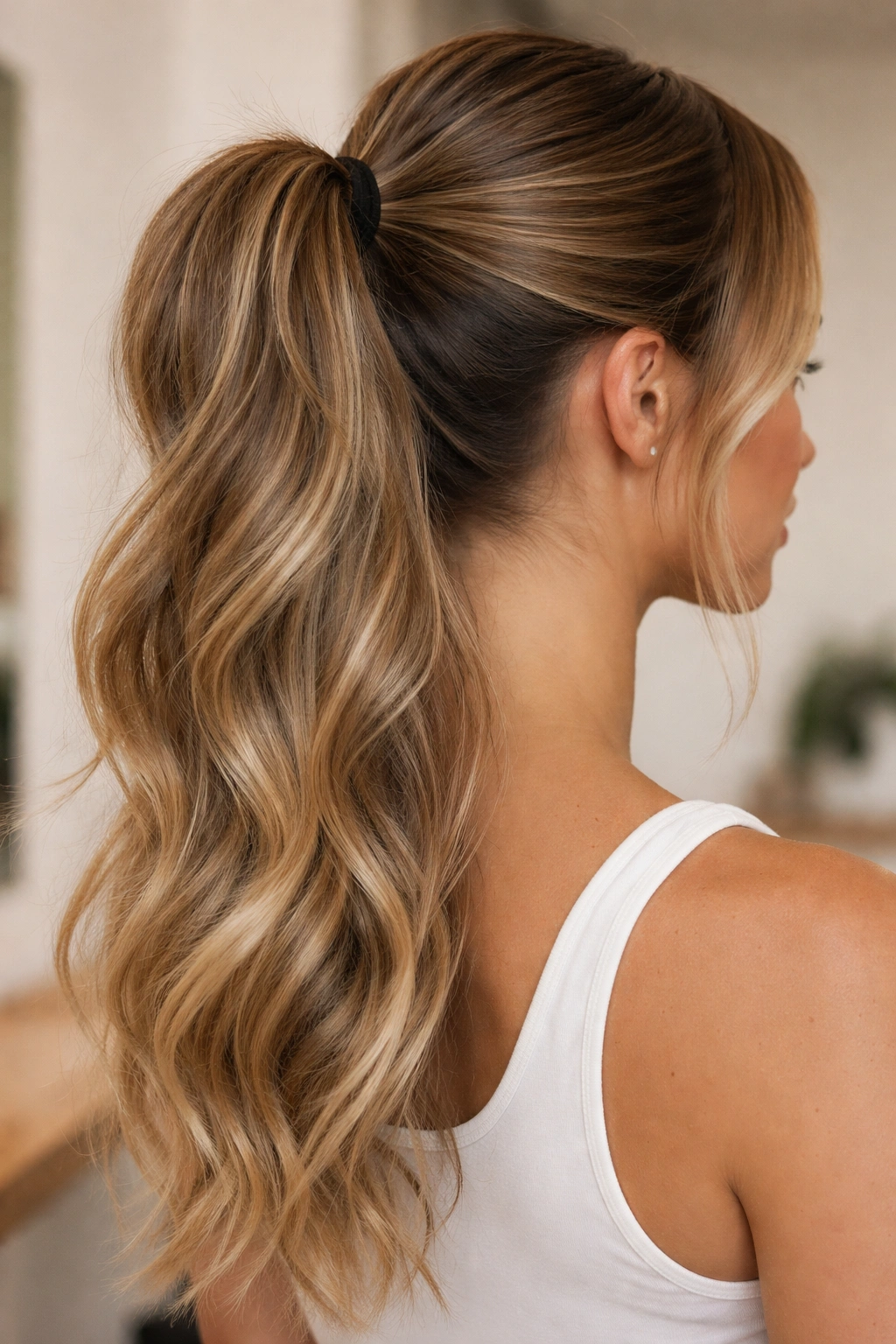
Root smudge is a technique that blurs the line between your natural color and highlights by placing slightly lighter color through the roots rather than leaving them dark. On a bronde ponytail, this creates a soft, lived-in effect where it’s hard to tell where your natural color ends and highlights begin.
Why Root Smudge Changes Everything
Root smudge is a game-changer if you want highlights but hate the maintenance of obvious regrowth lines. By lightening the roots slightly rather than keeping them dark, you blur the transition so your hair looks expensive, dimensional, and intentionally multi-tonal. This approach works beautifully on bronde because the brown and blonde tones are naturally close in depth, so the smudged transition looks entirely natural. You can stretch appointments to 12+ weeks because there’s no obvious line of demarcation—just a beautiful, blurred transition from roots to ends.
Achieving the Lived-In Effect
- Ask your colorist for root smudging specifically—they’ll use softer placement in the root area rather than a precise foil line
- This technique requires a colorist experienced with balayage and blending, not someone using traditional foiling techniques
- Bronde is the perfect palette for this because the colors are naturally close and blur beautifully together
- The effect actually improves as it grows out and fades—many clients love weeks 4-10 more than day one
- Textured ponytails show off the dimensional root smudge better than sleek styles
- You may only need touch-ups every 10-12 weeks rather than the typical 6-8, saving significant time and money
Real talk: If maintenance is your biggest barrier to highlights, root smudge is the technique that will change your mind about commitment.
14. Two-Tone Ombre Ponytail With Deep Roots and Platinum Ends
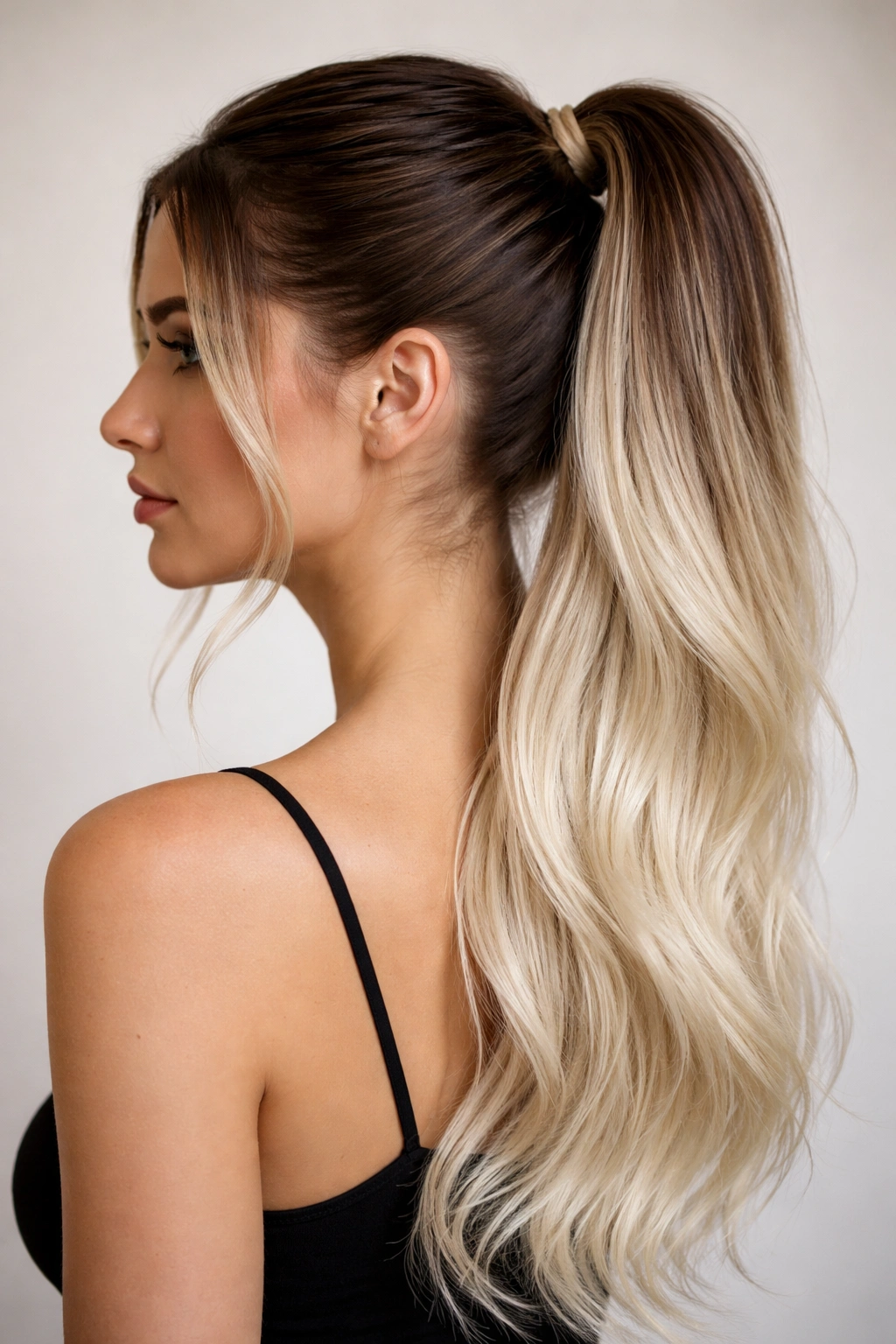
Ombre creates a gradual transition from darker at the roots to significantly lighter at the ends—in this case, deep brunette or black roots melting into platinum blonde tips. This dramatic progression creates an eye-catching effect that’s bold without being chaotic.
The Drama of Ombre Transition
Ombre is arguably the most visually striking highlight technique because the contrast is deliberate and obvious. A true ombre works best on longer ponytails where you have sufficient length to show the transition gradually. The deep roots keep the look grounded and age-appropriate (or edgy, depending on your vibe), while the platinum ends are bright and eye-catching. This style is particularly stunning in blonde-on-brunette, where the contrast is rich and the transition has plenty of room to develop.
Styling and Maintenance Considerations
- Ombre looks best in low to mid-height ponytails where the full gradient is visible from multiple angles
- Textured ends emphasize the lighter color and create movement that makes ombre even more dynamic
- You’ll need touch-ups every 6-8 weeks to maintain the gradient—roots grow and the line between colors becomes obvious
- Platinum blonde ends require purple shampoo and regular glossing to stay bright and prevent brassing
- The roots actually look better slightly grown out with ombre, so you can extend appointments slightly if you embrace the regrowth
- Flat-ironing straight before pulling into a ponytail shows off the gradient more clearly than textured styles
Pro tip: If you choose ombre, take a photo of your finished color so you have a reference for your next touch-up appointment.
15. Pastel Highlights for a Soft, Ethereal Ponytail
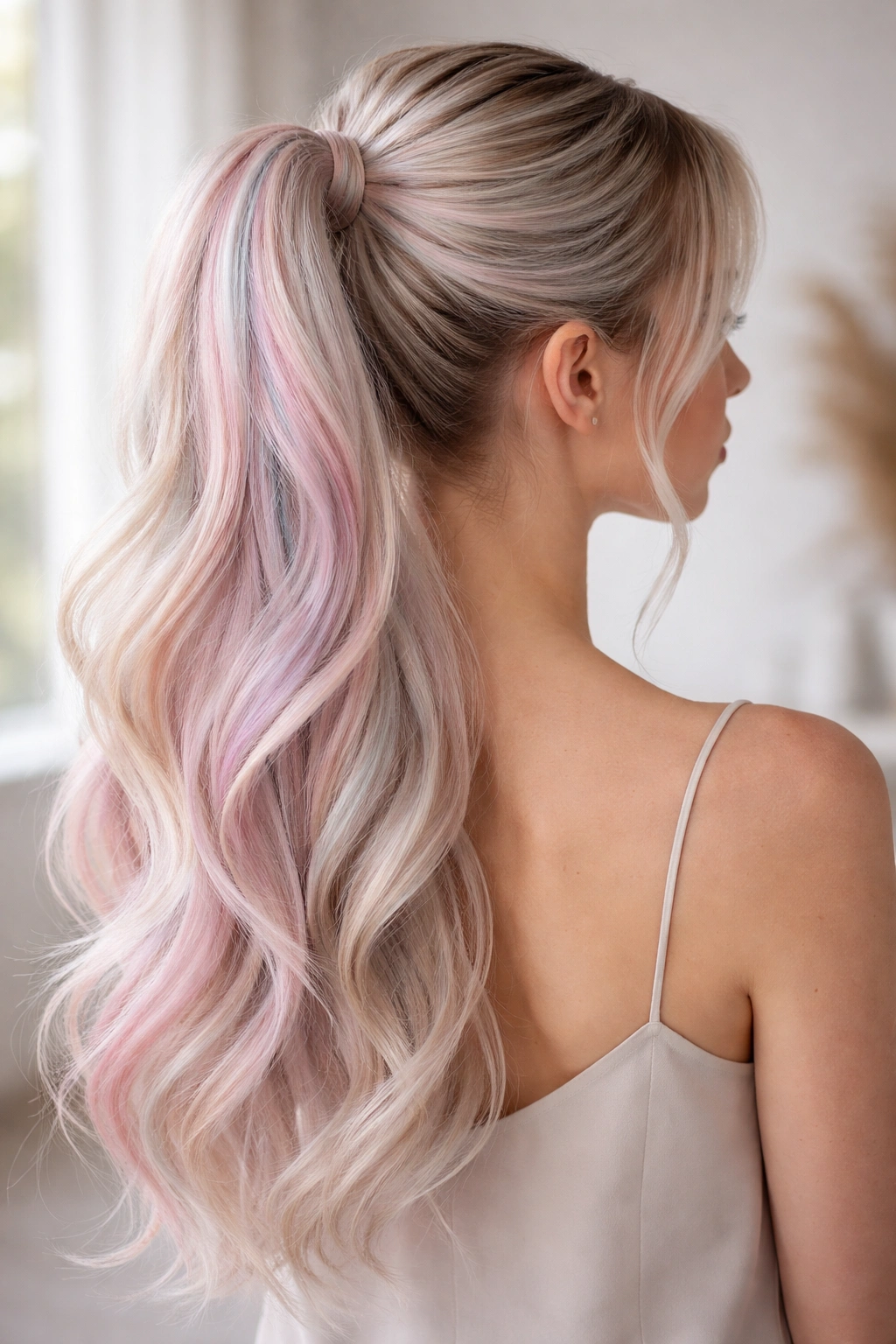
This whimsical approach uses soft pastel tones like baby pink, lavender, peach, or soft gold placed delicately through a light blonde or champagne base, creating a dreamy, ethereal effect. Pastel highlights are best suited to fair skin tones and work beautifully on those who want something distinctly feminine and soft.
Bringing Fantasy Color Into a Wearable Style
Pastel highlights allow you to experiment with fun, unconventional colors without committing to a fully colored head. By placing pastels subtly through a light blonde base, you get the fantasy element while maintaining a soft, wearable overall effect. Pastels are particularly striking because they shift in different lighting—champagne-based pastels can read as metallic, pink, or gold depending on whether you’re in natural or warm indoor light. This approach works best on those genuinely interested in being a bit experimental and fashion-forward with their look.
Caring for Pastel Tones
- Pastels fade relatively quickly, often looking their best around weeks 2-6 as they fade from rich to truly pastel
- Use color-safe shampoo and cool water to extend pastel vibrancy
- Avoid chlorine and saltwater if possible, as they can shift pastel tones unexpectedly
- These colors look most striking in natural daylight and good interior lighting; they may look subtle in dim settings
- Consider styling in loose waves or textured styles where light can play off the pastel pieces
- This is not a low-maintenance look—you’ll want a glossing treatment every 3-4 weeks to keep the pastels looking intentional rather than faded
Worth knowing: Pastels require a light base (platinum or champagne blonde) to show properly, so if your base is too dark, the pastels will be invisible.
Final Thoughts
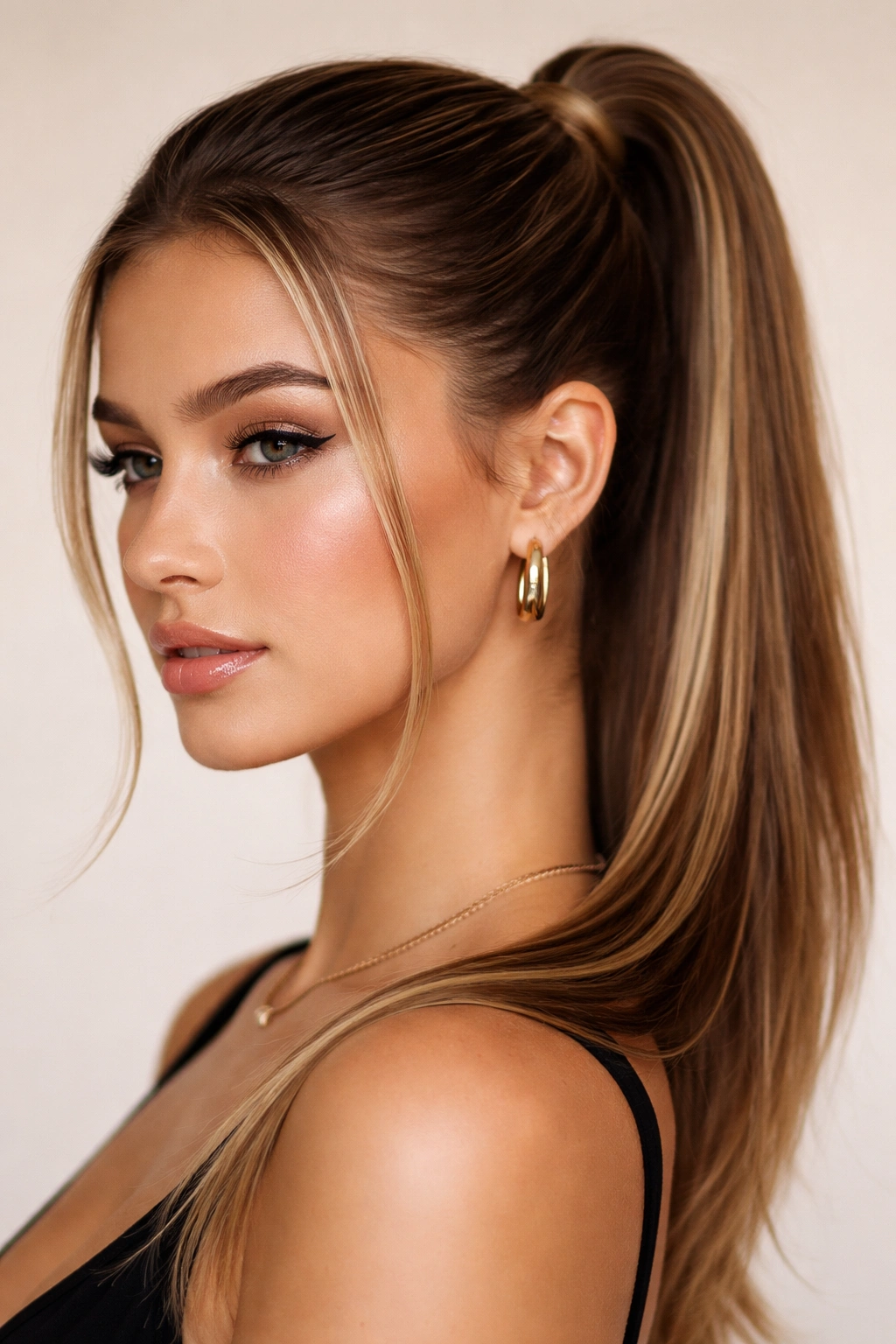
Highlighted ponytails offer the perfect opportunity to add dimension, personality, and visual interest to one of the most timeless hairstyles. Whether you choose subtle, barely-there babylights that simply brighten your face or bold, two-toned split color that makes a statement, the placement and tone of your highlights can completely transform how your ponytail looks and feels.
The key to a highlighted ponytail you’ll love is choosing an approach that aligns with your maintenance comfort level, your skin tone, and how much texture and volume you naturally have. Start with your honest assessment: do you prefer low-maintenance color, or are you willing to do glossing treatments every few weeks? Do you like subtle and barely-there, or do you want your hair to be a conversation starter? Are you drawn to warm caramel tones or cool blonde shades?
Once you know what appeals to you, bring reference photos and detailed descriptions to your colorist. The difference between “I want highlights in my ponytail” and “I’d like honey-kissed balayage on the ends with copper concentrations around the ponytail holder for a focal point” will completely transform how your colorist approaches the design. Your ponytail isn’t just a hairstyle—it’s an opportunity to express your style, frame your face beautifully, and add dimension that will make you feel genuinely excited to pull your hair back.
