



Faux ponytails have become a game-changer for Black women seeking protective styles that feel fresh, polished, and endlessly customizable. Unlike traditional ponytails that rely solely on your natural hair, faux ponytails blend extensions, braids, twists, and woven techniques to create the illusion of a full, voluminous tail while protecting your edges and natural hair underneath. The beauty of this approach is that it gives you options—whether you want something sleek and professional for work, a statement-making style for a night out, or a low-maintenance everyday look that still turns heads.
What makes faux ponytails particularly appealing is their versatility and the creative freedom they offer. You can experiment with different textures, colors, lengths, and styling details without the commitment of a permanent change. A faux ponytail can last anywhere from two to eight weeks depending on the technique and how well you maintain it, giving you time to enjoy the style while your natural hair grows underneath. They’re also genuinely protective when done correctly—when your natural hair is braided or twisted at the base and the ponytail is attached without tension, you’re allowing your strands to rest and recover from daily styling, heat, and environmental stressors.
The techniques used to create faux ponytails range from simple wrapping and knotting methods to intricate braiding and twisting combinations that take real skill to execute. Understanding which technique works best for your hair texture, lifestyle, and styling goals will help you choose the right style and communicate clearly with your stylist. Whether you’re drawn to sleek, polished looks or textured, bohemian vibes, there’s absolutely a faux ponytail variation that fits your aesthetic and meets your hair’s needs.
1. Braided Wrap Faux Ponytail
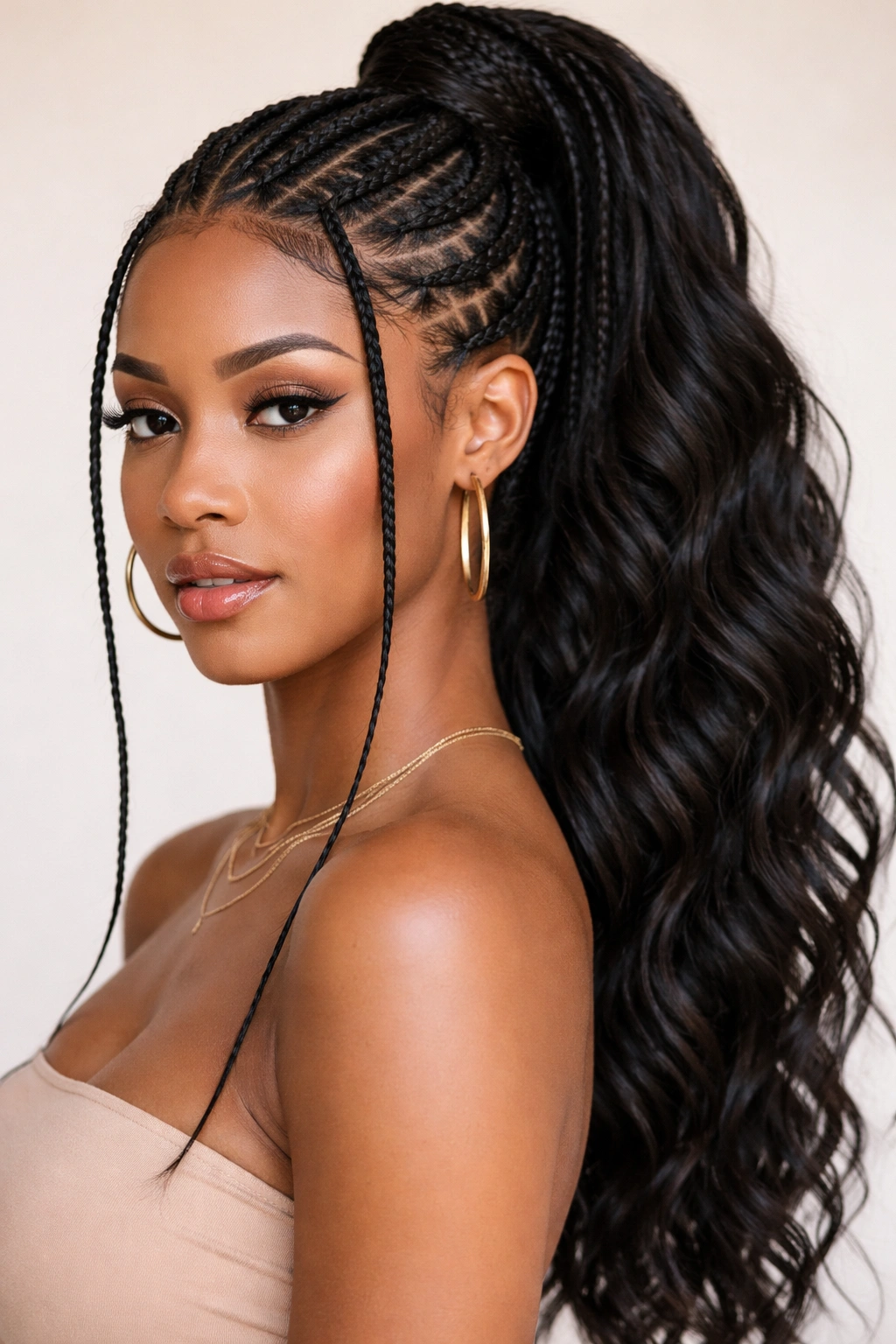
The braided wrap faux ponytail is one of the most accessible and versatile options for those new to faux ponytail styling. This technique involves creating a series of box braids, cornrows, or micro braids that frame your face and create the foundation at your crown, then attaching extension hair at the base to create the illusion of a full, cascading tail. The braided portion sits close to your scalp and can be as thin or thick as you prefer, allowing you to customize the look based on your hair density and personal style.
What Makes This Style Stand Out
The braided wrap faux ponytail offers incredible versatility because the braids themselves become a design element. You can style them in geometric patterns, create asymmetrical layouts, or even incorporate different braid sizes and textures for visual interest. The braids keep your natural hair secure and protected while the extensions do the heavy lifting of creating volume and length. This style works beautifully whether you’re aiming for a sleek, corporate aesthetic or something more artistic and textured.
How to Style and Maintain It
- Start with clean, moisturized natural hair that’s been detangled thoroughly to avoid breakage during the braiding process
- Have your stylist create braids in your preferred pattern—typically 4 to 8 braids depending on your desired ponytail thickness
- The braids should be tension-free; if they feel uncomfortably tight, speak up immediately to prevent damage to your edges
- Attach your extension hair to the braids using a knotting or wrapping technique, or by sewing it onto a base sewn into the braids
- Refresh the style every 3 to 4 weeks by loosening any braids that have begun to fray and retying extension hair if needed
- Sleep on a silk pillowcase or bonnet to preserve both the braids and the extension hair’s integrity
- Avoid excessive manipulation of the style, which can weaken the attachment points and cause premature unraveling
2. Twisted Crown Faux Ponytail
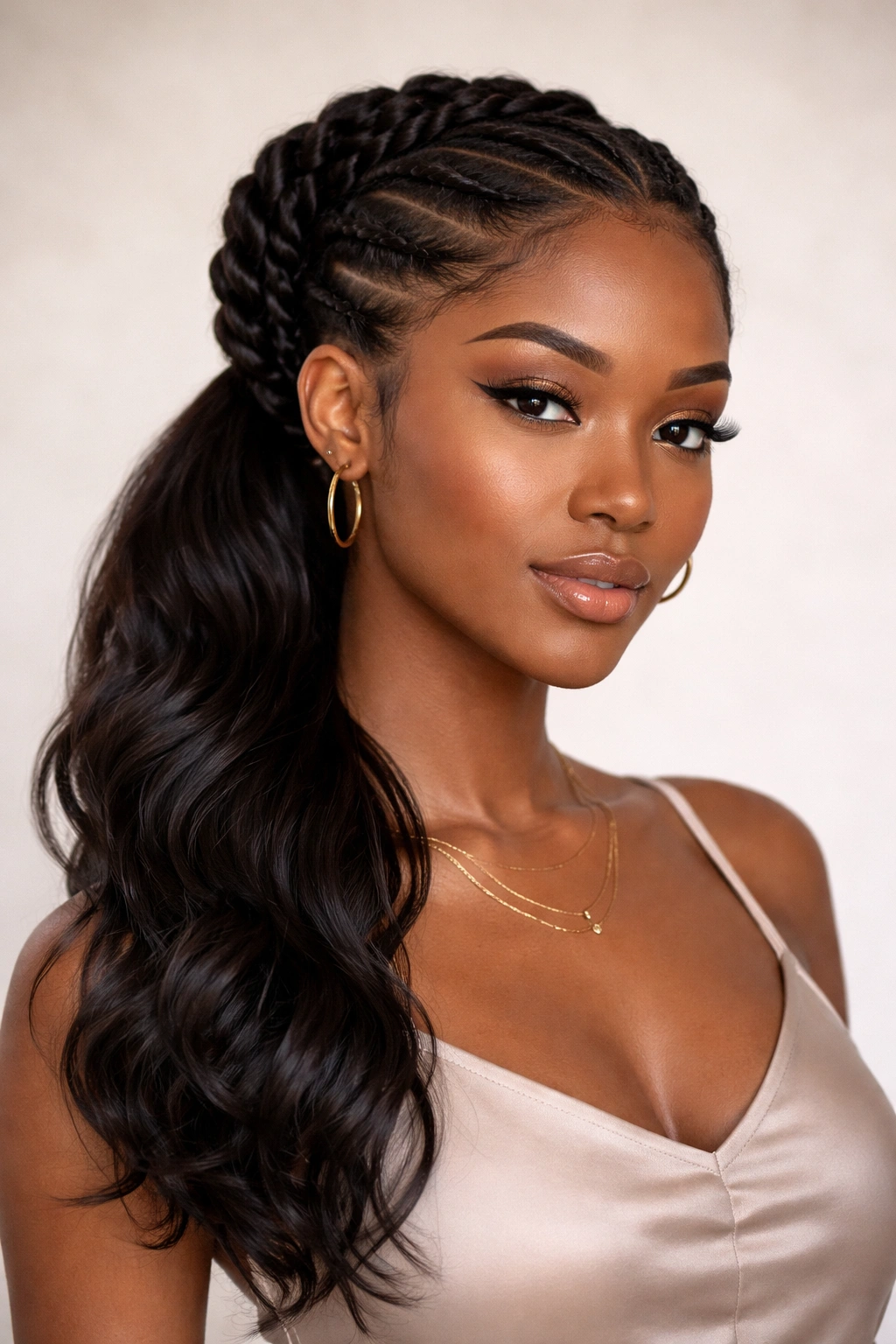
A twisted crown faux ponytail replaces braids with two-strand twists that spiral around your head in a crown-like formation, with extensions attached at the base to create your ponytail. This style offers a softer, more organic aesthetic than braids while still providing excellent protection and hold. The twists can be made with your natural hair and extension hair twisted together from the roots, or with your natural hair twisted first and extensions attached afterward.
What Makes This Style Stand Out
Two-strand twists have a beautiful, flowing quality that reads as more relaxed and bohemian than cornrows or box braids. The crown formation frames your face elegantly and creates a romantic, intentional look that works for both casual settings and more formal events. Because twists are slightly thicker than braids, this style often requires fewer sections, meaning less installation time and potentially less tension on your scalp. The texture of twisted styles also tends to blend beautifully with many extension textures, creating a cohesive, natural-looking result.
How to Style and Maintain It
- Prepare your hair by shampooing, deep conditioning, and allowing it to air dry or blow-dry to your preferred texture
- Section your hair into the number of twists you want your crown to have—usually 6 to 10 sections depending on thickness preferences
- Twist each section with extension hair wound throughout, starting at the roots and spiraling around your crown
- Secure the ends of the twists with small elastic bands or by tucking and sewing them into the base of your ponytail attachment
- Use a light oil or edge control to smooth any flyaways and define the twist pattern
- Every 5 to 7 days, gently re-twist any sections that have begun to unwind, paying special attention to the ends
- Moisturize your scalp with a lightweight oil or scalp spray two to three times per week
- When you’re ready to take down the style, carefully unwind each twist and use a generous amount of conditioner to detangle your natural hair
3. Cornrow-Based Faux Ponytail
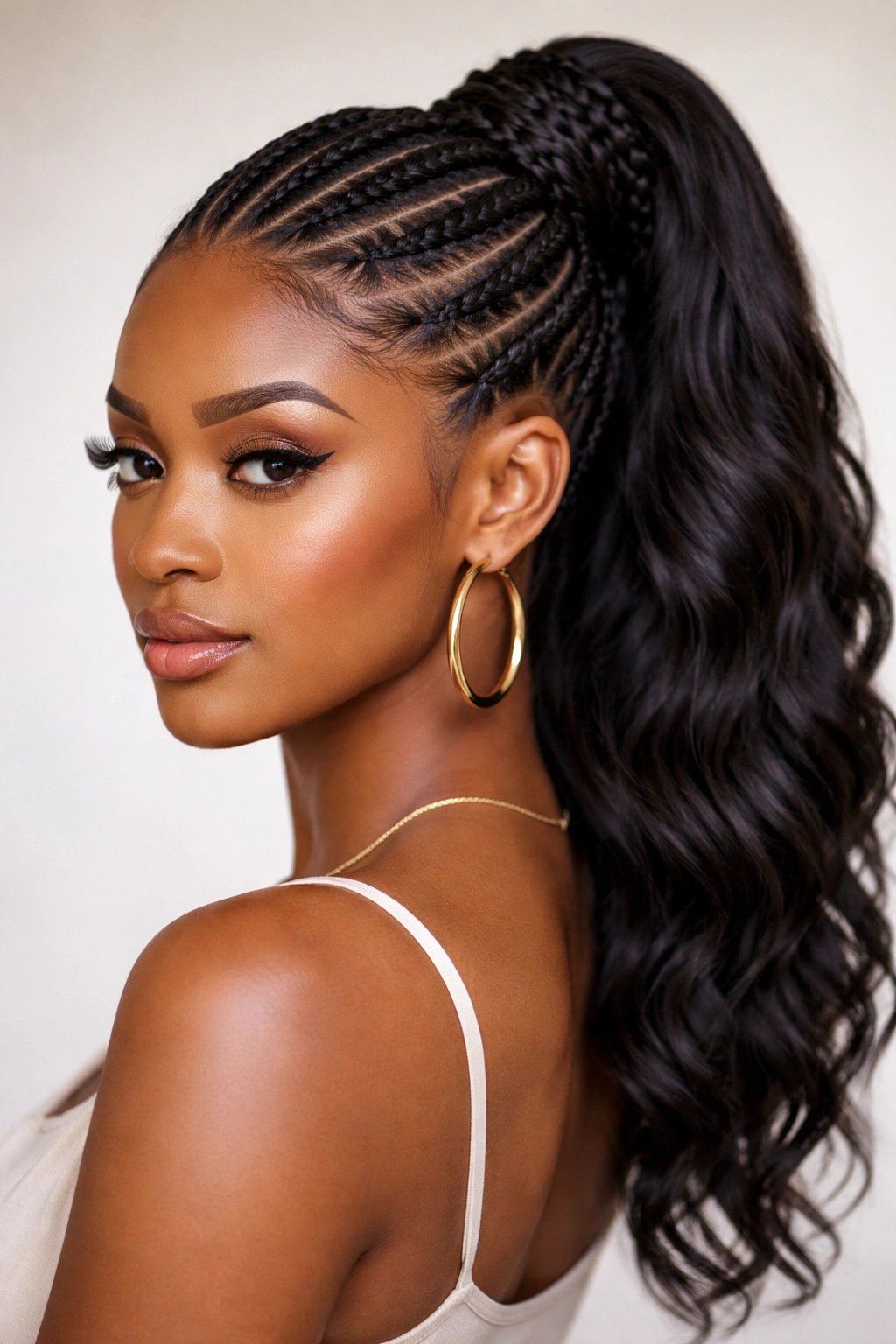
Cornrows are the foundation for one of the most polished, long-lasting faux ponytail styles available. Cornrows are tight, intricate braids that sit close to the scalp and create a neat, geometric look that frames your entire head. When extensions are attached at the base where multiple cornrows meet, they create a thick, full ponytail that can last 6 to 8 weeks with proper care.
What Makes This Style Stand Out
Cornrow-based faux ponytails are incredibly durable and protective because the braids distribute tension evenly across your entire scalp rather than concentrating it in one spot. This makes them an excellent choice if you’re looking for a style that genuinely allows your natural hair to rest and grow. The neat, geometric quality of cornrows gives this style an intentional, curated appearance that works beautifully in professional settings, at special events, or as an everyday look. You can create endless variations by changing braid direction, thickness, and pattern.
How to Style and Maintain It
- Have your natural hair shampooed, deep conditioned, and completely dry before your appointment to make the braiding process easier
- Work with your stylist to decide on cornrow direction and pattern—whether you want them braided straight back, in a circular pattern, diagonally, or asymmetrically
- The cornrows should sit close to your scalp but never feel uncomfortably tight; discomfort is a sign of too much tension
- Extensions are typically sewn or knotted onto the cornrows at the base of where your ponytail will attach
- To maintain cornrows, wash your hair every 1 to 2 weeks using a gentle, sulfate-free shampoo applied directly to the braids
- Sleep on a bonnet or satin pillowcase every night to prevent frizz and extend the lifespan of the cornrows
- Reapply edge control and moisturizing products as needed, focusing on your scalp and the roots of your natural hair
- Expect the cornrows to last 6 to 8 weeks before needing to be redone, depending on how quickly your hair grows and how well you care for them
4. Lemonade Braid Faux Ponytail
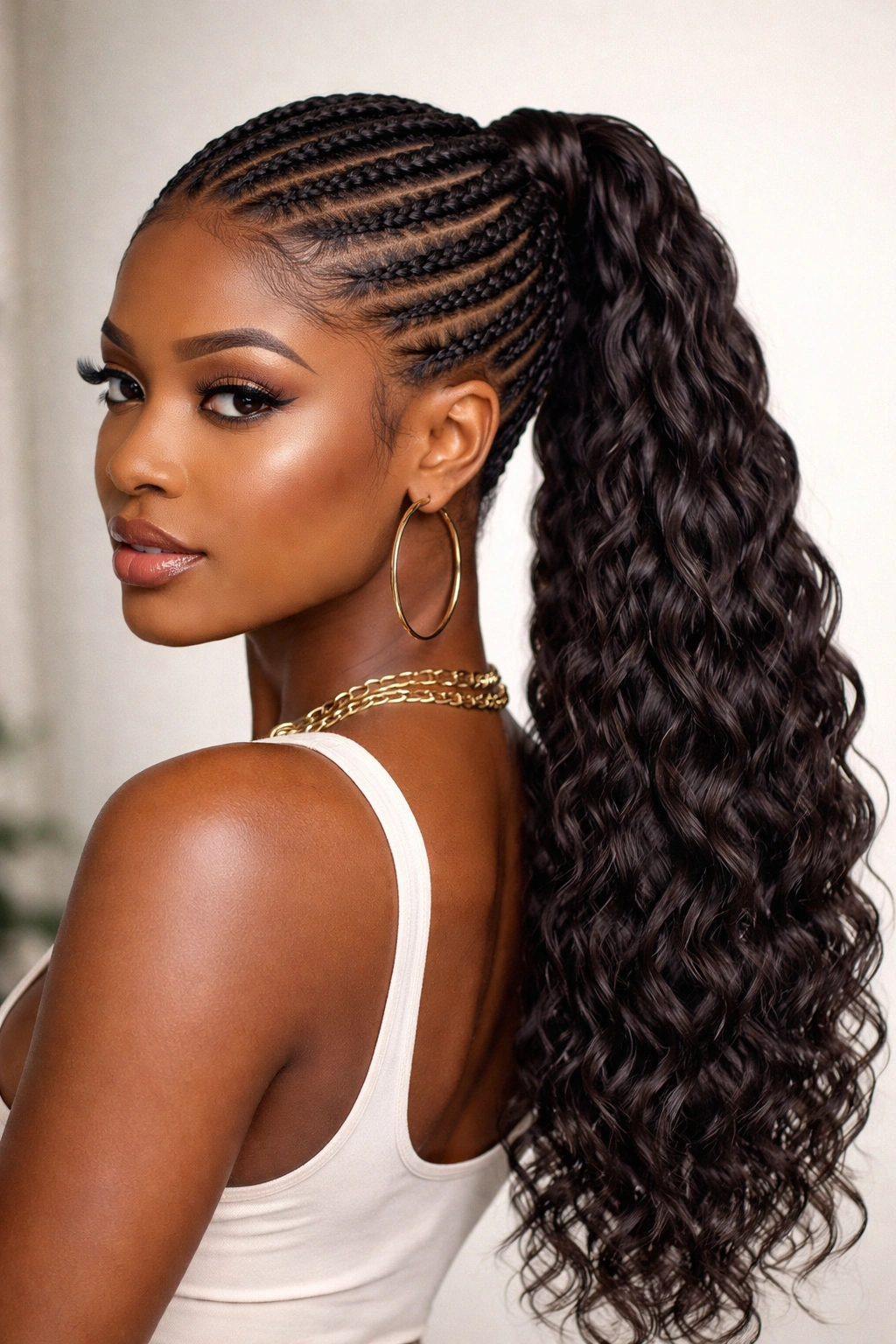
The lemonade braid faux ponytail is named for its diagonal cornrow pattern that resembles the way lemonade pitcher designs tilt across the surface. This style features cornrows that run diagonally from one side of your head to the other, creating a striking visual pattern while serving as the base for your ponytail. It’s a style that’s both protective and visually compelling—it’s hard to miss a well-executed lemonade braid.
What Makes This Style Stand Out
Lemonade braids offer incredible visual impact with their distinctive diagonal pattern. This style works beautifully whether you’re keeping your ponytail tight and sleek or making it voluminous and textured. The diagonal braid pattern also tends to be more flattering for many face shapes than straight-back cornrows because of how the lines frame your features. Because this is a very popular style, many people recognize and appreciate the skill and artistry involved in creating it perfectly.
How to Style and Maintain It
- Start with hair that’s been washed and deep conditioned at least one to two days before your appointment, so it’s moisturized but not freshly oiled
- Communicate clearly with your stylist about the direction and angle you want your lemonade braids to run—this significantly affects the overall look
- The braids should feel secure but never painfully tight; tension headaches are a sign that something needs adjustment
- Extensions are attached at the base, typically using a sewing or knotting method that’s hidden beneath the ponytail
- Maintain moisture in your natural hair by spritzing your scalp with a lightweight moisturizing spray every 2 to 3 days
- Avoid excessive pulling or tension when styling your ponytail, as this can stress both the braids and your edges
- Reapply edge control and gel as needed to maintain the polished appearance of the braids
- Plan to keep this style for 5 to 7 weeks before reinstalling, though you can freshen it up at the 4-week mark if desired
5. Senegalese Twist Faux Ponytail
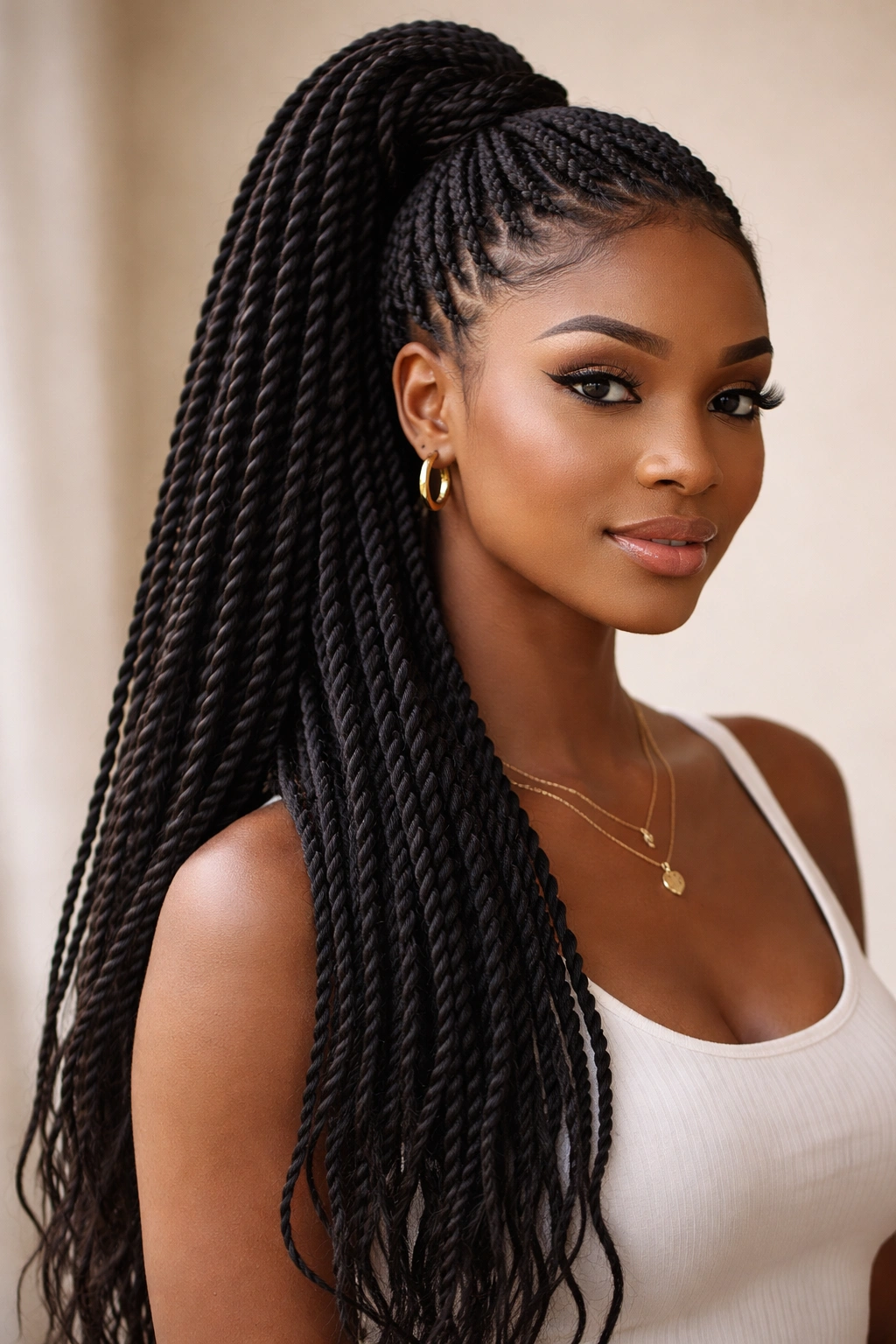
Senegalese twists are two-strand twists that are created by twisting extension hair and your natural hair together from the root, rather than twisting your natural hair alone and then adding extensions. When these twists are arranged in a formation that creates a faux ponytail, they deliver a style that looks incredibly polished and blended. The twists typically begin at your roots and spiral down to wherever your ponytail base is positioned.
What Makes This Style Stand Out
Senegalese twists have a refined, luxe appearance because the extension hair and natural hair are twisted together from the beginning, creating a seamless blend. This style offers a softer, more feminine aesthetic than cornrows while still providing strong protection for your natural hair. The twists themselves come out beautifully textured and visually interesting, and they look stunning in a variety of colors—whether you’re going for a subtle blend or a bold contrast. Many people find Senegalese twists more comfortable to wear because there’s less tension at the scalp compared to tightly braided styles.
How to Style and Maintain It
- Prepare your natural hair by shampooing with a moisturizing shampoo and applying a deep conditioning treatment
- Allow your hair to dry completely before your appointment to make twisting easier and more precise
- Have your stylist create the twists using the exact placement and pattern you envision for your ponytail base
- The twists should wrap around your head in a way that feels secure but comfortable—never so tight that you experience discomfort
- Attach extension hair at the base using a method that won’t slip or come loose easily, such as sewing onto a stitched base
- Moisturize your twists every 3 to 4 days with a lightweight leave-in conditioner or twist refresher spray
- Sleep on a bonnet to prevent frizz and maintain the integrity of the twist pattern
- Refresh your twists at the 4-week mark by loosening and retightening the base where they meet your ponytail
- Plan for this style to last 6 to 8 weeks depending on how quickly your natural hair grows and how well you maintain it
6. Kilo Braid Faux Ponytail
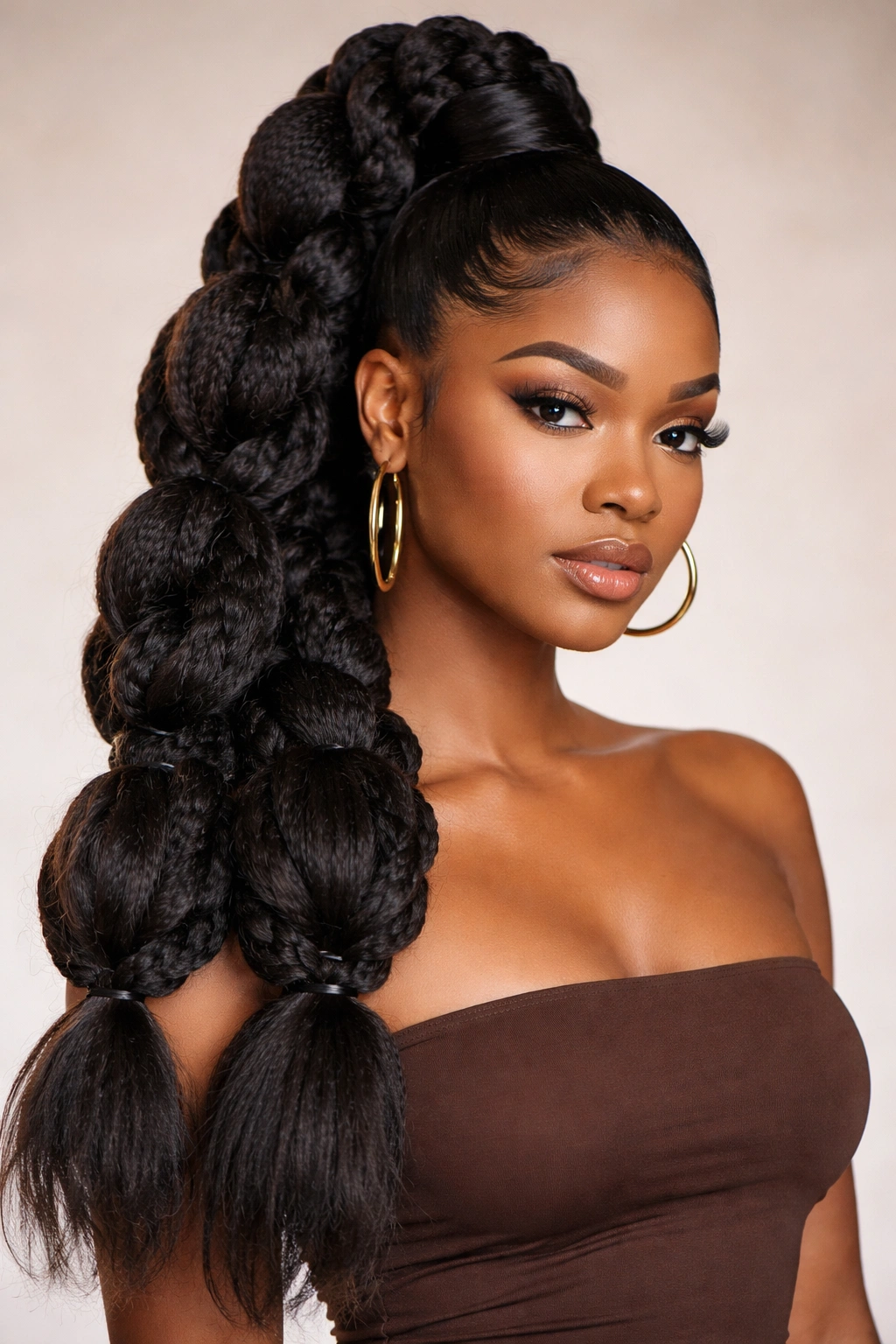
Kilo braids are extra-thick, textured braids that create an ultra-voluminous, statement-making look when used as the base for a faux ponytail. These braids are typically created with thicker sections of hair and may include looped or bumpy textures woven throughout, which adds visual interest and dimension. The dramatic thickness of kilo braids means you typically need fewer of them, which translates to a quicker installation process and less weight on your scalp overall.
What Makes This Style Stand Out
Kilo braid faux ponytails make an unmistakable visual statement—they’re bold, creative, and immediately recognizable as intentional styling work. The texture and dimension of kilo braids photograph beautifully and photograph even better in person, where the light catches all the textured details. Because these braids are thicker and fewer in number than traditional box braids, they distribute weight more evenly and often feel lighter to wear overall. If you’re someone who loves artistic, eye-catching styles, kilo braids deliver serious impact.
How to Style and Maintain It
- Start with clean, well-moisturized hair that’s been allowed to dry completely before your appointment
- Communicate with your stylist about the exact texture and thickness you want your kilo braids to have, including any looping or pattern details
- The braids should feel substantial but not uncomfortably heavy; if your neck feels strained, the weight distribution may need adjustment
- Keep the base of your kilo braids clean by spritzing your scalp with a lightweight shampoo every 7 to 10 days
- Use a edge control product to maintain the neat appearance of your braids and edges throughout the style’s lifespan
- Sleep on a satin bonnet to preserve the texture and definition of your kilo braids
- Avoid sleeping with your ponytail in a tight elastic, as this can create tension marks and weaken your natural hair
- Kilo braids typically last 6 to 7 weeks before needing to be reinstalled, though the exact timeline depends on your hair growth rate
7. Butterfly Locs Faux Ponytail
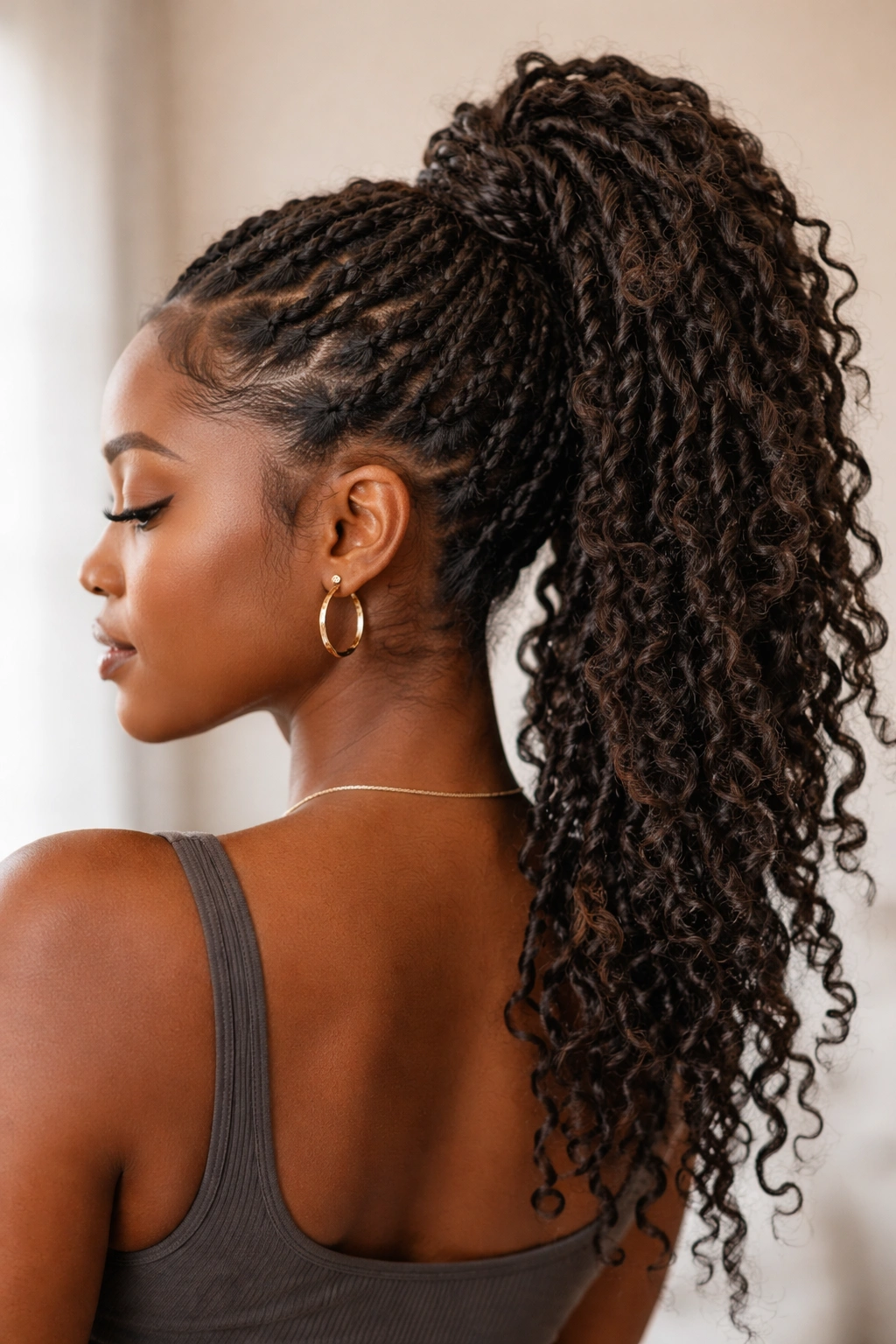
Butterfly locs are a newer protective style that combines the look of locs with the fluidity of twists. They’re created by loosely coiling extension hair around sections of your natural hair, creating a bumpy, dimensional texture that’s visually striking. When arranged as a faux ponytail base, butterfly locs offer a unique aesthetic that stands apart from traditional braids and twists—they’re textured, artistic, and deeply protective.
What Makes This Style Stand Out
Butterfly locs offer a completely different visual than braids or traditional twists, with their characteristic bumpy, coiled texture that creates incredible dimension and movement. This style is particularly popular because it feels fresh and creative while still being genuinely protective for your natural hair. The locs themselves are usually looser and lighter than traditional locs, which means they’re more comfortable to wear and put less strain on your scalp. If you love bohemian, artistic aesthetics, butterfly locs deliver that vibe beautifully.
How to Style and Maintain It
- Prepare your natural hair by shampooing and deep conditioning, then allow it to dry completely
- Have your stylist section your hair and begin coiling extension hair around each section in the butterfly loc technique
- The coils should feel secure but not painfully tight; your stylist should never have to wrench your hair to create them
- Secure the ends of your butterfly locs by tucking them into the coil or using small rubber bands that blend with your hair color
- Spray your butterfly locs every 2 to 3 days with a lightweight moisturizing spray to keep them from drying out completely
- Sleep on a bonnet or with your locs in a loose high ponytail to prevent frizz and preserve the coil definition
- Recoil or tighten the roots of your butterfly locs every 4 weeks to maintain their neat appearance as your natural hair grows
- This style typically lasts 6 to 8 weeks before needing to be taken down or reinstalled, depending on how well you maintain the locs
8. Colored Box Braid Faux Ponytail
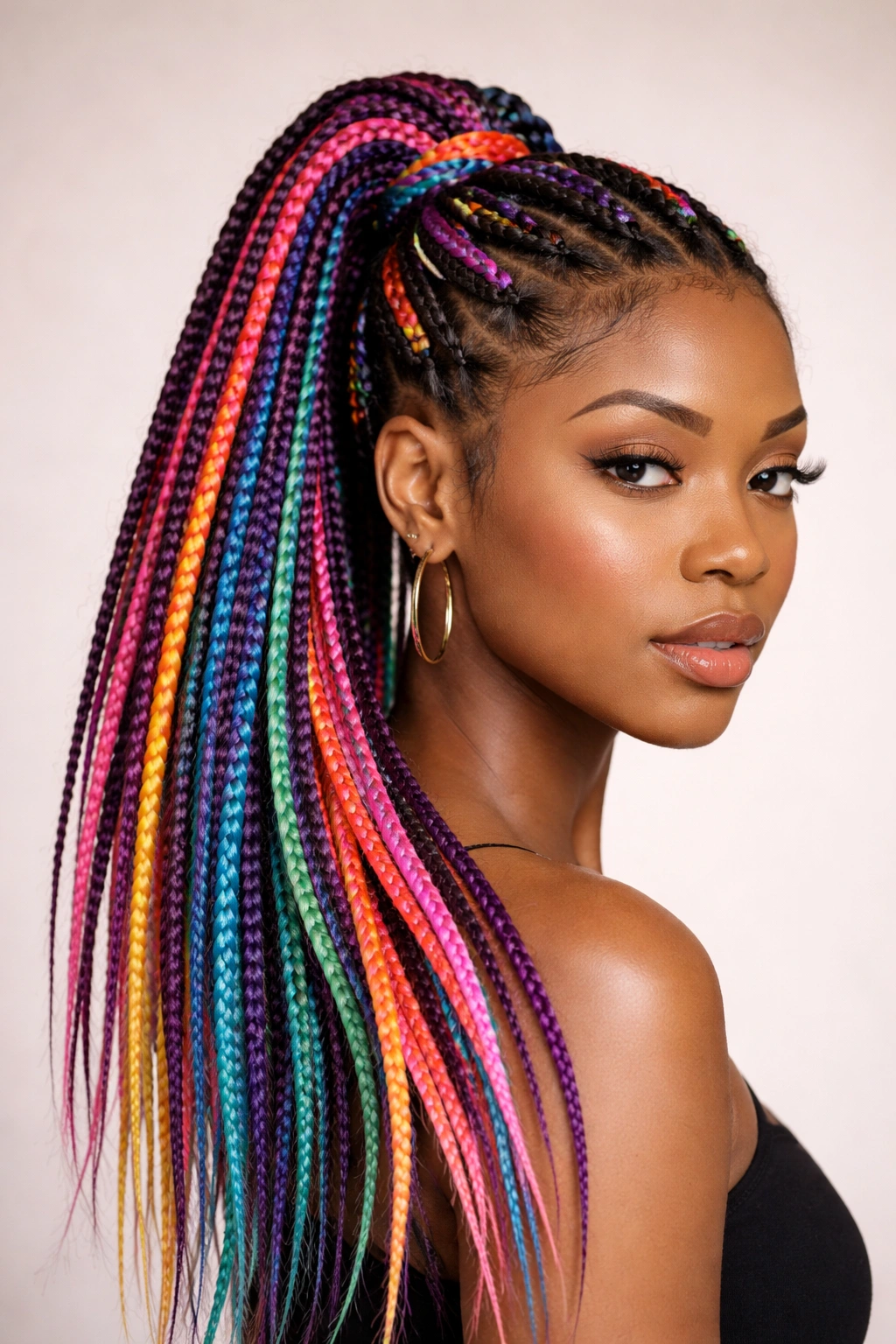
A colored box braid faux ponytail takes the classic box braid style and elevates it by incorporating color—whether that’s vibrant jewel tones, pastels, earth tones, or even rainbow variations. Box braids are individual square-shaped braids that sit slightly away from your scalp, and when they’re done in colors that contrast with or complement your natural hair, they create a striking, intentional look. The colored extensions make this style feel more customized and artistic than traditional brown or black braids.
What Makes This Style Stand Out
Colored braids offer incredible creative freedom because there are virtually no limits to the color combinations you can explore. Whether you want something subtle like honey blonde throughout, or bold like burgundy and purple split sections, colored braids make a statement. The color also helps hide regrowth better than single-tone braids, which can extend the lifespan of your style. Additionally, colored braids photograph beautifully and instantly transform the aesthetic of any outfit or look.
How to Style and Maintain It
- Begin with clean, moisturized natural hair that’s been allowed to dry completely before your braiding appointment
- Choose your color or color combination carefully—consider your skin tone, personal style, and how the colors will look as your natural hair grows in
- Have your stylist create box braids in your preferred size (micro, regular, or jumbo) with the colored extension hair incorporated throughout
- Keep colored extensions as vibrant as possible by protecting them from excessive sun exposure, chlorine, and heat
- Wash your braids every 7 to 10 days using a sulfate-free shampoo, as sulfates can fade color more quickly
- Use color-safe conditioner and leave-in treatments to keep the extension hair hydrated and the color looking fresh
- Sleep on a satin pillowcase or bonnet to prevent color fading and maintain the braids’ appearance
- Plan for colored box braids to last 6 to 8 weeks, though the color may fade slightly as time goes on, creating an ombré effect
9. Fulani Braid Faux Ponytail
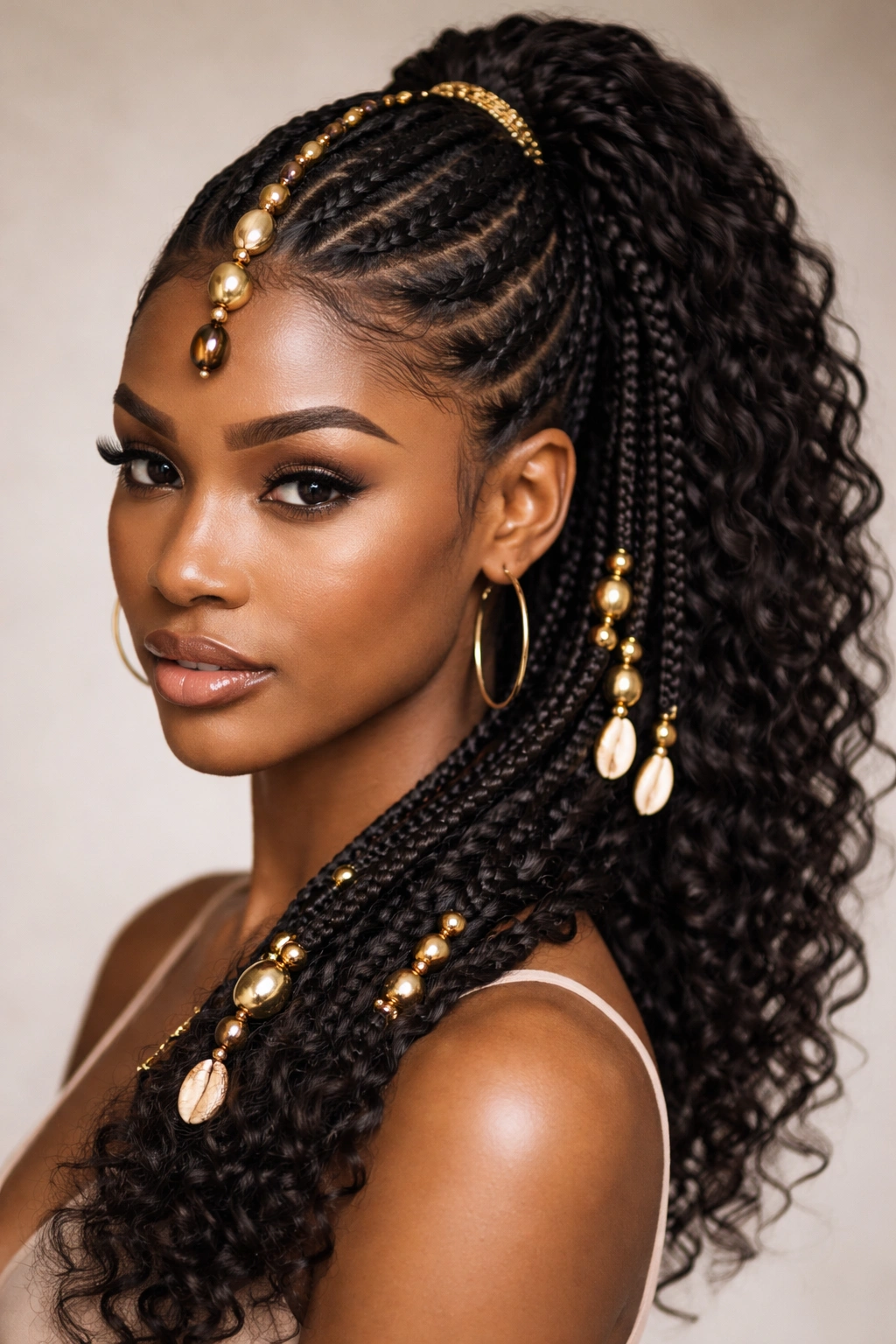
Fulani braids are a stunning style that features one or more larger, thicker braids in the center of your head (often incorporating beads, cowrie shells, or metal cuffs), surrounded by smaller, more delicate braids. This style is both protective and deeply cultural—it originates from the Fulani people of West Africa and carries significant cultural importance. When adapted into a faux ponytail style, Fulani braids offer an incredibly polished, high-fashion appearance that works beautifully for special occasions or as an everyday style with real presence.
What Makes This Style Stand Out
Fulani braids stand out because of their distinctive design that combines different braid sizes and typically includes decorative elements that add sparkle and intentionality. The larger central braids are often thicker and more dramatic than the surrounding braids, creating a focal point that draws attention to your face and overall styling. This style is genuinely beautiful and carries cultural significance, making it a choice that feels meaningful and artistic rather than merely trendy. The beads and cuffs add personalization and can be swapped out to match different outfits or occasions.
How to Style and Maintain It
- Prepare your hair by shampooing with a gentle cleanser and applying a deep conditioning treatment several days before your appointment
- Discuss your braid pattern with your stylist, including where you want your largest braids to sit, how many smaller braids to include, and what decorative elements appeal to you
- Have your stylist create the braids with your natural hair and extension hair, adding beads or cuffs as you’ve planned
- The braids should never feel uncomfortably tight; if they’re causing pain or discomfort at the roots, inform your stylist immediately
- Clean your scalp every 7 to 10 days using a shampoo designed for braided styles, being gentle around your scalp
- Protect your braids while sleeping by wearing a bonnet or sleeping on a satin pillowcase
- You can remove and replace beads or cuffs as desired to refresh the look or match different styling phases
- Fulani braids typically last 6 to 8 weeks before requiring reinstallation, though you can maintain them longer if you’re diligent about care
- Be mindful of the cultural significance of this style and wear it with the respect and appreciation it deserves
10. Crochet Hook Faux Ponytail
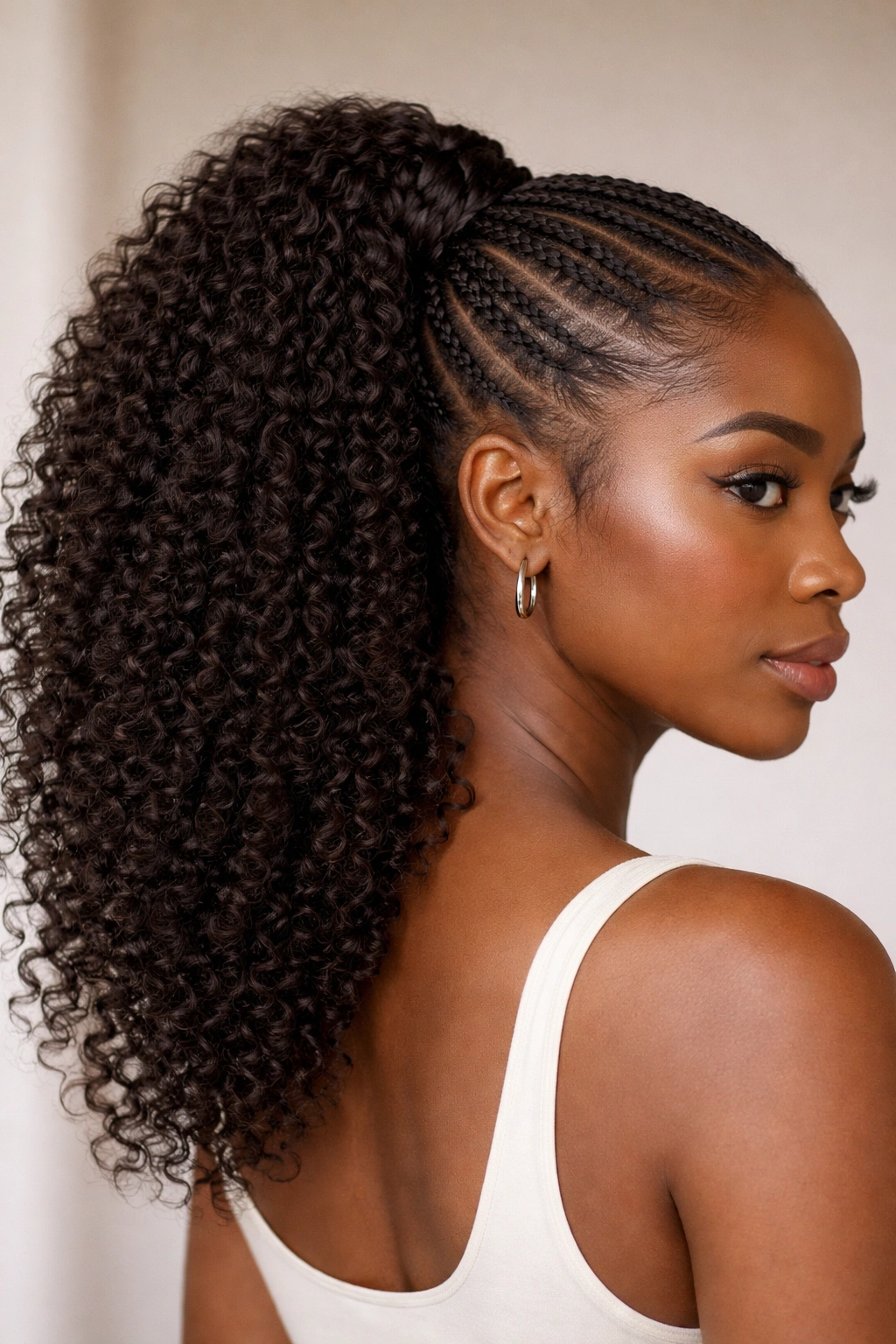
A crochet hook faux ponytail is created by using a crochet hook to pull pre-made locs, braids, twists, or other textured extension hair through your cornrows or natural hair base. This method is faster than hand-braiding because the extension hair is already pre-made, and you’re simply attaching it rather than creating it from scratch. The result is a faux ponytail that looks full, textured, and intentional while requiring less installation time than many other protective styles.
What Makes This Style Stand Out
Crochet faux ponytails offer incredible versatility because you can choose from nearly any pre-made texture—crochet braids, human hair twists, faux locs, curly hair, straight hair, or textured alternatives. The installation is typically faster than hand-braiding, which means less time in the stylist’s chair and potentially lower costs. This style works beautifully whether you’re going for something sleek or something textured and bohemian, and you can change the look by choosing different textures or colors of crochet hair. The crochet attachment method is also reversible and gentler on your natural hair when done correctly.
How to Style and Maintain It
- Prepare your natural hair by shampooing, deep conditioning, and allowing it to dry completely
- Have your stylist create cornrows or twists to serve as the base for your crochet hair attachment
- Select your preferred crochet texture or combination of textures—many people mix different textures for visual interest
- Your stylist will use a crochet hook to pull the pre-made hair through your cornrow or natural hair base, creating a seamless attachment
- Secure the ends of your crochet hair by tucking and sewing them into place, or by using small rubber bands if preferred
- Moisturize your crochet hair every 3 to 4 days with a lightweight spray or leave-in conditioner
- Sleep on a bonnet to prevent frizz and maintain the texture and appearance of your crochet hair
- Wash your crochet ponytail every 7 to 10 days using a sulfate-free shampoo, being gentle with the attachment points
- Plan for this style to last 6 to 8 weeks depending on the texture you choose and how well you maintain it
11. High Ponytail Faux Ponytail
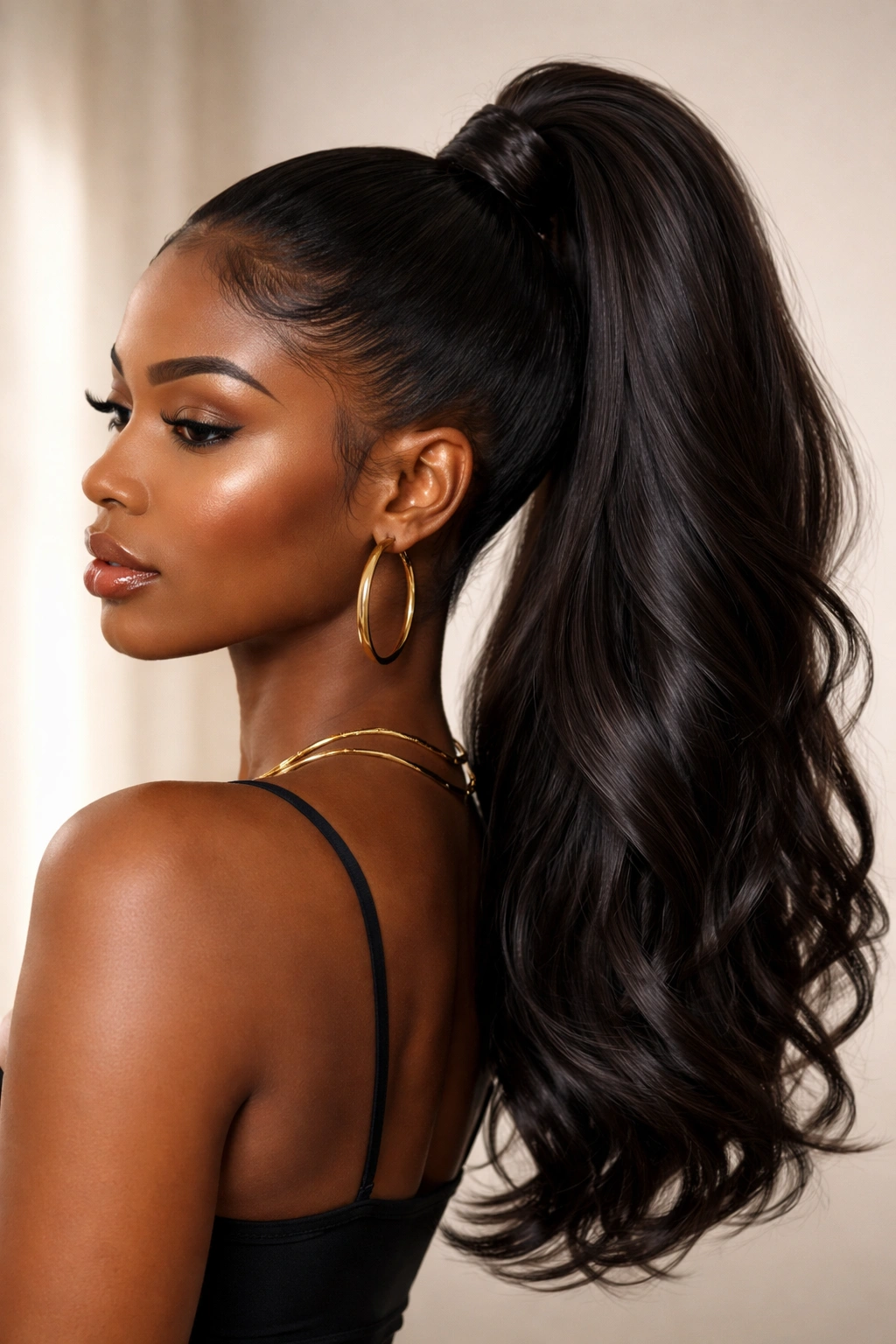
A high faux ponytail sits at the crown of your head, pulled up and back in a dramatic, eye-catching way that emphasizes your face and features. This style can be created using any of the braiding or twisting methods mentioned above—what distinguishes it is the placement and elevation of the ponytail itself. A high faux ponytail creates the illusion of a lifted, lifted-looking face and is often preferred for special occasions, performances, or anytime you want maximum visual impact.
What Makes This Style Stand Out
High ponytails are inherently more dramatic and statement-making than lower placements because they immediately draw attention upward to your face and crown. This placement is particularly flattering if you want to showcase your face shape, neck, or shoulders—it also works beautifully with jewelry, makeup, and styling details that you want to highlight. The height creates movement and flow that photographs beautifully and reads as more intentional and polished than lower placements. If you’re going for maximum visual impact, a high faux ponytail delivers.
How to Style and Maintain It
- Prepare your natural hair the same way you would for any faux ponytail base, with a shampoo and deep conditioning treatment
- Discuss ponytail height and placement with your stylist—higher placements require stronger, more secure anchoring to prevent slipping
- Have your stylist create your braids, twists, or other base pattern, then gather them at the crown and secure your extension hair at that high placement
- Use multiple attachment methods if necessary to ensure your high ponytail stays secure throughout the day
- Avoid sleeping with your ponytail in a tight elastic, as the constant tension at that height can stress your hairline and roots
- Sleep on a bonnet and keep your ponytail loose or down while resting
- Check your attachment points every few days to ensure everything is still secure and hasn’t started slipping
- Be mindful of tension and pain at the crown; if you experience discomfort, consider lowering your ponytail slightly
12. Long Box Braid Faux Ponytail
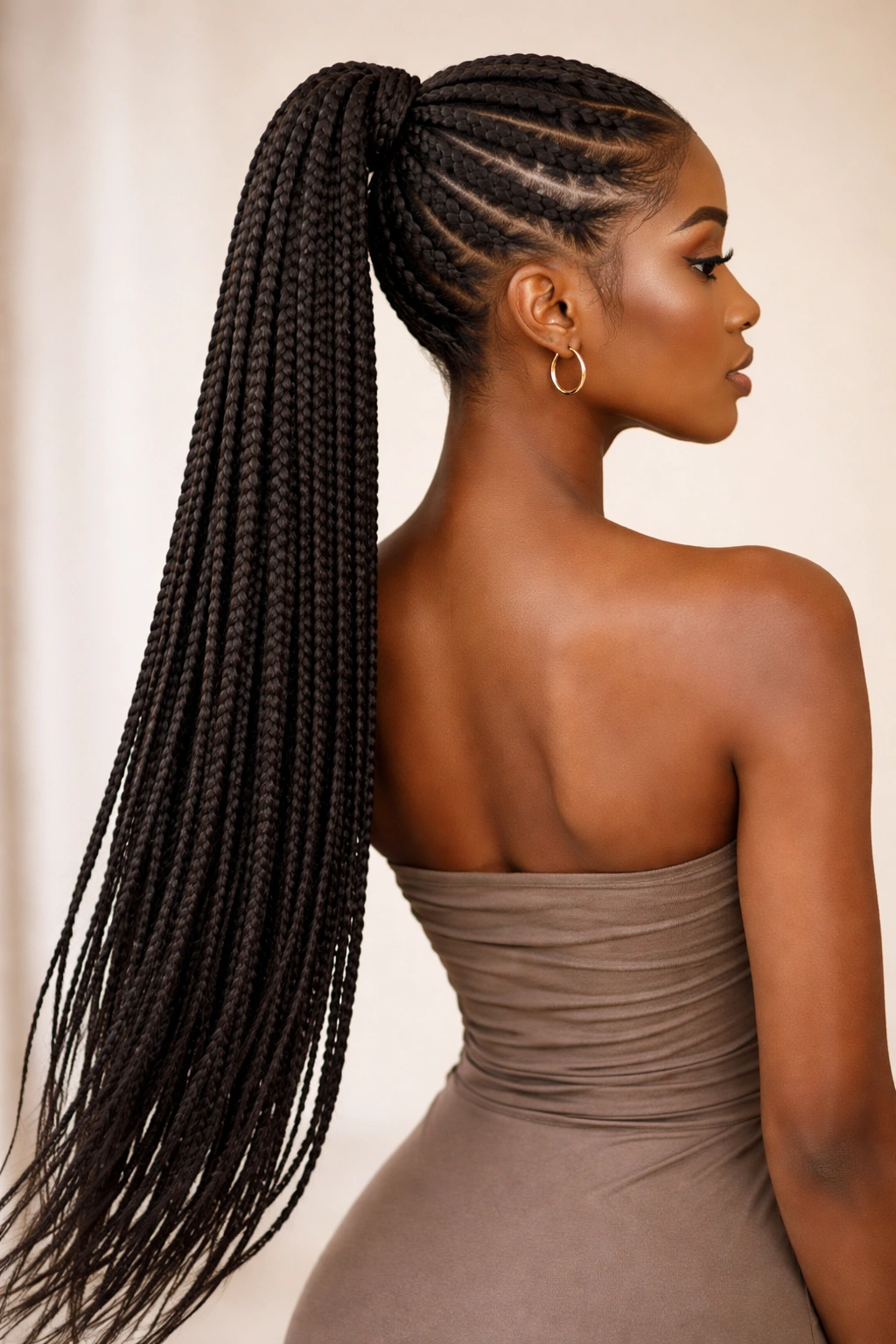
A long box braid faux ponytail combines classic box braids with extension hair that creates an exceptionally long, voluminous tail that cascades down your back. This style is impressive and transformative—it takes the structured look of braids and turns it into something flowing and dramatic. The length of the ponytail creates movement and presence, making this style ideal for anyone who wants real visual impact and doesn’t mind the weight and maintenance of longer extension hair.
What Makes This Style Stand Out
Long box braid faux ponytails are visually stunning because they combine the neat, polished look of box braids with the drama and movement of extra-long hair. The length creates flow and bounce that reads as incredibly luxe and statement-making. This style works beautifully at events, photoshoots, or anytime you want to feel particularly polished and put-together. The length also offers flexibility in how you style your ponytail—you can wear it down, half-up, in a lower ponytail, or in a bun, giving you multiple styling options with one protective base.
How to Style and Maintain It
- Start with clean, well-moisturized natural hair that’s been dried completely before your braiding appointment
- Communicate with your stylist about exactly how long you want your ponytail to be—longer means more weight, so consider your comfort level
- Have your stylist create box braids in your chosen size, then attach extra-long extension hair at your preferred ponytail position
- The extension hair will be sewn or knotted onto your braids, creating a secure attachment that won’t slip
- Because long braids are heavier, be mindful of tension at your hairline and roots—if you experience discomfort, discuss it with your stylist
- Wash your long braids every 7 to 10 days to keep your natural hair and extensions clean and healthy
- Sleep with your braids in a loose high ponytail or in a bonnet to prevent damage and minimize frizz
- Be extra careful when detangling after washing, as longer hair tangles more easily
- Long box braid ponytails typically last 5 to 7 weeks before needing to be taken down or reinstalled, as the length adds more weight and potential for loosening
Final Thoughts
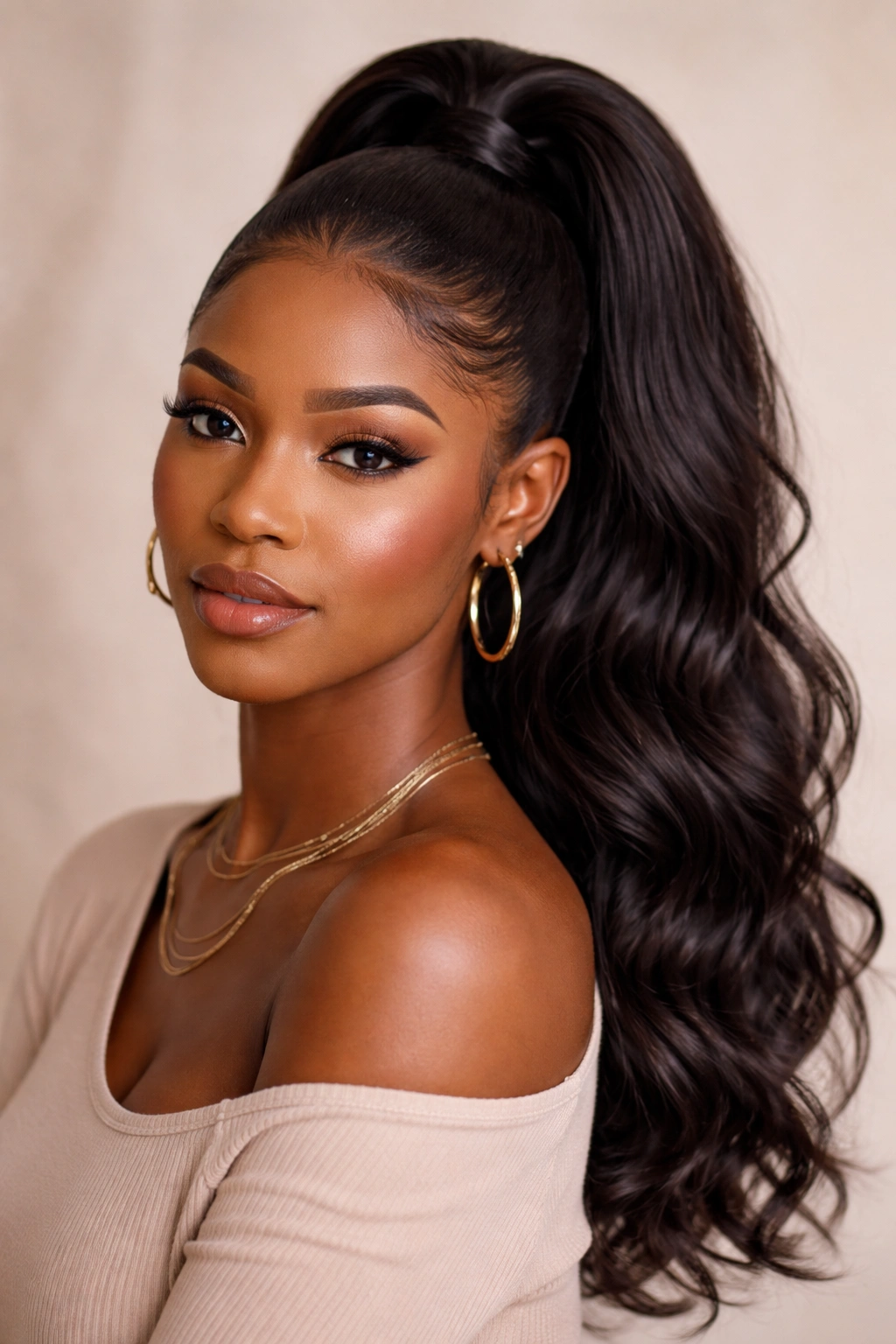
Faux ponytails offer Black women an incredible range of styling options that are genuinely protective while still allowing for creativity, self-expression, and versatility. Whether you’re drawn to the neat geometry of cornrows, the softness of twists, the boldness of kilo braids, or the artistic appeal of newer techniques like butterfly locs, there’s a faux ponytail style that matches your aesthetic and meets your hair’s needs. The key to getting the most from your faux ponytail is choosing a skilled stylist who understands your hair texture and styling goals, communicating clearly about what you want, and committing to consistent maintenance and care once the style is installed.
Remember that protection doesn’t mean your style can’t be beautiful, creative, or statement-making. The best faux ponytails deliver all three—they look amazing while genuinely allowing your natural hair to rest and grow. Take time to find a stylist whose work you admire, whose prices feel fair for their expertise and time, and most importantly, someone who prioritizes your hair health and comfort above all else. A good stylist will never create a style that’s so tight it causes pain, will answer your maintenance questions thoroughly, and will make adjustments if something doesn’t feel right.
Your choice of faux ponytail style is deeply personal, reflecting your style preferences, lifestyle needs, and the amount of time and maintenance you’re willing to invest. Give yourself permission to experiment with different styles, colors, and techniques until you find what makes you feel confident and beautiful. Each time you try a new style, you’re learning more about what works for your hair, what makes you feel like yourself, and what level of maintenance you genuinely enjoy versus what becomes a chore. That information is valuable—use it to make better choices for future styles and to communicate more effectively with your stylist about exactly what you want.
