



There’s something incredibly powerful about the right ponytail. It takes you from rushed to put-together in under two minutes, frames your face beautifully, and whispers sophistication without screaming for attention. Whether you’re headed into a board meeting, a client presentation, a wedding reception, or a networking event, the ponytail is your silent partner—steady, reliable, and endlessly versatile enough to match whatever impression you want to leave.
The trick is knowing which style to reach for in each situation. A bombshell high ponytail screams confidence at a gala, while a sleek low ponytail keeps you looking composed during a critical presentation. The right ponytail hairstyle elevates your entire look, creates a polished frame for your face, and frees you from worrying about your hair while you focus on what actually matters. Better yet, most of these styles take just minutes to create once you know the technique, making them perfect for busy mornings when you need to look impeccable.
We’ve pulled together 15 chic ponytail styles that work brilliantly for professional settings and special events. Each one is designed to stay put through a full day or evening, photograph beautifully, and make you feel like the most put-together version of yourself. Some are sleek and minimalist; others are textured and romantic. Some announce themselves; others whisper elegance. No matter your hair type, face shape, or personal style, there’s a ponytail on this list that’s about to become your new go-to.
1. Classic High Ponytail
The classic high ponytail is the foundation of every ponytail expert’s toolkit, and for good reason—it works. Positioned at the crown where your head naturally rounds, a high ponytail instantly elongates your face, draws attention upward, and reads as polished and put-together in nearly every context. This is the style you reach for when you want to look alert and energetic: think morning meetings, networking events, or any situation where you want to project confidence and capability.
Why It Works for Professional Settings
A high ponytail creates a naturally lifted appearance that photographers love and that translates beautifully on camera. The style shows your full face and neck, which flatters most face shapes and makes makeup and jewelry more visible. Because it sits away from your face, it also creates an impression of intentionality—like you planned to look this good, rather than just throwing your hair back in desperation. The higher the placement on your crown, the more youthful and energetic the style reads.
How to Perfect the High Ponytail
- Start with hair that has some texture; completely straight hair can feel too casual. Use a texturizing spray or light waves to add grip.
- Use a fine elastic that matches your hair color so it’s less visible.
- Pull the ponytail tight enough to stay secure all day, but not so tight that you feel tension at your hairline (this causes breakage and discomfort).
- Smooth the front section with a fine-tooth comb or soft-bristle brush to ensure no baby hairs escape.
- Wrap a thin strand of hair around the base of the elastic to hide it completely—this single step transforms the look from casual to polished.
- For extra polish, straighten or curl the ponytail itself depending on the occasion.
Pro tip: A high ponytail works best when you have enough length—at least 6-8 inches past your shoulders when pulled back. If your hair is shorter, a mid-height ponytail suits you better.
2. Sleek Low Ponytail
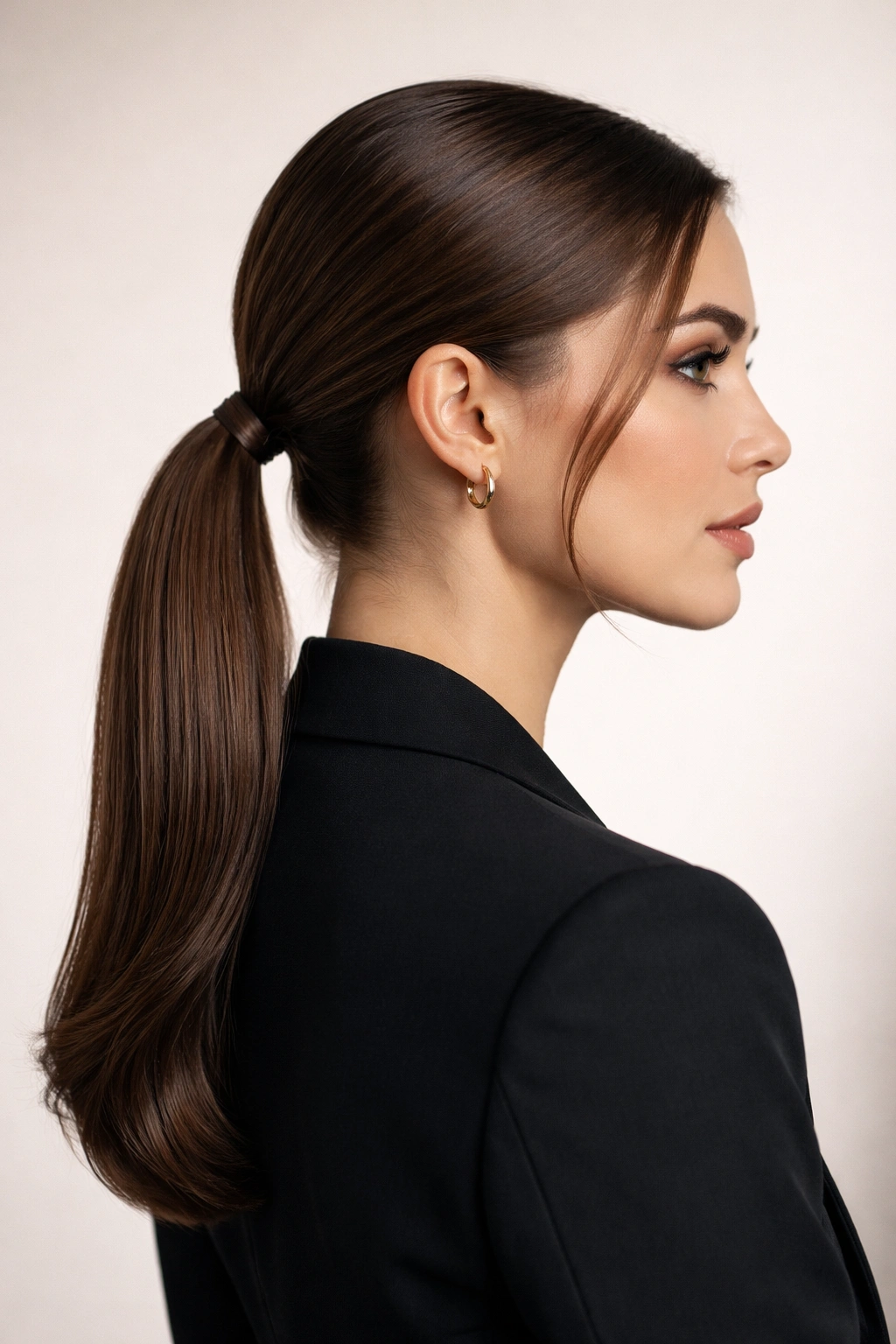
Where the high ponytail announces itself with confidence, the sleek low ponytail whispers refined sophistication. Positioned at the nape of your neck or just below, this style is less about youthful energy and more about timeless elegance. It’s the hairstyle choice of minimalists, power players in important meetings, and anyone who understands that restraint can be the most elegant statement of all.
The Understated Power of Low Placement
A low ponytail feels inherently more mature and professional than its higher counterpart. It softens your features slightly rather than lifting them aggressively, which many find more flattering for certain face shapes and ages. The style keeps hair completely away from your face while maintaining a calm, composed impression. For events where you want to look authoritative but not aggressive, elegant but not trying too hard, a sleek low ponytail is your answer.
Creating a Flawlessly Sleek Finish
- Brush hair straight or use a smoothing serum on damp hair before blow-drying.
- A round brush creates smoother, shinier results than a paddle brush.
- Blow-dry with the nozzle pointing downward to seal the cuticle and eliminate frizz.
- Gather the ponytail at the exact nape of your neck, not higher.
- Use a gel or smoothing cream on the hairline and any flyaways to create a truly polished look.
- A velvet elastic in a dark color looks significantly more sophisticated than standard rubber bands.
- Pin the wrapped hair strand with an ultra-thin bobby pin so it’s completely invisible.
Worth knowing: This style is absolutely beautiful with a center part, which emphasizes symmetry and creates a more formal appearance perfect for evening events and special occasions.
3. Half-Up Ponytail
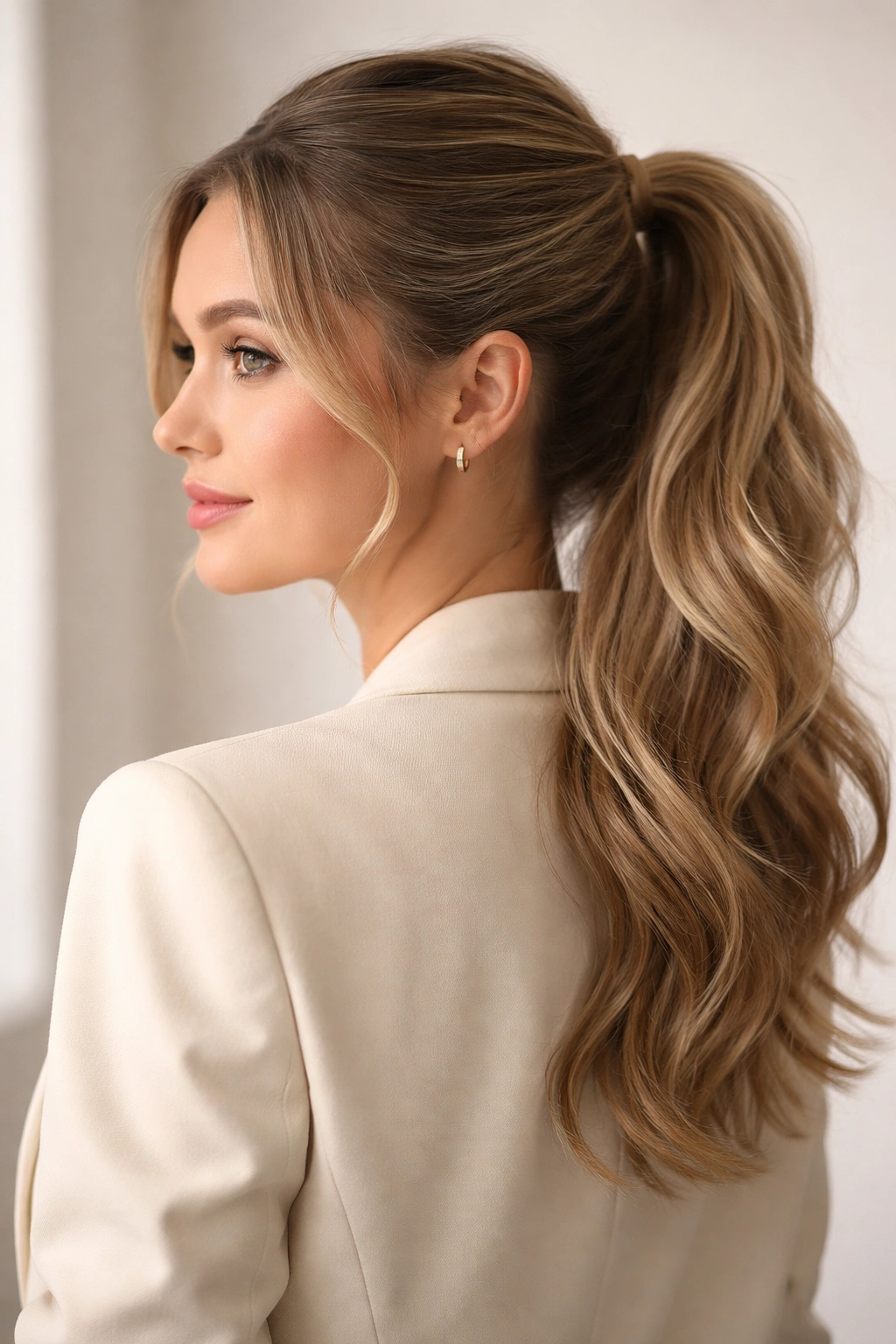
The half-up ponytail lives in that sweet spot between “my hair is down” and “my hair is fully pulled back.” It’s sophisticated enough for work environments and events, romantic enough for dinners and celebrations, and practical enough for busy days when you want partial styling without committing fully. This style says you care about your appearance without screaming that you spent an hour getting ready.
Why Half-Up Works in Any Professional Context
This style keeps hair off your face and neck, which feels intentional and polished, while still showing length and movement—balancing formality with femininity. It photographs beautifully from nearly every angle because you get both texture and face-framing elements. For people with thicker, longer hair, the half-up ponytail solves the “my hair feels heavy and hot” problem while maintaining elegance.
Executing a Polished Half-Up Ponytail
- Brush the top half of your hair back gently; it shouldn’t be as tightly pulled as a full ponytail.
- Secure at the crown using a fine elastic, preferably one that matches your hair color.
- Leave the bottom half down to frame your face and shoulders.
- Add texture to the bottom section with waves or curls using a curling iron or braid.
- Wrap a strand of hair around the elastic to hide it.
- For extra dimension, gently tease the crown section before securing to add subtle volume.
- Pull a few face-framing pieces down before the elastic to soften the overall look.
Insider note: The half-up ponytail looks most flattering when the gathered section sits slightly higher than dead center on the crown—not at the very top, but not quite at mid-head either.
4. Braided Ponytail
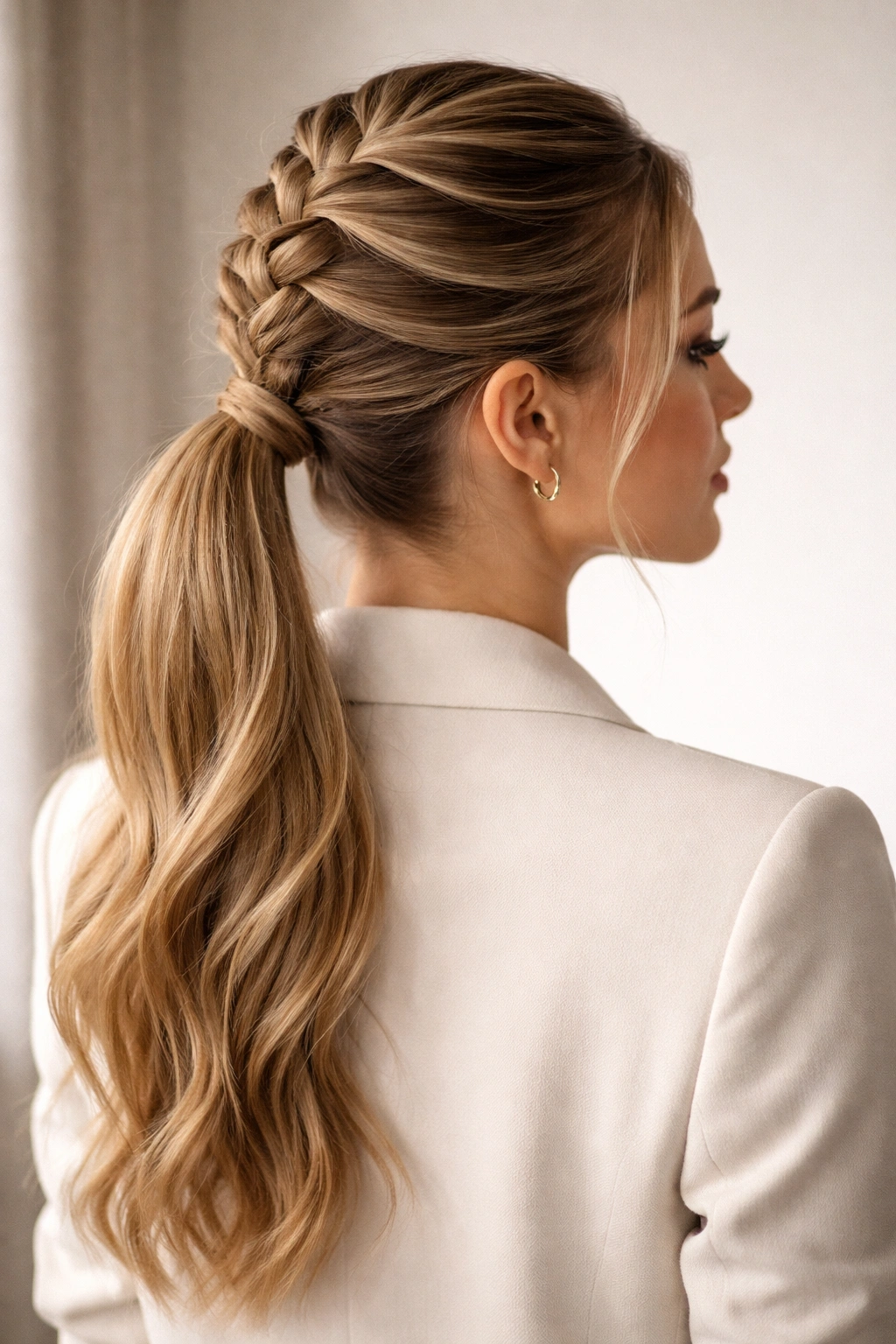
A braided ponytail transforms an ordinary pulled-back style into something that feels intentional, textured, and special. Whether you’re working with a single French braid down the center, Dutch braids down the sides, or a twisted braid wrapped around your head, adding braid elements instantly elevates the elegance of your look. This is the ponytail style for events where you want to show you took time with your appearance without looking overdone.
Creating Texture and Visual Interest with Braids
Braids add dimension and movement to hair that might otherwise look flat. They’re also incredibly practical—they hold hair securely so you don’t have to think about it all day. A braided ponytail reads as “I planned this” rather than “I threw this together,” which is exactly the impression you want at important meetings, dinners, or celebrations. The braid element also creates a focal point that draws the eye and suggests you understand styling details.
Braiding Techniques for a Polished Result
- French braid down the center: Start at your hairline and braid loosely down the center of your head, then gather everything into a ponytail at the crown or nape. This creates a sculptural, intentional-looking style.
- Side-swept Dutch braid: Braid from one side of your head across the back, then combine with loose hair into a ponytail on the opposite side. This is romantic and slightly playful.
- Multiple thin braids: Create 2-3 skinny braids throughout the top half of your head, then gather all hair (braided and unbraided) into a ponytail. This adds texture without looking overwrought.
- Wrap technique: Create one loose braid, then wrap it around the base of your ponytail elastic like a crown. This hides the elastic while adding visual interest.
Pro tip: Slightly messy, undone braids read as more sophisticated than perfectly tight ones. Gently pull on the braid edges to loosen and texture it for a more refined, effortless appearance.
5. Textured and Tousled Ponytail
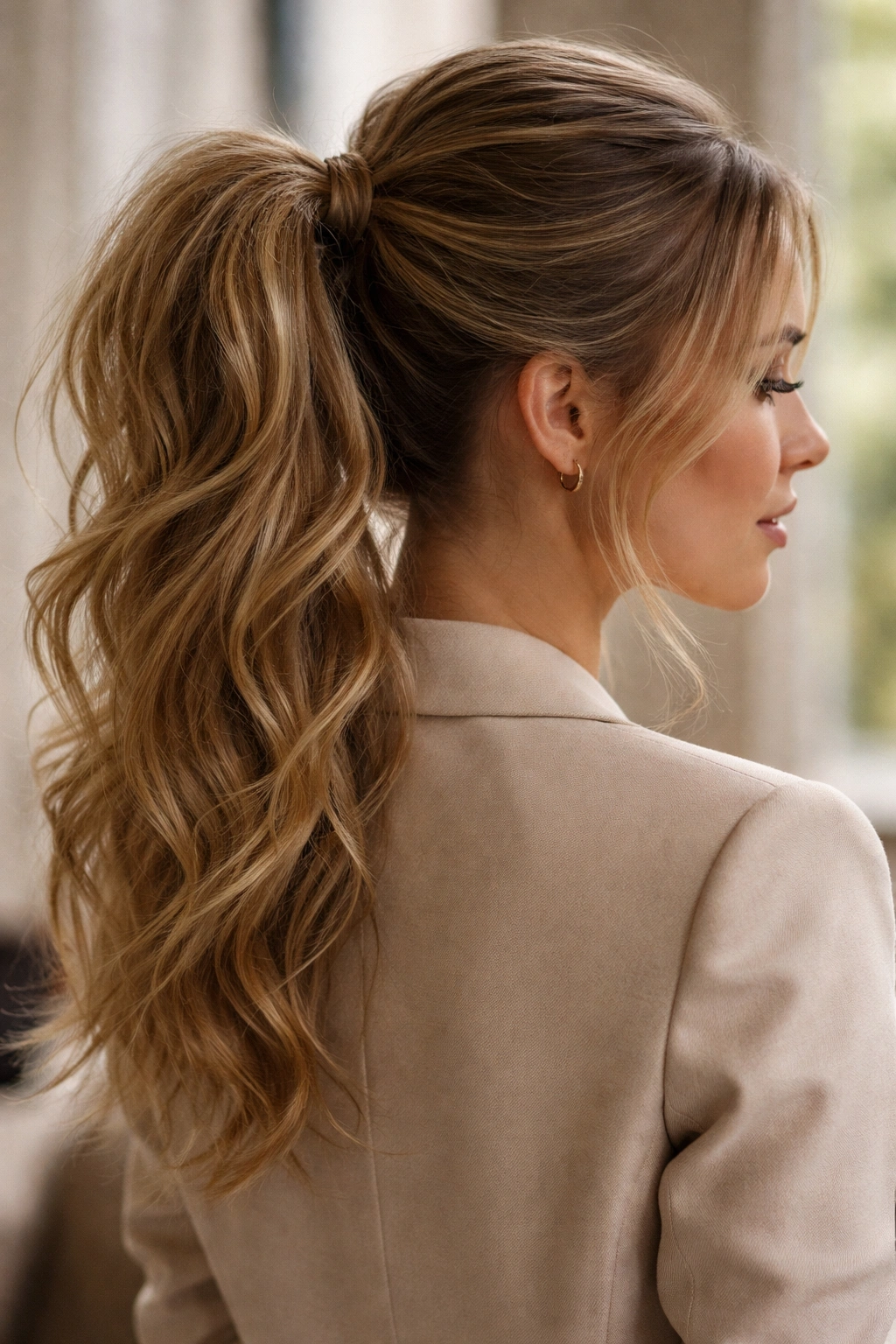
Sometimes the most polished ponytail is one that looks like you didn’t try too hard. A textured, tousled ponytail brings movement, dimension, and personality to your look—it’s the choice of people who understand that perfection can feel cold, but intentional texture feels human and approachable. This style works beautifully at creative industry events, client lunches, and anywhere you want to project competence without rigidity.
Why Texture Elevates a Simple Ponytail
Smooth, sleek hair can photograph as flat and one-dimensional, especially in artificial lighting. Textured hair with waves and texture catches light beautifully, creates visual dimension, and photographs richer and more three-dimensional. Texture also makes a ponytail look less severe—softer waves around the face make even a high, tight ponytail feel more approachable and youthful.
Building Texture Into Your Ponytail
- Start with damp hair and a texturizing spray for grip and hold.
- Blow-dry with your head tipped upside down to create root lift naturally.
- Use a large-barrel curling iron or waving iron to create loose waves throughout.
- Don’t curl all the way to the ends—focus on mid-length to roots for a more effortless appearance.
- Gather into a ponytail while hair still has warmth and movement.
- Don’t brush out the waves completely; let them stay slightly defined rather than perfectly smooth.
- Use your fingers to pull the ponytail slightly for a softer, less sculptural appearance.
- Lightly tease the crown area to create subtle volume without looking backcombed.
Worth knowing: A tousled ponytail works best on hair that’s been styled the day before or lightly lived-in. Fresh-from-the-shower hair is harder to texture and style attractively.
6. Bubble Ponytail
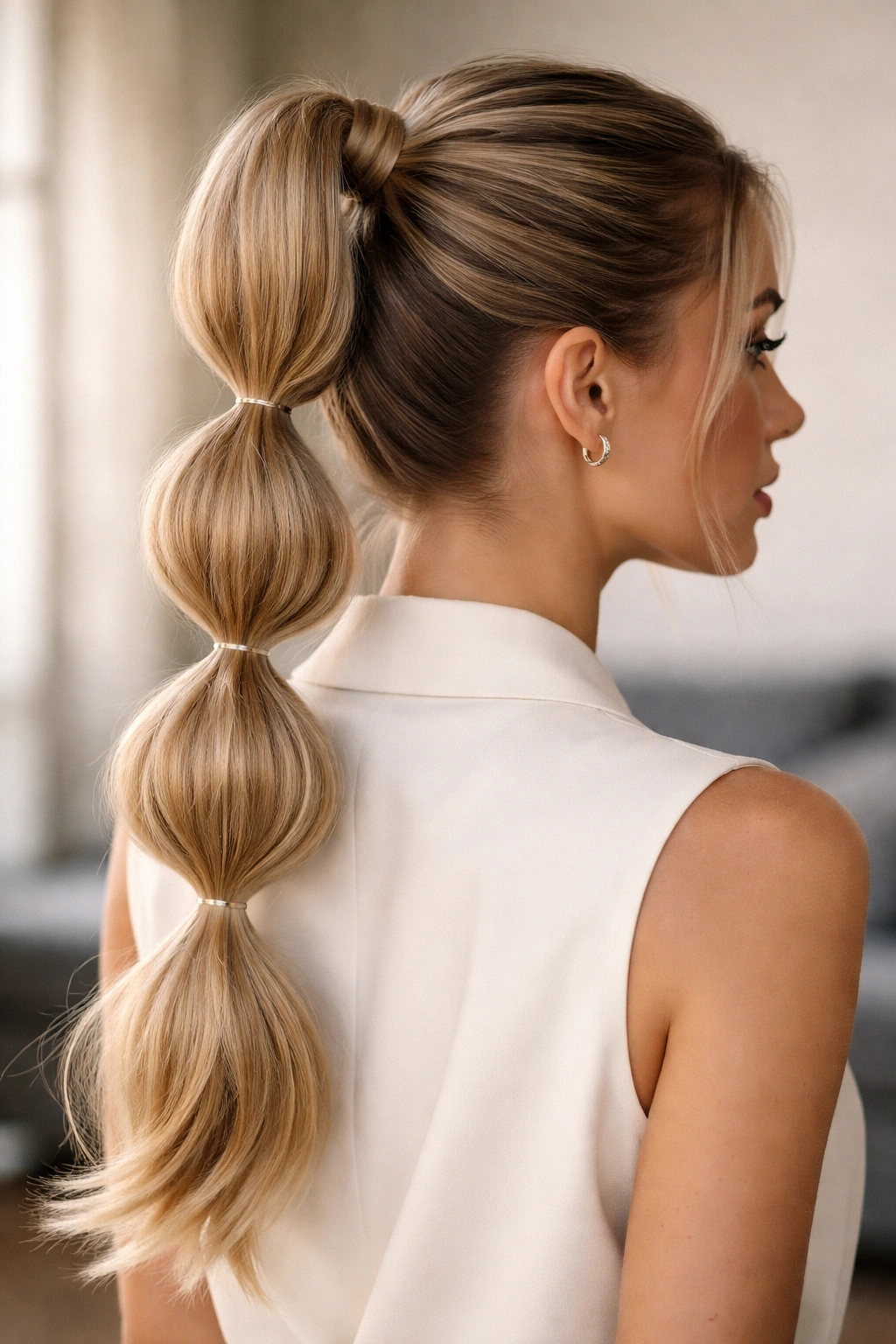
The bubble ponytail creates a playful, modern visual through strategic sectioning and separation. Instead of one continuous length, you create “bubbles” by securing the ponytail, then creating new sections further down and securing those, creating a fun sculptural effect. This style is less about formality and more about personality—perfect for creative industry events, celebrations, younger professional settings, or anywhere you want to show a sense of style and fun.
When a Bubble Ponytail Makes the Right Impression
This style signals that you don’t take yourself too seriously and have a sense of humor about your appearance. It’s more fashion-forward than traditional, making it ideal for creative roles, media companies, fashion events, or any environment where personal style is valued. The style also naturally creates volume throughout the length, making even thin hair appear fuller and thicker.
Constructing a Visually Striking Bubble Ponytail
- Start with textured, voluminous hair (use a texturizing spray and blow-dry with volume).
- Gather a high ponytail and secure with an elastic.
- About 2-3 inches down from the elastic, insert another elastic around the entire ponytail.
- Gently tease the hair between the two elastics to create a “bubble” that puffs out.
- Repeat this process 2-3 more times down the length of the ponytail.
- The bubbles should feel full and rounded, not flat.
- For extra polish, leave the very ends of the ponytail smooth and unbubled.
- You can hide elastics by wrapping hair strands around them as you go, or embrace them as a design element.
Pro tip: Bubble ponytails work best on medium to long hair with some natural body. Fine, straight hair may need extra texturizing spray to support the bubble effect.
7. Twisted Ponytail
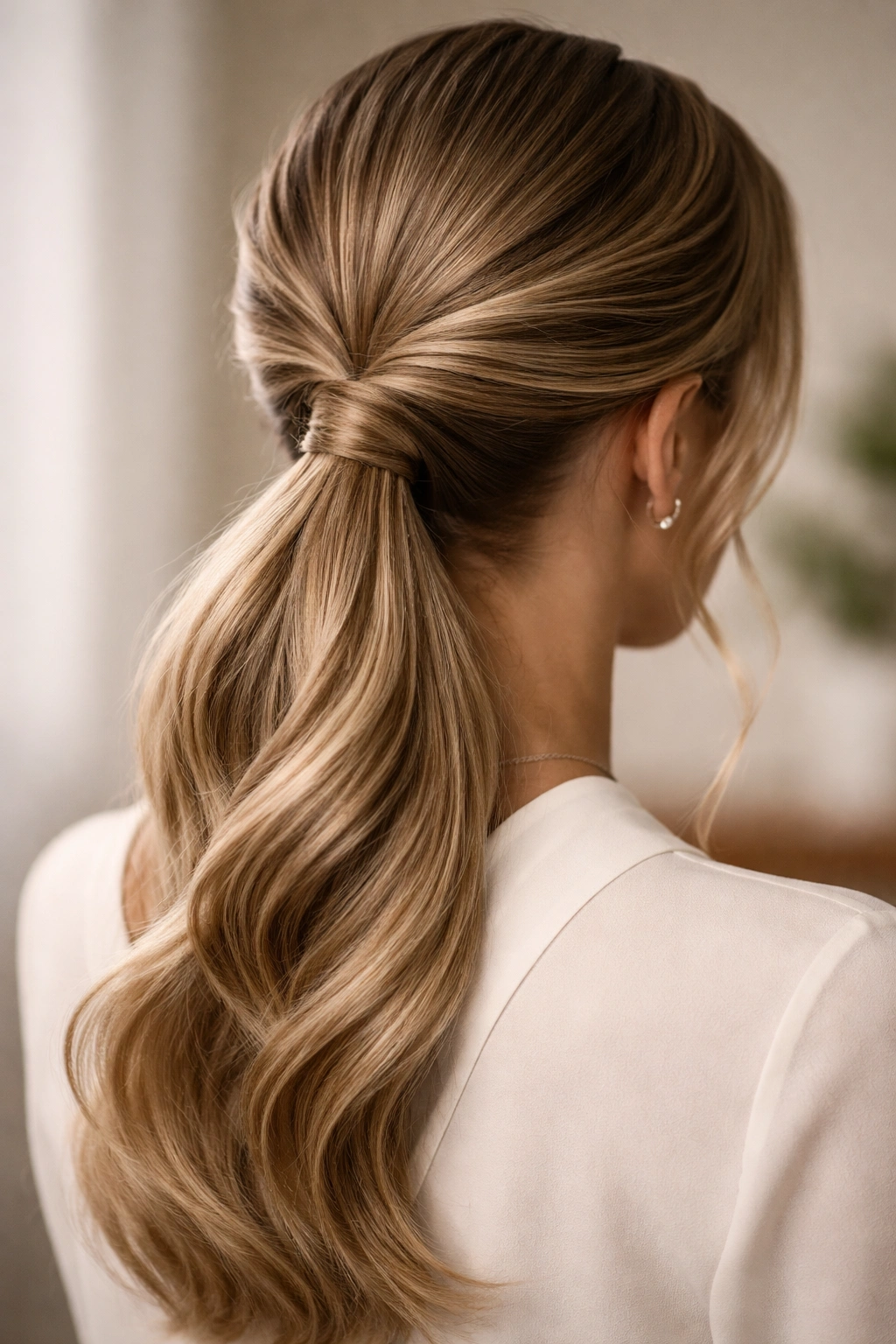
A twisted ponytail creates elegant movement and visual interest without the commitment of a full braid. By twisting sections of hair before securing the ponytail, you create a refined, textured style that feels intentional and special. This is the choice for people who want to show styling effort without the prep time of a traditional braid, making it perfect for important meetings that sneak up on you or events where you want to look polished but approachable.
Why Twists Add Refinement Without Complexity
Twists catch light and create depth in a way that straight hair doesn’t. They signal intentionality and care without demanding the technical skill that a complicated braid requires. A twisted ponytail feels special and thought-out while remaining achievable in under five minutes, which makes it perfect for busy professionals.
Creating a Refined Twisted Ponytail
- Section the top half of your hair into 2-4 even sections.
- Twist each section tightly from the roots, maintaining tension as you work down.
- Gather all sections (both twisted and untwisted) into a ponytail at the base.
- Secure with a matching elastic.
- You can wrap one twisted section around the elastic as a crown detail.
- Gently pull the twisted sections to loosen them slightly for a more refined, less sculptural look.
- The twists should feel secure but not overly tight—this prevents tension on your scalp and looks more modern.
Worth knowing: Twisted ponytails work beautifully when the twists spiral in opposite directions—it creates visual interest and prevents the style from looking too uniform or intentional.
8. Elegant Sleek Bun-Ponytail Hybrid
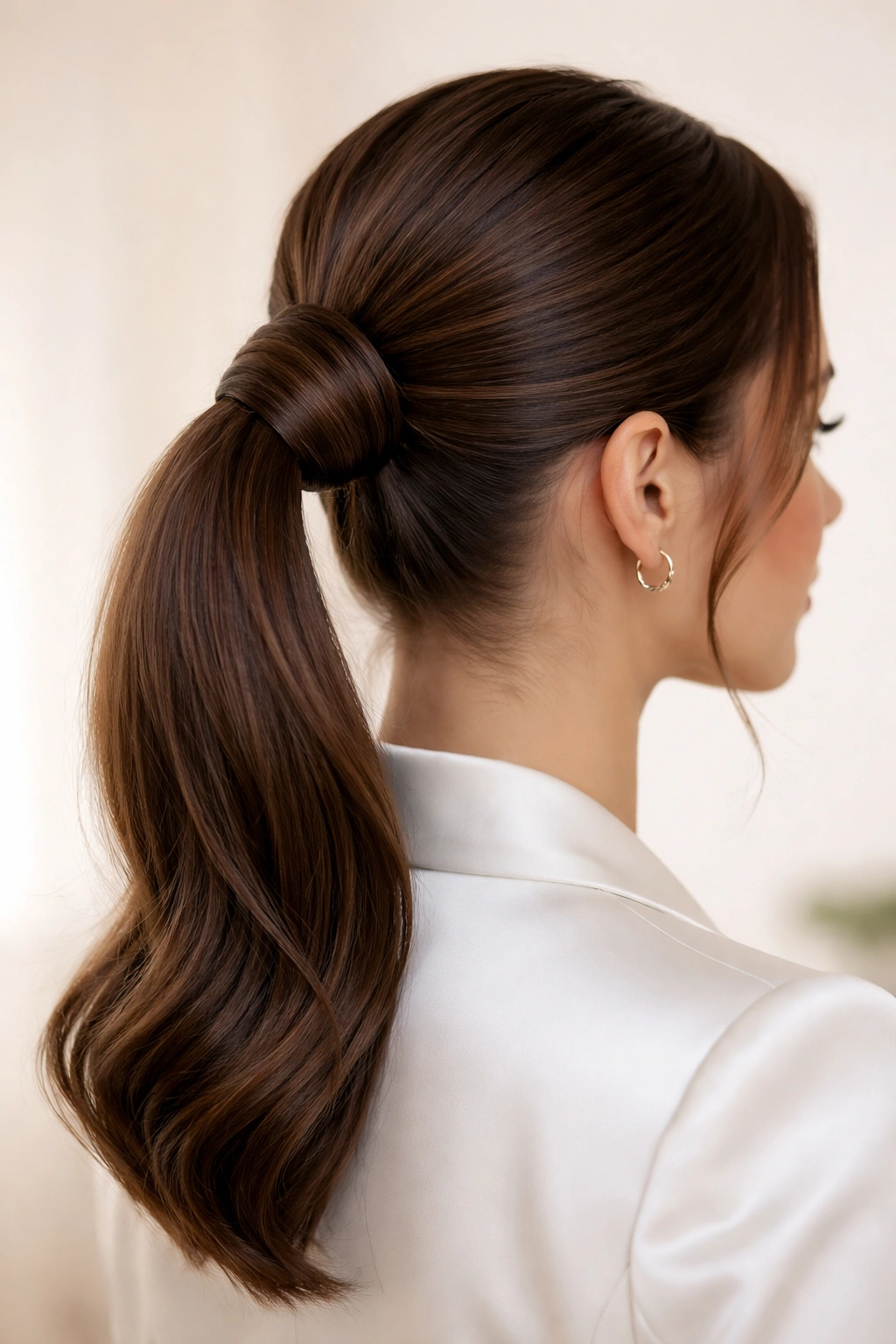
This style bridges the gap between a ponytail and a bun, creating an ultra-polished look that’s more interesting than a simple ponytail but easier to execute than a traditional bun. The hair is pulled back into a ponytail position, but then the ends are twisted, wrapped, or loosely gathered into a compact shape at the base. It’s formal without being overly fussy—perfect for galas, formal dinners, important presentations, or any event where you want to look impeccably put-together.
The Refined Impression of a Hybrid Style
This style eliminates the “hair swinging around” element of a traditional ponytail while being less rigid than a tight bun. It’s the choice of people who work in formal environments (law, finance, leadership) and understand that polish is in the details. The style also keeps hair completely secured and off your face without creating the potential for face-framing wisps that can look messy by day’s end.
Constructing a Polished Bun-Ponytail Hybrid
- Create a sleek, tight ponytail at the desired height (crown or nape).
- Twist the ponytail ends tightly, maintaining tension.
- Wrap the twisted length around the base of the elastic, creating a compact coil.
- Secure the wrapped end with bobby pins inserted flush with the coil.
- For extra security, use 3-4 bobby pins in an X pattern.
- Smooth any flyaways with gel or smoothing cream.
- The final result should look like a compact, sculptural shape—think an elegant disk or rounded knot.
Insider note: This style works best when you have at least shoulder-length hair. Shorter hair may not have enough length to wrap effectively. A velvet elastic in a matching color makes the base of the style look significantly more polished.
9. Side Ponytail
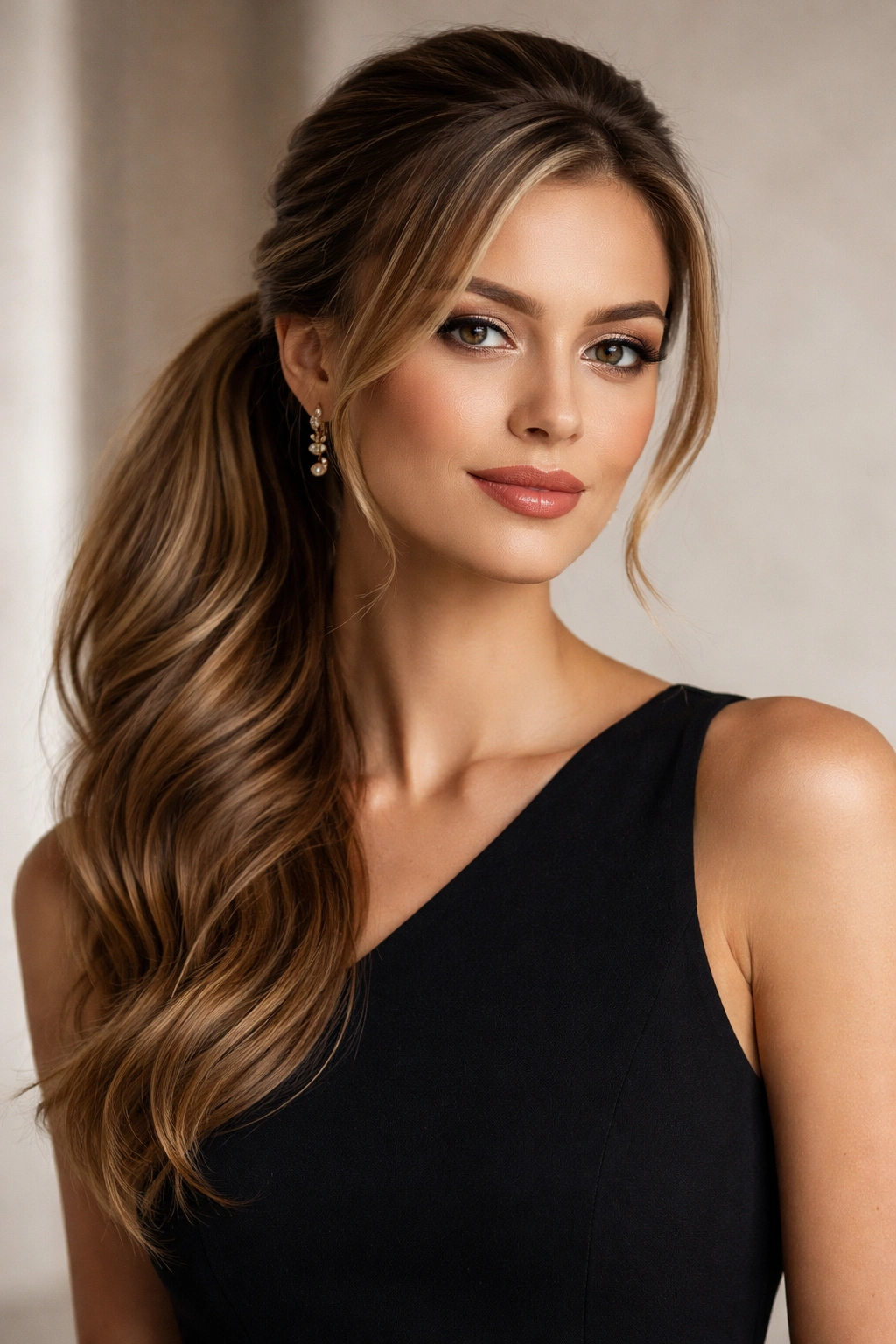
A side ponytail shifts the entire energy of your look from symmetrical and formal to asymmetrical and intriguing. Rather than centering your hair at the back of your head, you gather it to one side, creating an unexpected, slightly romantic asymmetry. This style works beautifully for dinner events, date nights, creative industry events, or any occasion where you want to look polished but not buttoned-up.
Creating Visual Interest with Asymmetry
Centered styles read as formal and traditional. Side styles feel modern, a bit artistic, and undeniably more interesting visually. A side ponytail is slightly less formal than a centered style, making it ideal when you want to look stylish without looking like you’re attending a black-tie event. The style also flatters many face shapes—it creates a slight angle that can define or soften features depending on which side you choose.
Positioning and Securing a Side Ponytail
- Determine which side feels right for your face shape. Most people feel balanced with a ponytail on the opposite side of their wider facial features.
- Brush hair to one side, gathering hair from the crown and nape.
- The ponytail should sit at the side of your neck, not directly under your ear.
- Secure tightly enough that it won’t slip throughout the day.
- Create a sleek front section on the opposite side by using a smoothing cream.
- You can make the side ponytail sleek or textured depending on the occasion—both look equally polished.
- Wrap the elastic with a strand of hair to hide it.
Pro tip: A side ponytail looks most elegant when you have some texture and movement—completely straight hair can feel limp and one-dimensional on the side.
10. Elegant Wrapped Ponytail
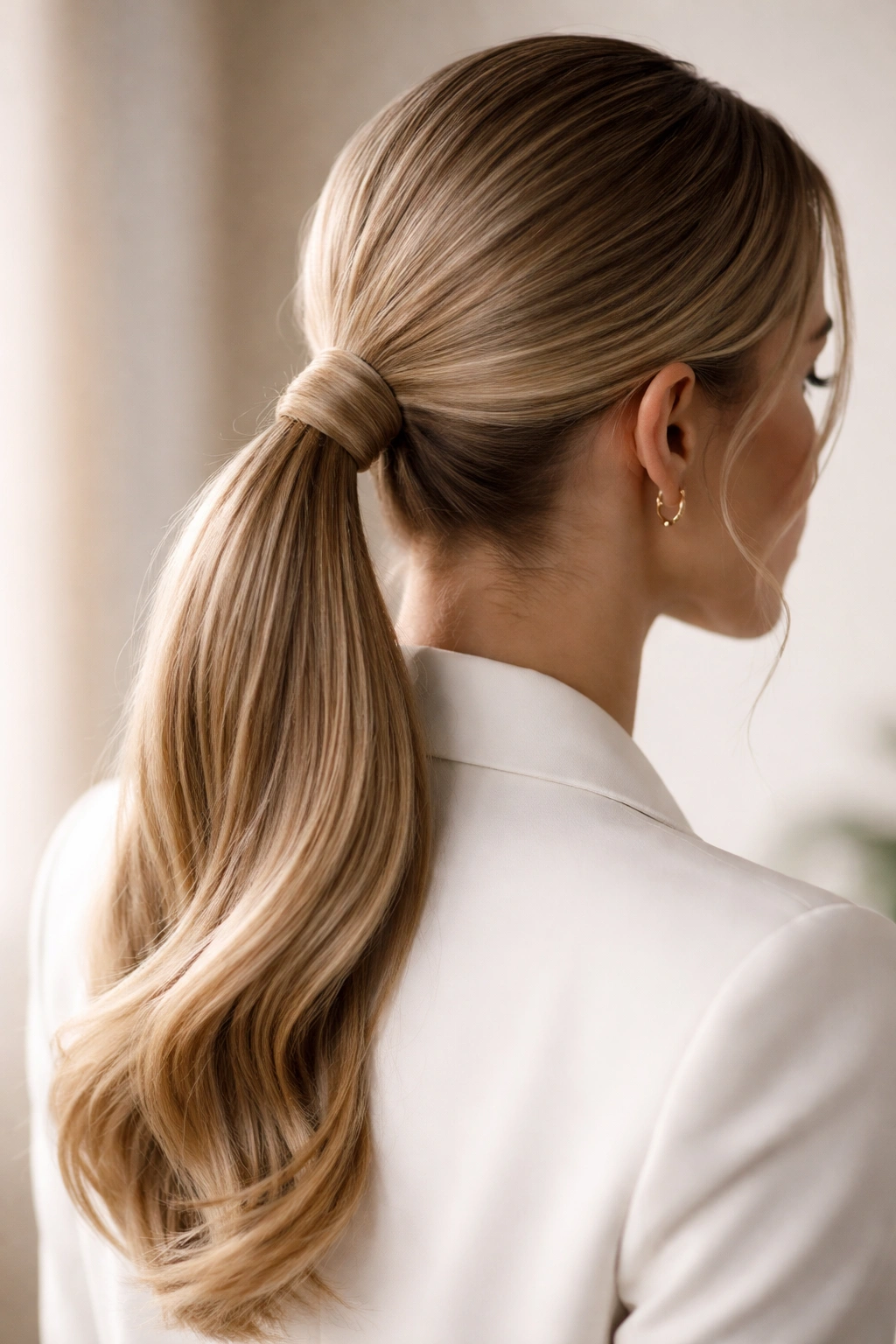
A wrapped ponytail takes a simple pulled-back style and elevates it through the addition of a carefully placed accessory or wrapped detail. Instead of a simple elastic, a strand of hair, ribbon, or delicate accessory wraps around the base of the ponytail, creating a focal point and a finished, intentional look. This is the style for anyone who understands that refinement is in the details.
Why Wrapped Details Matter
The area where your elastic is hidden is often the least polished part of a ponytail. A wrapped detail transforms that vulnerable spot into a deliberate design element. A wrap can be as simple as a strand of your own hair or as decorative as a ribbon, metallic wire, or delicate chain. The wrap signals that you thought about every element of your styling, not just whether your hair was pulled back.
Creating a Polished Wrapped Base
- Create your ponytail—high, low, or mid-height depending on your preference.
- If using a hair strand wrap: Take a thin section from the underneath of the ponytail and wrap it around the elastic base, securing with a bobby pin.
- If using a ribbon or accessory: Tie or secure the wrap around the elastic base so it sits flush and symmetrical.
- For a subtle, sophisticated look, choose wraps in neutral colors that match your hair.
- For a more statement-making look, choose a contrasting color or metallic wrap.
- Ensure the wrap completely hides the elastic—this is what elevates the entire look.
Worth knowing: Wrapped details work especially well on low ponytails because they’re at eye level and more visible. The wrap essentially becomes jewelry for your hair, so choose materials that feel intentional and high-quality.
11. Voluminous Teased Ponytail
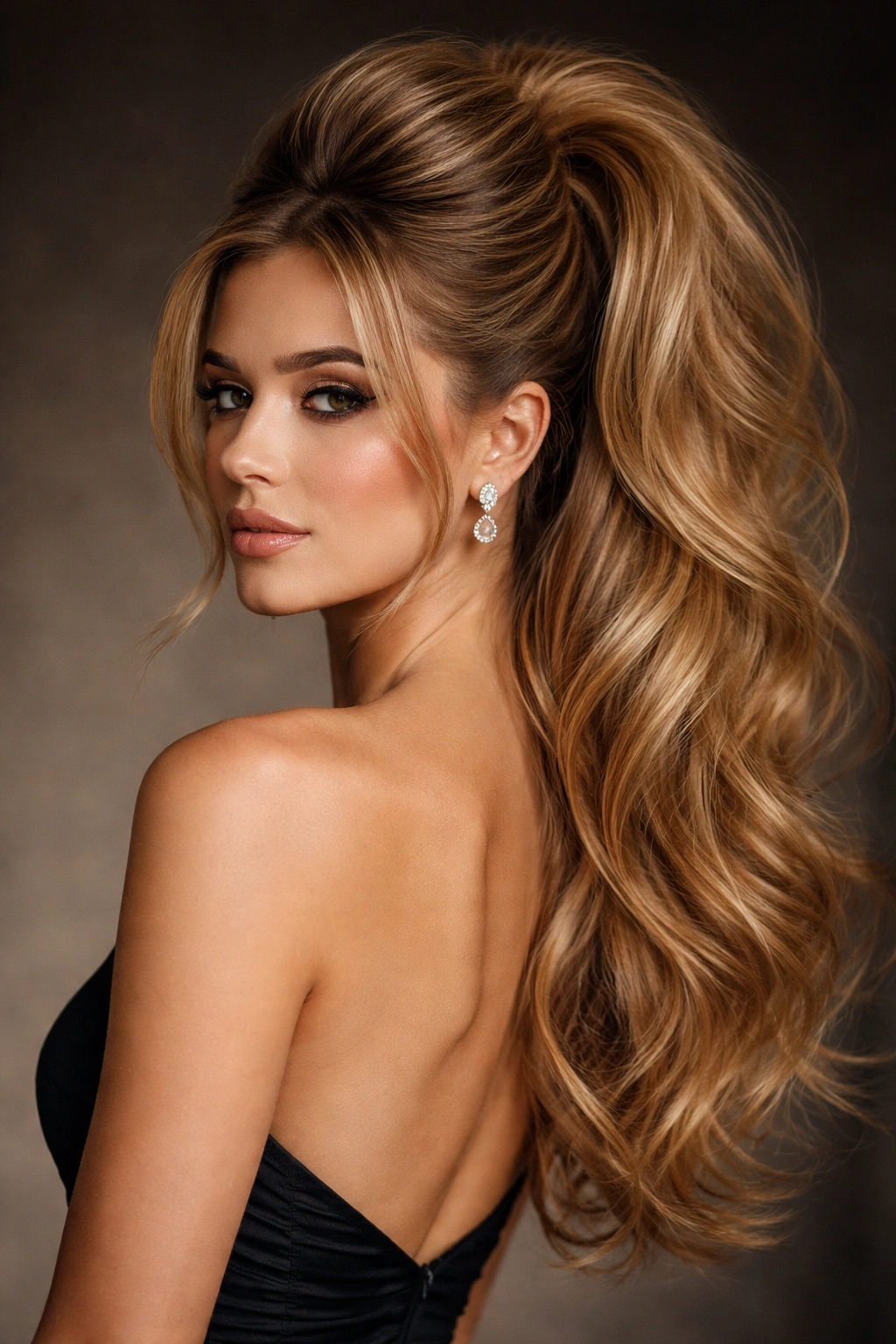
A voluminous teased ponytail creates maximum impact and presence—it’s full, textured, and undeniably glamorous. By gently backcombbing the crown and portions of the ponytail, you create a larger silhouette and a more dramatic style. This is the choice for evening events, celebrations, galas, or any occasion where you want to look bold, confident, and visibly styled.
When Volume Is the Right Statement
A voluminous ponytail photographs beautifully and photographs large, making you more visible in group photos. The style also creates a youthful impression of fullness and texture, and the extra height from teasing adds a flattering lift to your features. This is distinctly an evening look, not a daytime office style—it announces that you’re celebrating something special.
Building Strategic Volume
- Start with textured hair (waves or curls hold volume better than straight hair).
- Use a fine-tooth comb to create volume at the roots: gently backcomb using short strokes from the roots to mid-length.
- Smooth the surface layer slightly so it doesn’t look matted.
- Gather into a high ponytail; the teased crown helps support it.
- Backcomb the top section of the ponytail itself, focusing on the first 3-4 inches.
- Smooth the very outside surface so the style reads as polished rather than matted.
- Use plenty of hairspray to hold the volume throughout the evening.
- The goal is an overall rounder, fuller silhouette, not a bird’s nest appearance.
Pro tip: If you have naturally fine or thin hair, use a volumizing mousse on damp hair before blow-drying to create a foundation for teasing. This gives you volume that lasts longer than teasing alone.
12. Sleek Deep Side Ponytail
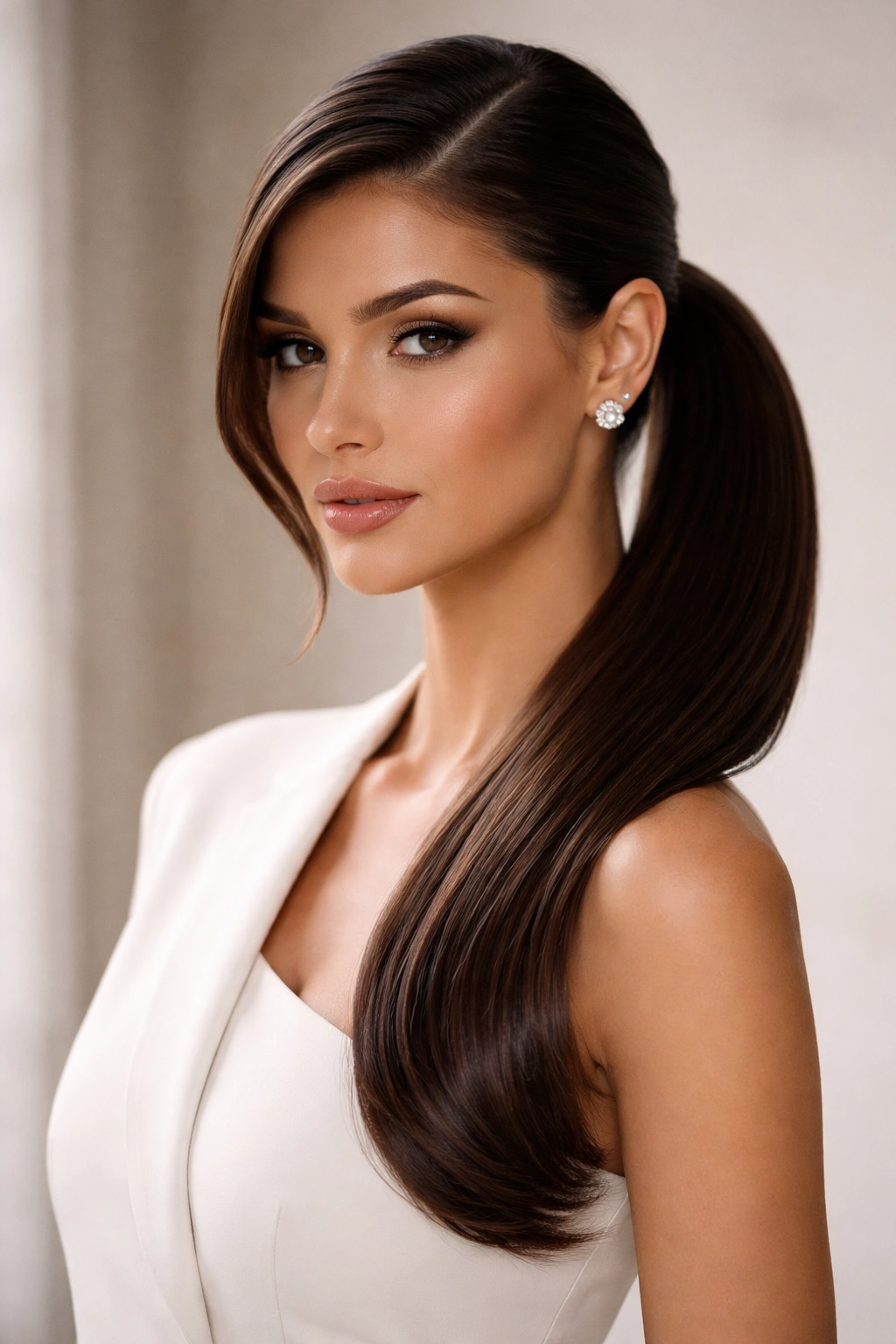
A deep side ponytail takes the side ponytail concept and amplifies it—the ponytail sits even further to the side, almost at shoulder level, creating a dramatic diagonal line. Combined with sleek styling, this creates an unexpectedly formal, sophisticated look perfect for evening events, important dinners, or anywhere you want to look intentionally styled and fashion-forward.
The Dramatic Impact of a Deep Side Placement
A deep side ponytail creates an interesting asymmetrical silhouette and draws the eye in an unexpected direction. The style reads as more editorial and fashion-conscious than a centered ponytail, suggesting you understand style subtleties. This is the choice for creative industries, artistic events, or occasions where personal style is celebrated.
Creating a Dramatic Sleek Side Ponytail
- Use a smoothing cream or serum on damp hair before blow-drying.
- Blow-dry completely smooth with a round brush and a paddle brush.
- Brush hair to one side, gathering from the opposite temple all the way to the nape.
- The ponytail should sit at your shoulder level or slightly further down, creating a dramatic diagonal.
- Secure very tightly with a fine elastic so it holds throughout the evening.
- Use gel to smooth any flyaways and create a polished hairline.
- For extra polish, straighten the ponytail itself with a flat iron.
- The look should feel sleek, precise, and intentional—not casual.
Worth knowing: A deep side ponytail is easier to execute on straight or smoothed hair than on naturally textured hair. If your hair is naturally curly or wavy, straightening beforehand is almost essential for the sleek impression this style requires.
13. Ponytail with Face-Framing Strands
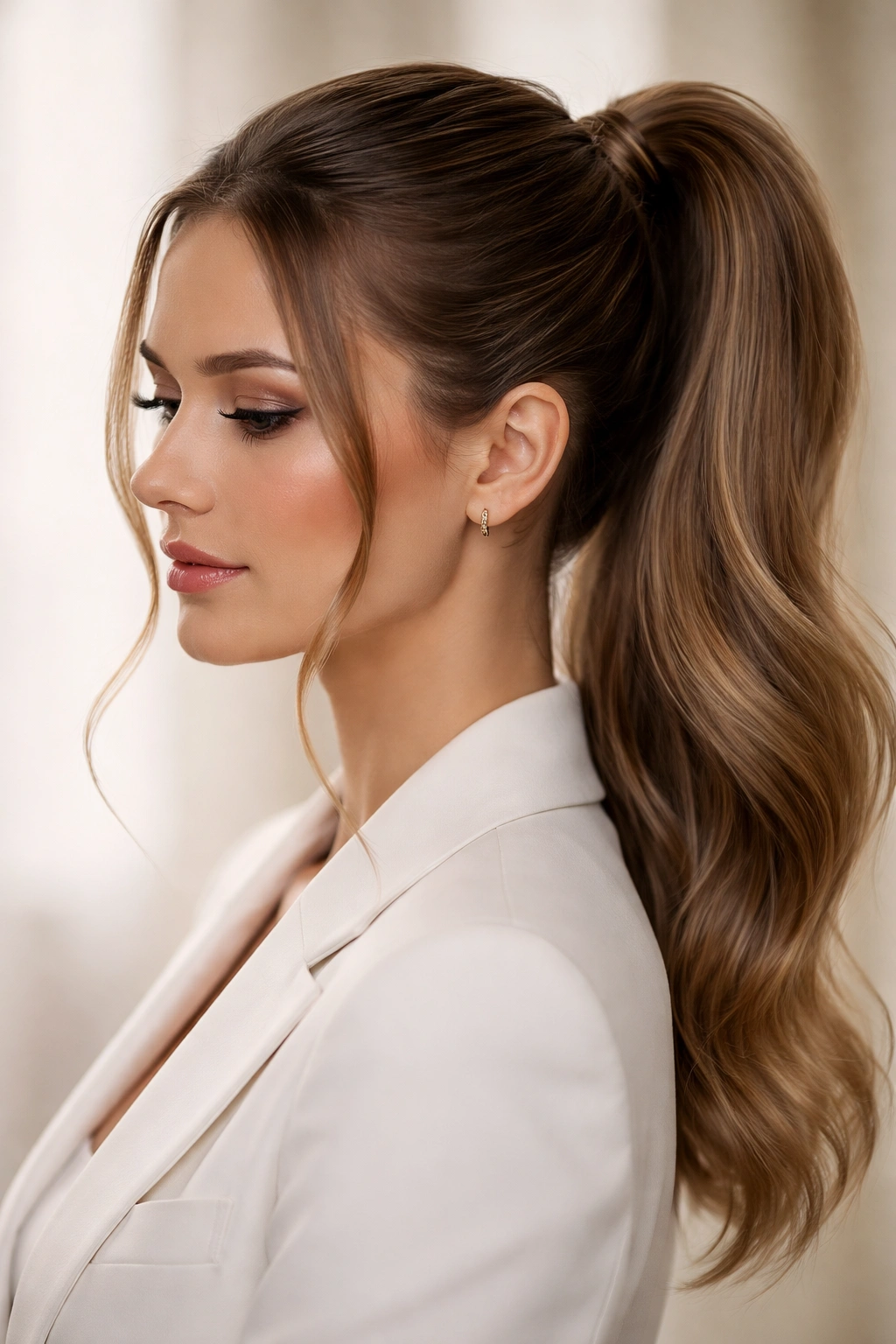
This style takes a traditional ponytail and softens it by pulling a few face-framing strands loose before or after securing the main ponytail. The result is an elegant blend of polish and softness—you get the practical benefits of a pulled-back ponytail while maintaining the flattering frame of hair around your face. This is perfect for anyone who loves the idea of a ponytail but finds fully pulled-back hair too severe.
Why Face-Framing Softens Without Looking Messy
A completely pulled-back ponytail can emphasize every feature and read as slightly severe. Strategic face-framing strands create a softer visual while keeping hair off your neck and face. The style is formal enough for professional settings but romantic and approachable enough for any occasion. It’s also genuinely flattering for most face shapes—the framing strands create a gentle curve around your face.
Positioning Face-Framing Sections Strategically
- Start with your desired base ponytail—high, mid, or low.
- Before securing, pull out two thin sections from your temples (about 1 inch wide each).
- Secure the main ponytail with these sections left loose.
- The loose sections should frame both sides of your face in gentle curves.
- You can leave them perfectly straight, curl them slightly, or twist them for texture.
- Make sure the loose sections are thin enough that they feel intentional, not like hair that escaped.
- For a more romantic look, pull slightly larger sections and curl them.
- For a more modern look, keep sections thin and straight.
Insider note: The most flattering face-framing strands sit about 1-2 inches in front of your ears and fall naturally past your shoulders or chin, creating a soft frame without blocking your vision.
14. Intricate Braided Wrap Ponytail
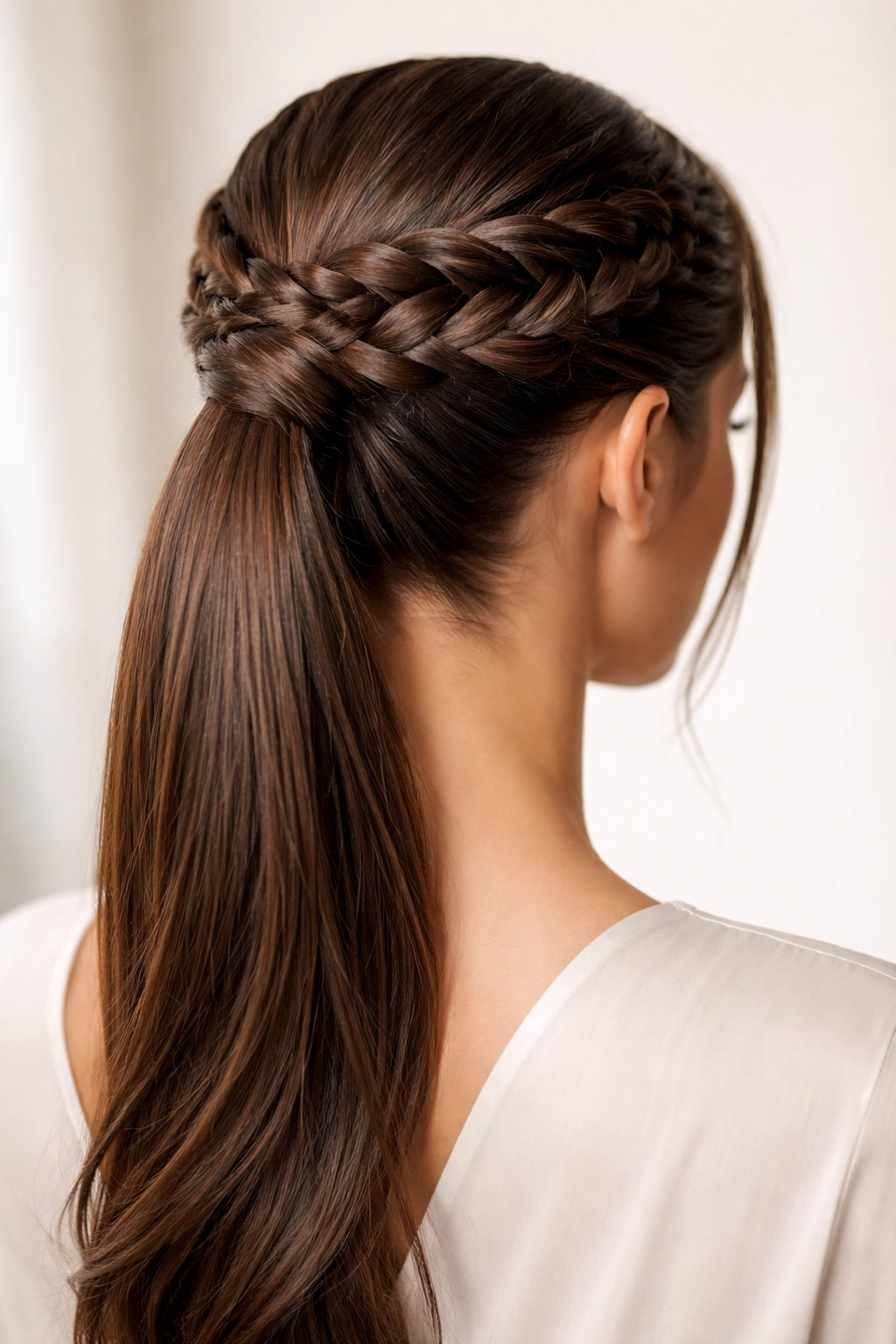
This advanced style combines multiple braiding techniques to create a truly statement-making look. A braided section wraps around the head like a crown, and the remaining hair is gathered into an elegant ponytail beneath. The style is undeniably special and polished—this is for important events, celebrations, or occasions where you want your hair to be a conversation piece.
Creating a Braided Crown Detail
This style requires more time and skill than simpler ponytails, but the results are undeniably impressive. The braided crown element creates a focal point and draws attention upward to your face and eyes. The style reads as intentional and special without requiring you to sacrifice the practicality of pulled-back hair.
Executing a Braided Crown Ponytail
- Create a Dutch or French braid starting at one temple.
- Braid across the crown of your head, directing the braid toward the opposite side.
- Gather the braid and remaining hair at the nape or side of your neck into a ponytail.
- Secure the ponytail with an elastic.
- Wrap one section of the braid around the elastic base to hide it and create a cohesive look.
- For extra polish, gently pull on the braid edges to loosen and texture it.
- You can leave the ponytail smooth or curl it for added dimension.
- The braid should feel secure but not overly tight—this looks more modern and refined.
Pro tip: If braiding feels daunting, practice on someone else’s hair first, or use a braid tutorial video to perfect your technique before an important event. The braiding gets easier with practice, and once you master it, you’ll have a signature style.
15. Polished Ponytail with Decorative Accessory
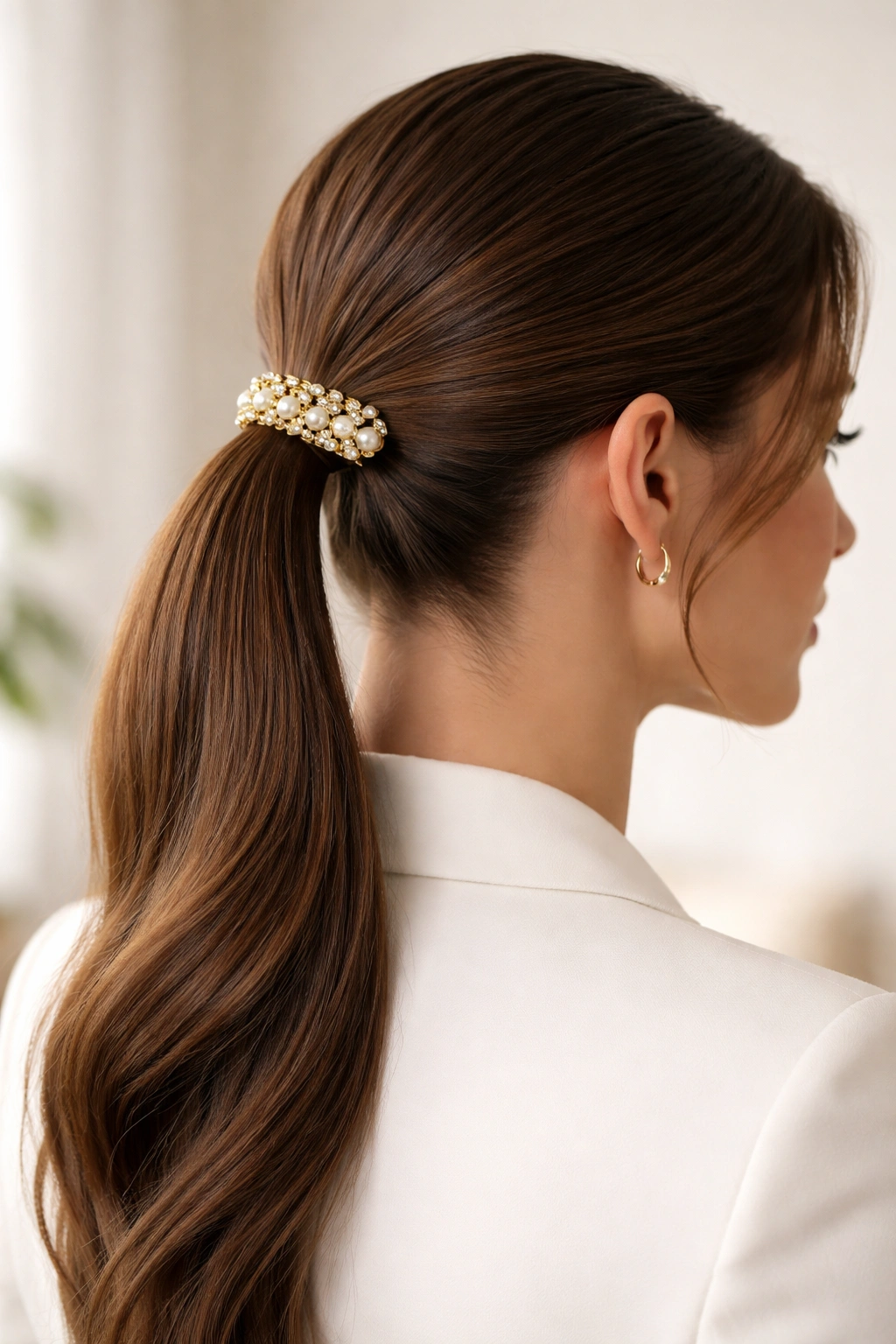
The final style in our lineup is also the most flexible: a polished ponytail elevated with a thoughtful decorative accessory. Instead of hiding your elastic, you embrace it as a design element, choosing a hair clip, claw clip, decorative elastic, or embellished band that coordinates with your outfit and the occasion. This style works at any formality level depending on your accessory choice.
Why an Accessory Elevates Your Entire Look
The right accessory signals that you thought about your styling and chose it intentionally. A delicate clip suggests sophistication; a metallic claw clip suggests modernity; an embellished band suggests celebration. Accessories also give you flexibility—the same base ponytail style can read as professional with a tortoiseshell clip or celebratory with a sparkly claw clip.
Choosing and Positioning Your Accessory
- Select an accessory that complements your outfit’s color palette and formality level.
- Sleek metal clips or minimalist designs suit professional settings best.
- Decorative, embellished, or bold-colored clips suit events and celebrations.
- Position the clip or band at the base of your ponytail where the elastic would normally be.
- For a modern look, use a claw clip that intentionally shows the “mechanism.”
- For a more traditional look, use a decorative band or barrette that hides the elastic.
- Make sure your accessory is secure enough to last the entire day or event.
- You can choose an accessory that matches your hair color or one that creates a contrasting accent.
Worth knowing: Quality matters with hair accessories. Cheap metal clips can snag and break hair, while quality clips glide smoothly and hold securely without damaging your strands.
Final Thoughts
The perfect ponytail sits at the intersection of polish and practicality—it takes just minutes to create but reads like you spent hours on your appearance. Whether you choose a structured classic, a braided statement, or a textured romantic style, the key is selecting a ponytail that makes you feel confident and looks intentional for the specific occasion.
Your hair type, face shape, and personal style should guide your choice. Someone with naturally wavy hair might reach for a tousled ponytail, while someone in a formal legal environment might prefer a sleek low style. Someone with fine, shorter hair might skip the bubble ponytail for a half-up style, while someone with thick, long hair has the freedom to try more complex braided versions.
The most important thing is knowing you have options. These 15 styles give you the flexibility to adjust your look based on the occasion, the environment, and how you want to feel. Once you practice a few of your favorites and nail the technique, you’ll have reliable go-to styles that work day after day. A great ponytail isn’t just a hairstyle—it’s confidence you can pull back into a holder.
