



Short hair with bangs offers a canvas for surprisingly versatile ponytail styles—and that’s something most people don’t realize until they commit to the cut. The common assumption is that short hair limits your options, but the truth is far more creative. Bangs add texture, frame your face, and when combined with the right ponytail technique, they create a polished look that works everywhere from casual coffee runs to professional settings. The key is understanding how to work with your length rather than against it, letting your bangs remain a defined feature while pulling back the rest.
What makes ponytails work on short hair with bangs is actually quite simple: you’re not trying to hide anything. You’re leaning into the layered texture and using the ponytail to add dimension and movement. Whether you’re working with choppy layers, blunt ends, or wispy strands, each style has a specific way of elevating your look. Some styles keep your bangs front and center as a statement, while others let them peek through slightly for a more relaxed vibe. The result is a range of options that feel fresh, intentional, and—most importantly—easy to maintain.
The beauty of these twelve styles is that you can rotate through them depending on your day and your mood. Some take literally two minutes, while others are worth the extra effort for special occasions. Each one plays differently with your bangs and the length you’ve got, so you’ll find styles that feel uniquely you.
1. The Sleek Low Pony With Face-Framing Bangs
This is the foundation style that works in nearly every setting. Pull the bulk of your hair into a low, tight ponytail at the nape of your neck, leaving your bangs completely untouched and framing your face. The contrast between the sleek back and the clean bangs in front creates instant polish and makes even disheveled hair look intentional.
Why This Works With Short Hair
On short hair, a low ponytail avoids the awkward “stuck-up” look that sometimes happens when everything gets pulled back. Your bangs create a natural focal point at the front, so the style reads as intentional rather than just pulling your hair out of your face. The simplicity is part of the power—it’s a style that works whether you’re heading to work, running errands, or meeting friends for lunch.
How to Perfect It
Use a tiny amount of smoothing serum or gel to get the bangs lying flat and clean, then brush the rest of your hair back into a low ponytail. Secure with a small elastic that matches your hair color. If you have flyaways, a light mist of hairspray keeps everything in place without making it feel stiff or overdone. You can also sleek the sides with a tiny bit of product for extra refinement.
Pro tip: A low pony actually looks better with a few loose strands framing your face alongside the bangs—it softens the severity and feels more modern than pulling absolutely everything back.
2. The Textured High Pony With Blunt Bangs
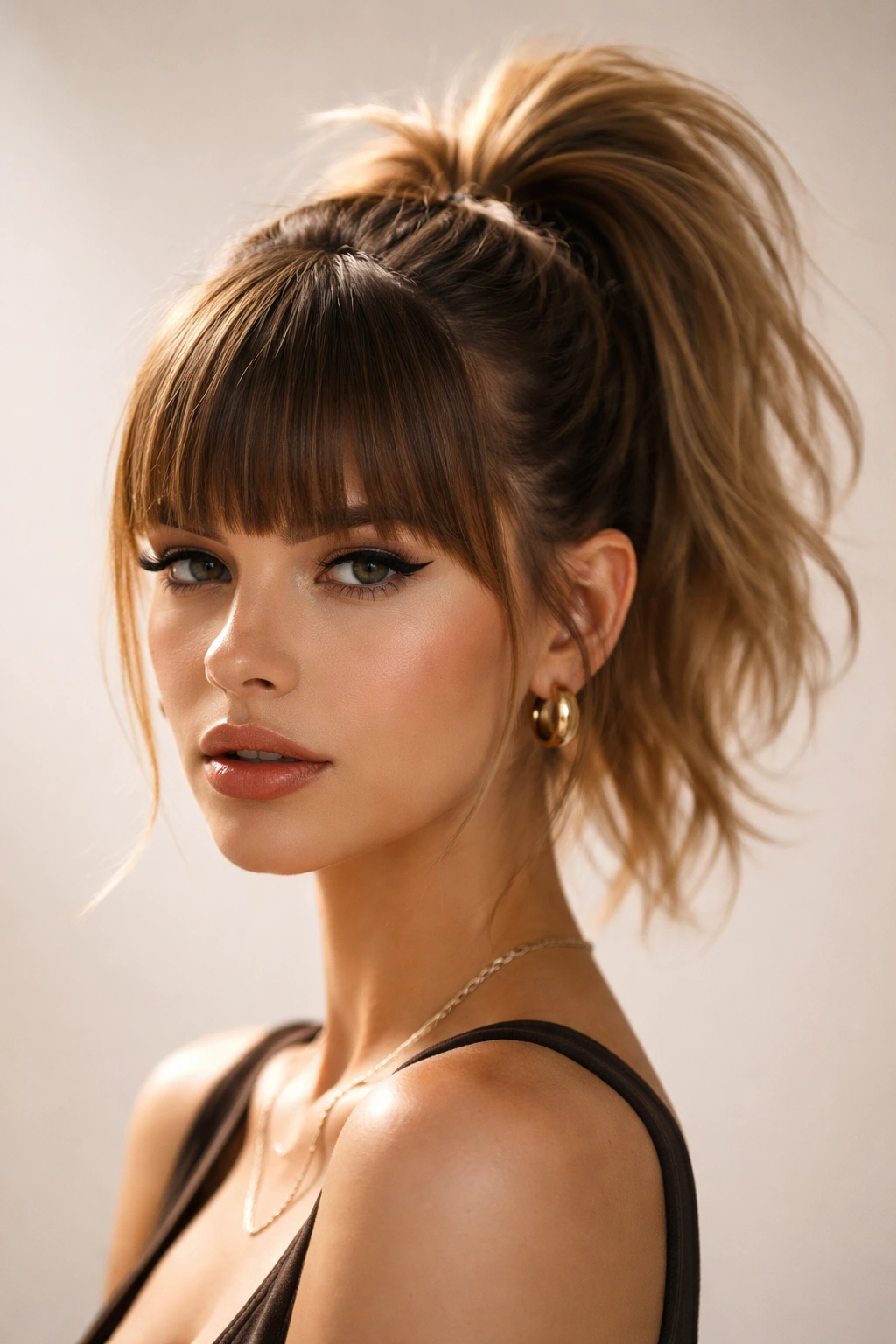
Take the opposite approach: pull your hair up into a high ponytail at the crown, leaving your blunt bangs as a sharp frame. This creates an energetic, youthful vibe with clear contrast between the height of the pony and the structured bangs. The style reads bold and intentional.
Why It Stands Out
High ponytails usually feel stark on short hair, but when your bangs are doing the visual work in front, the look feels balanced. Your bangs anchor the composition while the high pony adds movement and personality. The texture in a high pony also makes short hair feel fuller and more dynamic.
Making It Work With Your Length
Backcomb or tease the crown slightly before pulling the ponytail up—this gives you more grip and makes the pony sit higher and fuller. Let a few shorter pieces fall out naturally around your face (alongside the bangs, not instead of them) for texture. Use a thicker elastic and secure it twice for stability, since high ponytails get more movement throughout the day.
Worth knowing: On short hair, a high pony works best if you backbrush for volume. If you simply smooth everything back, it can expose too much of your forehead and look unbalanced without the visual weight of longer hair.
3. The Textured Bubble Pony
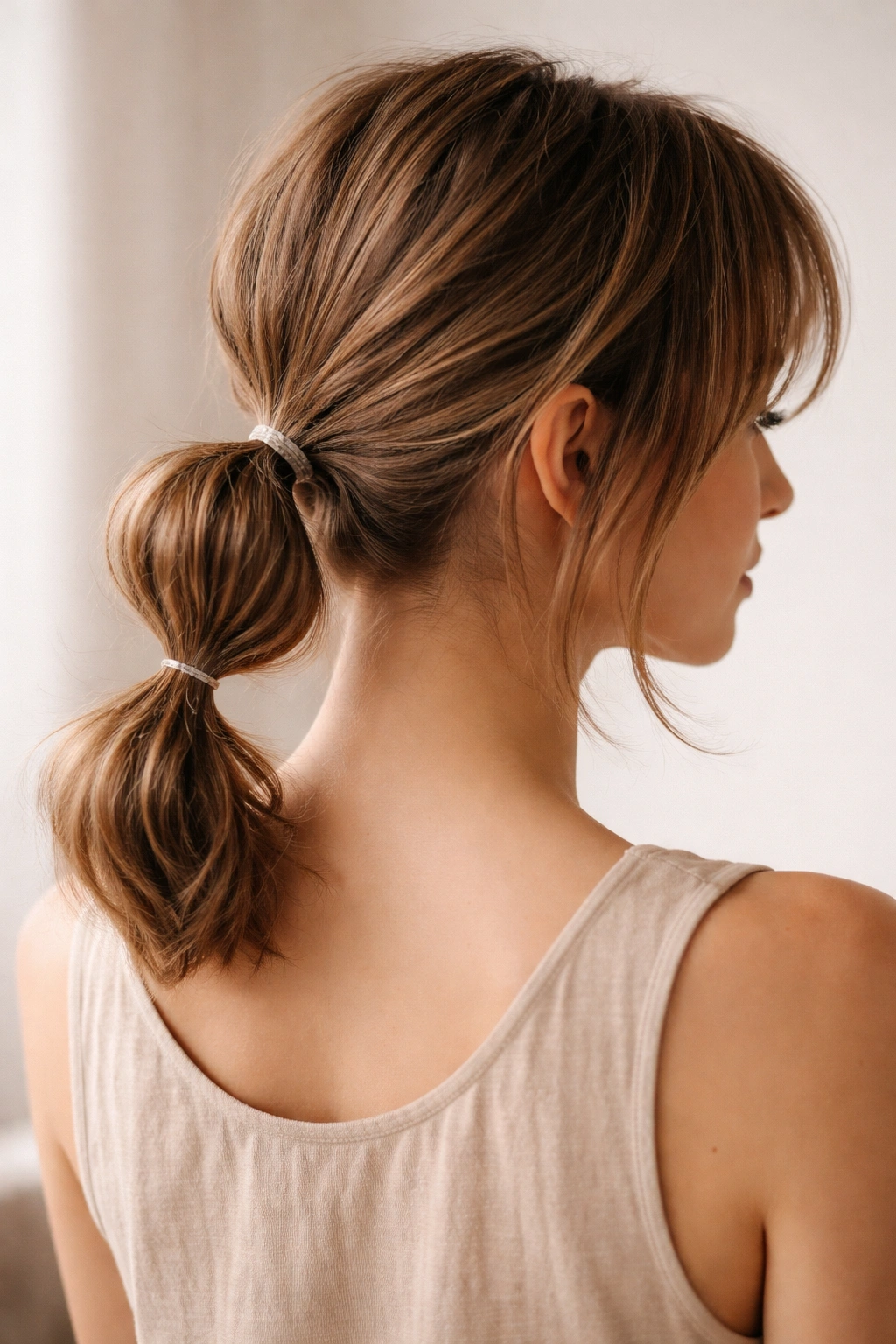
Create a playful, dimensional look by splitting your short hair into 2-3 sections from crown to nape, securing each section with its own small elastic. Leave your bangs out entirely, and let the bubbles of texture create visual interest. Each “bubble” sits between elastic bands, making the ponytail voluminous and modern.
The Appeal for Short Hair With Bangs
Bubble ponytails transform short length into something unexpected. The multiple sections create the illusion of more volume and texture. Your bangs sit cleanly in front while the bubbles add personality and movement behind them. It’s a style that feels effortless but looks thoroughly intentional.
How to Build It Right
Start by creating a low ponytail, then secure a second elastic about 1.5 inches below the first. Gently pull the hair between the two elastics outward to create a rounded bubble shape. Repeat with a third elastic if your hair length allows. Tease slightly within each bubble for more pronounced texture. You can leave your bangs completely down or gather them lightly to one side.
Insider note: This style actually holds better on second-day hair, which has natural texture and grip. Fresh-from-the-shower hair can feel slippery, so wait a day if you can.
4. The Slicked-Back Sleek With Softly Curved Bangs
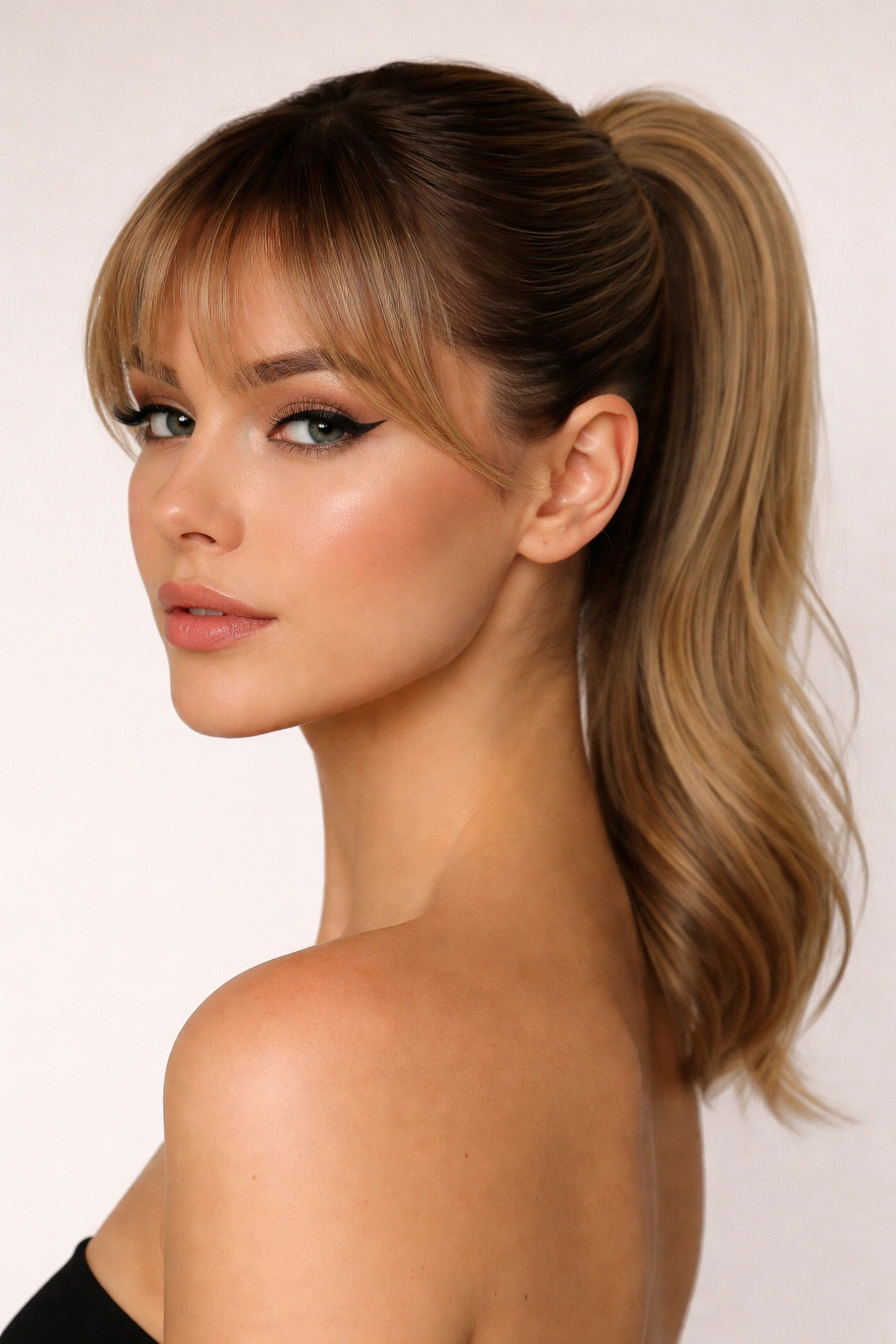
Pull all your hair into a smooth, ultra-polished ponytail while your bangs are left down but curved slightly at the ends using a round brush or straightener. This creates a striking contrast between rigid and soft, modern and classic. The bangs add a touch of romance to an otherwise geometric look.
What Makes This Style Sophisticated
The key is commitment to smoothness on the pony side and deliberate styling on the bangs side. This isn’t accidental—it’s clearly a choice. On short hair, this contrast is particularly striking because there’s nowhere to hide; the style either reads intentional or haphazard, and the polish of the slicked back makes it undeniably intentional.
Execution Details
Use a smoothing gel or mousse on damp hair, brush back into a tight ponytail, and blow-dry to set the smoothness in place. The ponytail will feel sculptural and hold its shape all day. For the bangs, use a round brush to curve them under slightly as they dry, creating a soft flip. Finish with a light hairspray to hold the curve without crunchiness.
Pro tip: A thin metal comb and a fine-tooth brush work better than thick brushes for this style—they give you precision and eliminate the frizz that comes from thick bristles dragging through short sections.
5. The Twisted Side Pony
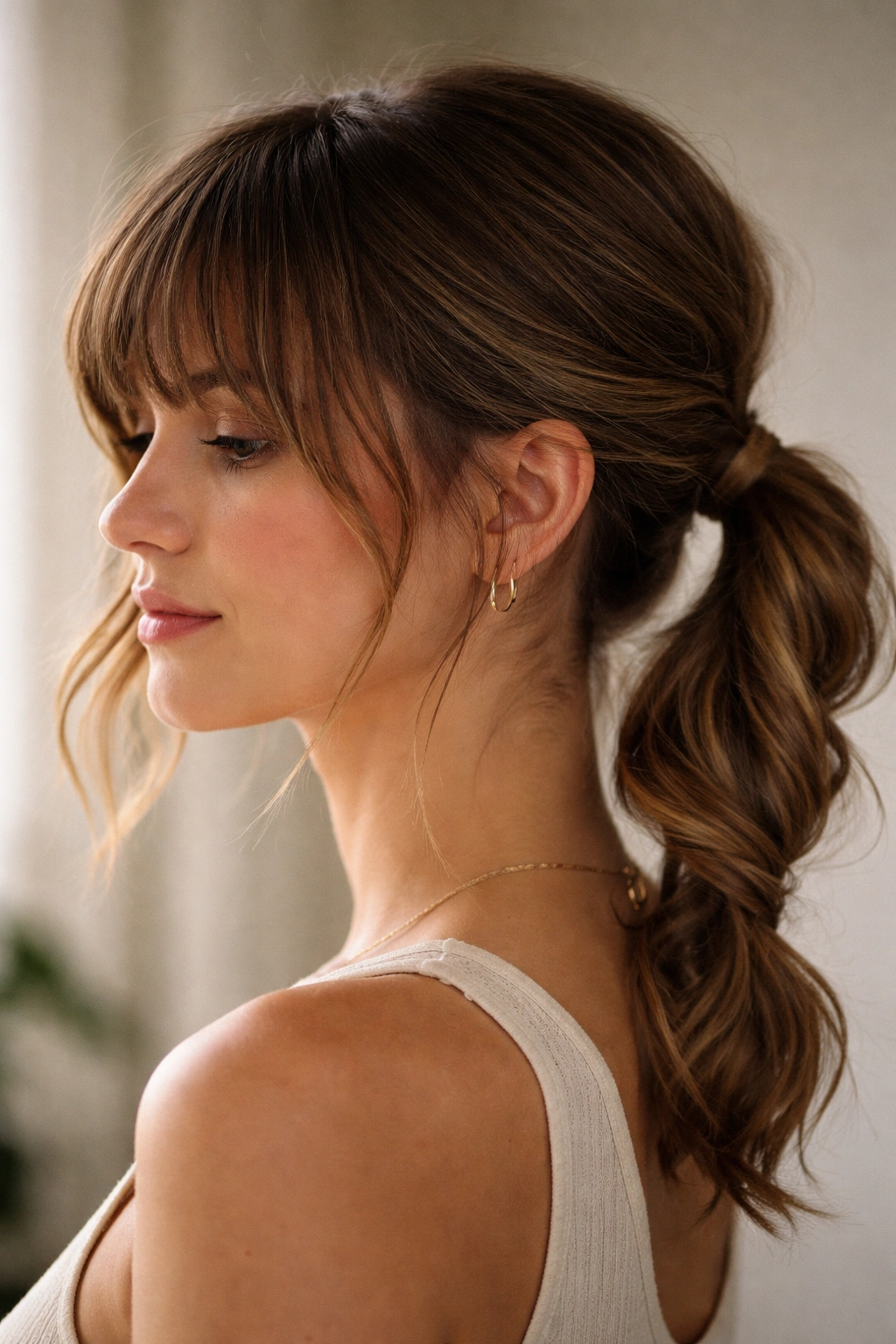
Create movement and visual interest by twisting sections of your hair as you gather it into a side ponytail. Your bangs stay down and frame one side of your face, while the twist wraps around and creates a romantic, slightly undone look. This style bridges casual and polished beautifully.
Why Twisted Ponytails Work on Short Hair
Twists add dimension and texture that make short hair feel fuller. The side positioning keeps your face visible and creates an asymmetrical look that feels intentional. Combined with bangs, it creates a pretty, feminine style that doesn’t feel overly done. The twist is doing visual work that would be lost on longer hair, so short length actually amplifies the style.
How to Create the Twist
Take a section from one side and twist it back toward the same side, picking up more hair as you go. When you reach the back, gather all your hair (including the twisted section) into a side ponytail. Secure with an elastic. Gently pull and tease the twist to make it look looser and more textured. Leave your bangs completely down on the opposite side, creating an off-balance, modern frame.
Worth knowing: If your hair doesn’t hold a twist naturally, use a light texturizing spray or dry shampoo before twisting—it gives your hair grip and prevents slipping.
6. The Messy Undone Pony With Wispy Bangs
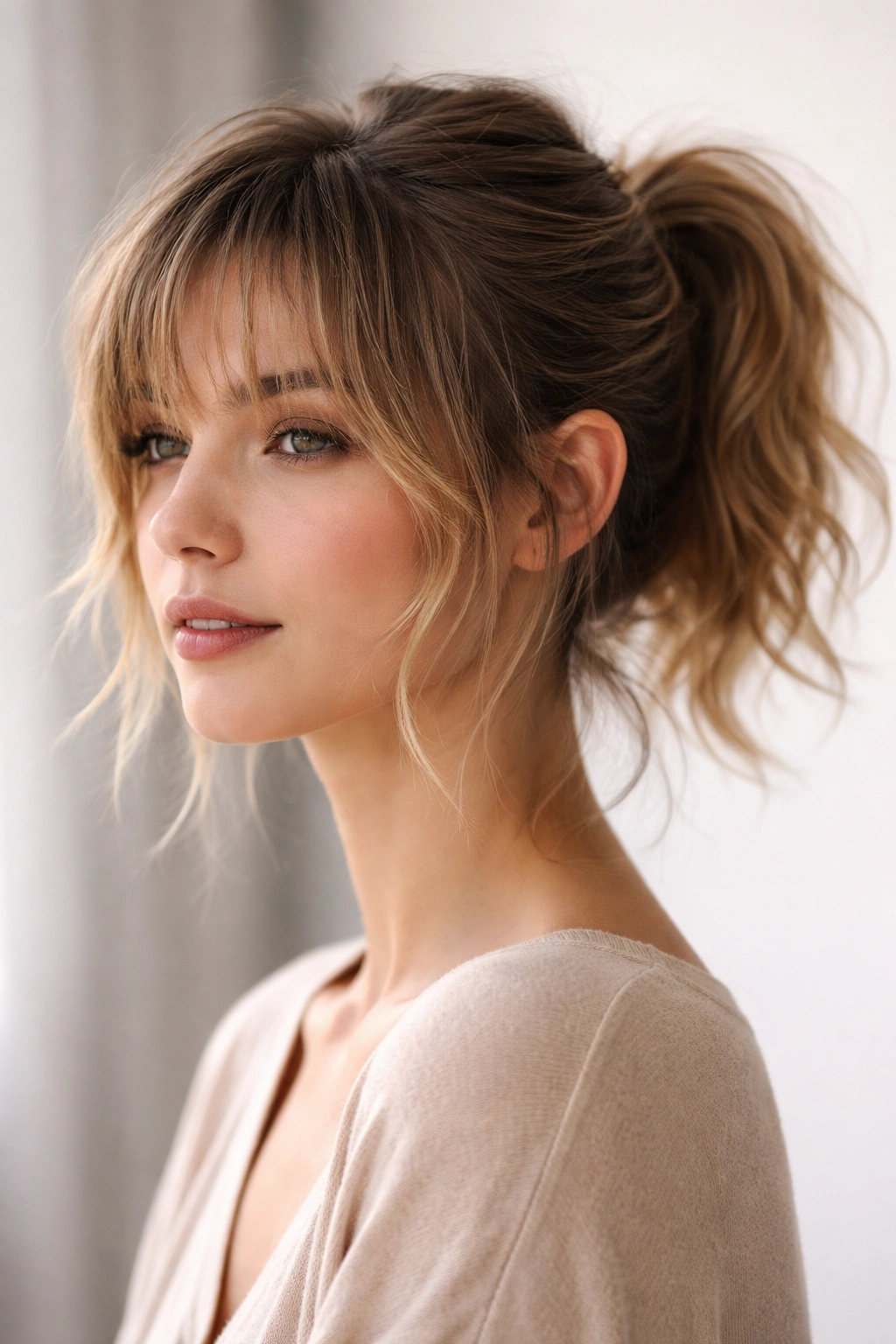
Deliberately create a “just threw this together” look by pulling your hair into a loose, imperfect ponytail with pieces falling out everywhere. Your bangs stay down and slightly tousled, adding to the effortless vibe. This is the style that takes actual effort to make look genuinely effortless.
The Art of Strategic Messiness
The key is intentional imperfection. You’re not trying to make a sloppy pony; you’re creating a style that looks relaxed and lived-in. On short hair, this is easier to execute than on longer length because you have fewer pieces to manage. Your bangs contribute to the overall casual mood by sitting naturally without heavy styling.
Making It Look Right
Start with slightly textured hair—either second-day hair or hair sprayed with texturizing spray. Gather your hair loosely, leaving intentional pieces around your face and temples. Don’t backcomb or tease; instead, let gravity and your natural movement create the texture. Your bangs should look like they’re just sitting there, not carefully styled. Use a soft elastic, and don’t pull everything tight.
Insider note: This style actually looks better with a few wisps of frizz and flyaways—fighting them defeats the purpose. A light hairspray mist rather than a heavy hold keeps everything looking natural.
7. The Braided Halo Pony
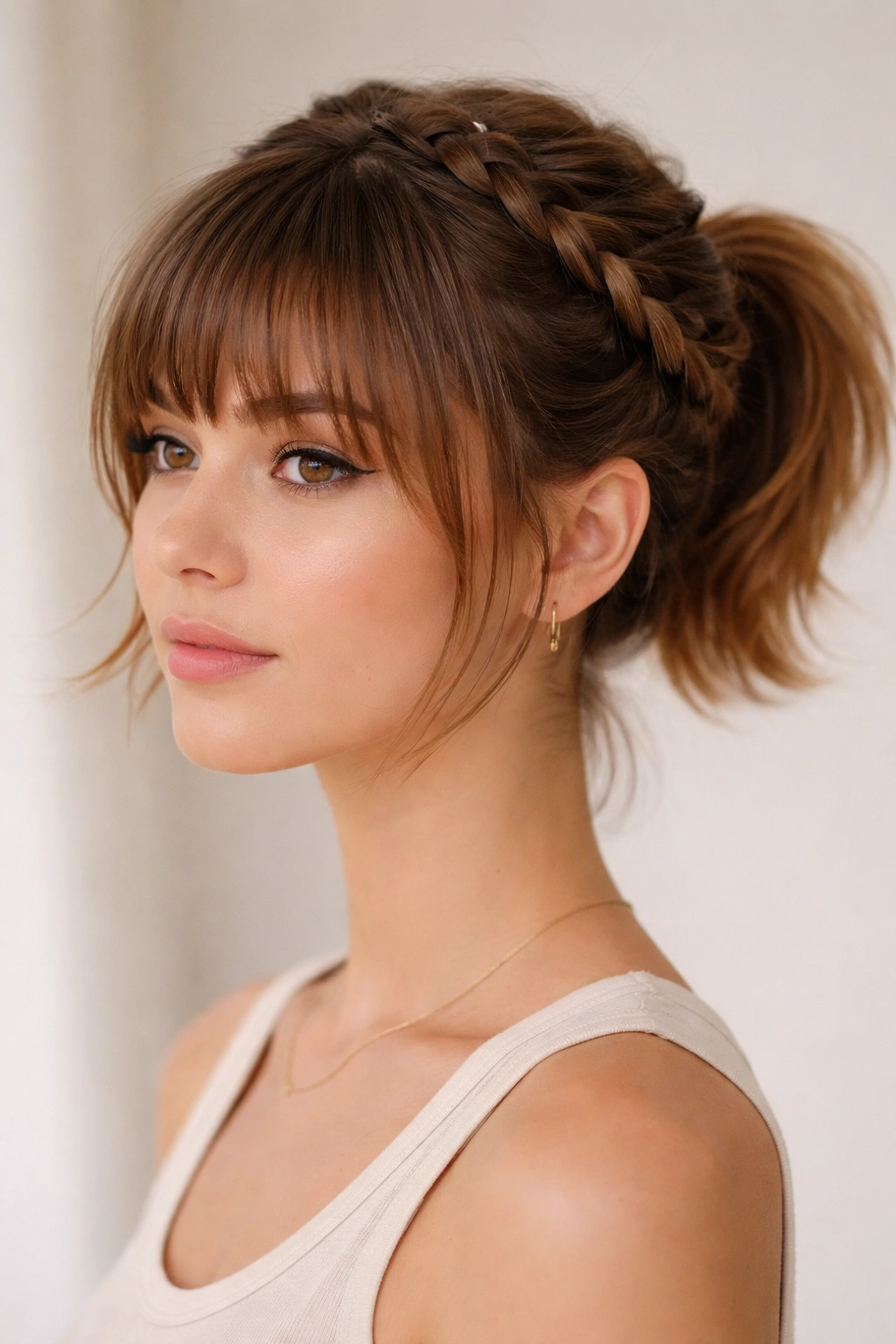
Create an intricate-looking style by braiding one side of your hair and wrapping it around the back of your head before securing a ponytail. Your bangs frame the front, and the braid adds unexpected detail and dimension. This style looks complex but takes maybe five minutes once you practice.
Visual Impact on Short Hair
Braids on short hair read as intentional styling rather than simply being a hairstyle. When combined with bangs, the braid creates a focal point at the back and crown while your bangs anchor the front. The effect is polished and interesting without feeling overdone or precious.
How to Build the Braid
Part your hair on one side and create a loose three-strand braid starting from that side temple. As you braid, wrap it around toward the back of your head, following your natural hairline. Secure the end with a small bobby pin. Then gather all your hair, including the braided section, into a ponytail and secure with an elastic. Tease the braid gently to make it look fuller and less tight.
Pro tip: Leave a few pieces unbraided at the side to frame your face—this softens the look and keeps your bangs from feeling isolated.
8. The Curved Half-Up Pony
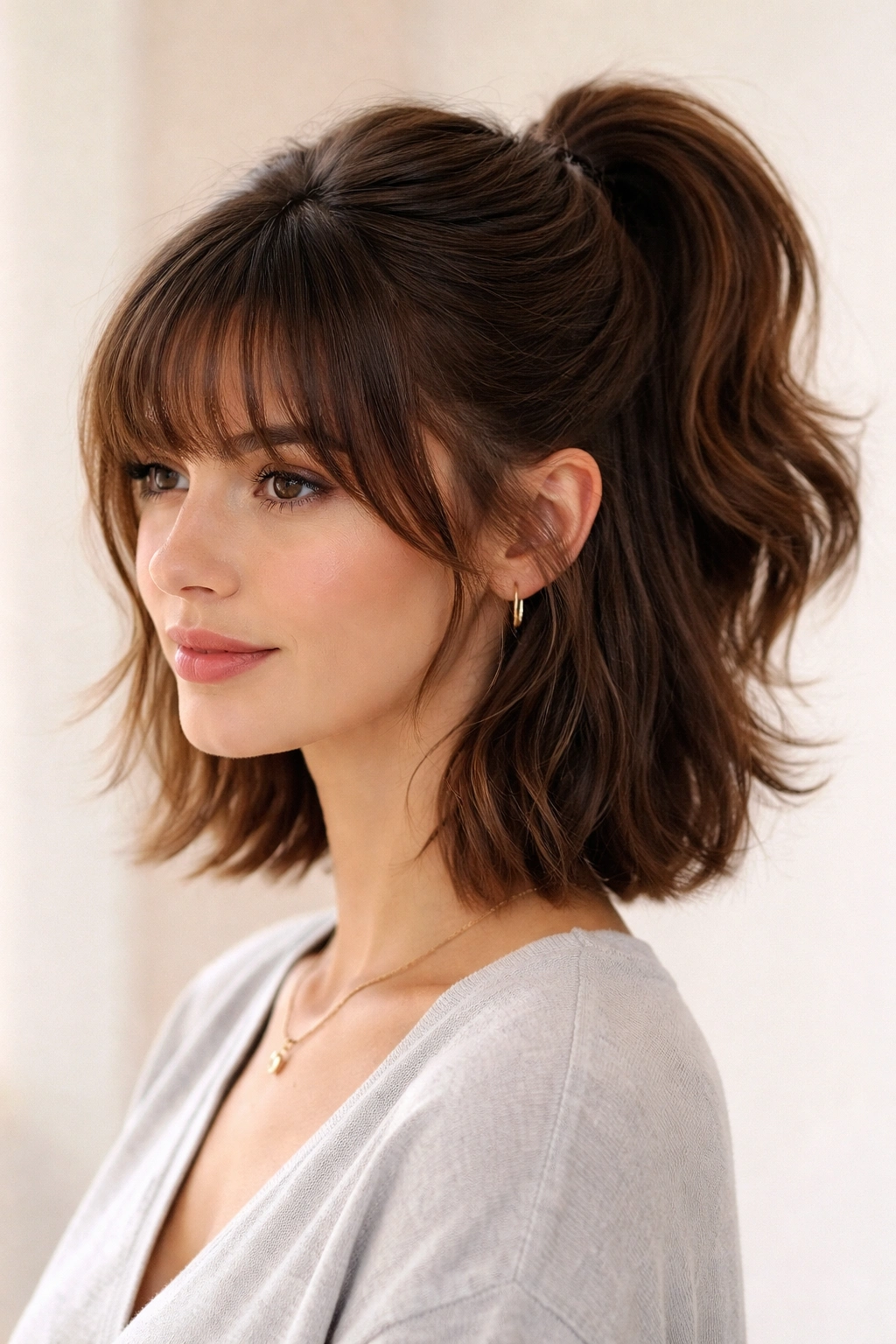
Pull only the top half of your head into a ponytail, leaving the bottom half down around your shoulders. This creates dramatic dimension and lets your bangs sit as a central feature. It’s the perfect balance between down and up, giving you movement while keeping hair off your face.
Why Half-Up Works Beautifully With Bangs
A half-up ponytail on short hair creates interesting negative space—you’re seeing your bangs, then the pulled-up section, then the loose pieces again. This variation in texture and position is visually interesting. Your bangs become part of a layered composition rather than an isolated feature. The style reads sophisticated and slightly editorial.
Execution and Stability
Backcomb the crown slightly before pulling the top section up—this gives you anchor points and prevents slipping. Pull the ponytail up but not so high that it extends above your natural crown; it should sit at the very top of your head. Leave the bottom half completely down. You can smooth the top half or leave it slightly textured; both look great. Your bangs stay naturally in place, framing everything.
Worth knowing: This style works best if there’s genuine texture difference between the pulled-up and down sections—smooth on top and wavy below creates more visual interest than uniform texture throughout.
9. The Secured Bangs With High Pony
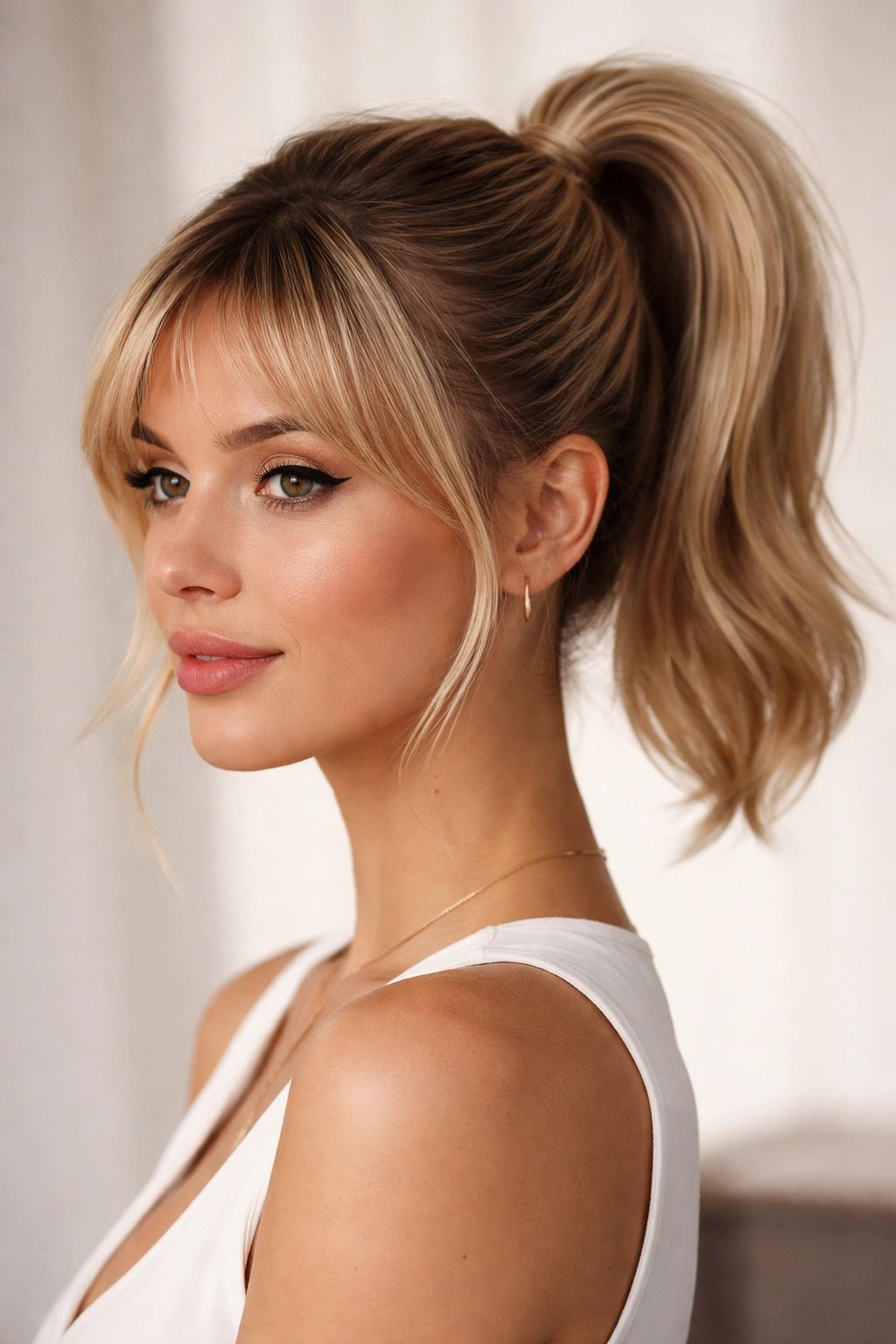
Pull your short hair into a high ponytail at the crown, then use a small section of hair from the ponytail itself to wrap around the elastic, creating a seamless finish. Gather your bangs and pin them lightly back at the sides, creating a softer, more face-framing effect. This is higher polish than a standard high pony.
The Refined Touch That Elevates Everything
Wrapping an elastic with a section of hair hides the hardware and creates a finished, intentional look. Securing your bangs slightly back rather than letting them fall completely down softens the overall style. Together, these small details create a polished effect that reads more refined than the individual elements suggest.
Technical Execution
Secure your high ponytail first. Then take a small section from the underside of the ponytail and wrap it around the elastic, pinning the end beneath with a bobby pin that matches your hair color. For the bangs, use a tiny curved clip or bobby pin at each temple to gently secure them back at a slight angle. You’re not pinning them flat; you’re creating a subtle off-face curve that frames your cheekbones.
Pro tip: If your bangs are thick, this works better when you separate them into two sections (one from each side of your part) rather than treating them as one unit.
10. The Faux Longer Pony With Ponytail Extension
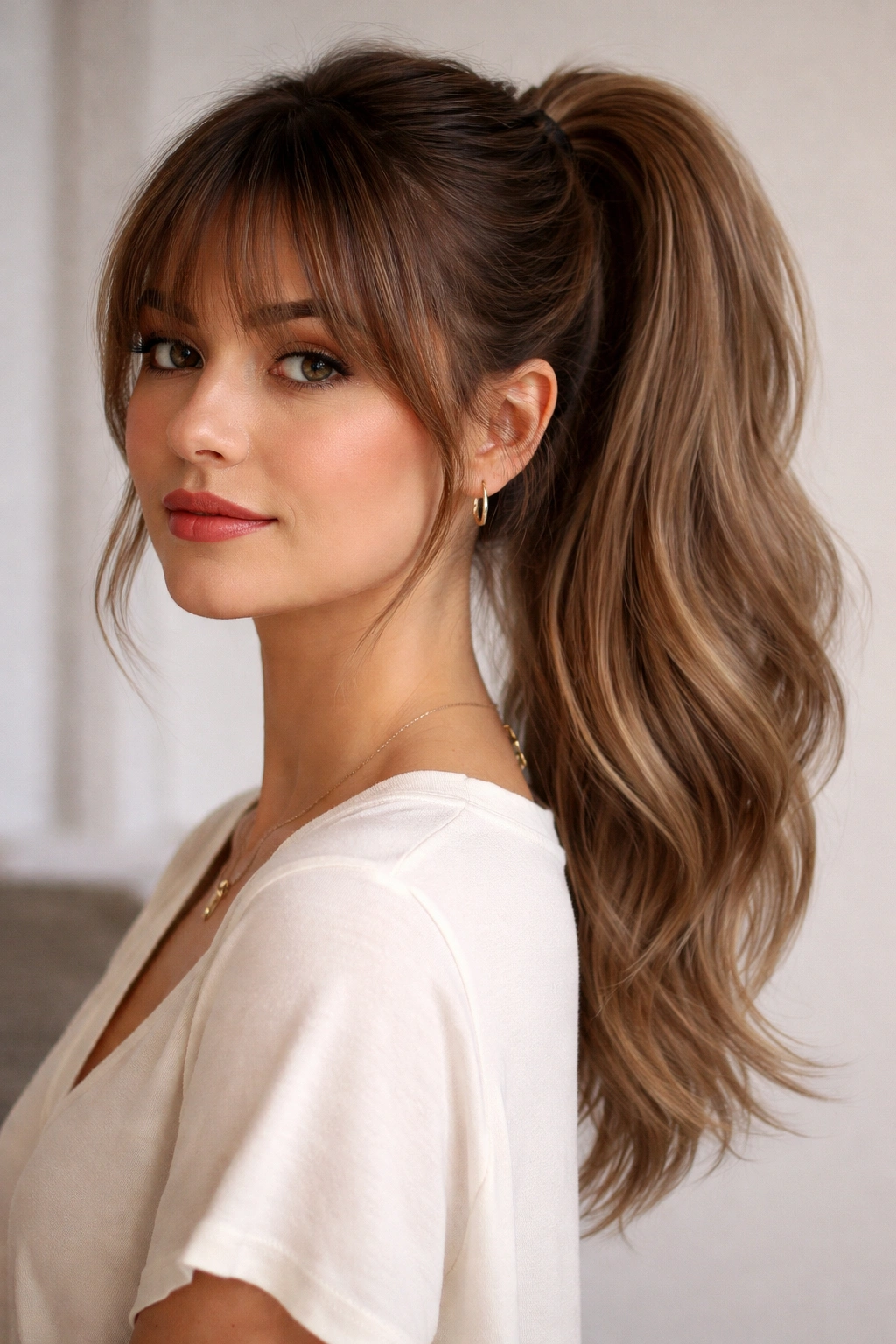
Create the illusion of longer hair by using a hair extension clip or ponytail piece that matches your color, securing it into your natural ponytail. Your bangs sit prominently in front while the extended ponytail adds drama and length. This style transforms short hair into something fuller and more impressive without requiring a cut.
When This Style Makes Sense
Extensions work particularly well on short hair with bangs because your bangs remain your own, creating an authentic frame that grounds the extended ponytail. People see your natural bangs first, then the extended length, which reads as an intentional styling choice rather than a wig-like effect. It’s perfect for special occasions or when you want to feel a different way without committing to length.
Selecting and Securing Extensions
Choose an extension that matches your hair texture and color as closely as possible. Clip or tie it into your ponytail with enough grip that it won’t slip throughout the day. Blend the connection point by taking a small section from your natural ponytail and wrapping it around where the extension meets your hair. Your bangs draw attention to your face, so most people won’t scrutinize the connection point closely.
Worth knowing: Extensions add weight, so use a slightly thicker elastic or double your elastic to prevent the ponytail from slipping downward as the day goes on.
11. The Curved Pony With Tucked-In Bangs
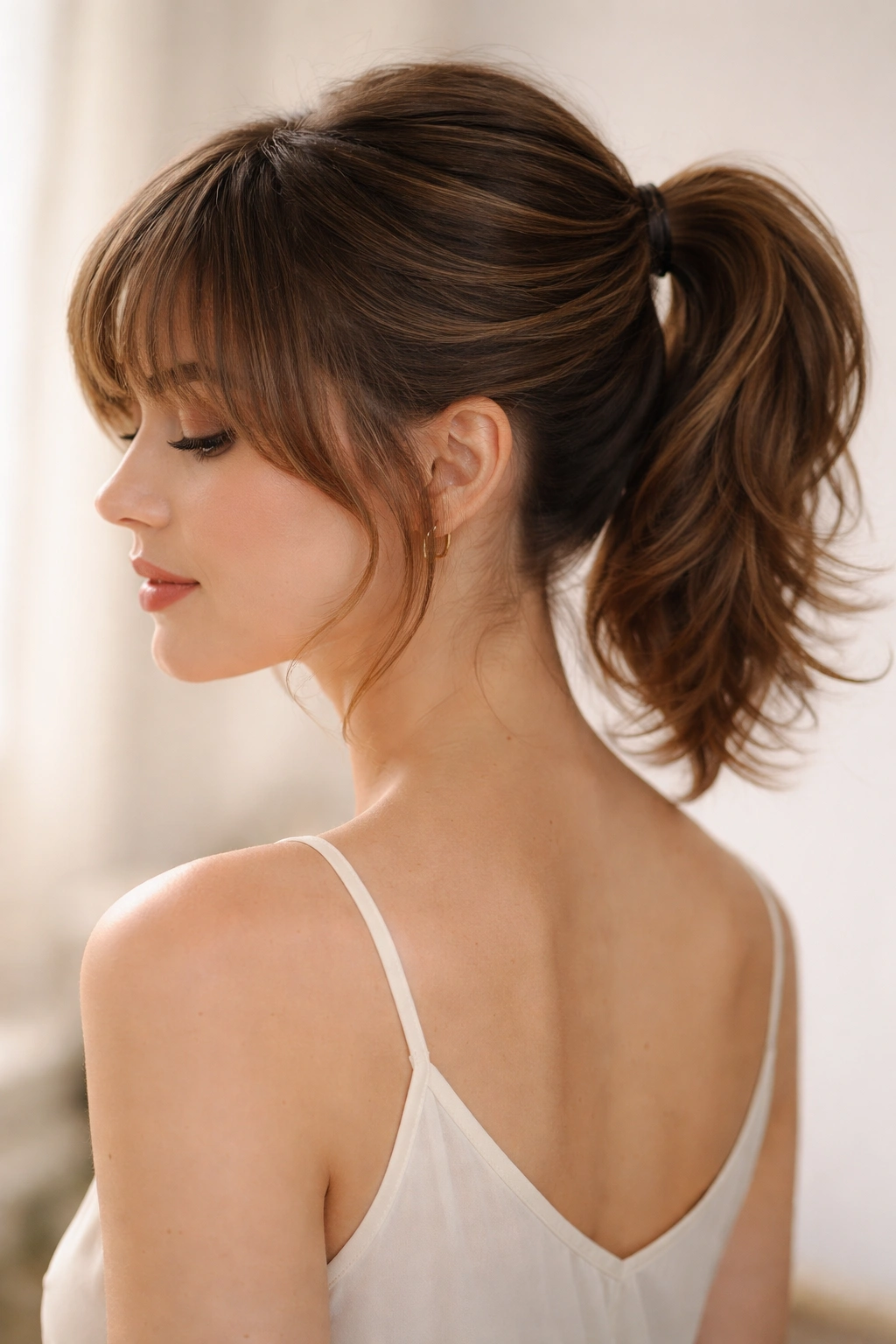
Create a style where your bangs are actually incorporated into the ponytail by gently gathering them along with the rest of your hair, creating a soft, undone ponytail where bangs and hair flow together. This is the opposite of the standard “bangs out” approach and creates an entirely different silhouette.
Why Tuck Your Bangs In
This style works when your bangs are the same length as or longer than your other short layers. It creates a softer, less structured look than leaving bangs completely down. Your face reads rounder and younger, and the ponytail has more volume because you’re incorporating more hair into it. The effect is gentle and romantic.
How to Make It Look Intentional
Gather your hair including your bangs, but do so loosely—you want the bangs visible within the ponytail, not hidden. Let pieces frame your face naturally as you pull back. Use a soft elastic and don’t pull everything tight. Tease slightly within the ponytail to create a cloud-like texture that makes the bangs feel integrated rather than forced into something they weren’t designed for.
Insider note: This works best on slightly wavy or textured hair, where bangs naturally want to blend with surrounding strands rather than sit as a separate feature.
12. The Accented Pony With Braided Detail
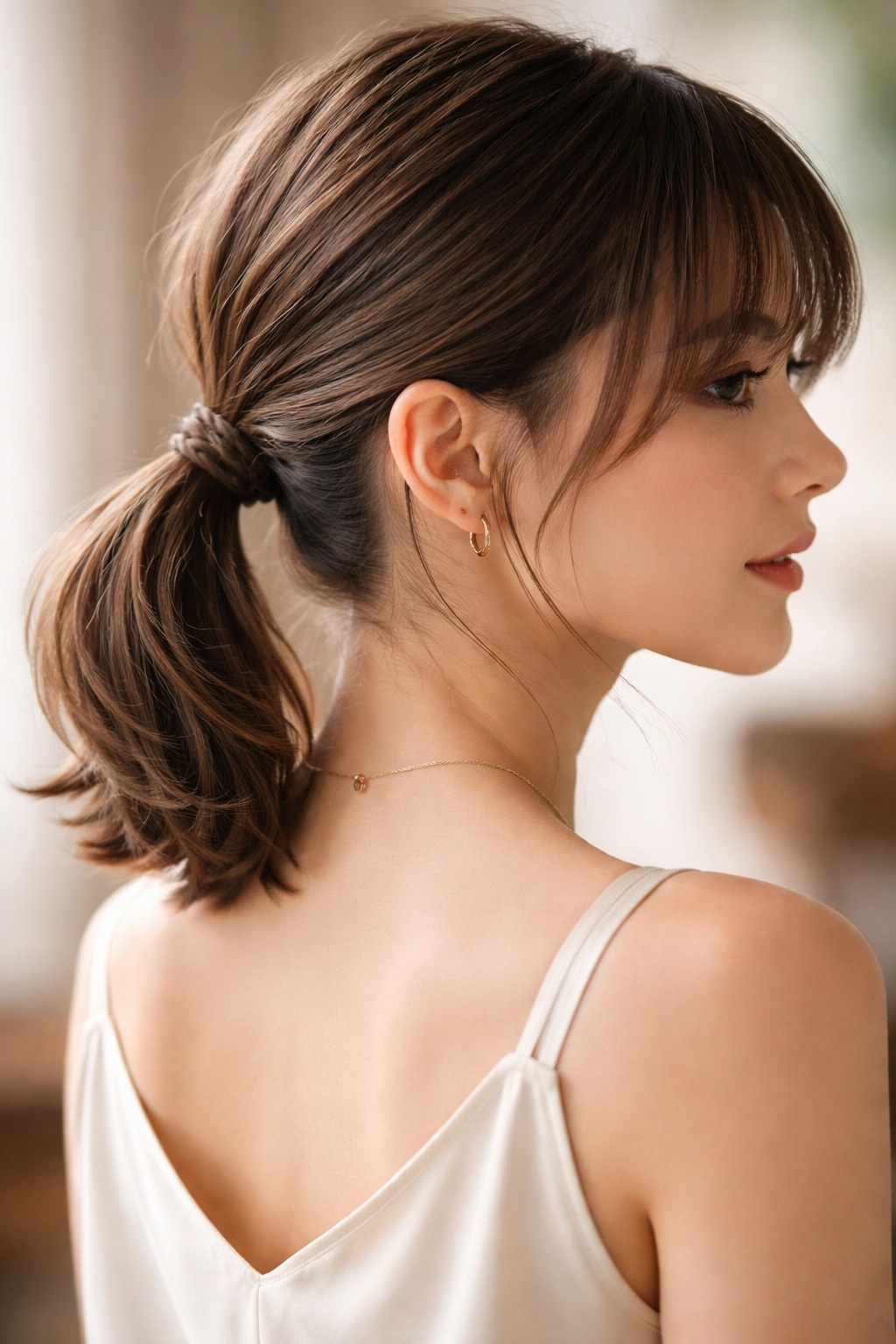
Create a sleek low ponytail while incorporating a thin three-strand braid that wraps around the base of the elastic, creating detailed texture at the connection point. Your bangs remain down and clean, and the braided detail adds sophistication. This is a style that looks more complex than it actually is.
The Power of Small Details
On short hair, tiny details read bigger because there’s less visual information overall. A small braid wrapped around your ponytail base creates an interesting focal point that makes the entire style feel more intentional and polished. Your bangs provide the frame, and the braid adds the jewelry-like detail.
Building the Style
Create a standard low ponytail first, leaving it slightly loose. Then take a small section from the ponytail and create a thin, tight three-strand braid. Wrap this braid around the base of the ponytail elastic, securing the end with a small bobby pin hidden beneath the ponytail. Tease the braid slightly so it’s visible and textured. Your bangs stay down naturally, framing your face while the braided detail draws eyes to the back of your head.
Pro tip: This braid works better on second-day hair or hair with a light dry shampoo applied—it has grip and won’t slip as you’re trying to wrap it.
Final Thoughts
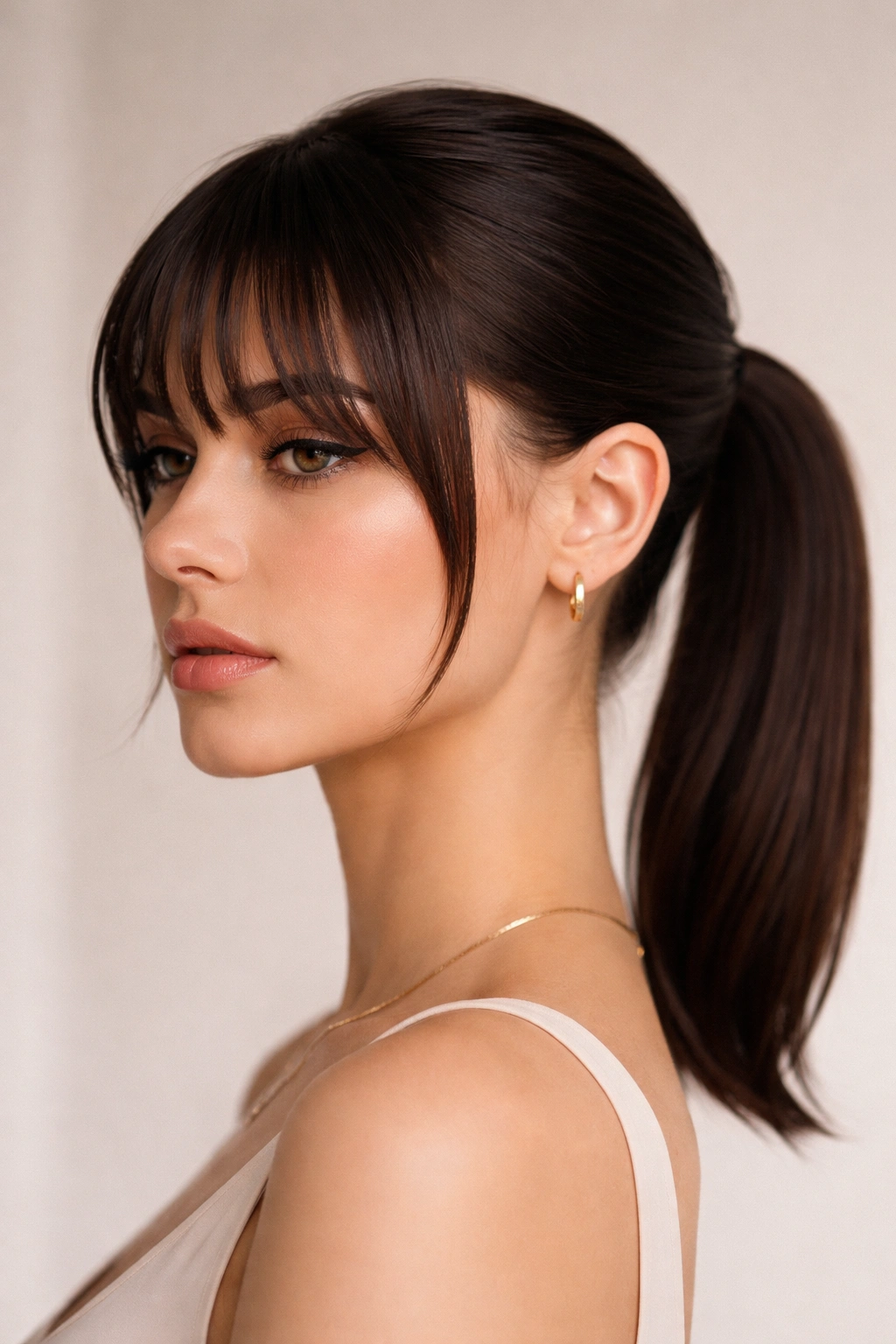
The real joy of short hair with bangs is that your styling options aren’t limited—they’re just different from longer lengths. Each of these twelve styles demonstrates that point clearly. Your bangs become a design feature you’re working with rather than something to hide, and the variety of ponytail approaches means you can adjust your look based on the occasion, your mood, or how much time you have.
The styles that take thirty seconds (the sleek low pony, the textured bubble pony) are perfect for busy days when you just need something clean and functional. The ones that require a few more minutes (the braided halo, the accented base braid) are worth breaking out for days when you want to feel put-together or are heading somewhere that warrants extra polish. Most importantly, once you’ve tried a few of these approaches, you’ll naturally develop favorites—the ones that feel easiest on your hair type and most flattering on your face shape.
The combination of short hair, bangs, and a well-executed ponytail creates a look that reads effortlessly intentional. You’re not hiding anything; you’re showcasing a deliberate style choice. That confidence comes through in how the overall look lands, and it’s something that makes every single one of these styles feel worth the two minutes (or five) it takes to create.
