



Blue ponytails are having a major moment, and for good reason — they’re bold, expressive, and can completely transform how you look and feel about yourself. Whether you’re drawn to vibrant electric shades or moody, sophisticated tones, there’s a blue ponytail style waiting to become your new signature look. The beauty of choosing blue is that it works across so many different skin tones, hair textures, and personal styles, from edgy and rebellious to polished and elegant. You don’t need to commit to a full head of blue hair to make a statement; a blue ponytail gives you the flexibility to experiment with color while keeping things wearable for work, dates, or everyday life.
The key to rocking a blue ponytail isn’t just about the color itself — it’s about choosing the right shade of blue for your skin tone and the specific ponytail style that suits your lifestyle and aesthetic. A sleek, pristine high ponytail reads completely differently than a textured, tousled low pony, even when they’re the same shade of blue. Understanding the nuances between these styles helps you pick not just a color, but a whole look that makes you feel like yourself. From achieving the perfect color saturation to maintaining it so it doesn’t fade into a murky mess, we’re covering everything you need to know to wear blue ponytails with confidence.
Let’s dive into ten distinct blue ponytail styles, each with a different personality and purpose. These aren’t just color descriptions — they’re full approaches to styling and maintaining that make each one feel unique.
1. Classic Solid Blue Ponytail
A true classic solid blue ponytail is exactly what it sounds like: all-over, consistent blue color from root to tip. This is the pure, unadulterated statement — one single, saturated shade that draws attention immediately. The effect is bold without being gimmicky, and the uniformity of the color makes the ponytail itself the star of the show rather than competing patterns or fades.
How to Achieve This Look
Getting a true solid blue requires either a semi-permanent or permanent hair dye applied evenly across previously lightened hair. You’ll need a lifted blonde base (typically level 9 or 10) for the blue to appear vibrant and true to color. If you’re starting with darker hair, you’re looking at a multi-session lightening process before the blue even goes in. The application itself should be methodical — work section by section, saturating every strand equally so there are no streaky patches or uneven tones. A level 9-10 blonde paired with a saturated blue dye typically produces the most vivid results.
The choice between semi-permanent and permanent matters for longevity and commitment level. Semi-permanent blues fade gradually over 4-6 weeks, which gives you an easy exit strategy if you change your mind. Permanent blue lasts indefinitely until you cut it off or color over it, which sounds appealing until your roots start growing in and you’re committed to frequent touch-ups.
What Makes This Stand Out
- Color saturation: Solid blue at full saturation reads as confident and intentional, not experimental or tentative
- Styling freedom: The uniform color works with any ponytail texture — sleek, textured, messy, tight, loose
- Maintenance demands: Requires frequent root touch-ups (every 4-6 weeks) and fading prevention to keep the blue looking fresh and not diluted
- Psychological impact: Wearing a head of solid blue genuinely changes how you move through the world; you own it differently
Pro tip: Invest in a color-protecting shampoo and conditioner specifically formulated for blue-toned hair — regular shampoo strips color faster than you’d expect, and blue tends to fade into greenish tones if you’re not vigilant. Purple-toned shampoos designed for ash or blue hair prevent unwanted warmth.
2. Ombre Blue to Black Ponytail
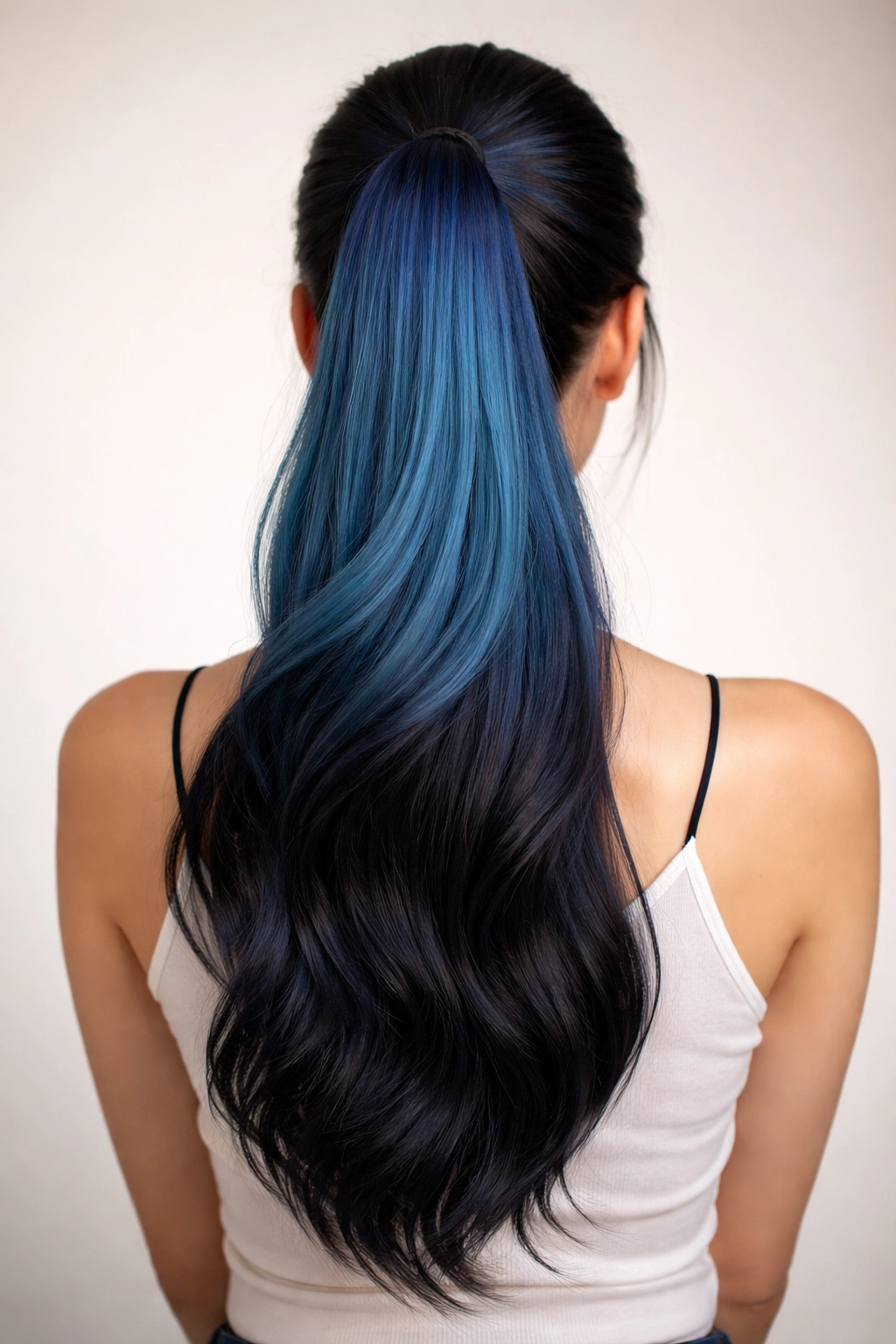
An ombre blue-to-black ponytail creates a gradient effect where the hair transitions from rich blue at the roots or mid-length into deep black toward the ends. This style feels more sophisticated than a solid color because it has dimension and depth — it’s still bold, but with a built-in fallback to something darker and less demanding. The contrast between blue and black creates a visual interest that a solid color alone can’t quite achieve.
The Visual Impact and Best Application
The ombre works best when you plan where the color shift happens. A gradual fade from blue (starting at the roots) to black (by the ends) reads as intentional and beautifully executed. You can also reverse it — black roots fading to blue at the ends — which feels more edgy and younger-looking. The shift should happen over a few inches of hair, not abruptly, so it looks like a blended gradient rather than two separate colors butted up against each other.
Technically, this requires either applying blue to pre-lightened hair and black dye to darker sections, or using two different products with careful sectioning to prevent overlap that would create muddy purple tones. Many colorists recommend doing the ombre in one session for consistency, though some prefer spacing it out so the hair isn’t processing multiple color deposits simultaneously.
Key Advantages of Ombre Blue-to-Black
- Grown-out friendly: As your roots grow in dark, they naturally blend into the ombre rather than creating a harsh line like a solid color
- Less commitment feeling: The presence of black makes the look feel slightly less extreme, even though it’s still a major color statement
- Depth and dimension: The gradient creates visual texture and sophistication that photographs beautifully
- Lower maintenance than solid blue, since the fading and regrowth blend naturally into the style’s design
Worth knowing: Blue fades faster than black, so an ombre will eventually shift from blue-to-black into more of a slate-to-black over several weeks. Many people actually prefer the muted, slightly faded version to the fresh vibrant color because it’s more subtle.
3. Streaked Blue Highlights in Ponytail
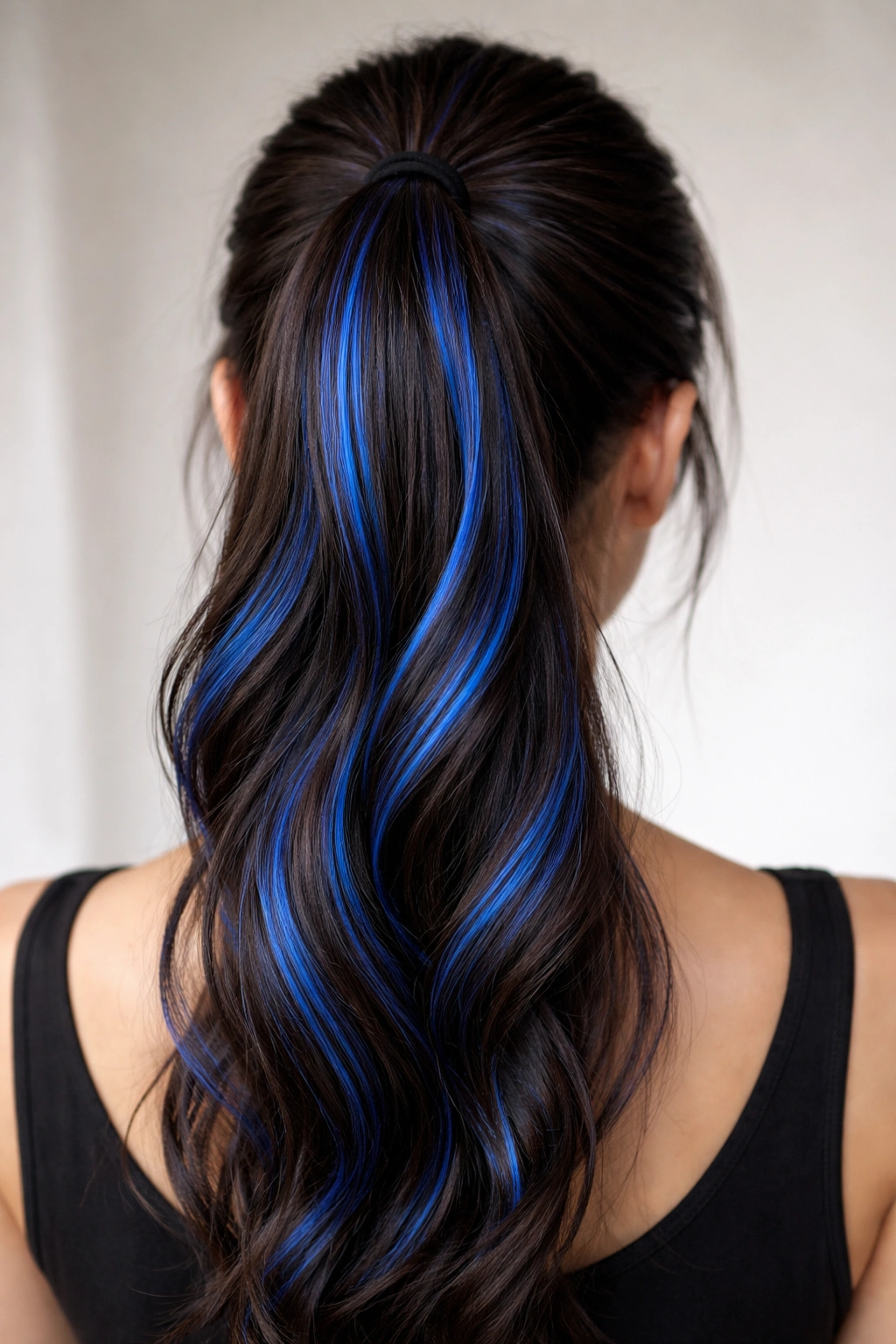
Streaked blue highlights offer a compromise between full commitment and total subtlety — you get pops of blue woven throughout the ponytail while keeping your base color intact. This might mean blue stripes every few inches, random chunks of blue mixed with your natural or dyed color, or directional streaks that follow the ponytail shape. It’s a way to enjoy the boldness of blue without the daily decision of whether you’re ready to be a blue-haired person.
How to Choose Your Streak Pattern
The placement of blue streaks completely changes the impact. Thin, scattered streaks feel playful and experimental. Thicker chunks — maybe 1-2 inches wide and spaced throughout the ponytail — look more intentional and fashion-forward. Some people prefer streaks concentrated toward the ponytail itself, so the color is only visible when the hair is pulled back, creating a hidden layer of personality. Others choose to run streaks from root to tip so the blue is visible whether hair is up or down.
The base color matters too. Blue streaks against a deeper brunette or black base create strong contrast and visibility. Streaks in blonde hair are more subtle and can read as icy or cool-toned rather than boldly blue. Streaks in a medium brown or caramel tone create a nice middle ground — visible enough to feel intentional, but not so high-contrast that it screams for attention.
Strategic Advantages
- Lowest commitment option if you want to test blue without full color coverage
- Easier grow-out process: Streaks blend into natural regrowth more gracefully than solid color
- More versatile styling: You can wear your hair down and minimize the blue, or put it up and maximize it
- Faster application and less damage since you’re only lightening and coloring sections, not your entire head
- Budget-friendly: A professional colorist typically charges less for partial coverage than full color
Insider note: If you’re doing this at home with box color or semi-permanent dye, use foils or a highlighting cap to isolate the sections you want blue. Trying to freehand streak application almost always results in uneven color or bleeding onto sections you wanted to keep natural.
4. Navy Blue Sleek High Ponytail
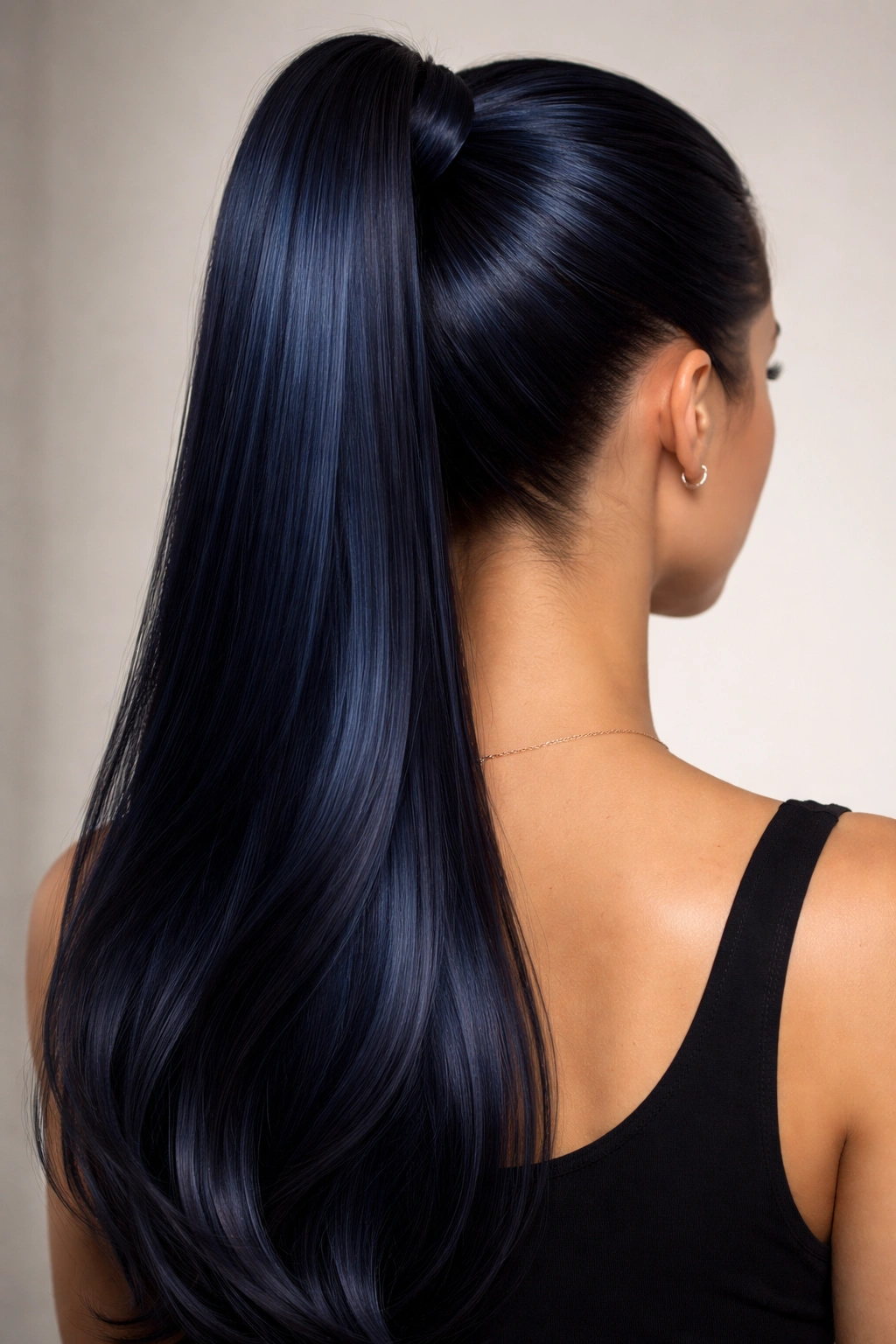
Navy blue is the sophisticated older sibling of bright electric blue — it’s dark, professional, and elegant without being boring. A sleek high ponytail in navy reads as intentional rather than whimsical, and it photographs beautifully in professional settings. Navy works across more skin tones than brighter blues because it’s more subtle and less likely to cast an unflattering tone. The sleekness of the ponytail (pulled tight, smoothed down, precise) amplifies the sophistication.
Achieving the Navy Shade and the Sleek Finish
Navy blue is easier to achieve than bright blues because it doesn’t require a super-light blonde base. A level 8-9 blonde gives you a true navy that leans more blue than gray. On level 7 blonde, navy can start to look more slate-like, which is beautiful but distinctly different. The dye color itself matters — some navy formulas lean greenish, others lean more purple. Test the shade on a swatch before committing to your whole head.
The sleekness comes from application technique and styling. Apply a smoothing serum or edge control to tame flyaways and give the surface of the ponytail a glossy finish. Blow-dry the ponytail smooth before securing it so there’s no frizz or texture breaking up the line. Use a fine-toothed comb to smooth any baby hairs back into the main ponytail. The ponytail itself should sit high on the crown (not at the back of the head) and be pulled tight enough that the skin of your scalp is slightly visible at the front hairline — this tension creates that polished, intentional look.
Navy’s Professional Advantage
- Office-appropriate blue: Navy reads as a deliberate style choice rather than an experimental color, making it workable in more conservative environments
- Longevity: Navy is less dramatic than bright blue, so regrowth doesn’t look as jarring when roots start showing
- Complements cool undertones: Navy is especially flattering on people with cool, fair, or olive skin tones
- Pairs beautifully with business casual and professional clothing
5. Periwinkle Soft Blue Ponytail
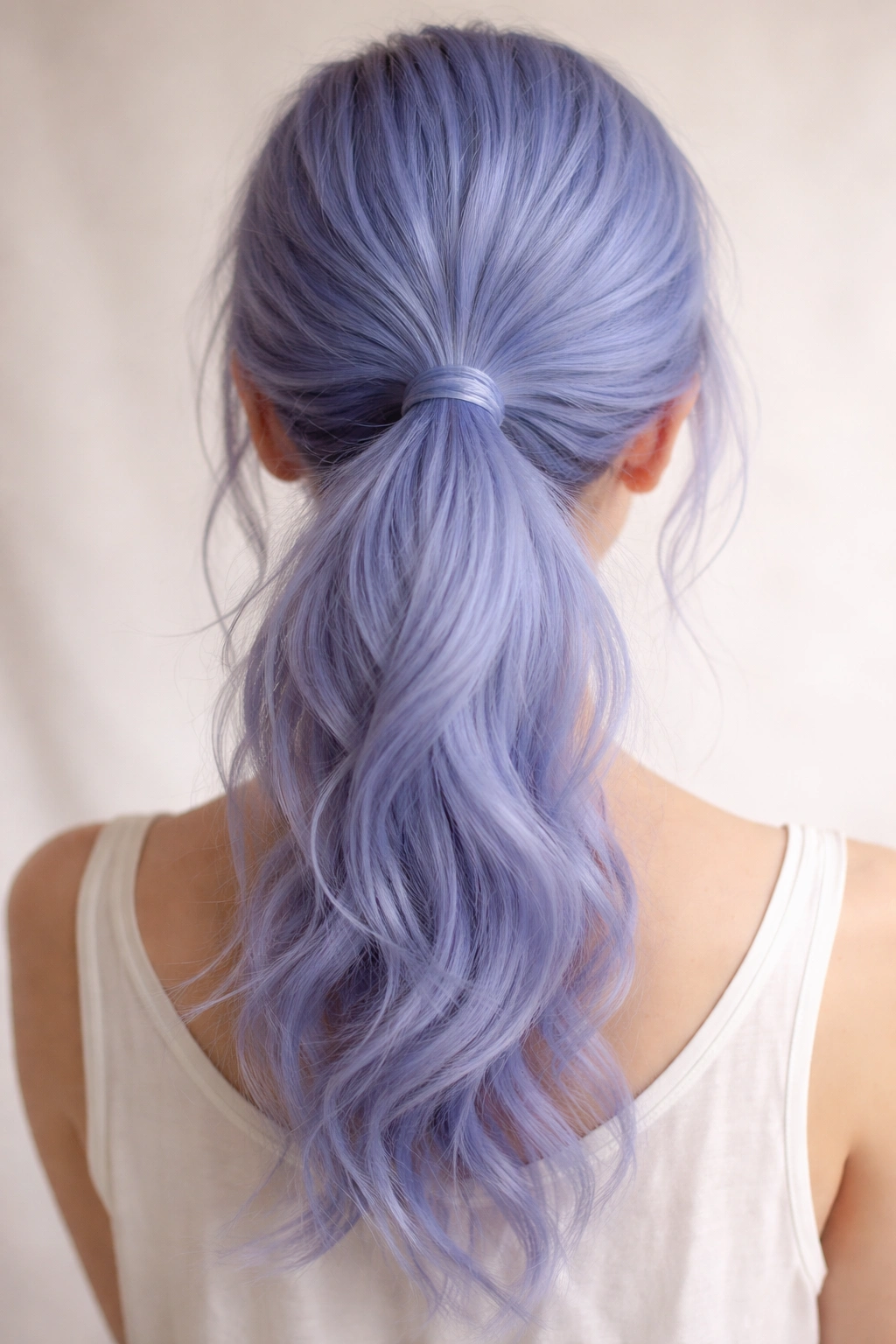
Periwinkle is blue’s gentle, artistic cousin — it’s a soft, almost dusty blue with a hint of purple undertone that feels romantic and whimsical. Where navy is serious, periwinkle is playful. Where bright electric blue commands attention, periwinkle invites admiration. This shade works beautifully in slightly textured, undone ponytails that lean toward effortless rather than polished.
Getting the Periwinkle Tone Right
Periwinkle is trickier to achieve than you might think because it can easily tip into purple, gray, or lavender depending on the base hair color and the specific dye formula you choose. On a very light blonde base, periwinkle will appear more true. On a slightly warmer blonde (level 8 rather than level 9), it might read more purple. If you’re working with a colorist, bring pictures of the exact periwinkle you’re imagining, because two different people can mean something completely different by “periwinkle.”
Semi-permanent dyes labeled as periwinkle tend to work better than permanent ones for this shade because you have more flexibility in how long you leave the product in. A slightly longer processing time (or leaving it in overnight) deepens the purple notes, while a shorter time keeps it more blue-leaning. If you’re going permanent, ask your colorist to adjust the mixing ratio to hit the exact tone you want.
The Romantic Quality of Periwinkle
- Works in multiple ponytail textures: Sleek, wavy, braided, or messy periwinkle all feel cohesive and intentional
- Flatters warm and cool undertones equally better than most blues because of the purple blend
- Photographs beautifully in natural light, appearing almost ethereal
- Feels less aggressive than bright blue, making it easier to wear in social situations where you want to stand out but not overwhelm
- Pairs well with soft, romantic styling — braids, loose waves, soft accessories
Pro tip: If your periwinkle starts fading into a grayish-purple as it washes out, embrace it rather than fight it — the muted tone is actually beautiful and reads as intentionally aged rather than accidentally faded.
6. Turquoise Bright Blue Ponytail
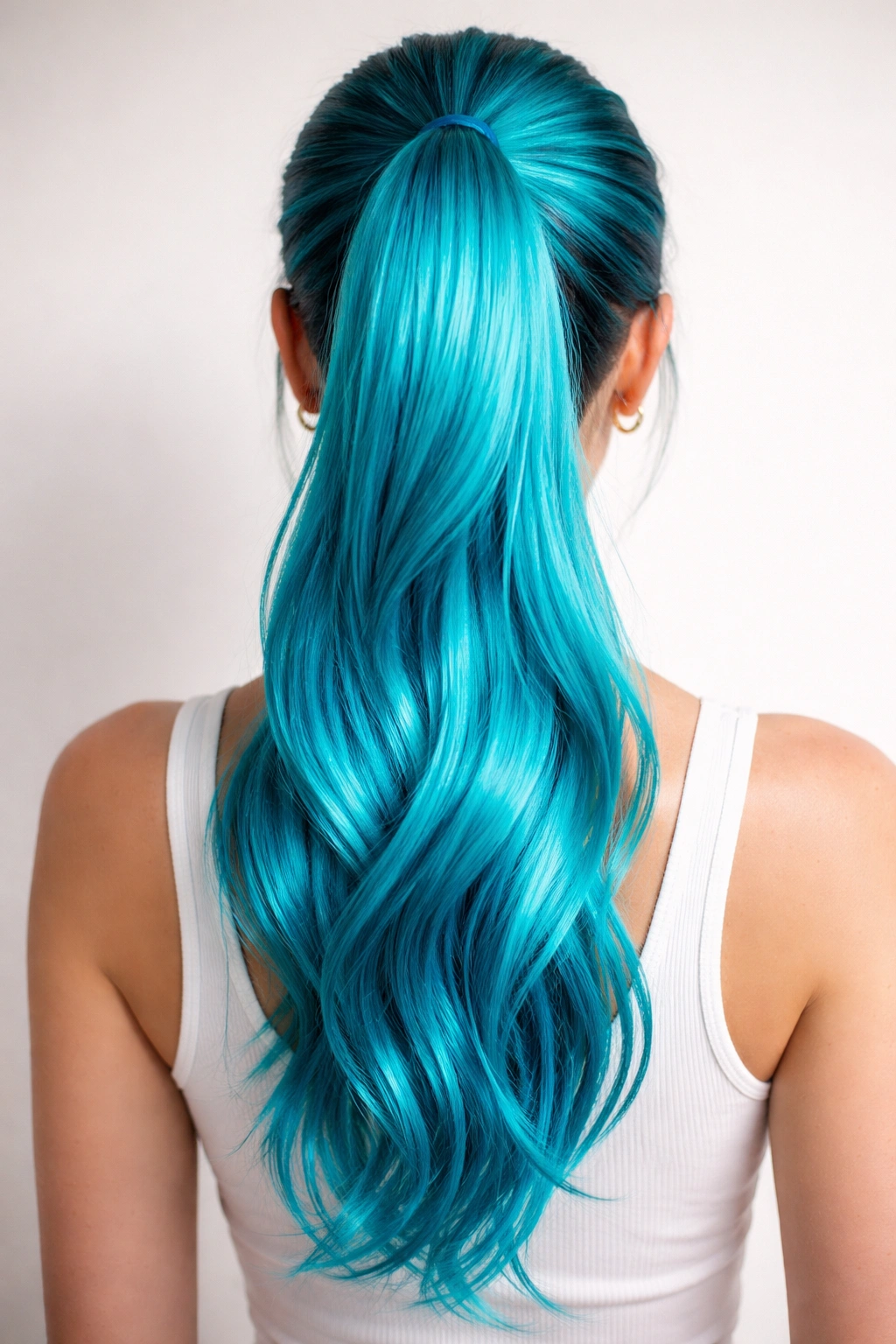
Turquoise is where blue meets green — it’s bright, electric, and undeniably bold. A turquoise ponytail is a statement that says you’re confident and playful. Turquoise works best in high-contrast situations: against darker skin tones it’s luminous, against fair skin it’s striking. The brightness demands attention, and a tight sleek ponytail amplifies that energy even more.
Achieving True Turquoise
Turquoise is harder to maintain than pure blue because it tends to fade green over time, especially if you’re using semi-permanent color. You need a very light blonde base (level 10) and a turquoise dye formula that’s specifically calibrated to lean blue rather than green. Some turquoise dyes are greenish out of the bottle and fade to a muddy teal. Others are bright and bluish and fade to a softer blue. Know your dye formula before committing.
The brightness of turquoise requires serious color maintenance. Use cool-water rinses, color-safe shampoo, and purple-toning treatments to keep the blue from shifting green. Some people refresh their turquoise with a new application every 4-5 weeks because the fading bothers them; others lean into the shifting tones and enjoy how the color evolves.
The Energy of Turquoise
- Highest impact color statement of all the blues — this is the choice if you want to turn heads
- Best suited to confident personalities who enjoy being noticed and having their appearance be a conversation starter
- Works beautifully in summer and creative settings — less wearable in conservative professional environments
- Requires the most maintenance of any blue shade to keep it looking fresh and not dingy
- Most transformative to your overall appearance — turquoise changes how you’re perceived more dramatically than any other shade
Worth knowing: Turquoise can clash with certain skin undertones, particularly warm reds or oranges. If you have warm undertones, try a shade-match test first or consult with a colorist before committing to turquoise.
7. Denim Blue Low Ponytail
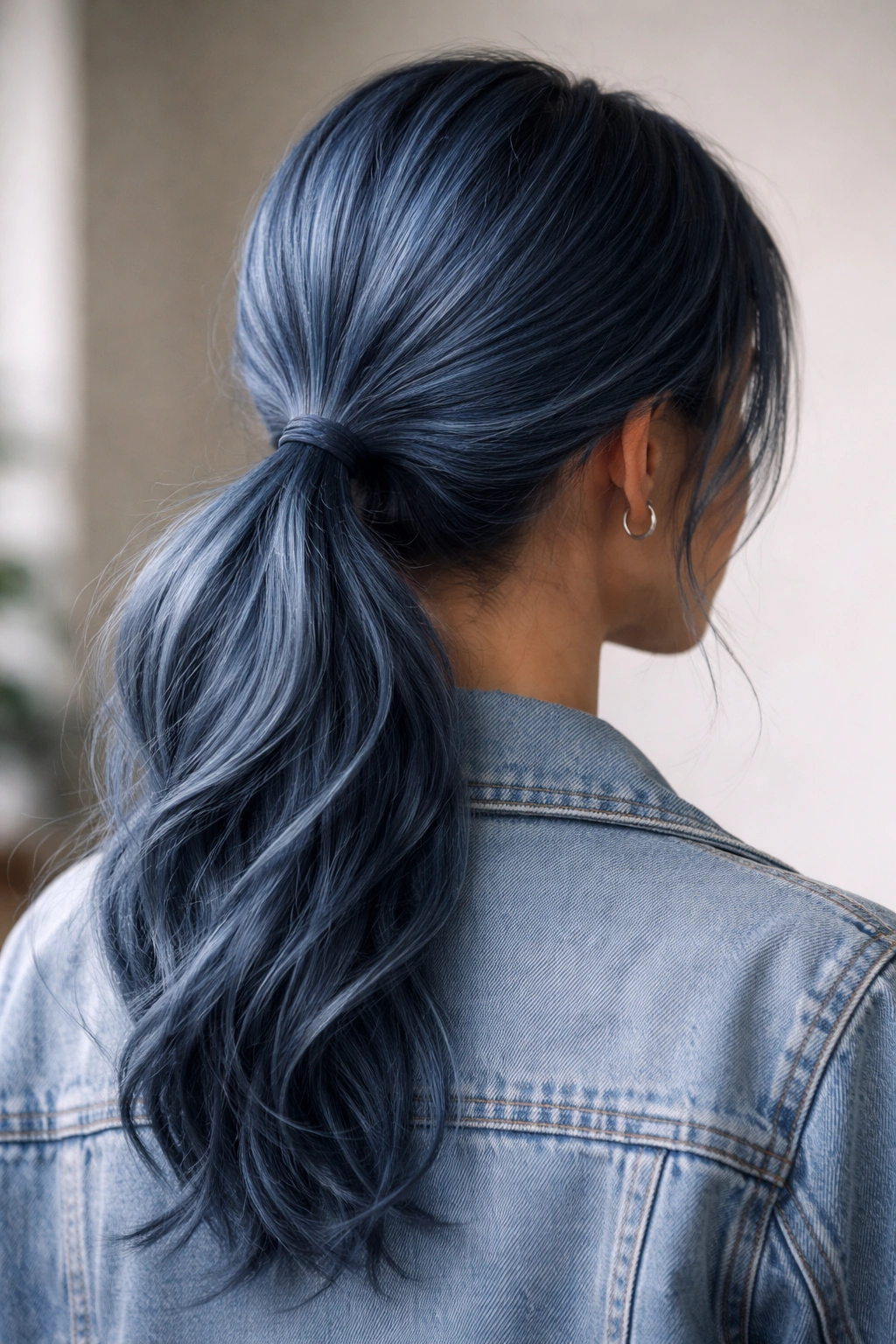
Denim blue is the jean-inspired shade — a medium, slightly muted blue that’s familiar and accessible but still undeniably a color choice. A low ponytail in denim blue feels casual and cool rather than high-fashion or experimental. This style pairs beautifully with an overall denim aesthetic (jeans, denim jackets, denim on denim) but also works as a soft entry point into blue hair for people who aren’t sure about committing to a brighter shade.
The Versatility of Denim Blue
Denim blue doesn’t require as light of a blonde base as turquoise or bright azure. A level 8 blonde works beautifully, and some denim formulas can even go on a level 7 blonde without looking muddy. This means less damage and processing time to achieve the color, which is a significant advantage if your hair is already fragile or color-treated.
A low ponytail works with denim blue because the style itself is so casual — there’s no pretension required. You can wear it sleek and smooth, or slightly textured and tousled. It works in loose waves, braids, or even a slightly messy low bun ponytail situation. The position (low on the neck rather than high on the crown) softens the impact and makes the color feel more approachable.
Why Denim Blue Bridges the Gap
- Easier to achieve without sacrificing full color payoff
- Lower maintenance than brighter blues — fading isn’t as noticeable against the slightly muted tone
- Universally flattering across multiple skin tones because of the balanced, medium depth
- Works in multiple styling contexts — casual, business casual, creative, social
- Great transition shade if you want to eventually go brighter or deeper blue
- Versatile ponytail positioning — works in high, mid, or low placements
Insider note: Denim blue and denim clothing are obviously a match, but denim blue also pairs surprisingly well with earth tones, warm neutrals, and jewel-tone accessories. Don’t feel locked into an all-denim aesthetic just because of your hair color.
8. Pastel Blue Ponytail
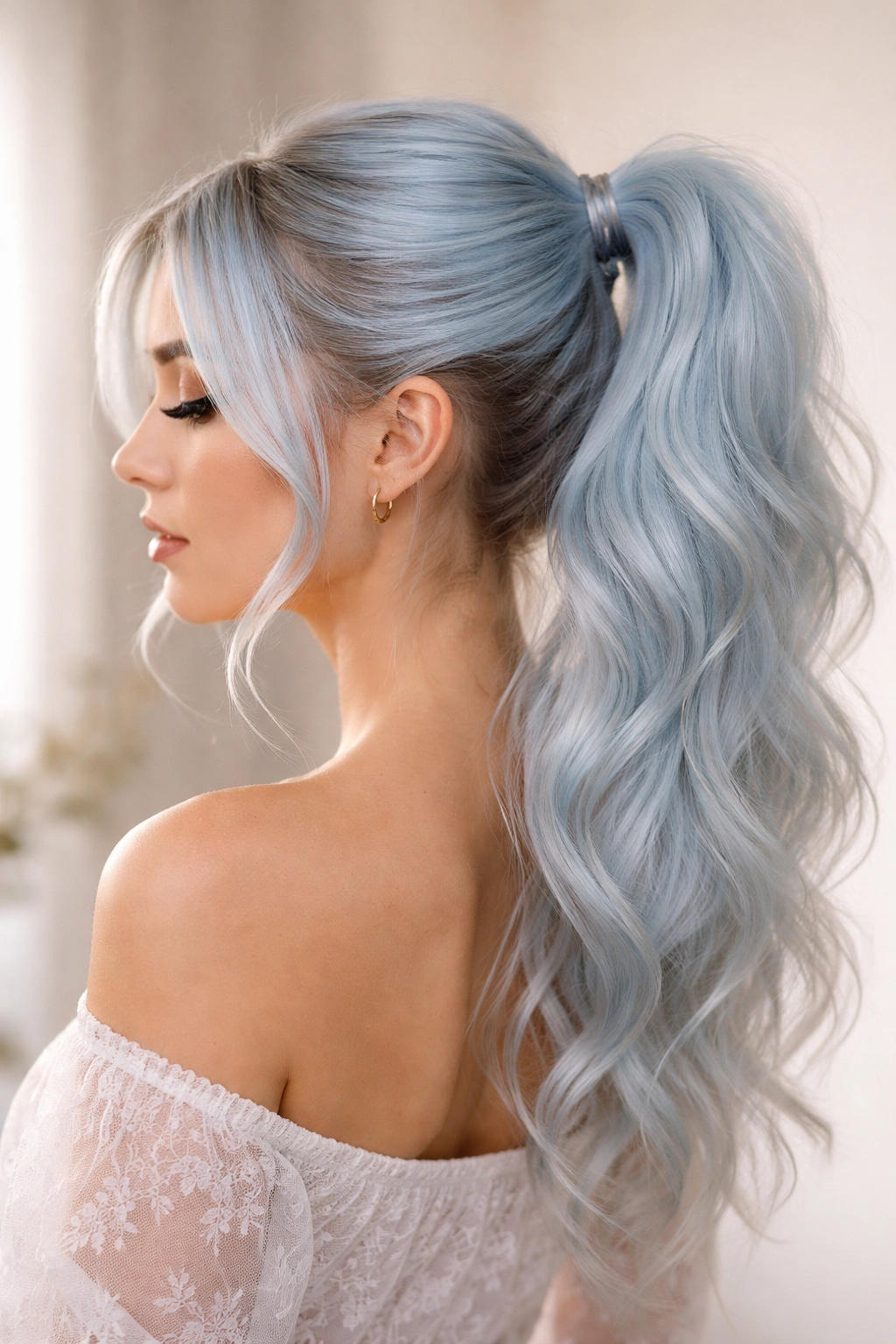
Pastel blue is the dreamy, light version — almost powder blue with soft, gentle vibes. It’s blue without intensity. Pastel blue works best in slightly textured, romantic ponytails rather than sleek, tight styles because it needs visual softness to match its color softness. This shade appeals to people who love the idea of blue but want something that feels less aggressive.
Achieving Pastel Blue
Pastel blue is the most challenging blue shade to create because it requires the lightest possible blonde base (level 10, nearly white) AND a careful approach to dye application. Using a full-strength semi-permanent dye typically creates a too-saturated color. Many colorists dilute the dye with conditioner to lighten it, or leave it on for a shorter time to achieve that pale, whisper-soft tone. This requires technical skill and willingness to experiment.
Alternatively, you can let a bright blue semi-permanent fade naturally until it reaches pastel territory, but this is unpredictable and depends on how often you wash your hair. A more controlled approach is working with a colorist who has experience creating pastels and can dial in the exact softness you’re after.
The Dreamy Quality of Pastel Blue
- Most romantic of all blue shades — pairs beautifully with soft textures, loose braids, and gentle styling
- Least impactful of the blue options in terms of turning heads, but equally elegant
- Requires the lightest hair so damage is a real consideration
- Fades relatively quickly into near-white, which some people find frustrating and others find beautiful
- Works across diverse skin tones because the softness is forgiving
- Best paired with soft styling — waves, loose braids, delicate accessories
9. Indigo Deep Blue Ponytail
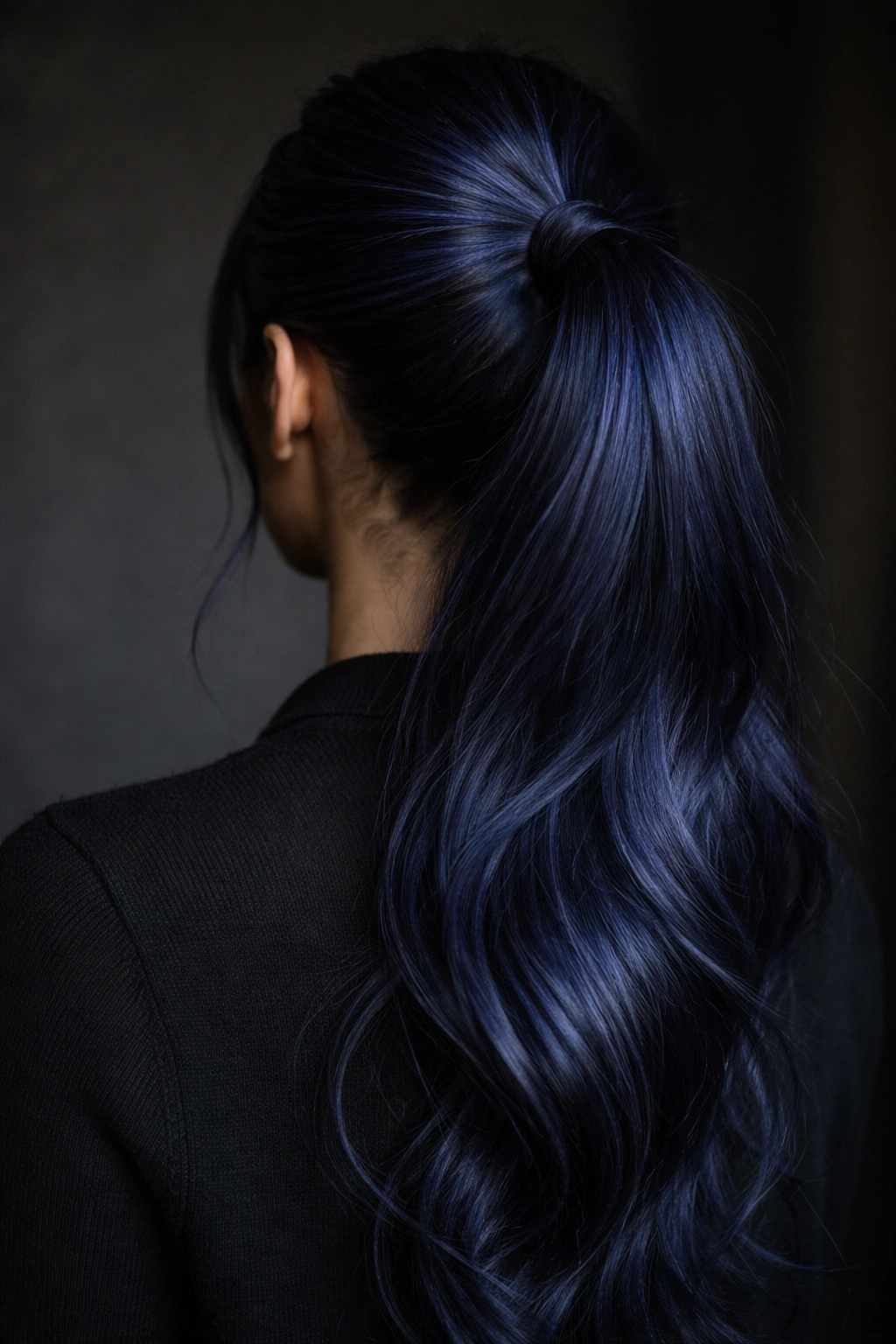
Indigo is the deep, rich, sophisticated blue — almost a dark teal or near-navy but distinctly blue rather than gray-leaning. Indigo works in multiple ponytail styles because the depth means it reads as a conscious color choice rather than an experimental phase. Think of indigo as the blue that takes itself seriously without being navy’s corporate sibling.
Working With Indigo’s Depth
Indigo doesn’t require as light of a base as bright blues. A level 8 blonde gives you a rich indigo. A level 7 blonde shifts it slightly more toward teal. Indigo formulas themselves vary — some lean more blue, others lean more teal or greenish. Get clear on exactly which direction your indigo tilts before applying it to your whole head.
The depth of indigo means regrowth is more forgiving than brighter blues. A half-inch of dark roots against indigo blue reads as an ombré or shadow-root effect rather than an obvious grown-out line. This makes indigo more wearable long-term if you’re not committed to frequent salon visits.
The Sophisticated Depth of Indigo
- Works in professional and casual contexts equally well
- Best fade trajectory of all blues — mutes gracefully into slate or soft teal rather than harsh green
- Requires moderate blonde base (level 8) so less damage and processing than bright blues
- Works in high ponytails, low ponytails, and mid-height ponytails without looking out of place
- Pairs beautifully with autumn and winter tones in clothing
- Longest-lasting blue shade before looking obviously faded
Pro tip: Indigo can sometimes look greenish in certain lighting. If you’re worried about this, ask your colorist to add a tiny touch of red or violet to the formula to counteract greenish undertones.
10. Dual-Tone Blue and Purple Ponytail
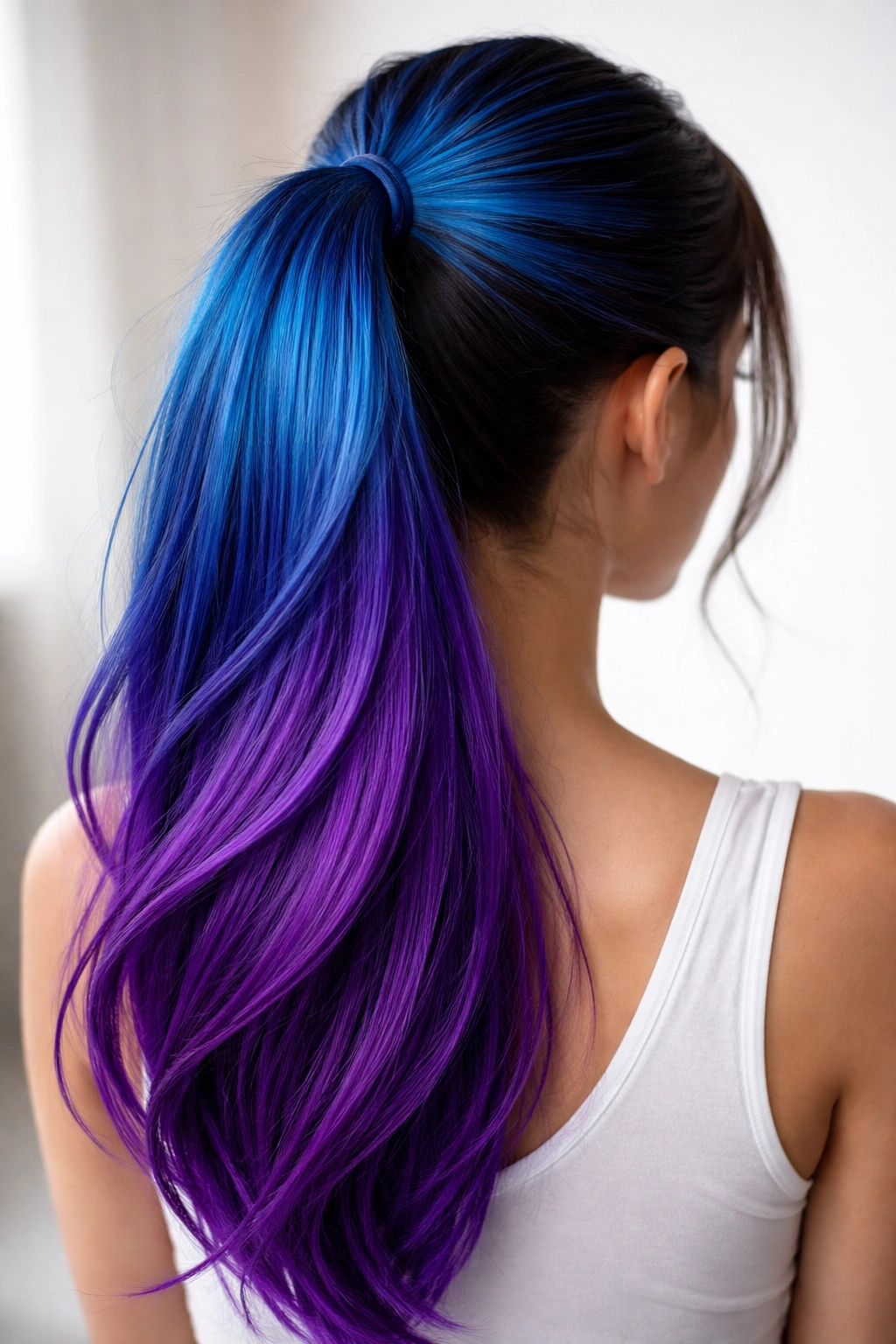
A dual-tone blue and purple ponytail literally commits to two colors, creating sections of distinct blue and distinct purple running through the hair. This might mean alternating stripes, half-and-half color blocking, or a planned placement where one section (like the top layer) is blue and another (like the bottom layer) is purple. It’s the most artistic and deliberately curated approach to blue ponytails.
Creating Intentional Dual-Tone
Achieving a true dual-tone requires either careful color-blocking (applying blue to one section and purple to another) or using temporary techniques like chalk, spray, or clip-in colored extensions for the purple while keeping permanent color for the blue. Some people use semi-permanent dyes in both shades, applying them to carefully divided sections. The key is making sure the colors are distinct enough that they’re visibly different, not muddy or blended.
You can structure the dual-tone in several ways: top layer blue and bottom layer purple, alternating vertical stripes, front sections blue and back sections purple, or even blue in your main ponytail and a purple accent braid wrapped around the base. The possibilities are limited only by your creativity.
The Artistic Freedom of Dual-Tone
- Most customizable approach — you get to invent your exact combination and placement
- Longest-lasting visual interest because the color combination never gets boring as it fades
- Requires more technical skill than a single-color approach, best done by an experienced colorist
- Appeals to artistic personalities who use their hair as a form of self-expression
- Can shift between looking intentional or accidental depending on how clean the color division is
- Offers the most conversation-starting potential — people are genuinely intrigued by intentional color combinations
Worth knowing: Blue and purple are close enough on the color wheel that they can blend into murky blue-violet if they’re not kept separate or if they’re applied without clear boundaries. Work with a colorist who’s done multi-tone color work and knows how to keep the colors distinct and vibrant.
Final Thoughts
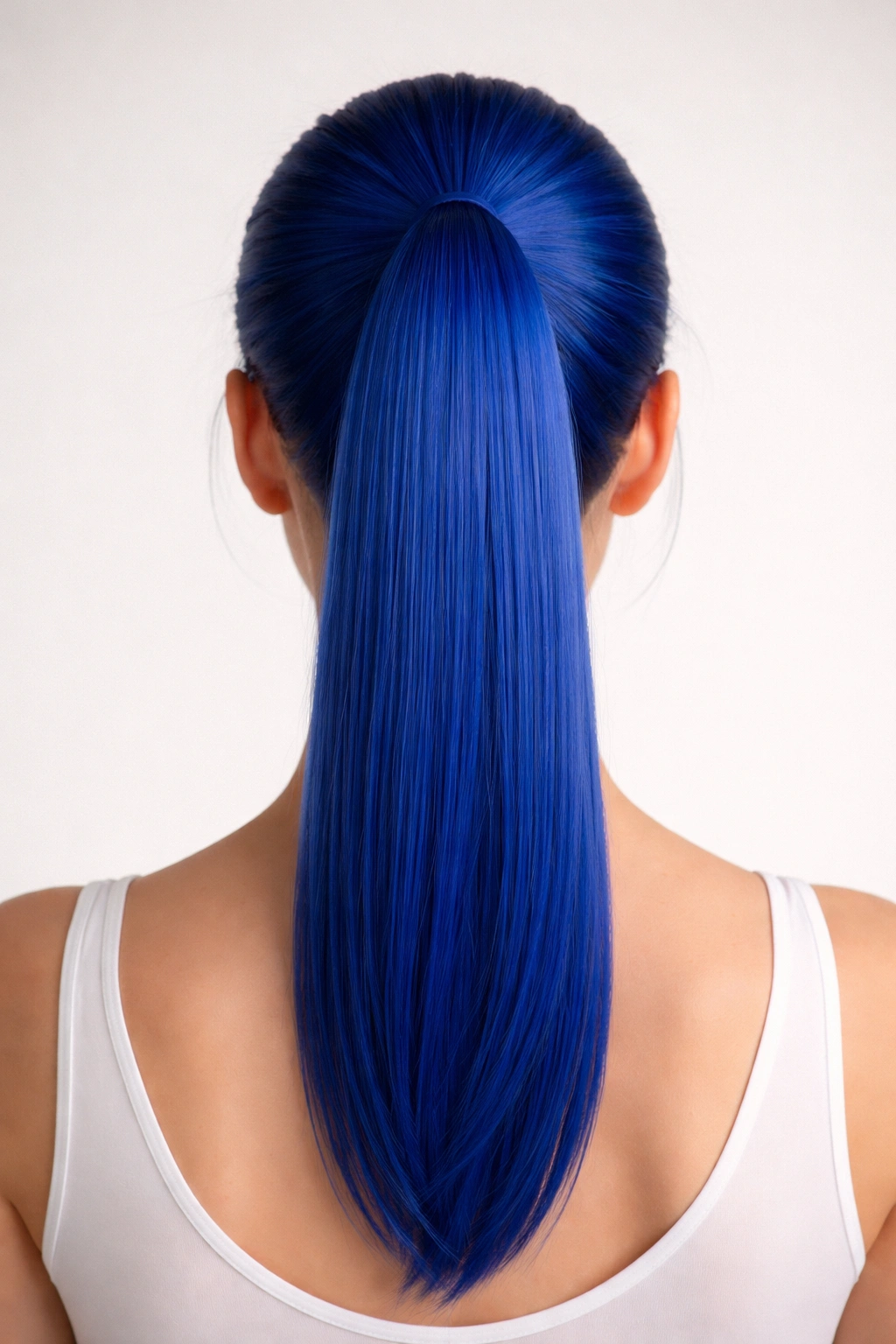
Blue ponytails aren’t just a hair color choice — they’re an identity statement. Whether you go with the sophistication of navy, the playfulness of turquoise, the romanticism of periwinkle, or the artistic boldness of dual-tone blue and purple, you’re saying something definitive about how you move through the world.
The most important thing is choosing a shade and style combination that feels genuinely like you, not just what looks cool in photos or what trends suggest. A blue ponytail that aligns with your personality, lifestyle, and maintenance capacity will feel easy and natural to wear. One that doesn’t quite fit will feel like a costume you’re performing in rather than a version of yourself.
Maintenance matters more than most people realize when it comes to keeping blue hair looking fresh. Invest in the right products (color-safe, sulfate-free, ideally with color-depositing formulas), limit heat styling and washing frequency, and protect your hair from chlorine and sun exposure. A blue ponytail maintained beautifully looks incredible for months. One that’s neglected fades into a dull, greenish-gray that’s hard to love.
Most importantly, have fun with it. A blue ponytail is bold and visible enough that you’re giving yourself permission to be noticed. Wear it with that intention, and you’ll carry a different kind of confidence than you did before.
