



Locs are a stunning canvas for creative styling, but the reality is that not every ponytail you see on social media translates well to locked hair. The weight, thickness, and unique structure of locs require styling approaches that work with their texture rather than against it. Twist ponytails sit right in that sweet spot—they look undeniably polished while respecting the integrity of your locs and actually distributing weight more evenly than some other updo styles.
What makes twist ponytails so effective for locs is how the twisting motion locks everything into place naturally. You’re not relying solely on tension or elastic bands to hold your style; the twisted sections themselves become structural elements. This means your ponytail stays put through movement, humidity, and daily wear without requiring the kind of aggressive tension that can stress your locs at the roots. Whether you’re looking for an everyday protective style or something that transitions seamlessly from the office to an evening event, twist ponytails deliver on both style and practicality.
The following styles showcase the versatility available when you combine twists with ponytails. Some are intricate and statement-making, while others are refreshingly simple—perfect for those mornings when you need something polished in under ten minutes. Each style works beautifully on mature locs, and many adapt well to locs of varying lengths and thicknesses.
1. The Two-Strand Twisted Crown Ponytail
This style wraps twisted sections around the sides of your head, converging into a high ponytail at the crown. It’s the kind of updo that looks like you spent an hour styling when you actually invested maybe fifteen minutes.
How the Two-Strand Twist Works on Locs
Two-strand twists grip your locs naturally because the twisted structure follows the shape of your locked hair. Unlike styles that require slicked-back smoothness, this approach celebrates the texture of your locs while creating defined, intentional lines. The twists don’t need any product to stay in place—they hold themselves.
Steps to Create This Look
Start by sectioning hair from one temple across to the opposite ear, creating a curved line above your ear. Take the first section and divide it into two smaller locs. Twist those two strands around each other, keeping tension even and consistent as you move toward the back of your head. Repeat on the opposite side, mirroring the first side for balanced symmetry. Gather both twisted sections at the crown along with loose locs from the middle, and secure everything into a high ponytail with a thick elastic or loc tie.
Best For
Oval and heart-shaped faces, professional settings, and occasions where you want polished without overdone. The lifted crown creates the illusion of more height, which balances wider face shapes beautifully.
Pro tip: Secure each twisted section with a small loc cuff or wrapped thread before gathering them into the ponytail—it keeps everything crisp and adds visual interest.
2. The Spiral Twist Side Ponytail
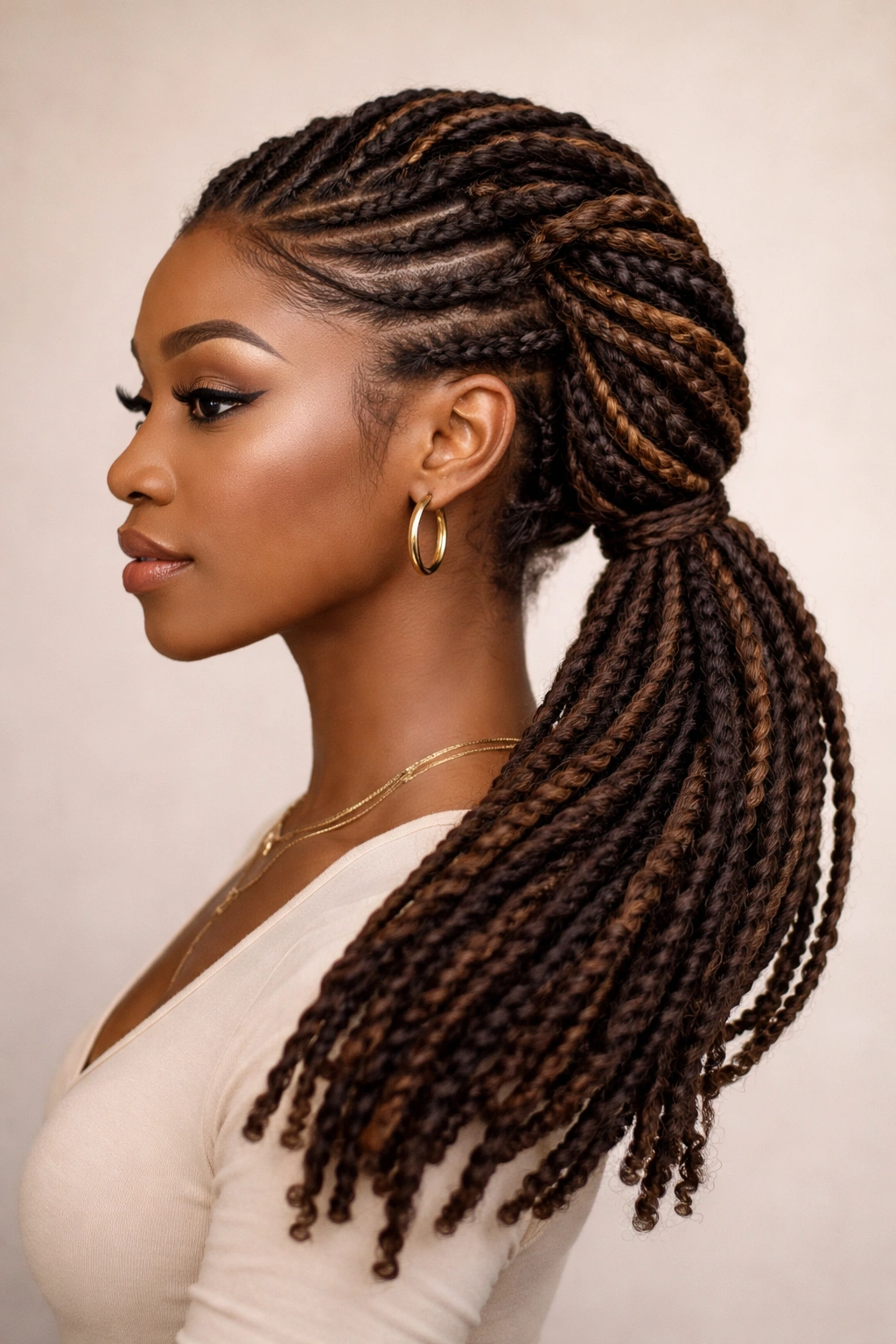
Instead of pulling straight back, this style curves locs around one side of your head in a spiral pattern, ending in a side ponytail that sits at shoulder height or lower. It’s romantic and contemporary all at once.
Why This Style Works for Locs
The spiral motion naturally distributes the weight of your locs more evenly across your scalp than a traditional center-parted ponytail. Side styles also give your hairline some breathing room, which is particularly important if you’re protective styling regularly. The twisted spiral becomes the focal point rather than the locs themselves, which can actually make this style easier to maintain over several days.
Creating the Spiral Effect
Part your hair on one side—whichever side feels natural for you. Starting at the temple on the fuller side of the part, begin twisting two locs together. As you move toward the back of your head, gradually add more locs into the twist, absorbing them as you spiral. The twist should curve gently around the back of your head like you’re following an invisible spiral. Gather everything into a low side ponytail, allowing some face-framing locs to fall loose if you prefer a softer look.
Best For
All face shapes, but especially beneficial if you have an asymmetrical face or want to draw attention to one side. Ideal for date nights or when you want something more romantic than your everyday go-to style.
3. The Double Twisted Ponytail Stack
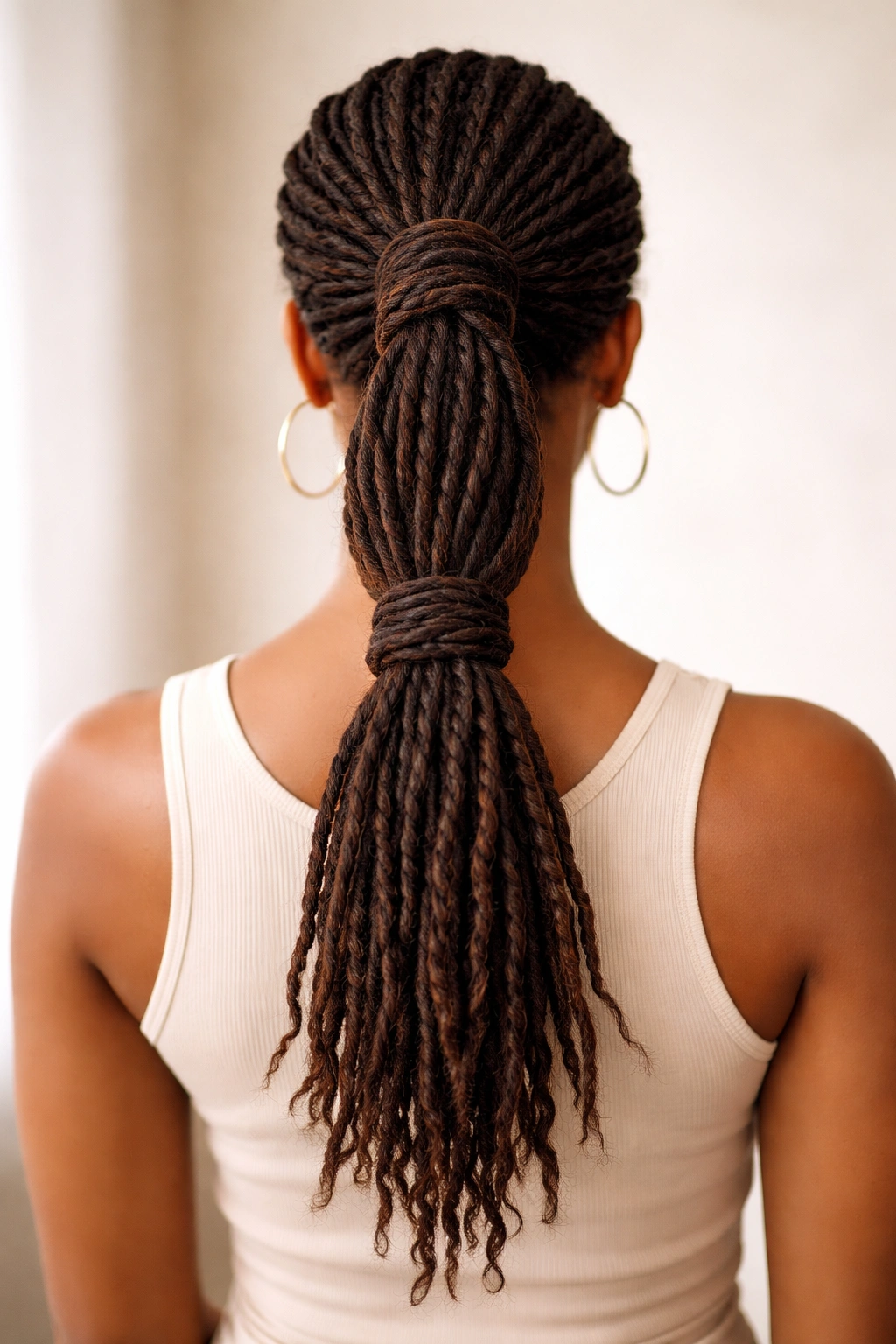
Two separate ponytails sit one above the other, each twisted section merging into the next. It sounds complex, but the result is a structured, architectural style that photographs beautifully.
The Visual Impact and Structure
A stacked ponytail naturally draws upward, making it particularly flattering for longer faces. The two-tier design also distributes weight better than a single high ponytail for people with thicker or heavier locs. You’re essentially creating two anchor points instead of one, which means less strain on the roots where the ponytail pulls tightest.
Building Your Two-Tier Style
Create a foundation by twisting two locs together at the crown. Secure this first twisted section into a small high ponytail with an elastic. Below that, select another group of locs and twist them together, feeding this second twisted section into a second elastic positioned directly below the first. The two ponytails sit vertically stacked, creating a elongated line down the back of your head.
Best For
Occasions when you want to make a statement, thick or voluminous locs, and anyone who loves architectural precision in their styling. This works especially well for events where you know you’ll be photographed.
4. The Flat-Twisted Undercut Ponytail
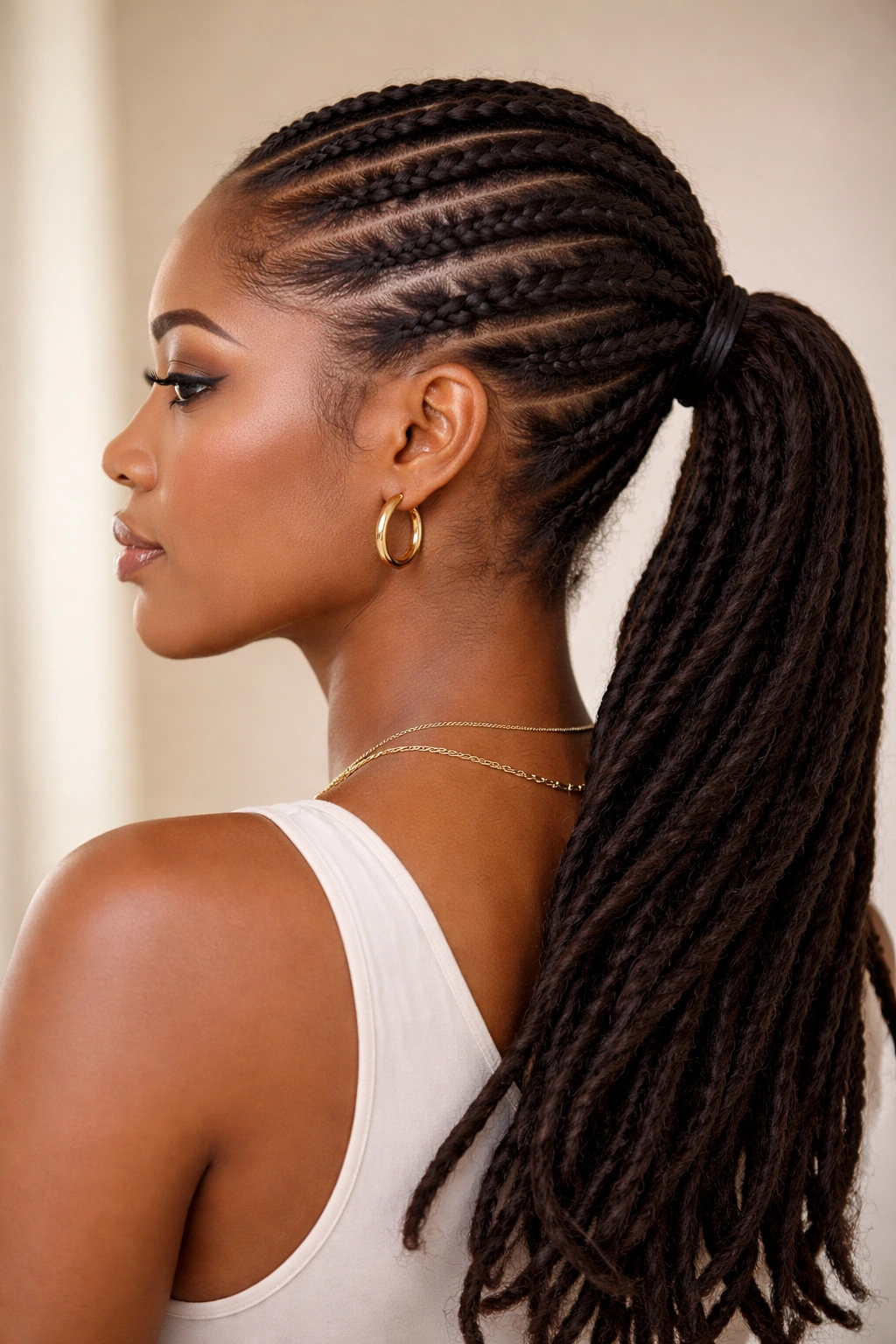
Flat twists run along the sides and back of your head, creating clean geometric lines that merge into a low or mid-height ponytail. This style reads as intentional and modern.
What Makes Flat Twists Different
Flat twists sit close to the scalp in a way that regular two-strand twists don’t. They create a grid-like pattern across your head, which is particularly striking on locs because each individual loc remains visible and defined rather than blending together. This style also keeps hair completely off your face and neck, making it ideal for warm weather or when you want maximum visibility.
How to Flat Twist Into a Ponytail
Section your hair into 3-4 parallel rows. Starting at your hairline, take the first section and flat-twist it toward the back of your head, keeping tension even and close to the scalp. Repeat with each row, creating parallel lines. When you reach the nape of your neck or the back of your head—depending on how you want the ponytail to sit—gather all the flat-twisted sections into a single ponytail and secure with an elastic.
Best For
Gym or sports wear, casual work environments, hot weather, and anyone who appreciates clean, geometric styling. This also works beautifully for natural texture showcases since the individual locs remain clearly visible.
5. The Twisted Crown Wrap Ponytail
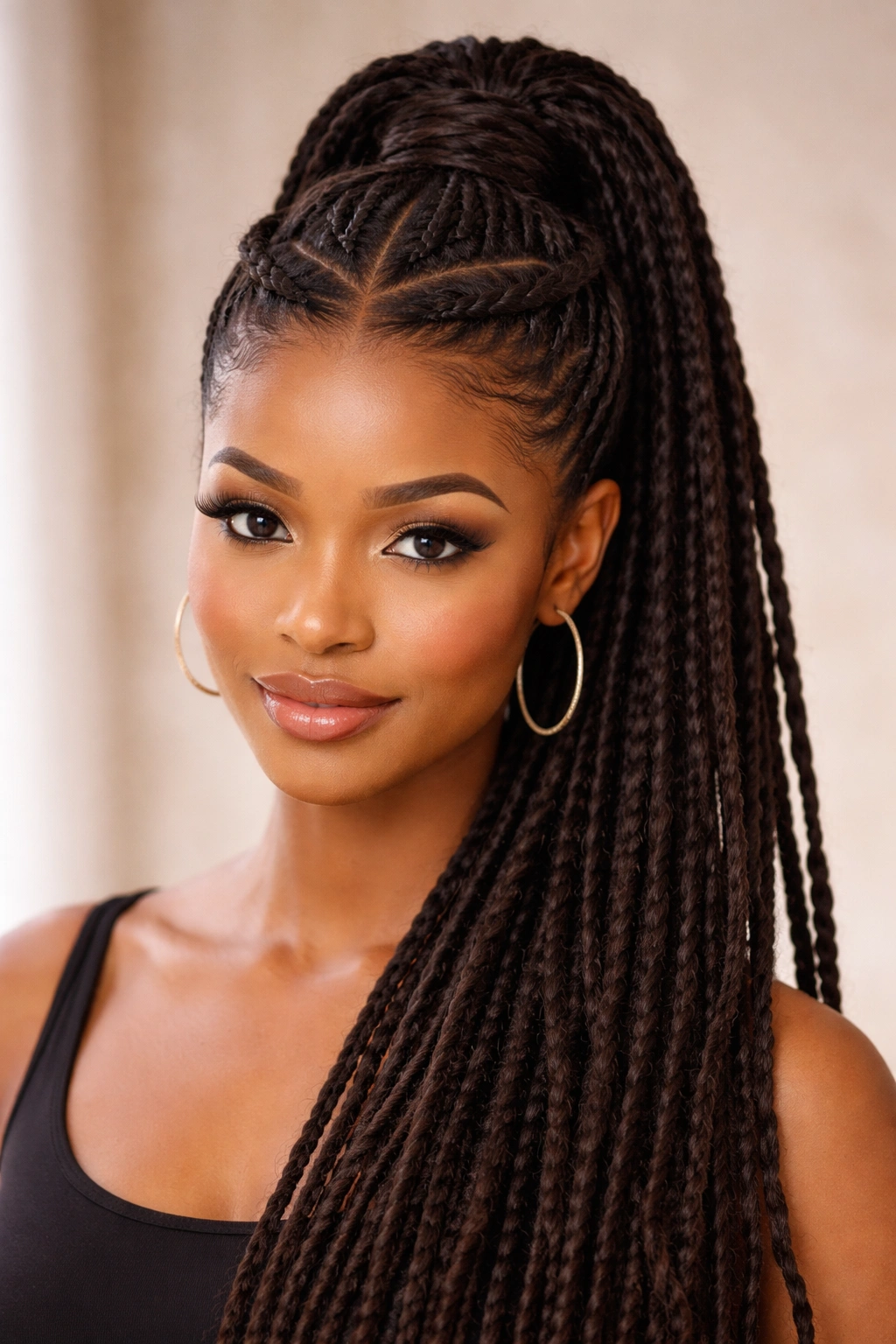
Two twists wrap around the crown of your head like a halo before converging into a central ponytail. It’s regal without being over the top.
The Psychology of Crown Styling
Our eyes naturally track upward when we see crown-based designs. A twisted crown wrap essentially frames your face from above, which is incredibly flattering because it draws attention toward your facial features rather than pulling focus downward. For locs, this also has the practical benefit of lifting hair away from your shoulders and neck.
Creating a Halo Effect
Start with a section of locs at one temple. Twist them as you would for a standard two-strand twist, but instead of securing at the back, sweep this twisted section across the crown of your head toward the opposite temple, like you’re creating a twisted hair crown. Do the same on the other side, creating a matching twisted section that also wraps across the crown. Where the two twisted sections meet in the middle or back, gather them along with remaining loose locs into a high or mid-height ponytail.
Best For
Formal events, photography, and moments when you want to feel elevated. The crown wrap naturally photographs beautifully from any angle, making it perfect for occasions where images will be captured.
6. The Woven Twist Ponytail
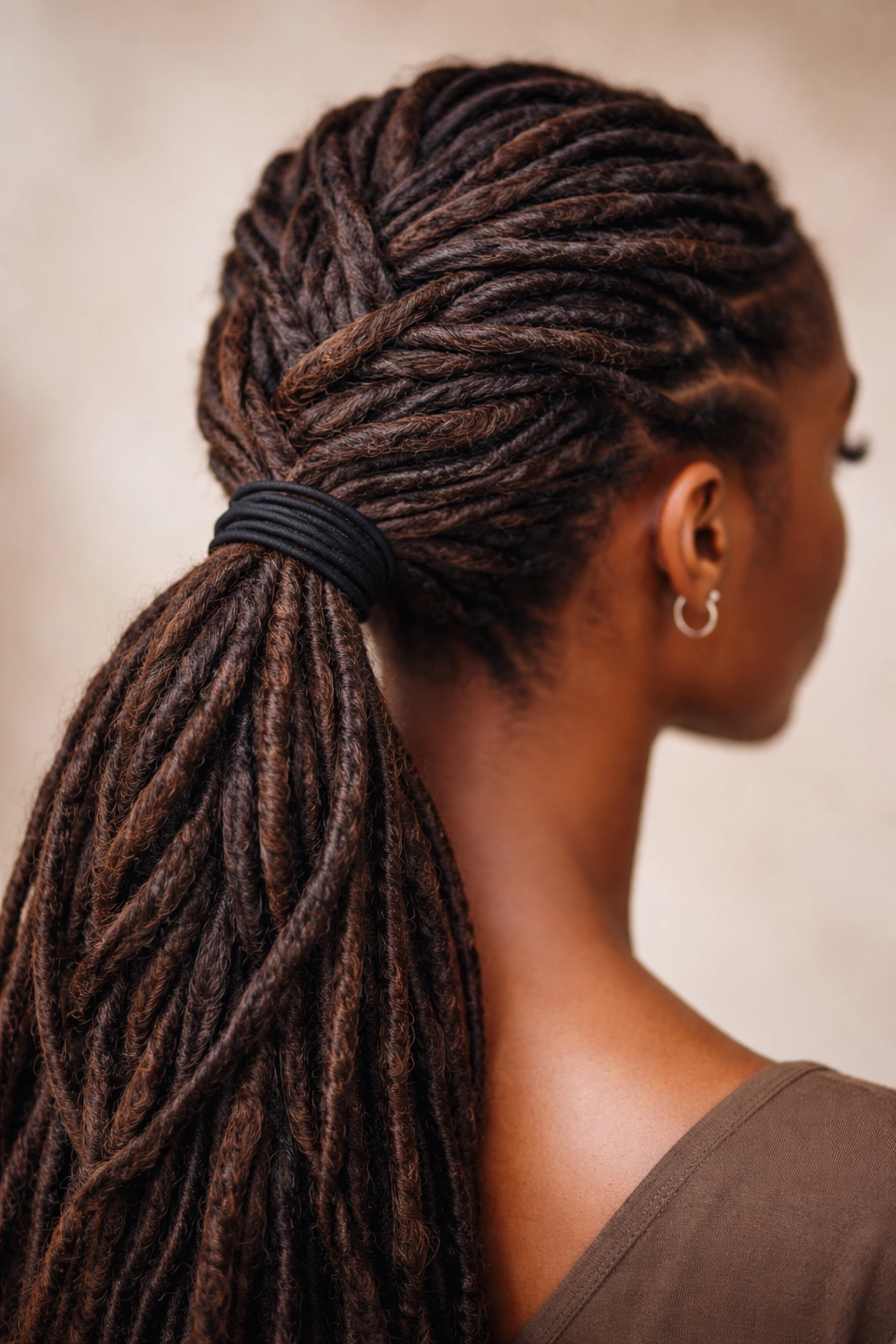
Instead of twisting just two locs together, you weave multiple locs in and out of each other before securing into a ponytail. The result is intricate and eye-catching without looking complicated once you understand the technique.
Understanding the Weaving Motion
Weaving is different from regular twisting because strands move in and out rather than around each other. With locs, this creates a checkerboard or interlaced pattern that catches light differently than a standard twist. Weaving also tends to be slightly more secure than twisting because the interlocked pattern naturally resists coming undone.
Steps to Weave Your Locs
Select 3-4 locs to work with. Divide your attention into three sections. Cross the rightmost section over the center, then cross the leftmost section over the new center, continuing this over-under-over pattern as you move down the length of the sections. Once you’ve woven the length you want, gather the woven section along with additional locs into a ponytail and secure.
Best For
Anyone who loves intricate details, special occasions, and people with medium to thick locs that hold pattern well. This style also works beautifully in color if you have two-toned locs, since the weaving pattern highlights the contrast.
7. The High-Volume Twisted Ponytail with Added Faux Locs
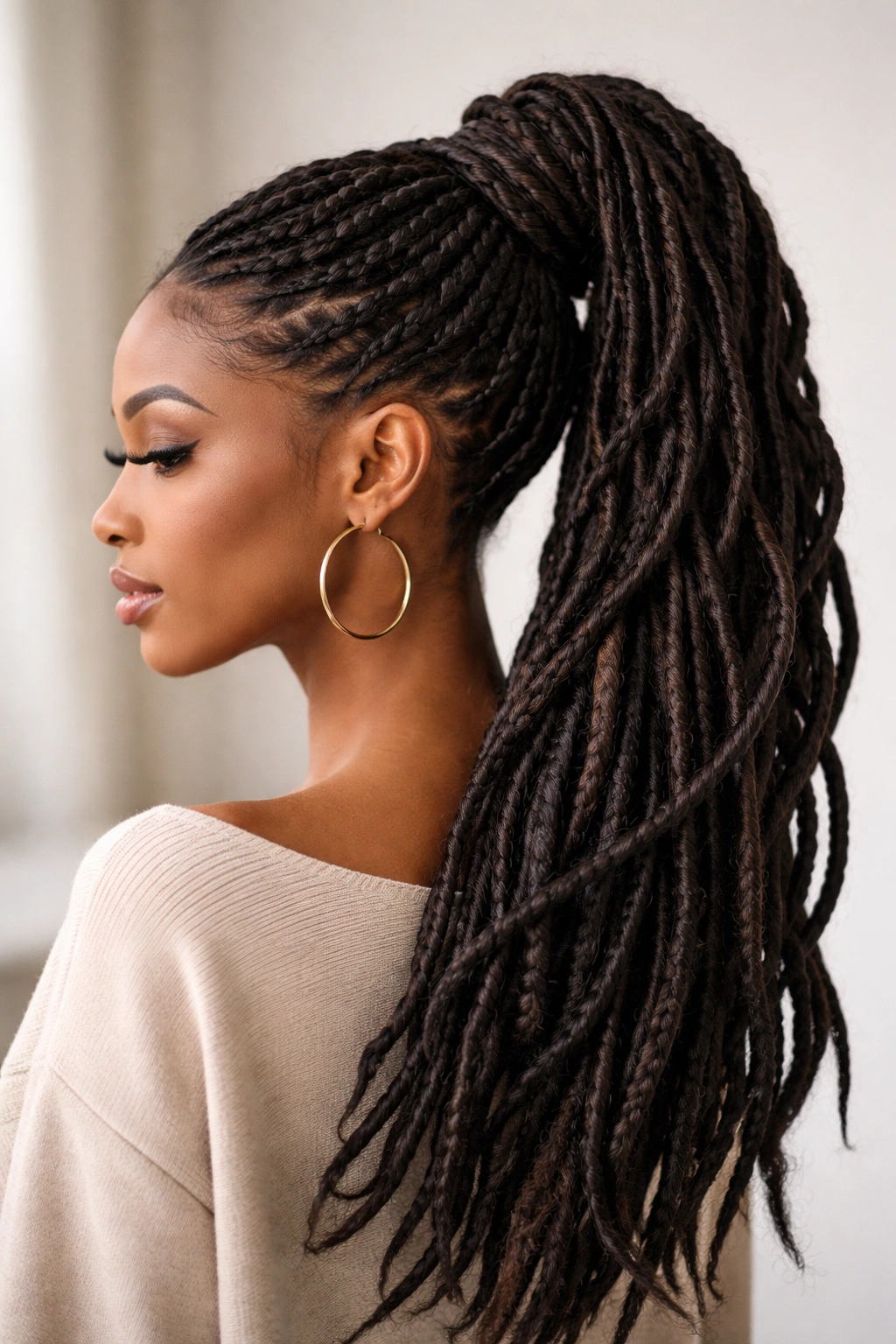
Layer your twisted ponytail with synthetic faux locs or added hair for extra fullness and length. This approach works beautifully if your locs are thinner or if you want a dramatic temporary style.
Why Adding Volume Is Strategic
Fine or thin locs require a different approach than thick, voluminous ones. Adding synthetic hair doesn’t stress your natural locs while still allowing you to achieve the full, statement-making style you might be visualizing. The added faux locs also give you styling options that might not be possible with your natural hair length alone.
How to Integrate Added Hair Safely
Start by creating your twisted ponytail as you normally would. Once secured, divide your ponytail into sections. Take a faux loc or added hair piece and wrap it around a section of your natural locs, securing it with thread or a small elastic. Distribute the added pieces throughout your ponytail for even fullness rather than clustering them in one area. You can also twist the added pieces together with your natural locs before securing.
Best For
Protective styling when you want to shift your look temporarily, special events, people with fine locs, and anyone experimenting with length or fullness before committing to growing their locs longer.
8. The Zigzag Twisted Ponytail
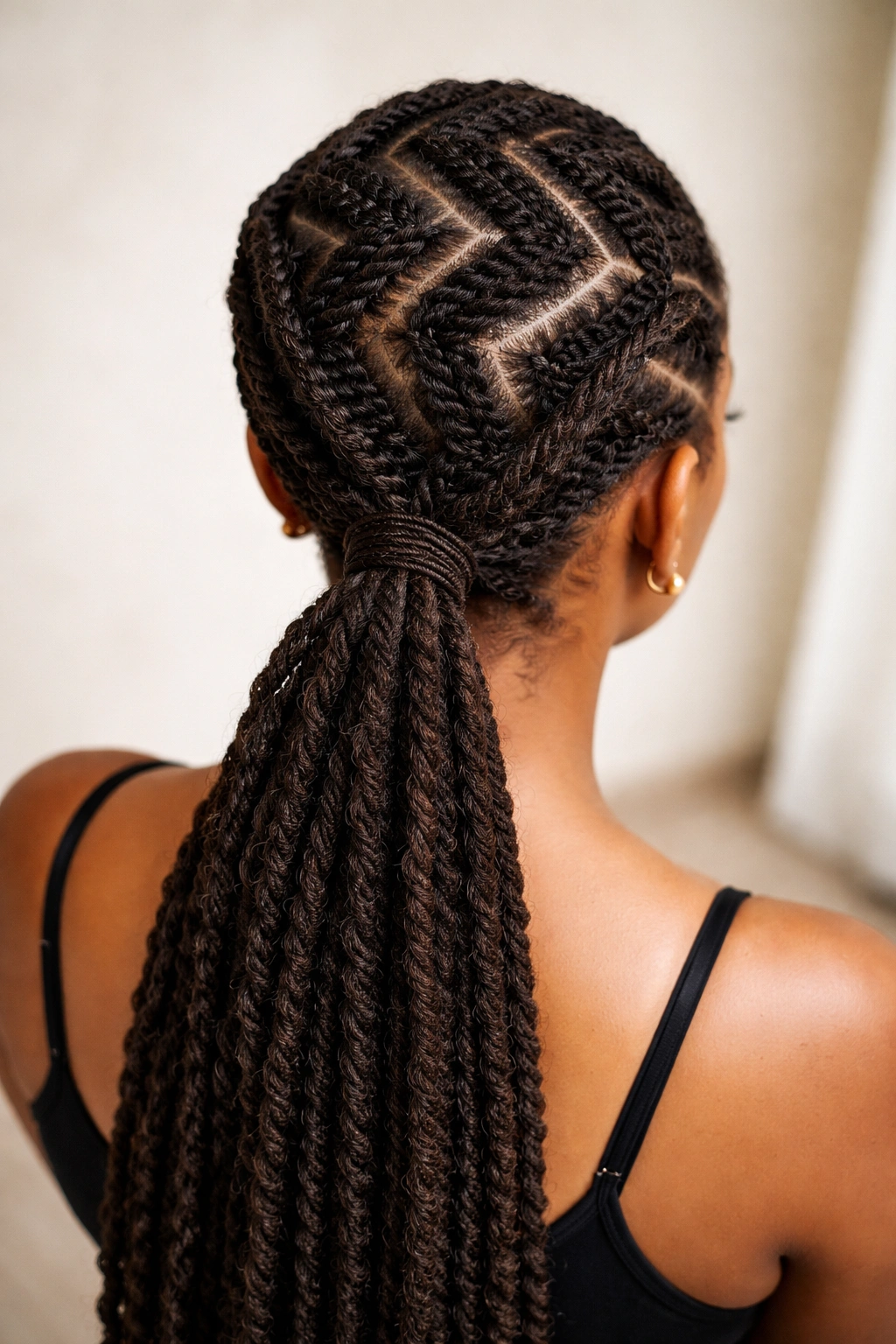
Twisted sections follow a zigzag pattern across your head before merging into a central ponytail. It’s playful and dimensional.
The Visual Advantage of Zigzag Patterns
Zigzag or chevron patterns naturally draw the eye in a slow, deliberate path rather than a straight line. This makes your style feel more interesting and intentional. On locs, a zigzag twisted pattern also distributes tension unevenly across the scalp in a way that actually reduces stress on any single area—each direction change shifts where the pull is concentrated.
Mapping Your Zigzag
Imagine three parallel lines running from your hairline to the back of your head. The first twisted section follows the left line, the second dips toward the right, and the third comes back toward the left, creating a zigzag motion. Each twisted section flows into the next so the overall path resembles the letter Z or a lightning bolt. Gather all sections into a ponytail at the nape of your neck or lower back depending on your preference.
Best For
Creative self-expression, casual styling, and anyone who likes their hair to tell a story about their personality. This works particularly well for locs in fun colors, since the zigzag pattern will showcase any color variation beautifully.
9. The Sleek Low Twisted Ponytail with Edges
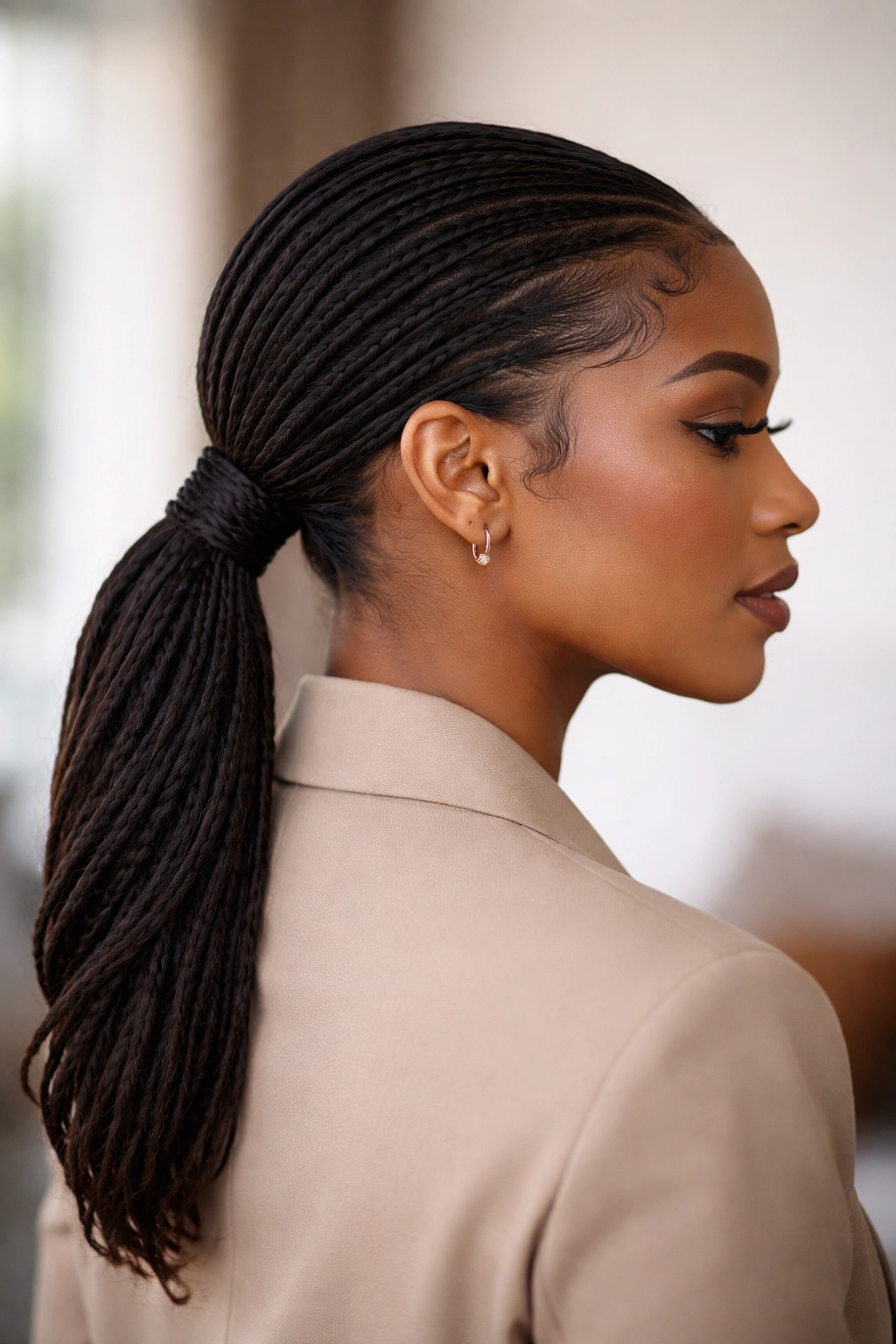
A smooth, deliberately styled low ponytail with twisted sections and groomed edges creates an understated elegance that works in virtually any setting.
Why Low Ponytails Suit Locs
Low ponytails feel refined without appearing overly formal. They also place minimal stress on your hairline and roots compared to high, tightly pulled styles. For locs, a low placement actually allows the unique beauty of your individual locks to remain visible rather than being compressed at the crown.
Creating Groomed Edges
Part your hair to one side or down the middle, depending on what feels right. Twist sections on either side as you would for a standard twist ponytail, keeping everything smooth and intentional. Instead of pulling into a high crown ponytail, gather twists and loose locs into a low ponytail positioned at the nape of your neck or slightly below. Use edge control to smooth any flyaways around your hairline and temples, creating a finished, polished appearance.
Best For
Workplace settings, professional events, and any occasion where you want to look put-together without appearing overdone. This is also an excellent everyday style that requires minimal product and maintenance.
10. The Bubble Twisted Ponytail
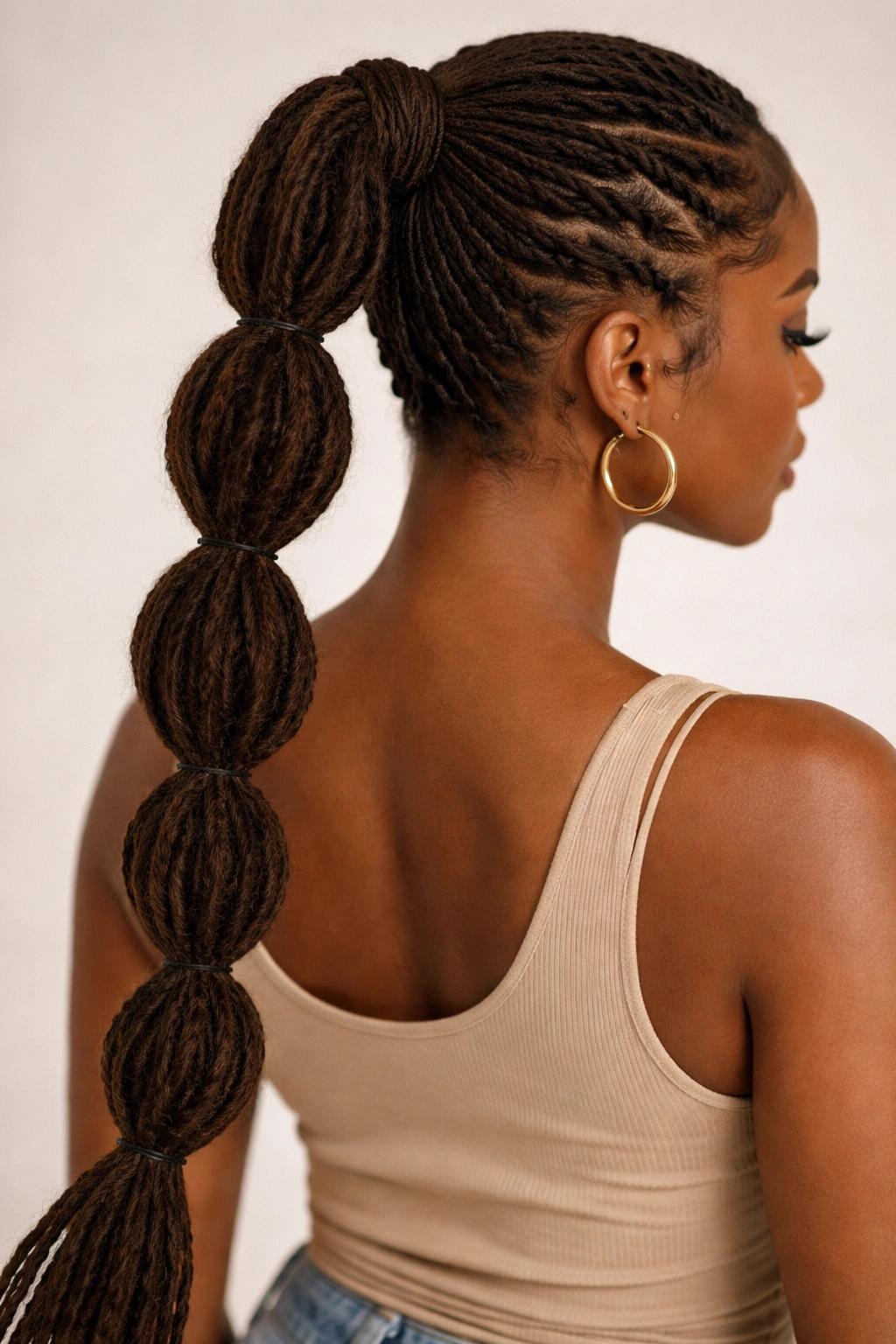
Sections of your twisted ponytail are gathered and secured with small elastics at intervals, creating bubble-like pockets of fullness down the length of your ponytail.
How Bubbles Change the Game
A bubble ponytail takes a standard updo and adds dimension and visual interest without requiring any complicated twisting or weaving technique. Each bubble creates a natural pause point, which actually helps distribute the weight of your locs more evenly and reduces strain on the main elastic holding your ponytail. The bubbles also add movement and playfulness to what might otherwise be a very structured style.
Creating Perfectly Sized Bubbles
Secure your twisted ponytail with an elastic as you normally would. Roughly 2-3 inches below that first elastic, gather a small section of hair from within the ponytail and secure it with another elastic, creating the first bubble of fuller hair. Repeat this at regular intervals down the length of your ponytail. The spacing between bubbles should be consistent for a polished look, though you can vary it if you prefer an organic, less structured appearance.
Best For
Fun, youthful styling, casual events, and anyone who wants to look playful without sacrificing elegance. Kids and teens particularly love this style because it’s Instagram-friendly while being easy to maintain.
11. The Twisted Ponytail with Wrapped Detail
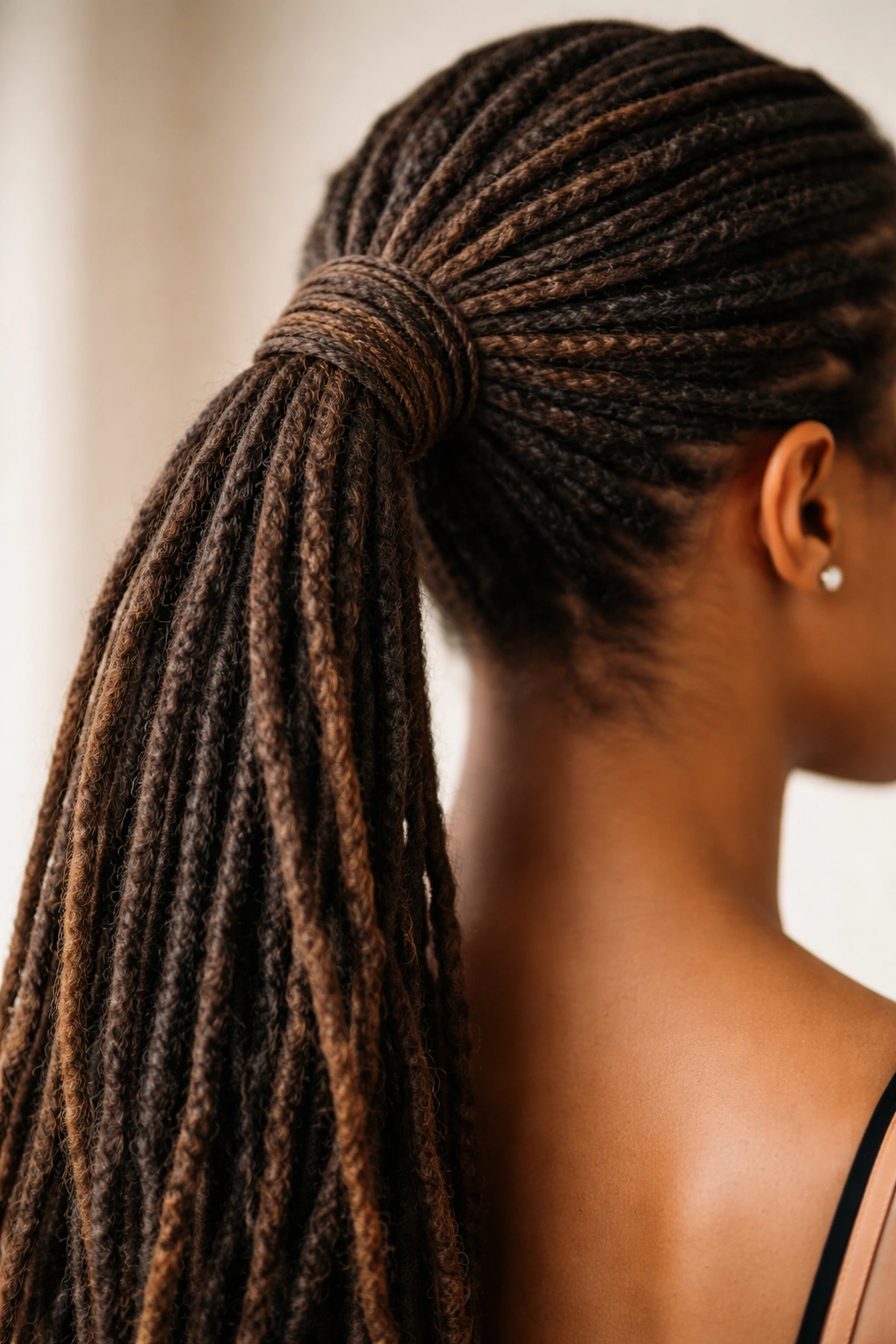
A thin section of twisted hair (or faux locs) wraps around the base of your ponytail, covering the elastic and adding a finished, intentional look.
Why the Wrap Matters
The wrap serves both a functional and aesthetic purpose. Functionally, it covers your elastic, which protects your locs from direct friction with the rubber band. Aesthetically, it transforms a basic ponytail into something that looks professionally styled. The wrapped detail signals that you’ve paid attention to the small touches that separate polished from just-thrown-together.
Applying a Wrapped Base
Create your twisted ponytail and secure it with an elastic. Take a small twisted section of your own locs or a piece of faux loc, and wrap it horizontally around the elastic at the base of your ponytail. Secure the wrapped section by threading it through or under your ponytail, or by securing it with a small elastic or thread that won’t be visible. The wrap should completely hide your elastic band.
Best For
Dressing up an otherwise basic ponytail, professional settings, and anyone who believes styling is in the details. This small addition elevates even a rushed, thrown-together ponytail into something that appears intentional and refined.
12. The Multi-Directional Twisted Ponytail
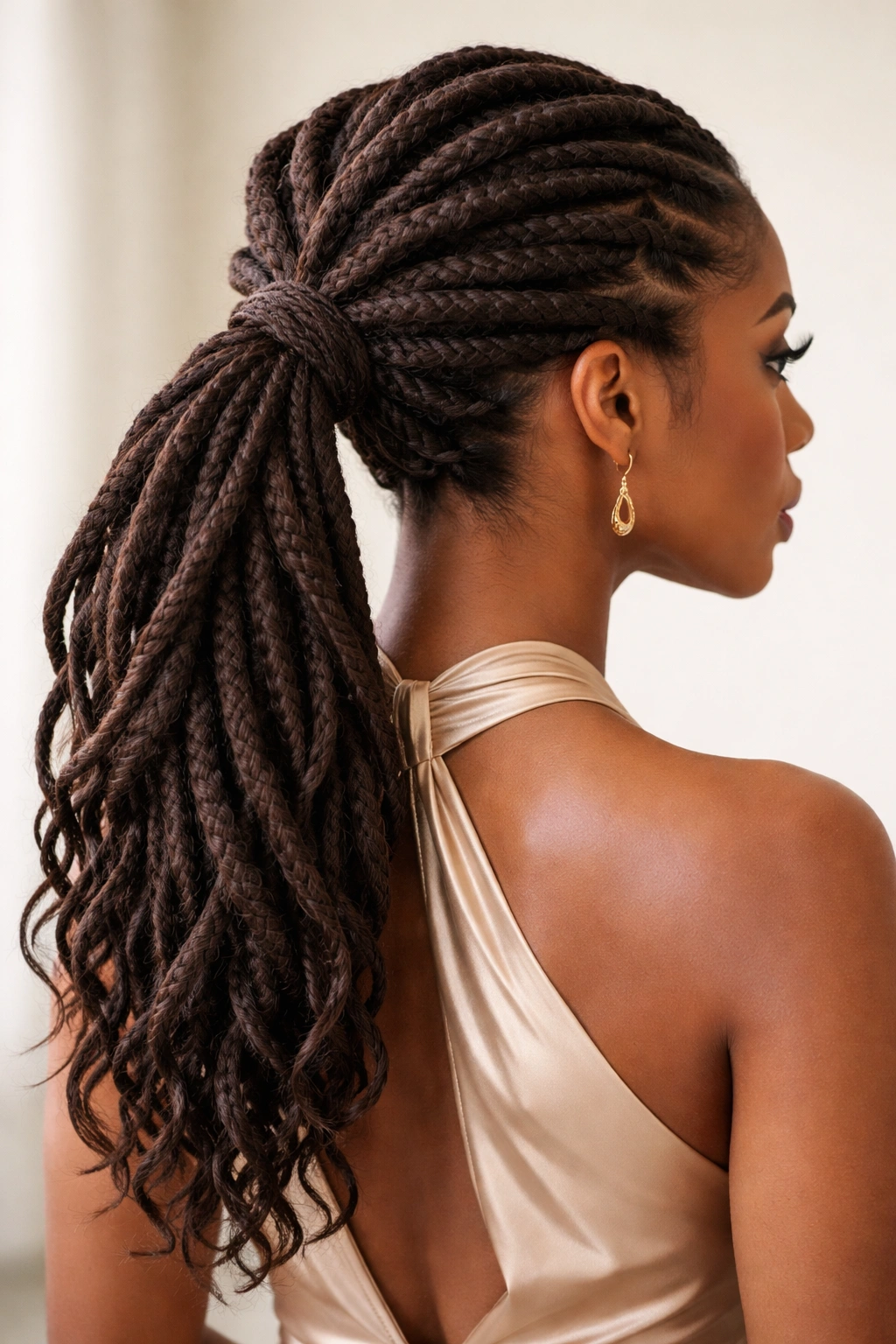
Twisted sections come from different directions—sides, top, and back—and converge into a single ponytail, creating a style with movement and dimension from every angle.
The Complexity That Looks Effortless
A multi-directional ponytail actually requires you to think about your hair from multiple angles rather than treating it as a single, flat surface. You’re twisting sections that approach your ponytail from the front, the sides, and the back, which means your completed style looks three-dimensional and interesting from every viewpoint—not just from the front or back.
Building Your Multi-Directional Style
Start by twisting a section from the right temple toward the back. Simultaneously, twist a section from the left temple toward the back. Create another twisted section from the crown moving downward, and potentially one more from the lower back moving upward. All these twisted sections should flow toward a central point where you’ll secure your ponytail. The converging twists create natural, organic lines that follow the contours of your head.
Best For
Anyone who wants a style that’s interesting from any angle, special occasions, and people who love the architecture and geometry of intricate styling. This style photographs beautifully and works well for events where you’ll be moving around and want your style to look intentional from multiple perspectives.
Final Thoughts
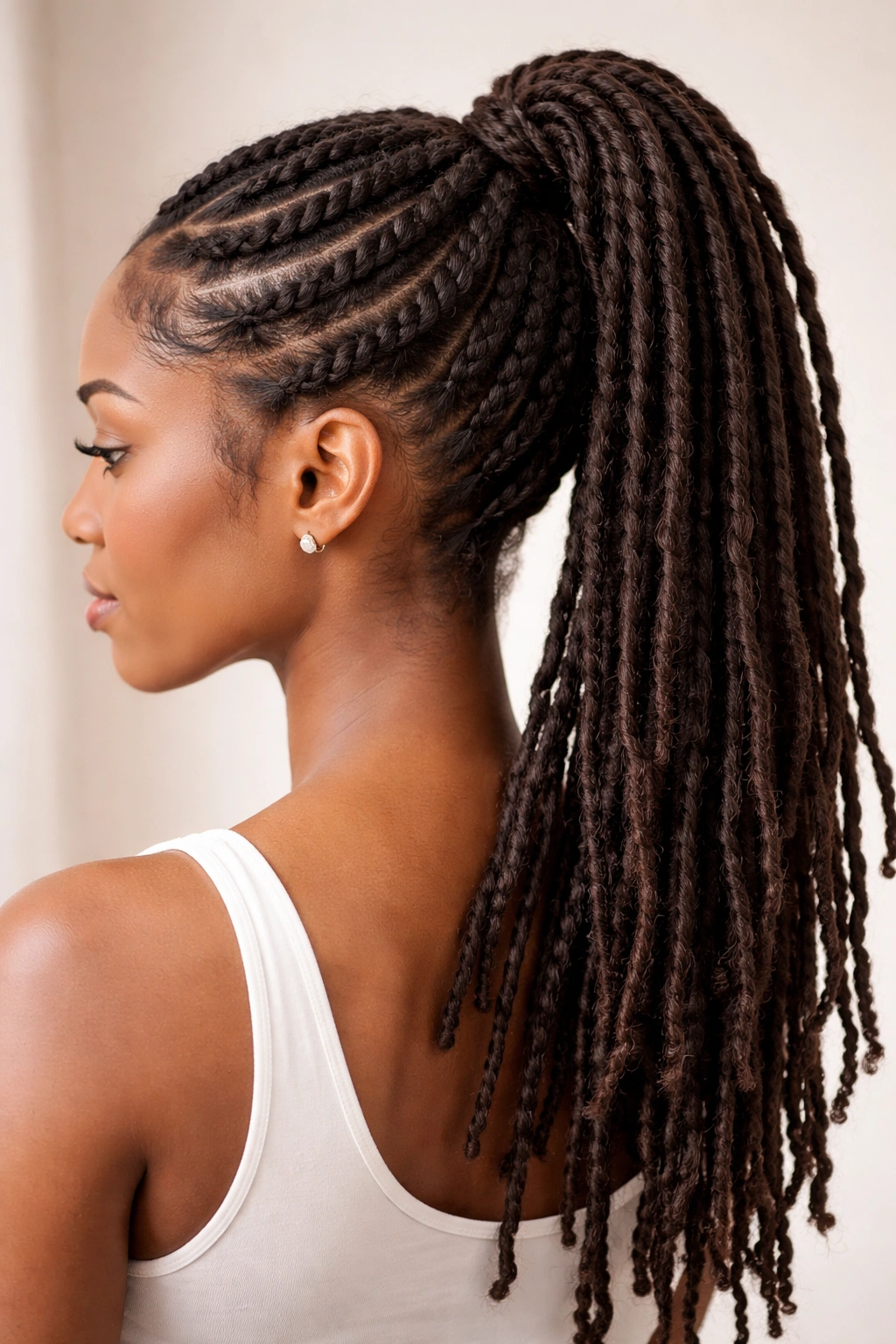
Twist ponytails offer the best of both worlds for loc styling—they’re protective, beautiful, and remarkably versatile. The twelve styles above represent just the starting point. Once you understand how twists behave with locs and how they distribute weight, you can adapt these techniques endlessly, mixing them together and personalizing them based on what works for your hair texture, length, and lifestyle.
The key to successful twist ponytails is understanding that locs don’t need the kind of tension or slickness that straight hair sometimes requires. Your twists will hold because of the structure of your locs themselves. That means you have permission to be gentler with your hair, to prioritize comfort over severity, and to create styles that work with your natural texture rather than fighting against it. A twist ponytail that feels secure and looks polished while also being kind to your locs is the sweet spot worth aiming for every single time you style.
