



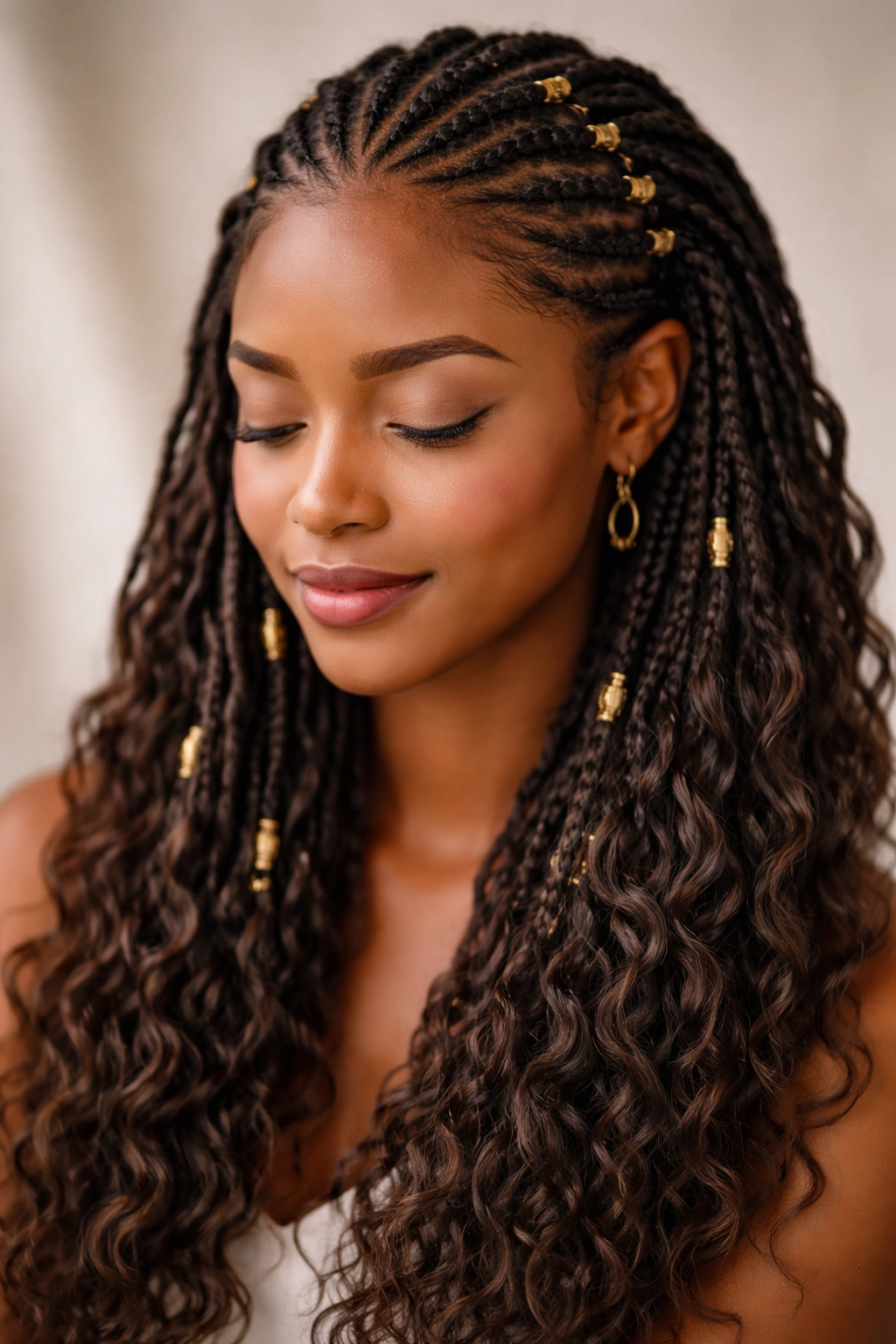
Fulani braids represent one of the most distinctive and celebrated protective styling traditions, originating from the Fulani people of West Africa. When combined with crochet hair—synthetic extensions that attach to cornrows using a crochet needle—the style becomes versatile, voluminous, and endlessly customizable. Whether you’re drawn to the classic thin braids adorned with gold rings, the bold statement of chunky tribal braids, or the modern fusion of color-blocked designs, Fulani braids with crochet hair offer a way to express cultural heritage while maintaining flexibility in your styling choices.
The beauty of this combination lies in the balance between structure and creativity. The cornrows provide a stable foundation, while crochet hair adds volume, texture, and dimension without the long-term commitment of traditional braids. You can refresh the style, change the color palette, or add new elements—all without damaging your natural hair underneath. The result is a protective style that’s both respectful of its origins and adaptable to your personal aesthetic.
What makes Fulani braids with crochet hair particularly appealing is how forgiving they are for beginners while offering enough complexity to challenge experienced braiders. You control the braid thickness, the placement of the cornrows, the type and color of crochet hair, and the accessories you add. Whether you’re getting this done in a salon or learning to install it yourself, you’ll find that each variation below opens up a different look—from understated elegance to full glamour.
1. Classic Thin Fulani Braids With Gold Accents
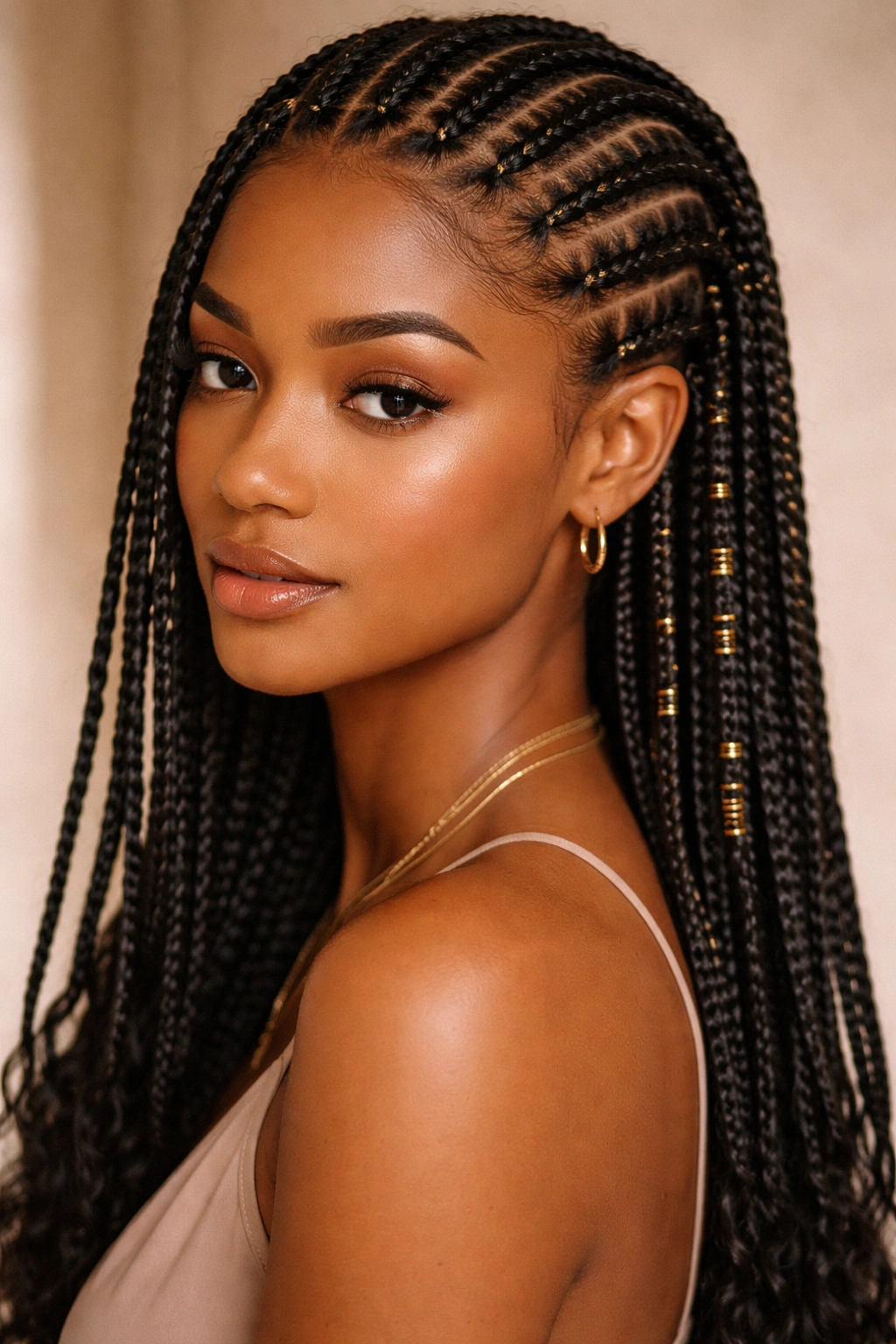
Thin Fulani braids represent the most traditional interpretation of this style, and when executed with quality crochet hair, they create an delicate yet striking look. These braids are typically no thicker than a pencil, requiring more time and patience to install but delivering an authentically elegant result. The thinness allows you to create intricate patterns and showcase scalp designs that thicker braids would cover.
The Foundation and Installation
Installing classic thin Fulani braids starts with clean, moisturized hair and a solid cornrow base. Your braider will create cornrows—usually running from the front hairline toward the back—using precise tension to ensure they’re taut but not so tight they cause discomfort. The crochet hair is then looped through each cornrow using a crochet needle, typically starting near the roots and working downward in even sections.
What Sets Them Apart
- Require 4-6 hours of salon time, sometimes longer depending on cornrow complexity and total braid count
- Work beautifully with thin crochet hair (often labeled as “Kanekalon” or premium synthetic blends)
- Pair perfectly with gold rings, cuffs, and cowrie shells placed at intervals along the braids
- Can last 6-8 weeks with proper maintenance and regular moisturizing
- Create a refined, professional appearance suitable for corporate and formal settings
- Allow for creative scalp designs that become a focal point when the braids are pulled back
Pro tip: Thread thin gold wire through individual braids before installing the crochet hair for a permanently integrated metallic look that catches light beautifully without requiring daily ring adjustments.
2. Chunky Fulani Braids With Tribal Edge
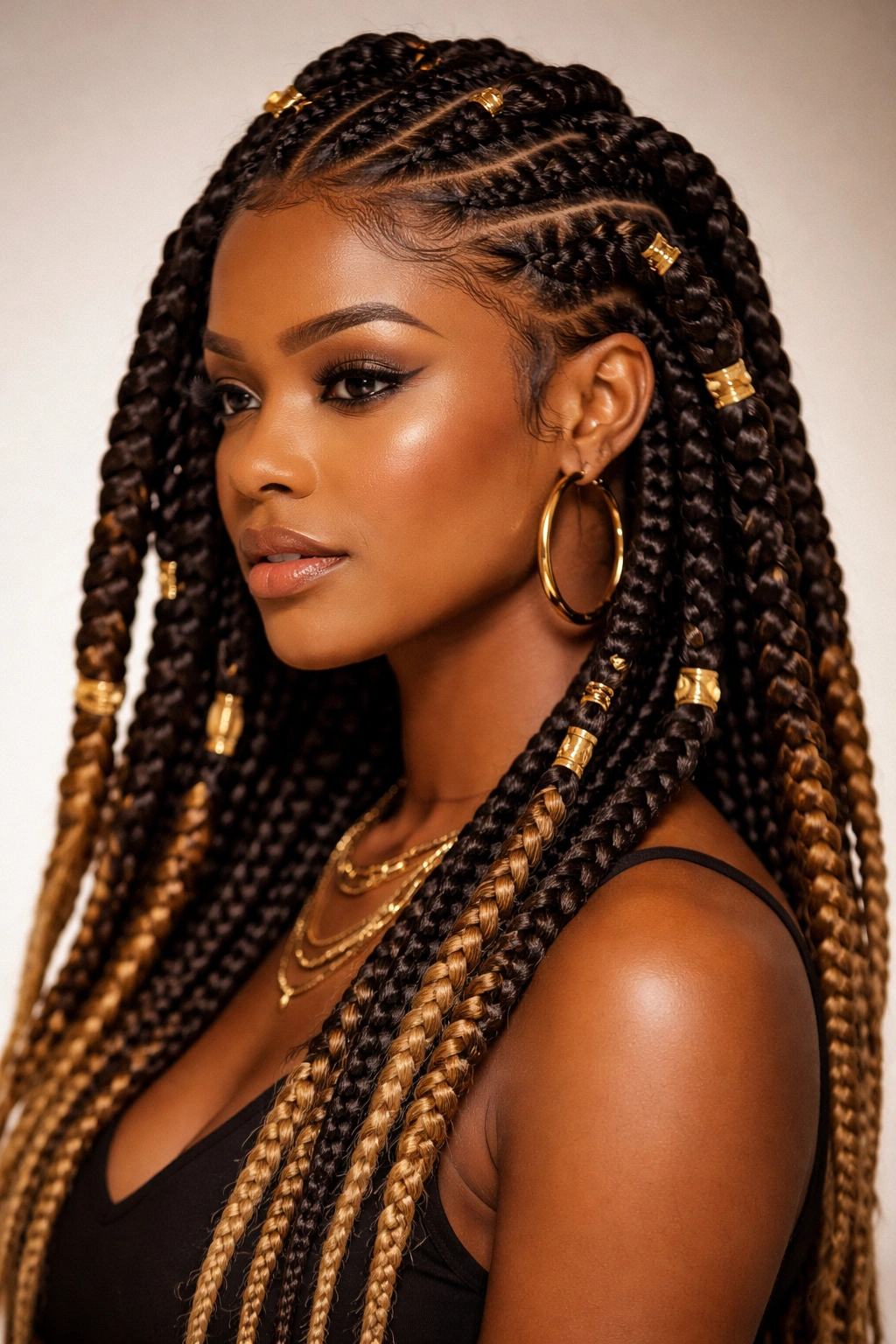
Chunky Fulani braids make an unmistakable statement—bold, powerful, and visually striking from across the room. These thicker braids work with fewer total braids on the head, meaning shorter installation time and a more sculptural appearance. The chunky style works especially well if you’re looking for a style that reads as a defined hairstyle rather than an intricate pattern.
Building Volume and Impact
Chunky Fulani braids typically use thicker crochet hair or sometimes even multiple strands of thinner hair twisted together to create substantial volume. The cornrow base remains visible as a line separating the braids, which becomes part of the design aesthetic. Many people add cornrow designs or use different crochet hair colors to create contrast against the scalp.
Design Considerations
- Installation usually takes 2-3 hours due to the reduced number of braids
- Looks stunning with colored crochet hair—burgundy, platinum, honey blonde, or ombré effects
- Pairs beautifully with large geometric cuffs, chunky gold rings, and statement jewelry
- Excellent for creating dramatic facial framing, with smaller braids at the front transitioning to thicker ones toward the back
- Works well for active lifestyles since fewer braids mean less weight on the scalp
- Easier to style into updos without creating a overly bulky silhouette
Worth knowing: Chunky Fulani braids actually require less daily manipulation because there’s less total hair volume, which can reduce frizz and extend the style’s lifespan to 8-10 weeks.
3. Two-Tone Fulani Braids With Color Blocking
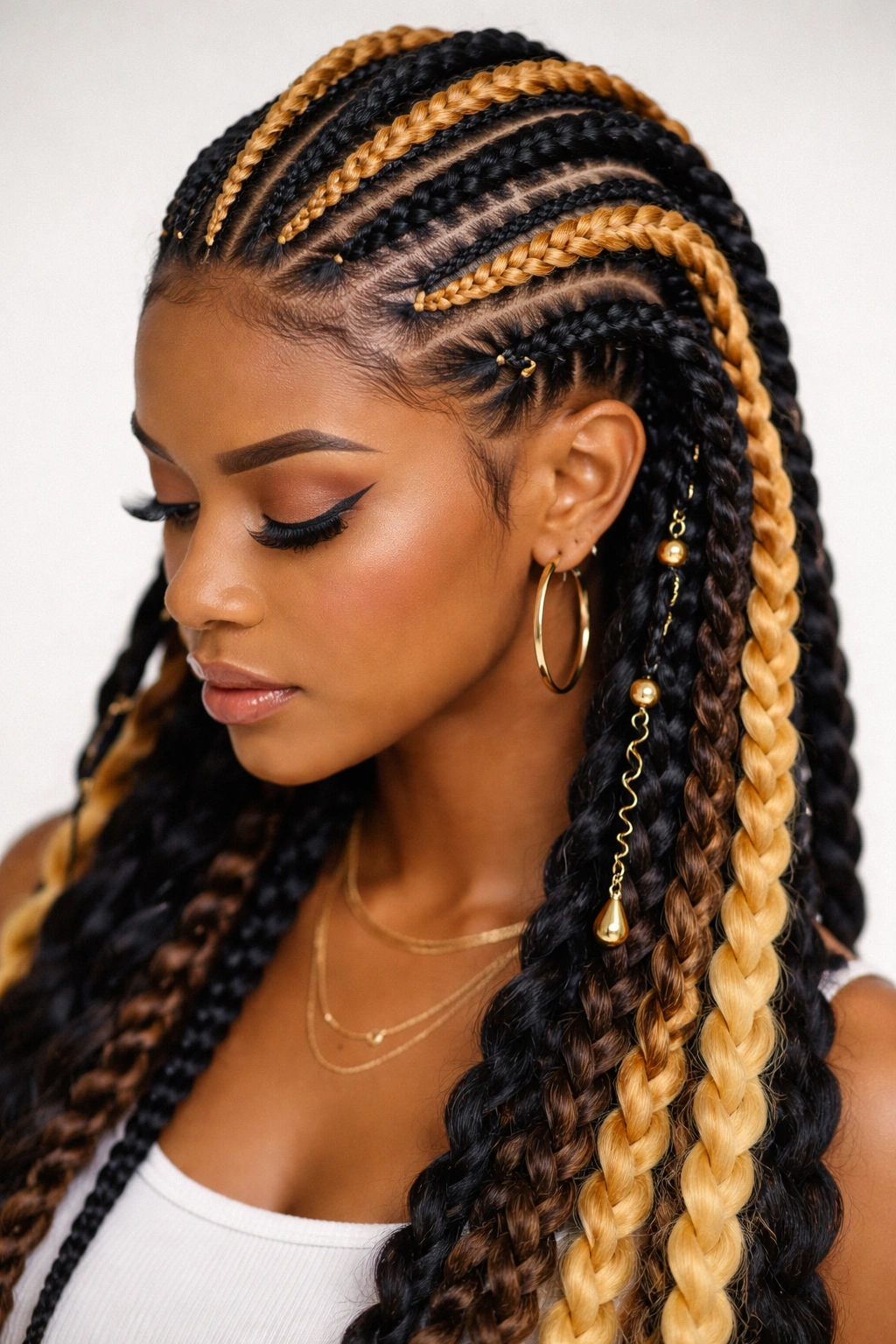
Color blocking with crochet hair creates visual drama and allows you to experiment with combinations you might never commit to with permanent color. Two-tone Fulani braids pair contrasting colors throughout the style—for example, alternating black and honey blonde sections, or creating gradual color transitions as braids move from front to back. The key is strategic placement that creates intentional visual patterns rather than random color distribution.
Creating Visual Contrast
The most striking two-tone designs use high-contrast pairings: black with platinum, burgundy with copper, or deep brown with caramel. Some braiders create a “color block” effect where one half of the head features one color while the other half features a different shade. Others stripe colors throughout the entire style for a more integrated appearance.
Color Coordination Strategy
- Pair cool-toned hair colors with jewelry and clothing in silver, rose gold, or cool metallics
- Use warm-toned color combinations with gold, brass, or warm-toned accessories
- Consider your skin tone when selecting which color appears closer to your face—this creates the most flattering framing effect
- Lighter colors at the front create face-framing brightness; darker colors create sophistication
- Reverse the color distribution in different installations to completely change the look without changing your base color choices
Insider note: Request that your braider create a color pattern on paper before installation—it takes ten minutes but prevents miscommunications about exactly where transitions should occur.
4. Long Flowing Fulani Braids
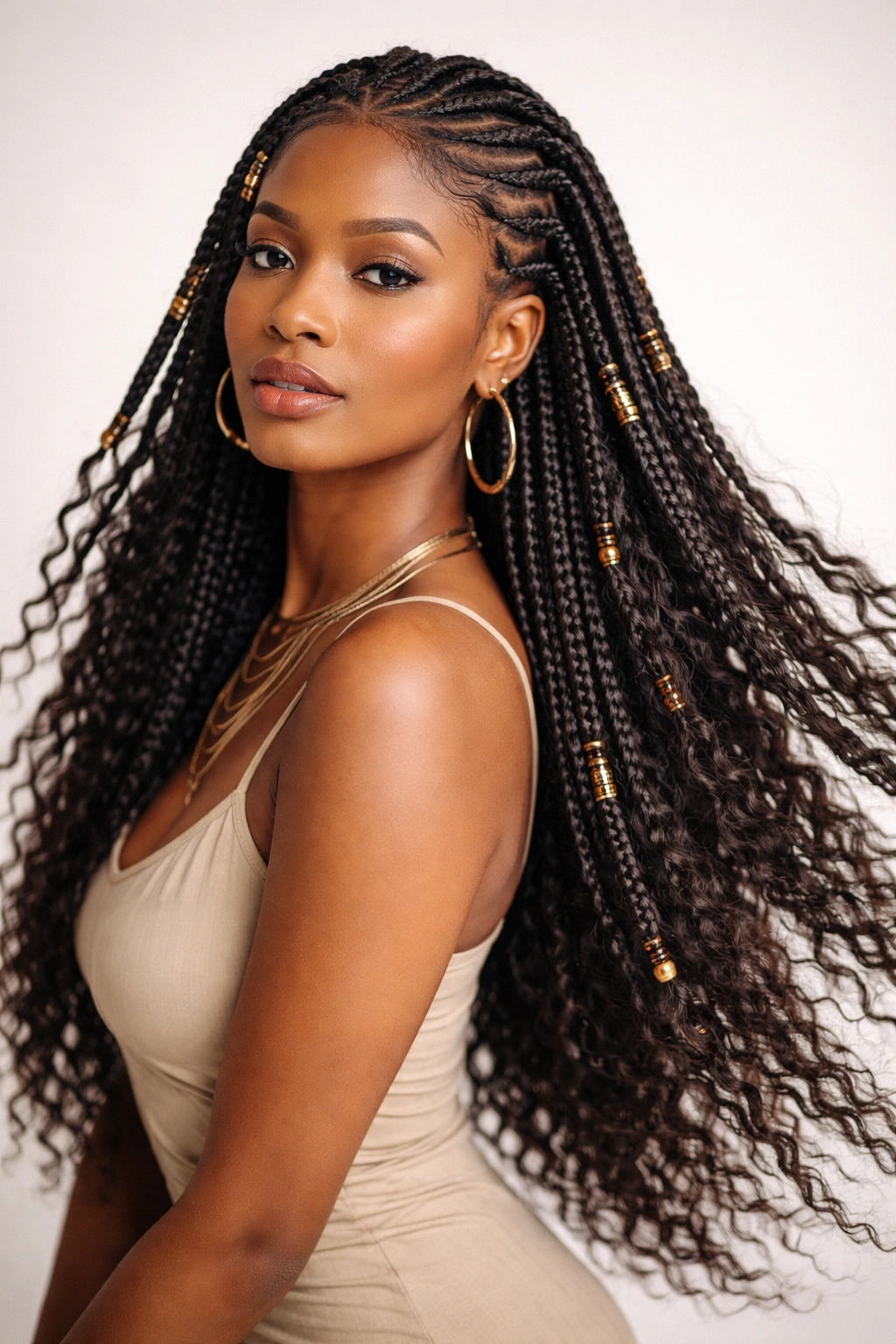
Long Fulani braids create movement and drama, extending well past shoulder length to create that coveted flowing aesthetic. This style works best if your natural hair is at least shoulder-length because the cornrow base needs enough length to accommodate the crochet extensions. The extended length shifts the weight distribution of the style, creating beautiful movement when you walk or turn your head.
Length and Weight Considerations
Installing long Fulani braids means adding significant length to your natural hair, which increases the total weight. Your braider will need to ensure the cornrows are installed with appropriate tension to support this weight without causing scalp discomfort or traction alopecia. The crochet hair should be high-quality synthetic or human hair blends that hold their texture and appearance throughout the wearing period.
Styling Possibilities
- Wear down and flowing for maximum impact and movement
- Half-up, half-down styling that showcases the texture while keeping hair off your face
- Romantic low buns or twisted updos that still show off the length when you move
- Side-swept styles that drape across one shoulder dramatically
- Perfect for photoshoots, events, or simply creating the feeling of longer, fuller hair
Pro tip: Even if you typically prefer your braids up, install long Fulani braids and wear them down for at least the first week—the visual impact of flowing braids is genuinely transformative and worth experiencing at least once.
5. Fulani Braids With Metallic Thread Integration
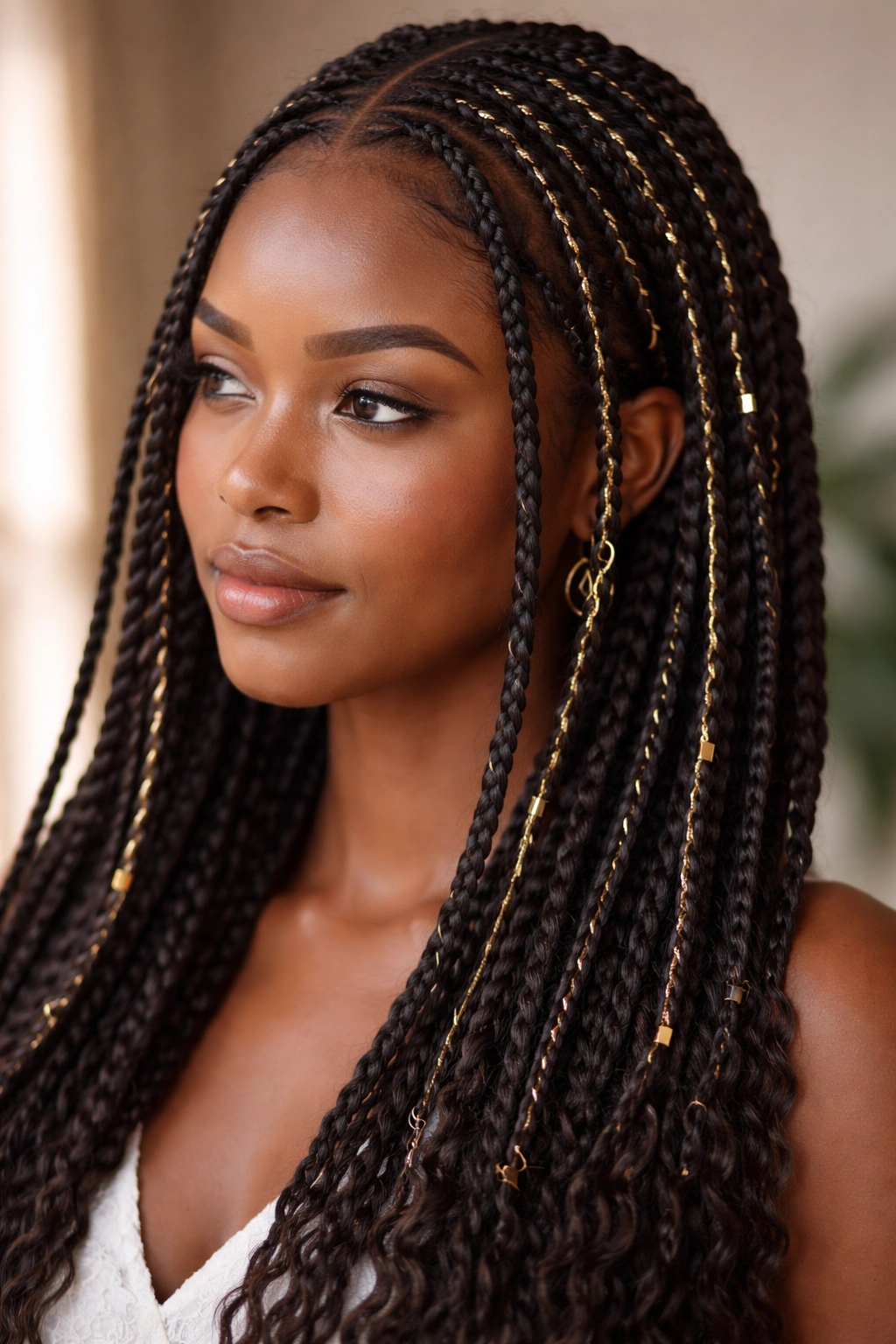
Metallic thread—whether gold, silver, rose gold, or holographic—adds a completely different dimension to Fulani braids. Unlike rings and cuffs that shift over time, integrated metallic thread stays permanently positioned, creating consistent sparkle and shine throughout the style. This technique works with both thin and chunky Fulani braids, though the effect is more dramatic with thinner braids that showcase detailed work.
Thread Selection and Installation
Metallic threads come in various thicknesses and materials, from delicate 24-karat-gold plated threads to shimmery holographic ribbon. Some braiders weave the thread directly into the braids during installation; others thread it through afterward. The choice depends on your braider’s preference and the specific effect you’re aiming for. Gold thread creates warmth and sophistication; silver thread offers a modern, futuristic edge.
Integration Options
- Weave metallic thread through every braid for uniform sparkle
- Add thread to only some braids for a subtle mixed-metal effect
- Create metallic patterns—like every third braid or braids around your face only
- Combine multiple metallic colors for an ombré or rainbow effect
- Layer thin threads together for extra depth and shine
- Pair with minimal ring accessories since the thread provides sufficient shine
Worth knowing: Metallic threads that are lower quality can tarnish or transfer color to your scalp, so invest in professional-grade threads even if they cost more upfront.
6. Fulani Braids With Beaded Details
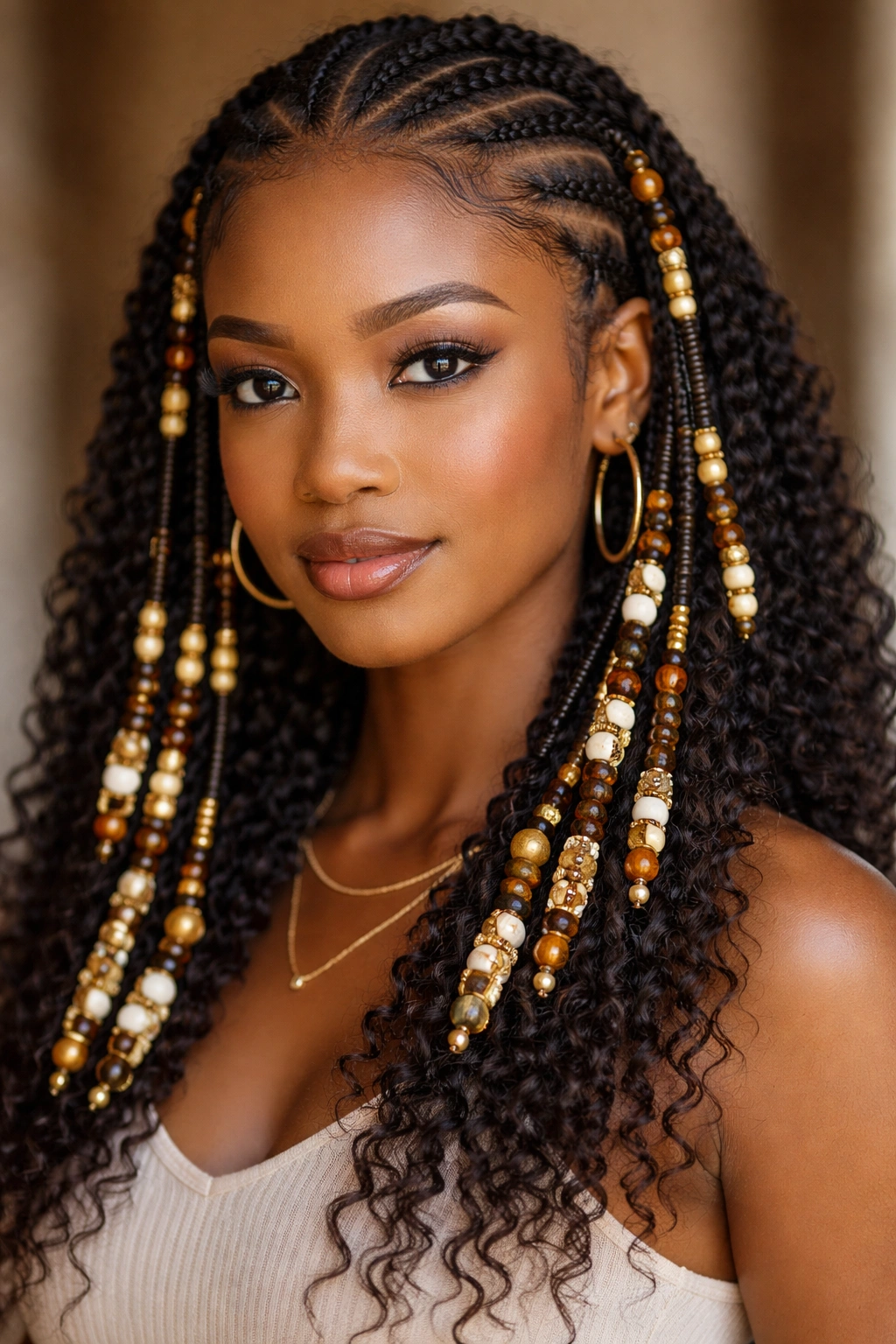
Beads offer a completely different aesthetic from metal rings and add texture variation throughout the style. Whether you choose small seed beads in coordinating colors, larger statement beads at intervals, or a mix of bead sizes, this approach creates visual interest and a more ornate appearance. Beads can be threaded directly onto the braids during installation or added afterward, making this a customizable element you can change between wearings.
Bead Placement Strategies
Strategic bead placement creates different visual effects. Placing beads densely along the braids creates a fully embellished look; spacing them out creates a more minimalist approach with accent points. You can cluster beads near the roots for a concentrated jewel-box effect or distribute them evenly for a consistent pattern. Some people create ombré bead effects, starting with larger beads near the roots and transitioning to smaller beads toward the ends.
Material and Design Choices
- Glass seed beads offer shine and come in virtually any color imaginable
- Wooden beads create an earthy, natural aesthetic that contrasts beautifully with crochet hair
- Acrylic beads are lightweight and affordable for experimentation
- Mix metallic beads with colored beads for sophisticated multi-tonal effects
- Create patterns using different bead colors—stripes, checkerboard, gradient transitions
- Pair beads with complementary crochet hair colors to create cohesion
Pro tip: If you want to swap beads between styles, ask your braider to leave beads un-glued so you can slide them off and reposition them for different looks.
7. Fulani Braids With Colored Crochet Hair and Matching Roots
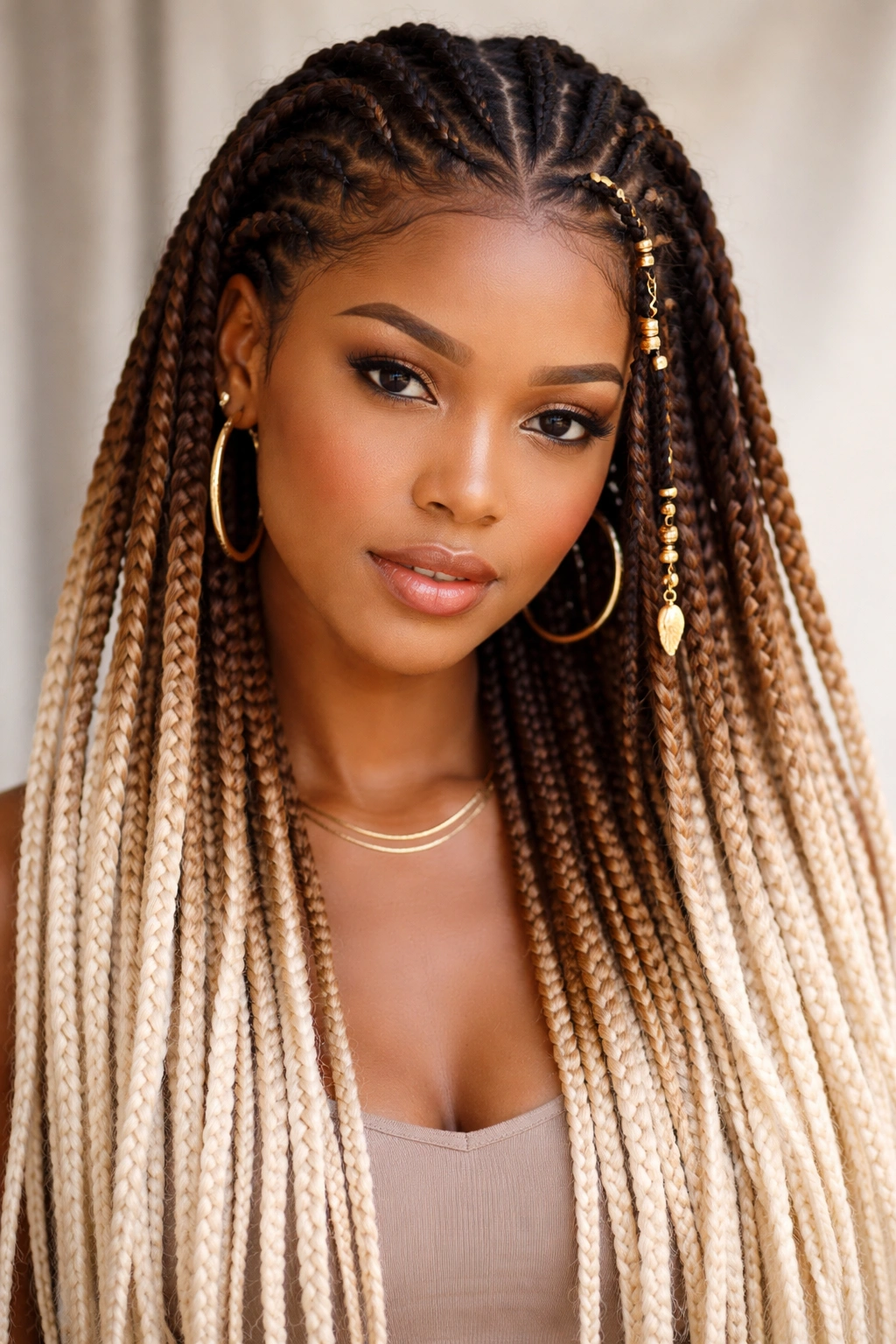
The “roots” effect—where darker crochet hair is used at the base and gradually transitions to lighter colors—creates a contemporary twist on traditional Fulani braids. This style mimics natural hair color gradation and creates sophistication while allowing for bold lighter tones that might otherwise look disconnected from your natural hair color. The gradient effect works because human brains perceive gradual transitions as more harmonious than abrupt color changes.
Creating Seamless Color Transitions
Rather than using two distinct colors, some braiders work with three or four shades in gradual progression—for example, starting with dark brown at the roots, transitioning through medium brown, then honey blonde, and finishing with platinum at the ends. This creates a sophisticated ombré that feels intentional and balanced. The transition points should be blended smoothly over several inches rather than showing obvious lines.
Installation Techniques
- Braider separates crochet hair into color sections before attaching to cornrows
- Each cornrow section uses progressively lighter or darker crochet hair as it moves downward
- Some braiders attach different colored hair to different parts of each braid for dimensional effect
- Works beautifully with metallic thread additions that bridge color zones
- Pairs excellently with jewelry that complements multiple colors in the gradient
Worth knowing: The roots effect actually photographs better than in person because the camera captures the color progression as a coherent whole, while in-person viewing shows each section individually.
8. Compact Fulani Braids Styled in a Low Bun
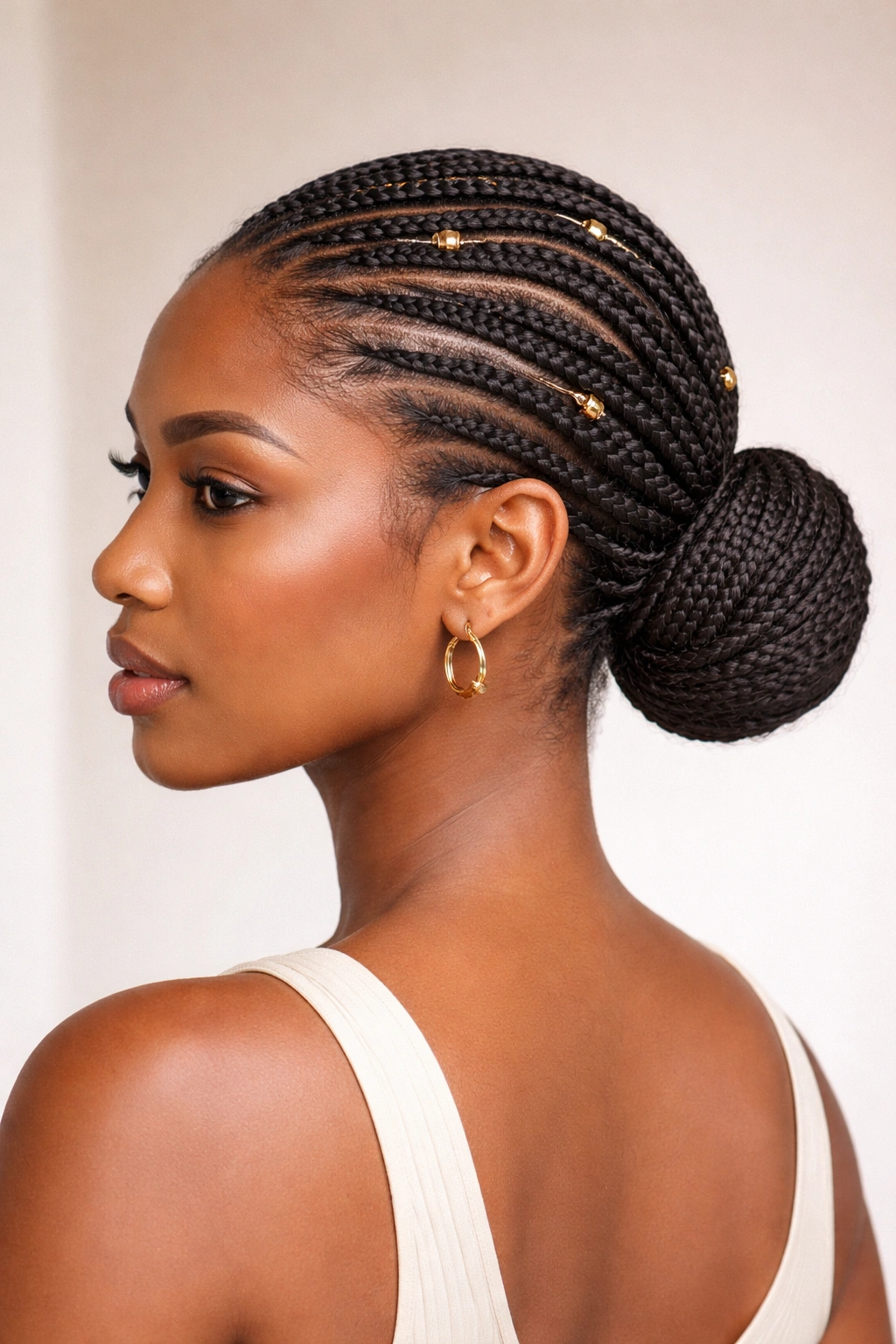
Compact Fulani braids—shorter, tighter braids that stay close to the scalp—create a sophisticated look that works beautifully styled into a low bun. This approach offers protection while maintaining a polished appearance suitable for professional and formal settings. The braids themselves become the statement rather than relying on length or dramatic volume, emphasizing craftsmanship and precision.
Bun Styling Approach
Compact Fulani braids can be gathered at the nape of the neck and wrapped into a sleek low bun, twisted into a rope bun, or gathered into a circular puff at the crown. The bun should be secure but not so tight that it causes tension headaches. Many people add a silk or satin hair tie to the base of the bun, which prevents slipping and reduces friction with the crochet hair.
Professional and Practical Benefits
- Installation takes 3-4 hours, making it accessible for busy schedules
- Weighs less than longer Fulani braids, reducing scalp tension
- Maintains professional appearance while protecting natural hair
- Simple styling options mean less daily manipulation and handling
- Lasts 8-10 weeks when worn consistently in the bun position
- Reveals beautiful scalp designs and braid architecture when pulled back
Pro tip: Use a silk bonnet or wrap at night, even when sleeping in your bun, to prevent frizz and extend the style between salon visits.
9. Fulani Braids With Contrasting Scalp Designs
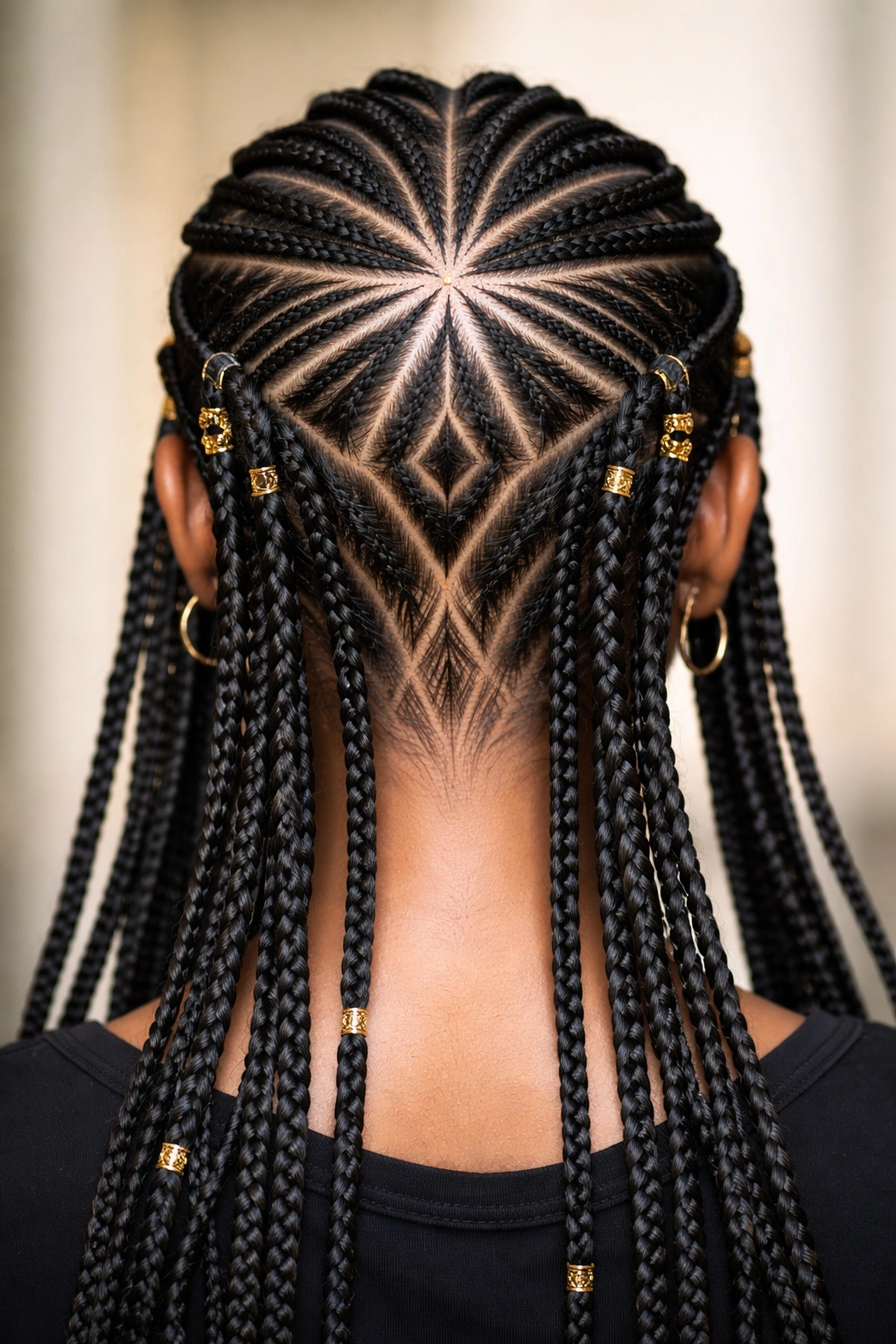
Scalp designs add an artful element to Fulani braids, transforming the visible sections of your scalp into intentional artwork. These geometric patterns—triangles, lines, wavy designs, or symbols—are created using the existing cornrows or by strategic shaving patterns before braiding. When wearing your hair pulled back, these designs become a striking visual element that showcases cultural artistry and personal style.
Design Possibilities
Scalp designs can be simple or elaborate depending on your aesthetic preferences. Some popular options include: geometric triangles pointing toward the hairline, wavy lines that follow the natural head contours, symbolic patterns from African cultures, angular lines radiating from a central point, or personalized designs based on your specifications. The most striking designs use high contrast, such as shaved or closely-faded sections against full cornrows.
Maintenance and Longevity
- Scalp designs remain visible throughout the entire 6-10 week wear period
- Best appreciated when braids are pulled back in updos or high ponytails
- Can be designed by your braider based on your sketch or inspiration images
- Pair beautifully with metallic threads or rings that emphasize the geometric patterns
- Add sculptural interest to your overall appearance, especially in photography
Worth knowing: Scalp designs fade as your hair grows, which is actually part of the design aesthetic—the look evolves over the wearing period rather than staying static.
10. Fulani Braids With Wrapped Sections
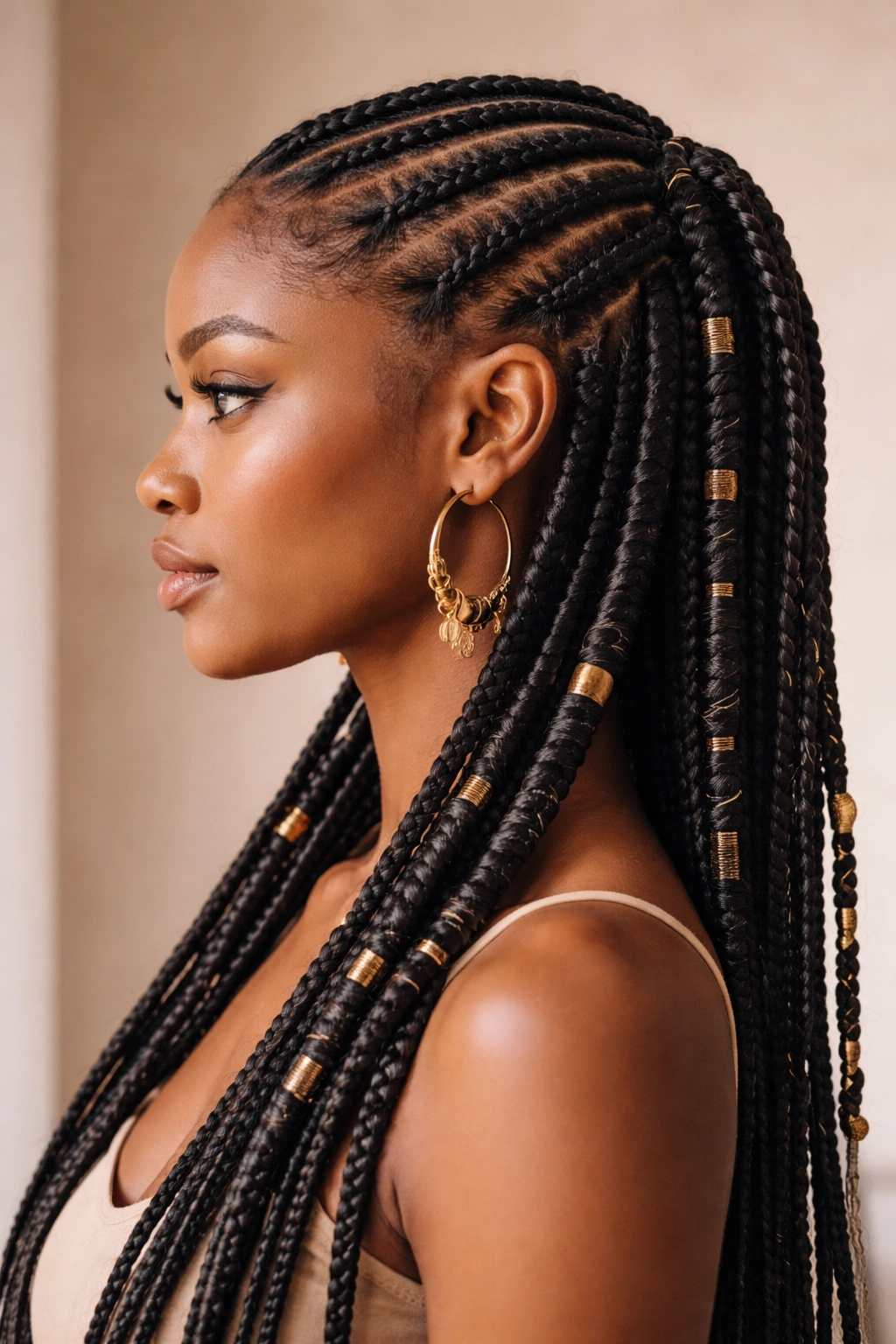
Wrapping sections of crochet hair with coordinating thread, yarn, or thin fabric creates a completely different visual texture and breaks up the uniform appearance of standard Fulani braids. Wrapped sections feel sculptural and add visual interest while creating defined stopping points that prevent the eye from being overwhelmed by too much texture. This technique works especially well with longer Fulani braids or chunky variations.
Wrapping Techniques and Materials
Thread wrapping involves wrapping thin thread tightly around 2-4 inch sections of the braids in regular intervals. Yarn wrapping creates a bolder effect with more texture and visual weight. Some braiders use strips of fabric or leather for an edgier, more modern aesthetic. The wrapped sections can match the crochet hair color for a subtle effect or contrast dramatically for more impact.
Design Strategies
- Wrap every braid at regular intervals (for example, every 4 inches) for a structured, uniform look
- Wrap only select braids to create visual anchoring points
- Use different colored wrapping thread on different braids for a multi-colored effect
- Combine wrapped sections with metallic threads in between for dimensional variety
- Create gradient wrapping that transitions from one color to another down the length of the braids
Insider note: Wrapped sections actually strengthen the braids and prevent unraveling at the ends, making them both beautiful and functional.
11. Fulani Braids With Curled or Wavy Crochet Hair Texture
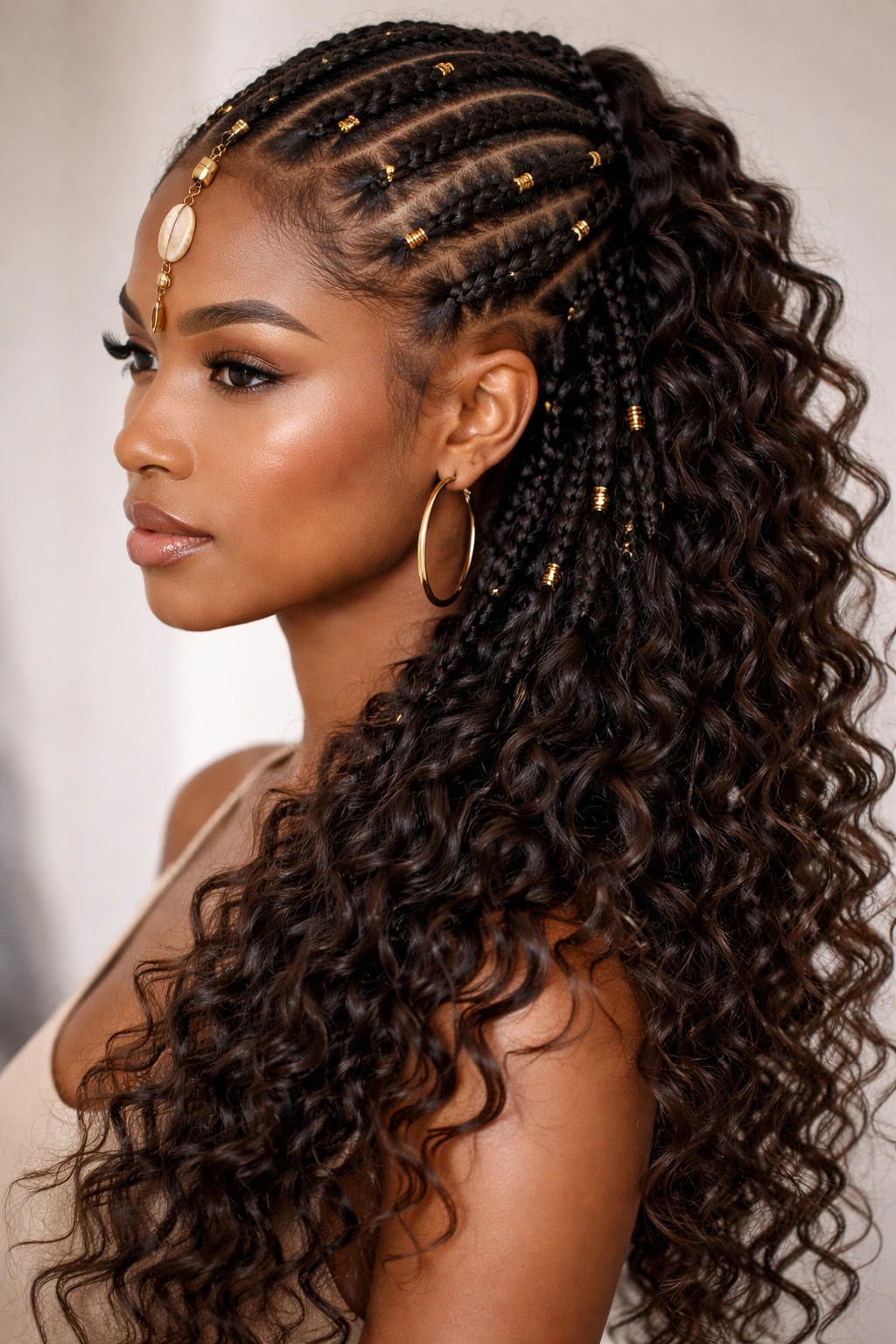
Standard crochet hair comes in straight texture, but using kinky-textured, curly, or wavy crochet hair creates a completely different aesthetic for Fulani braids. Textured crochet hair creates softer, more voluminous braids that photograph beautifully and create movement. This approach offers an alternative to maintaining straight braids or using heat tools to style them differently.
Texture Options and Effects
Kinky, curly, and wavy crochet hair creates braids with a softer appearance than straight versions. The texture catches light differently, creating dimension and visual interest even in a single color. Kinky texture offers the closest match to natural textured hair, creating authenticity and cultural alignment. Wavy texture provides a middle ground between straight and kinky, offering movement with a more deliberate curl pattern.
Styling and Maintenance
- Textured braids require less heat styling to maintain appearance throughout the wear period
- Curly crochet hair naturally shrinks slightly, creating a shorter final style than straight versions
- Works beautifully for creating romantic, softer looks compared to straight Fulani braids
- Pairs well with minimal accessories since the texture itself provides visual interest
- Maintains texture better when moisturized regularly with light oils or leave-in conditioner
Pro tip: If you love the texture but worry about frizz, apply a tiny amount of edge control or gel to the braids once installation is complete—this tames flyaways while maintaining the overall textured appearance.
12. Fulani Braids With Mixed Braid Sizes and Heights
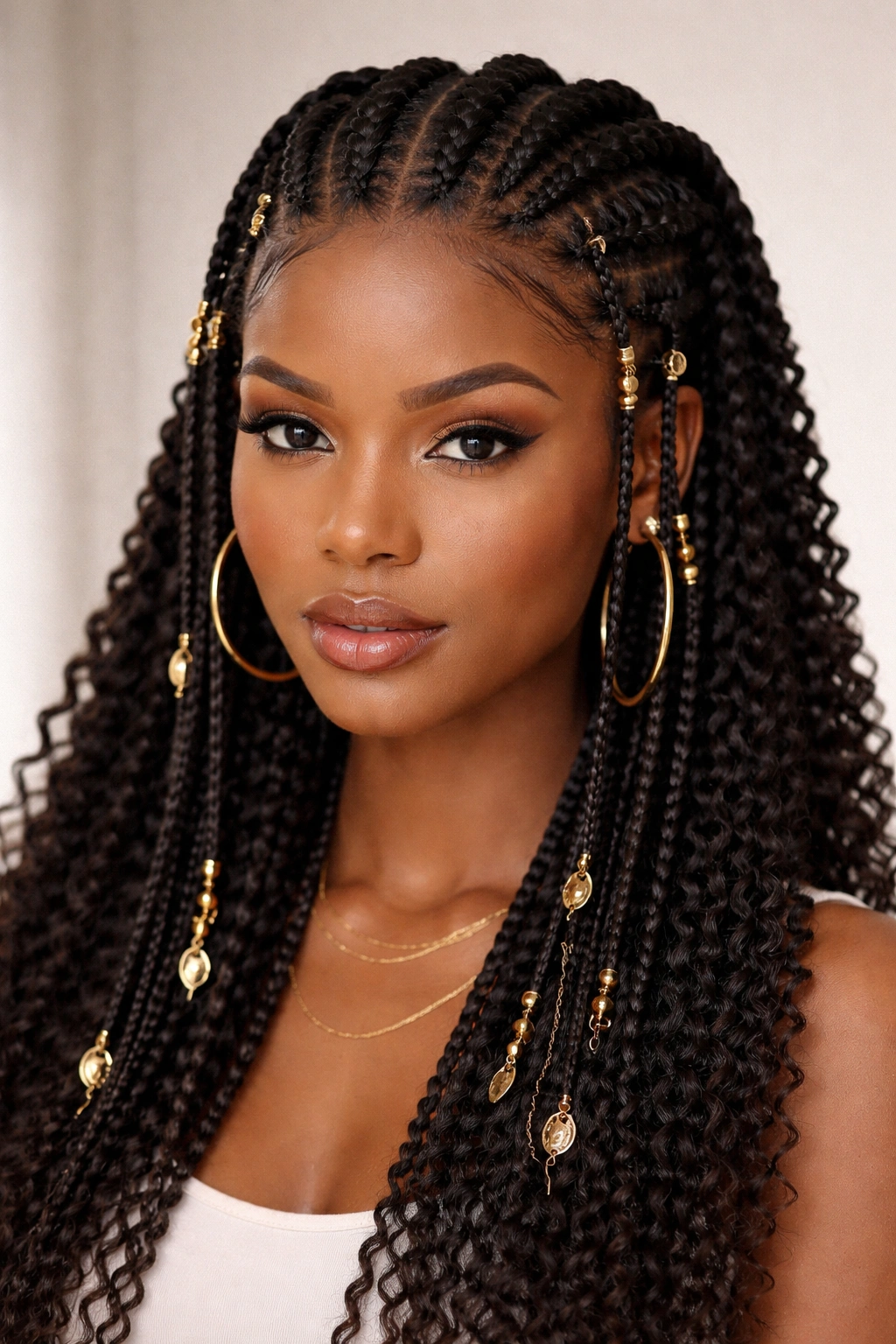
The most dynamic approach to Fulani braids involves mixing braid sizes—thinner and thicker braids interspersed throughout the style—to create visual rhythm and break up uniformity. This technique allows you to combine the elegance of thin braids with the drama of chunky ones in a single cohesive style. The size variation creates a sense of movement and prevents the style from feeling flat or one-note.
Design and Composition
Mixed-size Fulani braids typically feature smaller, thinner braids framing the face and around the perimeter, gradually transitioning to chunkier, bolder braids toward the crown or back of the head. This creates a natural visual hierarchy that draws focus to your face. Alternatively, you might alternate thin and chunky braids in a deliberate pattern, or cluster different sizes together to create distinct blocks of visual interest.
Creating Visual Impact
- Smaller braids at the front create a refined, detailed appearance
- Chunkier braids at the crown create sculptural drama
- Transitional sizes in the middle create cohesion between the two
- Color variations between different braid sizes enhance the mixed-size effect
- Metallic threads and rings work beautifully to define the size transitions
Worth knowing: Mixed-size Fulani braids actually look more complex and sophisticated than uniform-sized braids, even though they’re not necessarily more difficult to execute—the visual variety creates perceived intricacy.
Final Thoughts
Fulani braids with crochet hair represent a beautiful intersection of cultural tradition and contemporary styling flexibility. Whether you choose thin classic braids adorned with gold, statement-making chunky versions, or any of the countless variations that blend size, color, texture, and embellishment, you’re working with a style that’s genuinely transformative. The key to a stunning finished result lies in finding a skilled braider who understands your vision, investing in quality crochet hair rather than the cheapest option available, and committing to basic maintenance—regular moisturizing and nighttime protection—that keeps your style looking fresh throughout the entire wear period.
The beauty of this style extends beyond aesthetics; it’s a protective choice that allows your natural hair to rest and recover while you explore different aesthetics and expressions. You might spend six weeks with platinum blonde chunky braids, then choose burgundy two-tone thin braids for the next installation, or experiment with beaded details you’d never considered before. Each iteration teaches you something about what works with your face shape, personal style, and lifestyle. Start with the variation that speaks most strongly to you, and remember that future installations are opportunities to evolve and refine your approach.
