



Igbo hair traditions represent centuries of cultural artistry, craftsmanship, and identity expression woven directly into the scalp. These intricate styles are far more than aesthetic choices—they’re narratives told through twists, braids, beads, and sculpted designs that communicate status, age, marital standing, and occasion. Whether you’re attending a wedding, a traditional naming ceremony, a cultural celebration, or simply want to reconnect with your heritage through your hair, Igbo traditional styles offer a stunning range of options that work for virtually any setting.
The beauty of Igbo hairstyling lies in its versatility and precision. Each style requires skill, patience, and an understanding of how hair texture, face shape, and personal style come together. What makes these traditions so powerful is their ability to evolve—contemporary stylists are reinterpreting classic Igbo braids and twists with modern flair, creating looks that honor tradition while feeling fresh and current. You don’t need to be Igbo yourself to appreciate and wear these styles respectfully, though understanding their cultural significance deepens your connection to the artistry.
These nine hairstyles span the spectrum from everyday elegance to show-stopping ceremonial looks. Some can be achieved in a few hours, while others are investment pieces designed to last weeks. The styles you’ll discover here have been worn at naming ceremonies where months-old babies are introduced to their communities, at weddings where brides command attention with architectural hair sculptures, and at festivals where dancers and performers showcase their heritage with pride. Each one carries its own history, its own meaning, and its own moment to shine.
1. Igbo Cornrows with Beaded Extensions
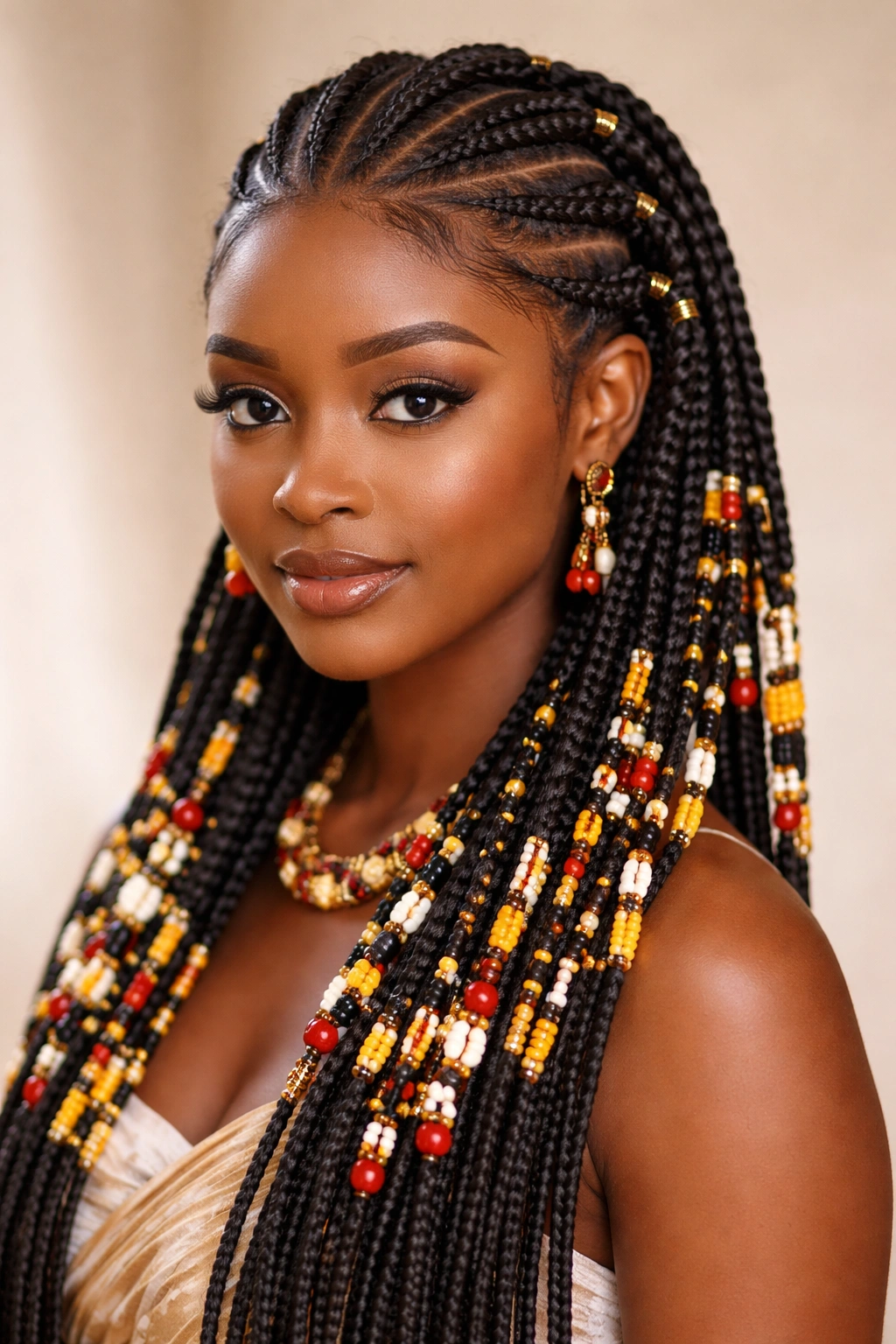
Cornrows remain one of the most iconic and practical Igbo styles, especially when adorned with colorful beaded extensions that cascade down the back or loop into intricate patterns. The beauty of this style lies in its structural precision—each braid follows a geometric pathway across the scalp, creating visual rhythm and balance. When done properly by an experienced braider, cornrows can frame your face beautifully while showcasing your personal aesthetic through bead choice and color coordination.
Why Cornrows Are a Timeless Choice
Cornrows have protected and beautified Igbo hair for generations, offering both cultural authenticity and practical longevity. The style can last three to four weeks with proper care, making it ideal if you’re attending multiple events or simply want a low-maintenance period. Cornrows also work across all hair types and textures—whether your hair is naturally coarse, fine, or somewhere in between, a skilled braider can create patterns that complement your features and hair characteristics. The style is also deeply practical; it keeps hair off your face and neck while allowing you to maintain other beauty routines without constant manipulation.
Styling Variations and Personal Expression
- Straight-back cornrows: Classic rows running from forehead to nape, sleek and formal for ceremonies or professional settings
- Curved or spiral cornrows: Geometric patterns that wrap around the head for visual drama and modern flair
- Mixed-width braids: Alternating thick and thin rows create textural interest and showcase detailed craftsmanship
- Beaded accents: Gold, silver, or colorful resin beads woven into specific rows or clustered at the ends for sparkle
- Side-swept or diagonal patterns: Rows angled across the head from one side to the other, flattering for round or square faces
Pro tip: Request beads in brass or gold tones if you want a classic, ceremonial look—they photograph beautifully and carry cultural significance in many Igbo communities.
Maintenance and Longevity
Keep your scalp clean by using a thin-nozzle spray bottle to apply diluted shampoo directly to the roots, avoiding the braids themselves. Sleep with a silk or satin scarf to prevent frizz and reduce friction that can weaken the braids. If beads begin to loosen, small adjustments can be made mid-style without taking everything down. The protective quality of cornrows means your own hair underneath experiences minimal manipulation, allowing it to rest and grow during the weeks you’re wearing the style.
2. Igbo Shuku with Crown Accents
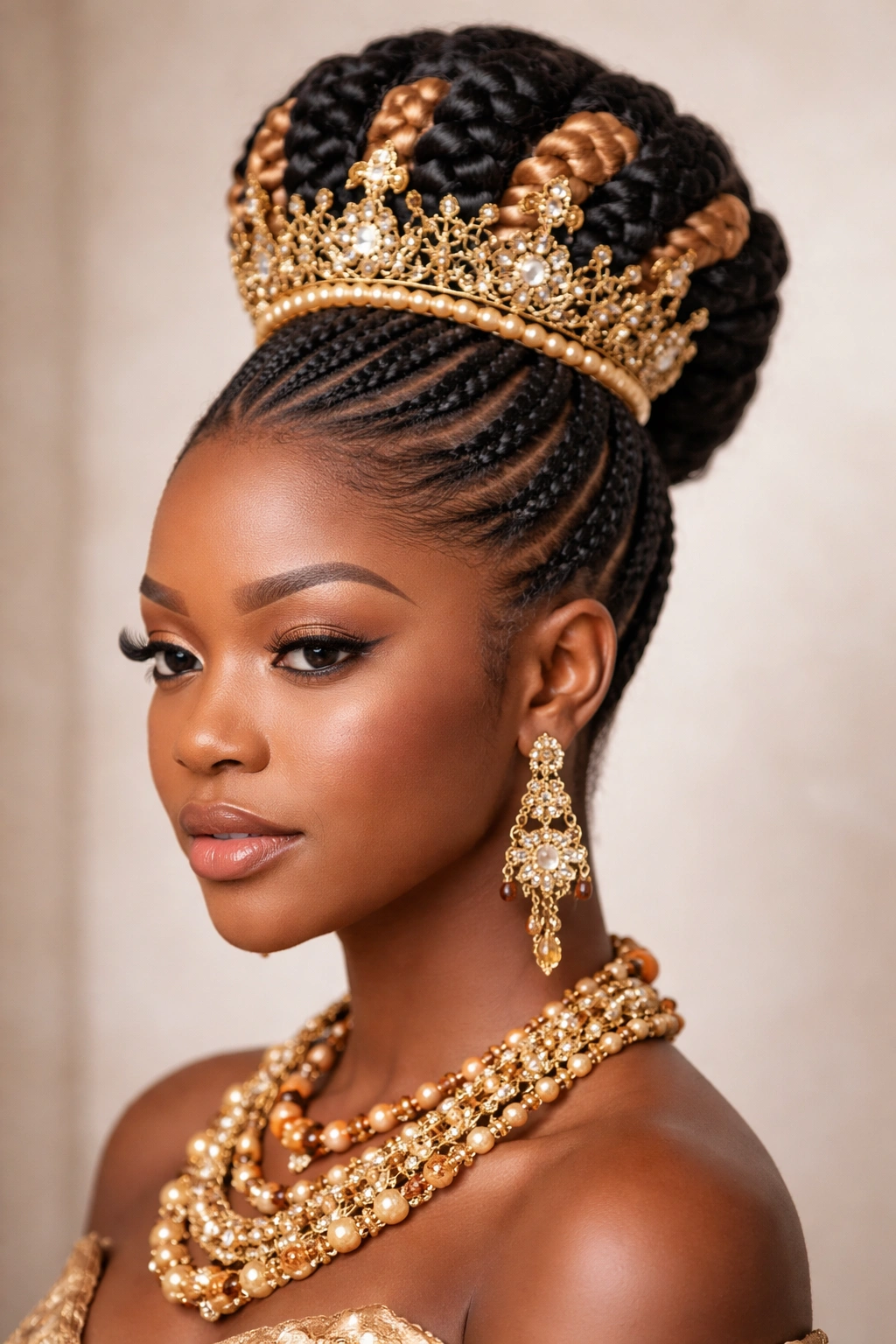
The shuku is a sculptural updo that sits majestically on top of the head, achieved by gathering and stacking hair—either your natural hair or extensions—into a towering, rounded crown. This is the style of choice for brides, titled women, and anyone attending a major celebration who wants to command presence and exude sophistication. The shuku represents status, confidence, and a deep connection to Igbo traditions; it’s the hairstyle that photographs beautifully from every angle and makes you feel entirely transformed.
The Structure and Artistry Behind Shuku
Creating a proper shuku requires understanding hair architecture and balance. Your braider will typically start by creating cornrows or twists that feed upward toward the crown, then gather, coil, and secure the hair into a rounded, elevated shape that can be anywhere from four to eight inches tall depending on the occasion and your preferences. The style demands both strength and flexibility—your braider must secure it firmly enough that it lasts weeks without slipping, yet shape it gracefully so it enhances rather than overwhelms your face. Modern variations incorporate extensions in contrasting colors, creating visual depth and allowing the style to be even more ornate.
Design Elements That Define Your Look
- Height and proportion: A dramatic, tall shuku suits elongated face shapes and formal occasions, while a more moderate height works for daily wear or smaller events
- Base styling: The cornrows feeding into the shuku can be straight, diagonal, or curved—each creates a different visual effect
- Front detail: Some styles leave delicate loose pieces at the temple or forehead for softness, while others keep everything sculptural and severe
- Crown adornment: Beads, gold wire, hairpins, or decorative combs can be incorporated into the shuku itself for added glamour
- Nape detail: Some versions feature small braids or coils left out at the nape for movement and elegance
Worth knowing: If you have a sensitive scalp or experience tension headaches, communicate this clearly with your braider—they can create a shuku that’s secure but not painfully tight, and taking it down after the event rather than sleeping in it for weeks is perfectly acceptable.
Occasions That Call for Shuku
The shuku is your outfit’s centerpiece, so choose the style when you’ll be the focus of attention—at your wedding, at an engagement ceremony, at a milestone birthday celebration, or when you’re being honored at a community event. The style photographs magnificently and reads as deeply respectful of Igbo cultural traditions, which makes it perfect for events where cultural authenticity matters.
3. Igbo Cane Rows with Geometric Patterns
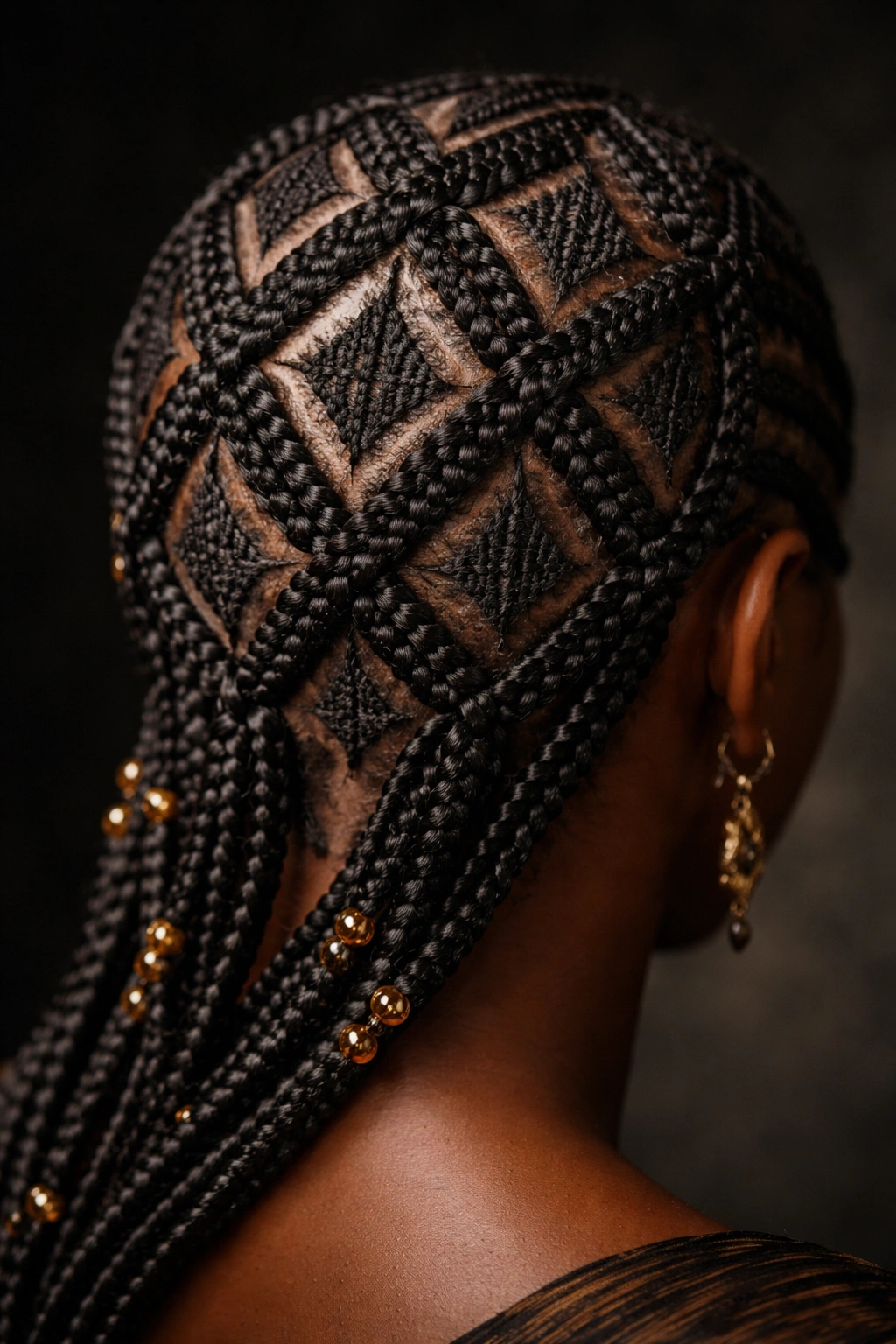
Cane rows—also called Zulu knots or bantu knots—create a textured, three-dimensional effect across the scalp by coiling sections of hair into small, spiraled knots that sit raised on the head. When done in geometric patterns, these knots can spell out designs, create borders, or cover the entire scalp in a mesmerizing display of precision and creativity. This style is younger, bolder, and more contemporary while still honoring Igbo braiding traditions, making it perfect for those who want cultural authenticity with modern edge.
The Visual Impact of Cane Row Patterns
Geometric cane rows transform your head into wearable art. Patterns might form a diamond grid across the entire scalp, create borders along the hairline, or outline specific shapes in contrasting sections. The three-dimensional nature of the knots catches light differently than flat braids, creating shadow and dimension that’s stunning in both natural and artificial lighting. This style works particularly well for festive events, celebrations, or any occasion where you want to showcase artistry and draw admiring eyes.
Pattern Ideas and Customization
- Full-scalp geometric patterns: Diamonds, triangles, or hexagons covering the entire head for maximum visual impact
- Hairline borders: Decorative cane rows framing the face with braids or twists forming the main style underneath
- Ombré effect: Knots in gradually lightening colors from scalp to ends, using natural hair and multiple extension colors
- Central motif: A focal pattern down the center with simpler braiding on the sides for balanced drama
- Mixed texture: Combining cane rows with flat braids or cornrows for contrast and visual interest
Insider note: Cane rows take longer to create than standard cornrows—expect to spend four to six hours in the chair—but the finished style lasts just as long and creates far more visual drama. This makes it ideal for events where you can arrive early or book your appointment on a day when you have time to sit.
Who Cane Rows Suit Best
The raised, textured nature of cane rows looks stunning on everyone, but particularly flatters those with longer face shapes or higher cheekbones, as the knots draw the eye upward and emphasize facial structure. The style also works beautifully on different skin tones, with contrast created by using extensions in gold, bronze, burgundy, or black tones.
4. Igbo Twisted Updo with Loose Tendrils
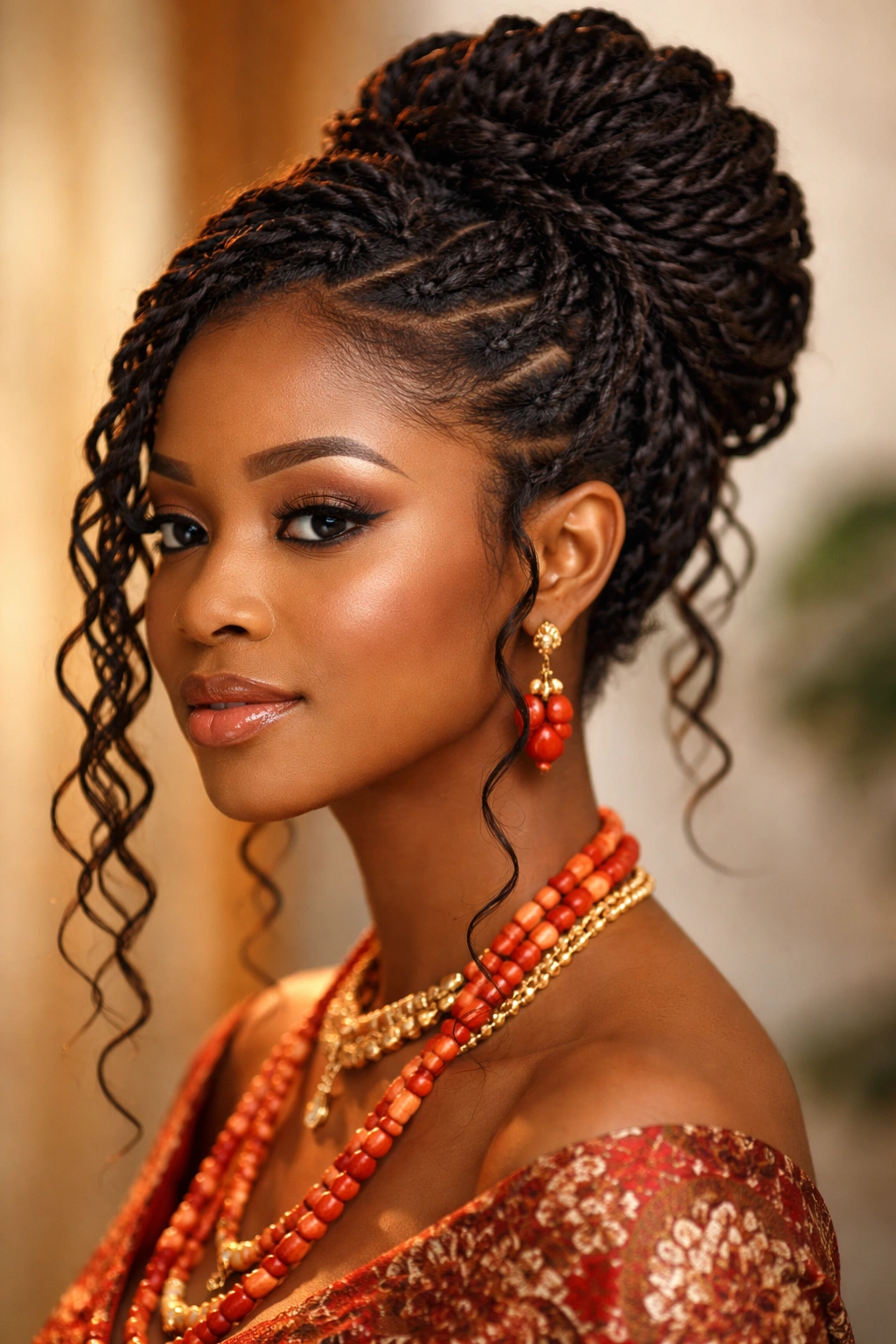
Twists create a softer, more fluid alternative to braids while maintaining the same cultural authenticity and protective qualities. An updo built from twists—where two-strand sections are spiraled and then gathered into an elevated style—offers romantic elegance with traditional roots. Unlike the sculptural shuku, a twisted updo can feel more relaxed and approachable, making it perfect for events where you want to feel beautiful without the intensity of a towering crown.
Creating Movement and Flow with Twists
Two-strand twists are created by dividing a section of hair into two parts and wrapping them around each other from root to tip. When multiple twists are then gathered, coiled, and pinned into an updo, the result is a hairstyle with natural movement and texture. The twists themselves can be loose and flowing or tight and precise depending on the look you want. A skilled braider can vary the thickness of twists throughout your hair, creating sections that contribute differently to the final style’s visual rhythm.
Updo Variations Using Twisted Hair
- Low twisted bun: Twists gathered at the nape for an elegant, understated look suitable for work or formal events
- High twisted crown: Twists coiled into a crown at the top of the head, softer and more romantic than a shuku
- Half-up twisted style: Twists gathering the top section of hair while leaving length flowing down the back
- Waterfall twist: Twists that curve down one side of the head, creating an asymmetrical, modern silhouette
- Wrapped base with flowing twists: A twisted bun base with longer twists left loose to drape across the shoulder or down the back
Pro tip: Sleep with your twisted updo slightly loosened if you plan to wear it for multiple consecutive days—this maintains the style’s beauty while preventing damage from constant tension on the same hair sections.
The Versatility Factor
Twisted updos work for virtually any occasion. Wear one to a casual daytime celebration with minimal accessories, or dress it up for evening with gold jewelry and a statement neckline. The style suits all face shapes and can be customized in terms of tightness, height, and how much texture you want visible, making it one of the most adaptable Igbo traditional styles.
5. Igbo Box Braids with Decorative Accessories
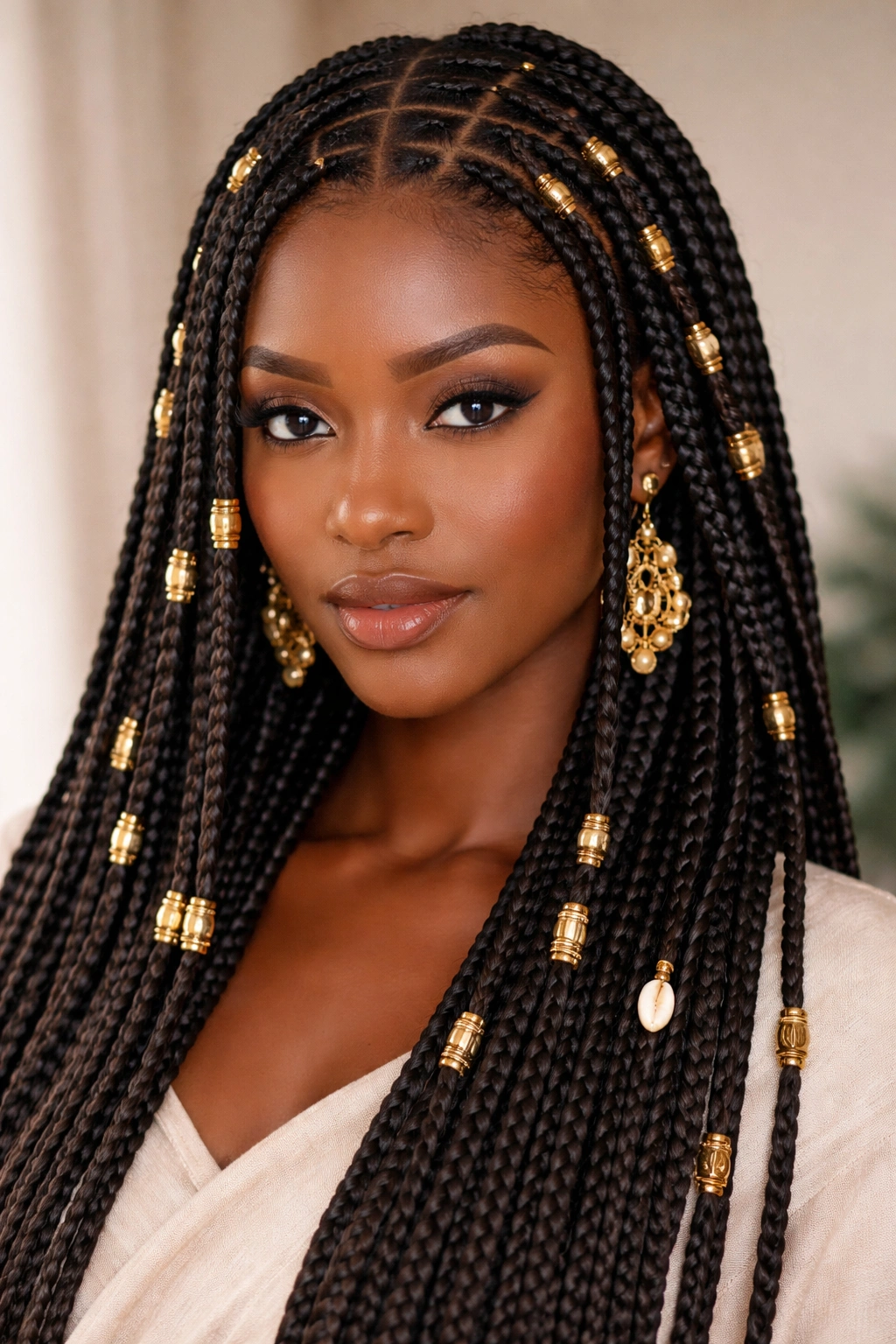
Box braids represent clean lines, precision, and the perfect balance between protective styling and visual presence. Individual braids in squared-off sections create a grid pattern across the scalp that’s instantly recognizable and undeniably striking. Igbo box braids can be worn loose, gathered into styles, or adorned with gold cuffs, beads, cowrie shells, and wrapped sections that reference traditional Igbo adornment practices—creating styles that feel ceremonial and intentional.
The Technical Excellence of Box Braids
Box braids demand precision from your braider. Each section must be cleanly demarcated, each braid must be evenly sized, and the tension must be consistent throughout so the style looks polished rather than haphazard. This precision is what gives box braids their formal, elevated quality—they read as intentional and crafted rather than casual. The style works beautifully with added length from extensions, allowing you to create longer braids that have more presence and visual weight.
Styling Options and Finishing Details
- Waist-length braids with gold cuffs: Classic formality, with cuffs placed at specific intervals to create visual rhythm
- Medium-length braids gathered into a high ponytail: Practical for active celebration or dancing while maintaining traditional aesthetics
- Braids adorned with cowrie shells and beads: Each braid threaded with shells or wrapped with beads at intervals, evoking traditional practices
- Side-swept braids gathered to one side: Asymmetrical styling that’s modern while honoring traditional technique
- Braids mixed with loose, unbraided extensions: Creating contrast between smooth braids and flowing texture
Worth knowing: Box braids typically last four to six weeks, making them perfect for event preparation when you want a style that will remain flawless throughout an extended celebration period. However, taking them down requires patience—plan two to three hours for careful removal to minimize hair breakage.
Occasions Where Box Braids Shine
Box braids work beautifully at weddings, festivals, professional events, and any occasion where you want to feel put-together without constant styling. The style reads as intentional and cultured, marking you as someone who understands and respects the traditions being honored at the event.
6. Igbo Fulani-Inspired Braids with Gold Jewelry
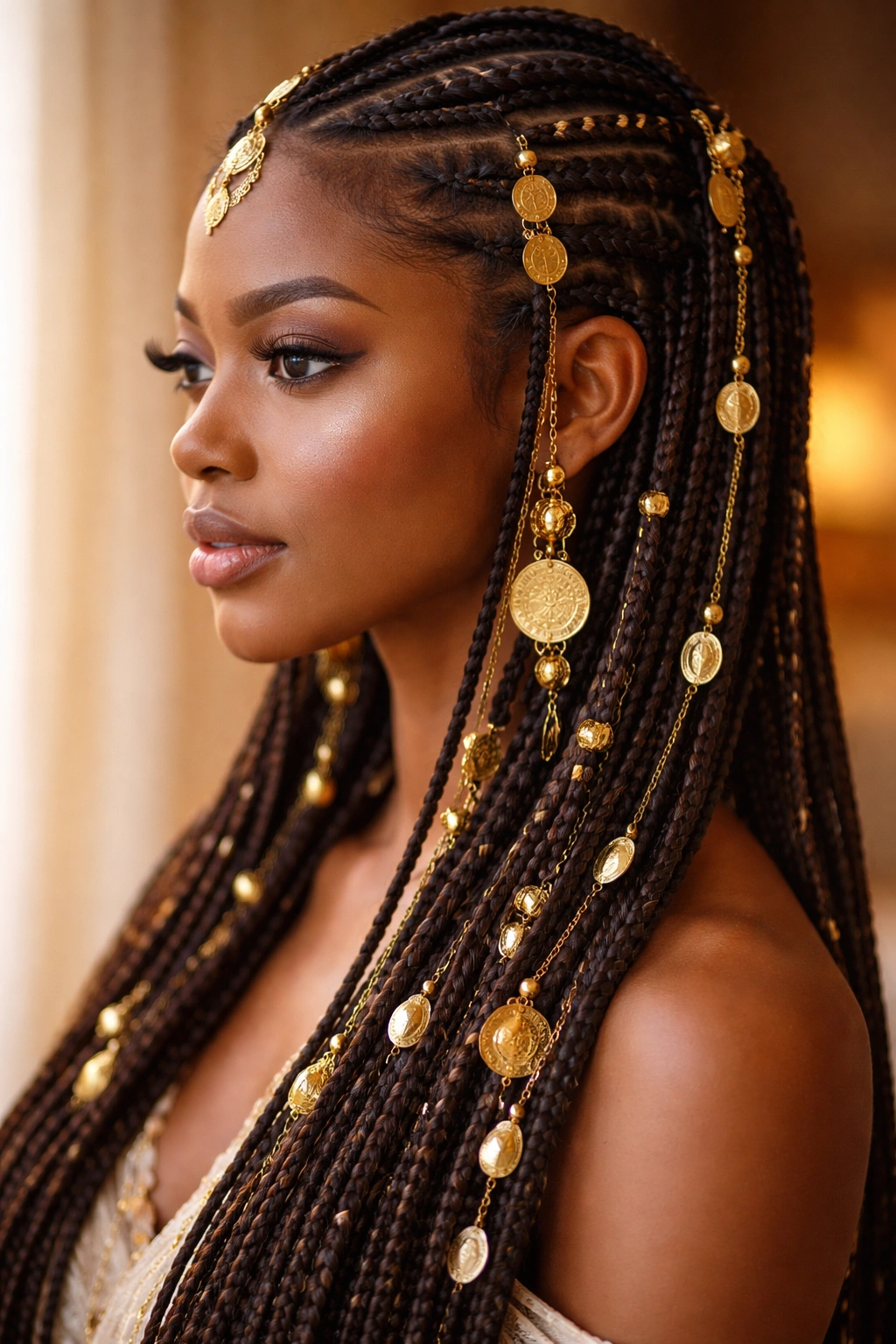
Fulani-inspired braids draw from a neighboring West African tradition while incorporating elements distinctly found in Igbo styling—creating a cross-cultural fusion that feels contemporary while maintaining deep roots. This style features thin, delicate braids (often multiple braids in sections with the rest of the hair left down or in loose waves) adorned with gold jewelry, coins, or beaded accessories. The result is romantic, artistic, and distinctly refined.
The Aesthetic and Cultural Significance
Fulani braids are known for their thinness and intricacy, requiring incredible patience and skill to create. When incorporated into Igbo styling contexts, they often appear as sections throughout the hair rather than covering the entire scalp, creating pockets of detailed artistry against a field of texture. The gold jewelry woven through or attached to the braids elevates the style—gold holds cultural significance across West African traditions as a symbol of wealth, status, and special occasion importance.
Design Approaches for Igbo Contexts
- Braids framing the face: Thin braids starting at the temples, creating elegant definition of facial features
- Crown of braids with loose waves: A halo effect created by braids at the top with wavy extensions cascading down
- Scattered braids throughout: Multiple braids woven throughout loose or curled hair, creating an artful, eclectic look
- One thick braid adorned with multiple gold cuffs: A statement piece braid decorated heavily while the rest of the hair remains free
- Braided pattern at the scalp feeding into loose extensions: Protective braids at the roots with longer extensions left unbraided for movement
Pro tip: Gold jewelry in this style photographs beautifully in natural light, making it perfect for outdoor celebrations or daytime events. The reflective quality of the gold adds another dimension to how the style reads visually.
Best Suited For
This style works beautifully for intimate celebrations, engagement parties, or casual cultural gatherings where you want to show artistry without the formality of a full updo. It’s also ideal if you have fine or delicate hair and need a style that feels special without requiring excessive tension.
7. Igbo Braided Halo Crown with Central Braids
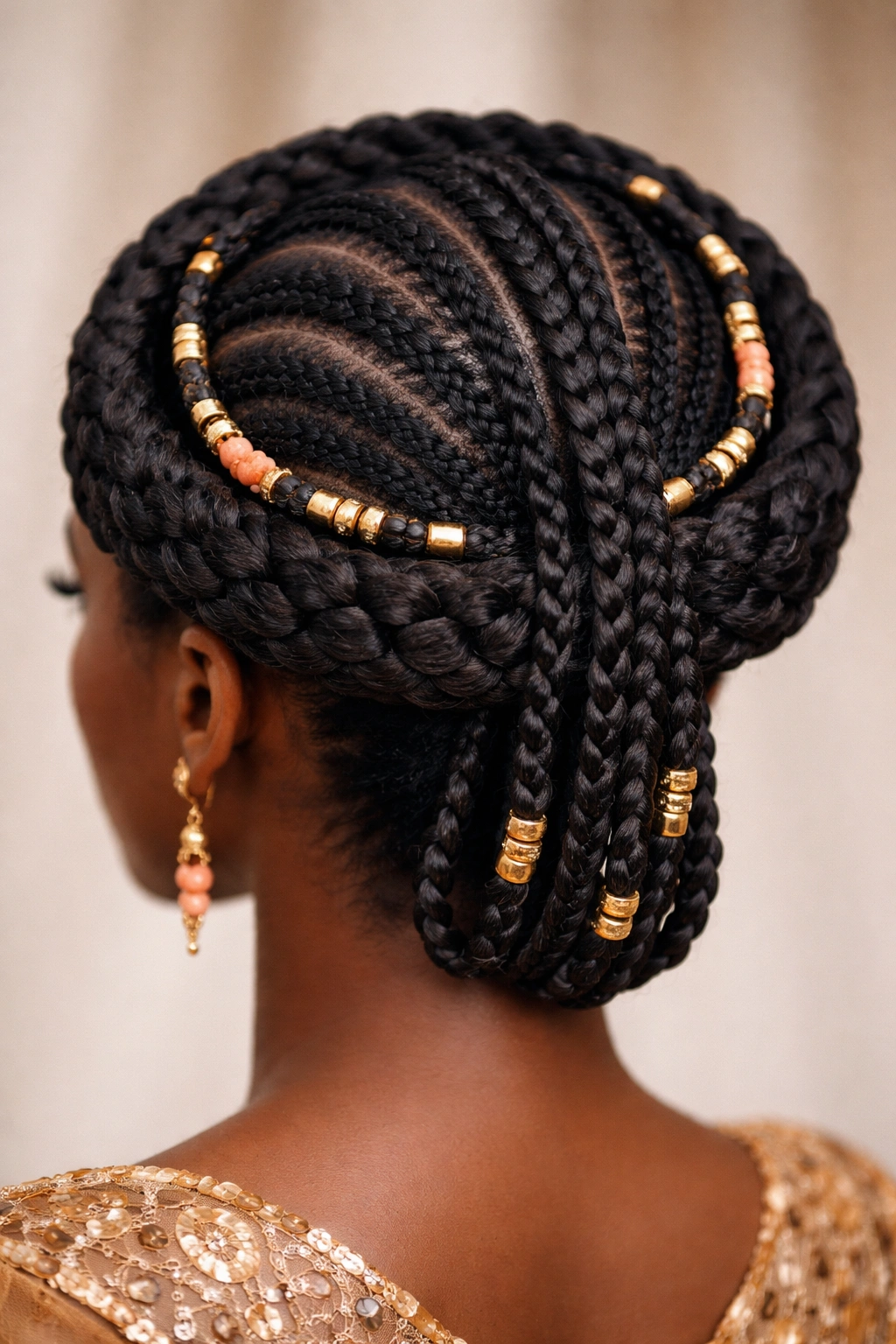
A braided halo creates an ethereal, almost ceremonial appearance by wrapping braids in a crown formation around the top of the head while leaving length free underneath. This style is particularly popular for wedding celebrations and can range from delicate and romantic to bold and sculptural depending on how thickly you braid and whether you add beads or gold accents. The halo formation honors Igbo braiding traditions while creating the visual impression of a literal crown.
Building the Structure and Balance
A braided halo typically begins with braids at the sides of the head that curve upward and around the crown, meeting at the back or opposite side. Some versions incorporate additional braids down the center of the head that feed into the halo structure. The key is ensuring the braids are thick enough to have presence but not so bulky that they overwhelm your face or feel uncomfortably heavy. A skilled braider will size the braids in proportion to your face and head shape, creating balance and harmony.
Halo Variations and Customization
- Single thick halo braid: One substantial braid wrapping around the crown for a bold, unified look
- Double halo effect: Two parallel braids creating an intricate crown pattern
- Beaded halo: Braids with integrated beads or cowrie shells throughout the crown formation
- Halo with central freedom braids: A decorative halo framing the face while central braids are left longer and looser
- Halo with gathered loose hair: Braids forming the crown while the remaining hair is twisted, coiled, or left in waves underneath
Worth knowing: Halo styles require your braider to have a strong sense of proportion and balance, as an off-center or uneven halo immediately throws off the entire look. Spending time with your braider beforehand, discussing exactly how you envision the final result, is essential.
Perfect Event Pairings
This style is ideal for weddings, engagement ceremonies, naming day celebrations (where mothers of newborns are honored), and any event where you’ll be photographed extensively. The style frames the face beautifully and creates an immediately ceremonial appearance that signals special occasion importance.
8. Igbo Kinky Braids with Curled Ends
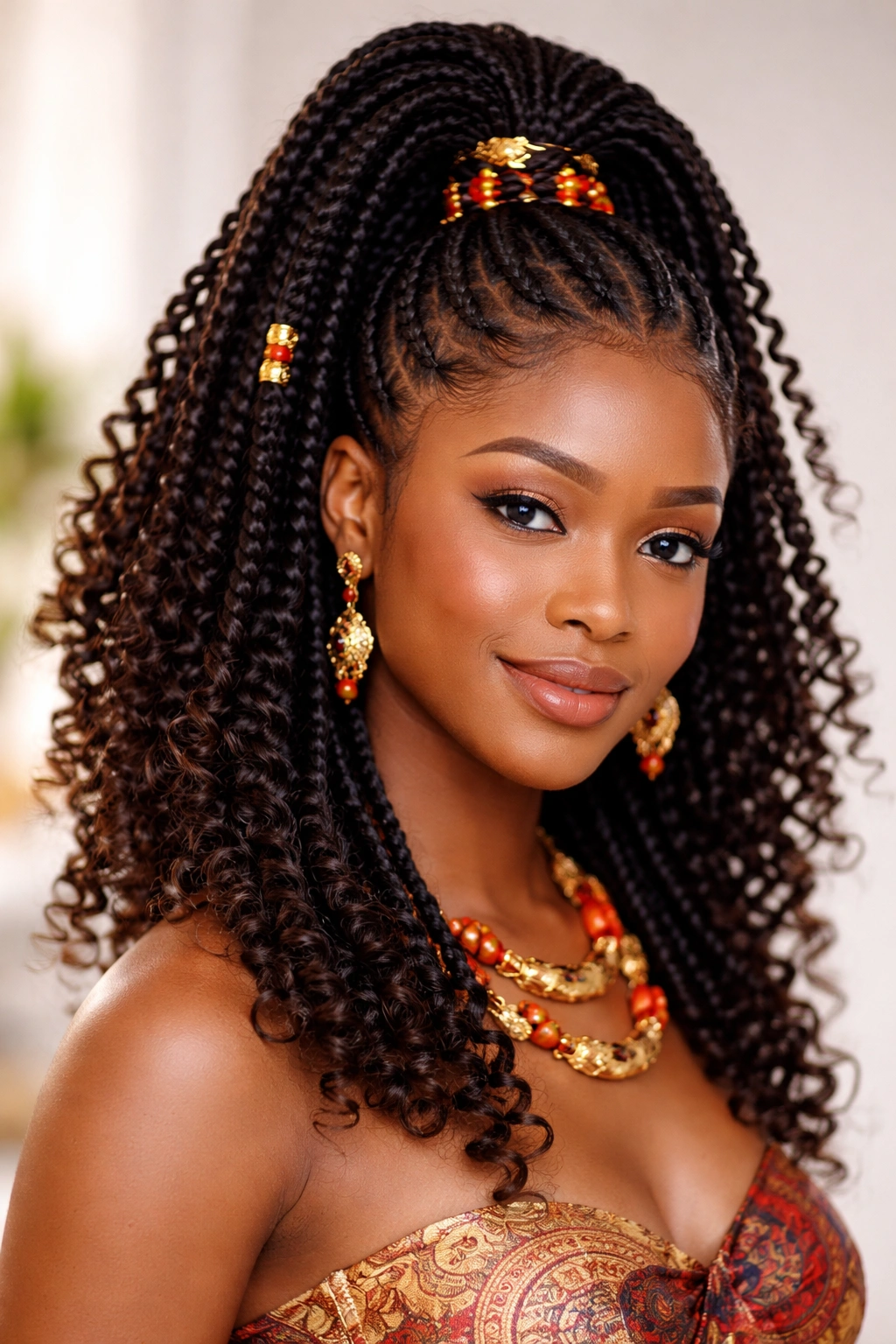
Kinky braids—also called Marley braids or spring twists—use a wiry extension product to create braids with inherent texture and bounce. When curled at the ends using hot water or steam, these braids develop springy, defined curls that add visual interest and movement. This style is younger and more playful than traditional formal styles while still honoring Igbo braiding practices, making it perfect for celebrations where you want to feel fun and confident.
The Texture and Movement Factor
Kinky braids have a distinctly textured quality that photographs beautifully and moves naturally as you walk or dance. The curled ends create definition and visual interest that flat or straight braids simply can’t match. This style works particularly well if you’re attending an event with music and dancing, as the movement of the braids adds to the dynamism of the experience. The style also ages gracefully—as the braids relax slightly over the weeks you wear them, they maintain their visual presence rather than looking flat or tired.
Creating Dynamic Styling with Kinky Braids
- Shoulder-length kinky braids gathered into a high ponytail: Playful and energetic, with movement even when pulled back
- Full-length kinky braids with gold cuffs at intervals: Classic styling elevated with metallic accents
- Half-up kinky braids gathered with a decorative wrap: Practical for keeping hair back while showcasing the texture of the braids
- Kinky braids styled into a twisted updo at the nape: Formality combined with texture and movement
- Mix of kinky braids and loose curled extensions: Creating contrast between braided and free-flowing sections
Insider note: Kinky braids are particularly forgiving as they age because the inherent texture of the extension hides frizz and maintains visual interest even after several weeks of wear. This makes them ideal if you’re planning to wear a style for an extended period.
Best for Active Celebrations
Wear kinky braids to festivals, parties, or celebrations where you’ll be moving throughout the day. The style maintains its integrity through activity and looks joyful and energized—perfect for contexts where you want to feel youthful and engaged rather than formal and reserved.
9. Igbo Sculpted Braids with Beaded Geometric Designs
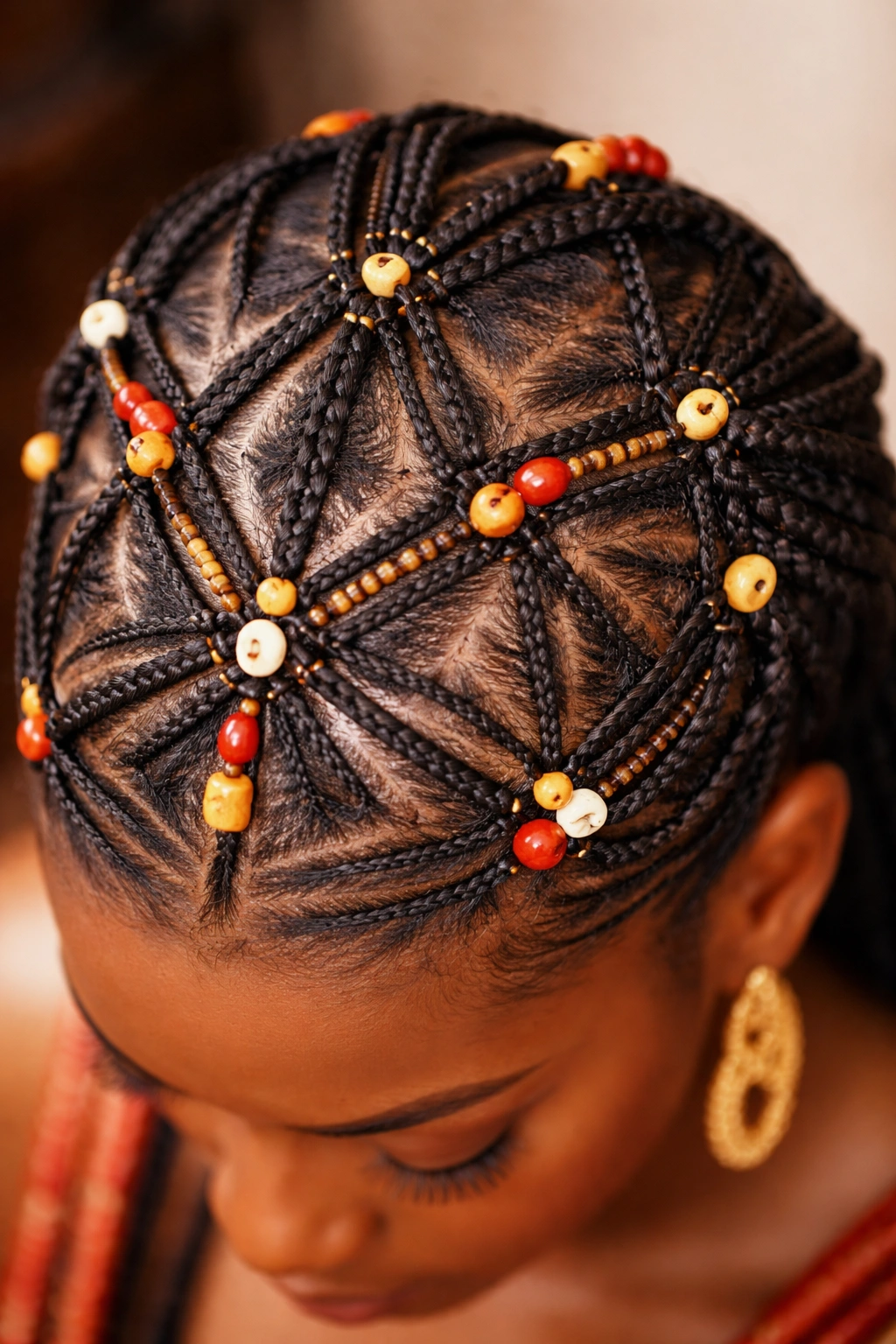
The apex of Igbo braiding artistry is sculpted braids that create intentional geometric patterns across the scalp—designs that might form specific shapes, incorporate beads in strategic locations, or tell a visual story through their arrangement. This style demands expert-level braiding skills and significant time investment, but the result is wearable art that showcases the height of the craft. Typically worn at major celebrations, by brides, or by people being specifically honored, sculpted braids represent mastery and cultural pride.
The Artistry and Precision Required
Creating sculpted braids means planning the entire style in advance, mapping out where each braid will go and how it will interact with others to create the overall pattern. Your braider must have an almost architectural understanding of the scalp and spatial relationships. The braids might curve, connect, or diverge intentionally, creating visual narratives. Beads are often placed to mark important points in the design or to create color and light-catching elements throughout the pattern.
Sophisticated Pattern Ideas
- Central geometric motif with frame pattern: A complex shape down the center of the head surrounded by a border of braids
- Spiraling braids converging at the crown: Lines that begin at the hairline and curve inward, creating a vortex effect
- Beaded diamond or triangle grid: Geometric shapes outlined with braids and filled in with beads at intervals
- Asymmetrical design with cultural symbols: Patterns that incorporate meaningful symbols, create visual balance without symmetry
- Braided lace pattern: Intricate, interweaving lines that create the visual effect of delicate lacework across the scalp
Pro tip: Bring reference images to your consultation—working with your braider to translate a visual concept into reality on your unique scalp shape and hair characteristics is a collaborative process that benefits from clear communication.
Investment and Timeline
Expect sculpted braids to take eight to twelve hours or more to complete, sometimes requiring multiple appointments if your braider needs to stretch the work across two sessions. This is not a quick style, but rather a commitment to the art form and a statement that you’re honoring the occasion with significant time and investment. The style can last six to eight weeks, making the per-week cost of the investment quite reasonable.
Ceremonial Significance
Sculpted braids are worn at major life celebrations—weddings, significant birthday parties, coronations or chieftaincy ceremonies, and other occasions where the event itself warrants this level of visual expression. If you’re being honored, this is the style that announces it without words.
Final Thoughts
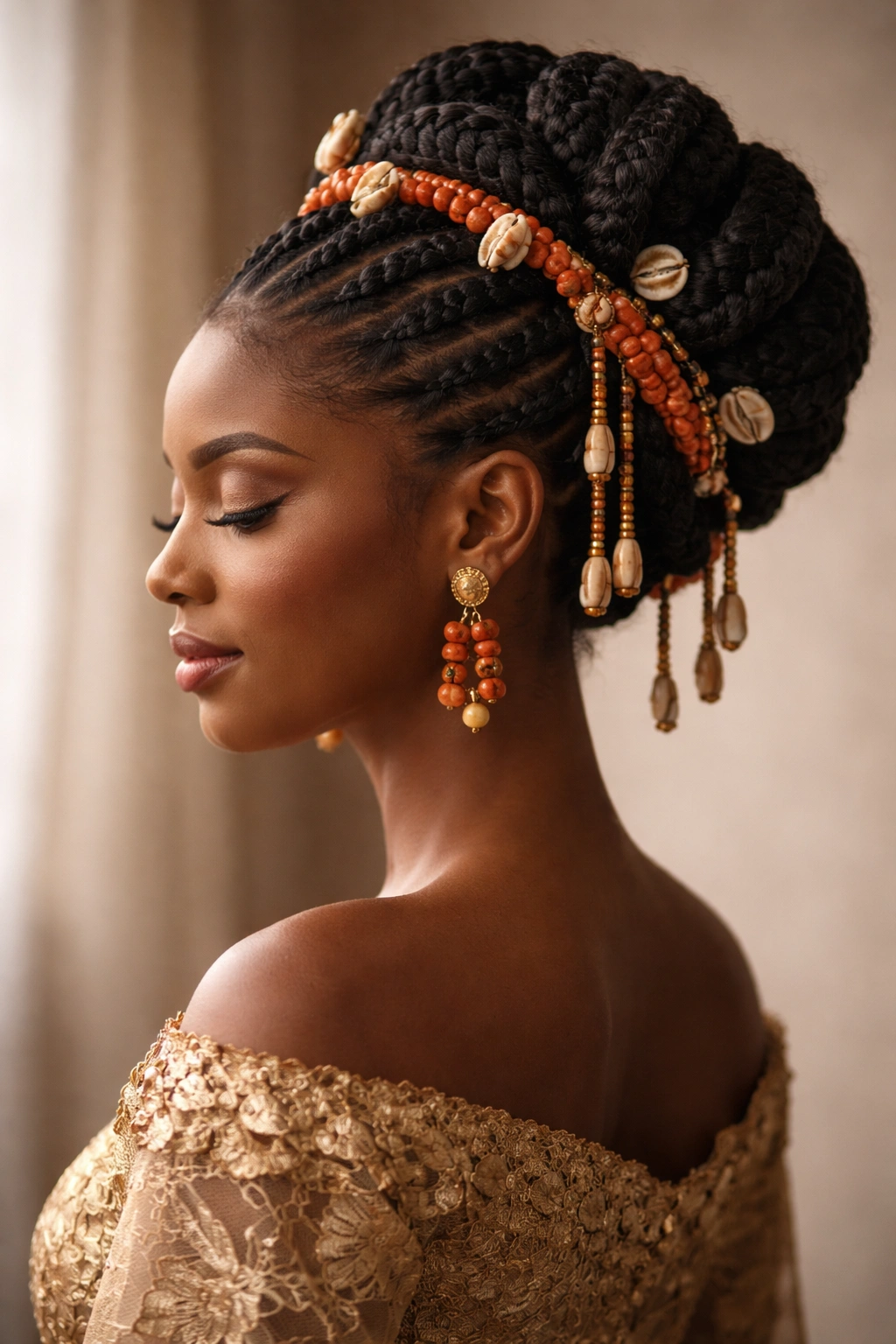
Igbo traditional hairstyles are more than decorative—they’re expressions of cultural identity, personal artistry, and respect for centuries of knowledge held in the hands of skilled braiders. Choosing one of these styles for an event is choosing to participate in a living tradition, to honor the craftspeople who created it, and to present yourself as someone who understands the significance of what you’re wearing.
The nine styles here represent a spectrum from accessible and wearable daily-at-the-event to show-stopping sculptural art pieces reserved for the most significant occasions. Your choice depends on the event’s formality, your personal comfort with how much hair commitment you want, and honestly, which style makes you feel most like yourself when you imagine it finished.
Find a skilled, experienced braider—ideally someone with deep knowledge of Igbo traditions or West African styling generally—and approach your consultation as a collaboration. Bring reference images, discuss your vision, ask questions about maintenance, and trust their expertise when they offer suggestions based on your face shape and hair characteristics. The difference between a hairstyle that feels correct and one that feels transformative often comes down to the skill and attentiveness of the person creating it.
When you wear any of these styles with intention and respect for their origins, you’re carrying forward a tradition that has beauty, power, and meaning far deeper than aesthetics alone.
