



Yoruba hair artistry is one of the most visually stunning and culturally significant beauty traditions in the world. These hairstyles aren’t merely aesthetic choices — they’re expressions of heritage, social status, identity, and celebration. When you’re preparing for a wedding, naming ceremony, festival, or any important Yoruba gathering, the right hairstyle becomes part of the story you’re telling about yourself and your connection to your culture.
What makes traditional Yoruba hairstyles so remarkable is their technical complexity combined with their versatility. A skilled stylist can take hours to create these intricate arrangements, weaving cultural symbols into every twist, braid, and wrap. The beauty of these styles lies not just in how they look, but in understanding why each element matters — the way a gele sits speaks of respect and refinement, the way braids are arranged tells of family lineage, and the adornments chosen reflect personal style and occasion.
Whether you’re attending a high-profile event, celebrating a milestone, or simply want to reconnect with your roots through your appearance, these 15 traditional Yoruba hairstyles offer options ranging from understated elegance to show-stopping grandeur. Each style has been perfected over generations, and each carries its own significance and beauty. Let’s explore the styles that have defined Yoruba beauty for centuries and continue to turn heads at events today.
1. Gele (Traditional Headwrap)
The gele stands as perhaps the most iconic Yoruba hairstyle for formal events, transcending fashion to become an art form in itself. This isn’t a simple headwrap — it’s a sculptural masterpiece that requires skill, patience, and an understanding of balance and proportion. The way a gele is tied speaks volumes about the wearer’s knowledge of tradition and commitment to elegance.
The Art and Significance of Gele Wrapping
Creating a stunning gele involves selecting high-quality fabric, usually stiffened with materials that help hold elaborate shapes. The gele can be wrapped in countless ways — some styles feature a single dramatic swoop across the head, while others involve multiple folds and peaks that create three-dimensional interest. The fabric choice matters enormously; traditional gele fabrics include aso-oke (hand-woven Yoruba cloth), damask, and specially treated cotton that holds structure throughout an entire event.
Styling Techniques and Tips
- A well-fitted gele should sit firmly without slipping, requiring proper anchoring using hairpins or a secure tie underneath
- The height of your gele should complement your face shape — round faces often benefit from higher, more vertical folds
- Coordinating your gele with your outfit elevates the entire look; traditional patterns paired with traditional colors create visual harmony
- Adding subtle jewelry or beaded pins to your gele increases its impact without overwhelming the overall aesthetic
- Geles work beautifully over braided hair, allowing you to protect your hair while achieving maximum visual impact
Pro tip: Practice the basic wrap technique before your event, or visit an experienced stylist multiple times — the difference between a rushed gele and a carefully crafted one is unmistakable.
2. Irun Didi (Long Braids)
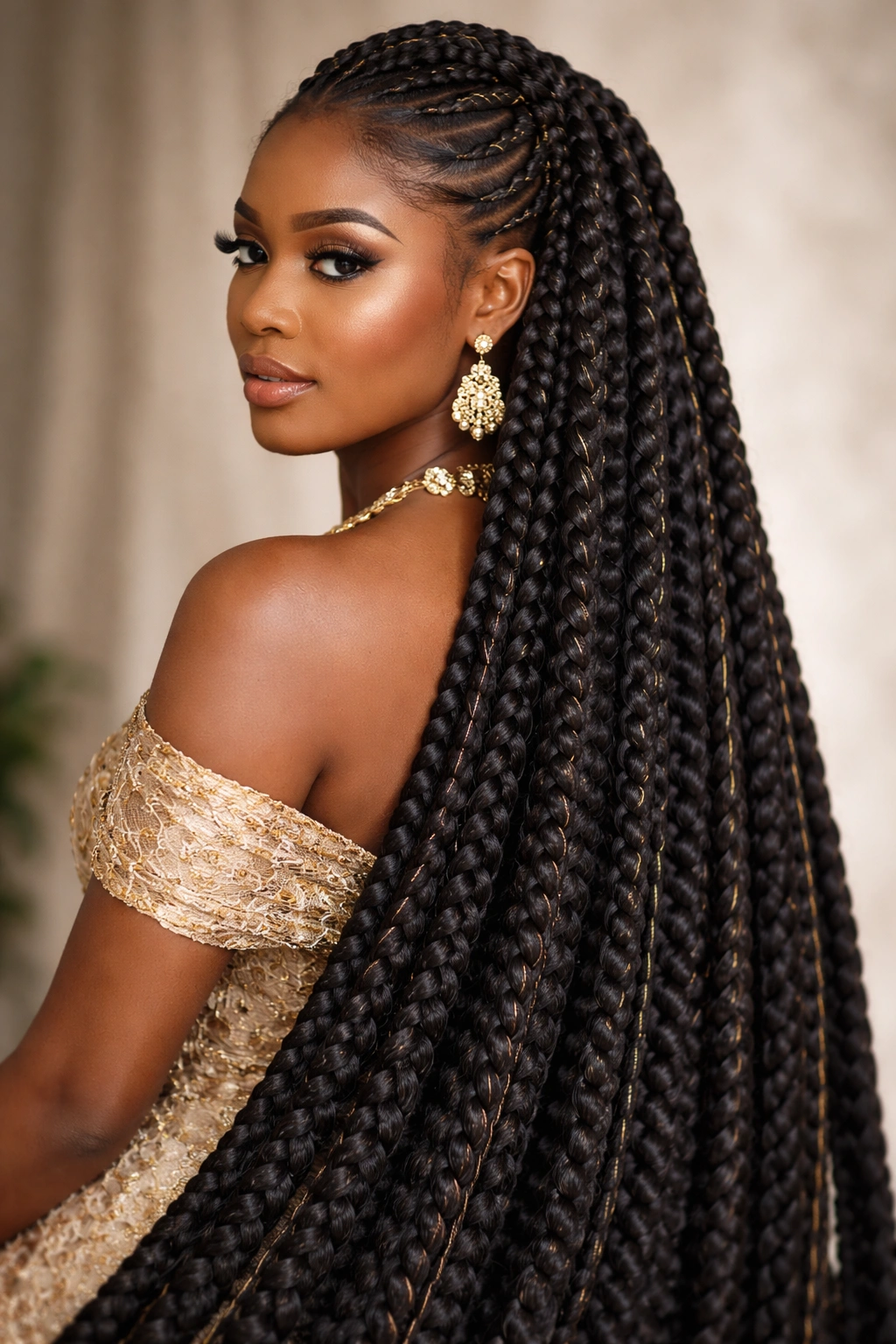
Irun didi represents one of the most timeless Yoruba hairstyles, featuring long, flowing braids that can reach the waist or beyond. This style celebrates the length and health of your natural hair or the extensions used to create volume and drama. The elegance of irun didi lies in its simplicity combined with its undeniable impact — these braids command attention simply through their presence.
Creating Volume and Length
Long braids require substantial preparation, whether you’re working with your natural hair extended with braiding hair or using full-length extensions. The braids are typically chunky and substantial rather than thin and delicate, creating visual weight that moves beautifully as you walk. Many stylists add metallic threads or beads throughout the braids to catch light and add richness to the look.
Wearing and Maintaining Your Irun Didi
- Protect the ends of your braids with protective wraps or by sealing them with a small rubber band
- Use lightweight oils to keep braids looking fresh and prevent frizz, without making them appear oily or dull
- Secure your braids in an updo or side-swept arrangement for certain portions of the event to reduce strain on your scalp
- Gently pat braids dry after outdoor events or dancing to maintain their appearance throughout the evening
- Consider the weight distribution of your braids — working with your stylist to ensure they’re not pulling uncomfortably is essential
Worth knowing: Long braids photograph beautifully and create striking movement in photos, making them an excellent choice if your event will be documented.
3. Cornrows with Beads
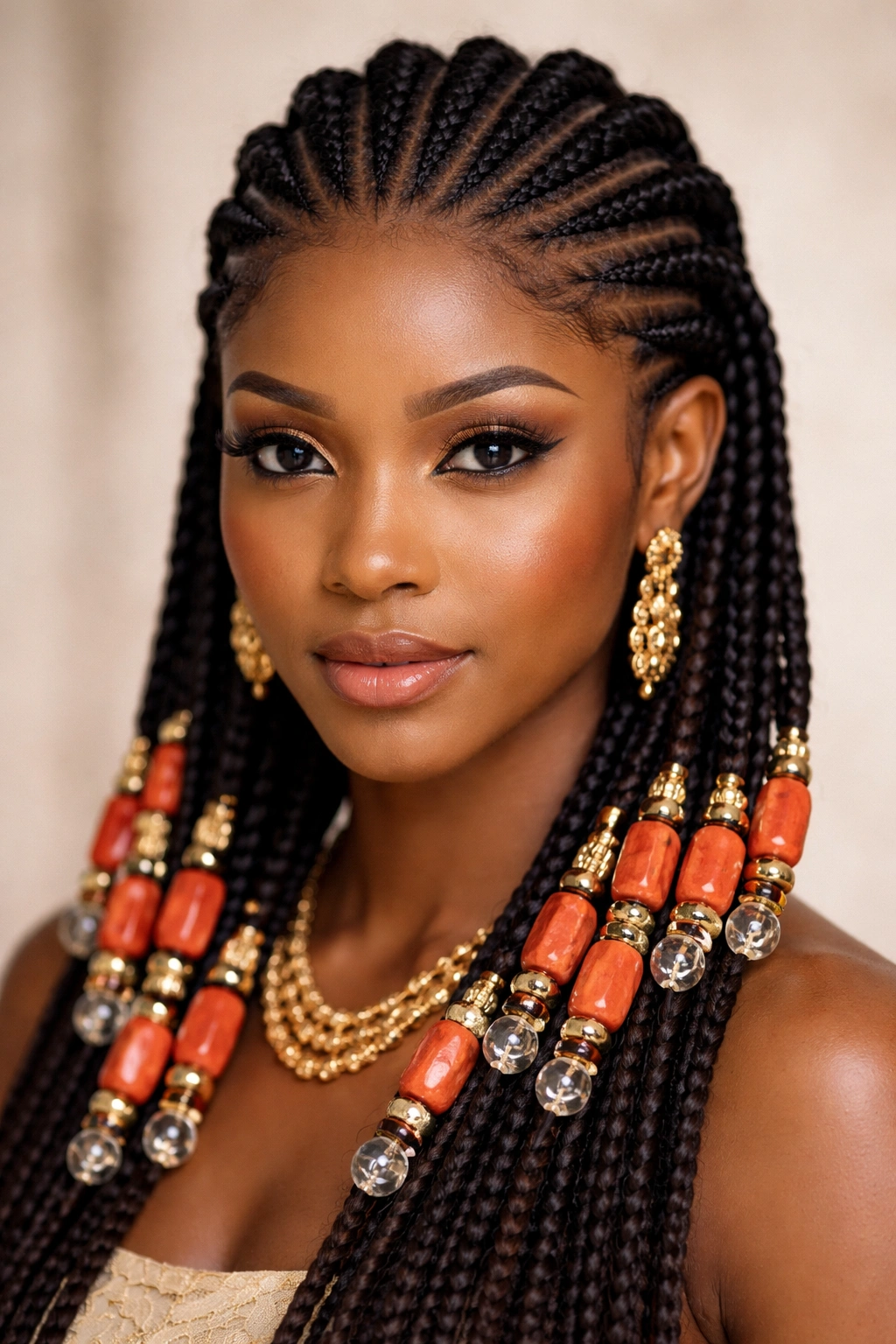
Cornrows hold profound cultural significance in Yoruba tradition, and when adorned with beads, they become celebrations of artistry and personal style. This hairstyle involves creating raised rows that run along the scalp, and the bead selection transforms a functional protective style into an event-worthy statement. Each bead color, shape, and material choice tells its own story.
Bead Selection and Placement
Traditional beads for this style might include coral beads (representing wealth and status), glass beads (reflecting light beautifully), or wooden beads (connecting to natural, earthy aesthetics). The placement of beads can be strategic — concentrating them at the ends of rows, spacing them evenly throughout, or clustering them in focal points. Some wearers choose beads that match their outfit colors, while others select contrasting shades for dramatic effect.
Design Patterns and Variations
- Concentric circular patterns create a mesmerizing effect that draws the eye to the crown
- Geometric straight-line cornrow patterns communicate sophistication and control
- Curved cornrow designs flowing toward the back of the head create movement and flow
- Varying the bead sizes within a single row adds texture and visual interest
- Incorporating metallic beads or beads with intricate patterns elevates the style further
Insider note: The weight of your beads matters — heavier beads create more visual impact but may cause discomfort if worn for extended periods, so balance impact with comfort.
4. Irun Talaẹ (Twisted Braids)
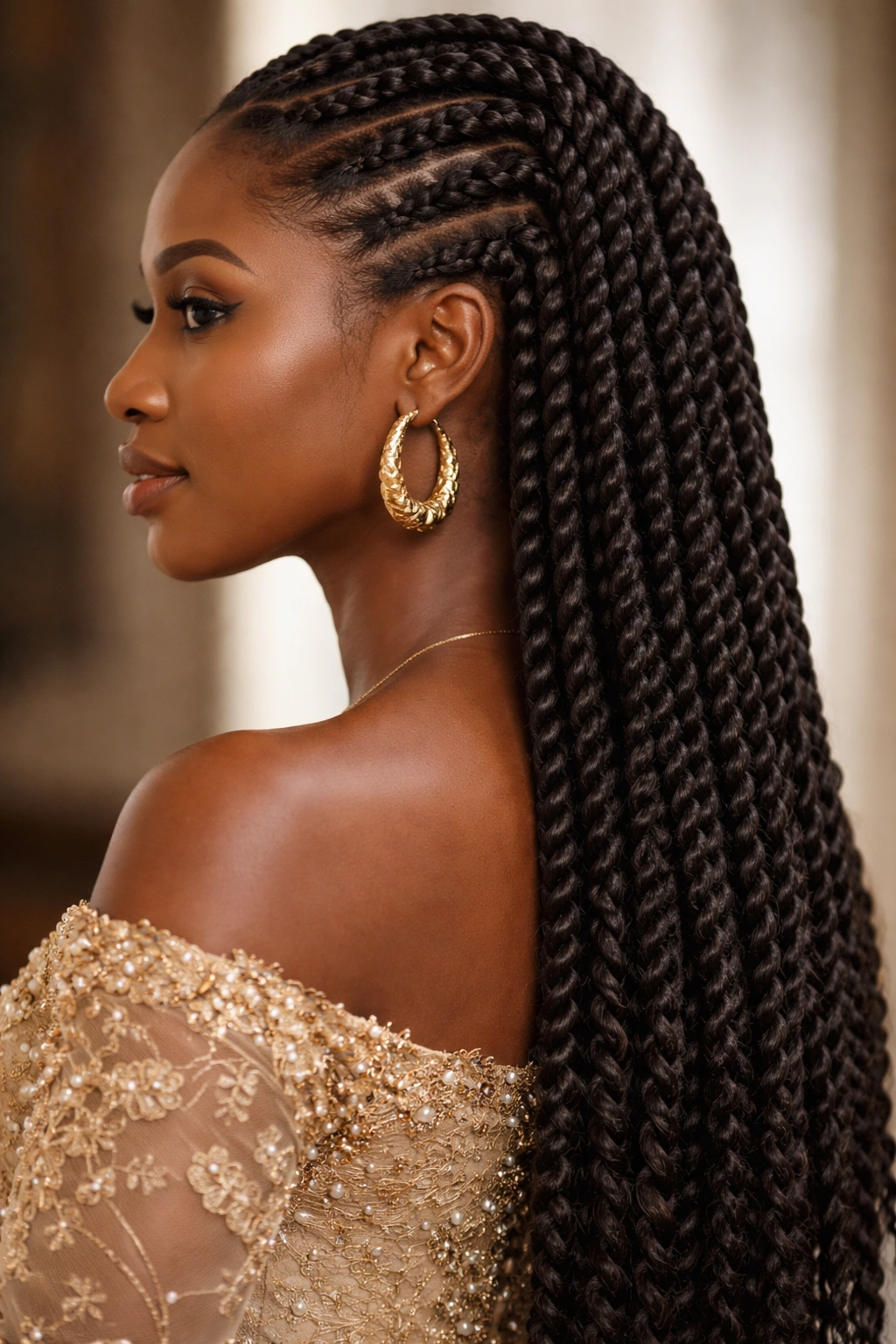
Irun talaẹ, or twisted braids, represent a sophisticated alternative to traditional three-strand braiding. This style uses two sections of hair twisted around each other rather than three interwoven strands, creating a sleeker, more refined appearance. The twisted braids can be worn loose and flowing or gathered into elaborate updos, making this style genuinely versatile for different event types.
Techniques for Perfect Twists
Creating smooth, even twists requires consistent tension and practice. The twists should spiral evenly throughout their length without any sections appearing lumpy or uneven. Many stylists use a combination of your natural hair and extensions to achieve maximum length and thickness. The finished twists should feel firm enough to hold their shape throughout the event but not so tight that they cause scalp discomfort.
Styling Options for Twisted Braids
- Loose flowing twisted braids create an ethereal, elegant appearance perfect for afternoon events
- Half-up, half-down styles allow you to showcase the twists while keeping hair away from your face
- Twisted braids gathered into a side ponytail create romantic, windswept elegance
- Wrapping twisted braids around the crown creates an intricate halo effect
- Pinning twists into an elaborate updo showcases the artistry of the braiding work
Pro tip: Adding metallic threads during the twisting process catches light and adds dimension without requiring separate beading.
5. Adire with Hair
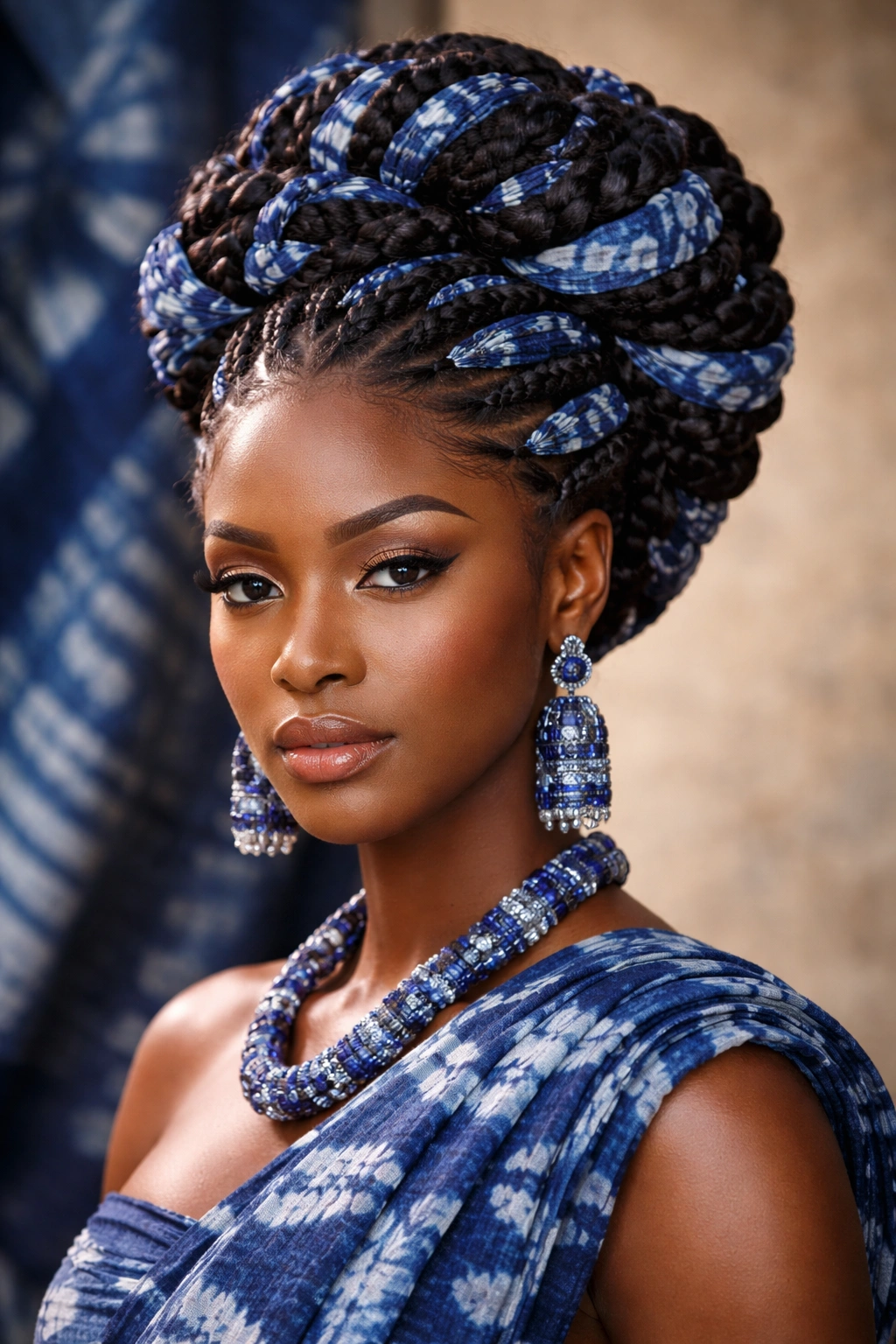
Adire, the traditional Yoruba indigo-dyed fabric, can be integrated into hairstyles for a look that’s distinctly cultural and visually striking. This involves wrapping sections of adire fabric throughout your braided or twisted hair, or using the fabric as a component of a larger updo. The result is a hairstyle that’s part hair art, part textile art, creating a completely unique aesthetic.
Selecting and Preparing Adire Fabric
Quality adire has character — the indigo dye creates depth and complexity that photographs beautifully and photographs. You’ll want pieces with interesting patterns, whether geometric designs, tie-dye effects, or the traditional resist-dye patterns that adire is famous for. Preparing the fabric involves cutting it into strips or sections appropriate for your hair type and desired effect.
Integration Methods and Visual Impact
- Wrapping adire strips tightly around braids creates bold graphic lines that complement the braid texture
- Weaving adire into loose twists during the styling process embeds the fabric throughout the hairstyle
- Using adire as a base under an updo creates depth and visual interest when the updo is styled
- Incorporating adire strips as ties at braid endings transitions the look from your hair to traditional cloth
- Layering different adire patterns creates a rich, complex aesthetic
Worth knowing: Adire fabric can be slightly stiff, which actually helps it hold its shape in your hair — choose quality pieces that won’t become limp after a few hours of wear.
6. Upswept Crown Braids
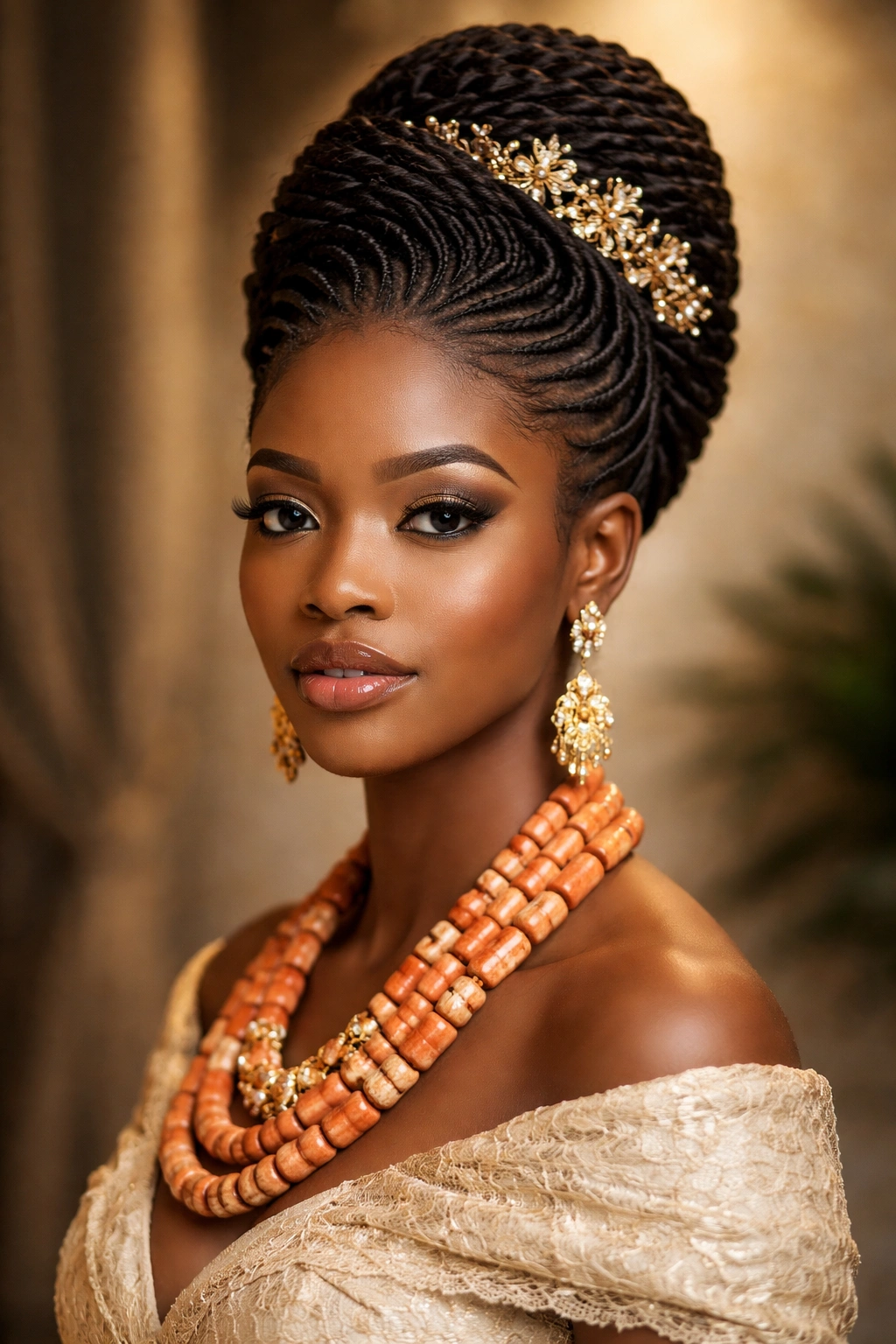
This refined hairstyle features elaborate braids that begin at the nape of the neck and sweep upward, gathering toward the crown in an elegant architectural arrangement. The braids create height and sophistication while exposing the neck and face, making this style ideal for events where you want to appear both polished and approachable. The visual effect is almost royal — like a crown that you’ve created yourself.
Building Height and Structure
Creating effective upswept braids requires strategic parting and section planning. Your stylist will typically create sections that naturally flow upward when braided and pinned. The braids aren’t uniform in thickness — thicker braids at the base create stability, while thinner accent braids can be woven between them for visual interest. The finished arrangement should feel secure enough to withstand movement and dancing.
Securing and Enhancing Your Updo
- Using decorative hair pins or traditional hair clips secures the braids while adding visual elements
- Leaving some small braids or curls loose around the face softens the overall look
- Adding flowers, beads, or metallic accents at the crown elevates the style to event-ready status
- Ensuring the base of your updo is smooth and polished makes the braids appear more intentional
- Pinning smaller accent braids in contrasting directions creates visual dynamism and interest
Pro tip: This style works beautifully with a dramatic gele worn slightly back — the upswept braids and gele create a unified, cohesive look that photographs stunningly.
7. Irun Sango (Lightning Bolt Braids)
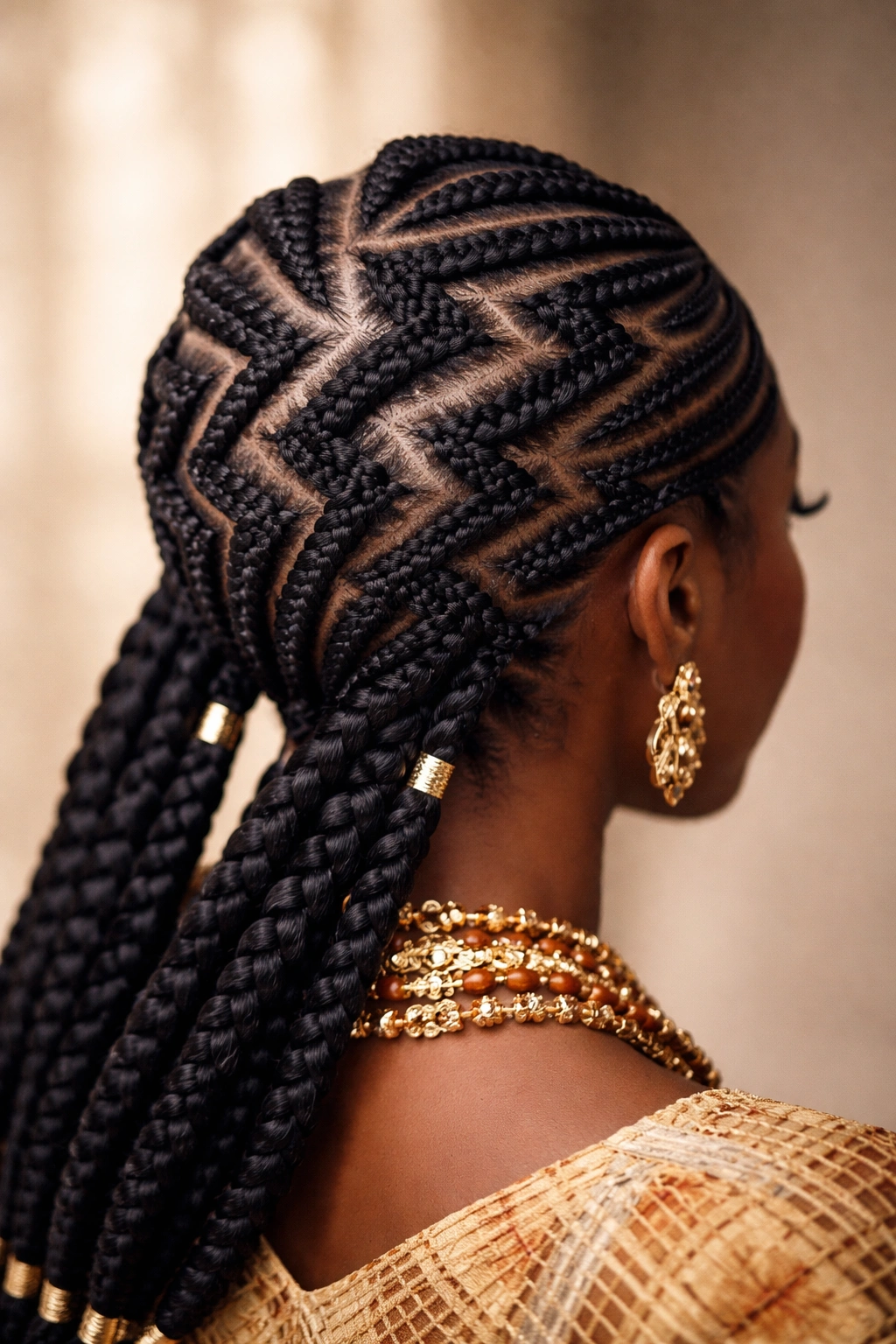
Irun sango references the dramatic, zigzagging patterns inspired by lightning, the domain of Sango, the Yoruba god of thunder and lightning. This style features angular, geometric braids that create striking directional movement and visual excitement. The zigzag pattern is instantly recognizable and carries cultural significance, making it a powerful choice for anyone wanting to honor Yoruba tradition through their hairstyle.
Creating Geometric Patterns
Lightning bolt braids require precise parting and planning. Your stylist must map out the zigzag pattern before beginning to braid, typically using a hair comb or product applicator to create clean lines. The braids follow these geometric paths, creating a cohesive overall pattern that’s visible when viewed from above or the back. The result is a hairstyle that’s equal parts art and hair design.
Pattern Variations and Customization
- Traditional sharp zigzag patterns create high visual impact and strong geometric drama
- Curved wave patterns offer a softer interpretation of the lightning concept
- Multi-directional patterns that change direction in different sections of the head add complexity
- Incorporating different colored braiding hair into the pattern increases visual interest
- Combining lightning bolt patterns with other traditional designs creates unique personalized styles
Worth knowing: This style requires a stylist experienced in geometric braid work — the pattern’s success depends on precise parting and consistent braid direction.
8. Braided Bun with Accessories
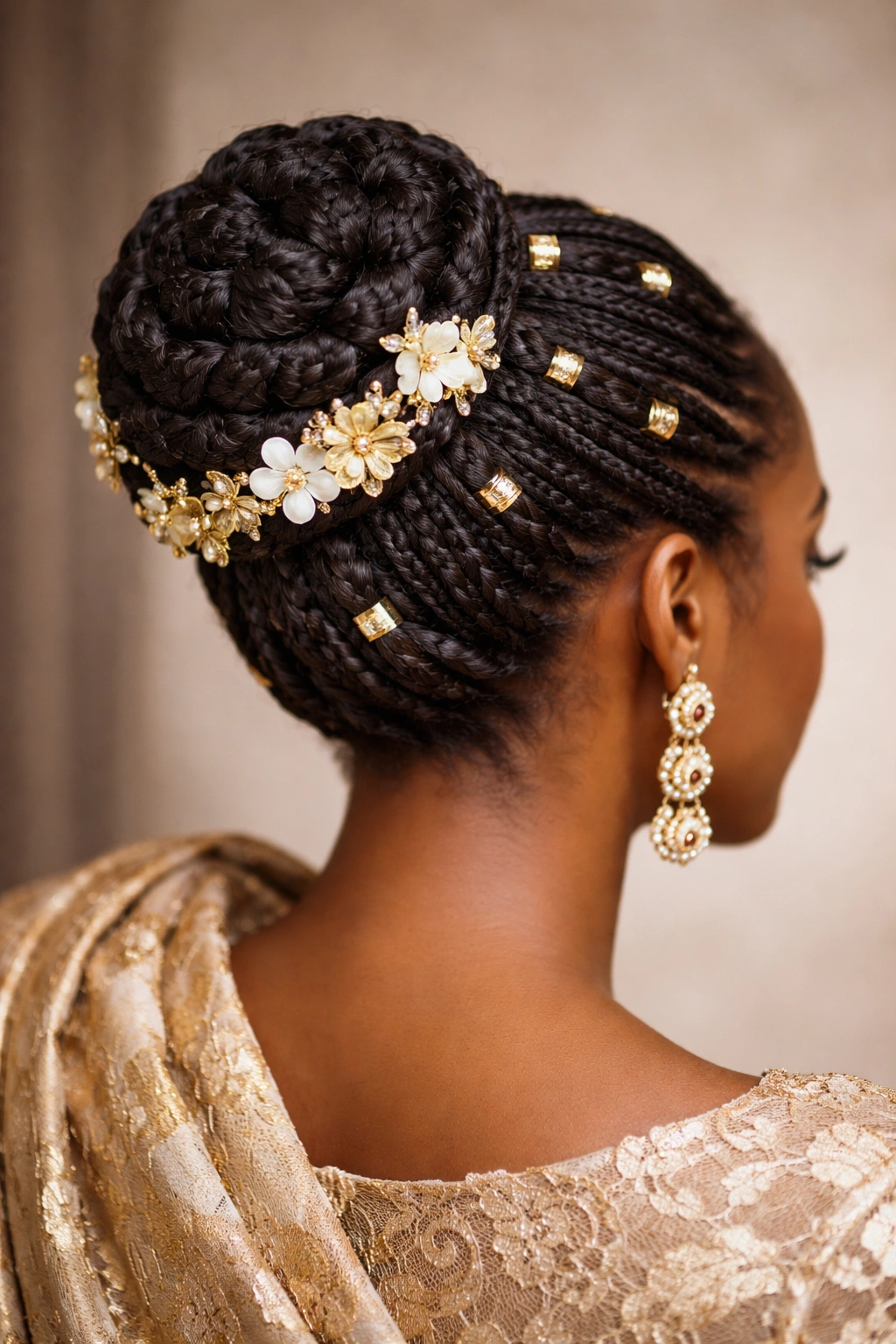
A braided bun represents the meeting point between protective styling and event elegance. Unlike casual braided buns, versions created for events feature carefully selected accessories, intentional texture, and polished finishing details. The bun sits at the crown or lower on the head depending on face shape and outfit, and accessories transform it from everyday style to special-occasion statement.
Bun Construction and Texture
Your braided bun can be created from multiple smaller braids twisted and pinned together, from one long thick braid wrapped around itself, or from loose, wavy texture twisted into the bun structure. The key is achieving balance between a bun that’s substantial and visually interesting without appearing overly casual or sloppy. The braids should wrap neatly without any stray pieces disrupting the polished appearance.
Accessory Selection and Placement
- Gold or metallic hair cuffs and clips add richness and shine without overwhelming the style
- Fresh or artificial flowers woven into the bun add softness and romance
- Beaded hair pins scattered throughout create texture and catch light beautifully
- Coordinating scarves or fabric wraps tied around the base of the bun add color and pattern
- Layering multiple smaller accessories creates visual interest without looking cluttered
Pro tip: The area around your face matters — even with a pulled-back bun, leaving a few small curls or loose pieces around the hairline softens the overall effect and makes the style more flattering.
9. Cascading Side Braids
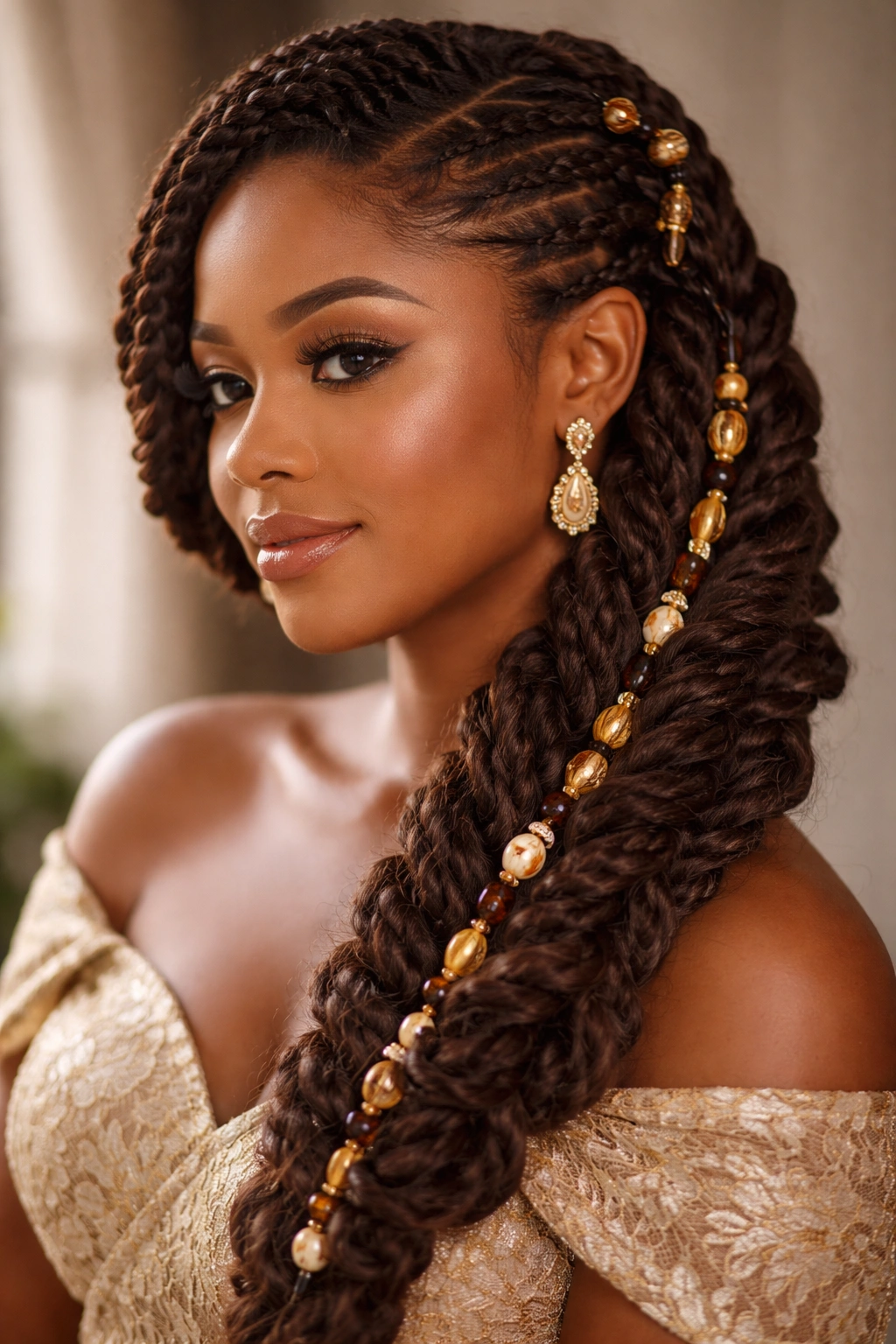
This romantic style features multiple braids that begin at one side of the head and flow down and across, creating the impression of a waterfall or cascade. The braids aren’t constrained by geometry — they move organically while remaining intentional and well-structured. Cascading side braids work beautifully with traditional attire, especially when the braids are thick, substantial, and adorned with carefully chosen embellishments.
Creating Flow and Movement
The success of cascading braids lies in their ability to move as you move without falling apart. Your stylist creates braids at the crown that gradually shift direction, flowing toward the opposite shoulder or down the back. The braids should have weight and thickness, with perhaps some curled or wavy ends that add movement and softness. Each braid is secured strategically so the overall cascade effect is maintained throughout the event.
Styling for Maximum Impact
- Creating braids of varying thicknesses adds visual interest and dimension
- Pulling a few braids slightly looser adds romantic softness to the overall style
- Concentrating beads or accessories at key points along the cascade guides the eye
- Using braids in your natural hair color plus one contrasting color creates subtle visual interest
- Leaving the starting point visible at the crown emphasizes the intentional, artistic nature of the style
Worth knowing: This style photographs exceptionally well from the side profile, making it an excellent choice for events where you’ll be photographed or filmed.
10. Irun Titun (Decorated Braids with Jewels)
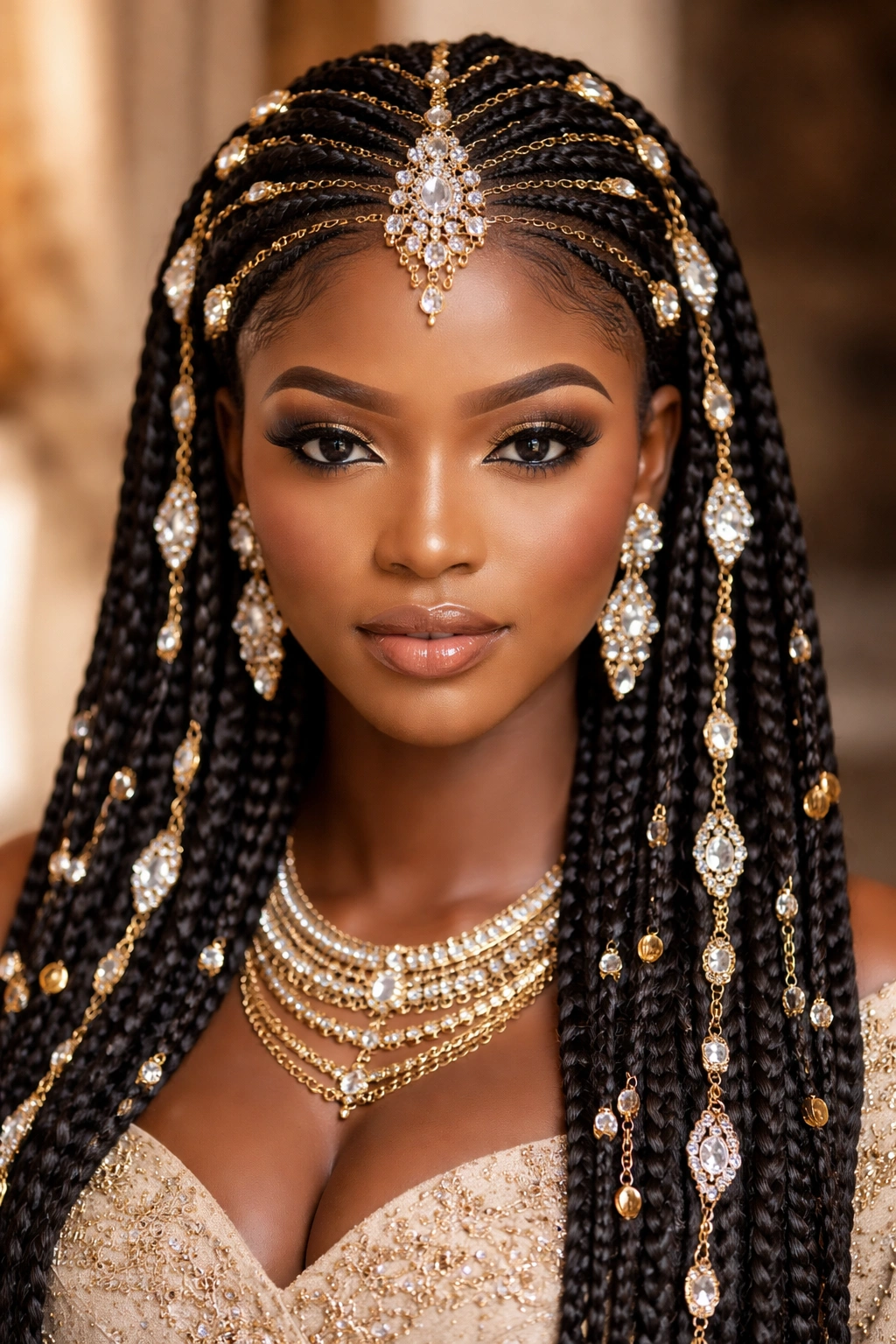
Irun titun showcases the art of hair decoration, featuring braids adorned with an intentional collection of jewels, metallic elements, and precious-looking accents. This style celebrates opulence and craftsmanship, appropriate for the most formal and celebratory events. The jewels might include rhinestones, glass gems, gold cords, or even real metallic elements, depending on the level of formality and your personal preference.
Selecting Jewels and Decorative Elements
The choice of jewels completely transforms the personality of your braids. Rhinestones and crystals add sparkle and glamour, catching light with every movement. Gold or silver chains woven into braids add metallic elegance. Larger gemstone beads placed strategically within the braids create focal points. The color of the jewels should complement your skin tone and coordinate with your outfit — cooler tones for certain complexions, warmer tones for others.
Application Methods and Durability
- Hot-gluing rhinestones or gems onto braids requires careful application but creates stunning, secure results
- Sewn-on jewels take longer to apply but hold up better through extended wear and movement
- Threading beads during the braiding process embeds them securely within the braid structure
- Using temporary hair tattoos or adhesive gems offers a less permanent decoration option
- Concentrating jewels in strategic areas (around the crown, at braid ends, along a center part) creates sophisticated placement rather than covering every inch
Pro tip: Begin adding jewels only after your braids have been in for a day or two, once you’re confident they’ll hold their shape — this prevents wasted effort if braids loosen.
11. Vertical Cornrow Rows
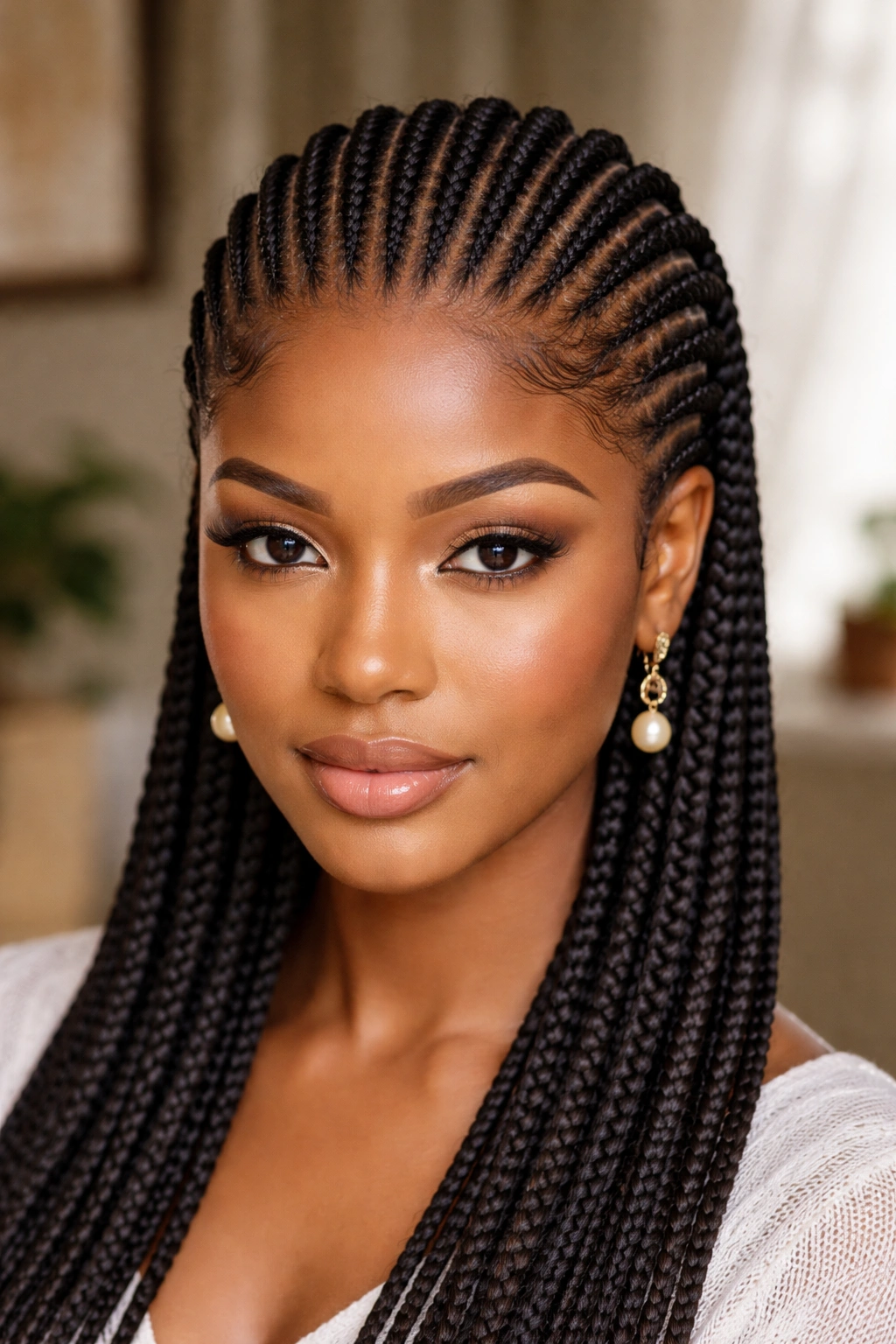
Vertical cornrows running from hairline to nape create clean, structured lines that are both protective and visually striking. This classic style suits virtually every face shape and works as a base for additional styling — you can wear the cornrows loose, gather them into a ponytail, or style them with added accessories. The simplicity of vertical rows creates sophistication without requiring elaborate decoration.
Parting and Row Placement
Creating evenly spaced vertical rows requires careful initial parting. Your stylist will typically create sections from your hairline to your nape, then braid each section in a straight line. The number of rows depends on your hair thickness and personal preference — more rows create a finer appearance, while fewer, thicker rows are bolder and more dramatic. Rows should sit evenly and feel comfortable against your scalp.
Styling Variations and Enhancement
- Leaving rows loose allows movement and showcases the braiding work
- Gathering rows into a high ponytail creates height and elegance
- Creating a zigzag or chevron pattern with the rows adds visual interest
- Incorporating beads into selected rows rather than all rows creates focal points
- Styling small curls at your hairline softens the architectural effect of straight rows
Worth knowing: Vertical cornrows are one of the most forgiving styles in terms of maintenance during an event — they hold their shape beautifully without requiring adjustment or restyling.
12. Braided Halo Crown
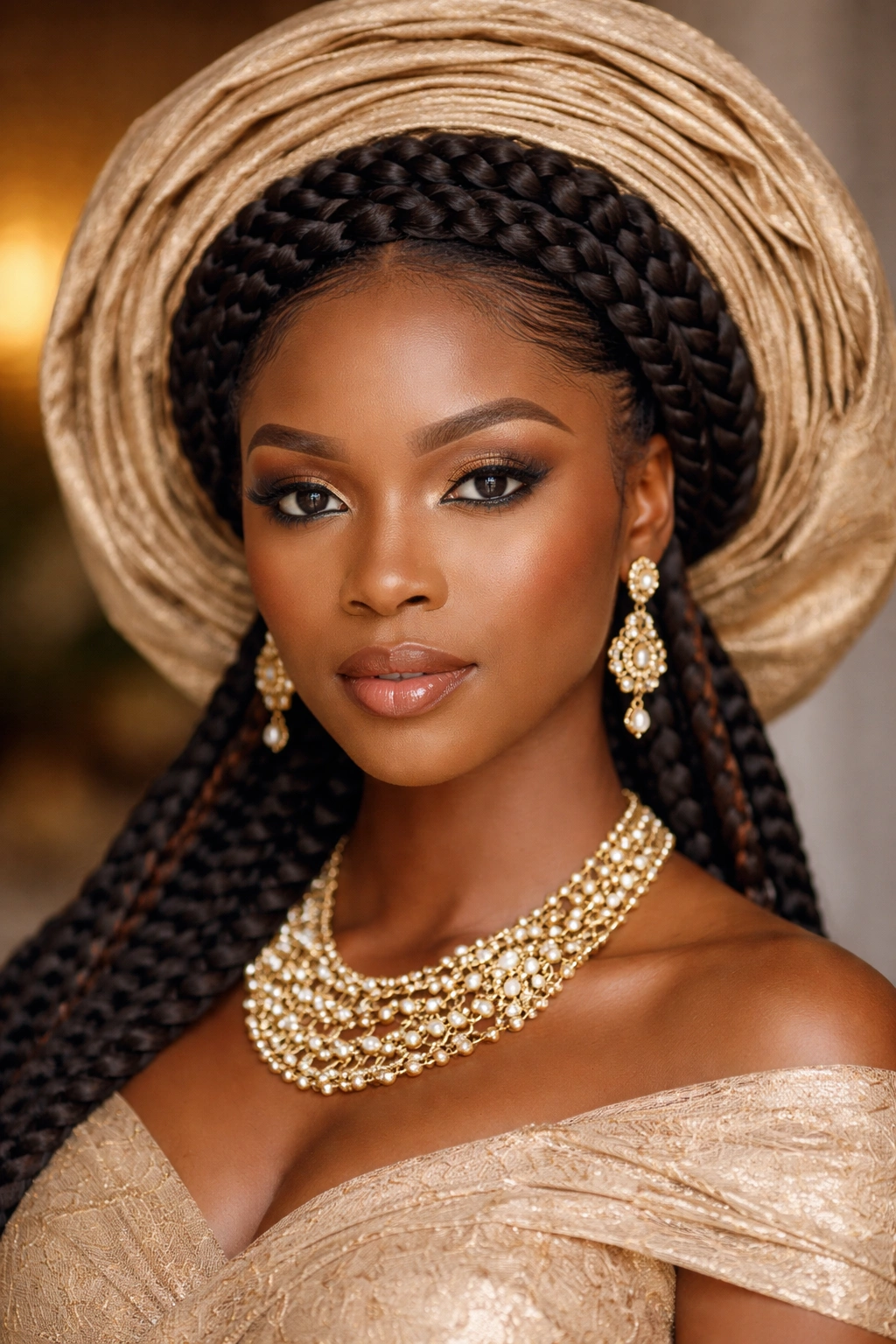
A braided halo crown frames the face with an elegant braided circle that sits at the crown of the head, creating the impression of a regal headdress. This style is exceptionally flattering for most face shapes and works beautifully with traditional Yoruba attire, especially when combined with a gele. The braids can be thick and bold or delicate and detailed, depending on the overall aesthetic you’re creating.
Constructing the Halo Structure
Creating an authentic halo requires braiding thick, substantial braids that run from one side of your head to the opposite side, following the curve of your crown. The starting and ending points should be at ear level or slightly behind the ears, depending on your hair thickness and face shape. The braids should sit close enough to your head to feel secure but have enough dimension to create visual impact. Many stylists incorporate smaller accent braids or curled ends for additional texture.
Styling and Accessorizing Your Halo
- Leaving soft curls or waves beneath the halo adds romantic dimension
- Adding a gele over the halo creates a unified, dramatic look
- Incorporating fresh flowers into the braids adds color and natural beauty
- Using metallic or beaded elements throughout the braids increases glamour
- Creating the halo from braids in a contrasting color to your natural hair adds visual interest
Pro tip: The halo’s placement should allow you to wear earrings — position the starting and ending points slightly behind your ears rather than directly at them, leaving the ear area visible.
13. Festival Twisted Updos
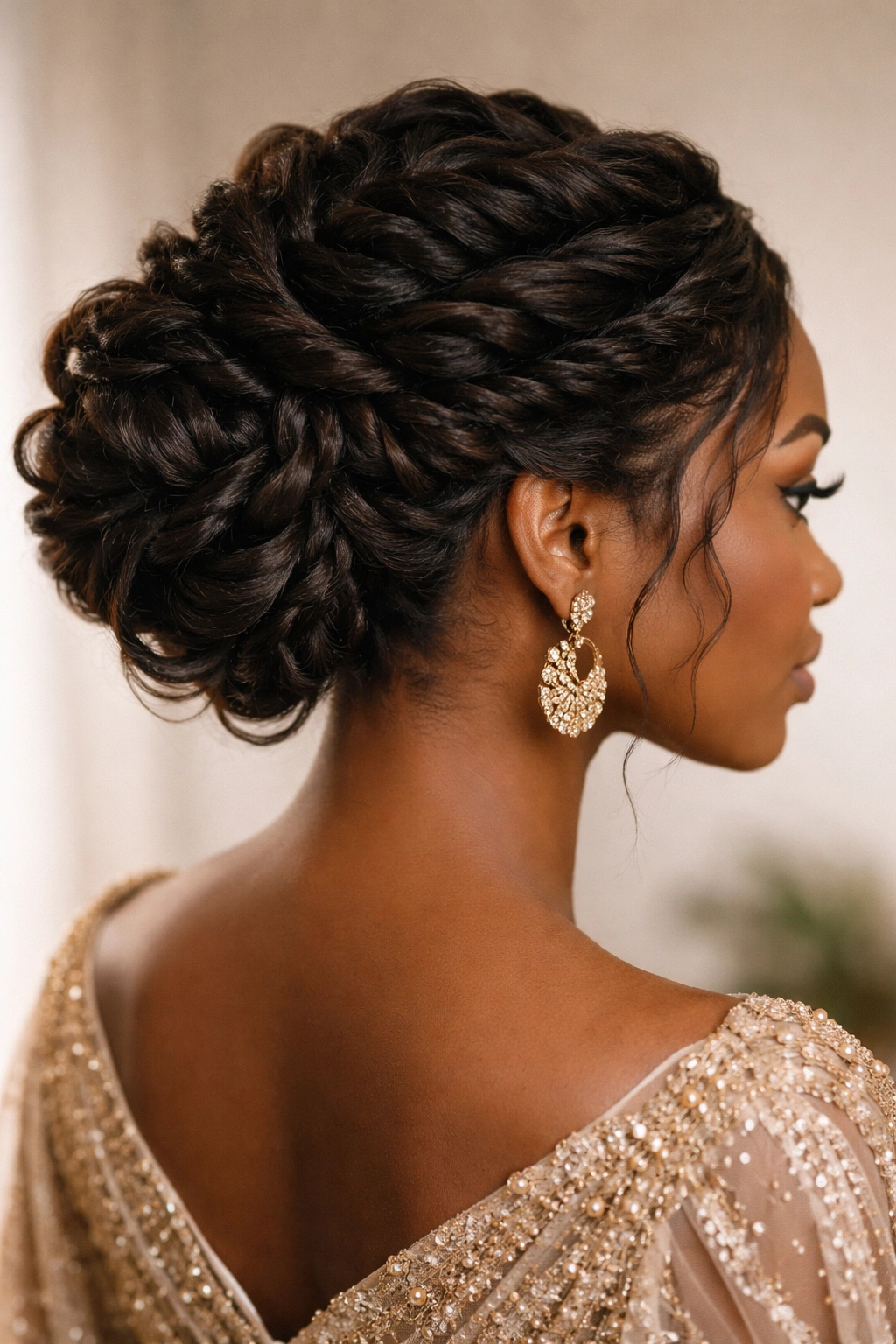
Festival updos featuring twists rather than braids create a texture that’s softer and more romantic than braided styles while remaining secure and event-appropriate. This style celebrates movement and texture, with multiple twists pinned and arranged to create height and visual interest at the crown or back of the head. Festival updos work beautifully for celebratory events where movement and dancing are involved.
Twist Patterns and Arrangements
Creating a successful twisted updo requires multiple twists of varying thicknesses arranged to create a three-dimensional form. Some twists are wrapped tightly around the crown, while others are loosely twisted and pinned to create airiness and movement. The finished updo should have interesting angles and depths when viewed from multiple directions. Curled or kinky texture at the ends of twists adds additional visual interest.
Enhancement and Finishing Details
- Leaving some twists slightly loose creates romantic movement within the structured updo
- Pinning twists in alternating directions creates visual dynamism and interest
- Incorporating ribbon, fabric, or metallic threads during twisting adds color and shine
- Adding jewels or beads at strategic points along the twists highlights the styling work
- Ensuring the base is smooth and polished makes the updo appear more intentional and refined
Worth knowing: This style is ideal if you plan to dance or move significantly during your event — the twists hold together beautifully and move gracefully without unraveling.
14. Open Braids with Cowrie Shells
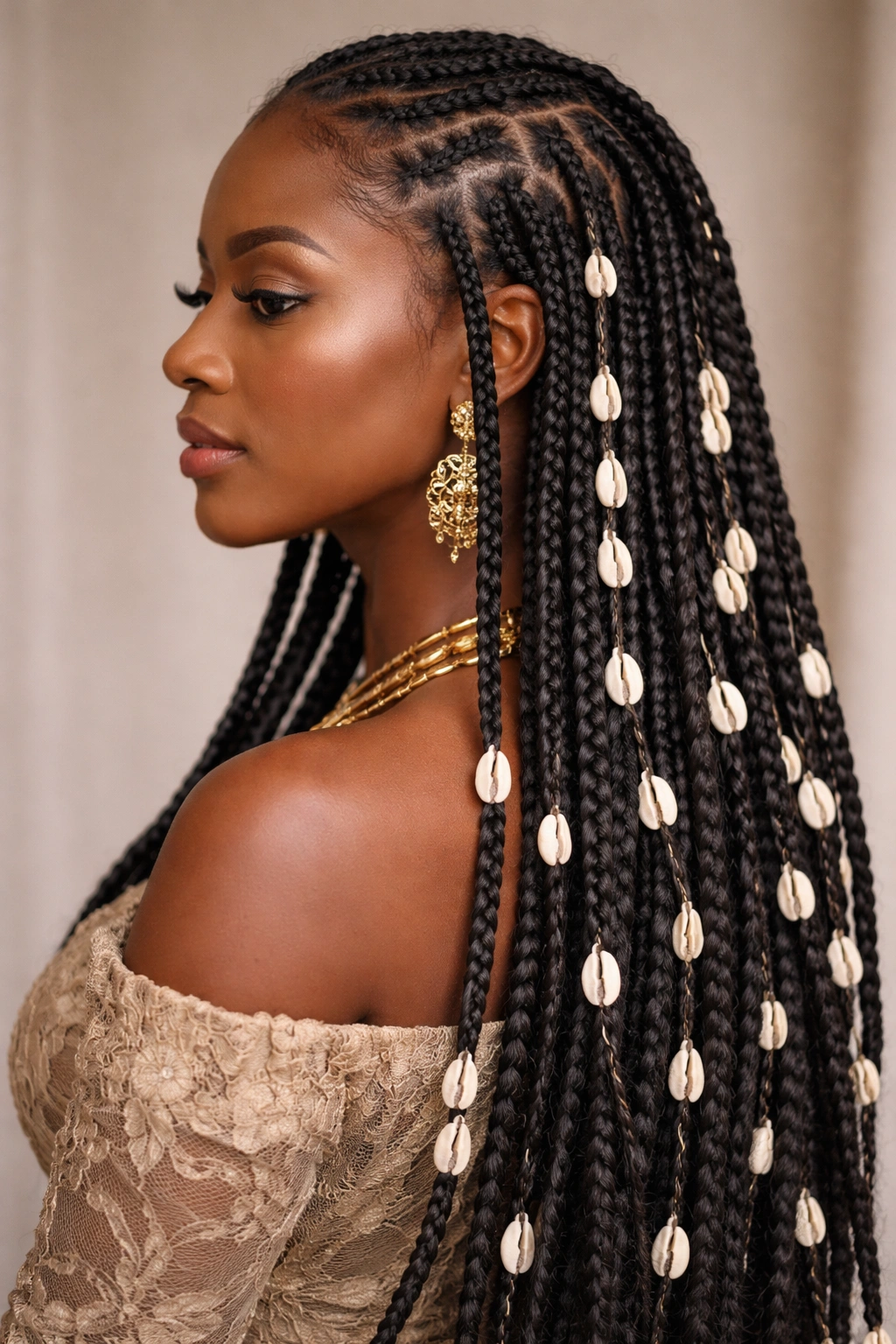
Cowrie shells hold profound cultural and spiritual significance in Yoruba tradition, representing wealth, protection, and connection to ancestry. When incorporated into open braids, cowrie shells transform a hairstyle into a statement about cultural pride and intentional elegance. The shells can be threaded directly onto the braids during styling or attached to the ends, creating visual interest that honors tradition.
Sourcing and Preparing Cowrie Shells
Authentic cowrie shells can be sourced from specialty African beauty suppliers or cultural markets. Quality matters — shells should be genuine, properly cleaned, and intact. Preparing shells for hair typically involves drilling small holes if they don’t already have them, then threading them onto braids using strong thread or thin wire. Some stylists prefer creating small wraps of fabric around the shell base for added security and aesthetic appeal.
Placement and Styling Considerations
- Concentrating cowrie shells at braid ends creates visual focus and symbol-rich placement
- Spacing shells evenly throughout braids creates a balanced, intentional look
- Combining cowrie shells with beads in traditional colors creates layered cultural meaning
- Allowing open braids to flow freely showcases the shells beautifully with every movement
- Coordinating shell placement with your outfit’s cultural elements creates visual harmony
Pro tip: Genuine cowrie shells develop a beautiful patina over time, and many people appreciate wearing shells that show age and history — don’t hesitate to source authentic shells even if they appear slightly worn.
15. Mixed Texture Protective Style
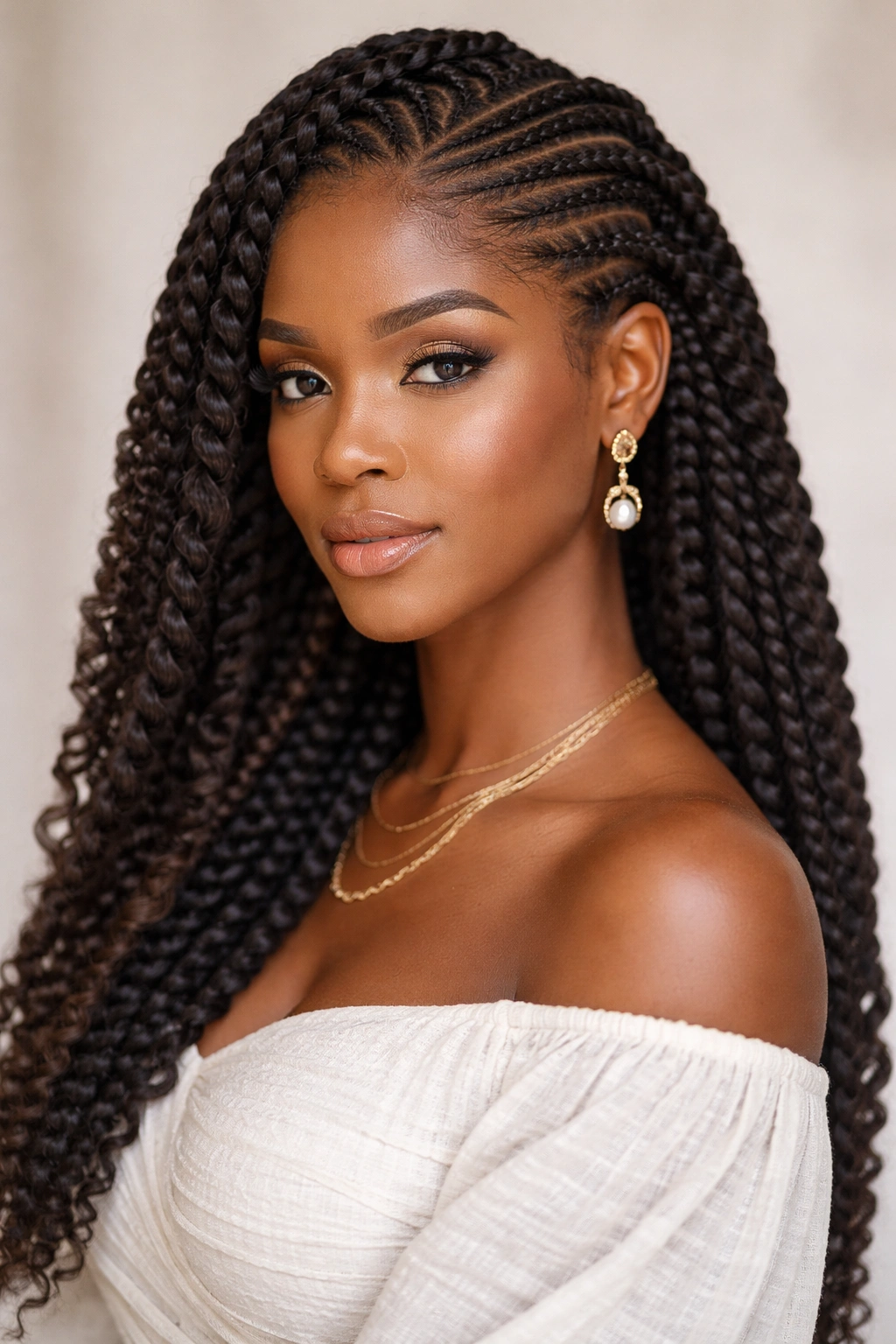
This contemporary approach to traditional styling combines different textures and braiding techniques within a single hairstyle, creating visual complexity and personalized artistry. You might combine cornrows with twists, weave braids of varying thicknesses throughout, or incorporate both extensions of different textures. Mixed texture styles celebrate innovation within tradition, honoring the roots of Yoruba hairstyling while creating something uniquely personal.
Combining Techniques and Textures
Creating a cohesive mixed texture style requires a skilled stylist who understands how different techniques complement each other. Perhaps cornrows run in one direction while twists flow in another, or thick braids alternate with finer accent braids. Kinky, curly, and straight textures might all appear in the same style, creating visual richness and depth. The key is ensuring the different elements feel intentional rather than haphazard or unplanned.
Color and Accessory Integration
- Using different colored braiding hair for different sections creates visual separation and interest
- Incorporating metallic threads into select sections adds shine without overwhelming the style
- Varying the beads or jewels used on different sections creates focal points and guides the eye
- Leaving some sections in your natural hair color while braiding others in contrasting colors adds dimension
- Creating strategic gaps or negative space between sections prevents the style from feeling cluttered
Worth knowing: Mixed texture styles often photograph even better than single-technique styles — the complexity and variation create visual interest that translates beautifully to photos and video.
Final Thoughts
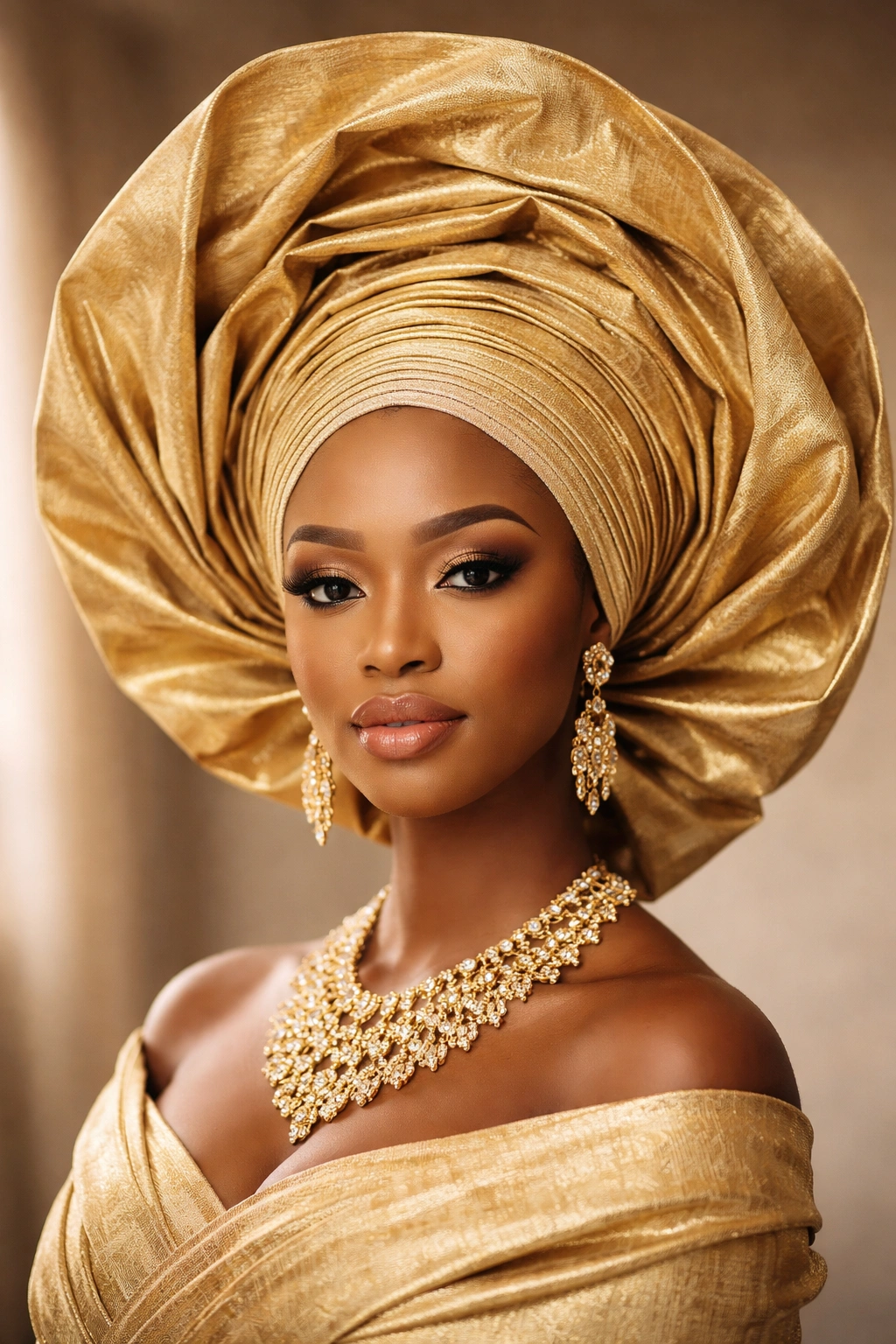
Choosing a traditional Yoruba hairstyle for an event is far more than selecting a pretty look — it’s a powerful act of cultural affirmation and personal expression. Each style carries history, meaning, and artistry that extends far beyond the surface. Whether you’re drawn to the sculptural elegance of a gele, the geometric precision of irun sango, or the romantic flow of cascading braids, your choice says something important about how you value your heritage and yourself.
The relationship between you and your stylist matters enormously in bringing these visions to life. A skilled stylist understands not just the technical aspects of braiding, twisting, and wrapping, but the cultural significance and personal meaning these styles hold. Communication about what you’re hoping to achieve — both aesthetically and emotionally — ensures your stylist creates something that truly resonates with you.
Remember that these hairstyles have been perfected over generations for a reason: they’re stunning, they’re functional, and they feel right in ways that honor something deep and true. Whether you’re attending a wedding, naming ceremony, festival, or any event where you want to look and feel your absolute best, one of these fifteen styles offers a pathway to that confidence. Start planning, connect with your stylist, and prepare to turn heads while celebrating the rich beauty of Yoruba tradition.
