



Wavy hair is a gift that deserves a cut specifically engineered to work with its natural texture rather than against it. If you’ve spent years fighting your waves with flat irons or settling for generic haircuts that don’t celebrate what you’ve naturally got, it’s time to rethink your approach. A short bob designed for wavy hair isn’t just flattering — it’s liberating. The right cut transforms your waves from something you manage into something you actually enjoy styling and showing off.
The challenge with wavy hair and bobs is finding that perfect balance between structure and movement. Too blunt and your waves get weighed down, falling flat. Too choppy and they frizz out into a disconnected mess. But hit that sweet spot with the right cut, and you get a hairstyle that looks intentionally tousled, moves beautifully, and actually requires less styling time than you’d think. Short bobs work particularly well because they keep the length just long enough to maintain wave formation but short enough to add volume and texture without heaviness.
The styles below range from sleek and polished to deliberately undone and beachy. Some work best if you embrace your natural wave pattern; others pair beautifully with a light perm or styling technique. What matters most is finding a cut that aligns with how you actually want to style your hair — because the best haircut is one you’ll want to recreate regularly, not one you’ll dread styling every morning.
1. Classic Chin-Length Bob with Texture
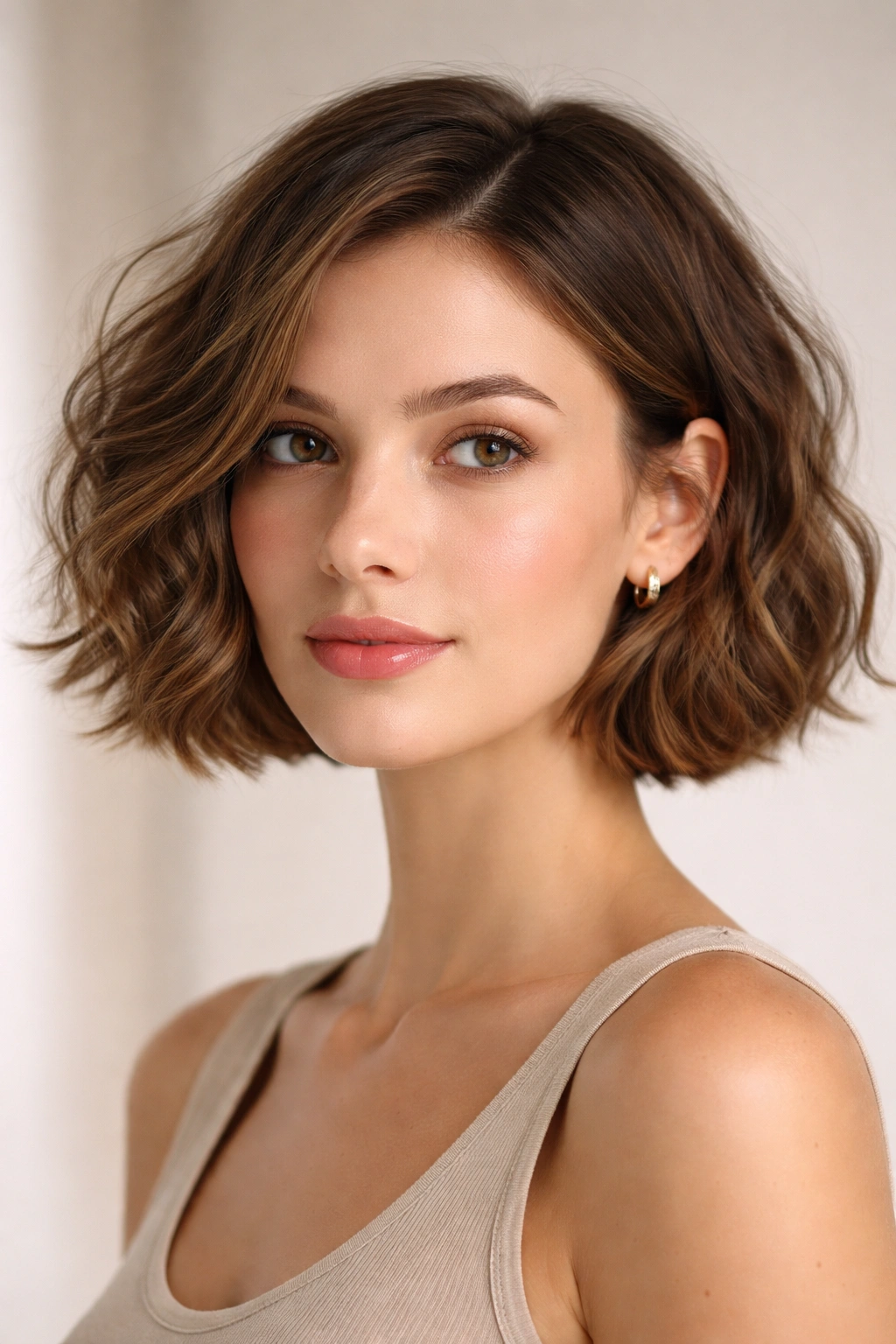
This is the foundational wavy bob that works across face shapes and hair densities. Cut to exactly chin length with consistent texture throughout, it sits in that perfect zone where waves aren’t suppressed but remain organized. The key is working with your natural wave pattern rather than trying to force uniform curl. A skilled stylist will map where your waves naturally form and cut accordingly, which means the left side and right side might have slightly different layer placements — and that’s exactly right.
Why It Works for Wavy Hair
The chin-length placement sits at the optimal point for wavy hair to show its texture without becoming weighed down. This length allows natural waves to spring into their fullest shape while still looking polished enough for professional or casual settings. The texture layers throughout the cut catch light and create movement, which is exactly what wavy hair does best.
Styling and Maintenance
- Blow-dry with a diffuser attachment while scrunching sections upward to enhance your natural wave pattern
- Use a medium-hold styling cream or mousse applied to damp roots for volume
- Avoid heavy serums or oils on the ends, which will flatten waves
- Refresh waves between washes with a spray bottle of water and a light touch of product
- Sleep with waves piled loosely on top of your head to preserve them overnight
Pro tip: Get this cut dry, not wet. Your stylist needs to see exactly how your waves sit when they’re air-dried, not how they look after a shampooing.
2. Textured Pixie Bob with Side Sweep
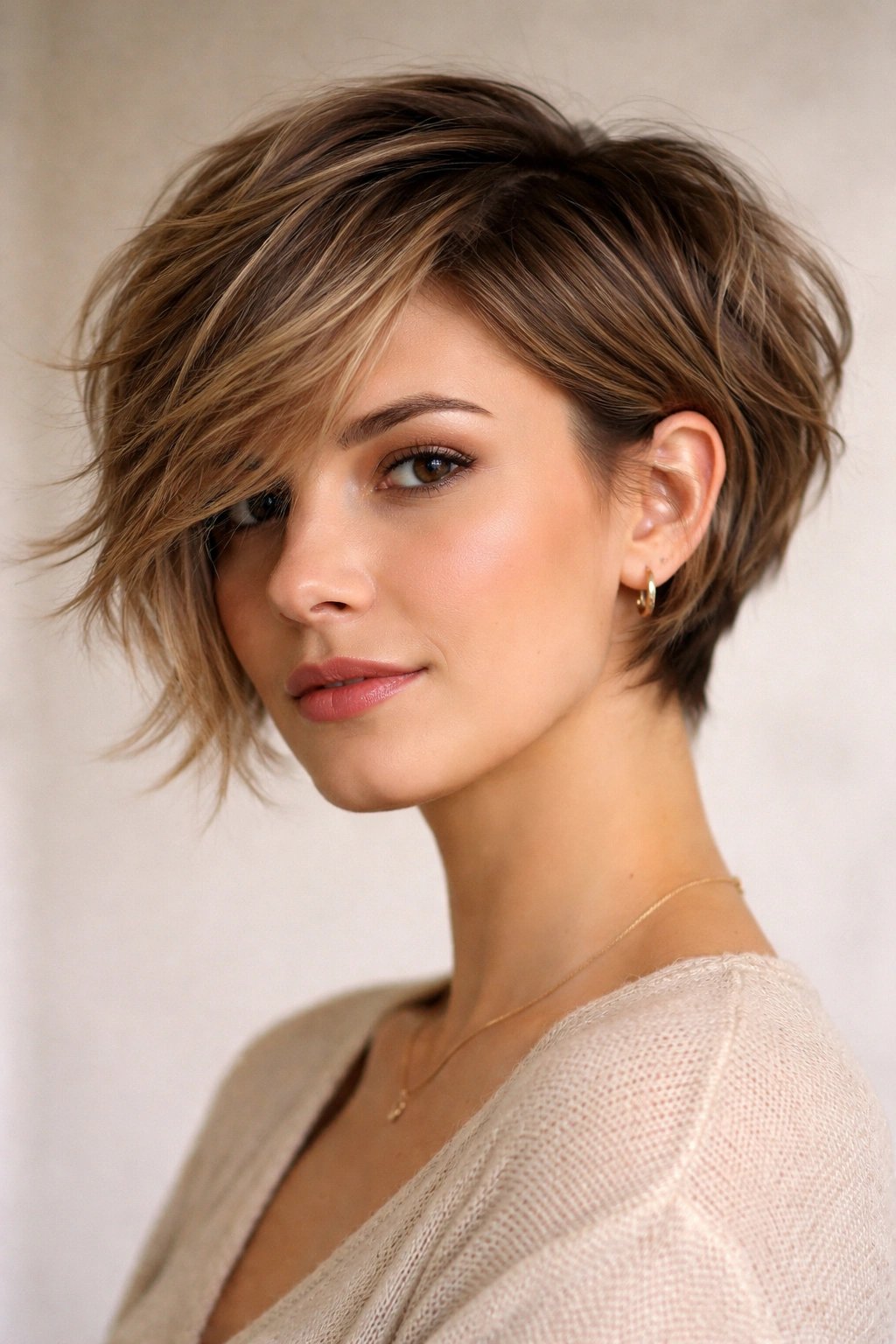
For those who want short but still distinctly feminine, a pixie bob combines the playful shortness of a pixie with the structural definition of a bob. The longer front pieces sweep past the cheekbone, while the back stays cropped and textured. This cut shows off your face and neck while creating an undeniably edgy, modern silhouette. The side-swept longer pieces give you something to style and play with, while the short back stays low-maintenance.
The Perfect Length Ratio
The front typically hits around cheekbone or just below, while the back is cut significantly shorter — usually 1-2 inches. This dramatic length difference is what creates the edge and prevents it from reading as simply a short, choppy bob. Your texture layers in the back should create visible separation and movement, not look like a standard short haircut.
Styling for Maximum Impact
- Use a straightening iron on just the front pieces for a sleek, contrasting effect against textured back
- Apply texturizing paste or clay to damp hair, working it through with your fingers for a deliberately disheveled look
- Blow-dry the back upward and away from the head to maximize texture and volume
- This cut works beautifully with undercuts or fade techniques that emphasize the length contrast
- Pair with wispy bangs swept to one side if your face shape allows it
Real talk: This cut requires a stylist who understands how to use different cutting techniques (clipper work, texturizing shears, point-cutting) to create definition. It’s worth seeking out someone with pixie-specific experience.
3. Tousled Wavy Bob with Shag Layers
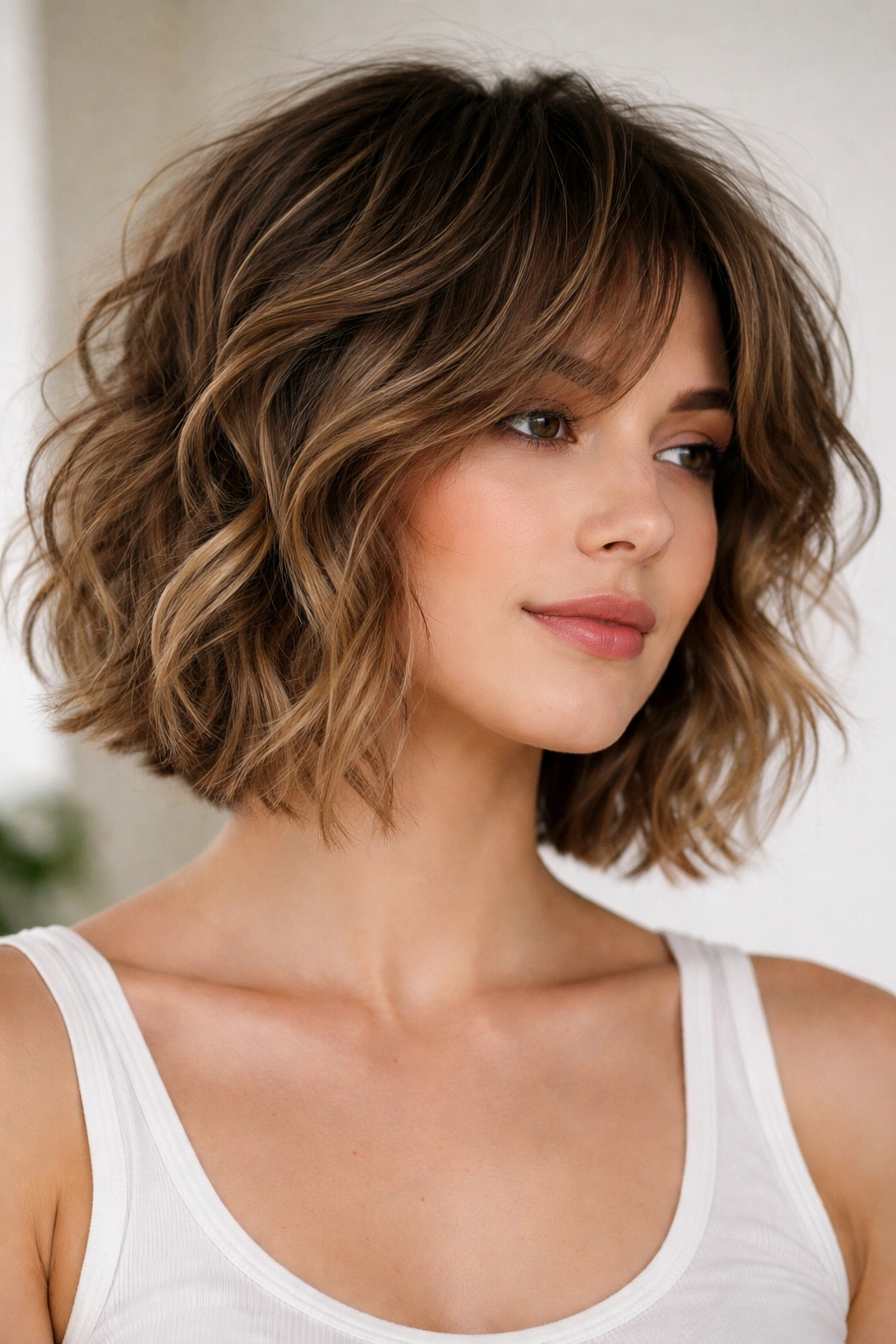
Shag layers have made a serious comeback, and for wavy hair, they’re transformative. A shag bob keeps the overall silhouette of a bob but removes weight through strategic layering, creating a deliberately piece-y, tousled effect. The layers catch your natural waves and amplify them, so what might have been a subtle wave pattern becomes much more visible and intentional-looking. This cut screams “I woke up like this” even though you did actually style it.
Why Shag Layers Amplify Waves
The layers create multiple levels where waves can form independently. Instead of one wave pattern flowing down the length of your hair, you get 3-4 different sections with their own spring and movement. This layering also removes weight from underneath, which means everything sits lighter and has more volume at the crown. For wavy hair that tends toward flatness at the roots, this is exactly what you need.
Achieving the Right Tousled Texture
- Apply sea salt spray or texturizing spray to damp hair before blow-drying
- Blow-dry with a diffuser, bunching sections upward and slightly rotating your head to create varied wave directions
- Use your fingers, not a brush, throughout the styling process — a brush smooths layers together, fingers separate them
- Scrunch additional texturizing product into damp waves and let air-dry for a more relaxed, undone finish
- The more you separate the layers with your hands while drying, the more intentional and styled the look becomes
This cut works best if you’re willing to use at least one texturizing product regularly. It’s not a true wash-and-go, but it’s not high-maintenance either.
4. Choppy Textured Bob for Movement
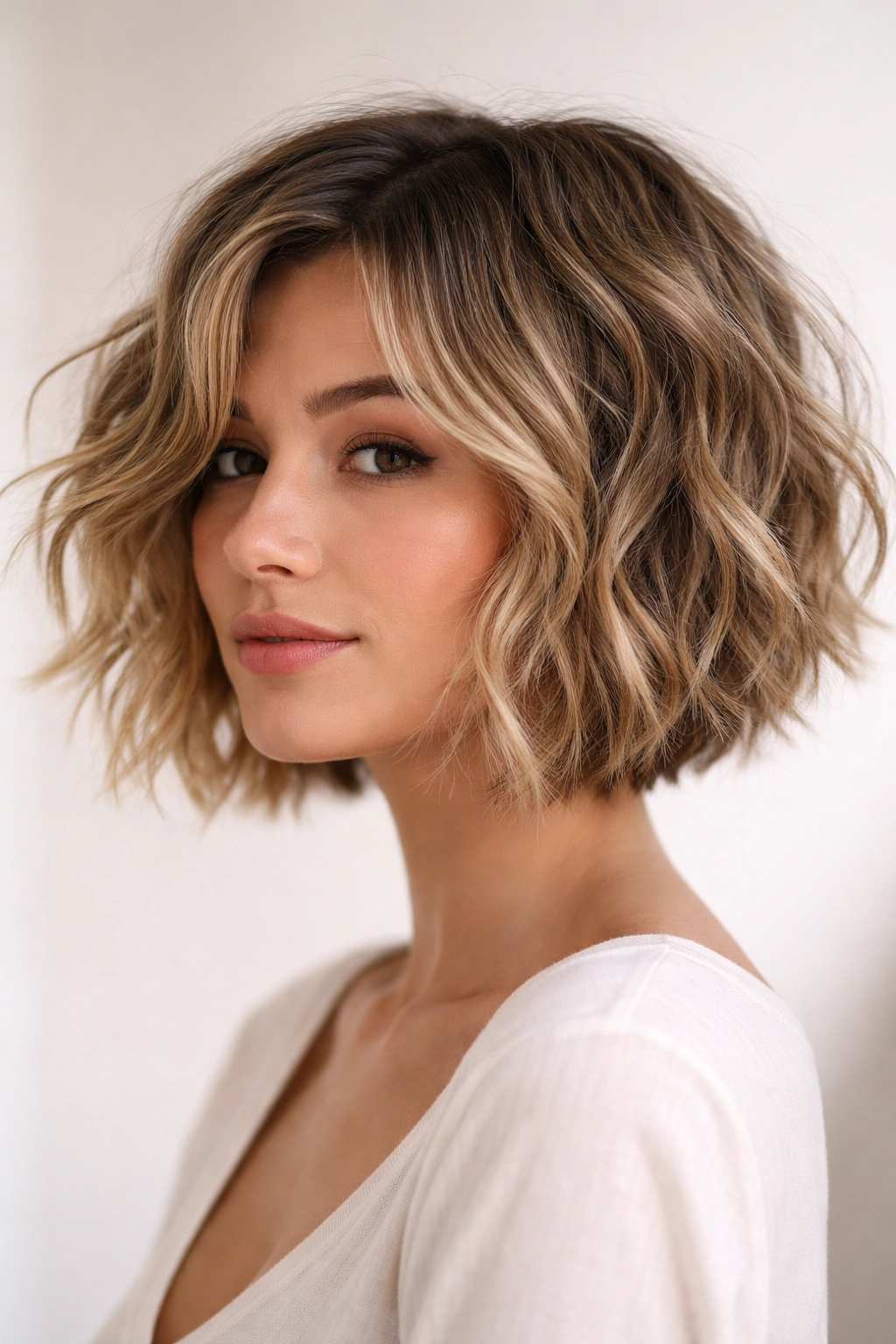
Sometimes wavy hair needs aggressive texture to really shine. A choppy textured bob uses shorter, sharper layers throughout rather than graduated layers. Each layer is cut independently, creating visible separation between sections. When you move, each piece moves slightly differently, creating dynamic movement and visual interest. This cut celebrates the texture of your hair rather than trying to minimize it.
The Mechanics of Choppy Texture
Your stylist will use point-cutting or texturizing shears to create visible texture and separation. The goal isn’t a neat, uniform bob but rather a lived-in, piece-y texture throughout. The choppy pieces work with your wave pattern, falling where your waves naturally want to go. The top stays fuller while underneath layers add dimension and bounce.
Styling for Definition
- Blow-dry with a curling iron or round brush, rotating sections to encourage your natural wave
- Use a light-to-medium hold texturizing product, working it through with your fingers for separation
- Avoid smoothing or brushing the hair once it’s styled — that defeats the choppy texture
- Piece apart any sections that look too unified or smooth
- This cut benefits from frequent trims every 4-6 weeks to maintain texture sharpness
Worth knowing: Choppy bobs show hair texture very clearly, which means they’re not the best choice if you have lots of frizz-prone hair or very fine hair that tangles easily. They work best on medium to thick wavy hair.
5. Soft Wave Bob with Wispy Bangs
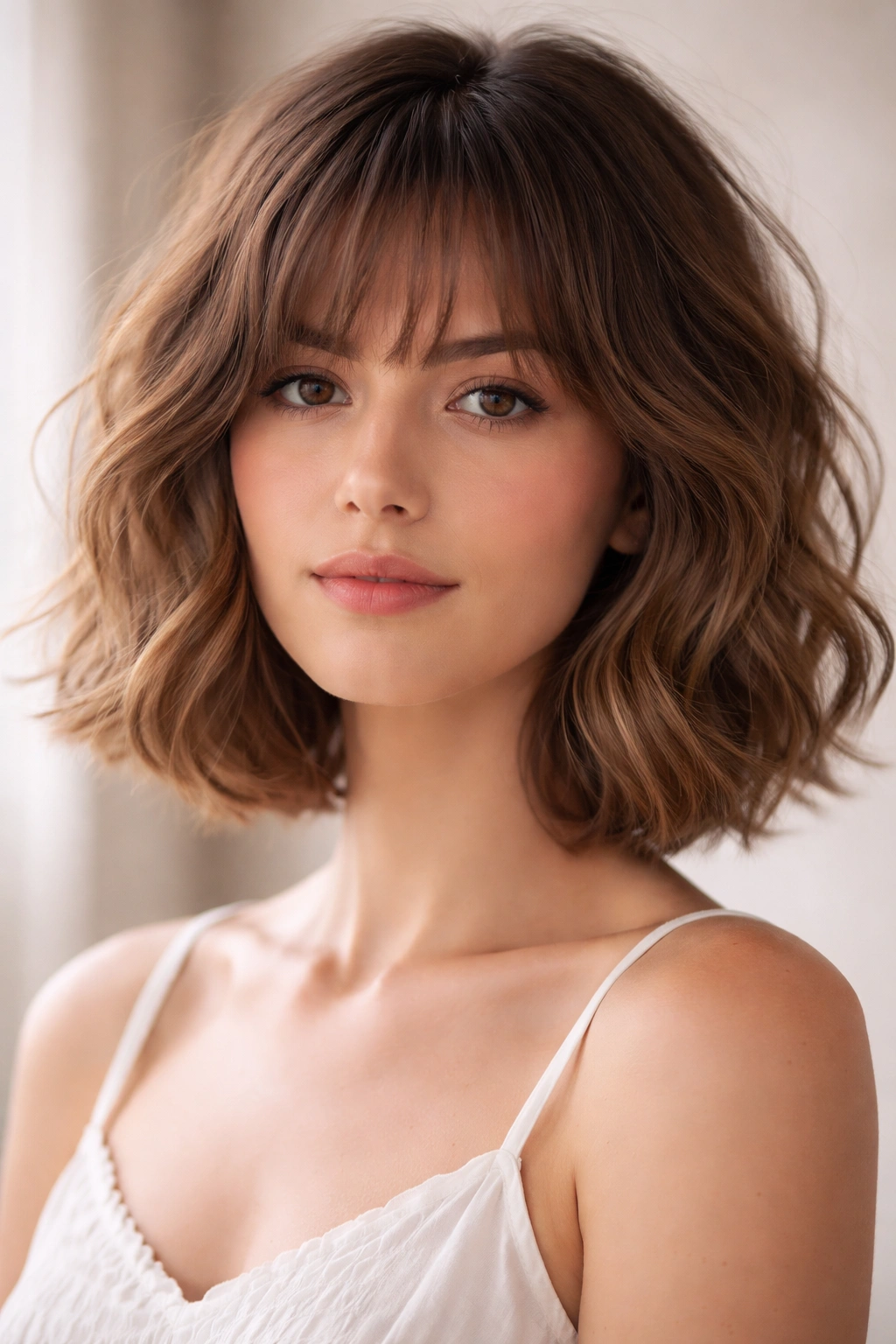
For a gentler, more romantic approach to a wavy bob, consider soft waves with wispy bangs. The bangs are cut longer and textured so they blend into the rest of the wave pattern rather than sitting as a distinct section. They create softness around the forehead while the waves flow longer than a true short bob — usually hitting between ear and shoulder length. This cut is approachable and flattering without being trendy or edgy.
Creating Softness Without Losing Shape
The cut uses gentle, longer layers that honor your natural wave pattern. Your stylist should cut with the grain of your waves, not against them. The bangs are highly textured with point-cutting or texturizing shears so they don’t sit flat or heavy. The overall effect is soft movement rather than sharp texture, which suits certain face shapes and styling preferences beautifully.
Styling for Soft, Romantic Waves
- Apply a lightweight wave-enhancing mousse to damp hair before blow-drying
- Blow-dry with a diffuser, tilting your head gently in different directions to encourage soft, undirected waves
- Use a medium-barrel curling iron on the ends and bangs to create defined waves that hold all day
- Finger-comb through the waves once they’ve cooled to soften the curl and create that piece-y look
- This style works beautifully with loose braids worn while sleeping, which enhance waves overnight
The bangs are the defining feature here, so they do need regular trimming every 3 weeks to maintain shape and softness.
6. Modern Asymmetrical Bob
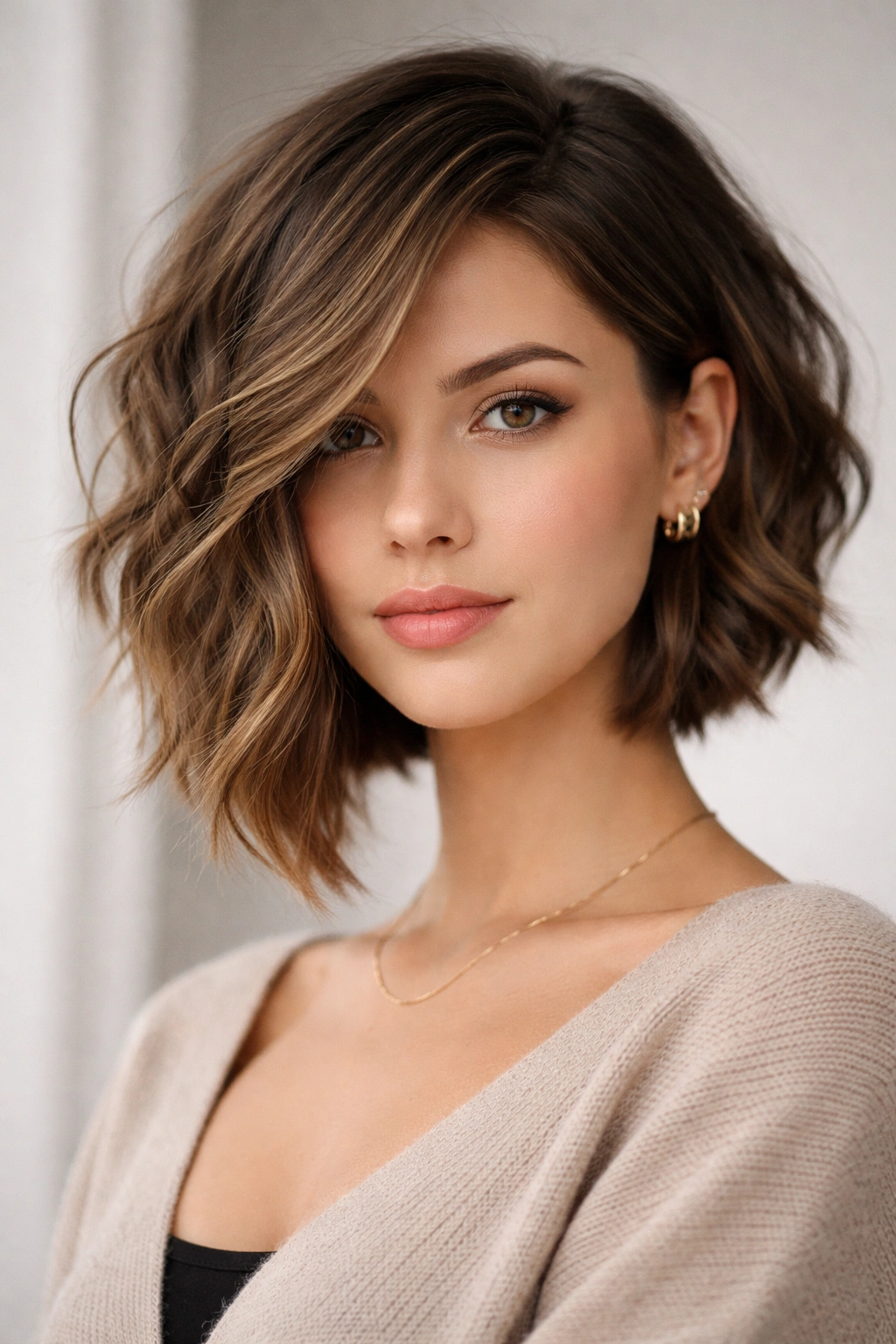
An asymmetrical cut takes a short bob and makes it edgier by creating length difference between the two sides. One side sits longer, possibly to shoulder length or just past, while the other is cut significantly shorter — sometimes quite close to the head. For wavy hair, this length difference creates visual interest and allows you to style the longer side in different ways while the short side stays low-maintenance. It’s a statement cut that signals you have strong personal style.
Balancing the Asymmetry
The key to this cut working well is making the asymmetry intentional and well-proportioned. The difference between sides is usually quite dramatic — at least 2-3 inches minimum, often more. The shorter side might have texture and layering to add movement, while the longer side can sit smoother. This contrast is what makes the cut feel modern and deliberate rather than like an accident.
Styling the Two-Sided Approach
- Style the longer side with waves or soft curls using a curling iron or wand
- Keep the shorter side textured and piece-y with product and finger-styling
- You can also wear the longer side swept behind your ear for a completely different look
- Use dry shampoo on the shorter side to add texture and grip for styling
- The contrast between the two sides is the point — lean into it rather than trying to make them match
Insider note: This cut is bold and might require some confidence to pull off. Make sure you genuinely want an asymmetrical cut, not just a regular bob that ended up uneven due to a stylist error.
7. Textured Wavy Lob for Longer Length
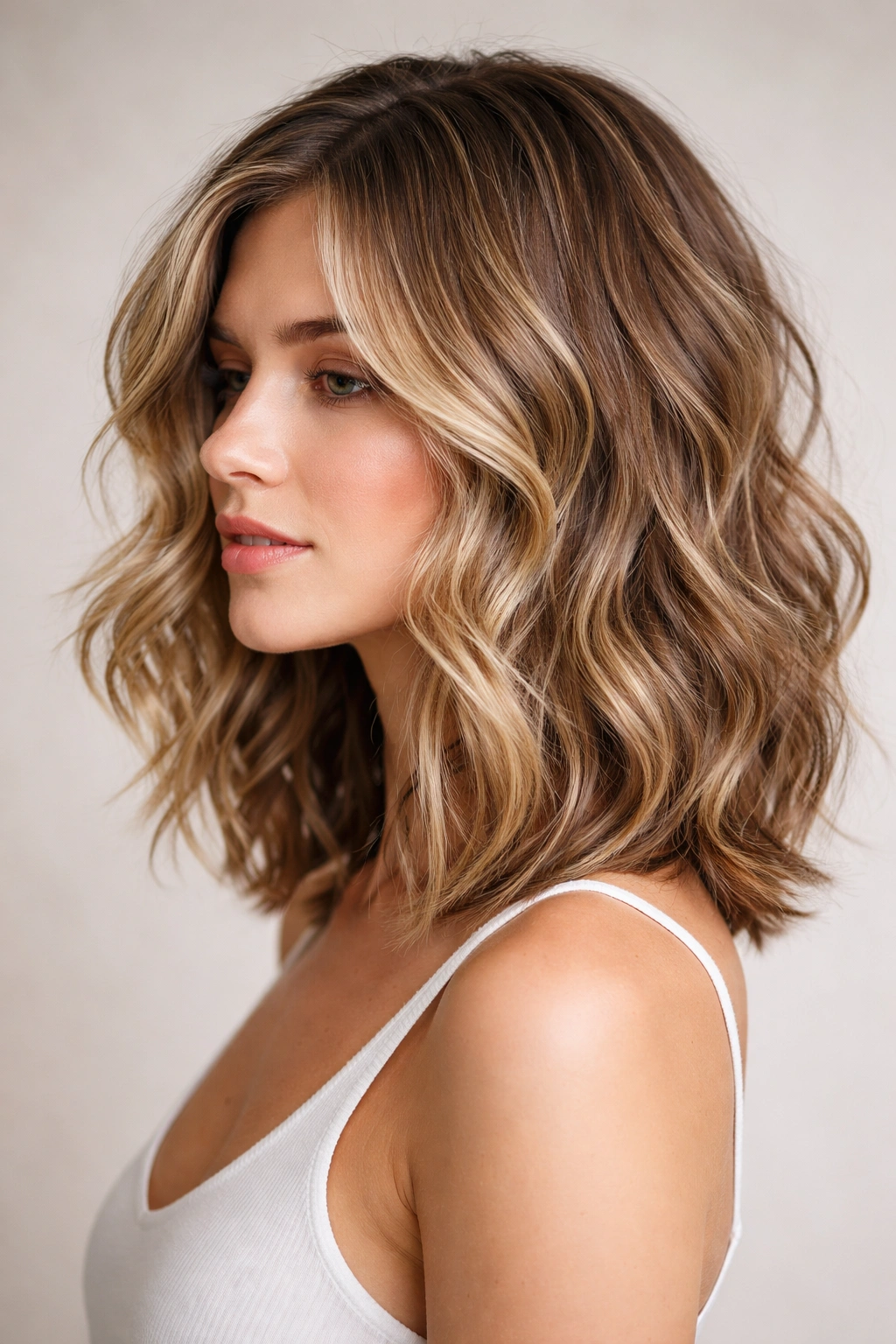
If short bobs feel too dramatic, a lob — long bob — gives you more length while still being much shorter than your full-length hair. A textured wavy lob sits somewhere between shoulder and collarbone length, long enough to keep waves defined but short enough to add volume and movement. This length is incredibly versatile for styling. You can wear it down and wavy, pull it up into a sleek ponytail, or style half-up styles. The texture keeps it from looking blunt or heavy.
Why Lobs Work for Wavy Hair
At longer lengths, wavy hair can sometimes look limp or undefined, with waves falling flat under their own weight. A lob removes just enough length that waves spring back to life. The textured layers throughout create multiple points where curls and waves can form. You get the security of longer hair with the movement and volume of a short cut.
Versatile Styling Options
- Blow-dry with a diffuser for natural-looking waves or use a curling iron for defined curls
- Wear it down and wavy on days you want a soft, romantic look
- Pull it into a high ponytail or bun for a polished, professional appearance
- Try half-up styles that showcase texture on the top while the bottom flows loose
- Braid sections or create face-framing textures that sit beautifully on this length
- Sleep braiding creates beautiful waves that last multiple days
This length is forgiving enough that you don’t need perfect styling every day, but long enough to play with styling in ways a true short bob doesn’t allow.
8. Bouncy Spiral Wave Bob
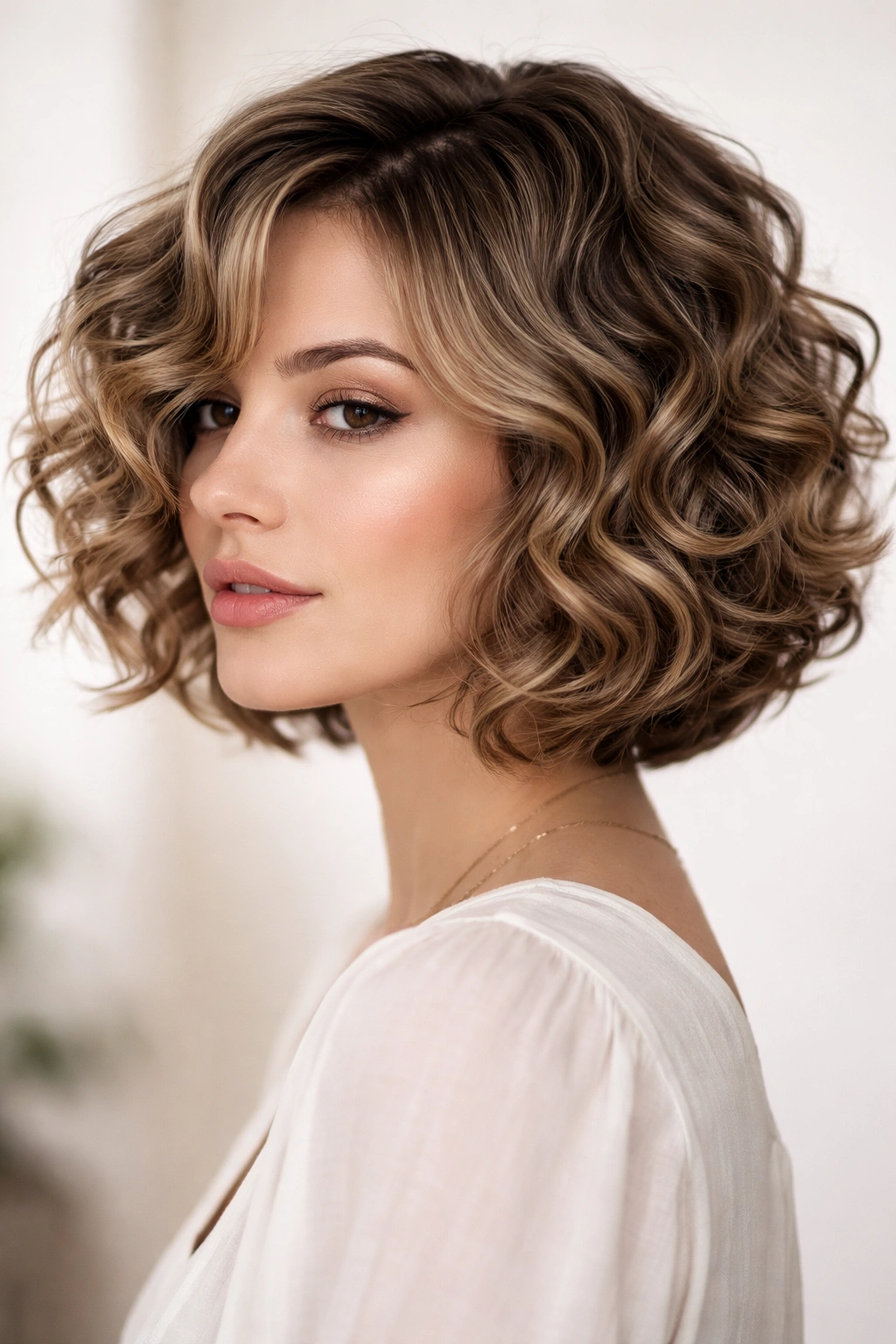
Some wavy hair naturally wants to spiral or form tight curls. A bouncy spiral wave bob is cut specifically for this curl pattern, with layers that encourage your natural spirals to expand and bounce. The cut is textured with layers that let each curl sit independently rather than being compressed or weighted down. If your waves have this springy, bouncy quality, this cut celebrates it completely.
Supporting Natural Spiral Texture
Your stylist needs to cut this while your hair is completely dry and in its natural state. Wet hair will disguise your true texture, leading to a cut that doesn’t support your actual wave pattern. Each layer is cut to encourage spiral formation, with shorter layers on top for bounce and longer layers underneath to add length. The goal is supporting your hair’s natural inclination, not fighting it.
Styling for Maximum Spring
- Use a leave-in conditioner on soaking wet hair before any styling
- Apply a curly cream or gel that enhances curl definition and hold
- Diffuse-dry while scrunching sections upward to encourage spiral formation
- Flip your head upside down while diffusing to add volume at the crown
- Let hair air-dry completely before touching it — wet curls are fragile and break easily
- Refresh curls between washes by misting with water and scrunching additional product through
Pro tip: Find a stylist who specializes in curly and wavy hair, not general stylists. The cutting technique for spiral curls is very specific and worth seeking out expertise for.
9. Undercutting Textured Bob
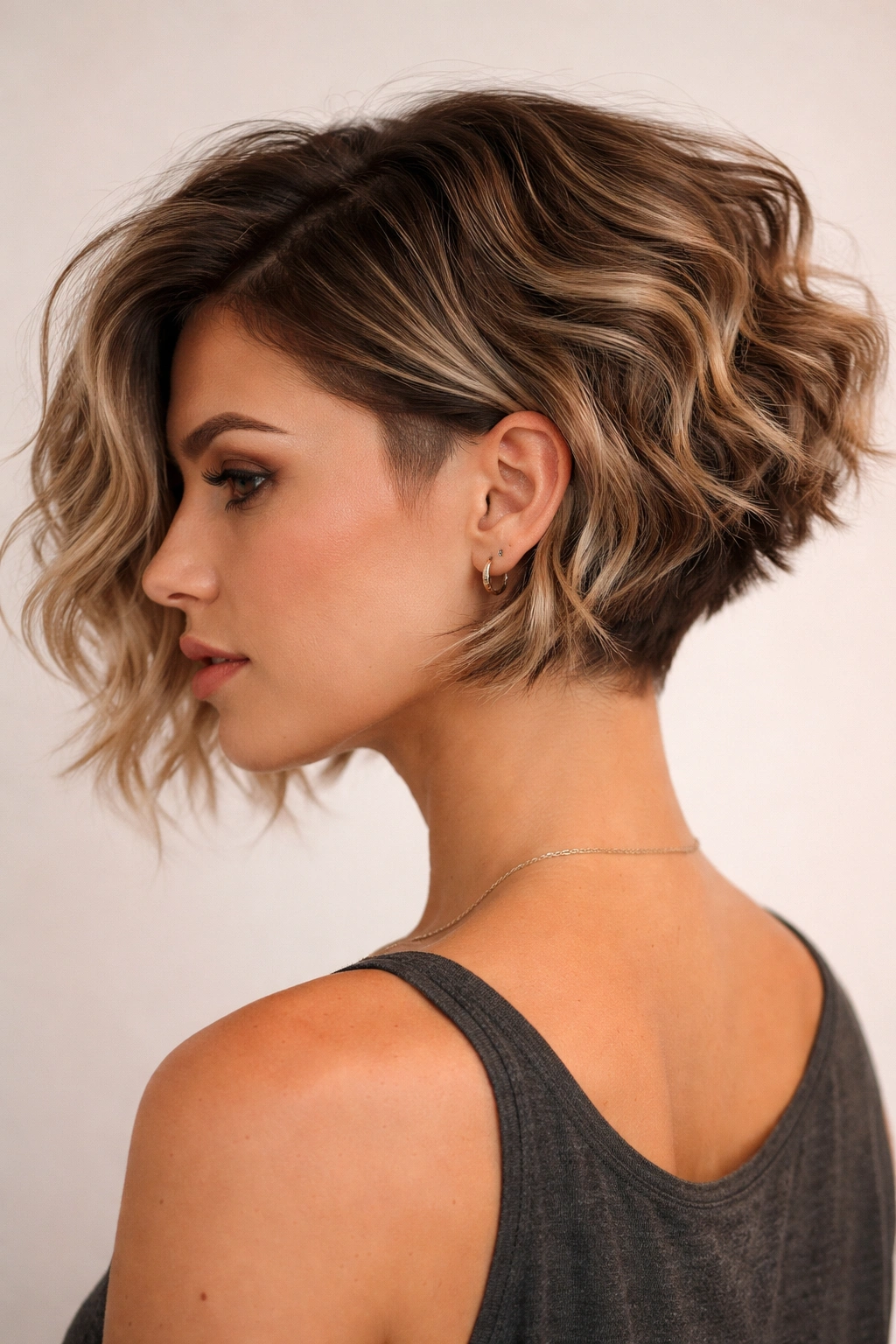
An undercut takes short bobs to the next level by removing significant length from the underneath layers or sides. The top stays fuller with more length, while underneath you either see shaved or very short faded sides or a dramatically shorter underneath layer. This creates visual contrast and adds serious movement to wavy hair. The top section can be styled smooth or textured, creating whatever aesthetic you want. The underneath surprise makes this cut feel edgy and fashion-forward.
Creating the Undercut Effect
The top section is typically left at standard short bob length, while underneath — the section that sits against your head — is cut much shorter or faded. You can see the undercut when your hair is pulled back or when you move and it shifts. Some people opt for a side undercut where just one side is cut very short, while others do the back or all around. The key is that there’s a dramatic difference in length that creates the visual wow factor.
Styling With the Undercut
- On days you want the undercut visible, sweep the top section back or to the side
- On days you want a more conventional look, let the top section fall naturally over the undercut
- Texture the top section with product and your fingers for a deliberately styled appearance
- Keep the undercut area very clean with trims every 3-4 weeks if it’s faded
- This cut pairs beautifully with colorwork — sometimes the undercut is a different color than the top
This cut is unmistakably bold. You’re making a clear style statement, which is exactly why it’s so appealing.
10. Wet Wave Bob with Dimension
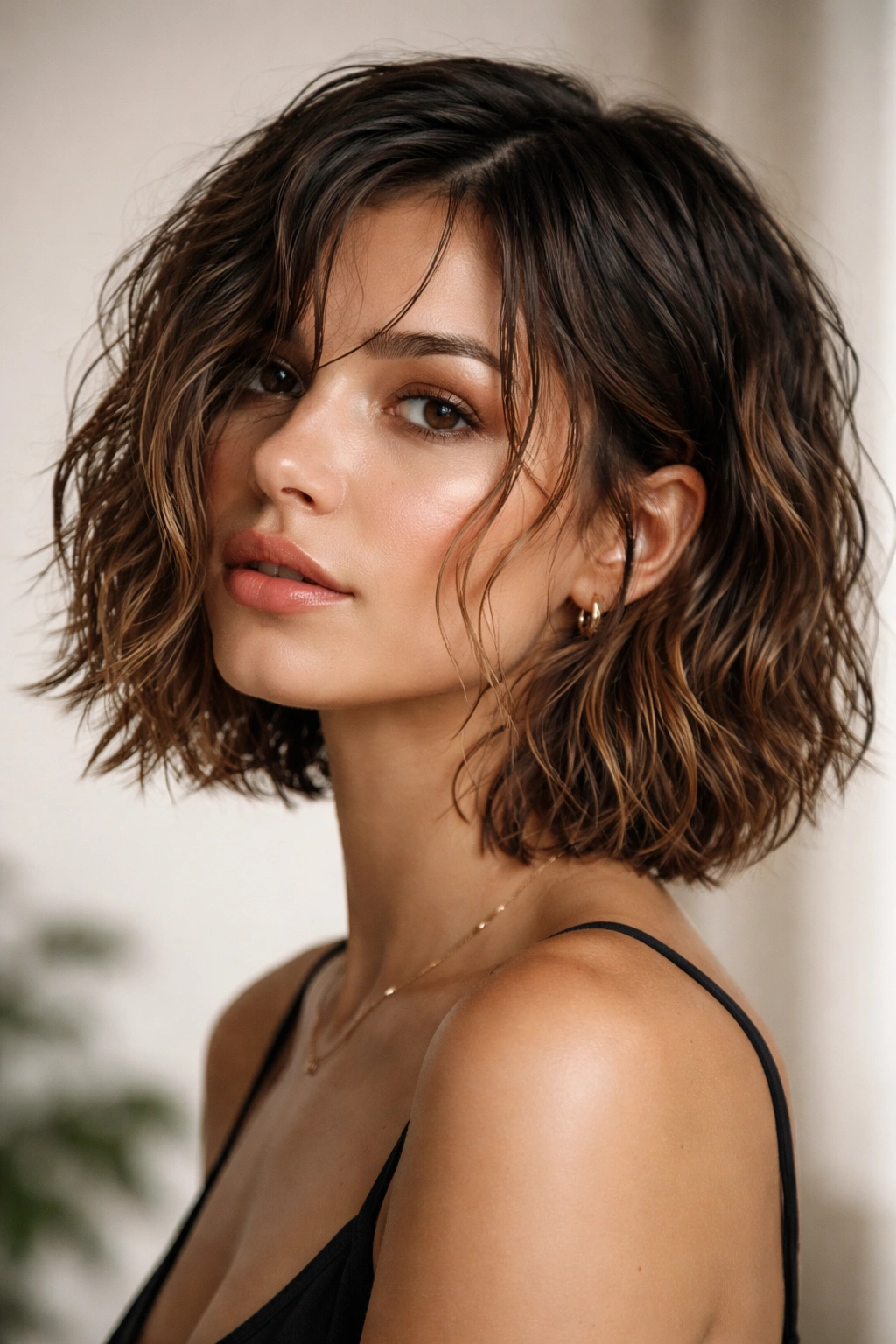
A wet wave bob is cut to look freshly washed and textured, like you’ve just stepped out of the shower. It uses choppy layers and texture throughout, with pieces cut at varying angles so they don’t lay flat against the head. When styled, it looks intentionally damp and piece-y, with definition between sections. This cut works beautifully with dimensional color — lighter pieces near the face, darker underneath, or subtle highlights throughout that catch light as the waves move.
The Art of Intentional Texture
This cut relies heavily on layering technique and texture rather than length variation. Your stylist is creating a cut where each piece has direction and intention. The front pieces might be slightly longer or angled differently than the back. The overall effect is that your hair was deliberately cut to fall in specific ways, creating movement and interest from multiple angles.
Achieving the Wet, Piece-y Look
- Apply styling product (mousse, cream, or gel) to soaking wet hair
- Use a diffuser or pixie diffuser on low heat, scrunching upward to emphasize texture
- Don’t aim for uniform waves — varied texture is the point
- Add a bit of salt spray or texturizing spray once hair is mostly dry for extra piece-y separation
- Dimensional color makes this cut look even more intentional and sophisticated
- The cut shows water droplets and product beautifully, so don’t oversaturate with heavy serums
This cut genuinely looks better slightly wet or damp than completely dried, so it pairs well with a refreshing spray bottle of water.
11. Tousled Shag Bob
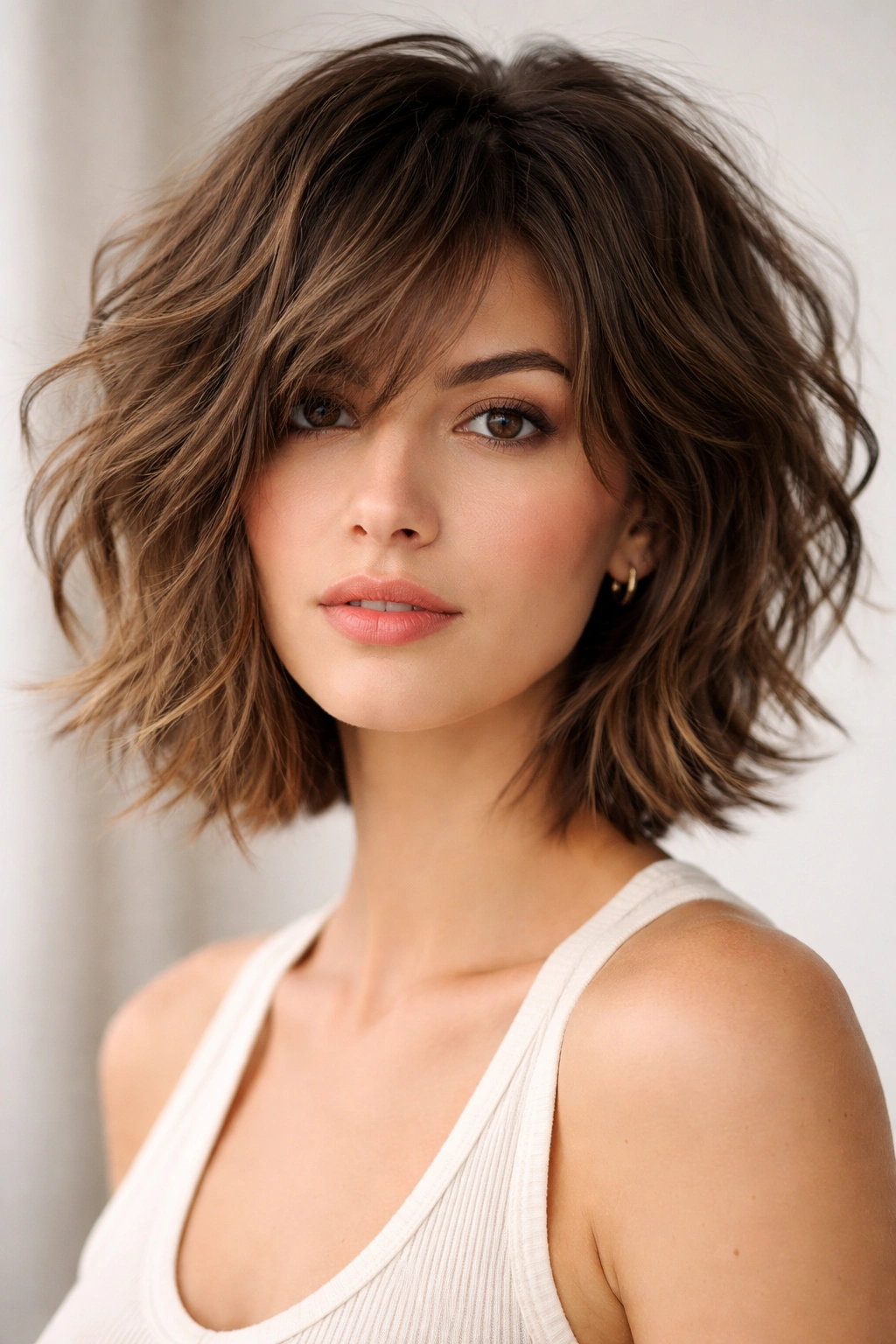
A shag bob takes the beloved shag haircut — defined by lots of layers and a deliberately piece-y appearance — and shortens it to bob length. It’s the cut that says you don’t take yourself too seriously and you love a textured, undone vibe. The layers are prominent and visible, creating that signature shag movement. For wavy hair, a shag bob is absolute magic because the waves work with the layers to create natural, effortless-looking movement.
The Shag’s Signature Layers
What makes a shag different from other layered bobs is the amount of visible layering. You’re not adding subtle texture — you’re creating very obvious length variation between sections. The top is fuller and often shorter, while the underneath builds length gradually. Your natural waves will find their way into these layers and create that piece-y, lived-in texture without you having to do much styling.
Getting the Shag Look Right
- Ask your stylist specifically for a shag cut, not just “lots of layers” — the technique is distinct
- Blow-dry with your head tilted in different directions so layers move in varied directions
- Use a texturizing product applied to damp hair before drying
- Finger-comb everything, never brush — brushing smooths away the shag texture
- Slightly tousle your hair with your hands after it’s dry to emphasize the piece-y effect
- This cut works beautifully without much daily styling if you embrace the undone aesthetic
The shag is a cut that actually looks better a little bit messy. Trying to make it too neat defeats the whole point.
12. Choppy Layers with Textured Ends
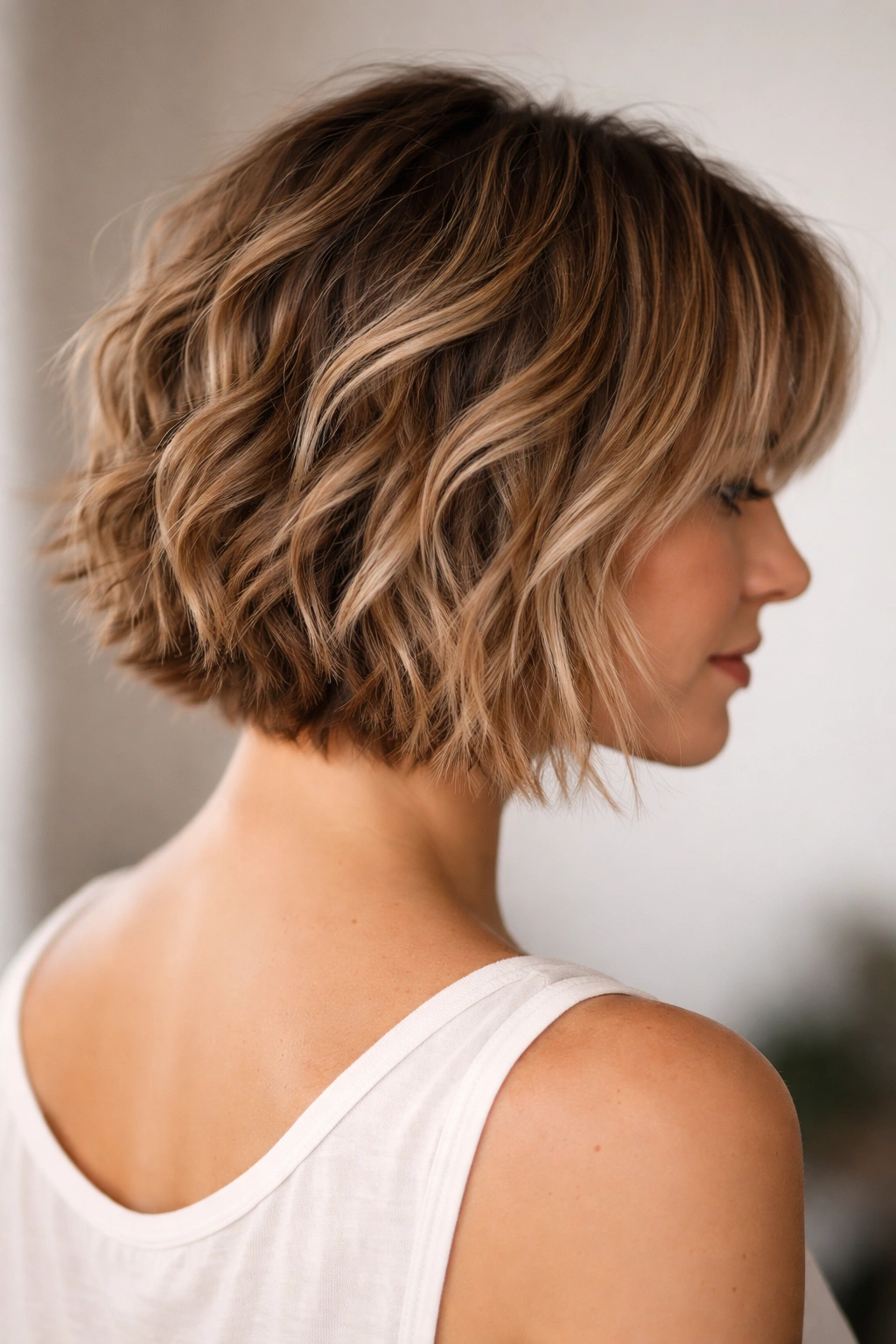
This cut focuses on creating textured ends throughout rather than just layering for length variation. Your stylist will use texturizing shears or point-cutting technique on the ends of your hair, creating wispy, separated pieces rather than a blunt line. Combined with layers, this creates a look where every piece of your hair has its own distinct direction and movement. It’s a very deliberate, high-texture approach that celebrates wave patterns fully.
The Texturizing Technique
Point-cutting involves holding your shears vertically and cutting up into the hair rather than straight across. Texturizing shears have notches that remove sections of hair, creating space between pieces. Both techniques create texture and separation. For wavy hair, this means your waves don’t bunch together but sit as distinct, visible curls or waves. The effect is much more dimensional and interesting than a blunt-edged bob.
Styling for Maximum Separation
- Blow-dry with a diffuser, scrunching sections to encourage waves
- Apply lightweight mousse or texturizing spray to damp hair
- Use your fingers exclusively to style and separate pieces — brushes smooth everything together
- Flip your head and blow-dry the roots upside down for maximum volume
- Let hair air-dry partially between washes to maintain texture and definition
- The more you separate pieces with your hands while styling, the more textured the look becomes
This cut requires commitment to hand-styling and product, but the payoff is a hairstyle that looks intentionally styled and textured.
13. Curved Bob Following Face Shape
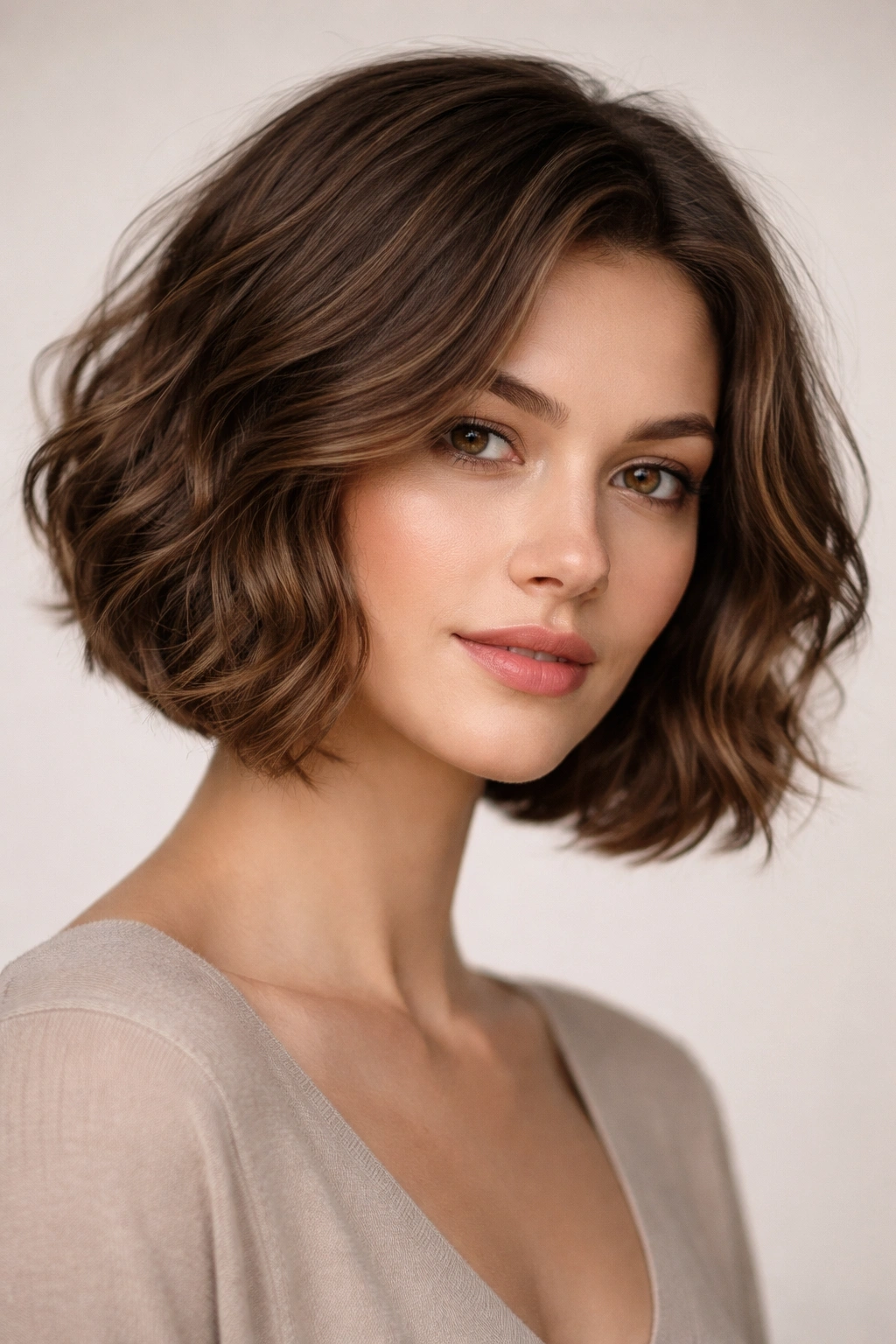
Rather than cutting a uniform, straight-across bob, a curved bob is cut to follow the natural contours of your face shape. For people with round faces, the bob curves inward slightly at the chin, creating the illusion of length. For people with oblong faces, the bob stays fuller on the sides. For people with heart-shaped faces, the bob adds volume at the jaw. The cut is customized to you specifically, using your face shape to determine where length sits and where texture is placed.
Face-Mapping for the Perfect Fit
Your stylist should assess your face shape, cheekbone placement, and jawline before cutting. The cut then uses length and texture strategically to flatter your specific features. A curved cut is more complex than a blunt bob because it requires understanding how length, angle, and face shape interact to create the most flattering silhouette.
Styling to Enhance Face Shape
- Blow-dry in a way that adds volume where the cut is designed to add it
- Use directional styling with a round brush to follow the curve of the cut
- Consider face-framing with slightly longer or more textured pieces near your cheekbones
- The cut is doing a lot of the work — styling should enhance what the cut created, not fight it
- This cut looks particularly good with dimensional color that highlights how the length flatters your face
This is an investment in a cut that’s been specifically designed for you, so seek out a stylist who takes time to assess and customize.
14. Feathered Wavy Bob
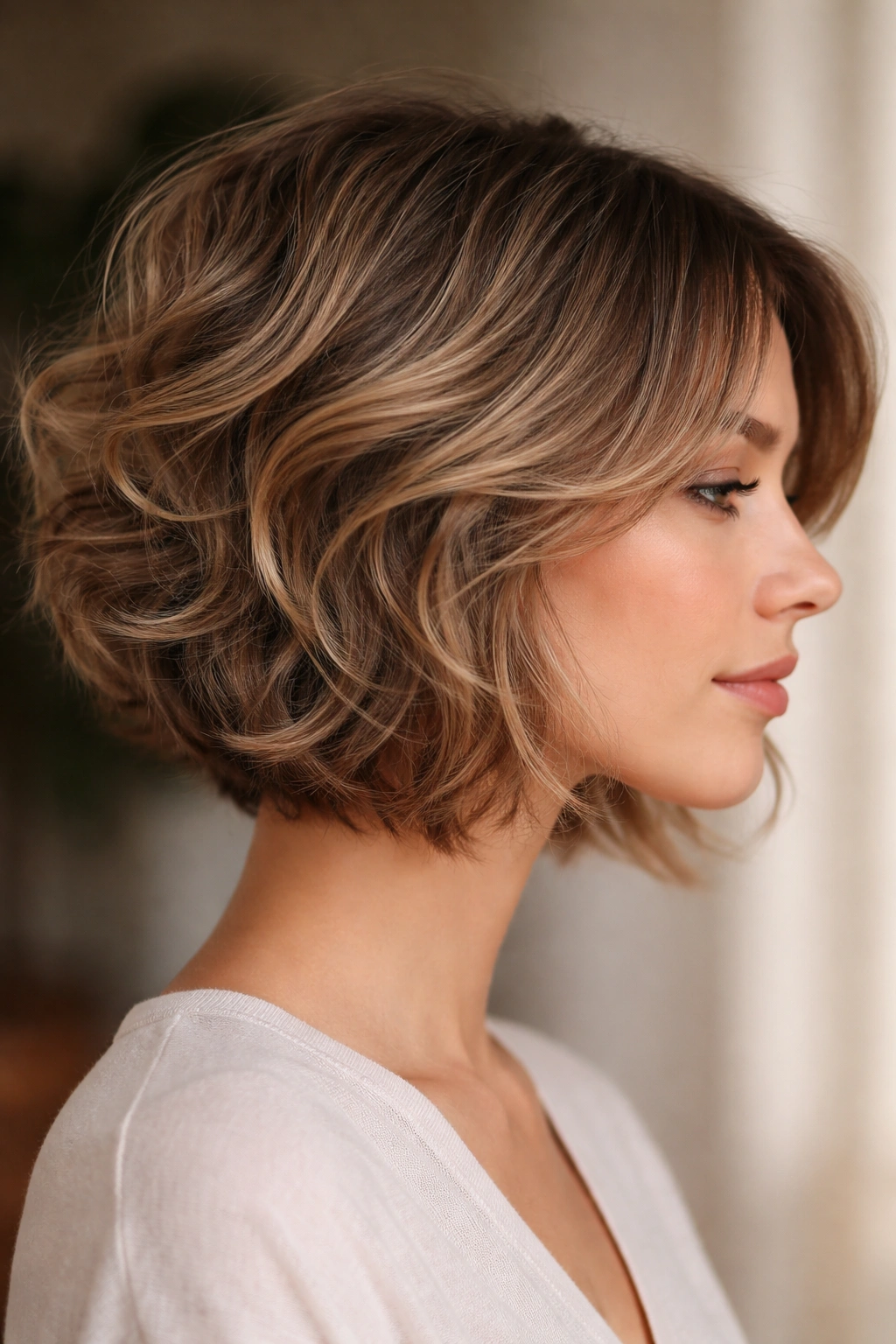
Feathered bobs use layers that taper down on each side, creating a wing-like effect at the temples and sides of the face. The feathering is subtler than a full shag but more pronounced than a simply layered bob. The layers sit close to the head at the crown and gradually get longer, creating a feathered flow when you move. For wavy hair, feathered layers catch your waves beautifully and create movement that flows in multiple directions.
Creating the Feathered Shape
The cut is shorter and denser at the crown, then gradually gets longer as it moves down toward the ends. Side sections are deliberately tapered shorter, creating that feathered shape. The feathering isn’t just about length variation — it’s about how sections of hair meet and flow into each other. When you move or tilt your head, you see the feathering in action.
Styling Feathered Waves
- Blow-dry with a round brush, rolling sections outward to create feathered flow
- Use a curling iron on the side sections to enhance the feathered, wing-like shape
- Apply texturizing product for separation and hold
- Finger-comb gently to avoid smoothing away the feathered texture
- The feathering looks best when waves flow naturally rather than being heavily curl-defined
- This cut works beautifully with longer wispy bangs that feather into the sides
The feathering is what makes this cut distinctive, so styling should enhance it rather than flatten it out.
15. Thick Textured Bob with Movement
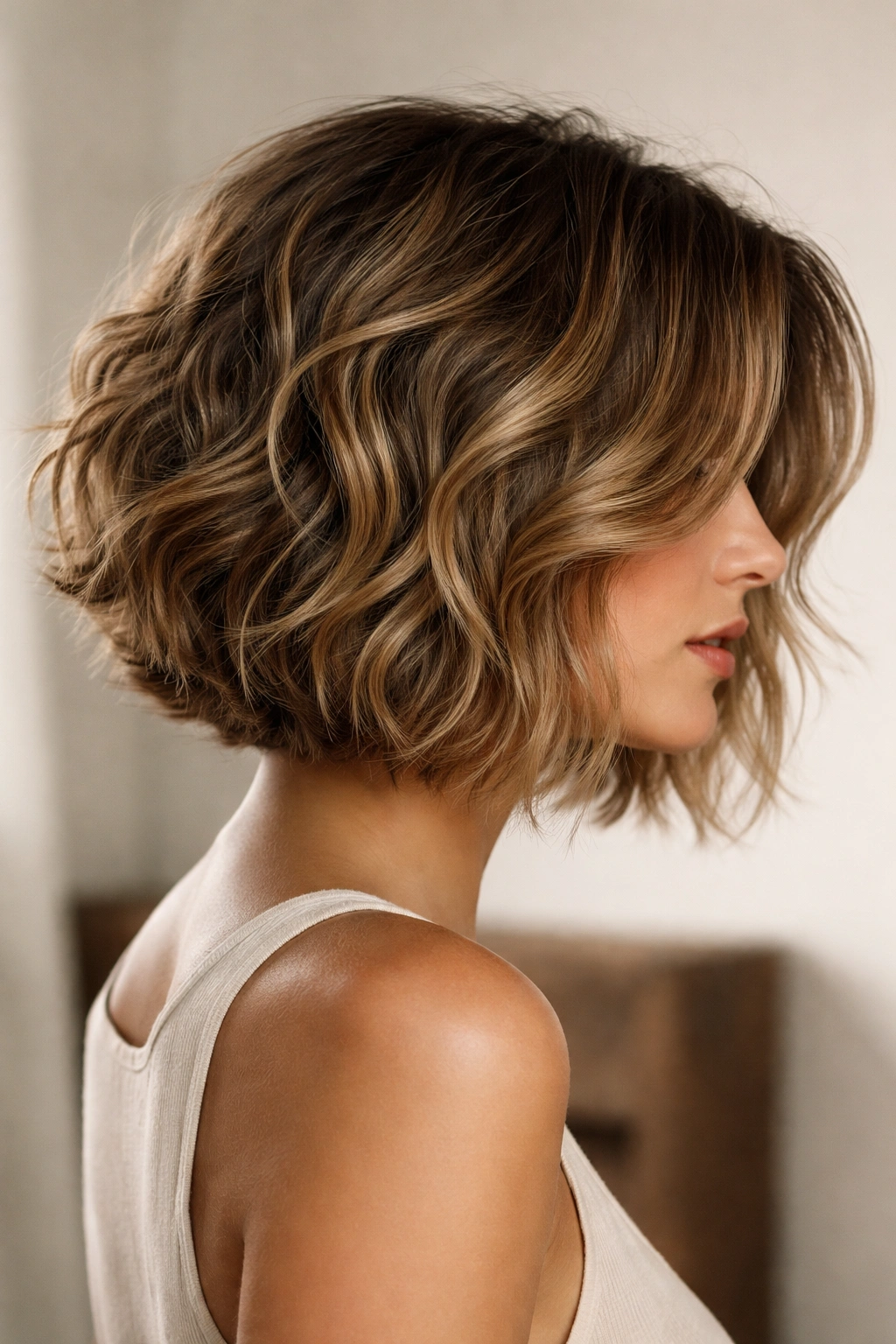
If you have genuinely thick, dense wavy hair, a heavily textured bob with significant layering is essential. Without proper texture and thinning, thick wavy hair can look bulky and shapeless. Strategic layering throughout removes weight while maintaining density, creating movement instead of bulk. The texture prevents your hair from looking like a solid helmet while keeping enough density that it holds shape and definition.
Working With Thick Hair
Thick hair needs more aggressive texturing and thinning than thin or fine hair. Your stylist should use thinning shears liberally, especially underneath sections. The layers need to be very visible and pronounced so they actually create shape. The goal is texture and movement, not removing so much density that your hair looks thin.
Styling Thick Textured Hair
- Use a diffuser on medium to high heat — thick hair requires more drying power
- Apply medium to heavy-hold products that won’t get lost in your density
- Don’t be afraid of texturizing sprays and pastes — your thick hair can handle them
- Blow-dry sections thoroughly before moving on — wet sections of thick hair take forever
- Sleep braiding works beautifully — your waves will be gorgeously defined the next day
- Regular deep conditioning keeps textured thick hair healthy and prevents frizz
Thick wavy hair can absolutely shine in a short textured bob when cut with density in mind.
16. Angled Bob with Longer Front
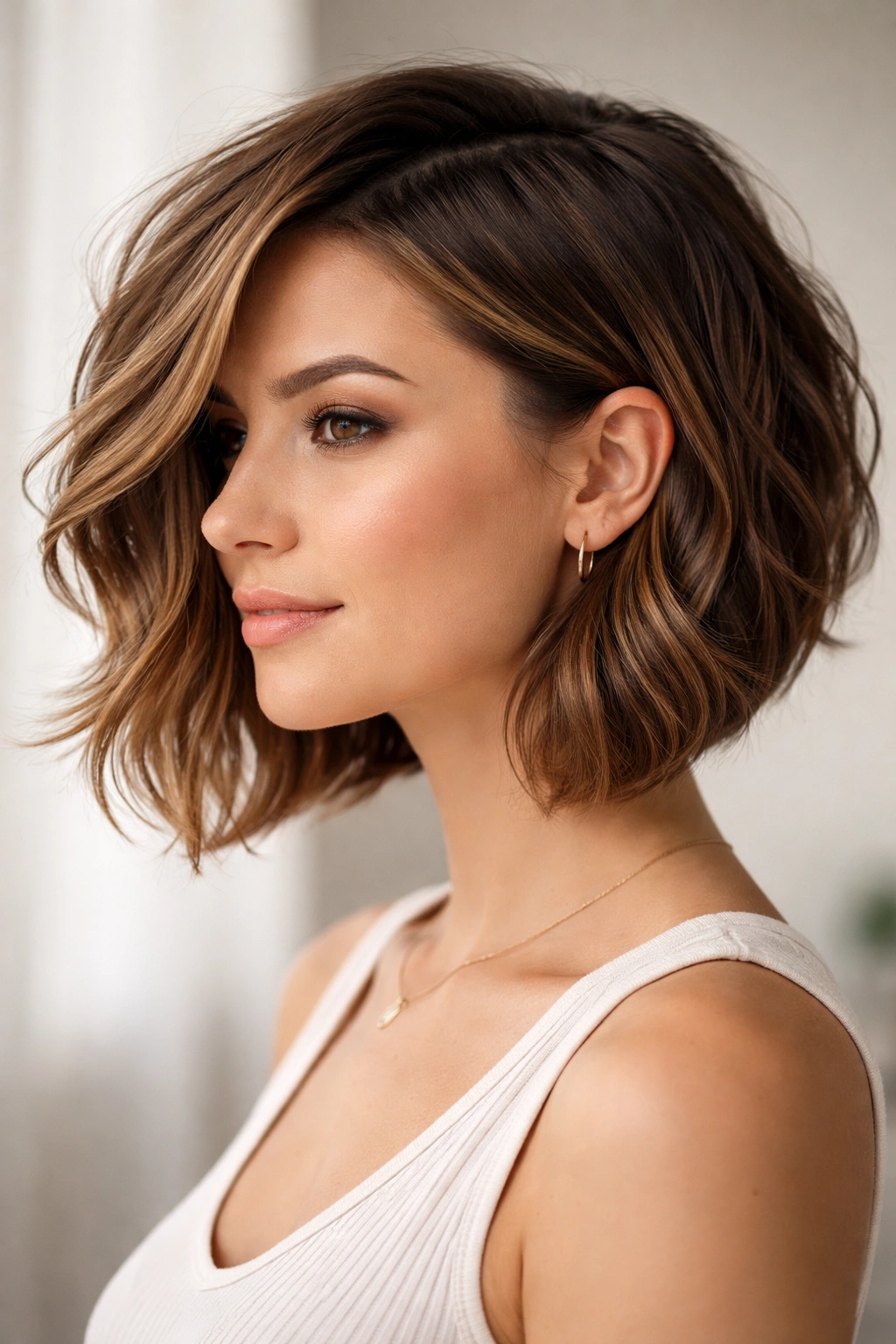
An angled bob is slightly different from an asymmetrical cut in that both sides follow the same angle, but the front gradually gets longer as it moves toward your face. The back sits shorter, the sides are mid-length, and the front hits longer — sometimes at the jawline or even ear length. This creates movement and flow while keeping the overall silhouette of a short bob. The angle flatters most face shapes because it creates a slimming effect.
The Angle’s Flattering Properties
Because the front is longer, it frames your face and can help elongate round faces or soften angular features. The angle naturally encourages your waves to flow forward, creating movement toward the face. The shorter back stays low-maintenance while the front gives you something to style and work with. It’s a sophisticated, polished cut that still feels modern.
Styling the Angled Silhouette
- Blow-dry the back closer to the head and the front with more movement and curl
- Use a curling iron on the front pieces to enhance the angle and create definition
- Apply lightweight product that won’t weigh down the front pieces
- You can style the front pieces smoothly for a sleek look or textured for casual
- The angle is the defining feature — styling should enhance it rather than hide it
- This cut works beautifully with face-framing highlights that emphasize the longer front pieces
The angle creates visual movement even without much styling effort.
17. Curly Textured Bob Perm Style
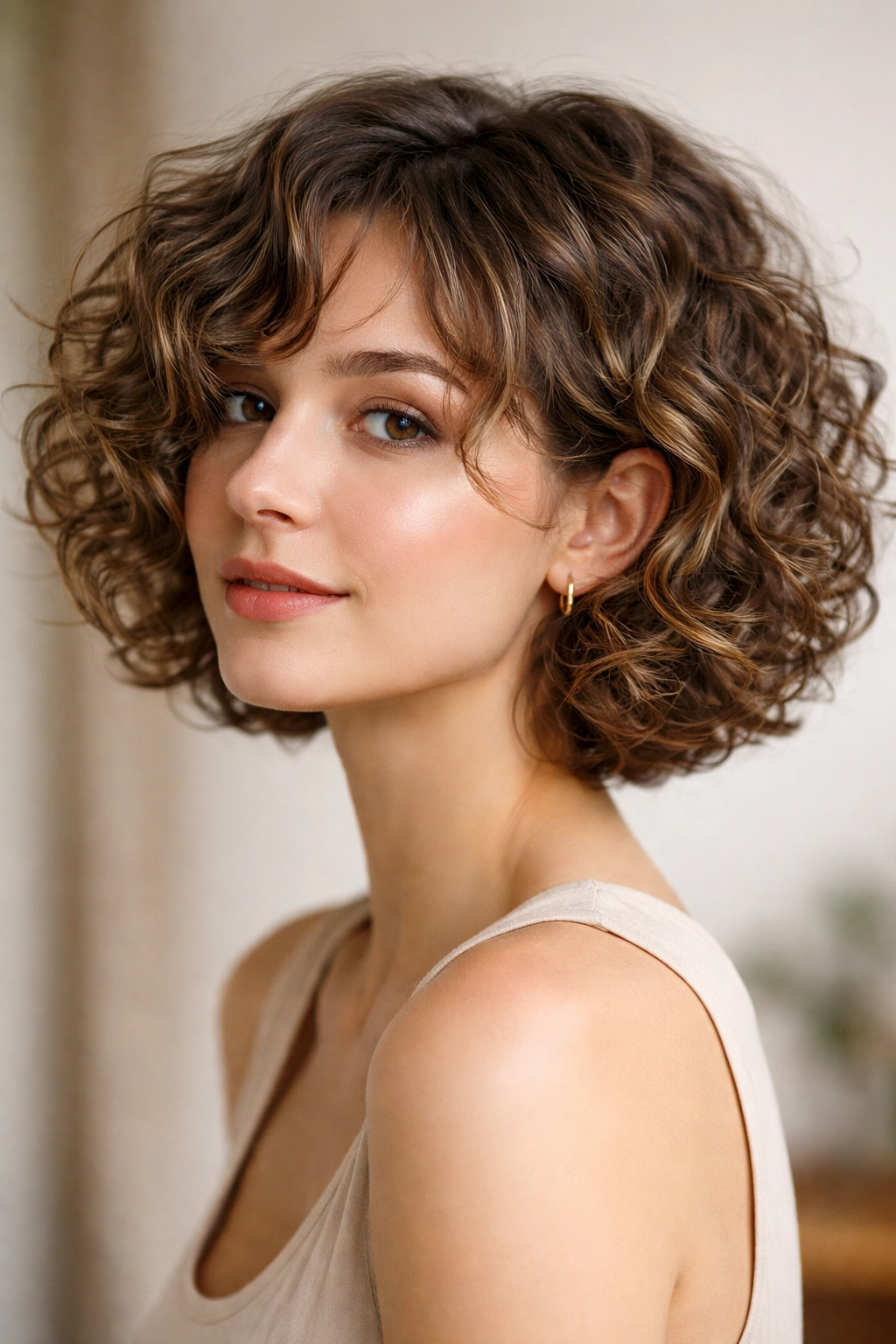
If your natural waves are subtle or uncooperative, a permanent wave can create curl and texture that a cut alone can’t achieve. A perm combined with a short bob cut creates defined curls throughout your hair that maintain shape and springiness for months. Modern perms are much gentler than older versions, and when done on a short bob, they create an intentional, fashionable look rather than the dated poodle-perm aesthetic of the past.
The Modern Perm Approach
Contemporary perms use gentler formulas and are applied with specific rod sizes to create the curl pattern you want — tight spirals, loose waves, or anything in between. Combined with a strategically layered short bob, a perm ensures your curls are always defined and bouncy. The perm creates the curl pattern; the cut determines how that pattern falls and moves.
Maintaining Permed Waves
- Use sulfate-free shampoo and conditioner specifically for wavy or curly hair
- Apply leave-in conditioner to soaking wet hair before styling
- Diffuse-dry while scrunching to encourage curl formation
- Sleep on a silk pillowcase or with a silk cap to preserve curls overnight
- Refresh curls with water and product in the morning
- Plan perm touch-ups every 6-8 months as new growth comes in straight
- Deep condition regularly — perms are a chemical process and your hair needs moisture
This option works best if you’re willing to commit to the ongoing maintenance and care that perms require.
18. Embraced Wave Bob with Volume
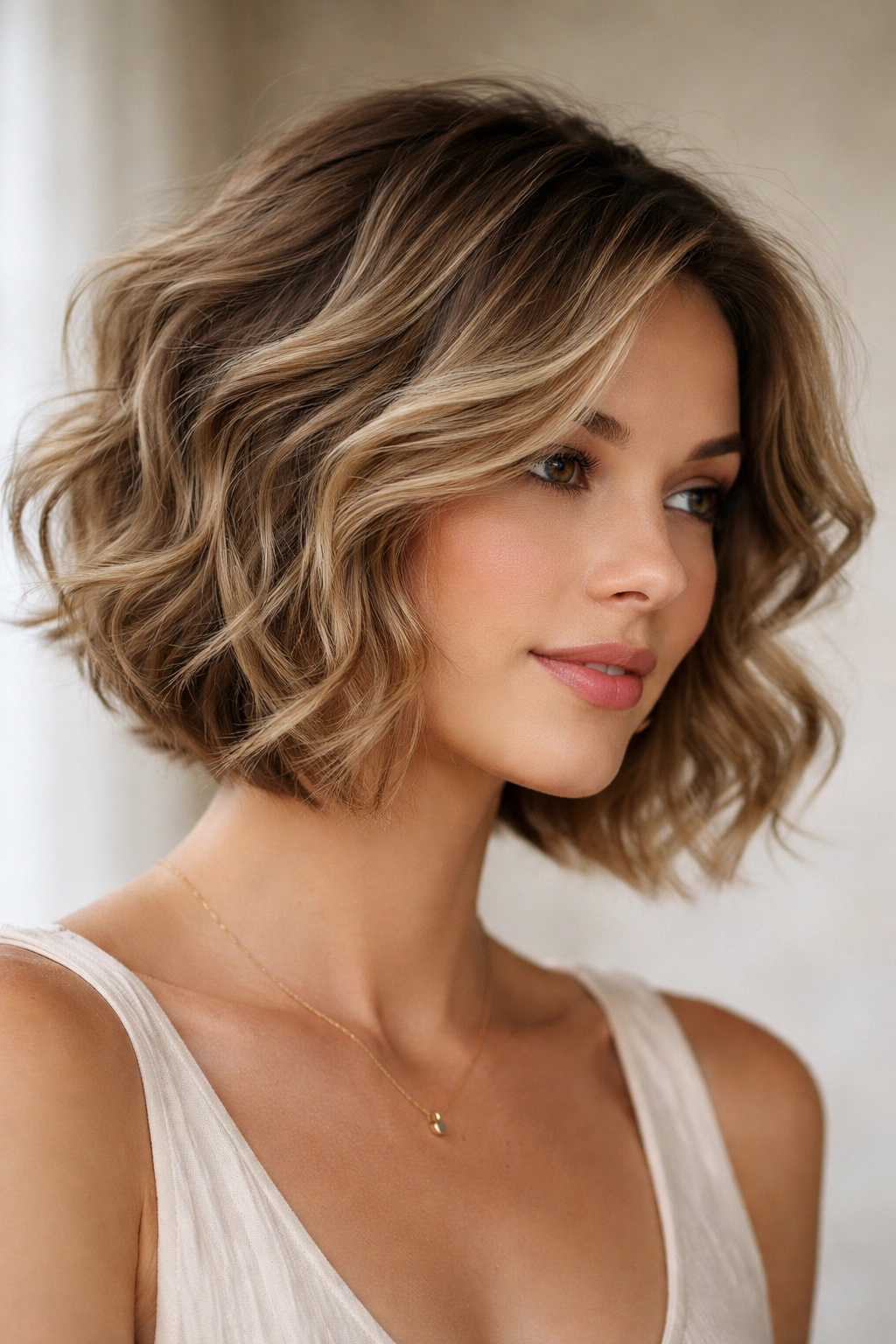
Sometimes the best approach is embracing your waves fully rather than fighting them. An embraced wave bob is cut to celebrate your natural wave pattern exactly as it is, with a cut that encourages your waves to spring into their fullest, most voluminous form. The cut is textured to remove weight, layered to create movement, and shaped to position shorter layers where you want maximum volume and longer layers where you want flow.
Working With Your Natural Pattern
This cut requires your stylist to study your natural wave pattern while your hair is in its preferred state — however that is. Some people’s waves are best when air-dried, others when diffuse-dried, others when curling-ironed. Your stylist should cut based on your actual styling method, not an idealized version. The cut then supports that styling method rather than requiring you to dramatically change how you work with your hair.
Styling to Embrace Waves
- Dry your hair the way you normally do and style the way you prefer
- Don’t try to force a different wave pattern than what naturally exists
- Use products designed to enhance your wave type — cream waves need different products than springy curls
- Embrace days when waves look slightly undone or piece-y — that’s the point
- Refresh waves between washes rather than starting from scratch every time
- The goal is a look that fits how you actually live, not one that requires perfection
This cut works best when you genuinely like your natural waves and want to work with them rather than transform them.
19. Piece-y Textured Bob with Color
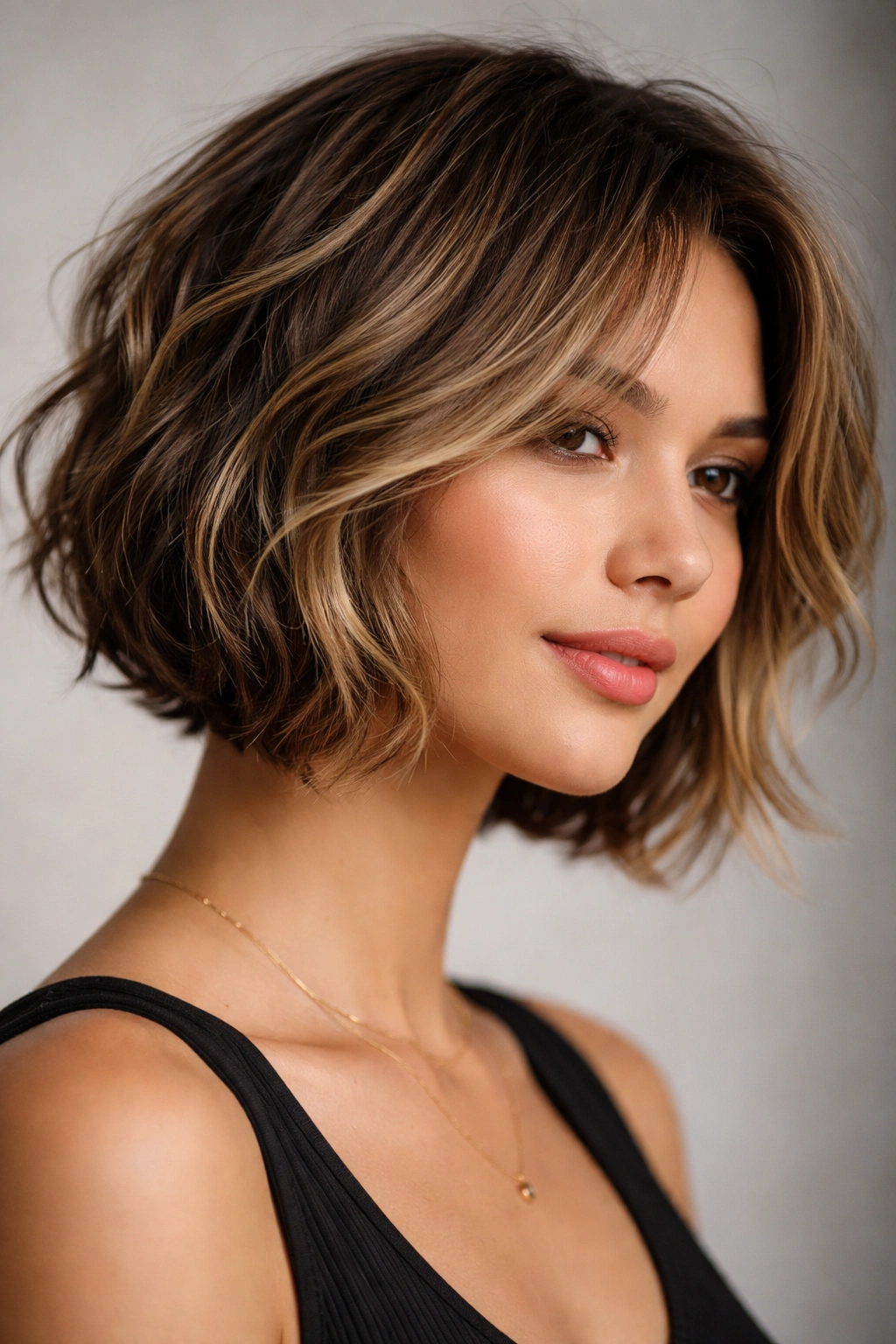
A strategically colored textured bob makes every piece-y element even more obvious and intentional. Placing lighter pieces around the face, darker underneath sections, or scattered highlights throughout creates visual interest and makes the texture jump out. The color doesn’t necessarily need to be dramatic — even subtle tonal variation works beautifully on a textured bob to emphasize the layering and texture.
Color Placement for Texture
Consider balayage or face-framing highlights that place lighter color exactly where your longest or most textured pieces sit. Darker color underneath creates dimension when you move or when sections shift. Root shadow or darker roots can make the texture look even more intentional and modern. The color amplifies the texture rather than being separate from it.
Maintaining Color and Texture
- Use color-safe shampoo and conditioner to protect your investment in both color and texture
- Deep condition regularly — textured hair needs moisture, and color-treated hair needs it too
- Plan color touch-ups every 4-8 weeks depending on how fast your roots grow
- Trim every 4-6 weeks to keep the textured shape sharp and intentional
- Use leave-in conditioner and heat protectant regularly
- The combination of texture and color is high-maintenance but genuinely stunning
When color and texture work together, the effect is far more impactful than either one alone.
20. Effortless Tousled Beach Wave Bob
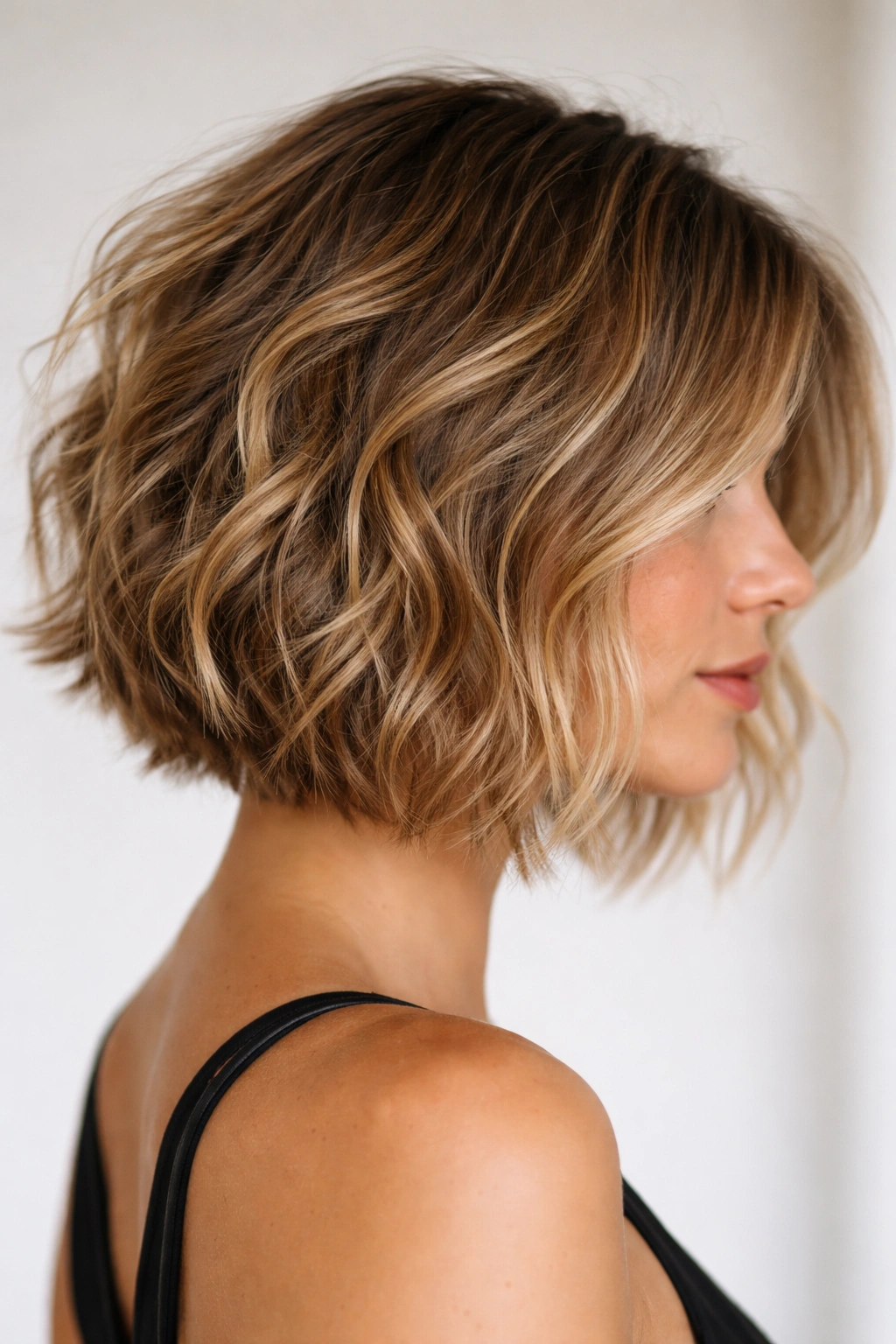
If you want a short bob that reads as completely effortless and undone, a tousled beach wave bob is your answer. This cut is strategically designed to look intentionally messy — like you spent a day at the beach and didn’t do anything special to your hair. The layers are textured and piece-y, the waves are deliberately unstructured, and the overall effect is “I woke up like this.” In reality, it’s carefully cut to fall that way, but the styling looks minimal and relaxed.
Creating Controlled Effortlessness
This is a cut where your stylist needs to understand that the messiness is deliberate. The layers and texture are placed to create that undone look, not because the cut was imprecise. You want visible separation between pieces, varied wave directions, and nothing that looks too structured or defined. It’s a paradoxical balance between being intentionally designed and looking completely unintentional.
Styling for Beach Wave Effortlessness
- Apply sea salt spray to soaking wet hair and let it air-dry naturally
- If you’re in a hurry, diffuse-dry while moving your head around for varied wave directions
- Use your fingers to separate pieces and enhance the undone texture
- Skip heavy styling products — light hold or no hold reads as more effortless
- Embrace waves that are slightly frizzy or imperfect — that’s literally the whole point
- Refresh between washes with water and sea salt spray rather than fully restyling
This cut is perfect if you genuinely enjoy the undone, beachy aesthetic and want a hairstyle that doesn’t feel like you’re trying too hard.
Final Thoughts

The right short bob for wavy hair isn’t just about picking a style that looks good in photos — it’s about finding a cut that works with how you actually style your hair and the texture you’re living with. Some of these cuts require daily styling and commitment to texture products; others genuinely look better with minimal effort. Some need frequent trims to maintain their shape; others grow gracefully.
Before you book an appointment, spend time looking at which cuts you keep coming back to, which styling routines sound doable rather than exhausting, and which aesthetic matches how you see yourself. Then find a stylist who genuinely understands wavy hair and has experience cutting bobs specifically designed for texture. A great stylist will assess your natural wave pattern, discuss how you actually style your hair, and recommend a cut from this list that fits your lifestyle, face shape, and hair type.
Your wavy hair is a genuine asset when paired with the right cut. The short bobs above all celebrate texture rather than fight it, which means you’re working with your hair rather than against it. That’s when styling becomes easier, your hair looks better, and you actually enjoy the time you spend getting ready.
